
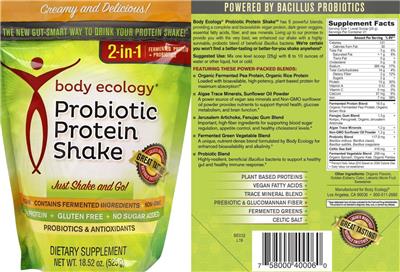
| Calories | 131 | |
| Calories from Fat | 30 | |
| Total Fat | 3 g | 5% |
| Saturated Fat | <1 g | 5% |
| Trans Fat | 0 g | † |
| Cholesterol | 0 g | 0% |
| Sodium | 385 mg | 17% |
| Total Carbohydrates | 14 g | 4% |
| Dietary Fiber | 3 g | 12% |
| Sugar | 2 g | † |
| Protein | 15 g | 30% |
| Vitamin A | 0 IU | 0% |
| Vitamin C | 0 mg | 0% |
| Calcium | 57 mg | 6% |
| Iron | 7 mg | 38% |
| Fermented Protein Blend | 18.6 g | † |
| organic Fermented Pea Protein | ||
| organic Brown Rice | ||
| Fenujac Gum Blend | 1.3 g | † |
| Konjac | ||
| Fenugreek | ||
| Jerusalem Artichokeorganic | ||
| Algae Trace Minerals | 1.2 g | † |
| Sunflower Oil powderNon-GMO | 1.2 g | † |
| Probiotic Blend | 117.5 mg | † |
| Bacillus indicus | ||
| Bacillus clausii | ||
| Bacillus coagulans | ||
| Celtic Sea Salt | 410 mg | † |
| Fermented Vegetable Blend | 200 mg | † |
| organic Spinach | ||
| organic Kale | ||
| organic Parsley |
Other ingredients: Organic flavors, Golden Exberry, Lakanto Monk Fruit Sweetener
% Daily Values for: Adults and children 4 or more years of age.
Where this label comes from
An original label of the NIH's Dietary Supplement Label Database, entered there on 11 April 2022, shown here as it was entered. The NIH's record · picture of the label (PDF)
General information
- Product name
- Probiotic Protein Shake
- Brand
- Body Ecology
- Barcode (UPC)
- 7 58000 40006 0
- Net contents
- 18.52 Oz(s); 525 Gram(s)
- Market status
- Off market
- DSLD ID
- 261627
Classification
- Supplement form
- Powder
- Product type
- Other Combinations
- Claim types on the label
- Nutrient, All Other, Structure/Function
- Intended for
- Vegan, Vegetarian, Adult (18 - 50 Years), Gluten Free
Label statements
Formula: Contains: 2-in-1 fermented protein + probiotics
Formula: Contains: Lakanto Monkfruit Great Tasting! Naturally Sweetened
Directions: Just shake and go!
Formula: Contains: Contains fermented ingredients
Formulation: Does NOT Contain: Non-GMO Gluten Free No Sugar added
Formula: Contains: 15g Protein Probiotics & antioxidants
FDA Statement of Identity: Dietary Supplement
Formula: Contains: Powered by Bacillus Probiotics
Formula: Contains: Body Ecology Probiotic Protein Shake has 5 powerful blends, providing a complete and bioavailable vegan protein, dark green veggies, essential fatty acids, fiber, and sea minerals. Living up to our promise to provide you with the very best, we enhanced our shake with a highly-survivable, probiotic blend of beneficial Bacillius bacteria. We're certain you won't find a better-tasting or better-for-you shake anywhere!
Directions: Suggested Use: Mix one level scoop (25g) with 8 to 10 ounces of water or other liquid, hot or cold.
Formula: Contains: Featuring these power-packed blends: Organic fermented pea protein, organic rice protein Loaded with bioavailable, high-potency, plant-based protein for maximum absorption! Algae trace minerals, sunflower oil powder A power source of vegan sea minerals and non-GMO sunflower oil powder provides nutrients to support thyroid health, glucose metabolism, and brain function. Jerusalem artichoke flour, fenujac gum blend Important, high-fiber ingredients for supporting blood sugar regulation, appetite control, and healthy cholesterol levels. Fermented green vegetable blend A unique, nutrient-dense blend formulated by Body Ecology for enhanced bioavailability and alkalinity. Probiotic blend Highly-resilient, beneficial Bacillus bacteria to support a healthy gut and healthy immune response.
Formula: Contains: Plant based proteins Vegan fatty acids Trace minerals blend Prebiotic & Glucomannan fiber Fermented greens Celtic salt
Brand information
Manufactured for: Body Ecology, Los Angeles, CA
More labels from Body Ecology
Labels only: each label is shown as printed on the bottle, with no grades, rankings or advice. A label in this database is not an endorsement of the product. Read the label on the bottle you buy: makers change their formulas. Reverse Age Lab is not affiliated with, or endorsed by, the National Institutes of Health or its Office of Dietary Supplements. The original labels come from the NIH’s public-domain data; the labels since are read by us. Search the Dietary Supplement Label Database.