
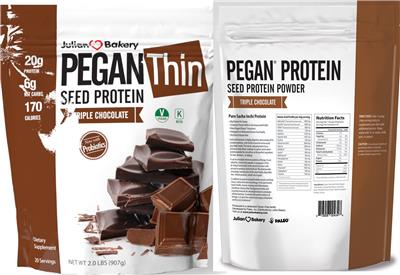
Pegan Thin Seed Protein 20 g Triple Chocolate
| Calories | 170 | |
| Total Fat | 6 g | 8% |
| Saturated Fat | 1.5 g | 8% |
| Cholesterol | 0 g | 0% |
| Sodium | 85 mg | 4% |
| Potassium | 53 mg | 2% |
| Total Carbohydrates | 11 g | 4% |
| Dietary Fiber | 5 g | 18% |
| Sugar | 1 g | |
| Protein | 20 g | |
| Vitamin D | 0% | |
| Calcium | 15% | |
| Iron | 40% | |
| Isoleucinebranched chain amino acid, essential amino acids | 1,000 mg | |
| Leucinebranched chain amino acid, essential amino acids | 1,280 mg | |
| Valinebranched chain amino acid, essential amino acids | 800 mg | |
| Alanine | 720 mg | |
| Arginine | 1,100 mg | |
| Aspartic Acid | 1,387 mg | |
| Cystine | 500 mg | |
| Glutamic Acid | 2,660 mg | |
| Glycine | 2,360 mg | |
| Histidineessential amino acids | 520 mg | |
| Lysineessential amino acids | 860 mg | |
| Methionineessential amino acids | 240 mg | |
| Phenylalanineessential amino acids | 443 mg | |
| Proline | 960 mg | |
| Serine | 1,280 mg | |
| Threonineessential amino acids | 1,033 mg | |
| Tryptophanessential amino acids | 580 mg | |
| Tyrosine | 1,100 mg |
Other ingredients: Sacha Inchi Seed Protein, Cocoa, Powder, Chocolate Extract Flavor, Luo Han Guo extract, ProDURA, Sea Salt
% Daily Values for: Adults and children 4 or more years of age.
Where this label comes from
An original label of the NIH's Dietary Supplement Label Database, entered there on 24 October 2023, shown here as it was entered. The NIH's record · picture of the label (PDF)
General information
- Product name
- Pegan Thin Seed Protein 20 g Triple Chocolate
- Brand
- Julian Bakery
- Barcode (UPC)
- 8 13926 00434 8
- Net contents
- 2 Pound(s); 907 Gram(s)
- Market status
- On market
- DSLD ID
- 296710
Classification
- Supplement form
- Powder
- Product type
- Other Combinations
- Claim types on the label
- Nutrient, All Other, Structure/Function
- Intended for
- Vegan, Vegetarian, Adult (18 - 50 Years), Gluten Free, Dairy Free
Label statements
Formula: Contains: 20g protein 6g Net carbs 170 calories Now with probiotics
FDA Statement of Identity: Dietary Supplement
Formula: Contains: Pegan Protein Seed Protein Powder
Formula: Contains: Sacha inchi protein is highly digestive and contains 81% complete protein, with all the essential amino acids your body needs. This novel, natural protein has a delicious nutty flavor, making it a great stand-alone protein powder for smoothies or the perfect ingredient for bars, desserts, or baking. It can be included wherever protein or Omega-3s are called for. Sacha Inchi powder is composed of the de-fatted Sacha Inchi seeds once it has been cold-pressed to produce Sacha Inchi oil. The dried powder amazingly contains one of the most highly digestible, low-irritant proteins, which sets it apart. In addition to protein to build healthy muscle and body tissue, sacha inchi also has Omega-3s for joint health, heart health, muscle recovery and inflammatory conditions; dietary fiber for digestive health; and essential minerals for electrolyte balance and proper cellular function. It contains the perfect balance of Omega-3, 6, plus free radical scavenging antioxidants and has zero cholesterol.
Formulation: Does NOT Contain: Produced in a dedicated gluten-free facility.
Directions: Directions: Take 1 scoop (44g serving) daily to supplement your diet with additional protein. Mixes easily with 12 oz water, milk, juice, or yogurt.
Precautions: Pregnant or Nursing or Prescription Medications: Caution: Consult your healthcare practitioner before using this product if you are pregnant, nursing, or under medical supervision.
Brand information
Developed by: Paleo, Inc.
Distributed by: Julian Bakery
More labels from Julian Bakery
Labels only: each label is shown as printed on the bottle, with no grades, rankings or advice. A label in this database is not an endorsement of the product. Read the label on the bottle you buy: makers change their formulas. Reverse Age Lab is not affiliated with, or endorsed by, the National Institutes of Health or its Office of Dietary Supplements. The original labels come from the NIH’s public-domain data; the labels since are read by us. Search the Dietary Supplement Label Database.