
| Calories | 110 | |
| Total Fat | 0 g | 0% |
| Saturated Fat | 0 g | 0% |
| Trans Fat | 0 g | |
| Cholesterol | 0 mg | 0% |
| Sodium | 350 mg | 15% |
| Total Carbohydrates | 6 g | 2% |
| Dietary Fiber | 3 g | 10% |
| Total Sugars | 0 g | |
| Added Sugars | 0 g | 0% |
| Protein | 20 g | |
| Vitamin D | 0 mcg | 0% |
| Calcium | 32 mg | 2% |
| Iron | 4.8 mg | 25% |
| Potassium | 70 mg | 1% |
Other ingredients: Pea Protein Isolate, natural Vanilla flavor, Stevia extract, Gum Acacia, Monk Fruit Extract, ProCURA, Sea Salt
% Daily Values for: Adults and children 4 or more years of age.
Where this label comes from
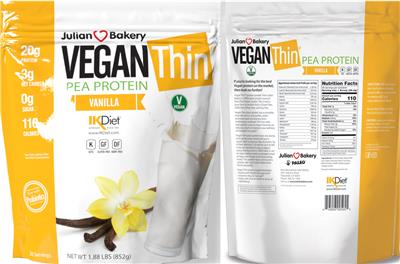
An original label of the NIH's Dietary Supplement Label Database, entered there on 25 September 2023, shown here as it was entered. The NIH's record · picture of the label (PDF)
General information
- Product name
- Vegan Thin Pea Protein 20 g Vanilla
- Brand
- Julian Bakery
- Barcode (UPC)
- 8 13926 00505 5
- Net contents
- 1.88 Pound(s); 852 Gram(s)
- Market status
- On market
- DSLD ID
- 296711
Classification
- Supplement form
- Powder
- Product type
- Amino acid/Protein
- Claim types on the label
- Nutrient, All Other, Structure/Function
- Intended for
- Vegan, Vegetarian, Adult (18 - 50 Years), Gluten Free, Dairy Free, Sugar Free
Label statements
Formula: Contains: 20g protein 3g net carbs 110 calories
Formulation: Does NOT Contain: 0g sugar
Formula: Contains: Now with probiotics
Formulation: Does NOT Contain: GF gluten-free DF dairy-free
Formula: Contains: If your looking for the best vegan protein on the market, than look no further! Vegan Thin protein powder from Julian Baker is 100% plant protein sourced from Pea Protein sourced from Pea Protein isolate. This is truly a pure form of protein that is gluten-free, GMO-free, whey-free, and soy-free.
Formulation: Does NOT Contain: Vegan Thin protein powder from Julian Baker is 100% plant protein sourced from Pea Protein sourced from Pea Protein isolate. This is truly a pure form of protein that is gluten-free, GMO-free, whey-free, and soy-free.
Formula: Contains: Vegan thin Plant protein has a complete essential amino acid profile, which promotes optimal recovery from challenging workouts. This low-carb, high-protein, easy to digest formula can help you reach or maintain your wellness and weight loss goals.
Formula: Contains: Vegan Thin plant protein does not clump, and can be easily mixed with just a spoon. Each scoop has 20g of protein, 3g of fiber, and only 110 calories and 3g net carbs per serving! It's easy to digest, taste delicious and is 100% Paleo. It can be taken before meals or between meals to help curb hunger and boost energy levels. For sweeter flavor and no extra calories, add 1g of Julian Bakery Pure Monk sweetener.
Directions: It can be taken before meals or between meals to help curb hunger and boost energy levels. For sweeter flavor and no extra calories, add 1g of Julian Bakery Pure Monk sweetener.
Precautions: Allergies: Produced in a facility that produces tree nuts.
Directions: Directions: Mix one scoop into 4 to 8 ounces of water, almond milk, or coconut milk. To sweeten add 1g of Julian Bakery Pure Monk.
Precautions: Pregnant or Nursing or Prescription Medications: Caution: Consult your healthcare practitioner before using this product if you are pregnant, nursing or under medical supervision.
Brand information
Manufactured by: Julian Bakery, Inc., Oceanside, CA
More labels from Julian Bakery
Labels only: each label is shown as printed on the bottle, with no grades, rankings or advice. A label in this database is not an endorsement of the product. Read the label on the bottle you buy: makers change their formulas. Reverse Age Lab is not affiliated with, or endorsed by, the National Institutes of Health or its Office of Dietary Supplements. The original labels come from the NIH’s public-domain data; the labels since are read by us. Search the Dietary Supplement Label Database.