
| Propolis extract | 100 mg |
Other ingredients: Microcrystalline Cellulose, Hypromellose, Magnesium Stearate, Water, Silicon Dioxide
% Daily Values for: Adults and children 4 or more years of age.
Where this label comes from
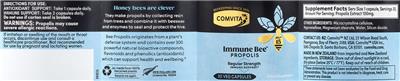
An original label of the NIH's Dietary Supplement Label Database, entered there on 21 December 2024, shown here as it was entered. The NIH's record · picture of the label (PDF)
General information
- Product name
- Immune Bee Propolis PFL 15
- Brand
- Comvita
- Barcode (UPC)
- Not printed
- Net contents
- 30 Veg Capsule(s)
- Market status
- On market
- DSLD ID
- 319406
Classification
Label statements
Directions: Directions for use: Antioxidant support: Take 1 capsule daily. Immune support: Take 2 capsules daily.
Precautions: All Other: Do not use if carton seal is broken.
Precautions: Allergies: Warnings: Propolis may cause severe allergic reactions. If irritation or swelling of the mouth or throat occurs, discontinue use and consult a healthcare practitioner.
Precautions: Pregnant or Nursing or Prescription Medications: Not recommended for use by pregnant and lactating women.
FDA Statement of Identity: Dietary Supplement
Storage: Storage: Store out of direct sunlight in a cool, dry place (below25 degrees C/ 77 degrees F).
Precautions: Children: Keep out of reach of children.
Formula: Contains: Bee Propolis originates from a plant's defense system and contains over 300 powerful natural bioactive compounds, flavonoids and phenolics (antioxidants) which can support health and wellbeing.
Brand information
USA: Comvita USA Inc., Santa Barbara, CA, 93101
New Zealand: Comvita New Zealand LTD, Paengaroa, Bay of Plenty, New Zealand
More labels from Comvita
Labels only: each label is shown as printed on the bottle, with no grades, rankings or advice. A label in this database is not an endorsement of the product. Read the label on the bottle you buy: makers change their formulas. Reverse Age Lab is not affiliated with, or endorsed by, the National Institutes of Health or its Office of Dietary Supplements. The original labels come from the NIH’s public-domain data; the labels since are read by us. Search the Dietary Supplement Label Database.