
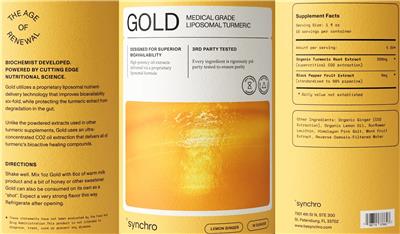
| Turmeric Root Supercritical Extractorganic, supercritical co2 extraction | 500 mg | † |
| Black Pepper Fruit Extract (as Piperine)standardized to 98% piperine | 6 mg | † |
Other ingredients: Ginger Extract, Lemon Oil, Sunflower Lecithin, Himalayan Pink Salt, Monk Fruit Extract, Water, Filtered
% Daily Values for: Adults and children 4 or more years of age.
Where this label comes from
An original label of the NIH's Dietary Supplement Label Database, entered there on 22 August 2025, shown here as it was entered. The NIH's record · picture of the label (PDF)
General information
- Product name
- Gold Lemon Ginger
- Brand
- Synchro
- Barcode (UPC)
- 1 98715 37862 7
- Net contents
- 16 Ounce(s)
- Market status
- On market
- DSLD ID
- 336402
Classification
Label statements
Directions: Directions Shake well. Mix 1 oz Gold with 6 oz of warm milk product and a bit of honey or other sweetener. Gold can also be consumed on its own as a "shot". Expect a very strong flavor this way.
Storage: Refrigerate after opening.
Formula: Contains: Medical grade liposomal turmeric High-potency oil extracts delivered via a proprietary liposomal formula
Brand information
Manufacturer: Synchro, St. Petersburg, FL
More labels from Synchro
Labels only: each label is shown as printed on the bottle, with no grades, rankings or advice. A label in this database is not an endorsement of the product. Read the label on the bottle you buy: makers change their formulas. Reverse Age Lab is not affiliated with, or endorsed by, the National Institutes of Health or its Office of Dietary Supplements. The original labels come from the NIH’s public-domain data; the labels since are read by us. Search the Dietary Supplement Label Database.