
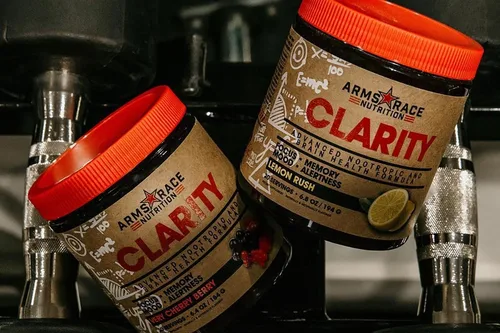
Arms Race Nutrition Clarity Very Cherry Berry Review
Clarity Very Cherry Berry by Arms Race Nutrition is a supplement in powder form with 14 active ingredients, presented on this page as a product for focus, alertness, and brain function. The label directions say to mix 1 scoop with 8 to 12 ounces of water and consume daily during activities that require increased focus and alertness. The label lists a serving size of 9.2 g with 20 servings per container, and a net content of 6.4 ounces (184 g). The maker's own words describe it as a formulation combining research studies with trademarked ingredients, offering heightened focus and alertness while contributing to improved brain function, with the claims presented as the maker's words and not evaluated by the Food and Drug Administration. The listed active ingredients include Vitamin B6 at 100 mg, Vitamin B9 at 400 mcg, Vitamin B12 at 100 mcg, nooLVL at 1600 mg, Acetyl-L-Carnitine Hydrochloride at 1000 mg, L-Tyrosine at 1000 mg, Alpha-Glycerylphosphorylcholine at 600 mg, Mucuna pruriens Seed Extract at 500 mg, EnXtra at 300 mg, Bacopa monnieri Extract at 300 mg, Sabroxy at 100 mg, Caffeine Anhydrous at 100 mg, Caffeine at 50 mg, and Huperzia serrata Leaf and Stem Extract at 20 mg. Other ingredients listed are malic acid, natural and artificial flavors, citric acid, silicon dioxide, sucralose, and acesulfame potassium. The page reports that 10 of the 14 active ingredients matched its records, and that 1,406 drugs have a documented interaction with the supplement, with the most serious rated major. Ingredient transparency is rated full because the label gives an exact amount for each active ingredient. The label is dated June 2024 and was entered into the NIH Dietary Supplement Label Database on June 20, 2024. The page notes the product is on the market and is intended for adults aged 18 to 50 and women who are not pregnant or lactating. The page states that none of the ingredient names point to a major food allergen and that the label text carries no allergen statement. The page advises that the label on the bottle should always be read, and that the information is educational and not medical advice.
We don’t sell supplements. We help you make decisions and get the best price.
Lowest prices
We may earn a commission from some store links. How we choose.
Finding the lowest prices at the stores now. This takes a few seconds.
Products with nearly the same formula (Matched on the main ingredients)
Study, Trial or Testing Result Summary
Members Only318 human studies · 168 improved
11 of these 318 human studies gave the ingredient by drip or injection, not by mouth.
Several main ingredients are at doses that worked in studies. nooLVL at 1600 milligrams improved memory reaction times and steadied accuracy and planning in small trials of gamers [1][2]. Alpha glycerylphosphorylcholine improved thinking in pooled trials of adults with memory problems [3] and in Alzheimer dementia [4]. Bacopa at 300 milligrams improved memory in older adults [5], though one trial at that dose found no benefit [6]. Caffeine improved attention in pooled trials [7]. Huperzine, from Huperzia serrata, improved memory in mostly low quality trials [8], with one trial finding no lasting benefit [9]. At two servings, tyrosine helped working memory under stress [10], and acetyl carnitine helped people with mild memory decline [11]. Sabroxy is far below the 1000 milligrams that helped memory in its one trial [12]. Velvet bean has only animal studies [13], and EnXtra has no studies given. Vitamins B6, folate and B12 did not improve thinking in people without deficiency [14]. Animal and cell studies are never counted.
See all 318 studies →Hide the studies
- Across 95 studies with 46,175 people, B vitamin supplements slightly slowed cognitive decline, mainly in people without dementia and with over 12 months of use, and higher dietary folate was linked to lower dementia risk.B vitamins and prevention of cognitive decline and incident dementia: a systematic review and meta-analysis.
- Across 235 studies of 44,854 people with dementia, treatments overall improved thinking; a group of alternative therapies that included huperzine A was more effective than some other treatments, but huperzine A was not assessed on its own.The treatment of cognitive dysfunction in dementia: a multiple treatments meta-analysis.
- In older adults across 51 articles, folate-based B vitamins improved cognition overall, but only where food was not fortified with folic acid; no benefit was seen where fortification was mandatory.A Comparative Study Evaluating the Effectiveness of Folate-Based B Vitamin Intervention on Cognitive Function of Older A…
- In 20 observational studies of 31,479 people, caffeine from coffee or tea was not clearly linked to the risk of dementia or cognitive decline, though coffee alone showed a modest link in some analyses.Caffeine intake from coffee or tea and cognitive disorders: a meta-analysis of observational studies.
- In 37 trials of 14,705 people with mild to moderate Alzheimer's disease, galantamine and donepezil ranked best for improving thinking, while huperzine A was one of several drugs compared and was not reported as a top performer.Different Doses of Pharmacological Treatments for Mild to Moderate Alzheimer's Disease: A Bayesian Network Meta-Analysis…
- Across 16 trials with 6276 people without advanced brain disorders or severe B12 deficiency, B12 alone or B complex (with or without B6) did not improve any area of thinking ability or depression.Effects of Vitamin B12 Supplementation on Cognitive Function, Depressive Symptoms, and Fatigue: A Systematic Review, Met…
- In 16 trials of 4083 children under 12, with doses from 0.9 to 150 micrograms a day, B12 raised B12 levels and lowered deficiency but made little to no difference to thinking skills, development or growth.Vitamin B12 supplementation for growth, development, and cognition in children.
- Across 48 studies of 3,650 children with attention problems testing 12 antioxidants including acetyl-L-carnitine, other antioxidants ranked best for attention, and the abstract reports no specific result for acetyl-L-carnitine.Safety and efficacy of antioxidant therapy in children and adolescents with attention deficit hyperactivity disorder: A …
- In 22 trials with 3,604 people with cognitive impairment, folic acid improved cognition in mild cognitive impairment and in Alzheimer's at 3 mg or more, but not in vascular cognitive impairment, while lowering homocysteine.Effects of folic acid supplementation on cognitive impairment: A meta-analysis of randomized controlled trials.
- In 29 trials of 2107 healthy adults, high-dose Bacopa (600 mg or more daily) improved working memory and short-term memory more than placebo or Ginkgo, while attention and processing speed did not differ.Comparative effects of Bacopa monnieri and Ginkgo biloba on cognitive functions: A systematic review and network meta-an…
- In a pooled analysis of 25 studies of 1861 healthy older adults, Bacopa ranked near the top for executive and language function, but raisins and tart cherry ranked higher for learning and memory, and attention effects were generally limited.The effect of plant active substances on cognitive function in healthy older adults: a systematic review and network met…
- In 20 trials of 1,823 people with Alzheimer's disease, huperzine A improved memory and thinking scores and daily living compared with placebo at 8 to 16 weeks, though the trials were of poor quality.Huperzine A for Alzheimer's disease: a systematic review and meta-analysis of randomized clinical trials.
- In 31 placebo-controlled trials with 1455 healthy adults, a single dose of caffeine improved attention, with small gains in both accuracy and reaction time, and doses of 200 mg or more worked better than lower doses.A systematic review and meta-analysis of the acute effect of caffeine on attention.
- In 12 trials of 1,117 people with schizophrenia, adding huperzine A to antipsychotic drugs for about 12 weeks improved memory, intelligence and executive function scores compared with placebo or usual treatment, with similar side effects.Adjunctive huperzine A for cognitive deficits in schizophrenia: a systematic review and meta-analysis.
- Across nine placebo-controlled trials of 518 people taking Bacopa extract for at least 12 weeks, attention speed improved, with faster Trail B test times and shorter choice reaction times.Meta-analysis of randomized controlled trials on cognitive effects of Bacopa monnieri extract.
- In six trials of 454 people with Alzheimer's disease, huperzine A improved thinking, global status and daily function over placebo at 6 to 12 weeks, though evidence quality was limited and two memory scales showed no significant benefit.Huperzine A for Alzheimer's disease.
- Two small trials in healthy young adults found no effect of L-carnitine on reaction time, vigilance or memory after three days, and the evidence was very low quality.L-carnitine for cognitive enhancement in people without cognitive impairment.
- In nine small, poor-quality trials of 331 people with epilepsy, folic acid had no effect on seizures, intelligence, behavior or mental health.Vitamins for epilepsy.
- In two small trials of 83 boys with fragile X syndrome given L-acetylcarnitine or placebo for one year, intellectual functioning and hyperactivity did not clearly improve, with low-quality evidence.L-acetylcarnitine for treating fragile X syndrome.
- In four trials of older people with Alzheimer disease or dementia, B vitamins including B6 lowered homocysteine but did not improve memory and thinking scores compared with placebo.Efficacy of Vitamin B Supplementation on Cognition in Elderly Patients With Cognitive-Related Diseases.
- In stroke survivors, pooled trials showed B-vitamin supplements (folic acid, B6, B12) had a negative effect on global thinking scores, though the authors conclude B vitamins have no benefit.Associations between Diet and Cognitive Function in Stroke Survivors: A Systematic Review and Meta-analysis.
- Pooled placebo-controlled trials of 3 to 12 months in people with mild cognitive impairment or mild Alzheimer's disease using 1.5 to 3 grams daily showed a significant advantage over placebo on clinical and memory-thinking tests, beginning at 3 months.Meta-analysis of double blind randomized controlled clinical trials of acetyl-L-carnitine versus placebo in the treatmen…
- Pooling seven randomized trials and one cohort study, adults with cognitive impairment from neurological conditions had better thinking, daily function and behavior with alpha-GPC, alone or added to donepezil, than with placebo or other medications.Activity of Choline Alphoscerate on Adult-Onset Cognitive Dysfunctions: A Systematic Review and Meta-Analysis.
- Across 10 studies, choline alfoscerate significantly helped people with mild cognitive impairment from vascular disease or head injury, with injected treatment for at least 28 days beating basic therapy in vascular cases.[Gliatilin in the Treatment of Cognitive Impairments Not Reaching the Level of Dementia: Meta-Analysis and Systematic Re…
- In three randomized trials of people with mild to moderate cognitive impairment, adding choline alfoscerate to standard therapy raised cognitive test scores more than standard therapy alone, with similar side effects.[Efficacy and clinical significance of choline alfoscerate in pre-dementia cognitive impairment. (A systematic review an…
- Across 13 crossover studies of caffeine around exercise (5 pooled), caffeine improved attention, accuracy and speed, and low to moderate doses may also help energy, mood and reaction time, depending on the study protocol.Caffeine and Cognitive Functions in Sports: A Systematic Review and Meta-Analysis.
- In a review of 50 trials (15 pooled), theanine plus caffeine gave small to moderate gains over placebo in attention accuracy and some mood measures, but the results were uncertain and some were not statistically clear.Effects of Tea (Camellia sinensis) or its Bioactive Compounds l-Theanine or l-Theanine plus Caffeine on Cognition, Sleep…
- In four placebo-controlled trials of people with Alzheimer's disease, 300-500 micrograms of huperzine A daily for 8-24 weeks significantly improved thinking and daily living scores, with no serious side effects.Efficacy and safety of natural acetylcholinesterase inhibitor huperzine A in the treatment of Alzheimer's disease: an up…
- A pooled analysis of 35 trials in people with Alzheimer's disease compared six drugs including huperzine-A on a memory and thinking test score; memantine ranked best and huperzine-A ranked third.Identification of the optimal cognitive drugs among Alzheimer's disease: a Bayesian meta-analytic review.
- A pooled analysis of nine randomized trials in people with mild cognitive impairment found huperzine A raised memory quotient and mini-mental state scores more than placebo, with mild side effects, though the original studies were low quality.[Efficacy and safety of huperzine A in treating patients with mild cognitive impairment: a systematic review and Meta-an…
- In a network analysis of 33 trials in Alzheimer's disease, huperzine A raised mental state scores by about 2.4 points in mild and 2.9 points in moderate cases, though donepezil performed best overall.The effect of anti-dementia drugs on Alzheimer disease-induced cognitive impairment: A network meta-analysis.
- In 17 trials with 2,478 older adults with Alzheimer's, eight reported some cognitive benefit from vitamins including folic acid and nine found none, so evidence is inconclusive.Effects and reporting quality of the vitamin supplementation on cognitive function in older adults with Alzheimer's dise…
- In 22 trials of 1284 army personnel testing many products, caffeine beat placebo on 5 of 7 reported thinking outcomes and was mixed on two, with results needing cautious interpretation.A systematic review of performance-enhancing pharmacologicals and biotechnologies in the Army.
- One study of 40 adults with Down syndrome tested acetyl-L-carnitine, but data were too limited to draw conclusions about its effect on cognitive decline.Pharmacological interventions for cognitive decline in people with Down syndrome.
- A Cochrane review found only one small trial of 14 people with vascular dementia, and huperzine A showed no significant benefit on a memory and thinking test compared with placebo.Huperzine A for vascular dementia.
- Three observational studies in breastfed infants suggested breast milk vitamin B6 was associated with development, but the evidence was too limited and biased to draw conclusions.Breast Milk Micronutrients and Infant Neurodevelopmental Outcomes: A Systematic Review.
- This review of observational studies in postmenopausal women linked deficiencies of nutrients including vitamin B6 to higher risk of conditions such as cognitive decline, but it did not test supplements on thinking ability.A systematic review on the impact of nutrition and possible supplementation on the deficiency of vitamin complexes, iron…
- A review of nutrition and Alzheimer disease found B-vitamin supplements mostly disappointing and inconsistent, except in countries where bread is not fortified with folate.The role of nutrition and diet in Alzheimer disease: a systematic review.
- A review of 23 studies in psychiatric conditions found folate supplements, especially 5-methylfolate, were linked to better clinical outcomes, but it did not address cognitive function specifically.The potential use of folate and its derivatives in treating psychiatric disorders: A systematic review.
- A review of vitamin trials published 2011 to 2021 found folic acid supplements gave better cognitive test results than control groups, though results for folic acid combined with vitamin B12 were inconsistent.Vitamin Supplementation and Dementia: A Systematic Review.
- Across 11 placebo-controlled trials in people with Alzheimer's disease, acetyl-L-carnitine improved overall clinician-rated impression at 12 and 24 weeks but showed no benefit on cognition tests, and the reviewers said this may be due to chance.Acetyl-L-carnitine for dementia.
- Two studies of L-acetylcarnitine in people with fragile X syndrome and attention-deficit hyperactivity disorder reported positive effects with no side effects, but the review found no robust evidence overall.Systematic review of pharmacological treatments in fragile X syndrome.
- A review of 122 studies of mitochondria-targeting supplements in psychiatric disorders, including acetyl-L-carnitine, found heterogeneous results and high risk of bias, with no specific acetyl-L-carnitine result given.Clinical outcomes of mitochondrial-enhancing nutraceutical supplementation in psychiatric disorders: A systematic review…
- A review of 15 mostly single-dose studies in healthy adults found tyrosine helped protect working memory and information processing under demanding conditions such as extreme weather or heavy mental load, but did little for exercise performance.Behavioral and cognitive effects of tyrosine intake in healthy human adults.
- A review of nine supplement ingredients including tyrosine for healthy adults found the evidence inconsistent, imprecise and often flawed, so no firm recommendations could be made.Dietary Supplement Ingredients for Optimizing Cognitive Performance Among Healthy Adults: A Systematic Review.
- A review of six 12-week randomized trials in healthy adults found Bacopa at 300-450 mg extract per day improved memory free recall on 9 of 17 tests, with little evidence of benefit in other thinking skills.The cognitive-enhancing effects of Bacopa monnieri: a systematic review of randomized, controlled human clinical trials.
- A review of five studies in children and adolescents found Bacopa gave small to medium improvements in language, some memory areas, hyperactivity and attention, with mild side effects in 2.3% of participants.A systematic review of the Ayurvedic medicinal herb Bacopa monnieri in child and adolescent populations.
- A review of many plant-based products for cognitive decline, including Bacopa, found them promising for delaying age-related brain decline, but said better-designed trials are still needed to confirm benefit and safety.Botanicals and phytochemicals active on cognitive decline: The clinical evidence.
- A review of 256 papers on plant-based brain supplements concluded Bacopa improves language, learning and memory, while noting inconsistencies across studies.Plant-derived nootropics and human cognition: A systematic review.
- In a review of seven trials in children and adolescents with attention deficit disorder, Bacopa was among several herbs with a fair indication of benefit, but overall evidence was too limited to recommend herbal treatment.Phytotherapy for Attention Deficit Hyperactivity Disorder (ADHD): A Systematic Review and Meta-analysis.
- A review of 21 mostly 12-week trials of herbal and nutritional products in older adults, six of which tested Bacopa, found 14 reported improvement in at least one thinking area, but evidence quality was low because of high risk of bias.A systematic review of the safety and efficacy on cognitive function of herbal and nutritional medicines in older adults…
- A review of nine studies, mostly not in humans, found Bacopa could reverse positive, negative and cognitive symptoms of schizophrenia and lowered an oxidative stress marker.Effectiveness of Bacopa Monnieri (Brahmi) in the management of schizophrenia: a systematic review.
- A review of supplements for attention deficit disorder found Bacopa consistently improved inattention, hyperactivity and memory, though supplements cannot replace stimulant medication.Efficiency of Different Supplements in Alleviating Symptoms of ADHD with or Without the Use of Stimulants: A Systematic …
- A review of 12 randomized studies found that caffeinated alcoholic drinks countered some thinking problems caused by alcohol, but the benefit disappeared in complex tasks such as driving and impulsivity increased.Acute impact of caffeinated alcoholic beverages on cognition: A systematic review.
- In a review of 21 studies, green tea improved memory, attention and brain activation, with benefits seen when caffeine and l-theanine were combined more than when either was given alone.Green tea effects on cognition, mood and human brain function: A systematic review.
- In 25 trials of healthy adults under military-like stress, mostly sleep deprivation, caffeine improved attention, alertness, complex reaction time and problem solving.Caffeine to optimize cognitive function for military mission-readiness: a systematic review and recommendations for the …
- A review of 61 studies suggested that moderate caffeine intake of about 100 to 400 mg daily, mainly from coffee or green tea, may reduce dementia risk and slow cognitive decline, though many studies showed no effect and findings varied with study design.Associations Between Caffeine Consumption, Cognitive Decline, and Dementia: A Systematic Review.
- A review of 14 observational studies of caffeine use in pregnancy found 7 linking it to child behavior or development problems, 6 finding no effect and 1 finding fewer peer problems, with very low certainty of evidence.Prenatal caffeine consumption and neurobehavioral disorders - A systematic review.
- A review of eight placebo-controlled crossover studies found caffeine clearly helped mental and physical performance in 3, partly in 4 and not at all in 1, with moderate doses of 3-6 mg per kg seeming most effective.Can caffeine improve your performance? Psychophysiological effects - A systematic review.
- A review of eight studies in people with multiple sclerosis linked coffee or caffeine intake to better thinking outcomes but not to less disability, with caution because the studies were few and varied.The Effects of Coffee/Caffeine in Patients with Multiple Sclerosis; A Systematic Review.
- An umbrella review of 16 papers covering 149 studies found that cholinesterase-blocking drugs including huperzine A appeared to benefit thinking and daily living in people with Alzheimer's disease.The Efficacy and Safety of Alzheimer's Disease Therapies: An Updated Umbrella Review.
- An umbrella review of 37 reviews of herbal medicines for dementia found suggestive evidence that Huperzia serrata improved daily living activities, with no serious adverse events, though study quality was often poor.Efficacy and safety of herbal medicine on dementia and cognitive function: An umbrella review of systematic reviews and …
- In 2,919 older adults with high homocysteine, two years of daily folic acid (400 mcg) plus vitamin B12 did not improve four areas of cognitive performance compared with placebo, and any slower decline in global cognition may be due to chance.Results of 2-year vitamin B treatment on cognitive performance: secondary data from an RCT.
- In rural Niger, prenatal multiple micronutrients had no effect on children's development to age 2, while lipid-based nutrients gave a modest early boost in cognitive scores at 18 and 21 months and earlier sitting and walking.Evaluation of multiple micronutrient supplementation and medium-quantity lipid-based nutrient supplementation in pregnan…
- In rural Nepal, children whose mothers took iron-folic acid during pregnancy had fewer hyperactivity and inattention behaviors at ages 7 to 9 by parent ratings, though adding zinc reduced that benefit.Prenatal and preschool micronutrient supplementation and behavioral outcomes in school-aged children in Nepal-a cohort s…
- In 869 pregnant women in Malawi, multiple micronutrient or lipid-based nutrient supplements during pregnancy and after birth did not improve mothers' thinking skills or caregiving compared with an iron and folic acid tablet.Associations of maternal nutrition during pregnancy and post-partum with maternal cognition and caregiving.
- Children given folic acid for six months in early toddlerhood did not differ in thinking and intelligence scores at ages 6 to 9 compared with placebo.Vitamin B12, Folate, and Cognition in 6- to 9-Year-Olds: A Randomized Controlled Trial.
- In 600 Nepalese infants given 2 micrograms of B12 daily for 12 months, brain development, growth and hemoglobin did not differ from placebo, although blood markers of B12 status improved.Effects of vitamin B12 supplementation on neurodevelopment and growth in Nepalese Infants: A randomized controlled trial…
- In 545 older adults with mild memory decline, two years of folic acid-containing B vitamins helped thinking and daily function only in people with a specific gene variant, and showed no benefit in others.The dihydrofolate reductase 19-bp deletion modifies the beneficial effect of B-vitamin therapy in mild cognitive impairm…
- Among 487 children in Indonesia, mothers taking multiple micronutrients rather than iron and folic acid had children with better motor and visual attention scores at age 42 months only when the mothers were undernourished or anemic, with no overall benefit across all children.Maternal multiple micronutrient supplements and child cognition: a randomized trial in Indonesia.
- In 431 people with mild to moderate Alzheimer's disease, 3 g a day of acetyl-L-carnitine for one year did not slow decline overall compared with placebo, though a later subgroup look hinted at slower decline in those aged 65 or younger.A 1-year multicenter placebo-controlled study of acetyl-L-carnitine in patients with Alzheimer's disease.
- In 402 people with mild cognitive impairment and low vitamin D, six months of folic acid plus vitamin D3 did not significantly improve overall cognitive test scores compared with placebo.Effects of Vitamin D3 Combined with Folic Acid on Domain and Specific Cognitive Function among Patients with Mild Cognit…
- In 366 pregnant women given 50 micrograms of B12 daily from early pregnancy to 6 weeks after birth, their infants' development scores at 9 months did not differ from placebo.Effects of maternal vitamin B12 supplementation on early infant neurocognitive outcomes: a randomized controlled clinica…
- In Chinese middle school students, six months of micronutrient-fortified milk improved some school test scores and learning habits compared with unfortified milk, but vitamin B12 deficiency rates did not differ between groups.Micronutrient-Fortified Milk and Academic Performance among Chinese Middle School Students: A Cluster-Randomized Control…
- In a reanalysis of 334 people with Alzheimer's disease, acetyl-L-carnitine for one year gave the same average decline as placebo, but younger patients (about 61 or under) declined more slowly on the drug.Acetyl L-carnitine slows decline in younger patients with Alzheimer's disease: a reanalysis of a double-blind, placebo-c…
- In 300 people with stroke and high homocysteine, two years of high-dose vitamins lowered homocysteine but did not change plasma amyloid beta levels, and amyloid beta was not linked to cognitive change.Plasma Abeta, homocysteine, and cognition: the Vitamin Intervention for Stroke Prevention (VISP) trial.
- Among 299 hypertensive men aged 75 and older, two years of daily folic acid with vitamin B12 and vitamin B6 did not change cognitive test scores compared with placebo, and did not significantly lower the risk of cognitive impairment or dementia over eight years.Vitamins B(12), B(6), and folic acid for cognition in older men.
- In 279 people with mild cognitive impairment, two years of daily B vitamins had no overall effect on cognition, but those with more frontal lobe shrinkage in the left side showed better cognitive scores.B Vitamin Supplementation Slows Cognitive Decline in Mild Cognitive Impairment Patients with Frontal Lobe Atrophy.
- In 279 older adults with mild cognitive impairment and high homocysteine, 500 mcg methylcobalamin plus folic acid daily for 24 months did not reduce cognitive decline versus placebo, though depression scores improved at 12 months and not at 24.A randomized placebo-controlled trial of using B vitamins to prevent cognitive decline in older mild cognitive impairmen…
- In 276 healthy adults aged 65 and older, two years of daily folate, vitamin B12 and B6 lowered homocysteine but did not improve thinking test scores compared with placebo.A controlled trial of homocysteine lowering and cognitive performance.
- In 271 people over 70 with mild cognitive impairment, two years of daily folic acid with vitamin B12 and vitamin B6 slowed brain shrinkage compared with placebo, with the largest benefit in those with high homocysteine.Homocysteine-lowering by B vitamins slows the rate of accelerated brain atrophy in mild cognitive impairment: a randomiz…
- In 271 older diabetic adults with borderline low vitamin B12, 1000 mcg methylcobalamin daily for 27 months lowered blood markers of B12 deficiency but did not prevent cognitive decline compared with placebo.A randomized placebo controlled trial of vitamin B12 supplementation to prevent cognitive decline in older diabetic peop…
- In 261 people with mild to moderate Alzheimer's dementia, 1200 mg daily of choline alfoscerate for 180 days improved thinking scores while placebo scores worsened, with significant differences between the groups.Cognitive improvement in mild to moderate Alzheimer's dementia after treatment with the acetylcholine precursor choline …
- In 240 older adults with mild memory decline, six months of folic acid plus vitamin B12 improved full-scale IQ and several thinking tests and lowered blood inflammation markers more than no treatment; the combination beat either vitamin alone.Effects of Folic Acid and Vitamin B12, Alone and in Combination on Cognitive Function and Inflammatory Factors in the El…
- In 237 preschool children with low folate status, a daily sachet with 1.2 mcg vitamin B12 plus folic acid and other B vitamins for 3 months improved folate and homocysteine levels but did not change verbal IQ, memory or processing speed.Three-month B vitamin supplementation in pre-school children affects folate status and homocysteine, but not cognitive p…
- In 232 healthy elderly and Alzheimer's-type dementia patients, a polyherbal product containing Bacopa taken twice daily for 12 months improved memory, attention, and depression scores and lowered inflammation and oxidative stress markers compared with placebo or donepezil.Management of cognitive determinants in senile dementia of Alzheimer's type: therapeutic potential of a novel polyherbal…
- In 229 people aged 45 to 65 with early-onset Alzheimer's disease, 3 g a day of acetyl-L-carnitine for one year did not slow decline on the main measures versus placebo, with less decline on a memory test only among those who completed the study.A 1-year controlled trial of acetyl-l-carnitine in early-onset AD.
- In 225 hospitalised older patients, six weeks of a nutrient-rich supplement raised vitamin B12 and folate levels and reduced depressive symptoms versus placebo, but did not change cognitive scores.Effects of dietary supplements on depressive symptoms in older patients: a randomised double-blind placebo-controlled tr…
- In 220 healthy women aged 60 to 91, six months of a multivitamin with B vitamins did not change cognitive test results compared with placebo.Cognitive performance in relation to vitamin status in healthy elderly German women-the effect of 6-month multivitamin s…
- In 218 children whose mothers took vitamin B12 during pregnancy and early breastfeeding, expressive language scores at 30 months were higher than in children whose mothers took placebo.Effect of Maternal Vitamin B12 Supplementation on Cognitive Outcomes in South Indian Children: A Randomized Controlled C…
- In 215 people on dialysis with cognitive impairment, daily thiamin plus folic acid for 96 weeks improved cognitive test scores, while the placebo group did not show a significant change.A prospective, randomized, double-blind, placebo-controlled, multicenter study of thiamin plus folic acid in the treatme…
- In 210 people with mild to moderate Alzheimer's disease, 200 mcg of huperzine A twice daily for 16 weeks did not improve cognition compared with placebo, while 400 mcg twice daily gave a temporary cognitive gain at 11 weeks that was not significant at 16 weeks.A phase II trial of huperzine A in mild to moderate Alzheimer disease.
- In a placebo-controlled trial of 202 people with mild to moderate Alzheimer's disease, 400 mcg of huperzine alpha daily for 12 weeks improved cognition, with 56.1% gaining at least 4 points on the ADAS-Cog versus 12.5% on placebo.[Clinical efficacy and safety of huperzine Alpha in treatment of mild to moderate Alzheimer disease, a placebo-controlle…
- In 196 people with mild cognitive impairment, two years of folic acid, vitamin B12 and vitamin B6 mainly changed how a blood enzyme (PON1) related to cognition rather than directly improving thinking scores compared with placebo.Paraoxonase 1, B Vitamins Supplementation, and Mild Cognitive Impairment.
- In adults 70 and older with mild vitamin B-12 deficiency, 24 weeks of vitamin B-12 with or without 400 mcg folic acid daily did not improve cognitive function compared with placebo.Effect of oral vitamin B-12 with or without folic acid on cognitive function in older people with mild vitamin B-12 defi…
- In a 24-week placebo-controlled trial of 195 older adults, 1000 mcg daily of B12 lowered homocysteine but did not improve cognitive performance, with only a borderline trend in memory.The association of betaine, homocysteine and related metabolites with cognitive function in Dutch elderly people.
- In adults aged 65 and older with high homocysteine, folic acid with vitamin B12 for two years slowed cognitive decline more in those with higher blood DHA levels, and overall there was no significant interaction with omega-3 levels.DHA status influences effects of B-vitamin supplementation on cognitive ageing: a post-hoc analysis of the B-proof trial…
- In 190 older adults with mild cognitive impairment, a combination supplement containing about 0.96 mg of vitamin B6 daily for 12 months improved arithmetic, similarity and short-term memory scores compared with placebo, but B6 was not tested alone.Effects of a food supplement containing phosphatidylserine on cognitive function in Chinese older adults with mild cogni…
- In 185 adults aged 65 and older with vascular disease, 2.5 mg folic acid plus vitamin B12 for one year lowered homocysteine but did not improve memory or cognitive test scores compared with other treatments.Randomized controlled trial of homocysteine-lowering vitamin treatment in elderly patients with vascular disease.
- In toddlers in poor rural China fed for one year, children given daily pork had higher cognitive scores than children given local cereal, and fortified cereal raised vitamin B12 levels the most.Effects of dietary intervention on vitamin B12 status and cognitive level of 18-month-old toddlers in high-poverty areas…
- In a randomized, double-blind trial of 160 people with senile memory disorders or multi-infarct dementia, huperzine A injections significantly improved memory compared with saline, with only slight dizziness reported.[Drug evaluation of huperzine A in the treatment of senile memory disorders].
- In 140 people with Alzheimer disease or vascular dementia, two years of 1 mg methylcobalamin with folic acid did not slow overall cognitive decline compared with placebo, though people with high homocysteine had less decline in one construction test.A randomized placebo controlled trial of homocysteine lowering to reduce cognitive decline in older demented people.
- In 138 adults aged 20-50 taking a multivitamin for 16 weeks, there was no clear thinking benefit after adjusting for multiple comparisons, though men showed a trend toward better attention and higher B6 levels were linked to better performance.Effects of multivitamin, mineral and herbal supplement on cognition in younger adults and the contribution of B group vi…
- In 130 people with mild Alzheimer disease and vascular brain lesions, two years of vascular care that included folic acid and pyridoxine did not slow decline in daily function or memory and thinking scores.Vascular care in patients with Alzheimer's disease with cerebrovascular lesions-a randomized clinical trial.
- In 130 people with Alzheimer's disease, one year of oral acetyl-L-carnitine slowed decline compared with placebo on 13 of 14 measures, with significant benefits for attention, memory and logical thinking.Long-term acetyl-L-carnitine treatment in Alzheimer's disease.
- In 125 cirrhotic people with minimal hepatic encephalopathy, acetyl-L-carnitine over 90 days lowered blood ammonia and improved memory, attention and thinking test scores more than placebo did.Acetyl-L-carnitine treatment in minimal hepatic encephalopathy.
- In 7 to 11 year old Indian school children, a year of a multiple micronutrient food supplement improved several memory and attention test scores more than in a control group that did not eat school meals.Trial using multiple micronutrient food supplement and its effect on cognition.
- In a randomized trial of 123 adults having neurosurgery under general anesthesia, 0.2 mg huperzine A injections given after surgery over three days led to less decline in MMSE cognitive scores over 96 hours than standard care alone.Huperzine A associated with improved early postoperative cognitive function after neurosurgery under general anesthesia:…
- In 121 people with newly diagnosed Alzheimer's disease taking donepezil, 1.25 mg of folic acid daily for 6 months gave a slight improvement in memory test scores and lower inflammatory markers compared with the control group.Folic Acid Supplementation Mitigates Alzheimer's Disease by Reducing Inflammation: A Randomized Controlled Trial.
- In 121 adults with Parkinson disease taking 200 mg caffeine twice daily for 6 to 18 months, motor symptoms did not improve compared with placebo, and caffeine was linked to slightly worse cognitive test scores.Caffeine as symptomatic treatment for Parkinson disease (Café-PD): A randomized trial.
- In 120 people with Alzheimer's disease, 6 months of 1.2 mg daily folic acid plus vitamin B12 improved memory-related scores and lowered blood inflammation compared with placebo.Effects of Folic Acid and Vitamin B12 Supplementation on Cognitive Impairment and Inflammation in Patients with Alzheime…
- In 119 people with cognitive decline taking donepezil, adding acetyl-L-carnitine together with ginkgo biloba extract was followed by a drop in mini-mental state scores at 12 and 24 weeks, while adding choline alfoscerate instead gave better results, so the acetyl-L-carnitine effect cannot be separated from ginkgo.Comparative study of choline alfoscerate as a combination therapy with donepezil: A mixed double-blind randomized contro…
- In 115 middle-aged and older adults with cognitive impairment, vitamin B12 treatment for six months improved attention, calculation and visual-construction test scores compared with the control group.Vitamin B12 supplementation improves cognitive function in middle aged and elderly patients with cognitive impairment.
- In 112 children aged 5 to 12 with ADHD taking 500 to 1500 mg twice daily for 16 weeks, the main test showed no benefit over placebo, though a subgroup with inattentive symptoms showed a possible improvement.Acetyl-L-carnitine (ALC) in attention-deficit/hyperactivity disorder: a multi-site, placebo-controlled pilot trial.
- In 106 people with Alzheimer's disease, a multi-nutrient formula containing folate and vitamin B12 improved cognitive test scores compared with placebo after 3 months, while daily living activities did not change.A Phase II Randomized Clinical Trial of a Nutritional Formulation for Cognition and Mood in Alzheimer's Disease.
- In a placebo-controlled trial of 103 people with Alzheimer's disease, huperzine A tablets taken for 8 weeks improved memory, cognition and behavior in 58% of those treated, compared with 36% on placebo.Efficacy of tablet huperzine-A on memory, cognition, and behavior in Alzheimer's disease.
- Over 6 months, frail adults aged 65 and older who drank a micronutrient-enriched drink improved on some word learning and category fluency tests compared with a placebo drink, though not all tests improved.Effect of an enriched drink on cognitive function in frail elderly persons.
- In a placebo-controlled trial of 101 adults aged 40 to 70 with memory and attention complaints, 300 mg daily of Bacopa for 12 weeks did not improve verbal learning, attention or working memory compared with placebo, but it reduced self-reported stress and fatigue after a demanding computer task, with more digestive complaints and headaches.The Effects of a Bacopa monnieri Extract (Bacumen®) on Cognition, Stress, and Fatigue in Healthy Adults: A Randomized, D…
- In 100 people with amnesic mild cognitive impairment, yearly courses of 1000 mg intravenous choline alfoscerate over 3 years slowed cognitive decline and lowered conversion to dementia (8.2% vs 26.1%) compared with no treatment.[Efficacy and safety of choline alfoscerate in the preventive therapy of dementia in elderly patients with Mild Cognitiv…
- In 98 healthy adults over 55, 300 mg of Bacopa extract daily for 12 weeks significantly improved verbal learning and memory compared with placebo, but caused stomach side effects such as increased stool frequency, cramps, and nausea.Does Bacopa monnieri improve memory performance in older persons? Results of a randomized, placebo-controlled, double-bl…
- In 96 elderly people with fatigue taking acetyl-L-carnitine, physical and mental fatigue decreased, and memory and thinking scores improved more than in the comparison group.Acetyl L-carnitine (ALC) treatment in elderly patients with fatigue.
- In a brain scan study of 96 healthy Indian adults, three months of Brahmi ghee partly reversed age-related brain chemical increases in the cingulate cortex and improved verbal memory and digit span scores in the small intervention subgroup of 8 to 9 people per arm, with a plain ghee comparison group.Neurometabolite changes in cingulate cortex regions in healthy Indian population and effect of Bacopa monnieri intervent…
- In a 14-week placebo-controlled trial of 93 boys aged 6 to 14, Bacopa CDRI 08 did not improve behavior or inattention but improved some cognitive flexibility, executive function and sleep routine measures compared with placebo.Effects of Bacopa monnieri (CDRI 08®) in a population of males exhibiting inattention and hyperactivity aged 6 to 14 yea…
- In 92 prefrail older adults, taking 1.5 g of acetyl-L-carnitine twice daily for 3 months improved memory and thinking scores and lowered C-reactive protein compared with placebo.Acetyl-L-carnitine Slows the Progression from Prefrailty to Frailty in Older Subjects: A Randomized Interventional Clini…
- In 85 healthy adults, a combined extract of 300 mg Bacopa and 120 mg Ginkgo biloba taken for 4 weeks had no significant effect on any tested cognitive function compared with placebo.Effects of a combined extract of Ginkgo biloba and Bacopa monniera on cognitive function in healthy humans.
- In 82 older adults with self-reported memory complaints, 1,000 mg a day of Oroxylum indicum extract for 12 weeks improved episodic memory, word recall, numeric working memory and learning rate more than placebo, though other tests and questionnaires showed no difference and brain growth factor levels rose equally in both groups.Effects of an Oroxylum indicum Extract (Sabroxy®) on Cognitive Function in Adults With Self-reported Mild Cognitive Impa…
- In 82 adults with and without panic disorder, a single 150 mg caffeine dose did not raise self-reported anxiety but increased physical arousal and avoidance behavior and impaired outside-focused attention.Acute effects of 150 mg caffeine on subjective, physiological, and behavioral components of anxiety in panic disorder an…
- In 80 healthy adults aged 60 or older, eight weeks of a daily mix of bacopa, lycopene, astaxanthin and vitamin B12 sped up trail-making test times and improved word fluency more than placebo.Improvement of Executive Function after Short-Term Administration of an Antioxidants Mix Containing Bacopa, Lycopene, As…
- In an 80-person double-blind trial of older adults with dysthymic disorder, L-acetylcarnitine improved depression and anxiety scores over 7 weeks and worked about as well as a med.Read the study on PubMed (23428336) →
- In 80 young adults, a single 2000 mg dose of L-tyrosine did not change stress markers during a virtual reality shooter drill, but led to fewer missed responses on a Stroop task than placebo.Impact of L-theanine and L-tyrosine on markers of stress and cognitive performance in response to a virtual reality base…
- In 80 healthy women, a single 200 mg caffeine capsule improved accuracy on a memory task, and combining it with brain stimulation gave more lasting executive function gains than either alone.Transcranial direct current stimulation combined with caffeine promotes executive function in healthy females.
- In 78 people with mild to moderate vascular dementia, 0.1 mg of huperzine A taken twice daily for 12 weeks significantly improved memory, dementia rating and daily living scores compared with vitamin C placebo, with no serious side effects.Treatment with Huperzine A improves cognition in vascular dementia patients.
- In a placebo-controlled trial of 76 adults aged 40 to 65, Brahmi for three months improved retention of newly learned information and slowed forgetting, but attention, short-term memory, everyday memory and anxiety were not changed.Chronic effects of Brahmi (Bacopa monnieri) on human memory.
- In 72 healthy adults aged 35 to 60, 450 mg of Bacopa extract daily for 12 weeks did not improve learning, memory, or attention compared with placebo, though state anxiety showed a non-significant trend lower.Brahmi for the better? New findings challenging cognition and anti-anxiety effects of Brahmi (Bacopa monniera) in health…
- In 70 healthy volunteers, a single 2 g dose of tyrosine worsened cognitive flexibility under high mental load compared with placebo.Tyrosine negatively affects flexible-like behaviour under cognitively demanding conditions.
- Children whose mothers took 400 mcg daily folic acid in the second and third trimesters scored higher on processing speed and some verbal tests at age 11 than children whose mothers took placebo.Effects of maternal folic acid supplementation during the second and third trimesters of pregnancy on neurocognitive dev…
- In 68 people (24 with Parkinson's disease and 44 healthy older adults) withdrawn from caffeine for a week, a single 100 mg dose reduced errors on Stroop and choice reaction tasks but improved dual-item accuracy and reduced single-item accuracy on a visual temporal attention task.Caffeine and attentional control: improved and impaired performance in healthy older adults and Parkinson's disease acco…
- In 34 matched pairs of junior high students with memory complaints, 200 mcg of huperzine-A daily for 4 weeks raised memory quotient scores compared with placebo and also improved Chinese lesson scores.Huperzine-A capsules enhance memory and learning performance in 34 pairs of matched adolescent students.
- In 67 people with minimal hepatic encephalopathy, taking 2 grams of acetyl-L-carnitine twice daily for 90 days improved energy, daily functioning, well-being, depression scores and trail-making test times compared with placebo.Acetyl-L-carnitine reduces depression and improves quality of life in patients with minimal hepatic encephalopathy.
- In 65 college students, 200 mg caffeine increased feelings of stimulation and anxiety compared with placebo, while better working memory scores depended on students expecting a prescription stimulant rather than caffeine.Expectation for stimulant type modifies caffeine's effects on mood and cognition among college students.
- In a placebo-controlled trial of 62 people with mild cognitive impairment, 160 mg daily of Bacopa extract for two months improved attention and verbal fluency, and overall cognitive score differed from placebo only at the final check, with no effect on sleep quality.Evaluating the effects of Bacopa monnieri on cognitive performance and sleep quality of patients with mild cognitive imp…
- In a placebo-controlled trial of 61 people with severe hepatic encephalopathy, 2 g twice daily of acetyl-L-carnitine for 90 days improved memory, attention and thinking test scores compared with placebo and lowered blood ammonia.Acetyl-L-carnitine improves cognitive functions in severe hepatic encephalopathy: a randomized and controlled clinical t…
- In 60 healthy video gamers, 7 days of an inositol-enhanced arginine silicate supplement raised self-reported energy, lowered anger and reduced errors on a trail-making test compared with placebo, with fewer Stroop errors after 60 minutes of gaming.A Prospective Study Evaluating the Effects of a Nutritional Supplement Intervention on Cognition, Mood States, and Menta…
- In a 3-month double-blind placebo-controlled trial of 60 elderly people with mild mental impairment, 2 g per day of acetyl-L-carnitine produced significant improvements in behavior scales, memory tests, attention and verbal fluency compared with placebo.Acetyl-L-carnitine in the treatment of mildly demented elderly patients.
- In two small crossover trials of 56 adults doing long, demanding mental tasks, a drink with glucose and about 33 to 46 mg of caffeine improved accuracy on an attention task and lowered self-rated mental fatigue compared with placebo, in a single session.A glucose-caffeine 'energy drink' ameliorates subjective and performance deficits during prolonged cognitive demand.
- In 55 people with schizophrenia, 15 mg of l-methylfolate daily for 12 weeks improved some symptom scores compared with placebo but did not improve thinking test scores.Biochemical, physiological and clinical effects of l-methylfolate in schizophrenia: a randomized controlled trial.
- In 55 alcoholics with mild thinking deficits taking 2 g per day for 90 days, memory and drawing test scores improved more than with placebo.Role of acetyl-L-carnitine in the treatment of cognitive deficit in chronic alcoholism.
- In a placebo-controlled trial of 54 adults aged 65 or older, 300 mg daily of Bacopa extract for 12 weeks improved delayed word recall and attention compared with placebo, with few side effects, mainly stomach upset.Effects of a standardized Bacopa monnieri extract on cognitive performance, anxiety, and depression in the elderly: a ra…
- In a placebo-controlled trial of 52 healthy middle-aged adults, a blend containing 300 mg Bacopa with ginseng and coffee fruit extract for 28 days improved positive mood and delayed recall compared with placebo; the effect cannot be attributed to Bacopa alone.Neurocognitive effects a combined polyphenolic-rich herbal extract in healthy middle-aged adults - a randomised, double-…
- In 51 people with epilepsy and low folate, taking 15 mg of folic acid daily for at least six months did not significantly change seizure frequency, behavior, personality or cognitive functions compared with placebo.Folic acid in folate-deficient patients with epilepsy.
- In 51 boys with fragile X syndrome and ADHD analysed, acetyl-L-carnitine at 20-50 mg per kg a day for one year reduced hyperactivity and improved social behaviour more than placebo.A double-blind, parallel, multicenter comparison of L-acetylcarnitine with placebo on the attention deficit hyperactivit…
- In 50 hemodialysis patients with cognitive impairment, 30 mg of folic acid daily plus thiamin for 96 weeks raised cognitive screening scores, while the control group without treatment declined.A pilot study of thiamin and folic acid in hemodialysis patients with cognitive impairment.
- In 50 older adults with low vitamin B12 levels, B12 injections gave no greater cognitive gain than no treatment over about 4 months, and the treated group scored worse on some motor tests.Randomized trial of the effect of supplementation on the cognitive function of older people with subnormal cobalamin lev…
- In 50 Pakistani patients with Alzheimer's disease, eight weeks of huperzine-A improved thinking and task-switching scores compared with their baseline scores, though the comparison was not against a placebo group.Huperzine-A response to cognitive impairment and task switching deficits in patients with Alzheimer's disease.
- In 24 young adults with phenylketonuria (compared with 24 healthy controls), 4 weeks of high-dose tyrosine at 100 mg per kg body weight daily raised blood tyrosine about 200% but gave no benefit to brain function compared with placebo.Effect of high-dose tyrosine supplementation on brain function in adults with phenylketonuria.
- In 48 healthy men, caffeine alongside methylphenidate and a med improved memory task performance compared with placebo, though the caffeine dose was not stated.Read the study on PubMed (35670369) →
- In 48 young adults, a single drink containing 215 mg of caffeine, alone or with cocoa flavanols, did not measurably change accuracy or reaction time on attention and working memory tasks compared with placebo.Concurrent consumption of cocoa flavanols and caffeine does not acutely modulate working memory and attention.
- In 45 healthy young adults, a single 2 g dose of L-tyrosine did not change average working memory performance, but helped low performers and impaired high performers.Baseline-dependent effect of dopamine's precursor L-tyrosine on working memory gating but not updating.
- In 44 adults with attention-deficit hyperactivity disorder taking methylphenidate, 15 mg of L-methylfolate daily for 12 weeks produced no meaningful benefit over placebo, and people taking it needed higher methylphenidate doses.Does L-Methylfolate Supplement Methylphenidate Pharmacotherapy in Attention-Deficit/Hyperactivity Disorder?: Evidence of…
- In 44 young adults, a single dose of 40 milligrams of caffeine combined with 97 milligrams of L-theanine improved accuracy on a task-switching test and self-rated alertness compared with placebo.The combination of L-theanine and caffeine improves cognitive performance and increases subjective alertness.
- In 43 participants, a caffeinated coffee improved planning, creative thinking, prospective memory, and total score on a virtual reality executive function test compared with decaffeinated coffee, and shortened reaction times on the Stroop task.Investigating the effects of caffeine on executive functions using traditional Stroop and a new ecologically-valid virtu…
- In 42 tired office workers, four weeks of a five amino acid blend including tyrosine did not reduce fatigue but improved motivation and cognitive function after mental work compared with placebo.Effects of Five Amino Acids (Serine, Alanine, Glutamate, Aspartate, and Tyrosine) on Mental Health in Healthy Office Wor…
- In 40 adults with Down syndrome taking acetyl-L-carnitine for six months, brain function and thinking tests did not improve compared with controls.The effect of acetyl-L-carnitine administration on persons with Down syndrome.
- In a 6-week placebo-controlled trial of 40 children and adolescents with ADHD, adding acetyl-L-carnitine to methylphenidate produced no difference in parent or teacher ratings compared with placebo added to methylphenidate.Acetyl-L-carnitine as an adjunctive therapy in the treatment of attention-deficit/hyperactivity disorder in children and…
- In 38 healthy non-smokers, a single 2 g dose of L-tyrosine showed a trend toward stronger nicotine effects on cognitive control, improving flexibility at the cost of stability.Increased dopamine availability magnifies nicotine effects on cognitive control: A pilot study.
- In 36 people with Alzheimer's dementia taking 2 g per day for 24 weeks, short-term memory tests showed a trend toward benefit, but differences from placebo were not statistically significant.Double-blind, placebo controlled study of acetyl-l-carnitine in patients with Alzheimer's dementia.
- In 36 older adults with type 2 diabetes and mild memory decline, 1200 mg a day of choline alfoscerate for 12 months gave a significantly better memory test score than placebo (difference of 1.7 points), though the 6-month gain was not significant.Effects of choline alfoscerate on cognitive function and quality of life in type 2 diabetes: A double-blind, randomized,…
- In 36 volunteers, Red Bull energy drink, which contains caffeine along with other ingredients, improved reaction time, concentration, memory, endurance and sprint speed compared with control drinks, though caffeine's share of the effect cannot be separated.The effects of red bull energy drink on human performance and mood.
- In 34 people with mild cognitive impairment, 6 months of a multi-nutrient formula containing folate improved dementia rating scores compared with placebo, and the placebo group improved after switching to the formula.A Nutritional Formulation for Cognitive Performance in Mild Cognitive Impairment: A Placebo-Controlled Trial with an Ope…
- In a 12-month randomized trial of 34 people with Alzheimer's disease or mild cognitive impairment, 300 mg daily of brahmi showed no difference from donepezil on the main memory and cognition tests.Efficacy of Bacopa Monnieri (Brahmi) and Donepezil in Alzheimer's Disease and Mild Cognitive Impairment: A Randomized Do…
- In 32 healthy young volunteers, 10 days of L-alpha-glyceryl-phosphorylcholine before a scopolamine injection reduced the attention and memory impairment that scopolamine caused, compared with placebo.Effect of L-alpha-glyceryl-phosphorylcholine on amnesia caused by scopolamine.
- In 30 adults over 65 with mild mental impairment, 2 grams a day of acetyl-L-carnitine for three months did not differ significantly from placebo overall, though treated patients improved on some memory, attention and behaviour tests.Mental impairment in aging: selection of patients, methods of evaluation and therapeutic possibilities of acetyl-L-carni…
- In 30 elderly adults with mild cognitive decline, a combined nutraceutical containing Bacopa for 2 months improved Mini-Mental State Examination scores and perceived stress compared with placebo, though the Bacopa dose was not stated.Short-Term Impact of a Combined Nutraceutical on Cognitive Function, Perceived Stress and Depression in Young Elderly wi…
- In 29 physically active young adults, a dose of 6 milligrams per kilogram of caffeine improved reaction time compared with placebo, while anticipation, sustained attention, and memory were unchanged, and this dose also increased side effects such as nervousness.Effects of different doses of caffeine on cognitive performance in healthy physically active individuals.
- In 28 healthy men, a single 2 g dose of tyrosine shortened decision response times without hurting accuracy, increased model-based learning and lowered physiological arousal compared with placebo.The catecholamine precursor Tyrosine reduces autonomic arousal and decreases decision thresholds in reinforcement learni…
- Over 6 months, 27 older women taking a multinutrient containing 20 mcg vitamin B12 along with omega-3 fats improved on some memory and reaction tests and walking speed compared with placebo, so the benefit cannot be attributed to B12 alone.A High Omega-3 Fatty Acid Multinutrient Supplement Benefits Cognition and Mobility in Older Women: A Randomized, Double-…
- In 27 healthy adults, a single 50 milligram dose of caffeine improved self-rated alertness and accuracy on an attention-switching task compared with placebo, and combining it with L-theanine improved speed and accuracy further.The combined effects of L-theanine and caffeine on cognitive performance and mood.
- In 26 experienced gamers in a crossover trial, a single 1600 mg dose of nooLVL improved memory reaction times and helped maintain accuracy, reaction time and planning scores after an hour of gaming compared with placebo.Effects of Inositol-Enhanced Bonded Arginine Silicate Ingestion on Cognitive and Executive Function in Gamers.
- In 26 young healthy adults, a single tyrosine dose compared with placebo reduced the size of consciously perceived conflicts in one attention task but not another, and increased subliminally triggered conflicts in some situations.On the effects of tyrosine supplementation on interference control in a randomized, double-blind placebo-control trial.
- In 25 healthy young men, a 50 mg caffeinated drink in the morning improved working memory and speed on a trail-making test 30 minutes after drinking compared with placebo.A low- dose of caffeine suppresses EEG alpha power and improves working memory in healthy University males.
- In 25 participants given a single 5 mg/kg caffeine dose before and after maximal cycling, reaction times, alertness and other cognitive measures did not differ from placebo, whereas guarana improved several of them.Cognitive effects of guarana supplementation with maximal intensity cycling.
- In 24 healthy older adults aged 61-72, a single tyrosine dose did not change stopping or anticipatory slowing overall, but older participants showed a greater harmful effect on anticipatory slowing than with placebo.Neuro-Cognitive Effects of Acute Tyrosine Administration on Reactive and Proactive Response Inhibition in Healthy Older …
- In 24 healthy volunteers, a single 320 mg dose of Bacopa extract improved performance on a demanding cognitive test battery at several time points after dosing compared with placebo, while a 640 mg dose was also tested.An acute, double-blind, placebo-controlled crossover study of 320 mg and 640 mg doses of a special extract of Bacopa mon…
- In 24 adults (habitual and non-habitual caffeine users), a single 75 mg dose of caffeine improved performance on attention tasks and raised mood ratings compared with placebo, while also reducing oxygenated blood haemoglobin.A double-blind, placebo-controlled study evaluating the effects of caffeine and L-theanine both alone and in combination…
- In 24 participants exercising at a moderate pace for 40 minutes, rinsing the mouth with a caffeine solution (67 mg per 25 mL) before and during exercise likely improved cognitive control compared with placebo.Cognitive Performance Enhancement Induced by Caffeine, Carbohydrate and Guarana Mouth Rinsing during Submaximal Exercise…
- In 23 military personnel during 77 hours of sleep deprivation, 200 mg caffeine given every 2 hours to 12 of them did not change the main finding, which was that higher extraversion predicted larger early declines in alertness and attention.The trait of Introversion-Extraversion predicts vulnerability to sleep deprivation.
- In people with Parkinson's disease, adding opicapone for 12 months improved movement symptoms, but B12 rose only as a side outcome and no vitamin B12 supplement was given, so this does not show a B12 effect on thinking.Opicapone in Parkinson's Disease on Levodopa-Carbidopa Intestinal Gel Treatment: A Pilot, Randomized Study.
- In 22 healthy adults, tyrosine compared with placebo improved mental flexibility by reducing the time cost of switching between tasks.Tyrosine promotes cognitive flexibility: evidence from proactive vs. reactive control during task switching performance.
- In 21 military cadets during a week-long combat course, 2 g of tyrosine daily improved memory and tracking performance compared with a carbohydrate drink control.Tyrosine improves cognitive performance and reduces blood pressure in cadets after one week of a combat training course.
- In 20 male college athletes, a single dose of a combined caffeine, theanine and tyrosine supplement improved movement accuracy during a performance test compared with placebo, without changing subjective ratings.Effects of acute caffeine, theanine and tyrosine supplementation on mental and physical performance in athletes.
- In 20 healthy participants exposed to lower body suction stress, tyrosine at 100 mg per kg of body weight raised pulse pressure and increased an attention-related brain response compared with placebo.L-tyrosine ameliorates some effects of lower body negative pressure stress.
- In 20 healthy resistance-trained men, a single dose of 630 mg or 315 mg of alpha-GPC improved attention test (Stroop) scores compared with placebo, but not the other two cognitive tests.Acute Alpha-Glycerylphosphorylcholine Supplementation Enhances Cognitive Performance in Healthy Men.
- In a small placebo-controlled pilot of 20 people with Parkinson's disease, 450 mg daily of Bacopa extract for 90 days improved emotional function over time, but movement symptoms and social function did not differ from placebo.Bacopa monnieri in Patients with Parkinson's Disease: A Pilot Study.
- In 20 healthy men, a single 160 mg caffeine dose sped up visual reaction time and increased a brain-wave marker of attention compared with placebo.Acute effects of theanine, caffeine and theanine-caffeine combination on attention.
- In 20 healthy volunteers, a 200 mg caffeine dose did not change spatial or verbal working memory span compared with placebo.The effects of caffeine and d-amphetamine on spatial span task in healthy participants.
- In a double-blind crossover study of 20 adults, a single 100 mg caffeine capsule did not improve cognitive test performance or mood compared with placebo, one hour after taking it.Effects of Acute Guarana (Paullinia cupana) Ingestion on Mental Performance and Vagal Modulation Compared to a Low Dose …
- In 20 tactically trained adults, a single 300 mg caffeine dose improved cognitive task accuracy and reaction speed compared with placebo, both before and after high-intensity exercise.A caffeine and theacrine combination improves cognitive performance in tactical personnel under physically fatiguing con…
- In 17 adults aged 60 to 75, single higher doses of tyrosine were linked to poorer working memory performance, with the largest declines in those whose blood tyrosine rose most.Dose-Dependent Effects of Oral Tyrosine Administration on Plasma Tyrosine Levels and Cognition in Aging.
- In 17 healthy volunteers, a single 320 mg dose of Bacopa extract improved performance on letter search and Stroop tasks at 1 and 2 hours after dosing compared with placebo, and a 640 mg dose was also tested.An acute, double-blind, placebo-controlled cross-over study of 320 mg and 640 mg doses of Bacopa monnieri (CDRI 08) on m…
- In 16 healthy young adults under noise stress, a single dose of tyrosine (100 mg per kg of body weight) improved performance on two stress-sensitive thinking tasks compared with placebo, with no effect on mood or heart rate.Effect of tyrosine on cognitive function and blood pressure under stress.
- In 16 university football players tested in simulated high altitude, caffeine taken at 5 mg per kg body weight extended time to exhaustion and improved thinking speed on a Stroop test compared with placebo, but did not change repeat sprint performance.Effects of taurine combined with caffeine on repetitive sprint exercise performance and cognition in a hypoxic environme…
- In 15 active young men, a 6 mg/kg caffeine dose improved reaction time and attention compared with placebo at every time of day tested from morning to evening.Effects of caffeine ingestion on the diurnal variation of cognitive and repeated high-intensity performances.
- In 15 professional esports athletes, adding l-theanine or diaphragmatic breathing to caffeine improved auditory reaction time and aim scores compared with caffeine alone, while visual reaction time did not differ.Synergistic effects of caffeine, l-theanine, and diaphragmatic breathing on esports performance: A randomized controlled…
- In a crossover trial of 15 exercise-trained adults, a single 200 mcg dose of huperzine A did not improve cognitive function during exercise compared with placebo, though participants rated the exercise as harder.Effect of Huperzine A on Cognitive Function and Perception of Effort during Exercise: A Randomized Double-Blind Crossove…
- In 14 healthy adults, caffeine changed brain activity in attention-related areas on imaging, with some regions more active and others less active, but no clear performance outcome was reported.The effects of caffeine ingestion on cortical areas: functional imaging study.
- In 13 male taekwondo athletes given a single 200 mg caffeine dose after fatigue, brain-wave measures of cognitive processing improved, but sport-specific agility and physical performance did not change.Low-dose caffeine enhances cognitive processing but not physical performance in fatigued taekwondo athletes: a randomize…
- In a placebo-controlled pilot of 12 institutionalized people with moderate to late-stage Alzheimer's disease, a multi-ingredient nutrient formula that includes acetyl-L-carnitine delayed decline in dementia rating and clock-drawing scores compared with placebo.Efficacy of a vitamin/nutriceutical formulation for moderate-stage to later-stage Alzheimer's disease: a placebo-control…
- In 12 cyclists exercising for 180 minutes, caffeine prevented the fatigue-related slowing of eye movements seen with placebo, though the caffeine dose was not stated.Fatigue-related impairments in oculomotor control are prevented by norepinephrine-dopamine reuptake inhibition.
- In 12 trained male cyclists doing repeated hard cycling efforts, caffeine alone or combined with blackcurrant gave no measurable benefit on performance, physiology, or Stroop thinking test results compared with placebo.The Effects of Blackcurrant and Caffeine Combinations on Performance and Physiology During Repeated High-Intensity Cycli…
- In 12 resistance-trained men, taking 400 milligrams of caffeine daily for 7 days together with creatine nitrate improved scores on a color-word interference test compared with placebo, without adverse events reported.The Effect of Creatine Nitrate and Caffeine Individually or Combined on Exercise Performance and Cognitive Function: A R…
- In 12 trained runners, 200 mg of caffeine taken before a 10-km run did not clearly improve thinking or reaction speed compared with placebo, and the paraxanthine comparison favored paraxanthine over caffeine.Paraxanthine provides greater improvement in cognitive function than caffeine after performing a 10-km run.
- In 11 male athletes, a caffeine nasal spray did not improve exercise performance, and it produced no significant change in cognitive (Stroop) test results.Do Glucose and Caffeine Nasal Sprays Influence Exercise or Cognitive Performance?
- In 10 people with narcolepsy, 9 g of tyrosine daily for 4 weeks produced only a mild stimulant effect on some mood ratings and no clinically meaningful change in sleepiness or symptoms compared with placebo.Treatment of narcolepsy with L-tyrosine: double-blind placebo-controlled trial.
- In eight children with phenylketonuria on low-protein diets, three months of tyrosine in a double-blind crossover study was followed by better psychological test results, though practice effects from repeated testing may account for part of the gain.[Case studies of the effect of tyrosine administration in children with phenylketonuria on cognitive processes].
- In 8 participants doing a military-style load carry in heat, tyrosine at 150 mg per kg body weight did not change cognitive function, physical performance, or time-trial results compared with placebo.Tyrosine Ingestion and Its Effects on Cognitive and Physical Performance in the Heat.
- In 8 male volunteers exposed to cold, a single dose of L-tyrosine (150 mg per kg of body weight) improved accuracy on the hardest memory task compared with placebo.Tyrosine reverses a cold-induced working memory deficit in humans.
- In five boys with attention deficit hyperactivity disorder, a single dose of caffeine alone worsened inhibitory control, while caffeine combined with L-theanine improved overall cognitive performance compared with placebo.Effects of L-theanine-caffeine combination on sustained attention and inhibitory control among children with ADHD: a pro…
- Adults without dementia who took a multi-ingredient formulation containing folic acid improved on memory and thinking tests compared with placebo, and performance fell back when the formulation was stopped and recovered when it was restarted.A vitamin/nutriceutical formulation improves memory and cognitive performance in community-dwelling adults without demen…
- In healthy 7 to 10 year old children, a multi-nutrient fortified milk drink taken 6 days a week for 5 months raised vitamin B12 levels compared with an unfortified drink, but did not change cognitive performance between the groups.The effects of regular consumption of a multiple micronutrient fortified milk beverage on the micronutrient status of sc…
- Vitamin B12 and other vitamins improved behavior and thinking in people who started with a low vitamin supply, but taking physiological doses on top of an adequate diet did not improve mental performance.Interaction of vitamins with mental performance.
- In two placebo-controlled trials of elderly outpatients with mild to moderate cognitive decline, acetyl-L-carnitine produced significant EEG changes after 8 weeks and better clinical global impression and daily activity ratings after 12 weeks, with generally minor side effects.Pharmaco-electroencephalographic and clinical effects of the cholinergic substance--acetyl-L-carnitine--in patients with…
- Tyrosine supplementation improved convergent thinking, the focused problem-solving type of creativity, compared with placebo, but did not affect divergent brainstorming.Food for creativity: tyrosine promotes deep thinking.
- Tyrosine improved performance on a reversal learning task compared with placebo in a crossover trial, though it did not affect task switching and combining it with brain stimulation cancelled its benefit.Catecholaminergic modulation of indices of cognitive flexibility: A pharmaco-tDCS study.
- In healthy adults aged 60 to 75, tyrosine did not raise the overall value they placed on a demanding memory task compared with placebo, but it raised it in less impulsive people and lowered it in more impulsive people.Catecholaminergic modulation of the cost of cognitive control in healthy older adults.
- In healthy men given alcohol, tyrosine either left unchanged or reduced the low mood alcohol caused in a crossover placebo-controlled study, but did not change alcohol-related memory impairment.Ethanol, monoamines, and affect.
- During about 13 hours of continuous night work with one night of lost sleep, a tyrosine dose of 150 mg per kg body weight reduced the usual decline in a psychomotor task and lowered lapses on a vigilance task compared with placebo, with benefits lasting about 3 hours.The effects of tyrosine on cognitive performance during extended wakefulness.
- A review article reported that in a double-blind placebo-controlled trial, choline alfoscerate restored thinking skills in children with after-effects of head injury, but the abstract gives no numbers, dose or duration.[Modern approaches to the diagnostics and treatment of the consequences of traumatic brain injury in children and adoles…
- In a placebo-controlled trial in healthy adults, 300 mg daily of Bacopa extract for 12 weeks improved speed of visual information processing and learning and memory consolidation compared with placebo, and reduced state anxiety.The chronic effects of an extract of Bacopa monniera (Brahmi) on cognitive function in healthy human subjects.
- In a placebo-controlled crossover study, a single 150 milligram dose of caffeine improved accuracy on a visual attention test and reduced self-reported mental fatigue, and combining it with L-theanine gave further cognitive benefits.The effects of L-theanine, caffeine and their combination on cognition and mood.
- In a small placebo-controlled pilot trial in men, caffeine improved sustained attention, while the other stimulants tested produced few and modest effects, and all were well tolerated.Read the study on PubMed (33201262) →
- In a small pilot of healthy adults during 36 hours without sleep, a 200 mg caffeine dose did not change sleepiness or wakefulness compared with placebo, though it did change brain connectivity patterns.Read the study on PubMed (39137663) →
- In a placebo-controlled pilot trial of people with moderate to severe brain injury, huperzine A taken for 12 weeks did not improve memory more than placebo, and both groups improved, which the authors attributed to a placebo effect.Huperzine A for the treatment of cognitive, mood, and functional deficits after moderate and severe TBI (HUP-TBI): resul…
- In a single-blind study of 481 elderly people with mild mental decline, 1.5 g per day of L-acetylcarnitine for 90 days significantly improved overall cognitive scores, memory, and mood, with memory benefits persisting after stopping.L-acetylcarnitine treatment of mental decline in the elderly.
- In a nonrandomized study of 387 six-year-old children, those whose mothers took folate supplements early in pregnancy, including higher doses, had better cognitive and behavioral outcomes, with no added risk seen at higher doses.Neuropsychological Outcomes in 6-Year-Old Children of Women With Epilepsy: A Prospective Nonrandomized Clinical Trial.
- In 236 mildly impaired elderly people taking 1500 mg per day in alternating 45-day phases with placebo, cognitive and mood scores improved more than with placebo.[Effects of L-acetylcarnitine on mental deterioration in the aged: initial results].
- In 120 people with mild to moderate vascular dementia, 1 g daily of injected alpha-GPC for 90 days improved symptoms, and did better than the comparison drug CDP-choline on most tests.A multicentre trial to evaluate the efficacy and tolerability of alpha-glycerylphosphorylcholine versus cytosine diphosp…
- In 120 elderly people with vascular dementia, huperzine A combined with hyperbaric oxygen gave higher cognitive test scores at 2 and 4 weeks than huperzine A alone.Huperzine A combined with hyperbaric oxygen on the effect on cognitive function and serum hypoxia-inducible factor-1α Le…
- In 104 middle-aged and older adults in China with high homocysteine, 800 mcg daily of folic acid with vitamin B6 and vitamin B12 for 14 weeks improved overall cognitive test scores compared with placebo, and lowered homocysteine.B vitamin supplementation improves cognitive function in the middle aged and elderly with hyperhomocysteinemia.
- In children with autism who had folate receptor antibodies, about 4 months of leucovorin calcium (folinic acid) improved language, attention and repetitive behavior more than a waitlist control, with about one-third showing moderate or greater improvement.Cerebral folate receptor autoantibodies in autism spectrum disorder.
- In 68 student volunteers, a single 300 mg caffeine dose did not reverse alcohol's impairment of most performance tests, though it did speed reaction time, and caffeine alone increased body sway.The effect of caffeine on human performance, alone and in combination with ethanol.
- In 56 nursing home residents with dementia and low B12, injected B12 improved blood markers over 16 weeks but did not improve cognition or psychiatric symptoms compared with a matched group with normal B12.Cognitive and psychiatric effects of vitamin B12 replacement in dementia with low serum B12 levels: a nursing home study…
- In 40 people with acute ischemic stroke, adding 1000 mg daily of intravenous choline alfoscerate for 21 days led to faster neurological recovery and better cognitive function than basic therapy alone.[Efficacy of cereton in the acute period of ischemic stroke].
- In 36 adults under emotional stress, 200 mg caffeine shifted visual attention toward the big picture and reduced conflict errors on an attention test compared with placebo, while combining it with theanine cancelled these effects.Caffeine and theanine exert opposite effects on attention under emotional arousal.
- In sleep-restricted adults, caffeine at 1.2 mg per kg body weight did not significantly improve thinking performance in long-term caffeine-withdrawn people, though it prevented decline in those who were acutely withdrawn overnight.Effects of caffeine and caffeine withdrawal on mood and cognitive performance degraded by sleep restriction.
- In 31 adolescents, a single dose of caffeine at 1 or 3 milligrams per kilogram of body weight improved sustained attention compared with placebo, with the larger dose producing earlier gains.Caffeine enhances sustained attention among adolescents.
- In 30 adults with mild traumatic brain injury, 400 mg of choline alfoscerate twice daily for 8 weeks improved cognitive test scores more than in the untreated group (2.5 vs 0.5 points).Effect of Choline Alfoscerate on Cognitive Dysfunction After Mild Traumatic Brain Injury: A Single-Center Prospective Ca…
- In 28 people with Alzheimer-type dementia, adding vitamin B12 to bright light therapy for the last 4 weeks of an 8-week program improved daytime alertness, though the abstract reports no added effect on sleep-wake rhythm.Effects of vitamin B12 on bright light on cognitive and sleep-wake rhythm in Alzheimer-type dementia.
- In a small trial of 27 children aged 6 to 12 with attention deficit hyperactivity disorder, Brahmi ghee improved symptom scores by about 16 percent, similar to methylphenidate, and a 10-child pilot reported a 66 percent drop in symptom score.Evaluation of Brāhmī ghṛtam in children suffering from Attention Deficit Hyperactivity Disorder.
- In 20 adults, a single dose of tyrosine taken one hour before testing improved working memory accuracy during a multitasking battery compared with placebo, though it did not change other tasks.Tyrosine improves working memory in a multitasking environment.
- In 17 healthy young adults, 1.5 grams a day of acetyl-L-carnitine for one month sped reflexes and reduced errors and time on a maze test compared with an untreated control group.[Psycho-functional changes in attention and learning under the action of L-acetylcarnitine in 17 young subjects. A pilot…
- Older adults with low vitamin B12 and no cognitive impairment who received B12 injections for 5 months showed better verbal word learning, verbal fluency and similarities scores than during the placebo month.Cobalamin supplementation improves cognitive and cerebral function in older, cobalamin-deficient persons.
- In 15 subjects after cold water immersion, tyrosine given at 300 mg per kg body weight prevented the drop in match-to-sample performance seen with placebo, though step test performance declined on both cold trials.Dietary tyrosine benefits cognitive and psychomotor performance during body cooling.
- In 13 people with vitamin B12 deficiency, brain networks linked to thinking were weaker than in healthy controls, and after 6 weeks of replacement the 6 patients retested showed partial recovery in these networks.Assessment of brain cognitive functions in patients with vitamin B12 deficiency using resting state functional MRI: A lo…
- In a double-blind crossover trial of 12 elderly people recovering from acute cerebral circulatory insufficiency, acetyl-L-carnitine outperformed placebo on memory, word and number tests, and simple reaction tasks, with no side effects reported.Effects of acetyl-L-carnitine on reaction times in patients with cerebrovascular insufficiency.
- In 12 healthy adults given a single 200 mg caffeine tablet in a placebo-controlled crossover test, brain stimulation-induced strengthening of motor brain connections was reduced in responders, though the small group prevents firm conclusions.Effect of caffeine on long-term potentiation-like effects induced by quadripulse transcranial magnetic stimulation.
- In 11 people with dementia and low-normal folic acid levels, 10 mg daily of folic acid did not produce a significant change compared with placebo, though the folic acid group showed a trend toward worse scores on two cognitive tests.Folic acid supplementation in dementia: a preliminary report.
- In 10 healthy young men given 6.5 grams of tyrosine 90 minutes before a hot-environment test, brain response timing and reaction time held closer to normal than with placebo, suggesting less heat-related slowing of thinking.Tyrosine ameliorates heat induced delay in event related potential P300 and contingent negative variation.
- In 10 people performing simulated firefighting in the heat, a single 400 mg dose of caffeine did not change reaction time, short-term memory, or mood compared with placebo.Effects of caffeine and menthol on cognition and mood during simulated firefighting in the heat.
- In six children with attention deficit disorder, low-dose caffeine added to methylphenidate worked better than the other conditions, while high-dose caffeine was no different from placebo.Responses to methylphenidate and varied doses of caffeine in children with attention deficit disorder.
- In a 12-week double-blind placebo-controlled trial of people with early Alzheimer's disease or vascular dementia taking 2250 to 3000 mg of acetyl-L-carnitine per day, the drug's treatment effect was 2.8 times higher than placebo, and it was well tolerated.[Acetyl-L-carnitine (carnicetine) in the treatment of early stages of Alzheimer's disease and vascular dementia].
- In people with Down syndrome, 90 days of acetyl-L-carnitine improved visual memory and attention compared with untreated groups, while people with other intellectual disabilities did not improve.[Effect of the chronic treatment with L-acetylcarnitine in Down's syndrome].
- In double-blind, placebo-controlled studies of young adults, caffeine in drinks did not improve multi-task cognitive performance, but it helped them feel that their mental energy was preserved during the test.Feeling smart: Effects of caffeine and glucose on cognition, mood and self-judgment.
- A single energy supplement containing 55 mg of caffeine changed some measures of attention in brain wave recordings compared with placebo for up to 90 minutes, but did not change motor performance.Acute effect of energy boost dietary supplement on P3 waveform: double blind, placebo controlled study.
- In an open multicenter trial of 2044 people after a stroke or mini-stroke, alpha-GPC given as 1000 mg daily by injection for 28 days, then 400 mg three times daily by mouth for 5 months, improved mental recovery, with few side effects; there was no control group.alpha-Glycerophosphocholine in the mental recovery of cerebral ischemic attacks. An Italian multicenter clinical trial.
- In an open-label randomized study of 90 people with chronic fatigue syndrome, 2 g per day of acetyl-L-carnitine for 24 weeks led to considerable improvement in 59% of patients, mainly in mental fatigue, and attention improved, though no placebo group was included.Exploratory open label, randomized study of acetyl- and propionylcarnitine in chronic fatigue syndrome.
- In 90 outpatients with chronic cerebrovascular disease or stroke, choline alfoscerate given as 1000 mg intravenously daily for 10 days, then 1200 mg daily by mouth for 6 weeks, improved cognition, mood and coordination, and was well tolerated; there was no control group.[The use of cerepro (choline alfoscerate) in the treatment of outpatients with chronic progressive cerebrovascular disea…
- Fifty older adults with memory-related mild cognitive impairment took 1200 mg daily of choline alfoscerate for three months; thinking test scores improved, and the gains partly held 7 to 9 months later.[Clinical efficacy and safety of choline alfoscerate in the treatment of late-onset cognitive impairment].
- In 40 children with attention deficit hyperactivity disorder, a magnesium and vitamin B6 regimen for at least two months reduced hyperactivity and improved attention at school, and symptoms returned when it was stopped.Improvement of neurobehavioral disorders in children supplemented with magnesium-vitamin B6. I. Attention deficit hypera…
- In 33 people with mild to moderate dementia and high blood homocysteine, cobalamin and folate supplements improved memory test scores, while severely affected people and those with normal homocysteine did not improve.Improvement of cognitive functions after cobalamin/folate supplementation in elderly patients with dementia and elevated…
- In 33 students, taking 2 grams of guarana daily for ten days improved reaction speed, memory and attention on tests, with no comparison group, so the result is preliminary.Effects of Guarana and Green Tea Consumption on Students' Intellectual Performances.
- In 31 children aged 6 to 12 with ADHD, 225 mg of Bacopa extract daily for 6 months reduced ADHD symptom scores in an open-label study without a control group, and was well tolerated.An open-label study to elucidate the effects of standardized Bacopa monnieri extract in the management of symptoms of at…
- Thirty older adults with memory-related mild cognitive impairment took 1200 mg daily of choline alfoscerate for three months, and their cognitive test scores improved.[Clinical and immunological effects of choline alfoscerate in the treatment of amnestic type Mild Cognitive Impairment].
- In 24 people with Alzheimer's disease taking a multi-ingredient formulation containing folate for one year without a placebo group, thinking skills and behavior symptoms were maintained at baseline levels, whereas placebo groups in other studies typically declined.Maintenance of Cognitive Performance and Mood for Individuals with Alzheimer's Disease Following Consumption of a Nutrac…
- In an open-label study of 24 adults with mild memory and thinking decline, taking Brahmi ghee twice daily for 90 days after a week of Trikatu powder was followed by better overall cognitive test scores, though with no control group.Changes in MoCA scores with sequential administration of Trikatu Cūrṇa and Brahmi Ghṛta in mild cognitive impairment: an…
- In 23 people with mild Alzheimer's disease already on cholinesterase inhibitors, adding 2 g per day of acetyl-L-carnitine for 3 months raised the response rate from 38% to 50% in an open study without a control group.Effects of acetyl-L-carnitine in Alzheimer's disease patients unresponsive to acetylcholinesterase inhibitors.
- Twenty children with autism took 400 mg daily of choline alfoscerate for eight weeks, and 89 percent showed a positive effect, mainly better behavior and social skills.[Use of cholinomimetics in the treatment of endogenous autism in children].
- Twenty older adults with memory-related mild cognitive impairment took 1200 mg daily of choline alfoscerate for three months; blood lipid markers shifted in a way the authors linked to treatment response.[Detection of effective treatment of amnestic mild cognitive impairement with cereton by testing of lipids markers].
- Seventeen older adults with subthreshold depression took 1200 mg daily of choline alfoscerate for eight weeks in an open-label pilot; depression scores fell, but thinking test scores did not change.Choline Alfoscerate in the Treatment of Subthreshold Depression in the Elderly: A Pilot Study (CARTESIO).
- In 9 schizophrenia patients who completed 12 weeks of 1 g daily acetyl-L-carnitine added to clozapine, cognitive test scores did not significantly change and symptom improvement was limited to one symptom domain.Acetyl-L-Carnitine Augmentation of Clozapine in Partial-Responder Schizophrenia: A 12-Week, Open-Label Uncontrolled Prel…
- In an open-label study, most people with Alzheimer's disease, Lewy body dementia or mild cognitive impairment improved on a cognitive scale after taking a supplement containing Huperzia serrata extract and curcumin for 6 to 12 weeks, though without a control group.A Study of a Supplement Containing Huperzine A and Curcumin in Dementia Patients and Individuals with Mild Cognitive Imp…
- In a large South Korean cohort of 630,904 children, taking pyridoxine during pregnancy for nausea was not linked to neurodevelopmental disorders or developmental delays.Antiemetic use during pregnancy and child neurodevelopment: population-based birth cohort study.
- In a nationwide South Korean study of over 500,000 people with mild cognitive impairment, those taking choline alfoscerate were less likely to progress to Alzheimer's or vascular dementia.Association between L-α glycerylphosphorylcholine use and delayed dementia conversion: A nationwide longitudinal study i…
- In 11,463 older adults with dementia in Korean insurance data, choline alfoscerate use was linked to a nearly 20% lower risk of death, but its link to slower progression of dementia was unclear.Effect of choline alfoscerate in older adult patients with dementia: an observational study from the claims data of nati…
- In a survey of 9003 British adults, higher habitual caffeine intake from coffee and tea was linked to better reaction time, memory and reasoning scores, with older adults appearing to benefit more.Does caffeine intake enhance absolute levels of cognitive performance?
- In a routine-practice observation of 7777 adults with chronic brain ischemia and moderate cognitive impairment, one daily 1000 mg injection of Logacer for 10 days was reported to improve neurological status and cognition.[Effects of Logacer in patients with chronic brain ischemia and moderate cognitive impairment: results of non-interventi…
- In 7,659 Chinese adults over 55 followed for about 6.8 years, higher dietary intake of choline and of GPC was associated with better global cognition scores and a lower risk of poor cognition; average GPC intake was about 16 mg daily.Vertical Association Between Dietary Total Choline and L-alpha-glycerylphosphorylcholine and the Cognitive Function in C…
- In 6427 older adults with metabolic syndrome, regular coffee drinkers and those with higher dietary caffeine intake had lower odds of poor cognitive scores on several tests.Association between coffee consumption and total dietary caffeine intake with cognitive functioning: cross-sectional ass…
- In 3,062 matched pairs of Korean adults over 60 with mild cognitive impairment, choline alfoscerate use was not associated with progression to dementia or Alzheimer's disease.Effect of Choline Alfoscerate on the Progression From Mild Cognitive Impairment to Dementia: Distributed Network Analysi…
- In 4571 adults aged 35 to 74 in Sao Paulo, Brazil, blood folate levels were not associated with any cognitive test score, including in subgroups by age, sex, or vitamin supplement use.Serum folate levels and cognitive performance in the ELSA-Brasil baseline assessment.
- In a cohort of 2533 adults followed for about two years, adequate dietary vitamin B12, folate and vitamin B6 were linked to better cognitive reserve, while low vitamin B12 intake was linked to faster cognitive decline.Dietary intakes and biomarker patterns of folate, vitamin B6, and vitamin B12 can be associated with cognitive impairmen…
- In over 2,000 children, daily caffeinated soda was linked to higher impulsivity and weaker working memory, and it predicted more alcohol sipping one year later.Caffeinated Soda Intake in Children Is Associated with Neurobehavioral Risk Factors for Substance Misuse.
- In 1423 mother-child pairs, maternal tea drinking during pregnancy was linked to higher child cognitive scores at about 36 months, while maternal coffee drinking showed no link.Impact of tea and coffee consumption during pregnancy on children's cognitive development.
- In 1343 American adults aged 60 and older, higher folate was linked to better cognitive processing speed through lower homocysteine, a blood marker, with no separate effect on downstream pathology.Accelerated epigenetic aging as a modifier of homocysteine-associated cognitive decline: Findings from NHANES.
- In 827 adults aged 60 and older, higher levels of caffeine and its breakdown products in urine were linked to lower odds of cognitive decline, especially in men.Associations between urinary caffeine and caffeine metabolites and cognitive function in older adults.
- In a population study of 808 adults aged 30 to 70 in North India, high homocysteine was linked to moderate or severe cognitive impairment, but this study did not test a vitamin B12 supplement.Association of vitamin B12 mediated hyperhomocysteinemia and methylenetetrafolate reductase (C677T) gene polymorphism wi…
- In 778 Iranian adults, dietary caffeine intake was not associated with transient global amnesia after adjusting for confounders.Does dietary intake of caffeine have an effect on transient global amnesia?
- In a real-world study of 583 people with mild-to-moderate dementia, adding nootropics to cholinesterase inhibitors did not change overall memory scores, though a choline alfoscerate subgroup with Alzheimer's showed better language scores.Effectiveness of Nootropics in Combination with Cholinesterase Inhibitors on Cognitive Function in Mild-to-Moderate Deme…
- In 499 adults aged 70 to 79, low vitamin B6 levels were linked to worse baseline cognitive function, though B6 did not change how the APOE-ε4 gene affected cognition.Do the effects of APOE-ε4 on cognitive function and decline depend upon vitamin status? MacArthur Studies of Successful …
- In a Singapore cohort of 443 mother-infant pairs, mothers low in both vitamin B12 and vitamin B6 had infants with lower cognitive scores at 24 months than mothers sufficient in both vitamins.Maternal plasma vitamin B12 concentrations during pregnancy and infant cognitive outcomes at 2 years of age.
- In 263 people with mild cognitive impairment or Alzheimer's disease, higher habitual caffeine intake was linked to lower odds of amnestic impairment and to more favorable spinal fluid amyloid markers.Association of caffeine consumption with cerebrospinal fluid biomarkers in mild cognitive impairment and Alzheimer's dis…
- In people who later received an Alzheimer's diagnosis, folic acid and vitamin B12 levels did not predict how quickly thinking declined in the three years before diagnosis.Predictors of cognitive change from preclinical to clinical Alzheimer's disease.
- In 215 healthy adults aged 50 to 70, the level of methylation in blood cells was not linked to performance on any of the memory, attention, or language tests measured.DNA methylation and cognitive functioning in healthy older adults.
- Serum vitamin B6 levels were lower in people with Alzheimer disease and vascular dementia than in older adults without dementia, but levels were not measurably reduced in mild cognitive impairment.Association Between Homocysteine and Vitamin Levels in Demented Patients.
- In 111 Parkinson's patients taking levodopa, lower blood folate was linked to depression, but folate levels were not tied to cognitive impairment; no supplement was tested.Folate and vitamin B12 levels in levodopa-treated Parkinson's disease patients: their relationship to clinical manifesta…
- In 60 people with pyridoxine-dependent epilepsy, adding lysine reduction therapy to pyridoxine was not significantly linked to better developmental scores overall, but starting it in the first 6 months of life was linked to higher scores.Association Between Lysine Reduction Therapies and Cognitive Outcomes in Patients With Pyridoxine-Dependent Epilepsy.
- In 36 very old adults with dementia followed for about 2.5 years, cognitive decline was not linked to blood levels of folic acid or vitamin B12 at the start.Cognitive changes in very old persons with dementia: the influence of demographic, psychometric, and biological variable…
- In a longitudinal study of infants, those exclusively breastfed for at least 3 months had better brain myelination and cognitive scores than formula-fed infants, and folic acid in formula was among the nutrients associated with early myelination trajectories.Early nutrition influences developmental myelination and cognition in infants and young children.
- In a prospective cohort of adults along the Yangtze River in China, higher folic acid intake was linked to higher odds of developing mild cognitive impairment (odds ratio 1.52), and metal exposure combined with high folic acid intake raised that risk further.Modifying effects of Folate, Vitamin B12 Status on associations between metals exposure and mild cognitive impairment in…
- In a two-year feeding study of Kenyan primary schoolchildren, higher dietary vitamin B12 intake was linked to bigger gains in digit span memory scores, though this analysis observed intake rather than testing a supplement.Dietary micronutrients are associated with higher cognitive function gains among primary school children in rural Kenya.
- In North Indian toddlers aged 12 to 18 months, higher blood vitamin B12 levels were linked to higher mental development scores, while higher homocysteine and methylmalonic acid levels were linked to lower scores.Cobalamin and folate status predicts mental development scores in North Indian children 12-18 mo of age.
- In people with early Parkinson's disease, low vitamin B12 status at baseline was linked to faster worsening of walking ability, and high homocysteine was linked to faster memory and thinking decline; this was an observational analysis of blood samples, not a supplement trial.Vitamin B12 and Homocysteine Levels Predict Different Outcomes in Early Parkinson's Disease.
- In people with early Parkinson's disease from three recent trials, B12 levels were higher than in an older study, mainly due to supplement use, and baseline homocysteine levels were not linked to changes in cognitive test scores.Relationships of B12 and Homocysteine with Outcomes in the SURE-PD, SURE-PD3, and STEADY-PDIII Trials.
- In an NHANES survey of adults with chronic kidney disease, higher caffeine intake was linked to better memory and thinking scores, with the benefit seen up to about 279 mg per day.Caffeine intake improves the cognitive performance of patients with chronic kidney disease.
- In a pilot study of 17 boys with fragile X syndrome, L-acetylcarnitine taken for one year significantly reduced hyperactivity as rated on a parent-teacher questionnaire.[L-acetylcarnitine treatment on fragile X patients hyperactive behaviour].
- In seven children with attention deficit disorder with hyperactivity, oral tyrosine produced no significant improvement in symptoms in a single-blind study.Effect of tyrosine on attention deficit disorder with hyperactivity.
- In one patient with an immune attack on vitamin B12 transport, high-dose vitamin B12 with immunosuppression raised brain vitamin B12 levels and was followed by clinical improvement, but this single case cannot show whether supplements help others.Transcobalamin receptor antibodies in autoimmune vitamin B12 central deficiency.
- A review of four published trials with over 100 patients each found that acetyl-L-carnitine over 3 months improved dementia-related rating scales beyond baseline variability, and placebo changes depended on how severe the disease was at the start.Efficacy and clinical relevance of cognition enhancers.
- In a rat study, folate given alongside homocysteine injections prevented memory deficits and brain enzyme changes caused by high homocysteine during early development; this was an animal study, not a human one.Concurrent folate treatment prevents Na+,K+-ATPase activity inhibition and memory impairments caused by chronic hyperhom…
Review Totals and Summary
Members OnlyWhat buyers say
Written customer feedback on Clarity is sparse, and most of it comes from retailer listings such as NutriCartel, whose international customers include buyers in the UAE. The reviews I found are short and positive. Customers mention a noticeable lift in focus and mood, and one described the experience as "great focus, great feeling." Another reviewer on the same page praised "very nice mood elevation and focus." That matches the product's positioning as a mood-supportive, energized nootropic rather than a purely stimulant-based focus aid. Reviewers also praised the flavor, though the one flavor comment I found was about Lemon Rush rather than Very Cherry Berry, so I have no direct customer verdict on the cherry flavor. Retailer service and shipping drew compliments too, but that is feedback on the store, not the product. The positive themes are focus, a good feeling or mood boost, and an acceptable-tasting powder. I did not find substantial complaints, but that probably reflects how few reviews exist rather than a lack of problems. The review sample is tiny, with roughly three reviews on the main page I read. Large retailers and community forums gave me no usable detail on side effects, crashes, sleep disruption or jitters. Because the formula has 137.5 mg of caffeine plus tyrosine, some users may well react that way, but I cannot attribute those complaints to customers from what I found. Availability is a practical issue: the NutriCartel listing showed Very Cherry Berry as sold out at the time I looked, and the product is sold in a 20-serving size only. Professional write-ups from PricePlow and Stack3d were also favorable. They emphasized the clinically dosed ingredient list, the dual-release caffeine and the shift from the older capsule version. They are product-launch coverage, not user experience, so they do not show whether customers feel the effects over time. Overall, the available feedback suggests users like the mood and focus effect and the flavor, but there is not enough review volume to draw firm conclusions about taste, tolerability or long-term results.
Biohacker Summary
Members Only10 of 10 recommend it
Alpha-GPC, the main ingredient, gets a mixed but mostly favorable read from the panel: two of them recommend it, one uses it, and three are neutral on it, with the rest not speaking about it as a main focus. People take it for focus, faster thinking and brain function, and one recommends it to boost growth hormone naturally. Doses named were 300 to 600 mg for focus, with up to 1,000 mg a day mentioned as an upper limit, and one person uses it in the morning with other brain supplements while another pairs it with caffeine, MCT and theanine in coffee for long stretches of mental work. One panelist prefers a different form of choline over Alpha-GPC, so it is not a universal favorite. Caffeine is a smaller ingredient in this product, and the panel's main advice on it is to keep it early in the day, with some people stopping it entirely.
See all 10 biohackers →Hide the biohackers
Andrew Huberman · Alpha-GPC · neutral
- Discusses Alpha-GPC as a neuromodulator for cognitive enhancement and focus.
- Used caffeine, taking 400 milligrams, to improve his mood and physical vigor during mundane tasks like swimming, noting that it made life not so bad and allowed him to rip through the water.
- Mentions caffeine in a discussion about supplement use.
- He recommends alpha-GPC, a choline donor, at dosages of 300 to 600 mg, to enhance focus for mental or physical work by augmenting acetylcholine pathways, noting its half-life is about 4 to 6 hours.
- Discusses caffeine timing as a tool related to sleep.
- He recommends caffeine, in coffee or tea form, or in tablet or capsule form at lower dosages than found in coffee and tea, as a reasonable way to explore stimulant-based approaches for enhancing cognitive function and focus.
- Uses Alpha-GPC at dosages of 300 to 600 milligrams prior to workouts or cognitive work, about four days a week, to increase focus and concentration, and takes garlic with it to offset potential TMAO increases.
- Discusses Alpha-GPC, its relation to acetylcholine, and safety considerations.
- Huberman states that caffeine can improve focus and concentration, with a general useful range of 100 to 400 milligrams, and most people do well with 100 to 200 milligrams prior to focused work.
- Discusses caffeine as a tool for improving attention, noting its impact on focus and sleep.
- Mentions that coffee and tea produce caffeine, which were likely defense chemicals, and that plants learned it was better to alter consciousness than kill predators outright.
- Discusses caffeine and its health benefits.
- Discusses Alpha-GPC as a supplement that can enhance acetylcholine.
- Uses Alpha-GPC, taking 300 mg prior to workouts or cognitive work bouts, three or four times per week in the early part of the day, to sharpen his focus and increase acetylcholine.
Dave Asprey · Alpha-GPC · neutral
- Some people like Alpha-GPC for faster thinking, which is similar to CDP-choline, but Dave Asprey prefers CDP-choline.
- Loves coffee, has the caffeine molecule tattooed on his arm, drinks it every morning, and says it does amazing things for your brain and for how long you can live, but it can't clear most brain fog on its own.
- Created Danger Coffee, a mineral-enriched, lab-tested, mold-free coffee that delivers rich flavor and clean caffeine without all the junk, and recommends it to others.
- Dave Asprey's lab proved that caffeine is a flow hack and the only known substance to actually make you flow prone. Coffee will make you more flow prone.
- States that folate can affect how the body responds to a supplement.
- Dave explains why the 1:2 ratio of caffeine to L-theanine beats coffee alone for working memory, accuracy, and calm, sustained concentration.
- States that his entire career started on caffeine and he uses it every morning, but notes it's like a loan from your future self, leading to an afternoon crash.
- Dave Asprey's company used caffeine, which is a safe ingredient, but they stopped using it because it doesn't provide the type of results and change in the skin that newer ingredients do.
- States that caffeine is one of his superpowers and increases the rate of ketone formation, which fuels neurons.
- Once I’ve hydrated and taken my creatine, I reach for Danger Coffee for caffeine and essential minerals in one cup.
- Uses caffeine, noting it blocks adenosine to increase norepinephrine and dopamine signaling, fueling the prefrontal cortex for focus. He mentions it got him through business school and is part of his longevity journey.
- Does not believe caffeine is a nootropic, considering it just a stimulant.
- Recommends methylfolate as a better option than folic acid.
- States that Vitamin B12 is extremely important for every kind of brain function and recommends ensuring B12 levels are optimal, around 500, not just barely above normal.
Dr. Eric Berg · Alpha-GPC · recommends
- Recommends Alpha-GPC to boost growth hormone naturally.
- Notes that birth control pills deplete the body of folate, which is needed for the brain to make serotonin.
- Dr. Berg lists pyridoxine hydrochloride as a synthetic vitamin to avoid.
- Recommends taking the active form of vitamin B6, pyridoxal-5-phosphate (P5P), for its benefits to the nervous system, including building the myelin sheath and protecting sensory nerve integrity.
- Notes that Vitamin B6 is intimately involved in the nervous system and may be behind sciatica and carpal tunnel syndrome.
- Recommends taking the natural form of vitamin B12, methylcobalamin, to support nerve regeneration, myelin production, and nerve growth factors.
- Notes that Vitamin B12 is intimately involved in the nervous system and may be behind sciatica and carpal tunnel syndrome.
- Warns that caffeine can keep you awake and advises to watch out for hidden sources of caffeine.
- Recommends taking vitamin B12 if on a med.
- States that high vitamin B6 levels can be linked to peripheral neuropathy.
- Briefly mentions Vitamin B12 in relation to neuropathy.
- Stimulating the body with caffeine can actually make fatigue worse.
- States that vertical ridges on nails could mean a vitamin B12 deficiency, and slightly brown or grey nails, especially for vegans, could indicate low B12. Completely white nails with a pink strip across the top could also be low B12.
- Recommends incorporating vitamin B12 foods into the diet, especially for those who don't regularly consume animal products, to prevent irreversible damage to the nervous system.
Ben Greenfield · Alpha-GPC · uses
- Uses Alpha-GPC in the morning as part of a stack to push dopamine and acetylcholine for optimal brain function.
- Came off caffeine for a year after his separation.
- Quit caffeine in the same year he quit testosterone replacement therapy and alcohol.
- Uses caffeine, such as coffee or green tea, in his morning fasted fat-burning session to slightly increase the oxidation of fats.
- Advises against relying on caffeine for morning energy, suggesting that natural sugar-based stimulants combined with hydration and meditation can provide sufficient wakefulness.
- Recommends methylfolate as an active form of folate that the body can use directly without conversion.
- Recommends Caffeine, noting that it can improve focus, mood, and training, help control appetite, raise calories burned, and reduce fatigue.
- Recommends L-carnitine for male fertility, explaining that it helps shuttle fatty acids into mitochondria, assisting with beta-oxidation, and its concentration in sperm correlates with sperm motility.
- He mentions L-carnitine as a supplement with real human data behind it for male fertility.
- Notes that 3 mg/kg of caffeine increases fat oxidation by 31%, and 5 mg/kg increases it by 51% compared to a placebo.
- Caffeine on its own isn’t particularly impressive as an ergogenic aid, but when combined with taurine, there are significant increases in power production.
- Mentions that caffeine can help mitigate the negative effects of a caloric deficit on lean muscle mass and metabolism.
- Has talked before about caffeine as a supplement that seems to assist with sleep deprivation.
- Recommends L-carnitine at 1-3 grams per day for at least 30 days pre-conception to improve mitochondrial function tied to sperm quality.
Dr. Rhonda Patrick · Alpha-GPC · neutral
- Notes that doses of alpha-GPC up to 1,000 milligrams a day have been observed as an upper limit.
- Explains that caffeine can activate AMPK, a cellular energy sensor involved in fat burning and glucose regulation, which helps muscle cells take up glucose and promotes using fatty acids for energy.
- Recommends pairing caffeine with L-theanine to enhance alertness and focus while mitigating anxiety and jitteriness, suggesting a dose of 100 to 150 mg of caffeine.
- Recommends pairing coffee with L-theanine to enhance cognitive performance, noting that L-theanine can help balance caffeine’s stimulatory effects.
- Recommends cutting out caffeine in the three months before conception for both men and women, as it affects sperm.
- Recommends ensuring adequate methyl folate intake, ideally through a prenatal vitamin, for women preparing for IVF.
- Discusses L-carnitine's role as a transporter for fatty acids into mitochondria for energy, its role in detoxifying metabolites, and its involvement in stabilizing cell membranes and ketone production. They mention studies showing it helps increase muscle mass and improve cognitive function in women, and meta-analyses showing reductions in body weight, waist size, and body fat in overweight and obese individuals.
- Recommends caffeine for alertness and focus, especially when combined with L-theanine to smooth out the response and maintain cognitive benefits, suggesting a practical dose of 100-150 mg.
- Recommends cutting down or eliminating caffeine when actively trying to conceive.
- Warns that a very high dose of caffeine, around 350 mg pre-workout, may blunt some of creatine's performance benefit due to opposite effects on muscle relaxation.
- Self-administers 350 mg of caffeine in a bolus right after returning from mass and his workout, and before eating, noting that he likes dark roast Starbucks.
- The newest literature on Caffeine dose and its link to multiple cardiometabolic disease risk reduction shows that even the ≥400 mg group was healthier than 0 mg.
- Explains that caffeine works by blocking adenosine, a molecule that builds up and makes one feel tired, and that timing coffee intake is about leveraging adenosine biology for peak cognitive alertness.
- Warns that Vitamin B12 enhances light's melatonin-suppressing effects and should be avoided too close to bedtime.
Thomas DeLauer · Caffeine · neutral
- Explains that caffeine from green tea mobilizes fatty acids, which can be converted into ketones, providing a ketone boost, especially in a fasted or low-carb state.
- Warns that treating brain fog with caffeine without addressing underlying inflammation is ineffective and likely to make the situation worse.
- Notes that caffeine significantly increased fat metabolism and fat oxidation during exercise, especially at lower intensities, and that adding coffee around an exercise bout led to more calories and fat burned.
- Says that caffeine significantly increased fat metabolism and that at low intensity cardio or exercise caffeine works better at mobilizing and utilizing fat.
- Recommends Vitamin B12 for mental health and mood, explaining its role in myelination and neurotransmitter production. They specifically recommend a liposomal and micellar form of methylcobalamin B12 for better absorption and to avoid toxicity.
- Might have some caffeine before fasted training.
- Recommends caffeine as a must on the fasting day to create a low-grade energy demand that forces the body to favor lipolysis.
- Recommends drinking 150 to 200 mg of caffeine immediately before a 20-minute nap to enhance alertness and performance, as the caffeine peaks when the nap has cleared adenosine.
- States that caffeine is probably the most studied ergogenic aid with a profound effect on fat mobilization, suggesting that simple is better.
- Mentions that people try cutting out caffeine when dealing with sleep issues, but it's not always the root cause.
- Warns that consuming more than 50-60 mg of caffeine in the first hour after waking stacks a stimulant on top of the body's natural cortisol-driven alertness, leading to a sharp spike and mid-morning crash, and building tolerance faster.
- Mentions that a single serving of sardines provides vitamin B12 at something like three to four times the daily needs.
- Recommends taking methylcobalamin as a methylated form of B vitamin for mitochondrial function.
- Recommends taking methylfolate as a methylated form of B vitamin for mitochondrial function.
Siim Land · Caffeine · recommends
- Recommends stopping caffeine earlier to improve sleep.
- Notes that polyphenolic compounds in coffee, both decaf and regular caffeinated, can influence cellular stress pathways and have been seen to increase autophagy activity in mice, with regular coffee appearing more potent due to caffeine's additional energetic stress.
- Recommends moving caffeine intake earlier in the day because having it too late can disrupt sleep, especially for slow metabolizers.
- Recommends not having caffeine after lunch, noting that 400 mg 4 hours before bed reduced deep sleep by approximately 30 minutes in a trial, although he personally has a fast caffeine metabolism.
- Warns that combining a large dose of glycine with caffeine can amplify negative experiences, as caffeine independently increases arousal and can cause restlessness, anxiety, and increased heart rate.
- States that regular coffee promotes visceral fat loss, and going from low or zero intake to moderate intake increases fat loss due to caffeine and polyphenols.
- Suggests that higher caffeine intake might be useful for older people because caffeine raises cortisol, and consuming it in the morning contributes to circadian regulation.
- States that caffeine has proven benefits for increasing exercise performance when used correctly and at the right time.
- States that caffeine raises blood pressure, but mostly if one is not used to consuming it, and habitual caffeine consumers develop tolerance to these effects.
- Quotes a tweet suggesting that without caffeine, civilization would be 100 years behind.
- Created Microvitamin, a supplement that bundled all the supplements he was taking, to help fund his a med trial.
- States that vitamin B12 deficiency is the most common reason for premature graying of hair and recommends fixing B12 status if it is deficient, as it gives a greater likelihood of reversing gray hair.
- States that Homocysteine levels can often be improved through adequate folate intake.
- Notes that Brian's folate levels are over 20, which is too high and above the reference range, possibly due to supplementation.
Dr. Mark Hyman · Folate · neutral
- Notes that taking folate can lower homocysteine levels, which has shown health benefits and physical improvements in brain scans in clinical trials.
- Notes that some people may need a little bit extra folate with a supplement.
- Discusses with patients their caffeine consumption, suggesting that too much caffeine can artificially increase their stress response.
- Recommends stopping caffeine by noon.
- Optimized a child's nutrient status with folate, as the child had low folate levels and was not eating greens.
- States that caffeine's effect on ADHD depends on the person, as it can help focus but also activate irritation or stress, and its impact is related to individual caffeine metabolism.
- Optimized a child's nutrient status with vitamin B6, as the child had low B6 levels.
- Notes that a med depletes folate.
- States that folate is a nutritional deficiency that impacts mental health.
- States that vitamin B12 is a nutritional deficiency that impacts mental health.
- Warns that drinking coffee first thing in the morning before eating layers caffeine on top of already elevated stress hormones, providing unsustainable energy and setting up for an afternoon crash.
- Recounts giving a patient with MCI high-dose methylfolate, along with B12 shots and B6, which completely cured her MCI.
- Recommends folate with vitamin B6 and B12 as supplements with strong evidence for PMS.
- Notes that caffeine is one of the things that drives the hormone imbalance causing PMS.
Bryan Johnson · Caffeine · uses
- Drinks coffee when starting to fade, ensuring the last cup is between 10 and 12 hours before bed so caffeine doesn't affect sleep.
- Used 300 mg of caffeine in the morning as part of their jet lag recovery.
- Uses 300 mg of slow release caffeine in the morning as part of a jet lag recovery protocol.
- Notes that coffee affects the gut, which then affects the brain, and that it is the coffee bean, not the caffeine, doing most of the work.
- Notes that the culture in DC involves running on caffeine, along with alcohol and sleep deprivation, leading to poor nutrition and an unhealthy environment.
- Warns that caffeine has a 6-hour half-life, so consuming it later in the day will leave a significant amount in the body at bedtime, recommending consumption earlier in the day.
- States that Blueprint essential capsules and soft gels are packed with key vitamins and minerals needed for strong bone health.
- Recommends consuming no caffeine past noon due to its 6-hour half-life, suggesting that if sleep is nailed, caffeine might not be needed.
- Warns against stimulants like caffeine for sleep, advising to have the last cup of coffee before noon if going to bed at 10:00 p.m.
- Advises that if one is going to drink caffeine, they should try to have it earlier in the day and experiment to find the right time that doesn't disrupt their sleep.
- Has stopped all caffeine, as it has helped him improve his sleep.
- Recommends supplementing with folate for brain health for both the mother and the baby during pregnancy.
Peter Attia · Caffeine · uses
- States that he needs two to three times the normal dose of any medication or drug to feel an effect, including caffeine, and can drink four cups of coffee without feeling anything.
- Mentions data suggesting caffeine might be more helpful in the luteal phase to help with fatigue components.
- Uses caffeine in combination with Alpha GPC, MCT, and Theanine, often adding it to coffee for long periods of cognitive work.
- Finds Alpha GPC works well with caffeine, and he puts a product containing Alpha GPC, MCT, and caffeine into his coffee for long periods of cognitive work.
- Mentions that experimenting with the timing of caffeine is a great idea for sleep.
- Warns that decaffeinated coffee can contain significant amounts of caffeine and advises cutting off all coffee, including decaf, by 11 a.m. for better sleep quality.
- Explains that caffeine is problematic because it blocks adenosine receptors, leading to a 'caffeine crash' when it wears off and adenosine floods the receptors, causing sleepiness.
- States that caffeine does not wake him up, which contributed to his belief that he did not have an addiction gene.
- States that caffeine does not wake him up.
- Warns that constantly consuming caffeine and Red Bull to turn up the sympathetic dial is a sign that the sympathetic system isn't working as it should, possibly due to overstimulation from stress.
- Notes that deficiencies in certain vitamins and minerals, such as B12, can be a cause of hair loss in women.
- Highlights folate supplementation as a significant practical progress in nutrition science, which has radically reduced spinabifida.
- Discusses L-carnitine, noting that people inject it for fat loss and to get more out of testosterone input, but warns against injecting it due to potential contamination from homebrewing or even compounding pharmacies, which have had issues leading to deaths.
- Warns that injecting L-carnitine, especially if home-brewed, is a bad idea due to sterilization concerns and potential for contamination, which can lead to serious health issues.
RAL Summary
Members OnlyTier 4 for Focus and Memory
Studies support several full-dose ingredients such as alpha glycerylphosphorylcholine [3], but only 10 reviews were counted with half positive, too few for a higher tier, so the evidence stays mixed at tier 4.
Take 2 servings a day to match the dose that worked in the studies.
- Emerging: not enough evidence to rank higher yet.
Where the evidence disagrees: 82 of the 318 human studies found no effect.
More Details
Members OnlyBody systems · Combine with · Possible side effects
Body systems: Nervous system, Digestive system
Combine with: For its intended cognitive purpose, Clarity pairs well with Alpha-GPC or CDP-choline for acetylcholine support, Bacopa monnieri or Lion's Mane for longer-term memory and focus support, and omega-3 fish oil (DHA/EPA) for brain cell membrane health. Rhodiola rosea can help with mental fatigue, and magnesium L-threonate may support calm cognition. If you are prone to heartburn, take it with food, limit the dose, and consider a separate heartburn product such as calcium carbonate antacid, alginate (sodium alginate) raft-forming formula, or DGL licorice for digestive comfort, spaced apart from the stimulant. Stay hydrated and avoid taking it late in the day to protect sleep.
Possible side effects: Bacopa caused stomach upset such as cramps, nausea and loose stools in some trials, and higher tyrosine doses worsened working memory in older adults. With 150 milligrams of caffeine, jitters or sleep trouble are possible, but no reviews reported them.
Supplement Facts
Vitamin B6 100 mg · Vitamin B9 400 mcg · Vitamin B12 100 mcg
| Vitamin B6 | 100 mg | |
| Vitamin B9 | 400 mcg | |
| Vitamin B12 | 100 mcg | |
| nooLVL | 1,600 mg | † |
| Acetyl-L-Carnitine Hydrochloride | 1,000 mg | † |
| L-Tyrosine | 1,000 mg | † |
| Alpha-Glycerylphosphorylcholine | 600 mg | † |
| Mucuna pruriens Seed Extract | 500 mg | † |
| EnXtra | 300 mg | † |
| Bacopa monnieri Extract | 300 mg | † |
| Sabroxy | 100 mg | † |
| Caffeine Anhydrous | 100 mg | † |
| Caffeine | 50 mg | † |
| Huperzia serrata Leaf, Stem Extract | 20 mg | † |
Other ingredients: Malic Acid, Natural & Artificial Flavors, Citric Acid, Silicon Dioxide, Sucralose, Acesulfame Potassium.
Directions: Directions: Mix 1 scoop with 8-12 ounces of water and consume daily during activities that require increased focus and alertness.
Barcode (UPC) 658580432829 · Label source: NIH label database · Report a label change
Show entire label
More focus and memory products
Members OnlyThe highest ranked for the same goal
Read more
Our articles on this subject
- Supplements for Focus and Mental ClarityArticle · Jun 16, 2026
- How to Build a Longevity Supplement Stack: An Evidence-First ReviewArticle · Sep 7, 2026
Graded November 8, 2026 by the Reverse Age Lab evidence engine, from human studies, real reviews and our biohacker panel. How we grade. Is this medical advice? No. Rala organizes the published evidence; go over any change with your doctor, especially if you take meds.
Privacy policyConsumer health dataAffiliate disclosureTermsDo Not Sell or Share My Personal InformationCookie settings