
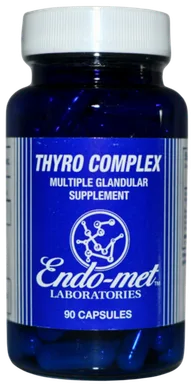
Endo-met Laboratories Thyro Complex Review
Thyro Complex is a multiple glandular product from Endo-met Laboratories, designed to support thyroid glandular activity. The page states it is hormone-free and contains low-temperature freeze-dried glandular material. It is free from casein, corn, dairy, egg, gluten, lactose, soy, wheat, whey and yeast. Each capsule contains iodine from kelp, bovine thyroid powder (thyroxin free), porcine adrenal powder, bovine pituitary powder, porcine spleen powder and kelp. The suggested use is one capsule daily, or as directed by a physician. The bottle holds 90 capsules. The page lists warnings to keep out of reach of children and to consult a medical practitioner if undergoing treatment, pregnant or lactating. The product is currently sold out. Endo-met Laboratories was founded in 1975 by Dr. Paul C. Eck and offers mineral and vitamin products for health care professionals based on mineral balancing. The brand states its products are designed to match the biochemical individuality of users. The page carries a statement that it has not been evaluated by the Food and Drug Administration and is not intended to diagnose, treat, cure or prevent any disease.
We don’t sell supplements. We help you make decisions and get the best price.
Lowest prices
We may earn a commission from some store links. How we choose.
Finding the lowest prices at the stores now. This takes a few seconds.
Study, Trial or Testing Result Summary
Members Only46 human studies · 6 improved
No study tested this product. Its main ingredient by weight is kelp, at 300 mg a day, well below the studied amounts of several grams of seaweed. In healthy adults, kelp or kombu did not improve thyroid hormones compared with placebo [1][2]. Several trials found kelp or seaweed raised thyroid-stimulating hormone, a sign of thyroid strain, though levels mostly stayed normal or returned to baseline after stopping [3][4][5][6]. The thyroid gland powder was not studied in this form. Trials used prescription dried thyroid extract in people with an underactive thyroid. It worked about as well as standard synthetic hormone on symptoms, thinking tests and keeping hormone levels in range [7][8][9], and many patients preferred it [10]. It made no difference to heart rate, cholesterol, mood or quality of life [11]. People with more symptoms did better on it, while those with few symptoms did worse [12]. Whether a 60 mg supplement powder behaves like the prescription extract is unknown. The adrenal, pituitary and spleen powders have no human studies. Animal and cell studies are never counted.
See all 46 studies →Hide the studies
- Across 11 randomized trials of 1135 adults with underactive thyroid, about 52% preferred combination treatment or desiccated thyroid over a med alone (24%), with 24% having no preference.Treatment Preferences in Patients With Hypothyroidism.
- In a pooled analysis of randomized trials, desiccated thyroid raised T3 and lowered T4 versus a med but made no significant difference to heart rate, cholesterol, depression or quality of life scores.Evaluating the effectiveness of combined T4 and T3 therapy or desiccated thyroid versus T4 monotherapy in hypothyroidism…
- A review of 45 observational studies found that dietary patterns high in seaweed were linked to a higher risk of thyroid cancer, though the evidence was mixed and not from trials.Dietary Pattern and Risk of Thyroid Cancer: A Systematic Review.
- A review of 14 studies found the two randomized trials showed no difference in quality of life or symptoms with desiccated thyroid, while non-randomized studies favored it, and evidence quality was moderate to very low.Potential Risks and Benefits of Desiccated Thyroid Extract for the Treatment of Hypothyroidism: A Systematic Review.
- In a re-analysis of two crossover trials of 143 patients, those with moderate to high symptoms on a med had lower symptom scores on desiccated thyroid, while those with low symptoms did worse on it.Use of the 36-Point Thyroid Symptom Questionnaire to Potentially Guide Optimal Thyroid Hormone Replacement Therapy.
- In 75 hypothyroid patients over 22 weeks per treatment, desiccated thyroid gave similar symptom, mood and memory results to a med overall, though the most symptomatic third preferred and improved on treatments containing T3.Read the study on PubMed (34185829) →
- In 70 hypothyroid adults taking desiccated thyroid for 16 weeks, symptoms and thinking tests did not differ from a med, patients lost about 3 pounds, and 48.6% preferred desiccated thyroid.Read the study on PubMed (23539727) →
- In 50 overweight Japanese adults, 6 g a day of iodine-reduced kelp powder for 8 weeks did not raise thyroid hormone levels compared with placebo.Effects of Daily Kelp (Laminaria japonica) Intake on Body Composition, Serum Lipid Levels, and Thyroid Hormone Levels in…
- In 36 healthy adults, 4 weeks of kelp capsules raised thyroid-stimulating hormone in both the low and high dose groups, and high dose also lowered total triiodothyronine, with levels returning to baseline mostly after stopping.Effects of kelp supplementation on thyroid function in euthyroid subjects.
- In 25 healthy postmenopausal women, 5 g a day of seaweed for 7 weeks gave a small but significant rise in thyroid-stimulating hormone compared with placebo.Seaweed and soy: companion foods in Asian cuisine and their effects on thyroid function in American women.
- In 18 adults, iodine from two seaweeds was absorbed at 61 to 101 percent, with better absorption in people who were not iodine deficient, though this study measured iodine absorption rather than thyroid health.Bioavailability of seaweed iodine in human beings.
- In 13 patients with autoimmune thyroid disease switched to porcine desiccated thyroid for a year, thyroid antibody levels and TSH did not change, though T4 was lower and some immune cell responses to thyroid proteins were reduced.Induction of oral tolerance in human autoimmune thyroid disease.
- In nine healthy adults, a single sushi meal with seaweed salad sharply raised urine iodine and caused a brief rise in TSH that was back to normal by day 3, with no adverse events reported.Intake of seaweed as part of a single sushi meal, iodine excretion and thyroid function in euthyroid subjects: a randomi…
- In healthy adults, 5 g a day of red seaweed in bread raised thyroid-stimulating hormone by 17% compared with control, though levels stayed in the normal range.The effect of consuming Palmaria palmata-enriched bread on inflammatory markers, antioxidant status, lipid profile and t…
- In healthy Japanese adults, 12 weeks of kombu cookies providing 420 mcg of iodine a day did not raise thyroid hormone levels compared with placebo.Effects of Daily Kombu (Laminaria japonica) Intake on Body Composition, Blood Pressure, and Fecal Microbiota in Healthy …
- In 20 women with underactive thyroid, dried thyroid gland did not normalize T4 or TSH in any patient, whereas a med normalized TSH in 17 of those with primary hypothyroidism.[Comparative effects of desiccated thyroid gland and sodium salt of L-thyroxine in the treatment of hypothyroidism].
- In 49 Norwegian habitual seaweed eaters, stopping seaweed for six weeks cut estimated iodine intake well below the upper safe limit and significantly lowered the thyroid marker TSH, with the biggest drop in those who had eaten the most iodine.Impact of habitual seaweed consumption on iodine nutrition and thyroid function: a non-randomized pre-post clinical stud…
- In 35 severely disabled patients on long-term tube feeding, most had low iodine, and powdered kelp raised urinary iodine to normal and recovered thyroid function in five patients with iodine-deficiency hypothyroidism.Investigation of iodine deficient state and iodine supplementation in patients with severe motor and intellectual disabi…
- In 33 Japanese patients with underactive thyroid, avoiding iodine-rich foods such as seaweed for 1 to 2 months lowered thyrotropin in most, and 21 of 33 (63.6%) had a clear drop, with 11 becoming normal.Effect of iodine restriction on thyroid function in patients with primary hypothyroidism.
- In normal Japanese adults, eating 15 g of kombu seaweed daily raised TSH, sometimes above the normal range, and lowered free thyroxine slightly; values returned to baseline within weeks after stopping.Suppression of thyroid function during ingestion of seaweed "Kombu" (Laminaria japonoca) in normal Japanese adults.
- In a database study of about 1.26 million people with hypothyroidism followed for up to 20 years, those taking a med plus liothyronine had lower dementia and death risks than those on a med alone.Treatment of Hypothyroidism That Contains Liothyronine is Associated With Reduced Risk of Dementia and Mortality.
- In a large Korean population study of 169,057 adults, eating seaweed more than 5 times a week was associated with about 58 percent lower odds of having thyroid cancer compared with lower seaweed intake.Association between Consumption of Iodine-Rich Foods and Thyroid Cancer Prevalence: Findings from a Large Population-Bas…
- In a large Japanese birth cohort of about 100,000 mother-child pairs, seaweed intake was studied as a possible risk factor for infant hypothyroidism, but the abstract reports no seaweed-specific result; maternal thyroid disease was the main risk factor found.Mother's iodine exposure and infants' hypothyroidism: the Japan Environment and Children's Study (JECS).
- A large US claims analysis of adults with hypothyroidism found that desiccated thyroid extract prescriptions doubled from 2010 to 2020, while liothyronine use stayed stable; the study did not measure whether thyroid health improved.Demographic, Healthcare Access, and Dietary Factors Associated With Thyroid Hormone Treatments for Hypothyroidism.
- In a large Japanese cohort of 35,687 women followed for about 13 years, daily seaweed eating was not linked to a higher risk of thyroid cancer compared with eating it once or twice a week or less.Prospective study of seaweed consumption and thyroid cancer incidence in women: the Japan collaborative cohort study.
- In an online survey of 12,146 people with hypothyroidism, those taking desiccated thyroid extract reported higher treatment satisfaction than those on a med alone or with liothyronine, though the survey cannot show cause.An Online Survey of Hypothyroid Patients Demonstrates Prominent Dissatisfaction.
- In a survey of 5,967 US adults, dairy, eggs, and breads, plus iodine supplements, were linked to higher iodine levels in urine, while beverages were linked to lower levels; seaweed was not named as a predictor of iodine status.Food Group Intakes as Determinants of Iodine Status among US Adult Population.
- In a survey of 5437 adults taking thyroid hormone, heart and bone related care visits were similar for desiccated thyroid extract or combination therapy and a med alone after matching for patient differences.A Cross-Sectional Analysis of Cardiovascular and Bone Health Care Utilization During Treatment With Thyroid Hormone.
- In Hong Kong, about half of children and adults had low urine iodine, and most people never ate seaweed, kelp or laver, so iodine insufficiency was common even in a coastal city.Existence of iodine deficiency in Hong Kong--a coastal city in southern China.
- In 349 Korean pregnant women, high dietary iodine during pregnancy, which rose sharply with seaweed soup after delivery, had no effect on maternal thyroid function or birth outcomes.High intakes of iodine among women during pregnancy and the postpartum period has no adverse effect on thyroid function.
- In a Korean case-control study of 117 people with thyroid cancer and 173 controls, higher intake of the seaweed gim (laver) was linked to lower thyroid cancer risk, while intake of miyeok (kelp-type seaweed) and total seaweed showed no significant link.Seaweed and Iodine Intakes and SLC5A5 rs77277498 in Relation to Thyroid Cancer.
- Edible Arctic seaweeds were very high in iodine and largely absorbed, and in 268 Inuit adults in Greenland, weekly seaweed eating was linked to higher iodine excretion, with wide variation that the authors say calls for checking thyroid function.Iodine in Edible Seaweed, Its Absorption, Dietary Use, and Relation to Iodine Nutrition in Arctic People.
- In Korean patients with thyroid disease, iodine intake and urinary iodine were higher than in normal subjects, and the highest levels were in thyroid cancer patients who used seaweed or seaweed-containing supplements, suggesting excess iodine.Dietary iodine intake and urinary iodine excretion in patients with thyroid diseases.
- Physicians reported 174 adverse events in patients taking thyroid hormone extract, most often new symptoms tied to abnormal thyroid-stimulating hormone levels that were consistent with an overactive thyroid, and two patients developed irregular heart rhythms.ADVERSE EVENT REPORTING IN PATIENTS TREATED WITH THYROID HORMONE EXTRACT.
- In 81 Korean postpartum women followed for one year, seaweed soup iodine intake in the early postpartum period was not linked to thyroid disease or abnormal thyroid hormone levels at one year, though the study was small and may have lacked power.Seaweed-Derived Iodine Intake During the Korean Postpartum Period: A 1-Year Follow-Up Study.
- Some seaweed foods contained very high iodine, and a quarter of regular seaweed eaters in this Dutch survey went above the daily safe limit of 600 micrograms of iodine over the past month.Content, bio-accessibility and intake of iodine from seaweed-containing food products available in The Netherlands.
- In 44 Norwegian seaweed consumers, habitual seaweed intake led to excessive iodine levels in urine, and thyroid stimulating hormone was higher than in comparable groups, though still within the normal range.Iodine Status and Thyroid Function in a Group of Seaweed Consumers in Norway.
- In 34 Japanese newborns, mothers who ate large amounts of kombu and other seaweed during pregnancy had babies with excess iodine, and 12 of 15 affected infants later needed thyroid hormone medicine.Transient hypothyroidism or persistent hyperthyrotropinemia in neonates born to mothers with excessive iodine intake.
- Among 39 patients with overactive thyroid at a Swiss hospital, 8 had overactive thyroid caused by excess iodine, including one who took kelp tablets, and most needed antithyroid drugs for several months.[Iodine-induced hyperthyroidism (iodine-induced Basedow's disease): a current disease picture].
- In a large Korean hospital cohort, people who ate a lot of seaweed had about four times higher odds of thyroid cancer than those who ate little.Association of Polygenetic Risk Scores Related to Cell Differentiation and Inflammation with Thyroid Cancer Risk and Gen…
- In a large Korean hospital cohort, people with a high genetic risk score for inflammation and immunity had higher hyperthyroidism risk when their seaweed intake was low, and the link to diet varied with other factors.Association of Polygenetic Risk Scores Related to Immunity and Inflammation with Hyperthyroidism Risk and Interactions b…
- In Koreans, average iodine intake from brown seaweed was about 559 mcg per day, but the median was zero because only 37.6% of people ate it on the survey day, and this study did not measure any thyroid outcome.Iodine intake from brown seaweed and the related nutritional risk assessment in Koreans.
- In a cross-sectional survey of Hainan Province residents, kelp supplied about 8 percent of dietary iodine, behind iodized salt, and the survey did not link kelp intake to thyroid outcomes.Does the island area also need to insist on salt iodization to prevent iodine deficiency disorders? a cross-sectional su…
- In a retrospective matched cohort followed for 3 years, thyroid-stimulating hormone stayed in range about 79% of the time with both desiccated thyroid and synthetic a med, with no difference between them.Thyroid Stimulating Hormone Stability in Patients Prescribed Synthetic or Desiccated Thyroid Products: A Retrospective S…
- In analysis of online forum posts from 673 people taking desiccated thyroid extract, most described it as more effective than their previous treatment, while about one in five reported side effects.Patient Experiences and Perceptions Associated with the Use of Desiccated Thyroid Extract.
- Seven severely disabled patients fed by tube who had low thyroid function from iodine deficiency had their thyroid function restored and urinary iodine normalized after taking 1-2 g of powdered kelp (200-400 mcg iodine) daily.Treatment of Hypothyroidism due to Iodine Deficiency Using Daily Powdered Kelp in Patients Receiving Long-term Total Ent…
Review Totals and Summary
Members Only4 reviews · 100% positive
Amazon shows 2 ratings in total for Endo-met Laboratories Thyro Complex, and the themes below come from the written reviews that could be read on that page, which amounted to almost nothing. Only two reviews appear, and both are very brief. One, from an anonymous reviewer, reads simply "GREAT !!!". The other, from Heather Howard, is a five star rating with no written text at all. So the only written feedback is a single short burst of enthusiasm, and the star ratings are both top marks. Both reviews were collected through a store invitation rather than being left spontaneously, which is worth bearing in mind when reading the perfect score. What buyers praise: the only praise is general. The word "great" and the five star rating express satisfaction, but neither review says what the buyer was satisfied with. Nothing is said about whether the supplement worked, how quickly, or how it compared with anything else. What buyers complain about: there are no complaints in the readable reviews. That should not be read as a sign that the product is free of problems, only that nobody wrote about any. Who it seems to suit: the reviews do not say who the buyers are, why they bought a thyroid glandular supplement, or how they used it. Nothing can be said about which kind of person gets the most from it, or about use over time and whether it met expectations after weeks or months. Taste, form and value: none of these is mentioned. There are no comments on capsule size, how easy the capsules are to swallow, any taste or aftertaste, the number of capsules per serving, or whether the price is good value. The page carried no reviews of other forms of the product, so nothing had to be left out on that account, and everything here concerns the capsules. Overall, this is a very small sample of two ratings with almost no written detail, and no reliable patterns can be drawn from it. A perfect rating from two people, both gathered through a store invitation, is a friendly signal but not strong evidence. Anyone considering the product should look for more detailed feedback elsewhere, covering effectiveness, tolerability, dosing and value, before drawing firm conclusions.
Biohacker Summary
Members Only3 of 10 recommend it
Kelp is the main ingredient here, and the panel is split: three of the six who spoke recommend it, two warn against it, and one is neutral. Those in favor point to its iodine for thyroid health, and they also mention beta glucans with little carbohydrate impact, easing the effect of cruciferous vegetables, and trace minerals; one of them noted that reaching 2,000 micrograms of iodine a day would take many pills. The two who warn say kelp and other iodine-rich seaweeds can trigger hyperthyroidism in people with an undiagnosed nodule and call for caution with autoimmune thyroid disease. One panelist is neutral and says some people may want kelp for iodine while others may not, and he does not eat it regularly. Forms mentioned include kelp powder in smoothies and clay masks, and a smaller ingredient in this product, bovine thyroid, was recommended by one panelist at one capsule before bed for three months.
See all 6 biohackers →Hide the biohackers
Peter Attia · Kelp · warns
- Warns that kelp and other iodine-rich seaweeds in supplements can independently trigger hyperthyroidism in people with an undiagnosed autonomous nodule by forcing iodine into the system.
Ben Greenfield · Kelp · warns
- Advises caution with kelp and high iodine seaweeds for individuals with autoimmune thyroid disease.
- Uses a clay mask that contains kelp powder.
- Uses organic kelp powder in his mask, highlighting its potency as a topical cleanser and its blood-building and stem cell production stimulating properties for the skin.
- Ben recommends Kelp powder (iodine) for hot flashes.
- Ben threw kelp powder into his smoothie.
- Advises avoiding anything containing kelp, specifically due to iodine, if taking a med, as it can interfere with absorption.
Dave Asprey · Kelp · recommends
- Mentions kelp as a source of iodine, but notes that 2,000 micrograms a day would require many pills.
- Dave Asprey's company includes kelp in their products to help detoxify the liver of mercury.
Thomas DeLauer · Kelp · recommends
- Recommends kelp as a source of iodine to support thyroid function.
- Recommends kelp for thyroid health, stating that one serving once a week provides enough iodine to produce T4 and T3 hormones, which are essential for metabolism.
- Leans into kelp as a way to get beta glucans with minimal carbohydrate impact.
- Recommends leaning into kelp as a source of beta-glucans that can be easily added with minimal carbohydrate impact.
- States that ethanol extracts of kelp can inhibit the breakdown of glucagon-like peptide 1 and that kelp naturally contains iodine, which is important for thyroid hormone synthesis, insulin, and overall metabolism.
- Finds kelp powder or seaweed powder very beneficial, especially for thyroid health due to its iodine levels, and notes its robust mineral profile including zinc.
- Recommends kelp and certain kinds of seaweed as foods that do not trigger an insulin spike, being primarily nutrients, minerals, and soluble fiber.
- Mentions that kelp is included in an organic miso broth and is a great source of iodine.
- Recommends getting iodine through kelp or seaweed.
- Recommends kelp as a good source of iodine for thyroid health.
Dr. Eric Berg · Kelp · recommends
- Recommends taking kelp because of its iodine content, which helps reduce estrogen, a factor in fibrocystic breast problems.
- Suggests that taking kelp on a regular basis can easily counter any potential bad effects from goitrogenic foods.
- Suggests that a little kelp can help reduce the goitrogenic effect of cruciferous vegetables.
- Suggests kelp as a good source for trace minerals like iodine, selenium, and zinc, which are important for thyroid health.
- Recommends Thyrotrophin PMG by Standard Process, an animal extract of the thyroid, to be taken one before bed over three months, theorizing it acts as a decoy for antibodies attacking the thyroid.
- Recommends Pituotrophin PMG by Standard Process to support the pituitary gland, which makes growth hormone, and states he has personally recommended it and seen a difference in children's height.
- Recommends consuming kelp as a food high in trace minerals to provide the hair with necessary nutrients.
- States that if he had hypothyroidism, he would take Thytrophin PMG.
- Recommends getting trace minerals from organic sea kelp harvested from a very healthy part of the world.
- Warns against using kelp for hyperthyroidism.
- Recommends getting iodine from a food-based source like quality kelp, warning against polluted oceans.
- Recommends kelp as a really good source of trace minerals, minerals, and protein, and notes it has tons of iodine for thyroid health and estrogen regulation, but warns against taking too much.
- Recommends kelp as the most concentrated source of iodine, suggesting one capsule would provide about 150 micrograms daily, and advises ensuring it is high quality.
- Dr. Berg recommends looking into Thyrotrophin PMG by Standard Process, a glandular extract that acts as a decoy to distract antibodies from attacking the thyroid, suggesting one tablet before bed.
Andrew Huberman · Kelp · neutral
- Mentions that some people might want to ingest kelp for iodine intake, while others might not, advising listeners to consult a previous episode for more information.
- States he is not someone who eats a lot of kelp or seaweed and does not ingest it regularly.
RAL Summary
Members OnlyTier 4 for Thyroid Health
Tier 5 relies on a misread of the thyroid extract trials: they tested prescription dried thyroid in people with an underactive thyroid and found it performed about as well as standard hormone, not that it fails, and they did not test this bovine supplement powder, so the evidence is thin and mixed rather than showing it does not work. So it is graded Tier 4, as the studies disagree.
- Emerging: not enough evidence to rank higher yet.
Where the evidence disagrees: 32 of the 46 human studies found no effect.
More Details
Members OnlyBody systems · Combine with · Possible side effects
Body systems: Endocrine system
Combine with: For thyroid support, pair this product with selenium (selenomethionine, 100-200 mcg) for deiodinase function and thyroid antioxidant protection, zinc (15-30 mg) and iodine only if intake is low and under medical guidance, plus L-tyrosine and vitamin D3 with K2. Magnesium and B-complex vitamins can help energy metabolism. If the person also wants cellular and DNA repair support, consider adding separate products such as NMN or NR with resveratrol or pterostilbene, CoQ10 or ubiquinol, alpha-lipoic acid, and quercetin or fisetin. People with thyroid conditions or on meds, such as a med, should consult a clinician before combining, since Guggul and Ashwagandha can affect thyroid hormone levels.
Possible side effects: Kelp and seaweed raised thyroid-stimulating hormone in several trials, sometimes above the normal range. Physicians reported side effects with prescription dried thyroid, often signs of an overactive thyroid [PMID:28225316].
Supplement Facts
Kelp 300 mg · Bovine Thyroid powder 60 mg · Porcine Adrenal powder 30 mg
| Kelp | 300 mg | † |
| Bovine Thyroid powder | 60 mg | † |
| Porcine Adrenal powder | 30 mg | † |
| Bovine Pituitary powder | 10 mg | † |
| Porcine Spleen powder | 10 mg | † |
Other ingredients: Rice Flour, Gelatin, Magnesium Stearate.
Directions: Suggested use: One capsule daily, or as directed by a physician. Am noon pm
Label source: NIH label database · Report a label change
Show entire label
More thyroid health products
Members OnlyThe highest ranked for the same goal
Read more
Our articles on this subject
- Supplement and Medication Interactions You Should KnowArticle · Oct 20, 2026
Graded November 8, 2026 by the Reverse Age Lab evidence engine, from human studies, real reviews and our biohacker panel. How we grade. Is this medical advice? No. Rala organizes the published evidence; go over any change with your doctor, especially if you take meds.
Privacy policyConsumer health dataAffiliate disclosureTermsDo Not Sell or Share My Personal InformationCookie settings