
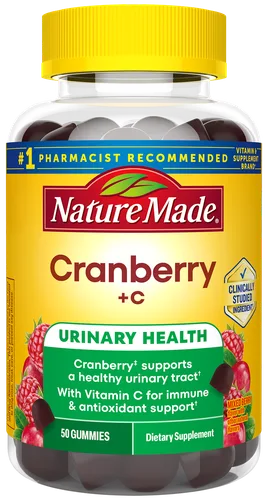
Nature Made Cranberry 500 mg Per Serving + Vitamin C Gummies Review
We don’t sell supplements. We help you make decisions and get the best price.
Lowest prices
We may earn a commission from some store links. How we choose.
Finding the lowest prices at the stores now. This takes a few seconds.
Study, Trial or Testing Result Summary
Members Only70 human studies · 44 improved
26 of these 70 human studies gave the ingredient by drip, not by mouth.
This gummy has two ingredients studied for blood flow, and both are well below the amounts that helped in studies. Vitamin C is at 90 mg, while the trials that helped used 500 mg daily. In people with heart artery disease, 500 mg daily for 30 days improved how well the arm artery widened [1]. In adults with type 2 diabetes it reduced artery stiffness [2], and in obese children it restored forearm vessel widening [3]. A single 2 g dose helped people whose vessels worked poorly [4]. Results are not uniform, though: a large review of 6409 people found no overall effect on artery stiffness [5]. Cranberry is a 500 mg fruit powder blend, a trace amount next to the 9 g of cranberry powder that improved vessel widening in healthy men [6]. Cranberry juice modestly lowered blood pressure in a pooled analysis [7] and reduced artery stiffness in people with heart disease [8]. However, a 4 month juice trial found no improvement in blood vessel function [9]. At these low doses, the gummy is unlikely to match the study results. Animal and cell studies are never counted.
See all 70 studies →Hide the studies
- In seven controlled trials with 872 patients having heart artery procedures or bypass surgery, vitamin C given by vein lowered peak troponin by about 43% and peak CK-MB by about 14% and reduced oxidative stress markers.Vitamin C may reduce troponin and CKMB levels after PCI and CABG: a meta-analysis.
- In six studies of 160 people with sleep apnea, antioxidant treatments including vitamin C improved blood vessel dilation by about 2.16 percentage points and reduced oxidative stress, but vitamin C was not analyzed separately.Antioxidant therapies for obstructive sleep apnea: A systematic review and meta-analysis.
- Pooling 45 trials of berries, citrus and cherries, cranberry juice modestly lowered blood pressure (about 1.5 mmHg top number and 1.8 mmHg bottom number), though berries overall raised one blood vessel adhesion marker.Effects of chronic consumption of specific fruit (berries, citrus and cherries) on CVD risk factors: a systematic review…
- A review of 10 systematic reviews covering 6409 people found contrasting results for vitamin C on blood vessel function, with no overall effect on arterial stiffness and only limited benefit in some subgroups.Limited evidence for a beneficial effect of vitamin C supplementation on biomarkers of cardiovascular diseases: an umbre…
- In eight trials with 1185 patients, vitamin C given by vein before a heart artery procedure reduced heart injury markers, oxidative stress and inflammation, while improvements in heart pumping function were inconclusive.Vitamin C for Cardiac Protection during Percutaneous Coronary Intervention: A Systematic Review of Randomized Controlled…
- A review of randomized trials in people with diabetes or metabolic syndrome found vitamin C, mostly 1,000 mg daily for 4 weeks to 12 months, lowered cholesterol and inflammation and was consistent with better endothelial function and blood flow.Vitamin C intake potentially lowers total cholesterol to improve endothelial function in diabetic patients at increased …
- In 84 people with poor blood vessel function and heart risk factors, drinking about 460 ml of cranberry juice daily for 4 months did not improve blood vessel function compared with placebo.Polyphenol-rich cranberry juice has a neutral effect on endothelial function but decreases the fraction of osteocalcin-e…
- In 78 overweight adults, a single dose of cranberry beverage lowered endothelin-1 and raised nitric oxide, and 8 weeks of 450 ml daily lowered a blood inflammation marker (C-reactive protein) and raised HDL cholesterol compared with placebo.Chronic consumption of a low calorie, high polyphenol cranberry beverage attenuates inflammation and improves glucoregul…
- In 46 people with high cholesterol, a single 2 g dose of ascorbic acid lengthened the duration of forearm reactive blood flow after two hours versus placebo but did not raise peak flow.Effect of ascorbic acid on forearm reactive hyperaemia in patients with hypercholesterolaemia.
- In 70 healthy young adults exposed to simulated night train noise, vitamin C improved blood vessel dilation in women but not in men.Acute Exposure to Simulated Nocturnal Train Noise Leads to Impaired Sleep Quality and Endothelial Dysfunction in Young H…
- In 60 healthy older adults, 12 weeks of daily cranberry powder improved visual memory and increased blood flow in some brain regions compared with placebo, and lowered LDL cholesterol.Chronic Consumption of Cranberries (Vaccinium macrocarpon) for 12 Weeks Improves Episodic Memory and Regional Brain Perf…
- In 46 people with coronary artery disease, 500 mg of vitamin C daily for 30 days improved blood vessel widening in the arm artery (about 8.6% to 9.0% vs unchanged with placebo), and a single 2 g dose also helped.Long-term ascorbic acid administration reverses endothelial vasomotor dysfunction in patients with coronary artery disea…
- In 45 healthy men, 9 g of cranberry powder daily for 1 month improved blood vessel widening function (flow-mediated dilation) compared with control, but did not change arterial stiffness, blood pressure or blood lipids.Daily consumption of cranberry improves endothelial function in healthy adults: a double blind randomized controlled tri…
- In 44 people with coronary artery disease, 480 ml of cranberry juice daily for 4 weeks reduced aortic stiffness compared with placebo, but did not change blood vessel widening function or blood pressure.Effects of cranberry juice consumption on vascular function in patients with coronary artery disease.
- In 42 people with kidney disease, a one-time vitamin C infusion produced only a non-significant trend toward better artery dilation in the placebo group; the trial's main test was a different drug (rilonacept), not vitamin C.IL-1 Inhibition and Vascular Function in CKD.
- In 40 adults with elevated blood pressure, 500 ml of cranberry juice daily for 8 weeks did not change central systolic blood pressure but lowered daytime diastolic ambulatory pressure by about 2 mmHg and changed LDL particle size compared with placebo.Effects of Cranberry Juice Supplementation on Cardiovascular Disease Risk Factors in Adults with Elevated Blood Pressure…
- In 39 people with high blood pressure, 500 mg of vitamin C daily for one month did not improve blood vessel widening compared with placebo.Effect of ascorbic acid treatment on conduit vessel endothelial dysfunction in patients with hypertension.
- In 39 people with heart failure, 4 grams of vitamin C daily for 4 weeks improved a blood vessel measure but worsened muscle energy handling during exercise.Chronic oral ascorbic acid therapy worsens skeletal muscle metabolism in patients with chronic heart failure.
- In 35 abdominally obese men, 500 ml of cranberry juice cocktail daily for 4 weeks did not change arterial stiffness differently from placebo juice, though stiffness fell within the cranberry group.Evidence that cranberry juice may improve augmentation index in overweight men.
- A single intravenous vitamin C infusion lowered elevated blood flow in the brain in people with Fabry disease and in healthy controls, though the placebo group responded more slowly.Ascorbate decreases Fabry cerebral hyperperfusion suggesting a reactive oxygen species abnormality: an arterial spin tag…
- In 26 healthy men and 8 men with peripheral artery disease, vitamin C infused into the arm during reperfusion after ischemia prevented the loss of blood vessel widening seen with placebo.Intra-arterial vitamin C prevents endothelial dysfunction caused by ischemia-reperfusion.
- In 31 people with leg artery disease, vitamin C given before maximal walking prevented the drop in artery widening and the rise in oxidative stress seen after exercise in those given saline.Vitamin C prevents endothelial dysfunction induced by acute exercise in patients with intermittent claudication.
- In 30 adults with type 2 diabetes, 500 mg of vitamin C daily for 4 weeks lowered blood pressure and reduced arterial stiffness, while placebo had no effect.Ascorbic acid reduces blood pressure and arterial stiffness in type 2 diabetes.
- In 30 overweight adults with high cholesterol, 500 mg of vitamin C taken daily with vitamin E for 6 weeks did not significantly improve blood vessel widening compared with placebo.Oats, antioxidants and endothelial function in overweight, dyslipidemic adults.
- In 30 heart surgery patients on heart-lung bypass, one intravenous vitamin C dose given during rewarming reduced a rise in reactive oxygen molecules and improved red blood cell flexibility compared with placebo.Vitamin C supplementation attenuates oxidative stress and improves erythrocyte deformability in cardiac surgery with car…
- In 29 salt-resistant adults on a high-salt diet for 7 days, local infusion of ascorbic acid restored skin blood vessel dilation that the high-salt diet had reduced.Apocynin and Tempol ameliorate dietary sodium-induced declines in cutaneous microvascular function in salt-resistant hum…
- A single intravenous 1,000 mg dose of vitamin C improved arm blood vessel widening in people with type 1 diabetes and in regular smokers, compared with saline, in a study of 24 people where uric acid was the main test.Uric acid restores endothelial function in patients with type 1 diabetes and regular smokers.
- In a double-blind trial of 21 obese children aged 8 to 12, 500 mg of vitamin C daily for 45 days lowered mean blood pressure and restored forearm blood vessel dilation during mental stress, while placebo did not.Vitamin C restores blood pressure and vasodilator response during mental stress in obese children.
- In 19 healthy adults, a single 2 g oral dose of vitamin C shortened the blood vessel dysfunction caused by smoking one cigarette, recovering to baseline levels faster than placebo.Oral administration of ascorbic acid attenuates endothelial dysfunction after short-term cigarette smoking.
- In 18 people with metabolic syndrome, a single 1 g intravenous vitamin C infusion improved artery widening compared with placebo and counteracted the rise in an oxidative stress marker.Oxidative stress-mediated arterial dysfunction in patients with metabolic syndrome: Effect of ascorbic acid.
- In 17 people with resistant high blood pressure and high cholesterol, 500 mg of vitamin C daily for 8 weeks did not change blood pressure, cholesterol or artery widening compared with placebo, while a med did.Read the study on PubMed (15609886) →
- In 16 healthy women, taking a lutein complex containing 500 mg of vitamin C daily for three weeks increased blood flow in the retina of the eye and lowered diastolic blood pressure compared with placebo, though the effects cannot be attributed to vitamin C alone because it was combined with other ingredients.Lutein Complex Supplementation Increases Ocular Blood Flow Biomarkers in Healthy Subjects.
- In 14 overweight men, a single 3 g intravenous ascorbic acid infusion reduced oxidative damage and vascular remodeling markers during mental stress compared with placebo.Ascorbic acid inhibits vascular remodeling induced by mental stress in overweight/obese men.
- In 13 kidney transplant recipients, a single 2,000 mg oral dose of vitamin C improved the widening of blood vessels in the arm after blood flow was increased, compared with placebo, measured 2 hours after dosing.Vitamin C improves endothelial dysfunction in renal allograft recipients.
- In 12 healthy young adults, intra-arterial vitamin C during a single session of forearm exercise in high oxygen blocked the drop in forearm blood flow only in the subgroup most affected by high oxygen, and had no effect in the other subgroups.Effect of vitamin C on hyperoxia-induced vasoconstriction in exercising skeletal muscle.
- In 11 men sitting for 3 hours, taking 1 g plus 500 mg of vitamin C prevented the usual decline in artery flow-mediated dilation seen when sitting without it.Antioxidant vitamin C prevents decline in endothelial function during sitting.
- In a crossover study of 10 healthy adults, 2 g of oral vitamin C did not prevent the drop in endothelial-dependent blood vessel dilation caused by methionine-induced raised homocysteine.The effect on endothelial function of vitamin C during methionine induced hyperhomocysteinaemia.
- In 10 healthy men, single doses of cranberry juice improved flow-mediated dilation in a dose-dependent way, with the largest effect at about 1238 mg of total cranberry polyphenols, peaking around 4 hours after drinking.Cranberry (poly)phenol metabolites correlate with improvements in vascular function: A double-blind, randomized, control…
- In 8 people with high blood pressure, vitamin C infused directly into an artery improved blood vessel widening, and 2 months of a med also improved it.Read the study on PubMed (12164090) →
- In 8 male smokers, 1 g of vitamin C daily for about 5 weeks did not improve blood vessel widening or clot-dissolving activity compared with placebo.Vitamin C has no effect on endothelium-dependent vasomotion and acute endogenous fibrinolysis in healthy smokers.
- Vitamin C applied to the skin after UV exposure, alone or combined with vitamin E and melatonin, did not significantly reduce sunburn redness or change skin blood flow.Effect of topical antioxidants on UV-induced erythema formation when administered after exposure.
- In healthy men, a single 2 g oral dose of vitamin C reduced arterial stiffness and clotting-cell aggregation compared with placebo, which showed no change.Oral vitamin C reduces arterial stiffness and platelet aggregation in humans.
- In a double-blind trial in people with heart failure, vitamin C lowered circulating apoptotic microparticles (signs of blood vessel cell death) compared with placebo, which had no effect.Vitamin C inhibits endothelial cell apoptosis in congestive heart failure.
- In people with heart failure from blocked heart arteries, infused vitamin C was tested alone and with L-arginine on nervous system control of blood vessels, but the abstract does not clearly report the effect of vitamin C alone.Influence of L-arginine and vitamin C on the autonomic nervous system in chronic heart failure secondary to ischemic car…
- In a randomized, double-blind crossover study of healthy men, a single 2 g intravenous dose of vitamin C given before a two-hour high-blood-sugar challenge prevented the rise in arterial stiffness and pulse wave reflection seen with placebo.Protective effects of ascorbic acid on arterial hemodynamics during acute hyperglycemia.
- A single 2 gram oral dose of vitamin C made skin blood vessels constrict more strongly to cold, which reduced skin blood flow.Oral vitamin C enhances the adrenergic vasoconstrictor response to local cooling in human skin.
- In 75 men with coronary artery disease, vitamin C infused into the forearm artery raised baseline forearm blood flow and acetylcholine-stimulated flow in those with high inflammation (CRP) but not those with low CRP.C-reactive protein levels determine systemic nitric oxide bioavailability in patients with coronary artery disease.
- In 46 people with coronary artery disease, a single 2 g dose of vitamin C improved blood vessel dilation within 2 hours in those with poor baseline function (2.0% to 9.7%), while placebo had no effect.Ascorbic acid reverses endothelial vasomotor dysfunction in patients with coronary artery disease.
- In 39 lean, obese, and metabolic syndrome adults, an acute infusion of ascorbic acid did not change how quickly or how much blood vessels widened during arm exercise.Exercise-mediated vasodilation in human obesity and metabolic syndrome: effect of acute ascorbic acid infusion.
- In 23 healthy young men, intra-arterial vitamin C reversed the angiotensin II-related weakening of endothelium-dependent forearm blood vessel dilation, while vitamin C alone did not change it.Vitamin C improves attenuated angiotensin II-induced endothelium-dependent vasodilation in human forearm vessels.
- In 11 people with high cholesterol and 12 healthy controls, vitamin C infused directly into the arm improved blood vessel widening in response to methacholine in the people with high cholesterol, with no change in controls.Vitamin C improves endothelium-dependent vasodilation in forearm resistance vessels of humans with hypercholesterolemia.
- In 10 people with type 2 diabetes, vitamin C infused into the arm artery improved the widening of forearm blood vessels in response to methacholine, while it had no effect in 10 non-diabetic controls.Vitamin C improves endothelium-dependent vasodilation in patients with non-insulin-dependent diabetes mellitus.
- In 10 chronic smokers, vitamin C infused into the arm artery markedly improved the widening of forearm blood vessels in response to acetylcholine, while it had no effect in 10 non-smoking controls.Antioxidant vitamin C improves endothelial dysfunction in chronic smokers.
- In 11 smokers, vitamin C restored heart muscle blood flow reserve that was reduced compared with 8 non-smokers, while it had no effect in the non-smokers.Coronary heart disease in smokers: vitamin C restores coronary microcirculatory function.
- In 11 people with postural tachycardia syndrome and 8 healthy controls, ascorbate given through the skin and through a vein increased blood flow in the skin and limbs and raised cardiac output by about 40% after infusion.Ascorbate improves circulation in postural tachycardia syndrome.
- In 8 adults with Down's syndrome, who had weaker blood vessel function than 9 controls of similar age, vitamin C gave only a slight improvement in endothelium-dependent blood vessel widening that was not statistically significant; the dose and duration are not stated in the abstract.Endothelial cell function in patients with Down's syndrome.
- In 15 overweight or obese men, a 3 gram intravenous vitamin C infusion increased blood vessel dilation 60 minutes after a mental stress task, although it did not change the response at 30 minutes.Mental stress induces endothelial dysfunction by AT1R-mediated redox imbalance in overweight/obese men.
- In 14 patients with essential hypertension, an infusion of vitamin C into the arm improved blood vessel widening in response to acetylcholine, while healthy controls showed no change.Vitamin C improves endothelium-dependent vasodilation by restoring nitric oxide activity in essential hypertension.
- In healthy people, an infused antioxidant (vitamin C) fully restored the artery widening that high insulin had impaired over a 4-hour clamp, while vitamin C alone did not change artery widening in saline controls.Insulin causes endothelial dysfunction in humans: sites and mechanisms.
- In healthy people made temporarily hyperglycemic, vitamin C infused into the arm artery restored the blood vessel widening response to methacholine that hyperglycemia had reduced.Ascorbate restores endothelium-dependent vasodilation impaired by acute hyperglycemia in humans.
- In healthy men, infusing vitamin C into the forearm prevented angiotensin II from weakening the blood vessel dilation caused by a nitrate drug.Angiotensin II attenuates the vasodilating effect of a nitric oxide donor, glyceryl trinitrate: roles of superoxide and …
- In people with metabolic syndrome during high insulin levels, vitamin C improved the blood vessel dilation response to acetylcholine, though adding the drug infliximab did not further improve it.Tumor necrosis factor-alpha antagonism improves vasodilation during hyperinsulinemia in metabolic syndrome.
- In an open-label study of 9 adolescents with type 1 diabetes, six weeks of combined vitamin C and vitamin E did not change endothelial function or related blood markers.Effect of Vitamins C and E on Endothelial Function in Type 1 Diabetes Mellitus.
- In 281 people with coronary artery disease followed for about 4.5 years, poor blood vessel widening predicted later heart events, and vitamin C raised widening more in those who had events.Endothelial dysfunction, oxidative stress, and risk of cardiovascular events in patients with coronary artery disease.
- In 58 healthy men, a single vitamin C infusion improved artery widening only in middle-aged and older men with low testosterone, and had no effect in young men or older men with higher testosterone.Oxidative Stress and Inflammation Are Associated With Age-Related Endothelial Dysfunction in Men With Low Testosterone.
- In 45 young adults (lean, obese, or with metabolic syndrome), vitamin C infused into the forearm artery increased blood flow responses to vessel-dilating drugs across all groups, with no control group on placebo.Microvascular function in younger adults with obesity and metabolic syndrome: role of oxidative stress.
- In 14 young and 14 older adults, a short vitamin C infusion raised forearm blood flow about 34% during continuous exercise in older adults only, and did not change the quick blood flow response to single muscle contractions in either group.Endothelium-dependent vasodilatation and exercise hyperaemia in ageing humans: impact of acute ascorbic acid administrat…
- In 11 young habitual hookah smokers, a single vitamin C infusion raised blood vessel dilation at baseline and prevented the drop in dilation caused by 30 minutes of e-hookah vaping.Ascorbic Acid Prevents Vascular Endothelial Dysfunction Induced by Electronic Hookah (Waterpipe) Vaping.
- In 10 healthy young adults, adding vitamin C to acetylcholine during 4-6 days at 4300 meters altitude raised the blood flow response in the forearm by about 20%, partly restoring the response that altitude had reduced by about 30%.GLOBAL REACH 2018: intra-arterial vitamin C improves endothelial-dependent vasodilatory function in humans at high altit…
- A review of epidemiologic and trial research found that vitamin C may slightly improve blood vessel function and blood fats in some groups, especially those with low vitamin C levels, but there is little support for supplementing to reduce heart disease risk.Vitamin C and Heart Health: A Review Based on Findings from Epidemiologic Studies.
Review Totals and Summary
Members OnlyWhat buyers say
No written reviews read yet.
Biohacker Summary
Members Only0 of 10 recommend it
Vitamin C, the main ingredient, gets broad support from the panel: most of the ten recommend it or take it, and only one stopped, and that was a topical serum because of its smell. The most common reasons are collagen and skin health, immune support during colds, and general antioxidant protection, with several saying to take it alongside collagen, one an hour before a workout. Doses people mention include 250 mg, about 500 mg at the first sign of a cold, an extra gram a day, and 2 to 4 grams for inflammation, with one advising a gram split into divided doses because blood levels peak around 250 mg twice a day. Food sources, liposomal liquid, fizzy drinks and topical serums come up as forms, and one panelist cautions that very high doses may blunt the benefits of exercise. Cranberry, a smaller ingredient in this product, was mentioned by only one panelist, neutrally, as a folk remedy for urinary infections.
See all 10 biohackers →Hide the biohackers
Ben Greenfield · Vitamin C · recommends
- States that vitamin C is extremely important for collagen turnover and cites orthopedic data showing that 500 mg to 1 g of vitamin C can reduce the rate of complex regional pain in total knee replacements and wrist fractures.
- Mentions vitamin C as part of a bare-minimum protocol.
- Notes that while vitamin C has significant value, the optimal dose is a vexed question, and high doses might not always be beneficial, potentially blunting the hormetic effects of exercise.
- Notes that IV vitamin C has been used for decades for cancer patients with almost no standardization and that he receives many questions about its effectiveness and combination with chemo.
- Recommends Vitamin C for skin repair post-tattoo.
- Does not agree that ascorbic acid is vitamin C, comparing it to calling chaff wheat, and notes that it is made from genetically modified cornstarch or corn syrup byproducts using solvents.
- Warns against ascorbic acid, stating that it does not cure scurvy and that the world has been led astray by the deception around it versus the whole food vitamin C complex.
- Warns against taking 1,000 mg of vitamin C immediately after a workout for individuals under 50, as it can dull the body's natural adaptation signal.
- Warns that using high-dose antioxidants like vitamin C directly before or after a hyperbaric session is not a great idea, as it could impair some of the effects by reducing reactive oxygen species.
- Warns that taking a whole bunch of antioxidants like vitamin C after a workout can suppress the body's inflammatory response, which is necessary for benefits like mitochondrial proliferation and satellite cell generation for new muscle.
- Ben's test recommends taking cranberry to increase akkermansia.
- Recommends cranberry juice as it contains natural chemicals that prompt the secretion of mucus, supporting the growth of Akkermansia muciniphila.
- Recommends Organifi Red, a low-sugar powder with organic ingredients like Siberian ginseng, cordyceps, acai, beets, pomegranate, raspberry, cranberry, and strawberry, for increasing nitric oxide, adaptogenic energy, and building new blood cells.
- Specifically recommends cranberry-containing polyphenols supplements.
Siim Land · Vitamin C · recommends
- Recommends taking vitamin C with collagen to support joint collagen synthesis.
- States that vitamin C is needed for initiating collagen synthesis and that higher vitamin C intake appears to increase vitamin C content in the skin.
- Lists sauerkraut and fruit as sources of Vitamin C.
- Notes that Vitamin C is one of several supplements with human evidence.
- Notes that researchers found vitamin C alleviates ferro-aging, a process of iron overload and lipid peroxidation that drives aging, and that it directly inhibited ACSL4, a protein driving ferro-aging.
- States that Vitamin C has a central role in aging and longevity, and that in monkeys, oral vitamin C slowed ovarian aging during a 3.3-year study.
- States that vitamin C is one of the most important vitamins for staying healthy and aging well, and that intakes of 200 to 400 mg a day from food or supplements largely saturates plasma and neutrophils in most healthy adults. He also recommends spreading out the vitamin C across the day to avoid oversaturation.
- Mentions vitamin C in comparison to topical melatonin for oxidative defense, stating that melatonin would compete but is not as broadly validated clinically.
- Was found to be vitamin C deficient by True Health and Mayo Clinic tests, and now addresses this by eating one extra kiwi fruit daily.
- States that the biggest evidence for multivitamin is that it improves cognition and enhances episodic memory in elderly people, who tend to have worse diets and are more likely to be deficient.
- Mentions cranberry oil as a natural agent with a low SPF of 5-8, which can be used as a complementary ingredient in sunscreens but is insufficient as a primary sunscreen.
Dr. Eric Berg · Vitamin C · neutral
- Mentions that lemon is loaded with vitamin C, and when combined with coffee, vitamin C significantly increases the bioavailability of antioxidants in the coffee.
- Dr. Berg states that Vitamin C helps fight biofilms and is essential for making collagen in gums, teeth, and capillaries.
- Recommends Vitamin C as a cofactor, especially for collagen.
- States that high doses of vitamin C, like 2 to 4 grams, can greatly reduce inflammation and support the immune system.
- Highly recommends taking natural food vitamin C, about 500 mg, at the first sign of a cold.
- Recommends consuming foods high in vitamin C to block the effects of grains.
- Recommends ensuring that collagen supplements come with vitamin C.
- Vitamin C works as an antioxidant that supports skin and artery health.
- Recommends pairing collagen with vitamin C to support absorption.
- Sauerkraut also contains vitamin C and beneficial bacteria that may support digestive health.
- Dr. Berg suggests trying cranberry as a natural a med.
- States that cranberry juice is not very effective for an existing UTI and contains sugar, making it less ideal.
- Recommends cranberry for UTIs, highlighting its anti-adhesive properties that prevent bacteria from accumulating in the bladder and its ability to inhibit biofilms.
- States that unsweetened cranberry juice is really good for UTIs because it contains compounds that prevent bacteria from sticking to the bladder.
Thomas DeLauer · Vitamin C · recommends
- Recommends taking vitamin C along with collagen about an hour before a workout for connective tissue benefits.
- Uses vitamin C as part of their immunity duo, stating it is important for boosting the immune system, especially during cold and flu season.
- Recommends consuming vitamin C to aid in NADPH recycling, which is necessary for glutathione to be reused after neutralizing oxidative stress.
- Takes Purity's liquid liposomal vitamin C for immune support and overall wellness, finding it easy to add to water, juice, or take straight up due to its good taste.
- Compares the Vitamin C content of oranges (53mg) to guava (228mg), noting guava has 4x more.
- States that collagen synthesis is vitamin C dependent, in the context of glowing skin.
- Recommends Vitamin C for sleep, noting that intake in the range of 125 to 200 mg per day is associated with a lower risk of sleep disorders and sleep apnea, with the benefit plateauing beyond this range.
- Recommends cranberry for kidney health, explaining that proanthocyanidins block bacterial adhesion.
- Recommends consuming a little bit of vitamin C, such as a couple of berries or kiwi, along with flavanol-rich cocoa to help the delicate flavanols hold up and prevent oxidation in the gut.
- Explains that vitamin C improves the ability of neutrophils to engulf bacterial infections, and that they have a greater ability to engulf larger infections.
- Recommends using a multivitamin to ensure adequate micronutrient intake, especially when wholesome food is less available.
- Recommends cranberry capsules, citing an RCT where a cranberry group had greater reductions in fatty liver, lower insulin, and improved insulin resistance, attributed to terostilbene activating fat burning and reducing triglyceride accumulation.
- Recommends cranberry extract, referencing a study where 144 milligrams of cranberry extract for 6 months reduced insulin levels and insulin resistance, leading to less fat deposition in the liver.
- Thomas DeLauer recommends cranberry extract, noting that clinical trials show it improves insulin sensitivity and reduces liver fat, and considers it one of the most under-appreciated liver foods.
Dave Asprey · Vitamin C · recommends
- Recommends taking vitamin C for better skin health.
- States that currently, he is only taking vitamin C and vitamin D.
- Dave Asprey reflects on how new research clarifies the mechanism behind IV vitamin C's anti-cancer effect, vindicating a decades-old idea that was dismissed for the wrong reasons.
- Notes that plain Vitamin C isn't enough and that most people never think to check for a specific ingredient that makes it work.
- Dave Asprey recommends taking maybe a gram of vitamin C a day in divided doses, noting that plasma levels peak around 250 milligrams twice a day.
- Recommends Qualia Vitamin C Plus, highlighting its combination of seven forms of vitamin C with 250 mg of citrus bioflavonoids, which helps with absorption and use for building collagen and a strong immune system.
- Warns that taking too much vitamin C can raise oxalate levels, emphasizing that everything has risk and reward.
- Recommends Vitamin C as the real biological fix for deep focus issues, explaining how the brain hoards it at levels 100 times higher than blood and how to bypass the blood-brain barrier.
- States that Ensure is like SlimFast but worse, and that its ingredients, including synthetic vitamins, guar gum, maltodextrin, high fructose corn syrup, and seed oils, are disgusting and should not be given to sick or well people.
- Recommends IV Vitamin C, or even oral versions, for helping the body heal and for cells to remain supple and fluid.
- Notes that cranberry extract is good for UTIs and guesses it probably has other beneficial effects, though there is less research on its direct link to the vaginal microbiome.
- Discusses the potential of cranberry extract to deliver bioactive constituents that protect the urinary tract from infection, without the unwanted sugar found in cranberry juice.
- Recommends taking extra unsweetened cranberry juice to detoxify the lymphatic system, as it targets the lymphatic system and digests fats through the lymphatics.
- Suggests that a cranberry extract could deliver the bioactive constituents that protect the urinary tract, without the unwanted sugar found in cranberry juice, especially since the FDA allowed a qualified health claim for cranberry.
Dr. Mark Hyman · Vitamin C · recommends
- Recommends vitamin C as a basic supplement during detoxification to help with inflammation and detoxification.
- Dr. Hyman mentions vitamin C as an advanced therapy for skin repair.
- Mentions topical vitamin C as an antioxidant that can help skin with aging.
- Mentions that what they do when a cold comes on is not just vitamin C.
- Recommends ensuring adequate vitamin C intake on a regular basis for immune support, stating it's important for healthy immune function despite mixed data on its effectiveness for colds.
- Mentions that vitamin C was the very first vitamin discovered, isolated, and synthesized in 1932, and its deficiency caused scurvy.
- Recommends nutrient-dense foods rich in vitamin C, such as guavas and parsley, to reduce inflammation.
- Used intravenous vitamin C cocktails to help him detoxify and recover from chronic fatigue.
- Recommends vitamin C for immune system support and modulation.
- Relies on Big Bold Health's HTB Immune Energy Chews, which deliver 1000mg of sprouted Himalayan tardy buckwheat, along with vitamin C, D, magnesium, and zinc, to support immune balance, resilience, energy, and focus.
- Mentions that cranberry has super beneficial effects on Akkermansia muciniphila, a keystone species that protects the gut lining, prevents leaky gut, reduces inflammation, and helps metabolic health.
- Was given cranberry as part of a program to rehab his gut and rebuild bacteria.
- States he took cranberry in high doses every day in concentrates to regrow his Akkermansia when he had colitis.
- Recommends cranberry juice because its ellagitannins stimulate the gut to secrete healthy mucus, which Akkermansia bacteria loves to grow in.
Dr. Rhonda Patrick · Vitamin C · neutral
- Lutein and zeaxanthin can also be obtained from certain multivitamins.
- Recommends nutrients like vitamin C for men to prioritize sperm mitochondrial health.
- Dr. Rhonda Patrick's daughter chugs an Emergency fizzy drink in the morning to ensure she gets some vitamin C and micronutrients before school.
- Choosing a multivitamin that includes lutein and zeaxanthin ensures you get meaningful amounts every day.
- Notes that ~35% of Americans are low in vitamin C.
- Recommends increasing vitamin C intake if concerned about skin aging, noting it is an essential cofactor for collagen synthesis.
- Suggests avoiding a multivitamin if it contains biotin before a testosterone blood test to prevent confounding results.
- Multiple randomized controlled trials show older adults taking a standard multivitamin (like Centrum Silver) had measurable improvements in processing speed, cognition, and episodic memory.
- Currently takes the Pure Encapsulations O.N.E Multivitamin.
- Rhonda's current supplement routine includes Vitamin C.
Andrew Huberman · Vitamin C · uses
- Takes a multivitamin every day for longevity.
- Recommends AG1, a vitamin, mineral, and probiotic drink, and notes that for a limited time, a subscription comes with additional supplements.
- Takes an extra gram of vitamin C a day for its effects on immunity and potential synergy with collagen.
- Found the Met RX Big 100 Bar to be 'magic' on the trail because it's a hunk of calories with protein and fortified with vitamins and minerals, despite being something they would never eat in normal life.
- Started taking AG1 in 2012 and still takes it every single day to ensure he meets his quota for daily vitamins and minerals and to support gut health, which is critical for proper brain function, immune system, and neurotransmitter production.
- Has been taking AG1 daily since 2012 because it is the highest quality and most complete foundational nutritional supplement, ensuring he gets all necessary vitamins, minerals, and micronutrients for daily health.
- Has been drinking AG1 since 2012, finding it difficult to get enough vitamins, minerals, micronutrients, and adaptogens from diet alone. He finds that taking AG1 daily improves all aspects of his health, including physical and mental health, performance, recovery from exercise, and immune system strength, and also notices more mental clarity and energy.
- Recommends AG1 as the highest quality and most complete foundational nutritional supplement, containing vitamins, minerals, probiotics, prebiotics, and adaptogens to cover dietary gaps and support a demanding life.
- States that AG1 is the highest quality and most complete foundational nutritional supplement available, containing vitamins, minerals, probiotics, prebiotics, and adaptogens, and that he has been taking it daily since 2012, often twice a day, to bolster his energy, immune system, and gut microbiome.
- Huberman mentions that vitamin C seems to help with the absorption or utilization of collagen protein.
- Andrew Huberman notes that cranberry, specifically 36 milligrams of soluble proanthocyanidins (PACs), is in the American Urological Association guidelines for preventing recurrent UTIs.
Peter Attia · Vitamin C · stopped
- Recommends vitamin C as an important molecule for skin, noting its role as a precursor for collagen synthesis, a powerful antioxidant, and a regulator of complexion for even skin tone.
- Tried a vitamin C serum mixed with ferulic acid but stopped using it because she hated the smell. She notes that topical application of vitamin C far exceeds the levels achievable by ingestion for skin benefits.
- States that vitamin C deficiency is associated with an elevated risk of cataract, but supplementation to supranormal levels has not been shown to protect against cataract formation.
- Mentions the elimination of scurvy through the work of James Lind and the eventual understanding that it was due to vitamin C, initially thought to be just citrus.
- Mentions cranberry juice as a recommended remedy for UTIs, illustrating the connection between food consumption and the vaginal microbiome.
- Notes that while vitamin C deficiency is associated with an elevated risk of cataract, supplementation to supranormal levels has been conclusively shown not to protect against cataract formation.
- Mentions that a survey of doctors showed they recommend Vitamin C for COVID-19, but notes there is no real evidence behind it.
- Expresses skepticism about 'panacea treatments' for cancer, specifically mentioning a 'twenty thousand dollars of vitamin C' treatment, implying it's an example of something he's 'squirrely' about due to cost and unproven claims.
- Asks if vitamin C matters for immune function, suggesting a need for a definitive study.
- Warns against the "total nonsense" of taking excessive amounts of vitamin C, especially in specific forms like liposomal vitamin C, for immunity, stating that it is idiotic and potentially dangerous to think it will offer immunity.
- Would love to see more research done on mega dose intravenous vitamin C for viral infections, noting some interesting but not followed-through research from the 1960s.
Bryan Johnson · Vitamin C · neutral
- Uses Vitamin C as an example of how it would be great if people knew that when they took it, it had a measurable amount and wasn't polluted, which is what Brian ensures with his products.
- Applies vitamin C after showering.
- Takes 250 milligrams of Vitamin C.
- Recommends Vitamin C for skin health, noting it's good to pair with collagen peptides and is included in the Blueprint stack.
- Bryan Johnson takes Vitamin C daily as part of his Longevity Mix, which is an antioxidant-rich essential vitamin that supports immune function and metabolic energy.
- He uses Vitamin C, typically in a serum, in the morning for skin health.
RAL Summary
Members OnlyTier 4 for Circulation
Both vitamin C and cranberry have mixed human evidence for blood flow, and this product gives far less of each than the amounts that worked (500 mg vitamin C and 9 g cranberry powder) [1][6]. With no reviews counted, it stays at emerging.
- Emerging: not enough evidence to rank higher yet.
- Vitamin C: below the dose that worked in studies
- Cranberry: trace amount
Where the evidence disagrees: 13 of the 70 human studies found no effect.
More Details
Members OnlyBody systems · Combine with · Possible side effects
Body systems: Cardiovascular system
Possible side effects: No major side effects reported. Each serving contains 4 g of added sugar.
Supplement Facts
Includes Added Sugars 4 g · Vitamin C 90 mg · Cranberry Fruit Powder Blend 500 mg
| Calories | 25 | |
| Total Carbohydrate | 7 g | |
| Total Sugars | 4 g | |
| Includes Added Sugars | 4 g | |
| Vitamin C | 90 mg | |
| Sodium | 20 mg | |
| Cranberry (Vaccinium macrocarpon) Fruit Powder Blend | 500 mg | † |
Other ingredients: Glucose Syrup, Sugar, Water, Less than 2% of Pectin, Citric Acid, Sodium Citrate, Carnauba Wax, Citrus Fiber, Natural Flavors.
Directions: Adults, chew 2 gummies daily.
Barcode (UPC) 031604006860 · Label source: Reverseagelab · Report a label change
Show entire label

More circulation products
Members OnlyThe highest ranked for the same goal
Read more
Our articles on this subject
- Supplements for Focus and Mental ClarityArticle · Jun 16, 2026
Graded November 6, 2026 by the Reverse Age Lab evidence engine, from human studies, real reviews and our biohacker panel. How we grade. Is this medical advice? No. Rala organizes the published evidence; go over any change with your doctor, especially if you take meds.
Privacy policyConsumer health dataAffiliate disclosureTermsDo Not Sell or Share My Personal InformationCookie settings