
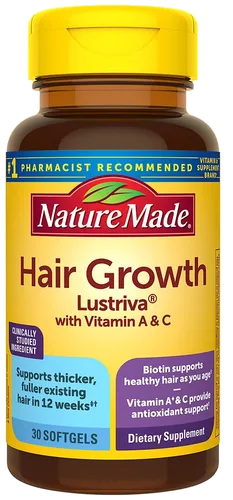
Nature Made Hair Growth Lustriva® with Vitamin A & C Softgels Review
We don’t sell supplements. We help you make decisions and get the best price.
Lowest prices
We may earn a commission from some store links. How we choose.
Finding the lowest prices at the stores now. This takes a few seconds.
Products with nearly the same formula (Matched on the main ingredients)
Study, Trial or Testing Result Summary
Members Only28 human studies · 11 improved
1 of these 28 human studies gave the ingredient by drip, not by mouth.
This hair growth softgel is not built for the thyroid, and none of its ingredients is present at a dose shown to help thyroid health. Vitamin A is here at 750 micrograms a day, well below the 25,000 units that lowered thyroid stimulating hormone in 84 women over 4 months [1]. Other trials used large vitamin A doses in children low in vitamin A and saw smaller thyroids and better thyroid markers [2][3]. Vitamin A combined with zinc and magnesium raised thyroid hormone in adults with an underactive thyroid [4][5]. A short 10-day trial found no change [6]. Vitamin C is here at 100 milligrams, below the 500 milligrams studied. Results were mixed: it helped in a small open study [7] and a tiny trial [8], but a larger placebo-controlled trial found no benefit over placebo [9]. Biotin has no human evidence of helping the thyroid. At high doses it can distort thyroid blood test results, so tell your doctor before thyroid lab work [10]. Lustriva has no human studies for thyroid health. Animal and cell studies are never counted.
See all 28 studies →Hide the studies
- In a pooled analysis of 35 trials with 3,508 people with underactive thyroid, adding zinc, magnesium and vitamin A to a med raised free thyroxine compared with placebo, though exercise combined with a med did best for thyroid-stimulating hormone and quality of life.Additional treatment strategies for hypothyroidism: a network meta-analysis.
- A review of 11 studies found conflicting results for vitamin A supplements and thyroid cancer risk, so the evidence was inconclusive.Vitamin and mineral supplements and thyroid cancer: a systematic review.
- A review of 57 studies on micronutrients and thyroid hormones found trials did not confirm links between selenium, zinc and iron and iodine status, and concluded more research is needed; vitamin A was not singled out with a clear result.Micronutrients, iodine status and concentrations of thyroid hormones: a systematic review.
- In 404 South African children aged 5 to 14 with low vitamin A and iodine, a 200,000 IU vitamin A dose given at the start and at 3 months over 6 months lowered thyroid-stimulating hormone, thyroglobulin and thyroid size when given without iodine, compared with placebo.Vitamin A supplementation in iodine-deficient African children decreases thyrotropin stimulation of the thyroid and redu…
- In 138 Moroccan children with goiter and low vitamin A using iodized salt, 200,000 IU of vitamin A at start and 5 months over 10 months reduced thyroglobulin, thyroid-stimulating hormone and goiter rate compared with placebo.The effects of vitamin A deficiency and vitamin A supplementation on thyroid function in goitrous children.
- In 102 people with autoimmune thyroiditis, 500 mg of vitamin C daily for 3 months lowered thyroid antibody levels within the group, but there was no significant difference compared with placebo, and thyroid stimulating hormone did not change.Effects of selenium and vitamin C on the serum level of antithyroid peroxidase antibody in patients with autoimmune thyr…
- In 86 adults with underactive thyroid, 25,000 IU vitamin A twice weekly with zinc and magnesium for 10 weeks raised free thyroxine and lowered an inflammation marker compared with placebo, with no change in thyroid-stimulating hormone.Randomized Study of the Effects of Zinc, Vitamin A, and Magnesium Co-supplementation on Thyroid Function, Oxidative Stre…
- In 84 women, 25,000 IU of vitamin A daily for 4 months lowered thyroid-stimulating hormone in both obese and non-obese women and raised T3, while total T4 fell.The effect of vitamin A supplementation on thyroid function in premenopausal women.
- In 80 postmenopausal women with or without type 2 diabetes, 6 weeks of hormone therapy with vitamin C and E did not significantly change free thyroxine or triiodothyronine levels.Effects of hormone replacement therapy with vitamin C and E supplementation on plasma thyroid hormone levels in postmeno…
- In 57 people with Graves' disease on methimazole, an antioxidant mix with beta-carotene, vitamins C and E and selenium over 60 days helped them reach normal thyroid function faster than the drug alone.Supplementation with antioxidants in the treatment of Graves' disease; the effect on glutathione peroxidase activity and…
- In 55 people with Graves' disease taking methimazole, adding an antioxidant mix (vitamins C and E, beta-carotene and selenium) for 60 days helped them reach normal thyroid function faster than methimazole alone.The effect of antioxidant supplementation on superoxide dismutase activity, Cu and Zn levels, and total antioxidant stat…
- In 40 people, a hydration drink that also contained vitamin C caused no meaningful change in safety or thyroid hormone measures compared with placebo over 4 weeks, though one thyroid hormone showed a statistically significant main effect.Randomized Trial to Assess the Safety and Tolerability of Daily Intake of an Allulose Amino Acid-Based Hydration Beverag…
- In 12 underactive thyroid patients needing high-dose a med, 1 g vitamin C daily for 16 weeks improved symptom scores and lowered thyroid stimulating hormone more than placebo after adjustment, but the very small size and baseline imbalances limit conclusions.Read the study on PubMed (41210509) →
- In 53 patients with mild underactive thyroid and 45 healthy people, vitamin C infused into the forearm artery normalized blood vessel dilation in patients but not in healthy people, suggesting oxidative stress from inflammation impairs vessel function; this was a short-term vessel test, not a supplement trial.Low-grade systemic inflammation causes endothelial dysfunction in patients with Hashimoto's thyroiditis.
- In a small study of 11 iron-depleted women, ascorbic acid supplementation had no significant effect on their responses to cold exposure, which included changes in thyroid hormone levels.Thermogenesis and thermoregulatory function of iron-deficient women without anemia.
- In healthy young and elderly people, 10 days of vitamin A (retinol, 50,000 IU a day) did not significantly change thyroid-stimulating hormone levels compared with placebo.Effects of vitamin A administration on serum thyrotropin concentrations in healthy human subjects.
- In 34 older adults over 6 months, a fruit, vegetable and berry powder that raised blood vitamin C was well tolerated and caused no thyroid-related safety problems, though a marker of protein damage fell before adjustment for baseline differences.Effects of a Commercial Fruit, Vegetable and Berry Juice Powder Concentrate on Metabolic Safety and Cardiovascular Healt…
- In 31 patients with underactive thyroid and gastritis, 500 mg vitamin C taken with a med for 2 months lowered thyroid stimulating hormone in all patients, normalized it in 55%, and raised thyroid hormone levels.Read the study on PubMed (24601693) →
- In 9 people with an underactive thyroid, about 4 months of thyroxine replacement cleared fats from the blood faster after a meal containing vitamin A and lowered LDL cholesterol, though this study did not test vitamin A as a supplement.Thyroxine replacement therapy enhances clearance of chylomicron remnants in patients with hypothyroidism.
- In a large cohort of over 566,000 adults followed for years, dietary beta-carotene intake was not clearly associated with thyroid cancer risk.The association between selenium and other micronutrients and thyroid cancer incidence in the NIH-AARP Diet and Health S…
- In a survey of 5,878 US adults, higher vitamin C intake was linked to lower total thyroxine levels, with curved patterns for other thyroid hormone measures, so the effect on thyroid function is unclear.Association between vitamin C intake and thyroid function among U.S. adults: a population-based study.
- In a large US national survey of 2,732 adults, dietary vitamin C intake was not significantly associated with risk of Hashimoto's thyroiditis, though higher omega-3 fat intake was linked to lower risk.Investigating the associations between dietary nutrient intake and risk of Hashimoto's thyroiditis: a cross-sectional st…
- In a questionnaire survey of 232 Polish people with hypothyroidism, vitamin C was among the supplements commonly taken, but the survey did not measure whether it improved thyroid health.Dietary supplements in hypothyroidism.
- A dietary survey of 103 schoolchildren in Adygea found insufficient intake of iodine, zinc, vitamin A and beta-carotene, and the authors concluded that low vitamin A and zinc intake may contribute to iodine deficiency and thyroid problems, but no supplement was tested.[Assessment of the structure and quality of nutrition as a factor that influences thyroid functional activity].
- In a cross-sectional study of 92 women with Hashimoto's thyroiditis, higher dietary vitamin C intake was weakly linked to lower thyroid antibody levels (r = -0.22, p = 0.05), but this was one of several correlations and does not show cause and effect.Parallel investigation of oxidative stress and nutritional profile in women with Hashimoto's thyroiditis.
- In a case series of 22 surgical patients with low vitamin C or thiamin and raised TSH, two patients died from scurvy, and no vitamin C treatment effect on thyroid function was studied.Hypothyroidism Complicated by Vitamin C and Thiamin Deficiency in Surgical Patients.
- In 50 children with biotinidase deficiency taking 5 to 20 mg of biotin daily, high biotin levels distorted thyroid stimulating hormone and other hormone blood tests run on one Roche assay system, so these lab results can mislead diagnosis, while removing the biotin from the sample corrected the error.Serum biotin interference: A troublemaker in hormone immunoassays.
- Five infants aged 8 to 11 months developed yellow skin from eating large amounts of carotene-rich foods, and their thyroid function tests were normal; stopping those foods cleared the yellow color, and the authors described the condition as benign.Benign carotenemia in children.
Review Totals and Summary
Members OnlyWhat buyers say
No written reviews read yet.
Biohacker Summary
Members Only0 of 10 recommend it
Vitamin C is the ingredient the panel talks about most, and most of the ten recommend or use it. Their main reasons are collagen support for skin, joints and connective tissue, plus immune support, and several suggest pairing it with collagen, with one advising it about an hour before a workout. Doses mentioned run from 250 milligrams a day to an extra gram a day, with 500 milligrams to 1 gram cited for recovery and 2 to 4 grams for inflammation, though one cautions that the best dose is unclear and very high amounts might blunt the benefits of exercise. Forms mentioned include a liquid liposomal version, a fizzy drink, food sources like fruit, and topical serums, and one panelist stopped a serum because of its smell and noted that applying it to skin delivers far more than swallowing it. Vitamin A drew mostly neutral comments, such as its role in skin cell turnover and one panelist's advice for an animal-sourced form, and biotin, a smaller ingredient in this product, was only mentioned in passing.
See all 10 biohackers →Hide the biohackers
Ben Greenfield · Vitamin C · recommends
- States that vitamin C is extremely important for collagen turnover and cites orthopedic data showing that 500 mg to 1 g of vitamin C can reduce the rate of complex regional pain in total knee replacements and wrist fractures.
- Notes that Vitamin A is a fat-soluble vitamin that supports healthy skin cell turnover.
- Mentions vitamin C as part of a bare-minimum protocol.
- Notes that while vitamin C has significant value, the optimal dose is a vexed question, and high doses might not always be beneficial, potentially blunting the hormetic effects of exercise.
- Notes that IV vitamin C has been used for decades for cancer patients with almost no standardization and that he receives many questions about its effectiveness and combination with chemo.
- Recommends Vitamin C for skin repair post-tattoo.
- Recommends vitamin A derivatives like retinol for targeting wrinkles and laxity, as they work deeper without aggravating the surface.
- Does not agree that ascorbic acid is vitamin C, comparing it to calling chaff wheat, and notes that it is made from genetically modified cornstarch or corn syrup byproducts using solvents.
- Advises people not to miss information about vitamin A or beta carotene, suggesting that the evidence against it was accidental and that these are synthetic analogs to what is in food.
- Warns against ascorbic acid, stating that it does not cure scurvy and that the world has been led astray by the deception around it versus the whole food vitamin C complex.
- Warns against taking 1,000 mg of vitamin C immediately after a workout for individuals under 50, as it can dull the body's natural adaptation signal.
- Warns that using high-dose antioxidants like vitamin C directly before or after a hyperbaric session is not a great idea, as it could impair some of the effects by reducing reactive oxygen species.
- Warns that taking a whole bunch of antioxidants like vitamin C after a workout can suppress the body's inflammatory response, which is necessary for benefits like mitochondrial proliferation and satellite cell generation for new muscle.
- Warns that supplementing with huge doses of vitamin A while drinking alcohol on a regular basis without blood tests could create liver issues, despite alcohol being a vitamin A activator.
Siim Land · Vitamin C · recommends
- Recommends taking vitamin C with collagen to support joint collagen synthesis.
- States that vitamin C is needed for initiating collagen synthesis and that higher vitamin C intake appears to increase vitamin C content in the skin.
- Lists sauerkraut and fruit as sources of Vitamin C.
- Lists liver and carrots as sources of Vitamin A.
- Notes that Vitamin C is one of several supplements with human evidence.
- Notes that researchers found vitamin C alleviates ferro-aging, a process of iron overload and lipid peroxidation that drives aging, and that it directly inhibited ACSL4, a protein driving ferro-aging.
- States that Vitamin C has a central role in aging and longevity, and that in monkeys, oral vitamin C slowed ovarian aging during a 3.3-year study.
- States that vitamin C is one of the most important vitamins for staying healthy and aging well, and that intakes of 200 to 400 mg a day from food or supplements largely saturates plasma and neutrophils in most healthy adults. He also recommends spreading out the vitamin C across the day to avoid oversaturation.
- Mentions vitamin C in comparison to topical melatonin for oxidative defense, stating that melatonin would compete but is not as broadly validated clinically.
- Was found to be vitamin C deficient by True Health and Mayo Clinic tests, and now addresses this by eating one extra kiwi fruit daily.
- States that the biggest evidence for multivitamin is that it improves cognition and enhances episodic memory in elderly people, who tend to have worse diets and are more likely to be deficient.
- States that the biggest evidence for multivitamin is that it improves cognition and enhances episodic memory in elderly people, who tend to have worse diets and are more likely to be deficient.
- Created Microvitamin, a supplement that bundled all the supplements he was taking, to help fund his a med trial.
- Places multivitamins in the 'good' tier, noting that while formulations vary and they don't reduce mortality risk, clinical trials show they can help with cognitive function in elderly people, though generally healthy individuals may not gain much.
Dr. Eric Berg · Vitamin C · neutral
- Mentions that lemon is loaded with vitamin C, and when combined with coffee, vitamin C significantly increases the bioavailability of antioxidants in the coffee.
- Dr. Berg states that Vitamin C helps fight biofilms and is essential for making collagen in gums, teeth, and capillaries.
- Recommends Vitamin C as a cofactor, especially for collagen.
- Notes that low vitamin A can lead to dry eyes, dry mouth, and night vision issues.
- States that high doses of vitamin C, like 2 to 4 grams, can greatly reduce inflammation and support the immune system.
- Mentions that grass-fed liver has the active form of vitamin A, called retinol, which is important for eyes, thyroid, immune system, and skin.
- Highly recommends taking natural food vitamin C, about 500 mg, at the first sign of a cold.
- Dr. Berg warns that synthetic vitamin A can cause problems, including competing with vitamin D, increasing the risk of birth defects during pregnancy, and increasing the risk of bone fractures, recommending food sources like egg yolks and cod liver oil instead.
- Mentions vitamin A deficiency as a possibility for dry mouth, but emphasizes that vitamin A doesn't work without zinc.
- States that thinning hair often indicates low biotin, which is required to produce keratin for hair, skin, and nails.
- Recommends consuming foods high in vitamin C to block the effects of grains.
- Recommends ensuring that collagen supplements come with vitamin C.
- Warns that many people mistake beta-carotene for vitamin A, but most of it does not convert into the active form.
- Explains that Vitamin A is essential for healthy skin, eyes, and mucous membranes, helping to maintain protective barriers throughout the body.
Thomas DeLauer · Vitamin C · recommends
- Recommends taking vitamin C along with collagen about an hour before a workout for connective tissue benefits.
- Uses vitamin C as part of their immunity duo, stating it is important for boosting the immune system, especially during cold and flu season.
- Recommends consuming vitamin C to aid in NADPH recycling, which is necessary for glutathione to be reused after neutralizing oxidative stress.
- Takes Purity's liquid liposomal vitamin C for immune support and overall wellness, finding it easy to add to water, juice, or take straight up due to its good taste.
- Compares the Vitamin C content of oranges (53mg) to guava (228mg), noting guava has 4x more.
- States that collagen synthesis is vitamin C dependent, in the context of glowing skin.
- Recommends Vitamin C for sleep, noting that intake in the range of 125 to 200 mg per day is associated with a lower risk of sleep disorders and sleep apnea, with the benefit plateauing beyond this range.
- Recommends consuming a little bit of vitamin C, such as a couple of berries or kiwi, along with flavanol-rich cocoa to help the delicate flavanols hold up and prevent oxidation in the gut.
- Recommends vitamin A, obtainable from eggs, dairy, and liver, as a raw material for goblet cells to produce mucus.
- Explains that vitamin C improves the ability of neutrophils to engulf bacterial infections, and that they have a greater ability to engulf larger infections.
- Recommends using a multivitamin to ensure adequate micronutrient intake, especially when wholesome food is less available.
- Recommends using a multivitamin to ensure adequate micronutrient intake, especially when wholesome food is less available.
- Advises checking multivitamins because many contain 100, 200, or 300% of the daily value of selenium, which can contribute to excessive intake.
- Thinks biotin is a little overhyped, suggesting that consuming adequate protein is probably more effective for hair, skin, and nails. He notes that some people might be deficient, especially if consuming a lot of eggs with avidin, but doesn't consider it the 'Mecca of perfect hair'.
Dave Asprey · Vitamin C · recommends
- Recommends taking vitamin C for better skin health.
- States that currently, he is only taking vitamin C and vitamin D.
- Recommends real vitamin A for people on the spectrum, noting that many cannot convert plant vitamin A and need the good stuff he includes in his Vitam DAKNE product.
- Dave Asprey reflects on how new research clarifies the mechanism behind IV vitamin C's anti-cancer effect, vindicating a decades-old idea that was dismissed for the wrong reasons.
- Takes Vitamin DAKE from Suppgrade Labs because D3, A, K2, and E work together.
- Notes that plain Vitamin C isn't enough and that most people never think to check for a specific ingredient that makes it work.
- Includes vitamin K2 as a critical ingredient in Vitamin DAKE, stating that the body needs the right fat soluble vitamins for thousands of reactions.
- Dave Asprey recommends taking maybe a gram of vitamin C a day in divided doses, noting that plasma levels peak around 250 milligrams twice a day.
- Recommends Qualia Vitamin C Plus, highlighting its combination of seven forms of vitamin C with 250 mg of citrus bioflavonoids, which helps with absorption and use for building collagen and a strong immune system.
- Warns that taking too much vitamin C can raise oxalate levels, emphasizing that everything has risk and reward.
- Recommends Vitamin C as the real biological fix for deep focus issues, explaining how the brain hoards it at levels 100 times higher than blood and how to bypass the blood-brain barrier.
- Mentions Vitamin DAKE from Suppgrade Labs as a product that combines fat-soluble vitamins D, A, K, and E to work together.
- Used to take almost no preformed vitamin A due to fear of retinol toxicity, which they now consider a big mistake.
- States that Ensure is like SlimFast but worse, and that its ingredients, including synthetic vitamins, guar gum, maltodextrin, high fructose corn syrup, and seed oils, are disgusting and should not be given to sick or well people.
Dr. Mark Hyman · Vitamin A · neutral
- Mentions that vitamin A levels can be looked at to get a deep sense of what's happening with nutrient levels.
- Recommends vitamin C as a basic supplement during detoxification to help with inflammation and detoxification.
- Dr. Hyman mentions vitamin C as an advanced therapy for skin repair.
- Mentions topical vitamin C as an antioxidant that can help skin with aging.
- Mentions that what they do when a cold comes on is not just vitamin C.
- Recommends taking 50,000 units of vitamin A for three to five days right at the onset of symptoms if one feels they might be getting sick.
- Recommends ensuring adequate vitamin C intake on a regular basis for immune support, stating it's important for healthy immune function despite mixed data on its effectiveness for colds.
- Notes that night blindness is caused by vitamin A deficiency.
- Mentions that vitamin C was the very first vitamin discovered, isolated, and synthesized in 1932, and its deficiency caused scurvy.
- Recommends nutrient-dense foods rich in vitamin C, such as guavas and parsley, to reduce inflammation.
- Used intravenous vitamin C cocktails to help him detoxify and recover from chronic fatigue.
- Mentions vitamin A as something that might be helpful for gut repair.
- Recommends vitamin C for immune system support and modulation.
- Relies on Big Bold Health's HTB Immune Energy Chews, which deliver 1000mg of sprouted Himalayan tardy buckwheat, along with vitamin C, D, magnesium, and zinc, to support immune balance, resilience, energy, and focus.
Dr. Rhonda Patrick · Vitamin C · neutral
- Lutein and zeaxanthin can also be obtained from certain multivitamins.
- Lutein and zeaxanthin can also be obtained from certain multivitamins.
- Recommends nutrients like vitamin C for men to prioritize sperm mitochondrial health.
- Dr. Rhonda Patrick's daughter chugs an Emergency fizzy drink in the morning to ensure she gets some vitamin C and micronutrients before school.
- Choosing a multivitamin that includes lutein and zeaxanthin ensures you get meaningful amounts every day.
- Choosing a multivitamin that includes lutein and zeaxanthin ensures you get meaningful amounts every day.
- Notes that ~35% of Americans are low in vitamin C.
- Recommends increasing vitamin C intake if concerned about skin aging, noting it is an essential cofactor for collagen synthesis.
- Suggests avoiding a multivitamin if it contains biotin before a testosterone blood test to prevent confounding results.
- Suggests avoiding a multivitamin if it contains biotin before a testosterone blood test to prevent confounding results.
- Advises avoiding biotin-containing supplements before a testosterone blood test as they can cross-detect with estrogens and confound results.
- Multiple randomized controlled trials show older adults taking a standard multivitamin (like Centrum Silver) had measurable improvements in processing speed, cognition, and episodic memory.
- Multiple randomized controlled trials show older adults taking a standard multivitamin (like Centrum Silver) had measurable improvements in processing speed, cognition, and episodic memory.
- Currently takes the Pure Encapsulations O.N.E Multivitamin.
Andrew Huberman · Vitamin C · uses
- Takes a multivitamin every day for longevity.
- Takes a multivitamin every day for longevity.
- Mentions biotin.
- Recommends AG1, a vitamin, mineral, and probiotic drink, and notes that for a limited time, a subscription comes with additional supplements.
- Takes an extra gram of vitamin C a day for its effects on immunity and potential synergy with collagen.
- Found the Met RX Big 100 Bar to be 'magic' on the trail because it's a hunk of calories with protein and fortified with vitamins and minerals, despite being something they would never eat in normal life.
- Found the Met RX Big 100 Bar to be 'magic' on the trail because it's a hunk of calories with protein and fortified with vitamins and minerals, despite being something they would never eat in normal life.
- Started taking AG1 in 2012 and still takes it every single day to ensure he meets his quota for daily vitamins and minerals and to support gut health, which is critical for proper brain function, immune system, and neurotransmitter production.
- Highlights Vitamin A as essential for vision and recommends it for supporting vision.
- Mentions that the process of converting light into electrical signals in the retina requires vitamin A, a fat-soluble vitamin, and carotenoids, which is why carrots are said to help vision.
- Has been taking AG1 daily since 2012 because it is the highest quality and most complete foundational nutritional supplement, ensuring he gets all necessary vitamins, minerals, and micronutrients for daily health.
- Has been drinking AG1 since 2012, finding it difficult to get enough vitamins, minerals, micronutrients, and adaptogens from diet alone. He finds that taking AG1 daily improves all aspects of his health, including physical and mental health, performance, recovery from exercise, and immune system strength, and also notices more mental clarity and energy.
- Recommends AG1 as the highest quality and most complete foundational nutritional supplement, containing vitamins, minerals, probiotics, prebiotics, and adaptogens to cover dietary gaps and support a demanding life.
- Mentions that Vitamin A hits cytochrome 5 in the mitochondrial electron transport chain, contributing to energy production.
Peter Attia · Vitamin A · neutral
- Notes that in mouse studies, there was a combined effect of alpha ketoglutarate with vitamin A for male mice.
- In mouse studies, Peter Attia's team found a combined effect of AKG with Vitamin A for male mice.
- Recommends vitamin C as an important molecule for skin, noting its role as a precursor for collagen synthesis, a powerful antioxidant, and a regulator of complexion for even skin tone.
- Tried a vitamin C serum mixed with ferulic acid but stopped using it because she hated the smell. She notes that topical application of vitamin C far exceeds the levels achievable by ingestion for skin benefits.
- Mentions that a lot of the profound transformation of a cell into a sperm, specifically the making of a tail, is vitamin A driven.
- Warns that biotin, found in many supplements, can completely obscure findings and render a non-LCMS test for estradiol and testosterone irrelevant due to interference with ELISA-based assays.
- Notes that antioxidants like vitamins A, C, and E have been looked at for cataract formation but have shown no effect.
- States that vitamin C deficiency is associated with an elevated risk of cataract, but supplementation to supranormal levels has not been shown to protect against cataract formation.
- Mentions the elimination of scurvy through the work of James Lind and the eventual understanding that it was due to vitamin C, initially thought to be just citrus.
- Advises that if taking a biotin supplement, one should discontinue it for at least a few days, if not a week, before a blood test, as it can dramatically skew thyroid values.
- Warns that certain things, like biotin, should not be taken before a blood test because they can mess up readings.
- States that antioxidants like vitamins A, C, and E have been looked at for cataract formation but have had no effect.
- Notes that while vitamin C deficiency is associated with an elevated risk of cataract, supplementation to supranormal levels has been conclusively shown not to protect against cataract formation.
- Mentions that a survey of doctors showed they recommend Vitamin C for COVID-19, but notes there is no real evidence behind it.
Bryan Johnson · Vitamin C · neutral
- Uses Vitamin C as an example of how it would be great if people knew that when they took it, it had a measurable amount and wasn't polluted, which is what Brian ensures with his products.
- Applies vitamin C after showering.
- Mentions biotin as an example of an ingredient that AG1 lists with a specific dose, but then contrasts it with other ingredients in proprietary blends where doses are not disclosed.
- Takes 250 milligrams of Vitamin C.
- Recommends Vitamin C for skin health, noting it's good to pair with collagen peptides and is included in the Blueprint stack.
- Bryan Johnson takes Vitamin C daily as part of his Longevity Mix, which is an antioxidant-rich essential vitamin that supports immune function and metabolic energy.
- He uses Vitamin C, typically in a serum, in the morning for skin health.
- Recommends adequate Biotin (Vitamin B7) for hair health, noting it is in the Blueprint stack.
RAL Summary
Members OnlyTier 4 for Thyroid Health
Vitamin A and vitamin C have some thyroid trial support, but both are well below the studied doses here, biotin and Lustriva have no supporting evidence, and there are no reviews, so the evidence for this product is thin.
- Emerging: not enough evidence to rank higher yet.
- Vitamin A: below the dose that worked in studies
- Vitamin C: below the dose that worked in studies
Where the evidence disagrees: 14 of the 28 human studies found no effect.
More Details
Members OnlyBody systems · Combine with · Possible side effects
Body systems: Endocrine system, Integumentary system
Possible side effects: No major side effects reported. High-dose biotin can distort thyroid blood test results.
Supplement Facts
Vitamin A 750 mcg · Vitamin C 100 mg · Biotin 10000 mcg
| Vitamin A | 750 mcg | |
| Vitamin C | 100 mg | |
| Biotin | 10,000 mcg | |
| Lustriva® | 160 mg | † |
Other ingredients: Medium Chain Triglycerides, Gelatin, Glycerin, Less than 2% of Sorbitol-Sorbitan Solution, Lecithin, Polysorbate 80, Colors Added (Including Carmine).
Directions: Adults, consult your physician before use. Take 1 softgel daily with water and a meal.
Barcode (UPC) 031604005597 · Label source: Reverseagelab · Report a label change
Show entire label

More thyroid health products
Members OnlyThe highest ranked for the same goal
Read more
Our articles on this subject
- Supplement and Medication Interactions You Should KnowArticle · Oct 20, 2026
Graded November 6, 2026 by the Reverse Age Lab evidence engine, from human studies, real reviews and our biohacker panel. How we grade. Is this medical advice? No. Rala organizes the published evidence; go over any change with your doctor, especially if you take meds.
Privacy policyConsumer health dataAffiliate disclosureTermsDo Not Sell or Share My Personal InformationCookie settings