
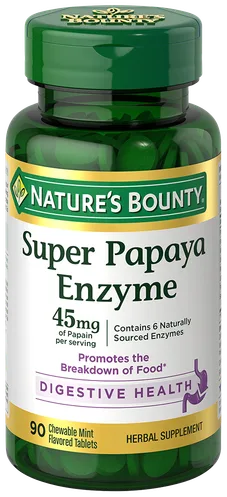
Nature's Bounty Super Papaya Enzyme Mint Flavored 45 mg Review
We don’t sell supplements. We help you make decisions and get the best price.
Lowest prices
We may earn a commission from some store links. How we choose.
Finding the lowest prices at the stores now. This takes a few seconds.
Products with nearly the same formula (Matched on the main ingredients)
Study, Trial or Testing Result Summary
Members Only9 human studies · 5 improved
Cellulase is the only ingredient here at a dose similar to what was studied. In one trial of 60 people with stomach symptoms after weight loss surgery, an enzyme blend containing cellulase, taken for 2 weeks, improved bloating, belching, heartburn and abdominal pain scores. The improvement was similar to that in two probiotic groups, and there was no placebo group [1]. Alpha amylase, at an unclear dose, was part of a probiotic blend that reduced bloating and abdominal discomfort more than placebo over 6 weeks in 60 adults. The effect of the enzyme alone is unknown [2]. A papaya preparation containing papain eased bloating in adults with long-term indigestion, but heartburn did not improve and the benefits faded after stopping [3]. Kiwifruit with a protein-digesting enzyme reduced bloating after a steak meal in 10 men [4]. A papaya-containing mixed supplement improved indigestion scores [5]. Lipase is present only in a trace amount, far below the 280 milligram dose that lowered fullness after a fatty meal [6]. Bromelain has no human studies for this goal. No study tested this product or showed fast relief after a single meal. Animal and cell studies are never counted.
See all 9 studies →Hide the studies
- In 60 adults with mild to moderate digestive symptoms, a probiotic and amylase blend taken for 6 weeks reduced bloating (about 49% vs 25%) and abdominal discomfort (59% vs 32%) more than placebo.A probiotic amylase blend reduces gastrointestinal symptoms in a randomised clinical study.
- In 60 people with stomach symptoms after gastric bypass surgery, 20 took a digestive enzyme blend containing cellulase twice daily for 2 weeks, and their digestive quality of life scores, including bloating, belching, heartburn and abdominal pain, improved, similar to the two probiotic groups, with no placebo group.Effect of probiotics on postoperative quality of gastric bypass surgeries: a prospective randomized trial.
- In 16 healthy adults, a single 280 mg dose of acid-resistant lipase taken right before a high-fat meal lowered stomach fullness compared with placebo, but did not change bloating, nausea or stomach electrical activity.Lipase Supplementation before a High-Fat Meal Reduces Perceptions of Fullness in Healthy Subjects.
- In 10 healthy men eating a large steak meal, green kiwifruit containing a protein-digesting enzyme significantly reduced bloating compared with kiwifruit without the enzyme, but overall gastric comfort only tended to be lower and gastric emptying and fullness did not differ.A Pilot Randomized Cross-Over Trial to Examine the Effect of Kiwifruit on Satiety and Measures of Gastric Comfort in Hea…
- In a double-blind placebo-controlled study of adults with chronic indigestion, 20 ml of a papaya preparation taken daily for 40 days significantly improved constipation and bloating in early returnees, but heartburn did not improve significantly and no benefits remained after the washout period.Papaya preparation (Caricol®) in digestive disorders.
- In 91 people with functional dyspepsia after treatment for Helicobacter pylori, 55 took a papaya-containing combination supplement for 30 days and their symptom scores improved by 1.78 points versus a 0.08-point worsening in the 36 who did not; all supplement users avoided acid-reducing drugs versus 86% of the others.Benefit of supplements in functional dyspepsia after treatment of Helicobacter pylori.
- In 23 people with advanced pancreatic cancer taking enzymes during chemotherapy, stomach pain, bloating and stomach noises improved over about 3 months, and weight loss slowed, at a median dose of 200,000 lipase units per day.Addressing the distressing: Pancreatic enzyme replacement therapy mitigates abdominal symptoms and weight loss during ch…
- After pancreatic surgery, about one in three people had diarrhoea and abdominal discomfort at 90 days even though most were taking enzyme replacement, with a median dose of 85,000 lipase units per day.Postpancreatectomy diarrhoea: prospective, single-centre longitudinal analysis of incidence, risk factors, management, a…
- In 91 people with dyspepsia and signs of pancreatic enzyme shortage, enzyme replacement therapy lowered their symptom score by about 72%, compared with 58 control people; the study did not measure post-meal comfort directly.Assessment of Pancreatic Exocrine Insufficiency in Patients with Dyspepsia: Clinical Utility of the PEI-Test in Identify…
Review Totals and Summary
Members Only10 reviews · 90% positive
Extensive customer reviews and qualitative feedback are currently being aggregated for this product. Check back soon for a detailed sentiment analysis.
Biohacker Summary
Members Only0 of 10 recommend it
Cellulase, the main ingredient, drew comments from only two of the ten panelists, so the panel says little about it as a group. One uses a cellulase enzyme because he does not make much of it himself, which lets him eat greens after healing his gut. The other is neutral and only explains that cellulase helps break down the rough plant fiber that is hard to digest. No one gave a dose, a preferred form, a pairing for cellulase, or a caution about it, and no one said they stopped. Bromelain is a smaller ingredient in this product, and several panelists recommend it for digestion, circulation and inflammation.
See all 7 biohackers →Hide the biohackers
Ben Greenfield · Cellulase · uses
- Takes a cellulase enzyme because he doesn't produce a lot of cellulase, which allows him to eat greens after healing his gut.
- Recommends bromelain, a proteolytic enzyme, for lung repair after smoke exposure or for COPD, noting its use for soreness and breaking down inflammatory byproducts.
- Recommends high-dose bromelain as a proteolytic enzyme to break down candida and yeast biofilms.
- Recommends high-dose papain as a proteolytic enzyme to break down candida and yeast biofilms.
- Notes that papaya can exfoliate the skin and contains alpha hydroxy acids, making it useful for sunspots.
- Recommends papaya as an exfoliant due to its papain enzymes, suggesting a mask made with papaya, organic plain yogurt, and ground oats, to be used in the evening due to potential photosensitizing effects.
- Considers protease the most important enzyme for fitness, recovery, athletes, and muscle building, as it helps the body repair itself and generate neurotransmitters, while also preventing toxicity from undigested protein.
- Has taken some digestive enzymes but not specifically targeted for fat digestion like lipase.
- Recommends including lipase to remedy throat irritation experienced when eating a lot of healthy fats.
- Mentions bromelain as one of the ingredients in Osteodenx.
- Ben Greenfield is grabbing papayas as part of his groceries.
- Ben recommends Bromelain, an enzyme found in pineapple, to help reduce inflammation.
- He believes papain, which is in a product he uses, helped with inflammation and soreness after his Ironman.
- Recommends adding papaya juice or chunks to a meat marinade because it contains papain, which helps to predigest the meat.
Dave Asprey · Cellulase · neutral
- Mentions cellulase as an enzyme that helps break down rough fiber, specifically the cellulose in plant cell membranes, which can be difficult for the body to digest.
- Recommends Bromelain, stating it supports healthy circulation.
- Suggests bromelain as something to experiment with for nightshade sensitivity, though he doesn't have confidence it would fully work.
- Is excited about Caricol Gastro, a highly potent papaya concentrate from Omnibiotic, which is designed to help with acid reflux and heartburn by coating and protecting the stomach.
- Recommends taking a bromelain enzyme with food to help break down food structures.
- Dave mentions that Kapex, a blend of lipases made by BiOptimizers, can break down Malahide in rancid fats into fatty acids.
- States that lipase is the enzyme that digests fats and recommends it for people who have trouble losing body fat or have skin conditions. He also notes its importance for absorbing fat, especially if one's gallbladder has been removed.
- Recommends bromelain, a digestive enzyme, for helping digest protein and potentially breaking up mucus.
Thomas DeLauer · Papaya · neutral
- Notes that papaya contains papain, a protease that helps break down protein.
- Rates papaya as an 8.5, mentioning that papain helps break down protein, which is a cool effect in addition to its antioxidants.
- Has long considered papaya unique and one of his favorite fruits, noting an anecdotal experience of fuller muscles, increased strength, better sleep, and improved skin when consuming it.
- Mentions that papaya contains enzymes like papain and bromelain, which are powerful at breaking down proteins and potentially helping to extract more amino acids by increasing digestion.
- Mentions papayas as histamine liberators, which can trigger histamine release in the body.
- Mentions that papaya is a higher sugar fruit but contains natural enzymes like papain, which may make it more digestible for some individuals.
- Recommends consuming about half a cup of papaya with protein, especially if concerned about acid reflux, as it is more gentle than pineapple. Papaya contains papain, which helps break down proteins and has been shown to increase the mucosal layer and selectively increase gut permeability for nutrient absorption.
- Discusses a study where mice were given 1 milligram of papain, which increased levels of Akkermansia muciniphila and the thickness of the mucosal layer, and selectively increased intestinal permeability for nutrient absorption.
- Discusses a study where mice were given 1 milligram of bromelain, which increased levels of Akkermansia muciniphila and the thickness of the mucosal layer, and selectively increased intestinal permeability for nutrient absorption.
- Eats papaya.
- Recommends papaya for gut health, noting that its proteases, like papain, can increase acromania muciniphila and the thickness of the mucosal layer, and also increase intestinal permeability for low molecular weight markers, allowing more nutrients to pass through.
- Recommends bromelain (pineapple extract) for longevity and pain relief, noting its potency as an anti-inflammatory agent with fewer side effects than meds, potentially impacting the arachidonic acid pathway.
- Says he eats a big beautiful kiwi, maybe with a little pineapple and papaya, containing about 50 grams of sugar, and enjoys it.
- Highlights that Costa Ricans eat a lot of papaya, which contains saponins that can delay gastric emptying and positively affect the glycemic load of other carbohydrates, improving glucose metabolism.
Dr. Mark Hyman · Lipase · recommends
- Explains that they measure lipase, an enzyme that breaks down fats, and high lipase is more specific to the pancreas and an important marker of pancreatic inflammation, which can become chronic and cause permanent damage.
- Notes that bromelain pairs well with quercetin for absorption.
- Recommends MassZymes from BiOptimizers, which contains 18 different digestive enzymes, including four times more protease, to support the breakdown of protein, fat, and carbs, helping turn meals into clean fuel.
- Mentions that Mastzymes contains four times more protease than many other formulas to support the breakdown of protein, fat, and carbs.
- Recommends MassZymes from BiOptimizers, stating it contains 18 different digestive enzymes, including four times more protease, to support the breakdown of protein, fat, and carbs, helping turn meals into clean fuel.
- Recommends bromelain to reduce inflammation in the nasal passages, which helps with allergy symptoms.
- Recommends bromelain, a compound from pineapple, for swelling before and after surgery.
- States that papaya is among the cleanest produce and is okay to eat even if not organic, as it typically has a tougher outer layer.
- Recommends testing lipase as a pancreatic enzyme that can indicate low-grade pancreatitis.
- Notes that papaya is generally okay to eat even if not organic because its tough outer peel protects it from contamination.
- States that patients with acute COVID have responded well to bromelain.
- Sometimes eats papaya as a low glycemic fruit.
- Mentions that papayas may trigger histamine issues.
- States that patients with acute COVID have responded very well to treatments including herbals like bromelain.
Dr. Eric Berg · Lipase · recommends
- Recommends taking lipase as a supplement, specifically pancreatic enzymes, when eating if one experiences dark, tarry, sticky stool due to low lipase from the pancreas.
- Recommends papaya as one of the best sources of vitamin C.
- Recommends bromelain as a supplement to prevent clotting.
- Recommends papaya, noting it is loaded with enzymes that can help digestion and decrease inflammation in the liver.
- Recommends bromelain, an enzyme found in pineapple, as a natural anti-inflammatory that also helps with sinus congestion.
- Suggests taking quercetin with bromelain to increase its bioavailability and help absorb quercetin.
- Warns that papaya is often GMO.
- Recommends the enzyme lipase to greatly help with digesting fats.
- Recommends Bromelain from pineapples, noting its benefits for heart health and its ability to decrease stroke risk.
- Does not recommend papaya as a source of vitamin C.
- Lists papaya as the number one food highest in vitamin C.
- Dr. Berg recommends using papaya in a shake, noting it has the highest vitamin C out of any food and is good for the digestive system.
Andrew Huberman · Lipase · neutral
- Mentions that many foundational supplements now include different lipases.
- Mentions that many foundational supplements now include papain.
Dr. Rhonda Patrick · Bromelain · neutral
- A combined anthocyanins and bromelain supplement improves endothelial function and skeletal muscle oxygenation status in adults.
RAL Summary
Members OnlyTier 4 for After-Meal Comfort: Fast Relief
The human evidence is limited to small trials of blends or whole foods, mostly over weeks rather than after one meal, and only 10 reviews exist. That makes this an emerging tier 4 product. The supporting studies include the alpha amylase probiotic blend trial [2] and the cellulase enzyme blend trial [1].
- Emerging: not enough evidence to rank higher yet.
Where the evidence disagrees: 1 of the 9 human studies found no effect.
More Details
Members OnlyBody systems · Combine with · Possible side effects
Body systems: Digestive system
Combine with: Combine with a healthy diet and lifestyle.
Possible side effects: No major side effects reported.
Supplement Facts
Protease 3 mg · Bromelain 3 mg · Alpha Amylase 3 mg
| Protease | 3 mg | † |
| Bromelain | 3 mg | † |
| Alpha Amylase | 3 mg | † |
| Cellulase Enzyme | 94.5 mg | † |
| Papain | 45 mg | † |
| Lipase | 1.5 mg | † |
| Papaya | 15 mg | † |
| Sodium Copper Chlorophyllin | 1.5 mg |
Other ingredients: Sorbitol, Mannitol, Calcium Carbonate, Maltodextrin, Vegetable Stearic Acid, Vegetable Magnesium Stearate, Silica, dicalcium phosphate, Peppermint Oil.
Directions: Directions: For adults, chew three (3) tablets following a meal, one to three times daily.
Barcode (UPC) 074312006685 · Label source: NIH label database · Report a label change
Show entire label
More after-meal comfort: fast relief products
Members OnlyThe highest ranked for the same goal
Graded November 10, 2026 by the Reverse Age Lab evidence engine, from human studies, real reviews and our biohacker panel. How we grade. Is this medical advice? No. Rala organizes the published evidence; go over any change with your doctor, especially if you take meds.
Privacy policyConsumer health dataAffiliate disclosureTermsDo Not Sell or Share My Personal InformationCookie settings