
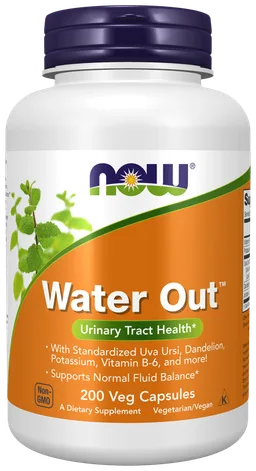
now foods NOW Foods, Water Out™, Veg Capsules Review
This is a Veg Capsules supplement from NOW Foods called Water Out. It comes as a vegetarian capsule made with a cellulose shell. The serving size is 2 capsules, and each container holds 100 servings. The label lists these amounts per serving: Vitamin B6 at 25 mg, Potassium at 99 mg, an Uva Ursi Extract Blend at 250 mg, Dandelion (Taraxacum officinale) at 200 mg, and Juniper (Juniperus communis) at 120 mg. The other ingredients are Hypromellose, which is the cellulose capsule, Rice Flour, Stearic Acid from a vegetable source, and Magnesium Carbonate. The label as given does not print directions for use. Reviewers most often say it eased bloating and puffiness, and many mention that the capsules have no taste. Some buyers report seeing no change, and a few say the capsules are large or have a smell.
We don’t sell supplements. We help you make decisions and get the best price.
Lowest prices
We hold no current store prices for it yet: check the store.
- AmazonPrice at AmazonCheck price at Amazon (opens in a new tab)
Also at: iHerb · Vitacost · Walmart
Some store links earn us a commission.
Products with nearly the same formula (Matched on the main ingredients)
Study, Trial or Testing Result Summary
Members Only58 human studies · 24 improved
2 of these 58 human studies gave the ingredient by drip, not by mouth.
The evidence that this formula helps the kidneys is thin. Vitamin B6 reaches the studied amount at the four daily servings members are told to take. Its results are mixed. Into-the-vein B6 lowered kidney injury markers in people with sepsis but did not change dialysis need or deaths [1]. Large trials of B vitamin combinations in kidney transplant patients and in advanced kidney disease found no kidney protection [2][3]. A review of diabetic kidney disease trials agreed [4]. Potassium is present in a small amount, and it is unclear how this compares with the studied doses. Studies found benefits mainly with potassium nitrate before heart scans [5] and potassium citrate for kidney stones [6]. For uva ursi, the only controlled trial tested arbutin mixed with other ingredients for bladder infections, not uva ursi alone [7]. Another study showed its main compound leaves the body in urine but measured no kidney benefit [8]. Dandelion has only been tested in animals, such as rats with drug-related kidney damage [9]. Juniper has no kidney studies. Animal and cell studies are never counted.
See all 58 studies →Hide the studies
- In 104 observational studies of about 2.76 million adults, higher dietary potassium intake was linked to 22% lower odds of developing chronic kidney disease, though the certainty of the evidence was low.Modifiable Lifestyle Factors for Primary Prevention of CKD: A Systematic Review and Meta-Analysis.
- In observational studies of 133,995 people, higher blood vitamin B6 was linked to about 17% lower risk of kidney cancer in sensitivity analyses.One-Carbon Metabolic Factors and Risk of Renal Cell Cancer: A Meta-Analysis.
- In eight studies of people with chronic kidney disease, limiting dietary potassium lowered serum potassium but did not significantly change the risk of death.Nutritional potassium limitation impact on serum potassium change, and death in chronic kidney disease: A meta-analysis.
- Across six trials of 2452 people with end-stage kidney disease, homocysteine-lowering vitamins (folic acid with or without B6 and B12) did not reduce heart-related or overall deaths or cardiovascular events.Interventions for lowering plasma homocysteine levels in dialysis patients.
- Across 22 trials with 1,606 adults, higher potassium intake lowered blood pressure but had no harmful effect on kidney function.Effect of increased potassium intake on cardiovascular risk factors and disease: systematic review and meta-analyses.
- In nine trials of 1354 people with diabetic kidney disease treated for 2 to 36 months, B vitamins alone or combined did not improve kidney function or blood pressure, and there was not enough evidence to recommend them.Vitamin B and its derivatives for diabetic kidney disease.
- A pooled review found B vitamins were linked to lower heart disease risk in the general population, but not in people without normal kidney function.The effect of B-vitamins on the prevention and treatment of cardiovascular diseases: a systematic review and meta-analys…
- A review of eleven studies found vitamin B6 deficiency in 24% to 56% of people on haemodialysis, with dialysis lowering blood levels by 28 to 48%, and supplement advice of 10 to 50 mg based on older small studies.Is vitamin B(6) deficiency an under-recognized risk in patients receiving haemodialysis? A systematic review: 2000-2010.
- In six studies of children with kidney stones and low urine citrate, potassium citrate with high fluid intake restored urine citrate, reduced stone size and lowered stone recurrence with no serious side effects.Dietary management of hypocitraturia in children with urolithiasis: results from a systematic review.
- In 4110 kidney transplant recipients followed about 4 years, a high-dose folic acid, B6 and B12 multivitamin lowered homocysteine but did not reduce dialysis-dependent kidney failure, deaths, or cardiovascular events compared with a low-dose one.Homocysteine-lowering and cardiovascular disease outcomes in kidney transplant recipients: primary results from the Foli…
- In 2056 people with advanced chronic kidney disease or kidney failure followed a median of 3.2 years, daily high-dose folic acid, B6 and B12 lowered homocysteine but did not improve survival, time to dialysis, or vascular disease compared with placebo.Effect of homocysteine lowering on mortality and vascular disease in advanced chronic kidney disease and end-stage renal…
- In people with chronic kidney disease given a multivitamin with 10 mg of vitamin B6 for 1 year, high homocysteine fell to normal in 49% of those with moderate disease and 24% of those with more advanced disease, with no control group for the vitamins.Homocysteine in chronic kidney disease: Effect of low protein diet and repletion with B vitamins.
- In 640 heart patients having angiography, 12 mmol of potassium nitrate daily for 5 days cut contrast-induced kidney injury to 9.1% versus 30.5% with placebo, and kidney function was better at 3 months.Inorganic nitrate benefits contrast-induced nephropathy after coronary angiography for acute coronary syndromes: the NIT…
- In 584 kidney transplant recipients, a daily high-dose B vitamin pill (50 mg B6 with folate and B12) for about 3.3 years modestly improved processing speed and memory, but kidney outcomes were not reported.B-Vitamin Therapy for Kidney Transplant Recipients Lowers Homocysteine and Improves Selective Cognitive Outcomes in the …
- In 231 adults with raised blood pressure, 5 weeks of 300 mg daily potassium nitrate raised blood nitrate and kidney nitrate excretion, and showed the kidneys conserve most filtered nitrate, with no change in blood pressure.Renal handling of nitrate in women and men with elevated blood pressure.
- In 210 patients with reduced kidney function having coronary angiography, sodium/potassium citrate worked about as well as sodium bicarbonate at preventing contrast-induced kidney injury.Na/K citrate versus sodium bicarbonate in prevention of contrast-induced nephropathy.
- In 128 patients with sepsis, intravenous vitamin B6 for 7 days lowered kidney injury markers (urea nitrogen, creatinine, renal resistance index) and inflammation compared with saline, though dialysis need and 28-day deaths did not differ.RENAL PROTECTIVE EFFECT AND CLINICAL ANALYSIS OF VITAMIN B 6 IN PATIENTS WITH SEPSIS.
- In 75 patients with advanced kidney disease, a one-year personalized nutrition program that raised potassium and fiber intake increased kidney filtration rate with no episodes of high blood potassium.New approaches in the nutritional treatment of advanced chronic kidney disease.
- In 69 adults with non-diabetic chronic kidney disease on a low-protein diet, pyridoxamine plus N-acetylcysteine twice daily for 6 months raised kidney filtration (eGFR) about 8 units more than the control group.Comparative Study to Evaluate the Effect of Low-Protein Diet Supplementation with Taurine and N-Acetylcysteine, N-Acetyl…
- In 60 hemodialysis patients with high blood potassium, a two-phase low-potassium dialysis bath lowered post-dialysis potassium more than a fixed bath (3.48 vs 3.72 mEq/L) without more serious heart rhythm problems.Controlled potassium reduction using dialysate profiling in hyperkalemic hemodialysis patients: A randomized study.
- In 46 people with recurrent calcium kidney stones followed for 4 weeks, potassium citrate medication significantly improved urine potassium and acid load versus control, while the low acid load diet produced only modest, non-significant changes.Effect of low-potential renal acid load diet intervention on urinary lithogenic parameters in recurrent calcium urolithi…
- In 42 people with stage 3-4 chronic kidney disease, 24 months of restricting dietary potassium lowered serum potassium and slowed worsening of nerve damage and improved walking speed compared with general nutrition advice.Randomized, Controlled Trial of the Effect of Dietary Potassium Restriction on Nerve Function in CKD.
- In 40 adults, a hydration drink that included vitamin B6 among other ingredients was well tolerated over 4 weeks at all doses, with kidney blood tests showing no meaningful change compared with placebo.Randomized Trial to Assess the Safety and Tolerability of Daily Intake of an Allulose Amino Acid-Based Hydration Beverag…
- In 30 adults with chronic kidney insufficiency, 150 mg per day of magnesium pyridoxal 5-phosphate glutamate for 12 weeks lowered total cholesterol, triglycerides and the LDL to HDL ratio compared with placebo; kidney function itself was not reported as improved.Magnesium pyridoxal 5-phosphate glutamate reduces hyperlipidaemia in patients with chronic renal insufficiency.
- In 29 adults with stage 3 chronic kidney disease, a higher-potassium diet (100 vs 40 mmol per day) did not significantly lower 24-hour blood pressure, raised serum potassium by 0.21 mmol/L, and two people developed high potassium.Randomized Trial on the Effects of Dietary Potassium on Blood Pressure and Serum Potassium Levels in Adults with Chronic…
- In 20 adults with depression, pyridoxine with L-tryptophan did no better than maprotiline after 2 or 4 weeks; the study did not measure kidney health, only urinary excretion of a tryptophan metabolite.The clinical significance of disordered renal excretion of xanthurenic acid in depressive patients.
- In 18 healthy adults on a high salt, low potassium diet, 5 days of potassium chloride supplements lowered kidney sodium transporter levels compared with placebo, supporting a proposed kidney potassium-sodium balance mechanism.Randomized Trial on the Effect of Oral Potassium Chloride Supplementation on the Thiazide-Sensitive Sodium Chloride Cotr…
- In 8 healthy adults in a crossover study, alkali potassium citrate raised urine pH and lowered urinary calcium and calcium oxalate saturation, which are kidney stone risk factors; magnesium lactate had only a small effect at a given urine pH.Effect of urine pH and magnesium on calcium oxalate saturation.
- In a preliminary trial of women with recurrent urinary tract infections, combinations containing arbutin, berberine, birch and d-mannose led to fewer cystitis episodes and lower bacterial loads than a proanthocyanidin combination, but the number of people, dose and duration were not stated and arbutin was not tested on its own.Effects of a new combination of plant extracts plus d-mannose for the management of uncomplicated recurrent urinary trac…
- In 49 people with chronic kidney failure, 6 months of low-protein dietetic foods cut protein intake by 40%, lowered the urea to creatinine ratio, improved vitamin B6 status and quality of life; no B6 supplement was given.Influence of low-protein dietetic foods consumption on quality of life and levels of B vitamins and homocysteine in pati…
- In 44 men with chronic kidney insufficiency or on dialysis, high-dose vitamin B6 plus folic acid given for more than 3 months per period only partly lowered homocysteine, and the response differed between the two groups.Vitamin B6 metabolism and homocysteine in end-stage renal disease and chronic renal insufficiency.
- In 33 men who were stone formers or healthy controls, a high meat protein diet raised urinary oxalate in stone formers but not controls, and this did not appear to be caused by vitamin B6 deficiency; no vitamin B6 supplement was given.Sensitivity to meat protein intake and hyperoxaluria in idiopathic calcium stone formers.
- In a 5-day crossover study of 20 students in South Africa, a vitamin B6 supplement lowered urinary calcium, urinary phosphate and brushite saturation in white participants, but had no effect in black participants; the dose was not stated in the abstract.Renal response to lithogenic and anti-lithogenic supplement challenges in a stone-free population group.
- In 11 men, including 3 with low-citrate kidney stones, potassium citrate tablets raised urine pH and citrate and lowered urinary calcium and calcium oxalate saturation, whereas orange juice did not lower calcium oxalate saturation.Effect of orange juice consumption on urinary stone risk factors.
- In 191 adults with moderate to advanced kidney disease, 40 mmol of potassium chloride daily for two weeks raised blood potassium and did not change kidney filtration, blood pressure, or protein in urine, though 11 percent developed high blood potassium.Effects of Short-Term Potassium Chloride Supplementation in Patients with CKD.
- In 26 adults with advanced chronic kidney disease, a 6-week high-potassium plant-based diet with a potassium binder kept blood potassium within normal limits for most patients and improved diet quality, with no control group.Plant-based diet in hyperkalemic chronic kidney disease patients receiving sodium zirconium cyclosilicate: a feasibility…
- In 23 kidney stone formers who could not tolerate potassium citrate powder, two weeks of potassium citrate tablets were well tolerated and raised urine pH, urine citrate and urine potassium.The tolerability of Potassium Citrate Tablet in patients with intolerance to Potassium Citrate Powder form.
- In 12 patients with primary hyperoxaluria type I, oral vitamin B6 raised to 20 mg/kg per day over 24 weeks reduced urinary oxalate by an average of 25.5%, and 6 of 12 patients (50%) had a reduction of at least 30%.Vitamin B6 in primary hyperoxaluria I: first prospective trial after 40 years of practice.
- In three large US cohorts followed for about 3.3 million person-years, total vitamin B6 intake was not associated with the risk of new kidney stones, with a pooled hazard ratio of 1.03 for the highest versus lowest intake.Vitamin B6 intake and the risk of incident kidney stones.
- In a US survey of 9,591 adults, those with the highest blood vitamin B6 levels had lower odds of kidney stones (odds ratio 0.66), an association strongest in people with a BMI of 25 to 29.9 who lacked diabetes and hypertension.Association between serum pyridoxal 5'-phosphate and kidney stone risk: neutrophil count as a partial mediator.
- In 1,369 older Koreans, higher potassium intake was associated with lower odds of chronic kidney disease, with the highest quartile about half the odds of the lowest.Dietary acid load and chronic kidney disease in elderly adults: Protein and potassium intake.
- In a long-term follow-up of 812 adults with chronic kidney disease, higher potassium in urine (a stand-in for dietary potassium) was linked to lower risk of death from any cause but not to lower risk of kidney failure requiring dialysis or transplant.Urine Potassium Excretion, Kidney Failure, and Mortality in CKD.
- In 804 people with kidney disease followed for about 2.2 years, lower blood levels of vitamin B6 and other B vitamins were not linked to faster loss of kidney filtering function.Homocysteine, cysteine, and B vitamins as predictors of kidney disease progression.
- Over two years, 17 percent of epileptic children on a ketogenic diet developed kidney stones, and potassium citrate with hydration worked in most but not all cases, with a few needing lithotripsy or surgery.Kidney Stones in Epileptic Children Receiving Ketogenic Diet: Frequency and Risk Factors.
- In 42 adults with chronic kidney disease, higher potassium intake from unprocessed plant foods was linked to lower arterial stiffness, though kidney function itself was not measured as an outcome.Diet quality, unprocessed plant-based foods, and vascular function in adults with CKD: Secondary analysis of a pilot ran…
- In a retrospective Tunisian study of 25 children with distal renal tubular acidosis, 14 had chronic kidney disease by last follow-up and kidney filtration declined, with potassium chloride given alongside alkali treatment.Genotype-Phenotype correlation of distal renal tubular acidosis in Tunisia.
- In a retrospective review of 21 patients with uric acid kidney stones treated with potassium citrate alone or with allopurinol, 67 percent had complete stone dissolution and 33 percent had partial shrinkage.Medical dissolution therapy for the treatment of uric acid nephrolithiasis.
- In a retrospective case series of 13 women exposed to glyoxylic acid hair straighteners, 8 treated with thiamine and pyridoxine had kidney injury, and the one patient treated early did not develop it, suggesting a possible but unproven protective role.Hair straightening and acute kidney injury: a case series from a medical toxicology service.
- In 10 critically ill patients on continuous kidney replacement therapy, the treatment removed substantial amounts of active vitamin B6 and folic acid from the blood, with serum levels falling over several days.Serum concentrations and clearances of folic acid and pyridoxal-5-phosphate during venovenous continuous renal replaceme…
- In 254 adults on dialysis, self-care steps such as limiting salt and fluid were linked to lower weight gain between sessions and lower blood phosphorus, while potassium-limiting steps were used less often and showed no clear link.Fluid and dietary restriction's efficacy on chronic kidney disease patients in hemodialysis.
- In a preliminary study of 3 volunteers, more than half of a bearberry leaf extract's arbutin dose was excreted in urine within 4 hours, and the toxic metabolite hydroquinone was negligible in 2 of 3 people, so no kidney health benefit was measured.Urinary excretion of arbutin metabolites after oral administration of bearberry leaf extracts.
- In a Norwegian B-vitamin trial, 40 mg of pyridoxine daily for 28 days lowered plasma kynurenine ratios that signal vitamin B6 status, but these ratios were not linked to kidney function, so the study does not show a kidney benefit.Substrate product ratios of enzymes in the kynurenine pathway measured in plasma as indicators of functional vitamin B-6…
- This post hoc analysis of a kidney trial did not test vitamin B6 supplements; measured vitamin B6 blood levels were only one of eleven factors that could be added to a model predicting poor response to anemia drugs in chronic kidney disease.Predictors of Hyporesponsiveness to Erythropoiesis-Stimulating Agents in Patients with Non-Dialysis-Dependent Chronic Ki…
- A 1985 review found that dialysis patients often lose water-soluble vitamins, including pyridoxine, and recommended a multivitamin with pyridoxine after each dialysis, but the abstract reports no measured kidney outcome.Vitamin levels in chronic renal failure and need for supplementation.
- In 24 male rats with kidney injury from reduced then restored blood flow, 14 days of arbutin at 1000 mg/kg daily reduced kidney damage markers, oxidative stress and inflammation, with tissue appearing close to normal; the 250 mg/kg dose showed weaker effects.Arbutin as a potential nephroprotective agent: Dose-related effects in renal ischemia-reperfusion injury.
- In rats given 200 mg/kg daily for 14 or 28 days, strawberry tree leaf extract did not harm kidney function or DNA integrity, but arbutin alone increased DNA damage in kidney cells.The effects of strawberry tree (Arbutus unedo L.) water leaf extract and arbutin upon kidney function and primary DNA da…
- In rats with kidney injury caused by a bacterial toxin, arbutin, a compound found in uva ursi, improved kidney function and reduced inflammation, oxidative stress and cell death; the dose was not stated in the abstract.Arbutin attenuates LPS-induced acute kidney injury by inhibiting inflammation and apoptosis via the PI3K/Akt/Nrf2 pathwa…
- In female rats, herbal infusions including uva ursi were reported to have beneficial effects on kidney stone risk factors, possibly through a disinfectant action; the abstract does not report uva ursi results separately from the other six herbs.Urolithiasis and phytotherapy.
Review Totals and Summary
Members Only17,130 reviews · 89% positive
Buyers rate it well overall. It carries about 17130 ratings across the stores that sell it, and 70% of the starred reviews give 4 or 5 stars. Most praise comes from people who wanted relief from puffiness, with a smaller group saying nothing changed for them. **What buyers say it did for them.** The most common report is less bloating and swelling. One buyer wrote of "no more uncomfortable bloating or swelling." Another said it "helps with water retention in a BIG WAY" and named PMS bloating. A reviewer with swollen ankles said it works for them, and one who used it for a week said they could "still sense and see the results." Several also link it to diet phases or to exercise. **What they complain about.** The main complaint is that nothing happened. One reviewer wrote "It did nothing for me," another stopped after a few days, and a third said it did not help with water weight and would not rebuy. One buyer reported they "have GAINED WEIGHT" after several days and objected to the B6 form in it. A few sound mixed rather than negative and say it "just isn't for everyone." **Taste, smell, pill size and form.** Most say there is no taste and no smell. One wrote "No smell, no taste." Others call the capsules easy to swallow and gentle on the stomach. A few note the capsules are large, with one saying "Each size is large, but it's not difficult to drink." One buyer found the capsules smelled bad. Another says you need to drink lots of water with them. One liked that they come in veggie capsules. **Value for money.** Buyers mention repeat orders, which suggests they feel the price is fair. One said "I've ordered it repeatedly," and another has used it for about a year. One buyer found their local health food store sells it "for less than the price on line." A reviewer said a container lasts more than two months. **Who it seems to suit and who it did not.** It seems to suit people with ongoing mild puffiness, such as swollen ankles, PMS bloating, or water weight tied to salt or hormones. Buyers who follow a diet or training routine also speak well of it. One reviewer advised that it is for milder water retention only. It did not suit those who saw no change, the buyer who gained weight, or the one bothered by the smell.
Biohacker Summary
Members Only10 of 10 recommend it
Vitamin B6 is the main ingredient in this product, and eight of the ten panelists spoke about it, with the group leaning toward recommending it but not unanimously. Three recommend it: one for helping cells use magnesium and relax the nervous system, one for turning tryptophan into serotonin and then melatonin, and one for people with a gene variant that affects B6 levels. One uses it after finding low levels in a child, and also names B6 with folate and B12 as having strong evidence for PMS. Three were neutral, only noting that B6 helps absorb magnesium, plays a role in methylation, or that too little can raise prolactin, while one panelist does not supplement it because too much B6 can damage nerves in the hands and feet. No panelist gave a B6 dose or a preferred form, and the only pairings mentioned were magnesium, folate and B12. Potassium is a smaller ingredient in this product, and most of the panel recommends getting enough of it, often from food or electrolyte drinks.
See all 10 biohackers →Hide the biohackers
Dr. Eric Berg · Vitamin B6 · neutral
- States that vitamin B6 is needed to absorb magnesium.
- Potassium helps reduce blood pressure by relaxing blood vessels, lowering adrenaline, protecting the arteries and supporting insulin sensitivity. Dr. Eric Berg advises addressing a suspected potassium deficiency before high blood pressure becomes more severe.
- Says potassium is lost during fasting and should be taken together with salt, warning that high potassium without salt worsens symptoms.
- Criticizes the mainstream limit of 99 milligrams for potassium supplements, stating it's based on a weak 1972 study that incorrectly attributed problems to potassium chloride instead of a med.
- States that without potassium, one can experience insomnia and inability to sleep, describing it as a physiological tranquilizer that relaxes the body.
- Recommends potassium as an important electrolyte, noting that most people get less than half of the 4700 mg RDA.
- Describes the benefits of taking potassium every day for 14 days, including reduced blood pressure, disappearing muscle cramps, improved sleep and energy, smoother heart function, and reduced puffiness and fluid retention.
- States that people need more potassium than any other mineral, yet most people aren’t getting enough.
- Explains that potassium is essential for peristalsis, the pumping action through the colon, and without it, things can sit there, leading to constipation.
- Explains that the normal requirements for potassium are 4,700 mg every single day, and that very few people get half of that amount. They describe potassium's role in the sodium potassium pump, which is essential for cellular electricity, muscle contraction, and heart function. Deficiency can lead to tiredness, muscle cramps, heart palpitations, or rising blood pressure.
- Recommends increasing potassium to restore balance and support healthy blood pressure.
- Dr. Berg lists pyridoxine hydrochloride as a synthetic vitamin to avoid.
- Recommends taking the active form of vitamin B6, pyridoxal-5-phosphate (P5P), for its benefits to the nervous system, including building the myelin sheath and protecting sensory nerve integrity.
- Notes that Vitamin B6 is intimately involved in the nervous system and may be behind sciatica and carpal tunnel syndrome.
Dr. Mark Hyman · Vitamin B6 · uses
- Optimized a child's nutrient status with vitamin B6, as the child had low B6 levels.
- Warns that potassium bromate, a dough conditioner banned in the EU, UK, and Canada, is still allowed in U.S. bread.
- States that potassium plays a critical role in nerve signaling and muscle contraction, especially in the heart, and low levels can lead to dangerous irregular heart rhythms.
- Notes that meds flush out potassium.
- Recommends vitamin B6 with folate and B12 as supplements with strong evidence for PMS.
- States that with potassium, water can fully cross the cell membrane and get inside where it's needed for intracellular hydration.
- Believes that if functional testing is done to replete deficiencies like vitamin D and B12 before someone stops their medication, withdrawal symptoms can be completely eliminated.
- Recommends using targeted electrolyte support, advising to look for products with meaningful amounts of sodium, potassium, and magnesium, low sugar content, and avoidance of artificial colors, flavors, and sweeteners.
- Warns that potassium bromate, a chemical dough conditioner, has been linked to cancer, oxidative stress, DNA damage, and reproductive harm in animal studies.
- Warns that electrolyte drinks, while marketed for hydration, are loaded with high-glycemic sugars, synthetic potassium salts, and artificial dyes that can trigger insulin resistance, blood sugar crashes, and inflammation.
- Recommends promoting potassium enriched low sodium salts as a great life hack, stating that changing the brand of salt used at home can reduce the risk of heart attack, stroke, or early death.
- Warns that if potassium is trailing high, it's not necessarily about needing a banana, but rather a systematic marker indicating acute or chronic fatigue, overtraining, or sympathetic overdrive.
- Notes that 96% of the US population does not meet the adequate intake for potassium, and that the ideal ratio of potassium to sodium should be 10 to 1, but it's currently the other way around. They explain that potassium plays an important role in regulating blood pressure.
- States that Vitamin B6, at 50 to 100, is important for estrogen metabolism.
Thomas DeLauer · Vitamin B6 · recommends
- Recommends ensuring adequate vitamin B6 intake, as it is a required cofactor for cells to use absorbed magnesium and improves central nervous system relaxation when combined with magnesium.
- Recommends Element electrolytes, noting they are focused on sodium first, then potassium, then magnesium, helping with sending signals and hydrating tissue.
- Uses Element's cans which contain 100 milligram potassium, finding that electrolytes help his workout performance.
- Uses Element's 100 mg potassium cans first thing in the morning to prime his day and help with workout performance.
- States that Dose Daily includes organic dandelion root extract as an ingredient.
- Recommends Element's ready-to-drink sparkling electrolyte drinks as a low or zero-calorie soda replacement that provides 1,000 milligrams of sodium, 200 milligrams of potassium, and 60 milligrams of magnesium.
- Uses Element Electrolytes for about eight years, noting they contain 1000 mg sodium, 200 mg potassium, and 60 mg magnesium, and help curb appetite without adding many calories.
- Personally drinks Element's pink lemonade or sparkling drinks, which contain 1,000 mg sodium, 200 potassium, and 60 magnesium, to hydrate and feel satiated, curbing hunger without stopping the ghrelin response.
- Sometimes pivots to straight potassium supplementation when generally depleted.
- Uses Element ready-to-drinks as a perfect electrolyte blend to start his day, noting that they contain 500 mg of sodium, 100 mg of potassium, and 30 mg of magnesium, and are slightly carbonated.
- Mentions potassium as an important electrolyte but suggests there's another layer to performance beyond just focusing on it.
- States that potassium is important for hydration, skin repair, and fluid balance in the skin, and recommends countering sodium intake with potassium.
- Recommends dandelion as a bitter green for the gallbladder.
- Mentions that Dose Daily, which he recommends for liver support, contains organic dandelion root extract.
Dave Asprey · Vitamin B6 · neutral
- Mentions Vitamin B6 as playing a role in methylation pathways.
- Explains that potassium helps open a gate, allowing creatine to slip through and cross the blood-brain barrier more effectively.
- Recommends having more potassium during a fast to increase mineral intake.
- States that people who are salt-sensitive hypertensives usually need more potassium.
- Explains why electrolytes, especially sodium, potassium, and magnesium, are foundational for recovery.
- States that potassium is a really important electrolyte for everyone, but the demand is significantly higher for people with nervous system, immune system, and endocrine system dysregulation.
- Recommends using potassium citrate, if tolerated, to raise urinary citrate and block crystal formation.
- Notes that the potassium in the Vineia blood flow hydration product is from coconut water.
- Mentions that atrial fibrillation has to do with mineral status, including potassium.
- Takes a lot of potassium.
- Recommends lots of potassium citrate to help remove oxalates from the body.
- Recommends bitter foods like dandelion greens to naturally stimulate the gallbladder to contract and release bile.
- Warns that the synthetic form of vitamin B6 found in almost all multivitamins and energy drinks binds to B6 receptors for a thousand days, making them unavailable for the beneficial form.
- Suggests buying dandelion greens at the grocery store as a way to choose less commercial products.
Ben Greenfield · Vitamin B6 · recommends
- Recommends Vitamin B6 for the conversion of tryptophan to serotonin and then melatonin in the pineal gland.
- Says he is drinking LMNT, which contains sodium, potassium, and magnesium, and states that he actually drinks this stuff.
- Recommends Celtic Sea Salt's new electrolyte drink 'Hydrate' for replenishing electrolytes and trace minerals lost through sweat, noting it contains 70 naturally occurring trace minerals, magnesium, taurine, and potassium, with no added sugar, artificial colors, or synthetic ingredients.
- Used to take dandelion root pre-show as a bodybuilder as a pretty potent a med to get a lot of fluids out of the body.
- States that juniper, from the cedar family, is an amazing addition to healing leaves.
- Recommends adding potassium sulfate to a Morasco cold plunge.
- Mentions that potassium can be helpful for blood pressure but also risky for people with kidney disease or other conditions prone to elevated potassium levels, advising consultation with a physician.
- Warns of potassium deficiency on a carnivore diet if a lot of octopus and salmon are not consumed.
- Highlights the importance of potassium for numerous body benefits, noting that Vascanox is a good source of potassium nitrite.
- Anthony plans to do half sodium citrate and half potassium citrate to get the citrate for pH balancing and add more potassium.
- Ben mentions combining dandelion root extract with carbohydrate loading to excrete excess water for a ripped look.
- Lists vitamin B6 as a vitamin that, when combined with others, has a neuroprotective effect on the brain.
- Leland ensures adequate Vitamin B6 for patients to optimize endogenous melatonin production.
- Ben recommends HIYA Kids Multivitamin as a pediatrician-approved, superpowered chewable multi that is zero sugar, non-GMO, vegan, dairy-free, allergy-free, gelatin-free, and nut-free, formulated with 12 organic fruits and veggies and 15 essential vitamins and minerals.
Siim Land · Vitamin B6 · neutral
- Mentions that insufficient vitamin B6 can raise prolactin levels.
- Lists potatoes and fruit as sources of Potassium.
- Notes that bananas have potassium but there are at least 8 other foods with more potassium than bananas.
- States that potassium is the most abundant intracellular cation that helps to maintain intracellular fluid volume and that without it, one greatly increases the risk of hypertension, cardiovascular disease, diabetes, and stroke.
- States that potassium lowers blood pressure.
- Mentions dandelion extract as a cholagogue and choleretic that helps squeeze the gallbladder, mobilizing bile acid into the digestive system for detox.
- Travels with Upgraded Formulas' potassium, manganese, boron, and zinc, considering them fundamental minerals he is usually deficient in.
- Recommends B12 for vegans, noting it is a standard vitamin found in animal products.
- Notes that potassium bromate is banned in the EU due to being a possible carcinogen, while it is allowed in the US as a whitening and raising agent in bread products.
- Siim Land, Inca, started using dandelion around the same time her liver values improved, noting that it works through a similar pathway as NAC.
- Found that adding 198 MGS of potassium to his diet within 24 hours stopped his frequent urination, which had been occurring 30 to 50 times a day.
- Is experimenting with serine plus vitamin B6 to impact homocysteine levels, a mechanistic hypothesis he is testing.
- Takes 1 gram of Vitamin B6 from DoNotAge in the morning for longevity.
- Recommends potassium for muscle cramps, noting that a Carnivore diet may lack it, and suggests adding fruit or mineral waters.
Andrew Huberman · Vitamin B6 · warns
- Does not supplement B6 due to evidence that overs-supplementing vitamin B, especially B6, is problematic because of peripheral nerve damage.
- Uses Element, an electrolyte drink with sodium, magnesium, and potassium in correct ratios and no sugar, to ensure adequate hydration and electrolytes, especially when starting days fast or during physical exercise.
- Uses Element, which contains potassium in the correct ratios, to ensure proper hydration and electrolyte intake for brain and body function.
- Mentions potassium as an electrolyte.
- Uses Element, an electrolyte drink with sodium, magnesium, and potassium in correct ratios and no sugar, to ensure adequate hydration and electrolytes, drinking it first thing in the morning and during physical exercise.
- Uses Element, an electrolyte drink with sodium, magnesium, and potassium in correct ratios and no sugar, to ensure he is hydrated and has sufficient electrolytes. He drinks it first thing in the morning and during physical exercise, especially on hot days.
- Uses Element, an electrolyte drink with sodium, magnesium, and potassium but no sugar, to ensure adequate hydration and electrolytes, especially when waking up and during exercise.
- Uses LMNT, an electrolyte drink with sodium, magnesium, and potassium in correct ratios and no sugar, to ensure adequate hydration and electrolytes for brain and body function, especially when starting his day fast or during physical exercise.
- Uses Element, which contains potassium, for proper hydration and electrolyte balance.
- Ensures adequate intake of sodium, magnesium, and potassium, which are vital electrolytes for the functioning of all body cells, especially neurons, by drinking Element.
- Uses Element, an electrolyte drink with sodium, magnesium, and potassium, to ensure adequate hydration and electrolytes for optimal brain and body function, especially when waking up and during physical exercise.
- Mentions dandelion as something that can help with detox pathways.
- Notes that some people are exploring the use of P5P, a metabolite of vitamin B6 known to suppress prolactin, as a way to buffer the post-MDMA crash, though there are no human data yet.
- Recommends P5P, which is vitamin B6, as a dopamine agonist to help with low drive and motivation.
Dr. Rhonda Patrick · Vitamin B6 · recommends
- Dr. Patrick states that people with a specific gene polymorphism in the NPF3 gene, which affects vitamin B6 levels, may need to increase their dietary intake of B6 and/or supplement with vitamin B6.
- Recommends getting enough potassium, noting that most people get too much sodium and not enough potassium.
- States that maintaining a high potassium intake is important for hypertension.
- Recommends getting enough potassium from veggies, bananas, and fruit because the body cares about the sodium-potassium ratio.
- Dr. Patrick states that her smoothie, containing avocado and banana, has around 5,800 milligrams of potassium, which meets the adequate intake requirement for maintaining normal blood pressure and decreasing the risk of kidney stones.
- Vitamin B6 can suppress the production of Advanced Glycation End products.
- Dr. Rhonda Patrick explores high-dose vitamin B6.
- Notes that very high doses of vitamin B6 can overcome a specific mutation in the ornithine aminotransferase enzyme, preventing progressive blindness.
- Dr. Rhonda Patrick states that eating more potassium, not less sodium, is the key to healthy blood pressure.
Peter Attia · Potassium · recommends
- States there is some evidence that increasing dietary potassium through potassium-rich foods like bananas and potatoes, rather than supplements, can lower blood pressure.
- Notes that evolutionary ancestors consumed much more potassium than modern humans and suggests adding it back to the diet, ideally through whole foods.
- Mentions taking magnesium and potassium in addition to salt for minerals and electrolytes.
Bryan Johnson · Potassium · recommends
- Recommends potassium at 200 to 400 mg daily for women during the luteal phase.
RAL Summary
Members OnlyTier 4 for Kidney Health
Tier 4 fits. The only full-dose ingredient, vitamin B6, showed no kidney protection in large trials. The herbal support rests on one mixed-ingredient bladder infection trial and on animal studies. Only 65% of buyers who mention the goal say it helped, which is below two thirds.
- Emerging: not enough evidence to rank higher yet.
Where the evidence disagrees: 22 of the 58 human studies found no effect.
More Details
Members OnlyBody systems · Combine with · Possible side effects
Body systems: Urinary system, Kidneys
Combine with: For kidney support, members often look at ingredients such as cranberry extract and D-mannose, which are often paired with uva ursi because they act on the same urinary pathway. Nettle leaf and corn silk are often paired with dandelion for the same reason, as they also work on fluid movement. Riboflavin is often paired with vitamin B6 because the body needs it to convert B6 into its active form, so B6 use draws it down.
Possible side effects: In kidney disease, potassium caused high blood potassium in 11 percent of people in one study, and arbutin alone increased kidney cell genetic damage in one rat study. Buyers mention large capsules, one bad smell, and one person reporting weight gain.
Supplement Facts
Vitamin B-6 25 mg · Potassium 99 mg · Uva Ursi Extract Blend 250 mg
| Vitamin B-6 | 25 mg | † |
| Potassium | 99 mg | |
| Uva Ursi Extract Blend | 250 mg | † |
| Dandelion (Taraxacum officinale) | 200 mg | † |
| Juniper (Juniperus communis) | 120 mg | † |
Other ingredients: Hypromellose (cellulose capsule), Rice Flour, Stearic Acid (vegetable source) and Magnesium Carbonate.
Label source: Reverseagelab · Report a label change
Show entire label

More kidney health products
Members OnlyThe highest ranked for the same goal
Graded November 23, 2026 by the Reverse Age Lab evidence engine, from human studies, real reviews and our biohacker panel. How we grade. Is this medical advice? No. Rala organizes the published evidence; go over any change with your doctor, especially if you take meds.
Privacy policyConsumer health dataAffiliate disclosureTermsBrand and legal noticesDo Not Sell or Share My Personal InformationCookie settings