
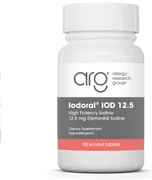
Seeking Health Optimal Iodine 12.5 mg Review
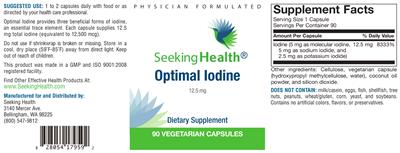
Seeking Health Optimal Iodine 12.5 mg is a high-potency, capsule-form iodine supplement. It is sold in 90-capsule bottles on the brand's website. Each capsule supplies 12.5 mg of elemental iodine. That is roughly 80 times the 150 mcg U.S. Recommended Dietary Allowance, and it is in the same range as the 12.5 mg tablets that follow the Lugol's solution model. As I understand it, the formula combines two forms, molecular iodine (I₂) and potassium iodide (KI). This mirrors the classic 5% iodine / 10% potassium iodide Lugol's solution, which is the same approach Iodoral uses. I could not retrieve the label itself, so check the supplement facts panel for the exact forms and excipients. Iodine is an essential trace element, and the thyroid is its main destination. Iodide is taken up from the blood by the sodium-iodide symporter (NIS) on thyroid follicular cells. There, thyroid peroxidase oxidizes it and attaches it to tyrosine residues on thyroglobulin. This produces monoiodotyrosine and diiodotyrosine, which couple to form thyroxine (T4) and triiodothyronine (T3). These hormones regulate basal metabolic rate, thermogenesis, cardiovascular function, neurological development and energy metabolism. Iodine is also taken up by other tissues that express NIS. These include breast tissue, salivary glands, gastric mucosa and the ovaries. In breast tissue, iodine is thought to influence estrogen metabolism and cell differentiation. Some researchers and practitioners propose it as support for fibrocystic breast comfort. Molecular iodine is the form most often discussed for this. Iodine also has antioxidant and antimicrobial properties, since it reacts with free radicals and lipid peroxides. A very high dose has a further effect. Excess iodide can transiently inhibit thyroid hormone synthesis, known as the Wolff-Chaikoff effect. Most healthy people escape from this effect and adapt. People with autoimmune thyroid disease, such as Hashimoto's or Graves', may react poorly. Possible problems include hypothyroidism, hyperthyroidism and flare-ups of thyroid autoimmunity. The upper tolerable intake for adults is 1,100 mcg per day. A 12.5 mg dose is far above that. Intake at this level is usually discussed in the context of practitioner supervision, baseline thyroid testing (TSH, free T4/T3, antibodies) and often co-nutrients such as selenium. Selenium supports the deiodinase and glutathione peroxidase enzymes that handle thyroid-related oxidative stress. Capsules are easy to take and suit people who dislike the taste of liquid iodine. They are not suitable for pregnancy or lactation, or for anyone with thyroid disease, unless a clinician advises otherwise. The product is not intended to diagnose, treat or cure any disease.
We don’t sell supplements. We help you make decisions and get the best price.
Lowest prices
Finding the lowest prices at the stores now. This takes a few seconds.
Study, Trial or Testing Result Summary
Members Only45 human studies · 14 improved
1 of these 45 human studies gave iodine by injection, not by mouth.
Iodine helps thyroid health mainly in people who do not get enough of it. This product gives 12.5 milligrams a day, far above the 150 to 400 micrograms used in the helpful studies. In three trials of 1551 pregnant women in iodine-poor areas, supplements cut childhood cretinism by about 73 percent and infant deaths by about 29 percent [1]. In 166 people with goitre caused by low iodine, 400 micrograms daily for 8 months shrank the thyroid by about 37 percent, and most of the shrinkage lasted after stopping [2]. After salt iodization, goitre in Polish children fell from 35.4 to 6.3 percent, though thyroid antibodies rose in some children [3]. A similar drop was seen in Turkish schoolchildren [4]. In 365 pregnant women in New York, 150 micrograms daily lowered the risk of iodine deficiency from 39 to 23 percent [5]. More is not better: in 55 people recovering from thyroid surgery, 1 milligram daily for 20 weeks delayed recovery, and all who had surgery on both sides were underactive at 6 months versus 38 percent on placebo [6]. No study given tested a dose as high as this product. Animal and cell studies are never counted.
See all 45 studies →Hide the studies
- In 11 studies of children given radioactive treatment for neuroblastoma, about 41% still had raised thyroid-stimulating hormone despite iodine blockade, which worked better when given longer and combined with other drugs than potassium iodide alone.Incidence of subclinical and overt hypothyroidism in children treated with [131I]mIBG: a systematic review and meta-anal…
- In 31 mostly cross-sectional studies, low iodine intake raised the odds of thyroid nodules by about 24%, while higher or excessive intake showed no consistent effect.The myth of iodine: A systematic review and meta-analysis on the relationship between iodine and thyroid nodule.
- Across three trials of 1551 pregnant women in iodine-deficient areas, iodine supplements cut childhood cretinism by about 73% and infant deaths by about 29%, with no apparent harm.Maternal iodine supplements in areas of deficiency.
- This withdrawn review of three trials in 1551 pregnant women found iodine supplements reduced childhood cretinism and infant deaths with no apparent harm.WITHDRAWN: Maternal iodine supplements in areas of deficiency.
- Across 27 randomized trials of iodine used on wounds, thyroid problems were not more frequent with iodine than with other treatments.Benefit and harm of iodine in wound care: a systematic review.
- A review of iodine status in Eastern Mediterranean countries found iodine deficiency is controlled in some countries with salt iodization but remains a serious problem in others.Iodine deficiency status in the WHO Eastern Mediterranean Region: a systematic review.
- In 307 thyroid cancer patients given radioactive iodine, those prepared with recombinant thyrotropin had success rates of 43.8% versus 47.1% with hormone withdrawal, meeting the noninferiority standard with fewer side effects.Recombinant Human Thyrotropin Plus Radioactive Iodine Among Patients With Thyroid Cancer: A Noninferiority Randomized Cl…
- In 166 people with iodine-deficiency goitre, 400 mcg iodine daily for 8 months shrank the thyroid by about 37%, similar to a med, and the shrinkage was sustained 4 months after stopping (-32.5%).Read the study on PubMed (2515973) →
- In 147 people with Graves' disease given radioactive iodine, 94% of those dosed by the target thyroid mass method were cured at one year, similar to 97% with a fixed high dose that needed more radioactivity.Personalization of radioiodine treatment for Graves' disease: a prospective, randomized study with a novel method for ca…
- In 55 people with high thyroid-stimulating hormone after thyroid surgery, 1 mg iodine daily for 20 weeks delayed recovery: all iodine-treated bilateral surgery patients were hypothyroid at 6 months versus 38% of placebo patients.Iodine therapy for thyroidectomy patients exhibiting high thyroid-stimulating hormone values: a randomised study.
- In a small pilot study, 150 micrograms per day of iodine during pregnancy did not change the two-year neurodevelopment scores of 44 children compared with controls, and higher PCB 118 exposure may have offset any benefit.Neurotoxicant exposure during pregnancy is a confounder for assessment of iodine supplementation on neurodevelopment out…
- In 37 infants having heart surgery, a skin antiseptic containing iodine (povidone-iodine) given before surgery did not clearly lower thyroid hormones afterward; the heart bypass itself had the larger effect on thyroid hormones.Thyroid function in infants following cardiac surgery: comparative effects of iodinated and noniodinated topical antisep…
- In 36 people with Graves' disease, radioactive iodine treatment was followed by rising thyroid antibody levels and myxoedema in 5 of 16 treated people, while propylthiouracil had milder effects.Thyroid stimulating antibodies, thyroglobulin antibodies and serum proteins during treatment of Graves' disease with rad…
- In 18 healthy adults, iodine from the seaweed Gracilaria verrucosa was absorbed better than from Laminaria hyperborea, with absorption of 85% to 101% versus 61.5% to 90%.Bioavailability of seaweed iodine in human beings.
- In severely iodine-deficient Zaire villages, single doses of potassium iodide had small and inconsistent effects on thyroxine levels, while oral iodized oil worked about as well as injected oil eight months later.Iodine supplementation: comparison of oral or intramuscular iodized oil with oral potassium iodide. A controlled trial i…
- In 55 people with non-toxic goitre, 5 days of furosemide 40 mg daily raised radioactive iodine uptake by about 58%, a larger increase than the 17% seen with a 14-day low-iodine diet.Read the study on PubMed (12845488) →
- In 46 people with Graves disease, Lugol's iodine taken before surgery lowered blood flow within the thyroid, though changes in blood flow did not always match what surgeons heard.[Ultrasonographic evaluation of thyroid tissue perfusion in patients with Graves-Basedow disease as preparation for surg…
- In 21 people with an overactive thyroid, 150 mg of potassium iodide daily for 3 to 7 weeks lowered thyroid hormone levels, but the effect was variable and unpredictable, and it did not meaningfully change how thyroid hormones are broken down in the body.The effect of iodide on serum thyroid hormone levels in normal persons, in hyperthyroid patients, and in hypothyroid pat…
- In a crossover study of 20 people, a med alone suppressed thyroid-stimulating hormone more than a med with 100 micrograms of iodide over 8 weeks, while 12 of 20 people with goitre had a smaller thyroid after 4 weeks.[Thyroxine vs iodine and thyroxine. Comparison of the TSH suppression test].
- In 64 pregnant women treated with a 7-day iodine vaginal suppository, newborns showed no signs of an underactive thyroid when checked 4 to 5 days after delivery.[Clinical significance of betadine vaginal suppository treatment in pregnancy].
- In 22 people with normal thyroid function, iodine contrast dye given for scans caused a temporary rise in thyroid-stimulating hormone within the first week, and four people went above the normal range.Do iodine-containing contrast media induce clinically relevant changes in thyroid function parameters of euthyroid patie…
- In 10 healthy men taking 27 mg of iodine daily for 4 weeks, the thyroid gland enlarged and thyroid-stimulating hormone rose, and both returned to baseline within a month after stopping.Evidence of thyroid volume increase in normal subjects receiving excess iodide.
- In five people with neurological endemic cretinism, giving iodide caused signs of an underactive thyroid, suggesting a hidden weakness in thyroid hormone production.Effects of iodides on the hypothalamic-pituitary-thyroid axis in neurological endemic cretinism: evidence for compensate…
- In 1802 healthy children and adolescents in Germany, many had urine iodine below the WHO target, but iodine levels did not correlate with thyroid hormone levels or thyroid antibodies.Spot urine iodine levels below the WHO recommendation are not related to impaired thyroid function in healthy children a…
- In children aged 8 to 12 in western Poland, goiter cases fell from 35.4% in 1992 to 6.3% in 2005 after salt iodization, though antibody levels rose in some children.Changes in thyroid morphology and function in children in western Poland as a result of intensified iodine prophylaxis.
- In 1022 pregnant Chilean women in the first trimester, iodine intake was adequate, but about 6% had clinical or subclinical hypothyroidism, a higher rate than in the literature.Thyroid-Stimulating Hormone Reference Ranges in the First Trimester of Pregnancy in an Iodine-Sufficient Country.
- In children in areas with high iodine in drinking water, goitre prevalence fell from 24.6% to 5.9% after iodized salt was removed from their diet for about one and a half years.[Influence of removing iodized salt on children's goiter status in areas with high iodine in drinking water].
- In 741 pregnant women in China, higher blood iodine was linked to higher free and total thyroxine levels, while its link to free triiodothyronine was curved, peaking at intermediate levels.Serum iodine concentration in pregnant women and its association with thyroid function.
- In a survey of 625 school-age children in northern Cyprus, no child had a thyroid larger than the recommended limit, and most had adequate iodine intake, with a median urinary iodine of 120 micrograms per liter.Iodine status and thyroid volumes of school age children from Northern Cyprus.
- In 399 older heart patients in São Paulo, about 1 in 14 had an overactive thyroid and about 1 in 12 had an underactive thyroid, and about 31% had urinary iodine above the excessive-intake level of 300 micrograms per liter; the study did not test iodine supplementation.The prevalence of thyroid dysfunction in elderly cardiology patients with mild excessive iodine intake in the urban area…
- In 365 pregnant women in New York City, those offered 150 mcg of potassium iodide daily had higher urine iodine (170 vs 128 mcg/L) and less risk of iodine deficiency (23% vs 39%), though over 20% of supplemented women were still at risk.Apparent insufficiency of iodine supplementation in pregnancy.
- In 334 pregnant women in southern India, iodine status was adequate, yet 18% had thyroid insufficiency, with overweight and anemia predicting it.High prevalence of maternal hypothyroidism despite adequate iodine status in Indian pregnant women in the first trimeste…
- After mandatory iodized salt was introduced in a severely iodine-deficient area of Turkey, goiter prevalence in 304 schoolchildren fell (19.4% by palpation, 14.6% by ultrasound) and the area became only mildly iodine-deficient within 3 years.Effect of iodine supplementation on goiter prevalence among the pediatric population in a severely iodine deficient area…
- In 237 people with overactive thyroid treated with low-dose radioactive iodine plus 12 to 18 months of antithyroid drugs, 83% had clinical remission and 0.8% developed lasting underactive thyroid.[Treatment of diffuse toxic goiter with radioactive iodine in combination with prolonged antithyroid therapy].
- Egyptian women with autoimmune subclinical hypothyroidism had higher urine iodine than healthy controls, and within the patients higher iodine went with higher thyroid-stimulating hormone.Excess urinary iodine is associated with autoimmune subclinical hypothyroidism among Egyptian women.
- Among 129 people with cystic fibrosis, 83.7% had low iodine levels and 11.6% had subclinical hypothyroidism, though no link to age, weight, nutrition or lung function was found.Iodine deficiency and subclinical hypothyroidism are common in cystic fibrosis patients.
- In 110 pregnant women in the Paris area, lower iodine levels were linked to smaller fetal thyroid glands, and widespread iodine deficiency was found.Iodine deficiency in northern Paris area: impact on fetal thyroid mensuration.
- Among 105 patients treated with radioactive iodine for overactive thyroid, 81% were clinically euthyroid at follow-up, and raised TSH levels in about half of the euthyroid patients did not progress to overt hypothyroidism over 12 months.Thyroid function in patients treated with radioactive iodine for thyrotoxicosis.
- Of 47 people with lung metastases from thyroid cancer, 28 showed radioactive iodine uptake in the tumors, and those with less severe underactive thyroid after surgery were more likely to show this uptake.Increased uptake of iodine-131 in metastases of differentiated thyroid carcinoma associated with less severe hypothyroid…
- In 38 retrospectively reviewed thyroid cancer patients with raised thyroglobulin but no visible disease, extra high-dose radioactive iodine treatment was followed by normal thyroglobulin levels in 6 patients over 8 to 46 months, and the long-term effect on survival was unclear.I-131 therapy for thyroglobulin positive patients without anatomical evidence of persistent disease.
- Among five team members exposed to a radioactive plume in Fukushima, those who took two potassium iodide pills about 36 hours before exposure showed an inverse link between age and thyroid radioactivity, suggesting stable iodine may have a protective effect.A Study of Thyroid 131I Activity of Five Human Subjects Exposed to a Radioactive Plume at Tamura City in Fukushima.
- In a case-control study in India, people with hypothyroidism had higher urinary iodine and anti-TPO antibody levels than matched controls, which the authors interpret as an association between excess iodine intake and hypothyroidism.Does iodine excess lead to hypothyroidism? Evidence from a case-control study in India.
- In goitrous patients, a single yearly dose of an iodised oil containing 376 mg iodine per mL was reported to normalise thyroid function within 3 months in early-stage goitre.Brassiodol, a new iodised oil for goitrous patients.
- In patients with thyroid cancer, a diagnostic iodine scan reduced thyroid uptake of the later therapeutic radioactive iodine dose, with the effect larger for iodine-131 than iodine-123 and greatest when the two doses were about 25 days apart.Self-stunning in thyroid ablation: evidence from comparative studies of diagnostic 131I and 123I.
- In children with normal thyroid function, sodium iodide at 1500 to 2000 micrograms per square meter of body surface per day maximally suppressed thyroid uptake of radioactive iodine, and the suppression reversed when the iodide was stopped.Minimal dosage of iodide required to suppress uptake of iodine-131 by normal thyroid.
Review Totals and Summary
Members Only32 reviews · 89% positive
Customers of 12.5 mg iodine supplements are mostly enthusiastic about perceived thyroid and energy benefits. This feedback is drawn from comparable Iodoral reviews, not from Seeking Health's own reviews. Many say they felt more energetic, slept better and had less brain fog. Some also report less hair loss and better thyroid function. Several describe a feeling of balance whether they thought their thyroid was underactive or overactive. One reviewer reports an energy turnaround within days after a chiropractor's suggestion. Another says that using it for months resolved breast fibroids. Fibrocystic breast discomfort is a frequently cited reason for buying. Convenience and tolerability are the second big theme. People who struggled with liquid Lugol's solution say it burned or irritated their stomach. They value a small, easy-to-swallow, scored format that makes dosing adjustments simple. Several say it is cheaper than the iodine their doctor sold them while working just as well. Some like loading up for a month and then tapering down. Some reviewers mention good value and fast delivery. Some also praise high ingredient quality and the combination of two iodine forms. Complaints are comparatively rare and mild. A few people mention a neutral or slightly bitter taste. Others say they felt little effect, or that results depended heavily on their symptoms and how often they dosed. The mixed-star distribution on retail pages suggests a minority of buyers saw no benefit. In general, this high dose is not something every user tolerates, and some mention needing to titrate carefully. Reviews of this type of product also often raise stomach sensitivity, but here most users report the opposite. For the Seeking Health capsule specifically, I could not verify customer sentiment. Seeking Health is generally well rated across its catalog on its own site. Any claim about this exact capsule's review themes would be an extrapolation, so check the product page's reviews directly.
Biohacker Summary
Members Only4 of 10 recommend it
The panel is split on iodine, the main ingredient here: four of the ten lean toward recommending it, while the rest are neutral or cautious, and two of the ten did not speak about it at all. Those who like it take it to support thyroid hormone production, with others also citing estrogen balance, breast health, and healthy development in pregnancy. Several prefer getting it from seaweed, kelp, seafood, or iodized salt, and doses mentioned were 100 to 200 micrograms for general thyroid support and 500 to 3,000 micrograms in the morning for therapeutic use, since iodine can be stimulating. Pairing with selenium came up, with a warning against high iodine when selenium is low. The most common caution, from about half the panel, is that high iodine can raise the risk of autoimmune thyroid disease, and one panelist said high doses should not be taken while breastfeeding, so the 12.5 mg amount in this product is far above the doses the panel described.
See all 9 biohackers →Hide the biohackers
Dr. Eric Berg · Iodine · recommends
- Recommends applying a drop of iodine and covering the skin tag with a bandage twice a day for topical skin tag removal.
- Recommends getting iodine from sea kelp regularly because it's packaged in a way that the body can better absorb it, is difficult to overdose on, and provides additional trace minerals, amino acids, and phytonutrients.
- Warns that too much iodine can trigger autoimmune disease, so avoiding excessive amounts is as important as getting enough.
- Iodine can be stimulating, making morning supplementation most ideal.
- Recommends taking iodine in therapeutic ranges of 500 to 3,000 micrograms, especially in the morning, to help regulate estrogen and address fibrocystic breast issues.
- Warns that if someone has a slow thyroid, it's important to check iodine levels before increasing iodine intake, as too much can worsen thyroid problems, although it may be beneficial in some cases.
- Discusses iodine for hypothyroidism but warns against taking too much and recommends an iodine test, as not everyone with hypothyroidism needs it.
- Recommends iodine for non-autoimmune thyroid problems.
- Recommends focusing on iodine intake for a healthy thyroid.
- Mentions iodine as a key nutrient for converting inactive T4 to active T3, which is important for thyroid function.
Ben Greenfield · Iodine · recommends
- Recommends taking sufficient iodine to ensure free T3 levels are right, which is important for the reverse calcium transport system.
- Warns that people can unknowingly take 20 times the amount of iodine they're supposed to because it's in different ingredient profiles.
- Warns that high iodine intakes can predispose people to autoimmune thyroid disease and advises caution with iodine for those with Hashimoto's or Graves' disease, suggesting seafood for sufficient intake.
- Discusses new research on how the body can absorb iodine straight from the air through the lungs.
- He discusses research suggesting that if you live near the ocean and have thyroid issues, some of those might be alleviated by breathing in iodine through the air.
- Recommends iodine as one of the top three things to take after flying in an airplane or getting a test that involves radiation to soak up some of the damage.
- Recommends weaving adequate intake of iodine into one's diet for thyroid health.
- Recommends taking sufficient iodine to get free T3 levels right, either through diet or a supplement.
- Takes iodine to help with low amounts of radiation exposure.
- Believes iodine is the only supplement that truly works for radiation protection, and he takes Life Extension's Potassium Iodide once per week as a preventive agent due to frequent travel and exposure to airport scanners.
Thomas DeLauer · Iodine · recommends
- Recommends a small amount of iodine, explaining that it is the raw mineral from which T4 is built and is crucial for thyroid hormone production, but warns against high intake with low selenium.
- Recommends assessing iodine along with selenium and iron for optimal thyroid function, suggesting seaweed as a source of iodine.
- Emphasizes the importance of checking iodine levels, especially for women on thyroid hormone, as low iodine can be a root cause of hypothyroidism.
- Recommends taking 100 to 200 micrograms of iodine or having a couple of seaweed snacks to support thyroid function.
- Recommends consuming foods rich in iodine, such as seaweed or kelp, or taking an iodine supplement, to support thyroid function and adaptability to a changing metabolic rate.
- Used to take 125 mcgs of liquid iodine a day for thyroid health, but increased it to 250 mcgs a day, which caused one of his levels to go outside the reference range, leading him to stop the increased dose.
- Warns against taking an iodine supplement unless instructed by a physician, as it can be a 'heavy hammer to drop' and there is such a thing as too much iodine.
- Notes that iodine deficiency can lead to visible swelling in the neck, coughing, wheezing, or a hoarse voice, and recommends consuming seaweed and eggs to address it.
- Notes that while people often go to iodine for thyroid issues, not everyone has an iodine issue based on testing.
- Notes that seaweed naturally contains iodine, which is very important for the synthesis of thyroid hormone, and that thyroid has a direct relationship with insulin and overall metabolism.
Dave Asprey · Iodine · neutral
- Lists iodine as one of the minerals needed.
- Dave Asprey and Dr. Sarah Daccarett discuss why iodine is essential for breast health, estrogen metabolism, and thyroid function.
- Highlights massive iodine deficiency and its importance for breast and uterus health, noting that these organs have more iodine receptors than the thyroid and need iodine to metabolize estrogen.
- Recommends adding iodine to warm water and sea salt for a sinus rinse to prevent snorting parasites from tap water and to sterilize the sinuses.
- Uses iodine, primarily by putting a couple of drops of Lugol's liquid iodine in hot saline for a sinus flush to kill viruses, and also takes a little bit of iodine within the recommended ranges as part of the Minerals 101 multi-mineral supplement.
- Notes that in Europe, iodine is used in bread instead of bromine, implying it is a healthier choice.
- Experimented with iodine, believing that creating iodine deficiency because of Hashimoto's is 'dumb', so he took it anyway.
- Adds one drop of iodine to the entire bottle of Xylitol nasal spray to create a weak antimicrobial solution that kills pathogens on contact, using it every flight to avoid airplane sinus issues.
- Recommends applying a 1% iodine solution (1 ml of 20% Lugol's to 10 ml water) to stretch marks and scars to break up scar tissue before applying GHK Copper.
- Recommends ensuring adequate iodine intake if one is going to eat broccoli, as low iodine can exacerbate thyroid issues associated with compounds in broccoli.
Siim Land · Iodine · neutral
- Mentions that the intake of certain nutrients, especially DHA and iodine, from seafood plays a powerful effect on intelligence for children and during pregnancy.
- Recommends ensuring sufficient iodine intake, especially during pregnancy and early life, to prevent mental developmental and cognitive issues.
- States that iodine supplementation is good during pregnancy if the mother is low in iodine to prevent intellectual deficiencies, but warns that high iodine levels can increase autoimmunity risk and it's not a general fix for hypothyroidism.
- Warns that high iodine intake can lead to autoimmunity and hyperthyroidism, and advises caution with iodine supplements, recommending adequate dietary intake instead.
- States that iodine supplementation is good during pregnancy for women potentially low in iodine to prevent intellectual deficiencies, but high levels can increase autoimmunity risk and it's not a general fix for hypothyroidism.
- Discusses Iodine as a supplement.
- Warns that exposure to chlorine, fluorine, and bromine in shower water can displace iodine, leading to low iodine levels and compromised thyroid function.
- States that iodine is needed to make thyroid hormones.
- Takes 1 gram of Iodine from DoNotAge in the morning for longevity.
- States that iodine as potassium iodide is likely for thyroid health.
Peter Attia · Iodine · warns
- Discusses the dangers of supplementing with high levels of iodine.
- Warns that high-dose iodine supplementation carries a risk of autoimmune thyroid disease, citing increased incidence in Japan due to higher dietary iodine intake.
- Mentions using iodine intraoperatively for infection prevention during penile prosthesis surgery.
Andrew Huberman · Iodine · neutral
- Mentions Iodine as an essential supplement.
- Notes that people are not eating iodized salt and that iodine supplementation can help with thyroid issues, which affect many people.
- Explains how thyroid hormone levels are influenced by key nutrients, such as iodine, selenium, and L-tyrosine.
- States that iodine is absolutely key for the thyroid to produce thyroid hormone and recommends ensuring sufficient intake for healthy thyroid function.
- Andrew Huberman discusses the importance of a balance and good source of iodine for appropriate thyroid hormone levels, noting that more iodine is needed if more goitrogens are consumed.
- Refers to a previous episode on metabolism where he discussed the relationship between salt and iodine, encouraging listeners to refer to that episode for information on whether iodized or non-iodized salt is best and the impact on thyroid hormone and function.
- Mentions that getting sufficient iodine is important for thyroid function, which should naturally come from ingested salts.
- Recommends ensuring sufficient, but not excessive, iodine intake to support the thyroid system and metabolism, noting that some people may need to supplement with sources like kelp.
- Discusses the role of iodine for thyroid health and its benefits in reducing inflammation.
- Says that some people who are hypothyroidal might benefit from supplementing iodine, and it is contained in most salts, including Himalayan salt, and can also be supplemented through kelp and seaweed.
Dr. Mark Hyman · Iodine · neutral
- Notes that iodine is one of the micronutrients for which widespread deficiencies or insufficiencies are seen in the population.
- Mentions a woman who exercises and doesn't eat junk food but was massively nutritionally deficient, with super low iodine.
- Dr. Hyman observes a lot of iodine deficiency because people avoid iodized salt and seafood, noting that iodine is essential for thyroid health and hormone production, which regulates metabolism and energy levels.
- Notes that the athlete was low in iodine, which is needed to make thyroid hormone, and that his iodine levels are now better. He explains that many Americans are low in iodine because they don't eat iodized salt, seaweed, or fish.
- Lists iodine as one of the big four minerals that most people are deficient in.
- Found Colin had low iodine, despite eating fish, which is important for thyroid function, and recommends iodine drops to help his thyroid work better.
- Dr. Hyman recommends iodine drops for Colin to help his thyroid work better, as his iodine levels were low despite eating fish.
- States that iodine is a trace mineral important for producing thyroid hormones.
- States that if a vegan insists on remaining vegan during pregnancy, they must ensure they are taking all the right nutrients, including iodine.
- States that iodine, found in fish and seaweed, is needed to make thyroid hormone, as the hormone is built from iodine molecules.
Dr. Rhonda Patrick · Iodine · warns
- Dr. Patrick states that high-dose iodine should absolutely not be taken during breastfeeding due to the infant's lower capacity to metabolize drugs.
- Dr. Rhonda Patrick explores iodine supplementation.
- Personally takes iodine and increasingly prefers Swanson brand vitamins.
RAL Summary
Members OnlyTier 4 for Thyroid Health
The review summary is drawn from reviews of a different product, Iodoral, not from reviews of Seeking Health Optimal Iodine, so it must be set aside. Its reviews are set aside, so it is graded on its studies alone. Human studies support Iodine (14 of 45 human studies showed an improvement), but there are not yet enough reviews to confirm it (0).
- Emerging: not enough evidence to rank higher yet.
Where the evidence disagrees: 19 of the 45 human studies found no effect.
More Details
Members OnlyBody systems · Combine with · Possible side effects
Body systems: Endocrine system
Combine with: Iodine is a core substrate for thyroid hormone synthesis, so pair it with the other nutrients the thyroid needs. Selenium (100-200 mcg as selenomethionine or selenium glycinate) supports the glutathione peroxidase and deiodinase enzymes that protect the thyroid from oxidative stress and convert T4 to active T3; it is especially important when taking higher-dose iodine. Zinc (15-30 mg) and iron, if ferritin is low, support T4-to-T3 conversion and thyroid peroxidase activity. Tyrosine provides the amino acid backbone of thyroid hormones. Vitamin D, magnesium, and B vitamins (B12, riboflavin) support general endocrine and energy metabolism. At 12.5 mg this is a high dose far above the 150 mcg RDA, so use it only under practitioner guidance with periodic TSH, free T3/T4 and thyroid antibody monitoring. People with Hashimoto's, Graves' disease, or nodules should be especially cautious, because excess iodine can trigger or worsen thyroid dysfunction, and selenium should be in place first.
Possible side effects: In studies, high iodine intake delayed thyroid recovery after surgery and led to an underactive thyroid, and salt iodization was linked to higher thyroid antibodies in some children. No written reviews of this product could be read.
Supplement Facts
Iodine 12.5 mg
| Iodine | 12.5 mg |
Other ingredients: Microcrystalline Cellulose, Vegetarian Capsule, Coconut Oil powder, Silicon Dioxide.
Directions: Suggested Use: 1 capsule daily with food or as directed by your health care professional.
Barcode (UPC) 828054179592 · Label source: NIH label database · Report a label change
Show entire label

More thyroid health products
Members OnlyThe highest ranked for the same goal
Read more
Our articles on this subject
- Supplement and Medication Interactions You Should KnowArticle · Oct 20, 2026
Graded November 5, 2026 by the Reverse Age Lab evidence engine, from human studies, real reviews and our biohacker panel. How we grade. Is this medical advice? No. Rala organizes the published evidence; go over any change with your doctor, especially if you take meds.
Privacy policyConsumer health dataTermsDo Not Sell or Share My Personal InformationCookie settings