
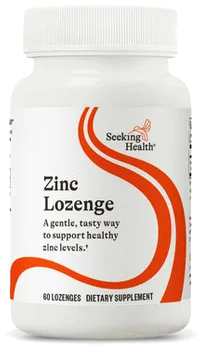
Seeking Health Zinc Lozenge Review
Seeking Health Zinc Lozenge is a zinc supplement sold as a chewable lozenge. One lozenge is a serving, and each container holds 60 servings. The label lists zinc at 15 mg per serving. The other ingredients are xylitol, microcrystalline cellulose, ascorbyl palmitate, malic acid, natural flavors, purified water, silica, L-leucine and organic monk fruit extract. The printed directions for adults say: as needed, take 1 lozenge daily with food or use as directed by your healthcare professional. Bite the lozenge a few times, let it dissolve slowly, then swallow. Buyers most often mention the pleasant taste and the small, easy to swallow size. Several also say it feels more like a chewable tablet than a traditional lozenge, and many comment on the price and the ingredient quality.
We don’t sell supplements. We help you make decisions and get the best price.
Lowest prices
We hold no current store prices for it yet: check the store.
- AmazonPrice at AmazonCheck price at Amazon (opens in a new tab)
Also at: iHerb
Some store links earn us a commission.
Study, Trial or Testing Result Summary
Members Only68 human studies · 33 improved
This lozenge gives 15 mg of zinc a day, above the 10 mg dose that worked in studies. In young children, zinc has solid support for immune defense. A review of 28 trials in over 237,000 children under 5 found zinc cut deaths from any cause by 16%, with fewer deaths from pneumonia and infection [1]. A review of six trials found daily zinc lowered pneumonia by 13%, though the evidence was rated low quality [2]. In 609 young children, 10 mg daily for 6 months cut lower chest infections by about 45% [3]. In adults, a review of 35 trials found zinc lowered inflammation markers and raised a type of helper immune cell [4]. For colds, zinc did little to prevent them, but taken as treatment it may shorten them by about 2.4 days, with more mild side effects [5]. Lozenges made with zinc acetate shortened colds by about 2.7 to 2.9 days [6]. The label does not name the zinc form, and reviewers describe it as zinc bisglycinate, so the lozenge cold results may not carry over directly. Some trials found no benefit, such as for flu vaccine response in older adults and for malaria. Animal and cell studies are never counted.
See all 68 studies →Hide the studies
- Across 28 trials of 237,068 children under 5, zinc supplementation cut the risk of death from any cause by 16%, with larger drops at 10 mg or more per day and lower deaths from pneumonia and infection.Effect of zinc supplementation on mortality in under 5-year children: a systematic review and meta-analysis of randomize…
- Across 34 trials with 8526 children and adults, zinc made little or no difference to catching a cold but may have shortened colds by about 2.4 days when used as treatment, with more mild side effects.Zinc for prevention and treatment of the common cold.
- In six trials of 5,193 children aged 2 to 59 months, daily zinc lowered pneumonia incidence by 13%, though the evidence was rated low quality and there was no effect with looser pneumonia definitions.Zinc supplementation for the prevention of pneumonia in children aged 2 months to 59 months.
- Across 35 trials of 1,995 adults, zinc supplements lowered inflammation markers (CRP) and neutrophils and raised CD4 immune cells, with no effect on white blood cells, lymphocytes, monocytes or CD3.Zinc supplementation and immune factors in adults: a systematic review and meta-analysis of randomized clinical trials.
- Pooling three placebo-controlled trials of 199 adults with common colds, zinc acetate lozenges shortened colds by about 2.7 to 2.9 days compared with an average of 7 days.Zinc acetate lozenges for treating the common cold: an individual patient data meta-analysis.
- In adults, zinc did not reduce the risk of respiratory infections but shortened symptom duration by about 47 percent.Effect of micronutrient supplements on influenza and other respiratory tract infections among adults: a systematic revie…
- In children with pneumonia, zinc may have slightly shortened hospital stays but did not speed recovery time, and no nutritional supplement could be recommended for routine treatment.A systematic review and meta-analysis on nutritional and dietary interventions for the treatment of acute respiratory in…
- In 13 studies of undernourished children, oral nutritional supplements (not zinc alone) lowered upper respiratory infection by 39% compared with dietary counseling alone.Effect of Oral Nutritional Supplementation on Health-Related Outcomes and Nutritional Biomarkers in Children and Adolesc…
- In a review of 11 studies on vaginal yeast infection, one trial of 68 women found zinc lowered 90-day reinfection (28.6% vs 48.5%) but not significantly, and trials were too few to support routine use.Zinc-based therapies for prevention and treatment of vulvovaginal candidiasis: a systematic review and meta-analysis.
- Pooling 6 trials of adults with colds, zinc lozenges did not significantly reduce the chance of having cold symptoms at 7 days.A meta-analysis of zinc salts lozenges and the common cold.
- In a review of 31 studies of children aged 5 to 19 on many infection treatments, zinc appeared to help with diarrhea and speed recovery from urinary infections, but most results could not be pooled.Interventions for High-Burden Infectious Diseases in Children and Adolescents: A Meta-analysis.
- This review of common cold treatments covered zinc gel and lozenges among other options, but the abstract gives no results for zinc.Common cold.
- This review of common cold treatments covered zinc gel and lozenges among other options, but the abstract gives no results for zinc.Common cold.
- In healthy adults, zinc did not prevent colds but may have shortened colds by about 2.25 days when given alone.Zinc Supplementation Reduces Common Cold Duration among Healthy Adults: A Systematic Review of Randomized Controlled Tri…
- A review of 39 trials of eight immune supplements including zinc found some signs of benefit in healthy people under stress, but gaps prevented firm conclusions.Select Dietary Supplement Ingredients for Preserving and Protecting the Immune System in Healthy Individuals: A Systemat…
- In 2482 young children in a Delhi slum, daily zinc (10 to 20 mg) for four months did not change overall lower respiratory infections but lowered the incidence of pneumonia compared with placebo.Effect of routine zinc supplementation on pneumonia in children aged 6 months to 3 years: randomised controlled trial in…
- In 855 Peruvian children aged 6 months to 15 years, daily zinc cut diarrhea illness by 23% but had no significant effect on respiratory infections.Zinc and iron supplementation and malaria, diarrhea, and respiratory infections in children in the Peruvian Amazon.
- In 826 Indonesian preschool children given 10 mg zinc daily for 4 months, days with upper respiratory infection fell 12 percent (not significant), and 20 percent after vitamin A was given.Zinc combined with vitamin A reduces upper respiratory tract infection morbidity in a randomised trial in preschool chil…
- In 826 Indonesian children aged 2 to 5, 10 mg of zinc daily for four months increased a cellular immune signal (interferon gamma) and changed salivary antibody response in younger and underweight children after vitamin A.Effect of zinc and vitamin A supplementation on immune responses in Indonesian pre-schoolers.
- In 612 Tanzanian children aged 6 to 60 months, 10 mg of zinc daily for about 8 months did not reduce malaria episodes compared with placebo, though it corrected low blood zinc.Effect of supplementation with zinc and other micronutrients on malaria in Tanzanian children: a randomised trial.
- In 609 children aged 6 to 35 months, 10 mg of elemental zinc daily for 6 months reduced lower respiratory infection episodes by about 45% compared with control.Zinc supplementation reduces the incidence of acute lower respiratory infections in infants and preschool children: a do…
- In about 550 adults with colds, zinc gluconate lozenges (13.3 mg) shortened illness from 3.5 to 2.5 days in induced rhinovirus colds but had no effect on natural colds, and zinc acetate had no effect on either.Effect of treatment with zinc gluconate or zinc acetate on experimental and natural colds.
- In 384 elderly nursing home residents, 400 mg of zinc daily for 60 days before influenza vaccination raised blood zinc levels but did not increase the antibody response to the vaccine compared with vaccine alone.Effect of zinc or zinc plus arginine supplementation on antibody titre and lymphocyte subsets after influenza vaccinatio…
- In 252 Ugandan children with sickle cell anemia, 10 mg of zinc daily for 12 months did not reduce severe or invasive infections compared with placebo, and many children stayed zinc deficient.Zinc for infection prevention in children with sickle cell anemia: a randomized double-blind placebo-controlled trial.
- In children with recurrent respiratory infections, a chewable pleuran-based supplement with vitamin D and zinc taken for 3 months led to fewer infections than placebo.Novel Chewable Pleuran-Based Supplement Decreases Respiratory Tract Infections in Children: A Randomised Controlled Tria…
- In 191 adults with COVID-19, adding zinc to a med did not improve recovery within 28 days, mechanical ventilation, or death compared with a med alone.Read the study on PubMed (33247380) →
- In 180 preterm neonates with late-onset sepsis, 1.4 mg/kg of elemental zinc daily for 10 days plus meds improved sepsis scores and lowered C-reactive protein and procalcitonin more than meds plus placebo.Zinc Supplementation in Preterm Neonates with Late-Onset Sepsis: Is It Beneficial?
- In 146 growth-stunted Vietnamese children aged 4 to 36 months, 10 mg of zinc daily for 5 months, compared with placebo, reduced diarrhea episodes about threefold and respiratory infections about 2.5-fold (the respiratory result was not statistically significant).Zinc supplementation increases growth and circulating insulin-like growth factor I (IGF-I) in growth-retarded Vietnamese…
- In a double-blind trial of 136 older adults in Rome, 25 mg of zinc daily increased some cell-mediated immune cell counts compared with placebo.The effect of zinc and vitamin A supplementation on immune response in an older population.
- In a double-blind trial of 130 volunteers with common cold, zinc gluconate lozenges (4.5 mg zinc each) taken for up to 10 days did not shorten or lessen colds compared with placebo lozenges.Zinc gluconate lozenges for common cold. A double-blind clinical trial.
- In 106 children aged 2 to 24 months with severe lower chest infections, 20 mg of zinc daily for 5 days did not shorten time to recovery or hospital stay compared with placebo.Zinc supplementation in severe acute lower respiratory tract infection in children: a triple-blind randomized placebo co…
- In young children with lower respiratory infections in a zinc-poor area, 10 mg of zinc gluconate daily for 60 days reduced the number of severe infections and shortened recovery time compared with placebo.The efficacy of zinc supplementation in young children with acute lower respiratory infections: a randomized double-blin…
- In adults with HIV and low zinc, 90 mg of elemental zinc daily for 24 weeks lowered one immune activation marker compared with placebo, but did not consistently change other inflammation or gut markers.Zinc Supplementation, Inflammation, and Gut Integrity Markers in HIV Infection: A Randomized Placebo-Controlled Trial.
- In 89 people with severe alcohol-related hepatitis, zinc was given as part of a combined treatment with anakinra and pentoxifylline, and cytokine levels changed over 180 days but did not return to normal; the study cannot separate zinc's own effect.Longitudinal assessment of the circulating cytokine profile of severe alcohol-associated hepatitis.
- In 89 Guatemalan infants aged 6 to 9 months, 10 mg of zinc daily for 7 months reduced diarrhea incidence by 22% compared with placebo, but did not change respiratory infections.Impact of zinc supplementation on morbidity from diarrhea and respiratory infections among rural Guatemalan children.
- In 81 hospitalized children with asthma, adding zinc supplementation and teach-back education to routine care was linked to better symptom control and medication adherence one month after discharge, though zinc's effect could not be separated from the education.Teach back educational model combined with zinc supplementation improves clinical symptoms and immunity in children with…
- In 80 healthy adults with a new common cold, zinc gluconate nasal gel used four times daily until symptoms resolved (up to 10 days) shortened cold duration to a median of 4.3 days versus 6 days with placebo.Effect of zincum gluconicum nasal gel on the duration and symptom severity of the common cold in otherwise healthy adult…
- In 77 adults with common colds, zinc gluconate nasal spray and zinc orotate lozenges for 7 days did not shorten or lessen colds compared with placebo, and the nasal spray caused olfactory pain in some people.Ineffectiveness of zinc gluconate nasal spray and zinc orotate lozenges in common-cold treatment: a double-blind, placeb…
- In 65 Bangladeshi children aged 3 to 24 months with acute diarrhoea, 20 mg of zinc daily for 2 weeks, followed by 8 weeks of home monitoring, led to fewer later diarrhoea and respiratory illness episodes than multivitamin syrup alone.Impact of zinc supplementation on subsequent growth and morbidity in Bangladeshi children with acute diarrhoea.
- Personalized supplements containing selenium, zinc and vitamin D did not reduce the number or severity of upper respiratory infections compared with placebo.Individualized Supplementation of Immunoactive Micronutrients and Severity of Upper Respiratory Infection Symptoms-A Ran…
- In 40 Air Force Academy cadets taking 15 mg of zinc gluconate daily for seven months, self-reported symptom-free episodes were significantly higher than with placebo, but doctor-diagnosed upper respiratory infections did not differ.Use of zinc supplements to reduce upper respiratory infections in United States Air Force Academy cadets.
- In 38 children and adolescents with acute leukemia, 2 mg/kg of zinc daily for 60 days, compared with placebo, reduced the number of infection episodes and improved weight gain.Zinc supplementation in children and adolescents with acute leukemia.
- In 17 adults with type 2 diabetes and metabolic syndrome, 30 mg of elemental zinc daily for 8 weeks increased the share of monocytes carrying the cancer-fighting TNF-alpha protein on their surface, compared with placebo.Zinc supplementation improves anticancer activity of monocytes in type-2 diabetic patients with metabolic syndrome.
- In five male runners taking 25 mg zinc twice daily for 6 days, zinc blocked the exercise-induced rise in reactive oxygen species from neutrophils, while placebo did not.Exercise-induced changes in immune function: effects of zinc supplementation.
- In children with heart disease getting a flu shot, those also given zinc had a significant drop in a blood inflammation marker at 28 days, and fewer reported malaise than those given the vaccine alone.Zinc supplementation and TNF-α levels in vaccinated cardiac patients.
- Zinc gluconate lozenges (23 mg elemental zinc every 2 hours) did not significantly shorten colds compared with placebo, caused nausea and altered taste in half of takers, and produced only a small, not clinically meaningful reduction in symptom severity.Failure of zinc gluconate in treatment of acute upper respiratory tract infections.
- In splenectomized children and adults with thalassemia major given pneumococcal vaccines, zinc syrup (1.5 mg per kg daily, up to 50 mg) over about 12 weeks did not change pneumococcal antibody levels compared with placebo.Pneumococcal vaccination for splenectomized patients with thalassemia major in Indonesia.
- In healthy older adults, a multivitamin and mineral supplement for 12 weeks raised blood zinc and vitamin C levels but did not change immune function measures compared with placebo.The Effect of a Multivitamin and Mineral Supplement on Immune Function in Healthy Older Adults: A Double-Blind, Randomiz…
- In older adults, a multi-ingredient supplement containing zinc taken for 30 days lowered inflammation levels and improved immune cell levels, though they did not reach those of younger adults.Use of Nutraceuticals in Elderly to Fight Inflammation and Immuno-Senescence: A Randomized Case-Control Study.
- In 32 adults with sickle cell disease, taking 50 to 75 mg of elemental zinc daily for about 3 years was linked to fewer bacterial infections, fewer hospital stays, and fewer pain crises compared with zinc-deficient and zinc-sufficient groups that did not receive zinc.Effect of zinc supplementation on incidence of infections and hospital admissions in sickle cell disease (SCD).
- In 32 malnourished infants recovering from marasmus, 2 mg/kg of elemental zinc daily for 60 days improved weight gain and reduced infections compared with placebo, with fewer infections (3 of 16 vs 10 of 16).Controlled trial of zinc supplementation during recovery from malnutrition: effects on growth and immune function.
- In 8 healthy men, a 10-week low-zinc diet (4.6 mg a day) reduced immune cell proliferation, which stayed reduced after 5 weeks of 9.1 mg zinc a day, while immune cell numbers and several other immune measures did not change.Immune functions are maintained in healthy men with low zinc intake.
- In 71 hospitalized adults with COVID-19, 90 mg of zinc acetate daily for 14 days added to standard care was linked to less disease progression (5.7% vs 23.5%) and faster recovery than standard care alone.Zinc adjuvant treatment in SARS-CoV-2: A randomized clinical trial.
- In 60 children with sickle cell disease given 10 to 30 mg of zinc sulfate daily by age for 12 months, infections and hospital visits fell and blood antioxidant activity rose, though there was no placebo group.Zinc level and its impact on the phenotype of sickle cell disease.
- In 52 adults with treated HIV, 45 or 90 mg of zinc gluconate daily for 16 weeks raised blood zinc levels and lowered inflammation markers in about half to 60% of participants, though there was no placebo group.Brief Report: Zinc Supplementation and Inflammation in Treated HIV.
- In 395 Japanese municipal workers, certain dietary patterns such as the Mediterranean and vegetarian patterns were linked to higher zinc intake; immune effects were not measured.[Identification of dietary patterns and their relationship with zinc intake in male and female workers].
- In a cross-sectional survey of 252 Saudi adults, higher dietary zinc intake was linked to a better immune status score, though this cannot show that zinc causes the improvement.The relation between dietary zinc and immune status in saudi adults.
- In 149 people with chronic liver disease, lower blood zinc went with higher inflammation markers, and in lab experiments zinc protected liver immune cells from bacterial products.Pretreatment with zinc protects Kupffer cells following administration of microbial products.
- In 141 severely injured hospital patients, most had low zinc on admission, and those still low in zinc at two weeks had more infections.Analysis of serum zinc level in patients with severe trauma.
- In 50 children with cancer, plasma zinc fell 11 percent over 6 months of treatment, and zinc deficiency at 6 months was linked to more severe diarrhea over 4 years.Zinc deficiency and its association with treatment-related toxicity in children with cancer.
- In 37 patients with skin infections called phlegmons, those given zinc tablets after low serum zinc was found had no further lesions for more than 10 months, though the study was uncontrolled.Serum zinc levels in patients with phlegmons as a marker of the severity of infection and the potential of zinc suppleme…
- In 16 people with IgA deficiency, blood plasma zinc was adequate, but red blood cell zinc was low in most, especially children.Proposal to Screen for Zinc and Selenium in Patients with IgA Deficiency.
- Young vegetarians and vegans had more zinc deficiency than omnivores, and this deficiency was linked to lower interleukin-2 production and weaker immune function.Reduced interleukin-2 production and increased CREMα protein expression in vegetarians and vegans due to zinc deficiency…
- In 23 young and 31 elderly adults, about 6 days of oral zinc supplementation in zinc-deficient seniors improved zinc status, reversed overexpression of the CREM alpha protein and restored interleukin-2 production toward young-adult levels.Short-term zinc supplementation of zinc-deficient seniors counteracts CREMα - mediated IL-2 suppression.
- In 19 hemodialysis patients given influenza vaccine, 4 weeks of zinc acetate (60 mg elemental zinc daily) did not increase antibody responsiveness to the vaccine.Influenza vaccination in chronic hemodialysis patients. The effect of zinc supplementation.
- In 19 healthy older adults, moderate zinc supplementation reduced spontaneous inflammatory cytokine release and improved T cell response to stimulation.Zinc supplementation in the elderly reduces spontaneous inflammatory cytokine release and restores T cell functions.
- In 6 patients with acrodermatitis enteropathica, low zinc levels were linked to weaker T and B cell responses, and these normalized when zinc levels recovered with supplementation.Abnormal immune responses during hypozincaemia in acrodermatitis enteropathica.
- In volunteers with experimentally produced colds, zinc gluconate removed the drop in choice reaction time seen during the cold.Effects of zinc gluconate and nedocromil sodium on performance deficits produced by the common cold.
Review Totals and Summary
Members Only968 reviews · 93% positive
Buyers rate Seeking Health Zinc Lozenge well overall, with about 968 ratings across the stores that sell it. Most comments are favorable and focus on taste, tablet size and ingredient quality, with a few quibbles about the form. **What buyers say it did for them:** Several people link it to feeling better in general. One wrote it was "very good supporting imune system when you got a flu." Another said it "helped me sleep better," and a third noticed "a big difference in my state of mind and focus." One buyer chose it after a blood test showed low zinc and was very satisfied. A father's daughter said it is hard to tell whether it has boosted his immunity, but they are hopeful. **What they complain about:** Complaints are few and mild. One buyer said the texture is "closer to a chewable tablet than a traditional lozenge." Another wished it "was intentionally in a tablet format (not lozenge)" and had no sweeteners or flavors. One person had not yet received their order, so that review says nothing about the product itself. **Taste, smell, size and form:** Taste draws mostly praise. Buyers call it "Good taste," "pleasant taste" and "cherry like." One found it has "virtually no taste," which makes it easy to take every day. Another said it tastes okay compared with liquid zinc. The tablets are described as small and easy to swallow, and one buyer said the size is "perfect." Reviewers note it is soft, chewable and quick to dissolve, and one said it is gentler on teeth than other chewables. **Value for money:** Those who mention price are positive. One called it "a great price," and another said it is "Good value and a perfect package size," a quality product at a reasonable price. **Who it seems to suit and who it did not:** Buyers looking for a low dose liked that it is smaller than most zinc products. One parent said their 8 year old takes it daily with enthusiasm and had rejected another brand's lozenges. An older adult is also taking it. Buyers who like Seeking Health as a brand were pleased, and several praised the clean ingredients and the zinc bisglycinate form. People who want a plain tablet without sweeteners or flavors, or a true hard lozenge, may be less happy with it.
Biohacker Summary
Members Only8 of 10 recommend it
Most of the panel recommends or uses zinc, and the main reasons are immune support, testosterone and male fertility, wound healing, and fixing a low level. Several of them say it helps mainly when someone is actually low, and one adds that it works as a helper for hundreds of enzymes in the body. For forms and doses, one panelist takes 15 mg every morning, another suggests 30 mg for men preparing for IVF, and another uses 30 grams a day for a week before surgery and two weeks after, while two of them point to zinc carnosine for gut lining health. Common pairings are vitamin C for illness and immunity and magnesium for sleep, and one panelist uses zinc lozenges for an early cold. No one says they stopped taking it, but one panelist is marked as warning, and another says it does little for testosterone in people who are not short of it.
See all 10 biohackers →Hide the biohackers
Dr. Eric Berg · Zinc · recommends
- Says zinc and vitamin C are the two things a person needs most while sick with an infection, so what they reach for matters.
- Names zinc as a cofactor needed for vitamin D to work, abundant in meat.
- Says zinc is one of the two nutrients you need most during a viral or bacterial illness, and that it is depleted by sugar and refined carbs.
- Lists zinc as something that can help with balding, which is a sign of high DHT.
- States that zinc carnosine can greatly help with ulcerative colitis.
- Recommends zinc, noting it is part of building bone, and suggests it would be included in a trace mineral supplement.
- Discusses zinc and its connection to prostate health.
- Lists several signs that indicate a zinc deficiency, including red, dry, flaky skin, white spots on nails, diarrhea, acne, prolonged infection recovery, mouth ulcers, and difficulty seeing in the dark.
- Recommends zinc as a trace mineral, noting that modern farming practices deplete it from the soil, leading to low levels in crops.
- Notes that white spots on nails point to zinc deficiency, which is usually depleted by eating sugar and refined carbs.
Andrew Huberman · Zinc · uses
- Zinc carnosine to support and improve the lining of your gut.
- States that AG1 Pro contains zinc carnosine to support and improve the lining of the gut.
- Notes that AG1 Pro contains zinc carnosine to support and improve the lining of the gut.
- Zinc carnosine to support and improve the lining of your gut.
- Notes that AG1 Pro contains zinc carnosine to support and improve the lining of the gut.
- States that AG1 Pro contains zinc carnosine to support and improve the lining of the gut.
- Uses AG1 Pro, which contains zinc carnosine to support and improve the lining of the gut.
- States that AG1 Pro contains zinc carnosine to support and improve the lining of the gut, and he was already taking some of these ingredients separately.
- States that AG1 Pro includes zinc carnosine, which he was already taking separately, to support and improve the lining of the gut.
- Personally takes zinc carnosine, which is included in AG1 Pro to support and improve the lining of the gut.
Dr. Mark Hyman · Zinc · recommends
- Suggests that if kids' brains are malnourished and they don't have omega-3s, B vitamins, magnesium, or zinc, they won't be able to engage or function properly.
- Explains that zinc is important for the body's repair crew, helping to heal damaged tissue, and a deficiency can lead to cuts and wounds taking longer to heal.
- Gave a patient with psoriatic arthritis a little zinc, which contributed to significant improvement in her condition.
- Recommends ensuring adequate zinc intake on a regular basis for immune support, noting some data on zinc lozenges for early cold.
- Recommends correcting nutrient deficiencies with zinc.
- Recommends nutrient-dense foods rich in zinc, such as pumpkin seeds and oysters, to reduce inflammation.
- Used zinc as part of a protocol to rebuild the gut microbiome and heal the gut of a nine-year-old girl with severe behavioral issues.
- Notes that zinc supports immune health, helps wounds heal, and plays a key role in growth and tissue repair, and they measure it.
- Mentions zinc is needed for phase one liver functions and inflammation.
- Notes that birth control drains zinc.
Bryan Johnson · Zinc · uses
- Takes 15 mg of Zinc in the morning for longevity.
- Takes 15 mg of Zinc in the morning for longevity.
- Takes 15 mg of Zinc in the morning.
- Takes 15 mg of Zinc in the morning for longevity.
- Bryan Johnson's baseline measurements showed low zinc, which was easy to fix by adjusting her protocol and supplements.
- Recommends adequate Zinc for hair health, noting it is in the Blueprint stack.
Dr. Rhonda Patrick · Zinc · neutral
- Mentions that getting too little zinc may play a role in declining testosterone levels, and that zinc helps the body make testosterone.
- Notes that not getting enough zinc can affect testosterone, as zinc is very important for testosterone synthesis.
- Recommends men take a 30 milligram zinc supplement for sperm health when preparing for IVF.
- Discusses findings from a meta-analysis on zinc supplementation, noting it improved insulin resistance, inflammation, and oxidative stress in people with diabetes or prediabetes, and explains its biological role in the pancreas.
- Recommends nutrients like zinc for men to prioritize sperm mitochondrial health.
- Recommends Zinc, stating it is a critical mineral required for testosterone production and that supplementation corrects deficiency-related low testosterone.
- Recommends correcting deficiencies in zinc to directly increase total testosterone by up to 100+ ng/dL.
- Recommends focusing on zinc to optimize testosterone and hormone health generally, noting that it supports luteinizing hormone production, which stimulates testosterone synthesis and conversion to dihydrotestosterone.
- Recommends zinc as one of the most reliable natural supplements for boosting testosterone if one is deficient, noting it's part of the ZMA combination.
- Recommends increasing intake of zinc if one regularly drinks alcohol.
Ben Greenfield · Zinc · warns
- Ben Greenfield's formulation includes 30 grams of zinc a day, taken for one week before surgery and two weeks after, as it is an important cofactor for wound healing.
- Emphasizes that zinc sufficiency is crucial for immunity because the thymus-derived peptide thymulin, which trains lymphocytes, requires zinc to be active.
- Recommends adding zinc into one's stack because it is a co-factor for enzymes involved in testosterone synthesis and sperm maturation, and zinc deficiency is a reproducible cause of low sperm count.
- He mentions zinc as a supplement with real human data behind it for male fertility.
- Zinc may support both testosterone and sperm count.
- Warns that he was taking so much zinc without realizing it because it was in five different things he was taking, and he couldn't pinpoint the problem.
- Recommends supplementing with zinc if deficient, as multiple trials show significant symptom reduction of tinnitus in zinc-deficient individuals.
- Notes a new study indicating that zinc is a core dietary antioxidant closely associated with a reduced risk of accelerated biological aging.
- Recommends using hormone building blocks like zinc for hormone optimization.
- Advises taking the GI Repair Formula away from food for best results, unless zinc causes nausea.
Thomas DeLauer · Zinc · uses
- Adds zinc to their immunity duo because it helps them absorb vitamin C, considering the two together a fantastic combination for fall and winter.
- Recommends zinc, noting it is a cofactor for enzymes that build neurotransmitters, and deficiency can affect mood, happiness, and motivation.
- Mentions that more zinc could be beneficial for testosterone, but it's not working on the axis that most people need help with.
- Compares zinc content, noting salmon has under 1mg while oysters have 74mg per 100g, a 70x difference.
- Recommends keeping zinc levels topped off because it is a critical cofactor for over 300 enzymes and is important for immune cells, testosterone, and wound healing.
- Recommends 15 mg of supplemental zinc if oysters are not realistic, but emphasizes that food source zinc is better as it comes with natural cofactors like copper and selenium.
- Recommends getting zinc, along with vitamin D, magnesium, and calcium, from foods like sardines, as they are important for inflammatory pathways in the gut.
- Explains that zinc is a structural cofactor for an enzyme crucial in testosterone production, and a marginal deficiency is a reversible cause of suppressed testosterone. He recommends getting zinc through pumpkin seeds.
- Explains that zinc is a required cofactor for the 5-alpha reductase enzyme, which converts testosterone into its more potent form, DHT, and that zinc deficiency can impair this conversion.
- Recommends ensuring adequate zinc intake for skin healing and immune response, especially for heavy sweaters or those consuming high phytate foods.
Dave Asprey · Zinc · uses
- Developed a nonnano zinc sunscreen over five years, stating her skin is probably better now than it's ever been.
- Emphasizes the importance of having enough zinc before trying advanced longevity strategies like peptides.
- Suggests that zinc has better safety and protective data than meds for reducing cardio respiratory risk.
- Advises that if someone has a goal, they should probably do simple things like getting more zinc if it helps their goal before using peptides.
- Recommends zinc for muscle and bone formation, stating that without it, the body cannot effectively build muscle and bone even with exercise and protein intake.
- Dave Asprey mentions zinc as a supplement and cofactor that supports thyroid activation.
- Recommends zinc as a cofactor that can help thyroid function, especially with conversion issues.
- Argues that if you are lacking zinc, ESS60 will not work as well.
- Recommends adequate zinc for healthy DHT signaling.
- States that he genetically needs a ton of zinc for his mitochondria to work, and if he doesn't take enough, his mitochondria don't work.
Siim Land · Zinc · recommends
- States that deficiencies in nutrients such as zinc can impair normal immune regulation.
- Explains that zinc raises testosterone only if zinc status or testosterone levels are low, and can reduce the duration and severity of colds and flu, and lower blood sugar and lipids if zinc status is low.
- States that fixing zinc deficiency can double testosterone if low testosterone is due to zinc deficiency.
- States that zinc has strong evidence for increasing testosterone, but only if one has low zinc status.
- States that zinc deficiency is observed in children with premature graying of hair.
- Warns that supplementing 250 mg of zinc sulfate, which provides 55 to 60 mg of elemental zinc, is above the tolerable upper limit and can cause side effects like reduced copper absorption, anemia, immune dysfunction, GI stress, abdominal pain, diarrhea, and a metallic taste.
- States that zinc helps with immunity, wound healing, and testosterone levels, acknowledging its importance as a mineral and placing it in the 'good tier' despite not personally finding much value from it.
- Used to take zinc in the past but no longer does, as he has already tested most supplements.
- Recommends Zinc, acknowledging its importance as a mineral for immunity, wound healing, and testosterone levels, especially for those with low zinc.
- Discusses Zinc as a supplement.
Peter Attia · Zinc · recommends
- Suggests that zinc and magnesium could potentially help with vasodilation and sleep, particularly for women experiencing severe symptoms in the luteal phase.
- Discusses the AREDS formula, which initially included C and beta-carotene with zinc and copper, and later replaced beta-carotene with lutein and zeaxanthin, showing it could delay or reduce the conversion of mild to severe macular degeneration.
- Explains that for Wilson's syndrome, which can lead to liver failure, the treatment given to children is zinc, which is inexpensive and effective in outcompeting copper to prevent overload.
- Uses a new irrigant called ZinC and Gent because they are very worried about prosthetic infection.
- Discusses the AREDS formula, which includes C, E, beta-carotene, zinc, and copper, and later lutein and zeaxanthin instead of beta-carotene. Studies showed it could delay or reduce the conversion of mild to severe macular degeneration but had no effect on severe disease or preventing it in healthy individuals.
- Mentions that a survey of doctors showed they recommend Zinc for COVID-19, but notes there is no real evidence behind it.
- Mentions zinc pyrithione as a treatment protocol for dandruff, which addresses malassezia yeast overgrowth in the scalp.
RAL Summary
Members OnlyTier 2 for Immune Health
More Details
Members OnlyBody systems · Combine with · Possible side effects
Body systems: Immune system, Respiratory system
Combine with: Zinc is often paired with vitamin C, since both are involved in immune cell function and many people like to pair them for that shared role. It is also often paired with vitamin D, which works on related immune signaling. Copper is often paired with zinc because high zinc intake can use up copper, so the two are commonly balanced. Quercetin is often paired with zinc because it may help carry zinc into cells.
Possible side effects: Studies of zinc for colds found more mild side effects than placebo. Reviews report no major side effects, only complaints about texture and added sweeteners or flavors.
Supplement Facts
Zinc 15 mg
| Zinc | 15 mg |
Other ingredients: Xylitol, microcrystalline cellulose, ascorbyl palmitate, malic acid, natural flavors, purified water, silica, L-leucine, organic monk fruit extract.
Directions: Adults: As needed, take 1 lozenge daily with food or use as directed by your healthcare professional. Bite lozenge a few times, let dissolve slowly, then swallow.
Label source: Reverseagelab · Report a label change
Show entire label

More immune health products
Members OnlyThe highest ranked for the same goal
Read more
Our articles on this subject
- What Supplements and Vitamins Should Not Be Taken TogetherArticle · Sep 7, 2026
- Supplement Redundancy: How to Find the Ingredients You Are Taking Twice, and Why It MattersArticle · Oct 13, 2026
Graded November 25, 2026 by the Reverse Age Lab evidence engine, from human studies, real reviews and our biohacker panel. How we grade. Is this medical advice? No. Rala organizes the published evidence; go over any change with your doctor, especially if you take meds.
Privacy policyConsumer health dataAffiliate disclosureTermsBrand and legal noticesDo Not Sell or Share My Personal InformationCookie settings