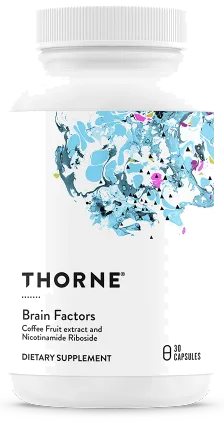
Thorne Brain Factors Review
Busy schedules and non-stop activities leave you feeling depleted and distracted. It's what many describe as brain fog. Thorne's formula helps clear your head with key nutrients that support focus, attention, and mental function. Brain Factors combines a unique coffee fruit extract with the exclusive Nicotinamide Riboside (NR) to support optimal levels of BDNF and NAD+, two substances in the body that are adversely affected by aging, thereby promoting optimal brain health and cognition to help you stay mentally agile. The page lists benefits: promotes memory and focus by enhancing communication between brain cells; promotes attention and learning by supporting growth and development of new brain cells; supports cognitive health at every age; helps decrease brain fog in older individuals or those who experience high amounts of stress. BDNF, brain-derived neurotrophic factor, is a protein that helps the brain flourish, providing support for brain cells and the nervous system. As we age, the level of BDNF declines, and a low level is associated with multiple negative effects of aging. Coffee fruit extract helps maintain a healthy BDNF level, which promotes development and growth of new brain cells, supports communication pathways between nerve cells, supports cognitive functions like learning, memory, and focus, and supports balanced neurotransmitters, natural chemicals that regulate functions like mood and sleep. NAD+, nicotinamide adenine dinucleotide, is an important coenzyme found in every cell and is crucial for numerous metabolic and cellular functions. NAD+ declines significantly with age, as well as from excessive stress, which can lead to reduced vitality. NR promotes a healthy level of NAD+, which the page says promotes healthy aging by helping maintain energy production at the cellular level, protects against oxidative stress and the DNA damage that accompanies it, supports normal circadian rhythm, helps increase the number and health of mitochondria, and supports cellular repair processes. The page also describes the added benefits of betaine: supporting the body's methylation processes optimizes the benefits of NR. Betaine, also known as trimethylglycine, is described as a superior methyl donor, with each molecule supplying three methyl groups. Through efficient methylation, the page says betaine supports cognitive functions like memory and focus in aging adults, enhances optimal metabolism of NAD+, helps maintain balanced neurotransmitter levels, and promotes a healthy level of homocysteine in the blood. Thorne states that Brain Factors is formulated with the scientific rigor it is known for, with each ingredient carefully selected, clinically studied, and tested through multiple rounds of quality control for purity, potency, and consistency. The product is listed as third-party tested and certified to verify that what is in the package matches the label and to confirm it contains no unsafe levels of contaminants such as heavy metals, pesticides, and microorganisms. Warnings on the page: contraindicated in individuals with a history of hypersensitivity to any ingredient; if pregnant, consult a health-care practitioner before use; no known adverse interactions at publication date.
We don’t sell supplements. We help you make decisions and get the best price.
Lowest prices
We may earn a commission from some store links. How we choose.
Finding the lowest prices at the stores now. This takes a few seconds.
Products with nearly the same formula (Matched on the main ingredients)
Study, Trial or Testing Result Summary
Members Only29 human studies · 12 improved
1 of these 29 human studies gave the ingredient by injection, not by mouth.
The main ingredient, nicotinamide riboside, has been tested for thinking and mental clarity, and the stronger studies mostly found no benefit. A review pooling 27 studies in 1,599 adults did not find it improved thinking [1]. A placebo-controlled trial in 58 adults with long COVID taking 2,000 mg daily for 24 weeks saw no gain in thinking, fatigue, sleep or mood [2]. A 12-week trial in 42 older adults with mild memory problems found no thinking benefit [3]. Another trial in 20 older adults taking 1,000 mg daily for 10 weeks found no change in memory scores [4]. Blends containing nicotinamide riboside improved thinking in Alzheimer's and Parkinson's patients, but the gain cannot be credited to this ingredient alone [5][6]. Each serving gives 415 mg, below the 1,000 mg used in studies. Betaine is present at only 85 mg, far below the 6 grams tested in one small Alzheimer's study where more people got worse than better [7], and its wider evidence is mixed and mostly based on blood or diet levels rather than supplements [8][9]. The coffee fruit extract has no human studies provided. Animal and cell studies are never counted.
See all 29 studies →Hide the studies
- Across nine observational studies of 82,246 people, higher blood levels of betaine were not significantly linked to cognitive impairment risk (odds ratio 0.74, borderline), although high levels of a related compound (TMAO) were linked to higher risk.Association of trimethylamine oxide and its precursors with cognitive impairment: a systematic review and meta-analysis.
- Across 27 studies of 1,599 adults taking NAD+ precursor supplements, the nicotinamide riboside results were not singled out as improving thinking performance; the strongest cognitive gain was seen with a different precursor (NADH), and no precursor improved perceived fatigue or sleep.Domain-specific effects of NAD+ precursors on fatigue and functional performance: a systematic review and network meta-a…
- In a review of 48 studies of 7,009 people with Alzheimer's disease, betaine was among the supplements reported to improve cognition, function and quality of life, while many other supplements had no effect on cognitive scales.Effect of nutritional supports on malnutrition, cognition, function and biomarkers of Alzheimer's disease: a systematic …
- A review of recent studies found 2 human trials in which nicotinamide riboside was linked to better blood and brain-scan markers and cognitive scores in Alzheimer's disease, but the authors say more clinical studies are needed.Supplementation with NAD+ Precursors for Treating Alzheimer's Disease: A Metabolic Approach.
- In 195 older adults given vitamin B12 with or without folic acid for 24 weeks, higher betaine was linked to better thinking at baseline, but those with the largest betaine increases showed only a borderline, non-significant memory gain.The association of betaine, homocysteine and related metabolites with cognitive function in Dutch elderly people.
- In 58 adults with long-COVID taking 2,000 mg of nicotinamide riboside daily, blood NAD+ rose about 2.6 to 3.1 times but thinking, fatigue, sleep and mood did not improve significantly compared with placebo.Effects of nicotinamide riboside on NAD+ levels, cognition, and symptom recovery in long-COVID: a randomized controlled …
- In 42 older adults with mild memory-related cognitive impairment, 12 weeks of nicotinamide riboside doubled blood NAD+ but did not improve cognitive function, total brain blood flow or blood pressure compared with placebo.A phase-II randomized controlled pilot study of nicotinamide riboside supplementation in older adults with amnestic mild…
- In 20 older adults with mild cognitive impairment, 1000 mg per day of nicotinamide riboside for 10 weeks was safe and raised blood NAD but did not change memory test scores, while an exploratory DNA methylation clock suggested a lower biological age.A randomized placebo-controlled trial of nicotinamide riboside in older adults with mild cognitive impairment.
- In Alzheimer's patients given a blend containing 1 g of nicotinamide riboside (once daily for 4 weeks, then twice daily) for 12 weeks, cognitive scores improved versus placebo in those with higher baseline scores; the effect cannot be attributed to nicotinamide riboside alone.Combined metabolic activators improve cognitive functions in Alzheimer's disease patients: a randomised, double-blinded,…
- In Parkinson's patients given a blend containing 1 g of nicotinamide riboside (once daily for 4 weeks, then twice daily) for 84 days, cognition improved while placebo showed no improvement and motor function did not change; the effect cannot be attributed to nicotinamide riboside alone.Multi-omics characterization of improved cognitive functions in Parkinson's disease patients after the combined metaboli…
- In people with Alzheimer's disease, betaine treatment lowered homocysteine and inflammation markers and improved scores on a standard memory and thinking test.Association between malnutrition and hyperhomocysteine in Alzheimer's disease patients and diet intervention of betaine.
- In preschoolers whose mothers took supplements during pregnancy, reaction time improved in some groups, and higher third-trimester maternal betaine was linked to steadier response times in boys, but betaine itself was not given as a supplement.The impact of micronutrient supplementation in alcohol-exposed pregnancies on reaction time responses of preschoolers in…
- In a small 4-week open-label pilot of 8 older adults with peripheral artery disease, nicotinamide riboside was followed by better scores across several thinking tests, but without a placebo group the results are preliminary.Effects of NAD+ supplementation with oral nicotinamide riboside on vascular health and cognitive function in older adult…
- In a small open-label pilot with no control group, 8 people with mild Alzheimer disease took 3 g of betaine twice daily for 24 weeks; 4 of 7 who finished were rated worse on global impression of change, 2 worsened by five or more points on the cognitive scale, and the study authors said efficacy could not be interpreted.An open-label, 24-week pilot study of the methyl donor betaine in Alzheimer disease patients.
- After one year of betaine, metafolin, creatine and vitamin B12 in children with Angelman syndrome, developmental skills did not change significantly, though the combination appeared safe.A therapeutic trial of pro-methylation dietary supplements in Angelman syndrome.
- In 6610 older adults with metabolic syndrome followed for 2 years, higher dietary betaine intake was linked to better changes in executive function and language, though the effects were modest.Dietary Choline and Betaine Intake and 2-year Changes in Cognitive Function in Older Adults With Overweight or Obesity a…
- In 2195 people aged 70 to 74, blood betaine levels were linked to some thinking test scores, but the links disappeared after adjusting for other factors, so betaine showed no clear link to brain performance.Plasma free choline, betaine and cognitive performance: the Hordaland Health Study.
- In a large pregnancy cohort study of 1210 mother-child pairs, maternal dietary betaine intake during pregnancy was not associated with children's vocabulary or visual-motor test scores at age 3.Maternal intake of methyl-donor nutrients and child cognition at 3 years of age.
- In 895 mothers followed from pregnancy, higher betaine intake during pregnancy was not associated with memory or intelligence test scores in their 7-year-old children.Choline intake during pregnancy and child cognition at age 7 years.
- In 617 people after an ischemic stroke, those with higher blood betaine levels had lower odds of cognitive impairment.Choline Pathway Nutrients and Metabolites and Cognitive Impairment After Acute Ischemic Stroke.
- Blood betaine was higher in people with Parkinson's disease than in healthy controls, but this snapshot comparison does not show whether betaine affects thinking ability.Plasma trimethylamine N-oxide, carnitine, choline, and betaine distinguish cognition impairment in Parkinson's disease.
- In donated brain tissue from 136 people, including those with dementia and Parkinson's disease, betaine correlated best with cognitive score, but this was a snapshot association and not a supplement test.One-Carbon Metabolism in Alzheimer's Disease and Parkinson's Disease Brain Tissue.
- In newborns with neonatal encephalopathy and healthy newborns, blood betaine levels in the first day of life were associated with cognitive and motor scores at age 2, though the abstract does not state the direction of that association.Neonatal encephalopathy plasma metabolites are associated with neurodevelopmental outcomes.
- In 25 people with mild cognitive impairment from Alzheimer's disease and 25 healthy controls, betaine levels in blood differed between groups and were part of a diagnostic model, but this does not show that betaine improves memory.Plasma alterations in cholinergic and serotonergic systems in early Alzheimer Disease: Diagnosis utility.
- In healthy toddlers, higher blood betaine levels at age 2 were linked to better visual-motor development, but betaine was not given as a supplement in this analysis.Plasma Betaine Is Positively Associated with Developmental Outcomes in Healthy Toddlers at Age 2 Years Who Are Not Meeti…
- In nine adolescents with MTHFR deficiency followed for over a year, treatment with betaine and calcium folinate lowered blood homocysteine, and 8 of the 9 patients who had symptoms saw significant improvement in behavior and cognition, though some lower limb movement problems remained.[Analysis of 9 patients with adolescence-onset methylenetetrahydrofolate reductase deficiency].
- Eight Chinese patients with a rare inherited vitamin B12 metabolism disorder had psychiatric symptoms relieved after treatment that included betaine along with other vitamins, so betaine's own effect could not be separated.Late-onset cobalamin C deficiency Chinese sibling patients with neuropsychiatric presentations.
- In a case series of 8 people with a rare inherited vitamin B12 processing disorder that mimicked hereditary spastic paraplegia, all showed partial improvement after treatment with vitamin B12 injections, oral betaine and folate.Treatable cause of hereditary spastic paraplegia: eight cases of combined homocysteinaemia with methylmalonic aciduria.
- In mice, betaine supplementation improved cognitive performance, and brain betaine levels were lower in people with schizophrenia, but this animal work does not prove benefit in humans.Investigation of betaine as a novel psychotherapeutic for schizophrenia.
Review Totals and Summary
Members Only1,041 reviews · 80% positive
Thorne Brain Factors capsules get a mostly positive reception, with an average of about 4.2 stars across roughly 246 ratings across the stores. Buyers mainly describe clearer thinking and less brain fog, though the effect is often gradual and mild. **What buyers say it did for them:** The most common benefit is reduced brain fog and clearer thinking. One buyer noticed the fog lifting a few days in and said it "slowly but consistently improved" over 30 days. Another said "brain fog got better after the first bottle." A short review reported feeling "much clearer" and "doing more work." One reviewer described the focus effect as "steady mental energy" rather than a strong stimulant, and another praised energy without a niacin flush. **What they complain about:** The main criticism is that results are slow or subtle. One buyer felt a difference "after a few weeks, but it was subtle," noticing "small things improving." Reviewers did not report side effects. One review was a long film quote that says nothing clear about how the product works, so it offers no evidence either way. One rating, "Nothing to report," came with no comment. **Taste, smell, pill size and form:** Little is said here. One reviewer called the capsules "easy" to take and the formula clean. Nobody commented on taste or smell, and pill size was not raised as an issue. Reviews of other forms of this product were left out, and this summary covers the capsules only. **Value for money:** Price is mentioned only once, but it is a reservation. One reviewer called it expensive for a bottle of 30 capsules, though they still found it effective and "a really good supplement." Other reviewers did not raise cost. **Who it seems to suit and who it did not:** It seems to suit people looking for mild, steady support for focus and mental clarity who are happy to wait a few weeks to judge it. One reviewer liked the ingredient choices, including a stable form of nicotinamide, added betaine, and coffee fruit extract. One buyer bought it for their mother and recommended it as useful for the brain. People wanting a quick or strong effect may be disappointed, since several describe the change as gradual and subtle. Buyers watching their budget may also hesitate at the cost of a 30-capsule bottle. Overall, written feedback is limited in volume, so these themes rest on a small number of comments. The pattern is of a well-made product with modest, slowly building benefits.
Biohacker Summary
Members Only7 of 10 recommend it
The panel is split on nicotinamide riboside, the main ingredient, with about four of ten leaning toward recommending or using it, and the rest neutral, skeptical or no longer taking it. Those who take it do so to support NAD, a molecule that declines with age, and they point to more energy, better recovery, and fertility or mitochondrial health; one said he feels a big difference without it, another prefers it to NMN, and one takes a gram, while about one gram a day was also cited in trials on inflammation. Others caution that human evidence is thin: one said it did not help people with early Parkinson's disease in a 52 week trial, another found no clear gains in a liver fat study, and one has never noticed anything from it and stopped. One panelist also advises avoiding it during pregnancy, and one who tried it alongside NMN stopped because he could not tell what it did. Betaine is a smaller ingredient in this product, and the panelists who spoke on it recommend it for stomach acid and digestion, with some also citing insulin sensitivity and liver support.
See all 10 biohackers →Hide the biohackers
Siim Land · Nicotinamide Riboside · warns
- Nicotinamide riboside failed to improve clinical outcomes in people with early Parkinson’s disease. In a randomized trial of 410 participants, 1,000 mg/day of NR for 52 weeks showed no benefit over placebo.
- States that nicotinamide can protect the skin against UV radiation.
- Takes 200 mg of Nicotinamide every morning for 2 weeks to support baseline NAD levels, recover from lost sleep, and protect skin against UV damage.
- Mentions that nicotinamide is used in a stack to increase NAD.
- Takes nicotinamide riboside and notices a big difference when he doesn't take it.
- Leans more towards Nicotinamide Riboside (NR) and is currently taking 300 milligrams, experimenting with it alongside NMN.
- Notes that when they did the original rating system, Nicotinamide Riboside (NR) was pretty much the only NAD precursor, and it did incredibly well with threes in human studies.
- Recommends Nicotinamide Riboside (NR) for longevity, stating that human clinical trials show it can improve insulin sensitivity and lower inflammation, and that a solid longevity stack should include an NAD booster.
- States they take NR, also known as Niagen, and noticed a huge difference in their energy levels when they started taking it.
- Discusses Nicotinamide Riboside (NR), noting its role in NAD+ production and that Bryan Johnson takes it.
- Recommends getting trimethylglycine (TMG), also known as betaine, from whole foods like beetroot, shrimps, spinach, wheat germ, wheat bran, mushrooms, and various vegetables to support DNA methylation.
- Recommends TMG (trimethylglycine or betaine) for longevity and DNA methylation, especially for poor methylators who might need up to 2000-3000 milligrams per day, while those with good methylation genes might not need to supplement if they eat TMG-rich foods.
- States that betaine, or trimethylglycine, has been shown to decrease plasma homocysteine levels, with supplementation of at least 4 grams a day for a minimum of six weeks being effective.
Ben Greenfield · Nicotinamide Riboside · uses
- Is currently experimenting with NR again and feels better on it than NMN, noting it raises her energy floor.
- Says he personally uses Niagen, which is a precursor to NAD, and found that his energy levels increased almost immediately after taking it.
- Ben Greenfield's clinic sometimes gives Niagen as part of preparing the body for stem cell therapy, noting that it causes fewer symptoms than NAD.
- Ben Greenfield's guest states that using Niagen (NR) as an IV has the same issues as other precursors, as it provides raw material without fixing the salvage pathway, which is the main reason for NAD decline.
- Notes that the Qualia Life NAD+ formula, which increased NAD+ levels by 67% in a clinical study, uses compounds such as Niagen nicotinamide riboside (NR).
- Is about to receive an NR Niagen IV, which he describes as an easier form of NAD with less flushing, better absorption, shorter duration, and similar effects on sleep deprivation, energy, and mitochondrial health.
- Ben Greenfield mentions nicotinamide riboside (NR) as an exercise mimetic.
- Discusses nicotinamide riboside (NR), a form of vitamin B3 and NAD precursor, as beneficial for boosting NAD levels, lowering neurodegeneration biomarkers, and staving off cognitive decline and memory loss with age.
- Recommends taking trimethylglycine, also known as betaine, beforehand with NAD IVs to stave off gastric distress and sympathetic nervous system stimulation.
- Mentions that David Sinclair's NR powder is really good but not commercially available.
- Believes there is merit in molecules like Vitamin B3, nicotinamide riboside, or NMN, which are known biogenesis boosters.
- Recommends betaine hydrochloride, three a day, one per meal, to help with digestion and nutrient absorption.
- Notes that combining blood flow restriction with a blood flow precursor like betaine results in significantly greater training benefits.
- Recommends Thorne ResveraCel as a good source of resveratrol, noting it combines resveratrol with nicotinamide riboside, quercetin, and betaine to support cellular function and methylation, which are affected by EMF.
Dave Asprey · Nicotinamide Riboside · neutral
- A review of 41 human studies testing interventions against newer-generation epigenetic clocks found favorable changes for exercise, caloric restriction, omega-3s, plant-rich diets, multivitamins, a med, pitavastatin, and ketamine, while nicotinamide riboside, a med, and senolytics showed no detected clock improvement in the studies reviewed.
- Recommends taking betaine HCL (stomach acid) with meals to improve protein absorption, as stomach acid decreases with age.
- Takes stomach acid, betaine HCL, and enzymes to help digest food, which he says speeds healing and resilience.
- Takes nicotinamide riboside (NR), a precursor of NAD, to replenish NAD levels which start to decline after age 50-55.
- States that if you take Pepsid, you have to take betaine and enzymes to counteract the digestion-ruining effects, and also suggests taking a little betaine with a meal to help with nutrient absorption.
- Uses nicotinamide riboside as an NAD booster, which is included in Allesium's first product, Basis.
- Recommends always taking Betaine HCL, which is stomach acid, with food when taking Pepcid AC for long COVID protocols, as it's necessary for the Pepcid to work effectively.
- Recommends taking betaine HCL religiously with every meal during protocols that block histamine response to prevent gut problems from lack of stomach acid.
- Recommends taking NMN or NR supplements as a good first step for longevity, emphasizing the importance of consistency and taking them every day.
- Has been taking Nicotinamide Riboside (NR) since the first mouse study came out about 15 years ago.
- Increased his Betaine HCL intake to address low stomach acid, which he believes is necessary when eating a lot of steak.
- Mentions that niagen can help the body make more NAD+ as one ages.
- Recommends taking Betaine HCL to increase stomach acid if on a med, to help with delayed gastric emptying.
- Advises taking Betaine HCl because Pepcid, which he recommends, blocks stomach acid.
Thomas DeLauer · Nicotinamide Riboside · recommends
- Mentions a pilot trial showing that supplementation with NR, an NAD precursor, combined with CoQ10, improved mitochondrial bioenergetic health and reduced oxidative stress, and later suggests taking it to support NAD availability.
- Would start taking trimethylglycine (TMG), also known as betaine, due to increasing evidence of its benefits for insulin resistance and its ability to increase fat oxidation.
- Recommends TMG (trimethylglycine or betaine) for improving body composition and insulin sensitivity, and for supporting methylation pathways that keep the endothelium healthy, complementing the shear stress benefits of walking.
- Recommends TMG, also known as betaine, to aid the liver's ability to clear excess cortisol from the system.
- Highlights trimethylglycine (betaine) from beets as a powerful methyl donor that helps the liver break down homocysteine, takes the load off the liver, and is required for carnitine creation, which is crucial for fat burning and addressing fatty liver.
- Highly recommends TMG (trimethlycine or betaine), found in beets or as a supplement, because it's a methyl donor that aids in methylation in the liver, which is required for bile acid synthesis and phase 2 detoxification.
- Cycles TMG (trimethylglycine or betaine) on and off, doing four weeks on and four weeks off, because it helps lower the toxic load on the body, aids in methylation, improves insulin signaling, mitochondrial function, brain function, and has been shown to reduce hepatic triglycerides, liver fat, and increase muscle mass while decreasing fat mass.
- Recommends two to four grams of trimethylglycine (TMG or betaine) to help take a lot of stress off the liver.
- Recommends 3-4 grams of trimethylglycine (betaine) to help regulate homocysteine, which allows the body to deal with insulin resistance better.
- Recommends TMG (trimethylglycine or betaine) as a compound that works well with walking at a cellular level to detoxify the system, amplify energy production and fat loss, and course correct insulin resistance. He suggests a dose of 1.5 to 6 grams per day.
- Recommends TMG (trimethylglycine or betaine) for fat loss and muscle growth, citing studies that show it can prevent the formation of white adipose tissue, increase mitochondrial biogenesis, improve insulin resistance, and reduce total fat mass while increasing or maintaining lean body mass. He suggests taking it pre-workout to induce more fat burning and prevent fat accumulation later in the day.
- Warns that NMN and NR, which cost about 100 times more than nicotinamide and niacin, are likely broken down into the cheaper forms in the gut, suggesting no good reason to buy the expensive versions.
- Takes NAD's True Niagen daily, finding it phenomenal for her arthritis and recommending it to others due to positive results.
- Suggests considering Nicotinamide riboside (NR) in some cases, noting it has more promising research, even if still in animal models, compared to Resveratrol.
Andrew Huberman · Nicotinamide Riboside · neutral
- Discusses NAD/NR as a supplement for prenatal care and sperm health.
- Notes that animal data suggests NR can be advantageous for unexplained infertility, but does not recommend it universally due to a lack of human data.
- Takes nicotinamide riboside (NR), specifically True Niagen, and is cautiously experimenting with it for its effects on mitochondrial health, fertility, energy, and recovery, despite some concerns about cancer cell growth and insulin sensitivity. They are not convinced it will directly lead to living longer but find it interesting.
- Tried oral NR supplements but couldn't tell if they got the same or different effect because they were taking them together with NMN, and did not continue.
- Discusses a study on NR for fatty liver disease, noting that at high or low doses, there was no difference in hepatic fat, body weight, inflammatory markers, or glycemic markers. A subanalysis showed a statistically significant reduction in liver fat in a specific subgroup with a lower dose, but it was not clinically significant.
- Huberman takes 500 milligrams of NR every day, typically in the morning before his first meal, because it gives him sustained mental and physical energy, not for lifespan extension.
- Discusses betaine as a potential alternative for creatine non-responders, taken at 1 to 3 grams per day, which helps with amino acid synthesis and energy shunting.
- Mentions that there is some evidence that betaine, also called trimethylglycine, can improve lean mass and power output.
- Discusses NR as another way to increase NAD levels, but notes that in mouse studies, NR at the same dose as NMN did not show the same positive effects on endurance.
- Notes that many people who have difficulty adjusting their gut pH and microbiota have benefited from taking betaine HCL pepsin tablets or capsules during meals, starting with one or two and experimenting to find a comfortable level.
- Notes that sirtuin activation has been shown to be enhanced by molecules like NAD, but more research is needed to determine if supplementing NAD (or precursors NMN or NR) positively affects lifespan.
- Andrew Huberman takes TruNiagen, which is Nicotinamide Riboside (NR). He mentions a family member takes it and is convinced it gives her much more energy.
- Suggests nicotinamide (niacinamide) as potentially beneficial for rosacea, available as a topical ointment or taken orally as two 500 milligram dosages per day.
- Andrew Huberman recommends betaine for creatine non-responders, suggesting a dose of one to three grams per day to help with amino acid synthesis and shunting of energy.
Dr. Mark Hyman · Nicotinamide Riboside · recommends
- Has long recommended brands like TruNiagen.
- Notes that NR reestablishes NAD levels and that while animal models show remarkable effects, the amounts sold as supplements are much lower than what is used in the lab, and he personally takes a gram.
- Uses Betaine HCl to provide stomach acid, which helps digest food and reduce SIBO.
- Takes NR, having found it as effective as NMN in getting his intracellular NAD levels to the same place after 90-day trials of each.
- Suggests that betaine hydrochloride can be used to acidify the digestive system, helping to relieve digestive problems associated with chronic pancreatic insufficiency.
- Recommends betaine, found in beets, quinoa, spinach, and regeneratively raised beef and turkey, for supporting methylation.
- Recommends activating DNA repair systems by activating sirtuins with NAD, NR, or NMN.
- Recommends Betaine HCL to increase stomach acid and help with food digestion.
- Reports that the NAD precursor NR was tested in the NIH study and did not show benefit.
- Does research with NAD and NR because there may be certain cells that function differently, and notes that there are far more studies of NAD than NMN in the literature.
- Mentions NR as one of the substances the body uses to stimulate sirtuins, which are crucial for longevity by activating DNA repair and improving mitochondrial function.
- Recommends activating sirtuins with NR to activate DNA repair systems.
- Recommends replacing digestive enzymes or things like betaine HCl to help the body digest food and break down proteins, especially when the gut is inflamed, though they may not be needed once the gut has healed.
- Acknowledges compelling research suggesting nicotinamide riboside is a beneficial approach for fatigue and brain function, but notes it is fairly new and not yet used in their clinic.
Dr. Rhonda Patrick · Nicotinamide Riboside · neutral
- Mentions that professional sports organizations have reportedly experimented with NR for performance and recovery, but at this point, it's anecdotal.
- Notes that supplementing with NAD precursors like nicotinamide riboside (NR) to enhance performance or recovery is mechanistically plausible, but strong evidence from controlled human trials is not yet available.
- Recommends Nicotinamide Riboside (NR) as the most evidence-backed way to boost cellular NAD, stating it is a cleaner, better studied way to support the NAD network.
- Supplementation with nicotinamide riboside (NR), a key NAD precursor, can effectively lower inflammation. In multiple randomized controlled trials, roughly one gram per day of NR reduced inflammatory cytokines such as interleukin-6 (IL-6) and interleukin-10 (IL-10).
- Supplementing with nicotinamide riboside (NR), a precursor to NAD, may support faster exercise recovery. By replenishing NAD, NR could help sustain these repair and adaptation processes so you can come back stronger session to session.
- Mentions that his technology turned into the nicotinamide riboside and NAD boosting industry.
- Considers nicotinamide riboside to be the premium NAD precursor because the NR kinase pathway gets upregulated in many conditions of metabolic stress, such as in a failing heart or damaged neuron, making it more effective than nicotinamide in certain mouse models.
- Mentions that emerging research suggests NR for lowering inflammation and improving recovery.
- Takes nicotinamide riboside (NR) in the evening.
- Rhonda includes Tru Niagen (NR) in her supplement routine.
- Mentions betaine or trimethylglycine as something that may improve power output during exercise.
Peter Attia · Nicotinamide Riboside · stopped
- Is skeptical that NR and NMN really change NAD levels that much, and their mice don't respond in studies with NR. He has never noticed anything personally when taking NR.
- References a small study where patients with Parkinson's disease were given nicotinamide riboside, which showed some change in a movement disorder rating scale, though the study had confounders.
- States that NR did not extend mouse lifespan in their tests. However, he is not a 'non-believer' for NR and the whole nicotinamide modulating family, believing the book is still open and there's a reasonable chance for good results, possibly in combination with another drug or a different form.
- Reports that NR by itself did not extend mouse lifespan, but he remains open to the possibility that it could work in combination with another drug or in a different form to modulate NAD availability.
- Discusses Nicotinamide riboside (NR) as an expensive, over-the-counter supplement that some believe might increase lifespan, but for which there is virtually no evidence indicating efficacy, and suggests there might be risks beyond wasting money.
- Believes that for general use for longevity, the small, possible benefits of Nicotinamide riboside (NR) do not outweigh the small, possible risks.
- Discusses nicotinamide riboside (NR) as an NAD precursor that has been shown in some studies to lead to benefits associated with healthy aging and lifespan extension in mice, though these results are not always reproducible.
- Peter Attia mentions that another finding close to publication is around nicotinamide riboside, a popular supplement and precursor to NAD.
- Notes that the ITPs are looking at nicotinamide riboside.
- Notes that pilot clinical studies show nicotinamide riboside can increase NAD levels in plasma in a dose-dependent manner.
Bryan Johnson · Nicotinamide Riboside · neutral
- Mentions extra virgin olive oil is better than NR.
- Advises avoiding Nicotinamide Riboside during pregnancy.
Dr. Eric Berg · Nicotinamide Riboside · recommends
- Recommends nicotinamide and advises following the dosage recommendations on the bottle.
- States he added 500 mg of betaine to his creatine product because it helps the body make more creatine.
- Recommends betaine hydrochloride for constant bloating and gas, especially if it's due to low stomach acid.
- Recommends taking betaine hydrochloride if an antacid was taken.
- Recommends betaine hydrochloride for heartburn or indigestion, stating it increases stomach acidification and can be taken in multiple pills before a meal.
- States that Betaine hydrochloride can help to restore stomach acid, but warns it should be avoided if one has a stomach ulcer.
- Betaine hydrochloride is an amino acid found naturally in foods, including beets, spinach, beef, and shrimp. It's an excellent natural remedy for increasing stomach acid. Dr. Eric Berg recommends consuming either betaine hydrochloride or apple cider vinegar before each meal.
- Recommends Betaine hydrochloride for heartburn and indigestion, stating it helps acidify the stomach and keep the valve at the top of the stomach closed.
- Suggests that increasing stomach acid with things like betaine hydrochloride could be a solution for acid reflux.
- States that Betaine hydrochloride can help to restore stomach acid, but warns it should be avoided if one has a stomach ulcer.
- Recommends betaine hydrochloride as one of the best ways to re-acidify the stomach, but warns against its use if one has gastritis or an ulcer.
RAL Summary
Members OnlyTier 5 for Focus and Memory
Controlled trials and a large review show nicotinamide riboside, the main ingredient, does not improve thinking [1][2][3]. Betaine is at a tiny dose with mixed evidence, and the coffee fruit extract has no studies.
- Not endorsed.
Where the evidence disagrees: 11 of the 29 human studies found no effect.
More Details
Members OnlyBody systems · Combine with · Possible side effects
Body systems: Nervous system
Combine with: For its actual cognitive purpose, Brain Factors pairs well with citicoline or alpha-GPC for cholinergic support, bacopa monnieri for memory, and magnesium L-threonate for synaptic function. Adding EPA-rich omega-3s, B vitamins (methylfolate, B12, B6), and ginkgo biloba or lion's mane may further support brain health. If occasional heartburn is the real concern, consider separate products such as calcium carbonate antacid chews, sodium alginate (for example Gaviscon-type formulas), or DGL licorice and zinc-carnosine for mucosal support, and take fish oil-containing products with meals to minimize reflux. Persistent heartburn should be discussed with a healthcare provider.
Possible side effects: Nicotinamide riboside was safe in the 1,000 mg trial, and reviewers reported no side effects.
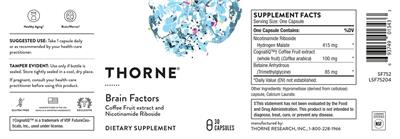
Supplement Facts
Nicotinamide Riboside Hydrogen Malate 415 mg · CognatiQ 100 mg · Betaine Anhydrous 85 mg
| Nicotinamide Riboside Hydrogen Malate | 415 mg | † |
| CognatiQ | 100 mg | † |
| Betaine Anhydrous | 85 mg | † |
Other ingredients: Hypromellose, Medium Chain Triglyceride Oil.
Directions: Suggested Use: Take 1 capsule daily or as recommended by your health-care practitioner.
Barcode (UPC) 693749013433 · Label source: NIH label database · Report a label change
Show entire label
More focus and memory products
Members OnlyThe highest ranked for the same goal
Read more
Our articles on this subject
- Supplements for Focus and Mental ClarityArticle · Jun 16, 2026
- How to Build a Longevity Supplement Stack: An Evidence-First ReviewArticle · Sep 7, 2026
Graded November 5, 2026 by the Reverse Age Lab evidence engine, from human studies, real reviews and our biohacker panel. How we grade. Is this medical advice? No. Rala organizes the published evidence; go over any change with your doctor, especially if you take meds.
Privacy policyConsumer health dataAffiliate disclosureTermsDo Not Sell or Share My Personal InformationCookie settings