
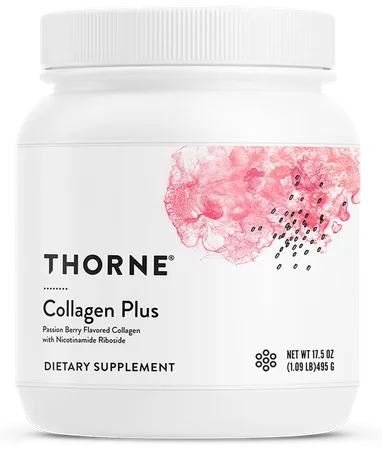
Thorne Collagen Plus Review
We don’t sell supplements. We help you make decisions and get the best price.
Lowest prices
We may earn a commission from some store links. How we choose.
Finding the lowest prices at the stores now. This takes a few seconds.
Study, Trial or Testing Result Summary
Members Only1 human studies · 1 improved
No study looked at this product for fast relief of occasional heartburn. The only related human study tested a seven-ingredient combination, not betaine on its own. In that 2006 trial, 351 adults with acid reflux took either the combination or a standard acid-reducing drug (a med, 20 milligrams) for about six weeks. The combination held betaine along with melatonin, L-tryptophan, vitamin B6, folic acid, vitamin B12 and methionine [1]. All 176 people on the combination said their symptoms went away completely after 40 days, compared with about 66 percent of the 175 people on the drug [1]. Only the participants, not the researchers, were unaware of which treatment they got, and there was no dummy pill group [1]. Because betaine was one of seven ingredients, we cannot tell how much of the benefit, if any, came from betaine. The study also measured results over weeks, not fast relief [1]. This product has 50 milligrams of betaine, and it is not known how that compares with the amount in the study. No human studies were found on the other ingredients for heartburn: nicotinamide riboside, bovine collagen peptides, the redcurrant and blackcurrant extract, or the ceramides. Animal and cell studies are never counted.
See all 1 studies →Hide the studies
- In 351 people with acid reflux, a combination supplement containing betaine (plus melatonin, vitamins and amino acids) led all 176 people taking it to report complete symptom regression after 40 days, compared with 65.7% of 175 people taking 20 mg a med; betaine was not tested on its own and the trial was single blind.Read the study on PubMed (16948779) →
Review Totals and Summary
Members OnlyWhat buyers say
No written reviews read yet.
Biohacker Summary
Members Only0 of 10 recommend it
Betaine, the main ingredient, gets mostly positive but mixed backing: of the ten panelists, six spoke about it, and four recommend it while two use it, with two more staying neutral. Reasons vary: helping the body make creatine, supporting insulin response and fat burning, improving protein digestion and stomach acid, and easing stomach upset before certain infusions. Forms and doses differ too, with one panelist adding 500 mg to a creatine product, another mentioning 1 to 3 grams a day as an option for people who do not respond to creatine, and others pointing to the stomach acid form taken with meals or to whole foods like beetroot, spinach and shrimp. Two of them tied it to exercise power output or creatine, and one suggested getting it from food rather than pills, but no one reported stopping it or gave a warning about it. Collagen is a smaller ingredient in this product, and most of the panel takes or recommends it, though one warned it is not a complete protein and another said it cannot rebuild a damaged gut alone.
See all 10 biohackers →Hide the biohackers
Dr. Eric Berg · Betaine · uses
- States he added 500 mg of betaine to his creatine product because it helps the body make more creatine.
- Recommends collagen as it is critical for healthy aging, supporting connective tissues, skin health, and cardiovascular health.
- Recommends collagen powder as an alternative to bone broth, to be put in coffee, for its benefits in building connective tissue and providing glycine for sleep.
- Mentions that grass-fed liver is loaded with collagen.
- States that the body is begging for collagen if one experiences weak ligaments and tendons, joint pain, wrinkles or saggy skin, thin dry fragile hair, brittle slow growing nails, loss of muscle, increased need for longer repair after exercise, and bone loss.
- Recommends betaine hydrochloride for constant bloating and gas, especially if it's due to low stomach acid.
- Recommends increasing collagen intake because a lack of it can make it harder for the body to repair itself.
- Recommends taking betaine hydrochloride if an antacid was taken.
- Discusses collagen in relation to changes in joints, skin, hair, nails, and recovery, suggesting these could be signs of needing more collagen.
- Uses one scoop of collagen in their coffee every single morning, noting that the average person needs between 10 and 15 grams minimum daily for benefits like improved joints, nails, hair, gut health, and youthful skin.
- Recommends betaine hydrochloride for heartburn or indigestion, stating it increases stomach acidification and can be taken in multiple pills before a meal.
- Warns against consuming collagen powder while fasting.
- States that Betaine hydrochloride can help to restore stomach acid, but warns it should be avoided if one has a stomach ulcer.
- Recommends increasing collagen intake instead of a glycine supplement, suggesting adding it to coffee or a shake and pairing it with vitamin C to support absorption.
Thomas DeLauer · Betaine · recommends
- Would start taking trimethylglycine (TMG), also known as betaine, due to increasing evidence of its benefits for insulin resistance and its ability to increase fat oxidation.
- Says he takes collagen to take care of his gut.
- Recommends collagen as a direct dietary source of glycine, suggesting a 15g serving of pure collagen. He advises taking it an hour before a workout for connective tissue benefits or before bed on rest days to help with sleep.
- Recommends taking 15 grams of collagen an hour before working out to target connective tissue, as it has been shown to double a marker of collagen synthesis and help rebuild tendons and ligaments that are loaded harder with age.
- Always eats collagen, considering it one of the most underrated things they do for sustainability and recovery, as it supports connective tissue protein synthesis.
- Mentions that if curling fingers are due to a collagen issue, there's a case for taking collagen peptides to help rebuild connective tissue.
- Recommends taking 15 grams of collagen about 30 minutes before bed, especially on rest days, for its glycine content to aid sleep onset and for connective tissue repair.
- Recommends opting for foods rich in collagen because modern diets lack it compared to traditional nose-to-tail eating.
- Recommends 15 grams of collagen before bed, as it provides 3 grams of glycine and supports connective tissue repair, which peaks during sleep, making it a good way to get glycine for testosterone production.
- Wanted a smoothie option for their kids that included collagen.
- Recommends collagen, found in bone broth, to directly feed goblet cells and enterocytes.
- Mentions a pilot trial showing that supplementation with NR, an NAD precursor, combined with CoQ10, improved mitochondrial bioenergetic health and reduced oxidative stress, and later suggests taking it to support NAD availability.
- Recommends TMG (trimethylglycine or betaine) for improving body composition and insulin sensitivity, and for supporting methylation pathways that keep the endothelium healthy, complementing the shear stress benefits of walking.
- Recommends TMG, also known as betaine, to aid the liver's ability to clear excess cortisol from the system.
Dave Asprey · Betaine · recommends
- Recommends taking betaine HCL (stomach acid) with meals to improve protein absorption, as stomach acid decreases with age.
- States he made collagen into a billion-dollar industry because he needed it for his joints due to Ehlers-Danlos syndrome.
- Recommends taking collagen for better skin health.
- Dave Asprey agrees with taking collagen, but warns that using bone broth and collagen to repair a compromised gut wall is like trying to rebuild a collapsed house using nothing but craft glue, as it doesn't provide the rapid high demand energy gut cells need.
- Mentions Puori CP1 Pure Collagen as a sponsor, offering a discount on a subscription.
- Notes that eating collagen can break down into amino acids and create a signaling molecule that tells the body the skin has been injured, leading to thicker skin.
- Explains that One Skin uses collagen amino acids in their formula because they are hygroscopic and help hold water, acting as natural moisturizing factors.
- Has updated his stance on collagen, now believing there may be some benefit for certain populations in having collagen peptides, especially since they are small and get absorbed.
- Dave and Jenny walk through the biohacking protocol that helped her son recover from autism, including collagen and hypermobility support.
- Recommends increasing collagen intake, specifically about 20 grams of collagen protein, for individuals with hypermobility, but warns against exceeding this amount due to oxalate concerns.
- Dave Asprey warns that collagen supplements have small, short-term effects on skin, mostly from industry-funded studies, and explains that the body breaks it down into amino acids, not directly targeting skin; he suggests taking cheaper protein if protein-deficient.
- A review of 41 human studies testing interventions against newer-generation epigenetic clocks found favorable changes for exercise, caloric restriction, omega-3s, plant-rich diets, multivitamins, a med, pitavastatin, and ketamine, while nicotinamide riboside, a med, and senolytics showed no detected clock improvement in the studies reviewed.
- Takes stomach acid, betaine HCL, and enzymes to help digest food, which he says speeds healing and resilience.
- Takes nicotinamide riboside (NR), a precursor of NAD, to replenish NAD levels which start to decline after age 50-55.
Dr. Mark Hyman · Betaine · uses
- Uses Betaine HCl to provide stomach acid, which helps digest food and reduce SIBO.
- Dr. Hyman mentions collagen supplements in the context of skin aging.
- Is on 'team collagen' and believes there's enough data to support collagen consumption, noting that it sends signals to help the body build better collagen, though lifestyle factors are more important.
- Mentions ceramides as nice hydrating ingredients.
- Adds Peak's marine collagen to his routine for a powerful longevity ritual, supporting skin elasticity, hydration, hair, nails, and whole body vitality.
- Adds Peak's Carrera Marine Collagen to their morning ritual for a powerful longevity ritual, supporting skin elasticity, hydration, hair, nails, and whole body vitality.
- States that collagen powder may modestly improve elasticity and hydration of the skin.
- Notes that most people focus on collagen powders for skin aging, but healthy skin is built inside the body.
- Takes 10 grams of Collagen in the morning for muscle.
- Adds Peak's Carrera Marine Collagen to their morning ritual for a powerful longevity ritual, supporting skin elasticity, hydration, hair, nails, and whole body vitality.
- Recommends supplementing with high-quality collagen because the body produces less after age 20, and it supports skin health and joint comfort.
- Recommends supplementing with high-quality collagen, as it is the most abundant protein in the body, supporting skin, joints, bones, and connective tissues, and its production decreases after age 20.
- Has long recommended brands like TruNiagen.
- Notes that NR reestablishes NAD levels and that while animal models show remarkable effects, the amounts sold as supplements are much lower than what is used in the lab, and he personally takes a gram.
Dr. Rhonda Patrick · Betaine · neutral
- Mentions betaine or trimethylglycine as something that may improve power output during exercise.
- Mentions that professional sports organizations have reportedly experimented with NR for performance and recovery, but at this point, it's anecdotal.
- Notes that supplementing with NAD precursors like nicotinamide riboside (NR) to enhance performance or recovery is mechanistically plausible, but strong evidence from controlled human trials is not yet available.
- Recommends Nicotinamide Riboside (NR) as the most evidence-backed way to boost cellular NAD, stating it is a cleaner, better studied way to support the NAD network.
- Supplementation with nicotinamide riboside (NR), a key NAD precursor, can effectively lower inflammation. In multiple randomized controlled trials, roughly one gram per day of NR reduced inflammatory cytokines such as interleukin-6 (IL-6) and interleukin-10 (IL-10).
- Supplementing with nicotinamide riboside (NR), a precursor to NAD, may support faster exercise recovery. By replenishing NAD, NR could help sustain these repair and adaptation processes so you can come back stronger session to session.
- Mentions that his technology turned into the nicotinamide riboside and NAD boosting industry.
- Considers nicotinamide riboside to be the premium NAD precursor because the NR kinase pathway gets upregulated in many conditions of metabolic stress, such as in a failing heart or damaged neuron, making it more effective than nicotinamide in certain mouse models.
- Mentions that emerging research suggests NR for lowering inflammation and improving recovery.
- Takes nicotinamide riboside (NR) in the evening.
- Rhonda includes Tru Niagen (NR) in her supplement routine.
- Is no longer taking collagen.
- Identifies ceramides as the lipid responsible for causing insulin resistance, explaining that they block the insulin signal and that resolving ceramides corrects insulin signaling.
- Uses Hydrolyzed Collagen Peptides as a source of glycine and proline to support connective tissue and skin health.
Ben Greenfield · Betaine · recommends
- Recommends taking trimethylglycine, also known as betaine, beforehand with NAD IVs to stave off gastric distress and sympathetic nervous system stimulation.
- Mentions that two separate meta-analyses found real improvement in skin elasticity when people consumed 2.5 to 5 g of collagen peptides a day for eight weeks.
- Recommends 2.5 to 5 grams a day of hydrolyzed collagen peptides for at least 8 weeks to improve skin elasticity and address sagging skin.
- Recommends 2.5-5 g/day of hydrolyzed collagen for at least 8 weeks, citing a meta-analysis that found real improvement in skin elasticity.
- Recommends starting with collagen for body remodeling.
- Is currently experimenting with NR again and feels better on it than NMN, noting it raises her energy floor.
- A new meta-analysis reviewed the existing evidence on collagen supplementation and found that collagen peptides may support several aspects of health, including skin aging, osteoarthritis symptoms, fat-free mass, tendon quality, and markers of metabolic health.
- The latest meta-analysis on collagen backs up collagen benefits for skin aging, osteoarthritis, fat-free mass, tendon quality, and overall metabolic health, with effective doses ranging from 5 to 15g.
- Recommends collagen for skin repair post-tattoo.
- Says he personally uses Niagen, which is a precursor to NAD, and found that his energy levels increased almost immediately after taking it.
- Notes that collagen is not a complete protein, so while it can be added to things, it should not be relied upon as the sole protein source.
- Ben Greenfield's clinic sometimes gives Niagen as part of preparing the body for stem cell therapy, noting that it causes fewer symptoms than NAD.
- Ben Greenfield's guest states that using Niagen (NR) as an IV has the same issues as other precursors, as it provides raw material without fixing the salvage pathway, which is the main reason for NAD decline.
- Recommends collagen peptides or essential amino acids to support the dermal matrix that anchors hair follicles, considering them important for hair health.
Siim Land · Betaine · recommends
- Recommends getting trimethylglycine (TMG), also known as betaine, from whole foods like beetroot, shrimps, spinach, wheat germ, wheat bran, mushrooms, and various vegetables to support DNA methylation.
- Nicotinamide riboside failed to improve clinical outcomes in people with early Parkinson’s disease. In a randomized trial of 410 participants, 1,000 mg/day of NR for 52 weeks showed no benefit over placebo.
- Recommends taking Collagen 1 hour before exercise with vitamin C to support joint collagen synthesis.
- Recommends Collagen for joints, skin and connective tissue, based primarily on human research, especially randomized controlled trials showing measurable benefits.
- Lists Collagen as one of 15 supplements backed by human studies.
- Takes 10 grams of collagen peptides a day, which provides 3 grams of glycine.
- 30% of collagen is glycine, as glycine is every third amino acid in the collagen triple helix.
- Recommends marine collagen peptides, citing a study where 5g daily for 12 weeks reduced AGE levels and improved insulin sensitivity.
- Mentions that taking 15 grams of collagen before bed has been seen to reduce the number of awakenings during the night.
- Notes that taking 15 grams of collagen before bed has been seen to reduce the number of awakenings during the night.
- Mentions that glycine makes up one-third of collagen.
- Recommends taking Collagen one hour before exercise with a vitamin.
- States that nicotinamide can protect the skin against UV radiation.
- Takes 200 mg of Nicotinamide every morning for 2 weeks to support baseline NAD levels, recover from lost sleep, and protect skin against UV damage.
Andrew Huberman · Betaine · neutral
- Discusses betaine as a potential alternative for creatine non-responders, taken at 1 to 3 grams per day, which helps with amino acid synthesis and energy shunting.
- Takes 10 grams of Collagen in the morning for muscle.
- Takes 10 grams of Collagen in the morning for muscle.
- Takes 10 grams of Collagen in the morning for muscle.
- Takes 10 grams of Collagen in the morning for skin health.
- Takes 10 grams of collagen in the morning for muscle.
- Takes 10-20 grams of Collagen every day for muscle.
- Takes 10 grams of Collagen in the morning for muscle.
- He takes 10 grams of Collagen in the morning for muscle.
- Takes 10 grams of Collagen in the morning for skin health.
- He takes 10 grams of Collagen in the morning for skin health.
- Discusses NAD/NR as a supplement for prenatal care and sperm health.
- Notes that animal data suggests NR can be advantageous for unexplained infertility, but does not recommend it universally due to a lack of human data.
- Takes nicotinamide riboside (NR), specifically True Niagen, and is cautiously experimenting with it for its effects on mitochondrial health, fertility, energy, and recovery, despite some concerns about cancer cell growth and insulin sensitivity. They are not convinced it will directly lead to living longer but find it interesting.
Bryan Johnson · Collagen · uses
- Takes 10 grams of Collagen in the morning for muscle.
- Consumes collagen peptides at 4:55 am.
- Uses collagen peptides as an ingredient in Nutty Pudding.
- Takes 10 grams of Collagen in the morning for muscle.
- He takes 10 g of Collagen in the morning for muscle.
- Takes 10 grams of Collagen in the morning for skin health.
- Takes 10 grams of Collagen in the morning for muscle.
- Takes 10 grams of Collagen in the morning for muscle.
- Takes 10 grams of collagen in the morning for muscle.
- He takes 10 grams of Collagen in the morning for muscle.
- Mentions extra virgin olive oil is better than NR.
- Advises avoiding Nicotinamide Riboside during pregnancy.
Peter Attia · Nicotinamide Riboside · stopped
- Is skeptical that NR and NMN really change NAD levels that much, and their mice don't respond in studies with NR. He has never noticed anything personally when taking NR.
- Mentions ceramides as other metabolites that could be involved in atherosclerosis in the context of chronic kidney disease.
- Explains that collagen has a much lower quality amino acid composition than whey and tends to be rich in only a handful of amino acids like glycine and proline, making it less effective for muscle protein synthesis.
- Advises that collagen protein is not a very complete protein and suggests supplementing it with something else if consumed, despite his wife's preference for it.
- References a small study where patients with Parkinson's disease were given nicotinamide riboside, which showed some change in a movement disorder rating scale, though the study had confounders.
- Says that based on current data, there is no benefit in myofibrillar or muscle connective tissue protein synthesis using collagen versus whey or casein, especially in exercising individuals. He warns that using collagen as a sole supplemental protein source compromises myofibrillar muscle protein synthesis due to its poor amino acid balance.
- States that as a scientist, he hasn't seen evidence that collagen leads to greater connective tissue protein synthesis rates in muscle, but if he were recovering from a hip or knee injury, he would take a protein supplement with some collagen to ensure enough glycine and proline for ligaments, tendons, bone, and cartilage.
- States that NR did not extend mouse lifespan in their tests. However, he is not a 'non-believer' for NR and the whole nicotinamide modulating family, believing the book is still open and there's a reasonable chance for good results, possibly in combination with another drug or a different form.
- Reports that NR by itself did not extend mouse lifespan, but he remains open to the possibility that it could work in combination with another drug or in a different form to modulate NAD availability.
- Recommends choosing emollients that contain natural lipids like ceramides, mentioning CeraVe as an example, to replenish the skin's natural components.
- Discusses Nicotinamide riboside (NR) as an expensive, over-the-counter supplement that some believe might increase lifespan, but for which there is virtually no evidence indicating efficacy, and suggests there might be risks beyond wasting money.
- Believes that for general use for longevity, the small, possible benefits of Nicotinamide riboside (NR) do not outweigh the small, possible risks.
- Discusses nicotinamide riboside (NR) as an NAD precursor that has been shown in some studies to lead to benefits associated with healthy aging and lifespan extension in mice, though these results are not always reproducible.
- Peter Attia mentions that another finding close to publication is around nicotinamide riboside, a popular supplement and precursor to NAD.
RAL Summary
Members OnlyTier 4 for Occasional Heartburn: Fast Relief
Emerging (tier 4): the only human study is a single-blind trial of a seven-ingredient blend that included betaine, so it cannot show betaine works on its own. That evidence is thin, and there are no reviews [1].
- Emerging: not enough evidence to rank higher yet.
More Details
Members OnlyBody systems · Combine with · Possible side effects
Body systems: Digestive system
Possible side effects: No major side effects reported.
Supplement Facts
Nicotinamide Riboside 125 mg · Betaine Anhydrous 50 mg · Collagen Peptides 13 g
| Nicotinamide Riboside | 125 mg | † |
| Betaine Anhydrous (Trimethylglycine) | 50 mg | † |
| Collagen Peptides (Bovine) | 13 g | † |
| MitoHeal® Redcurrant and Blackcurrant extract | 500 mg | † |
| HydroPeach™ Ceramides | 20 mg | † |
Other ingredients: Flavors, Citric Acid, Rebaudioside A.
Directions: Mix 1 scoop with at least 8-12 ounces of water daily or as recommended by your health-care practitioner.
Label source: Reverseagelab · Report a label change
Show entire label
More occasional heartburn: fast relief products
Members OnlyThe highest ranked for the same goal
Read more
Our articles on this subject
Graded November 5, 2026 by the Reverse Age Lab evidence engine, from human studies, real reviews and our biohacker panel. How we grade. Is this medical advice? No. Rala organizes the published evidence; go over any change with your doctor, especially if you take meds.
Privacy policyConsumer health dataAffiliate disclosureTermsDo Not Sell or Share My Personal InformationCookie settings