
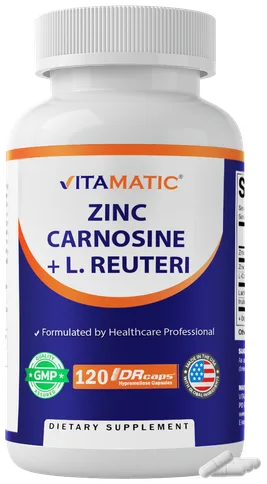
Vitamatic Zinc Carnosine + L. Reuteri 10B CFU Capsules Review
Vitamatic Zinc Carnosine + L. Reuteri 10B CFU Capsules is a dietary supplement sold as delayed release capsules. Each serving is 1 DR capsule, and a container holds 120 servings. The capsule shell is made of hydroxypropyl methylcellulose, and the label lists it as the only other ingredient. Per serving, the Supplement Facts panel prints these amounts: Zinc 19 mg, Zinc L-Carnosine 86 mg, Lactobacillus Reuteri 10 Billion CFU, and Inulin 264 mg. So the main ingredients are a zinc source, a zinc and carnosine compound, a live bacteria strain counted in colony forming units, and inulin, a plant fiber. The label gives the serving size as one capsule. No directions for use are printed in the label text provided, so check the container for any usage instructions before you buy. With 120 servings per container, the count works out to 120 capsules if you follow the one capsule serving size. This page reports only what the label states and makes no claims about effects in the body.
We don’t sell supplements. We help you make decisions and get the best price.
Lowest prices
We may earn a commission from some store links. How we choose.
Finding the lowest prices at the stores now. This takes a few seconds.
Study, Trial or Testing Result Summary
Members Only30 human studies · 24 improved
The main studied ingredient here is zinc, which reaches a full dose when taken at the two servings a day members are told to take. Its strongest support is for premenstrual syndrome. Two 2025 analyses pooling several placebo-controlled trials found zinc reduced total, emotional and physical premenstrual symptoms, including anger, anxiety and insomnia [1][2]. In 142 women, zinc taken in the second half of each cycle for three months cut moderate to severe premenstrual syndrome and improved quality of life [3]. In 60 young women, 30 mg daily for 12 weeks eased physical and psychological symptoms [4]. In postmenopausal women, zinc vaginal pessaries eased dryness and pain [5]. The probiotic Lactobacillus reuteri has one trial in women with menopause-like symptoms caused by a fertility drug. A specific strain lowered symptom, anxiety, depression and sleep scores and raised reproductive hormones [6]. It is not known whether this product uses that strain, and the dose in that trial was not reported. Inulin is present only in a trace amount, well below the 3 grams used in studies. Those studies mostly combined it with soy isoflavones for hot flushes [7][8]. Zinc carnosine has no human studies for this goal. It is above the daily recommended limit, so members can take less. Animal and cell studies are never counted.
See all 30 studies →Hide the studies
- Pooling five randomized trials, young women with premenstrual syndrome taking zinc had significantly better physical and emotional symptoms than those on placebo, including less anger, anxiety and insomnia.A systematic review and meta-analysis examining the role of zinc supplementation in ameliorating physical and psychologi…
- Pooling four to five randomized trials, zinc supplements reduced total premenstrual symptom scores, emotional symptoms and physical symptoms in women of reproductive age, though trials were few and varied.Effect of zinc supplementation on premenstrual symptoms: A systematic review and meta-analysis.
- A review of 31 randomized trials of nutrition treatments for premenstrual syndrome in 3,254 women found zinc, vitamin B6 and calcium consistently improved psychological symptoms, though most studies had a high risk of bias.Effect of nutritional interventions on the psychological symptoms of premenstrual syndrome in women of reproductive age:…
- A review of 11 controlled trials in pre-menopausal women found three controlled studies suggesting zinc helps depressive symptoms, though better trials are needed.Increasing iron and zinc in pre-menopausal women and its effects on mood and cognition: a systematic review.
- A review of 36 randomized trials in women found zinc improved insulin resistance and blood fat balance in polycystic ovary syndrome and seemed to reduce period pain, with little known about endometriosis or after menopause.The Role of Zinc in Selected Female Reproductive System Disorders.
- In 100 infertile women with perimenopausal symptoms caused by leuprorelin treatment (plus 50 healthy women for comparison), L. reuteri NCU-37 lowered symptom, anxiety, depression and insomnia scores and raised hormone levels (AMH, estradiol, FSH, LH) compared with placebo.Limosilactobacillus reuteri NCU-37 alleviates leuprorelin-induced perimenopausal syndrome in infertile women by modulati…
- In 142 women aged 20-35 with premenstrual syndrome, 50 mg of elemental zinc from zinc sulfate taken in the second half of each cycle for three months cut moderate to severe premenstrual syndrome from 9.5% to 2.6% and improved quality of life, while placebo did not.Effect of zinc sulfate supplementation on premenstrual syndrome and health-related quality of life: Clinical randomized …
- In 69 female university students with premenstrual syndrome, 220 mg of zinc daily for 24 weeks reduced anger, anxiety, depressed mood, bloating, headaches and other symptoms compared with placebo.The Effect of Zinc Supplementation on the Improvement of Premenstrual Symptoms in Female University Students: a Randomiz…
- In 60 young women with premenstrual syndrome, 30 mg of zinc gluconate for 12 weeks reduced physical and psychological symptoms and raised antioxidant capacity and a brain growth factor versus placebo, with no change in an inflammation marker.Effect of Zinc Supplementation on Physical and Psychological Symptoms, Biomarkers of Inflammation, Oxidative Stress, and…
- In 60 young women with premenstrual syndrome, 30 mg of zinc a day for 12 weeks improved the physical part of quality of life compared with placebo, but overall quality of life was not significantly different and sleep only marginally improved.Effect of zinc supplementation on quality of life and sleep quality in young women with premenstrual syndrome: a randomi…
- In 51 postmenopausal women, 50 mg of zinc a day for 8 weeks improved vitamin D3 status, and zinc levels were linked to lower leptin.Effectiveness of eight-week zinc supplementation on vitamin D3 status and leptin levels in a population of postmenopausa…
- In 51 postmenopausal women, 50 mg of zinc a day for 8 weeks raised folate and lowered homocysteine compared with placebo, while vitamin B12 changed the same in both groups.Effect of zinc supplementation on circulating concentrations of homocysteine, vitamin B12, and folate in a postmenopausa…
- In 51 postmenopausal women who started with low zinc, 8 weeks of zinc improved zinc status, and higher red blood cell zinc was linked to better antioxidant defenses.Erythrocyte Zn concentration and antioxidant response after supplementation with Zn in a postmenopausal population. A do…
- In a double-blind trial of 50 postmenopausal women, zinc-containing vaginal pessaries used nightly for 14 nights improved vaginal dryness, pain, burning and other genital symptoms more than placebo pessaries.Effect of zinc-containing pessaries on menopausal genitourinary syndrome, a double-blind randomised trial.
- In 50 menopausal women, a daily combination of inulin (3 g), soy isoflavones, calcium and vitamin D taken for 12 months improved menopause quality-of-life scores (hot flushes, physical and sexual areas), sexual function scores and HDL cholesterol compared with placebo, but did not change bone density scores.Isoflavones, calcium, vitamin D and inulin improve quality of life, sexual function, body composition and metabolic para…
- In 48 postmenopausal women with type 2 diabetes, 40 mg of zinc daily for 12 weeks did not significantly change blood sugar, insulin resistance or HbA1c compared with placebo.Zinc transporter gene expression and glycemic control in post-menopausal women with Type 2 diabetes mellitus.
- In 15 postmenopausal women, 6 weeks of chicory oligofructose-enriched inulin increased calcium and magnesium absorption compared with placebo and raised a bone formation marker, with about two-thirds of women responding.Effects of oligofructose-enriched inulin on intestinal absorption of calcium and magnesium and bone turnover markers in …
- In postmenopausal women in Indonesia and the Philippines, a milk drink fortified with calcium, vitamin D, magnesium and zinc over 4 months improved vitamin D status and lowered parathyroid hormone and bone turnover markers compared with placebo; the effect of zinc alone was not separated out.The effect of a fortified milk drink on vitamin D status and bone turnover in post-menopausal women from South East Asia…
- In 32 postmenopausal women, 15 mg of zinc sulfate daily for 2 weeks did not significantly change serum estrogen or progesterone compared with no treatment.The effect of low dose zinc supplementation to serum estrogen and progesterone levels in post-menopausal women.
- In a pilot study of 37 postmenopausal women with vaginal symptoms, a zinc-containing vaginal gel used daily for 2 weeks improved vaginal health scores and reduced dryness, burning and pain, with few side effects; there was no control group.Zinc-containing Vaginal Moisturizer Gel Improves Postmenopausal Vulvovaginal Symptoms: A Pilot Study.
- Postmenopausal women taking a daily supplement of 3 g inulin plus 40 mg soy isoflavones, calcium and vitamin D had a larger drop in hot flushes over six months than untreated women.Soy isoflavones, inulin, calcium, and vitamin D3 in post-menopausal hot flushes: an observational study.
- In a retrospective analysis of 28 postmenopausal women taking 3 g of inulin with calcium, vitamin D and soy isoflavones for 3 months, calcium absorption and several bone markers improved, though the study had no control group.Effect of a mixture of calcium, vitamin D, inulin and soy isoflavones on bone metabolism in post-menopausal women: a ret…
- In Italian case-control studies, intake of most fiber prebiotics, including inulin-type fructans, was not consistently linked to risk of breast, endometrial or ovarian cancer.Fiber-type prebiotics and gynecological and breast cancers risk: the PrebiotiCa study.
- In ovariectomized rats on a low-calcium diet, a fructan-enriched diet, especially when added to strawberry product, improved femur bone quality, including higher calcium content and bone density.Could fructan sources in strawberry matrix be more effective as a tool for improvement of bone structure than these comp…
- In ovariectomized rats on a low-calcium diet, a diet with 8% fructans lowered some bone turnover markers, such as alkaline phosphatase, osteocalcin and a bone breakdown marker, but bone density did not differ significantly between groups.The effect of fructan-enriched diet on bone turnover parameters in ovariectomized rats under calcium restriction.
- In ovariectomized rats, a diet with 6% fructooligosaccharide/inulin from yacon increased intestinal fermentation changes and gut hormone GLP-1 cells, but did not change blood glucose or insulin levels or body fat.Yacon-based product improves intestinal hypertrophy and modulates the production of glucagon-like peptide-1 in postmenop…
- In pregnant mice given an inflammatory challenge, two doses of 30 mg/kg of purified burdock fructooligosaccharide, given 6 hours apart, reduced early labor and lowered inflammatory signals, and also affected estrogen and progesterone levels.The Protective Effects of Burdock Fructooligosaccharide on Preterm Labor Through Its Anti-Inflammatory Action.
- In estrogen-deficient female rats, 28 days of fructooligosaccharide at 50 or 100 mg/kg reduced pain sensitivity and lowered inflammation and oxidative stress in the brain and colon.Fructooligosaccharide ameliorates inflammation-induced chronic pain via deactivation of LPS/TLR-4/NF-κB p65/TNF-α/IL-6 p…
- In estrogen-deficient female rats, 28 days of fructooligosaccharide at 50 mg/kg reduced anxiety and depression-like behavior, improved memory, and lowered oxidative stress and inflammation.Fructooligosaccharide ameliorates estrogen-gut-microbiome-brain axis dysfunction in estrogen-deficient rats.
- In estrogen-deprived female rats, 28 days of fructooligosaccharide at 50 or 100 mg/kg reduced oxidative stress, inflammation and cell death in the colon and liver, and improved gut lining and gut bacteria.Fructooligosaccharide supplementation ameliorates gut associated metabolic dysregulation in estrogen-deprived rats via t…
Review Totals and Summary
Members Only56 reviews · 92% positive
No written reviews read yet.
Biohacker Summary
Members Only10 of 10 recommend it
Zinc is the main ingredient, and most of the panel recommends or uses it, with the rest staying neutral and one panelist giving a warning tied to timing around surgery. Panelists take it for immune support, testosterone and sperm health, wound healing, gut lining support, hair health, and longevity, and two of them say it only raises testosterone when zinc levels are low. Doses are rare: one takes 15 mg each morning, one suggests 30 mg for men preparing for IVF, and one formula uses 30 grams a day for a week before surgery and two weeks after. Panelists pair it with vitamin C, magnesium, and copper, or get it from foods like oysters and pumpkin seeds, and one panelist uses a zinc carnosine form for the gut. Inulin is a smaller ingredient in this product, and one panelist warns that high doses cause bloating.
See all 10 biohackers →Hide the biohackers
Dr. Eric Berg · Zinc · recommends
- Recommends zinc as a trace mineral, noting that modern farming practices deplete it from the soil, leading to low levels in crops.
- Notes that white spots on nails point to zinc deficiency, which is usually depleted by eating sugar and refined carbs.
- States that zinc greatly supports natural killer cells.
- Recommends L. reuteri, a microbe, for increasing oxytocin by sending a signal to the hypothalamus, and also notes it increases BH4, lowers cortisol, improves muscle building, sleep, gut health, and restores baseline reward.
- States that zinc is needed to absorb magnesium.
- Recommends ensuring sufficient zinc intake because the prostate needs enough zinc for the conversion from testosterone to DHT to be smooth and optimized.
- Recommends L. reuteri yogurt, stating it helps restore a microbe most people are missing and supports oxytocin.
- Identifies zinc as an essential mineral for building hair, and that deficiency in it leads to a high risk for hair loss.
- Recommends taking zinc carnosine for an ulcer or some type of gastric problem.
- States that restoring the gut microbe L. reuteri can dramatically increase testosterone and growth hormone, leading to significant muscle gain and increased strength, even with a minimal workout routine.
- Emphasizes the importance of zinc for decreasing viral replication and recommends taking 40 to 60 mg every single day.
- Notes that birth control pills deplete the body of zinc, which is needed for the brain to make serotonin.
- Added zinc to his creatine product because a deficiency in zinc might make creatine not work as well.
- States that L. reuteri yogurt is a food that can help support better sleep.
Dr. Rhonda Patrick · Zinc · neutral
- Mentions that getting too little zinc may play a role in declining testosterone levels, and that zinc helps the body make testosterone.
- Mentions that inulin is a type of fermentable fiber that helps prevent microplastics from being absorbed.
- Notes that not getting enough zinc can affect testosterone, as zinc is very important for testosterone synthesis.
- Recommends men take a 30 milligram zinc supplement for sperm health when preparing for IVF.
- Discusses findings from a meta-analysis on zinc supplementation, noting it improved insulin resistance, inflammation, and oxidative stress in people with diabetes or prediabetes, and explains its biological role in the pancreas.
- Recommends nutrients like zinc for men to prioritize sperm mitochondrial health.
- Recommends Zinc, stating it is a critical mineral required for testosterone production and that supplementation corrects deficiency-related low testosterone.
- Recommends correcting deficiencies in zinc to directly increase total testosterone by up to 100+ ng/dL.
- Recommends focusing on zinc to optimize testosterone and hormone health generally, noting that it supports luteinizing hormone production, which stimulates testosterone synthesis and conversion to dihydrotestosterone.
- Recommends zinc as one of the most reliable natural supplements for boosting testosterone if one is deficient, noting it's part of the ZMA combination.
- Recommends increasing intake of zinc if one regularly drinks alcohol.
- Identifies inulin as another source of fermentable fiber found in garlic, onions, and artichokes, which are known to increase butyrate or butyrate-producing bacteria in the gut.
- Tried Lactobacillus reuteri and found it worked for achieving the desired stool composition, but hasn't worried about it recently due to his fiber-rich diet.
- Mentions a study where mice fed fermentable fiber, specifically inulin, had reduced mortality, better lung function, and less tissue destruction after exposure to influenza virus.
Andrew Huberman · Zinc · neutral
- Notes that AG1 Pro contains zinc carnosine to support and improve the lining of the gut.
- Zinc carnosine to support and improve the lining of your gut.
- Notes that AG1 Pro contains zinc carnosine to support and improve the lining of the gut.
- States that AG1 Pro contains zinc carnosine to support and improve the lining of the gut.
- Uses AG1 Pro, which contains zinc carnosine to support and improve the lining of the gut.
- States that AG1 Pro contains zinc carnosine to support and improve the lining of the gut, and he was already taking some of these ingredients separately.
- States that AG1 Pro includes zinc carnosine, which he was already taking separately, to support and improve the lining of the gut.
- Personally takes zinc carnosine, which is included in AG1 Pro to support and improve the lining of the gut.
- AG1 Pro has zinc carnosine to support and improve the lining of your gut. Some of these ingredients I personally was already taking separate from the AG1 formula.
- States that AG1 Pro contains zinc carnosine to support and improve the lining of your gut.
- Discusses studies showing that treatment with L. reuteri corrects social deficits in mouse models of autism by activating the vagus nerve, which stimulates dopamine and oxytocin release.
- Andrew Huberman suggests that a family member who saw no impact on LDL from Metamucil might consider taking inulin fiber as a supplement to control their cholesterol.
Ben Greenfield · Zinc · warns
- Ben Greenfield's formulation includes 30 grams of zinc a day, taken for one week before surgery and two weeks after, as it is an important cofactor for wound healing.
- Emphasizes that zinc sufficiency is crucial for immunity because the thymus-derived peptide thymulin, which trains lymphocytes, requires zinc to be active.
- Recommends adding zinc into one's stack because it is a co-factor for enzymes involved in testosterone synthesis and sperm maturation, and zinc deficiency is a reproducible cause of low sperm count.
- He mentions zinc as a supplement with real human data behind it for male fertility.
- Zinc may support both testosterone and sperm count.
- Warns that he was taking so much zinc without realizing it because it was in five different things he was taking, and he couldn't pinpoint the problem.
- Recommends supplementing with zinc if deficient, as multiple trials show significant symptom reduction of tinnitus in zinc-deficient individuals.
- Notes a new study indicating that zinc is a core dietary antioxidant closely associated with a reduced risk of accelerated biological aging.
- Recommends using hormone building blocks like zinc for hormone optimization.
- Advises taking the GI Repair Formula away from food for best results, unless zinc causes nausea.
- States that inulins are one of five ways to feed bifidobacteria, which are essential for optimal human immune system function and overall health.
- Avoids inulin because even after following a low FODMAP diet and trying reintroduction, it still causes issues.
- Has been having a giant dollop of Dr. William Davis's Super Gut yogurt with lunch for a couple of years, noting it uses a special strain of probiotic called L. reuteri that is good for weight loss, appetite suppression, skin collagen, skin, hair, and nails, doubles oxytocin, and knocks out SIBO.
- Ben mentions that Pendulum adds inulin, a type of fiber, to their Akkermansia pill to feed the strain.
Dr. Mark Hyman · Zinc · neutral
- Explains that zinc is important for the body's repair crew, helping to heal damaged tissue, and a deficiency can lead to cuts and wounds taking longer to heal.
- Gave a patient with psoriatic arthritis a little zinc, which contributed to significant improvement in her condition.
- Recommends ensuring adequate zinc intake on a regular basis for immune support, noting some data on zinc lozenges for early cold.
- Recommends correcting nutrient deficiencies with zinc.
- Recommends nutrient-dense foods rich in zinc, such as pumpkin seeds and oysters, to reduce inflammation.
- Used zinc as part of a protocol to rebuild the gut microbiome and heal the gut of a nine-year-old girl with severe behavioral issues.
- Notes that zinc supports immune health, helps wounds heal, and plays a key role in growth and tissue repair, and they measure it.
- Mentions zinc is needed for phase one liver functions and inflammation.
- Notes that birth control drains zinc.
- Recommends zinc for immune system support and modulation.
- Notes that lactobacillus reuteri also signals the brain to produce oxytocin, and even dead, pulverized bacteria can cause the brain to release oxytocin, indicating that signaling molecules are at play.
- Discusses the benefits of Lactobacillus reuteri for wound healing and mental health.
- Warns that inulin is a high FODMAP ingredient often found in protein bars and diet foods that can worsen IBS symptoms.
- Lists inulin, found in chicory root, garlic, onions, leeks, asparagus, green bananas, and Jerusalem artichokes, as a prebiotic food to include in one's diet.
Thomas DeLauer · Zinc · uses
- Adds zinc to their immunity duo because it helps them absorb vitamin C, considering the two together a fantastic combination for fall and winter.
- Recommends zinc, noting it is a cofactor for enzymes that build neurotransmitters, and deficiency can affect mood, happiness, and motivation.
- Mentions that more zinc could be beneficial for testosterone, but it's not working on the axis that most people need help with.
- Compares zinc content, noting salmon has under 1mg while oysters have 74mg per 100g, a 70x difference.
- Recommends keeping zinc levels topped off because it is a critical cofactor for over 300 enzymes and is important for immune cells, testosterone, and wound healing.
- Recommends 15 mg of supplemental zinc if oysters are not realistic, but emphasizes that food source zinc is better as it comes with natural cofactors like copper and selenium.
- Recommends getting zinc, along with vitamin D, magnesium, and calcium, from foods like sardines, as they are important for inflammatory pathways in the gut.
- Recommends inulin foods as part of a fiber rotation for gut health.
- Explains that zinc is a structural cofactor for an enzyme crucial in testosterone production, and a marginal deficiency is a reversible cause of suppressed testosterone. He recommends getting zinc through pumpkin seeds.
- Suggests using inulin from chicory root as a prebiotic fiber to pair with collagen.
- Notes that coconut sugar contains 4.7 grams of inulin per 100 grams, which is a strong prebiotic fiber that adds viscosity, slows digestion, and has a prebiotic effect, contributing to its low glycemic index.
- Explains that zinc is a required cofactor for the 5-alpha reductase enzyme, which converts testosterone into its more potent form, DHT, and that zinc deficiency can impair this conversion.
- Recommends ensuring adequate zinc intake for skin healing and immune response, especially for heavy sweaters or those consuming high phytate foods.
- Mentions that artichoke contains inulin, specifically long-chain inulin, which is one of the best prebiotic fibers.
Dave Asprey · Zinc · uses
- Developed a nonnano zinc sunscreen over five years, stating her skin is probably better now than it's ever been.
- Thinks inulin fibers are terrible and has a lot of concerns, stating that in high doses it causes rapid fermentation and bloating, which is counter-intuitive to gut health. There's also a study showing damage to the microvilli similar to what gluten does.
- Believes inulin fibers, common in supplements, are terrible because in high doses they cause rapid fermentation and bloating, which is counterintuitive to gut health.
- Emphasizes the importance of having enough zinc before trying advanced longevity strategies like peptides.
- Suggests that zinc has better safety and protective data than meds for reducing cardio respiratory risk.
- Notes that Lactobacillus reuteri, known for producing oxytocin, is almost completely absent from the North American and European gut, and its loss could contribute to a lack of community and empathy in society.
- Advises that if someone has a goal, they should probably do simple things like getting more zinc if it helps their goal before using peptides.
- Recommends zinc for muscle and bone formation, stating that without it, the body cannot effectively build muscle and bone even with exercise and protein intake.
- Dave Asprey mentions zinc as a supplement and cofactor that supports thyroid activation.
- Recommends zinc as a cofactor that can help thyroid function, especially with conversion issues.
- Warns that inulin can cause farting and, in some people, irritates the gut lining, citing his own experience of bloating from Jerusalem artichoke extract.
- Argues that if you are lacking zinc, ESS60 will not work as well.
- Recommends adequate zinc for healthy DHT signaling.
- States that he genetically needs a ton of zinc for his mitochondria to work, and if he doesn't take enough, his mitochondria don't work.
Siim Land · Zinc · recommends
- States that deficiencies in nutrients such as zinc can impair normal immune regulation.
- Explains that zinc raises testosterone only if zinc status or testosterone levels are low, and can reduce the duration and severity of colds and flu, and lower blood sugar and lipids if zinc status is low.
- States that fixing zinc deficiency can double testosterone if low testosterone is due to zinc deficiency.
- States that zinc has strong evidence for increasing testosterone, but only if one has low zinc status.
- States that zinc deficiency is observed in children with premature graying of hair.
- Warns that supplementing 250 mg of zinc sulfate, which provides 55 to 60 mg of elemental zinc, is above the tolerable upper limit and can cause side effects like reduced copper absorption, anemia, immune dysfunction, GI stress, abdominal pain, diarrhea, and a metallic taste.
- States that zinc helps with immunity, wound healing, and testosterone levels, acknowledging its importance as a mineral and placing it in the 'good tier' despite not personally finding much value from it.
- Used to take zinc in the past but no longer does, as he has already tested most supplements.
- Notes that inulin, found in oats, has been shown to reduce the amount of forever chemicals called PFAS in mice.
- Lists Lactobacillus reuteri as a researched probiotic strain that can degrade microplastics, found in fermented yogurt, cheese, pickles, tempeh, and miso.
- Recommends Zinc, acknowledging its importance as a mineral for immunity, wound healing, and testosterone levels, especially for those with low zinc.
- Discusses Zinc as a supplement.
- Enjoys mixing short chain inulin powder with glycine powder each day, finding it genuinely nice.
- Uses Inulin as an ingredient in Novos Vital for organ health.
Bryan Johnson · Zinc · uses
- Takes 15 mg of Zinc in the morning for longevity.
- Takes 15 mg of Zinc in the morning.
- Takes 15 mg of Zinc in the morning for longevity.
- Bryan Johnson's baseline measurements showed low zinc, which was easy to fix by adjusting her protocol and supplements.
- Recommends adequate Zinc for hair health, noting it is in the Blueprint stack.
- Consumes 1 tsp of Inulin in an 8 oz drink around 5:25 am before their workout for microbiome health.
Peter Attia · Zinc · recommends
- Suggests that zinc and magnesium could potentially help with vasodilation and sleep, particularly for women experiencing severe symptoms in the luteal phase.
- Mentions inulin as a common example of a prebiotic fiber.
- Discusses the AREDS formula, which initially included C and beta-carotene with zinc and copper, and later replaced beta-carotene with lutein and zeaxanthin, showing it could delay or reduce the conversion of mild to severe macular degeneration.
- Peter Attia's company includes inulin in their pill, in a small amount, because preclinical studies showed it helped strains colonize better by providing immediate food upon capsule dissolution.
- Explains that for Wilson's syndrome, which can lead to liver failure, the treatment given to children is zinc, which is inexpensive and effective in outcompeting copper to prevent overload.
- Uses a new irrigant called ZinC and Gent because they are very worried about prosthetic infection.
- Discusses the AREDS formula, which includes C, E, beta-carotene, zinc, and copper, and later lutein and zeaxanthin instead of beta-carotene. Studies showed it could delay or reduce the conversion of mild to severe macular degeneration but had no effect on severe disease or preventing it in healthy individuals.
- Mentions that a survey of doctors showed they recommend Zinc for COVID-19, but notes there is no real evidence behind it.
- Mentions zinc pyrithione as a treatment protocol for dandruff, which addresses malassezia yeast overgrowth in the scalp.
RAL Summary
Members OnlyTier 3 for Hormone Balance for Women
More Details
Members OnlyBody systems · Combine with · Possible side effects
Body systems: Reproductive system, Endocrine system, Nervous system, Digestive system
Combine with: For Hormones Women, magnesium glycinate is often paired with zinc because both minerals take part in many of the same enzyme steps, and zinc intake can lower how much magnesium is retained. Vitamin B6 is often paired with zinc because both are used in the same hormone related pathways. Copper is often paired with zinc because high zinc intake can use up copper, so the two are balanced together.[
Possible side effects: No major side effects reported.
Supplement Facts
Zinc 19 mg · Zinc L-Carnosine 86 mg · Lactobacillus Reuteri 10 Billion CFU
| Zinc | 19 mg | |
| Zinc L-Carnosine | 86 mg | † |
| Lactobacillus Reuteri | 10 Billion CFU | † |
| Inulin | 264 mg | † |
Other ingredients: DR Caps (Hydroxypropyl Methylcellulose).
Barcode (UPC) 810078477358 · Label source: Reverseagelab · Report a label change
Show entire label

More hormone balance for women products
Members OnlyThe highest ranked for the same goal
Read more
Our articles on this subject
- What Supplements and Vitamins Should Not Be Taken TogetherArticle · Sep 7, 2026
- Supplement Redundancy: How to Find the Ingredients You Are Taking Twice, and Why It MattersArticle · Oct 13, 2026
Graded November 15, 2026 by the Reverse Age Lab evidence engine, from human studies, real reviews and our biohacker panel. How we grade. Is this medical advice? No. Rala organizes the published evidence; go over any change with your doctor, especially if you take meds.
Privacy policyConsumer health dataAffiliate disclosureTermsDo Not Sell or Share My Personal InformationCookie settings