
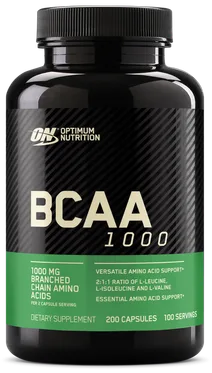
ANSI Pro-Series BCAA 1000 Review
The ANSI Pro-Series BCAA 1000 is a branched chain amino acid supplement listed in the Dietary Supplement Label Database under DSLD ID 21003. The record was entered on 25 April 2013 from an NIH source. The product is sold as a bottle of 60 capsules, and the label lists a serving size of 2 capsules with 30 servings per container. Each serving provides 800 mg of L-Leucine, 100 mg of L-Isoleucine and 100 mg of L-Valine, all listed as free form and usp. The label notes that no Daily Value has been established for these amino acids. The other ingredients are Kosher Bovine Gelatin, Microcrystalline Cellulose and Magnesium Stearate. The product is classified under the Amino acid/Protein product type with a capsule supplement form. Its listed dietary claims are nutrient and structure/function. The intended target group is adults aged 18 to 50 years, and the label marks the product as kosher and gluten free. The label directions say to consume 2 BCAA 1000 capsules one to two times per day. It advises taking them between meals, 30 minutes before a workout, and or immediately after a workout, or as directed by a qualified health consultant. The label states that the product supports muscle recovery and describes an 8 times more powerful 8:1:1 leucine ratio. The brand says BCAAs have been used by bodybuilders, strength trainers and endurance athletes to activate muscle synthesis and reduce muscle breakdown caused by intense training. The label says the product is designed by and made exclusively for Advanced Nutrient Science Intl., Largo, FL, USA. It is manufactured in an FDA registered and GMP certified facility and is listed as made in the U.S.A. The label carries several seals and symbols, including GMP, gluten free, banned substance free BSF, and Quality Products CHECKDED. Precautions say to consult a physician before use if there are any medical conditions, to keep the product out of reach of children, and not to take it if pregnant or nursing. The label advises storing the product in a cool, dry place. The FDA disclaimer states that the statements have not been evaluated by the Food and Drug Administration and that the product is not intended to diagnose, treat, cure or prevent any disease. The FDA statement of identity is dietary supplement, and the formulation statement says the product does not contain gluten. This page is a label record only. It shows no price, no customer ratings and no written reviews. The page also lists other ANSI Pro-Series labels, including Fast Gain 3000 and Iso-Gro 62 flavours, but those are separate products and are not part of this record.
We don’t sell supplements. We help you make decisions and get the best price.
Lowest prices
We may earn a commission from some store links. How we choose.
Finding the lowest prices at the stores now. This takes a few seconds.
Study, Trial or Testing Result Summary
Members Only83 human studies · 38 improved
1 of these 83 human studies gave the ingredient by drip, not by mouth.
Leucine is the main ingredient here, at a full daily amount. Leucine-rich protein supplements improved muscle strength, mass and performance in older adults with age-related muscle loss [1]. A leucine and vitamin D enriched whey drink added a small amount of muscle and improved chair-stand performance, but not grip strength [2]. A larger pooled analysis reported gains in muscle, grip and walking speed, though the evidence was rated low quality [3]. Leucine taken on its own, without added protein, mostly did not help. It did no better than placebo in frail older adults doing strength training [4], and it added nothing in midlife women who were lifting weights [5]. A review concluded that leucine alone did not work, while leucine paired with protein did [6]. Isoleucine and valine are both well below the doses studied. The amino acid mixes containing them gave mixed results: some trials showed small lean mass gains [7][8], while others showed no added muscle or strength [9][10][11]. Animal and cell studies are never counted.
See all 83 studies →Hide the studies
- Across 49 trials of 1863 healthy adults doing resistance training for at least 6 weeks, protein supplements modestly increased strength, lean mass and muscle size compared with control; this was about protein generally, not leucine alone.A systematic review, meta-analysis and meta-regression of the effect of protein supplementation on resistance training-i…
- In 23 trials of 1525 people with cirrhosis, branched-chain amino acids alone did not increase muscle mass, but combined with exercise and protein they gave the largest gain in muscle mass.Exercise and nutrition interventions for sarcopenia in cirrhosis: a systematic review and network meta-analysis of rando…
- In 12 studies of 1225 people with cirrhosis, branched-chain amino acids improved muscle index and mid-arm muscle size from baseline but not handgrip strength, and study quality was limited.Effects of Branched-Chain Amino Acids on Parameters Evaluating Sarcopenia in Liver Cirrhosis: Systematic Review and Meta…
- Across ten randomized trials and one prospective study of 1133 older adults with sarcopenia, leucine improved handgrip, limb muscle mass and walking speed compared with placebo, though the authors rated the evidence as low quality.Effects of Leucine Supplementation in Older Adults with Sarcopenia: A Meta-Analysis.
- Across six randomized trials of 699 older adults with sarcopenia, leucine-rich protein supplements improved muscle strength, mass and performance compared with control groups.Effects of leucine-rich protein supplements in older adults with sarcopenia: A systematic review and meta-analysis of ra…
- In three trials of 637 patients with sarcopenia, a whey protein, leucine and vitamin D combination increased limb muscle mass, but strength and function improved only when combined with an exercise program.Effects of Whey Protein, Leucine, and Vitamin D Supplementation in Patients with Sarcopenia: A Systematic Review and Met…
- In 8 trials, branched-chain amino acids lowered a blood marker of muscle damage after hard exercise compared with placebo, but did not significantly change muscle soreness.Branched-chain amino acid supplementation and exercise-induced muscle damage in exercise recovery: A meta-analysis of ra…
- In 20 randomized trials in people with cirrhosis, branched-chain amino acids modestly increased muscle mass but had no effect on fat mass.Efficacy of branched chain amino acids supplementation in liver cirrhosis: A systematic review and meta-analysis.
- In 12 trials of 1337 older adults, branched-chain amino acids with vitamin D improved muscle mass and function in most trials, while the amino acids alone did not improve muscle health.The Role of Nutrition in the Treatment of Sarcopenia in Old Patients: From Restoration of Mitochondrial Activity to Impr…
- A systematic review of studies in adults aged 50 and over with sarcopenia found that essential amino acid supplements containing about 2.5 g of leucine showed some improvement in muscle mass and function, though nutrition study results overall were inconsistent and few in number.Prevalence of and interventions for sarcopenia in ageing adults: a systematic review. Report of the International Sarcop…
- A review of 23 studies found leucine or leucine-enriched protein (1.2 to 6 grams of leucine daily) was well tolerated and improved lean muscle mass in older people with sarcopenia, while strength results were mixed.Beneficial Effects of Leucine Supplementation on Criteria for Sarcopenia: A Systematic Review.
- A review of 15 systematic reviews in people aged 65 and older found leucine had a significant effect on muscle mass in elderly people with sarcopenia, though evidence quality was low to moderate.Nutritional interventions to improve muscle mass, muscle strength, and physical performance in older people: an umbrella…
- In a review of nine trials in healthy adults aged 50 and older, beef nutrients had an overall positive effect on wellbeing, but leucine specifically showed no effect.The potential role of beef and nutrients found in beef on outcomes of wellbeing in healthy adults 50 years of age and ol…
- A review of intervention studies in older adults with sarcopenia found leucine alone without exercise did not improve sarcopenia markers, but leucine paired with protein supplements was effective.Effect of supplementation with leucine alone, with other nutrients or with physical exercise in older people with sarcop…
- A review of trials in people with motor neuron disease found no benefit of branched-chain amino acids on survival, muscle strength or physical function.Amino acids for amyotrophic lateral sclerosis / motor neuron disease.
- This withdrawn review of trials in people with motor neuron disease found no benefit of branched-chain amino acids on survival, muscle strength or physical function.WITHDRAWN: Amino acids for amyotrophic lateral sclerosis / motor neuron disease.
- A review of 11 studies found branched-chain amino acids could reduce exercise muscle damage when damage was low to moderate, with high daily intake for over 10 days, but results varied widely between studies.Is Branched-Chain Amino Acids Supplementation an Efficient Nutritional Strategy to Alleviate Skeletal Muscle Damage? A S…
- A review of 19 articles found that 2-10 g a day of branched-chain amino acids, taken before and after hard resistance exercise, improved muscle recovery, perceived muscle damage and strength, mainly in young men.Intake of branched chain amino acids favors post-exercise muscle recovery and may improve muscle function: optimal dosag…
- In a review of 27 diet and exercise studies in people with cirrhosis, benefits for body composition were also seen with branched-chain amino acid supplements, though the largest gains came from combined diet and exercise.The Effect of Diet and Exercise Interventions on Body Composition in Liver Cirrhosis: A Systematic Review.
- In 380 older adults with sarcopenia, a vitamin D and leucine-enriched whey protein supplement taken twice daily for 13 weeks did not improve handgrip strength more than control, but increased muscle mass by 0.17 kg more and improved the chair-stand test.Effects of a vitamin D and leucine-enriched whey protein nutritional supplement on measures of sarcopenia in older adult…
- In 200 pre-frail and frail older adults doing resistance training for 16 weeks, leucine supplementation did not improve muscle mass or function compared with placebo.Supplement-based nutritional strategies to tackle frailty: A multifactorial, double-blind, randomized placebo-controlled…
- In 150 people with cirrhosis, 30 grams a day of branched-chain amino acids for 12 months did not improve grip strength or muscle mass compared with whey protein.Branched-chain amino acid supplementation does not improve measures of sarcopenia in cirrhosis: results of a randomised …
- In 140 older hospitalized adults with sarcopenia, a leucine and vitamin D enriched whey protein formula twice daily for 4 to 8 weeks during rehabilitation improved gait speed, muscle mass, and physical performance more than a control formula.Improving rehabilitation in sarcopenia: a randomized-controlled trial utilizing a muscle-targeted food for special medic…
- In 132 overweight or obese adults on a calorie-cut diet, branched-chain amino acids at 0.1 g per kg body weight daily for 16 weeks (plus 8 weeks of maintenance) did not significantly preserve lean mass compared with control.Branched-Chain Amino Acid Supplementation Does Not Preserve Lean Mass or Affect Metabolic Profile in Adults with Overwei…
- In 130 sarcopenic elderly people, 12 weeks of whey protein, essential amino acids including 4 grams of leucine, and vitamin D alongside exercise increased fat-free mass and grip strength and lowered an inflammation marker compared with placebo plus exercise.Whey protein, amino acids, and vitamin D supplementation with physical activity increases fat-free mass and strength, fu…
- In 96 people with Duchenne muscular dystrophy followed for one year, oral leucine at 0.2 grams per kilogram daily produced no lasting therapeutic benefit compared with placebo, and early differences were attributed to a drop in the placebo group.Clinical investigation in Duchenne muscular dystrophy: IV. Double-blind controlled trial of leucine.
- In 95 people with ALS, six months of branched-chain amino acids (including 8 g isoleucine daily) did not improve muscle strength or function compared with placebo, and lung function declined faster.A controlled trial of amino acid therapy in amyotrophic lateral sclerosis: I. Clinical, functional, and maximum isometri…
- In older adults with sarcopenia, whey and leucine supplementation after resistance training did not differ from training alone at the end of 24 weeks, but after a further 24 weeks without training, muscle mass and grip strength stayed higher in the supplement group.De-Training Effects Following Leucine-Enriched Whey Protein Supplementation and Resistance Training in Older Adults with…
- In 60 adults aged about 80 with sarcopenia, a 2-month medical food containing 2.5 grams of leucine, omega-3 fats and a probiotic increased lean limb mass, balance, walking and grip strength compared with placebo.Effectiveness of a Novel Food Composed of Leucine, Omega-3 Fatty Acids and Probiotic Lactobacillus paracasei PS23 for th…
- In 60 people with cirrhosis and muscle loss, 12 g daily of branched-chain amino acids for 6 months on top of exercise did not improve muscle mass or strength compared with placebo.Randomised clinical trial: effect of adding branched chain amino acids to exercise and standard-of-care on muscle mass i…
- In 55 older adults with kidney disease, 12 weeks of a leucine-rich amino acid mix (1.5 g isoleucine daily) increased lean muscle mass by 0.4 kg versus a 0.2 kg loss on placebo, with no change in strength.Anti-sarcopenic effect of leucine-enriched branched-chain amino acid supplementation among elderly chronic kidney diseas…
- In 54 COPD patients over 4 weeks of pulmonary rehabilitation, branched-chain amino acids did not add benefit to rehabilitation alone for muscle function or exercise capacity.Does branched-chain amino acid supplementation improve pulmonary rehabilitation effect in COPD?
- In 54 frail people with cirrhosis, 16 weeks of branched-chain amino acids (isoleucine dose not stated) compared with control increased skeletal muscle index and improved frailty scores.Branched-chain amino acids supplementation improves liver frailty index in frail compensated cirrhotic patients: a rando…
- In 47 adults with inflammatory muscle disease over 12 weeks, branched-chain amino acids did not improve muscle strength scores compared with placebo but did produce a greater improvement in shoulder movement function.Branched chain amino acids in the treatment of polymyositis and dermatomyositis: a phase II/III, multi-centre, randomize…
- In 46 stroke patients doing two months of exercise, taking the leucine-enriched amino acid supplement with breakfast improved leg strength and balance and reduced body fat, with timing relative to exercise making no difference.The Effects of Timing of a Leucine-Enriched Amino Acid Supplement on Body Composition and Physical Function in Stroke Pa…
- In 45 older men, a single 6 gram drink of branched-chain amino acids raised muscle protein building for the first two hours after drinking, but the increase did not last to five hours, unlike milk protein.Branched-chain amino acid and branched-chain ketoacid ingestion increases muscle protein synthesis rates in vivo in olde…
- In 40 critically ill patients, 10 days of 40 g daily branched-chain amino acids prevented thigh muscle thickness loss (0% vs 13% loss in controls) and lowered inflammation (IL-6).High leucine branched-chain amino acids supplementation ameliorates quadriceps femoris muscle thickness reduction and at…
- In 36 untrained midlife women over 10 weeks of resistance training, 5 grams of daily leucine added no benefit to fat-free mass, strength or hormone levels compared with placebo.Efficacy of L-leucine Supplementation Coupled With Resistance Training in Untrained Midlife Women.
- In 36 older adults with type 2 diabetes, 24 weeks of branched-chain amino acids (8 g daily, isoleucine dose not stated) did not change muscle mass compared with soy protein, while leg strength rose in the soy group and showed a trend upward in the amino acid group.Effects of Branched-Chain Amino Acids on Skeletal Muscle, Glycemic Control, and Neuropsychological Performance in Elderl…
- In 35 patients after surgery, five days of infusion with branched-chain amino acids (isoleucine dose not stated) prevented the muscle breakdown seen with glucose-only infusion, leaving patients in nitrogen balance and limiting weight loss.Infusion of the branched chain amino acids in postoperative patients. Anticatabolic properties.
- In 34 trained young adults doing resistance training for 8 weeks, hemp increased arm muscle thickness in women while soy increased it in men, so effects differed by sex.Effects of hemp supplementation during resistance training in trained young adults.
- In 32 people with cirrhosis and muscle loss, 12 weeks of branched-chain amino acids plus standard care increased muscle mass, with 83.3 percent of the amino acid group improving versus 46.7 percent on placebo.Adding Branched-Chain Amino Acids to an Enhanced Standard-of-Care Treatment Improves Muscle Mass of Cirrhotic Patients W…
- In 30 resistance-trained men, branched-chain amino acids with carbohydrate (1 g isoleucine daily) over three days of hard training did not reduce strength loss or soreness compared with carbohydrate alone.Post-exercise branched chain amino acid supplementation does not affect recovery markers following three consecutive hig…
- In 30 postmenopausal women doing 8 weeks of resistance training, 9 grams a day of branched-chain amino acids did not add to gains in muscle mass or strength compared with training plus placebo.Effects of branched-chain amino acid supplementation and resistance training in postmenopausal women.
- In 30 healthy adults, 4 weeks of saponin extract taken with whey protein and resistance training raised isoleucine absorption by 6.33% and grip strength by 5.2% versus 2.44% with placebo, but isoleucine itself was not the tested ingredient.Effects of Astragalus membranaceus and Panax notoginseng Saponins Extract on the Pharmacokinetics of Whey Protein Absorp…
- In 27 malnourished dialysis patients over about four months per period, branched-chain amino acids (isoleucine dose not stated) did not raise lean body mass and lowered fat-free mass index compared with glycine.Glycine increases fat-free mass in malnourished haemodialysis patients: a randomized double-blind crossover trial.
- In 26 resistance-trained young men over 12 weeks, adding 1.5 grams of leucine twice daily to whey protein produced muscle and strength gains no different from adding HMB, and HMB was no more effective than leucine.Equivalent Hypertrophy and Strength Gains in β-Hydroxy-β-Methylbutyrate- or Leucine-supplemented Men.
- In 24 young women on 60 days of bed rest, a protein plus branched-chain amino acid supplement (7.2 g per day) prevented loss of heart muscle mass seen in the sedentary group, but heart chamber volume still shrank, and exercise worked better.Cardiac atrophy in women following bed rest.
- In 24 untrained young men, taking branched-chain amino acids after resistance training reduced muscle soreness at 48 hours and lowered blood markers of inflammation at 24 hours compared with placebo, while taking them before training did not match this effect.Effect of Timing of Branched-Chain Amino Acid Supplementation on Muscle Recovery after Resistance Training in Healthy Ma…
- In 24 dialysis patients, 12 weeks of a supplement containing branched-chain amino acids (isoleucine amount not stated) at 10 g daily increased thigh muscle thickness and fat-free mass percentage compared with placebo, and lowered inflammation and oxidative stress markers.The Combined Use of Hydroxymethylbutyrate and Branched-Chain Amino Acids to Counteract Uremic Sarcopenia.
- In 22 people with motor neuron disease, a daily mix of branched-chain amino acids including 8 g isoleucine for one year helped maintain limb muscle strength and walking ability compared with placebo.Pilot trial of branched-chain aminoacids in amyotrophic lateral sclerosis.
- In 20 resistance-trained adults, adding leucine to carbohydrate drinks before and after leg squats did not reduce muscle damage markers or soreness over 72 hours and did not change squat performance compared with placebo.The effects of adding leucine to pre and postexercise carbohydrate beverages on acute muscle recovery from resistance tr…
- In 18 people with rheumatic disease taking prednisolone, 12 weeks of branched-chain amino acids slowed the loss of plasma amino acids and reduced a muscle breakdown marker, and higher plasma isoleucine was linked to less thigh muscle atrophy.Amino Acid Profile in 18 Patients with Rheumatic Diseases Treated with Glucocorticoids and BCAAs.
- In 18 preterm infants, mixed amino acids given from birth on the first day of life improved nitrogen retention and prevented protein loss compared with glucose alone, but isoleucine was not tested on its own.Immediate commencement of amino acid supplementation in preterm infants: effect on serum amino acid concentrations and p…
- In 17 men over 65, taking an amino acid and carbohydrate drink after 12 weeks of knee strength training produced no more gain in muscle strength or thigh muscle size than the control group.Oral amino-acid provision does not affect muscle strength or size gains in older men.
- In 16 resistance-trained athletes, a single dose of branched-chain amino acids (0.087 grams per kilogram of body weight) before a hard leg workout led to faster recovery of leg strength, jump height and soreness at 24 to 48 hours compared with placebo.The effects of acute branched-chain amino acid supplementation on recovery from a single bout of hypertrophy exercise in…
- In 12 young adults after a single resistance workout, a branched-chain amino acid drink (including 1.5 g isoleucine) increased whole-body leucine retention compared with a collagen drink, but it did not differ from a dileucine-based amino acid formula and did not reduce muscle breakdown markers.Dileucine-supplemented essential amino acids support whole-body anabolism after resistance exercise and serum-stimulated…
- In 8 resistance-trained men during a 4-week period of intense training, a high branched-chain amino acid supplement was linked to higher testosterone and lower cortisol and muscle damage markers than placebo.Amino acid supplements and recovery from high-intensity resistance training.
- In 7 men, drinking a branched-chain amino acid solution during and after one leg resistance workout boosted muscle growth signaling more than a placebo drink, though muscle growth itself was not measured.Branched-chain amino acids increase p70S6k phosphorylation in human skeletal muscle after resistance exercise.
- In heart failure patients over 3 months, 10 grams a day of branched-chain amino acids added to a resistance exercise program did not improve body composition or function beyond exercise alone.Changes in body composition in heart failure patients after a resistance exercise program and branched chain amino acid …
- In 155 malnourished older adults, a branched-chain amino acid mixture for 2 months improved muscle mass, strength and performance in both groups, but beat diet advice only for cognition, mitochondrial energy production and oxidative stress.From mitochondria to healthy aging: The role of branched-chain amino acids treatment: MATeR a randomized study.
- In 57 people one month after sleeve gastrectomy, whey protein with branched-chain amino acids and vitamin D lost less lean mass and muscle strength than protein alone (3.8% vs 18.5% strength loss).Adding Branched-Chain Amino Acids and Vitamin D to Whey Protein Is More Effective than Protein Alone in Preserving Fat F…
- In 54 patients with subacute stroke, one month of branched-chain amino acid powder during rehabilitation produced greater gains in muscle mass index than matched controls who did not take it.The Effect of Branched Chain Amino Acid Supplementation on Stroke-Related Sarcopenia.
- In 48 untrained adults doing supervised resistance training three times a week for 12 weeks, 2 grams of leucine from either whey or soy protein increased body weight, lean mass and leg strength, with no difference between the two protein sources.No Significant Differences in Muscle Growth and Strength Development When Consuming Soy and Whey Protein Supplements Mat…
- In frail older adults in care homes, a 40-week program of group exercise plus branched-chain amino acids lowered a blood inflammation marker (TNF-alpha) more than other groups, with only slight changes in strength and other measures.Effect of Training-Detraining Phases of Multicomponent Exercises and BCAA Supplementation on Inflammatory Markers and Al…
- In 28 malnourished elderly dialysis patients, six months of branched-chain amino acids (isoleucine dose not stated) compared with placebo in a crossover design increased anthropometric measures of body size and raised blood albumin.Oral supplementation of branched-chain amino acid improves nutritional status in elderly patients on chronic haemodialys…
- In 20 young combat sport athletes, 5 g a day of branched-chain amino acids for 4 weeks raised muscle mass from 23.4 to 25.1 kg and improved a body cell health measure, while the control group did not change.[The efficiency of branched chain aminoacids (BCAA) in the nutrition of combat sport athletes].
- In 18 trained cyclists, 10 weeks of a BCAA mix with 4 g valine daily did not change lean mass but improved sprint peak and mean power compared with placebo.Ten weeks of branched-chain amino acid supplementation improves select performance and immunological variables in traine…
- In 16 trekkers at high altitude over 21 days, taking 2.88 grams of isoleucine daily as part of branched-chain amino acids kept lean mass rising and reduced loss of leg power compared with placebo, though body mass still fell in both groups.Branched-chain amino acid supplementation during trekking at high altitude. The effects on loss of body mass, body compo…
- In 16 healthy young women during 60 days of bed rest, a high-protein diet with added branched-chain amino acids prevented the loss of insulin sensitivity seen with a standard diet, although lean body mass fell in both groups.High-protein diet with excess leucine prevents inactivity-induced insulin resistance in women.
- A single oral leucine-enriched branched-chain amino acid dose in 6 people with alcoholic cirrhosis and 8 controls reduced whole-body protein breakdown and reversed impaired muscle growth signaling, but muscle protein synthesis was not changed.Metabolic and molecular responses to leucine-enriched branched chain amino acid supplementation in the skeletal muscle o…
- In a small study of patients on peritoneal dialysis, adding amino acids, mainly valine, to the dialysis fluid increased muscle protein synthesis during a single session compared with dextrose alone.Acute effects of peritoneal dialysis with dialysates containing dextrose or dextrose and amino acids on muscle protein t…
- In 56 sarcopenic older adults, a whey and leucine supplement for 12 weeks did not change muscle mass or grip strength more than counselled protein intake, but it improved walking speed, especially in those under 75.Effects of adequate dietary protein with whey protein, leucine, and vitamin D supplementation on sarcopenia in older adu…
- In 55 hospital inpatients with walking problems, twice-daily branched-chain amino acid jelly raised muscle mass by 4.3 percent while controls lost 2.2 percent, but daily living function did not differ between groups.The Effect of Branched Chain Amino Acids-Enriched Nutritional Supplements on Activities of Daily Living and Muscle Mass …
- In 33 adults with pre-sarcopenia or sarcopenia, 7.2 grams of branched-chain amino acids per day for five weeks improved muscle mass index, gait speed, and grip strength, but these gains faded after 12 weeks without the supplement.Effects of enriched branched-chain amino acid supplementation on sarcopenia.
- Among 4,336 older Chinese adults, higher dietary intake of branched-chain amino acids was linked to better grip strength and walking speed and lower risk of low muscle strength.Association between Branched-Chain Amino Acid Intake and Physical Function among Chinese Community-Dwelling Elderly Resi…
- In older adults in Qingdao, China, higher dietary branched chain amino acid intake was linked to lower sarcopenia risk, and higher valine intake was linked to faster gait speed.Branched chain and other amino acid intakes are inversely associated with sarcopenia among community elders in Qingdao, …
- In 300 older Iranian adults, dietary branched chain amino acid intake, including valine, was not significantly linked to sarcopenia or its components of muscle mass, grip strength, or gait speed.Association between dietary intake of branched-chain amino acids and sarcopenia and its components: a cross-sectional st…
- In 142 malnourished patients followed for 3 months, those taking a leucine-enriched supplement improved phase angle and rectus femoris muscle thickness more than those taking a standard supplement, though the study was observational and groups differed.Nutritional impact of leucine-enriched supplements: Evaluating protein type through artificial intelligence (AI)-augment…
- In a study of 128 older women from Brazil and Italy, dietary intake of valine, leucine and isoleucine was linked to chair-stand performance only in the Italian women, so this observational link is not proof that valine builds muscle.Association between Dietary Habits and Physical Function in Brazilian and Italian Older Women.
- In 57 people with sarcopenia given exercise plus branched-chain amino acids, calcium and vitamin D for 12 weeks, noradrenaline rose, but the analysis was about neurotransmitter levels and did not test muscle gain against a control.Plasma levels of adrenaline, noradrenaline, dopamine, serotonin, and cortisol in sarcopenia: comparison with non-sarcope…
- In 8 obese men with type 2 diabetes and 12 controls, a single 20-gram essential amino acid dose raised muscle protein synthesis similarly in both groups, but the diabetes group showed a blunted cell-signaling response, so the study does not show muscle loss is explained by impaired feeding response.Anabolic resistance does not explain sarcopenia in patients with type 2 diabetes mellitus, compared with healthy control…
- In nine men given testosterone for 12 weeks, muscle mass rose and muscle protein synthesis increased; this study tested testosterone, not leucine supplementation.Effect of testosterone on muscle mass and muscle protein synthesis.
Review Totals and Summary
Members Only55 reviews
These themes come from reviews of comparable 1,000 mg BCAA capsules, not from ANSI-specific reviews, which I could not find. Customers like the convenience of capsules. They are portable, tasteless and don't need mixing, which makes them an easy add to a gym bag or a fasted morning routine. Many users say they notice a subjective benefit, such as feeling less sore or recovering better, especially while cutting calories or training hard. One reviewer said they could tell a difference on the days they skipped the capsules. Some people credit the capsules with helping them stay consistent with an amino acid routine, because the format is simpler than flavored powders. The most common complaint is dose. Many buyers point out that the BCAA content per capsule is small, and that a full serving of several capsules adds up to only a couple of grams. One critic calculated that they would need a dozen or more capsules to match the BCAAs in a single serving of a high-end whey protein. Others say the cost per gram of BCAAs is poor next to powders, and that powders deliver larger doses. Swallowing is another recurring issue. Some users find the capsules large or hard to take in multiples, and taking several at once is a nuisance. A few mention that the very fine powder inside can come up as a burp or reflux if the capsule is taken without enough water. In one case, the powder came up through the nose and mouth. Skeptical reviewers also question whether BCAAs help at all for people who already eat enough protein. They say they felt no change in strength or size and see the product as a placebo or an unnecessary extra. Several recommend whole protein or complete essential amino acid products as better value. Reports of side effects were uncommon, with occasional mentions of stomach upset or a bitter aftertaste. Overall, buyers see these capsules as a convenient but low-dose supplement, and satisfaction depends heavily on expectations.
Biohacker Summary
Members Only9 of 10 recommend it
Most of the panel recommends leucine, with eight of ten giving a latest position of recommends, one saying they use it, and one warning. They take it because it acts as the main signal that switches on muscle building, and several say it matters more as people get older. Doses cluster around 2 to 3 grams per meal, with a few going to 3 to 5 grams per meal, one suggesting 1 gram in a capsule with a meal, and two pointing to roughly 8 or 9 grams a day; one panelist mentioned a pre-workout drink that mixes leucine with protein powders and L-citrulline, and another favors a two-molecule form called dileucine. Several say food such as beef, whey, eggs and other animal protein can supply enough, and two say supplementing adds little if you already eat plenty of high quality protein. Cautions came from a few panelists who raised worries about high leucine levels and aging or disease risk, and one panelist said it tastes horrible; isoleucine and valine, smaller ingredients in this product, were each mentioned by one panelist in passing.
See all 9 biohackers →Hide the biohackers
Ben Greenfield · Leucine · recommends
- Describes leucine as the 'ignition' that turns on the signal for muscle protein synthesis, and that a sufficient dose is needed to hit the dose response and then have other essential amino acids to maintain the signal.
- States that leucine is the primary trigger for muscle protein synthesis and recommends an essential amino acid blend with about 40% leucine for maximum stimulation.
- Recommends pulsing with compounds like leucine for maintaining and building muscle and maximizing muscle protein synthesis.
- Recommends Dileucine as a next-generation supplement for muscle recovery and protein synthesis, stating it delivers 86% more leucine to muscles and triggers 60% more protein synthesis than regular leucine, especially when paired with exercise.
- Dave Pascoe mixes up a concoction of different protein powders, leucine, and L-citrulline as a pre-workout drink.
- Discusses the role of leucine in boosting muscle protein synthesis on plant-based diets.
- Mixes leucine into a concoction of protein powders before his workout.
- Discusses a study that claimed escalating doses of leucine from animal-based protein could cause issues with monocytes and macrophages, potentially leading to atherosclerosis, but he refutes the generalizability of these findings to humans.
- Warns against using only leucine, as it induces only a short, transient response in muscle protein synthesis, which is not enough for long-term gains in muscle mass and function.
- Suggests that Urolithin A blends well with branched-chain amino acids like leucine and isoleucine, making them top things to stack with.
- Suggests that Urolithin A blends well with branched-chain amino acids like leucine and isoleucine, making them top things to stack with.
- Recommends Isoleucine, as found in Kion Aminos, stating it is important for blood sugar regulation, muscle development and repair, and energy regulation.
- Recommends Valine, as found in Kion Aminos, stating it is needed for muscle fiber firing, tissue repair, and the maintenance of proper nitrogen balance in the body.
Dr. Eric Berg · Leucine · recommends
- The amino acid leucine is important for muscle growth, but getting sufficient protein is just as essential for maintaining muscle mass.
- Mentions that animal protein provides leucine, an amino acid beneficial for muscle building.
- Recommends getting enough leucine, a key amino acid for muscle growth, to help prevent and correct muscle loss.
- Explains that leucine is an essential amino acid that signals muscles to grow, and its requirements increase with age, making it important for maintaining muscle after menopause.
- Mentions that eggs contain all essential amino acids, including leucine, which is a key amino acid for building muscle.
- Notes that the amino acid leucine, found in animal protein, stimulates insulin.
- Notes that red meat contains leucine, an amino acid that triggers the synthesis of muscle.
- Explains that leucine is essential for muscle growth and that plant-based proteins often lack sufficient amounts of it.
- Notes that leucine is a potent stimulus for muscle production and is often low in plant-based foods.
- Highlights leucine as an essential amino acid that has been found to stimulate muscle growth and prevent muscle loss, making it good for muscle atrophy.
- Dr. Berg lists Valine as one of the three types of Branched Chain Amino Acids.
- Dr. Berg lists Isoleucine as one of the three types of Branched Chain Amino Acids.
- Dr. Berg recommends consuming Valine, which increases muscle repair, as part of a supplement before bed every night.
- Dr. Berg recommends consuming Isoleucine, a recovery amino acid, as part of a supplement before bed every night.
Thomas DeLauer · Leucine · recommends
- Identifies leucine as the primary trigger for the mtorc1 pathway, which is the master switch for muscle protein synthesis, and recommends 2 to 3 grams per meal for those under 40, and 3 to 4 grams for those over 40.
- Explains that leucine is important for muscle, with beef, whey, milk, and sardines clearing the 2-3g leucine threshold per meal, and that the threshold increases with age.
- States that leucine is what flips the switch for muscle protein synthesis, and that adding leucine and essential amino acids to a small dose of whey can match the effect of a full 25-gram dose of protein.
- Notes that leucine, an important amino acid for muscle growth, activates mTOR signaling after exercise, triggering the first step in building new muscle, and that leucine plus carbs together have the strongest signaling effect.
- Recommends taking 3 to 5 grams of leucine with meals, especially for older individuals who may struggle to meet minimum protein requirements, as it can help preserve muscle and increase muscle protein synthesis.
- Recommends protein sources that are high in leucine as a '401k of your fat burner' because they lead to more metabolically active lean tissue, especially for people dropping weight.
- Explains that leucine skyrockets mTor and phosphorylates P7S6K, which is exactly what one wants to be activating, especially post-workout but throughout the day if trying to build muscle and recover.
- Mentions that some people believe avoiding isoleucine is key to the sugar diet, potentially increasing FGF-21.
- Notes that leucine, found in whey protein, is highly anabolic and can help add muscle even without significant resistance training, which takes stress off the liver.
- Advises considering the leucine content of proteins and the ileal digestibility to maximize protein absorption for muscle growth.
- Notes that mTor is activated by branch chain amino acids, particularly leucine, and that higher circulating leucine generally leads to higher mTor activity.
- Mentions isoleucine as one of the best amino acids for stimulating GLP-1 and thus hunger suppression.
- Mentions valine as one of the best amino acids for stimulating GLP-1 and thus hunger suppression.
- Notes that increased levels of isoleucine in the blood, observed during fasting, are a strong indicator that fasting could have powerful rejuvenation effects that improve aging by preserving muscle and combating sarcopenia.
Dr. Rhonda Patrick · Leucine · recommends
- Notes that foods high in leucine are going to really support muscle protein synthesis.
- Explains that Leucine is the critical signal driving robust activation of mTOR, which plays key roles in skeletal muscle growth by driving muscle protein synthesis and recovery, but also notes a study suggesting Leucine might activate mTOR in the vascular system, promoting plaque buildup.
- Highlights that leucine is an amino acid with strong signaling properties, stimulating the mTOR pathway and setting off the anabolic cascade for muscle protein synthesis.
- Mentions that leucine, a branched-chain amino acid, and other essential amino acids may be partially protective against declines in muscle mass, but not entirely effective against strength declines.
- Discusses leucine as an amino acid that kick-starts the muscle-growth process, noting that 2 to 3 grams may be important for older individuals to kick-start that process, but does not recommend it as a supplement if consuming high-quality animal-based protein sources.
- Warns that leucine is extraordinarily bitter and requires food science to mask its taste. He also states that leucine supplementation should be a last resort, advocating for a food-first approach.
- Identifies leucine as a major activator of mTORC1, which is critical for muscle protein synthesis.
- Notes that leucine is the highest affinity amino acid sensor for mTORC1, explaining why branched-chain amino acids, particularly leucine, are used to enhance muscle growth or prevent degradation during exercise. He believes 5 grams during a workout is probably not harmful.
Dr. Mark Hyman · Leucine · recommends
- Dr. Mark Hyman, agreeing with the guest, highlights leucine as a primary amino acid important for muscle protein synthesis.
- States that leucine is important for muscle health and is the rate-limiting amino acid for turning on the switch that starts muscle building.
- Recommends leucine, an amino acid, for making muscle.
- Highlights leucine as an essential amino acid that is nearly highest in protein sources and acts as a unique amino acid for metabolic signaling, like a switch that turns on muscle building.
- States that high amounts of leucine, an amino acid mostly found in animal protein, are needed to activate the switch to turn on muscle building, specifically about 2.5 grams per serving.
- Warns that leucine, which is much higher in animal protein, is the rate-limiting step for building muscle, and without 2.5 grams in a protein meal, the switch to build muscle won't be turned on.
- Explains that leucine is very low in plant proteins and is necessary to trigger protein synthesis, which is critical for building muscle.
- Mentions that leucine is important for building muscle and that some plant proteins are 'jacked up' with extra amino acids and leucine, citing an example of a plant protein with 2.5 grams of leucine.
- Recommends supplementing with leucine, an amino acid critical for activating muscle synthesis, especially for those on a vegan diet, as plant proteins are typically low in it.
- Recommends eating for leucine, an amino acid that comes in the right amounts to feed skeletal muscle.
- Recommends eating for valine, an amino acid that comes in the right amounts to feed skeletal muscle.
- Recommends eating for isoleucine, an amino acid that comes in the right amounts to feed skeletal muscle.
Andrew Huberman · Leucine · recommends
- Suggests that adding free leucine, perhaps one gram in a capsule with a normal meal, can significantly boost protein synthetic response, especially for plant-based individuals.
- Suggests that leucine, because it triggers cellular growth by activating the mTOR pathway, is actually pro-aging, similar to growth hormone and testosterone, offering immediate benefits at the expense of long-term health.
- Andrew Huberman explains that leucine is an essential amino acid important for inducing muscle protein synthesis, and it is found in high levels in sources like whey protein, beef, chicken, and eggs.
- Discusses leucine.
- States that leucine is uniquely stimulating to skeletal muscle and recommends consuming closer to 9 grams of leucine per day, which is two to three times the RDA, for optimal muscle health.
- Notes that leucine, isoleucine, and valine, which are branch chain amino acids, make insulin go up.
- Notes that leucine, isoleucine, and valine, which are branch chain amino acids, make insulin go up.
- Notes that leucine, isoleucine, and valine, which are branch chain amino acids, make insulin go up.
- Explains that leucine is almost exclusively responsible for increasing muscle protein synthesis when protein is consumed, but supplementing with leucine does not make people more muscular because muscle building involves both synthesis and degradation.
- Suggests that leucine, by triggering cellular growth through the mTOR pathway, could be pro-aging, and that maximizing muscle growth through such supplements might come at the expense of long-term health.
- Huberman states that the amino acid leucine is vital for cell growth, including muscle growth, due to its relationship with the mTOR pathway, and suggests ingesting it early in the day for maintaining or increasing muscle mass.
- Clarifies that Leucine, an amino acid, is important for muscle building, muscle growth, and strength, distinguishing it from Lutein.
Dave Asprey · Leucine · warns
- States that very low levels of leucine are probably promoting high levels of protection against aging and diseases, but also promoting frailty, and high levels of this amino acid could be a risk for developing a number of diseases.
- Recommends ensuring enough Leucine, specifically two and a half grams, to activate muscle protein synthesis, otherwise consumed protein may not be effective.
- States that 2.5 grams of leucine are needed in a meal to activate mTOR and stimulate muscle synthesis.
- Recommends consuming leucine, which preserves body muscle and is found in higher amounts in animal foods.
Peter Attia · Leucine · recommends
- States that leucine is critical for muscle protein synthesis and recommends around 8 or 9 grams a day for optimal muscle health.
- Recommends two to three grams of leucine a day for muscle health, with optimal health probably around eight or nine grams.
- Recounts a story where a vegan doctor chastised him for suggesting ingesting five grams of leucine during a workout due to its negative effect on mTOR and potential link to cancer, which Peter Attia found amusing.
- Warns that there is no benefit to supplementing leucine specifically if one is already consuming enough high-quality protein, and notes that leucine tastes horrible.
- Mentions that estimations suggest two to three grams of Leucine in a meal will induce a rapid increase in circulating Leucine, stimulating muscle protein synthesis.
- Highlights that leucine content is an important factor in the anabolic response, and adding free leucine to casein can increase its anabolic effect.
- Recommends tracking amino acids and ensuring 2 to 4 grams per serving of leucine for muscle mass.
- Discusses experiments on Leucine and its effect on muscle protein turnover and fat metabolism.
- Mentions Leucine as one of the four signals that regulate mTOR, which is involved in protein synthesis.
- Explains that leucine binds to a protein called sestrin, which acts as its receptor, and the crystal structure shows how leucine is nestled in a small pocket, making it difficult to mimic its anabolic effects with other molecules.
Siim Land · Leucine · uses
- Despite high protein and whey intake, Siim Land's leucine levels remain low, hovering around 70, which he attributes to increased muscle mass and the body fighting infection.
- Notes that his isoleucine levels went down because he is taking leucine, which is a branch chain amino acid.
- States that leucine is associated with longevity, and most studies indicate that higher levels are important for longevity.
- Suggests supplementing with valine because studies show that higher levels are related to longevity, and his own levels tend to be lower.
- Mentions that leucine, an essential amino acid, acts as a signal for muscle protein synthesis, though not as strong as resistance training.
- Siim Land, agreeing with the guest, states that 2.5 grams of Leucine per meal maximizes anabolic protein synthesis in the muscle, ensuring muscle tissue maintenance.
- Identifies leucine as an essential amino acid that is most responsible for increasing mTOR activation and muscle protein synthesis, linking it to protein intake, aging, and cancer.
- Recommends consuming at least 2.5 grams of leucine to reach the optimal intake for muscle protein synthesis.
- Explains that leucine is a critical amino acid for turning on MTOR and promoting protein synthesis, and while it is pro-growth, its impact on aging is complex.
- Explains that leucine is the most anabolic amino acid responsible for mTOR activation, with a threshold of around 2 to 3 grams.
- States that leucine-rich foods like eggs and dairy are the highest sources of leucine, which activates mTOR.
- States that leucine specifically activates mTOR C1 the most and promotes muscle protein synthesis.
RAL Summary
Members OnlyTier 4 for Muscle and Strength
The review summary comes from comparable 1,000 mg BCAA capsules by other makers, not from reviews of this ANSI product, so it is set aside. Its reviews are set aside, so it is graded on its studies alone. Human studies support L-Leucine (10 of 24 human studies showed an improvement), but there are not yet enough reviews to confirm it (0).
- Emerging: not enough evidence to rank higher yet.
Where the evidence disagrees: 20 of the 83 human studies found no effect.
More Details
Members OnlyBody systems · Combine with · Possible side effects
Body systems: Musculoskeletal system
Combine with: For muscle building and recovery, pair BCAAs with creatine monohydrate (3-5 g daily) for strength and power, and whey or a complete protein source, since BCAAs alone provide only 3 of the 9 essential amino acids and are less effective without the rest. Add vitamin D3 and magnesium to support muscle function and recovery, and electrolytes or citrulline malate for hydration and endurance during training. If the goal is weight management, consider green tea extract (EGCG) with caffeine, soluble fiber such as glucomannan, or berberine for metabolic support, while keeping adequate protein intake to preserve lean mass during a calorie deficit. Consult a healthcare provider before combining supplements, especially with medications or existing conditions.
Possible side effects: No major side effects reported.
Supplement Facts
L-Leucine 800 mg · L-Isoleucine 100 mg · L-Valine 100 mg
| L-Leucine | 800 mg | † |
| L-Isoleucine | 100 mg | † |
| L-Valine | 100 mg | † |
Other ingredients: Kosher Bovine Gelatin, Microcrystalline Cellulose, Magnesium Stearate.
Directions: DIRECTIONS: As a dietary supplement, consume 2 BCAA 1000(TM) capsules 1-2 times per day. For best results take between meals, 30 minutes before workout and/or immediately after workout or as directed by your qualified health consultant.
Barcode (UPC) 689570405097 · Label source: NIH label database · Report a label change
Show entire label
More muscle and strength products
Members OnlyThe highest ranked for the same goal
Read more
Our articles on this subject
Graded November 10, 2026 by the Reverse Age Lab evidence engine, from human studies, real reviews and our biohacker panel. How we grade. Is this medical advice? No. Rala organizes the published evidence; go over any change with your doctor, especially if you take meds.
Privacy policyConsumer health dataAffiliate disclosureTermsDo Not Sell or Share My Personal InformationCookie settings