
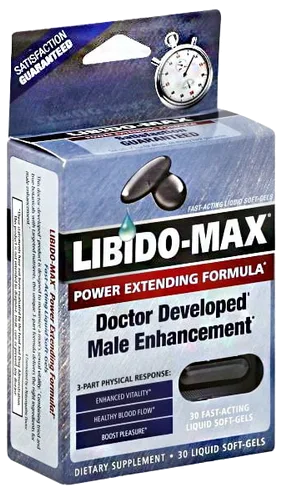
Applied Nutrition Libido-Max Review
Libido-Max for Men is presented by Applied Nutrition as a doctor-developed product designed to maximize a man's sexual vitality. The page says it combines tried and true botanicals with targeted nutrients in a unique 3-part formula that delivers the right ingredients for male enhancement. The three parts are listed as Part One: Enhanced Vitality, Part Two: Healthy Blood Flow, and Part Three: Boost Pleasure. The page states that users should take both together to maximize results, and it promotes Libido-Max RED as a companion product to support blood flow and male physical response. The product is formulated by a Naturopathic Doctor, according to the page footnote. The product comes as Liquid Soft-Gels and the page describes them as easy-to-swallow, allowing nutrients to be released fast for optimum results. Directions for adults say to take one to four liquid soft-gels per day divided into two or more doses, with a full glass of water, and not to exceed four per day. For a more immediate response, the directions say to take one hour prior to intimacy. The page recommends starting with one soft-gel and building up only if needed, and not exceeding 90 days of continual use without a two-week break. Usage warnings state the product contains ingredients that may affect blood pressure, heart conditions, and blood sugar, and advise checking with a doctor if using medication or having medical conditions including heart disease or high or low blood pressure. It is not to be used by those who may become pregnant, are pregnant, or nursing, and is not intended for persons under 18. The page also carries a California Prop 65 warning about a chemical known to cause birth defects or other reproductive harm. The page shows a TiO2 free statement in its imagery. The product is currently marked as sold out on this page.
Study, Trial or Testing Result Summary
Members OnlyHuman studies
No human studies were found that test this product or any of its listed ingredients for male libido. The main ingredient is a 736 milligram proprietary Libido-Max blend. Because it is a proprietary blend, the label does not say which herbs or nutrients are inside or how much of each there is, so none of its contents can be checked against studied doses. The label also lists 10 milligrams of choline and 3 milligrams of BioPerine, a black pepper extract usually added to help absorption. No human studies were given for either of these for sexual desire, and the choline amount is small. With no study evidence for any ingredient, and only 25 store ratings, there is not enough information yet to say whether this product raises libido in men. Members should treat any claimed benefit as unproven. Anyone sensitive to stimulant-type herbs, or taking medicines for blood pressure, mood or the heart, should check the full ingredient list with the maker or a doctor before use, since the blend contents are not disclosed. Animal and cell studies are never counted.
Review Totals and Summary
Members Only25 reviews · 92% positive
"Applied Nutrition Libido-Max" softgels receive a mixed but generally positive reception from customers, with about 25 ratings across stores. Of the reviews with star ratings, 36% give 4 or 5 stars. **What buyers say it did for them** Many users report positive effects on libido and performance. Some describe the product as "very powerful" and say they "feel it start working" quickly, making them "open for business." Others note that the "product works" and that "effects are tangible" over time, leading them to feel like a "different man." One buyer specifically mentioned it "seemed to help increase libido." However, some store summaries note that not all reviews explicitly detail libido benefits. Quality is also frequently praised, with some calling it a "good supplement made with high quality ingredients." **What they complain about** A significant number of users found the product "Not effective for me" or stated it "did not do a thing for me." Some experienced side effects, notably severe headaches, with one reviewer stating the "Yohimbe will give you a severe headache." Delivery issues are also a recurring complaint, with some customers reporting the product was "never delivered" or expressing "frustration with delivery timing." Some also mentioned difficulty getting refunds. **Pill size and form** The softgels are described as "big size bills" by some, leading to concerns that they are "difficult to swallow." This contradicts some marketing claims of them being easy to swallow. However, there is no mention of a bad aftertaste; one reviewer explicitly stated "no bad after taste." The product is consistently referred to as softgels or liquid soft-gels, and reviews of other forms (gummies, capsules, powder) were not included in this summary. **Value for money** Opinions on value are divided. Some users find the "price to efficacy ration is on the positive side," suggesting they feel it's worth the cost given the results. Conversely, others consider it "a waste of money" or "too expensive" given their lack of results. Some also reported issues with refunds when the product did not work for them. **Who it seems to suit and who it did not** The product appears to suit individuals who are looking for a noticeable boost in libido and are not sensitive to ingredients like Yohimbe. Those who experience positive effects describe it as a "really good product" that makes them a "different man." It did not suit those who found it ineffective, experienced severe headaches, or had issues with delivery or refunds. Some users also noted it's "not an instant cure" but works over time, suggesting it may be better for those seeking gradual effects rather than immediate ones. The product also seems to suit those who prioritize good quality ingredients.
Biohacker Summary
Members Only3 of 10 recommend it
Most of the panel backs choline, and the main reason is brain function, since it is used to make acetylcholine, which they tie to memory, focus and learning. Several also point to liver health, and others stress it for pregnancy and baby brain development. Most prefer food sources such as egg yolks, liver and organ meats, with one panelist citing two to four eggs a day and another about 550 mg daily; one pregnancy study cited used 900 mg a day. Supplement forms mentioned include plant-based choline, phosphatidylcholine and Alpha GPC (300 to 600 mg before training), and one panelist takes choline instead of high dose methylfolate because the methylfolate caused anxiety. Pairing it with racetams was advised by one panelist to prevent headaches and muscle tension, while several raised caution about TMAO, with one suggesting testing levels and another warning against direct supplements and stacking several choline types; piperine is a smaller ingredient in this product, which one panelist suggests pairing with curcumin and another warns can raise the blood level of meds.
See all 9 biohackers →Hide the biohackers
Dr. Eric Berg · Choline · neutral
- Mentions that egg yolks contain choline, which helps the brain and prevents a fatty liver.
- Notes that choline is a key nutrient many people are deficient in, helping repair membranes, reduce breakouts, improve skin texture, and lift brain fog by being a building block for acetylcholine, which aids memory, focus, and concentration.
- Recommends increasing choline in the diet for better sleep, found in egg yolks, liver, grass-fed meat, salmon, and cruciferous vegetables.
- Recommends focusing on choline-rich foods to support liver health and help fuel the brain throughout the night.
- States that eggs are a rich source of choline, a nutrient the body uses to make acetylcholine, which plays an important role in memory and other brain functions.
- Notes that choline in eggs helps prevent a fatty liver.
- States that choline is very important for overall health, helping to prevent fatty liver disease and rid the body of excess fat.
- States that choline can help a fatty liver.
- Dr. Berg mentions that eggs contain Choline, which helps prevent a fatty liver, supports the brain, and helps combat high cholesterol.
- Recommends choline for helping prevent gallstones, noting that many people don't get enough.
- States that adding piperine, a phytonutrient from black pepper, at the same time as curcumin can increase curcumin absorption by 2000%.
- Identifies piperine as the main phytonutrient in black pepper that benefits health, but also notes that it can increase the bioavailability of toxic substances and prevent the liver from getting rid of toxins.
Dave Asprey · Choline · recommends
- Recommends increasing choline intake, noting that it is missing in most people's diets and is important for cell membranes and liver function. He switched to a new American-made, plant-based choline called Vitacoline, which has prenatal clinical studies.
- Dave Asprey recommends eating eggs or taking a supplement that raises acetylcholine when taking racetams, as racetams can burn through choline, which the brain needs for focus.
- Dave explains how to stack racetams with choline for smarter cognitive enhancement.
- Recommends taking choline donors, especially if over 35, to prevent headaches and muscle tension that can occur when taking racetams due to increased demand on the acetylcholine system.
- Egg yolks, particularly raw egg yolks, fatty cuts of meat, choline sources like that, making sure there's enough iron and a lot of the micro minerals, trace minerals, things like that. Those would be really important for bone marrow because mineral deficiencies are going to block that at the start.
- States that the liver needs choline to package hormones for removal, and the detox process doesn't work without it.
- Notes that a gene related to choline transport can increase the risk of cognitive decline by about 60%.
- Dave Asprey discusses choline in relation to fatty liver.
- Warns that choline by itself isn't great to take because it doesn't absorb well and can ferment in the gut to produce TMAO, which is undesirable.
- Dave recommends taking a choline donor when taking Piracetam because Piracetam depletes acetylcholine.
- Warns that high doses of piperine, such as 20 or 30 milligrams, could raise inflammation in the gut and advises caution when combining supplements containing it.
- Explains that piperine, from black pepper, is included in the formulation to increase the absorption of multiple active ingredients in the gut.
Thomas DeLauer · Choline · neutral
- Mentions that choline from avocado (and eggs) contributes to the liver's ability to tag and process toxins, focusing on phase II detox.
- Recommends taking piperine with curcumin to increase its bioavailability, as curcumin gets metabolized before it can do anything without it.
- Explains that choline is the direct precursor to acetylcholine, a neurotransmitter tied to memory, attention, and learning speed, and that most adults don't get enough of it.
- Recommends eating eggs in the morning to get choline, which aids the liver's ability to clear excess cortisol.
- Highlights choline, found in liver and eggs, as a crucial nutrient for cardiovascular health, reducing inflammation, protecting the brain, and supporting cognitive functions like focus and memory.
- States that choline is important for reducing homocysteine.
- Recommends a piperine supplement to improve autophagy, citing a rodent study where piperine prevented neurotoxic effects and increased autophagy by inhibiting mTor X1.
- Notes that eggs contain choline, which is a precursor to acetylcholine, a neurotransmitter essential for brain energy.
- Explains that choline is a precursor to acetylcholine, the primary neurotransmitter for brain function, and can be obtained sufficiently from foods like eggs.
- Discusses a study where consuming egg yolks with choline led to improvements in verbal memory scores, attributing it to choline being a precursor to acetylcholine and a component of phosphatidylcholine.
- Recommends consuming choline, with eggs being one of the best sources, as a main thing to reduce cortisol, suggesting eggs with breakfast and hard-boiled eggs with lunch.
- Notes that eggs provide choline, which supports brain neurotransmitters and can help improve HDL cholesterol levels.
- Discusses piperine's potential to improve resveratrol absorption by slowing its metabolism, citing a rodent study that showed a significant increase in serum resveratrol, but notes that this has not been successfully replicated in humans.
- Notes that piperine is included in a supplement to help with absorption.
Ben Greenfield · Choline · uses
- Addresses her MTHFR gene by taking choline rather than high doses of methylolate.
- Recommends consuming choline from natural sources like runny egg yolks, organ meats, soy, and walnuts to support vagus nerve function.
- Mentions high doses of choline as something used in 'old school biohacking days' for focus.
- Discusses whether TMAO from eating carnitine and choline, which have benefits, is the same as TMAO from gut dysbiosis and kidney failure, questioning the reason for elevation.
- Julie focuses on taking a lot of choline to address her MTHFR gene, as high doses of methylfolate cause her anxiety.
- Ben recommends choline, a good source of alpha GPC, as 'brain fuel' to help with exhaustion experienced after micro-dosing.
- Suggests using choline to replete the brain's fuel when using substances like psilocybin or LSD, and recommends it as a brain-refueling compound.
- Ben discusses the importance of choline for creating molecular compounds in the brain that become depleted after traumatic brain injury, concussion, or in early onset dementia or Alzheimer's.
- Mentions Morley Robbins's argument that synthetic vitamin C lacks choline, but Chris Masterjohn points out that the best sources of choline are seeds and nuts, which have the least vitamin C.
- Mentions choline as a nutrient found in walnuts that is depleted by Aniracetam, suggesting it would need to be paired with Aniracetam for proper function.
- Warns that piperine in pepper inhibits UDP-glucuronosyltransferase, a phase 2 detoxification enzyme.
- Warns against supplementing curcumin with piperine, stating that it dangerously increases absorption by inhibiting UDP glucuronosyltransferase, leading to increased side effects.
- States that piperine inhibits the body's natural detoxification process by inhibiting UDP glucuronosyltransferase and is added to curcumin supplements to increase curcumin absorption, but these molecules are not used in human biochemistry.
- Ben Greenfield's guest explains that piperine, found in black pepper, inhibits the UDP-glucuronosyltransferase enzyme in the liver, which is crucial for detoxifying compounds by making them water-soluble for excretion.
Andrew Huberman · Choline · recommends
- Recommends choline-rich foods to enhance focus and acetylcholine.
- Mentions choline as a structural lipid component, obtainable from nuts, seeds, or eggs, that seems related to cognitive function, though with slightly less evidence for brain changes over time and dementia risk.
- Notes that choline can be converted into TMAO, similar to L-carnitine, and suggests measuring TMAO levels if supplementing with it.
- He highlights specific nutrients, including choline, and discusses their recommended doses and dietary sources for focus.
- Recommends Alpha GPC, also known as alpha glyceryl phospho-choline, for enhancing power output and potentially improving cognitive function, especially in older populations. He notes that dosages of 300 to 600 mg taken before training have been shown to increase power output by about 14%.
- Mentions supplementation with choline donors as a way to increase acetylcholine and dopamine to offset age-related cognitive decline.
- Mentions that Alpha GPC, typically taken at 300 to 600 milligrams, is often combined with L-Tyrosine to enhance dopamine and acetylcholine and promote neuroplasticity, though its efficacy for neuroplasticity is not as well-studied as meds.
- Huberman suggests that acetylcholine precursors like alpha GPC are better ways to optimize nicotinic receptor activity.
- Recommends choline-rich foods to increase acetylcholine.
- Reviews data on choline and how it impacts brain function, suggesting a 1-2g per day threshold, and mentions egg yolks as a source.
Dr. Rhonda Patrick · Choline · neutral
- States that choline helps make acetylcholine for cognition and phosphatidylcholine for cell membranes, and can be converted into betaine to help clear homocysteine.
- Choline plays a critical role in fetal brain development, and the form and dose matter. Pregnant women who supplemented with twice the RDA for choline (900 mg/day) had children with higher intelligence scores than women taking 450 mg/day.
- Recommends that pregnant women supplement with choline, specifically phosphatidylcholine, to potentially have smarter babies, citing a randomized controlled trial where mothers who nearly doubled their choline intake had children who scored higher on IQ and cognitive tests.
- Discusses which choline supplement won't raise TMAO.
- Choline is vital for brain function and development, and even slight deficiencies can elevate homocysteine levels, which is linked to cardiovascular disease and cognitive decline.
- Recommends that pregnant women consume 900 mg of choline per day for greater outcomes in a child’s cognitive, attention, and possibly social development.
- Discusses how choline during pregnancy could make a child more intelligent.
- Warns that piperine should be avoided by people taking meds because it can extend the half-life of the drug, which could have unknown effects.
- Consumes turmeric with ground pepper (piperine) to increase its bioavailability and absorption.
- Dr. Patrick states that choline, abundant in egg yolk, is a precursor for acetylcholine, important for learning and memory, a source of methyl groups for epigenetics, and a precursor for phosphotidylcholine, essential for cell membranes and preventing fatty liver.
- Choline is an essential nutrient that plays important roles in human health, providing methyl groups for metabolism and being a component of cell membranes.
- Discusses choline supplementation, including alpha-GPC, CDP-choline, and phosphatidylcholine, noting studies that show positive effects on cognitive function in both young and elderly individuals.
- Piperine from black pepper increases the bioavailability of curcumin.
- Tim Ferriss consumes piperine (ground pepper) with turmeric to increase its bioavailability and absorption.
Dr. Mark Hyman · Choline · recommends
- Recommends that pregnant women consume enough choline, ideally from four eggs a day, to support their baby's brain development and prevent irreparable brain damage, as 90% of pregnant mothers are below the minimum recommended amount.
- Dr. Hyman discusses choline as one of the nutrients that matter most during pregnancy.
- Notes that choline, found in eggs and other food sources, plays a big role in the brain and is part of acetylcholine, a major neurotransmitter that declines in Alzheimer's.
- Choline is an essential micronutrient important for neurodevelopment, nerve cell function, muscle function, and making neurotransmitters, particularly acetylcholine, which is critical for memory, learning, cognition, mood, mental health, neurogenesis, and synaptogenesis.
- Notes that choline is a common deficiency and is needed to make acetylcholine, a critical neurotransmitter for memory, and recommends getting around 550 mg each day.
- States that choline is a nutrient needed for fertility, found in healthy animal protein, and also in smash fish and eggs, important for pregnancy.
- Explains that choline is found in red meat, eggs, and sardines, but warns that too much choline can be acted on by the intestinal microbiome to form trimethylamine (TMA), which can be problematic.
- Recommends choline-rich foods like pasture-raised eggs (especially yolks), liver, peanuts, and cruciferous vegetables, as choline is one of the most important neurotransmitters in the brain.
- Notes a widespread deficiency in choline, especially among vegans, and recommends supplementing with it to help with memory and learning.
- States that if a vegan insists on remaining vegan during pregnancy, they must ensure they are taking all the right nutrients, including choline.
- Recommends consuming piperine, found in black pepper, with curcumin to make it easier for the body to absorb, enhancing its anti-inflammatory benefits.
Siim Land · Choline · uses
- Is a big fan of consuming lots of choline through eggs, eating two to four eggs a day minimum, and also supplements with nootropics that contain choline.
- Warns that piperine affects the metabolism of many drugs, and taking it shortly before certain medications could lead to a much higher concentration of the medication in the blood.
- Warns against supplementing choline directly due to potential downsides related to TMAO function, preferring to get it from dietary sources like egg yolks or liver.
- Ensures he gets enough dietary choline regularly, primarily from eggs, which he believes covers his requirements, especially since he eats less fat overall.
- Questions the redundancy of stacking multiple choline supplements like phosophocholine and CDP choline, noting that choline is also obtained from food and it's unclear which ones are necessary or effective.
- Recommends supplementing with choline to help optimize methylation.
- Choline is a methyl donor that can be exclusively obtained from animal products and is important for DNA methylation.
- Recommends choline as an essential nutrient for preserving cognitive function and safeguarding against neurodegeneration, playing a pivotal role in regulating memory, muscle function, and various vital processes in the brain and nervous system.
- Recommends getting choline from dietary sources like egg yolks and liver, as it supports methylation and is important for preventing Alzheimer's and neurodegeneration, as well as maintaining good liver health.
- Personally takes Alpha GPC for choline and recommends a choline supplement or Alpha GPC for anyone on a vegan diet, as choline is critical and often deficient in such diets, impacting fatty liver and Alzheimer's risk.
- States that choline is the most important nutrient for brain function, found in egg yolks and liver.
Peter Attia · Choline · neutral
- States that for choline deficiencies, which are sometimes measurable and seen in people post-bariatric surgery, they are not terribly aware of any downsides to taking choline supplements, but cautions about quantifying what's in supplements.
- Peter Atia asks Chris Masterjohn about the required choline dose for a patient with non-alcoholic fatty liver disease, and Chris guesses around 1200 milligrams, which would be difficult to achieve through food alone.
RAL Summary
Members OnlyTier 4 for Libido for Men
Tier 4 because no human studies were found for any listed ingredient for male libido and there are only 25 reviews, too few for a higher tier even though 92% are positive.
- Emerging: not enough evidence to rank higher yet.
- No human studies on this goal for its ingredients.
More Details
Members OnlyBody systems · Combine with · Possible side effects
Body systems: Reproductive system, Nervous system
Combine with: To enhance the effects of L-Arginine and Horny Goat Weed for libido and sexual function, consider combining with supplements that support overall hormonal balance and blood flow. Zinc is crucial for testosterone production and reproductive health. Magnesium can support muscle function and energy. Panax Ginseng is an adaptogen known to improve stamina and sexual performance. Maca root is also frequently used to boost libido and energy. Additionally, Omega-3 fatty acids can support cardiovascular health, which is foundational for healthy sexual function.
Possible side effects: No side effects were reported in studies, since none were found; the review summary mentions severe headaches, but written reviews could not be verified.
Supplement Facts
Total Carbohydrates 1 g · Choline 10 mg · Proprietary Libido-Max Blend 736 mg
| Calories | 15 | |
| Total Fat | 1 g | |
| Total Carbohydrates | 1 g | |
| Protein | 1 g | |
| Choline | 10 mg | |
| Proprietary Libido-Max Blend | 736 mg | † |
| BioPerine Complex | 3 mg | † |
Other ingredients: Soybean Oil, Gelatin, Water, Purified, Glycerin, Caramel, Soy Lecithin, Beeswax, St. John's Bread, Maltodextrin.
Directions: Directions: (Adult) For daily maintenance, take one (1) to four (4) Liquid Soft-Gels per day divided into two or more doses, e.g., one (1) or two (2) in the morning and one (1) or two (2) in the afternoon with a full glass (8oz) of water. Do not exceed four (4) Liquid Soft-Gels per day. For a more immediate response, take on hour prior to intimacy. While the daily serving size is up to four (4) Liquid Soft-Gels, it is strongly recommended that you explore whether or not you can achieve results at a lower daily dose. You may benefit from a smaller dose because everyone has different sensitives to these ingredients. For a daily dose, start with one (1) Liquid Soft-Gel and build up to the maximum of four (4) Liquid Soft-Gels only if needed. Do not exceed 90 days of continual use of this product without a two (2) week break.
Label source: NIH label database · Report a label change
Show entire label

Where to Buy
Applied Nutrition · Vitacost · CVS
More libido for men products
Members OnlyThe highest ranked for the same goal
Graded November 3, 2026 by the Reverse Age Lab evidence engine, from human studies, real reviews and our biohacker panel. How we grade. Is this medical advice? No. Rala organizes the published evidence; go over any change with your doctor, especially if you take meds.
Privacy policyConsumer health dataTermsDo Not Sell or Share My Personal InformationCookie settings