
Bausch & Lomb Ocuvite Adult 50+ Review
Ocuvite Adult 50+ eye vitamins and mineral supplements contain essential eye nutrient levels not found in most leading multivitamins and often not obtained in sufficient quantities through diet alone. From the eye care experts at Bausch + Lomb, these eye health supplements for adults ages 50 and older help replenish the vital nutrients for eye health. Once-daily Ocuvite Adult 50+ eye vitamin and mineral supplements contain 7 vital eye health nutrients including Lutein, Zeaxanthin, and Omega-3s from highly purified fish oil. Listed features include eye vitamins for adults ages 50+, replenishing vital nutrients for eye health, a once-daily MiniGel with no FD&C dyes, and vitamins C and E described as antioxidants key to eye health. The About this item section says the formula helps support eye health and replenish essential eye nutrients you can lose as you age, with Lutein, Zeaxanthin, omega-3, zinc, copper, vitamin C and vitamin E, and is labeled Eye Nutrition for Today. Ocuvite eye vitamins focus on supporting eye health and replenishing essential eye nutrients as you age. Bausch + Lomb carries a full line of ocular supplements, including Ocuvite and PreserVision eye vitamins. The page notes that in 1853 John Jacob Bausch opened an optical goods store in Rochester, New York, and that the company has since focused on innovation and quality in eye care products, from contact lenses to lubricant eye drops. The listing is a 4-pack of 50 softgels, 200 count in total, with Caramel listed as flavor. The page states that statements regarding dietary supplements have not been evaluated by the FDA and are not intended to diagnose, treat, cure, or prevent any disease or health condition.
We don’t sell supplements. We help you make decisions and get the best price.
Lowest prices
Finding the lowest prices at the stores now. This takes a few seconds.
Products with nearly the same formula (Matched on the main ingredients)
Study, Trial or Testing Result Summary
Members Only189 human studies · 95 improved
5 of these 189 human studies gave the ingredient by drip or injection, not by mouth.
Lutein and zeaxanthin are at full doses here and have the strongest support. Pooled trials found they raise protective pigment in the macula [1] and improve sharpness of vision and contrast in people with macular degeneration, with more benefit at higher doses [2][3]. Even 1 mg of zeaxanthin with lutein raised eye pigment over 12 months. In a large 5 year trial, adding them did not significantly slow advanced macular degeneration in the main analysis [4], though later analyses suggested about a 9 to 10 percent lower risk [5][6]. Copper, vitamin C and zinc appear in combination formulas that slowed macular degeneration and vision loss [7][8]. Those formulas used 500 mg of vitamin C, more than the 150 mg here [7], and vitamin C alone did not prevent the disease [9]. A small trial with 22.5 mg zinc and 1 mg copper improved retinal function [10]. Vitamin E alone did not prevent macular degeneration or cataract in large trials [9][11], and the dose here is far below the studied doses. Omega-3 did not protect against macular degeneration in large trials [12][4]. Animal and cell studies are never counted.
See all 189 studies →Hide the studies
- Across 13 trials with 85,321 people, vitamin E was linked to lower risk of late macular degeneration than multivitamins, but zinc and lutein/zeaxanthin ranked best for improving vision, not vitamin E.Efficacy of different nutrients in age-related macular degeneration: A systematic review and network meta-analysis.
- In five trials with 76,756 people, vitamin C taken for about 8 years in one trial of 14,236 men did not prevent age-related macular degeneration compared with placebo.Antioxidant vitamin and mineral supplements for preventing age-related macular degeneration.
- In four trials with 62,520 people, vitamin E or beta-carotene supplements did not lower or raise the risk of developing age-related macular degeneration.Antioxidant vitamin and mineral supplements for preventing age-related macular degeneration.
- In three trials with 23,099 people, vitamin E and beta-carotene supplements did not prevent or delay macular degeneration.Antioxidant vitamin and mineral supplements for preventing age-related macular degeneration.
- In 13 trials with 6,150 people with macular degeneration, the large AREDS trial found antioxidants plus zinc slowed progression to advanced disease over 6.3 years and reduced vision loss, while smaller short trials showed no effect.Antioxidant vitamin and mineral supplements for slowing the progression of age-related macular degeneration.
- In 34 trials of 4314 adults with dry eye followed for 1 to 12 months, omega-3 probably raised tear production slightly (not clinically meaningful) but may have made little to no difference to symptoms versus placebo, so the evidence was uncertain and inconsistent.Omega-3 and omega-6 polyunsaturated fatty acids for dry eye disease.
- In two trials of 2343 people with age-related macular degeneration followed up to five years, omega-3 supplements did not reduce progression to advanced disease or the loss of 15 or more letters of vision compared with placebo.Omega 3 fatty acids for preventing or slowing the progression of age-related macular degeneration.
- Across 20 randomized trials of 938 people with age-related macular degeneration and 826 healthy people, lutein, zeaxanthin and meso-zeaxanthin supplements raised the density of protective pigment in the macula more than placebo.Lutein, Zeaxanthin and Meso-zeaxanthin Supplementation Associated with Macular Pigment Optical Density.
- In 8 randomized trials with 1,176 macular degeneration patients, lutein and zeaxanthin improved visual acuity and contrast sensitivity compared with placebo, with larger benefit at higher doses.Lutein and zeaxanthin supplementation and association with visual function in age-related macular degeneration.
- In 5 trials with 666 preterm infants, lutein and zeaxanthin probably reduced severe retinopathy of prematurity (stage 3 and above) but had little or no effect on retinopathy of any stage.Lutein and zeaxanthin for reducing morbidity and mortality in preterm infants.
- Pooling 3 randomized trials of 406 preterm babies, oral lutein and zeaxanthin did not reduce the rate of retinopathy of prematurity compared with placebo.Lutein supplementation and retinopathy of prematurity: a meta-analysis.
- In eight trials, mostly the large AREDS trial, antioxidants plus zinc reduced progression to advanced macular degeneration, while the other small trials gave inconsistent results.Antioxidant vitamin and mineral supplements for slowing the progression of age-related macular degeneration.
- Across 9 randomized trials covering 920 eyes (855 with age-related macular degeneration), lutein at 10 or 20 mg a day increased macular pigment density, visual acuity and contrast sensitivity, with larger effects at higher doses and longer treatment.Effects of lutein supplementation in age-related macular degeneration.
- In 26 trials with 11,952 people with macular degeneration, antioxidant vitamin and mineral supplements (the main formula included vitamin C, E, beta-carotene and zinc) probably slowed progression to late disease and reduced vision loss.Antioxidant vitamin and mineral supplements for slowing the progression of age-related macular degeneration.
- In 10 trials of 1364 people with retinitis pigmentosa, no neuroprotective therapy including omega-3 clearly improved best-corrected vision, though DHA was linked to changes in some secondary eye-function measures.A systematic review of neuroprotective therapies for visual acuity preservation in retinitis pigmentosa.
- This review of observational studies found suggestive evidence that dietary vitamin C intake is linked to cataract risk, but it did not test supplements in trials.Smoking, dietary factors and major age-related eye disorders: an umbrella review of systematic reviews and meta-analyses…
- One trial in Finnish male smokers found no link between vitamin E (alpha-tocopherol) and macular degeneration.Antioxidant vitamin and mineral supplementation for preventing age-related macular degeneration.
- This review reports that diet studies link vitamins E and C, minerals and carotenoids to lower macular degeneration, but gives no trial results for vitamin E alone.[NUTRITIONAL COMPONENTS AND MACULAR DEGENERATION AGE-RELATED].
- A review found that the large AREDS trial of vitamins C, E, beta-carotene and zinc with copper reduced progression to advanced macular degeneration in people with intermediate disease or advanced disease in one eye.Lifestyle modification, nutritional and vitamins supplements for age-related macular degeneration.
- A review of 7 reviews, 7 trials and 13 other studies found that high dietary intake of nutrients including copper was linked to a lower risk of early macular degeneration progressing to late disease.What did we learn in 35 years of research on nutrition and supplements for age-related macular degeneration: a systemati…
- This review of high-DHA fish oil covered visual function among other outcomes and reported some inconclusive and inconsistent results, with no clear vision-specific conclusion.How does high DHA fish oil affect health? A systematic review of evidence.
- A review of eighteen high-quality diet studies found that eating fatty fish rich in omega-3 fatty acids, along with carotenoid-rich vegetables, was beneficial for people at risk of age-related macular degeneration.Role of diet and food intake in age-related macular degeneration: a systematic review.
- In a review of trials of omega-3 supplements taken in pregnancy or breastfeeding, evidence on children's visual development was inconsistent or insufficient.Omega-3 Fatty Acid Dietary Supplements Consumed During Pregnancy and Lactation and Child Neurodevelopment: A Systematic …
- In a review of observational meta-analyses, the evidence linking higher fish intake to lower macular degeneration risk was limited because results varied and confounding was possible.Fish and human health: an umbrella review of observational studies.
- This review found oral supplements including omega fatty acids, the most studied group with the most randomized trials, showed positive effects on the eye surface in dry eye disease, though more research on dosing is needed.[Dietary supplements for dry eye disease].
- A review of 24 meta-analyses found that higher dietary lutein intake was linked to lower risk of age-related macular degeneration and age-related cataracts, among other outcomes.Green leafy vegetable and lutein intake and multiple health outcomes.
- A review of 20 records on glaucoma found that higher carotenoid intake showed a protective trend and higher macular pigment was largely linked to better visual performance in glaucoma eyes.Carotenoids in the Management of Glaucoma: A Systematic Review of the Evidence.
- A review of 18 studies on diabetic retinopathy found early trials where carotenoid supplements raised blood and macular pigment levels alongside better visual performance.A Systematic Review of Carotenoids in the Management of Diabetic Retinopathy.
- In 13 studies of children up to age 12, macular pigment density was more strongly linked to thinking skills than to vision, and the link with visual function remained unclear."Analysis of Macular Pigment Optical Density in Childhood: A Systematic Review".
- In 9 randomized trials on myopia, carotenoids including lutein modestly improved macular pigment and reduced visual fatigue, but there was no consistent reduction in myopia progression.Nutritional Supplementation for Myopia Prevention and Control: A Systematic Review of Randomized Controlled Trials.
- In 39,876 healthy women given 600 IU natural vitamin E every other day for about 9.7 years, cataract rates were no different from placebo (1159 vs 1217 cases).Vitamin E and age-related cataract in a randomized trial of women.
- In nearly 40,000 healthy women aged 45 or older, 600 IU of natural vitamin E every other day for 10 years did not change the risk of age-related macular degeneration compared with placebo (117 cases versus 128).Vitamin E and age-related macular degeneration in a randomized trial of women.
- In 25,871 US adults averaging 67 years old, 1 g a day of marine omega-3 fatty acids for about 5.3 years did not significantly change the risk of developing or worsening age-related macular degeneration compared with placebo.Effect of Vitamin D and ω-3 Fatty Acid Supplementation on Risk of Age-Related Macular Degeneration: An Ancillary Study o…
- In 23,523 US adults averaging 67 years old, 1 g a day of marine omega-3 fatty acids for about 5.3 years did not reduce diagnosed dry eye disease compared with placebo (2.0% in both groups).Efficacy of Marine ω-3 Fatty Acid Supplementation vs Placebo in Reducing Incidence of Dry Eye Disease in Healthy US Adul…
- In 11,545 male physicians aged 50 or older, 400 IU of vitamin E every other day for 8 years did not change the risk of cataract compared with placebo (579 versus 595 cases).Age-related cataract in a randomized trial of vitamins E and C in men.
- In 7,360 UK adults with diabetes, 1 g a day of omega-3 fatty acids for about 6.5 years did not reduce diabetic eye disease needing referral (14.8% vs 13.9% on placebo).ASCEND-Eye: Effects of Omega-3 Fatty Acids on Diabetic Retinopathy.
- In two trials of 5,390 adults in rural China over 5 to 6 years, a multivitamin lowered nuclear cataract in older people and riboflavin/niacin did too, but the abstract reports no benefit for the ascorbic acid/molybdenum group.The Linxian cataract studies. Two nutrition intervention trials.
- In 4629 older adults followed about 6.3 years, vitamin C, vitamin E and beta carotene had no effect on cataract or visual acuity loss; zinc with copper was a separate randomization.A randomized, placebo-controlled, clinical trial of high-dose supplementation with vitamins C and E and beta carotene fo…
- In a placebo-controlled trial of 4203 adults at risk of advanced macular degeneration, DHA plus EPA taken for a median of 5 years did not reduce progression to advanced disease compared with placebo.Lutein + zeaxanthin and omega-3 fatty acids for age-related macular degeneration: the Age-Related Eye Disease Study 2 (A…
- In 4203 older adults at risk of advanced macular degeneration, adding 10 mg lutein and 2 mg zeaxanthin daily to the standard eye vitamin formula modestly lowered the risk of advanced disease (about 10% lower), and the risk was about 18% lower than with beta carotene, in follow-up analyses.Secondary analyses of the effects of lutein/zeaxanthin on age-related macular degeneration progression: AREDS2 report No…
- In 4203 older adults at risk of macular degeneration, daily lutein 10 mg plus zeaxanthin 2 mg for about 4.7 years did not significantly change cataract surgery rates or vision loss, though people with the lowest dietary intake had fewer cataract surgeries.Lutein/zeaxanthin for the treatment of age-related cataract: AREDS2 randomized trial report no. 4.
- In 3,640 people aged 55 to 80 followed 6.3 years, antioxidants including 500 mg vitamin C plus zinc cut the odds of advanced macular degeneration and vision loss, while antioxidants alone did not reach statistical significance.A randomized, placebo-controlled, clinical trial of high-dose supplementation with vitamins C and E, beta carotene, and …
- In a post hoc analysis of a randomized trial in people with macular degeneration, genetic variants did not change how well omega-3 supplements slowed progression to late disease over about 5 years.No CFH or ARMS2 Interaction with Omega-3 Fatty Acids, Low versus High Zinc, or β-Carotene versus Lutein and Zeaxanthin o…
- In people with geographic atrophy, antioxidants including 500 mg vitamin C slowed the spread toward the center of the macula (50.7 vs 72.9 micrometres per year) but did not change the overall area of atrophy.Oral Antioxidant and Lutein/Zeaxanthin Supplements Slow Geographic Atrophy Progression to the Fovea in Age-Related Macul…
- In 1193 healthy adults aged 55 to 80, 500 IU of vitamin E daily for four years did not prevent or slow early or late age-related macular degeneration compared with placebo.Vitamin E supplementation and macular degeneration: randomised controlled trial.
- Taking 500 IU of vitamin E daily for 4 years did not reduce the development or progression of age-related cataracts compared with placebo in people aged 55 to 80.Vitamin E supplementation and cataract: randomized controlled trial.
- In 1072 smoking men aged 50 to 69 taking 50 mg per day of alpha-tocopherol for a median of 6.6 years, retinal arteriole vascular changes were no less common than with placebo.Retinal vascular changes following supplementation with alpha-tocopherol or beta-carotene.
- In visual display terminal users with dry eye, omega-3 capsules taken for 6 months significantly improved symptoms, tear measures and omega-3 levels compared with an olive oil placebo.Omega-3 fatty acids supplements for dry eye - Are they effective or ineffective?
- In a retinitis pigmentosa trial from 1984 to 1992, vitamin E supplementation was linked to faster disease progression, so it should still be avoided.Natural history of retinitis pigmentosa based on genotype, vitamin A/E supplementation, and an electroretinogram biomark…
- In 601 adults with retinitis pigmentosa followed for 4 to 6 years, 400 IU per day of vitamin E was linked to faster decline in cone electroretinogram amplitude, with patients 42% more likely to have a 50% or greater drop than those not taking it.A randomized trial of vitamin A and vitamin E supplementation for retinitis pigmentosa.
- In 545 premature infants under 1501 grams, high vitamin E serum levels given to prevent eye damage did not reduce the rate of severe retinal scarring or other vision problems at one to two years compared with placebo.Vitamin E and retinopathy of prematurity. Follow-up at one year.
- In a placebo-controlled trial of 535 adults with moderate-to-severe dry eye, 3000 mg daily of fish-derived omega-3 for 12 months did not improve symptoms more than placebo.n-3 Fatty Acid Supplementation for the Treatment of Dry Eye Disease.
- In over 500 screen users with dry eye symptoms, 2400 mg daily of omega-3 for 45 days improved eye symptoms and tear stability compared with olive oil placebo, but did not significantly change tear production.Short-Term Omega 3 Fatty Acids Treatment for Dry Eye in Young and Middle-Aged Visual Display Terminal Users.
- In a double-blind trial of 478 people with computer-related dry eye, omega-3 capsules taken daily for 3 months reduced dry eye symptoms and improved tear measures more than an olive oil placebo.Oral omega-3 fatty acids treatment in computer vision syndrome related dry eye.
- In 433 adults with early macular degeneration, a supplement containing copper with lutein, zeaxanthin, vitamins and zinc gave about 4.8 letters better visual acuity than placebo after 36 months.Secondary outcomes in a clinical trial of carotenoids with coantioxidants versus placebo in early age-related macular de…
- In a trial of 303 people with eye fatigue given a lutein and plant extract blend for 45 days, a machine learning model predicted the best dose for each person, with 39 of 58 test subjects predicted to benefit most from the highest dose and 2 not expected to benefit.A Machine Learning Based Dose Prediction of Lutein Supplements for Individuals With Eye Fatigue.
- In a placebo-controlled trial of 287 premature infants, IV then oral tocopherol did not prevent retinopathy of prematurity, increased retinal hemorrhage, and in infants under 1 kg increased severe brain bleeding.Tocopherol efficacy and safety for preventing retinopathy of prematurity: a randomized, controlled, double-masked trial.
- Premature infants given early injected vitamin E (tocopherol) had more retinal bleeding (14.4%) than placebo controls (6.6%), and the bleeding was linked to higher blood tocopherol levels.Retinal hemorrhage in retinopathy of prematurity associated with tocopherol treatment.
- In 225 non-smoking adults with retinitis pigmentosa taking vitamin A, 12 mg of lutein daily for 4 years did not change the main visual field measure but slowed loss of side vision on one secondary test.Clinical trial of lutein in patients with retinitis pigmentosa receiving vitamin A.
- In adults with type 2 diabetes and healthy controls, taking a daily antioxidant and omega-3 pill for 18 months was associated with positive changes in eye health and blood markers, though the abstract gives no specific figures.Enhanced Oxidative Stress and Other Potential Biomarkers for Retinopathy in Type 2 Diabetics: Beneficial Effects of the …
- In 172 people with non-wet age-related macular degeneration, taking 10 mg lutein with 1 mg zeaxanthin and omega-3 fatty acids daily for 12 months increased macular pigment and improved best-corrected visual acuity compared with placebo.Long term effects of lutein, zeaxanthin and omega-3-LCPUFAs supplementation on optical density of macular pigment in AMD…
- In very low-birth-weight premature babies, all of whom got 100 mg/kg of vitamin E by mouth daily, extra vitamin E injections did not reduce severe retrolental fibroplasia (an eye disease of prematurity) compared with placebo injections.Retrolental fibroplasia and vitamin E in the preterm infant--comparison of oral versus intramuscular:oral administration…
- In 150 healthy adults aged 65 to 70, 13.7 grams of goji berry drink daily for 90 days raised plasma zeaxanthin by 26% and total antioxidant capacity by 57%. The placebo group developed macular thinning and drusen, while the goji group stayed stable. The dose of zeaxanthin itself was not reported.Goji berry effects on macular characteristics and plasma antioxidant levels.
- Over 12 months, people with non-wet age-related macular degeneration taking a daily capsule with 1 mg zeaxanthin and 10 mg lutein (or twice that dose) had higher blood levels of these carotenoids and higher macular pigment than placebo. The higher dose also improved blood fat profile.Macular xanthophylls and ω-3 long-chain polyunsaturated fatty acids in age-related macular degeneration: a randomized tr…
- In a randomized trial of 132 adults with dry eye from meibomian gland dysfunction, a re-esterified triglyceride omega-3 supplement for 12 weeks did not improve symptoms more than grape-seed oil.Re-Esterified Triglyceride ω-3 Fatty Acids in Dry Eye Disease With Meibomian Gland Dysfunction: A Randomized Clinical Tr…
- In 130 people with rosacea and dry eye symptoms, taking omega-3 capsules twice daily for 6 months improved eye symptoms, eyelid gland scores, tear production and tear film stability more than olive oil placebo.A Randomized Controlled Trial of Omega 3 Fatty Acids in Rosacea Patients with Dry Eye Symptoms.
- In 120 healthy drivers, 20 mg lutein daily for 1 year raised macular pigment and serum lutein and improved contrast and glare sensitivity, especially at night, compared with placebo.Lutein supplementation improves visual performance in Chinese drivers: 1-year randomized, double-blind, placebo-controll…
- In 120 people with a parent who had neovascular age-related macular degeneration, 6 months of a lutein, zeaxanthin and omega-3 supplement did not change macular pigment compared with placebo, even though blood levels of lutein and zeaxanthin rose.Effect of Dietary Supplementation With Lutein, Zeaxanthin, and ω-3 on Macular Pigment: A Randomized Clinical Trial.
- In 114 preterm infants born at 32 weeks or earlier, daily lutein and zeaxanthin until discharge did not reduce the occurrence of retinopathy of prematurity compared with placebo.Lutein and zeaxanthin supplementation in preterm infants to prevent retinopathy of prematurity: a randomized controlled …
- In a double-blind trial of 110 premature infants, 75 mg of DHA per kg daily through feeding for 14 days did not reduce overall retinopathy of prematurity but lowered the risk of severe stage 3 disease.Enteral Docosahexaenoic Acid and Retinopathy of Prematurity: A Randomized Clinical Trial.
- In 110 adults, 20 days of daily 6 mg lutein, 1 mg zeaxanthin and 100 mg elderberry extract significantly reduced dry eye symptom scores compared with the start of the study.Effect of Dietary Supplementation with Lutein, Zeaxanthin, and Elderberries on Dry Eye Disease (DED) and Immunity: A Ran…
- In 109 adults with one wet macular degeneration eye, adding lutein, zeaxanthin, DHA, resveratrol and hydroxytyrosol to the standard AREDS formula for 12 months did not change visual acuity compared with the standard formula alone, though it raised blood lutein and zeaxanthin and lowered some inflammatory markers.A Randomized Study of Nutritional Supplementation in Patients with Unilateral Wet Age-Related Macular Degeneration.
- In 108 Chinese adults with early age-related macular degeneration, 10 mg zeaxanthin plus 10 mg lutein daily for 48 weeks raised blood levels and macular pigment compared with placebo.Serum and macular responses to multiple xanthophyll supplements in patients with early age-related macular degeneration.
- In normal-pressure adults, taking oral omega-3 supplements for 3 months lowered eye pressure compared with an olive oil placebo, whereas the placebo group's pressure rose slightly.Oral Omega-3 Supplementation Lowers Intraocular Pressure in Normotensive Adults.
- In 102 dry eye patients with low omega-3 levels, omega-3 capsules taken for 6 months reduced inflammatory signals in tears and improved dry eye symptoms more than placebo.Omega-3 fatty acids and tear cytokines modulation in dry eye patients with low omega-3 index. Have the beneficiaries bee…
- In 100 patients with chronic central serous chorioretinopathy, an antioxidant tablet containing lutein for 6 months improved best-corrected vision and reduced fluid under the retina by 28.6%, while the placebo group showed no meaningful change.A Multicenter Randomized Controlled Study of Antioxidant Supplementation with Lutein for Chronic Central Serous Choriore…
- In 92 young healthy adults, a four-month supplement combining 190 mg of mixed omega-3 fats with zeaxanthin and lutein improved flicker sensitivity and visual reaction speed compared with placebo, but the omega-3 effect could not be separated from the zeaxanthin effect because the groups were combined.A double-blind, placebo-controlled study on the effects of lutein and zeaxanthin on neural processing speed and efficien…
- In a small trial of people with macular degeneration, the medication group given oral vitamin C and vitamin E plus an injection had a 60% effective rate, lower than the 88.3% seen with acupuncture; vitamin E was not tested alone.[Observation on therapeutic effect of age-related macular degeneration treated with acupuncture].
- In very-low-birth-weight infants randomized to formulas, those fed formulas with little or no long-chain omega-3 had worse rod-cell retinal electrical responses than infants receiving human milk or omega-3-supplemented formula, with differences seen at 36 weeks postconception but not at 57 weeks.Retinal development in very-low-birth-weight infants fed diets differing in omega-3 fatty acids.
- In 80 adults with intermediate age-related macular degeneration, a daily tablet with carotenoids, vitamins and omega-3 for 2 years led to progression in 2.1% of treated patients versus 15.4% on placebo.Effect of 2-year nutritional supplementation on progression of age-related macular degeneration.
- In 72 adults with early macular degeneration, 10 mg of lutein daily for a year raised macular pigment, and visual acuity held steady or improved in some patients compared with placebo, which declined.Lutein supplementation over a one-year period in early AMD might have a mild beneficial effect on visual acuity: the CLE…
- Over 1.5 years, twice-daily antioxidant capsules containing vitamin E helped keep distance vision stable in people with dry macular degeneration but did not improve the disease and increased cortical lens clouding in one eye.Multicenter ophthalmic and nutritional age-related macular degeneration study--part 2: antioxidant intervention and conc…
- In 70 people with early macular degeneration, 10 mg daily lutein for 1 year reduced a blood marker of complement system activation (sC5b-9), while placebo caused it to rise; no vision outcome was reported.Lutein supplementation leads to decreased soluble complement membrane attack complex sC5b-9 plasma levels.
- In 70 adults who used screens more than 6 hours a day, 6 months of lutein with zeaxanthin improved tear tests and eye recovery from light exposure compared with placebo, but self-reported eye strain and sleep did not differ.The effects of lutein/ zeaxanthin (Lute-gen®) on eye health, eye strain, sleep quality, and attention in high electronic…
- In 69 young healthy adults, a lutein and zeaxanthin supplement for four months raised macular pigment and speed of visual processing, while placebo produced no change.A randomized placebo-controlled study on the effects of lutein and zeaxanthin on visual processing speed in young health…
- In 67 adults with early age-related macular degeneration, three carotenoid supplements raised macular pigment over 3 years, and contrast sensitivity improved, with the meso-zeaxanthin blends giving the broadest gains.Sustained supplementation and monitored response with differing carotenoid formulations in early age-related macular deg…
- In 66 patients with dry eye after cataract surgery, an omega-3 supplement taken for 2 months improved symptom scores and reduced a marker of ocular surface inflammation more than the control group.Effects of the re-esterified triglyceride (rTG) form of omega-3 supplements on dry eye following cataract surgery.
- In 64 adults with dry eye symptoms, taking omega-3 capsules daily for 30 days improved tear break-up time, symptom scores and tear production more than a placebo oil did.Short-term consumption of oral omega-3 and dry eye syndrome.
- In 63 people with and without age-related macular degeneration, 2 mg of zeaxanthin daily with varying lutein and meso-zeaxanthin raised macular pigment at all measured spots over 8 weeks. Response was similar in both groups, except one formulation gave a larger gain at the outer edge in the eye disease group.Macular response to supplementation with differing xanthophyll formulations in subjects with and without age-related mac…
- In 31 adults with Alzheimer's disease and 31 age-matched controls, a macular carotenoid supplement with 10 mg lutein taken for 6 months raised macular pigment and improved contrast sensitivity, but did not change cognitive test scores.The impact of supplemental macular carotenoids in Alzheimer's disease: a randomized clinical trial.
- In 61 people with eye floaters, a daily formula containing 40 mg vitamin C plus other nutrients taken for 6 months reduced visual discomfort and floater size compared with placebo, which showed no significant change.Dietary Intervention With a Targeted Micronutrient Formulation Reduces the Visual Discomfort Associated With Vitreous De…
- In 61 people with oil gland dysfunction of the eyelids, 1.5 grams of omega-3s per day for 3 months, added to standard eyelid care, improved tear stability and symptoms more than placebo.A randomized, double-masked study to evaluate the effect of omega-3 fatty acids supplementation in meibomian gland dysfu…
- In 60 children aged 5 to 12, gummies with 10 mg lutein and 2 mg zeaxanthin daily for 180 days improved focus, episodic memory and visuospatial working memory compared with placebo, and reduced eye strain and fatigue.Lutein and Zeaxanthin Supplementation Improves Dynamic Visual and Cognitive Performance in Children: A Randomized, Doubl…
- In 59 healthy young adults, taking macular carotenoids for one year raised macular pigment and improved contrast sensitivity compared with placebo.Contrast Sensitivity and Lateral Inhibition Are Enhanced With Macular Carotenoid Supplementation.
- In 59 young adults, 6 months of daily macular xanthophylls at 13 mg or 27 mg raised macular pigment and improved several memory and attention scores compared with placebo.Effects of macular xanthophyll supplementation on brain-derived neurotrophic factor, pro-inflammatory cytokines, and cog…
- In 54 people with high myopia over 3 months, high-dose zeaxanthin from Lycium barbarum raised macular pigment more than high-dose lutein alone, while low-dose zeaxanthin did not differ significantly from low-dose lutein.Macular pigment optical density responses to different levels of zeaxanthin in patients with high myopia.
- In 52 people with early age-related macular degeneration, a blend with 2 mg zeaxanthin plus high-dose meso-zeaxanthin and lutein for 12 months raised macular pigment and improved contrast sensitivity at several spatial frequencies.Supplementation with three different macular carotenoid formulations in patients with early age-related macular degenera…
- In 50 people with senile cataracts given vitamin E or placebo for 30 days, vitamin E lowered lens oxidative damage markers and reduced the size of cortical cataract opacities compared with placebo.Protective function of alpha-tocopherol against the process of cataractogenesis in humans.
- In 50 smokers with dry skin, oral antioxidants including lutein lowered oxidative stress in the blood by 40%, and the lutein intake was linked to better overall vision.Protective effects of oral antioxidants on skin and eye function.
- In 49 women aged 60 to 80 taking 12 mg of lutein daily for 4 months, macular pigment density rose at one point on the retina compared with placebo, and blood lutein levels increased.The influence of supplemental lutein and docosahexaenoic acid on serum, lipoproteins, and macular pigmentation.
- In 45 people, 36 with type 1 diabetes, 1,800 IU of vitamin E a day for 4 months raised retinal blood flow in the diabetic group to the level of non-diabetic people, without changing blood sugar control.High-dose vitamin E supplementation normalizes retinal blood flow and creatinine clearance in patients with type 1 diabe…
- In 44 healthy adults, a daily tablet with 1.2 mg zeaxanthin plus meso-zeaxanthin and lutein raised blood levels of lutein and zeaxanthin and increased central macular pigment over 6 months, compared with placebo. No adverse clinical changes were found.Supplementation with all three macular carotenoids: response, stability, and safety.
- In 43 people with dry eye who had taken 3000 mg omega-3 daily for a year, stopping the supplement for another year did not make eye symptoms or tests significantly worse than continuing it.The Dry Eye Assessment and Management (DREAM) extension study - A randomized clinical trial of withdrawal of supplementa…
- In 43 healthy people, 14 days of a multi-ingredient supplement containing lutein and zeaxanthin largely restored normal retinal blood flow response to oxygen after an inflammatory challenge, compared with placebo.Antioxidative capacity of a dietary supplement on retinal hemodynamic function in a human lipopolysaccharide (LPS) model…
- In 42 very-low-birth-weight newborns, formula with added marine omega-3 oil for about 5 weeks gave retinal electrical responses similar to breastfed infants, while formula lacking omega-3 gave weaker responses.Effect of dietary omega-3 fatty acids on retinal function of very-low-birth-weight neonates.
- In 40 healthy older adults, eating one avocado a day for six months raised macular pigment density and blood lutein, while a potato or chickpea control did not raise macular pigment, and avocado eaters also improved memory and working memory.Avocado Consumption Increases Macular Pigment Density in Older Adults: A Randomized, Controlled Trial.
- In 40 adults with early-stage age-related macular degeneration, taking 8 mg epilutein with 2 mg lutein daily for 2 months raised macular pigment density more than 10 mg lutein alone did, though the lutein-only group's macular pigment fell at the first month and was lower at the end than at the start.Epilutein for Early-Stage Age-Related Macular Degeneration: A Randomized and Prospective Study.
- In 39 Japanese patients with one-eye macular degeneration, 20 mg of lutein daily for six months raised blood lutein, and macular pigment rose significantly only in the beeswax capsule group, so the eye benefit was not fully confirmed.Effects of Lutein Supplementation in Japanese Patients with Unilateral Age-Related Macular Degeneration: The Sakai Lutei…
- In 38 postmenopausal women with moderate to severe dry eye, taking a gamma-linolenic acid and omega-3 supplement for 6 months reduced eye irritation symptoms and smoothed the corneal surface more than placebo.Long-term Supplementation With n-6 and n-3 PUFAs Improves Moderate-to-Severe Keratoconjunctivitis Sicca: A Randomized Do…
- In a small pilot of 36 people with dry eye, 90 days of fish oil with flaxseed oil left 70% free of symptoms versus 37% on placebo and increased tear production, but did not change the oil composition of the eyelid glands or tear evaporation.Pilot, prospective, randomized, double-masked, placebo-controlled clinical trial of an omega-3 supplement for dry eye.
- In 36 adults, a supplement with 10 mg lutein, 2 mg zeaxanthin and 10 mg meso-zeaxanthin taken for 6 months raised macular pigment and improved visual acuity and contrast sensitivity compared with placebo, while the lutein and zeaxanthin-only version did not improve these measures.The impact of macular pigment augmentation on visual performance using different carotenoid formulations.
- In 36 healthy Japanese volunteers taking one of two lutein and zeaxanthin supplements for up to 6 months, blood levels rose but macular pigment did not increase significantly on average, and responses varied between individuals.Changes in Macular Pigment Optical Density and Serum Lutein Concentration in Japanese Subjects Taking Two Different Lute…
- In 35 people with wet macular degeneration, vitamin E (200 mg a day) with omega-3 fats shortened vision recovery time after photodynamic therapy at 20 days but not at 40 or 60 days, and visual acuity did not differ between groups.[Photodynamic therapy for age related macular degeneration with and without antioxidants].
- In 32 cataract surgery patients, adding coenzyme Q10 and vitamin E drops to the front of the eye improved vision on days 1 and 7 after surgery and reduced corneal swelling compared with standard surgery.Application of Vitamin E + Coenzyme Q Therapy During FAKO + IOL Implantation.
- In 31 healthy people with an atypical macular pigment pattern, 8 weeks of 20 mg lutein plus 2 mg zeaxanthin daily did not significantly raise macular pigment at any measured spot.Macular carotenoid supplementation in subjects with atypical spatial profiles of macular pigment.
- In 31 adults with non-proliferative diabetic retinopathy, 10 mg daily of lutein for 36 weeks improved contrast sensitivity at low spatial frequency, with a slight gain in visual acuity, though the advantage over placebo was not statistically significant.Effect of lutein supplementation on visual function in nonproliferative diabetic retinopathy.
- In 30 people with wet macular degeneration over 6 months, adding micronutrients including lutein and zeaxanthin to anti-VEGF injections was associated with better visual acuity than anti-VEGF injections alone.Beneficial Effects of Micronutrient Supplementation in Restoring the Altered Microbiota and Gut-Retina Axis in Patients …
- In 28 healthy young adults, daily macular carotenoid supplements of about 7 to 27 mg for 12 weeks raised macular pigment compared with placebo, with the 13 mg dose giving the most benefit for the amount taken.Serum and retinal responses to three different doses of macular carotenoids over 12 weeks of supplementation.
- In 28 eyes of people with intermediate age-related macular degeneration, six months of a supplement containing 4 mg of zeaxanthin daily increased macular electrical response in the central retina, while placebo showed no change. Retinal and choroidal structure did not change.Effects of Macuprev® Supplementation in Age-Related Macular Degeneration: A Double-Blind Randomized Morpho-Functional St…
- In 27 people with early age-related macular degeneration, a daily antioxidant formula with 180 mg vitamin C taken for 12 months improved central retinal function, while untreated patients showed no change.Carotenoids and antioxidants in age-related maculopathy italian study: multifocal electroretinogram modifications after …
- In 27 healthy adults aged 45 to 65, eating 28 g of goji berries five times a week for 90 days raised macular pigment density and skin carotenoids, while a supplement providing 6 mg lutein and 4 mg zeaxanthin did not change macular pigment.Goji Berry Intake Increases Macular Pigment Optical Density in Healthy Adults: A Randomized Pilot Trial.
- In 25 people with age-related maculopathy, 6 mg of lutein with vitamins and minerals taken daily for 9 months did not change contrast sensitivity compared with placebo.Effect of lutein and antioxidant dietary supplementation on contrast sensitivity in age-related macular disease: a rando…
- In 20 healthy men taken to 4300 m altitude, a combination of vitamin C (500 mg four times daily), phosphate and bicarbonate improved dark adaptation and symptoms versus placebo, but other visual and thinking tests were the same.Beneficial effect of rightward hemoglobin-oxygen dissociation curve shift for short-term high-altitude adaptation.
- In 20 adults with non-exudative age-related macular degeneration, a kale extract providing 10 mg lutein and 3 mg zeaxanthin daily for 4 weeks raised blood xanthophylls and macular pigment compared with placebo oil.Age-related macular degeneration: Effects of a short-term intervention with an oleaginous kale extract--a pilot study.
- In 16 healthy women, three weeks of a lutein complex that included 2 mg of copper raised blood flow in the eye's retinal vessels and lowered diastolic blood pressure compared with placebo, but the copper effect alone could not be separated and the abstract reports no change in vision measures such as visual acuity.Lutein Complex Supplementation Increases Ocular Blood Flow Biomarkers in Healthy Subjects.
- In 13 participants doing two hours of close reading, a lutein, zeaxanthin and blackcurrant supplement for two weeks produced measurable differences in brain and eye signals of visual fatigue compared with placebo.The effect of lutein supplementation on visual fatigue: a psychophysiological analysis.
- In a small randomized study, taking 1600 IU of vitamin E daily for 4 months did not improve vision or reduce retinal swelling in people with uveitis-related macular edema.Vitamin E in the treatment of uveitis-associated macular edema.
- In people with senile cataracts, systemic vitamin E slowed some lens opacity changes in treated eyes, but overall it did no better than the control group for cataract progression or vision.Read the study on PubMed (2632449) →
- After 12 weeks, a supplement containing vitamin E, astaxanthin and grape juice extract did not produce group differences in self-reported eye health compared with placebo in adults with memory complaints.An Examination into the Effects of a Nutraceutical Supplement on Cognition, Stress, Eye Health, and Skin Satisfaction in…
- In this trial summary, people at high risk of advanced macular degeneration lowered their risk by about 25% with high-dose antioxidants and minerals including copper over about 6.3 years, with no cataract benefit.The age-related eye disease study: the results of the clinical trial.
- In a randomized trial of very low birth weight infants, those fed formula with marine omega-3 fats had higher red blood cell omega-3 levels and better visual acuity at 36 and 57 weeks after conception than those fed corn oil formula.Dietary essential fatty acid supply and visual acuity development.
- In adults with dry eye, a 12-week oral formulation of plant polyphenols and omega-3 improved symptom scores and tear film measures more than placebo, though the omega-3 amount was not reported separately.An Oral Polyphenol Formulation to Modulate the Ocular Surface Inflammatory Process and to Improve the Symptomatology Ass…
- Taking lutein or zeaxanthin at 10 or 20 mg daily for 6 to 12 months raised macular pigment density by about 14 to 15 percent, with lutein deposited mainly in the center of the retina.Xanthophyll accumulation in the human retina during supplementation with lutein or zeaxanthin - the LUXEA (LUtein Xantho…
- In older adults, 12 months of 12 mg daily lutein and zeaxanthin compared with placebo improved the strength of the brain's visual processing signal at 5 and 10 Hz.Dietary Carotenoids Lutein and Zeaxanthin Change Brain Activation in Older Adult Participants: A Randomized, Double-Mask…
- In healthy adults who work at screens, 8 weeks of a daily capsule with 10 mg lutein, 2 mg zeaxanthin and 6 mg astaxanthin improved eye-hand coordination after screen work and raised macular pigment, but did not clearly improve smooth eye tracking.Effects of Astaxanthin, Lutein, and Zeaxanthin on Eye-Hand Coordination and Smooth-Pursuit Eye Movement after Visual Dis…
- In a small non-placebo comparison of people with dry macular degeneration, a polyvitamin containing vitamin E improved central vision in 43 of 75 people after 6 months but did not improve peripheral vision; vitamin E was not tested alone.Long term results of age-related macular degeneration therapy with prednisolone acetate--special refer to peripheral vis…
- Giving vitamin E to very premature infants from birth until their retinas matured raised blood levels and suppressed severe retrolental fibroplasia (abnormal retinal blood vessel growth).Vitamin E and retrolental fibroplasia: ultrastructural mechanism of clinical efficacy.
- Over five years, people with type 2 diabetes taking B vitamins, vitamin C and vitamin E alongside meds developed diabetic retinopathy more slowly and had lower oxidative stress markers than those on meds alone.The Amelioration of Detrimental Biochemical Anomalies by Supplementing B, C, and E Vitamins in Subjects with Type 2 Diab…
- In 30 people with glaucoma, taking 300 or 600 mg a day of vitamin E for 12 months was linked to slower changes in eye blood flow and visual field loss than in people not taking it.Clinical evaluation of the neuroprotective effect of alpha-tocopherol against glaucomatous damage.
- In 30 patients having eye surgery for a macular hole, a lutein and zeaxanthin dye used to stain the eye membrane during surgery was compared with a Brilliant Blue dye, and both groups had good results with visual acuity improving by about 30 percent overall.Vital dyes in macular hole surgery.
- In a small group of 24 premature infants with advanced eye disease, high-dose vitamin E was followed by fewer infants with legal blindness at one to two years (40% versus 71%) than in those not given it.Vitamin E supplementation and the retinopathy of prematurity.
- In a crossover study of 22 healthy young adults, 30 days of EPA-rich fish oil sped choice reaction times and changed brain visual responses, while DHA-rich fish oil did not.Omega-3 fatty acids modify human cortical visual processing--a double-blind, crossover study.
- Over 2 years in 117 people with mild or moderate open-angle glaucoma, antioxidant supplements with or without omega-3 did not change visual field or nerve layer measurements compared with no supplement.A two-year follow-up of oral antioxidant supplementation in primary open-angle glaucoma: an open-label, randomized, cont…
- In a small open-label trial of adults with eye discomfort, an 8-week multi-ingredient supplement containing omega-3 fats reduced inflammatory markers and eye symptoms more than a control supplement that also contained omega-3 fats but no probiotic lysate.Irritable eye syndrome: neuroimmune mechanisms and benefits of selected nutrients.
- In a small open-label study of people with wet macular degeneration receiving eye injections, adding omega-3s to a daily supplement was linked to lower levels of a growth factor that drives abnormal eye blood vessels in the eye fluid.Omega-3 supplementation combined with anti-vascular endothelial growth factor lowers vitreal levels of vascular endothel…
- In an open-label pilot of 40 adults with early dry macular degeneration, 90 days of a twice-daily capsule containing ZeaLutein improved self-reported vision scores, and the share with abnormal grid test results fell from 77.5% to 40%, with no side effects reported.An Open-Label Pilot Study on Macumax Supplementation for Dry-Type Age-Related Macular Degeneration.
- In 30 people with chronic simple glaucoma taking a combined DHA, vitamin E and B vitamin product for 90 days, visual field and retinal contrast sensitivity measures improved significantly.Fatty acid use in glaucomatous optic neuropathy treatment.
- In 26 retinitis pigmentosa patients with low zinc levels, zinc ion iontophoresis over 20 to 30 sessions improved vision in some eyes, with about 15% gaining more than three lines and some dark adaptation gains, while the remaining eyes changed little.[Primary study of iontophoresis of zinc ion in treatment of retinitis pigmentosa].
- In 19 adults, 12 with age-related macular degeneration and 7 controls, a 5-day course of AREDS-style supplements containing 400 IU vitamin E lowered one plasma oxidative stress marker (cystine), while other markers did not change and no vision outcome was measured.The short-term effects of antioxidant and zinc supplements on oxidative stress biomarker levels in plasma: a pilot inves…
- In 19 people with keratoconus, a riboflavin eye drop containing vitamin E plus brief UV-A treatment stopped the disease from progressing over 24 months, and vision improved.Transepithelial Corneal Cross-Linking With Vitamin E-Enhanced Riboflavin Solution and Abbreviated, Low-Dose UV-A: 24-Mon…
- In 16 healthy Japanese adults, a supplement with 20 mg lutein, 4 mg zeaxanthin and other antioxidants for 16 weeks increased macular pigment and skin carotenoid levels, with no serious side effects; the vitamin E dose was not stated.Effect of an antioxidant supplement containing high dose lutein and zeaxanthin on macular pigment and skin carotenoid le…
- In 10 people taking 6 mg of lutein daily for 40 days, macular pigment density increased in some participants and reached a plateau after about 30 days.[Objective determination of optical density of xanthophyll after supplementation of lutein].
- In eight people with macular telangiectasia type 2 taking 10 or 20 mg of zeaxanthin daily for two years, some reported subjective vision gains but no objective visual improvement was measured, and one person developed reversible crystals in the retina.MACULAR PIGMENT DISTRIBUTION RESPONSES TO HIGH-DOSE ZEAXANTHIN SUPPLEMENTATION IN PATIENTS WITH MACULAR TELANGIECTASIA T…
- In a UK cohort of over 258,000 adults followed for about 13 years, higher blood levels of omega-3 fatty acids were linked to a lower risk of age-related macular degeneration, and genetic analyses also suggested a protective effect.Omega-3 Fatty Acids as Protective Factors for Age-Related Macular Degeneration: Prospective Cohort and Mendelian Randomi…
- In over 116,000 US nurses and health professionals followed for years, higher dietary vitamin E intake was not clearly linked to risk of primary open-angle glaucoma.Antioxidant intake and primary open-angle glaucoma: a prospective study.
- In over 38,000 women followed for about 10 years, those with the highest omega-3 intake from diet or eating fish weekly had a lower risk of developing age-related macular degeneration.Dietary ω-3 fatty acid and fish intake and incident age-related macular degeneration in women.
- In a post hoc analysis of 8242 adults from two eye disease trials followed for a median of about 10 years, higher dietary copper intake (top two fifths versus bottom fifth) was associated with a lower risk of progressing to late macular degeneration.Dietary Nutrient Intake and Progression to Late Age-Related Macular Degeneration in the Age-Related Eye Disease Studies …
- In a study of 4203 older adults with eye disease followed for about 5 years, omega-3 supplementation did not significantly change the risk of death compared with no omega-3.Association of Mortality with Ocular Diseases and Visual Impairment in the Age-Related Eye Disease Study 2: Age-Related …
- Over 10 years of follow-up, people who had taken the AREDS2 supplement containing copper, zinc and lutein/zeaxanthin had late macular degeneration outcomes that this study did not link to copper, which was not tested separately; the study's comparisons were for lutein/zeaxanthin, beta carotene, omega-3 fatty acids and zinc dose.Long-term Outcomes of Adding Lutein/Zeaxanthin and ω-3 Fatty Acids to the AREDS Supplements on Age-Related Macular Degen…
- In 3,482 middle-aged and older adults with type 2 diabetes followed for about 6 years, those eating at least 500 mg per day of omega-3s from diet had about half the risk of developing sight-threatening diabetic eye disease compared with those eating less.Dietary Marine ω-3 Fatty Acids and Incident Sight-Threatening Retinopathy in Middle-Aged and Older Individuals With Type…
- In 3115 adults followed for about 9.6 years, dietary lutein plus zeaxanthin intake was not significantly associated with cataract presence or development, although higher riboflavin and B12 intake were linked to fewer lens opacities.The Association of Dietary Lutein plus Zeaxanthin and B Vitamins with Cataracts in the Age-Related Eye Disease Study: AR…
- In a cross-sectional study of 848 adults aged 30 to 60, daily copper intake was estimated from a food questionnaire, but the abstract reports no copper-specific result; the only reported link was higher vitamin A intake with more early macular drusen, a risk marker for age-related macular degeneration.Precursors of age-related macular degeneration: associations with vitamin A and interaction with CFHY402H in the Inter99…
- In 828 healthy Irish adults aged 20 to 60, smokers had a relatively low dietary intake of vitamin C, but the study did not measure vision or test vitamin C supplementation.Diet and risk factors for age-related maculopathy.
- In a study of 290 people with wet age-related macular degeneration and 144 without it, higher blood levels of the omega-3 fat EPA were linked to a lower risk of wet macular degeneration.Circulating omega-3 Fatty acids and neovascular age-related macular degeneration.
- In 431 mother and child pairs, lutein and zeaxanthin intake during pregnancy, estimated from food questionnaires, was not linked to contrast vision or visual acuity in the children at age 11 to 12 years.Lutein and Zeaxanthin Intake during Pregnancy and Visual Function in Offspring at 11-12 Years of Age.
- In 400 adults aged 50 to 84 in Wisconsin, higher blood levels of alpha-tocopherol (vitamin E) were not consistently linked to less severe nuclear or cortical cataracts.Serum carotenoids and tocopherols and severity of nuclear and cortical opacities.
- Among 357 adults with retinitis pigmentosa taking vitamin A for 4 to 6 years, those with higher dietary omega-3 intake lost visual acuity more slowly than those with lower intake.ω-3 intake and visual acuity in patients with retinitis pigmentosa receiving vitamin A.
- Among 254 people with early macular degeneration followed for 7 years, higher dietary omega-3 intake was linked to more disease progression, though the authors suggest this may reflect other factors.Dietary lutein, zeaxanthin, and fats and the progression of age-related macular degeneration.
- In 241 mother and infant pairs, higher maternal intake of choline, lutein and zeaxanthin, and higher DHA status, were linked to several measures of infant brain activity, though not all links were in the same direction.Neuroprotective nutrients in pregnancy and infant brain function.
- In 215 adults in Mexico, higher blood levels of lutein and zeaxanthin were linked to more macular pigment, and more daily sunlight exposure was also linked to higher levels.Environmental and Nutritional Determinants of Macular Pigment in a Mexican Population.
- In people with type 1 diabetes, higher blood levels of marine omega-3 were linked to less diabetic retinopathy and better blood vessel density in the retina, though this cross-sectional study cannot prove cause.Blood omega-3 biomarkers, diabetic retinopathy and retinal vessel status in patients with type 1 diabetes.
- In 180 healthy adults, macular pigment density was not related to eye length, front chamber depth or back chamber depth, so these measurements do not need to be adjusted for in macular pigment studies.Macular pigment and ocular biometry.
- In 128 healthy Singapore adults, lower blood levels of lutein and zeaxanthin were associated with less favorable retinal blood vessel measurements, though this was an association study and not a supplement trial.Association of serum lutein and zeaxanthin with quantitative measures of retinal vascular parameters.
- In 120 people with a family history of macular degeneration, higher blood levels of one omega-3 (DPA) were linked to higher macular pigment, while EPA, DHA and ALA were not significantly linked.Plasma long-chain omega-3 polyunsaturated fatty acids and macular pigment in subjects with family history of age-related…
- In 98 healthy young adults tracked for 15 days with food logs, men who ate more zinc and performed better on a visual thinking test than women, but zinc was not separately linked to better vision performance, and the study does not isolate its effect.The impact of nutrition on visual cognitive performance in the nutrition, vision, and cognition in sport study.
- In 98 adults aged 45 and older, higher blood carotenoid levels and diets richer in lutein and zeaxanthin were linked to more macular pigment, and the lowest fruit and vegetable eaters had less.Diet and serum carotenoid concentrations affect macular pigment optical density in adults 45 years and older.
- In 88 extremely low birthweight premature babies who each received 25 mg of vitamin E by mouth, 53% developed retinopathy of prematurity and 19% went on to retrolental fibroplasia, and the authors judged that vitamin E's protective benefit is not proven.Retinopathy of prematurity in extremely low birthweight infants.
- Vitamin C was found in fresh tears from 42 people, but the study did not test any vitamin C supplement or measure vision outcomes.Is ascorbate in human tears from corneal leakage or from lacrimal secretion?
- In a survey of outdoor workers in Argentina, a corneal disease appeared only in the group with partly low blood vitamin C and no eye protection, though the study did not test vitamin C supplements.Climatic Droplet Keratopathy in Argentina: Involvement of Environmental Agents in Its Genesis Which Would Open the Prosp…
- Vitamin C levels in the eye's fluid were measured in glaucoma patients during surgery, and no race differences remained after adjustment, with no vitamin C supplement given.Tissue-Specific Antioxidant Capacity in Primary Open-Angle Glaucoma Patients.
- In patients with a detached retina, the fluid under the retina contained far more vitamin C than blood did, which suggests eye fluid moves into that space; no vision outcome or vitamin C intake was tested.Source of subretinal fluid on the basis of ascorbate analyses.
- In an eye study of people with early macular changes followed for about 6 years, those eating the most EPA omega-3 from diet were less likely to progress to advanced geographic atrophy, a sight-threatening form of macular degeneration.The relationship of dietary omega-3 long-chain polyunsaturated fatty acid intake with incident age-related macular degen…
- In extremely preterm babies who later developed a retinal blood vessel disease, blood levels of the omega-3 fat DHA fell relative to arachidonic acid before birth, which may point to a protective role for omega-3 fats, but this was an observation without supplementation.Alteration of erythrocyte membrane polyunsaturated fatty acids in preterm newborns with retinopathy of prematurity.
- Infants fed breast milk, which supplies omega-3 fatty acids, had better vision at 4 months of age and better depth perception and letter matching at 3 years than infants fed formula without them.Breast-feeding and optimal visual development.
- In 20 people with progressive keratoconus, a corneal treatment using riboflavin with vitamin E TPGS kept best-corrected vision stable over one year, with no cases of progression, though this retrospective single-center study had no comparison group.Epi-off riboflavin with vitamin E TPGS (Ribocross®) cross-linking: one-year outcome.
- The authors report that six clinical trials showed vitamin E supplementation suppresses severe retinopathy of prematurity in premature infants, and they propose a mechanism involving spindle cells, though overall incidence was not changed.Vitamin E protects against retinopathy of prematurity through action on spindle cells.
- A review of the Age-related Eye Disease Study reported that high-dose zinc with vitamins C and E and beta-carotene helped some age-related macular damage but had virtually no effect on cataract progression.The age-related eye disease study (AREDS).
- In donor eyes, blood and red cell omega-3 levels tracked retina fat content, and eyes from people with macular degeneration had lower very long-chain omega-3 fats.Associations of human retinal very long-chain polyunsaturated fatty acids with dietary lipid biomarkers.
- In a small group of people with choroideremia, a 6 month daily 20 mg lutein supplement raised lutein levels and macular pigment but did not change central vision sensitivity.Macular pigment and lutein supplementation in choroideremia.
Review Totals and Summary
Members Only10 reviews · 100% positive
Customers' feedback is overwhelmingly positive and rests mostly on trust and habit. Many reviewers say an ophthalmologist, optometrist or optician recommended it. Others started because macular degeneration, cataracts or eye disease runs in their family. Long-term loyalty is common. People describe taking it for 10 to 15 years, and one reviewer says a spouse's macular degeneration has not progressed over decades of use. Reviewers often treat it as peace of mind, or as a way to slow age-related decline. They rarely describe it as a cure. Some report noticeable effects. These include clearer or brighter vision, less eye fatigue, less dryness, and colors seeming duller if they miss a few days. Others, including a few reviewers on Walmart's listings, say they noticed no difference after a month and would not reorder. That fits a supplement whose benefits build slowly and are hard to perceive. Swallowability is a major theme. Most people praise the small, round, easy-to-swallow MiniGel. Many also say it has little or no taste or smell and does not cause fishy burps or stomach upset. One reviewer prefers it to a previous supplement that left an awful aftertaste. The main complaints go the other way. Some longtime users say a change in the pill's size, smell or taste made it harder to take, and one said they would stop buying it. A few mention an odor. Value comes up often. Several reviewers say it is comparable to the AREDS-type products their eye doctors suggest but cheaper. Large bottle sizes sold at warehouse clubs are appreciated. Minor gripes include a lack of usable in-box coupons for online shoppers. A few call it overpriced, and one iHerb reviewer thought the contents could be better than other brands. Shipping and packaging get good marks, and international buyers on iHerb also describe good quality and noticeable benefits. Overall, customers value a gentle, convenient, doctor-endorsed daily routine. The main caveats are formulation changes and the fact that results cannot be seen right away.
Biohacker Summary
Members Only10 of 10 recommend it
The main ingredients here are zeaxanthin and lutein, and the panel is mostly positive but not strongly so. Of the seven who spoke about zeaxanthin, two recommend it, one uses it and four are neutral. One recommends 4 mg, especially for people with a lot of screen time, because it filters blue light at the retina, and others link it to eye health, slower progression of advanced macular degeneration in high-risk people, and brain function. Dave Asprey's pick of real food or a vision product is not named here, but one panelist notes eggs contain zeaxanthin and another prefers getting it from real food. On lutein, one panelist recommends it for long-term eye health, four are neutral, citing eye protection from blue light and mixed, weak evidence for cataract, and one stopped taking it after about a year at 20 milligrams a day because it turned his skin a little yellow. Zinc, omega-3s, vitamin C, vitamin E and copper are smaller ingredients in this product, and the panel mostly speaks well of them, with one caution that too much zinc can lead to a copper shortfall.
See all 10 biohackers →Hide the biohackers
Dr. Eric Berg · Zeaxanthin · neutral
- Notes that eggs contain zeaxanthin, which can help the retina and improve night vision.
- Recommends wild-caught salmon as a healthy food to eat every day, noting it contains about 2000 mg of omega-3s in just 3 ounces.
- Recommends wild salmon as it is rich in omega-3 fatty acids, which help reduce inflammation and support brain health and cognitive function, especially important as one ages.
- Recommends ensuring sufficient zinc intake because the prostate needs enough zinc for the conversion from testosterone to DHT to be smooth and optimized.
- Recommends DHA, an omega-3 fatty acid, as a natural remedy that, along with sweet wormwood, can trigger iron into an explosion to hit cancer.
- Mentions that lemon is loaded with vitamin C, and when combined with coffee, vitamin C significantly increases the bioavailability of antioxidants in the coffee.
- Dr. Berg states that Vitamin C helps fight biofilms and is essential for making collagen in gums, teeth, and capillaries.
- Dr. Eric Berg mentions that sardines are packed with omega-3 fatty acids, which support brain health and metabolism.
- Recommends taking zinc carnosine for an ulcer or some type of gastric problem.
- Recommends Vitamin C as a cofactor, especially for collagen.
- Emphasizes the importance of zinc for decreasing viral replication and recommends taking 40 to 60 mg every single day.
- States that high doses of vitamin C, like 2 to 4 grams, can greatly reduce inflammation and support the immune system.
- Mentions that wild salmon, specifically half a fillet, has 970 mg of potassium, zero carbohydrates, a good amount of magnesium, and is loaded with omega-3 fatty acids.
- Notes that birth control pills deplete the body of zinc, which is needed for the brain to make serotonin.
Siim Land · Lutein · neutral
- Notes that Lutein is one of several supplements with human evidence.
- Recommends taking omega-3s, including EPA and DHA, with a fat-containing meal to increase absorption.
- Recommends taking vitamin C with collagen to support joint collagen synthesis.
- Increased his omega-3 intake to achieve a higher omega-3 index, which is associated with greater insulin sensitivity and better metabolic health markers.
- States that vitamin C is needed for initiating collagen synthesis and that higher vitamin C intake appears to increase vitamin C content in the skin.
- Mentions that copper is a mineral necessary for making collagen.
- Increased his omega-3 index to 9.5% and notes that omega-3s have strong evidence for reducing elevated triglycerides.
- Mentions that EPA and DHA Omega-3s support heart and brain function and can lower triglycerides, with a higher omega-3 index associated with lower heart disease, Alzheimer's and mortality risk.
- Recommends Omega-3s for triglycerides and cardiovascular health, based primarily on human research, especially randomized controlled trials showing measurable benefits.
- Recommends choosing an omega-3 supplement from a brand that uses independent third-party testing and publishes a recent certificate of analysis, verifying EPA and DHA amounts, and testing for heavy metals, contaminants, and oxidation markers.
- Lists Omega-3s as one of 15 supplements backed by human studies.
- Explains that omega-3s can alter mitochondrial membranes and have broader cardiometabolic effects, making mitochondria more responsive to cellular signaling and oxidative stress from exercise, but they don't increase maximal mitochondrial respiration.
- Lists sauerkraut and fruit as sources of Vitamin C.
- Notes that 75% of people aren't meeting the daily recommendation for omega-3s and that Japanese people eat 2-3x more omega-3s per day than Americans or Europeans, which reflects in their higher omega-3 index.
Dr. Rhonda Patrick · Zeaxanthin · neutral
- Zeaxanthin may be among the most evidence-backed carotenoids for longevity. It accumulates in the brain, where higher levels are associated with greater crystallized intelligence, and supplementation can improve some measures of cognitive function. Evidence also suggests it may slow progression to advanced macular degeneration in high-risk individuals.
- Mentions that EPA is an omega-3 examined in mortality analysis and found primarily in seafood.
- Notes that not getting enough zinc can affect testosterone, as zinc is very important for testosterone synthesis.
- States that Omega-3 fatty acids are very important for sperm health.
- Recommends men take a 30 milligram zinc supplement for sperm health when preparing for IVF.
- Omega-3s may help slow biological aging, with added benefits when combined with vitamin D and strength training. In a 3-year randomized trial of healthy, mostly active older adults, omega-3 alone slowed several DNA-based aging clocks.
- Recommends regular intake of omega-3 rich seafood and supplementation with omega-3 fatty acids if it's appropriate for one's lifestyle, as they are beneficial for the heart by resolving inflammation and preserving membrane fluidity.
- Notes that a 100 mg per day increase in omega-3 fatty acids was associated with lowering the risk of Alzheimer's disease and cognitive decline by 10%, and that it takes about two grams a day to get to a high omega-3 index if one has a low index.
- Practical habits to help keep chronic inflammation in check include getting enough omega-3s.
- States that Omega-3s, specifically EPA and DHA, may be the most potent naturally occurring dietary compounds for reducing inflammation, and that about 2 g/day of combined EPA and DHA can raise a low omega-3 index.
- Recommends fatty fish as a source of healthy fats for muscle gain.
- Mentions that an omega-3 supplement might not be working, and one would not know without taking the Omega-3 index test.
- Lutein may be among the most evidence-backed carotenoids for longevity. It accumulates in the brain, where higher levels are associated with greater crystallized intelligence, and supplementation can improve some measures of cognitive function. Evidence also suggests it may slow progression to advanced macular degeneration in high-risk individuals.
- Lutein and zeaxanthin can also be obtained from certain multivitamins.
Thomas DeLauer · Zeaxanthin · recommends
- Highlights zeaxanthin as showing the strongest association with lower sleep disorder risk and recommends a dose of 4 mg, especially for those with high screen exposure, as it filters blue light at the retina level.
- Recommends fish oil supplements as an omega-3 source for gut health, as they help reduce inflammatory signaling while tissue repairs.
- Recommends taking vitamin C along with collagen about an hour before a workout for connective tissue benefits.
- Recommends high-dose omega-3s, specifically 2 to four grams of combined EPA and DHA daily, to lower hepatic fat output and improve chylomicron clearance, which helps with non-fasting triglycerides.
- Uses vitamin C as part of their immunity duo, stating it is important for boosting the immune system, especially during cold and flu season.
- Adds zinc to their immunity duo because it helps them absorb vitamin C, considering the two together a fantastic combination for fall and winter.
- Recommends omega-3s, specifically 4 grams a day, to boost the muscle building response by making muscle cell membranes work better for the mTor switch to fire, and specifically mentions Pury for their clean, third-party tested omega-3s.
- Recommends zinc, noting it is a cofactor for enzymes that build neurotransmitters, and deficiency can affect mood, happiness, and motivation.
- Recommends consuming more omega-3s to help balance the mitochondrial membrane, as it will absorb more omega-3s instead of omega-6s.
- Recommends consuming vitamin C to aid in NADPH recycling, which is necessary for glutathione to be reused after neutralizing oxidative stress.
- Mentions that more zinc could be beneficial for testosterone, but it's not working on the axis that most people need help with.
- Recommends consuming more omega-3s to drive down inflammation.
- Takes Purity's liquid liposomal vitamin C for immune support and overall wellness, finding it easy to add to water, juice, or take straight up due to its good taste.
- Compares the Vitamin C content of oranges (53mg) to guava (228mg), noting guava has 4x more.
Dave Asprey · Zeaxanthin · recommends
- Recommends getting nutrients like zeaxanthin from real food or Vision 101 for eyesight.
- Suggests that omega-3s may help slow aging and support cellular repair.
- Recommends taking vitamin C for better skin health.
- States that currently, he is only taking vitamin C and vitamin D.
- Dave Asprey's kids get a little bit of vitamin E every day, which helps to stabilize the bad oils they get when eating at restaurants.
- Developed a nonnano zinc sunscreen over five years, stating her skin is probably better now than it's ever been.
- Recommends omega-3s, noting that 1 gram a day slowed epigenetic aging by up to 4 months in a randomized trial of people over 70.
- Emphasizes the importance of having enough zinc before trying advanced longevity strategies like peptides.
- Emphasizes the importance of having enough copper before trying advanced longevity strategies like peptides.
- Suggests that zinc has better safety and protective data than meds for reducing cardio respiratory risk.
- Dave Asprey recommends Omega-3, citing a randomized trial showing 1g a day slowed epigenetic aging in older adults, but warns that most people underdose due to low EPA and DHA content in standard capsules.
- Recommends Vitamin E as one of the most important supplements for overall health.
- Dave Asprey reflects on how new research clarifies the mechanism behind IV vitamin C's anti-cancer effect, vindicating a decades-old idea that was dismissed for the wrong reasons.
- Takes Vitamin DAKE from Suppgrade Labs because D3, A, K2, and E work together.
Dr. Mark Hyman · Lutein · neutral
- States that lutein, a carotenoid, is concentrated in the macula and protects the eye from blue light and also protects the retina and brain.
- Mentions omega-3 fats as existing biomarkers that play a role in mental health, which Function Health includes in their measurements.
- Recommends vitamin C as a basic supplement during detoxification to help with inflammation and detoxification.
- Mentions that omega-3s are anti-inflammatory and helpful.
- Tries to supplement with omega-3s for psoriasis and considers them the one clearly clinically effective skin nutrient for skin, hair, and nails.
- Dr. Hyman mentions vitamin C as an advanced therapy for skin repair.
- Mentions topical vitamin C as an antioxidant that can help skin with aging.
- Gave a patient with psoriatic arthritis a little zinc, which contributed to significant improvement in her condition.
- Mentions that what they do when a cold comes on is not just vitamin C.
- Recommends ensuring adequate vitamin C intake on a regular basis for immune support, stating it's important for healthy immune function despite mixed data on its effectiveness for colds.
- Recommends ensuring adequate zinc intake on a regular basis for immune support, noting some data on zinc lozenges for early cold.
- Emphasizes the importance of focusing on omega-3s, noting that a national crisis of omega-3 deficiency exists and that low omega-3 levels are a significant problem, more so than omega-6s.
- Mentions that vitamin C was the very first vitamin discovered, isolated, and synthesized in 1932, and its deficiency caused scurvy.
- Consumes omega-3 fats through salmon at dinner.
Ben Greenfield · Zeaxanthin · uses
- Ben Greenfield's guest was taking zeaxanthin as part of their protocol.
- Mentions that overshooting zinc can lead to a copper deficiency, highlighting the interplay between these elements.
- Ben Greenfield's formulation includes 30 grams of zinc a day, taken for one week before surgery and two weeks after, as it is an important cofactor for wound healing.
- Mentions a recent study showing no significant increase in bleeding for patients on Vitamin E supplementation during open heart surgery, which was interesting for him to learn.
- States that vitamin C is extremely important for collagen turnover and cites orthopedic data showing that 500 mg to 1 g of vitamin C can reduce the rate of complex regional pain in total knee replacements and wrist fractures.
- Mentions vitamin C as part of a bare-minimum protocol.
- Emphasizes that zinc sufficiency is crucial for immunity because the thymus-derived peptide thymulin, which trains lymphocytes, requires zinc to be active.
- Notes that while vitamin C has significant value, the optimal dose is a vexed question, and high doses might not always be beneficial, potentially blunting the hormetic effects of exercise.
- Notes that omega-3s have solid research behind them for fertility.
- Recommends adding zinc into one's stack because it is a co-factor for enzymes involved in testosterone synthesis and sperm maturation, and zinc deficiency is a reproducible cause of low sperm count.
- He mentions zinc as a supplement with real human data behind it for male fertility.
- Recommends omega-3 fatty acids, specifically EPA and DHA, at 1 to 3 grams per day for better sperm morphology and motility, noting that sperm membranes are rich in polyunsaturated fatty acids.
- Zinc may support both testosterone and sperm count.
- Recommends getting Omega-3 from oily fish such as sardines, anchovies, mackerel, herring, and salmon with skin.
Andrew Huberman · Lutein · recommends
- Discusses lutein as a supplement for maintaining long-term eye health.
- AG1 is giving away a free bottle of omega-3 coenzyme Q10 with your first subscription.
- Zinc carnosine to support and improve the lining of your gut.
- Mentions that AG1 is giving away a free bottle of Omega-3 co-enzyme Q10 with the first subscription to AG1 Pro.
- Notes that AG1 Pro contains zinc carnosine to support and improve the lining of the gut.
- Discusses Omega-3 Fatty Acids and EPA.
- Mentions that AG1 is offering a free bottle of Omega-3 co-enzyme Q10 with a first subscription to AG1 Pro.
- States that AG1 Pro contains zinc carnosine to support and improve the lining of the gut.
- Recommends a free bottle of Omega-3 co-enzyme Q10 with the first AG1 Pro subscription.
- Mentions Omega-3s in the context of the microbiome and processed foods.
- Uses AG1 Pro, which contains zinc carnosine to support and improve the lining of the gut.
- Recommends Omega-3 co-enzyme Q10, which is offered as a free bottle with the first AG1 Pro subscription.
- States that getting 1 to 3 grams of EPA essential fatty acid per day can improve mood and cognitive function, supporting focus and concentration.
- Discusses Omega-3 Fatty Acids.
Peter Attia · Lutein · neutral
- Mentions that there is mixed, weak evidence suggesting lutein and zeaxanthin might be protective for cataract, as they are also antioxidants.
- Peter and Michael explore the benefits of omega-3 fatty acids for cardiovascular trials and the challenge of delivering DHA to the brain.
- Mentions that some trials showing a benefit to PUFA were confounded by the inclusion of omega-3s, and argues that the literature on omega-3s is not super strong for decreasing hard cardiovascular disease endpoints.
- Took big doses of omega-3 postpartum to help maintain when she wasn't sitting down to eat full meals.
- Suggests that zinc and magnesium could potentially help with vasodilation and sleep, particularly for women experiencing severe symptoms in the luteal phase.
- Mentions consuming fatty fish, specifically sardines, as part of their diet, noting their high fat and protein content.
- Recommends vitamin C as an important molecule for skin, noting its role as a precursor for collagen synthesis, a powerful antioxidant, and a regulator of complexion for even skin tone.
- Tried a vitamin C serum mixed with ferulic acid but stopped using it because she hated the smell. She notes that topical application of vitamin C far exceeds the levels achievable by ingestion for skin benefits.
- Peter discusses how omega-3s from fish oil impact inflammation, heart health, and brain function, as well as the strengths and limitations of current research.
- Mentions the importance of DHA omega-3 fatty acids for neuronal membranes, which are concentrated in synapses and crucial for communication between neurons.
- Discusses the AREDS formula, which initially included C and beta-carotene with zinc and copper, and later replaced beta-carotene with lutein and zeaxanthin, showing it could delay or reduce the conversion of mild to severe macular degeneration.
- States that vitamin C deficiency is associated with an elevated risk of cataract, but supplementation to supranormal levels has not been shown to protect against cataract formation.
- Discusses the AREDS formula, which initially included C and beta-carotene with zinc and copper, and later replaced beta-carotene with lutein and zeaxanthin, showing it could delay or reduce the conversion of mild to severe macular degeneration.
- Mentions the elimination of scurvy through the work of James Lind and the eventual understanding that it was due to vitamin C, initially thought to be just citrus.
Bryan Johnson · Lutein · stopped
- Stopped taking lutein because it caused his skin to turn a little yellow after taking 20 milligrams a day for about a year.
- Takes 15 mg of Zinc in the morning for longevity.
- Takes 15 mg of Zinc in the morning.
- Takes 15 mg of Zinc in the morning for longevity.
- Takes 2 mg of Copper in the morning for longevity.
- Uses Vitamin C as an example of how it would be great if people knew that when they took it, it had a measurable amount and wasn't polluted, which is what Brian ensures with his products.
- Applies vitamin C after showering.
- Bryan Johnson's baseline measurements showed low zinc, which was easy to fix by adjusting her protocol and supplements.
- Takes 250 milligrams of Vitamin C.
RAL Summary
Members OnlyTier 4 for Eye Health
Human studies support lutein and zeaxanthin for vision, mainly macular pigment, sharpness and contrast [2][1], but only 10 reviews were counted, too few for a higher tier.
Take 2 servings a day (2 softgels) to match the dose that worked in the studies.
- Emerging: not enough evidence to rank higher yet.
Where the evidence disagrees: 57 of the 189 human studies found no effect.
More Details
Members OnlyBody systems · Combine with · Possible side effects
Body systems: Eyes and vision, Nervous system
Combine with: For eye health, Ocuvite pairs well with omega-3 fish oil (DHA/EPA), which supports retinal function and dry eye comfort, and with astaxanthin or bilberry extract for additional antioxidant support. Taking it with a meal containing fat improves absorption of lutein and zeaxanthin. If the user is looking for mood support specifically, they should consider a separate product with omega-3 (EPA-dominant), vitamin D3 if deficient, methylfolate and methylcobalamin, magnesium glycinate, saffron extract, or a probiotic strain studied for mood, and should talk to a healthcare provider, especially if taking meds or other medications. Zinc and copper in Ocuvite should be monitored if the user also takes other zinc-containing supplements.
Possible side effects: No major side effects reported in the trials at these doses, though vitamin E alone may slightly raise the risk of late macular degeneration in one review. Some reviewers mention an odor or a change in pill size or taste.
Supplement Facts
Vitamin C 150 mg · Vitamin E 30 IU · Zinc 9 mg
| Calories | 5 | |
| Calories from Fat | 5 | |
| Total Fat | 0.5 g | |
| Cholesterol | 5 mg | |
| Vitamin C | 150 mg | |
| Vitamin E | 30 IU | |
| Zinc | 9 mg | |
| Copper | 1 mg | |
| Omega-3 Fatty Acids | 250 mg | † |
| Lutein | 5 mg | † |
| Zeaxanthin | 1 mg | † |
Other ingredients: Gelatin, Fish Oil, Glycerin, yellow Beeswax, Silicon Dioxide, Soy Lecithin, FD&C Red #40, FD&C Blue #1, Titanium Dioxide, Natural flavoring.
Directions: Directions for Use: Take 1 soft gel daily, in the morning with a full glass of water during a meal.
Barcode (UPC) 324208465707 · Label source: NIH label database · Report a label change
Show entire label
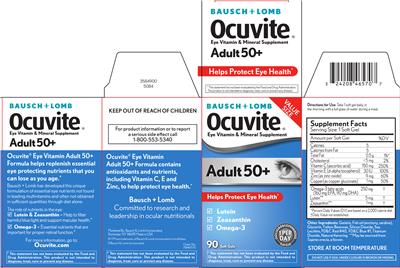
More eye health products
Members OnlyThe highest ranked for the same goal
Read more
Our articles on this subject
Graded November 5, 2026 by the Reverse Age Lab evidence engine, from human studies, real reviews and our biohacker panel. How we grade. Is this medical advice? No. Rala organizes the published evidence; go over any change with your doctor, especially if you take meds.
Privacy policyConsumer health dataTermsDo Not Sell or Share My Personal InformationCookie settings