
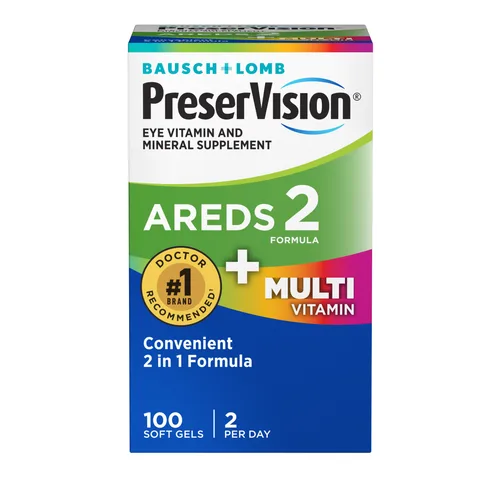
PreserVision ® AREDS 2 Formula + Multivitamin Supplement Soft Gels Review
PreserVision is presented as the first leading brand to combine the AREDS2 study formula with other essential vitamins and minerals typically found in daily multivitamins. This convenient 2-in-1 formula combines the benefits of PreserVision AREDS 2 Formula plus a daily multivitamin, making it simpler to take supplements by reducing the number of pills taken each day. PreserVision AREDS 2 Formula + Multivitamin is beta carotene-free and contains a high level of Vitamin D to support the needs of older adults. The page explains that the product was created in response to consumer feedback and data, which showed that 90 percent of participants in the AREDS2 clinical study who took an AREDS supplement also took a daily multivitamin. PreserVision is described as the #1 doctor-recommended eye vitamin brand, based on two major clinical studies known as AREDS and AREDS2. The page notes that the National Eye Institute recommends people with moderate to advanced age-related macular degeneration take a supplement with a specific combination of antioxidants and zinc based on the AREDS2 study. The product listing states that PreserVision AREDS 2 + Multivitamins contain lutein, zeaxanthin, zinc, copper, vitamin C, and vitamin E to match the nutrient formula recommended by the National Eye Institute based on the Age Related Eye Disease Study 2, which helps reduce the risk of moderate to advanced AMD progression in adults aged 50 and over, while added multivitamins support overall wellness. The page describes PreserVision as based on 20 years of clinical studies conducted by the NEI and calls it the most studied eye vitamin brand based on AREDS and AREDS2 clinical studies. The suggested use is to take 2 soft gels daily with food, 1 in the morning and 1 in the evening. The page also says this supplement for adults provides essential vitamins with high-quality, clinically proven ingredients. The product is sold by Bausch + Lomb Eye Care, described as eye experts since 1853, offering trusted products from eye vitamins and supplements to lubricant eye drops and lens care. A wheel of ingredients image is provided for the AREDS 2 formula. The offer shows a price of $30.99 for a one-time purchase, or $29.49 with subscription, with delivery options every 50, 60, or 100 days, and a note that a SightMatters coupon code can save more on subscription orders. The listing is for the 100 count soft gels format.
We don’t sell supplements. We help you make decisions and get the best price.
Lowest prices
We hold no current store prices for it yet: check the store.
- AmazonPrice at AmazonCheck price at Amazon (opens in a new tab)
Also at: Walgreens · Costco · PreserVision. Some links earn us a commission; price comes first, and a commission only decides the order of prices within 2%. As an Amazon Associate we earn from qualifying purchases.
Study, Trial or Testing Result Summary
Members Only331 human studies · 170 improved
10 of these 331 human studies gave the ingredient by drip, injection or inhaler, not by mouth.
This is an eye formula for people with macular degeneration, the age-related loss of central vision, with a multivitamin added. Zeaxanthin and lutein are near the studied amounts. Reviews of many trials found they raise protective pigment in the eye and improve sharpness and contrast of vision [1][2][3]. One review ranked them second for sharper vision in macular degeneration [4]. In a large five-year trial, adding them did not clearly slow progression in the main analysis [5], but later analyses and a ten-year follow-up suggested about 10 percent lower risk of advanced disease [6][7]. Zinc, copper and vitamin C are at full studied amounts. Combined with antioxidants, they slowed progression to advanced macular degeneration and reduced vision loss [8][9][10]. Vitamin C alone did not prevent the disease [11]. Vitamin E alone did not protect vision and may slightly raise the risk of late disease [11]. Vitamin D, the B vitamins, magnesium and selenium are well below the doses studied, so their study results do not apply here. For example, B vitamins cut macular degeneration only at much higher doses [12]. Animal and cell studies are never counted.
See all 331 studies →Hide the studies
- Across seven studies of about 455,000 eye injections, chlorhexidine and povidone-iodine antiseptic gave similar rates of eye infection and similar vision outcomes, though chlorhexidine caused less pain and less corneal surface damage.Chlorhexidine Versus Povidone-Iodine for Intravitreal Injection Antisepsis: A Systematic Review and Meta-Analysis.
- In four studies covering 453,340 eyes, povidone-iodine and chlorhexidine showed no significant difference in eye infection rates or change in visual acuity, and povidone-iodine remains the standard.Chlorhexidine Compared with Povidone-Iodine in Intravitreal Injection: A Systematic Review and Meta-Analysis.
- Across 13 trials with 85,321 people, vitamin E was linked to lower risk of late macular degeneration than multivitamins, but zinc and lutein/zeaxanthin ranked best for improving vision, not vitamin E.Efficacy of different nutrients in age-related macular degeneration: A systematic review and network meta-analysis.
- In 30 trials of 79,198 newborns, eye prophylaxis including povidone-iodine probably reduced eye infections of any cause at one month, but no trial reported blindness or vision outcomes and no single agent was clearly best.Interventions for preventing ophthalmia neonatorum.
- In five trials with 76,756 people, vitamin C taken for about 8 years in one trial of 14,236 men did not prevent age-related macular degeneration compared with placebo.Antioxidant vitamin and mineral supplements for preventing age-related macular degeneration.
- Across 18 observational studies of 75,294 people, blood vitamin D levels showed no clear link to age-related macular degeneration, with only a borderline trend for late disease at low levels.Serum vitamin D and age-related macular degeneration: Systematic review and meta-analysis.
- In four trials with 62,520 people, vitamin E or beta-carotene supplements did not lower or raise the risk of developing age-related macular degeneration.Antioxidant vitamin and mineral supplements for preventing age-related macular degeneration.
- In three trials with 23,099 people, vitamin E and beta-carotene supplements did not prevent or delay macular degeneration.Antioxidant vitamin and mineral supplements for preventing age-related macular degeneration.
- In 13 trials with 6,150 people with macular degeneration, the large AREDS trial found antioxidants plus zinc slowed progression to advanced disease over 6.3 years and reduced vision loss, while smaller short trials showed no effect.Antioxidant vitamin and mineral supplements for slowing the progression of age-related macular degeneration.
- Across 20 randomized trials of 938 people with age-related macular degeneration and 826 healthy people, lutein, zeaxanthin and meso-zeaxanthin supplements raised the density of protective pigment in the macula more than placebo.Lutein, Zeaxanthin and Meso-zeaxanthin Supplementation Associated with Macular Pigment Optical Density.
- Pooling 10 case-control studies (784 people with retinal vein blockage and 677 controls), blood folate levels were lower in those with the blockage, but this does not test whether taking folate helps.Vitamin B12 and Folate as Risk Factors for Retinal Vein Occlusion: A Meta-Analysis.
- In 8 randomized trials with 1,176 macular degeneration patients, lutein and zeaxanthin improved visual acuity and contrast sensitivity compared with placebo, with larger benefit at higher doses.Lutein and zeaxanthin supplementation and association with visual function in age-related macular degeneration.
- In 5 trials with 666 preterm infants, lutein and zeaxanthin probably reduced severe retinopathy of prematurity (stage 3 and above) but had little or no effect on retinopathy of any stage.Lutein and zeaxanthin for reducing morbidity and mortality in preterm infants.
- In 629 keratoconus patients across 14 studies, the two riboflavin cross-linking methods did not differ significantly in corneal flattening or vision, though both halted progression and the iontophoresis method had fewer side effects.Comparison of epithelium-off versus iontophoresis-assisted transepithelial corneal collagen cross-linking in keratoconus…
- In 578 people with progressive keratoconus across 13 trials, no clear difference in corneal curvature or visual acuity was found between riboflavin cross-linking with the surface layer kept or removed, with very low to low certainty evidence.Transepithelial versus epithelium-off corneal crosslinking for progressive keratoconus.
- Across 8 studies with 439 people with dry eye, vitamin D supplements improved tear production, tear stability, eyelid redness and eye symptom scores.The efficacy of vitamin D supplementation in dry eye disease: A systematic review and meta-analysis.
- Pooling 3 randomized trials of 406 preterm babies, oral lutein and zeaxanthin did not reduce the rate of retinopathy of prematurity compared with placebo.Lutein supplementation and retinopathy of prematurity: a meta-analysis.
- In 3 small case-control studies (152 people with macular degeneration, 98 controls), folic acid levels were lower only in the wet type, while homocysteine was higher and vitamin B12 lower in those with the disease.Homocysteine and the risk of age-related macular degeneration: a systematic review and meta-analysis.
- In eight trials, mostly the large AREDS trial, antioxidants plus zinc reduced progression to advanced macular degeneration, while the other small trials gave inconsistent results.Antioxidant vitamin and mineral supplements for slowing the progression of age-related macular degeneration.
- In 49 studies of keratoconus and corneal ectasia, riboflavin and ultraviolet A cross-linking significantly improved vision, corneal shape, refraction and thickness at 12 months, though most evidence was very low quality.Epithelium-off photochemical corneal collagen cross-linkage using riboflavin and ultraviolet a for keratoconus and kerat…
- In a meta-analysis of keratoconus studies, pulsed riboflavin cross-linking improved corrected vision and reduced corneal steepness at 12 months versus baseline, with results similar to continuous cross-linking.Pulsed corneal crosslinking in the treatment of Keratoconus: a systematic review and meta-analysis.
- Across 14 trials in keratoconus, conventional cross-linking flattened the cornea more than accelerated cross-linking, but there were no differences in visual acuity between the two.Accelerated versus conventional corneal collagen cross-linking for keratoconus: A meta-analysis of randomized controlled…
- In 12 studies (1,252 eyes) of nearsighted patients, adding riboflavin cross-linking to laser eye surgery led to less loss of vision within one year than laser surgery alone.Corneal stability comparison between prophylactic cross-linking with laser refractive surgery technique versus laser ref…
- Pooling five case-control studies, people with glaucoma were less likely to have high daily dietary niacin intake than people without glaucoma (odds ratio 0.66 and 0.63 by two definitions), but this is an association, not proof of benefit.Systematic Review and Meta-Analysis on the Association Between Daily Niacin Intake and Glaucoma.
- Pooling five studies of vitamins including high-dose biotin in people with optic neuritis, there was no significant change in retinal nerve fiber thickness or visual acuity, though some single studies of other vitamins showed benefits.Vitamin supplementation in the treatment of optic neuritis: A systematic review and meta-analysis.
- In eight weak studies, povidone-iodine lowered newborn chlamydial eye infection risk compared with silver nitrate, but data on gonorrhea eye infection prevention were not available.A meta-analysis of the efficacy of ocular prophylactic agents used for the prevention of gonococcal and chlamydial ophth…
- Across 9 randomized trials covering 920 eyes (855 with age-related macular degeneration), lutein at 10 or 20 mg a day increased macular pigment density, visual acuity and contrast sensitivity, with larger effects at higher doses and longer treatment.Effects of lutein supplementation in age-related macular degeneration.
- In 26 trials with 11,952 people with macular degeneration, antioxidant vitamin and mineral supplements (the main formula included vitamin C, E, beta-carotene and zinc) probably slowed progression to late disease and reduced vision loss.Antioxidant vitamin and mineral supplements for slowing the progression of age-related macular degeneration.
- In 10 small trials of 892 people with viral pink eye, povidone-iodine drops resolved symptoms and signs more often in the first week than artificial tears, though the evidence was low certainty.Topical pharmacologic interventions versus placebo for epidemic keratoconjunctivitis.
- A review of 177 pregnant women with severe vomiting who developed a serious brain condition from low thiamine found double vision in 37.4% and blurred vision in 27.4% before it began, and treatment with too little thiamine was common.Wernicke's encephalopathy in hyperemesis gravidarum: A systematic review.
- In 21 articles covering 145 eyes with infectious corneal infections, riboflavin cross-linking blocked corneal melting in about 84% of cases, though 27 patients still needed a corneal transplant.Current and Future Applications of Photoactivated Chromophore for Keratitis-Corneal Collagen Cross-Linking (PACK-CXL): A…
- This review of observational studies found suggestive evidence that dietary vitamin C intake is linked to cataract risk, but it did not test supplements in trials.Smoking, dietary factors and major age-related eye disorders: an umbrella review of systematic reviews and meta-analyses…
- This review of 162 studies found vitamin D linked to myopia, macular degeneration, diabetic eye disease and dry eye, but evidence for glaucoma, thyroid eye disease and retinoblastoma was limited.Vitamin D and Ocular Diseases: A Systematic Review.
- One trial in Finnish male smokers found no link between vitamin E (alpha-tocopherol) and macular degeneration.Antioxidant vitamin and mineral supplementation for preventing age-related macular degeneration.
- This review reports that diet studies link vitamins E and C, minerals and carotenoids to lower macular degeneration, but gives no trial results for vitamin E alone.[NUTRITIONAL COMPONENTS AND MACULAR DEGENERATION AGE-RELATED].
- A review of 13 studies of vitamins A, B1, B12 and D for dry eye found the evidence limited because the studies were not well controlled, were small, were short and used varied doses, and none were high quality.The Efficacy of Oral Vitamin Supplementation in Dry Eye Disease: A Systematic Review.
- A review of studies on riboflavin and ultraviolet light treatment for corneal swelling and infection found temporary improvement in corneal thickness, vision and clarity, and halted corneal melting, though long-term results and safety need more study.Corneal collagen cross-linking for nonectatic disorders: a systematic review.
- This review describes riboflavin and ultraviolet A cross-linking as an established treatment to halt progression of keratoconus and other corneal thinning disorders, without giving numbers in the abstract.Corneal collagen crosslinking: a systematic review.
- Across three small trials (219 eyes) of adults with keratoconus, riboflavin with ultraviolet light treatment gave a flatter cornea and about 2 lines better vision at 12 months than no treatment, but the evidence was very low quality.Corneal collagen cross-linking for treating keratoconus.
- A review of studies on nutrition and macular degeneration found higher dietary intake of niacin and other nutrients was linked to lower risk of progression from early to late disease, though this is from intake rather than niacin supplements alone.What did we learn in 35 years of research on nutrition and supplements for age-related macular degeneration: a systemati…
- A review of eight small human glaucoma studies found nicotinamide improved inner retinal electrical function in the short term, but visual field results were inconsistent and evidence was not enough to support routine use.Nicotinamide Supplementation in Glaucoma: A Systematic Review of Human Studies.
- A review of case reports and cohort studies of pregnant and postpartum women after weight-loss surgery found that vision problems in newborns were linked to vitamin A deficiency, not folate (which was linked to neural tube defects), and the evidence overall was weak and inconclusive.Maternal micronutrient deficiencies and related adverse neonatal outcomes after bariatric surgery: a systematic review.
- Across 28 studies of thyroid cancer patients, radioactive iodine caused eye problems such as tear duct blockage and inflammation, with higher risk at doses above 100 to 150 mCi and age over 45.Eye-Related Adverse Events After I-131 Radioiodine Therapy: A Systematic Review of the Current Literature.
- A review found that the large AREDS trial of vitamins C, E, beta-carotene and zinc with copper reduced progression to advanced macular degeneration in people with intermediate disease or advanced disease in one eye.Lifestyle modification, nutritional and vitamins supplements for age-related macular degeneration.
- A review of 24 meta-analyses found that higher dietary lutein intake was linked to lower risk of age-related macular degeneration and age-related cataracts, among other outcomes.Green leafy vegetable and lutein intake and multiple health outcomes.
- A review of 20 records on glaucoma found that higher carotenoid intake showed a protective trend and higher macular pigment was largely linked to better visual performance in glaucoma eyes.Carotenoids in the Management of Glaucoma: A Systematic Review of the Evidence.
- A review of 18 studies on diabetic retinopathy found early trials where carotenoid supplements raised blood and macular pigment levels alongside better visual performance.A Systematic Review of Carotenoids in the Management of Diabetic Retinopathy.
- In 13 studies of children up to age 12, macular pigment density was more strongly linked to thinking skills than to vision, and the link with visual function remained unclear."Analysis of Macular Pigment Optical Density in Childhood: A Systematic Review".
- In 9 randomized trials on myopia, carotenoids including lutein modestly improved macular pigment and reduced visual fatigue, but there was no consistent reduction in myopia progression.Nutritional Supplementation for Myopia Prevention and Control: A Systematic Review of Randomized Controlled Trials.
- In 39,876 healthy women given 600 IU natural vitamin E every other day for about 9.7 years, cataract rates were no different from placebo (1159 vs 1217 cases).Vitamin E and age-related cataract in a randomized trial of women.
- In nearly 40,000 healthy women aged 45 or older, 600 IU of natural vitamin E every other day for 10 years did not change the risk of age-related macular degeneration compared with placebo (117 cases versus 128).Vitamin E and age-related macular degeneration in a randomized trial of women.
- In Linxian, China, a multivitamin and mineral supplement taken for 6 years cut nuclear cataract prevalence by 43% in people with esophageal dysplasia, while the selenium-containing combination was tested mainly for cancer and mortality outcomes.[Preliminary report on the results of nutrition prevention trials of cancer and other common diseases among residents in…
- In 25,871 older adults taking 2000 IU of vitamin D3 daily for a median of about 5 years, vitamin D did not change the risk of developing or worsening age-related macular degeneration compared with placebo.Effect of Vitamin D and ω-3 Fatty Acid Supplementation on Risk of Age-Related Macular Degeneration: An Ancillary Study o…
- In 19,925 Australian adults aged 60 to 84 taking 60,000 IU of vitamin D3 once a month for up to 5 years, the rate of cataract surgery was the same as with placebo.Vitamin D Supplementation and the Incidence of Cataract Surgery in Older Australian Adults.
- In 11,545 male physicians aged 50 or older, 400 IU of vitamin E every other day for 8 years did not change the risk of cataract compared with placebo (579 versus 595 cases).Age-related cataract in a randomized trial of vitamins E and C in men.
- In 11,267 men aged 50 or older, 200 mcg of selenium daily for about 5.6 years did not reduce age-related cataract compared with no selenium (185 vs 204 cases).Age-related cataract in men in the selenium and vitamin e cancer prevention trial eye endpoints study: a randomized clin…
- In two trials of 5,390 adults in rural China over 5 to 6 years, a multivitamin lowered nuclear cataract in older people and riboflavin/niacin did too, but the abstract reports no benefit for the ascorbic acid/molybdenum group.The Linxian cataract studies. Two nutrition intervention trials.
- In 5205 women at high cardiovascular risk, taking 50 mg of vitamin B6 daily with folic acid and B12 for about 7.3 years cut new age-related macular degeneration by about a third compared with placebo (55 vs 82 cases).Folic acid, pyridoxine, and cyanocobalamin combination treatment and age-related macular degeneration in women: the Wome…
- In 4629 older adults followed about 6.3 years, vitamin C, vitamin E and beta carotene had no effect on cataract or visual acuity loss; zinc with copper was a separate randomization.A randomized, placebo-controlled, clinical trial of high-dose supplementation with vitamins C and E and beta carotene fo…
- In 4203 older adults at risk of advanced macular degeneration, adding 10 mg lutein and 2 mg zeaxanthin daily for a median of 5 years did not significantly reduce progression to advanced disease compared with placebo, though it may be a safer substitute for beta carotene.Lutein + zeaxanthin and omega-3 fatty acids for age-related macular degeneration: the Age-Related Eye Disease Study 2 (A…
- In 4203 older adults at risk of advanced macular degeneration, adding 10 mg lutein and 2 mg zeaxanthin daily to the standard eye vitamin formula modestly lowered the risk of advanced disease (about 10% lower), and the risk was about 18% lower than with beta carotene, in follow-up analyses.Secondary analyses of the effects of lutein/zeaxanthin on age-related macular degeneration progression: AREDS2 report No…
- In 4203 older adults at risk of macular degeneration, daily lutein 10 mg plus zeaxanthin 2 mg for about 4.7 years did not significantly change cataract surgery rates or vision loss, though people with the lowest dietary intake had fewer cataract surgeries.Lutein/zeaxanthin for the treatment of age-related cataract: AREDS2 randomized trial report no. 4.
- In 3925 women without cataract at the start, taking 50 mg of vitamin B6 daily with folic acid and B12 for about 7.3 years did not change cataract rates compared with placebo, and cataract surgery was more common in the vitamin group (155 vs 120).Folic Acid, Vitamin B6, and Vitamin B12 in Combination and Age-Related Cataract in a Randomized Trial of Women.
- In 3,640 people aged 55 to 80 followed 6.3 years, antioxidants including 500 mg vitamin C plus zinc cut the odds of advanced macular degeneration and vision loss, while antioxidants alone did not reach statistical significance.A randomized, placebo-controlled, clinical trial of high-dose supplementation with vitamins C and E, beta carotene, and …
- In 2004 newborns in Mexico, povidone-iodine eye drops were less effective than chloramphenicol against bacterial eye infection from day 3 to 15 and nearly doubled the risk of chlamydial eye infection.Randomised equivalency trial comparing 2.5% povidone-iodine eye drops and ophthalmic chloramphenicol for preventing neon…
- In an open-label trial of 1,922 people with keratoconus treated with an epithelium-on riboflavin system, vision improved significantly at 6 and 12 months with few side effects.EpiSmart Crosslinking for Keratoconus: A Phase 2 Study.
- In a further analysis of trial data from 1684 white older adults followed for about 5 years, common risk genes for macular degeneration did not change how people responded to lutein and zeaxanthin supplements.No CFH or ARMS2 Interaction with Omega-3 Fatty Acids, Low versus High Zinc, or β-Carotene versus Lutein and Zeaxanthin o…
- In people with geographic atrophy, antioxidants including 500 mg vitamin C slowed the spread toward the center of the macula (50.7 vs 72.9 micrometres per year) but did not change the overall area of atrophy.Oral Antioxidant and Lutein/Zeaxanthin Supplements Slow Geographic Atrophy Progression to the Fovea in Age-Related Macul…
- In 1193 healthy adults aged 55 to 80, 500 IU of vitamin E daily for four years did not prevent or slow early or late age-related macular degeneration compared with placebo.Vitamin E supplementation and macular degeneration: randomised controlled trial.
- Taking 500 IU of vitamin E daily for 4 years did not reduce the development or progression of age-related cataracts compared with placebo in people aged 55 to 80.Vitamin E supplementation and cataract: randomized controlled trial.
- In 1072 smoking men aged 50 to 69 taking 50 mg per day of alpha-tocopherol for a median of 6.6 years, retinal arteriole vascular changes were no less common than with placebo.Retinal vascular changes following supplementation with alpha-tocopherol or beta-carotene.
- In a retinitis pigmentosa trial from 1984 to 1992, vitamin E supplementation was linked to faster disease progression, so it should still be avoided.Natural history of retinitis pigmentosa based on genotype, vitamin A/E supplementation, and an electroretinogram biomark…
- In 601 adults with retinitis pigmentosa followed for 4 to 6 years, 400 IU per day of vitamin E was linked to faster decline in cone electroretinogram amplitude, with patients 42% more likely to have a 50% or greater drop than those not taking it.A randomized trial of vitamin A and vitamin E supplementation for retinitis pigmentosa.
- In 545 premature infants under 1501 grams, high vitamin E serum levels given to prevent eye damage did not reduce the rate of severe retinal scarring or other vision problems at one to two years compared with placebo.Vitamin E and retinopathy of prematurity. Follow-up at one year.
- In a randomized trial of 510 people with keratoconus or corneal ectasia, riboflavin crosslinking with 2-minute or 5-minute dosing both improved best corrected vision by about 3.5 letters over 6 months.Prospective Randomized Trial of Corneal Cross-linking Riboflavin Dosing Frequencies for Treatment of Keratoconus and Cor…
- In young adults, one month of high-dose vitamin B6 compared with placebo increased visual surround suppression of contrast detection (307 tested), but did not reliably change binocular rivalry or touch sensitivity.High-dose Vitamin B6 supplementation reduces anxiety and strengthens visual surround suppression.
- In 459 children with infectious pink eye, 1.25% povidone-iodine eye drops four times daily for up to 2 weeks cured about as many as a med eye drop, with no significant difference in days to cure.A controlled trial of povidone-iodine to treat infectious conjunctivitis in children.
- In 433 adults with early macular degeneration, a supplement containing copper with lutein, zeaxanthin, vitamins and zinc gave about 4.8 letters better visual acuity than placebo after 36 months.Secondary outcomes in a clinical trial of carotenoids with coantioxidants versus placebo in early age-related macular de…
- In a trial of 303 people with eye fatigue given a lutein and plant extract blend for 45 days, a machine learning model predicted the best dose for each person, with 39 of 58 test subjects predicted to benefit most from the highest dose and 2 not expected to benefit.A Machine Learning Based Dose Prediction of Lutein Supplements for Individuals With Eye Fatigue.
- In 296 people with type 2 diabetes and retinopathy, 1000 mg a day of etofibrate for 12 months improved eye damage in 46% versus 32% on placebo.[Efficacy and safety of etofibrate in patients with non-proliferative diabetic retinopathy].
- In a placebo-controlled trial of 287 premature infants, IV then oral tocopherol did not prevent retinopathy of prematurity, increased retinal hemorrhage, and in infants under 1 kg increased severe brain bleeding.Tocopherol efficacy and safety for preventing retinopathy of prematurity: a randomized, controlled, double-masked trial.
- Premature infants given early injected vitamin E (tocopherol) had more retinal bleeding (14.4%) than placebo controls (6.6%), and the bleeding was linked to higher blood tocopherol levels.Retinal hemorrhage in retinopathy of prematurity associated with tocopherol treatment.
- In 225 non-smoking adults with retinitis pigmentosa taking vitamin A, 12 mg of lutein daily for 4 years did not change the main visual field measure but slowed loss of side vision on one secondary test.Clinical trial of lutein in patients with retinitis pigmentosa receiving vitamin A.
- In 205 people with worsening keratoconus, riboflavin with ultraviolet light treatment flattened the cornea by 1.6 diopters and improved vision at 1 year, while the sham group using riboflavin alone kept getting worse.United States Multicenter Clinical Trial of Corneal Collagen Crosslinking for Keratoconus Treatment.
- In 204 cataract surgery patients, an iodine disinfectant applied before surgery significantly reduced bacterial growth on the eye compared with standard disinfection, with no toxic or allergic reactions.The effect of polyvinylpyrrolidone-iodine as an disinfectant in eye surgery.
- In 199 people with dry eye, taking vitamin B1 and mecobalamin for 3 months along with artificial tears improved corneal nerves, dryness, light sensitivity and blurred vision more than artificial tears alone.The Utility of Oral Vitamin B1 and Mecobalamin to Improve Corneal Nerves in Dry Eye Disease: An In Vivo Confocal Microsc…
- In a randomized sham-controlled trial of 179 people with corneal ectasia after laser eye surgery, riboflavin with UV light crosslinking improved best corrected vision over 1 year compared with the sham group.U.S. Multicenter Clinical Trial of Corneal Collagen Crosslinking for Treatment of Corneal Ectasia after Refractive Surge…
- In 172 people with non-wet age-related macular degeneration, taking 10 mg lutein with 1 mg zeaxanthin and omega-3 fatty acids daily for 12 months increased macular pigment and improved best-corrected visual acuity compared with placebo.Long term effects of lutein, zeaxanthin and omega-3-LCPUFAs supplementation on optical density of macular pigment in AMD…
- In very low-birth-weight premature babies, all of whom got 100 mg/kg of vitamin E by mouth daily, extra vitamin E injections did not reduce severe retrolental fibroplasia (an eye disease of prematurity) compared with placebo injections.Retrolental fibroplasia and vitamin E in the preterm infant--comparison of oral versus intramuscular:oral administration…
- In 159 people with mild Graves' eye disease, 200 mcg of selenium daily for 6 months improved quality of life, reduced eye involvement and slowed disease progression compared with placebo.Selenium and the course of mild Graves' orbitopathy.
- In 150 healthy adults aged 65 to 70, 13.7 grams of goji berry drink daily for 90 days raised plasma zeaxanthin by 26% and total antioxidant capacity by 57%. The placebo group developed macular thinning and drusen, while the goji group stayed stable. The dose of zeaxanthin itself was not reported.Goji berry effects on macular characteristics and plasma antioxidant levels.
- Over 12 months, people with non-wet age-related macular degeneration taking a daily capsule with 1 mg zeaxanthin and 10 mg lutein (or twice that dose) had higher blood levels of these carotenoids and higher macular pigment than placebo. The higher dose also improved blood fat profile.Macular xanthophylls and ω-3 long-chain polyunsaturated fatty acids in age-related macular degeneration: a randomized tr…
- In a randomized trial of 144 eyes with progressive corneal thinning, both the surgery-free-surface and standard riboflavin methods gave similar best-corrected vision at 24 months, though the standard method flattened the cornea more.Epithelium-off versus transepithelial corneal collagen crosslinking for progressive corneal ectasia: a randomised and co…
- In 144 adults with viral pink eye, povidone-iodine with dexamethasone drops four times daily for 5 days gave clinical resolution by day 6 in 31.3% versus 10.9% with placebo drops.Randomized, Controlled, Phase 2 Trial of Povidone-Iodine/Dexamethasone Ophthalmic Suspension for Treatment of Adenoviral…
- In 140 people with macular degeneration, an app-based nutrition program for 3 months did not raise folic acid intake or change best-corrected visual acuity versus routine care.Effect of a mobile application-based whole-course nutrition management intervention in patients with age-related macular…
- In 120 healthy drivers, 20 mg lutein daily for 1 year raised macular pigment and serum lutein and improved contrast and glare sensitivity, especially at night, compared with placebo.Lutein supplementation improves visual performance in Chinese drivers: 1-year randomized, double-blind, placebo-controll…
- In 120 people with a parent who had neovascular age-related macular degeneration, 6 months of a lutein, zeaxanthin and omega-3 supplement did not change macular pigment compared with placebo, even though blood levels of lutein and zeaxanthin rose.Effect of Dietary Supplementation With Lutein, Zeaxanthin, and ω-3 on Macular Pigment: A Randomized Clinical Trial.
- In 114 preterm infants born at 32 weeks or earlier, daily lutein and zeaxanthin until discharge did not reduce the occurrence of retinopathy of prematurity compared with placebo.Lutein and zeaxanthin supplementation in preterm infants to prevent retinopathy of prematurity: a randomized controlled …
- In 110 adults, 20 days of daily 6 mg lutein, 1 mg zeaxanthin and 100 mg elderberry extract significantly reduced dry eye symptom scores compared with the start of the study.Effect of Dietary Supplementation with Lutein, Zeaxanthin, and Elderberries on Dry Eye Disease (DED) and Immunity: A Ran…
- In 109 adults with one wet macular degeneration eye, adding lutein, zeaxanthin, DHA, resveratrol and hydroxytyrosol to the standard AREDS formula for 12 months did not change visual acuity compared with the standard formula alone, though it raised blood lutein and zeaxanthin and lowered some inflammatory markers.A Randomized Study of Nutritional Supplementation in Patients with Unilateral Wet Age-Related Macular Degeneration.
- In 108 Chinese adults with early age-related macular degeneration, 10 mg zeaxanthin plus 10 mg lutein daily for 48 weeks raised blood levels and macular pigment compared with placebo.Serum and macular responses to multiple xanthophyll supplements in patients with early age-related macular degeneration.
- In 106 breastfeeding mothers and infants, 225 micrograms of iodine daily for 26 weeks as a capsule or iodized salt lowered maternal goiter and thyroid stimulating hormone, while infant visual memory of a familiar face was 26% with capsules and 51% with iodized salt.Iodine supplementation of lactating women and assessment of infant visual information processing and maternal and infant…
- In people with dry eye awaiting cataract surgery, hyaluronic acid and vitamin B12 eye drops reduced eye surface oxidative stress and symptoms and improved tear tests compared with no treatment.Evaluation of oxidative stress levels in the conjunctival epithelium of patients with or without dry eye, and dry eye pa…
- In 100 people with dry eye and low vitamin D, 8 weeks of oral vitamin D added to artificial tears improved tear production, tear stability and tear concentration more than artificial tears alone.Effect of oral vitamin D supplementation on dry eye disease patients with vitamin D deficiency.
- In 100 people with paralytic strabismus, oral Methycobal and vitamin B1 was effective in 85.7% but did worse than eye acupuncture, which worked in 94.8%.[Clinical observation on acupuncture for treatment of paralytic strabismus].
- In 100 eyes with progressive keratoconus, riboflavin and UVA corneal crosslinking improved uncorrected and corrected vision over 3 years, while untreated control eyes kept worsening.A randomized, controlled trial of corneal collagen cross-linking in progressive keratoconus: three-year results.
- In 100 patients with chronic central serous chorioretinopathy, an antioxidant tablet containing lutein for 6 months improved best-corrected vision and reduced fluid under the retina by 28.6%, while the placebo group showed no meaningful change.A Multicenter Randomized Controlled Study of Antioxidant Supplementation with Lutein for Chronic Central Serous Choriore…
- In 93 adults with multiple sclerosis and long-term vision loss, 300 mg of biotin daily for 6 months did not improve visual acuity significantly more than placebo, though a non-significant trend favored biotin in those with slowly progressive optic nerve damage.MD1003 (High-Dose Pharmaceutical-Grade Biotin) for the Treatment of Chronic Visual Loss Related to Optic Neuritis in Mul…
- In 92 healthy young adults, four months of zeaxanthin (20 mg daily) or a mixed zeaxanthin and lutein product improved visual processing speed compared with placebo, raising flicker fusion thresholds about 12% and shortening visual reaction time about 10%.A double-blind, placebo-controlled study on the effects of lutein and zeaxanthin on neural processing speed and efficien…
- In 90 people with dry eye and low vitamin D, adding a 2000 IU vitamin D3 mouth spray to eye drops for 90 days improved tear production and tear stability more than eye drops alone.A prospective study to assess the role of vitamin D individually and in combination with cyclosporine in the treatment o…
- In 90 people with dry eye after laser eye surgery, 2000 IU of vitamin D3 daily for 12 weeks gave lower dry eye symptom scores and better tear stability and tear production than no vitamin D, with benefits seen up to 6 months.Oral vitamin D3 supplementation for femtosecond LASIK-associated dry eye vitamin D for LASIK dry eye syndrome.
- In a small trial of people with macular degeneration, the medication group given oral vitamin C and vitamin E plus an injection had a 60% effective rate, lower than the 88.3% seen with acupuncture; vitamin E was not tested alone.[Observation on therapeutic effect of age-related macular degeneration treated with acupuncture].
- This 18-month trial of a multivitamin capsule in dry macular degeneration reported only baseline data, showing people with the condition ate less vitamin B6 than the national average; it reports no vitamin B6 treatment outcome.Multicenter ophthalmic and nutritional age-related macular degeneration study--part 1: design, subjects and procedures. …
- In 83 people with diabetic macular swelling receiving eye injections, correcting low vitamin D with supplements led to better vision and less macular thickness at 6 months than in those with low vitamin D who did not take supplements.The effect of vitamin D supplementation on the outcome of treatment with bevacizumab in diabetic macular edema: a random…
- In 78 healthy people with low vitamin D, 20,000 IU of vitamin D3 twice a week for 6 months did not lower eye pressure more than placebo.Vitamin D and intraocular pressure--results from a case-control and an intervention study.
- In 15 reflux patients treated for 1 month with magnesium alginate eye drops and tablets, tear stability and eyelid gland scores returned to normal and tear pepsin fell.Ocular Surface Disease as Extraesophageal Gastroesophageal Reflux Disease Manifestation: A Specific Therapeutic Strategy…
- In 75 obese adults (49 with metabolic syndrome), 5 mg of folic acid daily for 4 weeks reduced the nitric oxide synthase dependence of retinal blood vessel tone compared with placebo in those with metabolic syndrome, alongside lower oxidative stress.Folic acid treatment normalizes NOS-dependence of vascular tone in the metabolic syndrome.
- In 72 adults with early macular degeneration, 10 mg of lutein daily for a year raised macular pigment, and visual acuity held steady or improved in some patients compared with placebo, which declined.Lutein supplementation over a one-year period in early AMD might have a mild beneficial effect on visual acuity: the CLE…
- Over 1.5 years, twice-daily antioxidant capsules containing vitamin E helped keep distance vision stable in people with dry macular degeneration but did not improve the disease and increased cortical lens clouding in one eye.Multicenter ophthalmic and nutritional age-related macular degeneration study--part 2: antioxidant intervention and conc…
- In 70 people with early macular degeneration, 10 mg daily lutein for 1 year reduced a blood marker of complement system activation (sC5b-9), while placebo caused it to rise; no vision outcome was reported.Lutein supplementation leads to decreased soluble complement membrane attack complex sC5b-9 plasma levels.
- In 70 adults who used screens more than 6 hours a day, 6 months of lutein with zeaxanthin improved tear tests and eye recovery from light exposure compared with placebo, but self-reported eye strain and sleep did not differ.The effects of lutein/ zeaxanthin (Lute-gen®) on eye health, eye strain, sleep quality, and attention in high electronic…
- In 69 young healthy adults, a lutein and zeaxanthin supplement for four months raised macular pigment and speed of visual processing, while placebo produced no change.A randomized placebo-controlled study on the effects of lutein and zeaxanthin on visual processing speed in young health…
- In 67 adults with early age-related macular degeneration, three carotenoid supplements raised macular pigment over 3 years, and contrast sensitivity improved, with the meso-zeaxanthin blends giving the broadest gains.Sustained supplementation and monitored response with differing carotenoid formulations in early age-related macular deg…
- In 63 people with and without age-related macular degeneration, 2 mg of zeaxanthin daily with varying lutein and meso-zeaxanthin raised macular pigment at all measured spots over 8 weeks. Response was similar in both groups, except one formulation gave a larger gain at the outer edge in the eye disease group.Macular response to supplementation with differing xanthophyll formulations in subjects with and without age-related mac…
- In 31 adults with Alzheimer's disease and 31 age-matched controls, a macular carotenoid supplement with 10 mg lutein taken for 6 months raised macular pigment and improved contrast sensitivity, but did not change cognitive test scores.The impact of supplemental macular carotenoids in Alzheimer's disease: a randomized clinical trial.
- In 61 people with eye floaters, a daily formula containing 40 mg vitamin C plus other nutrients taken for 6 months reduced visual discomfort and floater size compared with placebo, which showed no significant change.Dietary Intervention With a Targeted Micronutrient Formulation Reduces the Visual Discomfort Associated With Vitreous De…
- In a randomized trial of 61 people with progressive keratoconus, transepithelial crosslinking gave a more favorable vision trend than epithelium-off crosslinking over 1 year, but 23% of transepithelial-treated eyes still progressed.Transepithelial versus epithelium-off corneal cross-linking for the treatment of progressive keratoconus: a randomized c…
- In 60 adults having sinus surgery, intravenous magnesium sulphate gave a worse surgical field view and more prolonged surgeries than dexmedetomidine, so the authors preferred dexmedetomidine.[Comparison of the effects of magnesium sulphate and dexmedetomidine on surgical vision quality in endoscopic sinus surg…
- In 60 children aged 5 to 12, gummies with 10 mg lutein and 2 mg zeaxanthin daily for 180 days improved focus, episodic memory and visuospatial working memory compared with placebo, and reduced eye strain and fatigue.Lutein and Zeaxanthin Supplementation Improves Dynamic Visual and Cognitive Performance in Children: A Randomized, Doubl…
- In 59 patients with adenoviral keratoconjunctivitis, 20 days of povidone-iodine 0.6% eye drops four times daily shortened resolution time and reduced subepithelial corneal infiltrates (8.8% versus 44% with tear substitutes).Efficacy and tolerability of polyvinylpyrrolidone-iodine 0.6% treatment in adenoviral keratoconjunctivitis: a Prospectiv…
- In 59 healthy young adults, taking macular carotenoids for one year raised macular pigment and improved contrast sensitivity compared with placebo.Contrast Sensitivity and Lateral Inhibition Are Enhanced With Macular Carotenoid Supplementation.
- In 59 young adults, 6 months of daily macular xanthophylls at 13 mg or 27 mg raised macular pigment and improved several memory and attention scores compared with placebo.Effects of macular xanthophyll supplementation on brain-derived neurotrophic factor, pro-inflammatory cytokines, and cog…
- In 57 people with glaucoma, nicotinamide at 1.5 g then 3 g a day for 6 weeks each improved inner retinal function in 23% versus 9% on placebo in this crossover trial.Improvement in inner retinal function in glaucoma with nicotinamide (vitamin B3) supplementation: A crossover randomized…
- In 56 adults with early retinal drusen (16 took the PreserVision AREDS-2 soft gel), six months of supplementation did not significantly improve contrast sensitivity, visual acuity, dark adaptation or macular pigment, though contrast sensitivity trended upward.Visual Function and Macular Carotenoid Changes in Eyes with Retinal Drusen-An Open Label Randomized Controlled Trial to …
- In 56 people with keratoconus, a no-scrape corneal treatment using riboflavin eye drops and UVA light improved uncorrected distance vision by 0.7 lines and lowered maximum corneal curvature over 1 year, with transient surface irritation in about 21% of eyes.Transepithelial corneal crosslinking for keratoconus.
- In 54 people with high myopia over 3 months, high-dose zeaxanthin from Lycium barbarum raised macular pigment more than high-dose lutein alone, while low-dose zeaxanthin did not differ significantly from low-dose lutein.Macular pigment optical density responses to different levels of zeaxanthin in patients with high myopia.
- In 53 people with normal-tension glaucoma, nicotinamide at 1 to 2 g a day for 12 weeks improved retinal electrical responses (29% versus 19.3% on placebo) but not visual field measures.Effects of nicotinamide supplementation in normal-tension glaucoma: a crossover placebo-controlled randomised clinical t…
- In 52 people with early age-related macular degeneration, a blend with 2 mg zeaxanthin plus high-dose meso-zeaxanthin and lutein for 12 months raised macular pigment and improved contrast sensitivity at several spatial frequencies.Supplementation with three different macular carotenoid formulations in patients with early age-related macular degenera…
- In 51 people having hyperopic laser eye surgery, adding riboflavin and UVA treatment under the flap did not change long-term refractive regression or visual outcomes over 2 years compared with surgery alone.Does Adjunctive Under-flap CXL Reduce Regression for Hyperopic LASIK?
- In 50 people with senile cataracts given vitamin E or placebo for 30 days, vitamin E lowered lens oxidative damage markers and reduced the size of cortical cataract opacities compared with placebo.Protective function of alpha-tocopherol against the process of cataractogenesis in humans.
- In 50 people with progressive keratoconus, riboflavin drops plus ultraviolet light treatment for one year flattened the cornea and improved distance vision, with no change in corneal thickness or endothelial cell density.Assessment of the Predictive Ability of Theranostics for Corneal Cross-linking in Treating Keratoconus: A Randomized Cli…
- In 50 patients receiving eye injections, povidone-iodine 5% caused more pain right after instillation and more corneal surface damage than aqueous chlorhexidine 0.1%, with no difference in positive cultures or side effects.Aqueous Chlorhexidine Compared with Povidone-Iodine as Ocular Antisepsis before Intravitreal Injection: A Randomized Cli…
- In 50 smokers with dry skin, oral antioxidants including lutein lowered oxidative stress in the blood by 40%, and the lutein intake was linked to better overall vision.Protective effects of oral antioxidants on skin and eye function.
- In 49 people with progressive keratoconus, riboflavin and UVA treatment showed a trend toward better corrected vision at 12 months while untreated control eyes lost vision.A randomized controlled trial of corneal collagen cross-linking in progressive keratoconus: preliminary results.
- In 49 women aged 60 to 80 taking 12 mg of lutein daily for 4 months, macular pigment density rose at one point on the retina compared with placebo, and blood lutein levels increased.The influence of supplemental lutein and docosahexaenoic acid on serum, lipoproteins, and macular pigmentation.
- In 48 people with acute optic neuritis, thiamine 100 mg daily was the control and a med group recovered nerve signal speed faster at 4 weeks but not at 12 weeks or 12 months.The effect of oral prednisolone on visual evoked potential latencies in acute optic neuritis monitored in a prospective,…
- In a randomized trial of 48 keratoconus eyes, using hypotonic riboflavin instead of standard riboflavin-dextran reduced corneal thinning during treatment but did not change visual outcomes afterward.Intraoperative corneal thickness change and clinical outcomes after corneal collagen crosslinking: Standard crosslinking…
- In 45 people, 36 with type 1 diabetes, 1,800 IU of vitamin E a day for 4 months raised retinal blood flow in the diabetic group to the level of non-diabetic people, without changing blood sugar control.High-dose vitamin E supplementation normalizes retinal blood flow and creatinine clearance in patients with type 1 diabe…
- In a randomized trial of 44 keratoconus patients, oxygen-supplemented riboflavin treatment flattened the cornea more than the room-air version at 12 months, while the abstract does not report a visual acuity difference.The efficiency and safety of oxygen-supplemented accelerated transepithelial corneal cross-linking.
- In 44 healthy adults, a daily tablet with 1.2 mg zeaxanthin plus meso-zeaxanthin and lutein raised blood levels of lutein and zeaxanthin and increased central macular pigment over 6 months, compared with placebo. No adverse clinical changes were found.Supplementation with all three macular carotenoids: response, stability, and safety.
- In a sham-controlled randomized trial of 43 keratoconus eyes, riboflavin with UVA light improved uncorrected vision by about 0.11 logMAR at 6 months, compared with no change in the sham group.Collagen cross-linking in keratoconus in Asian eyes: visual, refractive and confocal microscopy outcomes in a prospectiv…
- In 43 people with keratoconus treated with riboflavin and UV-A light, corneal haze rose at one month, returned to baseline by one year, and did not track with vision or corneal shape changes at one year.Corneal Haze After Transepithelial Collagen Cross-linking for Keratoconus: A Scheimpflug Densitometry Analysis.
- In 43 healthy adults, a 14-day multi-ingredient supplement containing selenium nearly restored the retinal blood flow response to oxygen after an induced inflammatory challenge, compared with placebo.Antioxidative capacity of a dietary supplement on retinal hemodynamic function in a human lipopolysaccharide (LPS) model…
- In 40 people with severe infectious corneal ulcers, adding riboflavin with UV-A light to meds did not change final vision or the time to healing compared with meds alone, though the treated group had no perforations.Collagen cross-linking with photoactivated riboflavin (PACK-CXL) for the treatment of advanced infectious keratitis with…
- In 40 people with keratoconus, both conventional and accelerated riboflavin cross-linking improved distance vision and corneal steepness at two years, with no difference between the two methods.Randomized Study of Collagen Cross-Linking With Conventional Versus Accelerated UVA Irradiation Using Riboflavin With Hy…
- In 40 patients having eye surgery, a 5% povidone-iodine drop used at home for 3 days before surgery cut bacteria on the eye about as much as a med at first, but a med gave a bigger further drop just before surgery.Outpatient topical use of povidone-iodine in preparing the eye for surgery.
- In 40 healthy older adults, eating one avocado a day for six months raised macular pigment density and blood lutein, while a potato or chickpea control did not raise macular pigment, and avocado eaters also improved memory and working memory.Avocado Consumption Increases Macular Pigment Density in Older Adults: A Randomized, Controlled Trial.
- In 40 adults with early-stage age-related macular degeneration, taking 8 mg epilutein with 2 mg lutein daily for 2 months raised macular pigment density more than 10 mg lutein alone did, though the lutein-only group's macular pigment fell at the first month and was lower at the end than at the start.Epilutein for Early-Stage Age-Related Macular Degeneration: A Randomized and Prospective Study.
- In 39 Japanese patients with one-eye macular degeneration, 20 mg of lutein daily for six months raised blood lutein, and macular pigment rose significantly only in the beeswax capsule group, so the eye benefit was not fully confirmed.Effects of Lutein Supplementation in Japanese Patients with Unilateral Age-Related Macular Degeneration: The Sakai Lutei…
- In 38 people with acute optic neuritis, thiamin 100 mg daily was the control and a med group trended toward faster early recovery, but after 1 year there was no difference between groups.[Effect of prednisolone on the course of optic neuritis. Results of a double-blind study].
- In iron-deficient pregnant women in Nepal with night blindness, 6 mg riboflavin with iron daily for 6 weeks improved dark adaptation more than vitamin A alone.Supplementation with iron and riboflavin enhances dark adaptation response to vitamin A-fortified rice in iron-deficient…
- In 36 adults, a supplement with 10 mg lutein, 2 mg zeaxanthin and 10 mg meso-zeaxanthin taken for 6 months raised macular pigment and improved visual acuity and contrast sensitivity compared with placebo, while the lutein and zeaxanthin-only version did not improve these measures.The impact of macular pigment augmentation on visual performance using different carotenoid formulations.
- In 36 healthy Japanese volunteers taking one of two lutein and zeaxanthin supplements for up to 6 months, blood levels rose but macular pigment did not increase significantly on average, and responses varied between individuals.Changes in Macular Pigment Optical Density and Serum Lutein Concentration in Japanese Subjects Taking Two Different Lute…
- In 35 people with wet macular degeneration, vitamin E (200 mg a day) with omega-3 fats shortened vision recovery time after photodynamic therapy at 20 days but not at 40 or 60 days, and visual acuity did not differ between groups.[Photodynamic therapy for age related macular degeneration with and without antioxidants].
- In a randomized trial of 34 pediatric patients, both conventional and accelerated riboflavin treatment improved uncorrected and corrected vision over 3 years, with the accelerated version giving slightly better vision at 1 year.Prospective, randomized contralateral eye study of accelerated and conventional corneal cross-linking in pediatric kerat…
- In 32 cataract surgery patients, adding coenzyme Q10 and vitamin E drops to the front of the eye improved vision on days 1 and 7 after surgery and reduced corneal swelling compared with standard surgery.Application of Vitamin E + Coenzyme Q Therapy During FAKO + IOL Implantation.
- In 32 eyes of people with open-angle glaucoma, nicotinamide 3 g daily plus pyruvate 3 g daily led to more areas of improved visual field than placebo, with about 3.7 times the odds of improving locations.A Topographical Analysis of Visual Field Improvement in a Phase 2 Randomized Trial of Nicotinamide and Pyruvate for Open…
- In 31 people with keratoconus, adding riboflavin cross-linking before corneal ring implants gave no better vision or corneal shape than riboflavin drops alone at two years.Sequential topical riboflavin with or without ultraviolet a radiation with delayed intracorneal ring segment insertion f…
- In 31 healthy people with an atypical macular pigment pattern, 8 weeks of 20 mg lutein plus 2 mg zeaxanthin daily did not significantly raise macular pigment at any measured spot.Macular carotenoid supplementation in subjects with atypical spatial profiles of macular pigment.
- In 31 adults with non-proliferative diabetic retinopathy, 10 mg daily of lutein for 36 weeks improved contrast sensitivity at low spatial frequency, with a slight gain in visual acuity, though the advantage over placebo was not statistically significant.Effect of lutein supplementation on visual function in nonproliferative diabetic retinopathy.
- In 30 people with intermediate macular degeneration, a daily multi-ingredient supplement containing 800 IU vitamin D3 plus lutein and other nutrients improved macular function over 6 months compared with placebo, though the vitamin D dose was only one component.Effects of Macuprev® Supplementation in Age-Related Macular Degeneration: A Double-Blind Randomized Morpho-Functional St…
- In 30 people with diabetes-related corneal nerve damage, citicoline plus vitamin B12 eye drops used three times daily for 18 months improved corneal nerve fiber length more than placebo (33% vs 15%) and also improved corneal sensitivity and eye surface symptoms.Topical citicoline and vitamin B12 versus placebo in the treatment of diabetes-related corneal nerve damage: a randomize…
- In 30 people with normal-pressure glaucoma, 300 mg of oral magnesium citrate for 1 month improved visual field measures compared with baseline, but did not change eye blood flow; the untreated group was not reported to improve.The effect of oral magnesium therapy on visual field and ocular blood flow in normotensive glaucoma.
- In 30 people with mild Graves' eye disease, 200 mcg of selenium daily for 6 months reduced eyelid opening and clinical activity score, while the placebo group did not change.Oral selenium improved the disease activity in patients with mild Graves' orbitopathy.
- In 30 people with wet macular degeneration over 6 months, adding micronutrients including lutein and zeaxanthin to anti-VEGF injections was associated with better visual acuity than anti-VEGF injections alone.Beneficial Effects of Micronutrient Supplementation in Restoring the Altered Microbiota and Gut-Retina Axis in Patients …
- In 28 healthy young adults, daily macular carotenoid supplements of about 7 to 27 mg for 12 weeks raised macular pigment compared with placebo, with the 13 mg dose giving the most benefit for the amount taken.Serum and retinal responses to three different doses of macular carotenoids over 12 weeks of supplementation.
- In 27 people with early age-related macular degeneration, a daily antioxidant formula with 180 mg vitamin C taken for 12 months improved central retinal function, while untreated patients showed no change.Carotenoids and antioxidants in age-related maculopathy italian study: multifocal electroretinogram modifications after …
- In 27 people with high myopia and macular holes, vitamin B1 was used only as a placebo in both groups, so the study does not test thiamin for vision; retinal detachment occurred in 58.3% on placebo alone.Krypton yellow laser for the treatment of macular hole in high myopia without retinal detachment.
- In 27 healthy adults aged 45 to 65, eating 28 g of goji berries five times a week for 90 days raised macular pigment density and skin carotenoids, while a supplement providing 6 mg lutein and 4 mg zeaxanthin did not change macular pigment.Goji Berry Intake Increases Macular Pigment Optical Density in Healthy Adults: A Randomized Pilot Trial.
- In a small randomized trial of 26 people with progressive keratoconus, one eye received riboflavin crosslinking and the other did not, and the treated eye's best corrected vision improved slightly over 1 year.Corneal Collagen Cross-Linking in the Treatment of Progressive Keratoconus: A Randomized Controlled Contralateral Eye St…
- In 25 people with keratoconus, a corneal treatment using riboflavin eye drops and ultraviolet light, done without removing the surface layer of the cornea, improved sharpness of vision and flattened the cornea over 6 months, with no placebo group for comparison.Transepithelial corneal collagen crosslinking for keratoconus: six-month results.
- In 25 people with progressive keratoconus, iontophoresis-assisted riboflavin treatment improved corrected vision after 12 months, though corneal shape changes were slightly smaller than with standard crosslinking.Randomized Controlled Trial Comparing Transepithelial Corneal Cross-linking Using Iontophoresis with the Dresden Protoco…
- In 25 people with inactive moderate-to-severe Graves' eye disease, 200 mcg of selenium daily for 6 months improved eyelid opening more than placebo, but quality of life and activity scores did not differ.Selenium supplementation in inactive moderate to severe Graves' orbitopathy patients: a randomized controlled trial.
- In 25 people with age-related maculopathy, 6 mg of lutein with vitamins and minerals taken daily for 9 months did not change contrast sensitivity compared with placebo.Effect of lutein and antioxidant dietary supplementation on contrast sensitivity in age-related macular disease: a rando…
- In 20 healthy men taken to 4300 m altitude, a combination of vitamin C (500 mg four times daily), phosphate and bicarbonate improved dark adaptation and symptoms versus placebo, but other visual and thinking tests were the same.Beneficial effect of rightward hemoglobin-oxygen dissociation curve shift for short-term high-altitude adaptation.
- In 20 people with progressive keratoconus, treating one eye with and the other without removing the surface layer gave similar results, and distance vision improved significantly in both eyes over 12 months.Corneal collagen cross-linking with and without epithelial removal: a contralateral study with 0.5% hypotonic riboflavin…
- In 20 people with type 1 diabetes and mild retinal disease, citicoline plus vitamin B12 eye drops for 3 years prevented the decline in retinal function and structure that occurred with placebo.Citicoline and Vitamin B12 Eye Drops in Type 1 Diabetes: Results of a 3-year Pilot Study Evaluating Morpho-Functional Re…
- In 20 people with type 1 diabetes and mild retinal disease (18 eyes finished), citicoline plus vitamin B12 eye drops for 36 months improved the electrical response of the central retina, while it worsened with placebo.Citicoline and Vitamin B12 Eye Drops in Type 1 Diabetes: Results of a 36-Month Pilot Study Evaluating Macular Electrophy…
- In 20 adults with non-exudative age-related macular degeneration, a kale extract providing 10 mg lutein and 3 mg zeaxanthin daily for 4 weeks raised blood xanthophylls and macular pigment compared with placebo oil.Age-related macular degeneration: Effects of a short-term intervention with an oleaginous kale extract--a pilot study.
- In 16 healthy women, three weeks of a lutein complex that included 2 mg of copper raised blood flow in the eye's retinal vessels and lowered diastolic blood pressure compared with placebo, but the copper effect alone could not be separated and the abstract reports no change in vision measures such as visual acuity.Lutein Complex Supplementation Increases Ocular Blood Flow Biomarkers in Healthy Subjects.
- In 13 participants doing two hours of close reading, a lutein, zeaxanthin and blackcurrant supplement for two weeks produced measurable differences in brain and eye signals of visual fatigue compared with placebo.The effect of lutein supplementation on visual fatigue: a psychophysiological analysis.
- In 12 people with early age-related macular degeneration, a single dose of niacin (250 or 500 mg) raised blood volume in the central retina's choroid by 24% at 30 minutes versus placebo, but blood velocity fell in the 500 mg group and overall blood flow did not change.Effect of niacin on the choroidal circulation of patients with age related macular degeneration.
- In 12 people with age-related macular degeneration, a single dose of niacin widened one retinal artery by about 5 to 6% compared with placebo, while retinal veins did not change; vision itself was not measured.Effect of niacin on retinal vascular diameter in patients with age-related macular degeneration.
- In a study of 10 keratoconus eyes treated with riboflavin and UVA light, uncorrected vision improved substantially over 12 months, with flatter corneas and reduced nearsightedness.Riboflavin/Ultraviolet A corneal collagen cross-linking for the treatment of keratoconus: visual outcomes and Scheimpflu…
- In people with multiple sclerosis, high-dose vitamin D compared with low-dose did not change brain scans or retinal nerve layer thickness, apart from one inner retinal layer difference in those who had optic neuritis.Neuroprotective role of high dose Vitamin D supplementation in multiple sclerosis: Sub-analysis of the EVIDIMS trial.
- In a small randomized study, taking 1600 IU of vitamin E daily for 4 months did not improve vision or reduce retinal swelling in people with uveitis-related macular edema.Vitamin E in the treatment of uveitis-associated macular edema.
- In people with senile cataracts, systemic vitamin E slowed some lens opacity changes in treated eyes, but overall it did no better than the control group for cataract progression or vision.Read the study on PubMed (2632449) →
- After 12 weeks, a supplement containing vitamin E, astaxanthin and grape juice extract did not produce group differences in self-reported eye health compared with placebo in adults with memory complaints.An Examination into the Effects of a Nutraceutical Supplement on Cognition, Stress, Eye Health, and Skin Satisfaction in…
- In people with keratoconus, doing corneal crosslinking after ring implantation gave slightly greater vision gains than the reverse order over about 13 months, and both sequences improved vision.Effect of treatment sequence in combined intrastromal corneal rings and corneal collagen crosslinking for keratoconus.
- Over one year, people with keratoconus or corneal ectasia treated with riboflavin and UV-A light had better uncorrected and corrected vision and flatter corneas than the sham group, with 21.1 percent gaining two or more lines of corrected vision.Corneal collagen crosslinking for keratoconus and corneal ectasia: One-year results.
- In a randomized trial of 4111 cataract-surgery eyes, pre-operative iodine eye drops did not significantly reduce eye-wide infection (panophthalmia) compared with skin iodine alone: 0.8% of eyes in the drop group versus 0.7% in the control group.Polyvinylpyrrolidone-iodine as a disinfectant in eye surgery for five years.
- In this trial summary, people at high risk of advanced macular degeneration lowered their risk by about 25% with high-dose antioxidants and minerals including copper over about 6.3 years, with no cataract benefit.The age-related eye disease study: the results of the clinical trial.
- Taking lutein or zeaxanthin at 10 or 20 mg daily for 6 to 12 months raised macular pigment density by about 14 to 15 percent, with lutein deposited mainly in the center of the retina.Xanthophyll accumulation in the human retina during supplementation with lutein or zeaxanthin - the LUXEA (LUtein Xantho…
- In older adults, 12 months of 12 mg daily lutein and zeaxanthin compared with placebo improved the strength of the brain's visual processing signal at 5 and 10 Hz.Dietary Carotenoids Lutein and Zeaxanthin Change Brain Activation in Older Adult Participants: A Randomized, Double-Mask…
- In healthy adults who work at screens, 8 weeks of a daily capsule with 10 mg lutein, 2 mg zeaxanthin and 6 mg astaxanthin improved eye-hand coordination after screen work and raised macular pigment, but did not clearly improve smooth eye tracking.Effects of Astaxanthin, Lutein, and Zeaxanthin on Eye-Hand Coordination and Smooth-Pursuit Eye Movement after Visual Dis…
- In a small non-placebo comparison of people with dry macular degeneration, a polyvitamin containing vitamin E improved central vision in 43 of 75 people after 6 months but did not improve peripheral vision; vitamin E was not tested alone.Long term results of age-related macular degeneration therapy with prednisolone acetate--special refer to peripheral vis…
- Giving vitamin E to very premature infants from birth until their retinas matured raised blood levels and suppressed severe retrolental fibroplasia (abnormal retinal blood vessel growth).Vitamin E and retrolental fibroplasia: ultrastructural mechanism of clinical efficacy.
- Over five years, people with type 2 diabetes taking B vitamins, vitamin C and vitamin E alongside meds developed diabetic retinopathy more slowly and had lower oxidative stress markers than those on meds alone.The Amelioration of Detrimental Biochemical Anomalies by Supplementing B, C, and E Vitamins in Subjects with Type 2 Diab…
- In 360 patients with degeneration of the eye's vitreous gel, iodine eye drops used 3-4 times daily for 6 to 12 months reduced the degeneration compared with 110 untreated patients.[Iodine treatment in vitreous degeneration].
- In 181 patients with age-related macular degeneration, a multi-drug regimen that included pyridoxine stabilized the disease in 82.6% versus 71.4% with traditional treatment, so the effect of vitamin B6 alone is unclear.[The pathogenetic treatment of age-related macular dystrophies].
- In a controlled trial of 78 eyes with progressive keratoconus in northeast India, riboflavin crosslinking improved best corrected and uncorrected vision compared with the control group over 6 months.Safety and efficacy of riboflavin-assisted collagen cross-linking of cornea in progressive keratoconus patients: A prosp…
- In 74 people with mild-to-moderate Graves' eye disease, 6 months of selenium yeast improved eye symptoms and quality of life more than placebo in the short term, but made no difference at 5 years.Selenium in the treatment of mild-to-moderate Graves' orbitopathy: a 5-year prospective controlled cohort study.
- In a non-randomized trial of 60 keratoconus eyes, topography-guided riboflavin treatment improved corrected vision at 1 year, with significantly better results than the conventional Dresden protocol, and it appeared as safe.Customized Topography-Guided Corneal Collagen Cross-linking for Keratoconus.
- Over 18 months, 56 keratoconus eyes treated with riboflavin from either of two manufacturers had improved uncorrected vision, while corrected vision was unchanged in both groups.Clinical results with two different pharmaceutical preparations of riboflavin in corneal cross-linking: an 18-month foll…
- In 30 people with early macular degeneration and 8 healthy adults, 18 mg nicotinamide with lutein and vitamin E for 180 days increased macular electrical responses compared with no treatment, though niacin's own role cannot be separated.Influence of short-term antioxidant supplementation on macular function in age-related maculopathy: a pilot study includ…
- In 38 people with dry eye, vitamin B12 mist applied to the eye twice weekly for 3 months significantly improved symptoms, tear stability and corneal cell density.A new approach of ocular nebulization with vitamin B12 versus oxytocin for the treatment of dry eye disease: an in vivo …
- In 30 people with glaucoma, taking 300 or 600 mg a day of vitamin E for 12 months was linked to slower changes in eye blood flow and visual field loss than in people not taking it.Clinical evaluation of the neuroprotective effect of alpha-tocopherol against glaucomatous damage.
- In 30 patients having eye surgery for a macular hole, a lutein and zeaxanthin dye used to stain the eye membrane during surgery was compared with a Brilliant Blue dye, and both groups had good results with visual acuity improving by about 30 percent overall.Vital dyes in macular hole surgery.
- In 28 patients with moderate to severe dry eye, 10 days of iodide iontophoresis improved tear break-up time and eye-surface staining more than iodide without current, and the benefit lasted longer over 3 months.Iodide iontophoresis as a treatment for dry eye syndrome.
- In a small group of 24 premature infants with advanced eye disease, high-dose vitamin E was followed by fewer infants with legal blindness at one to two years (40% versus 71%) than in those not given it.Vitamin E supplementation and the retinopathy of prematurity.
- In 11 patients with mild to moderate Graves eye disease, 3 months of oral nicotinamide (300 mg daily) with allopurinol improved eye symptoms in 9 of 11 patients, versus 3 of 11 on placebo, in a small non-randomized comparison.Antioxidant agents in the treatment of Graves' ophthalmopathy.
- In a 12-month randomized pilot study of 22 people with open angle glaucoma, a supplement containing folic acid improved retinal electrical response and central visual sensitivity compared with control, while eye pressure also dropped further.Oral Administration of Forskolin, Homotaurine, Carnosine, and Folic Acid in Patients with Primary Open Angle Glaucoma: C…
- In 14 patients with progressive keratoconus treated with riboflavin and UVA light, best-corrected vision improved over 24 months while uncorrected vision stayed stable.Clinical and corneal biomechanical changes after collagen cross-linking with riboflavin and UV irradiation in patients w…
- Over 24 weeks, the PreserVision eye vitamin soft gel containing 12 mg of lutein and zeaxanthin did not raise macular pigment density, which stayed essentially unchanged, and its improvement in contrast sensitivity was not statistically significant, while a higher-dose carotenoid liquid did raise macular pigment.Efficacy of Commercially Available Nutritional Supplements: Analysis of Serum Uptake, Macular Pigment Optical Density an…
- Adding riboflavin cross-linking during laser eye surgery caused more temporary vision loss and side effects at one month than laser surgery alone, but all eyes regained their earlier vision by one year.Superficial corneal crosslinking during laser in situ keratomileusis.
- Methylcobalamin produced a good effect on focusing ability (accommodation) that had declined after visual work, though the authors noted a placebo effect as well.Effect of methylcobalamin in accommodative dysfunction of eye by visual load.
- In an open trial of 152 children under 18 with progressive keratoconus, riboflavin and UVA crosslinking improved vision by a small amount (about 0.15 Snellen lines) over 36 months.Riboflavin-UVA-induced corneal collagen cross-linking in pediatric patients.
- In 120 people including glaucoma patients, two weeks of high-dose nicotinamide caused a small rise in blood mitochondrial DNA in healthy controls and high-tension glaucoma patients, with little change in the broader blood metabolome; vision was not measured.Short-term high-dose nicotinamide treatment across glaucoma subtypes reveals increased mtDNA content and minimal metabol…
- In 58 glaucoma patients taking eye-pressure medicine, 500 mg daily of niacinamide for 6 months improved vision-related quality of life scores in a single-group study with no placebo.Changes in Quality of Life Among Glaucoma Patients Following Six Months of Niacinamide Supplementation.
- In a non-randomized case series of 50 patients with blocked central retinal vein, oral niacin over 1 year was associated with better best-corrected vision and thinner central macula compared with baseline, with no placebo group.Effect of oral niacin on central retinal vein occlusion.
- In 44 eyes with progressive keratoconus treated with riboflavin and UVA light, vision dipped briefly in the first month and then improved over the following year as the corneal tissue recovered.Morphological and functional correlations in riboflavin UV A corneal collagen cross-linking for keratoconus.
- In an open-label pilot of 40 adults with early dry macular degeneration, 90 days of a twice-daily capsule containing ZeaLutein improved self-reported vision scores, and the share with abnormal grid test results fell from 77.5% to 40%, with no side effects reported.An Open-Label Pilot Study on Macumax Supplementation for Dry-Type Age-Related Macular Degeneration.
- In 30 people with chronic simple glaucoma taking a combined DHA, vitamin E and B vitamin product for 90 days, visual field and retinal contrast sensitivity measures improved significantly.Fatty acid use in glaucomatous optic neuropathy treatment.
- In 26 retinitis pigmentosa patients with low zinc levels, zinc ion iontophoresis over 20 to 30 sessions improved vision in some eyes, with about 15% gaining more than three lines and some dark adaptation gains, while the remaining eyes changed little.[Primary study of iontophoresis of zinc ion in treatment of retinitis pigmentosa].
- In an uncontrolled pilot of 23 people with progressive multiple sclerosis taking 100 to 300 mg per day of biotin for 2 to 36 months, four people with optic nerve injury had significant improvement in visual acuity.High doses of biotin in chronic progressive multiple sclerosis: a pilot study.
- In a pilot study of 22 people with progressive keratoconus, riboflavin and UVA crosslinking slightly improved vision in 15 of 23 eyes (65%) during follow-up of 3 months to 4 years.Riboflavin/ultraviolet-a-induced collagen crosslinking for the treatment of keratoconus.
- In 21 young people with progressive keratoconus, a pen-based riboflavin and UVA treatment improved best corrected vision by nearly four lines and reduced astigmatism over 12 months, with no uncontrolled safety problems.Visual rehabilitation in keratoconus by altering corneal shape using the corneal crosslinking pen: initial results.
- In 20 people with progressive keratoconus, riboflavin with ultraviolet light treatment improved vision by at least one line in 56% of eyes at six months, and steepening of the cornea decreased over the first year.[Corneal collagen cross-linking with ultraviolet-A light and riboflavin for the treatment of progressive keratoconus].
- In 20 young adults with keratoconus, iontophoresis cross-linking with riboflavin improved corneal shape and coma over three years, though uncorrected vision also changed, in a small uncontrolled pilot study.Iontophoresis Corneal Cross-linking With Enhanced Fluence and Pulsed UV-A Light: 3-Year Clinical Results.
- In 19 adults, 12 with age-related macular degeneration and 7 controls, a 5-day course of AREDS-style supplements containing 400 IU vitamin E lowered one plasma oxidative stress marker (cystine), while other markers did not change and no vision outcome was measured.The short-term effects of antioxidant and zinc supplements on oxidative stress biomarker levels in plasma: a pilot inves…
- In 19 people with keratoconus, a riboflavin eye drop containing vitamin E plus brief UV-A treatment stopped the disease from progressing over 24 months, and vision improved.Transepithelial Corneal Cross-Linking With Vitamin E-Enhanced Riboflavin Solution and Abbreviated, Low-Dose UV-A: 24-Mon…
- In 19 people with early keratoconus, riboflavin delivered by iontophoresis plus UV-A light improved uncorrected distance vision and reduced corneal flattening over one year, with no change in corneal cell count, in an uncontrolled series.Transepithelial corneal collagen cross-linking by iontophoresis of riboflavin.
- In 18 people with keratoconus, riboflavin delivered through an epithelial pocket kept best-corrected vision stable and reduced maximum corneal curvature over 12 months, in an uncontrolled study.A New Surgical Technique to Deliver Riboflavin Beneath Corneal Epithelium: The Corneal Cross-Linking Epi-Pocket.
- In 16 healthy Japanese adults, a supplement with 20 mg lutein, 4 mg zeaxanthin and other antioxidants for 16 weeks increased macular pigment and skin carotenoid levels, with no serious side effects; the vitamin E dose was not stated.Effect of an antioxidant supplement containing high dose lutein and zeaxanthin on macular pigment and skin carotenoid le…
- In 15 people with progressive keratoconus, riboflavin drops with ultraviolet light stopped progression in all, and best corrected vision improved slightly in about half, followed for one to three years.[Treatment of keratoconus by collagen cross linking].
- In an open study of 10 keratoconus patients, riboflavin with UVA light improved uncorrected vision by about 3.6 lines and corrected vision by about 1.7 lines at 6 months.Parasurgical therapy for keratoconus by riboflavin-ultraviolet type A rays induced cross-linking of corneal collagen: pr…
- In 10 patients with resistant corneal ulcers treated with riboflavin and UVA light, eight improved in vision and healed with scarring, while two needed removal of the eye or corneal transplant.Collagen cross-linking for resistant corneal ulcer.
- In 10 people taking 6 mg of lutein daily for 40 days, macular pigment density increased in some participants and reached a plateau after about 30 days.[Objective determination of optical density of xanthophyll after supplementation of lutein].
- In eight people with macular telangiectasia type 2 taking 10 or 20 mg of zeaxanthin daily for two years, some reported subjective vision gains but no objective visual improvement was measured, and one person developed reversible crystals in the retina.MACULAR PIGMENT DISTRIBUTION RESPONSES TO HIGH-DOSE ZEAXANTHIN SUPPLEMENTATION IN PATIENTS WITH MACULAR TELANGIECTASIA T…
- In 7 people with gyrate atrophy, 3 responded to oral vitamin B6 with lower blood ornithine, and in one responder the electroretinogram (eye electrical response) improved fully on high doses, but the abstract does not state the dose or duration and says long-term results are still needed.Clinical trial of vitamin B6 for gyrate atrophy of the choroid and retina.
- In over 116,000 US nurses and health professionals followed for years, higher dietary vitamin E intake was not clearly linked to risk of primary open-angle glaucoma.Antioxidant intake and primary open-angle glaucoma: a prospective study.
- In about 18,000 Scottish volunteers followed for many years, people who ate more vitamin K in their diet had a lower risk of wet macular degeneration, a form of age-related vision loss; this was an observational link, not a controlled test of supplements.Risk factors for wet macular degeneration: a systematic review, with novel insights from the Scottish Heart Health Exten…
- In a national survey of 16,358 Korean adults, those with sufficient daily magnesium intake had about 64% lower odds of retinal vein occlusion, a cause of vision loss, though this does not prove cause.Sufficient Magnesium Intake Reduces Retinal Vein Occlusion Risk: National Health and Nutrition Examination Survey Analys…
- In over 16,000 Korean adults, higher blood vitamin D levels were linked to a lower risk of nuclear cataract.Serum 25-hydroxyvitamin D and Age-Related Cataract.
- In over 8,000 adults in the Age-Related Eye Disease Studies followed for about 10 years, higher dietary vitamin B6 intake was linked to a lower risk of progressing to late macular degeneration; this was a food-intake association, not a supplement trial.Dietary Nutrient Intake and Progression to Late Age-Related Macular Degeneration in the Age-Related Eye Disease Studies …
- Over 10 years of follow-up, people who had taken the AREDS2 supplement containing copper, zinc and lutein/zeaxanthin had late macular degeneration outcomes that this study did not link to copper, which was not tested separately; the study's comparisons were for lutein/zeaxanthin, beta carotene, omega-3 fatty acids and zinc dose.Long-term Outcomes of Adding Lutein/Zeaxanthin and ω-3 Fatty Acids to the AREDS Supplements on Age-Related Macular Degen…
- In a long-term study of about 3,100 adults aged 55 to 80, those who ate the most niacin from food had fewer new mild cataracts over about 9.6 years, but this link appeared only in people not taking a multivitamin.The Association of Dietary Lutein plus Zeaxanthin and B Vitamins with Cataracts in the Age-Related Eye Disease Study: AR…
- Over 13 years in about 2,500 older adults, higher dietary thiamin intake was linked to a lower risk of progressing to advanced macular degeneration with geographic atrophy, though the link weakened after full adjustment.Dietary folate, B vitamins, genetic susceptibility and progression to advanced nonexudative age-related macular degenera…
- In a cross-sectional study of 2,199 Chinese adults with hypertension and diabetes, folic acid supplementation was linked to a lower prevalence of retinal atherosclerosis in women with high homocysteine, but no link was seen in men.Association Between Folic Acid Supplementation and Retinal Atherosclerosis in Chinese Adults With Hypertension Complicat…
- In a birth cohort of 932 mother-infant pairs, higher maternal urine molybdenum in early pregnancy was linked to a higher chance of abnormal grating visual acuity in infants at 12 months.Association between prenatal exposure to trace elements mixture and visual acuity in infants: A prospective birth cohort…
- In 870 people with progressive keratoconus, accelerated riboflavin and UVA treatment kept the cone shape stable over 2 years, but best corrected vision did not change.Accelerated Pulsed High-Fluence Corneal Cross-Linking for Progressive Keratoconus.
- In a cross-sectional study of 848 adults aged 30 to 60, daily copper intake was estimated from a food questionnaire, but the abstract reports no copper-specific result; the only reported link was higher vitamin A intake with more early macular drusen, a risk marker for age-related macular degeneration.Precursors of age-related macular degeneration: associations with vitamin A and interaction with CFHY402H in the Inter99…
- In 828 healthy Irish adults aged 20 to 60, smokers had a relatively low dietary intake of vitamin C, but the study did not measure vision or test vitamin C supplementation.Diet and risk factors for age-related maculopathy.
- In a case-control study of 236 people with neovascular macular degeneration and 236 controls, plasma molybdenum was measured but was not reported as differing between groups; the differences found were for barium, cadmium and chromium.Association of plasma trace element levels with neovascular age-related macular degeneration.
- In 431 mother and child pairs, lutein and zeaxanthin intake during pregnancy, estimated from food questionnaires, was not linked to contrast vision or visual acuity in the children at age 11 to 12 years.Lutein and Zeaxanthin Intake during Pregnancy and Visual Function in Offspring at 11-12 Years of Age.
- In 400 adults aged 50 to 84 in Wisconsin, higher blood levels of alpha-tocopherol (vitamin E) were not consistently linked to less severe nuclear or cortical cataracts.Serum carotenoids and tocopherols and severity of nuclear and cortical opacities.
- In a prospective study of male physicians followed for about 11 years, higher dietary folate intake was not significantly linked to lower risk of age-related macular degeneration, while blood homocysteine showed no association.Prospective study of plasma homocysteine, its dietary determinants, and risk of age-related macular degeneration in men.
- In 254 adults with early macular degeneration followed for 7 years, higher dietary lutein and zeaxanthin intake was linked to more disease progression, the opposite of the expected direction, though the authors suggest people may have changed their diets after learning of their condition.Dietary lutein, zeaxanthin, and fats and the progression of age-related macular degeneration.
- In 241 mother and infant pairs, higher maternal intake of choline, lutein and zeaxanthin, and higher DHA status, were linked to several measures of infant brain activity, though not all links were in the same direction.Neuroprotective nutrients in pregnancy and infant brain function.
- In 231 healthy older adults with normal vitamin B12 levels, both low and high B12 levels were linked to measurable nerve and vision-pathway changes, including slower visual evoked potential signals and more white matter changes on brain scans.Vitamin B12 Levels Association with Functional and Structural Biomarkers of Central Nervous System Injury in Older Adult…
- In 215 adults in Mexico, higher blood levels of lutein and zeaxanthin were linked to more macular pigment, and more daily sunlight exposure was also linked to higher levels.Environmental and Nutritional Determinants of Macular Pigment in a Mexican Population.
- People with age-related macular degeneration had lower blood vitamin D levels (15 vs 21 ng/mL) than healthy people of similar age, but this study did not test supplements.Serum 25-hydroxy vitamin D levels in age-related macular degeneration.
- In 180 healthy adults, macular pigment density was not related to eye length, front chamber depth or back chamber depth, so these measurements do not need to be adjusted for in macular pigment studies.Macular pigment and ocular biometry.
- In 156 older adults living at home in the Netherlands, riboflavin status was not linked to cataract; the study found no correlation between cataract and riboflavin deficiency.Correlation between cataract and glutathione metabolism.
- Children with vitamin D deficiency had thinner choroid layers and altered retinal blood vessel measurements compared with children who were not deficient, but this study did not test supplements.Evaluation of Retinal Structure in Pediatric Subjects With Vitamin D Deficiency.
- In 128 healthy Singapore adults, lower blood levels of lutein and zeaxanthin were associated with less favorable retinal blood vessel measurements, though this was an association study and not a supplement trial.Association of serum lutein and zeaxanthin with quantitative measures of retinal vascular parameters.
- In a retrospective review of 127 keratoconus patients treated with riboflavin and UVA light, 91% of eyes had a clear cornea at one year, while 8.6% developed a corneal scar; vision improved in the clear-cornea group but dropped in the scar group.[Corneal scar development after cross-linking in keratoconus].
- In a Cuban study of 123 people with severe optic nerve damage, those who ate more vitamin B12 in their diet had a lower risk of the condition than matched people without it, though this does not prove cause.Epidemic optic neuropathy in Cuba--clinical characterization and risk factors.
- In 98 adults with low vitamin D, the most deficient group had thinner central macula measurements than the other groups, but this study did not test supplements.Ocular Findings Among Patients With Vitamin D Deficiency.
- In 98 healthy young adults tracked for 15 days with food logs, men who ate more zinc and performed better on a visual thinking test than women, but zinc was not separately linked to better vision performance, and the study does not isolate its effect.The impact of nutrition on visual cognitive performance in the nutrition, vision, and cognition in sport study.
- In 98 adults aged 45 and older, higher blood carotenoid levels and diets richer in lutein and zeaxanthin were linked to more macular pigment, and the lowest fruit and vegetable eaters had less.Diet and serum carotenoid concentrations affect macular pigment optical density in adults 45 years and older.
- In 96 people with keratoconus, accelerated pulsed-light cross-linking with riboflavin improved uncorrected and corrected vision over two years and stopped the condition from worsening, in a prospective case series without a control group.Accelerated 15 mW pulsed-light crosslinking to treat progressive keratoconus: Two-year clinical results.
- Adults with vitamin B12 deficiency had thinner optic nerve fiber layers than healthy controls, and nerve thickness rose with higher blood B12 levels.Evaluation of peripapillary retinal nerve fiber layer thickness in patients with vitamin B12 deficiency using spectral d…
- In 88 extremely low birthweight premature babies who each received 25 mg of vitamin E by mouth, 53% developed retinopathy of prematurity and 19% went on to retrolental fibroplasia, and the authors judged that vitamin E's protective benefit is not proven.Retinopathy of prematurity in extremely low birthweight infants.
- In a small Indian study of 29 people with central retinal vein occlusion and 57 healthy controls, higher homocysteine and lower methionine were associated with a greater risk of this eye blockage, and lower vitamin B12 was also seen in the patients.Hyperhomocysteinemia and low methionine stress are risk factors for central retinal venous occlusion in an Indian popula…
- Among 59 shipyard welders compared with 23 non-exposed mechanics and electricians, the youngest welders with the highest manganese fume exposure had abnormal visual evoked brain responses and brainwave readings.Neurological and respiratory symptoms in shipyard welders exposed to manganese.
- People with evaporative dry eye had lower vitamin D levels in their tears than healthy controls, along with more eye discomfort and poorer tear measures.Dysregulated Tear Fluid Nociception-Associated Factors, Corneal Dendritic Cell Density, and Vitamin D Levels in Evaporat…
- Children with amblyopia (lazy eye) had lower hair molybdenum levels than age-matched controls, and the lowest levels were seen in those with severe amblyopia.Evaluation of nutritional status in children with amblyopia.
- In 70 chronic alcoholics, 23% had delayed visual evoked potential timing, which may reflect subclinical optic nerve damage; thiamine was measured but not given as a treatment.Peripheral nerve conduction, visual evoked potentials and vitamin B1 serum level in chronic alcoholics.
- In people without Sjogren syndrome, vitamin D deficiency was linked to faster tear breakup and lower Schirmer test scores, with more dry eye symptoms.The association of vitamin D deficiency with tear break-up time and Schirmer testing in non-Sjögren dry eye.
- In 55 patients with progressive keratoconus, riboflavin and ultraviolet A cross-linking improved best corrected vision over 24 months and kept the cornea stable.Long-term results of corneal collagen crosslinking for progressive keratoconus.
- Vitamin C was found in fresh tears from 42 people, but the study did not test any vitamin C supplement or measure vision outcomes.Is ascorbate in human tears from corneal leakage or from lacrimal secretion?
- In 41 prisoners on a prolonged hunger strike taking 200 to 600 mg of thiamine daily, visual evoked potential timing was delayed in 22, and neurological damage was present despite the thiamine.Neurological complications of prolonged hunger strike.
- In 36 people with progressive keratoconus, best corrected vision significantly improved 6 months after a riboflavin and UV-A corneal treatment, while corneal shape measures stayed stable.Trans epithelial corneal collagen crosslinking for progressive keratoconus: 6 months follow up.
- In 34 workers at a manganese ore milling plant compared with matched referents, exposed workers scored worse on visual scanning and visuomotor coordination tests, while a clinical exam found no abnormalities.Neurobehavioral functions among workers exposed to manganese ore.
- In 33 school-aged autistic children, higher dietary vitamin B1 was linked to a visual sensory processing score, but the direction of that link was not clear and causation was not tested.Nutritional Intake and Sensory Processing in School-Aged Children with Autism Spectrum Disorder.
- In a follow-up of 25 patients with tobacco-alcohol amblyopia, vision and visual field test results improved in 72% during vitamin B supplementation (including folic acid), though most colour vision and visual evoked potential abnormalities did not change.[Tobacco-alcohol amblyopia. Clinical course in 33 patients].
- In 30 patients with keratoconus, riboflavin and ultraviolet light treatment of the cornea was followed for 4 to 6 years; vision improved and the cone stopped progressing in treated eyes.Long-term follow-up of riboflavin/ultraviolet A (370 nm) corneal collagen cross-linking to halt the progression of kerat…
- Patients with wet age-related macular degeneration had a non-significant decrease in plasma vitamin B12 compared with controls, while homocysteine was significantly raised.[Blood concentration of homocysteine, vitamin B (12), and folic acid in patients with exudative age related macular dege…
- In 26 young people with progressive keratoconus, vision briefly improved and then returned to baseline, and the cornea worsened by 24 months after a riboflavin and UV-A corneal treatment, especially in those 18 and younger.Transepithelial corneal collagen crosslinking for progressive keratoconus: 24-month clinical results.
- In 26 Finnish children with juvenile neuronal ceroid lipofuscinosis, a treatment of vitamins E, B2, B6 and sodium selenite was given alongside standard care; vision loss started at the same age as in 17 untreated German children, but total blindness came later in the treated group. Because this compared against historical controls without randomization, the result is uncertain.Comparison of the clinical courses in patients with juvenile neuronal ceroid lipofuscinosis receiving antioxidant treatm…
- In 25 children with keratoconus, accelerated riboflavin cross-linking significantly improved uncorrected and corrected vision and slowed progression over one year, in a non-randomized observational study.Accelerated corneal collagen cross-linking in pediatric keratoconus: One year study.
- In 11 manganese dioxide-exposed workers compared with 11 matched workers, visual evoked brain response tests showed no significant group difference, although a brain scan measure was raised in the exposed group.Results of magnetic resonance imaging in long-term manganese dioxide-exposed workers.
- In 20 young adults with progressive keratoconus (a thinning eye condition), corneal cross-linking with riboflavin eye drops and UV-A light was followed by a small improvement in best-corrected vision and sustained flattening of the cornea about 10 years later, in an uncontrolled retrospective study.[Corneal collagen cross-linking with riboflavin and ultraviolet-A light in progressive keratoconus. Results after 10-yea…
- In 20 eyes with early ectasia after LASIK, riboflavin and ultraviolet treatment under the flap kept vision stable and reduced astigmatism over 36 months.Three-Year Outcomes of Under-flap Stromal Bed CXL for Early Post-LASIK Ectasia.
- In 10 dialysis patients with unexplained brain symptoms, including acute visual loss, intravenous thiamine led to a marked response in those treated, and nine of ten recovered.Thiamine deficiency and unexplained encephalopathy in hemodialysis and peritoneal dialysis patients.
- In a survey of outdoor workers in Argentina, a corneal disease appeared only in the group with partly low blood vitamin C and no eye protection, though the study did not test vitamin C supplements.Climatic Droplet Keratopathy in Argentina: Involvement of Environmental Agents in Its Genesis Which Would Open the Prosp…
- Vitamin C levels in the eye's fluid were measured in glaucoma patients during surgery, and no race differences remained after adjustment, with no vitamin C supplement given.Tissue-Specific Antioxidant Capacity in Primary Open-Angle Glaucoma Patients.
- In patients with a detached retina, the fluid under the retina contained far more vitamin C than blood did, which suggests eye fluid moves into that space; no vision outcome or vitamin C intake was tested.Source of subretinal fluid on the basis of ascorbate analyses.
- In 33 people with optic nerve damage from head injury followed for about 9 months, 58.8% of those given medical treatment with a combined regimen including vitamin B12 improved their vision, compared with 42.8% who had surgery.Optic nerve damage in head trauma: clinical and experimental studies.
- In 20 people with progressive keratoconus, a corneal treatment using riboflavin with vitamin E TPGS kept best-corrected vision stable over one year, with no cases of progression, though this retrospective single-center study had no comparison group.Epi-off riboflavin with vitamin E TPGS (Ribocross®) cross-linking: one-year outcome.
- In 16 Chinese children with a rare inherited vitamin B12 metabolism disorder, those with the most common genotype who had eye disease did not improve on treatment that included vitamin B12.[Relationship of genotypes with clinical phenotypes and outcomes in children with cobalamin C type combined methylmaloni…
- In 12 pairs of human cadaver eyes, riboflavin cross-linking stiffened the front layer of the cornea but did not change the back layer.Anterior and posterior corneal stroma elasticity after corneal collagen crosslinking treatment.
- In eight patients with alcohol-free Wernicke-Korsakoff syndrome after gut disease or gut surgery, thiamine plus vitamin B complex had a positive effect, but eye movement problems were reported as symptoms rather than measured as an outcome.[Wernicke-Korsakoff syndrome].
- In 8 eyes with thin keratoconic corneas, a riboflavin and UV-A treatment after removing the surface layer slightly improved best corrected vision and corneal shape over 12 months, with no change in corneal cell count.Corneal collagen cross-linking with hypoosmolar riboflavin solution in keratoconic corneas.
- In a two-year study of five people with gyrate atrophy, one taking 300 mg of vitamin B6 daily (the others on low protein, low arginine diets) kept plasma ornithine at 30-60% of starting levels, but vision and retinal tests did not significantly change in three of five, and the areas of retinal atrophy slightly enlarged in all five.A two year trial of low protein, low arginine diets or vitamin B6 for patients with gyrate atrophy.
- In a case series of four Italian children with thiamine-responsive megaloblastic anemia, the authors suggest that starting high-dose thiamine early may prevent retinal changes and optic atrophy, though deafness did not respond.An Italian case series' description of thiamine responsive megaloblastic anemia syndrome: importance of early diagnosis …
- In 4 people with gyrate atrophy, 300 mg per day of vitamin B6 for three weeks produced a biochemical response in one patient and no response in three; the abstract does not report any vision outcome.Ocular and biochemical abnormalities in gyrate atrophy of the choroid and retina.
- In two people with gyrate atrophy treated with a low protein diet and 500 mg of pyridoxine daily, ornithine levels fell, best corrected vision improved, and swelling in the central macula decreased in all four treated eyes.Reversal of cystoid macular edema in gyrate atrophy patients.
- In one 52-year-old woman with alcohol abuse, vision loss did not recover despite thiamine treatment for suspected Wernicke encephalopathy, and the optic nerve damage was later linked to a separate inherited mitochondrial disorder.Irreversible optic neuropathy in wernicke encephalopathy and leber hereditary optic neuropathy.
- The authors report that six clinical trials showed vitamin E supplementation suppresses severe retinopathy of prematurity in premature infants, and they propose a mechanism involving spindle cells, though overall incidence was not changed.Vitamin E protects against retinopathy of prematurity through action on spindle cells.
- A novel combined laser and riboflavin cross-linking method was used to treat keratoconus; the cone was stabilized in all cases and uncorrected vision improved over 36 months.Management of progressive keratoconus with partial topography-guided PRK combined with refractive, customized CXL - a no…
- In a study comparing treatments for eye toxoplasmosis, folic acid was one of several drugs used, but the abstract does not report how well it worked.[Results of the treatment of ocular toxoplasmosis in personal experience].
- Eye focusing strain caused by computer screen work may be reduced by methylcobalamin, according to a small study with limited detail.Influence of VDT (visual display terminals) work on eye accommodation.
- Intravenous magnesium sulphate given to women with preeclampsia was previously reported to widen small blood vessels in the brain and eye, and this study used ultrasound to measure blood flow in the retina during treatment.Doppler assessment of retinal blood flow velocity during parenteral magnesium treatment in patients with preeclampsia.
- A review of the Age-related Eye Disease Study reported that high-dose zinc with vitamins C and E and beta-carotene helped some age-related macular damage but had virtually no effect on cataract progression.The age-related eye disease study (AREDS).
- In a small group of people with choroideremia, a 6 month daily 20 mg lutein supplement raised lutein levels and macular pigment but did not change central vision sensitivity.Macular pigment and lutein supplementation in choroideremia.
- In a rat study, a diet high in folate and low in vitamin B12 before and during pregnancy led to lower-weight fetuses with visible malformations, so it did not support healthy eye or fetal development.Nutritional 1C Imbalance, B12 Tissue Accumulation, and Pregnancy Outcomes: An Experimental Study in Rats.
- In rats with autoimmune eye inflammation, a folic acid-linked meds started at disease onset reduced the severity of uveitis and tissue damage. This tested a drug, not folate taken as a supplement.Folate receptor-targeted aminopterin therapy is highly effective and specific in experimental models of autoimmune uveit…
- In blinded rats, an artificial retina implant whose coating was tagged with folic acid regained some light-sensing function 3 months after surgery. This tested an implant, not folate taken as a supplement.Folate-Modified Photoelectric Responsive Polymer Microarray as Bionic Artificial Retina to Restore Visual Function.
- In mice with eye tumors, nanoparticles carrying folic acid shrank the tumors and kept the retina intact, with less corneal damage than blue light treatment. This tested a targeted cancer therapy, not folate taken as a supplement.Camouflage Nanoparticles Enable in Situ Bioluminescence-Driven Optogenetic Therapy of Retinoblastoma.
Review Totals and Summary
Members Only56,908 reviews · 93% positive
Customer feedback is mixed in tone. It differs sharply by source: retailer pages are very positive, and Drugs.com is much more negative. On retailer sites such as Walmart, Sam's Club and Safeway, buyers often say an eye doctor recommended it, especially after a cataract surgery or an AMD diagnosis. Many describe taking it for years, sometimes a decade, and say their vision or diagnosis has stayed stable. Several credit it with slowing macular degeneration, though they admit they can't prove it. Others say they trust the brand and will keep buying it "just in case." Shoppers also like the value of large bottle counts and say the soft gels are easy to swallow. The "mini" size is a frequent reason people choose the standard eye-only formula. Even so, some buyers say the multivitamin version is bigger. One reviewer said it was too big to swallow and went back to the smaller eye-only product. Another, who has eosinophilic esophagitis, returned it because of the size and possibly the coating. People with swallowing trouble often praise the chewable version instead. The negative themes come mostly from Drugs.com, where the average is about 2.8 out of 10 and roughly three-quarters of reviewers report a negative experience. The most common complaints are digestive. They include nausea and constipation, and some reviewers link the nausea to the gel coating. One reviewer said switching to the chewables ended it. Several reviewers report sleep disturbance, which they attribute to the "red pill." Others mention a change in the gel's color or formulation and ask the company to rethink the formula. Some people simply stop after reading others' complaints. A few also express skepticism, since they can't tell whether it is working. They note that the benefit is long-term risk reduction, not a noticeable feeling or improved sight. Some buyers say they notice when they skip doses. A few report feeling more alert or better overall after several weeks, which fits the added multivitamin. Overall, users who tolerate it tend to be loyal, long-term and doctor-guided. Users who have stomach upset, trouble with pill size or sleep problems tend to drop it or switch to the eye-only, mini or chewable versions.
Biohacker Summary
Members Only10 of 10 recommend it
Zinc is the main ingredient here, and nine of the ten panelists spoke about it, while the tenth only said lutein has human evidence. Most of them recommend or use zinc: reasons include testosterone and prostate health, gut lining (as zinc carnosine), wound healing around surgery, helping the body absorb vitamin C, skin care, and sleep and blood vessel support. One panelist takes 15 mg in the morning for longevity, one pairs it with vitamin C for fall and winter, and another pairs it with magnesium. One panelist warns that overshooting zinc can lead to a copper deficiency, and his own surgery plan uses zinc for one week before and two weeks after the procedure. Vitamin D and magnesium, smaller ingredients in this product, drew the most comments from the panel, mainly for general health and sleep.
See all 10 biohackers →Hide the biohackers
Dr. Eric Berg · Zinc · recommends
- Recommends ensuring sufficient zinc intake because the prostate needs enough zinc for the conversion from testosterone to DHT to be smooth and optimized.
- Dr. Berg warns that the recommended daily intake for vitamin D is based on a massive error and that the actual necessary amount is closer to 8,895 IU, with millions remaining deficient.
- Recommends getting vitamin D levels tested to ensure they are between 50 and 70, as vitamin D is intimately involved in regulating prostate size.
- Discusses foods that contain Vitamin K2.
- Recommends taking at least 10,000 IUs of vitamin D3 every single day in the winter, stating it is the most important vitamin to lower cancer risk.
- Recommends vitamin D to support the immune system, aiming for blood levels between 80 to 100 ng per ml.
- Dr. Eric Berg states that magnesium supports energy, muscle function, and sleep, and that most of it is stored inside cells, making deficiencies harder to detect with a standard blood test.
- Notes that magnesium could also be a factor in preventing muscle cramps.
- Mentions that lemon is loaded with vitamin C, and when combined with coffee, vitamin C significantly increases the bioavailability of antioxidants in the coffee.
- Recommends taking no less than 10,000 IU's of vitamin D3 for osteoporosis, alongside magnesium and K2.
- Recommends increasing vitamin D to restore balance and support healthy blood pressure.
- Recommends taking 40 to 45 milligrams of vitamin K2 daily for osteoporosis, citing a study from Japan with great results.
- Recommends magnesium, specifically magnesium glycinate, stating it is key for D3 and K2 to work and is probably more important than calcium for building bone.
- Recommends increasing magnesium to restore balance and support healthy blood pressure.
Andrew Huberman · Zinc · uses
- Zinc carnosine to support and improve the lining of your gut.
- Notes that AG1 Pro contains zinc carnosine to support and improve the lining of the gut.
- Discusses Magnesium Threonate as a tool for falling asleep.
- States that AG1 Pro contains zinc carnosine to support and improve the lining of the gut.
- Uses AG1 Pro, which contains zinc carnosine to support and improve the lining of the gut.
- States that AG1 Pro contains zinc carnosine to support and improve the lining of the gut, and he was already taking some of these ingredients separately.
- States that AG1 Pro includes zinc carnosine, which he was already taking separately, to support and improve the lining of the gut.
- Notes that most people are probably deficient in vitamin D and benefit from supplementing, but there's no point in doing it unless you're deficient for most things.
- Personally takes zinc carnosine, which is included in AG1 Pro to support and improve the lining of the gut.
- AG1 Pro has zinc carnosine to support and improve the lining of your gut. Some of these ingredients I personally was already taking separate from the AG1 formula.
- States that AG1 Pro contains zinc carnosine to support and improve the lining of your gut.
- Uses AG1 Pro, which contains zinc carnosine to support and improve the lining of the gut.
- Takes 400 mg of Magnesium Threonate before bed for sleep.
- Takes 5,000 IU of Vitamin D3 in the morning for longevity.
Ben Greenfield · Zinc · warns
- Ben Greenfield's formulation includes 30 grams of zinc a day, taken for one week before surgery and two weeks after, as it is an important cofactor for wound healing.
- Mentions that overshooting zinc can lead to a copper deficiency, highlighting the interplay between these elements.
- Uses magnesium during surgery because it is neuroprotective.
- Mentions a recent study showing no significant increase in bleeding for patients on Vitamin E supplementation during open heart surgery, which was interesting for him to learn.
- States that vitamin C is extremely important for collagen turnover and cites orthopedic data showing that 500 mg to 1 g of vitamin C can reduce the rate of complex regional pain in total knee replacements and wrist fractures.
- Notes that Vitamin D is actually a hormone and recommends patients aim for levels around 40 to 50, or even 60 for fracture healing, for optimal healing, as opposed to just above 20 which is considered normal.
- Says he is drinking LMNT, which contains sodium, potassium, and magnesium, and states that he actually drinks this stuff.
- Mentions magnesium as part of a bare-minimum protocol.
- Advises getting red blood cell magnesium levels to the high end of the range as a minimum step for overall health and to slow down heart disease.
- Mentions vitamin C as part of a bare-minimum protocol.
- Mentions vitamin D as part of a bare-minimum protocol.
- Advises getting vitamin D levels between 60 and 100 nanograms per milliliter as a minimum step for overall health and to slow down heart disease.
- Discusses vitamin K2, specifically the menaquinone forms, as crucial for arterial health and notes that it breaks down into MK-4 and MK-7.
- Explains that gut bacteria liberate K from the diet or make the K needed, and that poor absorption of vitamin K due to bacterial imbalances is linked to heart disease.
Thomas DeLauer · Zinc · uses
- Adds zinc to their immunity duo because it helps them absorb vitamin C, considering the two together a fantastic combination for fall and winter.
- Uses Element's cans which contain 30 milligram magnesium, finding that electrolytes help his workout performance.
- Recommends taking vitamin C along with collagen about an hour before a workout for connective tissue benefits.
- Uses Element's 30 mg magnesium cans first thing in the morning to prime his day and help with workout performance.
- Recommends magnesium around the time one would normally break a fast to calm the brain and dull feelings of conditioned hunger.
- Uses vitamin C as part of their immunity duo, stating it is important for boosting the immune system, especially during cold and flu season.
- Uses vitamin D3 in the fall and winter months when getting less sun, as it's important to supplement it then.
- Recommends taking a massive amount of vitamin D simultaneously with an early morning massive breakfast to help reset circadian rhythms and address hyperphagia.
- Recommends Vitamin B12 for mental health and mood, explaining its role in myelination and neurotransmitter production. They specifically recommend a liposomal and micellar form of methylcobalamin B12 for better absorption and to avoid toxicity.
- Recommends zinc, noting it is a cofactor for enzymes that build neurotransmitters, and deficiency can affect mood, happiness, and motivation.
- Recommends magnesium, noting it is a cofactor for enzymes that build neurotransmitters, and deficiency can affect mood, happiness, and motivation.
- Recommends Vitamin D, stating that it has receptors throughout the brain and deficiency can quickly impact brain and mood.
- Notes that modern agricultural practices have led to soils depleted of trace minerals like magnesium, resulting in widespread magnesium deficiency.
- Takes supplemental vitamin D because he is skin sensitive and from northern latitudes, limiting his UV exposure.
Dave Asprey · Zinc · uses
- Developed a nonnano zinc sunscreen over five years, stating her skin is probably better now than it's ever been.
- Takes Vitamin DAKE from Suppgrade Labs.
- Mentions magnesium in the context of sleep but states that it doesn't address the core issue of waking up during the night.
- Suggests that vitamin D supports brain health, muscle function, and focus.
- Suggests that magnesium may help slow aging, support cellular repair, and improve sleep.
- Recommends taking vitamin C for better skin health.
- States that magnesium can affect how the body responds to a supplement.
- States that folate can affect how the body responds to a supplement.
- Host Dave Asprey explains why correcting a vitamin D deficiency still makes sense for male fertility, even though supplementation did not improve overall semen parameters in a randomized trial.
- States that currently, he is only taking vitamin C and vitamin D.
- States that currently, he is only taking vitamin C and vitamin D.
- Dave Asprey's kids get a little bit of vitamin E every day, which helps to stabilize the bad oils they get when eating at restaurants.
- Recommends taking vitamin K2 with vitamin D to keep calcium in the bones, and suggests kids also take it for stronger bones.
- Recommends Vitamin K2, stating it supports healthy calcium metabolism.
Dr. Mark Hyman · Zinc · uses
- Gave a patient with psoriatic arthritis a little zinc, which contributed to significant improvement in her condition.
- Recommends considering magnesium glycinate before bed for nervous system support, deeper sleep quality, and to help the body transition into rest, and states that they take it every night.
- Recommends Vitamin D for health, stating that amazing things happen when patients' vitamin D statuses reach optimal levels.
- Recommends Magnesium Breakthrough Advanced 10 from Bioptimizers for restful sleep, muscle recovery, stress resilience, and metabolic health, especially during stressful times of the year.
- Mentions vitamin D as an existing biomarker that plays a role in mental health, which Function Health includes in their measurements.
- Notes that taking folate can lower homocysteine levels, which has shown health benefits and physical improvements in brain scans in clinical trials.
- Notes that vitamin D plays a role in immune function.
- Notes that some people may need a little bit extra folate with a supplement.
- Recommends magnesium because it is involved in over 600 reactions in the body and up to 80% of people may have low levels that never get flagged on a standard blood test.
- Recommends magnesium as a basic supplement during detoxification to support pathways, help with constipation, and provide electrolytes.
- Recommends vitamin C as a basic supplement during detoxification to help with inflammation and detoxification.
- Recommends checking vitamin D levels and states that if they had to pick one single intervention for immune health, vitamin D would be it.
- Recommends Magnesium Breakthrough Advanced 10 from Biooptimizers, which contains 10 bioavailable forms and 550 mg of elemental magnesium, to support restful sleep, restorative sleep, muscle recovery, stress resilience, and metabolic health.
- Dr. Hyman discusses vitamin D in relation to sun exposure patterns.
Dr. Rhonda Patrick · Zinc · recommends
- Notes that not getting enough zinc can affect testosterone, as zinc is very important for testosterone synthesis.
- Magnesium supplementation has lowered blood pressure in randomized controlled trials. An analysis of 34 trials involving over 2,000 participants found modest reductions in both systolic and diastolic pressure, with a median dose of 368 mg/day.
- Warns that some magnesium supplements make the dose look much larger than it really is and that labels can fool people.
- Vitamin D supplementation was linked to a 40% lower risk of dementia in an observational study of more than 12,000 older adults.
- Mentions that vitamin D also plays a role in maintaining muscle mass.
- Mentions magnesium as an important nutrient component for testosterone.
- Recommends men take a 30 milligram zinc supplement for sperm health when preparing for IVF.
- Warns that some supplement companies mislead consumers by listing the total compound weight of magnesium citrate as the elemental magnesium dose, when the actual elemental magnesium content is much lower, potentially around 44-66 milligrams.
- Recommends ensuring adequate vitamin D intake for men's sperm health.
- Recommends ensuring adequate methyl folate intake, ideally through a prenatal vitamin, for women preparing for IVF.
- Vitamin D and strength training alone did not, but adding them strengthened the effect on one clock, with the full combination slowing that measure by ~3.8 months.
- States there is not yet strong, consistent evidence that magnesium supplementation reliably improves sleep, noting that while some meta-analyses suggest it can improve sleep quality scores, sleep efficiency, and sleep duration, individual studies are inconsistent and several have found no meaningful effect.
- Zeaxanthin may be among the most evidence-backed carotenoids for longevity. It accumulates in the brain, where higher levels are associated with greater crystallized intelligence, and supplementation can improve some measures of cognitive function. Evidence also suggests it may slow progression to advanced macular degeneration in high-risk individuals.
- Lutein may be among the most evidence-backed carotenoids for longevity. It accumulates in the brain, where higher levels are associated with greater crystallized intelligence, and supplementation can improve some measures of cognitive function. Evidence also suggests it may slow progression to advanced macular degeneration in high-risk individuals.
Siim Land · Lutein · neutral
- Notes that Lutein is one of several supplements with human evidence.
- Advises against taking vitamin D in the morning with other supplements because it is fat soluble and requires dietary fat for better absorption.
- Recommends taking Vitamin D with fat for better absorption.
- Recommends taking vitamin C with collagen to support joint collagen synthesis.
- States that Magnesium can be a useful addition for some people for sleep.
- States that Vitamin D connects biology to light and that UVB reaching the skin enables its production.
- States that vitamin C is needed for initiating collagen synthesis and that higher vitamin C intake appears to increase vitamin C content in the skin.
- Mentions that copper is a mineral necessary for making collagen.
- Recommends magnesium for sleep, especially deep sleep, and suggests trying better types like Threonate, Biscinate, or Torate, referencing a study where magnesium supplementation improved deep sleep.
- Notes that Vitamin K2 helps activate proteins involved in bone mineralization and calcium regulation.
- Mentions that prunes contain vitamin K, which is a factor in their ability to help with bone density.
- Recommends Magnesium for blood pressure, migraines and deficiency, based primarily on human research, especially randomized controlled trials showing measurable benefits.
- Recommends Vitamin K2 for bone health and calcium metabolism, based primarily on human research, especially randomized controlled trials showing measurable benefits.
- Lists Magnesium as one of 15 supplements backed by human studies.
Bryan Johnson · Zinc · uses
- Takes 15 mg of Zinc in the morning for longevity.
- Takes 90 mcg of Vitamin K2 in the morning for general health.
- Takes 5000 IU of Vitamin D3 in the morning for general health.
- Takes 400 mg of Magnesium Threonate before bed for sleep.
- Takes 5000 IU of Vitamin D3 in the morning for general health.
- Takes 400 mg of Magnesium L-Threonate before bed for sleep.
- Mentions that the sunlight assessment claims low vitamin D levels cause the immune system to misfire, and notes that their vitamin D has been measured.
- Takes 100 mcg of Vitamin K2 in the morning for longevity.
- Takes 5000 IU of Vitamin D3 in the morning for longevity.
- Takes 400 mg of Magnesium Threonate before bed for sleep.
- He takes 100 mcg of Vitamin K2 in the morning for general health.
- He takes 5000 IU of Vitamin D3 in the morning for general health.
- He takes 400 mg of Double Wood Magnesium L-Threonate before bed for sleep.
- Takes 5000 IU of Vitamin D3 in the morning for general health.
Peter Attia · Zinc · recommends
- Suggests that zinc and magnesium could potentially help with vasodilation and sleep, particularly for women experiencing severe symptoms in the luteal phase.
- Peter reviews the evidence for select off-label medications and supplements commonly used for sleep, including glycine, magnesium, ashwagandha, and phosphatidylserine.
- Suggests that zinc and magnesium could potentially help with vasodilation and sleep, particularly for women experiencing severe symptoms in the luteal phase.
- Lists vitamin D as one of her staple supplements.
- Discusses the dangers of supplementing with high levels of iodine.
- Notes that several studies show patients taking vitamin D can reduce TPO levels and prolong the honeymoon period of Hashimoto's disease.
- Warns that high-dose iodine supplementation carries a risk of autoimmune thyroid disease, citing increased incidence in Japan due to higher dietary iodine intake.
- Notes that several studies show patients taking selenium can reduce TPO levels and prolong the honeymoon period of Hashimoto's disease.
- Peter discusses electrolytes and fiber and the ketogenic diet, specifically preventing magnesium loss.
- States that in mouse studies, there was a combined effect of alpha ketoglutarate with vitamin D for both sexes.
- Uses vitamin D as an example of how people might dismiss its efficacy due to failed clinical trials that didn't adjust the dose or measure levels.
- In mouse studies, Peter Attia's team found a combined effect of AKG with Vitamin D for both sexes.
- Suggests that supplementing with lots of vitamin D might help overcome the negative effects of phenytoin on bone health by improving calcium absorption, though he is unaware of studies on this.
- Recommends magnesium as one of the 'big three' micronutrients for bone health, suggesting a daily intake of 300 to 500 milligrams as a minimum, and personally aims for about a gram of supplemental magnesium.
RAL Summary
Members OnlyTier 2 for Eye Health
Several reviews of trials found that lutein and zeaxanthin improve sharpness of vision in macular degeneration, the largest covering 85,321 people [4][2]. The full-dose zinc and antioxidant formula slowed progression to advanced disease [8], and 93% of 56,908 reviews are positive.
Where the evidence disagrees: 104 of the 331 human studies found no effect.
More Details
Members OnlyBody systems · Combine with · Possible side effects
Body systems: Eyes and vision, Digestive system, Nervous system
Combine with: For its intended vision purpose, PreserVision pairs well with omega-3 fatty acids (EPA/DHA) for retinal and dry-eye support, and with a diet rich in leafy greens. Saffron extract and bilberry or astaxanthin may add further macular and antioxidant support. Take it with a meal containing some fat to improve absorption of lutein and zeaxanthin and to reduce zinc-related stomach upset. If you want post-meal upper-abdominal comfort, look at a separate digestive product such as broad-spectrum digestive enzymes, ginger, peppermint oil, or gentian and other digestive bitters, and speak with a healthcare provider if symptoms persist.
Possible side effects: Reviewers report nausea, constipation and sleep disturbance, and some find the soft gels too large to swallow. In studies, vitamin E alone may slightly raise the risk of late macular degeneration, and high-dose B vitamins were linked to more cataract surgery.
Supplement Facts
Vitamin C 250 mg · Vitamin D 7.5 mcg · Vitamin E 90 mg
| Calories | 5 | |
| Total Fat | 0.5 g | |
| Saturated Fat | 0.5 g | |
| Total Carbohydrate | 1 g | |
| Protein | 1 g | |
| Vitamin C | 250 mg | |
| Vitamin D | 7.5 mcg | |
| Vitamin E | 90 mg | |
| Vitamin K | 15 mcg | |
| Thiamin | 0.75 mg | |
| Riboflavin | 0.85 mg | |
| Niacin | 10 mg | |
| Vitamin B6 | 1 mg | |
| Folate | 333 mcg DFE | |
| Vitamin B12 | 12.5 mcg | |
| Biotin | 15 mcg | |
| Pantothenic Acid | 5 mg | |
| Iodine | 75 mcg | |
| Magnesium | 50 mg | |
| Zinc | 40 mg | |
| Selenium | 9.5 mcg | |
| Copper | 1 mg | |
| Manganese | 1 mg | |
| Chromium | 25 mcg | |
| Molybdenum | 22.5 mcg | |
| Lutein | 5 mg | † |
| Zeaxanthin | 1 mg | † |
Directions: Take 2 soft gels daily with food; 1 in the morning, 1 in the evening.
Barcode (UPC) 324208698648 · Label source: Reverseagelab · Report a label change
Show entire label

More eye health products
Members OnlyThe highest ranked for the same goal
Read more
Our articles on this subject
Graded November 4, 2026 by the Reverse Age Lab evidence engine, from human studies, real reviews and our biohacker panel. How we grade. Is this medical advice? No. Rala organizes the published evidence; go over any change with your doctor, especially if you take meds.
Privacy policyConsumer health dataTermsDo Not Sell or Share My Personal InformationCookie settings