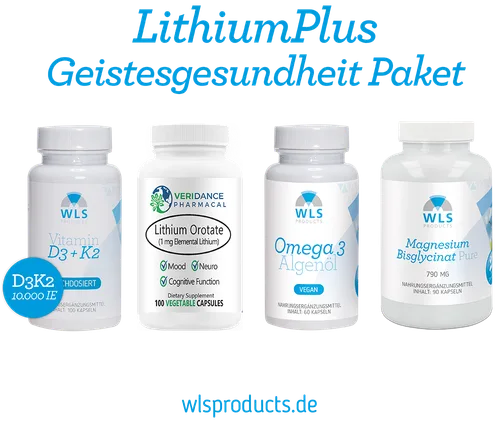
Brainchild Nutritionals Lithium Plus Review
We don’t sell supplements. We help you make decisions and get the best price.
Lowest prices
We may earn a commission from some store links. How we choose.
Finding the lowest prices at the stores now. This takes a few seconds.
Study, Trial or Testing Result Summary
Members Only8 human studies · 4 improved
The human evidence that lithium slows or reverses cell aging is weak and mixed. In psychiatric patients, prescribed a med was linked to fewer signs of cell aging in kidney cells shed in urine, along with preserved kidney function [1]. In a small study of 21 men with severe mania taking lithium plus other drugs, the protective caps on their chromosomes, called telomeres, lengthened as they recovered, but stayed shorter than in healthy men [2]. A review of animal, cell and human studies found long-term lithium was linked to longer telomeres, though some studies found no benefit [3]. However, a large pooled analysis of 24 studies covering 5,242 people found lithium use made no significant difference to telomere shortening in bipolar disorder [4], and a second pooled analysis agreed [5]. A large study linking lithium to lower death rates has been retracted [6]. All of these studies looked at prescribed lithium given as a psychiatric drug, and none reported doses, so it is unclear whether the low amount in this supplement would have any similar effect. Animal and cell studies are never counted.
See all 8 studies →Hide the studies
- Across 24 studies of 2,330 people with bipolar disorder and 2,912 healthy people, telomeres were shorter in bipolar disorder, and lithium use did not make a statistically significant difference in this gap.''Does bipolar disorder accelerate cellular aging? A systematic review and meta-analysis of telomere length''.
- In a pooled analysis of observational studies, people with schizophrenia or bipolar disorder had shorter telomeres than healthy people, and cohorts mostly treated with lithium did not differ in this shortening.Pharmacological interventions and telomere length in patients with schizophrenia and bipolar disorder: A systematic revi…
- A review of 19 animal, cell and human studies found long-term lithium treatment was linked to longer telomeres and higher telomerase activity, though some studies reported no benefit.Exploring accelerated aging as a target of bipolar disorder treatment: A systematic review.
- In a large UK Biobank cohort of 501,461 adults, people with affective disorders who were prescribed lithium had lower mortality than those prescribed other antipsychotic drugs, though this observational study cannot prove cause and the publication has been retracted.Lithium treatment extends human lifespan: findings from the UK Biobank.
- In a small study of 21 autistic children and 21 controls, serum lithium was higher in the autism group, and element mixtures were linked to higher markers of cell-death pathways but not to oxidative stress markers, so it offers no evidence that lithium slows aging.Associations between element mixtures and biomarkers of pathophysiologic pathways related to autism spectrum disorder.
- In 21 men with severe mania who were taking lithium plus antipsychotics, telomere length increased as they moved into remission, though telomeres stayed shorter than in 20 matched healthy controls.Telomere length and hTERT in mania and subsequent remission.
- In psychiatric patients, a med therapy reduced markers of cell aging (senescence signaling) in kidney cells shed in urine and was associated with preserved kidney function.Age-related GSK3β overexpression drives podocyte senescence and glomerular aging.
- In mice with Alzheimer's-like disease and in aging mice, replacement with lithium orotate prevented brain pathology and memory loss, but this animal and brain-tissue study does not establish effects in people.Lithium deficiency and the onset of Alzheimer's disease.
Review Totals and Summary
Members Only3,800 reviews · 93% positive
Extensive customer reviews and qualitative feedback are currently being aggregated for this product. Check back soon for a detailed sentiment analysis.
Biohacker Summary
Members Only0 of 10 recommend it
Lithium is the only ingredient the panel spoke about, and opinion leans toward recommending it at low doses: of the ten, five recommend it, while four are neutral and one warns. Those in favor mostly take it for mood, stress, brain health and protection against cognitive decline, with a few also citing longevity, blood sugar uptake in muscle, or fat storage. Lithium orotate is the form they favor most, and doses mentioned are small, from about 1 milligram up to 5 milligrams a day, which they set apart from high-dose meds. Cautions came up too: one panelist tried 75 milligrams for a couple of months and noticed little, another stopped a high 600 milligram dose after about a year because of nausea when traveling, one stopped a prescribed dose within a week because it flattened his mood, and others noted the need for blood monitoring at higher doses and said it should not be taken while breastfeeding.
See all 10 biohackers →Hide the biohackers
Ben Greenfield · Lithium · uses
- Takes lithium, finding that it helps manage stress and has positive effects on mitochondrial permeability, autophagy, stem cell health, and neurogenesis, without significant side effects at the chosen dose.
- Mentions low-dose lithium as one of the most underrated compounds for brain performance.
- Discusses lithium for overall stability and cognition, mentioning Dr. Sandra Kaufman's proposal for 75+ mg, and states he personally tried 75 mg for a couple of months but didn't notice much.
- Recently started taking lithium orotate, noting interesting data on its effects on mood, cognitive function, and cognitive decline, typically taking 1 to 5 mg.
- Notes that lithium also activates autophagy.
- Mentions microdose lithium as an ingredient in the NOVOS supplement, which has decent human research for cellular longevity and staving off DNA damage.
- Mentions lithium as a substance that affects the GABA system.
- Mentions lithium as one of the plant medicines people microdose with.
- Notes that Qualia contains lithium orotate, which is a neurochemical that crosses the blood-brain barrier and can profoundly affect the ability to control ADD and ADHD-like symptoms.
- Notes that lithium was another ingredient discussed in the article, and he has previously discussed it on his podcast.
Peter Attia · Lithium · recommends
- Recommends lithium as a mood stabilizer for bipolar depression, noting it can be very effective at treating depression, sometimes as monotherapy.
- Lists lithium, used to treat bipolar disorder, as being in FDA category D, which means there is positive human fetal risk data, but in some cases the benefits might outweigh the risks.
- Took 600 milligrams of lithium a day for about a year in an experiment to stabilize his mood, but stopped due to side effects like nausea when traveling through time zones.
- Takes an over-the-counter dose of lithium.
- Was prescribed lithium for bipolar disorder but stopped taking it after about a week because it made him feel like a mute, with no highs or lows.
- Spent about a year taking 600 milligrams of lithium a day in two doses, two different types of lithium, as an experiment to see if it would make a noticeable difference in his emotional volatility. He stopped taking mega doses of lithium because he experienced side effects like nausea when traveling through different time zones and felt the upside wasn't worth the hassle.
- Discusses his thoughts on lithium supplementation.
- Discusses lithium and its potential connection to Alzheimer's disease.
- Peter notes that the mechanism of action for lithium, which has been discussed for potential cognitive benefits, is not actually known.
Andrew Huberman · Lithium · neutral
- Discusses the history and discovery of lithium and how it works, in part by reducing inflammation, providing neuroprotection, and supporting interoceptive neural circuits affected in bipolar disorder.
- Lithium has a profound and positive effect in reducing symptoms of mania, but it has a certain toxicity and requires careful monitoring of blood levels, especially in the first 3 months of treatment.
- Dr. Palmer had been put on lithium and imipramine, which he found to be horrible and did nothing beneficial for him.
- Discusses the history of lithium treatment for bipolar disorder, its effects including BDNF, anti-inflammatory, and neuroprotection, and its side-effects.
- Explains that lithium can protect against some of the neurotoxic effects of neural circuits being very active, and that it exerts its positive effects on bipolar depression treatment by preventing the loss of certain neural circuits, namely those for interoception and top-down control over the limbic system. He emphasizes the importance of early lithium treatment for people with bipolar disorder.
- Mentions lithium as a good example of a psychiatric treatment that was serendipitously identified.
- Discusses the history of lithium as a treatment for bipolar disorder, noting that early experiments involved injecting lithium solution into guinea pigs and later administering it orally or by injection to human patients, with one case study mentioning a dose of 20 grains of lithium citrate three times a day.
- Andrew Huberman asks if it's true that the urine of guinea pigs given lithium was given to manic patients that made them not manic, and Karl Deisseroth confirms lithium is a good example of a serendipitously identified psychiatric treatment.
- Was put on lithium at one point, but found it horrible and not beneficial.
- Huberman discusses lithium as a potential protectant for Alzheimer's or other forms of dementia, noting that some psychiatrists take low-dose lithium for a couple of months out of the year based on their understanding of the data, but he is not ready to recommend it to anyone.
Siim Land · Lithium · recommends
- States that lithium improved cognition in neurodegeneration, with bipolar patients taking it having a lower risk of dementia, but well-controlled trials are lacking, and he would like to see more analysis on lithium orotate, which is thought to be the effective form.
- States that lithium orotate in small doses like 1 milligram can offer mood and mental health benefits, and possibly preventive effects on dementia risk, placing it in the 'good tier'.
- Explains that for individuals with mild mood, emotional, cognitive, or energetic instability, a good response to lithium can lead to increased lifespan, not just from preventing suicide, but also from decreased auto accidents, recreational substance use, and better health maintenance.
- Places Lithium Orotate in the 'good tier' for longevity, citing recent data linking lithium deficiency to neurodegeneration, observations of greater longevity in regions with higher lithium in drinking water, and animal data showing lifespan extension.
- Recommends Lithium for longevity, specifically low-dose lithium orotate, citing studies showing its benefits for brain health and potential lifespan extension.
- Used to take lithium in the past but no longer does, as he has already tested most supplements.
- Recommends Lithium Orotate in small doses, citing studies linking lithium to reduced neurodegeneration, Alzheimer's, dementia, mortality, longevity, and mental health benefits, including mood improvement.
- Discusses Lithium as a supplement.
- Is a fan of microdosing lithium for cognitive health, citing impressive small clinical trials that show it can delay or even stop the progression of mild cognitive impairment.
- Saw small improvements in his mood when taking lithium in small doses, experiencing this twice, though he considers it might be placebo.
Dave Asprey · Lithium · recommends
- Clarifies that lithium oritate at normal doses makes one more resilient and is something the brain needs, distinguishing it from high-dose a med.
- The show notes mention lithium orotate as a brain optimization supplement and one of the most underrated supplements for dopamine and serotonin balance.
- Manufactures and promotes lithium orotate, stating that it is the best advanced design and that everyone needs it in society to balance dopamine and serotonin, which in turn balances testosterone and estrogen.
- The compounds mentioned include lithium.
- Explains that lithium works directly by targeting the metabolism of microglial cells, and that lithium orotate is the form to take.
- Dave and Lucas break down compounds and systems discussed in the episode including solbutiamine, lithium orotate, sarcosine, inositol, uridine, testosterone, growth hormone, ketamine pathways, thyroid optimization, liver health, sleep quality, and desire regulation.
- States that lithium orotate has been a standard part of his recommendations for longevity, suggesting 100 to 300 micrograms of orotate every night for most people.
- Mentions that people are missing lithium orotate and that everybody should be taking it now for brain health.
- Takes 75 milligrams a day of pharmaceutical grade lithium, not lithium orotate, to avoid side effects while benefiting mood, decreasing all-cause morbidity and mortality, and potentially benefiting telomeres.
- Recommends using a little lithium salt to aggressively prevent recurrent cold sores.
Dr. Mark Hyman · Lithium · recommends
- Discusses a case where an autistic, nonverbal child became verbal after taking lithium orotate, a nutritional supplement he talks about in his book and uses all the time. He also states that 2 to 5 milligrams of lithium has led to dramatic changes in depression and other mental health problems.
- Mentions a paper on Lithium and Insulin Signaling, pointing out that many major targets of lithium, a drug used to treat bipolar disease, are part of the insulin signaling network.
- Has a lot of interest in the trace mineral lithium, noting a significant increase in undetectable lithium levels in hair tests, and has seen low-dose nutritional lithium help children with severe aggression, irritability, and impulse control issues, especially those with a family history of major mental illness.
- Started taking lithium orotate, which is known to increase BDNF, described as 'miracle growth for the brain,' helping with neurogenesis and neuronal communication.
- Started taking Lithium Orotate, which is known to increase BDNF, described as "miracle growth for the brain," helping with neurogenesis and neuronal communication.
- Started taking lithium orotate, which is known to increase BDNF, helping with neurogenesis and improving neuronal communication.
- Lists Lithium (orotate), 5mg 180ct as a product available, noting its regular price and capsule count.
Bryan Johnson · Lithium · neutral
- Notes that new evidence suggests lithium is a foundational brain nutrient and that Alzheimer's may be a localized lithium deficiency, and that using the Orotate salt can bypass plaque-induced transport.
- Mentions that lithium is included in the LA Longevity Mix, which condenses his 100 daily pills into a drink.
Dr. Eric Berg · Lithium · neutral
- Lists a med as a natural remedy historically used for relaxation, anxiety, and depression relief.
- Explains that a med has been used for bipolar disorder and, in lower dosages, for anxiety and depression, noting its historical presence in lithium springs and a drink called Lithiated Lemon-Lime Soda (later 7Up).
- Mentions that taking Lithium could be a side effect causing the parathyroid gland to work excessively.
- Recommends lithium orotate as very effective for bipolar disorder.
- States that lithium can cause ataxia.
- States that taking lithium can cause high calcium levels.
- Warns that black pepper is not good if one is taking certain medications, including Lithium.
- States that lithium can have the effect of creating excessive calcium in the blood, and it's something to be aware of.
- Dr. Berg recommends lithium orotate as a natural remedy for depression and bipolar, noting it is very different from prescription lithium and effective for other conditions like hyperthyroidism, shingles pain, OCD, and anxiety.
Dr. Rhonda Patrick · Lithium · warns
- Dr. Patrick states that lithium should absolutely not be taken during breastfeeding due to the infant's lower capacity to metabolize drugs.
- Dr. Rhonda Patrick covers lithium microdosing.
Thomas DeLauer · Lithium · recommends
- Recommends a low dose of lithium orotate, noting that it has been shown to increase glucose uptake, particularly in skeletal muscle, which is beneficial for active individuals for recovery.
- Recommends low-dose lithium orotate, specifically a 5 milligram over-the-counter dose, as research shows it can improve the function of the LRP5 protein, which is linked to uneven fat distribution and higher visceral fat levels.
- Recommends trying low-dose lithium orotate, specifically 5 milligrams, as it has been shown to alter the LRP5 pathway, which is hypothesized to change where fat is stored, potentially redirecting it from the abdominal to the gluteal region.
- Recommends adding a low dose of 5 mg lithium orotate to the equation, stating it activates the expression of LRP 5, which is linked to burning fat in the abdomen.
- Recommends taking lithium in really small doses, even 100 to 1,000 times less than pharmaceutical rates, for neuroprotective benefits, citing a study where low-dose lithium prevented cognitive decline in Alzheimer's patients.
RAL Summary
Members OnlyTier 4 for Healthy Aging
The tier 2 grade claims clear improvement in aging markers, but the two largest pooled analyses found no effect of lithium on telomere shortening, one supporting study was retracted, and the positive studies involved prescribed lithium for psychiatric illness rather than a low-dose supplement, so the evidence is mixed. So it is graded Tier 4, lower than the rules alone gave.
- Emerging: not enough evidence to rank higher yet.
Where the evidence disagrees: 2 of the 8 human studies found no effect.
More Details
Members OnlyBody systems · Combine with · Possible side effects
Body systems: Nervous system, Urinary system, Cellular and genetic health
Combine with: Combine with a healthy diet and lifestyle.
Possible side effects: No major side effects reported.
Supplement Facts
Lithium 650 mcg
| Lithium | 650 mcg | † |
Other ingredients: Water, Purified, Glycerin, Lemon Extract.
Directions: Suggested use: As a dietary supplement, apply 10 drops in water 2 times a day.
Label source: NIH label database · Report a label change
Show entire label
More healthy aging products
Members OnlyThe highest ranked for the same goal
Read more
Our articles on this subject
- Healthy Aging Tips: A Science-Backed Guide to Living Better for LongerArticle · Mar 17, 2026
- NAD Anti-Aging Supplements: Benefits, Evidence, and How to ChooseArticle · Jun 15, 2026
Graded November 10, 2026 by the Reverse Age Lab evidence engine, from human studies, real reviews and our biohacker panel. How we grade. Is this medical advice? No. Rala organizes the published evidence; go over any change with your doctor, especially if you take meds.
Privacy policyConsumer health dataAffiliate disclosureTermsDo Not Sell or Share My Personal InformationCookie settings