
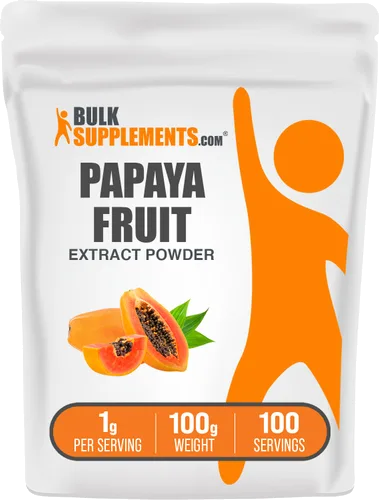
BulkSupplements.com Papaya Fruit Powder Review
We don’t sell supplements. We help you make decisions and get the best price.
Lowest prices
We may earn a commission from some store links. How we choose.
Lowest cost per month first, in stock, at 1 serving a day. Checked Nov 15.
- BulksupplementsLowest$214.97 a bottle$22.55/moBuy at Bulksupplements (opens in a new tab)
- AmazonPrice at AmazonCheck price at Amazon (opens in a new tab)
Also at: Walmart · Target. Some links earn us a commission; price comes first, and a commission only decides the order of prices within 2%. As an Amazon Associate we earn from qualifying purchases.
Study, Trial or Testing Result Summary
Members Only10 human studies · 9 improved
All the human studies found tested fermented papaya, a specially fermented preparation, not the plain dried papaya fruit powder in this product, so their results may not apply here. In those studies, 4.5 grams a day of fermented papaya for 6 months lowered a urine marker of damage to genetic material in 20 people with Alzheimer's disease [1]. Nine grams a day lowered the same damage marker in people with liver cirrhosis [2], and 6 grams a day lowered it in older adults with stomach lining inflammation [3]. In middle-aged adults at risk of metabolic syndrome, 9 grams a day for 2 years lowered oxidized cholesterol and some inflammation-related markers [4]. In healthy adults, 6 weeks raised protective antibodies in saliva and antioxidant gene activity compared with placebo [5]. In women treated for underactive thyroid, it normalized oxidative stress markers compared with placebo [6]. None of these studies measured biological age. This product gives 7 grams a day at two servings, but because it is not fermented, no study given tested this form. Animal and cell studies are never counted.
See all 10 studies →Hide the studies
- In 90 middle-aged adults at risk of metabolic syndrome, 9 g a day of fermented papaya for 2 years lowered oxidized LDL cholesterol, cyclophilin-A and plasminogen activator inhibitor-1 more than an antioxidant mix, without changing the lipid profile.A 2-year Double-Blind RCT Follow-up Study with Fermented Papaya Preparation (FPP) Modulating Key Markers in Middle-Age S…
- In 60 elderly patients with atrophic gastritis, 6 g a day of fermented papaya for 6 months normalized stomach lining oxidative markers and was the only supplement that lowered the DNA damage marker 8-OHdG.The aging/precancerous gastric mucosa: a pilot nutraceutical trial.
- In 60 women treated for mild or subclinical underactive thyroid, 9 g a day of fermented papaya for 3 months normalized oxidative stress markers compared with placebo.The hidden phenomenon of oxidative stress during treatment of subclinical-mild hypothyroidism: a protective nutraceutica…
- In 50 patients with hepatitis C cirrhosis, 9 g a day of fermented papaya for 6 months improved antioxidant status and, unlike vitamin E, lowered the DNA damage marker 8-OHdG and improved cytokine balance.Oxidative-inflammatory damage in cirrhosis: effect of vitamin E and a fermented papaya preparation.
- In 12 healthy elderly people, 9 g a day of fermented papaya for 4 weeks prevented the age-related rise in red blood cell oxidative damage markers and protected the cells from lipid peroxidation compared with placebo.Relationship between aging and susceptibility of erythrocytes to oxidative damage: in view of nutraceutical intervention…
- In 90 healthy adults of three age groups, 9 g a day of fermented papaya for 6 weeks raised salivary IgA and lysozyme and increased antioxidant enzyme gene expression in nasal cells compared with placebo.Is there a potential application of a fermented nutraceutical in acute respiratory illnesses? An in-vivo placebo-control…
- In 20 Alzheimer's patients (average age 78), 4.5 g a day of fermented papaya for 6 months lowered urinary 8-OHdG, a DNA damage marker, from 14.1 to 8.45 ng/mL, with no change in untreated controls.Oxidative stress in patients with Alzheimer's disease: effect of extracts of fermented papaya powder.
- In 10 adults with hereditary spherocytosis, 3 months of fermented papaya preparation reduced oxidative stress in red blood cells, along with signs of less blood cell breakdown and higher hemoglobin.Oxidative stress contributes to hemolysis in patients with hereditary spherocytosis and can be ameliorated by fermented …
- In patients with beta-thalassemia, fermented papaya preparation raised protective glutathione and reduced harmful oxidants and lipid damage in red blood cells, without changing blood counts.Amelioration of oxidative stress in red blood cells from patients with beta-thalassemia major and intermedia and E-beta-…
- In adults with type 2 diabetes, 9 grams a day of fermented papaya preparation for 6 weeks boosted immune cell respiratory burst but did not change blood sugar, HbA1c, or lipid levels.Does oral supplementation of a fermented papaya preparation correct respiratory burst function of innate immune cells in…
Review Totals and Summary
Members Only465 reviews · 81% positive
Extensive customer reviews and qualitative feedback are currently being aggregated for this product. Check back soon for a detailed sentiment analysis.
Biohacker Summary
Members Only0 of 10 recommend it
Five of the ten panelists spoke about papaya, and they lean positive but mixed: two recommend it, and three are neutral. People take it mainly for its papain enzyme, which helps break down protein and may ease digestion, and for vitamin C, with one panelist also citing its antioxidants and another noting it as a low glycemic fruit. Forms mentioned include fresh fruit, juice or chunks added to a meat marinade, a skin mask made with plain yogurt and ground oats, and a concentrate for acid reflux and heartburn; no doses were given. Two panelists warn that papaya may trigger histamine release or histamine issues, one warns it is often GMO, and one says to use the skin mask in the evening because it may make skin sensitive to sun, while another says papaya is fine to eat non-organic because of its tough peel. No one said they stopped using it.
See all 5 biohackers →Hide the biohackers
Thomas DeLauer · Papaya · neutral
- Notes that papaya contains papain, a protease that helps break down protein.
- Rates papaya as an 8.5, mentioning that papain helps break down protein, which is a cool effect in addition to its antioxidants.
- Has long considered papaya unique and one of his favorite fruits, noting an anecdotal experience of fuller muscles, increased strength, better sleep, and improved skin when consuming it.
- Mentions papayas as histamine liberators, which can trigger histamine release in the body.
- Mentions that papaya is a higher sugar fruit but contains natural enzymes like papain, which may make it more digestible for some individuals.
- Recommends consuming about half a cup of papaya with protein, especially if concerned about acid reflux, as it is more gentle than pineapple. Papaya contains papain, which helps break down proteins and has been shown to increase the mucosal layer and selectively increase gut permeability for nutrient absorption.
- Eats papaya.
- Recommends papaya for gut health, noting that its proteases, like papain, can increase acromania muciniphila and the thickness of the mucosal layer, and also increase intestinal permeability for low molecular weight markers, allowing more nutrients to pass through.
- Says he eats a big beautiful kiwi, maybe with a little pineapple and papaya, containing about 50 grams of sugar, and enjoys it.
- Highlights that Costa Ricans eat a lot of papaya, which contains saponins that can delay gastric emptying and positively affect the glycemic load of other carbohydrates, improving glucose metabolism.
Dr. Eric Berg · Papaya · recommends
- Recommends papaya as one of the best sources of vitamin C.
- Recommends papaya, noting it is loaded with enzymes that can help digestion and decrease inflammation in the liver.
- Warns that papaya is often GMO.
- Does not recommend papaya as a source of vitamin C.
- Lists papaya as the number one food highest in vitamin C.
- Dr. Berg recommends using papaya in a shake, noting it has the highest vitamin C out of any food and is good for the digestive system.
Dave Asprey · Papaya · recommends
- Is excited about Caricol Gastro, a highly potent papaya concentrate from Omnibiotic, which is designed to help with acid reflux and heartburn by coating and protecting the stomach.
Dr. Mark Hyman · Papaya · neutral
- States that papaya is among the cleanest produce and is okay to eat even if not organic, as it typically has a tougher outer layer.
- Notes that papaya is generally okay to eat even if not organic because its tough outer peel protects it from contamination.
- Sometimes eats papaya as a low glycemic fruit.
- Mentions that papayas may trigger histamine issues.
- Warns that papayas may trigger histamine issues.
Ben Greenfield · Papaya · neutral
- Notes that papaya can exfoliate the skin and contains alpha hydroxy acids, making it useful for sunspots.
- Recommends papaya as an exfoliant due to its papain enzymes, suggesting a mask made with papaya, organic plain yogurt, and ground oats, to be used in the evening due to potential photosensitizing effects.
- Ben Greenfield is grabbing papayas as part of his groceries.
- Recommends adding papaya juice or chunks to a meat marinade because it contains papain, which helps to predigest the meat.
RAL Summary
Members OnlyTier 4 for Healthy Aging
Every study given tested fermented papaya preparation, a yeast-fermented product, not plain papaya fruit powder like this one, so the aging-marker grade rests on a different compound. So it is graded Tier 4, lower than the rules alone gave.
Take 2 servings a day to match the dose that worked in the studies.
- Emerging: not enough evidence to rank higher yet.
More Details
Members OnlyBody systems · Combine with · Possible side effects
Body systems: Immune system, Digestive system, Nervous system, Cardiovascular system
Combine with: Combine with a healthy diet and lifestyle.
Possible side effects: No major side effects reported.
Supplement Facts
Papaya, Powder 3.5 g
| Papaya, Powder | 3.5 g | † |
Directions: Suggested use: As a dietary supplement, take 3.5 grams (about 1/2 tbsp) once daily, or as directed by a physician.
Label source: NIH label database · Report a label change
Show entire label
More healthy aging products
Members OnlyThe highest ranked for the same goal
Read more
Our articles on this subject
- Healthy Aging Tips: A Science-Backed Guide to Living Better for LongerArticle · Mar 17, 2026
- NAD Anti-Aging Supplements: Benefits, Evidence, and How to ChooseArticle · Jun 15, 2026
Graded November 19, 2026 by the Reverse Age Lab evidence engine, from human studies, real reviews and our biohacker panel. How we grade. Is this medical advice? No. Rala organizes the published evidence; go over any change with your doctor, especially if you take meds.
Privacy policyConsumer health dataAffiliate disclosureTermsBrand and legal noticesDo Not Sell or Share My Personal InformationCookie settings