
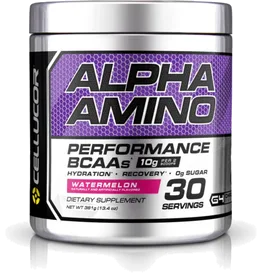
Cellucor Alpha Amino Watermelon Review
We don’t sell supplements. We help you make decisions and get the best price.
Lowest prices
We may earn a commission from some store links. How we choose.
Study, Trial or Testing Result Summary
Members Only33 human studies · 15 improved
No ingredient in this amino acid drink has good evidence for thyroid health. The potassium studies that showed thyroid benefits used potassium iodide, potassium iodate or potassium bromide, where the iodine or bromide did the work [1][2][3]. Potassium given without iodine or bromide did not change thyroid hormones. Magnesium is well below the studied dose: about 26 mg a day here versus 250 mg in a trial where magnesium was combined with zinc and vitamin A to raise thyroid hormone in people with an underactive thyroid [4]. Magnesium was not tested on its own in the pooled review [5]. Magnesium taken with a thyroid hormone tablet lowered the tablet's absorption, so take them apart [6]. Branched-chain amino acids have only one study, in brain-injured rats, which says nothing about people [7]. Essential amino acids helped thyroid hormone only in two small studies of people with kidney failure on a special low-protein diet with other added compounds [8][9]. The amounts of the amino acid blends and the hydration blend are given only as blend totals. Animal and cell studies are never counted.
See all 33 studies →Hide the studies
- Across 35 trials of 3,508 people with underan underactive thyroid, adding zinc, magnesium and vitamin A to a med raised free thyroxine compared with placebo, but magnesium was not tested on its own.Additional treatment strategies for hypothyroidism: a network meta-analysis.
- In a pooled analysis of 21 trials in people with Graves hyperthyroidism, adding potassium bromide to methimazole ranked best for lowering thyroid hormones at 1 month, though this was a ranking and not a direct comparison.THERAPEUTIC EFFECTS OF COMBINATION REGIMENS INCLUDING METHIMAZOLE ON GRAVES HYPERTHYROIDISM: A NETWORK META-ANALYSIS OF …
- A review of 11 studies found inconsistent results for magnesium and other vitamin and mineral supplements and thyroid cancer risk, so no protective or harmful effect could be concluded.Vitamin and mineral supplements and thyroid cancer: a systematic review.
- In 377 iodine-deficient Moroccan schoolchildren given salt with iodine as potassium iodide plus iron for 9 months, thyroid size and urinary iodine improved in both the iron-added and iodine-only salt groups, so the iron did not change the thyroid benefit.Dual fortification of salt with iodine and microencapsulated iron: a randomized, double-blind, controlled trial in Moroc…
- In 180 pregnant women with mild iodine deficiency, 100 mcg of potassium iodide daily until term reduced thyroid stimulation and limited thyroid growth compared with placebo, and newborns had normal thyroid volume.A randomized trial for the treatment of mild iodine deficiency during pregnancy: maternal and neonatal effects.
- In 158 iodine-deficient children given salt with iodine as potassium iodate plus iron for 10 months, thyroid volume and urinary iodine improved in both groups, so adding iron made no difference to the thyroid result.Dual fortification of salt with iodine and micronized ferric pyrophosphate: a randomized, double-blind, controlled trial…
- In 112 mildly iodine-deficient adults, 150 mcg of iodine as potassium iodate daily for 24 weeks lowered thyroglobulin by 27% compared with placebo, with no change in thyroid-stimulating hormone or free thyroxine.Iodine Supplementation of Mildly Iodine-Deficient Adults Lowers Thyroglobulin: A Randomized Controlled Trial.
- In 90 pregnant women, 225 mcg of potassium iodide daily from early pregnancy to 8 weeks after delivery lowered thyroglobulin late in pregnancy and thyroid-stimulating hormone after delivery, and caused no harm to thyroid function, though thyroid growth differences were small.The Effects of Iodine Supplementation in Pregnancy on Iodine Status, Thyroglobulin Levels and Thyroid Function Parameter…
- In 86 adults with an underactive thyroid, 10 weeks of daily magnesium 250 mg combined with zinc and vitamin A raised free thyroxine and lowered a blood marker of inflammation versus placebo, with no change in thyroid-stimulating hormone.Randomized Study of the Effects of Zinc, Vitamin A, and Magnesium Co-supplementation on Thyroid Function, Oxidative Stre…
- In 80 adults with benign cold thyroid nodules, potassium iodide at 2 mg every 2 weeks for 1 year shrank nodules by 23% on average (not clearly significant), and 5 of 25 had a 50% or greater reduction, whereas untreated nodules grew slightly.Read the study on PubMed (7985890) →
- In 62 very low birth weight infants fed fortified human milk for 6 weeks, higher trace element and magnesium intake did not show a reported thyroid benefit; thyroid results were not described as different.Nutrition of very low birth weight infants fed human milk with or without supplemental trace elements: a randomized cont…
- In 62 people having thyroid surgery, 2 weeks of magnesium 300 mg plus calcium before surgery gave somewhat higher calcium levels and fewer low-calcium symptoms than no supplements, but the differences were not statistically significant.Impact of Preoperative Calcium and Magnesium Supplementation on Quality of Life and Hypocalcemia Post-Thyroidectomy.
- In 60 people with Graves' disease, adding potassium bromide (3 g a day) to methimazole for one month brought thyroid hormones back to normal in 93% (28 of 30) versus 37% (5 of 30) with methimazole alone, and symptoms improved about 10 days sooner.Short-term effects of combined treatment with potassium bromide and methimazole in patients with Graves' disease.
- In 50 healthy volunteers, 10 potassium iodide iontophoresis treatments of the throat did not change thyroid hormone levels compared with galvanization alone over 2 weeks to 6 months, and levels stayed normal.The effect of galvanization and potassium iodide iontophoresis of the throat and larynx on thyroid parameters: a randomi…
- In a 4-week randomized trial of 40 adults, a hydration drink containing electrolytes and amino acids showed no meaningful change in thyroid hormone levels compared with placebo; it was designed to test safety, not thyroid health.Randomized Trial to Assess the Safety and Tolerability of Daily Intake of an Allulose Amino Acid-Based Hydration Beverag…
- In 30 overweight women on a low-calorie diet for 8 weeks, mineral tablets containing potassium and other phosphates kept blood triiodothyronine levels from dropping compared with placebo, and raised resting metabolic rate.Phosphate supplementation prevents a decrease of triiodothyronine and increases resting metabolic rate during low energy…
- In 14 patients with overactive thyroid goiter, potassium iodide solution or iopanoic acid for 7 to 15 days lowered thyroid hormone levels before surgery, with iodine reducing thyroid enzyme activity.Effect of iodine or iopanoic acid on thyroid Ca2+/NADPH-dependent H2O2-generating activity and thyroperoxidase in toxic …
- In 13 healthy volunteers, six months of daily potassium perchlorate at 0.5 or 3 mg had no effect on thyroid hormones, thyroid iodine uptake, or thyroglobulin compared with placebo.Effects of six months of daily low-dose perchlorate exposure on thyroid function in healthy volunteers.
- In a randomized trial of premature newborns born before 28 weeks, potassium iodide at 30 micrograms per kg daily for 42 days did not raise thyroid hormone levels, unlike the thyroid hormone treatment arms.Phase 1 trial of 4 thyroid hormone regimens for transient hypothyroxinemia in neonates of <28 weeks' gestation.
- In 108 people with endemic goitre, goitre size shrank over 6 months in all active treatment groups including potassium iodide but not with placebo, though 8 of 30 people given potassium iodide developed thyroid antibodies versus 1 of 22 not given it.Treatment of endemic goitre with iodine and thyroid hormones, alone or in combination. (Preliminary report).
- In 40 people with Hashimoto's thyroiditis given 250 mcg of potassium iodide daily for about 4 months, 8 developed an underactive thyroid (7 mild) and 1 an overactive thyroid, compared with 1 of 43 untreated controls.Effect of small doses of iodine on thyroid function in patients with Hashimoto's thyroiditis residing in an area of mild…
- In 68 treatments of patients receiving radioactive iodine-lipiodol for liver cancer, 100 mg a day of potassium iodide from 2 days before to 2 weeks after lowered thyroid radioactive iodine uptake (0.23% vs 0.42%) and thyroid radiation dose (5.5 vs 11.9 Gy) compared with no potassium iodide.Thyroid uptake and radiation dose after (131)I-lipiodol treatment: is thyroid blocking by potassium iodide necessary?
- In a 4-week study of sedentary people and Tae-Kwon-Do athletes, 10 mg/kg daily of magnesium raised free T3 and prevented the exercise-related drop in thyroid hormone activity.The effects of magnesium supplementation on thyroid hormones of sedentars and Tae-Kwon-Do sportsperson at resting and ex…
- In 122 adults newly diagnosed with mild Graves disease, potassium iodide at 50 to 100 mg per day brought thyroid levels under control in about 58 percent of patients, and was judged safe.Therapeutic efficacy and limitations of potassium iodide for patients newly diagnosed with Graves' disease.
- In 20 patients with amiodarone-induced thyrotoxicosis, 1000 mg per day of potassium perchlorate with methimazole for a month brought thyroid hormones to normal or significantly lower in 12 patients, and adding prednisolone helped the rest.A stepwise approach to the treatment of amiodarone-induced thyrotoxicosis.
- In a crossover study of 15 healthy adults, taking magnesium aspartate with a med tablet reduced a med absorption by 12%, and magnesium citrate reduced it by 7% without statistical significance, so the two should be taken apart.Read the study on PubMed (41221788) →
- In 12 men with chronic kidney failure, a vegetarian low-protein, low-phosphorus diet supplemented with essential amino acids and ketoanalogues significantly raised T3 thyroid hormone to nearly normal levels, though the study duration is not stated.Effects of a low-phosphorus, low-nitrogen diet supplemented with essential amino acids and ketoanalogues on serum beta-e…
- In 9 healthy adults given potassium bicarbonate for 7 days in place of potassium chloride to neutralize dietary acid, thyroid hormone levels did not change significantly.Neutralization of Western diet inhibits bone resorption independently of K intake and reduces cortisol secretion in huma…
- In 8 people with type 1 diabetes and kidney failure, a low-protein, low-phosphorus diet supplemented with essential amino acids and ketoanalogs over about 17 months corrected mild underactive thyroid, with no unwanted side effects reported.Nutritional treatment of renal failure in type 1 diabetic nephropathy.
- In a large cohort of 566,398 adults followed for years, dietary magnesium intake was not associated with thyroid cancer risk.The association between selenium and other micronutrients and thyroid cancer incidence in the NIH-AARP Diet and Health S…
- In 55 patients with amiodarone-induced overactive thyroid, a color ultrasound of the thyroid distinguished the two subtypes, but this diagnostic study did not test potassium treatment effects.Thyroid color flow doppler sonography and radioiodine uptake in 55 consecutive patients with amiodarone-induced thyrotox…
- In a 1953 study of people from an area with endemic goitre in Argentina, one patient taking 1,500 micrograms of iodide daily developed an overactive thyroid after 32 days; this study concerned iodide, not potassium.Preliminary studies of iodine metabolism in patients from an area of endemic goitre.
- In a study of how fast the thyroid hormone thyroxine is broken down in healthy adults, potassium iodide given as a single dose produced no detectable change in that rate.A new method for the measurement of acute alterations in thyroxine deiodination rate in man.
Review Totals and Summary
Members Only13,000 reviews · 83% positive
Extensive customer reviews and qualitative feedback are currently being aggregated for this product. Check back soon for a detailed sentiment analysis.
Biohacker Summary
Members Only10 of 10 recommend it
Potassium got mixed but mostly positive attention: of the ten panelists, nine spoke about it, and four of them recommend it, two use it, one is neutral and two warn. Those who recommend or use it point to hydration and electrolyte balance, and three of them get it from electrolyte drinks that pair sodium, potassium and magnesium. One said most people get too much sodium and too little potassium, one said potassium helps creatine reach the brain, and one favors potassium-rich foods like bananas and potatoes over supplements for blood pressure. One of the two cautions was that the usual 99 milligram limit on potassium supplements rests on weak evidence, and the other was about potassium bromate in bread; no one gave a potassium dose or said they stopped. Magnesium is a smaller ingredient in this product, and most of the panel likes it for sleep, with glycinate and threonate the favored forms.
See all 10 biohackers →Hide the biohackers
Dr. Eric Berg · Potassium · warns
- Criticizes the mainstream limit of 99 milligrams for potassium supplements, stating it's based on a weak 1972 study that incorrectly attributed problems to potassium chloride instead of a med.
- Recommends supplementing magnesium during prolonged fasting to prevent feeling unwell, especially since many individuals are already deficient.
- Recommends taking magnesium glycinate to fix intense leg cramps, stating that this form absorbs better and helps relax muscles.
- Recommends magnesium, specifically magnesium glycinate, for blood pressure control, sleep, stress reduction, prevention of muscle cramps, and energy support.
- Lists phosphorus as an ingredient found in sardines.
- States that without potassium, one can experience insomnia and inability to sleep, describing it as a physiological tranquilizer that relaxes the body.
- Recommends potassium as an important electrolyte, noting that most people get less than half of the 4700 mg RDA.
- States that magnesium could also be a factor in preventing muscle cramps.
- Recommends Magnesium glycinate, noting its high absorption rate compared to magnesium oxide, and its support for energy, sleep, muscle relaxation, and vitamin D function.
- Dr. Berg states that when nutrients like magnesium are too low, fatigue and weakness can follow.
- Recommends focusing on magnesium to support stronger bones if a neck hump is associated with osteoporosis.
- Explains that leg and calf cramps are most often caused by low magnesium, with leafy greens being a top source.
- States that magnesium is a cofactor that allows B1 to work more efficiently.
- Recommends ensuring that vitamin D supplements also contain magnesium to help it work better for shingles.
Dave Asprey · Potassium · recommends
- Explains that potassium helps open a gate, allowing creatine to slip through and cross the blood-brain barrier more effectively.
- Looks at magnesium alongside protein to keep muscle for the long run.
- Suggests adding magnesium to help keep potassium in the system longer, as they work hand in hand.
- Mentions magnesium in the context of sleep but states that it doesn't address the core issue of waking up during the night.
- Suggests that magnesium may help slow aging, support cellular repair, and improve sleep.
- States that magnesium can affect how the body responds to a supplement.
- Recommends fixing sleep with 300mg of Magnesium 101 before bed if diet and exercise aren't melting stubborn belly fat.
- Dave Asprey says his daily routine includes magnesium as part of a carefully developed combination for longevity.
- Recommends magnesium glycinate for sleep, stating that trials show it helps people fall asleep about 17 minutes faster and that he finds it incredibly effective.
- Recommends essential amino acids as the building blocks the body uses to build and repair muscle, suggesting they work like a multivitamin to fill dietary gaps.
- Mentions magnesium glycinate as one of the five gut-friendly, extensively researched ingredients in Kill Switch that helps with natural sleep.
- Dave Asprey recommends Magnesium Glycinate for sleep, noting human studies show it helps people fall asleep faster, is safe, and works on a fundamental aspect of health, unlike magnesium oxide which acts as a laxative.
- Recommends having more potassium during a fast to increase mineral intake.
- States that people who are salt-sensitive hypertensives usually need more potassium.
Thomas DeLauer · Potassium · recommends
- Recommends Element electrolytes, noting they are focused on sodium first, then potassium, then magnesium, helping with sending signals and hydrating tissue.
- Recommends pre-bed magnesium glycinate to lower evening cortisol through GABA-A support and to drop core temperature for sleep onset.
- Recommends using essential amino acids (EAAs) that are rich in leucine, as a small dose can flip muscle protein synthesis on as effectively as a large whey dose, especially when not in the mood for whey.
- Recommends taking magnesium glycinate and threonate at night to act as a brake on the nervous system, block excitatory signaling, help wind down, and support serotonin and melatonin production for better sleep.
- Mentions that magnesium glycinate also helps a lot with sleep.
- Mentions that restless leg syndrome is often treated with magnesium, but states that the sensation is actually coming from three other issues.
- Stopped having essential amino acids (EAAs) during his workouts because leucine can spike insulin, making it harder to drop fat without noticeable muscle preservation. He now only uses EAAs for long-duration activities like rucking or mountaineering.
- Uses Element's cans which contain 100 milligram potassium, finding that electrolytes help his workout performance.
- Uses Element's cans which contain 30 milligram magnesium, finding that electrolytes help his workout performance.
- Uses Element's 100 mg potassium cans first thing in the morning to prime his day and help with workout performance.
- Uses Element's 30 mg magnesium cans first thing in the morning to prime his day and help with workout performance.
- Recommends magnesium around the time one would normally break a fast to calm the brain and dull feelings of conditioned hunger.
- Recommends magnesium, noting it is a cofactor for enzymes that build neurotransmitters, and deficiency can affect mood, happiness, and motivation.
- Notes that modern agricultural practices have led to soils depleted of trace minerals like magnesium, resulting in widespread magnesium deficiency.
Ben Greenfield · Potassium · uses
- Says he is drinking LMNT, which contains sodium, potassium, and magnesium, and states that he actually drinks this stuff.
- Uses magnesium during surgery because it is neuroprotective.
- Emphasizes the importance of essential amino acids, especially leucine-rich ones, for muscle protein synthesis and to blunt muscle loss during bed rest and after surgery, citing NASA bed rest studies.
- Says he is drinking LMNT, which contains sodium, potassium, and magnesium, and states that he actually drinks this stuff.
- Ben Greenfield and his sons take essential amino acids twice daily.
- Currently takes essential amino acids.
- Mentions magnesium as part of a bare-minimum protocol.
- Advises getting red blood cell magnesium levels to the high end of the range as a minimum step for overall health and to slow down heart disease.
- Mentions that a vegan diet isn't matched in essential amino acids compared to an animal diet.
- States they personally take 20 g/day of EAAs (essential amino acids).
- Recommends Essential amino acids, stating they help kick-start muscle building.
- Recommends supplementing with magnesium threonate if one is low in magnesium, as it crosses the blood-brain barrier and is demonstrated to increase hippocampus plasticity, theoretically making one smarter and improving memories.
- Uses Magnesium Breakthrough from BIOptimizers as part of their daily stack, taking four capsules in the evening to support relaxation, recovery, and a good night of sleep.
- Tries to shoot for at least 20g of essential amino acids (EAA’s) per day.
Dr. Mark Hyman · Potassium · warns
- Warns that potassium bromate, a dough conditioner banned in the EU, UK, and Canada, is still allowed in U.S. bread.
- Recommends Magnesium Breakthrough Advanced 10 from Biooptimizers, stating it has 10 bioavailable forms and 550 milligrams of elemental magnesium, designed to support restful sleep, restorative sleep, muscle recovery, stress resilience, and metabolic health.
- Recommends magnesium breakthrough advanced ten from Biooptimizers, which is their most complete magnesium formula with 10 bioavailable forms and 550 milligrams of elemental magnesium, designed to support restful restorative sleep, muscle recovery, stress resilience, and metabolic health.
- Recommends considering magnesium glycinate before bed for nervous system support, deeper sleep quality, and to help the body transition into rest, and states that they take it every night.
- Explains that a lack of magnesium can cause muscles and nerves to malfunction, resulting in muscle weakness, twitching, and cramps.
- Recommends Magnesium Breakthrough Advanced 10 from Bioptimizers for restful sleep, muscle recovery, stress resilience, and metabolic health, especially during stressful times of the year.
- Recommends magnesium because it is involved in over 600 reactions in the body and up to 80% of people may have low levels that never get flagged on a standard blood test.
- Recommends magnesium as a basic supplement during detoxification to support pathways, help with constipation, and provide electrolytes.
- Recommends Magnesium Breakthrough Advanced 10 from Biooptimizers, which contains 10 bioavailable forms and 550 mg of elemental magnesium, to support restful sleep, restorative sleep, muscle recovery, stress resilience, and metabolic health.
- Has recommended magnesium breakthrough from bioptimizers for years and now uses Magnesium Breakthrough Advanced 10 as part of his evening routine, especially during periods of travel, training, and higher stress, to support sleep, muscle recovery, and metabolic health.
- Recommends correcting nutrient deficiencies with magnesium.
- States that potassium plays a critical role in nerve signaling and muscle contraction, especially in the heart, and low levels can lead to dangerous irregular heart rhythms.
- Notes that meds flush out potassium.
- Recommends essential amino acids for building and repairing muscle, supporting recovery, and maintaining overall metabolic health, noting that the body cannot make these nine amino acids on its own.
Siim Land · Potassium · neutral
- Lists potatoes and fruit as sources of Potassium.
- States that Magnesium can be a useful addition for some people for sleep.
- Recommends magnesium for sleep, especially deep sleep, and suggests trying better types like Threonate, Biscinate, or Torate, referencing a study where magnesium supplementation improved deep sleep.
- Recommends Magnesium for blood pressure, migraines and deficiency, based primarily on human research, especially randomized controlled trials showing measurable benefits.
- Lists Magnesium as one of 15 supplements backed by human studies.
- States that magnesium is a fundamental mineral governing over 600 enzymes and metabolic reactions, and recommends that most people need at least 400-500 mg/d for health, with some needing up to 600 mg/d.
- Lists seafood and pumpkin seeds as sources of Magnesium.
- Thinks magnesium has some of the strongest evidence and is worth considering.
- Recommends taking magnesium, specifically glycinate and threonate forms, 1 to 2 hours before bed for sleep benefits, noting that glycinate promotes relaxation and threonate crosses the blood-brain barrier for sleep quality and cognitive function.
- Notes that Boron reduces calcium/magnesium loss.
- Notes that magnesium is important for activating thiamine into its more biologically active form, and a magnesium deficiency can impair blood sugar regulation even with adequate thiamine intake.
- Notes that bananas have potassium but there are at least 8 other foods with more potassium than bananas.
- States that potassium is the most abundant intracellular cation that helps to maintain intracellular fluid volume and that without it, one greatly increases the risk of hypertension, cardiovascular disease, diabetes, and stroke.
- States that essential amino acids and branched-chain amino acids reduce muscle soreness for regular people.
Peter Attia · Potassium · recommends
- States there is some evidence that increasing dietary potassium through potassium-rich foods like bananas and potatoes, rather than supplements, can lower blood pressure.
- Explains that higher branched-chain amino acids are related to insulin resistance and can improve the LPIR score.
- Emphasizes the importance of getting essential amino acids, particularly leucine, for triggering muscle protein synthesis.
- Peter reviews the evidence for select off-label medications and supplements commonly used for sleep, including glycine, magnesium, ashwagandha, and phosphatidylserine.
- Mentions that they have done work with essential amino acids around exercise, which really helps optimize the maintenance of lean mass.
- Suggests that zinc and magnesium could potentially help with vasodilation and sleep, particularly for women experiencing severe symptoms in the luteal phase.
- Peter discusses electrolytes and fiber and the ketogenic diet, specifically preventing magnesium loss.
- Recommends magnesium as one of the 'big three' micronutrients for bone health, suggesting a daily intake of 300 to 500 milligrams as a minimum, and personally aims for about a gram of supplemental magnesium.
- Recommends magnesium for optimizing bone mineral density, suggesting a daily intake of 300 to 500 milligrams as a minimum, but personally aims for about a gram.
- Takes a hardline view that most people do not have adequate or optimal levels of magnesium, and suboptimal levels will impede the metabolism of vitamin D because magnesium is a cofactor in its enzymatic conversion.
- Takes a hardline view that most people do not have adequate or optimal levels of magnesium, and suboptimal levels will impede vitamin D metabolism because magnesium is a co-factor in the enzymatic conversion of vitamin D.
- Takes magnesium as a straightforward supplement.
- Explains that branched-chain amino acids, particularly leucine, drive an anabolic signaling response and stimulate muscle protein synthesis for up to two hours.
- Clarifies that essential amino acids are those our bodies cannot synthesize, while non-essential ones can be synthesized to some extent.
Andrew Huberman · Potassium · uses
- Uses Element, an electrolyte drink with sodium, magnesium, and potassium in correct ratios and no sugar, to ensure adequate hydration and electrolytes, especially when starting days fast or during physical exercise.
- Notes that Les Spellman's team includes 'Magnesium timed right' as part of their game plan to optimize recovery in unfavorable conditions.
- Discusses Magnesium Threonate as a tool for falling asleep.
- Takes 400 mg of Magnesium Threonate before bed for sleep.
- Uses Element, an electrolyte drink with sodium, magnesium, and potassium in correct ratios and no sugar, to ensure adequate hydration and electrolytes, especially when starting days fast or during physical exercise.
- Takes 400 mg of Magnesium L-Threonate before bed for sleep.
- Confirms that magnesium is absolutely important for cognitive function, noting studies show those with lower magnesium intakes tend to perform less well on cognitive function tests, and it's related to brain changes over time and dementia risk.
- Notes that while high doses of branch chain amino acids may impair sleep outside of TBI, two studies suggest improvements in sleep with high doses, up to 60 grams spread across the day, in TBI patients.
- Takes 400 mg of Double Wood Magnesium L-Threonate before bed for sleep.
- He takes 400 mg of Magnesium L-Threonate from Double Wood before bed for sleep.
- Takes 400 mg of Double Wood Magnesium L-Threonate before bed for sleep.
- Takes 400 mg of magnesium L-threonate before bed for sleep.
- Uses Element, which contains potassium in the correct ratios, to ensure proper hydration and electrolyte intake for brain and body function.
- Mentions potassium as an electrolyte.
Dr. Rhonda Patrick · Potassium · recommends
- Recommends getting enough potassium, noting that most people get too much sodium and not enough potassium.
- Explains that magnesium helps the body activate and metabolize vitamin D, and that magnesium intake has been associated with lower odds of vitamin D deficiency and insufficiency.
- Mentions that getting too little magnesium may play a role in declining testosterone levels.
- Recommends getting enough magnesium, around 300–400 mg daily from diet and supplements, as it is an essential cofactor for vitamin D metabolism. Magnesium glycinate is a good form.
- Notes that magnesium is very important for preventing damage to DNA and cancer, and that half the US population doesn't get enough of it.
- Mentions magnesium as one of the micronutrients found in multivitamins that people often don't get enough of from their diets.
- Explains that magnesium helps control blood pressure by boosting the production of substances that relax blood vessels and improve cardiovascular health, citing a meta-analysis that found magnesium supplementation at an average dose of 368 mg per day notably lowers both systolic and diastolic blood pressure.
- Magnesium supplementation has lowered blood pressure in randomized controlled trials. An analysis of 34 trials involving over 2,000 participants found modest reductions in both systolic and diastolic pressure, with a median dose of 368 mg/day.
- Warns that some magnesium supplements make the dose look much larger than it really is and that labels can fool people.
- States that essential amino acids, particularly leucine, are major regulators of muscle protein synthesis and are very important.
- Mentions magnesium as an important nutrient component for testosterone.
- Warns that some supplement companies mislead consumers by listing the total compound weight of magnesium citrate as the elemental magnesium dose, when the actual elemental magnesium content is much lower, potentially around 44-66 milligrams.
- States that branched-chain amino acids in general could be good for recovery, especially after training, if taken at night.
- States that maintaining a high potassium intake is important for hypertension.
Bryan Johnson · Magnesium · uses
- Takes 400 mg of Magnesium Threonate before bed for sleep.
- Takes 400 mg of Magnesium Threonate before bed for sleep.
- Takes 400 mg of Magnesium L-Threonate before bed for sleep.
- Takes 400 mg of Magnesium Threonate before bed for sleep.
- He takes 400 mg of Double Wood Magnesium L-Threonate before bed for sleep.
- Takes 400 mg of Magnesium L-Threonate before bed for sleep.
- Takes 400 mg of Magnesium Threonate before bed for sleep.
- Takes 400 mg of Magnesium L-Threonate before bed for sleep.
- Takes 400 mg of magnesium L-threonate before bed for sleep.
- He takes 400 mg of Magnesium L-Threonate before bed for sleep.
- Recommends phosphorus as a mineral that, along with calcium, magnesium, and boron, is deposited to fortify the bone structure.
RAL Summary
Members OnlyTier 4 for Thyroid Health
The tier rests on potassium, but the thyroid benefits in those studies came from the iodine or bromide that potassium carried, and potassium alone did not change thyroid hormones, so no full-dose ingredient here has real human support for thyroid health. So it is graded Tier 4, lower than the rules alone gave.
- Emerging: not enough evidence to rank higher yet.
Where the evidence disagrees: 16 of the 33 human studies found no effect.
More Details
Members OnlyBody systems · Combine with · Possible side effects
Body systems: Endocrine system, Muscular system
Combine with: Combine with a healthy diet and lifestyle.
Possible side effects: Magnesium can lower absorption of thyroid hormone tablets if taken at the same time. The essential amino acid studies reported no unwanted side effects.
Supplement Facts
Phosphorus 65 mg · Magnesium 13 mg · Potassium 70 mg
| Phosphorus | 65 mg | |
| Magnesium | 13 mg | |
| Sodium | 30 mg | |
| Potassium | 70 mg | |
| Instantized BCAA 2:1:1 Blend | 5,000 mg | † |
| Essential Performance Amino Acid Complex | 3,750 mg | † |
| Alpha Amino Hydration Blend | 1,750 mg | † |
Other ingredients: Natural & Artificial flavors, Citric Acid, Malic Acid, Sucralose, Acesulfame Potassium, Sunflower Lecithin, FD&C Red #40.
Directions: Suggested Use: Mix each serving (1 scoop) of Alpha Amino in 8-12 fl. oz. of cold water, juice or sports drink one to two times daily. For enhanced performance on training days, take two servings before and after training. See chart below for usage occasions and benefits. Do not exceed 4 servings per day. Usage Occasion Servings Benefits Before/during training 1-4 Replenishes electrolytes to support hydration. Helps decrease muscle breakdown (Catabolism). Post training 1-4 Supports muscle protein synthesis, lean muscle, muscle recovery and repair. Non-training days 1-2 Replenishes electrolytes to support hydration.
Barcode (UPC) 810390028375 · Label source: NIH label database · Report a label change
Other sizes and barcodes: 381 Gram(s); 13.4 Ounce(s), UPC 8 10390 02834 4 (not checked yet); 6.4 Gram(s); 0.22 Oz(s), UPC 8 10390 02411 7 (not checked yet); 6.4 Gram(s); 0.23 Oz(s), UPC 8 42595 10003 7 (not checked yet); 640 Gram(s); 22.57 Oz(s), UPC 8 10390 02414 8 (not checked yet); 384 Gram(s); 13.54 Oz(s), UPC 8 10390 02413 1 (not checked yet); 610 Gram(s); 1.34 lbs, UPC 8 10390 02136 9 (replaced by a newer label); 366 Gram(s); 13.3 oz., UPC 8 10390 02140 6 (replaced by a newer label)
Show entire label
More thyroid health products
Members OnlyThe highest ranked for the same goal
Read more
Our articles on this subject
- How to Lower Blood Pressure NaturallyArticle · Jun 27, 2026
- How to Lower Diastolic Blood Pressure for LongevityArticle · Sep 17, 2026
Graded November 20, 2026 by the Reverse Age Lab evidence engine, from human studies, real reviews and our biohacker panel. How we grade. Is this medical advice? No. Rala organizes the published evidence; go over any change with your doctor, especially if you take meds.
Privacy policyConsumer health dataAffiliate disclosureTermsBrand and legal noticesDo Not Sell or Share My Personal InformationCookie settings