
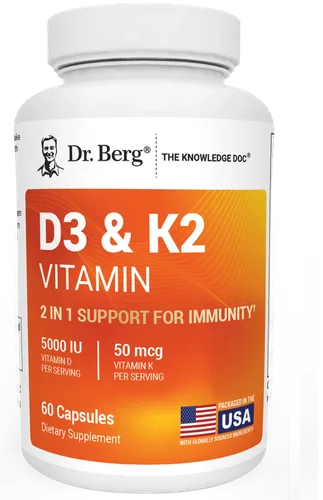
Dr. Berg D3 & K2 Vitamin Review
Dr. Berg D3 & K2 Vitamin Supplement provides a comprehensive and synergistic blend of essential nutrients in a convenient capsule form. Each serving of this supplement delivers 5000 IU of vitamin D3 alongside 50 mcg of vitamin K2 (specifically in the MK-7 form). Beyond these two primary vitamins, the formula incorporates a carefully selected blend of supporting ingredients, including vitamin B6, zinc, magnesium, medium-chain triglyceride (MCT) oil powder, and ox bile. The standard 60-capsule bottle is designed to provide a full 60-day supply of the supplement. A central feature of this product is its focus on smart synergy and optimal nutrient utilization. By formulating vitamin D3 and MK-7 vitamin K2 together with essential cofactors like magnesium, vitamin B6, and zinc, the supplement is specifically designed to help the human body effectively activate and utilize vitamin D. Furthermore, because vitamins D and K are fat-soluble nutrients, the inclusion of MCT powder and ox bile serves as a healthy fat source and digestive aid designed to enhance overall nutrient absorption and improve bioavailability within the body. Regarding manufacturing and quality assurance, Dr. Berg D3 & K2 Vitamin Supplement is formulated in the United States. Production takes place in cGMP-certified facilities that operate under strict quality control standards, and each individual batch of the vitamin D3 K2 supplement undergoes testing to ensure purity and consistency. For customer peace of mind, the product is backed by a 30-day guarantee, allowing buyers who are not satisfied to contact the company within 30 days of their purchase date for assistance. In addition to the 60-capsule size priced at $17.99, the page also notes an option for a 120-capsule bottle.
We don’t sell supplements. We help you make decisions and get the best price.
Lowest prices
We may earn a commission from some store links. How we choose.
Lowest cost per month first, in stock, at 1 capsule a day. Checked Nov 16.
- iHerbLowest$17.49 a bottle$4.37/moBuy at iHerb (opens in a new tab)
- The Vitamin Shoppe$19.99 a bottle$5.00/moBuy at The Vitamin Shoppe (opens in a new tab)
- AmazonPrice at AmazonCheck price at Amazon (opens in a new tab)
Also at: Dr. Berg · Walmart. Some links earn us a commission; price comes first, and a commission only decides the order of prices within 2%. As an Amazon Associate we earn from qualifying purchases.
Study, Trial or Testing Result Summary
Members Only232 human studies · 89 improved
2 of these 232 human studies gave the ingredient by drip, not by mouth.
Vitamin K2 is the best-supported ingredient here at a full dose, and the results are modest. Reviews of trials in women past menopause found it improved lower spine bone density, though not clearly fractures [1][2]. In healthy women past menopause, a daily vitamin K2 dose slowed spine and hip bone loss over 3 years [3]. A one-year trial found a dose close to this product's reduced hip bone loss in women but not in men [4]. A large trial adding vitamin K2 to an osteoporosis drug found no extra benefit [5]. Vitamin D is present at a high dose, above the usual daily limit. Large reviews and trials found it alone did not lower fracture risk [6][7][8]. Zinc is at a full dose and showed bone density gains in a pooled analysis [9], but one two-year trial of zinc with copper found more bone loss [10]. Vitamin B6 is at a trace amount, far below the doses studied [11]. Magnesium has only animal implant studies, not supplement studies in people [12]. Ox bile has no studies for bone health. Animal and cell studies are never counted.
See all 232 studies →Hide the studies
- A pooled analysis of ten observational studies of postmenopausal women found vitamin D supplement use was significantly associated with osteoporotic fracture, among many other factors, but it was not a trial of supplementation.Predictors of osteoporotic fracture in postmenopausal women: a meta-analysis.
- Across 69 trials with about 154,000 adults, vitamin D alone did not change the risk of any fracture (risk ratio 1.00), while combined calcium plus vitamin D lowered it slightly (0.91), and the authors concluded there was little to no meaningful benefit for preventing fractures and falls.Calcium, vitamin D, or combined supplementation to prevent fractures and falls: systematic review and meta-analysis.
- Across six studies of 93,776 people, higher dietary vitamin K intake showed only a trend toward fewer fractures (not clearly significant), with risk falling up to about 120 mcg per day.Dietary Vitamin K Intake and Fracture Risk: A Systematic Review and Dose-Response Meta-Analysis on the Interplay with Vi…
- In five observational studies of 80,982 people, those with the highest dietary vitamin K intake had about 22% lower fracture risk than those with the lowest.Vitamin K intake and the risk of fractures: A meta-analysis.
- Across 33 randomized trials of 51,145 community-dwelling adults over 50, vitamin D, calcium, or both did not lower the risk of hip, vertebral, nonvertebral, or total fractures compared with placebo or no treatment.Association Between Calcium or Vitamin D Supplementation and Fracture Incidence in Community-Dwelling Older Adults: A Sy…
- Across 59 studies of 48,626 children, vegetarian and vegan children ate less zinc and vegetarian children had lower bone mineral content than meat-eating children, but zinc was not given as a supplement.Lacto-ovo-vegetarian and vegan diets in children and adolescents: a systematic review and meta-analysis of nutritional a…
- In 11 trials of 43,869 postmenopausal women with osteoporosis, calcium plus vitamin D modestly improved pelvic bone density but not spine, neck of femur or total hip density, and did not reduce fractures.The effects of combined calcium and vitamin D supplementation on bone mineral density and fracture risk in postmenopausa…
- This review of smartphone apps for osteoporosis self-management did not test vitamin D supplements and found no significant effect on vitamin D intake.Digital Health Technologies for Long-term Self-management of Osteoporosis: Systematic Review and Meta-analysis.
- In seven trials of 12,620 people over 65, daily vitamin D3 plus calcium cut hip fracture odds by 25%, with the biggest effect at 800 IU of vitamin D3 plus 1200 mg of calcium, but it did not improve femoral neck bone density.What is the impact of daily oral supplementation of vitamin D3 (cholecalciferol) plus calcium on the incidence of hip fr…
- In 128 trials of 11,270 adults with chronic kidney disease, vitamin D therapy had uncertain effects on fracture compared with placebo and did not reduce death, though it lowered parathyroid hormone and raised calcium.Vitamin D Therapy in Adults With CKD: A Systematic Review and Meta-analysis.
- A review of 10 studies with 10,802 adolescents in lower-income countries found that calcium and vitamin D may slightly improve whole-body bone density, but zinc had no clear effect on body mass index and its effect on zinc levels was uncertain; no bone result was reported for zinc.Effects of Preventive Nutrition Interventions among Adolescents on Health and Nutritional Status in Low- and Middle-Inco…
- In trials of older adults, 700 to 800 IU a day of vitamin D cut hip fracture risk by 26% and other nonvertebral fractures by 23%, while 400 IU a day gave no significant benefit.Fracture prevention with vitamin D supplementation: a meta-analysis of randomized controlled trials.
- Across 16 trials of 6,425 postmenopausal women, vitamin K2 improved lower spine bone density and lowered undercarboxylated osteocalcin, with no overall fracture reduction unless one outlier study was excluded and no extra side effects.Efficacy of vitamin K2 in the prevention and treatment of postmenopausal osteoporosis: A systematic review and meta-anal…
- In 43 trials of 5,184 postmenopausal women, vitamin K gave the largest rise in a bone formation marker (bone alkaline phosphatase), and vitamin K with vitamin D most increased other bone formation markers.Effects of dietary supplements on bone turnover markers in women after menopause: a network meta-analysis.
- In eight trials of 971 people, vitamin K combined with vitamin D increased total bone density and lowered undercarboxylated osteocalcin, with doses under 500 mcg per day working well.The combination effect of vitamin K and vitamin D on human bone quality: a meta-analysis of randomized controlled trials…
- Across nine studies, vitamin D3 did not significantly reduce nonvertebral or vertebral fractures versus placebo or calcium alone, with only a borderline trend toward fewer falls.The effect of cholecalciferol (vitamin D3) on the risk of fall and fracture: a meta-analysis.
- Pooling 133 genetic studies, genetically higher vitamin D levels were linked to lower risk of femur and leg fractures but higher risk of forearm (radius/ulna) fractures, so bone results were mixed.Vitamin D and human health: evidence from Mendelian randomization studies.
- Pooled randomized trials showed vitamin K modestly raised lumbar spine bone density (about 1.3% relative) but not femoral neck density, and the authors cautioned the results may be biased.Effect of vitamin K on bone mineral density: a meta-analysis of randomized controlled trials.
- Pooling 36 trials in adults, vitamin K may have lowered clinical fractures in post-menopausal or osteoporotic patients, but the evidence was insufficient, and it did not change vertebral fractures or clearly change bone density once weaker trials were removed.Effect of vitamin K on bone mineral density and fractures in adults: an updated systematic review and meta-analysis of r…
- In a review of 11 trials of osteoporosis treatments in primary biliary cholangitis (only one of vitamin K), no treatment significantly reduced fractures and high-quality evidence for any therapy, including vitamin K, was lacking.The Pharmacologic Management of Osteoporosis in Primary Biliary Cholangitis: A Systematic Review and Meta-Analysis.
- Pooled trials in middle-aged and older adults found vitamin K raised lumbar spine bone density, especially in women, and improved the carboxylation of osteocalcin, but did not change other bone turnover markers.Effects of vitamin K supplementation on bone mineral density at different sites and bone metabolism in the middle-aged a…
- A pooled analysis of studies found zinc supplementation improved bone density at the femoral neck and lumbar spine and bone formation markers, and people with osteoporosis had lower blood zinc than controls.Is Zinc an Important Trace Element on Bone-Related Diseases and Complications? A Meta-analysis and Systematic Review fro…
- In 37 trials of 43,397 postmenopausal women on osteoporosis drugs, vitamin D dose was not linked to bone density or fractures, only to fewer stomach side effects and lower death.Vitamin D and calcium supplementation in women undergoing pharmacological management for postmenopausal osteoporosis: a …
- In seven human studies of 1462 people with dental implants, low vitamin D was linked to higher implant loss and one study saw better bone density after up to 12 weeks of vitamin D, but evidence was limited.Impact of Vitamin D on Osseointegration in Dental Implants: A Systematic Review of Human Studies.
- In 23 trials of 1,209 kidney transplant recipients, vitamin D analogues (2 trials, 51 patients) improved lumbar spine and femoral neck bone density versus no treatment, but no trial showed fewer fractures.Interventions for preventing bone disease in kidney transplant recipients: a systematic review of randomized controlled …
- In 18 small trials of 576 children with chronic kidney disease, vitamin D preparations lowered parathyroid hormone levels, but there were few data on growth or bone deformities and no clear differences between preparations.Interventions for metabolic bone disease in children with chronic kidney disease.
- In three small trials of 70 people with cystic fibrosis, it is very uncertain whether vitamin K changes bone density, though undercarboxylated osteocalcin fell.Vitamin K supplementation for cystic fibrosis.
- One small trial of 39 people with sickle cell disease found vitamin D3 for six weeks raised blood vitamin D and reduced pain days versus placebo, but no bone outcomes were reported and the evidence was low quality.Vitamin D supplementation for sickle cell disease.
- This review of 19 studies found people with systemic sclerosis often have low bone density, with low vitamin D levels a conflicting possible risk factor, and did not test vitamin D supplements.Low bone density in systemic sclerosis. A systematic review.
- A systematic review of lifestyle factors for peak bone mass in youth found good evidence that vitamin D plays a role in bone development, though calcium and physical activity had stronger evidence.The National Osteoporosis Foundation's position statement on peak bone mass development and lifestyle factors: a systema…
- A review of 141 studies found vitamin D and calcium intake and bone turnover markers were generally lower in plant-based diets, and vegans had lower bone density, without testing vitamin D supplements.Nutrient Intake and Status in Adults Consuming Plant-Based Diets Compared to Meat-Eaters: A Systematic Review.
- In nine trials of postmenopausal women without osteoporosis, vitamin D raised blood vitamin D and improved some bone remodeling measures, but only one study found fewer fractures, so a fracture benefit could not be confirmed.Supplementation of vitamin D isolated or calcium-associated with bone remodeling and fracture risk in postmenopausal wom…
- A review of Japanese trials reports vitamin K2 and K1 were linked to maintained or higher bone density and fewer fractures, though a larger trial with fractures as the main outcome is still needed.[Vitamin K2].
- In a review of seven trials of at least two years in postmenopausal women, high-dose vitamin K1 and K2 improved femoral neck bone strength indices and reduced clinical fractures despite little change in bone density.High-dose vitamin K supplementation reduces fracture incidence in postmenopausal women: a review of the literature.
- In five trials in postmenopausal women, vitamin K1 cut clinical fractures versus placebo in one good trial, while the K2 trials were poorly reported with mixed results and the larger one showed no reduced vertebral fractures.Vitamin K to prevent fractures in older women: systematic review and economic evaluation.
- This review looked at vitamin K levels, diet and supplements in relation to bone health, but the abstract says findings across studies were conflicting and unclear.Vitamin K and osteoporosis: Myth or reality?
- This review of ten studies on vitamin K for osteoporosis in postmenopausal women did not report clear results in its abstract, so the size of any benefit is not stated.The Anti-osteoporosis Effects of Vitamin K in Postmenopausal Women.
- In 36,282 postmenopausal women given 400 IU vitamin D3 plus calcium daily for about 7 years, hip bone density was 1.06% higher than with placebo, but hip and total fractures were not significantly reduced and kidney stone risk rose.Calcium plus vitamin D supplementation and the risk of fractures.
- In 25,871 middle-aged and older adults taking 2000 IU vitamin D3 daily for a median of 5.3 years, fracture rates (total, nonvertebral, hip) were no different from placebo.Supplemental Vitamin D and Incident Fractures in Midlife and Older Adults.
- In 8,164 people with recent stroke or mini-stroke, a daily tablet of vitamin B6 (25 mg) with folic acid and B12 for a median 2.8 years did not significantly reduce osteoporotic fractures compared with placebo (1.64% vs 1.91%).The effect of homocysteine-lowering with B-vitamins on osteoporotic fractures in patients with cerebrovascular disease: …
- In 7,522 postmenopausal women given calcium and vitamin D, starting vitamin D level did not change how well raloxifene improved bone density, and after 7 months nearly a quarter still had suboptimal vitamin D levels.Vitamin D insufficiency does not affect bone mineral density response to raloxifene.
- In 5,110 adults aged 50-84 given monthly 100,000 IU vitamin D3 for a median of 3.3 years, non-vertebral fractures and falls were not reduced, though bone density improved in people with low vitamin D levels.Overview of results from the Vitamin D Assessment (ViDA) study.
- In 1,874 women aged 65 or older with osteoporosis, adding vitamin K2 (45 mg a day) to risedronate for 2 years did not reduce fractures or increase bone density more than risedronate alone.Comparison of concurrent treatment with vitamin K2 and risedronate compared with treatment with risedronate alone in pat…
- In 1,620 osteoporotic postmenopausal women on calcium and vitamin D, the bone drug teriparatide worked similarly whether baseline vitamin D was insufficient or sufficient, so this study does not test vitamin D itself.Response to teriparatide in patients with baseline 25-hydroxyvitamin D insufficiency or sufficiency.
- In healthy adults aged 70 and older taking 2000 international units of vitamin D3 daily for 3 years, hip bone density improved slightly, spine and femoral neck bone density showed no overall benefit, and the effects were very small.Effects of vitamin D3, omega-3s, and a simple strength training exercise program on bone health: the DO-HEALTH randomize…
- In 1,488 adults aged 70 and older followed for 3 years, 2,000 IU per day of vitamin D3 did not reduce new or worsening spine fractures compared with control.Effects of vitamin D3, omega-3s, and a simple home exercise program on incident vertebral fractures: the DO-HEALTH rando…
- In 1,000 postmenopausal women with low bone density, most taking calcium and vitamin D, low vitamin D at the start did not reduce the bone density response to alendronate.Vitamin D insufficiency does not affect response of bone mineral density to alendronate.
- In 717 osteoporosis patients who avoided sunlight, a weekly tablet of alendronate with 2800 IU vitamin D3 raised vitamin D levels over 15 weeks, while bone turnover slowing was the same as alendronate alone.Alendronate with and without cholecalciferol for osteoporosis: results of a 15-week randomized controlled trial.
- In 500 elderly women with Alzheimer disease who all took 1000 IU of vitamin D2 plus calcium, adding risedronate for 18 months raised bone density 4.1% and cut hip fracture risk compared with placebo, but vitamin D itself was not tested alone and the paper was retracted.The prevention of hip fracture with risedronate and ergocalciferol plus calcium supplementation in elderly women with Al…
- Children whose mothers took 1000 IU of vitamin D3 daily during pregnancy had higher whole-body bone mineral content and density at ages 6-7 than children whose mothers took placebo.Pregnancy vitamin D supplementation and offspring bone mineral density in childhood follow-up of a randomized controlled…
- In 452 men and women aged 60-80 who also took calcium and vitamin D, 500 micrograms a day of vitamin K1 for 3 years did not change bone density at the hip, spine or whole body compared with no vitamin K1.Effect of vitamin K supplementation on bone loss in elderly men and women.
- In 440 postmenopausal women with low bone density, 5 mg a day of vitamin K1 for 2 to 4 years did not change bone density compared with placebo, though fewer women had clinical fractures (9 versus 20), a small secondary finding.Vitamin K supplementation in postmenopausal women with osteopenia (ECKO trial): a randomized controlled trial.
- Mothers given 1000 international units of vitamin D daily during pregnancy had bone density after delivery and about four years later that did not differ from mothers given placebo.Pregnancy vitamin D supplementation and bone mineral density of the mother: a post hoc analysis of the MAVIDOS randomise…
- In 381 healthy postmenopausal women taking calcium and vitamin D, a year of vitamin K (phylloquinone 1 mg or MK-4 45 mg daily) lowered undercarboxylated osteocalcin but did not change bone density, bone turnover markers, or hip geometry.Vitamin K treatment reduces undercarboxylated osteocalcin but does not alter bone turnover, density, or geometry in heal…
- In 379 adults aged 70 or older, monthly vitamin D3 doses of 12,000, 24,000 or 48,000 international units for 12 months produced no difference in hip bone mineral density between dose groups.Randomized controlled trial of vitamin D supplementation in older people to optimize bone health.
- In 379 healthy older adults, 500 mcg per day of phylloquinone for 3 years did not change inflammatory markers or bone density changes compared with no supplement.Vitamin K, circulating cytokines, and bone mineral density in older men and women.
- In 334 healthy women 1-5 years past menopause, 360 mcg of vitamin K2 (menaquinone-7) daily for one year did not change bone loss at the hip or other sites compared with placebo, though blood markers of vitamin K status improved.Vitamin K2 supplementation does not influence bone loss in early menopausal women: a randomised double-blind placebo-con…
- In 325 postmenopausal women, 45 mg per day of menatetrenone for 3 years increased bone mineral content and femoral neck width compared with placebo and kept hip bone strength unchanged, though overall bone density was not changed.Vitamin K2 supplementation improves hip bone geometry and bone strength indices in postmenopausal women.
- In healthy adults aged 55 to 70 taking vitamin D3 daily for 3 years, doses of 4000 or 10000 international units led to slightly lower bone mineral density in the radius than a 400 international unit dose, and 10000 units also lowered it in the tibia, with no difference in bone strength.Effect of High-Dose Vitamin D Supplementation on Volumetric Bone Density and Bone Strength: A Randomized Clinical Trial.
- In 311 men and postmenopausal women aged 50-75, 90 mcg of vitamin K2 daily for one year reduced femoral neck bone loss in postmenopausal women compared with placebo, but not in men, and adding calcium and vitamin D gave no extra benefit.Effect of Low-Dose Vitamin K2 Supplementation on Bone Mineral Density in Middle-Aged and Elderly Chinese: A Randomized C…
- In 301 pregnant women given 400, 2000, or 4000 IU of vitamin D daily, the supplement doses did not change bone density from pregnancy to after birth.Bone mineral density during pregnancy in women participating in a randomized controlled trial of vitamin D supplementati…
- In 260 older African American women followed for 3 years, vitamin D3 averaging 3,490 IU per day, which kept blood levels above 30 ng/mL, did not change femoral neck bone strength compared with placebo.Effect of vitamin D on bone strength in older African Americans: a randomized controlled trial.
- In 257 pre- and postmenopausal women over 12 weeks, fortified milk (containing 2.4 mg zinc among other nutrients) lowered bone breakdown more than regular milk in postmenopausal women.Differential effects of calcium- and vitamin D-fortified milk with FOS-inulin compared to regular milk, on bone biomarke…
- In 244 healthy women aged 60 and over, 200 mcg a day of vitamin K1 for 2 years raised bone mineral at one wrist site only when combined with vitamin D and calcium, with no benefit at the hip or other sites.Two-year randomized controlled trial of vitamin K1 (phylloquinone) and vitamin D3 plus calcium on the bone health of old…
- In 244 healthy postmenopausal women, 180 mcg of MK-7 daily for 3 years slowed the age-related loss of bone mineral density in the lumbar spine and femoral neck compared with placebo.Three-year low-dose menaquinone-7 supplementation helps decrease bone loss in healthy postmenopausal women.
- In 242 elderly men with Parkinson disease who all took 1000 IU of vitamin D2, adding risedronate for 2 years raised bone density, but vitamin D was not compared against placebo and the paper was retracted.Risedronate and ergocalciferol prevent hip fracture in elderly men with Parkinson disease.
- In 242 pregnant Peruvian women given 25 mg zinc daily from 10-16 weeks of pregnancy, the babies had longer thigh bones on ultrasound than those whose mothers took no zinc, with no differences at other sites measured.Randomized controlled trial of prenatal zinc supplementation and fetal bone growth.
- In 231 elderly people with Alzheimer disease, 45 mg per day of menatetrenone with weekly risedronate and calcium for one year was followed by fewer nonvertebral fractures than placebo with risedronate (5 versus 15 fractures), though this paper has been retracted and the comparison is confounded by the risedronate combination.The prevention of hip fracture with menatetrenone and risedronate plus calcium supplementation in elderly patients with …
- In 230 postmenopausal women with insufficient vitamin D, neither 800 international units daily nor high-dose monthly vitamin D3 changed bone mineral density, muscle mass, or falls over 1 year compared with placebo.Treatment of Vitamin D Insufficiency in Postmenopausal Women: A Randomized Clinical Trial.
- In 224 postmenopausal women over 2 years, zinc plus copper led to the greatest bone loss overall, though in women whose usual zinc intake was under 8 mg a day zinc seemed to prevent loss.Reported zinc, but not copper, intakes influence whole-body bone density, mineral content and T score responses to zinc …
- Children whose mothers took 1000 international units of cholecalciferol daily during pregnancy showed no difference in tibia bone structure at age 6 to 7 compared with placebo.Vitamin D supplementation during pregnancy and offspring bone microarchitecture: A post hoc analysis of the MAVIDOS rand…
- In 219 healthy young and older adults, 1000 mcg per day of phylloquinone for 2 weeks raised vitamin K levels about tenfold and lowered undercarboxylated osteocalcin, a vitamin K status marker, but did not change other bone turnover markers.Vitamin K supplementation reduces serum concentrations of under-gamma-carboxylated osteocalcin in healthy young and elde…
- In 214 girls aged 8-12 given calcium with or without a zinc-containing multivitamin for 1 year, bone mass rose with calcium, but adding zinc and the multivitamin made no further difference.School-based calcium-vitamin D with micronutrient supplementation enhances bone mass in underprivileged Indian premenarc…
- In 205 adults aged 50 and over, 2 years of daily low-dose B6 (10 mg) with folic acid, B12 and riboflavin did not change bone density overall, but slowed hip bone loss in those with lower B12 levels.A 2-Year Randomized Controlled Trial With Low-Dose B-Vitamin Supplementation Shows Benefits on Bone Mineral Density in A…
- In 197 adults with high blood pressure and low vitamin D, 2800 international units daily for 8 weeks did not change markers of bone turnover compared with placebo.Effects of Vitamin D Supplementation on Bone Turnover Markers: A Randomized Controlled Trial.
- In 187 women past menopause over two years, adding 10,000 IU of vitamin D2 weekly to 1000 mg daily calcium did not improve bone density beyond calcium alone.Vitamin D supplementation and bone mineral density in early postmenopausal women.
- In 181 postmenopausal women aged 50 to 60, 1 mg per day of vitamin K1 added to minerals and vitamin D for 3 years reduced femoral neck bone loss compared with placebo, but did not change lumbar spine bone loss.Vitamin K1 supplementation retards bone loss in postmenopausal women between 50 and 60 years of age.
- In 158 young children in Bangladesh given a milk-based supplement for 13 months, including one group also getting zinc with calcium and vitamins, none of those who finished showed signs of rickets, but zinc's own effect was not separated out.Apparent efficacy of food-based calcium supplementation in preventing rickets in Bangladesh.
- In 156 growth-delayed preschool children given 3.5 mg zinc daily for 12 months, height gain improved but bone age maturity was not affected.Effect of micronutrient supplementation on the growth of preschool children in China.
- In 150 healthy postmenopausal Spanish women, 800 IU daily vitamin D3 with calcium raised vitamin D levels over 12 weeks, but bone remodeling markers changed similarly to placebo, and adding genistein gave no extra benefit.Genistein supplementation has no effects on vitamin D levels in healthy Spanish postmenopausal women.
- In 148 postmenopausal women with low bone mass, 375 mcg a day of vitamin K2 (MK-7) for 12 months preserved trabecular structure in the tibia compared with placebo, but bone density did not differ at any site.Vitamin K2 (menaquinone-7) prevents age-related deterioration of trabecular bone microarchitecture at the tibia in postm…
- In a 12-month placebo-controlled trial of 148 postmenopausal women, 375 mcg of vitamin K2 (MK-7) daily cut undercarboxylated osteocalcin, a bone marker, by about 70% compared with a small change on placebo.Vitamin K2 (menaquinone-7) increases plasma adiponectin but does not affect insulin sensitivity in postmenopausal women:…
- In 147 girls aged 9-11 given 9 mg zinc daily for 4 weeks, a bone formation marker (P1NP) rose compared with placebo, while other bone markers did not change.Zinc Supplementation Increases Procollagen Type 1 Amino-Terminal Propeptide in Premenarcheal Girls: A Randomized Control…
- In a 3-year placebo-controlled trial of 142 postmenopausal women with low bone mass, 375 mcg daily of menaquinone-7 added to calcium and vitamin D raised carboxylated osteocalcin but did not change bone mineral density or bone structure compared with placebo.The effect of vitamin MK-7 on bone mineral density and microarchitecture in postmenopausal women with osteopenia, a 3-ye…
- In 123 people on dialysis, 360 mcg of MK-7 daily for 2 years prevented lumbar spine bone loss compared with placebo but sped up bone loss in the distal radius, so the authors do not recommend it for bone protection.Vitamin K supplementation and bone mineral density in dialysis: results of the double-blind, randomized, placebo-control…
- In 122 postmenopausal women over 12 weeks, salmon or tablets with higher vitamin D3 improved bone turnover markers, and the benefit was attributed to vitamin D3 rather than the vitamin K1 content.Reduced bone resorption by intake of dietary vitamin D and K from tailor-made Atlantic salmon: A randomized intervention…
- In 121 postmenopausal women over 1 year, fortified milk (with 2.4 mg zinc among other nutrients) lowered bone turnover markers and hip bone density tended to be better kept than with regular milk.Calcium and vitamin D fortified milk reduces bone turnover and improves bone density in postmenopausal women over 1 year…
- In 120 women with osteoporosis, 800 IU of vitamin D daily for 16 weeks improved bone density and bone markers more than no supplement, and the greatest benefit came when combined with high-intensity exercise.Concurrent effects of high-intensity interval training and vitamin D supplementation on bone metabolism among women diag…
- In a placebo-controlled trial of 120 adults, 100 mcg daily of menaquinone-7 for 12 weeks improved the activation of the bone protein osteocalcin compared with placebo, and a dose-finding trial suggested 100 mcg or more is needed.Low-Dose Daily Intake of Vitamin K(2) (Menaquinone-7) Improves Osteocalcin γ-Carboxylation: A Double-Blind, Randomized C…
- In 118 healthy children aged 4 to 11, 10 mcg per day of vitamin D3 spray for 12 weeks raised vitamin D levels compared with placebo but did not change bone turnover markers.The Effect of Vitamin D3 Supplementation on Vitamin D Status and Associated Health Outcomes in Children: A Randomized Co…
- Female endurance athletes who took vitamin K1 or placebo for two years lost similar amounts of hip bone density, and vitamin K did not prevent the bone loss.Factors affecting bone loss in female endurance athletes: a two-year follow-up study.
- In 115 postmenopausal women, 12 months of fortified dairy with 100 mcg vitamin K1 or K2 plus counselling raised lumbar spine bone density more than the usual diet group, though the groups without vitamin K also gained total body density.Possible site-specific effect of an intervention combining nutrition and lifestyle counselling with consumption of forti…
- In 112 postmenopausal women with low bone density, taking 800 IU of vitamin D daily alone for 48 weeks did not improve bone density; spine density fell slightly and hip density fell more, while adding a bone drug (raloxifene) to the vitamin D produced the gains.A randomized controlled trial of the effect of raloxifene plus cholecalciferol versus cholecalciferol alone on bone mine…
- In 110 healthy children and adults, MK-7 supplements improved vitamin K status most in people who were most deficient, and adults over 40 may benefit, though bone outcomes were not directly measured.Vitamin K status in healthy volunteers.
- In 108 vitamin D-deficient young Indian women, 400 to 800 IU daily vitamin D3 for 12 weeks raised vitamin D levels in a dose-related way, with 800 IU working best, while parathyroid hormone fell over time and bone turnover markers changed only modestly.The Dose-Response Effects of Vitamin D3 on Serum 25-Hydroxyvitamin D Levels in Vitamin D-Deficient Young Indian Women: A…
- In 105 postmenopausal women with osteoporosis taking meds, 1 mg of vitamin K1 daily for 18 months did not change bone density or bone turnover compared with placebo, though it had a small effect on some hip shape measures.Read the study on PubMed (37338608) →
- In 104 elderly women with osteoporosis followed for 5 years, an education program (which increased vitamin D supplement use) led to fewer fragility fractures and higher bone density at some sites than the control group, but vitamin D itself was not tested alone.The Effect of Education Intervention on Osteoporotic Fracture and Bone Mineral Density in Elderly Women With Osteoporosi…
- In 95 hip fracture patients with low vitamin D given 1000 IU daily for three months, cholecalciferol raised blood vitamin D 31% more than ergocalciferol, but parathyroid hormone changes did not differ and bone outcomes were not measured.Serum 25-hydroxyvitamin D levels in vitamin D-insufficient hip fracture patients after supplementation with ergocalcifer…
- In a 1-year randomized double-blind trial of 94 lung and heart transplant recipients, 180 mcg daily of menaquinone-7 gave a favorable change in lumbar spine bone density compared with placebo, though the difference was borderline in the overall group.Dietary vitamin K2 supplement improves bone status after lung and heart transplantation.
- In 93 older adults, one year of B6 (50 mg) with folic acid, B12, vitamin D3 and calcium did not improve bone turnover beyond what vitamin D3 and calcium alone achieved.One year B and D vitamins supplementation improves metabolic bone markers.
- In postmenopausal women with osteoporosis, 0.75 micrograms of vitamin D3 daily combined with vitamin K2 for two years increased lumbar spine bone density more than calcium alone, and the combination worked better than either vitamin alone.Effect of combined administration of vitamin D3 and vitamin K2 on bone mineral density of the lumbar spine in postmenopa…
- In 90 middle-aged and older people with osteoporosis, six months of nutrition education and diet changes on top of usual treatment raised bone density in the lower spine and hip more than usual treatment alone, though zinc was only one of many nutrients that increased.[Effects of the nutritional education and dietary intervention on nutritional status and bone mineral density of middle-…
- In 89 adults eating plant-based or animal meats for 8 weeks, higher dietary B6 intake in the plant-based group came with only a marginal bone density change and no change in bone turnover markers.Micronutrient intake and status of adults consuming plant-based meat analogues or animal-based meats as primary protein …
- In lung transplant recipients given 100,000 international units of vitamin D once a month for two years, bone mineral density and other secondary outcomes did not differ from placebo, although blood vitamin D levels were higher.High-dose vitamin D after lung transplantation: A randomized trial.
- Adults with Crohn's disease who took 1000 micrograms of vitamin K1 daily with calcium and vitamin D for a year had no better bone turnover or bone density than those on placebo, apart from a small gain in forearm bone mass.Effect of phylloquinone (vitamin K1) supplementation for 12 months on the indices of vitamin K status and bone health in…
- In 86 preterm infants, adding vitamin K2 (50 mcg daily) and vitamin A to routine vitamin D and K1 for 12 months led to higher spine and femur bone density and greater height scores than routine supplements alone, with no difference in side effects.Efficacy of combined supplementation of vitamins A/D/K1/K2 on the growth and development of preterm infants: A randomize…
- In 85 late postmenopausal women, a year of a multi-nutrient supplement with eggshell calcium plus vitamin K raised hip (femoral neck) bone density by 1.75% versus a 0.60% loss on placebo, but the plain calcium carbonate version and other sites showed no significant change.Positive effects of a chicken eggshell powder-enriched vitamin-mineral supplement on femoral neck bone mineral density i…
- In 82 premenopausal women, adding 80 mcg a day of vitamin K1 to calcium-fortified milk for 16 weeks improved vitamin K status but did not lower bone turnover any more than the fortified milk alone.Effect of calcium fortified milk supplementation with or without vitamin K on biochemical markers of bone turnover in pr…
- In 81 postmenopausal women with low vitamin D, 2800 international units daily for 3 months improved tibia bone strength and trabecular thickness and raised density at the hip and femoral neck, but did not change overall bone density by scan.Bone Microstructure in Response to Vitamin D3 Supplementation: A Randomized Placebo-Controlled Trial.
- In 78 Korean postmenopausal women over 60, adding vitamin K2 (45 mg a day) to vitamin D and calcium for 6 months raised lower-spine bone density and lowered undercarboxylated osteocalcin more than vitamin D and calcium alone.Vitamin K supplement along with vitamin D and calcium reduced serum concentration of undercarboxylated osteocalcin while…
- In 78 menopausal women at risk of osteoporosis, a daily multi-nutrient enriched dairy product including vitamin K for 24 weeks maintained bone density and improved bone formation and breakdown markers compared with the unenriched product.A Dairy Product to Reconstitute Enriched with Bioactive Nutrients Stops Bone Loss in High-Risk Menopausal Women without …
- In 72 adults with high blood fats, a year of daily fortified milk containing B6 among other nutrients raised bone formation markers such as osteocalcin by 22%, but the effect of B6 alone cannot be separated.Improvement of bone formation biomarkers after 1-year consumption with milk fortified with eicosapentaenoic acid, docosa…
- In elderly hip fracture patients over 4 months, vitamin K1, calcium and vitamin D raised blood vitamin K1 levels but did not change bone turnover markers compared with usual care.Effects of nutritional intervention upon bone turnover in elderly hip fracture patients. Randomized controlled trial.
- In 71 pregnant women, 20 mg of zinc a day for 12 weeks raised blood zinc and led to higher bone-building marker (osteocalcin) levels in cord blood and slightly longer newborn length than placebo.A randomized, placebo-controlled trial of zinc supplementation during pregnancy for the prevention of stunting: analysis…
- In 68 people with type 2 diabetes and heart disease, 360 mcg of vitamin K2 daily for 6 months did not slow vertebral bone density loss compared with placebo.Six months vitamin K treatment does not affect systemic arterial calcification or bone mineral density in diabetes melli…
- In 63 premenopausal women, eating soy foods for 10 weeks did not change zinc status, bone breakdown or bone formation overall compared with animal foods, apart from a small rise in one bone formation marker.The effect of soy food intake on mineral status in premenopausal women.
- Frail hospitalized elderly people who took 30 mg of extra zinc daily with a whey protein supplement for 4 weeks had a faster rise in IGF-I and a faster drop in a bone breakdown marker than those given protein alone.Zinc increases the effects of essential amino acids-whey protein supplements in frail elderly.
- In 60 adults with type 2 diabetes, 200 mcg per day of menaquinone-7 for 12 weeks did not change body composition, including bone mass, compared with placebo.The effect of menaquinone-7 supplementation on dp-ucMGP, PIVKAII, inflammatory markers, and body composition in type 2 d…
- In 60 adults with broken bones, 50 mg of daily zinc sulfate for 60 days, compared with placebo, produced more visible callus formation on x-rays and raised serum zinc and alkaline phosphatase.The effects of zinc supplementation on serum zinc, alkaline phosphatase activity and fracture healing of bones.
- In 59 men with prostate cancer on hormone-blocking therapy, weekly high-dose vitamin D (50,000 IU per week) for 24 weeks, compared with placebo, reduced hip and thigh-neck bone density loss, with the largest benefit in men with low starting vitamin D levels.High-dose vitamin D to attenuate bone loss in patients with prostate cancer on androgen deprivation therapy: A phase 2 R…
- In 59 older men with or at risk of low bone density, adding 50 g or 100 g of prunes daily for one year to a multivitamin with 800 IU vitamin D3 and calcium did not change total or lumbar spine bone density compared with the multivitamin alone.Prune Consumption and Bone Health in Older Men: A One-Year Randomized Controlled Trial.
- In 59 postmenopausal women, 2 years of calcium plus zinc (15 mg), manganese and copper stopped spine bone loss (+1.48%) while the placebo group lost 3.53%; calcium alone or trace minerals alone did not differ significantly from placebo.Spinal bone loss in postmenopausal women supplemented with calcium and trace minerals.
- In a placebo-controlled trial of 55 postmenopausal women with osteopenia, doxercalciferol (a vitamin D analog, averaging 4.1 mcg daily) showed no bone density benefit at 12 months but a 1.7% femoral neck gain over placebo at 24 months, with no significant spine benefit.Efficacy and safety of doxercalciferol (1α hydroxyvitamin D2) on spine and femur bone mineral density in postmenopausal …
- In 55 healthy children, 45 mcg of menaquinone-7 daily for 8 weeks improved vitamin K status by raising active osteocalcin, but bone markers and clotting measures did not change compared with placebo.The effect of menaquinone-7 (vitamin K2) supplementation on osteocalcin carboxylation in healthy prepubertal children.
- In 55 older women with type 2 diabetes, pyridoxamine (a vitamin B6 form) at 200 mg twice daily for one year raised femoral neck bone density by 2.6% versus a 0.9% loss on placebo, and bone formation marker rise was borderline versus placebo.The Effects of the AGE Inhibitor Pyridoxamine on Bone in Older Women With Type 2 Diabetes: A Randomized Clinical Trial.
- In 50 adults with painful knee osteoarthritis, 800 IU of vitamin D daily for 2 years did not change joint lining swelling or bone marrow lesion volume compared with placebo.Effect of Vitamin D supplementation on synovial tissue volume and subchondral bone marrow lesion volume in symptomatic k…
- In 48 postmenopausal Japanese women, 1.5 mg of MK-4 daily for 12 months lowered undercarboxylated osteocalcin and pentosidine and prevented the forearm bone density loss seen in the placebo group.Low-dose vitamin K2 (MK-4) supplementation for 12 months improves bone metabolism and prevents forearm bone loss in post…
- In 44 postmenopausal women with osteoporosis taking alendronate for one year, adding 45 mg per day of vitamin K2 led to a greater increase in femoral neck bone density than alendronate alone.Response of serum carboxylated and undercarboxylated osteocalcin to alendronate monotherapy and combined therapy with vi…
- In a randomized trial of 43 children with nephrotic syndrome, vitamin D3 (60,000 IU weekly for 4 weeks) with calcium raised vitamin D levels over 6 months but did not change bone mineral content or bone density compared with controls.Read the study on PubMed (28725977) →
- In 42 young people with thalassemia and low bone mass, 25 mg of zinc daily for 18 months led to greater gains in whole-body bone mineral content and bone density than placebo.Zinc supplementation improves bone density in patients with thalassemia: a double-blind, randomized, placebo-controlled …
- In a 2-year placebo-controlled trial of 40 children with galactosemia, daily vitamin K1 with calcium and vitamin D3 raised lumbar spine bone mineral content, and this gain was seen only in the younger, prepubertal children.Effect of calcium, vitamins K1 and D3 on bone in galactosemia.
- In 40 healthy postmenopausal Japanese women, 1.5 mg of vitamin K2 daily for four weeks lowered undercarboxylated osteocalcin and raised its activated form compared with placebo, indicating better vitamin K activation of bone protein.Effect of low dose vitamin K2 (MK-4) supplementation on bio-indices in postmenopausal Japanese women.
- In a small study of children with severe burns given vitamin D2, vitamin D3, or placebo, fewer children given vitamin D3 had fractures after discharge (none, versus four in the placebo group), a preliminary sign of benefit that was not formally tested for statistical significance.Investigation of Bone Health Subsequent to Vitamin D Supplementation in Children Following Burn Injury.
- In a small 48-week pilot of HIV-positive African American adults, all of whom took vitamin D and calcium, the efavirenz-based regimen was linked to hip bone density loss and sustained low vitamin D, while the raltegravir-based regimen did not show these losses.Bone Mineral Density and Vitamin D Levels in HIV Treatment-Naïve African American Individuals Randomized to Receive HIV …
- Older women who replaced sitting time with light activity for 8 weeks increased their dietary zinc intake, and women who began walking more increased zinc intake by about 29 percent.Displacing Sedentary Behaviour with Light Intensity Physical Activity Spontaneously Alters Habitual Macronutrient Intake…
- In vitamin D deficient postmenopausal women given a single high bolus of vitamin D3 over three months, bone turnover markers rose briefly one week after the 500,000 international unit dose, while blood calcium and physical function were unchanged.Effects of High Dose Bolus Cholecalciferol on Free Vitamin D Metabolites, Bone Turnover Markers and Physical Function.
- In a 14-week placebo-controlled pilot of 33 postmenopausal women, a combination including 1000 mcg of vitamin K1 per day lowered serum osteocalcin, a bone turnover marker, by about 31% while placebo raised it by 19%.Hop rho iso-alpha acids, berberine, vitamin D3 and vitamin K1 favorably impact biomarkers of bone turnover in postmenopa…
- Postmenopausal women who took 200 or 500 micrograms of vitamin K1 daily for six weeks improved their vitamin K levels, but their bone turnover markers did not change compared with placebo.Effect of phylloquinone supplementation on biochemical markers of vitamin K status and bone turnover in postmenopausal w…
- In 31 growth hormone-deficient children, adding zinc to calcium and vitamin D during a year of growth hormone therapy gave a marginally greater gain in bone mineral content than calcium and vitamin D alone.Enhanced effect of zinc and calcium supplementation on bone status in growth hormone-deficient children treated with gro…
- In 29 children with acute lymphoblastic leukemia, 100 mcg of vitamin K2 daily with vitamin D3 during chemotherapy produced earlier bone-protective changes in blood markers than chemotherapy alone over six months.Effect of vitamin K2 and vitamin D3 on bone mineral density in children with acute lymphoblastic leukemia: a prospective…
- In obese men on a low-calorie diet, the fat blocker orlistat for 21 days did not change zinc balance or markers of bone turnover compared with placebo.Short-term orlistat treatment does not affect mineral balance and bone turnover in obese men.
- In 25 postmenopausal women who finished a controlled diet study, 53 mg of zinc a day for 90 days did not harm bone or mineral balance through copper changes, but raised urinary bone breakdown markers, lowered calcitonin and reduced magnesium balance, while very low zinc (3 mg) also caused unfavorable hormone and bone marker changes.A moderately high intake compared to a low intake of zinc depresses magnesium balance and alters indices of bone turnove…
- In 24 stunted children aged 4 to 5 years, zinc sulfate six days a week for six months, added to one vitamin A dose, was linked to higher bone age, height for age, and growth hormone factor levels and lower inflammation compared with vitamin A and placebo.The effect of adding zinc to vitamin A on IGF-1, bone age and linear growth in stunted children.
- Postmenopausal women who ate 450 micrograms of vitamin K1 daily for a few weeks had a modest drop in a bone breakdown marker, but bone formation and mineral handling did not change.Dietary phylloquinone depletion and repletion in postmenopausal women: effects on bone and mineral metabolism.
- In 20 patients with kidney inflammation taking prednisolone, 45 mg a day of menatetrenone for 10 weeks prevented the significant spine bone density loss seen with prednisolone alone.Short-term effect of vitamin K administration on prednisolone-induced loss of bone mineral density in patients with chro…
- In 20 postmenopausal women with osteoporosis and wrist fractures, two weeks of vitamin K supplements corrected a defect in how bone protein osteocalcin was activated, and the benefit was still detectable four weeks later.Carboxylation of osteocalcin in post-menopausal osteoporotic women following vitamin K and D supplementation.
- In 20 healthy men taking 50 mg of zinc gluconate daily for 12 weeks, bone formation markers rose compared with placebo, while bone breakdown markers did not change.Zinc supplementation increases bone alkaline phosphatase in healthy men.
- In a one-year randomized pilot of 16 a med-treated patients, adding vitamin K2 to risedronate gave no extra reduction in bone turnover markers beyond risedronate alone.Read the study on PubMed (20190467) →
- In 15 young adults in a crossover study, hydrogenated vitamin K (dihydrophylloquinone) at 200 mcg per day for 10 days was less absorbed than regular phylloquinone and had no measurable effect on markers of bone formation or breakdown.Effects of a hydrogenated form of vitamin K on bone formation and resorption.
- In 14 pre- and perimenopausal women, 600 mcg daily of vitamin K1 for 6 months did not improve regional bone density or serum osteocalcin compared with placebo, and urinary bone breakdown marker rose in the vitamin K group.Vitamin K supplementation does not significantly impact bone mineral density and biochemical markers of bone in pre- and…
- In older Chileans with hip osteoporosis, a year of a multi-nutrient supplement including 400 IU vitamin D raised blood vitamin D and lowered parathyroid hormone, but did not change bone density compared with the usual supplement.Effect of a nutritional supplementation on bone health in Chilean elderly subjects with femoral osteoporosis.
- In teenagers being treated for acute lymphoblastic leukemia, directly observed high-dose vitamin D3 corrected low vitamin D levels, but it did not change bone density compared with standard care.A randomized controlled trial testing an adherence-optimized Vitamin D regimen to mitigate bone change in adolescents be…
- In Indian premenopausal women over six months, a nutrient-fortified protein drink containing 400 IU of vitamin D, calcium and vitamin K lowered bone turnover markers compared with a placebo drink, though bone density was not measured.Randomised Controlled Trial of Nutritional Supplement on Bone Turnover Markers in Indian Premenopausal Women.
- In postpartum women, 6400 international units daily lost less femoral neck bone mineral density over 7 months than 400 units daily, but only among exclusively breastfeeding women.Factors Affecting Postpartum Bone Mineral Density in a Clinical Trial of Vitamin D Supplementation.
- This randomized trial compared vitamin K with other osteoporosis treatments in postmenopausal women, but it was retracted for suspected misconduct and the retraction notice gives no usable result, so it should not be relied on.RETRACTED: Comparative efficacy of hormone replacement therapy, etidronate, calcitonin, alfacalcidol, and vitamin K in p…
- In two large trials of people given 40 mg of vitamin B6 daily (alone or with folic acid and vitamin B12) for a median of 3.3 years, hip fracture risk was not different during the trial, but over a median 11.1 years of extended follow-up those receiving B6 had a 42% higher risk of hip fracture than those not receiving it.B Vitamins and Hip Fracture: Secondary Analyses and Extended Follow-Up of Two Large Randomized Controlled Trials.
- Over 2 years, young Chinese women aged 20 to 35 who drank milk powder with 80 mcg of vitamin K1 and 1000 mg calcium did not gain more bone density than the control group, which received nothing.Milk supplementation and bone health in young adult chinese women.
- Elderly women with Parkinson's disease and low vitamin D who took 45 mg of vitamin K2 daily for a year had bone density in the hand that rose slightly, while untreated women lost bone, and fewer of the treated women broke a hip; this paper has been retracted.Amelioration of osteoporosis by menatetrenone in elderly female Parkinson's disease patients with vitamin D deficiency.
- In 108 stroke patients with vitamin D and K deficiency, 45 mg of menatetrenone daily for 12 months raised bone density on the paralyzed side by 4.3% while untreated patients lost 4.7%.Menatetrenone ameliorates osteopenia in disuse-affected limbs of vitamin D- and K-deficient stroke patients.
- In 100 adults with closed fractures, taking polaprezinc (a zinc-carnosine compound) 75 mg twice daily for 12 weeks alongside standard care led to faster bone healing on X-ray, less pain and about one week shorter healing time than standard care alone, with no serious side effects.Evaluation of effectiveness and safety of polaprezinc as an adjuvant therapy in enhancing fracture healing in adults wit…
- In 71 osteoporotic patients after lumbar fusion surgery, vitamin K2 (45 mg a day) with vitamin D3 and calcium for 6 months gave higher complete bone fusion (92% vs 74%) than vitamin D3 and calcium alone, though bone density changes did not differ significantly.Combined vitamin K2 and D3 therapy improves endoscopic fusion outcomes in osteoporotic lumbar degenerative disease: a pr…
- In 20 children with severe cerebral palsy who take seizure medicine, 0.25 mcg per day of an active vitamin D form plus calcium for 9 months increased bone density, while untreated controls continued to lose bone.Effect of vitamin D and calcium on bone mineral density in children with CP and epilepsy in full-time care.
- Children on long-term meds who took menatetrenone (about 2 mg per kg daily) with alfacalcidol for 12 weeks gained lumbar bone density compared with alfacalcidol alone, with no adverse effects.Inverse correlation between the changes of lumbar bone mineral density and serum undercarboxylated osteocalcin after vit…
- Healthy young adults who took 90 mcg of vitamin K2 (MK-7) daily in olive oil for 2 weeks had higher blood levels of active osteocalcin, a bone-building protein, than before.Olive oil supplemented with menaquinone-7 significantly affects osteocalcin carboxylation.
- In eight obese people on low-calorie diets, eating more carbohydrate was linked with better zinc and calcium retention, while a thyroid hormone drug increased zinc loss and bone breakdown markers rose during dieting.Changes in bone and muscle constituents during dieting for obesity.
- In healthy volunteers, menaquinone-7 was absorbed well and fully activated osteocalcin, a bone protein, more completely than synthetic vitamin K1, but no bone density or fracture outcome was measured.Vitamin K-containing dietary supplements: comparison of synthetic vitamin K1 and natto-derived menaquinone-7.
- In healthy women given 1 mg of vitamin K daily, bone-related blood markers changed in some women, and in women who lost the most urinary calcium, calcium loss fell by about 30%; the abstract was truncated and the results are mixed.Vitamin K-induced changes in markers for osteoblast activity and urinary calcium loss.
- In 241 osteoporosis patients over two years, 45 mg per day of vitamin K2 was linked to fewer new fractures than no treatment, although lumbar bone density did not rise.Vitamin K2 (menatetrenone) effectively prevents fractures and sustains lumbar bone mineral density in osteoporosis.
- In 120 women with low vitamin D, adding 0.5 micrograms of calcitriol daily to vitamin D3 and calcium for 6 months raised bone mineral density in the lumbar spine, while vitamin D3 alone did not raise it.Calcitriol treatment in patients with low vitamin D levels.
- In 109 postmenopausal women with osteoporosis, 45 mg of menatetrenone daily for 6 months raised active bone-building osteocalcin compared with calcium aspartate, but urinary bone-breakdown marker NTX also rose, so the effect on bone turnover was mixed.Short-term menatetrenone therapy increases gamma-carboxylation of osteocalcin with a moderate increase of bone turnover …
- In 56 hemodialysis patients, 60 mg of intravenous vitamin B6 after each dialysis session for 6 months lowered bone turnover markers compared with controls and may blunt bone response to parathyroid hormone.Intravenous Vitamin B6 Increases Resistance to Erythropoiesis-Stimulating Agents in Hemodialysis Patients: A Randomized …
- In postmenopausal women with normal-calcium hyperparathyroidism, alendronate with cholecalciferol raised bone mineral density in the spine and hip over one year, while cholecalciferol alone did not, and neither treatment changed blood or urine calcium.Effects of alendronate and vitamin D in patients with normocalcemic primary hyperparathyroidism.
- Postmenopausal women with osteoporotic fractures who took 5 mg of vitamin K2 daily cut their undercarboxylated osteocalcin, a marker of low vitamin K, by about three-quarters, and 45 mg gave no further gain.Maximal dose-response of vitamin-K2 (menaquinone-4) on undercarboxylated osteocalcin in women with osteoporosis.
- In 20 children with thalassemia, 50 mcg of vitamin K2 daily with calcitriol for one year improved lumbar spine bone density in this uncontrolled pilot study.The efficacy of vitamin K2 and calcitriol combination on thalassemic osteopathy.
- Patients with severe motor and intellectual disabilities who received vitamin K1 food-based therapy for three months had better vitamin K status, but bone formation and breakdown markers both rose, so the bone effect is unclear.Nutritional Therapy with Vitamin K1 Is Effective in the Improvement of Vitamin K Status and Bone Turnover Markers in Pat…
- In 14 children with kidney disease and low zinc, 3 months of zinc citrate (10 mg once or twice daily by age) corrected low zinc in 8 of them but had only a modest effect on bone metabolism markers.Zinc Supplementation Trial in Pediatric Chronic Kidney Disease: Effects on Circulating FGF-23 and Klotho.
- In nine men on hemodialysis taking 34 mg zinc daily as polaprezinc for 18 months, a trend toward higher bone formation marker levels appeared, with no change in bone breakdown markers.Effect of zinc supplementation on bone formation in hemodialysis patients with normal or low turnover bone.
- In 8 female elite athletes, one month of 10 mg daily vitamin K raised bone-building markers by about 15-20% and lowered bone-breakdown markers by about 20-25%, with no placebo group for comparison.Improved bone metabolism in female elite athletes after vitamin K supplementation.
- In 5 older adults with low vitamin D and high parathyroid hormone, correcting vitamin D levels raised bone density at the spine and hip despite the persistent hormone imbalance.Bone mineral density increases with vitamin D repletion in patients with coexistent vitamin D insufficiency and primary …
- In a national survey of 13,027 adults, a med users who had inadequate daily zinc intake had higher odds of low bone density (odds ratio 1.11), and this was a cross-sectional association, not a trial result.Nutrition status, bone mass density, and selective serotonin reuptake inhibitors.
- In a cross-sectional survey of 11,520 adults, higher dietary zinc intake was linked to higher bone mineral density, with a nonlinear pattern.The association between dietary mineral intake and bone mineral density: a cross-sectional study.
- In a cross-sectional survey of 10,584 US adults aged 20 and older, higher dietary zinc intake was associated with higher femoral bone mineral density.Bone mineral density is associated with composite dietary antioxidant index among US adults: results from NHANES.
- In a national survey of 3,607 U.S. adults, higher blood zinc levels were linked to greater bone density in the spine and thigh bone. This was an association from a cross-sectional study, not a supplement trial, and it did not show that taking zinc improves bone.Serum zinc levels and multiple health outcomes: Implications for zinc-based biomaterials.
- A genetic analysis of about 2,260 people found that naturally higher vitamin D levels were not linked to bone density or vertebral fractures, though they were linked to higher levels of a bone turnover marker; no supplement was tested.Circulating serum 25-hydroxyvitamin D levels and bone mineral density and osteoporotic vertebral fractures: A Mendelian …
- In 2058 postmenopausal women in the US survey, higher blood vitamin D levels (50 nmol/L or more) were linked to lower odds of osteoporosis at the hip and femoral neck, with the strongest link in women 65 and older.The Relationship Between Serum 25-Hydroxyvitamin D Levels and Osteoporosis in Postmenopausal Women.
- In 1700 Danish postmenopausal women, low dietary vitamin B6 intake mattered for bone density only in women with a certain gene variant and in the lowest intake quartile, and riboflavin was the only significant predictor.Are effects of MTHFR (C677T) genotype on BMD confined to women with low folate and riboflavin intake? Analysis of food r…
- In a study of 1,669 postmenopausal women, 58.5% with osteoporosis were not on active bone treatment, and calcium or vitamin D use was not tested as a cause of bone density change.Beyond Bone Mineral Density: Real-World Fracture Risk Profiles and Therapeutic Gaps in Postmenopausal Osteoporosis.
- In a study of 1269 Mexican women, dietary vitamin B6 intake was associated with one antioxidant gene variant, but the study did not report a direct link between vitamin B6 intake and bone mineral density.Association Study between Antioxidant Nutrient Intake and Low Bone Mineral Density with Oxidative Stress-Single Nucleoti…
- In 1241 Scottish women followed for about 6.6 years, dietary vitamin B6 showed no significant link to bone density on its own; only riboflavin intake interacted with a gene variant to affect bone density.Methylenetetrahydrofolate reductase polymorphism interacts with riboflavin intake to influence bone mineral density.
- In a national survey of 905 adults with rheumatoid arthritis aged 40 and older, higher dietary zinc intake (19.52 mg or more) was linked to lower odds of osteopenia or osteoporosis (odds ratio 0.39), though this does not prove cause.The association between dietary zinc intake and osteopenia, osteoporosis in patients with rheumatoid arthritis.
- In 798 postmenopausal women, higher cortisol and parathyroid hormone were linked to lower bone density, and vitamin D level was measured but its link to bone density is not reported in the abstract.Association of Endogenous Hormones and Bone Mineral Density in Postmenopausal Women.
- Pregnant women in Australia did not consume more zinc, protein or magnesium than non-pregnant peers, so they were less likely to meet recommendations for these bone-related nutrients.Maternal Nutrition During Pregnancy: Intake of Nutrients Important for Bone Health.
- In a survey of 629 people with homocystinuria, untreated patients who responded to vitamin B6 had less spinal osteoporosis by age 15 (36%) than untreated non-responders (64%); this is a natural history comparison, not a supplement trial.The natural history of homocystinuria due to cystathionine beta-synthase deficiency.
- Elderly adults who ate more vitamin K from food had higher bone density and better heel ultrasound readings, and those who increased their intake lost less bone over two years.Dietary vitamin K intake is associated with bone quantitative ultrasound measurements but not with bone peripheral bioch…
- In 350 people with liver cirrhosis, most had low blood vitamin D (average 8.75 ng/ml) and 86 percent had low bone density, but this cross-sectional study did not test whether vitamin D changes bone health.Vitamin D status & bone health in patients with liver cirrhosis.
- In 324 hip replacement candidates, about a quarter had osteoporosis, and women with lower bone density also had lower vitamin D levels.High prevalence and underdiagnosis of osteoporosis in total hip arthroplasty candidates: a comprehensive assessment usin…
- In 317 Japanese postmenopausal women with osteoporotic fractures, 78 percent had blood vitamin D below 20 ng/mL, and higher levels were linked to better femoral neck bone density; the study did not test treatment.Serum 25-hydroxyvitamin D concentrations in Japanese postmenopausal women with osteoporotic fractures.
- In this cross-sectional study of 301 adults, vegans and vegetarians ate more vitamin K than meat eaters, but the study did not test vitamin K supplements or show a bone benefit from it.Bone Remodelling, Vitamin D Status, and Lifestyle Factors in Spanish Vegans, Lacto-Ovo Vegetarians, and Omnivores.
- In 260 people with positional vertigo and matched controls, women with vertigo had lower bone density, and men with vertigo had lower vitamin D levels than male controls.Bone mineral density and serum 25-hydroxyvitamin D in patients with idiopathic benign paroxysmal positional vertigo.
- In Tuscany, Italy, most people who broke a hip from 2011 to 2015 were not taking vitamin D supplements, and only 30-35% were on cholecalciferol one year after the fracture; no bone outcome was measured against a comparison group.The use of cholecalciferol in patients with hip fracture.
- In 228 adults with nontuberculous mycobacterial lung disease, osteoporosis was common, and lower vitamin D levels were linked to osteoporosis.Osteoporosis in nontuberculous mycobacterial pulmonary disease: a cross-sectional study.
- In 186 people with early Parkinson's disease, low vitamin D levels were linked to lower bone density, and their vitamin D levels were lower than in 802 controls.Bone mineral density and vitamin D status in Parkinson's disease patients.
- In 164 women including athletes and dancers, higher dietary zinc, calcium, vitamin D and magnesium intakes were linked to greater bone density.Influence of dietetic and anthropometric factors and of the type of sport practised on bone density in different groups …
- In a case-control study of 99 people with Crohn's disease and 56 controls, low vitamin K intake was more common in Crohn's patients with metabolic bone disease, but this study did not test giving vitamin K.Risk factors for metabolic bone disease in Crohn's disease patients.
- Vitamin D deficiency was more common in older people having hip fracture surgery (70) than in those having elective hip replacement (100), and it was more common in sarcopenic patients; this study did not test vitamin D treatment.Vitamin D Deficiency and Sarcopenia in Hip Fracture Patients.
- In a retrospective study of 145 women with osteoporosis treated with denosumab and eldecalcitol over 24 months, those with low blood zinc did not gain bone density until zinc medication was given, which then brought their gains to the same level as the other groups; those with low zinc also had fewer fractures than those with latent zinc deficiency.Zinc improves Denosumab and eldecalcitol efficacy for bone mineral density in patients with hypozincemia.
- This retrospective study of 144 patients scheduled for spinal surgery found that most had inadequate vitamin D status, but it did not test any vitamin D supplement, so it gives no evidence on bone benefit from taking vitamin D.A retrospective analysis of bone mineral status in patients requiring spinal surgery.
- In postmenopausal women, vitamin K lowered urinary calcium loss in a subgroup with high calcium loss, while long-term blood-thinning treatment that blocks vitamin K was linked to more calcium loss in young men than in untreated controls.Read the study on PubMed (8435316) →
- In 124 postmenopausal women, a dietary pattern rich in vitamin D and other nutrients was linked to lower odds of osteopenia, but vitamin D was not studied alone.Nutrient Patterns and Risk of Osteopenia in Postmenopausal Women.
- In men with HIV, higher zinc intake was linked to more muscle mass but not to better bone density, while selenium intake was linked to better lumbar bone density.Zinc and selenium indicators and their relation to immunologic and metabolic parameters in male patients with human immu…
- In a retrospective study of 122 women with wrist fractures, those with the most severe joint-surface fractures had lower vitamin D levels, but no supplement was tested and bone density did not differ by fracture severity.Relationship between distal radius fracture severity and 25-hydroxyvitamin-D level among perimenopausal and postmenopaus…
- In 117 people with a common inner ear balance disorder, vitamin D levels and bone density did not differ between subtypes of the disorder; no supplement was tested.Bone mineral density and serum 25-hydroxyvitamin D in subtypes of idiopathic benign paroxysmal positional vertigo.
- In a 2-year cross-sectional study of 116 pre- and post-menopausal obese and non-obese women, daily vitamin D and calcium intake was low and osteoporosis was less common in obese women, though blood vitamin D levels were within normal range.Dietary Pattern and Bone Health in Pre and Post-menopausal Obese Women.
- In 110 postmenopausal women, higher vitamin D levels were linked to better bone density at the spine and hip, but this study did not test supplements.Association of vitamin D levels with bone mineral density in postmenopausal women.
- In a retrospective study of 108 postmenopausal women with osteoporosis taking strontium ranelate for 18 months, women whose vitamin D levels rose more had a significant bone density gain at the femoral neck, with vitamin D given alongside as cholecalciferol 25,000 IU biweekly.Vitamin D and bone mineral density changes in postmenopausal women treated with strontium ranelate.
- In 101 postmenopausal women, lower vitamin D levels were linked to higher body fat, metabolic syndrome, weaker grip strength and osteopenia, but no supplement effect was tested.Cross-talk between muscle and bone in postmenopausal women with hypovitaminosis D.
- In 101 patients with osteoporosis, higher blood vitamin B6 levels were significantly associated with a greater incidence of fractured ankles and a shorter time to recurrence.Vitamin B6 as a novel risk biomarker of fractured ankles.
- In postmenopausal women aged 35 to 65 who were not given calcium, higher usual zinc intake was linked to slower bone mineral loss over four years.Relationships between usual nutrient intake and bone-mineral content of women 35-65 years of age: longitudinal and cross…
- In 94 people having hip replacement for arthritis, those with high homocysteine had lower vitamin B6 levels, but their bone density and bone strength did not differ from those with normal homocysteine.Hyperhomocysteinemia is not associated with reduced bone quality in humans with hip osteoarthritis.
- In 84 adults, psoriasis patients had lower bone density than healthy controls, mainly in women, and women with psoriasis also had lower vitamin D levels.Bone Mineral Density, 25-OH Vitamin D and Inflammation in Patients with Psoriasis.
- In 80 people with primary mitochondrial disease, 73 percent had at least one risk factor for poor bone health, including vitamin D status, but this record review did not test vitamin D treatment.Risk factors for poor bone health in primary mitochondrial disease.
- In 77 men, those with mild COPD had lower vitamin D levels than healthy controls, and about half had reduced bone density.Bone mineral density and vitamin D levels in patients with group a COPD.
- In 72 adults with multiple sclerosis, about half had low bone density, and lower vitamin D levels were linked to greater disability.Bone metabolism and vitamin D status in patients with multiple sclerosis.
- In a cross-sectional study of 36 vegans and 36 meat-eaters, vitamin B6 was one of 12 nutrition-related blood markers linked to a bone-health pattern, and vegans had lower bone ultrasound readings, but the study did not measure vitamin B6 supplementation or a direct effect of it on bone.Vegan Diet and Bone Health-Results from the Cross-Sectional RBVD Study.
- In 70 children after biliary atresia surgery, about half had low bone density, and those with persistent jaundice had lower vitamin D levels.Low bone mineral density and the severity of cholestasis in biliary atresia.
- In 66 adults with type 1 diabetes, higher zinc intake from food was linked to higher levels of osteocalcin, a bone-building marker.Zinc intake and biochemical markers of bone turnover in type 1 diabetes.
- In 26 children, bone density and bone mineral content fell and vitamin D levels dropped over the first 100 days after blood stem cell transplant, and half became vitamin D deficient.Bone loss and vitamin D deficiency in children undergoing hematopoietic cell transplantation.
- In 15 people with mucopolysaccharidosis type III, six had deficient and three had insufficient vitamin D, and older, immobile patients had the highest risk of low bone density and fractures; the study did not test vitamin D treatment.Bone mineral density in patients with mucopolysaccharidosis type III.
- In a retrospective review of 10 people with hypophosphatasia and low zinc, zinc supplementation raised zinc levels, but bone and calcium markers such as alkaline phosphatase, phosphate, calcium, parathyroid hormone and bone turnover markers did not change.Zinc and vitamin D deficiency and supplementation in hypophosphatasia patients - A retrospective study.
- In a retrospective cohort of children aged 1 to 12 conceived by assisted reproduction versus natural conception, bone density was generally normal in both groups. Zinc levels differed between groups, but zinc was not tested as a treatment for bone health.Evaluation of Bone Mineral Density in Children Conceived via Assisted Reproductive Technology.
- In 20 adults over 55 eating vitamin K2-rich Jarlsberg cheese for 12 weeks, bone-building osteocalcin rose in the early phase and bone breakdown markers fell, but results were mixed across women and men.Daily cheese intake positively affects serum osteocalcin levels, vitamin K status and bone turnover markers in elderly m…
- In children with cystic fibrosis, higher vitamin K intake was linked to bone markers, suggesting possible bone health benefits, though the study details were limited.Vitamin K supplementation in cystic fibrosis.
Review Totals and Summary
Members Only39,563 reviews · 96% positive
Dr. Berg D3 & K2 Vitamin capsules are overwhelmingly well-received by customers, accumulating about 39563 ratings across various stores, with 91% of these being 4 or 5 stars. Buyers consistently praise the product for its quality and effectiveness. **What Buyers Say It Did For Them** Many customers report a significant boost in energy and a reduction in fatigue after taking these capsules. Users frequently mention feeling less tired and rundown throughout the day, attributing this improvement to the supplement. The combination of D3 and K2 is often highlighted as crucial for optimal absorption, with many noting improvements in their vitamin D levels. Reviewers express feeling generally better and more energetic. "I've had a lot more energy." and "helped my constant fatigue!!" are common sentiments. **What Buyers Complain About** While store summaries generally indicate an absence of negative complaints on their specific product pages, some individual reviews do highlight issues. One customer reported a problem with not receiving their order, indicating a shipping or fulfillment issue. Another buyer complained about a "rancid smell" from the product itself, which led to a negative customer service experience. "did not receive" and "rancid smell and other things!" are direct complaints. **Taste, Smell, Pill Size, or Form** The capsules are widely appreciated for their ease of use. Customers frequently describe the vegetable capsules as "easy to take" and value the convenient once-daily dosage. However, it is worth noting the isolated complaint about a "rancid smell" from one customer. **Value for Money** The product is generally perceived as offering good value. Many customers consider it the "Best supplement for your money," appreciating the quality ingredients and perceived benefits relative to the cost. While some acknowledge it's "a little pricey," they often follow up by stating it is "worth it" for the results they experience. The overall sentiment points to affordability and a worthwhile investment in health. **Who It Seems To Suit And Who It Did Not** This supplement appears to be particularly suitable for individuals seeking to improve their energy levels, combat fatigue, and enhance their overall well-being. It is recommended by some for "anyone who is battling an illness." Many users are loyal to Dr. Berg, trusting his brand and appreciating his educational content, such as his YouTube videos and app, which they feel complement the supplements in helping them "make myself look and feel better." The product seems to suit those looking for a high-quality, third-party tested supplement with simple ingredients and no fillers. There isn't a clear profile of who it did not suit, beyond the specific complaints mentioned.
Biohacker Summary
Members Only10 of 10 recommend it
Every ingredient here is a smaller ingredient in this product, so the panel speaks about all of them in modest terms, and most of the ten recommend or use them. Magnesium drew the most attention: many take or advise it at night for sleep, with glycinate and threonate the forms named most, one panelist taking 400 milligrams of threonate before bed, and others noting it helps the body use vitamin D. Vitamin D3 and vitamin K2 are commonly paired, taken in the morning with dietary fat so calcium goes to bones rather than arteries, with doses of 5000 international units of D3 and 90 micrograms of K2 mentioned, and one panelist warns against guessing vitamin D levels without testing. Zinc is used for gut lining support in the carnosine form and by one panelist at 15 milligrams each morning, while another gives a warning about a very large zinc dose used around surgery, and no one said they stopped any of these.
See all 10 biohackers →Hide the biohackers
Dave Asprey · Vitamin K · uses
- Now tests their vitamin D levels and takes D3 with K2.
- Warns that guessing one's vitamin D levels from sun exposure is a bad bet, as even after six weeks in Hawaii, their 25(OH)D levels were still low.
- Explains that Vitamin K2 acts as a traffic cop for calcium, waving it into bones and away from arteries, and that grass-fed butter is one of the only foods with a real amount of K2.
- Looks at magnesium alongside protein to keep muscle for the long run.
- Suggests adding magnesium to help keep potassium in the system longer, as they work hand in hand.
- Takes Vitamin DAKE from Suppgrade Labs.
- Mentions magnesium in the context of sleep but states that it doesn't address the core issue of waking up during the night.
- Suggests that vitamin D supports brain health, muscle function, and focus.
- Suggests that magnesium may help slow aging, support cellular repair, and improve sleep.
- States that magnesium can affect how the body responds to a supplement.
- Host Dave Asprey explains why correcting a vitamin D deficiency still makes sense for male fertility, even though supplementation did not improve overall semen parameters in a randomized trial.
- Recommends taking vitamin K2 with vitamin D to keep calcium in the bones, and suggests kids also take it for stronger bones.
- Recommends Vitamin K2, stating it supports healthy calcium metabolism.
- States that currently, he is only taking vitamin C and vitamin D.
Dr. Eric Berg · Zinc · neutral
- Lists zinc as something that can help with balding, which is a sign of high DHT.
- Dr. Berg states that Vitamin D helps maintain healthy skin, support cell repair, and protect against oxidative damage.
- States that zinc carnosine can greatly help with ulcerative colitis.
- Recommends Vitamin D3, especially, for reducing plaque in arteries.
- Mentions recent data suggesting higher doses of vitamin K2 can reduce plaque and calcium, and recommends it for reducing plaque in arteries.
- Recommends supplementing magnesium during prolonged fasting to prevent feeling unwell, especially since many individuals are already deficient.
- Recommends taking magnesium glycinate to fix intense leg cramps, stating that this form absorbs better and helps relax muscles.
- Recommends zinc, noting it is part of building bone, and suggests it would be included in a trace mineral supplement.
- Recommends Vitamin D3, noting it's a hormonal precursor involved in a med hormones, and suggests a minimum dose of 10,000 IUs, preferably with K2.
- Recommends magnesium, specifically magnesium glycinate, for blood pressure control, sleep, stress reduction, prevention of muscle cramps, and energy support.
- Discusses zinc and its connection to prostate health.
- Discusses Vitamin D in relation to prostate health.
- Lists Vitamin D as a natural cancer remedy.
- Lists Vitamin D as an ingredient found in sardines.
Andrew Huberman · Zinc · uses
- Zinc carnosine to support and improve the lining of your gut.
- States that AG1 Pro contains zinc carnosine to support and improve the lining of the gut.
- Notes that AG1 Pro contains zinc carnosine to support and improve the lining of the gut.
- Notes that Les Spellman's team includes 'Magnesium timed right' as part of their game plan to optimize recovery in unfavorable conditions.
- Zinc carnosine to support and improve the lining of your gut.
- Notes that AG1 Pro contains zinc carnosine to support and improve the lining of the gut.
- Discusses Magnesium Threonate as a tool for falling asleep.
- States that AG1 Pro contains zinc carnosine to support and improve the lining of the gut.
- Uses AG1 Pro, which contains zinc carnosine to support and improve the lining of the gut.
- States that AG1 Pro contains zinc carnosine to support and improve the lining of the gut, and he was already taking some of these ingredients separately.
- States that AG1 Pro includes zinc carnosine, which he was already taking separately, to support and improve the lining of the gut.
- Notes that most people are probably deficient in vitamin D and benefit from supplementing, but there's no point in doing it unless you're deficient for most things.
- Personally takes zinc carnosine, which is included in AG1 Pro to support and improve the lining of the gut.
- Takes 400 mg of Magnesium Threonate before bed for sleep.
Thomas DeLauer · Magnesium · recommends
- Recommends pre-bed magnesium glycinate to lower evening cortisol through GABA-A support and to drop core temperature for sleep onset.
- Recommends taking magnesium glycinate and threonate at night to act as a brake on the nervous system, block excitatory signaling, help wind down, and support serotonin and melatonin production for better sleep.
- Recommends taking Vitamin K2 with Vitamin D3 in the morning, along with morning fats, to ensure calcium is directed to the bones and not deposited in arteries or soft tissue.
- Recommends taking Vitamin D3 in the morning, between 6:00 and 10:00 a.m., to align with the body's natural metabolic activation phase and sunlight-triggered vitamin D production.
- Mentions that magnesium glycinate also helps a lot with sleep.
- Mentions that restless leg syndrome is often treated with magnesium, but states that the sensation is actually coming from three other issues.
- Uses Element's cans which contain 30 milligram magnesium, finding that electrolytes help his workout performance.
- Uses Element's 30 mg magnesium cans first thing in the morning to prime his day and help with workout performance.
- Recommends magnesium around the time one would normally break a fast to calm the brain and dull feelings of conditioned hunger.
- Uses vitamin D3 in the fall and winter months when getting less sun, as it's important to supplement it then.
- Adds zinc to their immunity duo because it helps them absorb vitamin C, considering the two together a fantastic combination for fall and winter.
- Recommends taking a massive amount of vitamin D simultaneously with an early morning massive breakfast to help reset circadian rhythms and address hyperphagia.
- Recommends magnesium, noting it is a cofactor for enzymes that build neurotransmitters, and deficiency can affect mood, happiness, and motivation.
- Recommends Vitamin D, stating that it has receptors throughout the brain and deficiency can quickly impact brain and mood.
Dr. Mark Hyman · Zinc · recommends
- Suggests that if kids' brains are malnourished and they don't have omega-3s, B vitamins, magnesium, or zinc, they won't be able to engage or function properly.
- Recommends Magnesium Breakthrough Advanced 10 from Biooptimizers, stating it has 10 bioavailable forms and 550 milligrams of elemental magnesium, designed to support restful sleep, restorative sleep, muscle recovery, stress resilience, and metabolic health.
- Recommends magnesium breakthrough advanced ten from Biooptimizers, which is their most complete magnesium formula with 10 bioavailable forms and 550 milligrams of elemental magnesium, designed to support restful restorative sleep, muscle recovery, stress resilience, and metabolic health.
- Consumes Zetopia's Atlantic salmon to get Vitamin D, particularly in the winter months, as it is one of the few foods that provides both Omega-3s and Vitamin D.
- Recommends considering magnesium glycinate before bed for nervous system support, deeper sleep quality, and to help the body transition into rest, and states that they take it every night.
- Explains that zinc is important for the body's repair crew, helping to heal damaged tissue, and a deficiency can lead to cuts and wounds taking longer to heal.
- Explains that a lack of magnesium can cause muscles and nerves to malfunction, resulting in muscle weakness, twitching, and cramps.
- Mentions that the body makes vitamin D from sunlight exposure, and a deficiency can hinder calcium absorption, which is crucial for strong bones.
- Recommends Vitamin D for health, stating that amazing things happen when patients' vitamin D statuses reach optimal levels.
- Recommends Magnesium Breakthrough Advanced 10 from Bioptimizers for restful sleep, muscle recovery, stress resilience, and metabolic health, especially during stressful times of the year.
- Mentions vitamin D as an existing biomarker that plays a role in mental health, which Function Health includes in their measurements.
- Notes that vitamin D plays a role in immune function.
- Recommends magnesium because it is involved in over 600 reactions in the body and up to 80% of people may have low levels that never get flagged on a standard blood test.
- Recommends magnesium as a basic supplement during detoxification to support pathways, help with constipation, and provide electrolytes.
Dr. Rhonda Patrick · Vitamin K · neutral
- Notes that fermented dairy creates menquinones (Vitamin K2), which have anti-insulin resistance and other positive benefits.
- States that people taking vitamin D supplements have a 40% lower risk of dementia, and those with lower vitamin D levels have a 50 to 80% higher risk of dementia.
- Notes that vitamin D from sunlight, food, or supplements needs to undergo conversions in the liver and kidneys to become its active hormone form, calcitriol.
- Explains that magnesium helps the body activate and metabolize vitamin D, and that magnesium intake has been associated with lower odds of vitamin D deficiency and insufficiency.
- Mentions that getting too little magnesium may play a role in declining testosterone levels.
- Mentions that getting too little zinc may play a role in declining testosterone levels, and that zinc helps the body make testosterone.
- States that Vitamin D supplementation has been associated with a 40% lower dementia risk, and low levels are linked to a 50 to 80% higher risk.
- Recommends getting enough magnesium, around 300–400 mg daily from diet and supplements, as it is an essential cofactor for vitamin D metabolism. Magnesium glycinate is a good form.
- Notes that magnesium is very important for preventing damage to DNA and cancer, and that half the US population doesn't get enough of it.
- Mentions vitamin K as one of the micronutrients found in multivitamins that people often don't get enough of from their diets.
- Mentions magnesium as one of the micronutrients found in multivitamins that people often don't get enough of from their diets.
- Explains that magnesium helps control blood pressure by boosting the production of substances that relax blood vessels and improve cardiovascular health, citing a meta-analysis that found magnesium supplementation at an average dose of 368 mg per day notably lowers both systolic and diastolic blood pressure.
- Magnesium supplementation has lowered blood pressure in randomized controlled trials. An analysis of 34 trials involving over 2,000 participants found modest reductions in both systolic and diastolic pressure, with a median dose of 368 mg/day.
- Recommends getting adequate vitamin D, noting that people taking vitamin D supplements have a 40% lower risk of dementia, while those with lower vitamin D have a 50-80% higher risk.
Bryan Johnson · Zinc · uses
- Takes 15 mg of Zinc in the morning for longevity.
- Takes 90 mcg of Vitamin K2 in the morning for longevity.
- Takes 5000 IU of Vitamin D3 in the morning for longevity.
- Takes 400 mg of Magnesium Threonate before bed for sleep.
- Takes 90 mcg of Vitamin K2 in the morning for general health.
- Takes 5000 IU of Vitamin D3 in the morning for general health.
- Takes 400 mg of Magnesium Threonate before bed for sleep.
- Takes 5000 IU of Vitamin D3 in the morning for general health.
- Takes 400 mg of Magnesium L-Threonate before bed for sleep.
- Mentions that the sunlight assessment claims low vitamin D levels cause the immune system to misfire, and notes that their vitamin D has been measured.
- Takes 15 mg of Zinc in the morning for longevity.
- Takes 100 mcg of Vitamin K2 in the morning for longevity.
- Takes 5000 IU of Vitamin D3 in the morning for longevity.
- Takes 400 mg of Magnesium Threonate before bed for sleep.
Siim Land · Vitamin D · recommends
- Advises against taking vitamin D in the morning with other supplements because it is fat soluble and requires dietary fat for better absorption.
- Recommends taking Vitamin D with fat for better absorption.
- States that Magnesium can be a useful addition for some people for sleep.
- States that Vitamin D connects biology to light and that UVB reaching the skin enables its production.
- Recommends magnesium for sleep, especially deep sleep, and suggests trying better types like Threonate, Biscinate, or Torate, referencing a study where magnesium supplementation improved deep sleep.
- Notes that Vitamin K2 helps activate proteins involved in bone mineralization and calcium regulation.
- Mentions that prunes contain vitamin K, which is a factor in their ability to help with bone density.
- Recommends Magnesium for blood pressure, migraines and deficiency, based primarily on human research, especially randomized controlled trials showing measurable benefits.
- Recommends Vitamin K2 for bone health and calcium metabolism, based primarily on human research, especially randomized controlled trials showing measurable benefits.
- Lists Magnesium as one of 15 supplements backed by human studies.
- Lists Vitamin K2 as one of 15 supplements backed by human studies.
- States that magnesium is a fundamental mineral governing over 600 enzymes and metabolic reactions, and recommends that most people need at least 400-500 mg/d for health, with some needing up to 600 mg/d.
- Lists seafood and pumpkin seeds as sources of Magnesium.
- Lists leafy greens as a source of Vitamin K1.
Ben Greenfield · Magnesium · uses
- Uses magnesium during surgery because it is neuroprotective.
- Ben Greenfield's formulation includes 30 grams of zinc a day, taken for one week before surgery and two weeks after, as it is an important cofactor for wound healing.
- Notes that Vitamin D is actually a hormone and recommends patients aim for levels around 40 to 50, or even 60 for fracture healing, for optimal healing, as opposed to just above 20 which is considered normal.
- Says he is drinking LMNT, which contains sodium, potassium, and magnesium, and states that he actually drinks this stuff.
- Mentions magnesium as part of a bare-minimum protocol.
- Advises getting red blood cell magnesium levels to the high end of the range as a minimum step for overall health and to slow down heart disease.
- Mentions vitamin D as part of a bare-minimum protocol.
- Advises getting vitamin D levels between 60 and 100 nanograms per milliliter as a minimum step for overall health and to slow down heart disease.
- Discusses vitamin K2, specifically the menaquinone forms, as crucial for arterial health and notes that it breaks down into MK-4 and MK-7.
- Explains that gut bacteria liberate K from the diet or make the K needed, and that poor absorption of vitamin K due to bacterial imbalances is linked to heart disease.
- Emphasizes that zinc sufficiency is crucial for immunity because the thymus-derived peptide thymulin, which trains lymphocytes, requires zinc to be active.
- Recommends adding zinc into one's stack because it is a co-factor for enzymes involved in testosterone synthesis and sperm maturation, and zinc deficiency is a reproducible cause of low sperm count.
- He mentions zinc as a supplement with real human data behind it for male fertility.
- Zinc may support both testosterone and sperm count.
Peter Attia · Magnesium · neutral
- Peter reviews the evidence for select off-label medications and supplements commonly used for sleep, including glycine, magnesium, ashwagandha, and phosphatidylserine.
- Suggests that zinc and magnesium could potentially help with vasodilation and sleep, particularly for women experiencing severe symptoms in the luteal phase.
- Lists vitamin D as one of her staple supplements.
- Suggests that zinc and magnesium could potentially help with vasodilation and sleep, particularly for women experiencing severe symptoms in the luteal phase.
- Notes that several studies show patients taking vitamin D can reduce TPO levels and prolong the honeymoon period of Hashimoto's disease.
- Peter discusses electrolytes and fiber and the ketogenic diet, specifically preventing magnesium loss.
- States that in mouse studies, there was a combined effect of alpha ketoglutarate with vitamin D for both sexes.
- Uses vitamin D as an example of how people might dismiss its efficacy due to failed clinical trials that didn't adjust the dose or measure levels.
- In mouse studies, Peter Attia's team found a combined effect of AKG with Vitamin D for both sexes.
- Suggests that supplementing with lots of vitamin D might help overcome the negative effects of phenytoin on bone health by improving calcium absorption, though he is unaware of studies on this.
- Recommends magnesium as one of the 'big three' micronutrients for bone health, suggesting a daily intake of 300 to 500 milligrams as a minimum, and personally aims for about a gram of supplemental magnesium.
- Recommends Vitamin D3 as one of the 'big three' micronutrients for bone health, suggesting a daily intake of 800 to 1,000 IU, which can be obtained through sunlight or supplementation.
- Recommends magnesium for optimizing bone mineral density, suggesting a daily intake of 300 to 500 milligrams as a minimum, but personally aims for about a gram.
- Suggests that supplementing with lots of vitamin D might overcome the negative effects of phenytoin on bone health by counteracting increased catabolism of vitamin D and subsequent decreased calcium absorption.
RAL Summary
Members OnlyTier 2 for Bone Health
Vitamin K2 at a full dose improved spine bone density and slowed bone loss in human trials and reviews, and nearly all of about 39,600 ratings are positive, which meets the tier 2 rules. The benefit is modest and mainly in bone density, not fractures, and vitamin D in this product showed no fracture benefit.
Where the evidence disagrees: 95 of the 232 human studies found no effect.
More Details
Members OnlyBody systems · Combine with · Possible side effects
Body systems: Skeletal system, Musculoskeletal system
Combine with: To enhance the benefits of Vitamin D3 and K2, consider combining them with Magnesium, which is essential for Vitamin D activation and bone mineralization. Calcium is also a natural partner, as D3 aids its absorption and K2 directs it to the bones. Additionally, Omega-3 fatty acids can support overall cardiovascular health, complementing K2's role in arterial health, while Collagen can further support bone matrix and joint integrity.
Possible side effects: No extra side effects were found with vitamin K2 in trials; long-term high-dose vitamin B6 was tied to more hip fractures in follow-up, though this product has only a trace amount. One buyer reported a rancid smell.
Supplement Facts
Vitamin D 250 mcg · Vitamin K 100 mcg · Vitamin B6 3.4 mg
| Vitamin D (as cholecalciferol) | 250 mcg | 1250% |
| Vitamin K (as menaquinone-7) | 100 mcg | 83% |
| Vitamin B6 (as pyridoxal-5-phospate) | 3.4 mg | 200% |
| Magnesium (as magnesium citrate) | 25 mg | 6% |
| Zinc (as zinc sulfate) | 20 mg | 182% |
| Medium chain triglycerides powder | 10 * | † |
| Oxbile powder | 5 * | † |
Other ingredients: L-leucine, vegetable capsule, magnesium stearate.
Directions: As a dietary supplement, take 1 capsule per day. You may take it with your first meal. However, it is not absolutely necessary to take this product with a meal because of the addition of medium-chain triglycerides and bile salts.
Label source: Drberg · Report a label change
Sizes and barcodes: 120 Capsule(s), UPC 8 10110 79002 5 (found for sale)
Show entire label
More bone health products
Members OnlyThe highest ranked for the same goal
Read more
Our articles on this subject
- Supplement and Medication Interactions You Should KnowArticle · Oct 20, 2026
- What Supplements and Vitamins Should Not Be Taken TogetherArticle · Sep 7, 2026
Graded November 22, 2026 by the Reverse Age Lab evidence engine, from human studies, real reviews and our biohacker panel. How we grade. Is this medical advice? No. Rala organizes the published evidence; go over any change with your doctor, especially if you take meds.
Privacy policyConsumer health dataAffiliate disclosureTermsBrand and legal noticesDo Not Sell or Share My Personal InformationCookie settings