
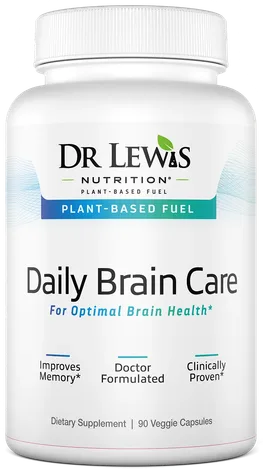
Dr. Lewis Nutrition Daily Brain Care Review
Dr. Lewis Nutrition Daily Brain Care is a meticulously formulated, plant-based nutritional supplement designed to support comprehensive brain health and overall cellular function. Developed by Dr. John E. Lewis, a researcher with decades of experience in nutrition's impact on human health, this supplement is grounded in published, peer-reviewed clinical research, a distinction uncommon in the dietary supplement industry. It is available in both powder and capsule forms, offering flexibility for daily integration. The core of Daily Brain Care's efficacy lies in its blend of six functional foods, providing a rich spectrum of nutrients, phytonutrients, and cofactors often lacking in modern diets. Key ingredients include highly bioavailable polysaccharides from aloe vera (specifically BiAloe®) and stabilized rice bran. These polysaccharides are crucial for cellular communication and the creation of bioactive compounds, essentially providing the raw materials necessary for optimal physiological function throughout the body, including the brain. Stabilized rice bran further contributes hundreds of phytonutrients, amino acids, vitamins, and secondary metabolites, supporting a healthy inflammatory response and immune function. Beyond these primary components, the formula incorporates golden flaxseeds, a vital source of omega-3 and omega-6 essential fatty acids, which are indispensable for brain, heart, and vascular health, and also aid in maintaining a healthy inflammatory response. Calcium silicate clay, a form of montmorillonite, is included for its ability to support the body's natural detoxification processes by binding compounds through its negative electrical charge, without hindering the absorption of other vital micronutrients. Additional ingredients like sunflower, dioscorea (wild yam), and tart cherry further enrich the supplement with choline, phospholipids, and various vitamins and minerals. The mechanisms of action are multifaceted. By supplying a broad array of essential nutrients, Daily Brain Care aims to help cells achieve and maintain homeostasis, the balanced internal state crucial for optimal system operation. Clinical research has observed significant improvements in cognitive scores (measured by ADAS-Cog), enhanced immune function (indicated by CD4/CD8 ratio), and reductions in inflammatory markers like TNF-α and VEGF in adults taking the foundational complex. Furthermore, studies have shown an increase in CD14+ monocytes, an immune cell population with progenitor properties, and a dramatic increase in adult stem cells, which are vital for repairing cellular damage. This comprehensive nutritional support is designed to bolster the brain's processes underlying focus, memory, and recall, while also contributing to overall well-being without the use of stimulants or caffeine.
We don’t sell supplements. We help you make decisions and get the best price.
Lowest prices
We may earn a commission from some store links. How we choose.
Lowest cost per month first, in stock, at 3 capsules a day. Checked Nov 7.
- Dr. Lewis NutritionLowest$64.00 a bottle$64.00/moBuy at Dr. Lewis Nutrition (opens in a new tab)
Study, Trial or Testing Result Summary
Members OnlyHuman studies
We found no human studies on cognitive support or mental clarity for the ingredients in this product, so there are no study results to report for this goal. Every ingredient sits inside a single proprietary blend of 2.1 grams per serving. The blend includes stabilized rice bran, golden flaxseed, sunflower lecithin, wild yam root, inner leaf aloe vera powder, N acetyl cysteine, tart cherry powder, calcium silicate clay, citric acid and inositol hexaphosphate. The label does not say how much of each one is in a serving, so even if studies existed, there is no way to tell whether any ingredient reaches a studied dose. Because of this, the product cannot be judged on evidence for memory, focus or clarity right now. Members interested in brain support may want to look for products that list each ingredient's amount and use ingredients with human research behind them. We will update this summary if relevant studies on these ingredients become available. Animal and cell studies are never counted.
Review Totals and Summary
Members Only86 reviews
Customer feedback for Dr. Lewis Nutrition Daily Brain Care consistently highlights several qualitative themes, pointing to a range of perceived benefits beyond just cognitive enhancement. A frequently praised aspect is the improvement in sleep quality, with many users reporting more restorative and longer periods of sleep. This often correlates with a general increase in energy levels and a reduction in the common "afternoon slump," leading to a more sustained sense of alertness throughout the day. Users frequently note enhanced mental clarity, focus, and improved memory and recall, with some specifically mentioning a reduction in "brain fog". The product is often described as contributing to a better overall sense of well-being, including a more balanced mood and a feeling of being more "awake" and "intrigued" by daily activities. Beyond the direct cognitive benefits, customers have reported unexpected positive outcomes. Some individuals have experienced improvements in digestion and elimination, as well as healthier skin, hair, and nails. Notably, there are testimonials from users who found relief from musculoskeletal pain, with one individual attributing the cessation of a med injections for a rotator cuff tear to taking the supplement. The product's form factor also receives positive remarks, particularly the powder, which is lauded for being easy to take, dissolving well in various liquids like fruit juice, and lacking an unpleasant aftertaste. This convenience makes it a preferred option for those who dislike taking pills. While the benefits are widely appreciated, some customers acknowledge that it is a "pricey product". Despite this, a strong theme of trust in Dr. Lewis's extensive research and the quality control of his formulations emerges, leading many to commit to long-term use and even set up subscriptions. Several users, including those with family members experiencing conditions like early-onset Alzheimer's or Parkinson's, have observed significant improvements in memory, clarity, and word-finding abilities, reinforcing their belief in the supplement's efficacy. The absence of stimulants like caffeine is also a valued characteristic, allowing for consistent daily use without unwanted side effects.
Biohacker Summary
Members Only9 of 10 recommend it
The panel has no clear main ingredient here, so the paragraph covers the ingredients that came up most, which are all smaller ingredients in this product. Minerals drew the most support, with most of the panel recommending or using them for energy, focus, hormone building blocks, and making up for what tea or a keto diet can deplete, and one panelist stressed having basic minerals in place before advanced longevity steps. Amino acids split the panel: some use them or recommend a full daily profile, one likes them for absorbing faster than whey, while two warn against taking them during a fast or a race. On vitamins, most stayed neutral, one warned about synthetic vitamins with fillers, and one said he stopped taking over a hundred a day because they only work if the diet underneath is good. Aloe vera was a smaller ingredient in this product that two panelists mentioned only briefly, one for skin reactions and one as a weak sunscreen helper.
See all 10 biohackers →Hide the biohackers
Dr. Eric Berg · Vitamins · warns
- Warns against synthetic vitamins, stating there is a huge difference between real vitamin complexes and these synthetic petroleum fractionated products.
- Mentions that grass-fed liver is loaded with high-quality amino acids.
- Notes that tannins in tea block the absorption of vitamins.
- Recommends taking minerals to counteract the effects of tannins in tea.
- Dr. Berg suggests being careful about synthetic vitamins because many are created by chemical companies, contain unnecessary fillers, and aren't always designed for optimal absorption.
- Used to take more than a hundred vitamins a day, hunting for the one that would fix his fatigue, but they only work if the diet underneath them is good.
- Warns that synthetic vitamins frequently added to cereal are completely different from natural vitamins.
- Warns that synthetic vitamins sprayed into cereals do not provide actual vitamins and can create deficiencies, making the cereal appear nutritious when it would otherwise be empty.
- Explains that mitochondria need sufficient amino acids to produce energy, and amino acids come from protein in the diet.
- Warns against most synthetic vitamins, noting they often contain fillers like maltodextrin and are produced by chemical companies, making them a chemical version of natural vitamins.
- Notes that synthetic vitamins are not the same as natural ones.
- Recommends taking vitamins while doing the sardine fast.
- Recommends consuming amino acids to naturally trigger L-cells and activate GLP-1.
- Used to think that taking 100 vitamins a day was the solution to chronic fatigue syndrome, severe insomnia, and arthritis, but learned that supplements are only effective with a healthy diet.
Ben Greenfield · Amino Acids · uses
- For longer operations, Ben Greenfield runs intraoperative IV bags of amino acids to mitigate muscle protein breakdown during surgery.
- Gives a nod to amino acids, suggesting they would fit into the same category as collagen peptides for improving skin elasticity, even though studies have focused on collagen peptides.
- Explains that minerals act as cofactors, build shape and structure, carry messages, and transport oxygen and fuel, all of which help protein function.
- Ben Greenfield's morning routine includes taking vitamins.
- States that amino acid intake can help fight age-related muscle loss.
- States that a well-balanced intake of minerals can paradoxically help with blood pressure modulation, which can be a factor in tinnitus.
- Recommends using hormone building blocks like minerals for hormone optimization.
- Recommends using hormone building blocks like fatty acids for hormone optimization.
- Recommends taking minerals with creatine, stating that the creatine transporter relies on sodium.
- Believes the concern about synthetic vitamins is a red herring, stating that a vitamin is a vitamin and trace contaminants in riboflavin, niacin, or pyridoxine are not a real issue.
- Recommends having a lot of minerals to get the most benefit from infrared light, as it helps with water structuring.
- States that cells cannot make energy, hydrate properly, or recover without minerals.
- Suggests that higher consumption of minerals could enhance the body's ability to respond to light produced by mitochondria, specifically from a metabolic standpoint.
- Warns that high intake of vegetable-based fatty acids can negatively impact mitochondrial membrane structure.
Dr. Mark Hyman · Vitamins · uses
- He gets himself in the gym in the morning and takes his vitamins and does his things, and it's not like a job for him, it's actually generative.
- Notes that the discovery of vitamins, starting with vitamin C in 1932, led to the elimination of deficiency diseases like pellagra, scurvy, night blindness, and rickets.
- Mentions vitamins and supplements in relation to caloric intake for cognitive health.
- States that the brain depends on specific vitamins every day to produce neurotransmitters, regulate mood, and maintain mental energy.
- States that the brain depends on specific minerals every day to produce neurotransmitters, regulate mood, and maintain mental energy.
- Believes that if functional testing is done to replete deficiencies like amino acids before someone stops their medication, withdrawal symptoms can be completely eliminated.
- States that minerals help kidneys work.
- Was always looking for supplements and different vitamins to make his performance better and keep himself healthy.
- Notes that people in long-lived regions like Icaria and Sardinia do not take tons of vitamins.
- States that their clinic tests for and optimizes vitamins and co-factors to ensure patients are not deficient, as part of their approach to serious mental illness.
- Mentions amino acids as nutrients that act as helpers in biochemical steps to improve brain function, as part of mitochondrial therapies.
- Mentions amino acids as something that can be measured and have been linked to mental health.
- Suggests that vegans who are as fit and muscular as Bryan Johnson likely supplement with processed plant protein powders, possibly spiked with amino acids, because a pure vegan diet alone may not be sufficient for high protein intake.
- States that ideally, if everyone was eating great food from regenerative farms, they might not need vitamins, but that's not happening.
Dave Asprey · Minerals · recommends
- Recommends minerals, stating that Danger's coffee is loaded with the minerals your biology craves.
- Recommends that kids get minerals for stronger bones, which can lead to less injuries and more focus.
- Explains that cells hold onto water carrying minerals, which are essential for cellular charge, energy, focus, and avoiding a mid-afternoon crash.
- Dave Asprey says his daily routine includes broad-spectrum minerals as part of a carefully developed combination for longevity.
- Emphasizes the importance of having enough basic minerals like selenium, molybdenum, magnesium, manganese, copper, and zinc before trying advanced longevity strategies like peptides.
- Recommends broad-spectrum minerals for overall health, mentioning he makes something called Minerals 101.
- States that amino acids build muscle and that missing one of the 9 essential amino acids means the signal doesn't fire.
- Confirms that the Ignitrons are dissolved into powdered amino acids that are then dissolved into water.
- Recommends the right minerals to ease the body's detox load during pregnancy, which can help with nausea.
- Recommends increasing electrolytes and minerals to prevent keto flu symptoms when decreasing carbs.
- Recommends fixing minerals first.
- States he takes minerals one on one, which he makes, and attributes his unusually dense bones to this practice, recommending it for bone density.
- Dave Asprey discusses how amino acids influence mTOR, IGF-1, and aging.
- Uses intravenous amino acids after surgery as part of their recovery protocol.
Dr. Rhonda Patrick · Minerals · neutral
- Mentions that reverse osmosis systems remove useful minerals, which can be obtained through a balanced diet, remineralization filters, mineral drops, or a multivitamin/mineral supplement.
- Dr. Patrick emphasizes that she has often seen improvements in a variety of biomarkers in people after simply adding important vitamins, and believes it's one of the easiest things that can be done to improve health.
- Notes that a higher intake of vitamins mitigated iron accumulation in the brain, which correlated with poorer cognitive function.
- Rhonda Patrick notes that supplemental vitamins, minerals, and essential fatty acids influenced the behavior of young adult prisoners.
- Recommends dietary intake of essential amino acids, especially leucine found in animal products, during the refeeding phase of a prolonged fast to activate IGF-1 for stem cell regeneration.
- Dr. Patrick discusses whether consuming amino acids while fasting disrupts the benefits of fasting.
- Amino acids are connected to TOR and IGF-1, and this understanding was used in the development of the fasting-mimicking diet.
Thomas DeLauer · Amino Acids · warns
- States that amino acids, including essential amino acids and BCAAs, cannot be consumed during a fast as they can shut down ketosis due to the leucine insulin response.
- Emphasizes the non-negotiable importance of getting adequate minerals on keto, as their depletion can lead to a drop in well-being and performance.
- Recommends getting adequate salt and minerals when breaking a fast to control appetite later in the day and ensure proper replenishment.
- Warns against taking branch chain or essential amino acids during a fast, as the leucine in them will trigger mTor and stop autophagy, preventing mitochondrial benefits.
- Explains that minerals are an energy source because they allow energy creation processes to occur, highlighting copper and magnesium as two of the most important.
- States that the body will continue to crave food until protein, calcium, and other minerals are met, and that minerals impact leptin resistance and signaling.
- Mentions minerals as micronutrients essential for the complex biological workings of metabolism in the mitochondria.
- Takes a shot of liquid vitamins in the morning, which he feels has helped with tendonitis, inflammation, and vitamin deficiency.
- Expresses interest in the future availability of free fatty acid meters for home use, suggesting they would be a very interesting tool.
- Has an amino blueberry lemonade post-workout, which contains 100 milligrams of caffeine, keeping their caffeine intake low.
- Takes her vitamins with her protein ice cream before bed.
- Recommends taking minerals or getting enough in one's diet, as a mineral-deficient body is always stressed and cannot make the things it needs to make to keep one young, which can cause physiological anxiety.
- Recommends drinking organic aloe vera juice without added sugars or preservatives to coat the esophagus and provide relief from heartburn.
- Mentions that Sun Warrior's Active line includes minerals.
Siim Land · Minerals · neutral
- States that minerals are the root of health and are needed for virtually every process in the body.
- States that amino acids are among many other nutrients needed for glutathione.
- States that minerals are key nutrients to health and regulate every process in the body, with every step of energy production requiring different minerals.
- Mentions that amino acids like proline help to expedite results from micro needling and collagen intake for collagen synthesis.
- Mentions aloe vera as a natural agent with an SPF of 7, which can be used as a complementary ingredient in sunscreens but is insufficient as a primary sunscreen.
- Recommends minerals, stating they are needed for the immune cells to do their job and fuel antioxidant defense.
- Discusses Amino acids as a supplement.
- States that minerals play a very important role in the detox process, as it's necessary to replenish mineral storage that's being depleted when mobilizing stuff out of the system.
- Includes different amino acids as playing a very important role in detox.
- Likes to combine exosomes with amino acids, vitamins, minerals, and hyaluronic acid to synergize their effects, providing the skin with building blocks for collagen and elastin creation.
- Notes that even if one eats enough protein, they can still be deficient in amino acids due to utilization, which depends on other nutrients consumed.
- Takes a lot of amino acids when he starts feeling slightly weak or like an infection is coming on, and finds that he recovers much better.
- Recommends amino acids before exercise to combat muscle breakdown and promote growth when fasting for fitness.
- Assumes amino complex is essentially amino acids.
Andrew Huberman · Vitamins · neutral
- Notes that individual vitamin requirements vary profoundly due to differences in metabolic enzymes, making FDA limits for vitamins merely averages.
- Suggests that replacing foods that cause sugar cravings with foods high in omega-3s or amino acids can reduce those cravings.
- Suggests adding a pinch of salt or electrolytes to water to help with bioavailability and absorption of minerals, which are important for salivary health.
- Discusses amino acids as a tool for blunting appetite.
- States that people tend to eat until their brain perceives adequate intake of amino acids, which are building blocks for muscle, repair, and neurochemicals in the brain.
- Recommends minerals, specifically zinc oxide and titanium dioxide, as the safest option for sunscreen, especially for young kids.
- Believes non-protein amino acids will be the next big thing in the health space, discussing how they exist in seeds and nuts and, if consumed in abundance, may incorporate into proteins in our tissues, potentially leading to misfolding and explaining certain forms of neurodegeneration.
- Ensures he gets all the vitamins he needs through AG1.
- Ensures he gets all the minerals he needs through AG1.
- Uses vitamins, along with adaptogens and minerals, to ensure all his foundational nutritional needs are met.
- Uses minerals, along with adaptogens and vitamins, to ensure all his foundational nutritional needs are met.
- Uses vitamins to ensure all foundational nutritional needs are met.
- Uses minerals to ensure all foundational nutritional needs are met.
- Uses adaptogens, vitamins, and minerals found in Athletic Greens to ensure all foundational nutritional needs are met.
Peter Attia · Amino Acids · uses
- Uses amino acids, noting they are absorbed faster than whey protein and are a good alternative when she doesn't want a milky substance.
- Ranks fatty acids as the next cleanest fuel after beta hydroxybutyrate.
- States that no protein or amino acids should be consumed throughout a race because it would divert oxygen away from pure propulsion.
- Says that patients can use an aloe vera plant if they have it for skin reactions from radiation.
- Explains that amino acids are not just building blocks but also signaling molecules that directly stimulate muscle protein synthesis by activating the mTOR pathway.
- States that they will discuss amino acids, particularly leucine, in relation to how nutrients work and their interaction with mTOR.
- Discusses amino acids like methionine, tryptophan, and leucine as candidates to consider in relation to diet, noting that mTOR is an amino acid sensor.
- Notes that amino acids have a very different purpose and structure compared to carbohydrates and fats, with nitrogen being a key differentiating factor.
- Was into vitamins and basic macular nutrients during his PhD from 2000 to 2004.
- Explains that amino acids have a carboxy end and a nitrogen end, and the body reconnects them based on messenger RNA to form proteins, with each of the 20 amino acids having a different side chain and other metabolic functions beyond building blocks.
- States that amino acids can suppress ghrelin secretion.
- States that fatty acids can suppress ghrelin secretion.
- States that they don't know when to start vitamins, suggesting that things good when young can be detrimental when old.
- Discusses the different types of fatty acids (saturated, monounsaturated, polyunsaturated) and their chemical structures, emphasizing that it's important to demystify them rather than demonize one over the other.
Bryan Johnson · Amino Acids · recommends
- Emphasizes the importance of getting a complete amino acid profile every day for every fundamental element of the body, as nine essential amino acids can only be obtained through food.
- Includes 7.6 grams of aminos in his Green Giant drink, which he consumes first thing in the morning.
- Takes vitamins after eating Nutty Pudding and notes he wasn't as hungry throughout the day.
RAL Summary
Members OnlyTier 4 for Focus and Memory
This product is rated emerging because there are no human studies on cognitive support for its ingredients and every ingredient is hidden in a proprietary blend with no listed amounts. There are also no counted customer reviews to draw on.
- Emerging: not enough evidence to rank higher yet.
- No human studies on this goal for its ingredients.
More Details
Members OnlyBody systems · Combine with · Possible side effects
Body systems: Nervous system
Combine with: To further enhance brain health and cognitive function alongside DHA and Ginkgo Biloba, consider adding Phosphatidylserine, which supports cell membrane integrity and neurotransmitter function, and Acetyl-L-Carnitine (ALCAR) for its role in energy metabolism and acetylcholine production in the brain. A comprehensive B-vitamin complex, particularly with active forms of B6, B9, and B12, is also beneficial for neurotransmitter synthesis and overall neurological health. Additionally, Magnesium L-Threonate can be synergistic as it is specifically formulated to cross the blood-brain barrier, supporting synaptic plasticity and memory.
Possible side effects: No major side effects reported.
Supplement Facts
Daily Brain Care Proprietary Blend 2.1 g · Stabilized rice bran, golden flaxseed, sunflower lecithin , wild yam root powder , organic BiAloe® , N-acetyl cysteine, tart cherry powder , calcium silicate clay, citric acid, and inositol hexaphosphate 0
| Calories | 8 | |
| Total Fat | 0.4 g | 1% |
| Total Carbohydrate | 0.8 g | <1% |
| Daily Brain Care Proprietary Blend | 2.1 g | † |
| Stabilized rice bran, golden flaxseed, sunflower lecithin (seed), wild yam root powder (Dioscorea villosa), organic BiAloe® (inner leaf aloe vera powder), N-acetyl cysteine, tart cherry powder (Prunus cerasus), calcium silicate clay, citric acid, and inositol hexaphosphate | 0 | † |
Other ingredients: Nu-MAG® (rice extract blend), natural lemon flavor, natural vanilla flavor, vegetable cellulose (capsule).
Directions: Suggested Use: Take three capsules daily with water or as directed by your healthcare professional. NOTICE: Do not use if inner safety seal foil is broken.
Barcode (UPC) 197644141364 · Label source: Drlewisnutrition · Report a label change
Show entire label
More focus and memory products
Members OnlyThe highest ranked for the same goal
Read more
Our articles on this subject
- Supplements for Focus and Mental ClarityArticle · Jun 16, 2026
- How to Build a Longevity Supplement Stack: An Evidence-First ReviewArticle · Sep 7, 2026
Graded October 24, 2026 by the Reverse Age Lab evidence engine, from human studies, real reviews and our biohacker panel. How we grade. Is this medical advice? No. Rala organizes the published evidence; go over any change with your doctor, especially if you take meds.
Privacy policyConsumer health dataAffiliate disclosureTermsDo Not Sell or Share My Personal InformationCookie settings