
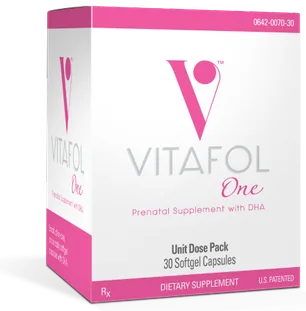
Exeltis USA Vitafol-One Review
Vitafol-One by Exeltis USA is a prenatal supplement with DHA sold as a once-daily softgel capsule. The product is listed in the Dietary Supplement Label Database with the Product Type Other Combinations and the Supplement Form Softgel Capsule. Its intended target groups are pregnant women, adult females aged 18 to 50 years, and lactating women. The label carries the claims gluten free, sugar free, and lactose free, and it states that the product does not contain fish, fish oils, fish proteins or fish byproducts. The Supplement Facts panel lists a serving size of one softgel capsule, with percent Daily Values calculated for pregnant and lactating individuals. Nutrients listed include vitamin A as beta-carotene at 1,100 IU, vitamin C at 30 mg, vitamin D3 at 1,000 IU, vitamin E at 20 IU, thiamine mononitrate at 1.6 mg, riboflavin at 1.8 mg, niacinamide at 15 mg, vitamin B6 at 2.5 mg, folic acid at 1 mg, vitamin B12 at 12 mcg, elemental iron at 29 mg from polysaccharide iron complex, iodine at 150 mcg from potassium iodide, magnesium at 20 mg from magnesium oxide, zinc at 25 mg from zinc oxide, and copper at 2 mg from copper oxide. The label also lists 415 mg of algal oil blend from Crypthecodinium cohnii, which provides 200 mg of docosahexaenoic acid, described as plant source DHA. The label's indications state that Vitafol-One is intended to provide vitamin, mineral, and omega-3 fatty acid supplementation prior to conception, throughout pregnancy, and during the postnatal period for lactating and non-lactating mothers, including individuals with known allergies to fish. The directions say to take one softgel capsule daily before, during and after pregnancy, or as directed by a physician. The label carries a warning that accidental overdose of iron-containing products is a leading cause of fatal poisoning in children under 6, and it states to keep the product out of reach of children. It also contains a soy allergy statement. The softgels are dark blue, oval shaped, and imprinted EV 0070. The page notes that the product is available in a box of unit-dose pack of 30, in five child resistant blister cards of six softgel capsules, with product code 0642-0070-30, and as professional samples under 0642-0070-03. Storage is at room temperature, approximately 15 to 30 C (59 to 86 F), avoiding excessive heat. The label is marked RX and refers to the package insert for full prescribing information. The product is distributed by Exeltis USA, Inc., of Florham Park, New Jersey, and the label is listed as sourced from NIH in September 2019, with the DSLD ID 206670. The page does not show a price, a servings per container figure, a barcode, or any consumer reviews.
Study, Trial or Testing Result Summary
Members Only213 human studies · 85 improved
2 of these 213 human studies gave the ingredient by drip, not by mouth.
This is a one-a-day prenatal softgel with vitamins, minerals and algal oil. Zinc is at a dose close to the studied amount. Pooled trials found zinc eased emotional and physical premenstrual symptoms [1][2], and 30 mg daily for 12 weeks eased symptoms in 60 young women [3]. Vitamin D is at the studied dose. In women after menopause, 1000 units daily for 9 months lowered insulin and triglycerides [4], and in women with polycystic ovary syndrome it lowered male-type hormones [5]. A large review found too little evidence that it helps premenstrual mood [6]. Vitamin C reaches a studied dose only at three servings a day, and one trial found it did not change sex hormones [7]. Vitamin B6, vitamin E and niacin are far below the doses tested, and folate is below the 5 milligram dose used in hot flush trials, which gave mixed results [8]. Riboflavin evidence comes from diet studies, not supplement trials [9]. Iodine, copper and iron have little or no direct evidence for this goal [10][11][12]. Algal oil has no studies for this goal. Animal and cell studies are never counted.
See all 213 studies →Hide the studies
- In ten observational studies of over 1.28 million postmenopausal women, vitamin D supplement use was associated with osteoporotic fracture, but this does not show that it prevents fractures and the direction was not stated.Predictors of osteoporotic fracture in postmenopausal women: a meta-analysis.
- Across 27 prospective studies of over 1.2 million people, women with the highest dietary riboflavin intake had about a 10% lower risk of breast cancer than those with the lowest intake.Association Between One-carbon Metabolism-related Vitamins and Risk of Breast Cancer: A Systematic Review and Meta-analy…
- Across observational studies of over 600,000 people, folate intake and blood levels showed no clear link to breast cancer risk in the better-designed prospective studies, regardless of menopausal or hormone receptor status.Folate intake and the risk of breast cancer: a systematic review and meta-analysis.
- In a pooled analysis of cohort studies covering 319,077 adults, higher vitamin A intake slightly lowered total fracture risk but raised hip fracture risk, and low blood retinol was linked to more hip fractures.The Effect of Vitamin A on Fracture Risk: A Meta-Analysis of Cohort Studies.
- In 54 observational studies of 39,471 women, those with polycystic ovary syndrome had similar dietary folic acid intake to women without it.Comparison of dietary and physical activity behaviors in women with and without polycystic ovary syndrome: a systematic …
- In a review of 19 randomised trials with 2290 women using progestin-only contraceptives, vitamin E (tested in one large trial in implant users) had no effect on bleeding patterns.Treatment of vaginal bleeding irregularities induced by progestin only contraceptives.
- Across 27 trials with 1,989 menopausal women, vitamin D improved handgrip strength but not knee extension strength.Effect of non-pharmacological interventions on the prevention of sarcopenia in menopausal women: a systematic review and…
- Across 20 randomized trials of 1961 women with polycystic ovary syndrome, vitamin D raised pregnancy and ovulation rates and lowered androgen, luteinizing hormone, follicle stimulating hormone and early miscarriage rates compared with controls, though study quality was limited.Effects of vitamin D supplementation on ovulation and pregnancy in women with polycystic ovary syndrome: a systematic re…
- A reanalysis of 18 pooled cohort studies found that carotenoid intake was linked to lower risk of breast cancer without estrogen receptors, but beta-carotene was linked to higher risk of breast cancer with estrogen receptors.Reinterpretation of the results of a pooled analysis of dietary carotenoid intake and breast cancer risk by using the in…
- A pooled analysis of 19 observational studies found higher dietary antioxidant capacity linked to lower risk of polycystic ovary syndrome, infertility and pregnancy complications, but results were mixed for endometrial cancer and this was not a vitamin C supplement trial.Diet's total antioxidant capacity and women's health: systematic review and meta-analysis.
- In 32 placebo-controlled trials of various nutritional interventions in menopausal women, depression and anxiety symptoms improved overall, but vitamin D was only one of many interventions, one was combined with a weight-loss program, and results varied widely.Effects of nutritional interventions on the severity of depressive and anxiety symptoms of women in the menopausal trans…
- In a review of 35 trials on urge incontinence in postmenopausal women, vitamin D was not effective for incontinence or other menopausal urinary symptoms, or gave contradictory results.Treatment of urge incontinence in postmenopausal women: A systematic review.
- In a network analysis of 16 trials in women with polycystic ovary syndrome, folic acid was only studied alongside inositol and no treatment significantly changed insulin resistance, so folate's own effect cannot be separated.Read the study on PubMed (42490840) →
- Pooling studies of women, higher blood vitamin B12 levels and higher dietary vitamin B12 intake were not significantly linked to lower breast cancer risk, though vitamin B6 levels and methionine intake were.Association of vitamin B6, vitamin B12 and methionine with risk of breast cancer: a dose-response meta-analysis.
- A pooled analysis of 13 observational studies found no overall link between blood or red-cell magnesium and premenstrual syndrome, except lower blood magnesium in the luteal phase in studies outside the USA.The Association Between Serum Magnesium and Premenstrual Syndrome: a Systematic Review and Meta-Analysis of Observationa…
- Pooling five randomized trials, young women with premenstrual syndrome taking zinc had significantly better physical and emotional symptoms than those on placebo, including less anger, anxiety and insomnia.A systematic review and meta-analysis examining the role of zinc supplementation in ameliorating physical and psychologi…
- Pooling four to five randomized trials, zinc supplements reduced total premenstrual symptom scores, emotional symptoms and physical symptoms in women of reproductive age, though trials were few and varied.Effect of zinc supplementation on premenstrual symptoms: A systematic review and meta-analysis.
- In a review of 31 trials of 3254 women with premenstrual syndrome, there was not enough evidence to support vitamin D for psychological symptoms, unlike vitamin B6, calcium and zinc.Effect of nutritional interventions on the psychological symptoms of premenstrual syndrome in women of reproductive age:…
- A review of 201 studies found food fortification raised blood nutrient levels and improved anemia markers in women and children, but vitamin A alone was not shown to affect women's hormones and evidence on illness and death was scarce.Micronutrient fortification of food and its impact on woman and child health: a systematic review.
- A review of seven randomized trials in women with endometriosis found that vitamin C (typically 1000 mg a day) with vitamin E lowered oxidative stress markers and pelvic pain and period pain, but did not raise pregnancy rates.Therapeutic Effects of Vitamins in Endometriosis Patients: A Systematic Review of Randomized Controlled Trials.
- In nine trials of postmenopausal women without osteoporosis, vitamin D with or without calcium raised blood vitamin D and improved bone turnover markers, but only one study showed fewer fractures, so a fracture benefit could not be confirmed.Supplementation of vitamin D isolated or calcium-associated with bone remodeling and fracture risk in postmenopausal wom…
- In 14 trials of nutrition and muscle health in middle-aged and older women, some studies of vitamin D, alone or with magnesium, found better muscle strength or function while others of vitamin D alone found no effect.Nutrition Interventions on Muscle-Related Components of Sarcopenia in Females: A Systematic Review of Randomized Control…
- In a review of 158 studies on complementary menopause therapies, vitamin D was supported as safe with high certainty and with moderate certainty for reducing fracture risk, though overall evidence remains limited.Complementary therapies for management of menopausal symptoms: a systematic review to inform the update of the Internati…
- A review of premenstrual syndrome treatments covered pyridoxine among many interventions, but the abstract gives no result for it.Premenstrual syndrome.
- A review of randomized trials of natural products for premenstrual syndrome suggested vitamin B6 may be effective, though the evidence was weaker than for calcium.Herbs, vitamins and minerals in the treatment of premenstrual syndrome: a systematic review.
- A review of 14 studies in women found vitamin B6 with magnesium reduced premenstrual anxiety but not when taken alone, while B6 alone reduced anxiety in older women.The impact of essential fatty acid, B vitamins, vitamin C, magnesium and zinc supplementation on stress levels in women:…
- A review of observational studies linked vitamin B6 and other nutrient deficiencies in postmenopausal women to higher risk of chronic disease, without testing B6 supplements specifically for hormone health.A systematic review on the impact of nutrition and possible supplementation on the deficiency of vitamin complexes, iron…
- In a review of 18 studies, four of seven studies in women with premenstrual syndrome reported that magnesium reduced anxiety, but the evidence quality was poor.The Effects of Magnesium Supplementation on Subjective Anxiety and Stress-A Systematic Review.
- A review of 11 controlled trials in pre-menopausal women found three controlled studies suggesting zinc helps depressive symptoms, though better trials are needed.Increasing iron and zinc in pre-menopausal women and its effects on mood and cognition: a systematic review.
- A review of 36 randomized trials in women found zinc improved insulin resistance and blood fat balance in polycystic ovary syndrome and seemed to reduce period pain, with little known about endometriosis or after menopause.The Role of Zinc in Selected Female Reproductive System Disorders.
- A review of 26 mostly observational studies on nutrition and ovarian aging found only one study linking blood zinc and copper levels to ovarian reserve, so evidence for copper specifically is very limited and no firm conclusions could be drawn.Current Evidence on Associations of Nutritional Factors with Ovarian Reserve and Timing of Menopause: A Systematic Revie…
- In 20,050 postmenopausal women followed a median of 7 years, calcium and vitamin D did not change how menopausal symptoms related to health outcomes such as stroke and cardiovascular disease.The severity of vasomotor symptoms and number of menopausal symptoms in postmenopausal women and select clinical health …
- In 617 women with premenstrual symptoms treated for three cycles, pyridoxine did not beat placebo on individual symptoms but gave significantly greater overall improvement.Controlled trial of pyridoxine in the premenstrual syndrome.
- In 423 postmenopausal women with coronary disease, vitamin C (1000 mg a day) with vitamin E for about 2.8 years gave no heart benefit and suggested possible harm, with more deaths than placebo.Effects of hormone replacement therapy and antioxidant vitamin supplements on coronary atherosclerosis in postmenopausal…
- In 309 anemic women with uterine fibroids, all took oral iron for 12 weeks; adding a hormone-blocking drug raised the anemia response to 74% versus 46% with iron alone, so the benefit came from the drug rather than from iron.GnRH agonist and iron versus placebo and iron in the anemic patient before surgery for leiomyomas: a randomized controll…
- In 300 women with chloasma (skin darkening), oral vitamins C and E for 3 months worked in 67% of those assessed, less than the 92.6% with acupuncture-based treatment.[Clinical research of chloasma treated with the meridian cosmetology and the impacts on estrogen and progestin].
- In 289 postmenopausal women with a history of breast cancer, magnesium oxide at 800 or 1,200 mg daily did not reduce hot flashes compared with placebo and caused more diarrhea.North Central Cancer Treatment Group N10C2 (Alliance): a double-blind placebo-controlled study of magnesium supplements …
- In 218 young women with premenstrual syndrome, a multi-ingredient supplement that included vitamin B1 lowered symptom scores more than placebo after one and two months, but the effect of thiamine alone cannot be separated out.Natural relief for premenstrual syndrome (PMS): a double-blind clinical trial on the efficacy and safety of PMSoff.
- In 180 postmenopausal women with mild memory impairment, 100 mg of vitamin C a day for 6 months improved cognitive scores and lowered beta-amyloid, but did not significantly change overall menopause quality of life.A randomized, controlled trial to evaluate the efficacy of pyridoxine and ascorbic acid on cognitive function and qualit…
- In 164 postmenopausal women with frequent hot flushes, 5 mg of folic acid daily for 12 weeks did not significantly reduce hot flushes more than placebo, though quality of life scores improved at week 8.Folic acid supplementation in postmenopausal women with hot flushes: phase III randomised double-blind placebo-controlle…
- In 160 postmenopausal women, 1000 IU of vitamin D3 daily for 9 months lowered triglycerides, insulin and insulin resistance, and cut the risk of metabolic syndrome compared with placebo.Vitamin D supplementation improves the metabolic syndrome risk profile in postmenopausal women.
- In 158 girls aged 15-21 with very low vitamin D, 4 months of vitamin D lowered premenstrual anxiety, irritability and sadness scores, while the placebo group showed no appreciable change.Vitamin D Supplementation for Premenstrual Syndrome-Related Mood Disorders in Adolescents with Severe Hypovitaminosis D.
- In 154 early postmenopausal cancer survivors given calcium and vitamin D in both groups, a year of exercise did not improve bone density versus home activity; the vitamin D effect itself was not tested.Effect of a randomized controlled exercise trial on bone outcomes: influence of adjuvant endocrine therapy.
- In 150 postmenopausal women, tibolone raised fat-free mass compared with hormone therapy or the calcium and vitamin D control, but vitamin D was given to all groups and was not the tested treatment.Comparative effects of continuous combined hormone therapy and tibolone on body composition in postmenopausal women.
- In 142 women aged 20-35 with premenstrual syndrome, 50 mg of elemental zinc from zinc sulfate taken in the second half of each cycle for three months cut moderate to severe premenstrual syndrome from 9.5% to 2.6% and improved quality of life, while placebo did not.Effect of zinc sulfate supplementation on premenstrual syndrome and health-related quality of life: Clinical randomized …
- In 141 middle-aged women with premenstrual syndrome, abdominal obesity and low vitamin D, vitamin D-fortified dairy for about 10 weeks raised blood vitamin D in everyone, but restless legs symptoms improved only in women with severe premenstrual syndrome, and not versus the control group.Effect of dairy products fortified with vitamin d3 on restless legs syndrome in women with premenstrual syndrome, abdomi…
- In 126 women with premenstrual syndrome given magnesium, vitamin B6 or placebo for two cycles, symptom scores fell in every group including placebo, and vitamin B6 worked best and placebo least.Effects of magnesium and vitamin b6 on the severity of premenstrual syndrome symptoms.
- In 124 women starting a low-dose birth control pill, 150 mg vitamin B6 daily for 30 days did not reduce side effects significantly more than placebo.Effect of vitamin B6 on the side effects of a low-dose combined oral contraceptive.
- In 120 postmenopausal women with osteoporosis and back pain, adding raloxifene to daily calcium and 800 IU vitamin D for one year did not change back pain or disability compared with calcium and vitamin D alone; vitamin D was not tested on its own.Does raloxifene treatment influence back pain and disability among postmenopausal women with osteoporosis?
- In 120 women with severe premenstrual syndrome, 300 mg of pyridoxine daily for 3 months cut symptoms by 45.3%, similar to the 39.4-46.1% reduction on placebo, and less than a med, propranolol or a med.A double-blind trial of four medications to treat severe premenstrual syndrome.
- In 115 women with breast cancer, vitamin E reduced hot flush frequency by only about 10% and hot flush score by about 7%, which was not significant, while a med cut them by 57% and 67%.Read the study on PubMed (19415540) →
- In 106 women with painful periods, 4 months of combined vitamin D and E cut pain scores from 7.85 to 3.75 versus 7.68 to 6.02 with placebo, and improved premenstrual symptoms.Effect of vitamin D and E supplementation on pain relief and premenstrual symptoms in primary dysmenorrhea: a randomized…
- In 105 women with premenstrual syndrome who all took magnesium and B vitamins, the study compared added vibration training with aerobic exercise, so the effect of magnesium itself was not tested.Whole-body vibration versus supervised aerobic exercise on hormonal parameters and inflammatory status in women with pre…
- In 100 postmenopausal women, 5 mg of folic acid daily for 8 weeks improved sexual desire, arousal, orgasm, satisfaction, pain and total sexual function more than placebo, but not lubrication.Effect of folic acid on the sexual function of postmenopausal women: a triple-blind randomized controlled trial.
- In 93 postmenopausal women starting breast cancer hormone-blocking therapy, high-dose vitamin D3 for a year raised blood levels but did not reduce joint pain (54% vs 57% developed it with standard dose), and the trial was stopped early.Randomized controlled trial of high-dose versus standard-dose vitamin D3 for prevention of aromatase inhibitor-induced a…
- In 92 premenopausal women with chloasma, vitamin C (600 mg a day) with vitamin E for 12 weeks worked in 55.8% and did not change sex hormones, less effective than the acupoint catgut embedding group at 88.6%.[Effect on clinical symptoms and mechanism of chloasma in premenopausal women with liver qi stagnation treated with acup…
- In 92 postmenopausal women with osteoporosis, 2 years of active vitamin D3 (0.75 mcg daily) increased lower spine bone density versus calcium alone, and combining it with vitamin K2 gave a larger gain.Effect of combined administration of vitamin D3 and vitamin K2 on bone mineral density of the lumbar spine in postmenopa…
- In 89 menopausal women with sleep or mood problems, a daily combination tablet containing 50 mg magnesium for 24 weeks reduced hot flushes, night sweats, insomnia, anxiety and mood symptoms more than calcium plus vitamin D, but magnesium was not tested alone.Soy isoflavones, lactobacilli, Magnolia bark extract, vitamin D3 and calcium. Controlled clinical study in menopause.
- In 86 women before hysteroscopy, 4 mg of folic acid daily for 14 days was the comparison group and did not change endometrial thickness or reproductive hormones, unlike the progestogen nomegestrol acetate.The use of nomegestrol acetate in rapid preparation of endometrium before operative hysteroscopy in pre-menopausal women…
- In 85 late postmenopausal women, a chicken eggshell powder supplement with vitamin D and minerals for 12 months increased hip bone density by 1.75%, while the placebo group lost bone density.Positive effects of a chicken eggshell powder-enriched vitamin-mineral supplement on femoral neck bone mineral density i…
- In 83 nursing students with premenstrual syndrome, a one-hour nutrition education session with email follow-ups lowered symptom scores by 27.5 points over 4 months while dietary riboflavin rose by 0.3 mg a day, but riboflavin was not tested on its own.The effect of nutrition education on premenstrual syndrome: Randomized controlled study.
- In 81 women with cyclic breast pain before periods, a vitamin compound containing pyridoxine did not reduce pain more than placebo, which worked even better.[Pre-menstrual cyclic mastalgia].
- In 80 postmenopausal women with vaginal dryness, 40,000 IU of vitamin D weekly for 12 weeks did not improve vaginal health measures more than placebo, although some measures improved within the vitamin D group.Effect of Vitamin D Supplement on Vulvovaginal Atrophy of the Menopause.
- In 80 female students with premenstrual syndrome, vitamin B1 lowered mental symptoms by 35% and physical symptoms by 21% over two cycles, and symptoms were significantly lower than with placebo.The effects of vitamin B1 on ameliorating the premenstrual syndrome symptoms.
- In 78 menopausal women at risk of bone loss, a daily dairy product enriched with vitamin C and other nutrients for 24 weeks kept bone density and improved bone markers compared with the unenriched product.A Dairy Product to Reconstitute Enriched with Bioactive Nutrients Stops Bone Loss in High-Risk Menopausal Women without …
- In 78 women with premenstrual syndrome, 80 mg of vitamin B6 daily for three menstrual cycles reduced symptoms with a medium effect and 60% were in full remission, similar to a broad micronutrient formula, with no placebo group.A Pilot Randomized Treatment-Controlled Trial Comparing Vitamin B6 with Broad-Spectrum Micronutrients for Premenstrual S…
- In 78 postmenopausal women with low bone density who all took magnesium 550 mg daily with calcium and calcitriol for a year, adding red clover isoflavones and probiotics slowed bone loss and improved estrogen metabolism, but magnesium itself was not tested against placebo.Combined bioavailable isoflavones and probiotics improve bone status and estrogen metabolism in postmenopausal osteopeni…
- In 76 young women with premenstrual syndrome and painful periods, curcumin for three cycles lowered a blood marker of inflammation but did not change iron levels, and iron itself was not given.Effect of curcumin on inflammatory biomarkers and iron profile in patients with premenstrual syndrome and dysmenorrhea: …
- In 74 postmenopausal women over 1 year, adding cholecalciferol to estrogen-norethindrone did not change blood pressure or body mass index, and its effect on cholesterol and HDL ratio did not differ from placebo.Cardiovascular risk factors during estrogen-norethindrone and cholecalciferol treatment.
- Vitamin B6 was only used as a placebo in this trial of misoprostol before endometrial biopsy in 72 women, so it does not test B6 for women's hormones.Randomized trial of oral misoprostol before endometrial biopsy.
- In 69 perimenopausal women, 24 weeks of 40 g daily soy or whey protein had no significant effect on iron levels, and iron itself was not given as a supplement.Iron indexes and total antioxidant status in response to soy protein intake in perimenopausal women.
- In 69 female university students with premenstrual syndrome, 220 mg of zinc daily for 24 weeks reduced anger, anxiety, depressed mood, bloating, headaches and other symptoms compared with placebo.The Effect of Zinc Supplementation on the Improvement of Premenstrual Symptoms in Female University Students: a Randomiz…
- In 66 women with benign breast disease, a combination tablet containing vitamin C (60 mg a day in total) with beta-carotene, vitamin E and garlic taken for 6 months eased breast pain and period-related symptoms, helping 75.8% versus about 30% on placebo.[Study of an antioxidant dietary supplement "Karinat" in patients with benign breast disease].
- In 61 postmenopausal women with coronary artery disease, vitamin C and E (1000 mg vitamin C a day) for up to 34 months did not improve blood vessel dilation, and hormone therapy did not either.Hormone therapy and antioxidant vitamins do not improve endothelial vasodilator function in postmenopausal women with es…
- In 60 women with endometriosis, 1000 mg of vitamin C plus 800 IU of vitamin E daily for 8 weeks lowered oxidative stress markers and reduced pelvic pain, painful periods and painful intercourse compared with placebo.The Effect of Combined Vitamin C and Vitamin E Supplementation on Oxidative Stress Markers in Women with Endometriosis: …
- In a randomized trial of 60 women with premenstrual syndrome, 100 mg of pyridoxine daily for 3 months significantly reduced symptom scores compared with a placebo tablet, with fewer side effects than bromocriptine.Role of bromocriptine and pyridoxine in premenstrual tension syndrome.
- In 60 young women with premenstrual syndrome, 30 mg of zinc gluconate for 12 weeks reduced physical and psychological symptoms and raised antioxidant capacity and a brain growth factor versus placebo, with no change in an inflammation marker.Effect of Zinc Supplementation on Physical and Psychological Symptoms, Biomarkers of Inflammation, Oxidative Stress, and…
- In 60 young women with premenstrual syndrome, 30 mg of zinc a day for 12 weeks improved the physical part of quality of life compared with placebo, but overall quality of life was not significantly different and sleep only marginally improved.Effect of zinc supplementation on quality of life and sleep quality in young women with premenstrual syndrome: a randomi…
- In 57 men and women eating a choline-poor diet for up to 6 weeks, 400 mcg of folic acid a day did not change the rate of liver or muscle problems, which was lower in premenopausal women than in men or postmenopausal women.Sex and menopausal status influence human dietary requirements for the nutrient choline.
- In 55 adolescent girls starting Depo-Provera, 500 mg of vitamin C daily for 6 months did not reduce bleeding days or change weight compared with placebo.Supplementation with vitamin C and/or vitamin B(6) in the prevention of Depo-Provera side effects in adolescents.
- In a double-blind trial of 55 women with moderate to severe premenstrual mood changes, 150 mg of vitamin B6 daily over two months improved dizziness, vomiting, poor performance and reduced social activity before periods, but a significant amount of physical and mood symptoms remained.The effects of vitamin B6 supplementation on premenstrual symptoms.
- In 52 postmenopausal women with vaginal atrophy symptoms, a vitamin E vaginal suppository for 12 weeks improved sexual function scores about as much as estrogen vaginal cream.Vitamin E as alternative local treatment in genitourinary syndrome of menopause: a randomized controlled trial.
- In 51 postmenopausal women with hot flashes, L-methionine did not reduce hot flashes more than placebo over 12 to 20 weeks; everyone also took 1 mg of folate daily, so folate was not tested on its own.Effect of L-methionine on hot flashes in postmenopausal women: a randomized controlled trial.
- In 51 postmenopausal women, 50 mg of zinc a day for 8 weeks improved vitamin D3 status, and zinc levels were linked to lower leptin.Effectiveness of eight-week zinc supplementation on vitamin D3 status and leptin levels in a population of postmenopausa…
- In 51 postmenopausal women, 50 mg of zinc a day for 8 weeks raised folate and lowered homocysteine compared with placebo, while vitamin B12 changed the same in both groups.Effect of zinc supplementation on circulating concentrations of homocysteine, vitamin B12, and folate in a postmenopausa…
- In 51 postmenopausal women who started with low zinc, 8 weeks of zinc improved zinc status, and higher red blood cell zinc was linked to better antioxidant defenses.Erythrocyte Zn concentration and antioxidant response after supplementation with Zn in a postmenopausal population. A do…
- In a double-blind trial of 50 postmenopausal women, zinc-containing vaginal pessaries used nightly for 14 nights improved vaginal dryness, pain, burning and other genital symptoms more than placebo pessaries.Effect of zinc-containing pessaries on menopausal genitourinary syndrome, a double-blind randomised trial.
- In 48 healthy postmenopausal women, folic acid for about 16 weeks lowered blood homocysteine (10.33 vs 13.21 micromol/l with placebo), though hormone symptoms were not measured.Folic acid supplementation reduces plasma homocysteine in postmenopausal women.
- In 48 postmenopausal women with type 2 diabetes, 40 mg of zinc daily for 12 weeks did not significantly change blood sugar, insulin resistance or HbA1c compared with placebo.Zinc transporter gene expression and glycemic control in post-menopausal women with Type 2 diabetes mellitus.
- In 46 women with premenstrual syndrome (41 finished), 400 IU of vitamin E daily for three cycles improved some mood and physical symptoms compared with placebo.Efficacy of alpha-tocopherol in the treatment of the premenstrual syndrome.
- In 45 postmenopausal women taking estrogen for 3 months, oral conjugated estrogen raised blood copper and free radical markers, while transdermal estradiol lowered free radical markers.Hepatic Effects of Estrogen on Plasma Distribution of Small Dense Low-Density Lipoprotein and Free Radical Production in…
- In 44 women over one menstrual cycle, 50 mg of vitamin B6 taken with 200 mg of magnesium reduced anxiety-related premenstrual symptoms more than placebo, while vitamin B6 alone showed no clear overall difference.A synergistic effect of a daily supplement for 1 month of 200 mg magnesium plus 50 mg vitamin B6 for the relief of anxie…
- In 43 postmenopausal women with elevated blood pressure, 22 grams a day of blueberry powder for 12 weeks improved blood vessel function more than placebo; vitamin C was given only as an intravenous test, not as a supplement.Daily blueberry consumption for 12 weeks improves endothelial function in postmenopausal women with above-normal blood p…
- In a pilot study of 42 women taking a blend that includes vitamin B6 for three months, mood and affective symptoms improved within the supplement group, but there was no difference from placebo, suggesting a placebo effect.Effects of the PREMEN-CALM® in the Management of the Premenstrual Syndrome: A Randomized, Double-Blind, Placebo-Controll…
- In 40 postmenopausal women on estrogen and progestin hormone therapy, taking 5 mg of folic acid daily for 3 months lowered blood homocysteine compared with placebo, while hormone therapy alone raised it.The effect of postmenopausal hormone therapy with or without folic acid supplementation on serum homocysteine level.
- In a randomized placebo-controlled crossover trial of 38 women, 200 mg of magnesium oxide daily for two cycles had no effect in the first cycle but reduced mild fluid-retention symptoms such as bloating and breast tenderness in the second cycle.Magnesium supplementation alleviates premenstrual symptoms of fluid retention.
- In 37 women using a combined birth control pill, taking 1 gram of vitamin C a day did not raise blood levels of the pill's estrogen (ethinyl estradiol).Absence of an effect of high vitamin C dosage on the systemic availability of ethinyl estradiol in women using a combina…
- In 36 estrogen-deficient postmenopausal women, estradiol plus endurance exercise improved blood vessel function, while an intravenous vitamin C test infusion was used only to measure oxidative stress and was not given as a supplement.Essential role of estrogen for improvements in vascular endothelial function with endurance exercise in postmenopausal w…
- In 32 young adult women with acne flares before their period, a face product containing nicotinamide (plus two other ingredients) used on one half of the face for one menstrual cycle led to fewer inflammatory acne lesions than placebo on the other half (7.6 vs 9.4).Characteristics of premenstrual acne flare-up and benefits of a dermocosmetic treatment: a double-blind randomised trial…
- In 32 women who completed a six-month crossover trial of 50 mg daily pyridoxine, emotional symptoms such as depression, irritability and tiredness improved significantly compared with placebo, but other premenstrual symptoms did not.Pyridoxine (vitamin B6) and the premenstrual syndrome: a randomized crossover trial.
- In a randomized double-blind trial of 32 women with premenstrual syndrome, 360 mg of magnesium given three times a day (1080 mg daily) from mid-cycle to menstruation significantly reduced total symptom scores and negative mood symptoms over two cycles.Oral magnesium successfully relieves premenstrual mood changes.
- In 29 women with endometriosis taking goserelin, tibolone reduced hot flushes and sweating more than an iron pill control over 6 months, and the iron pill itself showed no clear benefit.Effectiveness of tibolone on hypoestrogenic symptoms induced by goserelin treatment in patients with endometriosis.
- In 25 postmenopausal women with high homocysteine, 3 months of oral estradiol lowered homocysteine but also lowered blood vitamin B6 by about 25 to 38 percent compared with placebo; no vitamin B6 dose was given.Oral estradiol decreases plasma homocysteine, vitamin B6, and albumin in postmenopausal women but does not change the wh…
- In 20 postmenopausal women with osteoporosis, 1830 mg of magnesium citrate daily for 30 days lowered bone breakdown markers and parathyroid hormone while raising a bone formation marker, compared with an untreated control group.Short-term oral magnesium supplementation suppresses bone turnover in postmenopausal osteoporotic women.
- In 15 postmenopausal women, 6 weeks of a chicory fiber supplement improved calcium and magnesium absorption compared with placebo, but bone breakdown markers rose, and bone turnover changes occurred only in women who absorbed more minerals.Effects of oligofructose-enriched inulin on intestinal absorption of calcium and magnesium and bone turnover markers in …
- In a small double-blind crossover trial of 8 college women taking birth control pills, 100 mg of vitamin B6 daily for 4 weeks lowered depression scores by about 20%, while placebo raised them by about 11%.Vitamin B6 Supplementation Reduces Symptoms of Depression in College Women Taking Oral Contraceptives: A Randomized, Dou…
- In a double-blind dose-response study of women with premenstrual syndrome, vitamin E eased symptoms in three of four symptom groups but did not change blood levels of testosterone, DHEA-S, estradiol or progesterone.The effect of alpha-tocopherol on premenstrual symptomatology: a double-blind study. II. Endocrine correlates.
- In postmenopausal women on sequential estrogen-progestin therapy, adding folic acid for 6 months did not lower blood homocysteine further beyond the reduction the hormone therapy already produced.Plasma homocysteine levels after hormone therapy with and without folic acid supplementation: a randomized study.
- Folic acid supplements taken for six months significantly lowered homocysteine in postmenopausal women; the abstract does not give the group size or dose.Effect of folic acid supplementation on homocysteine level in postmenopausal women.
- In postmenopausal women in Indonesia and the Philippines, a milk drink fortified with calcium, vitamin D, magnesium and zinc for 4 months lowered parathyroid hormone and bone turnover markers compared with placebo and raised vitamin D status; the abstract does not separate magnesium's effect from the other ingredients.The effect of a fortified milk drink on vitamin D status and bone turnover in post-menopausal women from South East Asia…
- In women using copper intrauterine devices, the amount of copper released was linked to lower estrogen and progesterone receptor levels in the uterine lining, and these changes were temporary, fading after a year of use.The effect of copper ions in vivo on specific hormonal endometrial receptors.
- In 152 postmenopausal women with low bone mass, 9 months of calcitriol plus alendronate raised spine and femoral neck bone density more than calcium alone, though femoral density did not significantly improve in this group.Calcitriol and alendronate combination treatment in menopausal women with low bone mass.
- In 90 postmenopausal women, 3 months of drumstick or amaranth leaf powder raised blood vitamin C and antioxidant enzymes and lowered an oxidative stress marker, but vitamin C was not given on its own.Effect of supplementation of drumstick (Moringa oleifera) and amaranth (Amaranthus tricolor) leaves powder on antioxidan…
- In 46 postmenopausal women, 5 mg of folic acid daily for 4 weeks led significantly more women to report fewer hot flushes than placebo, along with a larger drop in a brain norepinephrine marker (24% vs 6%).Folic acid supplementation may cure hot flushes in postmenopausal women: a prospective cohort study.
- In a double-blind crossover study of 19 women with premenstrual tension and 19 symptom-free controls, vitamin B6 treatment did not significantly improve premenstrual symptoms compared with placebo, although a blood serotonin measure rose with treatment in both groups.Platelet serotonin uptake and effects of vitamin B6-treatment in premenstrual tension.
- In 36 women with early breast cancer, 2 to 4 weeks of fenretinide plus tamoxifen before surgery did not change cell growth or other tumor markers compared with placebo.Phase II clinical trial of N-(4-Hydroxyphenyl)retinamide and tamoxifen administration before definitive surgery for brea…
- In women with premenstrual symptoms, adding vitamin B6 with a med and/or dydrogesterone did not significantly change blood sodium, potassium or hormone levels compared with women without symptoms.Hormones and electrolytes in premenstrual syndrome.
- In 32 postmenopausal women, 15 mg of zinc sulfate daily for 2 weeks did not significantly change serum estrogen or progesterone compared with no treatment.The effect of low dose zinc supplementation to serum estrogen and progesterone levels in post-menopausal women.
- In 30 young women with premenstrual symptoms, both groups took vitamin B6 and calcium daily for 3 months, and the group that also did treadmill exercise three times a week had lower symptom scores and lower prolactin, oestradiol and progesterone levels, but the study does not test vitamin B6 alone and does not report the control group's hormone changes.Effect of aerobic exercise on premenstrual symptoms, haematological and hormonal parameters in young women.
- In 29 breast cancer patients, high-dose vitamin D (10,000 IU daily) raised vitamin D levels, and the drop in the estrogen-like compound 27-hydroxycholesterol was not statistically significant compared with low-dose (400 IU daily).Vitamin D supplementation decreases serum 27-hydroxycholesterol in a pilot breast cancer trial.
- In 24 women, those using combined birth control pills and controls had similar vitamin B6 status markers when given 0.8, 2.0 or 20 mg of pyridoxine daily; 0.8 to 2.0 mg daily appeared enough to maintain normal levels.Urinary 4-pyridoxic acid, plasma pyridoxal phosphate, and erythrocyte aminotransferase levels in oral contraceptive user…
- In 24 women, 15 of whom used oral contraceptives, vitamin B6 repletion with 0.8 to 20 mg daily normalized most nutrition markers, but the tryptophan load test stayed abnormal in contraceptive users.Vitamin B6 requirements of women using oral contraceptives.
- In 24 women, birth control pill users and controls handled methionine similarly; 2.0 mg of pyridoxine daily restored normal methionine metabolism in both groups, while 0.8 mg did not.Metabolism of methionine in oral contraceptive users and control women receiving controlled intakes of vitamin B6.
- In a placebo-controlled study of 20 women with menstrual migraine, 360 mg of magnesium per day for two months reduced premenstrual complaints and headache days more than placebo, and magnesium levels in white blood cells rose.Magnesium prophylaxis of menstrual migraine: effects on intracellular magnesium.
- In pregnant women, vitamin A supplementation raised blood progesterone more than in unsupplemented women, while estrogen levels did not change.Effect of vitamin A supplementation of plasma progesterone and estradiol levels during pregnancy.
- In a small placebo-controlled study of women with premenstrual tension, a multivitamin and multimineral supplement that corrected vitamin B6 and magnesium deficiencies improved symptoms at the appropriate dose.Clinical and biochemical effects of nutritional supplementation on the premenstrual syndrome.
- This article proposes that folic acid may reduce hot flushes in postmenopausal women, based on a proposed brain-chemical mechanism and preliminary data. The abstract gives no participant numbers, doses, durations or results, so the claim that it cures hot flushes is unconfirmed.Folic acid supplementation cures hot flushes in postmenopausal women.
- In 897 adolescent girls given weekly high-dose vitamin D (50,000 IU cholecalciferol) for 9 weeks, the share with premenstrual syndrome fell from 14.9% to 4.8%, with fewer symptoms such as backache and crying.High dose vitamin D supplementation can improve menstrual problems, dysmenorrhea, and premenstrual syndrome in adolescen…
- In 76 women aged 60 and older with low bone density, adding a daily 1.0 mcg dose of alfacalcidol (a vitamin D form) to low-dose estrogen therapy for 2 years raised lumbar bone density more than estrogen therapy alone (8.75% vs 2.32% at 24 months).Randomized trial comparing low-dose hormone replacement therapy and HRT plus 1alpha-OH-vitamin D3 (alfacalcidol) for tre…
- In 49 postmenopausal women followed in an open-label extension for up to 5 years, calcium and vitamin D with or without estrogen therapy was linked to small increases in jawbone mass.Estrogen and/or calcium plus vitamin D increase mandibular bone mass.
- In an open-label pilot study of 41 women with premenstrual syndrome, a 250 mg modified-release magnesium tablet taken over three menstrual cycles lowered total symptom scores by about a third, with only one mild side effect (vertigo).Pilot study of the efficacy and safety of a modified-release magnesium 250 mg tablet (Sincromag) for the treatment of pr…
- In 32 women with menopause-transition symptoms, taking 250 mg nicotinamide riboside plus 50 mg pterostilbene daily for 7 days significantly reduced how often and how strongly bloating, hot flashes and poor sleep occurred, with no placebo group for comparison.Nicotinamide riboside and pterostilbene reduces frequency and severity of undesirable symptoms of the menopause transiti…
- In 39 older African American women given riboflavin-spiked wheat bran cereal for about 5 to 6 weeks, plasma vitamin A, E and carotenoid levels did not change significantly, while plasma retinol was higher in postmenopausal women.Plasma carotenoid and vitamins a and e concentrations in older African American women after wheat bran supplementation: …
- In a pilot study of 37 postmenopausal women with vaginal symptoms, a zinc-containing vaginal gel used daily for 2 weeks improved vaginal health scores and reduced dryness, burning and pain, with few side effects; there was no control group.Zinc-containing Vaginal Moisturizer Gel Improves Postmenopausal Vulvovaginal Symptoms: A Pilot Study.
- In 30 menopausal women with moderate dry eye, 30 days of eye drops containing vitamin B12 and hyaluronic acid reduced dry eye symptoms and improved tear stability. The study had no comparison group, and the drops were applied to the eyes, not taken by mouth.Efficacy of hyaluronic acid 0.3%, cyanocobalamin, electrolytes, and P-Plus in menopause patients with moderate dry eye d…
- In a pilot study of 29 breast cancer patients with hot flashes, magnesium oxide at 400 mg daily, raised to 800 mg if needed, for 4 weeks reduced hot flash scores by about 50%, with 14 of 25 finishing patients improving by more than half; there was no placebo group.A pilot phase II trial of magnesium supplements to reduce menopausal hot flashes in breast cancer patients.
- In 15 healthy postmenopausal women, taking 7.5 mg of folic acid daily for one month improved blood vessel flexibility by 37% compared with before supplementation, though there was no placebo group.Endothelial function in post-menopausal women: effect of folic acid supplementation.
- In women aged 50 to 69, three retinol peel treatments with vitamin C increased skin surface oil on the face and neck, with no comparison group.Influence of the complex of retinol-vitamin C on skin surface lipids.
- In a large European cohort of about 335,000 women, a dietary pattern rich in riboflavin, vitamin C, folate and other vegetable, fruit and cereal nutrients was linked to a lower risk of breast cancer, including hormone receptor-positive tumors. Riboflavin was not studied alone.A treelet transform analysis to relate nutrient patterns to the risk of hormonal receptor-defined breast cancer in the E…
- In a large study of over 181,000 US nurses followed for up to 34 years, neither dietary nor supplemental vitamin C was linked to breast cancer risk, including among postmenopausal women and those using hormone therapy.Dietary and Supplemental Vitamin C Intake and Risk of Breast Cancer: Results from the Nurses' Health Studies.
- In a large study of about 35,000 postmenopausal women, riboflavin intake from diet and supplements was not significantly linked to breast cancer risk, while high folate intake averaged over 10 years was linked to lower risk.Folate and one-carbon metabolism nutrients from supplements and diet in relation to breast cancer risk.
- In an Italian cohort of about 10,800 women followed for 16.5 years, the highest riboflavin intake was linked to about half the breast cancer risk of the lowest intake, with the lower risk seen in estrogen and progesterone receptor-positive tumors.Micronutrients Involved in One-Carbon Metabolism and Risk of Breast Cancer Subtypes.
- In a large cross-sectional health check study of healthy adults, women had higher vitamin B12 levels and less vitamin B12 deficiency than men, and the authors said estrogen effects did not explain the difference; this study did not test a supplement for hormones.Vitamin B12 Deficiency and the Role of Gender: A Cross-Sectional Study of a Large Cohort.
- In a Korean study of about 7,100 women, each extra 1 mg of daily vitamin B2 intake was linked to 45% lower odds of metabolic syndrome in postmenopausal women.Effects of heavy metal, vitamin, and curry consumption on metabolic syndrome during menopause: a Korean community-based …
- In a large US survey of naturally menopausal women, vitamin B2 (riboflavin) was among the nutrients linked to a longer reproductive lifespan within a combined nutrient model, though this cross-sectional study cannot show cause.Association of dietary nutrient intake with reproductive lifespan in women: a cross-sectional analysis using weighted qu…
- In a large French cohort followed for about 13 years, higher iron stores were linked to lower later cognitive scores in some women, especially postmenopausal women and premenopausal women over 46, but not in men.Midlife iron status is inversely associated with subsequent cognitive performance, particularly in perimenopausal women.
- In a large observational study of 3907 postmenopausal women taking a daily combination of raloxifene and 800 IU vitamin D for 6 months, quality of life scores improved with no serious adverse events, though the study had no placebo group.Quality of life and patient satisfaction with raloxifene/cholecalciferol combination therapy in postmenopausal women.
- In a prospective cohort of 3720 women, the higher hypertension risk linked to premenstrual syndrome was weaker among women with high thiamine and riboflavin intakes.Premenstrual Syndrome and Subsequent Risk of Hypertension in a Prospective Study.
- In Korean postmenopausal women, riboflavin intake showed different links to sleep duration depending on time since menopause: above certain intake levels it was linked to lower sleep in early menopause and to higher odds of long sleep in late menopause.The dietary factors associated with sleep duration in postmenopausal middle-aged women: a cross-sectional study using 20…
- In a nested case-control study of about 3000 women, higher thiamine intake from food was linked to a lower risk of developing premenstrual syndrome over 10 years.Dietary B vitamin intake and incident premenstrual syndrome.
- In 2198 women with early breast cancer, using vitamin E supplements was linked to reporting moderate or severe hot flashes at enrollment.Dietary factors and vasomotor symptoms in breast cancer survivors: the WHEL Study.
- In a cross-sectional survey of 2084 pre- and postmenopausal women, higher thiamine intake was linked to longer habitual sleep, though this was an association and not a trial.Higher intakes of nutrients and regular drinking are associated with habitual sleep duration in pre- and postmenopausal …
- In a national survey of 1783 women, lower thiamine intake was linked to a higher risk of very short sleep in premenopausal and perimenopausal women.Associations between Diet and Sleep Duration in Different Menopausal Stages.
- In 1700 healthy postmenopausal Danish women, higher riboflavin intake was correlated with higher femoral neck bone density in women with the MTHFR TT genotype, and riboflavin was the strongest dietary predictor of that bone density.Are effects of MTHFR (C677T) genotype on BMD confined to women with low folate and riboflavin intake? Analysis of food r…
- In a national survey of 1,467 Korean postmenopausal women, those who got less riboflavin (vitamin B2) than the recommended average had higher odds of osteoporosis.Poor Socioeconomic and Nutritional Status Are Associated with Osteoporosis in Korean Postmenopausal Women: Data from the…
- In over 1,200 women with regular cycles, having low vitamin D (under 30 ng/ml) was linked to more breast fullness, tenderness and aches before periods, but not to mood symptoms.Markers of vitamin D metabolism and premenstrual symptoms in healthy women with regular cycles.
- In 1,041 older Latina women, adjusting for folate and vitamin B12 did not change the link between hormone therapy, homocysteine, and thinking skills.Hormone replacement therapy and cognitive performance: the role of homocysteine.
- In a cross-sectional study of 1036 women, higher thiamine intake was linked to lower blood levels of 27-hydroxycholesterol, a marker with unclear health meaning.Association between lifestyle, dietary, reproductive, and anthropometric factors and circulating 27-hydroxycholesterol i…
- In 998 young women, those with low vitamin D levels had higher odds of some premenstrual symptoms, such as confusion, cramps, fatigue and anxiety, but not of others.Association between Vitamin D Status and Premenstrual Symptoms.
- In 803 women with breast tumors, usual dietary folate intake was not linked to whether certain cancer-related genes were switched off by methylation, compared with lower intake.Promoter methylation of E-cadherin, p16, and RAR-β(2) genes in breast tumors and dietary intake of nutrients important i…
- In a cross-sectional study of 775 white women aged 45 to 64, higher dietary vitamin C was linked to higher bone density at the hip, with a statistically significant link only in women eating at least 500 mg of calcium a day and no clear link at the spine overall.The relation of dietary vitamin C intake to bone mineral density: results from the PEPI study.
- In 662 midlife Asian women, higher blood levels of thiamine monophosphate were linked to lower fasting insulin, higher good cholesterol, and lower metabolic syndrome scores, but this was an observational association.Plasma vitamin profiles and their associations with metabolic health and mental wellbeing in midlife Asian women.
- In a retrospective survey of 630 women with premenstrual syndrome, daily pyridoxine doses of 100 to 200 mg were reported to give good or partial relief in most patients, with no reports of nerve damage.Pyridoxine in the treatment of premenstrual syndrome: a retrospective survey in 630 patients.
- In a nested case-control study of 276 breast cancer cases and matched controls, higher plasma riboflavin was linked to lower breast cancer risk, but only among premenopausal women.Plasma Riboflavin and Vitamin B-6, but Not Homocysteine, Folate, or Vitamin B-12, Are Inversely Associated with Breast C…
- In 546 early breast cancer patients, vitamin A intake showed no significant link to tumour size or lymph node involvement.Dietary exposures and other factors of possible prognostic significance in relation to tumour size and nodal involvement…
- In 530 postmenopausal women, blood vitamin D levels were not clearly linked to menopause symptoms such as sleep problems, mood, or fatigue.Vitamin D levels and menopause-related symptoms.
- In a survey of 496 premenopausal black South African women, dietary folate intake was assessed by food questionnaire; 46.2% to 62.2% of women across the micronutrients iron, selenium, folate and vitamin C consumed two-thirds or less of the recommended amount. The study did not measure hormone outcomes.An analysis of dietary micronutrient intakes in two age groups of black South African women.
- In 393 women aged 45 to 53, vitamin D supplement use was not significantly associated with heel ultrasound bone measures, and hormone replacement therapy also showed no significant association.Correlates of quantitative ultrasound in the Women's Healthy Lifestyle Project.
- In a survey of 310 Australian women, vitamins including B6 were among the treatments women found most effective for premenstrual symptoms, yet women who took vitamin B6 had higher overall symptom scores.Premenstrual symptoms in general practice patients. Prevalence and treatment.
- In a cross-sectional study of 300 female students, those with premenstrual syndrome had significantly lower blood vitamin D levels than healthy controls, though this does not show that vitamin D supplementation relieves symptoms.Comparison of serum level of some trace elements and vitamin D between patients with premenstrual syndrome and normal co…
- In a study of blood clotting problems and eye blood vessel blockages, 5 mg daily folic acid with vitamins B6 and B12 normalized high homocysteine in 13 of 16 people with that problem, though the study did not test folate against placebo for clot outcomes.Thrombophilia and retinal vascular occlusion.
- In Spanish postmenopausal women, higher folic acid levels were linked to lower homocysteine levels, which are a cardiovascular risk marker.[Influence of menopausal status in homocysteine plasma levels].
- In an online survey of 204 women, higher thiamine intake from food was associated with fewer psychological menstrual symptoms.Menstrual cycle symptoms are associated with nutrient intake: Results from network analysis from an online survey.
- In 189 healthy postmenopausal women followed for 7 years, those who lost teeth had greater bone loss at the whole body, hip, and spine than those who kept their teeth, though vitamin D and calcium were given as study treatments and not the variable tested.Increased risk of tooth loss is related to bone loss at the whole body, hip, and spine.
- In 91 women with type 2 diabetes and 91 matched women without diabetes, homocysteine levels rose after menopause in both groups, but this effect was weaker after adjusting for other factors. Vitamin B12 was measured but was not given as a treatment.Menopause modulates homocysteine levels in diabetic and non-diabetic women.
- In 152 postmenopausal Mexican-American women, higher red blood cell folate was among the factors linked to greater bone density at some skeletal sites.Factors contributing to skeletal health of postmenopausal Mexican-American women.
- Mouth discomfort was more common in perimenopausal and postmenopausal women than in premenopausal women, and it often eased with hormone replacement. Vitamin B12 was measured in blood but was not given as a treatment.Oral discomfort at menopause.
- In women aged 30 to 50 with central obesity, higher riboflavin intake from food was associated with milder premenstrual symptoms in a cross-sectional study of 139 women.Factors associated with the severity of premenstrual symptoms in women with central obesity: a cross-sectional study.
- In 128 women with severe obesity, low vitamin D was linked to age over 40 and low calcium intake, but not to body fat measures; menopause was not kept as a significant factor in the final model.Vitamin D in women with class II/III obesity: Findings from the DieTBra trial.
- In 128 healthy women, higher homocysteine was linked to lower estradiol and to worse blood vessel function across menopause stages. Women who ate less vitamin B12 in their diet had lower intake after menopause, but B12 was not given as a supplement.Elevated plasma homocysteine and cysteine are associated with endothelial dysfunction across menopausal stages in health…
- In 124 postmenopausal women, a dietary pattern high in riboflavin and other nutrients was linked to lower odds of osteopenia, though riboflavin was not studied alone.Nutrient Patterns and Risk of Osteopenia in Postmenopausal Women.
- In 123 healthy women, those using estrogen-containing contraceptives had lower kynurenic acid, and riboflavin (vitamin B2) status was negatively associated with their inflammation marker CRP.Lower levels of the neuroprotective tryptophan metabolite, kynurenic acid, in users of estrogen contraceptives.
- In 111 elderly women, estrogen hormone therapy was not linked to lower vitamin B12 levels or worse B12 status compared with women not taking hormones, and may have been slightly better.Hormone replacement therapy and cobalamin status in elderly women.
- In 108 women, lower dietary intake of vitamin B6 was linked to more severe premenstrual symptoms in some groups, but this survey did not test a supplement and cannot show cause.Premenstrual syndrome and beyond: lifestyle, nutrition, and personal facts.
- In 101 women aged 54 to 81, higher riboflavin intake from diet diaries was positively correlated with bone mineral density at the spine and femoral neck.The Relationship between Nutrient Patterns and Bone Mineral Density in Postmenopausal Women.
- In 100 healthy euthyroid people, thyroid iodine uptake showed no relationship with estrogen ingestion, age, sex, or urinary iodine, and the study defined normal uptake ranges using a lower-radiation iodine tracer.Thyroid uptake of 123I in a normal population.
- In 89 healthy postmenopausal women, folate levels were measured alongside estrogen receptor gene variants, but the study did not show a folate effect on homocysteine or nitric oxide.Evidence for associations between common polymorphisms of estrogen receptor beta gene with homocysteine and nitric oxide…
- In 63 perimenopausal Irish women, vitamin D intake was below dietary guidelines, but the study did not report a link between vitamin D and symptom severity.Nutrient Intake and Menopausal Symptoms in Perimenopausal Women.
- Blood copper levels were similar in 40 women with premenstrual tension syndrome and 20 controls, while magnesium levels were lower in the syndrome group.Plasma copper, zinc and magnesium levels in patients with premenstrual tension syndrome.
- In a retrospective study of 45 symptomatic menopausal women over 3 months, a pollen cytoplasm product with vitamin D and vitamin K2 raised vitamin D levels, lowered a bone breakdown marker, and improved vasomotor and mood symptoms compared with controls.Beneficial Effects of Purified Cytoplasm of Pollen Associated with Vitamin D and Vitamin K2 on Menopausal Symptoms and B…
- In 43 women followed for 11 to 14 years after menopause, dietary magnesium was not linked to spinal bone loss; dietary iron was linked to better bone maintenance instead.Dietary determinants of post-menopausal bone loss at the lumbar spine: a possible beneficial effect of iron.
- Women taking low-estrogen oral contraceptives had lower blood vitamin B12 levels than women not taking them, and their folate levels were also lower after a folate load. The study concluded that folate and B12 status did not seem to be at risk.Sub-50 oral contraceptives affect folate kinetics.
- In 35 women with breast cancer, vitamin B12 levels rose during chemotherapy, and homocysteine also rose, with the rise linked to menopausal status; this study did not give vitamin B12 as a supplement, so it shows no benefit for hormones.Systemic chemotherapy interferes in homocysteine metabolism in breast cancer patients.
- In a small study of 23 postmenopausal women, dietary vitamin C intake did not differ between women with osteoporosis and healthy controls, though age and years since menopause did differ.[Nutrition and osteoporosis: a nutritional analysis of women in postmenopause].
- In 22 women followed for 5 years through menopause, higher dietary vitamin D intake was linked to less bone loss in the distal radius, while higher parathyroid hormone was tied to more bone loss.Menopausal bone loss is partially regulated by dietary intake of vitamin D.
- In 22 women comparing premenopausal and postmenopausal groups, with and without hormone replacement therapy, neither group met national recommendations for folate intake. Hormone replacement therapy did not change energy or macronutrient intake, and the study did not test folate supplementation.Dietary and metabolic differences in pre- versus postmenopausal women taking or not taking hormone replacement therapy.
- Women starting oral contraceptives containing 30 or 50 micrograms of estrogen had serum ascorbic acid levels drop by about 30% to 42% within the first few months.Metabolic effects of oral contraceptives containing 30 micrograms and 50 micrograms of oestrogen.
- Postmenopausal women had significantly lower blood vitamin C levels, and lower antioxidant enzyme levels, than premenopausal women aged 30 to 60.Status of trace elements and antioxidants in premenopausal and postmenopausal phase of life: a comparative study.
- Women with the highest dietary vitamin D intake (median 528 IU a day) had a 17% lower risk of early menopause than women with the lowest intake.Vitamin D and calcium intake and risk of early menopause.
- In a retrospective pilot of perimenopausal and menopausal women, a Mediterranean diet with a supplement containing vitamin B1 improved cholesterol levels, but the thiamine effect cannot be separated from the other components.Synergistic effects of Mediterranean diet combined with phytosterol-based supplements and omega-3 fatty acids on lipid p…
- In Chinese women followed in a cohort study, riboflavin intake was not associated with breast cancer risk, while high folate intake was linked to lower risk in premenopausal women.Dietary B vitamin and methionine intakes and breast cancer risk among Chinese women.
- In a large US national health survey, blood vitamin B12 stayed fairly stable across the stages of menopause. Vitamin B12 was not given as a supplement in this study.Menopause and age-driven changes in blood level of fat- and water-soluble vitamins.
- In 20 women with suspected breast tumors, a tracer form of vitamin B12 was taken up more strongly by some tumors, and a single dose of B12 or dexamethasone boosted tracer uptake in mouse tumors; this was an imaging study, not a test of health benefit.Imaging Cobalamin Uptake within Malignant Breast Tumors In Vivo.
- Adding vitamin D to estrogen hormone replacement was reported to work better than hormone replacement alone for preventing bone loss after menopause.[Effect of combination treatment with estrogen and vitamin D3 on postmenopausal boneless].
- Estrogen treatment in postmenopausal women raised bone mineral content, but serum 1,25-dihydroxyvitamin D levels did not change significantly.Calcitonin, estrogens and the bone.
- In a double-blind study of women with premenstrual syndrome, vitamin E significantly reduced some breast symptoms compared with placebo.Evaluation and treatment of breast symptoms in patients with the premenstrual syndrome.
- Women starting low-estrogen oral contraceptives had lower red blood cell riboflavin levels within the first months of use, along with changes in other vitamin status markers.Effect of oral contraceptive agents on vitamin nutrition status.
- Women using oral contraceptives had riboflavin intake similar to controls, but urinary riboflavin was lower in the higher socioeconomic group, and supplement users in that group had higher urinary riboflavin.Effect of oral contraceptive agents on nutrients: II. Vitamins.
- A genome-wide analysis tested whether gene-environment interactions, including dietary folate intake, relate to colorectal cancer risk and found pathways and genes of interest. It did not measure hormone outcomes in women and does not show a health effect of folate.Using gene-environment interactions to explore pathways for colorectal cancer risk.
- In lab and mouse experiments, iodine boosted estrogen receptor activity and growth of estrogen-sensitive breast cancer cells, and breast cancer patients had higher urinary iodine, which the authors linked to antiseptic use during surgery rather than diet.Iodine stimulates estrogen receptor singling and its systemic level is increased in surgical patients due to topical abs…
- A 1989 nursing journal report says a daily magnesium supplement helped premenstrual tension in a recent trial, but gives no trial details or numbers.Easing PMT with magnesium intakes.
- In genetically modified mice, a synthetic retinoid called LGD1069, which targets one vitamin A receptor, suppressed the development of breast tumors that do not respond to estrogen, with minimal toxicity; this was an animal study, not a human trial.The retinoid X receptor-selective retinoid, LGD1069, prevents the development of estrogen receptor-negative mammary tumo…
- In ovariectomized rats, all-trans-retinoic acid, a form of vitamin A, reduced the uterine weight increase caused by bisphenol A, but did not change cell growth or cell death markers in the uterus; this was an animal study, not a human trial.Retinoic acid inhibits uterotrophic activity of bisphenol A in adult ovariectomized rats.
Review Totals and Summary
Members OnlyWhat buyers say
I could not read enough individual customer reviews to give a reliable, fully sourced summary, and I don't want to invent quotes. The themes below mix what I know of the retrieved pages with commonly reported patterns, so treat them as indicative only. WebMD lists the product under a broader prenatal vitamin group, with mixed-to-positive user feedback. The physician panel on Sermo was lukewarm, mainly because of cost and insurance coverage. Reviewers who like the product tend to praise the convenience of one small softgel a day, with no separate DHA pill needed. They often say it is easier to swallow than large prenatal tablets and gentler on the stomach, so it suits women who had nausea or constipation with other brands. Some also like that the DHA and choline are included. The common complaints are the price and uneven insurance coverage. Some users report fishy burps or aftertaste from the DHA oil, and some report nausea or constipation from the iron, especially if they take it on an empty stomach. A few find the amount of some nutrients, such as calcium, lower than they wanted, and say they needed extra supplements. Women with morning sickness often say it helps to take it with food or at night. For a firmer picture, read recent Amazon, WebMD, and Drugs.com reviews directly.
Biohacker Summary
Members Only8 of 10 recommend it
All ten panelists spoke about zinc, the main ingredient, and none advised against it: four recommend it, five use it, and one gives a warning. Reasons include immune support, testosterone and prostate health, gut lining (in the form zinc carnosine), wound healing around surgery, skin protection as a sunscreen, and possible help with sleep. Doses came up twice, with one panelist taking 15 mg each morning and another citing a surgery routine of 30 grams a day, and zinc is paired with vitamin C for absorption and immunity. The one caution is that taking too much zinc can lead to a copper shortage. Vitamin D and magnesium, smaller ingredients in this product, were mentioned often, mostly for sleep and general health, and none of the panel said they stopped using anything.
See all 10 biohackers →Hide the biohackers
Dr. Eric Berg · Zinc · recommends
- Recommends ensuring sufficient zinc intake because the prostate needs enough zinc for the conversion from testosterone to DHT to be smooth and optimized.
- Dr. Berg warns that the recommended daily intake for vitamin D is based on a massive error and that the actual necessary amount is closer to 8,895 IU, with millions remaining deficient.
- Recommends getting vitamin D levels tested to ensure they are between 50 and 70, as vitamin D is intimately involved in regulating prostate size.
- Recommends taking at least 10,000 IUs of vitamin D3 every single day in the winter, stating it is the most important vitamin to lower cancer risk.
- Recommends vitamin D to support the immune system, aiming for blood levels between 80 to 100 ng per ml.
- Dr. Eric Berg states that magnesium supports energy, muscle function, and sleep, and that most of it is stored inside cells, making deficiencies harder to detect with a standard blood test.
- Identifies iron as the Achilles' heel of cancer, as it is needed for its DNA to replicate.
- Notes that magnesium could also be a factor in preventing muscle cramps.
- Mentions that lemon is loaded with vitamin C, and when combined with coffee, vitamin C significantly increases the bioavailability of antioxidants in the coffee.
- Recommends taking no less than 10,000 IU's of vitamin D3 for osteoporosis, alongside magnesium and K2.
- Recommends increasing vitamin D to restore balance and support healthy blood pressure.
- Recommends magnesium, specifically magnesium glycinate, stating it is key for D3 and K2 to work and is probably more important than calcium for building bone.
- Recommends increasing magnesium to restore balance and support healthy blood pressure.
- Dr. Berg states that Vitamin C helps fight biofilms and is essential for making collagen in gums, teeth, and capillaries.
Andrew Huberman · Zinc · uses
- Zinc carnosine to support and improve the lining of your gut.
- Notes that AG1 Pro contains zinc carnosine to support and improve the lining of the gut.
- Discusses Magnesium Threonate as a tool for falling asleep.
- States that AG1 Pro contains zinc carnosine to support and improve the lining of the gut.
- Uses AG1 Pro, which contains zinc carnosine to support and improve the lining of the gut.
- States that AG1 Pro contains zinc carnosine to support and improve the lining of the gut, and he was already taking some of these ingredients separately.
- States that AG1 Pro includes zinc carnosine, which he was already taking separately, to support and improve the lining of the gut.
- Notes that most people are probably deficient in vitamin D and benefit from supplementing, but there's no point in doing it unless you're deficient for most things.
- Personally takes zinc carnosine, which is included in AG1 Pro to support and improve the lining of the gut.
- AG1 Pro has zinc carnosine to support and improve the lining of your gut. Some of these ingredients I personally was already taking separate from the AG1 formula.
- States that AG1 Pro contains zinc carnosine to support and improve the lining of your gut.
- Uses AG1 Pro, which contains zinc carnosine to support and improve the lining of the gut.
- Takes 400 mg of Magnesium Threonate before bed for sleep.
- Takes 5,000 IU of Vitamin D3 in the morning for longevity.
Ben Greenfield · Zinc · warns
- Ben Greenfield's formulation includes 30 grams of zinc a day, taken for one week before surgery and two weeks after, as it is an important cofactor for wound healing.
- Mentions that overshooting zinc can lead to a copper deficiency, highlighting the interplay between these elements.
- Uses magnesium during surgery because it is neuroprotective.
- Mentions a recent study showing no significant increase in bleeding for patients on Vitamin E supplementation during open heart surgery, which was interesting for him to learn.
- States that vitamin C is extremely important for collagen turnover and cites orthopedic data showing that 500 mg to 1 g of vitamin C can reduce the rate of complex regional pain in total knee replacements and wrist fractures.
- Notes that Vitamin D is actually a hormone and recommends patients aim for levels around 40 to 50, or even 60 for fracture healing, for optimal healing, as opposed to just above 20 which is considered normal.
- Says he is drinking LMNT, which contains sodium, potassium, and magnesium, and states that he actually drinks this stuff.
- Notes that Vitamin A is a fat-soluble vitamin that supports healthy skin cell turnover.
- Mentions magnesium as part of a bare-minimum protocol.
- Advises getting red blood cell magnesium levels to the high end of the range as a minimum step for overall health and to slow down heart disease.
- Mentions vitamin C as part of a bare-minimum protocol.
- Mentions vitamin D as part of a bare-minimum protocol.
- Advises getting vitamin D levels between 60 and 100 nanograms per milliliter as a minimum step for overall health and to slow down heart disease.
- Recommends taking sufficient iodine to ensure free T3 levels are right, which is important for the reverse calcium transport system.
Thomas DeLauer · Zinc · uses
- Adds zinc to their immunity duo because it helps them absorb vitamin C, considering the two together a fantastic combination for fall and winter.
- Uses Element's cans which contain 30 milligram magnesium, finding that electrolytes help his workout performance.
- Recommends taking vitamin C along with collagen about an hour before a workout for connective tissue benefits.
- Uses Element's 30 mg magnesium cans first thing in the morning to prime his day and help with workout performance.
- Recommends magnesium around the time one would normally break a fast to calm the brain and dull feelings of conditioned hunger.
- Uses vitamin C as part of their immunity duo, stating it is important for boosting the immune system, especially during cold and flu season.
- Uses vitamin D3 in the fall and winter months when getting less sun, as it's important to supplement it then.
- Recommends taking a massive amount of vitamin D simultaneously with an early morning massive breakfast to help reset circadian rhythms and address hyperphagia.
- Recommends Vitamin B12 for mental health and mood, explaining its role in myelination and neurotransmitter production. They specifically recommend a liposomal and micellar form of methylcobalamin B12 for better absorption and to avoid toxicity.
- Recommends zinc, noting it is a cofactor for enzymes that build neurotransmitters, and deficiency can affect mood, happiness, and motivation.
- Recommends magnesium, noting it is a cofactor for enzymes that build neurotransmitters, and deficiency can affect mood, happiness, and motivation.
- Recommends Vitamin D, stating that it has receptors throughout the brain and deficiency can quickly impact brain and mood.
- Notes that modern agricultural practices have led to soils depleted of trace minerals like magnesium, resulting in widespread magnesium deficiency.
- Takes supplemental vitamin D because he is skin sensitive and from northern latitudes, limiting his UV exposure.
Dave Asprey · Zinc · uses
- Developed a nonnano zinc sunscreen over five years, stating her skin is probably better now than it's ever been.
- Takes Vitamin DAKE from Suppgrade Labs.
- Mentions magnesium in the context of sleep but states that it doesn't address the core issue of waking up during the night.
- Suggests that vitamin D supports brain health, muscle function, and focus.
- Suggests that magnesium may help slow aging, support cellular repair, and improve sleep.
- Recommends taking vitamin C for better skin health.
- States that magnesium can affect how the body responds to a supplement.
- States that folate can affect how the body responds to a supplement.
- Host Dave Asprey explains why correcting a vitamin D deficiency still makes sense for male fertility, even though supplementation did not improve overall semen parameters in a randomized trial.
- States that currently, he is only taking vitamin C and vitamin D.
- States that currently, he is only taking vitamin C and vitamin D.
- Dave Asprey's kids get a little bit of vitamin E every day, which helps to stabilize the bad oils they get when eating at restaurants.
- Recommends fixing sleep with 300mg of Magnesium 101 before bed if diet and exercise aren't melting stubborn belly fat.
- Dave Asprey says his daily routine includes magnesium as part of a carefully developed combination for longevity.
Dr. Mark Hyman · Zinc · uses
- Gave a patient with psoriatic arthritis a little zinc, which contributed to significant improvement in her condition.
- Recommends considering magnesium glycinate before bed for nervous system support, deeper sleep quality, and to help the body transition into rest, and states that they take it every night.
- Recommends Vitamin D for health, stating that amazing things happen when patients' vitamin D statuses reach optimal levels.
- Recommends Magnesium Breakthrough Advanced 10 from Bioptimizers for restful sleep, muscle recovery, stress resilience, and metabolic health, especially during stressful times of the year.
- Mentions vitamin D as an existing biomarker that plays a role in mental health, which Function Health includes in their measurements.
- Mentions iron as an existing biomarker that plays a role in mental health, which Function Health includes in their measurements.
- Notes that taking folate can lower homocysteine levels, which has shown health benefits and physical improvements in brain scans in clinical trials.
- Notes that vitamin D plays a role in immune function.
- Notes that some people may need a little bit extra folate with a supplement.
- Mentions that vitamin A levels can be looked at to get a deep sense of what's happening with nutrient levels.
- Recommends magnesium because it is involved in over 600 reactions in the body and up to 80% of people may have low levels that never get flagged on a standard blood test.
- Recommends magnesium as a basic supplement during detoxification to support pathways, help with constipation, and provide electrolytes.
- Recommends vitamin C as a basic supplement during detoxification to help with inflammation and detoxification.
- Recommends checking vitamin D levels and states that if they had to pick one single intervention for immune health, vitamin D would be it.
Dr. Rhonda Patrick · Zinc · recommends
- Notes that not getting enough zinc can affect testosterone, as zinc is very important for testosterone synthesis.
- Magnesium supplementation has lowered blood pressure in randomized controlled trials. An analysis of 34 trials involving over 2,000 participants found modest reductions in both systolic and diastolic pressure, with a median dose of 368 mg/day.
- Warns that some magnesium supplements make the dose look much larger than it really is and that labels can fool people.
- Vitamin D supplementation was linked to a 40% lower risk of dementia in an observational study of more than 12,000 older adults.
- Mentions that vitamin D also plays a role in maintaining muscle mass.
- Mentions magnesium as an important nutrient component for testosterone.
- Recommends men take a 30 milligram zinc supplement for sperm health when preparing for IVF.
- Warns that some supplement companies mislead consumers by listing the total compound weight of magnesium citrate as the elemental magnesium dose, when the actual elemental magnesium content is much lower, potentially around 44-66 milligrams.
- Recommends ensuring adequate vitamin D intake for men's sperm health.
- Recommends ensuring adequate methyl folate intake, ideally through a prenatal vitamin, for women preparing for IVF.
- Vitamin D and strength training alone did not, but adding them strengthened the effect on one clock, with the full combination slowing that measure by ~3.8 months.
- States there is not yet strong, consistent evidence that magnesium supplementation reliably improves sleep, noting that while some meta-analyses suggest it can improve sleep quality scores, sleep efficiency, and sleep duration, individual studies are inconsistent and several have found no meaningful effect.
- Lutein and zeaxanthin can also be obtained from certain multivitamins.
- Lutein and zeaxanthin can also be obtained from certain multivitamins.
Siim Land · Zinc · recommends
- States that deficiencies in nutrients such as zinc can impair normal immune regulation.
- Advises against taking vitamin D in the morning with other supplements because it is fat soluble and requires dietary fat for better absorption.
- Recommends taking Vitamin D with fat for better absorption.
- Recommends taking vitamin C with collagen to support joint collagen synthesis.
- States that Magnesium can be a useful addition for some people for sleep.
- States that Vitamin D connects biology to light and that UVB reaching the skin enables its production.
- States that vitamin C is needed for initiating collagen synthesis and that higher vitamin C intake appears to increase vitamin C content in the skin.
- Mentions that iron is a mineral necessary for making collagen.
- Mentions that copper is a mineral necessary for making collagen.
- Recommends magnesium for sleep, especially deep sleep, and suggests trying better types like Threonate, Biscinate, or Torate, referencing a study where magnesium supplementation improved deep sleep.
- Recommends Magnesium for blood pressure, migraines and deficiency, based primarily on human research, especially randomized controlled trials showing measurable benefits.
- Lists Magnesium as one of 15 supplements backed by human studies.
- Lists sauerkraut and fruit as sources of Vitamin C.
- States that magnesium is a fundamental mineral governing over 600 enzymes and metabolic reactions, and recommends that most people need at least 400-500 mg/d for health, with some needing up to 600 mg/d.
Bryan Johnson · Zinc · uses
- Takes 15 mg of Zinc in the morning for longevity.
- Takes 5000 IU of Vitamin D3 in the morning for general health.
- Takes 400 mg of Magnesium Threonate before bed for sleep.
- Takes 5000 IU of Vitamin D3 in the morning for general health.
- Takes 400 mg of Magnesium L-Threonate before bed for sleep.
- Has had low iron for 11 years and despite eating meat and trying all forms of iron supplementation at different times and sequences, none of it worked to raise his iron or ferritin levels.
- Had low iron for 11 years, with ferritin averaging 38 ng/mL, and has finally boosted it back to healthy levels.
- Mentions that the sunlight assessment claims low vitamin D levels cause the immune system to misfire, and notes that their vitamin D has been measured.
- Takes 5000 IU of Vitamin D3 in the morning for longevity.
- Takes 400 mg of Magnesium Threonate before bed for sleep.
- He takes 5000 IU of Vitamin D3 in the morning for general health.
- He takes 400 mg of Double Wood Magnesium L-Threonate before bed for sleep.
- Takes 5000 IU of Vitamin D3 in the morning for general health.
- Takes 400 mg of Magnesium L-Threonate before bed for sleep.
Peter Attia · Zinc · recommends
- Suggests that zinc and magnesium could potentially help with vasodilation and sleep, particularly for women experiencing severe symptoms in the luteal phase.
- Peter reviews the evidence for select off-label medications and supplements commonly used for sleep, including glycine, magnesium, ashwagandha, and phosphatidylserine.
- Suggests that zinc and magnesium could potentially help with vasodilation and sleep, particularly for women experiencing severe symptoms in the luteal phase.
- Lists vitamin D as one of her staple supplements.
- Discusses the dangers of supplementing with high levels of iodine.
- Notes that several studies show patients taking vitamin D can reduce TPO levels and prolong the honeymoon period of Hashimoto's disease.
- Warns that high-dose iodine supplementation carries a risk of autoimmune thyroid disease, citing increased incidence in Japan due to higher dietary iodine intake.
- Peter discusses electrolytes and fiber and the ketogenic diet, specifically preventing magnesium loss.
- States that in mouse studies, there was a combined effect of alpha ketoglutarate with vitamin D for both sexes.
- Notes that in mouse studies, there was a combined effect of alpha ketoglutarate with vitamin A for male mice.
- Uses vitamin D as an example of how people might dismiss its efficacy due to failed clinical trials that didn't adjust the dose or measure levels.
- In mouse studies, Peter Attia's team found a combined effect of AKG with Vitamin D for both sexes.
- In mouse studies, Peter Attia's team found a combined effect of AKG with Vitamin A for male mice.
- Suggests that supplementing with lots of vitamin D might help overcome the negative effects of phenytoin on bone health by improving calcium absorption, though he is unaware of studies on this.
RAL Summary
Members OnlyTier 4 for Hormone Balance for Women
Some ingredients, mainly zinc and vitamin D at full dose, have human support for women's hormone-related symptoms, but much of the formula is below studied doses and no reviews were counted, so the evidence stays emerging.
Take 3 servings a day (3 softgels) to match the dose that worked in the studies.
- Emerging: not enough evidence to rank higher yet.
Where the evidence disagrees: 86 of the 213 human studies found no effect.
More Details
Members OnlyBody systems · Combine with · Possible side effects
Body systems: Reproductive system, Endocrine system, Nervous system
Combine with: If mood support is the goal, consider an EPA-dominant fish oil (1,000 mg or more of combined EPA/DHA, with pregnancy-safe sourcing and clinician approval if pregnant or nursing), vitamin D3 if levels are low, magnesium glycinate for nervous system balance, and a methylated B-complex (methylfolate, B12, B6) for neurotransmitter synthesis. Omega-3s are best checked against the DHA already in the prenatal to avoid excess. Choline supports brain health and is often under-supplied in prenatals. Because Vitafol-One contains iron, avoid additional iron unless a deficiency is confirmed, and separate it from calcium or magnesium by a couple of hours to improve absorption. Always consult an OB-GYN or physician before stacking supplements during pregnancy or breastfeeding, and seek professional care for persistent low mood or perinatal depression.
Possible side effects: Studies note more diarrhea with high-dose magnesium oxide, far above the amount here, and a possible link between vitamin C with vitamin E and harm in women with heart disease. No customer reviews were read.
Supplement Facts
Vitamin A 330 mcg RAE · Vitamin C 30 mg · Vitamin D3 25 mcg
| Vitamin A | 330 mcg RAE | |
| Vitamin C | 30 mg | |
| Vitamin D3 | 25 mcg | |
| Vitamin E | 9 mg | |
| Thiamine Mononitrate | 1.6 mg | † |
| Riboflavin | 1.8 mg | |
| Niacin | 15 mg NE | |
| Vitamin B6 | 2.5 mg | |
| Folate | 1,700 mcg DFE | |
| Vitamin B12 | 12 mcg | |
| Iron | 29 mg | |
| Iodine | 150 mcg | |
| Magnesium | 20 mg | |
| Zinc | 25 mg | |
| Copper | 2 mg | |
| Algal Oil | 415 mg | † |
Other ingredients: Gelatin, Sorbitol, Glycerin, Soybean Oil, Water, Purified, yellow Beeswax, Dicalcium Phosphate, Soy Lecithin, Vegetable Oil, FD&C Blue #1, Titanium Dioxide, Sodium Thiosulfate, Caramel, high Oleic Sunflower Oil, Tocopherols, Ascorbyl Palmitate.
Directions: Dosage and Administration: Before, during and after pregnancy, one softgel capsule daily, or as directed by a physician.
Barcode (UPC) 306420070303 · Label source: NIH label database · Report a label change
Show entire label

Where to Buy
Reverseagelab
We sell no supplements. Prices change; check the store.
More hormone balance for women products
Members OnlyThe highest ranked for the same goal
Graded November 3, 2026 by the Reverse Age Lab evidence engine, from human studies, real reviews and our biohacker panel. How we grade. Is this medical advice? No. Rala organizes the published evidence; go over any change with your doctor, especially if you take meds.
Privacy policyConsumer health dataTermsDo Not Sell or Share My Personal InformationCookie settings