Feosol Ferrous Sulfate Iron Original Review
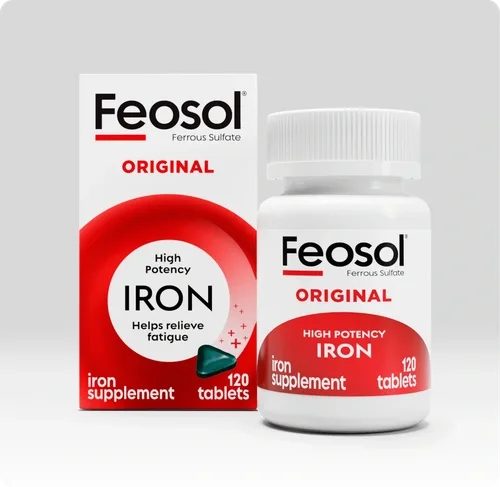
Feosol Original is a high potency iron supplement sold as a 120 tablet bottle that the page describes as a four month supply when taken once daily. Each tablet contains 65 mg of elemental iron, equivalent to 325 mg of ferrous sulfate, which the page says provides 361% of the Daily Value. The product is presented as the classic iron option from a brand that says it has been a trusted leader and innovator of iron supplements for over 70 years. The maker describes the tablets as small, coated and easy to swallow, and says they may be taken with food. According to the page, the tablets have no functional coating, so they may be crushed for people who have trouble swallowing pills, and the crushing does not enhance or impede iron absorption. The page explains that the iron is ferrous sulfate, a non-heme form that is not sourced from animals or protein, and that it has been recommended by doctors for decades. Ingredients listed include lactose, sorbitol, hypromellose, crospovidone, polydextrose, magnesium stearate, FD&C colourings, triacetin, polyethylene glycol, titanium dioxide and carnauba wax, and the label says it contains milk. The product is described as gluten free, free of artificial flavours and made in the USA. The page recommends one tablet daily or as directed by a physician, and says children under 12 should consult a physician. Warnings include that iron may interfere with absorption of certain meds, that these products should not be taken within two hours of each other, that taking iron with meals may minimise nausea, and that iron can cause constipation or diarrhoea. It also notes that iron overdose is a leading cause of fatal poisoning in children under 6 and that the product should be kept out of reach. The FAQ section explains that ferrous sulfate is about 20 percent elemental iron, that dark or black stool is a typical side effect due to unabsorbed iron, and that people with persistent symptoms should contact a doctor or pharmacist. The page also offers Feosol Complete as a gentler dual iron option that the maker says minimises side effects. A subscription option saves 15 percent, with delivery every four, eight or twelve months, alongside a one time purchase price. The product is positioned for people with iron deficiency and for whom red blood cell formation is vital, and it is described as a non-heme iron that is perfect for vegetarians.
We don’t sell supplements. We help you make decisions and get the best price.
Lowest prices
In stock, lowest price first. Checked Nov 19.
- Feosol$10.99 a bottleThe store does not state the bottle size, so there is no cost per month.Buy at Feosol (opens in a new tab)
Study, Trial or Testing Result Summary
Members Only60 human studies · 41 improved
27 of these 60 human studies gave iron by drip or injection, not by mouth.
This tablet gives 65 milligrams of iron, a full dose and above the daily recommended limit, so members can take less. Iron reliably eases tiredness in people who are low in iron. A pooled analysis of 21 placebo-controlled trials in 3514 adults with low iron but no anaemia found that iron given into a vein reduced fatigue and improved peak oxygen use, though the evidence was low quality [1]. Another analysis of 18 trials found iron reduced self-reported fatigue but did not improve measured fitness [2]. Iron tablets also helped: 80 milligrams daily for 12 weeks reduced fatigue more than placebo in 198 women with low iron stores [3]. In 290 tired women with low iron, one infusion reduced fatigue in 65.3% compared with 52.7% on placebo [4]. After childbirth, iron into a vein eased fatigue more than tablets [5]. The benefit depends on being low in iron: it disappeared when people with normal iron were included [6]. Most of these trials used iron into a vein rather than tablets like this one. Animal and cell studies are never counted.
See all 60 studies →Hide the studies
- Across 33 trials of 4558 women with anaemia after childbirth, intravenous iron probably reduced fatigue slightly within 8 to 28 days compared with oral iron, though most evidence was low or very low certainty.Treatment for women with postpartum iron deficiency anaemia.
- In 20 trials of 4196 women with anaemia after childbirth, intravenous iron reduced fatigue more than oral iron, and also raised haemoglobin and ferritin, with low to moderate quality evidence.Intravenous iron versus blood transfusion for postpartum anemia: a systematic review and meta-analysis.
- Across 21 placebo-controlled trials in 3514 adults with iron deficiency but no anaemia, intravenous iron improved peak oxygen use and reduced fatigue, though the evidence was low quality.Systematic review and meta-analysis of intravenous iron therapy for adults with non-anaemic iron deficiency: An abridged…
- In 18 studies of 1408 children, teens and menstruating adults without anaemia, iron supplementation reduced fatigue and improved anxiety, well-being and memory in placebo-controlled trials, but the effects were absent when people without iron deficiency were included.Psychiatric and cognitive outcomes of iron supplementation in non-anemic children, adolescents, and menstruating adults:…
- In 18 trials of 1170 iron-deficient adults without anaemia, iron reduced self-reported fatigue but did not improve measured physical capacity such as oxygen uptake.Efficacy of iron supplementation on fatigue and physical capacity in non-anaemic iron-deficient adults: a systematic rev…
- In 11 trials of 1074 adults with iron deficiency but no anaemia, intravenous iron slightly raised haemoglobin, but the evidence for fatigue and oxygen uptake was very low quality and too uncertain to show benefit.Intravenous iron therapy for non-anaemic, iron-deficient adults.
- Pooling six randomised trials, iron reduced fatigue in people with iron deficiency without anaemia, though cross-sectional studies showed no significant link between iron deficiency and fatigue.Iron deficiency without anaemia is a potential cause of fatigue: meta-analyses of randomised controlled trials and cross…
- In four placebo-controlled trials of people with iron deficiency anaemia, intravenous ferumoxytol improved fatigue scores and haemoglobin without raising adverse events.The Efficacy of Ferumoxytol for Iron Deficiency Anemia: A Meta-Analysis of Randomized Controlled Trials.
- In a review of 21 studies, iron supplementation in people with iron deficiency without anaemia improved objective and self-rated fatigue scores, while other pooled analyses were not significant.Non-anaemic iron deficiency - a disease looking for recognition of diagnosis: a systematic review.
- In a review of 24 studies of supplements in wrestlers, iron supplementation improved recovery and may improve exercise performance, though effects were often small and results mixed across supplements.Evidence-Based Supplementation Strategies for Wrestlers: A Systematic Review.
- In 812 adults with iron deficiency anaemia who could not use oral iron, intravenous ferumoxytol over 5 weeks improved fatigue scores more than placebo, and 81.1% reached the haemoglobin target versus 5.5% on placebo.Efficacy and safety of IV ferumoxytol for adults with iron deficiency anemia previously unresponsive to or unable to tol…
- In 405 non-anemic blood donors with low iron stores, a single 800 mg iron infusion raised ferritin and hemoglobin but did not change fatigue scores compared with placebo at 6 to 8 weeks.The effects of intravenous iron supplementation on fatigue and general health in non-anemic blood donors with iron defic…
- In 399 anemic patients after a long intensive care stay, hepcidin-guided intravenous iron (1 g) did not shorten later hospital stay and the abstract reports no fatigue result, though 90-day deaths were lower (8% vs 16.6%).Impact of treating iron deficiency, diagnosed according to hepcidin quantification, on outcomes after a prolonged ICU st…
- In an open-label randomized trial of 338 adults with iron deficiency anemia, high-dose intravenous iron raised hemoglobin faster than oral iron and improved fatigue scores more by 4 weeks, with similar side effect rates.[Comparison of the efficacy and safety between high-dose intravenous iron and oral iron in treating iron deficiency anem…
- In 304 iron-deficient heart failure patients, intravenous iron for 52 weeks improved walking distance by 33 m at 24 weeks and improved fatigue score and quality of life compared with placebo.Beneficial effects of long-term intravenous iron therapy with ferric carboxymaltose in patients with symptomatic heart f…
- In 290 fatigued, iron-deficient women, a single 1000 mg iron infusion reduced fatigue in 65.3% versus 52.7% with placebo at 8 weeks, and improved mental quality of life and cognitive function.Evaluation of a single dose of ferric carboxymaltose in fatigued, iron-deficient women--PREFER a randomized, placebo-con…
- In 252 pregnant women with iron deficiency anaemia, intravenous ferric carboxymaltose improved vitality and social functioning over 12 weeks more than oral ferrous sulfate (200 mg iron daily).Ferric carboxymaltose vs. oral iron in the treatment of pregnant women with iron deficiency anemia: an international, op…
- In 200 renal anaemia patients, an herbal tablet improved fatigue and other symptoms more than an iron complex over 8 weeks, so iron itself was the weaker comparator.Effect of Jianpi Shengxue Tablet on Iron Metabolism and Nutritional Status in Patients with Renal Anemia: A Prospective,…
- In 198 nonanemic menstruating women with low ferritin and fatigue, 80 milligrams of elemental iron daily for 12 weeks reduced fatigue more than placebo, though quality of life did not change.Effect of iron supplementation on fatigue in nonanemic menstruating women with low ferritin: a randomized controlled tri…
- In 176 iron-deficient blood donors, intravenous or oral iron over 8 to 12 weeks significantly reduced fatigue and improved sleep, with no difference between the two forms.The Effect of Parenteral or Oral Iron Supplementation on Fatigue, Sleep, Quality of Life and Restless Legs Syndrome in I…
- In 164 non-anaemic iron-deficient women, two months of iron therapy lowered fatigue scores and raised ferritin and haemoglobin compared with placebo.Effect of iron therapy on fatigue symptoms in non-anaemic iron deficient women of reproductive age- A Randomized Control…
- In a double-blind placebo-controlled trial of 144 non-anemic women with unexplained fatigue, 80 mg daily of oral iron for 4 weeks reduced fatigue more than placebo, with the benefit seen mainly in women with low or borderline ferritin.Iron supplementation for unexplained fatigue in non-anaemic women: double blind randomised placebo controlled trial.
- In 120 stroke patients, a sucrosomial iron and multinutrient formula over 16 weeks reduced fatigue and improved motor and cognitive function and inflammation markers versus standard care.Boosting Post-Stroke Recovery: The Role of Nutritional Supplementation in Reducing Fatigue-A Single-Blind Randomized Con…
- In 116 anaemic colorectal cancer patients, intravenous iron before surgery improved quality of life and fatigue-related scores more than oral iron at three months.The impact of pre-operative intravenous iron on quality of life after colorectal cancer surgery: outcomes from the intra…
- In 112 women with postpartum anemia taking 600 mg daily of ferrous fumarate for 4 weeks, adding folic acid did not change fatigue scores or health status compared with iron alone.A randomized controlled trial examining the addition of folic acid to iron supplementation in the treatment of postpartu…
- In 110 premenopausal women with iron-deficiency anemia from fibroids, both groups took 325 mg iron three times daily for 12 weeks, and adding a goserelin injection raised blood hemoglobin more than a sham injection did; the abstract does not test iron alone against no iron and reports no energy or fatigue result.Goserelin acetate 10.8 mg plus iron versus iron monotherapy prior to surgery in premenopausal women with iron-deficiency…
- In 100 pregnant women with iron deficiency anemia over 12 weeks, intravenous ferric carboxymaltose gave greater fatigue improvement than iron sucrose and needed fewer visits.Comparison of ferric Carboxymaltose and iron sucrose complex for treatment of iron deficiency anemia in pregnancy- rando…
- In 97 people with inflammatory bowel disease and iron deficiency anemia, fatigue scores improved over 5 weeks after intravenous iron with both products, but improvement was slower and smaller with ferric carboxymaltose.Hypophosphataemia following ferric derisomaltose and ferric carboxymaltose in patients with iron deficiency anaemia due …
- In 97 people with inflammatory bowel disease and iron deficiency anemia, intravenous iron over about 10 weeks improved vitality scores, a measure of energy, with larger gains after ferric derisomaltose than ferric carboxymaltose.Hypophosphatemia attenuates improvements in vitality after intravenous iron treatment in patients with inflammatory bowe…
- In 90 premenopausal women with fatigue and low ferritin, one 800 mg intravenous iron dose cut fatigue more than placebo only in women with ferritin of 15 or lower, where 82% of iron-treated women reported improvement; the overall difference was not significant.Intravenous iron for the treatment of fatigue in nonanemic, premenopausal women with low serum ferritin concentration.
- In 85 female blood donors, one 1000 mg intravenous iron isomaltoside dose raised hemoglobin more than placebo, but fatigue differences were only numerical and the trial was not powered for symptoms.Intravenous iron isomaltoside improves hemoglobin concentration and iron stores in female iron-deficient blood donors: a…
- In 60 adults with iron-deficiency anemia given iron twice daily for 12 weeks, the new casein-bound iron raised hemoglobin about as much as ferrous sulfate, and the two groups did not differ in fatigue scores.An active new formulation of iron carried by aspartyl casein for iron-deficiency anemia: results of the ACCESS trial.
- In 59 iron-deficient women who could not tolerate oral iron, taking iron-whey-protein microspheres at 14, 25 or 50 mg daily for 12 weeks raised ferritin, hemoglobin and energy levels, with fewer stomach problems than their previous iron; there was no placebo group.Management of iron deficiency in women of childbearing age with oral iron intolerance: a prospective, randomised, contro…
- In 53 female athletes with low iron stores, 20 mg iron plus a probiotic raised ferritin more than iron alone but not significantly, and increased vigor at 12 weeks, with no clear effect on physical performance.The Effect of Lactobacillus plantarum 299v on Iron Status and Physical Performance in Female Iron-Deficient Athletes: A …
- In 30 women with gynecological disease and anemia before surgery, 100 mg daily iron for at least 10 days raised hemoglobin but did not significantly reduce fatigue; adding Ninjin'yoeito reduced fatigue.Safety and efficacy of Ninjin'yoeito along with iron supplementation therapy for preoperative anemia, fatigue, and anxie…
- In 26 people with non-dialysis chronic kidney disease and iron deficiency, two types of intravenous iron (1000 mg, then 500-1000 mg a month later) gave similar improvements in fatigue and sit-to-stand ability, with no comparison to placebo.Patient reported outcome measures and cardiovascular outcomes following high dose modern intravenous iron in non-dialysi…
- In 26 women with moderate-to-severe anemia after childbirth, intravenous iron, blood transfusion or both led to similar fatigue and depression scores over 12 weeks, though this small pilot trial was not powered to test those outcomes.The fatigue after infusion or transfusion pilot trial and feasibility study: A three-armed randomized pilot trial of int…
- In 26 recreationally active women with iron deficiency but no anemia, one intravenous iron treatment compared with placebo improved fatigue scores at 4 weeks.Effect of intravenous iron therapy on exercise performance, fatigue scores and mood states in iron-deficient recreationa…
- In a small pilot of 21 children with kidney disease and mild anemia, iron sulfate therapy did not produce significant differences in physical activity or fatigue compared with delaying iron therapy.Pilot pragmatic clinical trial of iron therapy in children with anemia of chronic kidney disease (FeTCh-CKD).
- In 20 iron-depleted women without anemia, 6 weeks of iron supplements, compared with placebo, reduced muscle fatigue during repeated knee-extension exercise and raised muscle strength later in the test.Iron supplementation improves progressive fatigue resistance during dynamic knee extensor exercise in iron-depleted, non…
- In 20 active women with low iron stores, 100 mg of daily iron for 8 weeks raised maximal oxygen uptake above the placebo group and lowered blood lactate after exercise, though the rise in endurance time was not statistically significant.Effects of iron repletion on VO2max, endurance, and blood lactate in women.
- In 18 iron-depleted female runners, 8 weeks of oral iron raised iron stores but did not improve endurance time to exhaustion compared with placebo.Effect of iron supplementation on endurance capacity in iron-depleted female runners.
- In a placebo-controlled trial of 16 iron-depleted female athletes, intramuscular iron injections raised serum ferritin but did not improve submaximal or maximal aerobic exercise performance compared with placebo over about 4 weeks.Effect of iron injections on aerobic-exercise performance of iron-depleted female athletes.
- In 15 iron-deficient elite runners, a single 500 milligram intravenous iron injection improved iron levels for 4 weeks but did not improve time to exhaustion compared with placebo.Effect of Intravenous Iron on Aerobic Capacity and Iron Metabolism in Elite Athletes.
- In a placebo-controlled trial of 14 distance runners without clinical iron deficiency, three 100 mg intravenous iron injections over 4 weeks reduced perceived fatigue and mood disturbance by week 6, without improving running performance.Four weeks of IV iron supplementation reduces perceived fatigue and mood disturbance in distance runners.
- In 13 women with severe postpartum anemia, a single 1500 mg intravenous iron dose and red blood cell transfusion produced no significant difference in fatigue or depression scores over 12 weeks.Single-dose intravenous iron infusion versus red blood cell transfusion for the treatment of severe postpartum anaemia: …
- In a randomized trial of pregnant people in their second trimester with iron deficiency anemia, a 27 mg iron tablet over 4 weeks raised hemoglobin as much as 100 mg ferrous ascorbate, improved dizziness, fatigue and palpitations more, and caused no side effects.Efficacy and safety of emulsified microsomal ferric pyrophosphate vs. Ferrous Ascorbate in pregnancy with iron-deficienc…
- In an open-label quasi-randomized trial of 1066 women with postpartum anemia, the herbal formula Ninjin'yoeito reduced fatigue over 4 weeks, while oral iron did not, although both raised hemoglobin by similar amounts.A quasi-randomized controlled trial of Ninjin'yoeito for the treatment of postpartum anemia and the prevention of postpa…
- In 70 adults with stage 3-5 kidney disease, a nutrition program of counseling, menu samples and supplement products reduced tiredness compared with a control group over about two weeks, though iron was not the focus of the program.A practical approach to nutritional intervention for people with chronic kidney disease in Vietnam.
- In 12 healthy volunteers breathing low-oxygen air, one intravenous iron sucrose dose or saline placebo before 8 hours of low oxygen did not change maximal exercise capacity overall.Hypoxic pulmonary vasoconstriction does not limit maximal exercise capacity in healthy volunteers breathing 12% oxygen a…
- In a Sri Lankan tea plantation, anemic workers given iron picked significantly more tea over one month than those given placebo, and their daily activity levels also rose.Iron-deficiency anaemia and its effect on worker productivity and activity patterns.
- In 201 pregnant women with persistent iron deficiency, a single 1000 mg intravenous iron dose improved fatigue more than daily oral iron at weeks 3 and 6, and the women stayed non-anemic for longer.Intravenous ferric derisomaltose versus oral iron for persistent iron deficient pregnant women: a randomised controlled …
- In 85 women with severe fatigue after postpartum hemorrhage, a single 1200 milligram intravenous iron isomaltoside dose reduced physical fatigue more than oral iron over 12 weeks.Intravenous iron isomaltoside treatment of women suffering from severe fatigue after postpartum hemorrhage.
- In a single-arm study of 78 pregnant people with iron deficiency anemia, one 1000 mg intravenous dose of ferric derisomaltose raised mean hemoglobin by 1.3 g/dL by delivery and improved self-reported fatigue, with no major infusion reactions.Efficacy of Single-Dose Intravenous Ferric Derisomaltose for Iron Deficiency Anemia in Pregnancy.
- In an uncontrolled pilot study of 23 young women with iron deficiency anemia, 160 mg daily of ferrous sulfate for 8 weeks lowered fatigue scores and improved muscle endurance, but did not improve aerobic fitness or muscle strength.Efficacy of 8-week oral iron supplementation on fatigue and physical capacity in young women with iron deficiency anemia…
- In 20 adolescent girls with iron deficiency and fatigue, intravenous iron sucrose led to clinically meaningful fatigue improvement in 19 of 20 at 6 weeks, with no control group.Intravenous iron therapy in non-anemic iron-deficient menstruating adolescent females with fatigue.
- In a small uncontrolled pilot of 10 homeless women taking alternate iron supplements for three months with nurse home visits, fatigue decreased and blood hematocrit rose, with few side effects.Side effects of alternative iron supplementation: a pilot study.
- In 186 cancer patients with iron deficiency, intravenous iron was followed by better quality of life, fatigue scores, and physical function, though there was no control group.Impact of Iron-Deficiency Management on Quality of Life in Patients with Cancer: A Prospective Cohort Study (CAMARA Stud…
- In 40 octogenarians with anemia and resistant heart failure, a combined treatment of erythropoietin and intravenous iron sucrose improved heart function, shortness of breath, and fatigue, though iron was not tested alone.Effect of correction of anemia with erythropoietin and intravenous iron in resistant heart failure in octogenarians.
- In 21 patients with inflammatory bowel disease who finished 8 weeks of oral liposomal iron, fatigue scores fell by an average of 9.2 points in an uncontrolled pilot study.Treatment of iron deficiency anemia with liposomal iron in inflammatory bowel disease: efficacy and impact on quality of…
Review Totals and Summary
Members Only1,674 reviews · 93% positive
Feosol Ferrous Sulfate Iron Original gets a mostly positive response, with about 1,170 ratings across the stores and most reviewers giving four or five stars. Complaints are fewer and mostly concern delivery and labelling rather than how the tablets work. **What buyers say it did for them:** Several people credit it with more energy and with helping low iron. One said "After 2-3 days, my energy levels increased," and another reported that headaches and dizziness went away. A long-term user wrote "These really work." Others say it "keeps my Iron in check" and mention using it for years, often after a doctor said their iron was low. **What they complain about:** The criticism is mostly not about the tablet itself. Two reviewers say their orders were late or never arrived, and one said they were charged an extra $8 for a delayed delivery. One buyer was bothered by the label, saying it is not 325mg ferrous sulfate and that it states 65mg. Another asked why the older light green box was discontinued, since that version helped them a lot. One reviewer had a bottle that felt "off," though the company replaced it quickly. The store summary also notes that the discontinued-box complaint goes unanswered on the page. **Taste, smell, pill size and form:** Reviewers describe the tablets as easy to take. One said "the coating makes it extremely easy to take" and added that it was easy on the stomach. A parent of an autistic child who can't tolerate most iron products said "This brand doesn't have much of a smell at all." Another buyer said it does not constipate, which one store summary singles out as speaking to a common complaint about iron tablets. Other forms of this product that may appear on store pages were left out. **Value for money:** Buyers who mention price are happy with it. One called it "a great price with 120 tablets," and the same parent found it "a better value" than other brands. Another liked that it comes as a two-month supply. One store summary notes that ordering online is more convenient than going to a drugstore, though that is about buying logistics rather than the tablet. **Who it seems to suit and who it did not:** It seems to suit people who want a familiar iron tablet they can take long term, including those who have struggled with stomach upset, constipation, or the smell of other brands. Reviewers include a first-time iron user, an 82-year-old man, and people who were told by a doctor to take iron. It suited less well anyone who expects the label to read 325mg, anyone who preferred the old light green box, and anyone relying on a fast, trouble-free delivery. Those problems were reported by a few buyers, not most. **Overall:** The tablets are praised for working, being gentle and easy to swallow, and being good value. Most of the dissatisfaction comes from shipping, the label, and packaging changes.
Biohacker Summary
Members Only4 of 10 recommend it
The panel is split on iron: four of the ten recommend it, four warn, one is neutral and one stopped, so most agree it helps when levels are truly low but should not be taken blindly. Several of them say to test first, looking at ferritin and other blood markers, because too much iron is linked to inflammation, oxidative stress and heart disease risk, and the body has little way to get rid of extra. People take it for energy, muscle recovery, thyroid and brain function, hair health, and for pregnancy, infancy and menstruating women, and many prefer food sources like red meat and liver, with heme iron absorbing better than plant iron. Doses were rarely given, though one panelist takes 10 milligrams of heme iron, and one said to give any iron change a couple of months before judging it. One panelist stopped because years of trying meat and many supplement forms did not raise his levels, and another cautioned that low hemoglobin does not always mean low iron.
See all 10 biohackers →Hide the biohackers
Dr. Mark Hyman · Iron · warns
- Says iron isn't the only answer for fatigue and that people shouldn't take iron without testing first. They note the American Society of Hematology raised the ferritin threshold for iron deficiency from 15 to 30, and up to 50 with symptoms or heavy periods.
- States that iron helps red blood cells carry oxygen, and a deficiency can make one feel like they are running on low power mode.
- Mentions iron as an existing biomarker that plays a role in mental health, which Function Health includes in their measurements.
- Notes that a woman patient had very low iron.
- States that they get the whole picture when it comes to iron, looking at ferritin, iron reserves, iron in the blood, iron saturation, and iron binding capacity to spot problems before full-blown anemia.
- Mentions iron as an example of a common nutritional deficiency.
- Notes that many Americans are deficient in iron, which affects mood and brain function.
- Recommends testing Iron as a biomarker before training for fitness.
- States that low iron, specifically a ferritin level less than 45, is a big hidden cause of insomnia, affecting up to half the population.
- Mentions that they check iron levels as part of evaluating mental illness biomarkers.
Dr. Eric Berg · Iron · warns
- Notes that Italian pasta isn't enriched with iron, suggesting that enrichment with iron might be a negative factor.
- Warns against iron supplements, suggesting instead to get iron from red meat or liver.
- Dr. Berg states that when nutrients like iron are too low, fatigue and weakness can follow.
- Does not recommend taking iron supplements or cooking in iron skillets because the body has no mechanism of getting rid of iron unless one donates blood or is a menstruating female.
- Identifies iron as the Achilles' heel of cancer, as it is needed for its DNA to replicate.
- Mentions that grass-fed liver has heme iron, the most bioavailable form of iron that prevents anemia.
- Dr. Berg warns that too much iron can be damaging to the body and advises focusing on food sources to avoid overconsumption.
- Warns that too much iron, especially the ferrous sulfate or fumarate type found in many supplements, is corrosive and oxidizing, can mess with the liver, and create inflammation, noting that males have no natural way to excrete excess iron.
- Notes that tannins in tea bind iron, blocking its absorption.
- Mentions that vertical ridges on nails could indicate an iron deficiency.
Dr. Rhonda Patrick · Iron · warns
- Says heme iron is essential at low levels but at high levels is pro-inflammatory and pro-oxidant, damaging pancreatic beta cells and causing diabetes in animal experiments.
- Recently found out he needed to get on an iron supplement and noticed he gets less sore in his training after taking it.
- Advises that menstruating women should ensure they are getting enough iron.
- Warns that iron is not an innocuous supplement and should not be taken aggressively without proper testing, as it can be complicated and has significant downsides if levels are not understood.
- Dr. Patrick explains that breast milk is incredibly low in iron, and by six months, infants can develop iron deficiency anemia, so pediatricians recommend introducing iron-rich complementary foods at that time.
- Rhonda discusses Dr. Lithgow's work on how excess dietary iron affects protein homeostasis in worms, noting that increased iron levels in the diet accelerated aging and the accumulation of insoluble proteins.
- Dr. Patrick takes some iron during menstruation.
- Increased iron levels in the brain worsen cognitive test performance by as much as 10% in older adults, a phenomenon linked to brain atrophy and decline in memory and attention.
- Iron plays a central role in health across the lifespan. It forms the core of hemoglobin, the molecule in red blood cells...
- The requirement for iron is 1.8 times higher for vegetarians.
Thomas DeLauer · Iron · recommends
- Recommends giving any iron intervention a couple of months before deciding if it works, and suggests increasing heme iron through red meat or liver intake.
- Compares iron content in spinach (2.7mg) and beef (2.6mg), but emphasizes that beef's heme iron absorbs at about 25%, while spinach's non-heme iron absorbs at 2-8%.
- Recommends iron from meat, specifically red meat and beef liver, stating that it is a crucial part of the mechanistic triad for thyroid hormone function and is iron-dependent for iodine incorporation into thyroid hormone.
- Notes that iron is essential for delivering oxygen to muscles and the brain, making it an important cofactor for signals to reach their targets.
- Recommends assessing iron along with selenium and iodine for optimal thyroid function, suggesting red meat as a source of iron.
- Recommends getting heme iron from real food sources like organ meats, red meats, or pumpkin seeds, and warns against iron supplements due to potential oxidation and issues with copper levels.
- Warns against overdoing iron supplementation unless truly needed, especially if ferritin levels are high, as ferroptosis is iron-dependent and excess iron can increase ferroptotic risk.
- Recommends good quality heme iron from food sources like liver and beef for preventing insulin resistance and type 2 diabetes, supporting glucose control, and energy regulation, but warns against iron supplements.
- States that iron status is critical for white matter development and maintenance, noting that anemic individuals tend to have a loss of white matter structure, which is common in women during perimenopausal transition.
- Warns that polyphenols in coffee can bind to iron, making it useless. He recommends taking iron supplements upon waking on an empty stomach, potentially with vitamin C, and waiting 30-60 minutes before consuming coffee or tea.
Siim Land · Iron · neutral
- Mentions that iron is a mineral necessary for making collagen.
- States that excess iron promotes oxidative stress and inflammation, which increases heart disease risk.
- Notes that iron deficiency is found in children with premature graying of hair and that some people get gray hair due to iron deficiency.
- Recommends ensuring sufficient iron intake, especially during pregnancy and early life, to prevent mental developmental and cognitive issues.
- States his iron level is 103 micrograms per deciliter, which he considers a good result, and advises that men should aim for lower iron levels to reduce the risk of heart disease and aging.
- Places iron in the 'junk tier', warning that high iron levels are associated with heart disease, mortality, and liver disease, and advises caution with supplementation, especially for men with high iron.
- Warns that high iron levels are associated with increased risk of mortality and reduced lifespan, and that iron in excess is bad for maximum longevity. He states that iron levels slightly on the lower end, around 60 to 90 micrograms per deciliter, are associated with the lowest mortality risk, and that iron below 45 and above 145 micrograms per deciliter is associated with increased risk of mortality.
- Warns that very high iron levels can cause damage to the endothelium and increase the risk of heart disease, especially in men who accumulate iron more easily.
- Warns that too much iron can damage blood vessels, though people with low iron status are safe.
- Theorizes that Brian's lower iron status and hemoglobin status, possibly due to his plant-based diet and lack of iron supplementation, limits his V2 max.
Andrew Huberman · Iron · recommends
- States that Iron is one of the critical nutrients with the best evidence for cognitive function and reducing the risk of dementia.
- Warns that excess iron will increase the number of senescent cells in the body, which accumulate as people get older and cause inflammation and cancer. He notes that people who are healthy and have a fairly vegetarian diet often have slightly low iron levels but super amounts of energy.
- Notes that about 50% of the population is iron deficient.
- Mentions that the podcast will review the role of iron in treating depression.
- States that B12, folate, and iron are essential to mitochondrial function and if deficient, mitochondria will not function properly, which is consistent with the mitochondrial theory of neuropsychiatric disorders.
- Advises women concerned with low ferritin to take an iron supplement every other day for 10 days, starting on the first day of their bleed, to maximize absorption.
- Discusses the role of iron in hair growth.
- Warns that excess iron, especially as a supplement, can accelerate the aging process by increasing senescent cells in the body.
- Agrees with Mark Hyman that iron is a basic supplement, but warns older men against taking too much due to iron toxicity, while menstruating women need more.
- Recommends that women concerned with low ferritin take an iron supplement every other day, starting at the first day of their bleed, for ten days, to allow for better absorption.
Ben Greenfield · Iron · recommends
- Recommends testing for and replenishing iron if levels are low, as it can affect the ability to maintain or preserve muscle, especially for those on GLP-1s.
- Notes that one can eat iron-rich foods or supplement with iron, but still feel exhausted if iron is not the missing piece, emphasizing that focusing on a single mineral in isolation can support a number on a lab test rather than the system itself.
- Mentions iron as a common deficiency.
- Recommends a nutritious diet including iron, as it is critical for brain development.
- Notes that the guidelines mention iron supplementation for infancy and early childhood.
- Started thinking about getting more heme-based iron in his diet after a podcast about reasons people feel fatigue.
- Warns that modern society has flipped the narrative on iron intake, leading people to consume excessive amounts (20-50 mg) through an iron-fortified diet, which the body cannot assimilate, leading to storage in tissues and disrupting iron physiology, contributing to aging.
- Notes that some people need to supplement with iron, recommending iron biscinate as a form that doesn't irritate the gut.
- Explains that 10X can pinpoint genetic variations that predispose some people to absorbing too much iron and will adjust the iron content in their supplement, potentially reducing or removing it entirely.
- Covers iron as a key supplement for kids.
Bryan Johnson · Iron · stopped
- Has had low iron for 11 years and despite eating meat and trying all forms of iron supplementation at different times and sequences, none of it worked to raise his iron or ferritin levels.
- Had low iron for 11 years, with ferritin averaging 38 ng/mL, and has finally boosted it back to healthy levels.
- Takes 10 milligrams of heme iron to get his iron levels up, as they are borderline.
- Recommends adequate Iron for hair health, noting it is in the Blueprint stack.
- Recommends supplementing with iron for brain health for both the mother and the baby during pregnancy.
Dave Asprey · Iron · warns
- Warns that if a doctor diagnoses anemia, one should not assume they just need more iron, as low hemoglobin doesn't always mean low iron and the issue can sometimes be how well the body is using iron.
- Notes that when energy intake is too low for training demand, nutrient intake often falls short, especially for iron, which is associated with impaired recovery.
- Recommends ensuring iron levels are good as it is a cofactor that can help thyroid function, especially with conversion issues.
- Egg yolks, particularly raw egg yolks, fatty cuts of meat, choline sources like that, making sure there's enough iron and a lot of the micro minerals, trace minerals, things like that. Those would be really important for bone marrow because mineral deficiencies are going to block that at the start.
- Warns that both too much and not enough iron can trash the body, highlighting the complex interactions between iron and copper.
- States that iron really helps in maintaining hair growth.
- States that many vegans don't get enough iron, which slows metabolism and makes it harder to build muscle.
- Warns that low iron in women leading up to and through the first 30 weeks of pregnancy can result in the baby having a lower IQ and being more likely to have ADHD and demyelination issues.
- Advises taking iron and calcium separately because they will bind together.
- Advises getting iron levels up through diet and supplementation, and to take iron and calcium separately because they will bind together.
Peter Attia · Iron · recommends
- Recommends iron supplements for women of reproductive age who are iron deficient.
- Notes that deficiencies in certain vitamins and minerals, such as iron, can be a cause of hair loss in women.
- Delves into the crucial yet often overlooked topic of iron and iron deficiency.
- Explains that humans consume about 10 to 20 milligrams of iron per day, absorbing roughly 10% of that, which is 1 to 2 milligrams per day, perfectly offsetting the 1 to 2 milligrams lost daily.
- Peter emphasizes the importance of consuming an adequate amount of iron daily to prevent deficiency.
- Speculates that lower iron levels in women due to their menstrual cycle may offer a protective benefit against heart disease, citing data that metabolically deranged men benefit from therapeutic phlebotomy.
RAL Summary
Members OnlyTier 3 for Energy
Human trials show iron reduces fatigue in people low in iron, including a tablet trial [3], and 93% of 1684 reviews are positive, but three biohacker panel members warn against iron, which drops it from tier 2 to tier 3.
Where the evidence disagrees: 13 of the 60 human studies found no effect.
More Details
Members OnlyBody systems · Combine with · Possible side effects
Body systems: Blood, Muscular system, Nervous system
Combine with: If iron deficiency is confirmed by a clinician, pair ferrous sulfate with vitamin C (100-250 mg) to boost non-heme iron absorption. Vitamin B12 and folate support red blood cell formation, especially if anemia is present. Taking iron every other day or with a small amount of food may improve tolerance. Gentle stool softeners or magnesium citrate may help with iron-related constipation. Avoid taking it with calcium, antacids, coffee, tea, or dairy, which reduce absorption. Separate it from meds and certain meds by several hours. For actual post-meal upper-abdominal discomfort, consider separate options such as ginger, peppermint, digestive enzymes, or simethicone, and see a doctor if symptoms persist.
Possible side effects: The studies given report no major side effects. Reviewers describe it as easy on the stomach and not constipating, though the 65 milligram dose is above the daily recommended limit for iron.
Supplement Facts
Iron 65 mg
| Iron (as Ferrous Sulfate) | 65 mg | 361% |
Label source: Feosol · Report a label change
Show entire label

More energy products
Members OnlyThe highest ranked for the same goal
Read more
Our articles on this subject
- Best Vitamins for Fatigue and the Habits That Matter MoreArticle · Jun 15, 2026
- What Supplements and Vitamins Should Not Be Taken TogetherArticle · Sep 7, 2026
Graded November 23, 2026 by the Reverse Age Lab evidence engine, from human studies, real reviews and our biohacker panel. How we grade. Is this medical advice? No. Rala organizes the published evidence; go over any change with your doctor, especially if you take meds.
Privacy policyConsumer health dataAffiliate disclosureTermsBrand and legal noticesDo Not Sell or Share My Personal InformationCookie settings