GNC Vitamin E 268.5 mg (400 IU) Review
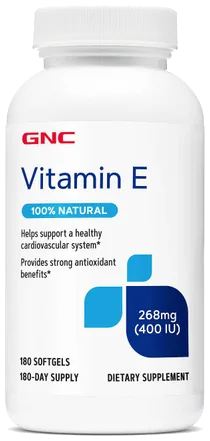
GNC Vitamin E 400IU, Supports Healthy Cardiovascular System, 180 Softgels. The page describes this as a supplement that provides strong antioxidant support for a healthy cardiovascular system and is free of sugar, gluten, and artificial colors. The About this item section states that GNC Vitamin E 400 IU helps support a healthy cardiovascular system and provides strong antioxidant benefits. It is listed as 100% natural. The listed attributes include no sugar, no starch, no artificial colors, no artificial flavors, no preservatives, sodium free, no wheat, gluten free, no corn, and no dairy. The package contains 180 softgels, described as a 180-day supply. The item form is softgel, the primary supplement type is Vitamin E, the diet type is gluten free, and the flavor is unflavored. The product details give the age range as adult and state the specific use as supporting overall health and wellness. The product benefits are listed as Vitamin E 400 IU providing antioxidant support for a healthy cardiovascular system. The item dimensions are 1 x 2.2 x 4.65 inches, the item weight is 4.96 ounces, and the unit count is 180 count. The manufacturer is listed as GNC, and the manufacturer part number is B01MSYJ6HH. The model number is 077823. The product is sold by Pattern and ships from Amazon, with a one-time purchase price of $25.99 and a Subscribe and Save price of $24.69, or $23.39 with 10 percent savings. Returns are noted as non-returnable due to food safety reasons, though damaged or defective items may be refunded or replaced. The product ranks number 140 in Vitamin E Supplements and number 118,841 in Health and Household on Amazon's best sellers list. A 100 count Amazon Basics Vitamin E option is listed as a related product, along with other GNC products such as Calcium Plus Magnesium and Vitamin D-3 and Mega Men 50 Plus Multivitamin.
We don’t sell supplements. We help you make decisions and get the best price.
Lowest prices
We may earn a commission from some store links. How we choose.
Finding the lowest prices at the stores now. This takes a few seconds.
Study, Trial or Testing Result Summary
Members Only29 human studies · 15 improved
This product gives vitamin E at 268.5 milligrams, which is 400 units and a full studied dose. No human study measured biological age directly, and the evidence on oxidative stress and damage is mixed. In 203 heart surgery patients, vitamin E taken together with vitamin C and omega-3 fats lowered oxidative stress and inflammation markers, but vitamin E was not tested alone [1]. In 100 healthy adults, 800 units daily for two months reduced fat breakdown and oxidative DNA damage, but there was no comparison group [2]. In 60 older people with stomach lining thinning, 300 milligrams daily for 6 months normalized stomach markers of oxidative damage but did not significantly lower a DNA damage marker [3]. Other trials found no benefit or harm. In 60 men aged 50 to 70, 16 weeks of vitamin E raised blood levels but did not change DNA damage in white blood cells [4]. In triathletes, 800 units daily increased fat damage and inflammation during exercise compared with placebo [5]. In healthy young men, 400 units with vitamin C blocked the insulin sensitivity gains from exercise [6]. Animal and cell studies are never counted.
See all 29 studies →Hide the studies
- In 1144 men given vitamin E, those whose blood vitamin E rose more over 3 years had a slower decline in lung function, though the effect was absent in former smokers.Change in plasma α-tocopherol associations with attenuated pulmonary function decline and with CYP4F2 missense variation…
- In 203 heart surgery patients, omega-3 fats plus vitamins C and E cut atrial fibrillation after surgery to 9.7% versus 32% with placebo and reduced oxidative stress and inflammation markers.A randomized controlled trial to prevent post-operative atrial fibrillation by antioxidant reinforcement.
- In 75 Marines doing strenuous cold-weather work at moderate altitude, 4 weeks of vitamin E alone did not effectively control the rise in oxidative stress markers.Oxidative stress in humans during work at moderate altitude.
- In 75 children with thalassemia, 3 months of vitamin E lowered oxidative stress and raised hemoglobin, but unlike N-acetylcysteine it did not reduce DNA damage.N-Acetylcysteine supplementation reduces oxidative stress and DNA damage in children with β-thalassemia.
- In 72 women aged 35 and older, 12 weeks of a collagen drink containing vitamin E among other ingredients improved skin hydration, elasticity, roughness and density versus placebo.A Collagen Supplement Improves Skin Hydration, Elasticity, Roughness, and Density: Results of a Randomized, Placebo-Cont…
- In 63 dialysis patients enrolled (57 finished), gamma tocopherol 308 mg plus DHA 800 mg lowered some inflammation markers (IL-6, white blood cell count) but did not change CRP or oxidative stress markers.Gamma-tocopherol and docosahexaenoic acid decrease inflammation in dialysis patients.
- In 62 people with mild to moderate kidney disease, 12 months of vitamin E plus pravastatin lowered oxidized cholesterol but did not change blood levels of the anti-aging protein Klotho.Reduction of Oxidative Stress in Chronic Kidney Disease Does Not Increase Circulating α-Klotho Concentrations.
- In 60 elderly people with atrophic gastritis, 6 months of vitamin E at 300 mg daily normalized stomach lining markers of oxidative damage, but unlike the papaya preparation it did not significantly lower a DNA damage marker.The aging/precancerous gastric mucosa: a pilot nutraceutical trial.
- In 60 women with endometriosis, 800 IU of vitamin E plus 1000 mg of vitamin C daily for 8 weeks lowered oxidative stress markers (MDA and ROS) and pelvic pain compared with placebo.The Effect of Combined Vitamin C and Vitamin E Supplementation on Oxidative Stress Markers in Women with Endometriosis: …
- In 60 men aged 50 to 70, 16 weeks of vitamin E raised blood levels by up to 89% but did not change DNA damage in white blood cells.Vitamin-E supplements and their effect on vitamin-E status in blood and genetic damage rate in peripheral blood lymphocy…
- In 56 people with advanced heart failure, 12 weeks of vitamin E raised blood vitamin E levels but did not significantly change oxidative stress markers, heart failure markers or quality of life.A controlled clinical trial of vitamin E supplementation in patients with congestive heart failure.
- In 50 women aged 30-65, a facial serum with vitamin C, vitamin E and raspberry leaf extract applied to one side of the face for 8 weeks improved skin color, elasticity, radiance, smoothness and wrinkles compared with the untreated side.Anti-aging and brightening effects of a topical treatment containing vitamin C, vitamin E, and raspberry leaf cell cultu…
- In triathletes, 800 IU daily of vitamin E for 2 months before a race increased lipid peroxidation and inflammation during exercise compared with placebo.Vitamin E and immunity after the Kona Triathlon World Championship.
- In young football players, 400 IU daily of vitamin E with vitamin C for 15 days lowered oxidative stress markers but did not improve muscle soreness or performance compared with placebo.Antioxidant vitamin supplementation prevents oxidative stress but does not enhance performance in young football athlete…
- In 20 young men, 6 weeks of an antioxidant mixture containing 592 mg vitamin E equivalents lowered resting and after-exercise markers of lipid peroxidation, though it did not prevent the exercise-caused rise.Effects of an antioxidant vitamin mixture on lipid peroxidation at rest and postexercise.
- In 18 active men given a multi-nutrient pill containing 400 IU of vitamin E for about five weeks, oxidative stress did not decrease compared with placebo, even during high altitude stay.Antioxidant supplementation does not attenuate oxidative stress at high altitude.
- In 16 hemodialysis patients over one month, a vitamin E-coated dialyzer produced less oxidative stress during dialysis than a standard dialyzer, although blood vitamin E levels did not change.Vitamin E-coated dialyzer reduces oxidative stress in hemodialysis patients.
- During a high altitude expedition, a daily antioxidant mix including vitamin E did not change endothelial microparticle levels or oxidative stress compared with placebo.Increased endothelial microparticles and oxidative stress at extreme altitude.
- In 11 healthy young men, vitamin C plus 400 IU vitamin E for 8 weeks did not reduce muscle oxidative stress after exercise and blunted some training-related muscle gains compared with placebo, while mitochondrial markers were unchanged.Vitamin C and E supplementation prevents some of the cellular adaptations to endurance-training in humans.
- In people with arsenic-related skin lesions, vitamin E and selenium for 6 months did not significantly lower plasma protein carbonyls (a marker of protein damage) compared with placebo.Effect of selenium and vitamin e supplementation on plasma protein carbonyl levels in patients with arsenic-related skin…
- In schizophrenia patients taking haloperidol, vitamin E over 4 months lowered a marker of oxidized glutathione and reduced motor slowing compared with placebo, but did not change overall symptom severity.Vitamin E and essential polyunsaturated fatty acids supplementation in schizophrenia patients treated with haloperidol.
- In children with fatty liver disease, hydroxytyrosol plus vitamin E over 4 months lowered a DNA damage marker and raised an anti-inflammatory marker, with the DNA damage decrease linked to less liver fat.Antioxidant activity of Hydroxytyrosol and Vitamin E reduces systemic inflammation in children with paediatric NAFLD.
- In older adults, a multi-ingredient supplement containing vitamin E for 30 days improved inflammation markers IL-6 and CRP and immune cell levels, compared with younger adults.Use of Nutraceuticals in Elderly to Fight Inflammation and Immuno-Senescence: A Randomized Case-Control Study.
- In 39 healthy young men, taking 400 IU vitamin E with 1000 mg vitamin C daily blocked the insulin sensitivity gains that exercise produced over 4 weeks.Antioxidants prevent health-promoting effects of physical exercise in humans.
- In 18 hemodialysis patients, dialysis with vitamin E-loaded dialyzers lowered an inflammation-linked enzyme activity and nitric oxide levels compared with two other dialysis methods.Vitamin e-loaded membrane dialyzers reduce hemodialysis inflammaging.
- In 100 healthy adults aged 20 to 75, taking 800 IU of vitamin E daily for two months reduced fat breakdown and oxidative DNA damage, though there was no control group.Effects of vitamin E depletion/repletion on biomarkers of oxidative stress in healthy aging.
- In 66 healthy women aged 35 to 55 taking a multi-nutrient supplement containing 45 mg vitamin E daily for 12 weeks, blood antioxidant capacity and an antioxidant enzyme increased, with no placebo group for comparison.Enhanced antioxidant capacity and anti-ageing biomarkers after diet micronutrient supplementation.
- In 19 kidney dialysis patients taking 400 IU of vitamin E daily for 120 days, a harmful oxidized fat particle in the blood fell substantially, though there was no control group.Alpha-tocopherol supplementation decreases electronegative low-density lipoprotein concentration [LDL(-)] in haemodialys…
- In healthy older adults, 200 mg vitamin E with 500 mg vitamin C daily for 3 months improved several immune function measures, and the gains lasted 6 months after stopping.Vitamin C and vitamin C plus E improve the immune function in the elderly.
Review Totals and Summary
Members Only404 reviews · 92% positive
This summary draws on a limited sample of what I could retrieve. That sample was eBay seller feedback for the GNC product and iHerb reviews for a comparable 400 IU vitamin E softgel, and it was not exhaustive. Reviewers often describe the softgels as small and easy to swallow, and they like being able to take one a day without trouble. Many long-term users say they have bought the product for years. They link it to general wellness, immune support and healthier-feeling, more hydrated skin. Some users take it for hormonal or reproductive reasons. They report smoother menstrual cycles and less cyclical chest discomfort, and a few say it helped them while trying to conceive. These are personal accounts and are not clinical proof. Others buy it for anti-aging, hair, nail and scar care. They say the effects show up gradually, often after about two months of daily use. Price is a common point of praise. Buyers describe the large-count bottles as affordable and good value, and several say they bought because others recommended it. On resale marketplaces, comments focus on the transaction. Buyers like fast shipping, careful packaging and expiration dates that match the listing. They also mention occasional dented boxes or seal concerns, though the product itself arrived in good condition. Expiry dates matter to buyers because vitamin E oil can degrade, so those who buy discounted or resale bottles check them closely. Complaints are less frequent in the material I saw. Concerns that usually come up with high-dose vitamin E include the lack of an obvious effect, since some people notice nothing. Others mention a mild oily aftertaste or burps, and softgels sticking together in warm conditions. A smaller group worries about the high dose and the safety research. Overall, customers value the simple, inexpensive, easy-to-swallow supplement. Their benefit claims are mostly subjective and vary from person to person.
Biohacker Summary
Members Only4 of 10 recommend it
The panel is divided on vitamin E, the main ingredient here, and few of them clearly recommend taking it as a stand-alone high-dose pill. Those who like it cite cell and skin protection, healthy aging, hair, and filling gaps when diets are poor, and a few take it daily inside a multivitamin or a fat-soluble vitamin blend with D, A and K. Several favor whole food or mixed forms with tocopherols and tocotrienols over the single synthetic form, and one named a mixed tocopherol form for high prolactin, though only one panelist gave a dose, a warning against 335 mg right after a workout for people under 50. Cautions were common: some warned that synthetic vitamin E over the long term may add oxidative stress or raise prostate cancer risk, that high doses did worse in lung cancer patients, that it can thin the blood so it should be stopped a week before surgery, and that it may blunt workout gains, while one said a balanced diet makes it almost unnecessary. Nobody said they had stopped taking it.
See all 10 biohackers →Hide the biohackers
Dr. Eric Berg · Vitamin E · warns
- Warns against generic multivitamins, stating they are often full of fillers and synthetics.
- Mentions that grass-fed liver has vitamin E.
- Dr. Berg states that synthetic vitamin E may be acceptable for short-term use, but long-term use can contribute to oxidative stress.
- Warns against synthetic vitamin E (dl-alpha-tocopherol) for ongoing maintenance, citing a trial where it increased prostate cancer risk and explaining that it can become a free radical and starve out necessary protective forms of vitamin E.
- Recommends taking vitamin E to block the effects of grains.
- Mentions that castor oil contains vitamin E, which is crucial for maintaining skin barrier function.
- Discusses why tocotrienols are better than regular vitamin E.
- Dr. Berg mentions that eggs contain Vitamin E.
- Fat-soluble vitamins like vitamins A, D, E, and K2 are best taken with a meal, making lunchtime an ideal choice.
- Recommends the tocotrienols form of vitamin E for various conditions due to their power, and suggests taking it at lunch with a meal.
Ben Greenfield · Vitamin E · neutral
- Mentions a recent study showing no significant increase in bleeding for patients on Vitamin E supplementation during open heart surgery, which was interesting for him to learn.
- Notes a new study indicating that vitamin E is a core dietary antioxidant closely associated with a reduced risk of accelerated biological aging.
- Recommends Xtendlife's Tocotrienols Vitamin E for cardiovascular, brain, and healthy aging support, noting that research points to tocotrienols over alpha-tocopherol.
- Recommends whole food vitamin E, explaining that typical supplements only provide alpha-tocopherol, while the whole food complex includes four tocopherols and four tocotrienols, often with selenium at the core.
- Warns against taking 335 mg of vitamin E immediately after a workout for individuals under 50, as it can dull the body's natural adaptation signal.
- Warns that taking a whole bunch of antioxidants like vitamin E after a workout can suppress the body's inflammatory response, which is necessary for benefits like mitochondrial proliferation and satellite cell generation for new muscle.
- Recommends Hiya's best-selling children's vitamin for kids to get the full-body nourishment they need.
- Recommends vitamin E as a powerful antioxidant for pollution, and has tripled his antioxidant intake since arriving in India.
- Explains that vitamin E requires carrier fats for absorption, which is why it's often recommended to take fat-soluble vitamins with food, and 10X Health's microtransporters release vitamin E upon contact with dietary fats.
- Ben Greenfield recommends the tocotrienol form of vitamin E for lung health and air pollution exposure, as it is more effective than tocopherol and difficult to get sufficient levels from food.
Dave Asprey · Vitamin E · uses
- Dave Asprey's kids get a little bit of vitamin E every day, which helps to stabilize the bad oils they get when eating at restaurants.
- Recommends Vitamin E as one of the most important supplements for overall health.
- Takes Vitamin DAKE from Suppgrade Labs because D3, A, K2, and E work together.
- Includes vitamin K2 as a critical ingredient in Vitamin DAKE, stating that the body needs the right fat soluble vitamins for thousands of reactions.
- Mentions Vitamin DAKE from Suppgrade Labs as a product that combines fat-soluble vitamins D, A, K, and E to work together.
- Would have added natural forms of vitamin E after hitting his head.
- Recommends stacking glutathione with vitamin E to help revive oxidized glutathione back to its reduced form.
- Warns against taking 400 IU of synthetic vitamin A (alpha tocopherol) a day, stating it's one of the worst things you can do unless taken with a full spectrum of other tocopherols and tocotrienols.
- Describes a patient whose pain was resolved by taking Vitamin E and ubiquinol.
- Mentions a study where topical vitamin E helped protect against hair loss in mice, and suggests it could be a next step for human trials.
Dr. Mark Hyman · Vitamin E · neutral
- Notes that patients who were very malnourished had extremely low vitamin E.
- Lists Vitamin E as important for cell protection and anti-aging.
- Recommends avoiding Vitamin E for at least a week before surgery because it can thin the blood.
- Notes that Vitamin E levels are low in Parkinson's patients.
- Mentions that people are not getting enough vitamin E, which is found in foods like avocados, nuts, and whole grains.
- Mentions that vitamin E itself is anti-cancer.
- Dr. Hyman reports that 84% of the population is deficient in vitamin E, attributing this to a lack of whole grains in the diet.
- Notes that traditional medicine might give patients with fatty liver disease vitamin E, but often the wrong kind, and many will advise against it.
- States that Vitamin E is important as an antioxidant, helping with skin healing, repair, and moisturization, and his favorite is Metagenics E Complex, which contains a mixture of tocopherols.
- Recommends vitamin E, found in almonds, spinach, olive oil, sunflower seeds, hazelnuts, and avocados, as a great antioxidant.
Dr. Rhonda Patrick · Vitamin E · neutral
- Lutein and zeaxanthin can also be obtained from certain multivitamins.
- Choosing a multivitamin that includes lutein and zeaxanthin ensures you get meaningful amounts every day.
- Notes that ~60% of Americans are low in vitamin E.
- Suggests avoiding a multivitamin if it contains biotin before a testosterone blood test to prevent confounding results.
- Multiple randomized controlled trials show older adults taking a standard multivitamin (like Centrum Silver) had measurable improvements in processing speed, cognition, and episodic memory.
- Currently takes the Pure Encapsulations O.N.E Multivitamin.
- Natural sources of linoleic acid (like nuts, meat, etc.) usually include protective antioxidants (vitamin E) that limit harmful effects.
- Warns that more than 80% of people have low vitamin E levels, unknowingly increasing their risk of heart disease, and even slightly low intake raises oxidized LDL by 8% or more, elevating cardiovascular disease risk.
- Rarely recommends or doses vitamin E due to concerns about its potential to blunt exercise adaptations, especially when combined with vitamin C.
- Reports that alcohol use disorder is associated with a 14-58% greater prevalence of deficiencies in vitamin E.
Thomas DeLauer · Vitamin E · neutral
- Mentions a causal link found between vitamin E and waking up in the middle of the night.
- Recommends using a multivitamin to ensure adequate micronutrient intake, especially when wholesome food is less available.
- Advises checking multivitamins because many contain 100, 200, or 300% of the daily value of selenium, which can contribute to excessive intake.
- Recommends vitamin E for protecting skin cell membranes, reducing oxidative stress, and preventing lipid damage, especially for those with high stress and low dietary intake.
- Recommends taking a multivitamin to ensure adequate intake of important cofactors like B vitamins, magnesium, iron, and zinc, which are essential for the signaling system to be operational.
- Recommends Vitamin E for hair graying, as part of a nutrient-dense diet to combat oxidative stress.
- Mentions vitamin E to a certain degree as a cofactor to support the reversal of hair graying.
- Recommends a multivitamin stack, specifically Fyhealth, for those who are fasting, as it helps ensure adequate nutrition when calorie and food intake are reduced.
- Warns against synthetic multivitamins, arguing that they are an attempt to be smarter than nature by combining isolated nutrients in proportions not found naturally, and that a whole food approach is superior.
- Recommends Hiya multivitamins for kids, describing them as monk fruit sweetened chewable vitamins that provide essential vitamins and minerals children might miss in their diet.
Siim Land · Vitamin E · neutral
- Notes that oral vitamin E and C supplementation has been noted to increase the dose of UVB radiation from the sun needed to cause redness of the skin, suggesting increased resilience against sun damage. He also mentions a trial where a combination of slow-release vitamin C and vitamin E decreased the progression of carotid atherosclerosis in men.
- Mentions vitamin E in comparison to topical melatonin for oxidative defense, stating that melatonin would compete but is not as broadly validated clinically.
- States that the biggest evidence for multivitamin is that it improves cognition and enhances episodic memory in elderly people, who tend to have worse diets and are more likely to be deficient.
- Created Microvitamin, a supplement that bundled all the supplements he was taking, to help fund his a med trial.
- Recommends Vitamin E from vegetables, fruits, nuts, and seeds for skin protection.
- Mentions that years back, a European study revealed risk factors of vitamin E that only showed up with a sufficiently large study.
- Places multivitamins in the 'good' tier, noting that while formulations vary and they don't reduce mortality risk, clinical trials show they can help with cognitive function in elderly people, though generally healthy individuals may not gain much.
- Warns against taking vitamin E around training because it can interfere with muscle growth.
- Warns that taking vitamin E and vitamin C together can eliminate the adaptive benefits of exercise, especially in sedentary individuals doing exercise training, because it blunts the upregulation of mitochondrial biogenesis.
- Mentions that Vitamin E technically lengthens telomeres, but also notes that low vitamin D is linked to cancers, highlighting the complexity of health optimization.
Andrew Huberman · Vitamin E · uses
- Takes a multivitamin every day for longevity.
- Warns that high-dose supplementation of Vitamin E, when given to lung cancer patients, led to worse outcomes than control subjects, highlighting that it's not the same as ingesting it in food.
- Recommends Vitamin E as part of the AREDS2 supplementation for slowing the progression of dry macular degeneration.
- Mentions evidence suggesting that a combination of vitamin C and vitamin E can blunt hypertrophic adaptations because they are anti-inflammatory antioxidants.
- Recommends Vitamin E, especially mixed tocopherols, to help with high prolactin levels.
- Andrew Huberman does not take vitamin E because it spiked his prostate-specific antigen, which he was told is a known effect among urologists.
- Takes a foundational supplement as a source of vitamin A, in addition to food sources.
Peter Attia · Vitamin E · warns
- Notes that there are some downsides to Vitamin E, including cardiovascular longitudinal risk and prostate cancer, and that discussions are needed with patients, especially those with diabetes or cirrhosis, due to studies indicating increased all-cause mortality depending on the dose.
- Peter Attia, involved in the American Urological Association Peyronie's guidelines, stated that vitamin E is not indicated for Peyronie's disease and should not be given.
- States that American Urological Association guidelines advise against giving vitamin E for Peyronie's disease as it is not indicated.
- Suggests that taking vitamin E would almost assuredly not be required if one eats a balanced diet.
- Notes that Vitamin E acetate, generally regarded as safe for ingestion, is not safe when heated to a vapor or steam, linking it to the dangers of vaping.
- Mentions a lung cancer trial where patients taking vitamin E did worse, and this can be recapitulated in mice.
- Notes that vitamin C works better for collagen synthesis when combined with vitamin E.
- Discusses that while observational studies link vitamin E to cognitive health, clinical trials show no effect on dementia risk, suggesting it might act synergistically with other dietary components.
Bryan Johnson · Vitamin E · recommends
- Recommends adequate Vitamin E for hair health, noting it is in the Blueprint stack.
- Uses Vitamin E at 10 IU/ML in his custom topical hair formulation.
RAL Summary
Members OnlyTier 4 for Healthy Aging
The second-tier grade leans on a trial that mixed vitamin E with vitamin C and omega-3 fats and on an uncontrolled study, while several controlled trials found no benefit or harm, so the evidence for aging markers is mixed and fits tier 4. So it is graded Tier 4, lower than the rules alone gave.
- Emerging: not enough evidence to rank higher yet.
Where the evidence disagrees: 9 of the 29 human studies found no effect.
More Details
Members OnlyBody systems · Combine with · Possible side effects
Body systems: Immune system, Cardiovascular system, Metabolic system, Skin
Combine with: For antioxidant and cellular protection, vitamin E pairs well with vitamin C, which helps regenerate oxidized vitamin E, as well as selenium, mixed carotenoids, and alpha-lipoic acid or CoQ10 for broader antioxidant network support. Mixed tocopherols and tocotrienols can round out the vitamin E profile. If bone health is still the goal, add a dedicated bone stack of calcium (citrate or from diet), vitamin D3, vitamin K2 (MK-7), and magnesium, and consider boron and collagen peptides. Take vitamin E with a meal containing fat for absorption, and consult a healthcare provider if you use meds, since high-dose vitamin E may increase bleeding risk.
Possible side effects: In studies, high-dose vitamin E increased oxidative damage and inflammation during hard exercise and, with vitamin C, blocked insulin sensitivity gains from exercise. Reviews mention a mild oily aftertaste or burps.
Supplement Facts
Vitamin E 268.5 mg
Other ingredients: Soybean Oil, Gelatin, Glycerin.
Directions: Directions: As a dietary supplement, take one or two softgel capsules daily.
Barcode (UPC) 048107176945 · Label source: NIH label database · Report a label change
Show entire label
More healthy aging products
Members OnlyThe highest ranked for the same goal
Read more
Our articles on this subject
- Healthy Aging Tips: A Science-Backed Guide to Living Better for LongerArticle · Mar 17, 2026
- NAD Anti-Aging Supplements: Benefits, Evidence, and How to ChooseArticle · Jun 15, 2026
Graded November 11, 2026 by the Reverse Age Lab evidence engine, from human studies, real reviews and our biohacker panel. How we grade. Is this medical advice? No. Rala organizes the published evidence; go over any change with your doctor, especially if you take meds.
Privacy policyConsumer health dataAffiliate disclosureTermsDo Not Sell or Share My Personal InformationCookie settings