maac10 Ursolic Acid Review
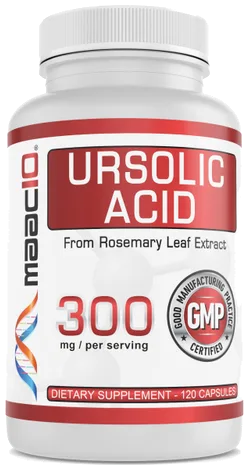
MAAC10 Ursolic Acid 300mg is a natural compound derived from rosemary extract, designed to act as a Sirtuin and AMPK activator, offering a range of healthy aging benefits. This supplement is sourced from rosemary and the skin of apples, with studies suggesting its potential to support longevity genes, similar to the effects of Resveratrol. Each bottle contains 120 easy-to-swallow capsules, providing a 30-day supply when taking the recommended dosage of four capsules per day to achieve a 300mg serving of Ursolic Acid. The formulation emphasizes holistic health, with potential benefits extending to supporting and promoting exercise endurance, aiding in collagen production, and enhancing memory and learning functions. MAAC10 ensures its Ursolic Acid is derived from 150mg of Rosemary extract per capsule, standardized to contain 50% or 75mg of Ursolic Acid. The product is manufactured and tested in the USA, adhering to high-quality standards. It is non-GMO, gluten-free, allergen-free, and suitable for vegans, reflecting a commitment to natural ingredients and broad dietary compatibility. MAAC10 operates with a belief in proven scientific research to support health and wellness, manufacturing its products in a GMP and NSF Certified facility located in Miami, Florida. This focus on quality and scientific backing aims to provide supplements that support cellular respiration and mitochondrial health, contributing to overall longevity and well-being. The product is presented as a capsule form, unflavored, and is intended for adult use, with benefits specifically highlighted for muscle growth.
We don’t sell supplements. We help you make decisions and get the best price.
Lowest prices
We may earn a commission from some store links. How we choose.
Finding the lowest prices at the stores now. This takes a few seconds.
Study, Trial or Testing Result Summary
Members Only7 human studies · 7 improved
No human study has measured biological age directly for ursolic acid, but several small studies point to better aging markers. The doses used in these studies are not given, so it is unclear whether this product's 300 milligrams a day matches them. In 25 obese women aged 50 to 70 doing strength training, 8 weeks of ursolic acid capsules lowered inflammation markers and insulin resistance and raised a brain growth protein more than a dummy pill [1]. In 82 older adults, 12 weeks of a combined protein supplement containing ursolic acid improved walking and boosted activity of genes tied to the cell's energy factories compared with a standard supplement, though ursolic acid was not tested alone [2]. The skin findings come from creams, not pills: an apple-based cream reduced wrinkles and improved firmness over 28 days [3], a rosemary moisturizer improved wrinkles and tone over 12 weeks in a study with no comparison group [4], and ursolic acid in tiny fat bubbles raised natural skin fats within days [5][6]. The share of people who improved was not reported. Animal and cell studies are never counted.
See all 7 studies →Hide the studies
- In 82 older adults with or at risk of undernutrition, 12 weeks of a combined supplement containing ursolic acid improved walking performance and increased mitochondrial gene activity more than a standard supplement.A novel oral nutritional supplement improves gait speed and mitochondrial functioning compared to standard care in older…
- In 40 volunteers, 28 days of a cream with 2.5% apple oleolite containing ursolic acid reduced nasolabial fold and forehead wrinkles and improved skin firmness and elasticity compared with baseline.Annurca Apple Oleolite as Functional Ingredient for the Formulation of Cosmetics with Skin-Antiaging Activity.
- In 25 obese women aged 50 to 70 doing resistance training, 8 weeks of ursolic acid lowered inflammation markers (IL-6, IL-15), insulin and insulin resistance and raised brain-derived neurotrophic factor more than placebo.The Assessment of Some Metabolic Markers by Combination of Ursolic Acid Supplementation and Resistance Training in Young…
- In 20 people, a rosemary and grapefruit extract at 100 or 200 mg reduced UV-induced skin redness and sped recovery compared with placebo; ursolic acid was not tested on its own.Skin Photoprotection and Anti-Aging Benefits of a Combination of Rosemary and Grapefruit Extracts: Evidence from In Vitr…
- In 37 women aged 35 to 60, a facial moisturizer containing rosemary extract with ursolic acid improved wrinkles, tone and overall skin appearance over 12 weeks in an open-label trial without a control group.An Open Label Clinical Trial of a Multi-Ingredient Anti-Aging Moisturizer Designed to Improve the Appearance of Facial S…
- Liposome-encapsulated ursolic acid increased ceramides and collagen in cultured skin cells, and increased skin ceramide content in people over an 11-day period.Liposomal ursolic acid (merotaine) increases ceramides and collagen in human skin.
- Liposome-encapsulated ursolic acid increased ceramides and collagen in cultured skin cells, and raised skin ceramide content in human subjects, with hydroxy ceramide increases seen after 3 days.Liposome-encapsulated ursolic acid increases ceramides and collagen in human skin cells.
Review Totals and Summary
Members Only422 reviews · 88% positive
This customer feedback summary for "maac10 Ursolic Acid" is based on approximately 422 ratings across various stores, with 88% of those giving 4 or 5 stars. Overall, the product receives a largely positive reception, though some users report significant side effects. **What Buyers Say It Did For Them** Many customers report positive outcomes from taking maac10 Ursolic Acid. Several users experienced weight loss, with one noting they "lost 5 pounds over a month" without changing diet or exercise, adding, "This product really works!!" Others found it generally effective, describing it "As advertised" and of "De buen utilidad" (good utility). One specific health benefit mentioned was help with MCAS, with a user stating it "helped me with my MCAS." Interestingly, one customer found it beneficial for their pet, reporting it "really helped with her mobility" for their dog. **What They Complain About** While many reviews are positive, some users experienced notable side effects. One customer reported "serious side effects," including dizziness that worsened and led to feeling sick to the stomach. Another user experienced diarrhea on their first day of taking the supplement. Beyond side effects, some individuals did not notice any benefits, with one stating, "I can't tell the difference" after two weeks of use. **Taste, Smell, Pill Size, or Form** The reviews suggest the product comes in pill form, as one user mentioned taking "2 and not 4 pills." There are no specific complaints or comments regarding the taste, smell, or size of the pills in the provided feedback. The primary discussion around the form relates to the dosage taken. **Value for Money** The perceived value for money is mixed, largely depending on individual experience. Those who saw positive results, such as weight loss or improved mobility for their pet, likely consider it a good investment, as indicated by their high ratings and positive comments like "Greatest." However, customers who experienced no noticeable effects after a couple of weeks indicated they "will likely not order them again," suggesting it did not provide sufficient value for them. **Who It Seems to Suit and Who It Did Not** Maac10 Ursolic Acid appears to suit individuals seeking weight loss, those managing specific conditions like MCAS, and even pet owners looking to support their dog's mobility. It seems particularly effective for those who experience its advertised benefits. Conversely, it may not be suitable for individuals sensitive to supplements, as some reported significant side effects such as dizziness, stomach upset, and diarrhea. It also did not suit those who did not perceive any tangible benefits after consistent use.
Biohacker Summary
Members Only6 of 10 recommend it
The main ingredient here is ursolic acid, and only two of the ten panelists spoke about it, so the evidence is thin. One panelist recommends it, pointing to its presence in apple skin and to results showing more muscle mass and strength in mice, with an earlier note that small percentages of it in the diet were used for two months. The other stayed neutral, recalling it as a proposed fix for bile acid issues and as a supplement for body composition, while questioning how well the body absorbs it by mouth. No one gave a dose for a supplement, named a preferred form beyond apple skin, described pairing it with anything, or said they stopped taking it. Rosemary was discussed by most of the panel but is not what this product centers on, so those views say little about ursolic acid.
See all 9 biohackers →Hide the biohackers
Dr. Mark Hyman · Rosemary · uses
- Included rosemary in their grain-free zucchini bread for memory.
- Recommends rosemary as an anti-inflammatory powerhouse.
- Mentions that Paleovalley's turmeric complex includes rosemary.
- Likes to stuff a whole chicken with whole cloves of garlic and rosemary.
- States that rosemary is great because it contains carnosol, which boosts many detox enzymes.
- Recommends rosemary for reducing inflammation and mentions rosmarinic acid from rosemary can modulate DNA methylation.
- States that ursolic acid, found in the skin of stone fruits, is good for the immune system, helps circulation, regenerates blood vessels, and is critical for brain and gut health.
- Suggests rosemary as a simple thing that can help improve brain function by increasing blood flow.
- Recommends including rosemary in the diet, stating it is an antiviral and anti-inflammatory spice.
- Recommends rosemary to help upregulate detox pathways.
- Recommends rosemary to help upregulate detox pathways.
Siim Land · Rosemary · recommends
- Recommends adding herbs like rosemary, thyme, and parsley to high-temperature cooked meat to reduce the formation of AGEs.
- Recommends Rosemary as a top herb, noting its ability to inhibit advanced glycation end products and CD38, which helps maintain NAD levels.
- Recommends rosemary as it is super high in polyphenols and can be used to cook meats to reduce glycation effects.
- Recommends adding rosemary to food cooked at high temperatures to reduce AGEs.
- Recommends adding rosemary to meals, especially when cooking at high temperatures, because it has powerful anti-glycative effects that reduce the formation of AGEs.
- Recommends rosemary as one of the best herbs to incorporate.
- Adds rosemary to fried foods like eggs and meat because it has anti-glycation effects, reducing the formation of advanced glycation end products, and also helps with CD38 inhibition, autophagy regulation, and provides anti-inflammatory and antioxidant effects.
- Mentions rosemary as a spice that will have similar anti-inflammatory compounds and higher content of polyphenols that regulate pathways for clearing senescent cells.
- Mentions that the diet included a half teaspoon of rosemary, which has a ton of antioxidants.
- Uses rosemary in burgers to potentially offset advanced glycation end-products formed during cooking.
Dr. Eric Berg · Rosemary · recommends
- Recommends adding rosemary to meat when cooking on the grill.
- Dr. Eric Berg recommends rosemary oil as a home remedy to help prevent hair loss and regrow hair.
- Recommends adding topical rosemary oil to the regimen, citing research that shows it nearly matched Rogaine's results in a head-to-head trial without the side effects.
- Recommends rosemary oil as a natural remedy for hair loss, comparing it to Rogaine.
- Recommends sniffing rosemary oil, citing a 2013 study that found it can increase cognitive function and memory by 18%.
- To increase the benefits of onion juice for hair, add 5 drops of rosemary oil. In a 2015 randomized trial, rosemary oil was found to be as effective as one of the top medications for alopecia.
- Recommends adding rosemary to meat while cooking to reduce the risk of cancer.
- Suggests adding rosemary to meats to help lower the risk factor associated with burnt meat.
- Recommends adding dried rosemary to a Mediterranean-style dressing.
- Recommends adding rosemary to meals to help with the detoxification process.
Dave Asprey · Rosemary · recommends
- Recommends adding rosemary to oil halfway through cooking to provide additional antioxidants and protect the oil, or when using butter at the end for flavor.
- Eats about 2 tablespoons of rosemary, noting it is one of the highest polyphenol foods and can help in reversing cells.
- Consumes about a tablespoon or two per day of ground up rosemary for its polyphenol content.
- Eats a tablespoon of dried rosemary every day when he cooks his steaks and rice to get more polyphenols.
- Uses topical rosemary oil, noting a study found similar results to minoxidil for thickening hair with less skin irritation, and emphasizes it must be in oil as the active compound is oil soluble.
- Mentions ursolic acid as something that can support PGC-1 alpha through different mechanisms.
- Recommends growing rosemary, noting its antiviral, antibacterial, and anti-inflammatory properties.
- Notes that rosemary is documented in studies to inhibit lipid peroxidation, which is beneficial when slow cooking bacon.
- Recommends rosemary because it limits lipid oxidation and reduces the risk of inflammation when used in a marinade for meat exposed to oxidized fats from coals.
- Personally takes rosemary extract capsules and eats a lot of rosemary, which contains rosmarinic acid that regulates inflammatory cytokine production.
Thomas DeLauer · Rosemary · recommends
- Recommends marjoram, rosemary, thyme, and sage, noting evidence that they increase PPAR alpha, programming cells to be better at using fats and reducing inflammatory cytokines.
- Recommends rosemary because its carnosic acid crosses the blood-brain barrier, activating and dropping neuroinflammation.
- Recommends rosemary, specifically rosemary tea, because its rosemarinic and carnosic acids unlock the NRF2 anti-inflammatory pathway by deactivating keep one.
- Crushes rosemary and puts it in his green tea, noting that its rosemarinic acid and carnosic acid remove the lock on the NRF2 pathway, liberating the anti-inflammatory pathway.
- Recommends adding rosemary to food, especially meat, for its unique properties, including rosmarinic acid, carnosic acid (which increases NRF2 for antioxidant response), and carnosol (for neuroinflammation).
- Recommends rosemary for its rosemarinic acid and carnosol, which are potent anti-inflammatory compounds.
- Recommends adding Rosemary or Sage to a Mediterranean-style burger.
- Describes a study where subjects were required to consume rosemary.
- Highlights that people in Acciaroli chew and eat a lot of rosemary, which contains compounds like ursolic acid and rosmarinic acid shown to increase brain health and act as an aphrodisiac.
- Mentions a study where a diet that included rosemary as a supplement contributed to reversing epigenetic age.
- Recommends ursolic acid supplementation, stating that it stimulates AMPK and increases the phosphorylated form of P70S6K, extending the muscle protein synthesis window by six hours.
- Discusses Ursolic acid, found in apple skin, as a supplement that has been demonstrated to stimulate Mtor for muscle building and activate the AMPK pathway for leveraging stored fat.
Ben Greenfield · Rosemary · recommends
- Suggests using choice herbs like rosemary when preparing meat to weave in small stressors, but advises listening to one's body for any negative reactions.
- Recommends topical rosemary oil for hair growth, noting that dermarolling can enhance its absorption.
- Suggests that having anti-inflammatory and antioxidant foods like rosemary, thyme, and garlic can help protect against carcinogens that might form from charring meat.
- Mentions that Keon uses a small amount of rosemary extract to stabilize the oil in their omega softgel capsules.
- Ben uses rosemary sprigs in his coffee every morning for a cognitive pick me up, getting rosmarinic acid in the coffee.
- Ben Greenfield recommends chewing on rosemary for cleaning the mouth and maintaining a good oral microbiome.
- States that Kion's fish oil uses rosemary oil as a protective compound to prevent the fish oil from degrading or becoming rancid.
- Recommends putting a sprig of rosemary into coffee, noting its nootropic-like properties for memory and cognition and its ability to enhance coffee flavor.
- Uses rosemary on everything now, including steak, to prevent carcinogen formation, noting its high antioxidant content.
- Uses rosemary essential oil in his sauna sessions, often in concoctions with other scents like eucalyptus, depending on whether the class is 'Up' or 'Down'.
Andrew Huberman · Rosemary · neutral
- Mentions rosemary as one of the random foods that tend to inhibit DPP4.
Peter Attia · Ursolic Acid · neutral
- Recalls that ursolic acid was proposed as a way to address bile acid issues, potentially related to retinoid receptor activation, and mentions a human supplement for improving body composition, though its oral bioavailability was questioned.
Dr. Rhonda Patrick · Ursolic Acid · recommends
- Dr. Patrick states that ursolic acid, found in apple skin, has been shown to increase muscle mass by 10% and muscle strength by 30% in mice by inhibiting a gene that prevents protein synthesis in muscle.
- Rhonda mentions that 0.27% ursolic acid (apple skin), or 0.05% tomatidine (green tomatoes) was used for two months.
- Dr. Rhonda Patrick discusses ursolic acid, present in apple skin, for its ability to increase muscle mass and strength by inhibiting the ATF4 gene.
RAL Summary
Members OnlyTier 2 for Healthy Aging
Tier 2 because seven small human studies all showed better aging markers, including a placebo-controlled capsule trial [1], and 88% of 422 reviews are positive. No study measured biological age directly, and several used creams or combined products.
More Details
Members OnlyBody systems · Combine with · Possible side effects
Body systems: Skin, Muscular system, Metabolic system, Immune system, Nervous system
Combine with: To enhance the anti-aging and cellular repair benefits of Ursolic Acid, consider combining it with supplements that support mitochondrial function, cellular energy, and DNA integrity. NAD+ precursors like NMN or NR can boost cellular energy and activate sirtuins, crucial for DNA repair and longevity. Antioxidants such as Resveratrol or Pterostilbene can further protect cells from oxidative stress and support sirtuin activity. Additionally, CoQ10 or PQQ can optimize mitochondrial health, while senolytics like Fisetin or Quercetin may help clear senescent cells, contributing to a more youthful cellular environment. Omega-3 fatty acids can also provide anti-inflammatory support, which is beneficial for overall cellular health and aging.
Possible side effects: The studies did not report side effects. Some reviewers reported dizziness and stomach upset, and others reported diarrhea, each mentioned in about 13% of the reviews read.
Supplement Facts
Ursolic Acid 300 mg
| Ursolic Acid (from rosemary leaf extract) | 300 mg | † |
Other ingredients: Methylcellulose capsule (vegetable capsule).
Label source: Amazon · Report a label change
Show entire label
More healthy aging products
Members OnlyThe highest ranked for the same goal
Read more
Our articles on this subject
- Healthy Aging Tips: A Science-Backed Guide to Living Better for LongerArticle · Mar 17, 2026
- NAD Anti-Aging Supplements: Benefits, Evidence, and How to ChooseArticle · Jun 15, 2026
Graded October 23, 2026 by the Reverse Age Lab evidence engine, from human studies, real reviews and our biohacker panel. How we grade. Is this medical advice? No. Rala organizes the published evidence; go over any change with your doctor, especially if you take meds.
Privacy policyConsumer health dataAffiliate disclosureTermsDo Not Sell or Share My Personal InformationCookie settings