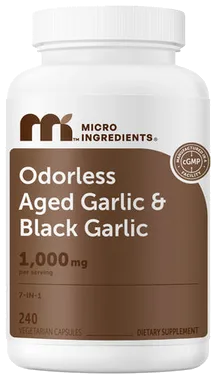
Micro Ingredients Odorless Aged Garlic & Black Garlic 1000 mg, Vegetarian Capsules Review
Micro Ingredients Odorless Aged Garlic & Black Garlic 1000 mg, 240 Vegetarian Capsules is a 7-in-1 supplement that combines odorless aged garlic and black garlic with nattokinase, black pepper, red yeast rice and more, offered for cardiovascular support. The page's bullet points describe it as a 7-in-1 odorless aged garlic and black garlic supplement with nattokinase, black pepper, red yeast rice and additional ingredients for cardiovascular support. The listed directions say to take 3 vegetarian capsules daily, preferably with meals. The suggested use section repeats this guidance, advising customers to take 3 capsules daily with water, or as directed by their healthcare professional. Each bottle contains 240 vegetarian capsules, which the page states provides 80 servings and an 80-day supply. The product is described as third-party tested, non-GMO, and free of gluten, soy, dairy and tree nuts. The page notes that statements have not been evaluated by the Food and Drug Administration and that the product is not intended to diagnose, treat, cure, or prevent any disease. The product is sold by Micro Ingredients, which states on the page that it sources ingredients directly from single-origin suppliers and tests every ingredient it sources through third-party testing for purity, quality and transparency. The brand also says it cuts out middlemen to offer products without markups. The one-time price shown is $21.99, with a subscribe and save option that lists a discounted price of $19.79 and delivery every 1, 2 or 3 months with 10 percent savings. The page shows the variant as sold out or unavailable, so the add to cart option is not currently available. Shipping is calculated at checkout, and the page mentions free shipping over $59 and a 30-day return policy for unopened items in original packaging. Micro Ingredients does not ship internationally, including to Puerto Rico and Guam, and recommends iHerb for customers outside the continental United States. The page also lists related Micro Ingredients products, including odorless garlic softgels, nattokinase, beet root complex, TMG and magnesium complex.
We don’t sell supplements. We help you make decisions and get the best price.
Lowest prices
We may earn a commission from some store links. How we choose.
Finding the lowest prices at the stores now. This takes a few seconds.
Study, Trial or Testing Result Summary
Members Only221 human studies · 154 improved
This blend's main support for cholesterol comes from garlic and red yeast rice. Garlic is at a full dose, and large pooled analyses found it modestly lowered total and bad cholesterol and blood fats [1][2]. In one trial, 800 milligrams daily for 6 weeks cut bad cholesterol by about 17 percent [3], though some studies found no change [4]. Red yeast rice reaches the studied dose only at two servings a day. It has strong evidence for lowering total and bad cholesterol [5], and long trials in heart attack survivors showed fewer repeat heart events [6]. Bergamot reaches the studied dose only at three servings a day. At 150 milligrams daily it lowered total and bad cholesterol [7]. Nattokinase alone did not lower cholesterol in pooled trials [8], but it helped when combined with red yeast rice [9]. Olive leaf is present only in a trace amount, far below the 250 milligrams studied [10]. Black pepper is at the studied piperine dose. Most of its evidence pairs it with turmeric, which this product does not contain [11]. Animal and cell studies are never counted.
See all 221 studies →Hide the studies
- Across 131 trials with 13,062 adults, garlic was among the nutraceuticals that lowered LDL and total cholesterol more than placebo, though bergamot and red yeast rice worked best.A network meta-analysis on the comparative effect of nutraceuticals on lipid profile in adults.
- In seven studies of 10,699 heart attack survivors with borderline high cholesterol, 1,200 mg a day of red yeast rice lowered LDL cholesterol by about 21 mg/dL and reduced repeat heart attacks, revascularization and sudden death.Efficacy of red yeast rice extract on myocardial infarction patients with borderline hypercholesterolemia: A meta-analys…
- In 108 trials with 7,137 adults, garlic lowered total cholesterol by about 10 mg/dL, LDL by about 6 mg/dL and triglycerides by about 6 mg/dL, and raised HDL by about 2 mg/dL compared with controls.Effects of Garlic Supplementation on Cardiovascular Risk Factors in Adults: A Comprehensive Updated Systematic Review an…
- In 47 trials with 4,824 people with high blood fats, Xuezhikang, a red yeast rice product, ranked most likely to be best at lowering total and LDL cholesterol, and Zhibituo ranked best for triglycerides and HDL cholesterol.Comparing the effectiveness of Chinese patent medicines containing red yeast rice on hyperlipidaemia: A network meta-ana…
- A review citing a prior pooled analysis of 39 trials with 2,300 adults found garlic lowered total and LDL cholesterol by about 10% when taken over 2 months by people with slightly raised cholesterol.Garlic Lowers Blood Pressure in Hypertensive Individuals, Regulates Serum Cholesterol, and Stimulates Immunity: An Updat…
- Across 30 randomized trials with 1,726 people, olive leaf supplements lowered total cholesterol, triglycerides, LDL cholesterol, ApoB and oxidized LDL and raised ApoA1, while olive pomace showed no consistent benefit.A GRADE-assessed systematic review and meta-analysis of randomized controlled trials evaluating the effects of olive lea…
- In a pooled analysis of 32 trials with 1,386 people with high cholesterol (including garlic, guggulu and black cumin), garlic lowered LDL cholesterol by about 10 mg/dL over an average of 12 weeks.A Systematic Review and Meta-Analysis of Ayurvedic Herbal Preparations for Hypercholesterolemia.
- In 13 trials with 1,056 people taking garlic for 11 to 24 weeks, garlic did not change total cholesterol, LDL, HDL or triglycerides compared with placebo.Garlic supplementation and serum cholesterol: a meta-analysis.
- Across 16 trials with 1038 adults, curcuminoids plus piperine lowered triglycerides and total cholesterol and raised HDL cholesterol, but did not significantly lower LDL cholesterol.Effects of Curcuminoids Plus Piperine Co-Supplementation on Serum Lipid Profile in Adults: A Systematic Review and Meta-…
- In 16 trials with 952 people, garlic lowered total cholesterol by about 12% more than placebo, with dried garlic powder at 600 to 900 mg daily also lowering triglycerides.Garlic as a lipid lowering agent--a meta-analysis.
- In 13 placebo-controlled trials with 804 people with abnormal blood fats, red yeast rice lowered total cholesterol, LDL cholesterol and triglycerides compared with placebo but did not significantly raise HDL cholesterol, with no serious side effects.A meta-analysis of red yeast rice: an effective and relatively safe alternative approach for dyslipidemia.
- In 12 randomized trials with 703 adults followed for up to 12 weeks, olive leaf extract was linked to better lipid profile in 2 trials, but results overall were mixed and fasting glucose at low doses favored the control group.Olive leaf extract effect on cardiometabolic risk factors: a systematic review and meta-analysis of randomized clinical …
- In 14 studies with 594 people, olive phenolics including oleuropein modestly lowered total cholesterol and triglycerides, though the compounds were pooled together and not olive leaf alone.The impact of oleuropein, hydroxytyrosol, and tyrosol on cardiometabolic risk factors: a meta-analysis of randomized con…
- Pooling six randomized trials with 546 people, nattokinase did not lower cholesterol; total cholesterol was slightly higher than control and LDL and HDL did not improve, though blood pressure fell.Nattokinase Supplementation and Cardiovascular Risk Factors: A Systematic Review and Meta-Analysis of Randomized Control…
- Across 13 placebo-controlled trials in people with high cholesterol, garlic lowered total cholesterol by about 0.41 mmol/L more than placebo, but in the six best-designed diet-controlled trials the difference was small and not statistically significant.Garlic for treating hypercholesterolemia. A meta-analysis of randomized clinical trials.
- In 21 trials of people with abnormal blood fats, garlic lowered total cholesterol by 0.64 mmol/L, LDL by 0.44 mmol/L and triglycerides by 0.17 mmol/L, with garlic oil working better than powder.Garlic consumption can reduce the risk of dyslipidemia: a meta-analysis of randomized controlled trials.
- Pooling randomized trials, red yeast rice lowered total cholesterol by about 33 mg/dL, LDL cholesterol by about 29 mg/dL and triglycerides by about 23 mg/dL, and raised HDL cholesterol by about 2.5 mg/dL in adults.Impact of red yeast rice supplementation on lipid profile: a systematic review and meta-analysis of randomized-controlle…
- In 14 double-blind trials lasting 4 to 24 weeks, red yeast rice extract lowered total cholesterol by about 37 mg/dL and LDL cholesterol by about 36 mg/dL in people with high cholesterol, without frequent or threatening side effects.Safety and Efficacy of the Consumption of the Nutraceutical "Red Yeast Rice Extract" for the Reduction of Hypercholester…
- A pooled analysis of 14 trials found bergamot lowered total cholesterol, triglycerides and LDL cholesterol and raised HDL cholesterol in adults, but products combining bergamot with other ingredients gave inconsistent results and higher-quality studies are needed.The effect of bergamot (KoksalGarry) supplementation on lipid profiles: A systematic review and meta-analysis of randomi…
- In 11 randomized trials, olive leaf extract or oleuropein taken continuously had no significant effect on blood sugar or cholesterol measures.Metabolic and inflammatory effects of oleuropein and olive leaf extract: a systematic review and meta-analysis.
- In a pooled analysis of trials in people with metabolic syndrome, curcumin plus piperine lowered total and LDL cholesterol but did not significantly change triglycerides.A systematic review and meta-analysis of randomized controlled trials investigating the effect of the curcumin and piper…
- In a review of 22 trials of Gynostemma for abnormal blood fats, red yeast rice was used as a comparator and lowered total cholesterol and triglycerides more and raised HDL more than Gynostemma, based on low certainty evidence.Gynostemma pentaphyllum for dyslipidemia: A systematic review of randomized controlled trials.
- A review of 13 studies with 1,246 adults with abnormal cholesterol found red yeast rice lowered LDL and total cholesterol in all trials without significant changes in liver or kidney function.Original Research: The Effects of Red Yeast Rice Supplementation on Cholesterol Levels in Adults.
- In ten trials of 905 Chinese adults with abnormal blood fats, red yeast rice lowered cholesterol about as well as a med, with no statistically significant difference in any outcome.Read the study on PubMed (26956355) →
- In 12 trials of 769 adults with high cholesterol, 2 to 10 mg per day of monacolin K for up to 12 weeks lowered LDL and total cholesterol in all studies, though 3 studies reported side effects.Monacolin K supplementation in patients with hypercholesterolemia: A systematic review of clinical trials.
- In a review of ten randomized trials, six found garlic lowered cholesterol (average total cholesterol drop of about 25 mg/dL), but the studies were low quality, so the authors did not recommend garlic for mild to moderate high cholesterol.A systematic review of the effectiveness of garlic as an anti-hyperlipidemic agent.
- A review of nine meta-analyses found eight reported lower total cholesterol with garlic, while results for LDL, HDL and triglycerides were inconsistent.An umbrella review of garlic intake and risk of cardiovascular disease.
- A review of studies on garlic and heart disease risk reported lower LDL cholesterol, total cholesterol, triglycerides, blood pressure and inflammation markers, and higher HDL cholesterol.Garlic: A systematic review of the effects on cardiovascular diseases.
- A review of trials in adults with fatty liver disease found plant foods including garlic had mixed effects overall, with garlic among those that improved blood fats, blood sugar control and liver measures.Systematic Review of the Effects of Plant-Based Foods on Metabolic Outcomes in Adults with MASLD and Comorbidities Such …
- A review of 25 randomized trials of herbal products found red yeast rice, among others, lowered total cholesterol by 10% to 33%, though many trials were of limited quality.Herbs for serum cholesterol reduction: a systematic view.
- This review of diet products found red yeast rice may raise HDL cholesterol in people with abnormal blood fats, but the effect seemed limited to people who had a previous heart attack.MediterrAsian Diet Products That Could Raise HDL-Cholesterol: A Systematic Review.
- A review of ten small, lower-quality studies found bergamot juice polyphenols reduced blood fats and improved cholesterol profile in people with moderately high blood fats, though safety and effectiveness cannot be firmly concluded.Clinical Pharmacology of Citrus bergamia: A Systematic Review.
- A review of 12 human studies found 75% showed significant drops in total cholesterol, triglycerides and LDL cholesterol with bergamot, but the studies were varied in design and limited in quality.Effect of bergamot on lipid profile in humans: A systematic review.
- In nearly 5000 Chinese patients with a previous heart attack, Xuezhikang taken for about 4.5 years reduced major coronary events and deaths compared with placebo, lowered total cholesterol and triglycerides, raised good cholesterol, and was well tolerated.Effect of Xuezhikang, an extract from red yeast Chinese rice, on coronary events in a Chinese population with previous m…
- In 621 people treated for high blood pressure, 12 weeks of olive leaf extract lowered blood pressure and was linked to better lipid profile, lower triglycerides, less inflammation and lower body weight.Efficacy of olive leaf extracts in controlling blood pressure in hypertensive patients: a double-blind randomized clinic…
- In 237 patients with high blood fats, 30 days of bergamot extract lowered total and LDL cholesterol and triglycerides, raised HDL cholesterol and lowered blood sugar.Hypolipemic and hypoglycaemic activity of bergamot polyphenols: from animal models to human studies.
- In 196 men aged 40 to 74 followed for two years, a time-released garlic drug slowed the thickening of carotid artery walls compared with placebo and reduced the serum's ability to build up cholesterol in cells.Anti-atherosclerotic therapy based on botanicals.
- In a 4-week randomized trial of 190 adults with elevated cardiovascular risk, garlic did not lower bad cholesterol more than placebo, while a low-dose a med did.Read the study on PubMed (36351465) →
- In 187 people who could not take meds, red yeast rice at 1800 mg twice daily lowered LDL cholesterol, total cholesterol and triglycerides over one year, but adding phytosterol tablets gave no extra LDL reduction, while a 12-week lifestyle program gave greater LDL reductions than usual care.Read the study on PubMed (23816039) →
- In 178 people with stable coronary artery disease, 90 days of nattokinase plus red yeast rice lowered total cholesterol and triglycerides and raised HDL cholesterol more than the other groups, which included placebo.Lipid-lowering, antihypertensive, and antithrombotic effects of nattokinase combined with red yeast rice in patients wit…
- In 160 adults with type 2 diabetes and dyslipidemia, garlic powder with olive oil added to standard drugs for 6 months lowered cholesterol, triglycerides and LDL more than drugs alone.Effect of Allium sativum and Olea europaea on serum lipids in patients with diabetes mellitus.
- In 158 adults with mild to moderate high cholesterol, a daily supplement containing red yeast rice for 4 weeks lowered bad cholesterol by about 26% more than placebo and was about as well tolerated as placebo, with mild side effects.Effect of a food supplement containing berberine, monacolin K, hydroxytyrosol and coenzyme Q10 on lipid levels: a random…
- In 158 adults with metabolic syndrome and an enlarged heart muscle, a combination of berberine, red yeast rice and policosanol for 24 weeks reduced heart muscle mass more than placebo, and 57 percent of the combination group showed a reduction.A nutraceutical combination reduces left ventricular mass in subjects with metabolic syndrome and left ventricular hyper…
- In 157 healthy postmenopausal women, a 500 mg herbal preparation containing garlic powder for 12 months lowered cholesterol about as much as placebo, with no significant difference between the groups.Anti-Atherosclerotic Effects of a Phytoestrogen-Rich Herbal Preparation in Postmenopausal Women.
- In 150 patients with high cholesterol, 400 mg of garlic powder tablets taken twice daily for 6 weeks lowered total cholesterol by about 12% and bad cholesterol by about 17%, and raised good cholesterol by about 16%, compared with a placebo tablet.Effects of anethum graveolens and garlic on lipid profile in hyperlipidemic patients.
- In 142 adults with high cholesterol not on meds, 3 mg of monacolin K from red yeast rice daily for 12 weeks lowered low-density lipoprotein cholesterol by about 15 percent versus placebo, and 51 percent of those taking it reached the recommended target.Low daily dose of 3 mg monacolin K from RYR reduces the concentration of LDL-C in a randomized, placebo-controlled inter…
- In 140 adults with fatty liver, six daily capsules of a multi-ingredient product containing bergamot polyphenols for 12 weeks reduced liver fat more than placebo, but the abstract does not report a cholesterol benefit.A new nutraceutical (Livogen Plus®) improves liver steatosis in adults with non-alcoholic fatty liver disease.
- In 136 adults with high cholesterol, a daily enteric-coated garlic extract tablet (5.6 mg) for 12 weeks did not significantly change total cholesterol, triglycerides, LDL or HDL compared with placebo.No effect of garlic extract supplement on serum lipid levels in hypercholesterolemic subjects.
- In 134 people with mild high blood pressure, 8 weeks of a hibiscus and olive leaf product lowered blood pressure about as much as captopril, and the low dose also reduced triglycerides by about 17.6 mg/dL.Antihypertensive efficacy and safety of a standardized herbal medicinal product of Hibiscus sabdariffa and Olea europaea…
- In 118 adults with high cholesterol, 12 weeks of a combination supplement containing bergamot did not significantly lower total cholesterol, LDL cholesterol or triglycerides compared with placebo.Randomized, Double-Blind, Placebo-Controlled Trial to Test the Effects of a Nutraceutical Combination Monacolin K-Free o…
- In 118 people with type 2 diabetes, 12 weeks of curcuminoids with 10 mg piperine daily lowered total cholesterol, non-HDL cholesterol and lipoprotein(a) and raised HDL cholesterol versus placebo, but triglycerides and LDL cholesterol did not differ.Curcuminoids modify lipid profile in type 2 diabetes mellitus: A randomized controlled trial.
- In 117 adults with dyslipidemia, a low dose of monacolin K red yeast rice plus lifestyle changes for 60 days lowered LDL cholesterol by about 16% and total cholesterol by about 15% compared with lifestyle changes alone, with no severe side effects.Effectiveness and safety of red yeast rice predominated by monacolin K β-hydroxy acid form for hyperlipidemia treatment …
- In 116 adults with dyslipidemia, Xuezhikang at 1200 or 2400 mg daily for 12 weeks lowered LDL cholesterol by about 27% and non-HDL cholesterol by about 24% compared with placebo, and was well tolerated.Effects of Xuezhikang in patients with dyslipidemia: a multicenter, randomized, placebo-controlled study.
- In 115 adults with moderately high cholesterol, 900 mg of garlic powder daily for six months did not lower total cholesterol more than placebo, though a pooled analysis that included this trial found a small reduction.Garlic powder in the treatment of moderate hyperlipidaemia: a controlled trial and meta-analysis.
- In a 4-month placebo-controlled trial of 113 adults with high cholesterol, a nattokinase and Monascus supplement lowered total and bad cholesterol more than placebo, without adverse events.The Effect of Nattokinase-Monascus Supplements on Dyslipidemia: A Four-Month Randomized, Double-Blind, Placebo-Controlle…
- In 105 people with mild high cholesterol, 8 weeks of a supplement blend with olive leaf extract plus 3 mg or 10 mg monacolin K lowered LDL cholesterol by about 17% and 26%; the effect of olive leaf alone could not be separated.Low Dose Monacolin K Combined with Coenzyme Q10, Grape Seed, and Olive Leaf Extracts Lowers LDL Cholesterol in Patients …
- In 104 adults at increased heart risk, 2400 mg of aged garlic extract daily for one year slowed calcium buildup in the coronary arteries and lowered interleukin-6 and blood sugar compared with placebo, but blood fat changes were not reported as significant.The effect of aged garlic extract on the atherosclerotic process - a randomized double-blind placebo-controlled trial.
- In 104 adults with metabolic syndrome, a daily red yeast rice and coenzyme Q10 supplement added to diet for 2 months lowered LDL cholesterol by about 22% and total cholesterol by about 17% more than diet alone.Effect of Monacolin K and COQ10 supplementation in hypertensive and hypercholesterolemic subjects with metabolic syndrom…
- In 102 adults with moderately high cholesterol, a multi-ingredient supplement containing red yeast rice lowered low-density lipoprotein cholesterol by about 7 percent compared with placebo over 12 weeks, with good tolerance.Effects of poly-bioactive compounds on lipid profile and body weight in a moderately hypercholesterolemic population wit…
- In 102 people with fatty liver, 300 mg a day of a bergamot and wild cardoon supplement for 12 weeks reduced liver fat more than placebo, but the abstract does not report a cholesterol benefit.Randomized Clinical Trial: Bergamot Citrus and Wild Cardoon Reduce Liver Steatosis and Body Weight in Non-diabetic Indiv…
- In 100 pregnant women at high risk of preeclampsia, 800 mg of garlic tablet daily in the third trimester produced a significant difference in total cholesterol versus placebo, but no significant change in HDL, LDL or triglycerides.The effect of garlic tablet on plasma lipids and platelet aggregation in nulliparous pregnants at high risk of preeclamp…
- In 100 volunteers who completed a crossover trial, three-month periods of enteric coated garlic tablets did not lower total serum cholesterol compared with placebo, and no serious liver, kidney or blood side effects occurred.The efficacy of cholesterol-lowering action and side effects of garlic enteric coated tablets in man.
- In 100 adults with moderately high untreated cholesterol, a supplement with red yeast rice, policosanols and artichoke leaf lowered low-density lipoprotein cholesterol by about 14 percent compared with placebo over 16 weeks, without harming safety markers.A combined natural supplement lowers LDL cholesterol in subjects with moderate untreated hypercholesterolemia: a randomi…
- In 100 heart patients who could not tolerate high-dose meds, adding Armolipid Plus containing red yeast rice to a low-dose a med for 3 months lowered cholesterol more than a med alone, and 70% of the combination group reached the target.Read the study on PubMed (28781026) →
- In 100 a med-intolerant heart patients, adding Armolipid Plus containing red yeast rice to a low-dose a med helped about 62% reach the LDL cholesterol target at 3 months, similar to adding a med, with no major side effects.Read the study on PubMed (30420184) →
- In 100 people with borderline to moderately high cholesterol, 8 weeks of nattokinase lengthened blood clotting times compared with placebo; cholesterol levels were not reported.The effects of nattokinase supplementation on collagen-epinephrine closure time, prothrombin time and activated partial …
- In 100 adults with prediabetes, 6 months of a blend of fenugreek, olive leaf and bergamot extract did not change blood sugar or cholesterol levels compared with placebo.No effect of fenugreek, bergamot and olive leaf extract on glucose homeostasis in patients with prediabetes: a randomize…
- In 100 people with metabolic syndrome, 8 weeks of curcuminoids with piperine (100:1 ratio) lowered LDL cholesterol, total cholesterol, triglycerides and lipoprotein(a) and raised HDL cholesterol more than placebo.Lipid-modifying effects of adjunctive therapy with curcuminoids-piperine combination in patients with metabolic syndrome…
- In 98 adults with high blood fats, 900 mg of garlic powder daily for 12 weeks significantly lowered total cholesterol, LDL cholesterol and triglycerides and raised HDL cholesterol, about as well as the drug bezafibrate.Comparison of the efficacy and tolerance of a garlic preparation vs. bezafibrate.
- In 98 older adults with high blood fats, 12 weeks of a bergamot extract formulation lowered LDL cholesterol more than placebo (3.13 vs 3.43 mmol/L) and reduced body weight and waist size, while total cholesterol and triglycerides did not differ significantly.Effects of 12-week supplementation of Citrus bergamia extracts-based formulation CitriCholess on cholesterol and body we…
- In 97 women with polycystic ovary syndrome and metabolic syndrome, 1000 mg per day of garlic tablets for 8 weeks lowered LDL cholesterol by 14.2%, total cholesterol by 12.6% and triglycerides by 17.8% compared with placebo.Efficacy of garlic (Allium sativum) on metabolic syndrome components in women with polycystic ovary syndrome: randomized…
- In 97 obese adults, 112 days of a bergamot and Eurycoma longifolia blend (200 or 400 mg) lowered body mass index versus placebo but did not improve cholesterol or other blood fat measures.An exploratory double-blind, randomized, placebo-controlled study to assess the efficacy of CitruSlim on body compositio…
- In 96 people at risk for hypertension, two freeze-dried garlic extract capsules daily for 8 weeks lowered blood pressure, total cholesterol, triglycerides and low-density lipoprotein cholesterol, and raised high-density lipoprotein cholesterol compared with placebo.Randomized, double-blind clinical trial evaluating the impact of freeze-dried garlic extract capsules on blood pressure,…
- In 96 healthy adults, 8 weeks of a combined grapefruit, bitter orange and olive extract lowered total and LDL cholesterol, oxidative stress markers and IL-6 more than placebo.Effect of a Combination of Citrus Flavones and Flavanones and Olive Polyphenols for the Reduction of Cardiovascular Dise…
- In 96 obese adults, 90 days of Cyperus rotundus extract with 5 mg piperine twice daily improved blood lipid levels and apolipoprotein B-100 compared with placebo, alongside weight loss.Efficacy and safety of Cyperus rotundus extract on weight management in obese individuals: A randomized, double-blind, p…
- Taking 300 mg a day of a bergamot and wild cardoon supplement for six weeks lowered uric acid more than placebo in 94 adults with fatty liver.Citrus Bergamia and Cynara Cardunculus Reduce Serum Uric Acid in Individuals with Non-Alcoholic Fatty Liver Disease.
- In 92 obese adults, 400 mg of garlic extract daily for 3 months lowered bad cholesterol, inflammation marker and arterial stiffness, while the placebo group did not change.Garlic extract favorably modifies markers of endothelial function in obese patients -randomized double blind placebo-con…
- In 90 overweight smokers, 2.1 g of garlic powder daily for 3 months did not significantly change cholesterol or inflammation markers compared with placebo.Effect of garlic powder on C-reactive protein and plasma lipids in overweight and smoking subjects.
- In 90 people with fatty liver disease, 1,600 mg of garlic powder daily for 12 weeks lowered total cholesterol, triglycerides and low-density lipoprotein cholesterol compared with placebo, and reduced liver fat.Effect of garlic powder supplementation on hepatic steatosis, liver enzymes and lipid profile in patients with non-alcoh…
- In 90 adults with metabolic syndrome, 1,600 mg of garlic powder daily for 3 months raised good HDL cholesterol and lowered triglycerides more than placebo.Effects of garlic powder supplementation on metabolic syndrome components, insulin resistance, fatty liver index, and ap…
- In 90 adults with metabolic syndrome, 1,600 mg of garlic powder daily for 3 months improved blood lipid indices (atherogenic index of plasma, Castelli risk indices) compared with placebo, though total cholesterol was not reported separately.Garlic supplementation improves intestinal transit time, lipid accumulation product and cardiometabolic indices in subje…
- In 90 overweight adults with abnormal blood lipids, a bergamot flavonoid supplement with artichoke extract for 8 weeks lowered triglycerides and low-density cholesterol more than placebo, and the higher dose also lowered total cholesterol.Three-arm, placebo-controlled, randomized clinical trial evaluating the metabolic effect of a combined nutraceutical con…
- In 90 adults with metabolic syndrome features, a standardized bergamot extract taken for 12 weeks at two doses lowered LDL cholesterol, total cholesterol, triglycerides and CRP inflammation markers more than placebo, with the high dose also improving insulin sensitivity.Metabolic and vascular effect of a new standardized bergamot phytocomplex: a three-arm, placebocontrolled, double-blind …
- In a placebo-controlled trial of 90 healthy adults with suboptimal cholesterol, a bergamot and artichoke supplement lowered total and LDL cholesterol, triglycerides and inflammation marker hs-CRP over 12 weeks compared with placebo.A Randomized, Double-Blind, Placebo-Controlled Clinical Trial on the Effect of a Dietary Supplement Containing Dry Artic…
- In 89 people with type 2 diabetes, 120 days of turmeric with piperine cut triglycerides by 20.8% versus 0.09% with placebo; no other lipid changes were reported.Cost-Effectiveness of Passion Fruit Albedo versus Turmeric in the Glycemic and Lipaemic Control of People with Type 2 Di…
- In 88 moderately high cholesterol adults, the LEVELIP DUO combination containing 5 mg of red yeast rice monacolins taken for 8 weeks lowered bad cholesterol by about 20% compared with a 2% change on placebo, and was well tolerated.A Randomized, Double-Blinded, Placebo-Controlled, Clinical Study of the Effects of a Nutraceutical Combination (LEVELIP …
- In 86 overweight adults, 8 weeks of a combined supplement including piperine gave a greater drop in LDL cholesterol than placebo, though most other changes were not significantly different between groups.Improvement in insulin resistance and favourable changes in plasma inflammatory adipokines after weight loss associated …
- In 86 healthy adults with normal lipids, 90 days of a multi-ingredient liquid containing black pepper lowered LDL cholesterol by 19.21 mg/dL while placebo rose 21.07 mg/dL, with better secondary lipid markers.Efficacy and Safety of a Multi-Ingredient Liquid-Based Botanical Nutraceutical for Improving Markers of Metabolic Health…
- In 83 adults with high cholesterol, 2.4 grams a day of a red yeast rice supplement for 12 weeks lowered total cholesterol, LDL cholesterol and triglycerides more than placebo, while following a heart-healthy diet.Cholesterol-lowering effects of a proprietary Chinese red-yeast-rice dietary supplement.
- In 20 healthy volunteers and 62 patients with coronary heart disease and high cholesterol, garlic given for about 10 months lowered cholesterol, triglycerides and LDL cholesterol and raised HDL cholesterol compared with the control group.Effect of garlic on blood lipids in patients with coronary heart disease.
- In 80 women with polycystic ovary syndrome, 800 mg of garlic daily for 8 weeks lowered total cholesterol and low-density lipoprotein cholesterol compared with placebo.The effect of garlic (Allium sativum) supplementation on the lipid parameters and blood pressure levels in women with po…
- In 80 elderly adults who could not tolerate meds, a combination pill containing 200 mg red yeast rice for 12 months lowered total cholesterol by about 20 percent and bad cholesterol by about 31 percent compared with placebo.Long-term effects of nutraceuticals (berberine, red yeast rice, policosanol) in elderly hypercholesterolemic patients.
- In 80 adults with moderately high cholesterol, a supplement containing Monascus purpureus with omega-3 and other ingredients, plus diet and exercise, lowered total and bad cholesterol more than diet and exercise alone.Effects of a dietary supplement on cholesterol in subjects with moderate hypercholesterolemia.
- In 80 low-risk adults with abnormal cholesterol, a daily combination containing fermented red rice for 3 months lowered total cholesterol, triglycerides and bad cholesterol more than placebo, and also improved blood vessel lining markers.Effects on oral fat load of a nutraceutical combination of fermented red rice, sterol esters and stanols, curcumin, and …
- In 80 mildly high-cholesterol adults, 8 weeks of a daily pill containing 98 mg red yeast rice extract with berberine, milk thistle and guggul lowered LDL cholesterol by about 18% and reduced a inflammation marker more than placebo.Effect of dietary supplementation with a new nutraceutical formulation on cardiometabolic risk factors: a double-blind, …
- In 80 overweight adults with slightly high fasting glucose, 8 weeks of a curcumin product containing 8 mg of piperine lowered triglycerides versus placebo and raised HDL cholesterol versus baseline only, while placebo also lowered triglycerides.Effects of phytosomal curcumin on anthropometric parameters, insulin resistance, cortisolemia and non-alcoholic fatty li…
- In 79 adults with hyperlipidemia, 600 mg of red yeast rice taken twice daily for 8 weeks lowered LDL cholesterol by 28% and total cholesterol by 22% compared with placebo, and was well tolerated.Efficacy and safety of Monascus purpureus Went rice in subjects with hyperlipidemia.
- In 79 adults with high cholesterol, 600 mg of red yeast rice twice daily for 8 weeks lowered LDL cholesterol and several cholesterol ratios more than placebo.Efficacy of Monascus purpureus Went rice on lowering lipid ratios in hypercholesterolemic patients.
- In 77 overweight or obese adults with mildly high cholesterol, 500 mg of olive leaf extract daily for 8 weeks did not change blood cholesterol or other blood fats compared with placebo.The effect of olive leaf extract on cardiovascular health markers: a randomized placebo-controlled clinical trial.
- In 75 adults with high cholesterol, 12 weeks of a bergamot and prickly pear supplement lowered total cholesterol by 14.6% and LDL cholesterol by 19.9% more than placebo, and also lowered triglycerides and fasting glucose.Comparative effect of a nutraceutical compound based on a flavonoid complex from bergamot on plasma lipids, glucose meta…
- In an open-label trial of 74 adults with high cholesterol, a program of lifestyle changes, red yeast rice and fish oil lowered LDL cholesterol by about 42% over 12 weeks, a drop similar to a med 40 mg daily.Read the study on PubMed (18613992) →
- In 72 people with kidney-related high cholesterol, 600 mg of red yeast rice twice daily significantly reduced cholesterol after six months and was well tolerated, with no significant side effects reported.Efficacy and safety of Monascus purpureus Went rice in subjects with secondary hyperlipidemia.
- In 72 children and young adults with kidney-related high cholesterol, red yeast rice lowered cholesterol by about a third over one year, similar to fluvastatin, and was well tolerated, though the control group received no cholesterol treatment.Efficacy and safety of Monascus purpureus Went rice in children and young adults with secondary hyperlipidemia: a prelim…
- In 72 heart attack patients, 8 weeks of 500 mg daily curcumin with piperine lowered LDL cholesterol and raised HDL cholesterol compared with placebo.The Effects of Curcumin Plus Piperine Supplementation in Patients with Acute Myocardial Infarction: A Randomized, Double…
- In 72 people with type 2 diabetes and high triglycerides, 12 weeks of curcuminoids with 5 mg piperine lowered triglycerides versus placebo, but LDL and HDL cholesterol did not change significantly.The effect of curcumin-piperine supplementation on lipid profile, glycemic index, inflammation, and blood pressure in pa…
- In 71 people with type 2 diabetes, 120 days of turmeric (500 mg) with 5 mg piperine lowered triglycerides, blood sugar, and HbA1c compared with placebo.Effectiveness of the piperine-supplemented Curcuma longa L. in metabolic control of patients with type 2 diabetes: a ran…
- In 70 adults with type 2 diabetes and dyslipidemia, 600 mg per day of garlic tablets for 12 weeks lowered total cholesterol by 12% and LDL cholesterol by 18% compared with placebo, while modestly raising HDL cholesterol.Effects of garlic on dyslipidemia in patients with type 2 diabetes mellitus.
- In a 90-day trial of 70 adults, supplement plans chosen by an AI tool lowered bad cholesterol and triglycerides more than plans set by physicians, and side effects were minimal.Efficacy of AI-Guided (GenAISTM) Dietary Supplement Prescriptions versus Traditional Methods for Lowering LDL Cholestero…
- In 70 adults with mildly to moderately raised blood pressure, olive leaf extract plus potassium for 12 weeks lowered total cholesterol by 11.1 mg/dL, LDL cholesterol by 6.9 mg/dL and triglycerides by about 22 mg/dL at week 6, with HDL unchanged.Effects of a combination of olive leaf extract and potassium on blood pressure in participants with mild to moderate hyp…
- In 70 adults with fatty liver disease, 500 mg curcuminoids with 5 mg piperine daily for 12 weeks lowered cholesterol and LDL cholesterol within the group, but these changes did not differ significantly from placebo.Curcuminoids plus piperine improve nonalcoholic fatty liver disease: A clinical trial.
- In 67 adults with moderately high cholesterol, 250 mg of aged black garlic extract daily for 6 weeks lowered diastolic blood pressure more than placebo, and the abstract does not report a cholesterol change.Effects of an Optimized Aged Garlic Extract on Cardiovascular Disease Risk Factors in Moderate Hypercholesterolemic Subj…
- In stroke patients in rehabilitation, 500 mg curcumin plus 5 mg piperine daily for 12 weeks lowered total cholesterol and triglycerides more than placebo, along with reducing inflammation.The effects of curcumin-piperine supplementation on inflammatory, oxidative stress and metabolic indices in patients wit…
- In a 15-day placebo-controlled trial of 65 adults with seasonal allergy, a capsule of Nigella sativa oil with 2.5 mg piperine taken twice daily left the lipid profile without clinically significant change; cholesterol was not the study's goal.A randomized, double-blind, placebo-controlled study to evaluate the benefits of a standardized Nigella sativa oil conta…
- In 64 adults with metabolic syndrome, a supplement combining red yeast rice, berberine and policosanol for 18 weeks lowered LDL cholesterol more than placebo, though the amount of red yeast rice was not stated.A nutraceutical combination improves insulin sensitivity in patients with metabolic syndrome.
- In 64 overweight or obese adults with mild high cholesterol, 500 mg of bergamot phytosome daily for 12 weeks reduced total and bad cholesterol and visceral fat compared with placebo, while blood sugar, insulin and good cholesterol did not differ.Bergamot phytosome improved visceral fat and plasma lipid profiles in overweight and obese class I subject with mild hyp…
- In 64 adults with high cholesterol, 4 months of 150 mg bergamot flavonoid extract daily lowered total cholesterol by 8.8% and LDL cholesterol by 11.5%, and reduced oxidized LDL.Citrus bergamia Extract, a Natural Approach for Cholesterol and Lipid Metabolism Management: A Randomized, Double-Blind …
- In 64 postmenopausal women with low bone mass, 250 mg of olive extract daily for 12 months lowered total and LDL cholesterol compared with calcium alone.Twelve-month consumption of a polyphenol extract from olive (Olea europaea) in a double blind, randomized trial increase…
- In 62 adults who could not tolerate meds, 1800 mg of red yeast rice twice daily for 24 weeks lowered bad cholesterol more than placebo, without raising muscle damage markers or pain.Read the study on PubMed (19528562) →
- In 60 people with type 2 diabetes, 900 mg of garlic tablets daily added to a med for 24 weeks lowered total cholesterol, triglycerides and bad cholesterol and raised good cholesterol more than a med with placebo.Garlic (Allium sativum) supplementation with standard antidiabetic agent provides better diabetic control in type 2 diab…
- In 60 adults with high cholesterol on a med, a combined garlic and moringa group had significantly lower total cholesterol, triglycerides and LDL cholesterol over 45 days, while the garlic-only group's result was not reported as significant.Synergistic effect of Moringa oleifera and Allium sativum on BMI and lipid profile: A randomized controlled trial.
- In 60 patients with coronary artery disease, a daily garlic extract equal to about 4 g of raw garlic for 3 months significantly lowered total cholesterol and triglycerides and raised HDL cholesterol compared with placebo.Effect of garlic (Allium sativum) on blood lipids, blood sugar, fibrinogen and fibrinolytic activity in patients with co…
- In 60 adults with high cholesterol, adding Lactobacillus casei to red yeast rice for 8 weeks gave no extra cholesterol lowering beyond red yeast rice with placebo, though both groups lowered cholesterol from baseline.No additional cholesterol-lowering effect observed in the combined treatment of red yeast rice and Lactobacillus casei i…
- In 60 adults with dyslipidemia, red yeast rice for 4 weeks caused less muscle fatigue than a med, while cholesterol lowering was similar between the two.Read the study on PubMed (28521773) →
- In 60 adults with type 2 diabetes and mixed high cholesterol, bergamot polyphenol extract in standard or lecithin (phytosome) form lowered blood sugar, bad cholesterol and triglycerides and raised good cholesterol compared with placebo, with both forms performing similarly.Hypoglycemic and Hypolipemic Effects of a New Lecithin Formulation of Bergamot Polyphenolic Fraction: A Double Blind, Ra…
- In 60 overweight adults with mild high cholesterol, 600 mg of bergamot phytosome with artichoke extract over 8 weeks lowered total and low-density cholesterol more than placebo.Artichoke and Bergamot Phytosome Alliance: A Randomized Double Blind Clinical Trial in Mild Hypercholesterolemia.
- In 60 healthy adults with inherited high cholesterol, one daily pill of a bergamot and artichoke combination for 8 weeks lowered total and low-density cholesterol compared with placebo.Effect of Dietary Supplementation with Eufortyn® Colesterolo Plus on Serum Lipids, Endothelial Reactivity, Indexes of No…
- In 60 pre-hypertensive men, phenolic-rich olive leaf extract taken daily for 6 weeks lowered total cholesterol, low-density lipoprotein (bad) cholesterol and triglycerides compared with a polyphenol-free control.Impact of phenolic-rich olive leaf extract on blood pressure, plasma lipids and inflammatory markers: a randomised contr…
- In 60 postmenopausal women taking 250 mg of olive leaf extract daily for 12 weeks, triglycerides and the triglyceride to HDL ratio decreased compared with placebo.Olive Leaf Extract Supplementation Improves Postmenopausal Symptoms: A Randomized, Double-Blind, Placebo-Controlled Para…
- In adults with fatty liver disease, 500 mg curcumin plus 5 mg piperine daily for 12 weeks lowered total and bad (low-density) cholesterol more than placebo.Efficacy of curcumin plus piperine co-supplementation in moderate-to-high hepatic steatosis: A double-blind, randomized,…
- In 57 adults with prediabetes, drinking 330 mL of olive leaf tea three times daily for 12 weeks lowered low-density lipoprotein (bad) cholesterol, with a larger drop than a lower-concentration olive leaf tea.Olive leaf tea is beneficial for lipid metabolism in adults with prediabetes: an exploratory randomized controlled trial…
- In 56 adults with raised blood pressure, 440 mg of olive extract daily for 8 weeks lowered total and low-density lipoprotein (bad) cholesterol, but the drop was no greater than with placebo.Evaluation of the effect of olive extracts on blood pressure and cardiovascular health markers in adults: Findings from …
- In 55 patients with metabolic syndrome, 2,400 mg of aged garlic extract daily for about 50 weeks reduced low-attenuation coronary plaque compared with placebo, but blood cholesterol was not measured.Aged Garlic Extract Reduces Low Attenuation Plaque in Coronary Arteries of Patients with Metabolic Syndrome in a Prospec…
- In a placebo-controlled trial of 52 physicians and spouses with high cholesterol, red yeast rice extract for 8 weeks lowered LDL cholesterol by 36 mg/dL (22%) and total cholesterol significantly more than placebo.Red yeast rice lowers cholesterol in physicians - a double blind, placebo controlled randomized trial.
- In 52 obese adults with metabolic syndrome, 650 to 1300 mg daily of a pectin-enriched bergamot extract for 90 days reduced blood fats by up to 41 percent compared with placebo, with stronger effects at the higher dose.Atherogenic Index Reduction and Weight Loss in Metabolic Syndrome Patients Treated with A Novel Pectin-Enriched Formulat…
- In 51 adults with obesity, 3.6 g of aged garlic extract daily for 6 weeks significantly reduced blood LDL cholesterol compared with placebo, while total and non-HDL cholesterol differences were not statistically significant.Aged garlic extract supplementation modifies inflammation and immunity of adults with obesity: A randomized, double-blin…
- In 50 people with type 2 diabetes and high cholesterol despite a med use, adding a six-herb compound containing garlic (600 mg of garlic daily) for 12 weeks improved triglycerides, total cholesterol and bad cholesterol within the treatment group, though the study had no placebo comparison.A Randomized Controlled Trial of a Herbal Compound for Improving Metabolic Parameters in Diabetic Patients with Uncontro…
- In 50 men with high cholesterol, 900 mg of garlic daily for 12 weeks lowered total cholesterol by about 11.5% and LDL cholesterol by about 14% compared with placebo.Effect of garlic and fish-oil supplementation on serum lipid and lipoprotein concentrations in hypercholesterolemic men.
- In 50 adults with high cholesterol, 900 mg of garlic powder a day for 12 weeks did not lower cholesterol, triglycerides, or other blood fats more than placebo did.Garlic powder and plasma lipids and lipoproteins: a multicenter, randomized, placebo-controlled trial.
- In 50 people with metabolic syndrome, a red yeast rice and olive extract supplement lowered low-density lipoprotein cholesterol by 24 percent versus a 1 percent rise on placebo over 8 weeks, and also lowered oxidized cholesterol particles.Can red yeast rice and olive extract improve lipid profile and cardiovascular risk in metabolic syndrome?: A double blin…
- In 50 adults with metabolic syndrome, a red yeast rice and olive extract supplement for 8 weeks reduced an inflammation-linked enzyme and oxidised cholesterol particles more than placebo, but did not change two other oxidative stress markers.A red yeast rice-olive extract supplement reduces biomarkers of oxidative stress, OxLDL and Lp-PLA2, in subjects with me…
- In 50 people with dyslipidemia not on meds, a blend containing 100 mg of red yeast rice (5 mg monacolins) with bergamot, omega-3 and chromium improved cholesterol profiles over 6 weeks.Effects of a New Combination of Medical Food on Endothelial Function and Lipid Profile in Dyslipidemic Subjects: A Pilot…
- In a 3-month double-blind trial of 50 adults with high cholesterol, monacolin K-rich red yeast rice lowered total and bad cholesterol more than placebo.A Randomized Clinical Efficacy Trial of Red Yeast Rice (Monascus pilosus) Against Hyperlipidemia.
- In a placebo-controlled trial of 50 moderately high cholesterol adults, 400 mg daily of bergamot extract for 12 weeks lowered total, LDL and triglyceride cholesterol more than placebo.Effect of Citrus bergamia extract on lipid profile: A combined in vitro and human study.
- In 49 adults with high cholesterol, two NC120 capsules twice daily for 28 days lowered total cholesterol and LDL cholesterol compared with placebo, with minor side effects similar to placebo but no change in triglycerides.Safety and Efficacy of NC120 for Improving Lipid Profile: A Double Blind Randomized Controlled Trial.
- In 47 people with mild hypertension, garlic powder for 12 weeks significantly lowered serum cholesterol and triglycerides compared with placebo, along with blood pressure.Hypertension and hyperlipidaemia: garlic helps in mild cases.
- In 47 people with high blood fats, nattokinase alone did not significantly change cholesterol versus placebo, while nattokinase combined with red yeast rice lowered LDL cholesterol by 41% over six months.Combined nattokinase with red yeast rice but not nattokinase alone has potent effects on blood lipids in human subjects …
- In 46 people with high cholesterol who were also following a low-fat diet, enteric-coated garlic tablets with 9.6 mg allicin-releasing potential for 12 weeks lowered total cholesterol and low-density lipoprotein cholesterol compared with placebo.Hypocholesterolemic effect of an enteric-coated garlic supplement.
- In a placebo-controlled crossover trial of 46 overweight middle-aged men, olive leaf polyphenols taken daily for 12 weeks improved insulin sensitivity by about 15% and beta cell responsiveness by about 28% compared with placebo, with no effect on cholesterol profile.Olive (Olea europaea L.) leaf polyphenols improve insulin sensitivity in middle-aged overweight men: a randomized, place…
- In a 14-day placebo-controlled trial of 46 adults with COVID-19, two curcumin-piperine capsules daily (5 mg piperine each) did not significantly change lipid parameters compared with placebo; cholesterol was not the study's goal.The efficacy of curcumin-piperine co-supplementation on clinical symptoms, duration, severity, and inflammatory factors …
- In 45 healthy adults, drinking 400 mL a day of a bergamot-based beverage for 12 weeks lowered total cholesterol in both groups without any difference from the control drink.Chronic consumption of a bergamot-based beverage does not affect glucose, lipid and inflammatory biomarkers of cardiomet…
- In 44 pregnant women at risk of preeclampsia, a daily garlic tablet for 9 weeks lowered the inflammation marker hs-CRP compared with placebo but did not change lipid profiles.The favorable effects of garlic intake on metabolic profiles, hs-CRP, biomarkers of oxidative stress and pregnancy outco…
- In 43 adults who had stopped meds due to muscle pain, 4800 mg daily of red yeast rice for 12 weeks was tolerated as well as pravastatin and lowered bad cholesterol by about 30%, similar to pravastatin's 27%.Read the study on PubMed (20102918) →
- In 42 men with mild high cholesterol, 600 mg per day of time-released garlic powder tablets for 12 weeks lowered total cholesterol by 11.5% and LDL cholesterol by about 14% compared with placebo, and raised HDL cholesterol.Lipid-lowering effects of time-released garlic powder tablets in double-blinded placebo-controlled randomized study.
- In 42 healthy adults with high cholesterol, 900 mg of standardized garlic powder a day for 12 weeks lowered total cholesterol from 262 to 247 mg/dL, while placebo produced no meaningful change, and bad (LDL) cholesterol fell 11% versus 3% on placebo.Can garlic reduce levels of serum lipids? A controlled clinical study.
- In 42 adults with high cholesterol, HypoCol red yeast rice capsules for 16 weeks lowered bad cholesterol by about 23 percent and total cholesterol by about 15 percent compared with placebo.HypoCol (red yeast rice) lowers plasma cholesterol - a randomized placebo controlled study.
- In 42 adults with mild high cholesterol, 4 months of a supplement containing 375 mg bergamot extract did not lower LDL cholesterol more than placebo.The effects of a novel nutraceutical combination on low-density lipoprotein cholesterol and other markers of cardiometab…
- In 40 adults with high cholesterol, 900 mg of garlic powder daily for four months lowered total cholesterol, triglycerides and blood pressure compared with placebo.Therapy with garlic: results of a placebo-controlled, double-blind study.
- In 40 people with metabolic syndrome, 4 weeks of raw crushed garlic at 100 mg per kg body weight twice daily lowered triglycerides and raised good cholesterol (high-density lipoprotein), with no placebo group for comparison.Effect of Raw Crushed Garlic (Allium sativum L.) on Components of Metabolic Syndrome.
- In 40 adults with abnormal blood fats, one month of daily garlic powder (1200 mg) combined with fish oil lowered cholesterol by 11%, triglycerides by 34%, and bad cholesterol by 10%, with no significant effect from placebo.Modulation of lipid profile by fish oil and garlic combination.
- In 40 moderately high cholesterol adults, 10 mg of monacolins plus 30 mg coenzyme Q10 daily for 6 months lowered low-density lipoprotein cholesterol by 26 percent versus a 3 percent rise on placebo, and improved blood vessel function and stiffness.Middle-Term Dietary Supplementation with Red Yeast Rice Plus Coenzyme Q10 Improves Lipid Pattern, Endothelial Reactivity…
- In a placebo-controlled trial of 40 adults with borderline high cholesterol, 500 mg daily of a Monascus extract for 4 weeks lowered total cholesterol by 11.9% and LDL cholesterol by 19.0%.A randomized, double-blind clinical study of the effects of Ankascin 568 plus on blood lipid regulation.
- In 40 adults with moderately high cholesterol, the Aquilea Colesterol combination containing 10 mg of monacolin K from red yeast rice for 3 months lowered total cholesterol by about 14% and bad cholesterol by about 20% compared with placebo, and reduced a marker of inflammation.Effects of a Novel Nutraceutical Combination (Aquilea Colesterol®) on the Lipid Profile and Inflammatory Biomarkers: A R…
- In 40 healthy older men taking 100 mg oleuropein daily from olive leaf extract for 36 days, LDL cholesterol was lower than placebo, but muscle, strength, and whole-body metabolism did not change.Oleuropein Supplementation Increases Resting Skeletal Muscle Fractional Pyruvate Dehydrogenase Activity but Does Not Inf…
- In 39 adults with moderate high cholesterol, a supplement combining red yeast rice, policosanols and artichoke leaf extract for 16 weeks lowered LDL cholesterol by about 21% and total cholesterol by about 14% compared with placebo.LDL-cholesterol-lowering effect of a dietary supplement with plant extracts in subjects with moderate hypercholesterolem…
- In 39 adults with mildly raised blood sugar, a Monascus-fermented product taken for 12 weeks lowered total cholesterol by about 7.5% and bad cholesterol by about 10% compared with baseline, and did more than placebo.A randomized, double-blind clinical study to determine the effect of ANKASCIN 568 plus on blood glucose regulation.
- In 39 adults with high total cholesterol, 10 mg of monacolin K from red yeast rice plus probiotic strains taken daily for 12 weeks lowered bad cholesterol and total cholesterol more than placebo, and caused no side effects.A Combination of Lactoplantibacillus plantarum Strains CECT7527, CECT7528, and CECT7529 Plus Monacolin K Reduces Blood C…
- In a placebo-controlled crossover trial of 37 adults with borderline high blood pressure, 500 mg of olive leaf extract combined with green coffee bean extract and beet powder taken twice daily for six weeks per phase had no significant effect on blood pressure, blood lipids, or blood sugar compared with placebo.Antihypertensive potential of combined extracts of olive leaf, green coffee bean and beetroot: a randomized, double-blin…
- In 36 adults with high blood pressure, 650 mg of fermented garlic extract in dark chocolate daily for 6 weeks did not change cholesterol or triglycerides compared with placebo.Evaluating the effects of dark chocolate formulated with micro-encapsulated fermented garlic extract on cardio-metabolic…
- In 33 adults with mild to moderate high cholesterol, 22.4 mg of garlic alliin daily for 16 weeks did not change cholesterol or blood fats more than placebo.Effect of garlic on lipid profile and psychopathologic parameters in people with mild to moderate hypercholesterolemia.
- In 33 adults with low heart risk, a combination containing 10 mg monacolin K from red yeast rice and a probiotic for 12 weeks lowered total cholesterol by about 17 percent and bad cholesterol by about 26 percent compared with placebo.Nutraceutical approach for the management of cardiovascular risk - a combination containing the probiotic Bifidobacteriu…
- In 33 adults with moderately high cholesterol, a combination with 10 mg monacolin K from red yeast rice lowered the oxysterol 27-OHC by about 10 percent compared with placebo, with no harmful changes in other oxysterols.Interactions of Oxysterols with Atherosclerosis Biomarkers in Subjects with Moderate Hypercholesterolemia and Effects of…
- In 32 adults with fatty liver, 12 weeks of a capsule with bergamot and artichoke extracts improved blood vessel function more than placebo, and the abstract reports no cholesterol result.A nutraceutical with Citrus bergamia and Cynara cardunculus improves endothelial function in adults with non-alcoholic f…
- In adults with mild to moderate high cholesterol, 900 mg per day of garlic powder tablets for 12 weeks did not change cholesterol, LDL, HDL or triglycerides compared with placebo.On the effect of garlic on plasma lipids and lipoproteins in mild hypercholesterolaemia.
- In 30 children with familial high cholesterol, 900 mg per day of garlic extract for 8 weeks did not significantly change cholesterol or LDL cholesterol compared with placebo.Garlic extract therapy in children with hypercholesterolemia.
- In 30 people with high cholesterol taking 600 mg of red yeast rice twice daily for 8 weeks, total cholesterol fell by about 45 mg/dl and low-density lipoprotein cholesterol fell by about 38 mg/dl compared with baseline.Relationship between adiponectin and leptin, and blood lipids in hyperlipidemia patients treated with red yeast rice.
- In 30 adults with moderately high cholesterol, a combined nutraceutical containing red yeast rice for 6 weeks lowered total cholesterol, bad cholesterol and triglycerides more than placebo, and also reduced an inflammation marker.Effects of a Combined Nutraceutical on Lipid Pattern, Glucose Metabolism and Inflammatory Parameters in Moderately Hyper…
- In 27 trained male runners, 12.3 mg of garlic oil daily for 16 weeks did not significantly change total cholesterol or blood pressure compared with placebo.A randomized trial of the effects of garlic oil upon coronary heart disease risk factors in trained male runners.
- In 25 mildly high-cholesterol adults, 10 mg of red yeast rice monacolins taken for 4 weeks lowered total cholesterol, bad cholesterol and the inflammation marker hs-CRP compared with placebo.Red yeast rice improves lipid pattern, high-sensitivity C-reactive protein, and vascular remodeling parameters in modera…
- In a randomized trial of 24 people, two weeks of apple and bergamot juice added to a Mediterranean diet reduced the total cholesterol to HDL ratio compared with the diet alone.Antioxidant-Enriched Diet on Oxidative Stress and Inflammation Gene Expression: A Randomized Controlled Trial.
- In 20 overweight adults, a high fat meal with a 14.5 gram spice blend containing garlic lowered triglycerides after the meal by 31% when followed by rest, but this effect disappeared under psychological stress.Effects of culinary spices and psychological stress on postprandial lipemia and lipase activity: results of a randomized…
- In a crossover trial of 19 adults, olive pate tablets providing 30 mg per day of hydroxytyrosol for 2 months per phase lowered total cholesterol and low-density cholesterol by about 11 mg/dL each, reduced an inflammatory protein and the body's response to oxidative stress, compared with placebo.Effects of an Olive By-Product Called Pâté on Cardiovascular Risk Factors.
- In 18 Japanese adults with mild high cholesterol, 200 mg of red yeast rice daily for 8 weeks lowered cholesterol more than diet alone.Low dose red yeast rice with monacolin K lowers LDL cholesterol and blood pressure in Japanese with mild dyslipidemia: A…
- In 11 healthy volunteers, a 2400 mg dose of Chinese red yeast rice produced much lower blood levels of lovastatin than a 20 mg lovastatin dose in a crossover comparison; this pharmacokinetic study did not measure cholesterol change.Plasma clearance of lovastatin versus chinese red yeast rice in healthy volunteers.
- In 10 healthy adults given a 100 g butter meal, 50 g of fresh garlic juice over one week blocked the fat-induced rise in serum cholesterol, and its essential oil gave the same protection.Effect of the essential oils of garlic and onion on alimentary hyperlipemia.
- In 10 healthy volunteers, 600 mg of garlic powder daily for 2 weeks did not lower serum lipid or cholesterol levels, but it reduced how easily their lipoproteins oxidized by 34%.Garlic supplementation and lipoprotein oxidation susceptibility.
- Over 7 days, 2.4 g of aged garlic extract daily made LDL cholesterol particles more resistant to oxidation, but cholesterol levels themselves were not reported; raw garlic had no such effect.Daily supplementation with aged garlic extract, but not raw garlic, protects low density lipoprotein against in vitro ox…
- In patients with coronary artery disease, garlic powder taken twice daily for 3 months improved blood vessel flow-mediated dilation compared with placebo, but blood cholesterol was not reported as improved.Effects of garlic on brachial endothelial function and capacity of plasma to mediate cholesterol efflux in patients with…
- In people with high blood pressure and abnormal blood fats, garlic tablets given at daily doses from 0.3 to 1.5 g for 24 weeks produced notable improvements in cholesterol, triglycerides and bad and good cholesterol compared with placebo, with larger changes at higher doses and longer use.Analysis of dose and duration dependent effects of Allium sativum Linn and other hypocholesterolemic agents exhibited on…
- In an 8-week double-blind trial in adults with mildly high cholesterol, a garlic and onion extract significantly lowered bad cholesterol and total cholesterol, and improved blood pressure and markers of oxidative stress and inflammation.LDL-Cholesterol-Lowering Effects of a Dietary Supplement Containing Onion and Garlic Extract Used in Healthy Volunteers.
- In a 12-week randomized trial of people with narrowed leg arteries, 800 mg daily of garlic powder increased walking distance more than placebo, and cholesterol concentration also decreased significantly within the garlic group.Effects of garlic coated tablets in peripheral arterial occlusive disease.
- In a crossover trial of people with high cholesterol not taking meds, a combination supplement containing red yeast rice (3 mg monacolin K) plus berberine and other ingredients lowered LDL cholesterol, total cholesterol and triglycerides over 4 weeks, with a stronger effect from a version with a higher monacolin K content and added mulberry leaf extract.Effects of a new combination of nutraceuticals with Morus alba on lipid profile, insulin sensitivity and endotelial func…
- In a placebo-controlled trial of adults with mild to moderate high blood pressure, 1000 mg daily of a fermented Monascus product for 8 weeks lowered blood pressure and improved blood fats, including total and bad cholesterol, compared with placebo.A Randomized, Double-Blind Clinical Study on Blood Pressure Reduction and Blood Lipid Profile Amelioration on Treatment …
- In a placebo-controlled trial of people with borderline high cholesterol, the NutraforChol combination taken for 8 weeks lowered total cholesterol and bad cholesterol compared with placebo, with no change in kidney or liver tests.Efficacy and tolerability of a nutraceutical combination of red yeast rice, guggulipid, and chromium picolinate evaluate…
- In adults with stage 1 high blood pressure, 500 mg of olive leaf extract twice daily for 8 weeks lowered blood pressure about as much as captopril and significantly reduced triglycerides, a blood fat, while captopril did not.Olive (Olea europaea) leaf extract effective in patients with stage-1 hypertension: comparison with Captopril.
- In patients with fatty liver disease and early cirrhosis, 5 mg piperine daily for 12 weeks reduced liver enzymes, blood glucose and blood fat abnormalities more than placebo.The impact of piperine on the metabolic conditions of patients with NAFLD and early cirrhosis: a randomized double-blind…
- In 131 adults with pre-hypertension, a daily nutraceutical containing red yeast rice for 3 months, added to diet, lowered total and bad cholesterol more than diet alone.The Effects of a New Generation of Nutraceutical Compounds on Lipid Profile and Glycaemia in Subjects with Pre-hypertens…
- In a pilot study of 111 adults at low heart risk with moderately high cholesterol, a Monascus purpureus (red yeast rice) supplement with octacosanols and niacin lowered total cholesterol, LDL cholesterol and triglycerides, with LDL falling about 20%, similar to a low dose of pravastatin in a smaller comparison group, and without clear liver or muscle toxicity.Antihyperlipidaemic effect of a Monascus purpureus brand dietary supplement on a large sample of subjects at low risk fo…
- In 77 patients with high cholesterol, 1000 mg of bergamot polyphenols daily for 30 days lowered total and bad cholesterol compared with control, and adding it to a med enhanced a med's cholesterol-lowering effect while reducing markers of blood vessel oxidative damage.Read the study on PubMed (24239156) →
- In 76 people with carotid artery plaque and high blood fats, 26 weeks of nattokinase lowered total cholesterol, LDL and triglycerides and raised HDL, but the reductions were smaller than with a med 20 mg.[A clinical study on the effect of nattokinase on carotid artery atherosclerosis and hyperlipidaemia].
- In 66 adults with high blood pressure and high cholesterol, one daily tablet containing red yeast rice and other ingredients for 6 months lowered total cholesterol by 19% and LDL cholesterol by 17% compared with a diet-only group.Nutraceuticals for Serum Lipid and Blood Pressure Control in Hypertensive and Hypercholesterolemic Subjects at Low Cardi…
- In 62 adults with and without high cholesterol, eating 4 cloves of black garlic daily for 12 weeks raised apolipoprotein A1 and lowered several blood markers of artery inflammation, in a study without a placebo group.Effect of Black Garlic Consumption on Endothelial Function and Lipid Profile: A Before-and-After Study in Hypercholester…
- In 61 people recovering from ischemic stroke, 60 days of Nattospes added to standard care improved stroke scores, but both groups improved on blood lipids with no clear added lipid benefit stated.Nattospes as Effective and Safe Functional Supplements in Management of Stroke.
- In 30 patients over 90 days, turmeric curcumin with piperine lowered inflammation markers and bad cholesterol levels, and a water-soluble curcumin lowered them further.The Potential Systemic Anti-Inflammatory Effect of Turmeric Dried Extract.
- In 13 elderly adults who ate garlic daily for one month, bad cholesterol fell, and markers of cell damage from oxidation dropped while antioxidant enzyme activity rose.Effects of garlic consumption on plasma and erythrocyte antioxidant parameters in elderly subjects.
- In an 8-week registry study of adults with high cholesterol, the Antilip supplement combined with diet and exercise lowered total cholesterol, while the comparison group showed almost no change.Antilip®: treatment of subjects with high total cholesterol tolerability and efficacy in a short-term registry study.
- In 45 people taking two 2000-unit nattokinase capsules daily for 2 months in an open-label study, clotting factors fell, but blood lipids were unaffected.Nattokinase decreases plasma levels of fibrinogen, factor VII, and factor VIII in human subjects.
- In 30 people with advanced type 2 diabetes taking meds and meds, a six-herb sachet containing garlic twice daily for 40 days lowered low-density lipoprotein cholesterol and triglycerides, though the study had no control group.Safety and efficacy of a polyherbal formulation for the management of dyslipidemia and hyperglycemia in patients with ad…
- In 30 HIV-infected adults on antiretroviral therapy, three months of a red yeast rice and berberine supplement lowered total cholesterol by 14% and LDL cholesterol by 19% compared with no treatment, and reduced a subclinical inflammation marker.NUtraceutical TReatment for hYpercholesterolemia in HIV-infected patients: The NU-TRY(HIV) randomized cross-over trial.
- In 24 healthy volunteers taking a Thai herbal formula for 7 days, blood lipid levels decreased and liver and kidney tests showed no toxic effects.Metabolomics of Personalized Body Elements in Thai Traditional Medicine Response to Herbal Medicine for Body Elements Ba…
- In 15 adults with high cholesterol, 450 mg per day of fermented garlic extract for 4 weeks lowered total cholesterol and LDL cholesterol, and the effect faded within 2 weeks of stopping.Lipid-lowering effect of monascus garlic fermented extract (MGFE) in hyperlipidemic subjects.
- In 15 people taking antipsychotic medicines, 1000 mg of bergamot polyphenols daily for 30 days lowered body weight but did not significantly change cholesterol, triglycerides or blood sugar.Metabolic outcomes of bergamot polyphenolic fraction administration in patients treated with second-generation antipsych…
- In 1,062 people followed for 12 months, nattokinase at 10,800 units daily improved lipid profiles and reduced carotid artery thickness and plaque size, while 3,600 units daily was ineffective and no notable side effects were recorded.Effective management of atherosclerosis progress and hyperlipidemia with nattokinase: A clinical study with 1,062 partic…
- In a non-randomized study of 642 people with high cholesterol, one daily Cholesfytol tablet (red yeast rice with olive extract) for about 2 months lowered total cholesterol by about 17.5% and bad cholesterol by about 23%, without causing new muscle symptoms.Read the study on PubMed (29154060) →
- In a real-world single-group study of 221 adults with high cholesterol, two tablets daily of a combined supplement containing olive fruit extract for 2 months was associated with drops of about 15% in total cholesterol and 19% in low-density cholesterol, with no comparison group.The antihyperlipidemic effect of a combined supplement of standardized dry extracts of amla (Emblica officinalis), walnu…
- In an observational study of 32 adults with high blood pressure, a combination of olive leaf and Hyphaene thebaica extracts taken for 30 days was associated with lower blood pressure, lower low-density cholesterol and triglycerides, and higher high-density cholesterol, with no comparison group.Ifanosine: Olea europaea L. and Hyphaene thebaica L. combination, from traditional utilization to rational formulation: …
- In a retrospective study of 30 adults with metabolic syndrome, one daily tablet of a quince, olive leaf, and amaranth supplement for at least 12 weeks was associated with significant drops in total cholesterol and low-density cholesterol, with no comparison group.Retrospective Analysis of a Quince, Olive Leaf, and Amaranth Nutraceutical in Patients with Metabolic Syndrome.
- In 11 adults with moderate dyslipidemia, 12 weeks of F105 containing bergamot lowered total cholesterol by 7.3% and LDL cholesterol by 10% with no side effects.Synergistic in vitro antioxidant activity and observational clinical trial of F105, a phytochemical formulation includin…
- In a retrospective pilot of menopausal women with high cholesterol, a Mediterranean diet plus a bergamot phytosterol formula and omega-3 lowered total cholesterol, LDL cholesterol and triglycerides and raised HDL cholesterol.Synergistic effects of Mediterranean diet combined with phytosterol-based supplements and omega-3 fatty acids on lipid p…
- In 80 adults with moderate high cholesterol, 6 months of 150 mg bergamot extract daily lowered total cholesterol, triglycerides and LDL cholesterol, raised HDL cholesterol, and reduced carotid artery thickness.Bergamot Reduces Plasma Lipids, Atherogenic Small Dense LDL, and Subclinical Atherosclerosis in Subjects with Moderate H…
- In a case series of 18 adults with high cholesterol despite diet and exercise, a red yeast rice and phytosterol powder for 6 weeks lowered total cholesterol by 19% and LDL cholesterol by 33%, with no control group.Powdered red yeast rice and plant stanols and sterols to lower cholesterol.
- In normolipidemic adults taking 5 mL of aged garlic extract daily for 13 weeks, serum lipid profiles did not change significantly, although platelet aggregation was reduced.Dietary supplementation with aged garlic extract inhibits ADP-induced platelet aggregation in humans.
Review Totals and Summary
Members Only401 reviews
Buyers mostly like these garlic capsules for being easy to take and good value, though opinions split sharply on whether they are really odorless. Some report benefits for blood pressure, cholesterol or immunity, but these are personal impressions and not proven results. **What buyers say it did for them:** Several people take it for heart and immune health. One says it "may have contributed to lowering my cholesterol total." Another reports "blood pressure has leveled" after about a week of adjustment. A third takes four a day and, after three months in winter, "havent gotten sick yet." One long-term user credits garlic with lowering their blood pressure over about four years. Another buyer says they take it for blood pressure and hypertension. One reviewer says raw cloves seem more potent and quicker-acting, but finds the capsule far more pleasant to take. **What they complain about:** The loudest complaint is smell. One buyer was "overwhelmed by a garlic smell" on opening the packet and says "Don't buy this product." Another says the "odorless" claim is wrong. Others mention a garlic burp, and one says it is "strong almost I ate lots of garlic." Packaging comes up too: the bag "doesn't reseal well," and one buyer found a bag inconvenient and moved the capsules to another container. One person was still waiting on a package after two weeks. **Taste, smell, pill size and form:** Experiences differ. One buyer found the capsules small, with "No taste, no smell." Two others say there is no bad aftertaste, yet another dislikes the aftertaste and burping. Some say the smell on opening the bag is strong. One reviewer argues that this shows real garlic is used, and says the product uses safflower oil rather than soy oil. They are described as soft gels or gel capsules, easy to take, with a serving of two for 2000 mg. One reviewer advises taking them with food. **Value for money:** Opinions are mostly positive. Buyers call it a "Great value pack" and "Great price and quality," and one likes paying a little more to buy in bulk. One reviewer, though, expected the bag packaging to lower the price and found "not much price" difference from garlic supplements sold in bottles. **Who it suits and who it did not:** It seems to suit people who already take garlic supplements, want a convenient alternative to chewing raw cloves, and don't mind some garlic smell. One says "If you're a garlic person you'll enjoy it." It suited less well anyone who expects true odorlessness, or who dislikes burping, or who wants a bottle instead of a resealable-bag-style pack. One reviewer prefers truly odorless garlic and rejected this one on that basis. Some reviews were too general to be useful, such as a list of other products rated five stars and a coworker's sample whose effect was unknown. Reviews of other forms of the product were left out.
Biohacker Summary
Members Only10 of 10 recommend it
Most of the panel is favorable toward garlic, the main ingredient: about six of the ten recommend it and several more say they use it, while one says he does not eat it. They take it for blood pressure, cholesterol, heart health, immune support, gut health and its antimicrobial action, and they mostly eat it in food such as eggs, soups, broth and salad dressing. One person takes a 600 milligram capsule whenever he takes another supplement, and another includes an odor-free garlic pill in his daily stack. Panelists advise crushing or chopping garlic and letting it sit about 10 minutes, and one prefers aged garlic extract because of human trial results. For caution, one panelist feels less mentally sharp when he eats a lot of it and advises using it strategically, and another notes a real bleeding risk for anyone on meds while calling the parasite cleanse and brain fog claims unproven. Nattokinase and black pepper are smaller ingredients in this product, and the panel mostly praises them for heart health and for helping the body absorb turmeric.
See all 10 biohackers →Hide the biohackers
Dr. Eric Berg · Garlic · recommends
- Recommends garlic, explaining that crushing it releases allicin, which activates fat burning in the liver and significantly reduces liver enzymes.
- Dr. Eric Berg recommends pairing black pepper with turmeric to improve curcumin absorption.
- Garlic supports detoxification, contains allicin, is antimicrobial, supports a healthy heart, supports healthy blood pressure, may have anticancer benefits, supports healthy gut microbes, and is a potent anti-inflammatory.
- Notes that black pepper aids in the absorption of Curcumin.
- Dr. Eric Berg recommends adding garlic to eggs to support satiety, antioxidant potential, cardiovascular, and liver health.
- Dr. Eric Berg recommends adding black pepper to eggs to support satiety, antioxidant potential, cardiovascular, and liver health.
- Recommends mixing one drop of garlic with five drops of povidone iodine for a wart and skin tag remedy, suggesting to crush the garlic.
- Recommends garlic for its chelation abilities and its ability to turn up the body's detoxification genes.
- Recommends putting some garlic on skin tags to help them go away quickly.
- Recommends chewing one clove of garlic every single day, noting that it has a unique compound called allicin which is highly antimicrobial and can cause the liver to detoxify poisons, get rid of pathogens, increase nitric oxide, decrease blood pressure, and act as a med.
- Recommends garlic as a top food to help increase nitric oxide.
- Mentions garlic as a research-backed natural remedy for high blood pressure.
- Lists garlic as a common remedy for toenail fungus.
- Warns that combining bergamot with sun exposure can cause skin inflammation.
Dr. Mark Hyman · Garlic · recommends
- Recommends garlic as a fibrous food to heal the gut.
- Eats a lot of garlic and includes it in his chicken soup and a special drink because it is an antimicrobial and antiviral.
- Recommends seasoning turmeric with black pepper to help the body absorb more nutrients.
- Uses nattokinase to break open bacterial biofilms, allowing antimicrobials to be more effective.
- Notes that black pepper, along with gentle heat, improves the absorption of curcumin in Paleovalley's turmeric complex.
- Notes that crushing garlic and letting it rest for 10 minutes before cooking activates an enzyme that significantly increases its cancer-fighting and heart-protective compounds.
- Explains that crushing garlic with a knife makes allicin, the medicinal component, come out, and also makes it easier to peel.
- Uses garlic, cooking it down in olive oil, as part of the Spanish potato tortilla recipe.
- Recommends avoiding garlic for at least a week before surgery because it can thin the blood.
- Recommends garlic as a food that boosts the body's own detox enzymes like glutathione.
- Mentions using Nattokinase to lower lipoprotein little a, although it only lowers it by 20-30% and doesn't bring it back to normal.
- Recommends taking curcumin with black pepper, specifically piperine, because it increases the absorption of curcumin.
- Recommends pairing high-dose IV vitamin C and L-lysine with a lot of antiviral supplements, including olive leaf extract, to have as much antiviral fighting capacity on a daily basis as possible.
- Recommends consuming garlic every day because it contains sulfur, which boosts the detox system.
Dave Asprey · Red Yeast Rice · recommends
- Recommends Red Yeast Rice as part of the Biopurify formula.
- Recommends Nattokinase as one of the eight compounds in BioPurify for circulation and cellular health.
- Recommends Nattokinase, stating it supports healthy circulation and helps the body break down blood clots.
- Likes garlic but notices their brain feels less sharp when they eat a lot of it, even tracking the effect with EEG, and advises using it strategically, especially if it affects cognition.
- Host Dave Asprey separates what the human data actually supports regarding raw garlic, modest blood pressure and cholesterol effects, real antimicrobial properties, and a genuine bleeding-risk caution for anyone on meds, from the unproven parasite-cleanse and brain fog claims driving the trend online.
- Recommends taking nattokinase at night before bed on an empty stomach to help make a med, and notes it's also good for spike protein.
- Recommends taking high-dose nattokinase, starting at 12,000 units and potentially increasing to 20,000 units, to minimize the impact of the COVID vaccine, as it directly breaks up spike protein and reduces soft plaque.
- The episode discusses how nattokinase, a natural enzyme, has shown the ability to break down the spike protein.
- Nattokinase, an enzyme found in natto, breaks up protein clumps including blood clots, and studies show that at higher doses it can even reverse cardiovascular disease.
- For the last 25 years, Dave Asprey has been on a high dose of either serrapeptase or nattokinase to reduce stroke risk by breaking up thrombin and fibrinogen, also noting nattokinase breaks up soft plaque.
- Uses a lot of nattokinase and lumbrokinase to address histamine spike protein issues.
- Dave Asprey recommends olive leaf polyphenols for brain optimization and anti-aging, highlighting their role as powerful free radical scavengers.
- Highly recommends olive leaf polyphenols for longevity, cognitive function, and as free radical scavengers that attach to and help the body get rid of harmful substances like microplastics.
- Dave Asprey used to research black pepper extract but changed his mind about its use after a discussion with Christian DPO, who highlighted its downsides.
Siim Land · Garlic · recommends
- Recommends Aged garlic extract for blood pressure and cholesterol, based primarily on human research, especially randomized controlled trials showing measurable benefits.
- Lists Aged garlic extract as one of 15 supplements backed by human studies.
- Says garlic is an old food with health benefits, especially good for lipids and the immune system.
- Says garlic has benefits for the immune system and the cold, and advises crushing or chopping it and letting it sit for 10 minutes before heating or eating it to preserve its health benefits.
- Mentions aged garlic extract as a compound that can increase autophagy, but notes it doesn't come close to exercise in effectiveness.
- Notes that aged garlic extract has a lot of human clinical trials showing it works for lowering cholesterol and lipids.
- Notes that some trials show nattokinase improving atherosclerotic plaque, with high doses showing an effect where low doses did not, and more studies are needed to find the threshold effect.
- Recommends aged garlic extract for people at high risk of cardiovascular disease, stating that the optimal dose for atherosclerosis is 2400 milligrams a day split into two doses of 1200 milligrams each.
- Places aged garlic extract in the 'god tier', describing it as a multifaceted supplement with benefits for lipids, blood sugar, blood pressure, visceral fat, inflammation, weight loss, and atherosclerotic plaque, making it an all-in-one for metabolic and cardiovascular health.
- States that red yeast rice extract is effective for lowering cholesterol, but due to its similarity to meds and potential CoQ10 depletion, it's an 'okay tier' option, with easier alternatives available.
- Notes there are interesting studies suggesting Nattokinase might reduce atherosclerotic plaque and personally believes it does based on current evidence, but more clinical trials are needed to determine effective doses.
- Recommends aged garlic extract for metabolic health, noting it lowers lipids, blood sugar, and blood pressure.
- Recommends garlic extract for improving metabolic health, including blood pressure, lipids, blood sugar, and waist circumference, and reducing cardiovascular disease risk factors, despite limited life extension data from animal studies.
- Notes that Red Yeast Rice Extract is effective for lowering cholesterol due to its a med-like chemical ingredient, but advises awareness of potential health effects and the need to supplement CoQ10.
Andrew Huberman · Garlic · uses
- Makes it a point to ingest a 600 milligram capsule of garlic anytime they take Alpha-GPC to offset potential increases in TMAO.
- Started supplementing with nattokinase to naturally help reduce LDL cholesterol after learning his blood lipids were slightly out of range.
- Started supplementing with nattokinase after a Function Health test revealed slightly out-of-range blood lipids, and a follow-up test confirmed it helped reduce his LDL cholesterol.
- Learned from a Function test that some of his blood lipids were slightly out of range, so he decided to start supplementing with nattokinase, which naturally helps reduce LDL cholesterol, and it worked.
- Started supplementing with nattokinase to naturally help reduce LDL cholesterol after a Function test showed his blood lipids were slightly out of range, and a follow-up test confirmed it worked.
- Started supplementing with nattokinase to naturally help reduce LDL cholesterol after a Function test showed his blood lipids were slightly out of range, and a follow-up test confirmed its effectiveness.
- Started supplementing with nattokinase after a Function Health test showed his blood lipids were slightly out of range, and a follow-up test confirmed this strategy worked to reduce LDL cholesterol.
- Started supplementing with nattokinase after a Function Health test showed some blood lipids were slightly out of range, and confirmed in a follow-up test that it helped reduce LDL cholesterol.
- Started supplementing with nattokinase to naturally help reduce LDL cholesterol after a Function test showed his blood lipids were slightly out of range, and a follow-up test confirmed it worked.
- He suggests taking 600 milligrams of garlic, which contains allicin, to inhibit TMAO production, especially when taking Alpha GPC regularly, and notes that garlic capsules are inexpensive and don't cause bad breath.
- States that he started supplementing with nattokinase to naturally help reduce LDL cholesterol after learning his blood lipids were slightly out of range, and confirmed its effectiveness with a follow-up test.
- Started supplementing with nattokinase to naturally help reduce LDL cholesterol after learning their blood lipids were out of range, and a follow-up test confirmed its effectiveness.
- Recommends avoiding bioavailable curcuminoids like black pepper extract if someone's DHT is already low or if they have somewhat insensitive androgen receptors.
- Mentions that if one takes Alpha GPC, they would have to take 600 milligrams of garlic to offset the increase in TMAO, if one believes TMAO matters. He prefers to just eat garlic anyway.
Thomas DeLauer · Garlic · recommends
- Recommends using garlic along with avocado in the same meal to feed the same microbes and compound the positive effects on gut health.
- Notes that garlic's allicin converts to hydrogen sulfide, which relaxes vessel walls.
- Includes garlic in their homemade mineral broth, noting its detoxifying properties as part of a detoxification protocol.
- Suggests increasing intake of nattokinase when in a fasted state to induce autophagy through a separate pathway from ghrelin, extending the autophagy period.
- Recommends taking black pepper with curcumin to increase its bioavailability, as curcumin gets metabolized before it can do anything without it.
- Recommends mixing curcumin with black pepper (piperine) for general inflammation, as piperine inhibits the breakdown of curcumin, increasing its bioavailability by up to 2,000%.
- Garlic is recommended for its inulin content.
- Recommends garlic, citing an RCT where 800 mg of garlic for 15 weeks led to improvements in fatty liver on ultrasound for more than half of the participants, due to its organosulfur compounds that downregulate inflammatory pathways and activate antioxidant pathways.
- Recommends garlic for NRF2 activation and as a source of sulfur compounds, which are important for glutathione synthesis.
- Recommends garlic for driving nitric oxide production and inhibiting ACE, advising to crush it and wait 10 minutes before heating.
- Recommends black pepper with turmeric because its piperine blocks liver clearance, allowing curcumin to absorb and shut down inflammatory response.
- Black pepper makes curcumin actually absorb.
- Recommends garlic and fermented foods to help heal the gut lining and seal it.
- Recommends incorporating garlic into the diet by cutting it up and letting it sit for 10 minutes to activate allicin, which then activates the NRF2 effect in the body, boosting internal antioxidant systems to combat oxidative stress.
Dr. Rhonda Patrick · Garlic · uses
- Rhonda's current diet includes a homemade salad dressing made with avocado, garlic, apple cider vinegar, and olive oil.
- States that Nattokinase isn't high on their list for cardiovascular prevention and they don't see convincing evidence for it as a primary strategy for cardiovascular disease or stroke risk reduction.
- Suggests that if someone is an 'immuno-ager,' they might want to take garlic to help with their immune system.
- Adds black pepper to her turmeric tea because the piperine in it stops enzymes in the liver from clearing out polyphenols, thus extending their half-life.
- Used a concoction of garlic and grapefruit seed extract, applied both topically and orally, to successfully treat MRSA after meds failed.
- Rhonda Patrick points out that garlic is very high in sulfur-containing compounds like beta-mercaptans.
- Rhonda Patrick states that garlic binds mercury, which allows it to be excreted from the body.
- Rhonda states that garlic can be used to treat MRSA (Methicillin-resistant Staphylococcus aureus).
- Rhonda used a concoction of garlic and grapefruit seed extract, applied both topically and orally, to successfully treat MRSA after meds failed.
- Dr. Rhonda Patrick explores red yeast rice for cholesterol.
- Discusses how red yeast rice compares to meds in lowering LDL and ApoB, but also highlights the dangers of unregulated red yeast rice supplements and why they may be unsafe and unreliable.
- Dr. Rhonda Patrick reviews the evidence for nattokinase and its potential to protect the heart.
- Dr. Rhonda Patrick discusses the potential benefits of olive leaf extract.
Bryan Johnson · Garlic · uses
- Uses garlic as part of their breakfast.
- Eats garlic for breakfast.
- Uses garlic, noting it has been shown to lower blood pressure and help the immune system.
- Adds black pepper to turmeric because a compound in pepper called piperine boosts the power of turmeric by slowing the breakdown of curcumin in the gut and liver, making its antioxidant, anti-inflammatory, and metabolic benefits last longer.
- Includes one odor-free garlic pill in his Blueprint stack.
- Includes one red yeast rice pill in his Blueprint stack.
- Adds one peeled clove of garlic to his Super Veggie for heart and immune health.
- Includes garlic in his Super Veggie meal, which he eats at 7 AM.
- Takes garlic for liver enzymes and cholesterol management, and also eats it daily as part of his super veggie.
- Includes garlic in his daily 'Super Veggie' breakfast for its nutrient density.
- Uses chopped garlic in his Super Veggies.
- Advises avoiding Red Yeast Rice during pregnancy.
Ben Greenfield · Garlic · recommends
- Recommends root spices like garlic for use on the AIP diet.
- Questions the efficacy of nattokinase for plaque melting, asking how an enzyme can get through stomach acid and if the gut bacteria can utilize its chemical trash to make K.
- Notes there is good evidence that high-dose lumbrokinase and nattokinase from a specific source may help reduce or regress plaque, and he is looking into high-dose nattokinase as part of his damage control.
- Advises watching out for black pepper, as it is eliminated in core AIP and many people are surprisingly sensitive to it.
- Is glad that people are finally catching on to the idea of a high dose nattokinase protocol for heart health/plaque, emphasizing the importance of using adequate amounts, preferably more than 8000 units.
- Mentions red yeast rice extract as a natural approach that might be good for plaque regression, referring to it as "nature's a med."
- Recommends nattokinase for plaque regression, stating that most supplements only have 1,000 to 2,000 units, but data shows an impact only at 8,000 units or more.
- Recommends combining black pepper with Triphala and Himalayan pink salt as a powder to brush with, as it is astringent, drives up inflammation and infection in the gums, is refreshing, and prevents plaque.
- Rubbed the beef with black pepper before searing.
- Used to take nattokinase pills, but found the "earthy stuff" (fermented soybeans) to be more effective for shrinking plaque.
- Recommends bergamot, specifically citrus bergamot, for its positive effects on cholesterol, suggesting it's a natural option that can be found candied in Asian food stores.
- Recommends anti-inflammatory spices like turmeric, ginger, and garlic, often seen in a Mediterranean approach, to help with inflammation and fat loss.
- Ben Greenfield recommends looking into nattokinase if concerned about plaque, noting its effect on coronary artery calcification.
- Ben Greenfield includes Nattokinase in his Vitaboom Heart Health Stack.
Peter Attia · Red Yeast Rice · warns
- Warns that a very high dose of red yeast rice is effectively a modest dose of pravastatin and advises against getting ideologically wrapped up in the idea of over-the-counter supplements versus pharmaceutical agents.
- Mentions Nattokinase as an over-the-counter supplement that showed more evidence for preventing DVT than a med, and it is plant-derived.
- States that he does not eat garlic.
RAL Summary
Members OnlyTier 4 for Cholesterol
The review summary describes soft gels sold in a bag at 2000 mg per two-gel serving with safflower oil, which is a different garlic product, while the count says no reviews of this vegetarian capsule blend were read. Its reviews are set aside, so it is graded on its studies alone. Human studies support Red Yeast Rice (66 of 73 human studies showed an improvement), but there are not yet enough reviews to confirm it (0).
Take 3 servings a day to match the dose that worked in the studies.
- Emerging: not enough evidence to rank higher yet.
Where the evidence disagrees: 40 of the 221 human studies found no effect.
More Details
Members OnlyBody systems · Combine with · Possible side effects
Body systems: Cardiovascular system, Metabolic system
Combine with: Aged garlic and black garlic extracts are reasonably supported for cardiovascular health. Aged garlic extract has clinical evidence for modestly lowering total and LDL cholesterol, supporting blood pressure, and reducing arterial plaque progression through S-allylcysteine and antioxidant activity. To broaden the effect, pair it with bergamot extract or plant sterols (which reduce LDL and cholesterol absorption), soluble fiber such as psyllium or beta-glucan, and omega-3 fish oil (EPA/DHA) to lower triglycerides. Red yeast rice (with CoQ10 if used) or berberine can add LDL-lowering support, though they should be used with medical guidance, especially alongside meds. Coenzyme Q10 and vitamin K2 support heart muscle energy and arterial calcium handling. Magnesium and nattokinase may further support healthy blood pressure and circulation. Because garlic can mildly thin the blood, consult a healthcare provider if taking meds, antiplatelet drugs, or fish oil in high doses, and before any surgery.
Possible side effects: Red yeast rice was well tolerated in trials without frequent or serious side effects, and no notable side effects were recorded for nattokinase.
Supplement Facts
Odorless Garlic Complex 1000 mg · Red Yeast Rice Extract 100 mg · Nattokinase 50 mg
| Odorless Garlic Complex | 1,000 mg | † |
| Red Yeast Rice Extract | 100 mg | † |
| Nattokinase | 50 mg | † |
| Citrus Bergamot Extract | 50 mg | † |
| Olive Leaf Extract | 20 mg | † |
| Black Pepper Extract | 5 mg | † |
Other ingredients: Rice flour, magnesium stearate, silicon dioxide, vegetable cellulose (capsule).
Directions: 3 vegetarian capsules daily, preferably with meals. Take 3 capsules daily with water, or as directed by your healthcare professional.
Label source: Reverseagelab · Report a label change
Show entire label

More cholesterol products
Members OnlyThe highest ranked for the same goal
Read more
Our articles on this subject
- Best Diet for High Cholesterol: What to Eat, What to Cut, and What the Trials ShowArticle · Sep 13, 2026
- How to Lower LDL Cholesterol: A Practical Plan Based on Your Blood WorkArticle · Oct 27, 2026
Graded November 10, 2026 by the Reverse Age Lab evidence engine, from human studies, real reviews and our biohacker panel. How we grade. Is this medical advice? No. Rala organizes the published evidence; go over any change with your doctor, especially if you take meds.
Privacy policyConsumer health dataAffiliate disclosureTermsDo Not Sell or Share My Personal InformationCookie settings