
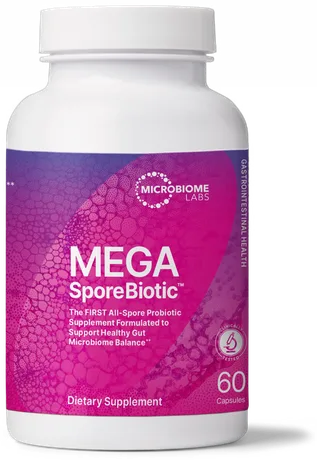
Microbiome Labs Mega SporeBiotic Review
Microbiome Labs MegaSporeBiotic is a groundbreaking, 100% spore-based, broad-spectrum probiotic supplement engineered to fundamentally "recondition" the gut microbiome rather than merely "reseed" it with transient bacteria. This innovative approach leverages the unique bi-phasic life cycle of its proprietary blend of five Bacillus spores: *Bacillus licheniformis*, *Bacillus indicus HU36™*, *Bacillus subtilis HU58™*, *Bacillus clausii*, and *Bacillus coagulans (SC-208)*. Unlike many traditional probiotics that are highly susceptible to degradation by stomach acid and bile salts, these spore-forming bacteria possess a tough, natural outer shell, an endospore, which protects them from harsh gastric environments, ensuring their survival and successful transit to the large intestine. Upon reaching the more favorable environment of the large intestine, these dormant spores activate and transition into their vegetative forms, where they begin to colonize and exert their beneficial effects. The primary mechanism of MegaSporeBiotic involves promoting microbial diversity and maintaining a healthy balance of key health-promoting, commensal gut bacteria. The Bacillus strains work synergistically to support a robust gut barrier function, which is crucial for overall immunity and preventing the translocation of undesirable compounds from the gut into the bloodstream. Furthermore, these specific Bacillus spores contribute to gut health by producing a range of beneficial compounds. *Bacillus licheniformis*, for instance, produces proteases that aid in protein digestion and a full spectrum of B vitamins. *Bacillus indicus HU36™* is particularly notable as a carotenoid-producing strain, generating powerful antioxidants like lycopene, astaxanthin, beta-carotene, and lutein directly at the site of absorption within the digestive system. The strains collectively compete with pathogenic microorganisms, helping to reduce their numbers, and some even produce natural a med substances. Clinical studies have also indicated that the spores in MegaSporeBiotic can reduce circulating LPS endotoxin, a known contributor to chronic inflammation associated with various metabolic, cardiovascular, and neurodegenerative conditions. MegaSporeBiotic is also distinguished by its exceptional stability; it is shelf-stable, requiring no refrigeration, and boasts a long shelf life, making it convenient for travel and daily use. It is often recommended as the foundational "Recondition" step in Microbiome Labs' "Total Gut Restoration" protocol, designed to comprehensively support and restore gut health. This supplement aims to improve digestion, nutrient absorption, and immune response, offering a multifaceted approach to gastrointestinal well-being.
We don’t sell supplements. We help you make decisions and get the best price.
Lowest prices
We may earn a commission from some store links. How we choose.
We hold no current store prices for it yet: check the store.
- AmazonPrice at AmazonCheck price at Amazon (opens in a new tab)
Also at: Microbiome Labs · Walmart. Some links earn us a commission; price comes first, and a commission only decides the order of prices within 2%. As an Amazon Associate we earn from qualifying purchases.
Study, Trial or Testing Result Summary
Members Only86 human studies · 54 improved
This product is a 295 milligram blend of five spore-forming bacteria, which is a full serving, but the amount of each strain is hidden in the blend. None of the exact strains in it were tested in the studies given. For probiotics in general, a pooled analysis of 18 studies in people with bacterial overgrowth in the small intestine found they cleared it in about 63 percent of people and eased belly pain, but did not stop it from coming back [1]. Large reviews of people with irritable bowel found some probiotics, especially certain mixtures, reduced bloating, though only some products worked and the certainty was low [2][3]. In constipation, mixed-species products eased bloating while single strains did not [4]. Among the individual strain types, other strains of Bacillus coagulans reduced bloating and improved stool regularity in several small trials [5][6]. Bacillus subtilis gave mixed results: two larger trials found no overall benefit [7][8], while a smaller one did [9]. A trial of Bacillus clausii in children with irritable bowel did not beat placebo [10]. Two strains, Bacillus indicus and Bacillus licheniformis, have no human studies for this goal. Animal and cell studies are never counted.
See all 86 studies →Hide the studies
- Across 82 trials with 10,332 adults with irritable bowel syndrome, some probiotics (including combination products) eased overall symptoms, pain and bloating versus placebo, but the certainty of the evidence was low to very low.Efficacy of Probiotics in Irritable Bowel Syndrome: Systematic Review and Meta-analysis.
- Across 81 trials with 9,253 adults with irritable bowel syndrome, three strains and two mixtures reduced bloating versus placebo, but only some probiotics worked for particular symptoms.Outcome-Specific Efficacy of Different Probiotic Strains and Mixtures in Irritable Bowel Syndrome: A Systematic Review a…
- In 33 trials with 6,352 children taking meds, probiotics cut diarrhea from 19% to 8%, with the biggest benefit at 5 billion or more live organisms a day; this was not a study of bloating or small-intestine bacteria.Read the study on PubMed (31039287) →
- Across 43 trials with 5,531 people with irritable bowel syndrome, probiotics improved symptoms including bloating, with Bacillus coagulans ranking best.Efficacy of Probiotics for Irritable Bowel Syndrome: A Systematic Review and Network Meta-Analysis.
- In a pooled analysis of 18 studies in people with small intestinal bacterial overgrowth, probiotics cleared the overgrowth in about 63% of people, outperformed no probiotics, lowered breath hydrogen and eased abdominal pain, but did not prevent the overgrowth.Probiotics for Preventing and Treating Small Intestinal Bacterial Overgrowth: A Meta-Analysis and Systematic Review of C…
- In 15 trials in adults with long-term constipation, multispecies probiotics reduced bloating and improved stool frequency and consistency, while single-species probiotics did not significantly reduce bloating.Meta-analysis of randomized controlled trials of the effects of probiotics on functional constipation in adults.
- Across 32 randomized trials in adults with irritable bowel syndrome, probiotics reduced persistent symptoms and abdominal pain scores, though the many different probiotic types and doses make the results hard to interpret.Comparing probiotic and drug interventions in irritable bowel syndrome: a meta-analysis of randomised controlled trials.
- In 26 trials of Helicobacter pylori treatment, adding Lactobacillus raised eradication rates and reduced nausea, diarrhea and abdominal pain, but did not significantly reduce bloating.Efficacy of Lactobacillus spp. Supplementation in Helicobacter pylori Eradication: A Systematic Meta-Analysis of Randomi…
- A review of earlier meta-analyses found probiotics lowered the risk of bloating by 26% and also reduced diarrhea, nausea and upper abdominal pain, though study quality was often low and results varied.Probiotics and gastrointestinal disorders: an umbrella meta-analysis of therapeutic efficacy.
- In four trials of 190 people with scleroderma, probiotics made little to no difference in gut symptoms, quality of life or small intestinal bacterial overgrowth clearance, with only a slight gain in social functioning, and the evidence was low certainty.The efficacy of probiotics, prebiotics or synbiotics in scleroderma: A systematic review.
- Eight small studies of alternative treatments for small intestinal bacterial overgrowth, five of them testing probiotics, gave preliminary signs of benefit, but the methods varied too much to draw firm conclusions.Alternative Treatment Approaches to Small Intestinal Bacterial Overgrowth: A Systematic Review.
- In 650 analyzed patients having Helicobacter pylori treatment, adding a probiotic for 2 weeks cured more people than placebo (87.4% vs 72.6%) and improved 7 of 10 symptoms including bloating.Probiotics for standard triple Helicobacter pylori eradication: a randomized, double-blind, placebo-controlled trial.
- In a placebo-controlled trial of 503 hospital patients taking meds, a four-strain probiotic at 17 billion units daily lowered a med-associated diarrhea to 12.5% versus 24.6% on placebo, with a dose-dependent reduction in bloating and abdominal pain.Read the study on PubMed (24291194) →
- In 385 healthy adults preparing for colonoscopy, a probiotic bowel-cleansing solution caused fewer abdominal bloating events than the standard polyethylene glycol solution, though bowel cleansing quality was similar.Efficacy and Patient Tolerability Profiles of Probiotic Solution with Bisacodyl Versus Conventional Cleansing Solution f…
- In 350 generally healthy adults with bloating, 6 weeks of a multi-species synbiotic with pomegranate extract reduced bloating, gas, and abdominal discomfort and improved bowel habits compared with placebo, with 72.3% reporting never or rarely bloating versus 55.9% on placebo.A Randomized, Placebo-Controlled Trial Evaluating Multi-Species Synbiotic Supplementation for Bloating, Gas, and Abdomin…
- In 300 people with advanced digestive cancers receiving chemotherapy, adding a probiotic to comprehensive nursing care over 8 weeks lowered gastrointestinal symptom scores, including bloating, compared with nursing care alone.Comprehensive nursing care for advanced digestive malignancy patients during chemotherapy based on probiotic interventio…
- In 290 people with diarrhea-predominant irritable bowel syndrome, 4 weeks of a Bifidobacterium quadruple viable tablet improved abdominal pain and diarrhea in 67.6% of people, compared with 36.6% on placebo.The Short-Term Efficacy of Bifidobacterium Quadruple Viable Tablet in Patients With Diarrhea-Predominant Irritable Bowel…
- In 267 adults with constipation-predominant IBS, 6 weeks of fermented milk with Bifidobacterium animalis DN-173 010 gave a higher quality of life responder rate (65.2% vs 47.7% for yoghurt control) and a larger drop in bloating at week 3.Effect of a fermented milk containing Bifidobacterium animalis DN-173 010 on the health-related quality of life and symp…
- After colonoscopy, a probiotic capsule for two weeks shortened the number of days with abdominal pain (1.99 vs 2.78 days with placebo), but did not change bloating or return to normal bowel habits.Randomized controlled trial of probiotics after colonoscopy.
- In 259 children and teens with irritable bowel syndrome, adding Bacillus clausii (4 billion spores daily) to usual treatment for 8 weeks did not beat placebo: 73.6% improved versus 78.5% on placebo, with similar bloating and pain.Efficacy and Safety of the Adjuvant Use of Probiotic Bacillus clausii Strains in Pediatric Irritable Bowel Syndrome: A R…
- In 257 women receiving H. pylori a med treatment, taking L. plantarum MH-301 for 14 days led to less bloating (10.2% vs 19.4% with placebo) and better treatment tolerability.Lactiplantibacillus plantarum MH-301 reduces Helicobacter pylori treatment-related adverse events via gut-vaginal axis: …
- In 250 adults with functional constipation, 4 weeks of probiotics improved stool consistency compared with placebo, but did not change bowel movement frequency.Effects of dietary fibers or probiotics on functional constipation symptoms and roles of gut microbiota: a double-blinde…
- In 229 adults with functional constipation, Bifidobacterium lactis HN019 (about 7 billion CFU daily, lowered to 4.69 billion, for 8 weeks) did not increase complete bowel movements more than placebo.Eight-Week Supplementation With Bifidobacterium lactis HN019 and Functional Constipation: A Randomized Clinical Trial.
- In 214 people with irritable bowel syndrome, 4 weeks of Lactobacillus plantarum 299v reduced abdominal pain, bloating, and stool frequency compared with placebo, with 78.1% rating the effect excellent or good versus 8.1% on placebo.Clinical trial: Lactobacillus plantarum 299v (DSM 9843) improves symptoms of irritable bowel syndrome.
- In 200 adults with diarrhea-predominant irritable bowel syndrome, taking a live probiotic strain or its heat-treated form daily for 12 weeks reduced symptom severity more than placebo.A randomized double-blind, placebo-controlled trial to evaluate the safety and efficacy of live Bifidobacterium longum C…
- In 200 adults with non-constipated irritable bowel syndrome, an 84-day probiotic blend improved global symptom response more than placebo, with 19.3% of the probiotic group responding at day 28 versus 8.9% on placebo.Probiotic Blend of Lactobacillus acidophilus LA-5 and Bifidobacterium animalis ssp. Lactis BB-12 in Non-constipated Irri…
- In 195 Japanese adults with quiescent ulcerative colitis, a daily fermented milk with Bifidobacterium breve did not delay relapse over 48 weeks compared with placebo, and the study was stopped for lack of efficacy.Efficacy of Bifidobacterium breve Fermented Milk in Maintaining Remission of Ulcerative Colitis.
- In 179 adults with irritable bowel syndrome with constipation, twice-daily probiotic yoghurt did not beat placebo yoghurt at 4 weeks (57% vs 53% adequate relief), and placebo did better at 8 weeks (68% vs 46%).A randomised controlled trial of a probiotic 'functional food' in the management of irritable bowel syndrome.
- In 179 people with small intestinal bacterial overgrowth, adding herbal supplements and probiotics to meds and a special diet did not significantly reduce gas levels, though clinical remission was higher in the group that took them, especially in people with methane-type overgrowth.Read the study on PubMed (38613116) →
- In 156 adults with bloating and functional constipation, a five-strain probiotic blend for 2 weeks did not reduce bloating more than placebo, though a post-hoc analysis found less flatulence on the probiotic.The effect of a probiotic blend on gastrointestinal symptoms in constipated patients: a double blind, randomised, placeb…
- In 156 adults with new type 2 diabetes or prediabetes taking a med, adding BB-12 probiotic lowered HbA1c more than a med alone over 3 months, and reduced bloating and other stomach side effects.Read the study on PubMed (36098362) →
- After colonoscopy with carbon dioxide, a probiotic capsule for two weeks did not reduce bloating, discomfort, or time to normal bowel function overall, though people with prior symptoms had less bloating.Randomized controlled trial of probiotic use for post-colonoscopy symptoms.
- In 141 children aged 4 to 12 with irritable bowel syndrome, taking Bacillus coagulans Unique IS2 daily for 8 weeks reduced pain and bloating, and improved stool consistency more than placebo.Efficacy of Bacillus coagulans Unique IS2 in treatment of irritable bowel syndrome in children: a double blind, randomis…
- Adding B. subtilis and E. faecium capsules to esomeprazole for eight weeks did not change healing of reflux esophagitis but reduced diarrhea symptoms and lowered relapse risk during 12 weeks of follow-up.Beneficial effect of probiotics supplements in reflux esophagitis treated with esomeprazole: A randomized controlled tri…
- In 122 adults with irritable bowel syndrome, once-daily Bifidobacterium bifidum MIMBb75 for 4 weeks gave adequate relief to 47% versus 11% on placebo, and improved bloating, pain and quality of life.Randomised clinical trial: Bifidobacterium bifidum MIMBb75 significantly alleviates irritable bowel syndrome and improve…
- In 120 adults with irritable bowel syndrome, a probiotic product taken for 12 weeks reduced symptom severity more than placebo, raised fecal short-chain fatty acid levels, and lowered inflammation markers.Effects of short-chain fatty acid-producing probiotic metabolites on symptom relief and intestinal barrier function in p…
- In 110 patients recovering from heart valve surgery, 14 days of Bifidobacterium animalis subsp. lactis LPL-RH reduced overall gut symptoms, bloating, abdominal pain and constipation compared with placebo and shortened time to bowel recovery.Bifidobacterium animalis subsp. lactis LPL-RH improves postoperative gastrointestinal symptoms and nutrition indexes by …
- In 100 healthy adults, 5 billion CFU of Bacillus subtilis MB40 daily for 4 weeks did not reduce bloating, gas or abdominal discomfort more than placebo overall, though men showed larger reductions.A Randomized, Double-blind, Placebo-controlled, Parallel Study Evaluating the Efficacy of Bacillus subtilis MB40 to Redu…
- In 100 adults with functional bloating, 5 billion CFU of Bacillus subtilis daily for 8 weeks did not change overall gas symptom scores versus placebo, though women had less belching and flatulence.Effect of Bacillus subtilis ATCC 122264 on intestinal gas symptoms and quality of life in adults with functional bloatin…
- In 80 adults with irritable bowel syndrome, two capsules daily of a two-strain Lactobacillus acidophilus mixture for 8 weeks reduced flatus and a composite symptom score compared with placebo, but did not significantly reduce abdominal pain.A 2-strain mixture of Lactobacillus acidophilus in the treatment of irritable bowel syndrome: A placebo-controlled rando…
- In 76 healthy adults, 2 billion CFU of Bacillus subtilis BS50 daily for 6 weeks led to improvement in gas-related symptoms (bloating, burping, flatulence) in 47.4% of users versus 22.2% on placebo.The probiotic Bacillus subtilis BS50 decreases gastrointestinal symptoms in healthy adults: a randomized, double-blind, …
- Taking L. acidophilus and B. lactis tablets for 90 days after gastric bypass reduced bloating compared with starch placebo but did not change overall symptom scores or bacterial overgrowth.Effects of Probiotics Supplementation on Gastrointestinal Symptoms and SIBO after Roux-en-Y Gastric Bypass: a Prospectiv…
- In a pilot of 72 adults with functional gut disorders including bloating, twelve weeks of five probiotic and nutrient combinations did not significantly change symptom scores compared with placebo.Efficacy of probiotics and nutrients in functional gastrointestinal disorders: a preliminary clinical trial.
- In a randomized trial of 71 children with irritable bowel syndrome, 5 billion units of Bifidobacterium lactis B94 twice daily for 4 weeks improved belching, bloating after meals, and constipation compared with a prebiotic fiber alone.Efficacy of synbiotic, probiotic, and prebiotic treatments for irritable bowel syndrome in children: A randomized contro…
- In 71 adults with HIV who had weak immune recovery, a synbiotic mix of probiotic bacteria and fiber over 6 months produced small immune gains versus placebo, the probiotic alone showed no immune effect, and gut bacterial diversity did not change.Probiotic effects on immunity and microbiome in HIV-1 discordant patients.
- In 70 hospitalized patients with a med-associated diarrhea, a Lactobacillus casei and Bifidobacterium breve probiotic did not shorten diarrhea or improve cure rates compared with placebo.Read the study on PubMed (22370839) →
- In 70 adults with gas and bloating, 2 billion spores a day of Bacillus coagulans MTCC 5856 for 4 weeks lowered indigestion scores from 8.91 to 3.06 versus 9.42 to 8.43 with placebo.The effects of Bacillus coagulans MTCC 5856 on functional gas and bloating in adults: A randomized, double-blind, placeb…
- In 61 adults with gas-related symptoms, Bacillus coagulans GBI-30 for 4 weeks improved abdominal pain and total symptom scores versus placebo, but bloating-related and distension scores did not clearly differ, partly due to a strong placebo effect.A prospective, randomized, double-blind, placebo-controlled parallel-group dual site trial to evaluate the effects of a …
- In 60 gastric bypass patients with stomach and bowel symptoms, 2 weeks of probiotics (Clostridium butyricum 1 g twice daily or Bifidobacterium longum BB536) improved quality of life scores, including bloating, gas and abdominal pain, with a digestive enzyme group showing similar gains.Effect of probiotics on postoperative quality of gastric bypass surgeries: a prospective randomized trial.
- In a placebo-controlled trial of 60 adults with stomach discomfort, a three-strain Bacillus probiotic improved bloating, belching, and overall symptom scores by day 30 compared with placebo, with no adverse events.A prospective, randomized, double-blind, placebo-controlled, parallel-group study to evaluate the efficacy and safety of…
- In 60 adults with chronic constipation, 29 days of GutBio Plus capsules improved bowel movement frequency, abdominal pain, and bloating more than placebo.Probiotics for chronic constipation: A randomized, prospective, placebo-controlled study.
- In 59 children with irritable bowel syndrome, 6 weeks of VSL#3 was superior to placebo for overall symptom relief, abdominal pain, bloating and family-reported life disruption.VSL#3 improves symptoms in children with irritable bowel syndrome: a multicenter, randomized, placebo-controlled, double…
- In 59 adults taking a 7-day a med regimen for H. pylori, adding Lactobacillus rhamnosus GG did not significantly reduce side effects such as bloating compared with placebo.[Lactobacillus rhamnosus GG supplementation to reduce side-effects of anti-Helicobacter pylori treatment].
- In a double-blind placebo-controlled trial of 56 adults with functional constipation, Lactobacillus reuteri at 200 million units daily for 105 days reduced bloating, abdominal discomfort and pain, and incomplete bowel emptying more than placebo.Randomised double blind placebo controlled trial on Lactobacillus reuteri DSM 17938: improvement in symptoms and bowel h…
- In 56 healthy adults, three weeks of kefir-derived probiotic sachets reduced bloating compared with control in male participants, but the abstract reports no bloating benefit for female participants.Putative Probiotic Strains Isolated from Kefir Improve Gastrointestinal Health Parameters in Adults: a Randomized, Singl…
- In 56 people one year after gastric bypass, 8 weeks of a 50 billion CFU multi-strain probiotic did not improve gut symptoms or small intestine bacterial overgrowth compared with placebo.Effects of Probiotic Use on Gastrointestinal Symptoms in the Late Postoperative Period of Bariatric Surgery: A Cross-Ove…
- In 55 adults with ulcerative colitis in remission and IBS-like symptoms, a probiotic called VSL#3 (450 billion CFU twice daily for 8 weeks) did not beat placebo on the main relief measure, though bloating and abdominal pain improved within the probiotic group in a higher-symptom subgroup.VSL#3® May Reduce Abdominal Pain and Bloating in Ulcerative Colitis Remission with IBS-like Symptoms: An Exploratory Ran…
- In a placebo-controlled trial of 52 adults with irritable bowel syndrome, a simethicone and Bacillus coagulans product taken for 4 weeks reduced bloating and discomfort more than placebo.A randomized double-blind placebo-controlled clinical trial on efficacy and safety of association of simethicone and Bac…
- In 50 patients with bacterial overgrowth and chronic abdominal distension, 5 days of a multi-strain probiotic led to more reported improvement (82%) than metronidazole a med (52%).Read the study on PubMed (21381407) →
- In 49 people with irritable bowel syndrome, four weeks of a multispecies probiotic taken twice daily gave substantial symptom relief to 68% of users versus 37.5% on placebo, with bloating also improving.Effect of multispecies probiotics on irritable bowel syndrome: a randomized, double-blind, placebo-controlled trial.
- In a 4-week pilot trial of 48 people with past MRSA colonisation, a probiotic (Lactobacillus rhamnosus HN001) was well tolerated, though mild bloating and nausea occurred, and the study did not report a clear benefit on bacterial balance versus placebo.Tolerability of a probiotic in subjects with a history of methicillin-resistant Staphylococcus aureus colonisation.
- In 45 adults with irritable bowel syndrome, six weeks of a probiotic fermented milk drink did not change symptoms compared with placebo.Poor predictive value of breath hydrogen response for probiotic effects in IBS.
- In 44 people with irritable bowel syndrome, eight weeks of one daily Bacillus coagulans capsule significantly reduced bloating and abdominal pain compared with baseline, with no serious side effects reported.Bacillus coagulans significantly improved abdominal pain and bloating in patients with IBS.
- In a trial of 40 older adults with Parkinson's disease and gut complaints, probiotic tablets for 3 months reduced bloating and abdominal pain about as well as trimebutine, but did not significantly improve constipation with incomplete emptying, where trimebutine did better.Nonmotor gastrointestinal disorders in older patients with Parkinson's disease: is there hope?
- In 40 people with irritable bowel syndrome, 4 weeks of Medilac DS did not change bloating or gas volume but reduced abdominal pain severity and frequency versus placebo.[The effects of probiotics on symptoms of irritable bowel syndrome].
- In 40 adults with irritable bowel syndrome, 6 billion Bacillus coagulans LBSC per day for 80 days improved bloating, cramping, abdominal pain and stool consistency more than placebo.Efficacy and safety of Bacillus coagulans LBSC in irritable bowel syndrome: A prospective, interventional, randomized, d…
- In 38 adults with functional constipation or functional diarrhea, eight weeks of a multi-strain probiotic significantly reduced abdominal bloating and its effect on daily life compared with placebo.Therapeutic Modulation of the Gut Microbiome by Supplementation with Probiotics (SCI Microbiome Mix) in Adults with Func…
- In a crossover trial of 37 people with type 2 diabetes who could not tolerate a med, 12 weeks of a multi-strain probiotic reduced nausea, and the frequency and severity of abdominal bloating and pain, compared with placebo.Read the study on PubMed (37812890) →
- In 36 people with newly diagnosed diarrhea-predominant irritable bowel syndrome, 2 billion CFU per day of Bacillus coagulans MTCC 5856 for 90 days reduced bloating, abdominal pain, diarrhea and stool frequency more than placebo.Bacillus coagulans MTCC 5856 supplementation in the management of diarrhea predominant Irritable Bowel Syndrome: a doubl…
- In a pilot of 30 people with bacterial overgrowth in the small intestine, a lactobacilli probiotic added to a med maintenance made the breath test negative in 93.3% of people versus 66.7% on meds alone, and abdominal pain resolved in all treated people.Evaluating the efficacy of probiotic on treatment in patients with small intestinal bacterial overgrowth (SIBO)--a pilot…
- In 30 people with irritable bowel syndrome, taking two synbiotic capsules daily for eight weeks reduced abdominal bloating and discomfort more than placebo, while the low-dose group did not show the same improvement.A Randomized Clinical Trial of Synbiotics in Irritable Bowel Syndrome: Dose-Dependent Effects on Gastrointestinal Sympto…
- In 30 people with constipation-predominant irritable bowel syndrome, 8 weeks of Lacticaseibacillus rhamnosus IDCC 3201 improved bowel movements, constipation discomfort, and bloating compared with placebo.Effect of Lacticaseibacillus rhamnosus IDCC 3201 on irritable bowel syndrome with constipation: a randomized, double-bli…
- In a double-blind crossover trial of 23 lactose-intolerant adults with lasting gut symptoms, a probiotic plus vitamin B6 for 30 days reduced bloating more than placebo and eased constipation.Effects of Bifidobacterium longum and Lactobacillus rhamnosus on Gut Microbiota in Patients with Lactose Intolerance and…
- In adults with irritable bowel syndrome, 8 weeks of two capsules daily of L. plantarum 299v (5 billion CFU each) did not relieve abdominal pain or bloating more than placebo.Randomized clinical trial: effect of Lactobacillus plantarum 299 v on symptoms of irritable bowel syndrome.
- In 160 people with cirrhosis, probiotics taken three times daily for about 9 months reduced bacterial overgrowth in the small intestine and ammonia levels, and prevented overt hepatic encephalopathy (7 probiotic users versus 14 controls developed it).Probiotics prevent hepatic encephalopathy in patients with cirrhosis: a randomized controlled trial.
- In 50 patients with functional bowel symptoms, 4 weeks of Bacillus subtilis plus Enterococcus faecium lowered symptom scores (1.4 vs 3.6) and small-intestine bacterial overgrowth positivity (28% vs 56%) compared with controls.Effect of Combined Live Probiotics Alleviating the Gastrointestinal Symptoms of Functional Bowel Disorders.
- In 50 people with diarrhea-predominant irritable bowel syndrome, 2 billion CFU a day of Weizmannia coagulans LMG S-31876 for about 8 weeks reduced abdominal pain, bloating, diarrhea and stool frequency compared with placebo.The role of Weizmannia (Bacillus) coagulans LMG S-31876 in treating IBS-diarrhea.
- In 53 flood-affected adults with irritable bowel syndrome, a daily Bifidobacterium infantis M-63 sachet for 3 months improved mental well-being more than in non-randomised controls, in a small open study.Bifidobacterium infantis M-63 improves mental health in victims with irritable bowel syndrome developed after a major fl…
- In 48 patients with diarrhea-predominant IBS and bacterial overgrowth, Saccharomyces boulardii CNCM I-745 plus dietary advice over 15 days reduced hydrogen gas from overgrowth and improved symptoms more than dietary advice alone, though the study was open-label.Impact of Saccharomyces boulardii CNCM I-745 on Bacterial Overgrowth and Composition of Intestinal Microbiota in Diarrhe…
- In an open pilot of 40 people with bacterial overgrowth in the small intestine and systemic sclerosis, 2 months of Saccharomyces boulardii alone or with metronidazole reduced diarrhea, abdominal pain, and gas and bloating, while metronidazole alone did not change symptoms.Effectiveness of Saccharomyces boulardii and Metronidazole for Small Intestinal Bacterial Overgrowth in Systemic Scleros…
- In pregnant women with an underactive thyroid and bowel bacterial overgrowth, 3 weeks of probiotics plus prebiotics lowered inflammation markers, cholesterol, and bowel symptom scores in 32 women.Probiotics and Prebiotics in Subclinical Hypothyroidism of Pregnancy with Small Intestinal Bacterial Overgrowth.
- In an open-label study of 30 adults with type 2 diabetes and kidney disease who had constipation, a Bifidobacterium bifidum probiotic over 12 weeks increased the share with normal stool form from 3.3% to 44.8%, with no worsening of blood sugar or kidney function.Efficacy of probiotics (Bifidobacterium bifidum G9-1) in patients with type 2 diabetes mellitus and chronic kidney disea…
- In 19 patients with diarrhea-predominant irritable bowel syndrome, 2 weeks of Bacillus subtilis and Enterococcus faecium improved symptom severity and stool consistency, and people whose gut bacteria shifted in a favorable way responded better for bloating and abdominal pain.Baseline gut microbial profiles are associated with the efficacy of Bacillus subtilis and Enterococcus faecium in IBS-D.
- In 15 adults aged 68 to 91 with diverticular disease, adding Escherichia coli Nissle capsules for about 5 weeks extended symptom-free periods from about 2.4 months to about 14 months and improved abdominal symptoms, in an open trial without a placebo group.The effect of non-pathogenic Escherichia coli in symptomatic uncomplicated diverticular disease of the colon.
- In 10 people with scleroderma and moderate bloating, two months of daily probiotic capsules significantly reduced bloating and overall gut symptom scores, though the study had no placebo group.Probiotics for the treatment of systemic sclerosis-associated gastrointestinal bloating/ distention.
- In a retrospective study of 56 patients with diverticular disease, daily Clostridium butyricum CBM588 for 12 months gave more adequate symptom relief than cyclic rifaximin (77% vs 44%), with similar diverticulitis rates.Management of symptomatic uncomplicated diverticular disease (SUDD) of the colon with Clostridium butyricum CBM588 versu…
Review Totals and Summary
Members Only21 reviews · 100% positive
Micobiome Labs Mega SporeBiotic has received overwhelmingly positive feedback, with customers giving it high marks across stores, contributing to approximately 21 ratings. All available reviews award the product 4 or 5 stars, indicating a high level of satisfaction among users. **What it did for them** Customers frequently report significant improvements in their digestive health after taking Mega SporeBiotic. Many describe the product as effective, with one user stating it "works great" and another noting it "Help Digestion." Some experienced rapid results, with one reviewer observing their "stomach started feeling better within 3 days." The general sentiment is that it's an "Amazing probiotic!" that delivers on its promises. **Important Usage Considerations** While feedback on the product's efficacy is overwhelmingly positive, one licensed healthcare professional offered a significant caution, stating this is "Not an OVER-THE-COUNTER probiotic product." This feedback implies a concern about unsupervised use, suggesting the product "still requires a licensed [professional]" for proper introduction and management. This highlights that potential issues could arise if used by an "unprepared and unschooled patient" without professional guidance, rather than being a complaint about the product itself. **Pill Form and Taste** Regarding the physical attributes of the supplement, customers appreciate its user-friendly design. Reviewers mention that the pills "aren't super big," making them easy to swallow. Furthermore, there are no reports of unpleasant sensory experiences, with one user specifically noting it has "no nasty after taste." **Value for Money** Many customers find the product to be a good investment, particularly when purchased through certain retailers. Several reviewers expressed satisfaction with the pricing, with comments like "great price" and "cheaper here." One long-term user was surprised to find it "so much cheaper" at a specific store, indicating good value can be found. **Who it seems to suit and who it did not** This probiotic appears to be particularly suitable for individuals seeking doctor-recommended digestive support, with one user stating it was "doctor recommended" and they had "taken for years." It is also ideal for those who are under professional health care supervision, as emphasized by the healthcare professional's review. It suits those looking for effective digestive relief and who appreciate a product that is easy to take. Conversely, it may not be suitable for an "unprepared and unschooled patient" who lacks professional guidance on its use.
Biohacker Summary
Members Only2 of 10 recommend it
The only ingredient the panel spoke about is Bacillus, a smaller ingredient in this product, and only three of the ten panelists said anything about it. One uses it by breaking open capsules of spore strains and rinsing the mouth with them, especially before bed and during cold and flu season, to support the immune response in the airways. One recommends Bacillus strains for metabolic health and weight loss, and mentions foods such as sauerkraut and raw dairy as sources. One stayed neutral, noting that Bacillus can make dopamine in the gut, which may raise baseline dopamine and lift mood. No one gave a dose, named a pairing, or reported a caution or stopping.</br>
See all 3 biohackers →Hide the biohackers
Ben Greenfield · Bacillus · uses
- Ben Greenfield asks if one could break open capsules of Bacillus spore strains and mouthwash with them, and Kiran Krishnan confirms this is a recommended practice, especially before bed and during cold and flu season, to upregulate immune response in the respiratory tract.
Siim Land · Bacillus · recommends
- Recommends bacillus strains of bacteria, found in foods like sauerkraut and raw dairy, for benefiting metabolic health and weight loss.
Andrew Huberman · Bacillus · neutral
- States that bacillus can synthesize dopamine in the gut, which can increase baseline dopamine levels in the brain and body, leading to enhanced mood.
RAL Summary
Members OnlyTier 4 for Gut Bacteria Balance
Human studies of probiotics in general support easing bloating and clearing small-intestine bacterial overgrowth, but none tested this exact formula and only 21 reviews exist, so it stays emerging [1][2].
- Emerging: not enough evidence to rank higher yet.
Where the evidence disagrees: 16 of the 86 human studies found no effect.
More Details
Members OnlyBody systems · Combine with · Possible side effects
Body systems: Digestive system
Combine with: To further enhance gut health and overall well-being, consider combining Mega SporeBiotic with a high-quality prebiotic fiber supplement to nourish the beneficial bacteria. Digestive enzymes can also be beneficial to support nutrient absorption and reduce digestive discomfort. Additionally, incorporating omega-3 fatty acids can help manage inflammation, which is often linked to gut health.
Possible side effects: No major side effects reported.
Supplement Facts
Proprietary probiotic blend 295 mg · Bacillus indicus 0 · Bacillus licheniformis 0
| Proprietary probiotic blend | 295 mg | † |
| Bacillus indicus (HU36™) | 0 | † |
| Bacillus licheniformis (SL-307) | 0 | † |
| Bacillus clausii (SC-109) | 0 | † |
| Bacillus subtilis (HU58™) | 0 | † |
| Bacillus coagulans (SC-208) | 0 | † |
Directions: Week 1: 1 capsule every other day. Week 2: 1 capsule per day. Week 3+: 2 capsules per day, with food, or as recommended by your healthcare practitioner.
Label source: Microbiomelabs · Report a label change
Sizes and barcodes: 180 Capsule(s), UPC 6 74306 52323 7 (not checked yet)
Show entire label
More gut bacteria balance products
Members OnlyThe highest ranked for the same goal
Read more
Our articles on this subject
- Probiotics for Gut Health: The Complete GuideArticle · Mar 17, 2026
- Best Probiotic for Bloating: The Strains With Human Trials, and How to Choose OneArticle · Oct 27, 2026
Graded October 24, 2026 by the Reverse Age Lab evidence engine, from human studies, real reviews and our biohacker panel. How we grade. Is this medical advice? No. Rala organizes the published evidence; go over any change with your doctor, especially if you take meds.
Privacy policyConsumer health dataAffiliate disclosureTermsBrand and legal noticesDo Not Sell or Share My Personal InformationCookie settings