
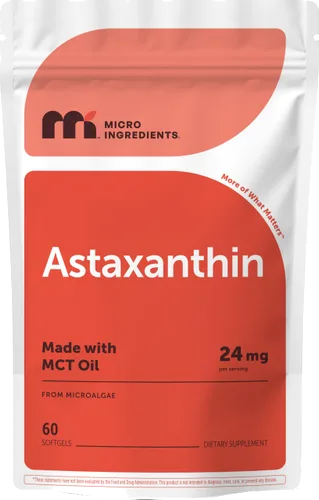
Microingredients Astaxanthin Review
Microingredients Astaxanthin is a premium dietary supplement formulated to harness the potent antioxidant and anti-inflammatory properties of astaxanthin, a naturally occurring carotenoid. Sourced from *Haematococcus Pluvialis*, a freshwater microalga renowned for its rich red pigment, this supplement delivers a concentrated form of astaxanthin, often lauded as the "king of antioxidants" due to its exceptional efficacy. Scientific research indicates that astaxanthin can be up to 6,000 times more powerful than Vitamin C in its antioxidant capacity. The product is meticulously designed for optimal bioavailability, with each softgel infused with Medium Chain Triglyceride (MCT) oil. This inclusion significantly enhances the absorption and utilization of astaxanthin within the body, ensuring efficient nutrient delivery without any unpleasant aftertaste. Microingredients offers this supplement in various strengths, including 12mg and 24mg per softgel, catering to diverse wellness needs. The mechanisms by which astaxanthin exerts its beneficial effects are multifaceted and deeply rooted in its unique molecular structure. As a potent antioxidant, it directly neutralizes free radicals—unstable molecules that cause oxidative stress and cellular damage, which are implicated in aging and various chronic diseases. Astaxanthin's distinct molecular configuration allows it to embed within cell membranes, providing comprehensive protection against reactive oxygen and nitrogen species (RONS) more efficiently than many other antioxidants. It scavenges these reactive species by donating electrons and forming non-reactive products, thereby preserving cellular integrity and function. Beyond its direct antioxidant action, astaxanthin exhibits significant anti-inflammatory properties. It modulates redox-sensitive signaling pathways, notably inhibiting the NF-κB and MAPK pathways, which are central to the production of pro-inflammatory molecules such as TNF-α and IL-1β. By down-regulating these pathways, astaxanthin effectively suppresses inflammatory processes and associated tissue damage. Furthermore, it activates the Nrf2 pathway, bolstering the body's endogenous antioxidant defense systems and restoring redox balance. Astaxanthin also plays a crucial role in supporting mitochondrial health, integrating directly into mitochondrial membranes to protect lipids and proteins from oxidative damage, thereby enhancing mitochondrial efficiency and energy production. Its ability to cross the blood-brain barrier offers neuroprotective benefits, safeguarding against oxidative stress in the brain. The supplement is also recognized for its potential to support eye health, improve joint function, enhance internal circulation, and contribute to overall skin health by mitigating UV-induced oxidative damage, improving moisture, and supporting barrier function. Microingredients emphasizes its commitment to quality, stating that its products are non-GMO, gluten-free, and undergo third-party lab testing for purity and potency.
We don’t sell supplements. We help you make decisions and get the best price.
Lowest prices
We may earn a commission from some store links. How we choose.
Lowest cost per month first, in stock, at 1 softgel a day. Checked Nov 9.
- iHerbLowest$9.99 a bottle$2.50/moBuy at iHerb (opens in a new tab)
- Vitacost$25.99 a bottle$6.50/moBuy at Vitacost (opens in a new tab)
- Target$26.99 a bottle$6.75/moBuy at Target (opens in a new tab)
Also at: Microingredients · Walmart · CVS
Study, Trial or Testing Result Summary
Members Only42 human studies · 24 improved
This product gives 12 mg of astaxanthin a day, which is above the 6 mg dose that worked in studies. No human study has shown that astaxanthin reverses biological age. In one open study of a product that mixed several ingredients, an enzyme linked to cell aging went up, but telomere length did not change. Most of the evidence is about aging markers instead. Twelve placebo-controlled trials in 380 people with type 2 diabetes found less oxidative damage and lower levels of one inflammation marker, but no change in two other inflammation markers [1]. Nine trials found better skin moisture and elasticity, but wrinkles did not get shallower [2]. In 90 women with type 2 diabetes, 8 mg a day for 8 weeks improved antioxidant defenses and lowered inflammation [3]. In 50 women with endometriosis, 6 mg a day for 12 weeks lowered oxidative damage and inflammation compared with placebo [4]. The results are mixed, though. Another pooled analysis found the antioxidant effect unclear when compared with control groups [5]. A one-year trial in 61 kidney transplant patients taking 12 mg a day found no change in oxidative stress or inflammation [6]. Animal and cell studies are never counted.
See all 42 studies →Hide the studies
- In 21 trials with 1,626 women with endometriosis testing many antioxidants including astaxanthin, supplements reduced some pain types and blood malondialdehyde but not overall pain or pregnancy rate.The effects of antioxidant supplementation on pain, oxidative stress markers, and clinical pregnancy rate in women with …
- Across twelve placebo-controlled trials with 380 people, astaxanthin lowered an oxidative stress marker (malondialdehyde) and interleukin-6 in type 2 diabetes, but did not significantly change C-reactive protein or tumor necrosis factor-alpha.Astaxanthin supplementation mildly reduced oxidative stress and inflammation biomarkers: a systematic review and meta-an…
- Pooling nine trials, astaxanthin lowered oxidative damage markers compared with starting levels, but the difference versus control groups was only borderline, so the authors called the antioxidant effect in humans unclear.Effects of Astaxanthin Supplementation on Oxidative Stress.
- Pooling nine placebo-controlled trials of oral astaxanthin, skin moisture and elasticity improved compared with placebo, but wrinkle depth did not significantly decrease.Systematic Review and Meta-Analysis on the Effects of Astaxanthin on Human Skin Ageing.
- In pooled trials of women having fertility treatment, astaxanthin raised egg maturation rate and antioxidant capacity in follicular fluid, but other pregnancy and oxidative stress measures did not change significantly.Effect of astaxanthin supplementation on female fertility and reproductive outcomes: a systematic review and meta-analys…
- Pooling four trials in women with polycystic ovary syndrome, astaxanthin raised total antioxidant capacity in follicular fluid and moderately improved egg quality, but did not consistently change other oxidative stress markers, fertilization or pregnancy rates.Exploring the benefits of astaxanthin as a functional food ingredient: Its effects on oxidative stress and reproductive …
- Pooled studies found astaxanthin added to frozen human sperm improved viability, shape and some movement measures after thawing, but not total motility or DNA damage, and the evidence was limited by small studies and varied results.Effects of astaxanthin supplementation on human sperm quality during the freeze thaw process: a systematic review and me…
- In three human trials of astaxanthin for male infertility, no semen measures improved significantly compared with placebo, though animal studies showed benefits.A systematic review and meta-analysis of astaxanthin efficacy in male infertility: evidence from clinical and preclinica…
- Across 24 placebo-controlled trials, astaxanthin lowered muscle damage markers after exercise (creatine kinase, lactate dehydrogenase) but did not improve maximal oxygen uptake, time-trial performance or power output.The Effects of Astaxanthin Supplementation on Exercise Recovery Biomarkers and Exercise Performance: A Systematic Review…
- A review of eleven clinical studies, mostly small and in healthy Japanese women, found that astaxanthin at about 3 to 6 mg a day often improved skin texture, wrinkles and moisture and protected against UV skin damage.Effects of Astaxanthin Supplementation on Skin Health: A Systematic Review of Clinical Studies.
- A review of fifteen human studies found astaxanthin consistently lowered inflammation signals and oxidative stress measures while raising antioxidant capacity.The Role of Astaxanthin as an Antioxidant and Anti-Inflammatory Agent in Human Health: A Systematic Review.
- In 90 women with type 2 diabetes, 8 mg of astaxanthin daily for 8 weeks, alone or with exercise training, improved antioxidant defenses and lowered inflammation, with the best results when combined with exercise, but blood sugar and HbA1c did not change with astaxanthin alone.Redox-sensitive miRNAs and Humanin could mediate effects of exercise and astaxanthin on oxidative stress and inflammatio…
- In 80 healthy adults aged 60 and over, a daily mix of bacopa, lycopene, astaxanthin and vitamin B12 for 8 weeks improved executive function and word fluency compared with placebo.Improvement of Executive Function after Short-Term Administration of an Antioxidants Mix Containing Bacopa, Lycopene, As…
- In 80 men with low sperm counts, 16 mg of astaxanthin daily for 3 months did not change semen quality, sperm DNA damage or sperm mitochondrial function compared with placebo.Effect of the oral intake of astaxanthin on semen parameters in patients with oligo-astheno-teratozoospermia: a randomiz…
- In 80 people with heart failure, 20 mg of astaxanthin daily for 8 weeks raised antioxidant capacity and lowered a marker of cell damage (malondialdehyde) and uric acid more than placebo, and breathlessness and fatigue improved.Impact of astaxanthin on oxidative markers, uric acid, and clinical symptoms in heart failure: a randomized clinical tri…
- In 61 kidney transplant recipients, 12 mg of astaxanthin daily for one year did not change artery stiffness, oxidative stress or inflammation compared with placebo.Astaxanthin has no effect on arterial stiffness, oxidative stress, or inflammation in renal transplant recipients: a ran…
- In 60 women over 35 with poor ovarian response, 12 mg a day of astaxanthin for 8 weeks raised blood antioxidant capacity, lowered markers of oxidative damage and inflammation, and increased the number of eggs retrieved and high-quality embryos compared with placebo.Astaxanthin improves assisted reproductive technology outcomes in poor ovarian responders through alleviating oxidative …
- In 58 women with polycystic ovary syndrome, 12 mg a day of astaxanthin for 60 days lowered cell stress markers in ovarian cells and raised antioxidant capacity in follicle fluid compared with placebo.Astaxanthin treatment ameliorates ER stress in polycystic ovary syndrome patients: a randomized clinical trial.
- In 58 women with polycystic ovary syndrome, 12 mg of astaxanthin daily for 8 weeks lowered blood sugar, insulin resistance, bad cholesterol and an oxidative stress marker and raised antioxidant capacity compared with placebo.Astaxanthin supplementation impact on insulin resistance, lipid profile, blood pressure, and oxidative stress in polycys…
- In 50 infertile women with advanced endometriosis, 6 mg a day of astaxanthin for 12 weeks lowered blood markers of oxidative damage and inflammation and improved egg numbers and high-quality embryos compared with placebo.Astaxanthin ameliorates inflammation, oxidative stress, and reproductive outcomes in endometriosis patients undergoing a…
- In 50 women with polyendocrine metabolic ovarian syndrome (44 finished), 12 mg of astaxanthin daily for 6 weeks increased cell self-cleaning activity in ovarian cells, reduced cell death and raised mature egg yield compared with placebo, while pregnancy rates did not differ significantly.Autophagy activation in granulosa cells as a mechanism of astaxanthin action: evidence from a pilot randomised trial in …
- In 44 healthy adults with sun-aged skin, 2 mg of astaxanthin plus 3 g of collagen daily for 12 weeks improved facial skin elasticity and moisture barrier compared with placebo, but did not change UV-induced DNA damage.Supplementating with dietary astaxanthin combined with collagen hydrolysate improves facial elasticity and decreases mat…
- In 44 people with type 2 diabetes, 8 mg of astaxanthin daily for 8 weeks lowered blood levels of an oxidative stress marker and an inflammation marker compared with placebo, and lowered a diabetes-linked gene regulator.The antioxidant and anti-inflammatory effects of astaxanthin supplementation on the expression of miR-146a and miR-126 i…
- In 44 women with polycystic ovary syndrome, 6 mg of astaxanthin daily for 8 weeks lowered blood inflammation markers and improved egg retrieval outcomes compared with placebo, though oxidative stress markers in follicular fluid and pregnancy rates did not differ.Astaxanthin treatment decreases pro-inflammatory cytokines and improves reproductive outcomes in patients with polycysti…
- In 40 young soccer players, astaxanthin for 90 days improved an antioxidant enzyme activity and thiol content versus placebo, but other oxidative stress markers changed with training regardless of treatment.Effect of astaxanthin supplementation on paraoxonase 1 activities and oxidative stress status in young soccer players.
- In 40 infertile men after varicocele surgery, 6 mg a day of astaxanthin for 3 months improved sperm movement, raised antioxidant defenses and lowered inflammatory signals in semen compared with placebo.The effect of astaxanthin after varicocele surgery on antioxidant status and semen quality in infertile men: A triple-bl…
- In 34 adults aged 35-65, astaxanthin taken for 8 weeks as a comparison to rose hip powder improved crow's-feet wrinkles, skin moisture and elasticity, with no placebo group.The effectiveness of a standardized rose hip powder, containing seeds and shells of Rosa canina, on cell longevity, skin…
- In 32 elite young male soccer players given astaxanthin or placebo for 90 days, astaxanthin reduced exercise-induced free radical production and muscle enzyme release, though some oxidative markers did not change.Effect of astaxanthin supplementation on muscle damage and oxidative stress markers in elite young soccer players.
- In 32 well-trained male cyclists, 20 mg of astaxanthin daily for 4 weeks raised blood astaxanthin but did not change heart muscle protein release, antioxidant capacity or inflammation compared with placebo.Effect of antioxidant supplementation on exercise-induced cardiac troponin release in cyclists: a randomized trial.
- In 32 adults aged 60-70 with signs of oxidative stress, 7 mg a day of astaxanthin for a month lowered oxidized LDL and malonic dialdehyde, with the chocolate formulation working best.Markers of Hypoxia and Oxidative Stress in Aging Volunteers Ingesting Lycosomal Formulation of Dark Chocolate Containing…
- In 27 overweight adults, astaxanthin for 12 weeks lowered oxidative stress markers and raised total antioxidant capacity compared with placebo, and also lowered LDL cholesterol.Positive effects of astaxanthin on lipid profiles and oxidative stress in overweight subjects.
- In 24 healthy volunteers, four weeks of astaxanthin plus sesamin improved recovery from mental fatigue and reduced the rise in an oxidative stress marker during tasks compared with placebo.Effects of Dietary Supplementation of Astaxanthin and Sesamin on Daily Fatigue: A Randomized, Double-Blind, Placebo-Cont…
- In 15 male firefighters, 12 mg a day of astaxanthin for 4 weeks lessened some exercise-related inflammation and raised the ventilatory anaerobic threshold, but did not change fasting oxidative stress markers, blood fats or fire-ground test performance.Impact of astaxanthin supplementation on markers of cardiometabolic health and tactical performance among firefighters.
- In 14 active young men, 6 mg a day of astaxanthin for 4 weeks raised blood glutathione by about 7% versus placebo but did not change other oxidative stress markers or fat burning during exercise.Astaxanthin Supplementation Increases Glutathione Concentrations but Does Not Impact Fat Oxidation During Exercise in Ac…
- In women with polycystic ovary syndrome, 8 mg a day of astaxanthin for 40 days raised blood antioxidant levels and mature egg and high-quality embryo rates versus placebo, but did not change some oxidative damage markers or pregnancy rates.Randomized controlled trial of astaxanthin impacts on antioxidant status and assisted reproductive technology outcomes i…
- Young male taekwondo athletes taking 12 mg of astaxanthin daily for 4 weeks showed less muscle damage and had higher antioxidant enzyme activity than those on placebo, but most burnout measures did not change and the overall oxidative stress interaction was not significant.Effects of 28-day astaxanthin supplementation on psychological fatigue and biochemical markers in taekwondo athletes: a …
- In 39 heavy smokers given 5, 20 or 40 mg of astaxanthin daily for 3 weeks (alongside 39 non-smokers), markers of oxidative damage fell and antioxidant markers rose compared with baseline, with no placebo group.Protective effects of Haematococcus astaxanthin on oxidative stress in healthy smokers.
- In 26 healthy men doing resistance training for 10 weeks, eating foods rich in astaxanthin, beta-carotene and resveratrol increased leg strength and resting oxygen use, which did not happen in the control group.Astaxanthin-, β-Carotene-, and Resveratrol-Rich Foods Support Resistance Training-Induced Adaptation.
- In 23 overweight or obese adults taking 5 mg or 20 mg of astaxanthin daily for 3 weeks, oxidative damage markers fell by about 35% to 65% and antioxidant markers rose compared with baseline, with no placebo group.Effects of astaxanthin on oxidative stress in overweight and obese adults.
- In people given astaxanthin, the amount of amyloid beta in red blood cells and oxidative stress markers went down, while amyloid levels were found to rise with age.Amyloid β levels in human red blood cells.
- In 66 healthy women aged 35-55, a 12-week multi-ingredient supplement containing 15 mg astaxanthin raised antioxidant capacity, aging-related gene activity and telomerase by over 25%, but telomere length did not change.Enhanced antioxidant capacity and anti-ageing biomarkers after diet micronutrient supplementation.
- In 35 cataract surgery patients, 6 mg a day of astaxanthin for 2 weeks raised the eye fluid's ability to neutralize superoxide and lowered total hydroperoxides.Effects of astaxanthin on antioxidation in human aqueous humor.
Review Totals and Summary
Members Only2,113 reviews · 58% positive
Microingredients Astaxanthin has garnered about 2113 ratings across various stores, with 58% of these being 4 or 5 stars. Overall, many customers report positive experiences, particularly regarding skin and energy benefits, though some significant concerns about product quality and packaging have been raised. **Reported Benefits** Many users praise the supplement for its positive effects on skin, eyes, and energy levels. Customers frequently mention improved skin appearance, noting it feels "noticeably less dry" and contributes to a "slight golden glow to my skin." Some even observed it "improves the smoothness of your skin de-aging you," helping with wrinkles and vibrancy. For eye health, some found it "nearly resolved my dry eye issues." Energy boosts are also a common theme, with users reporting they "felt more energy and a boost in my immune system" and that it helps "keep my energy consistent." The product is also valued for its antioxidant and anti-inflammatory properties. **Common Complaints** Despite the positive feedback, several customers expressed strong dissatisfaction. A recurring issue is product damage during shipping, with reports of "capsules busted inside the bag and orange stain all over everything." This often leads to a messy and unusable product. The packaging itself, a resealable bag rather than a bottle, is frequently criticized as "packaging is no good" and inconvenient for storage. Some users also reported a lack of effectiveness, with one stating, "His eye sight didn't improve in fact it got worse." Allergic reactions were also mentioned by a few individuals. Additionally, one reviewer questioned the company's transparency and the actual dosage, claiming "capsules are also smaller... definitely not 12 mg." **Pill Characteristics** The softgel capsules are generally well-received for their size and ease of consumption. Many describe them as "small and easy to take" and "very easy to swallow," with no "weird aftertaste." The formulation includes MCT oil, which is highlighted by customers as a beneficial "delivery catalyst" for absorption, often preferred over other oils. Reviewers appreciate that the product is odorless and has no digestive upset. **Value for Money** Customer opinions on value are mixed but lean positive. Many consider it a "Fair price for quality" and "worth every penny." Some reviewers noted it offers "Good Value" and that its "price is very comparable, if not cheaper than other name brands." However, a few customers wished it "WISH IT WERE MORE AFFORDABLE." The dosage and number of capsules per bag are often seen as contributing to its overall value. **Who It Suits and Who It Did Not** This supplement appears to suit individuals seeking improvements in skin hydration, glow, and elasticity, as well as those looking for an energy boost or relief from dry eyes. It is also favored by people who appreciate a clean formulation with MCT oil and prefer small, easy-to-swallow softgels. However, it did not suit those who experienced allergic reactions or saw no improvement in severe conditions like macular degeneration. It is also not ideal for customers who prioritize robust packaging to prevent damage or who are concerned about ingredient transparency.
Biohacker Summary
Members Only6 of 10 recommend it
Astaxanthin gets broad support from the panel: three of the ten recommend it, four say they use it, two are neutral, and one has stopped taking it. The most common reasons are skin protection, including help against sunburn, along with eye health, antioxidant support, and joint comfort, and a few also mention inflammation and longevity. Two panelists give a dose of 12 milligrams a day, and one says it needs a week or two of preloading to be felt. One suggests taking it with collagen and vitamin C, an hour or so after a workout so it does not blunt the antioxidant effects, while another takes it on flights. As for cautions, one panelist warns that synthetic astaxanthin, the kind used to color farm-raised salmon, lacks credible safety studies, and another says the eye data are still emerging.
See all 10 biohackers →Hide the biohackers
Dr. Mark Hyman · Astaxanthin · recommends
- Mentions astaxanthin as a carotenoid that helps reduce oxidative stress.
- Mentions astaxanthin as a carotenoid that helps reduce oxidative stress.
- Astaxanthin, a powerful carotenoid antioxidant, reduces neuroinflammation, scavenges free radicals, activates the Nrf2 anti-inflammatory antioxidant pathway to maintain blood-brain barrier integrity, and suppresses NF-kappa B to reduce inflammatory molecules.
- States that astaxanthin is a naturally occurring supplement that can help safely address oxidative stress and inflammation at the source, playing a major role in mitigating the effects of inflammation and impacting mitochondrial function and other cell signaling pathways related to aging.
- Is excited to talk about astaxanthin and how it helps to combat some of the key hallmarks of aging, including inflammaging, mitochondrial dysfunction, and cell signaling.
- Dr. Hyman recommends AX3 Bio-Pure Astaxanthin.
Siim Land · Astaxanthin · neutral
- Notes that Astaxanthin is one of several supplements with human evidence.
- Astaxanthin is a carotenoid found in salmon and algae that can protect the skin against UV damage. Two systematic reviews of clinical trials have shown that astaxanthin supplementation improves skin elasticity, skin moisture, and photoaging.
- Takes 12 milligrams of astaxanthin a day.
- Recommends astaxanthin as an underrated carotenoid and powerful antioxidant for skin anti-aging, UV protection, eye health, inflammation, and lipids, citing studies that show improvements in skin moisturization and elasticity, reduced digital eye strain, and improvements in cardiovascular disease risk factors like hs-CRP and HDL.
- States that astaxanthin is a powerful antioxidant and carotenoid that protects the skin against UV radiation, which is the number one cause of skin photoaging.
- Recommends astaxanthin as an antioxidant for skin health, highlighting its stronger antioxidant potential (60 to 6,000 times stronger than vitamin C) and good absorption through the skin due to being fat-soluble.
- States that he is personally not stopping to take astaxanthin because there are other benefits he is interested in, such as protecting the skin against UV radiation, protecting the eyes, and improving traditional health biomarkers like CRP and cholesterol.
- Discusses astaxanthin's longevity effects, noting that recent studies show no effects on mouse lifespan unless given in very large doses to male mice, but that it has other benefits from human trials.
- States that Astaxanthin can protect the skin against UV damage and postpone photoaging.
- States that astaxanthin has other benefits from human trials, including skin UV protection, skin elasticity, lower inflammation, lower lipids, and eye protection, and that the new study on life extension effects does not change their opinion on its worth.
Ben Greenfield · Astaxanthin · uses
- States that Astaxanthin has been beaten out in terms of numbers for anti-aging efficacy, but they still love it and couldn't live without it.
- Takes astaxanthin for her skin.
- Ben Greenfield recalls Dr. Kaufmann saying astaxanthin might be the top-ranked supplement for longevity.
- Dr. Kaufmann still loves astaxanthin and couldn't live without it, despite other supplements having higher efficacy numbers in her ranking system.
- Uses astaxanthin on flights as an antioxidant.
- Mentions that Keon uses astaxanthin to stabilize the oil in their omega softgel capsules.
- Says that his concoction included 2 milligrams of microencapsulated astaxanthin, which is microencapsulated to ensure bioavailability in the small intestine.
- Mentions that natural astaxanthin is captured in their fish oil product, along with active vitamin A and D, and various other oils.
- Mentions Astaxanthin as a stalwart in the longevity and age-reversal space.
- Uses astaxanthin, described as an edible sunscreen with good antioxidative effects for the skin, as part of the Gut to Glow supplement when traveling.
Thomas DeLauer · Astaxanthin · recommends
- Believes Astaxanthin is probably one of the only simple over-the-counter supplements that has made a dent in how their joints feel, and notes that it needs to be preloaded for a week or two.
- Believes astaxanthin is super underrated, noting that people take it as an internal sunscreen because it reduces oxidative stress at the skin level, darkens the skin, and significantly prevents sunburn.
- Recommends taking astaxanthin with collagen and vitamin C for a compounded effect, noting it's great for the skin and should be taken an hour or so after a workout to avoid blunting antioxidant effects.
- Recommends taking astaxanthin, a carotenoid that protects the skin and has antioxidant effects similar to those from the sun, and may help prevent sunburn.
- Recommends Astaxanthin as a very good antioxidant for those following a ketogenic protocol, noting it has tremendously helped with joint stiffness for him.
- Explains that astaxanthin is what makes salmon pink and acts as an antioxidant, protecting the fatty acids in the fish from going rancid.
- Discusses astaxanthin as a supplement that shows interesting preliminary evidence for brain health, noting its affordability and availability.
- Recommends taking astaxanthin, an antioxidant found in capsule form, sockeye salmon, and krill oil, to restore skin antioxidants, protect from sun exposure, and potentially help with insulin resistance, suggesting a dose of 6 to 12 milligrams.
- Personally adds astaxanthin when exposed to a lot of sun or engaging in significant endurance work, such as increasing running mileage, for its powerful antioxidant properties that aid aerobic exercise and its skin-protecting qualities as an internal sunscreen.
- Highlights research indicating astaxanthin improves antioxidant capabilities in red blood cells and may negate brain aging effects in rats by restoring BDNF and glutathione, recommending 8 to 12 milligrams per day.
Dave Asprey · Astaxanthin · uses
- Dave Asprey states that he takes astaxanthin to help prevent sunburn.
- States that astaxanthin has great data for both men and women regarding fertility and the future health of a baby, and that he personally takes 12 milligrams every day.
- Takes astaxanthin to support his eyes.
- Recommends Astaxanthin as a fat-soluble free radical scavenger that gets through the blood-brain barrier.
- Takes astaxanthin, which contributes to his ability to spend eight hours in the sun without getting sunburned.
- States there are good arguments for having large amounts of astaxanthin for vision.
- Recommends supplements like lutein and astaxanthin, which are scientifically shown to improve eye resilience and ability to see.
- Dave takes about 12 to 16 milligrams of Astaxanthin a day and likes to get more sources of it in his supplements.
- Takes astaxanthin for eyesight and used to give his dog formula to astaxanthin for mitochondrial function.
- Takes an enormous amount of astaxanthin daily, around 20 milligrams a day with a fatty substance, because it acts as an internal sunscreen, is eye protective, and can supercharge mitochondria by conducting electrons in the mitochondrial membrane.
Dr. Eric Berg · Astaxanthin · recommends
- Recommends astaxanthin, found in salmon, shrimp, lobster, and certain algae, as a potent antioxidant that can increase the expression of the FOX3 longevity gene.
- Identifies astaxanthin as the pink pigment in wild caught salmon, describing it as a powerful antioxidant that helps protect neurons from damage caused by omega-6 fatty acids, refined carbohydrates, and sugars.
- Warns that synthetic astaxanthin, used to color farm-raised salmon, has no credible safety studies and, like other synthetic antioxidants, could increase the risk of cancer.
- Describes astaxanthin as one of the most powerful antioxidants, noting its anti-diabetic, anti-inflammatory, and anti-cancer properties.
- Mentions that krill oil contains astaxanthin, which not only has health benefits but also preserves the oil, preventing it from turning rancid like fish oil.
- Explains that astaxanthin is a powerful fat-soluble carotenoid, 20 times more powerful than beta carotene, 100 times more powerful than alpha tocopherol, and 1000 times more powerful than vitamin C. He recommends consuming it with fats like coconut oil, olive oil, or avocado, and notes it helps with liver detoxification and prevents chronic degeneration in the eyes, brain, heart, and skin.
Peter Attia · Astaxanthin · stopped
- Has tried astaxanthin in the past as part of his personal longevity regimen.
- Discusses Astaxanthin, noting it's available over the counter and alleged to have various health benefits, though he cannot assess the strength of the evidence. He mentions it's used to turn farm-grown salmon pink.
- States that astaxanthin, an over-the-counter food dye, also showed a significant lifespan-extending effect in male mice, but not in females, in a recently submitted paper.
Andrew Huberman · Astaxanthin · recommends
- Discusses astaxanthin as a supplement for maintaining long-term eye health.
- Describes astaxanthin as an interesting compound that seems to increase ocular blood flow and has also been shown to have positive effects on skin elasticity, moisture, and quality.
- Discusses astaxanthin as a compound that, along with lutein and zeaxanthin, is being explored for its potential to help with age-related macular degeneration, though he notes that the data are still emerging.
- Mentions that astaxanthin is a carotenoid found in krill and crustaceans that gives them their red pigment, and that farm-raised salmon are given astaxanthin.
- Mentions Astaxanthin as a compound that may assist in supporting visual health and possibly improve vision.
- Notes that several studies have shown Astaxanthin has a notable effect on fertility in males, seeming to at least double the pregnancy rate when men take it, particularly in previously infertile men.
- Huberman explains that Astaxanthin, a red-pink pigment found in seafood, is structurally similar to beta-carotene and has been shown to offset age-related vision disruption, notably increase ocular blood flow, improve male fertility in previously infertile men, and positively affect skin elasticity and moisture.
- Notes that astaxanthin is used as a supplement and in prescription form to try and rescue some age-related vision loss.
- Notes that supplementing with astaxanthin can be beneficial for slowing the progression of age-related macular degeneration, though the degree of offset is slight but robust. He personally is not taking astaxanthin at this time.
Bryan Johnson · Astaxanthin · uses
- Mentions astaxanthin as an ingredient in his 'bag of goodies', indicating he uses it.
Dr. Rhonda Patrick · Astaxanthin · neutral
- Dr. Rhonda Patrick mentions that astaxanthin has been shown in animal studies to activate the longevity gene foxo3 and in human studies to decrease markers of oxidative stress and improve blood lipid markers.
- Dr. Patrick explains that astaxanthin is a potent antioxidant that protects DHA and other polyunsaturated fatty acids from oxidation, and has been shown in clinical trials to lower inflammation, decrease DNA damage, and increase HDL, all of which are relevant to degenerative diseases.
- Mentions astaxanthin as a potential longevity vitamin, a marine carotenoid found in salmon and krill.
- Dr. Rhonda Patrick mentions that salmon roe is high in astaxanthin, an antioxidant shown in animal studies to activate the longevity gene FoxO3, and in human studies to decrease markers of oxidative stress and improve blood lipid markers.
- Dr. Rhonda Patrick explains that astaxanthin is a carotenoid unique to krill oil that acts as a potent antioxidant, protecting DHA and other polyunsaturated fatty acids from oxidation, and has benefits such as lowering inflammation, decreasing DNA damage, and increasing HDL.
RAL Summary
Members OnlyTier 4 for Healthy Aging
Studies at a full dose show astaxanthin lowers oxidative damage and inflammation and helps skin moisture [1][2], but none show it reverses aging. Only 58% of reviews are positive, so the studies and the buyers disagree.
- Emerging: not enough evidence to rank higher yet.
Where the evidence disagrees: 4 of the 42 human studies found no effect.
More Details
Members OnlyBody systems · Combine with · Possible side effects
Body systems: Skin, Immune system, Metabolic system, Eyes
Combine with: To enhance the anti-aging and cellular repair benefits of Astaxanthin, consider combining it with supplements that support mitochondrial function, DNA repair, and overall cellular health. NMN or NR (Nicotinamide Riboside) can boost NAD+ levels, crucial for cellular energy and DNA repair. Resveratrol, another potent antioxidant, works synergistically to activate sirtuins, which are linked to longevity. CoQ10 is vital for mitochondrial energy production and acts as an antioxidant. Additionally, Omega-3 fatty acids can reduce inflammation and support cell membrane integrity, while Vitamin C and E provide a broader spectrum of antioxidant protection.
Possible side effects: The studies listed report no major side effects. A few reviewers mentioned allergic reactions.
Supplement Facts
Astaxanthin 12 mg
| Astaxanthin (from Haematococcus pluvialis microalgae) | 12 mg | † |
Directions: As a dietary supplement, adults take 1 softgel daily. For best results, please consult your physician.
Barcode (UPC) 850069023416 · Label source: iHerb · Report a label change
Show entire label

More healthy aging products
Members OnlyThe highest ranked for the same goal
Read more
Our articles on this subject
- Healthy Aging Tips: A Science-Backed Guide to Living Better for LongerArticle · Mar 17, 2026
- NAD Anti-Aging Supplements: Benefits, Evidence, and How to ChooseArticle · Jun 15, 2026
Graded October 23, 2026 by the Reverse Age Lab evidence engine, from human studies, real reviews and our biohacker panel. How we grade. Is this medical advice? No. Rala organizes the published evidence; go over any change with your doctor, especially if you take meds.
Privacy policyConsumer health dataAffiliate disclosureTermsDo Not Sell or Share My Personal InformationCookie settings