
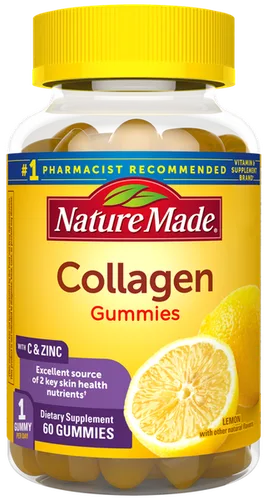
Nature Made Collagen Gummies with Biotin, Zinc, C & E Review
We don’t sell supplements. We help you make decisions and get the best price.
Lowest prices
We may earn a commission from some store links. How we choose.
Finding the lowest prices at the stores now. This takes a few seconds.
Products with nearly the same formula (Matched on the main ingredients)
Study, Trial or Testing Result Summary
Members Only18 human studies · 10 improved
1 of these 18 human studies gave the ingredient by drip, not by mouth.
No study tested this gummy, or any of its ingredients, for fast relief of everyday occasional heartburn. The vitamin C trials studied a vitamin C spray used to ease irritation from an iodine stain during throat cancer screening, not ordinary heartburn. In those trials the spray reduced side effects and heartburn compared with water or salt water [1][2]. Diet surveys linked eating more vitamin C to lower odds of reflux disease, but they did not test supplements [3][4]. A small trial found vitamin C mixed with nitrous acid in the stomach increased acid reaching the throat [5]. Vitamin E here is a trace amount, far below the 800 mg a day that eased indigestion in adults with fatty liver disease, a trial with no placebo group that did not measure heartburn [6]. Zinc here is far below the 220 mg a day that did no better than placebo for acid reflux in adults [7]. Dietary zinc was not linked to reflux conditions [8]. No human studies were found for biotin or collagen for this goal. Animal and cell studies are never counted.
See all 18 studies →Hide the studies
- A review of studies on zinc in children's digestive diseases said zinc appears helpful for peptic ulcer disease and acid reflux, but it gave no numbers for reflux and no set dose.Zinc Deficiency and Therapeutic Value of Zinc Supplementation in Pediatric Gastrointestinal Diseases.
- In about 2,965 patients having iodine-stained esophageal screening, a vitamin C spray cut acute side effects, and with the weaker iodine it also reduced heartburn within one week, compared with distilled water; this is heartburn caused by the iodine stain, not everyday heartburn.Effectiveness of Vitamin C Solution in Reducing Adverse Reactions Caused by Painless Lugol Chromoendoscopy: A Multicente…
- In 240 patients having iodine-stained esophageal screening, a 20 mL spray of 2% vitamin C lowered acute and late symptom scores versus saline, and caused less acid regurgitation or heartburn than sodium thiosulfate (33% vs 15%); this is irritation from the iodine stain, not everyday heartburn.The safety and efficacy of 2% vitamin C solution spray for relief of mucosal irritation caused by Lugol chromoendoscopy:…
- In 140 adults with acid reflux taking a stomach-acid-blocking drug, adding 220 mg of zinc daily for 3 months did not improve symptoms more than placebo.The Effect of Zinc Supplementationon the Symptoms of Gastroesophageal Reflux Disease; a Randomized Clinical Trial.
- In 68 adults with fatty liver disease (50 finished), vitamin E at 400 mg twice a day for 60 days, used as the comparison for a turmeric-relative herb, significantly improved dyspepsia (p=0.010), though the herb group did slightly better; heartburn itself was not measured and there was no placebo group."Evaluation of Curcuma zedoaria Rosc. in the management of non-alcoholic fatty liver Disease: A Randomized, single blind…
- In 60 infants with persistent regurgitation, an 8-week zinc-L-carnosine supplement improved reflux scores about the same as thickened formula, though it cut regurgitation frequency more and cost less.Zinc-L-Carnosine (Polaprezinc) in managing infant regurgitation: a two-center randomized controlled trial.
- In 15 healthy people given a meal with an infused solution of nitrous acid plus vitamin C, reflux-related relaxations of the esophageal sphincter increased and acid exposure in the esophagus rose compared with a plain acid control.Nitrogenous chemicals generated from acidification of saliva influence transient lower oesophageal sphincter relaxations…
- In 1,991 children and teens with disabilities, a better Mediterranean diet was linked to fewer reflux and indigestion symptoms, but zinc itself was not tested against these symptoms; zinc intake was above requirements.Mediterranean diet is associated with better gastrointestinal health and quality of life, and less nutrient deficiency i…
- In a case-control study of about 919 people, dietary vitamin E intake was not linked to reflux esophagitis, Barrett's esophagus, or esophageal adenocarcinoma.Dietary antioxidant and mineral intake in humans is associated with reduced risk of esophageal adenocarcinoma but not re…
- In a case-control study of about 913 people, higher dietary vitamin E intake was linked to lower odds of Barrett's esophagus, while antioxidant supplement use made no difference to that risk.Dietary antioxidants, fruits, and vegetables and the risk of Barrett's esophagus.
- In a case-control study of 537 people in China, higher dietary vitamin C intake was linked to lower risk of reflux esophagitis, but this was a food intake association rather than a supplement trial.Dietary intake and risk for reflux esophagitis: a case-control study.
- In a case-control study of 431 people, those who ate diets high in vitamin C had lower odds of reflux disease, Barrett esophagus and esophageal cancer, but this was an observational association from diet, not a supplement trial.Obesity and lifestyle risk factors for gastroesophageal reflux disease, Barrett esophagus and esophageal adenocarcinoma.
- In a survey of 382 anemia patients, vitamin C use had mixed outcomes for treatment side effects such as heartburn, and no clear benefit was shown.Impact of Side Effects on Anemia Therapy Compliance.
- In a small study of dyspepsia patients, those with organic dyspepsia ate less vitamin C than matched controls, and functional dyspepsia patients also had lower vitamin C intake, but the study measured diet only and did not test vitamin C for relief.Food and nutrient intakes and eating patterns in functional and organic dyspepsia.
- In 42 female rats with induced food pipe reflux, a single 16 mg/kg dose of vitamin E (alpha-tocopherol) reduced tissue injury and improved oxidative stress markers compared with untreated rats; this was an animal study, not a human trial.Ameliorative effects of Panax quinquefolium on experimentally induced reflux oesophagitis in rats.
- In a rat study of reflux damage to the food pipe, a single dose of vitamin E (alpha-tocopherol) given before the procedure reduced inflammation damage and lowered markers of oxidative stress compared with untreated rats, though this was an animal study, not a human trial.Effect of quercetin, flavonoids and alpha-tocopherol, an antioxidant vitamin, on experimental reflux oesophagitis in rat…
- In a rat study of food pipe reflux, a single 30 mg/kg dose of vitamin E (alpha-tocopherol) given before the procedure reduced tissue damage and oxidative stress compared with untreated rats; this was an animal study, not a human trial.Effect of Lonicerae Flos extracts on reflux esophagitis with antioxidant activity.
- In a rat study of food pipe reflux, a single 30 mg/kg dose of vitamin E (alpha-tocopherol) reduced inflammatory signals such as TNF-alpha and COX2 compared with untreated rats; this was an animal study, not a human trial.Effect of Curculigo orchioides on reflux esophagitis by suppressing proinflammatory cytokines.
Review Totals and Summary
Members OnlyWhat buyers say
No written reviews read yet.
Biohacker Summary
Members Only0 of 10 recommend it
Zinc and vitamin C are the main ingredients here, and the panel leans toward recommending both. For zinc, most of the panel recommends or uses it: reasons include testosterone support, gut lining support in the form of zinc carnosine, wound healing, and longevity, and one panelist takes 15 mg in the morning, another suggests 30 mg for men preparing for IVF, and another uses 30 grams a day for one week before surgery and two weeks after. Vitamin C is recommended by about half the panel for skin, joint collagen, and immunity, and several suggest taking it with collagen about an hour before a workout, while one panelist pairs zinc with it to help absorption. One panelist stopped using a vitamin C skin serum because of its smell and noted that applying it to the skin reaches far higher levels than swallowing it. Collagen and biotin are smaller ingredients in this product, and one panelist warns that biotin can throw off hormone blood tests.
See all 10 biohackers →Hide the biohackers
Dr. Eric Berg · Zinc · recommends
- Recommends ensuring sufficient zinc intake because the prostate needs enough zinc for the conversion from testosterone to DHT to be smooth and optimized.
- Recommends collagen as it is critical for healthy aging, supporting connective tissues, skin health, and cardiovascular health.
- Mentions that lemon is loaded with vitamin C, and when combined with coffee, vitamin C significantly increases the bioavailability of antioxidants in the coffee.
- Dr. Berg states that Vitamin C helps fight biofilms and is essential for making collagen in gums, teeth, and capillaries.
- Recommends taking zinc carnosine for an ulcer or some type of gastric problem.
- Recommends Vitamin C as a cofactor, especially for collagen.
- Emphasizes the importance of zinc for decreasing viral replication and recommends taking 40 to 60 mg every single day.
- States that high doses of vitamin C, like 2 to 4 grams, can greatly reduce inflammation and support the immune system.
- Recommends collagen powder as an alternative to bone broth, to be put in coffee, for its benefits in building connective tissue and providing glycine for sleep.
- Notes that birth control pills deplete the body of zinc, which is needed for the brain to make serotonin.
- Added zinc to his creatine product because a deficiency in zinc might make creatine not work as well.
- Mentions that grass-fed liver is loaded with zinc.
- Recommends zinc to enhance testosterone.
- Mentions that grass-fed liver has vitamin E.
Andrew Huberman · Zinc · uses
- Zinc carnosine to support and improve the lining of your gut.
- Notes that AG1 Pro contains zinc carnosine to support and improve the lining of the gut.
- States that AG1 Pro contains zinc carnosine to support and improve the lining of the gut.
- Uses AG1 Pro, which contains zinc carnosine to support and improve the lining of the gut.
- States that AG1 Pro contains zinc carnosine to support and improve the lining of the gut, and he was already taking some of these ingredients separately.
- States that AG1 Pro includes zinc carnosine, which he was already taking separately, to support and improve the lining of the gut.
- Personally takes zinc carnosine, which is included in AG1 Pro to support and improve the lining of the gut.
- AG1 Pro has zinc carnosine to support and improve the lining of your gut. Some of these ingredients I personally was already taking separate from the AG1 formula.
- States that AG1 Pro contains zinc carnosine to support and improve the lining of your gut.
- Uses AG1 Pro, which contains zinc carnosine to support and improve the lining of the gut.
- Takes 10 grams of Collagen in the morning for muscle.
- Takes 10 grams of Collagen in the morning for muscle.
- Takes 10 grams of Collagen in the morning for muscle.
- Takes 10 grams of Collagen in the morning for skin health.
Ben Greenfield · Zinc · warns
- Ben Greenfield's formulation includes 30 grams of zinc a day, taken for one week before surgery and two weeks after, as it is an important cofactor for wound healing.
- Mentions a recent study showing no significant increase in bleeding for patients on Vitamin E supplementation during open heart surgery, which was interesting for him to learn.
- States that vitamin C is extremely important for collagen turnover and cites orthopedic data showing that 500 mg to 1 g of vitamin C can reduce the rate of complex regional pain in total knee replacements and wrist fractures.
- Mentions that two separate meta-analyses found real improvement in skin elasticity when people consumed 2.5 to 5 g of collagen peptides a day for eight weeks.
- Recommends 2.5 to 5 grams a day of hydrolyzed collagen peptides for at least 8 weeks to improve skin elasticity and address sagging skin.
- Mentions vitamin C as part of a bare-minimum protocol.
- Emphasizes that zinc sufficiency is crucial for immunity because the thymus-derived peptide thymulin, which trains lymphocytes, requires zinc to be active.
- Recommends 2.5-5 g/day of hydrolyzed collagen for at least 8 weeks, citing a meta-analysis that found real improvement in skin elasticity.
- Recommends starting with collagen for body remodeling.
- Notes that while vitamin C has significant value, the optimal dose is a vexed question, and high doses might not always be beneficial, potentially blunting the hormetic effects of exercise.
- Recommends adding zinc into one's stack because it is a co-factor for enzymes involved in testosterone synthesis and sperm maturation, and zinc deficiency is a reproducible cause of low sperm count.
- He mentions zinc as a supplement with real human data behind it for male fertility.
- Zinc may support both testosterone and sperm count.
- Notes that IV vitamin C has been used for decades for cancer patients with almost no standardization and that he receives many questions about its effectiveness and combination with chemo.
Siim Land · Vitamin C · recommends
- Recommends taking vitamin C with collagen to support joint collagen synthesis.
- Recommends taking Collagen 1 hour before exercise with vitamin C to support joint collagen synthesis.
- States that vitamin C is needed for initiating collagen synthesis and that higher vitamin C intake appears to increase vitamin C content in the skin.
- Recommends Collagen for joints, skin and connective tissue, based primarily on human research, especially randomized controlled trials showing measurable benefits.
- Lists Collagen as one of 15 supplements backed by human studies.
- Lists sauerkraut and fruit as sources of Vitamin C.
- Takes 10 grams of collagen peptides a day, which provides 3 grams of glycine.
- 30% of collagen is glycine, as glycine is every third amino acid in the collagen triple helix.
- Notes that Vitamin C is one of several supplements with human evidence.
- Recommends marine collagen peptides, citing a study where 5g daily for 12 weeks reduced AGE levels and improved insulin sensitivity.
- Mentions that taking 15 grams of collagen before bed has been seen to reduce the number of awakenings during the night.
- Notes that taking 15 grams of collagen before bed has been seen to reduce the number of awakenings during the night.
- Mentions that glycine makes up one-third of collagen.
- Recommends taking Collagen one hour before exercise with a vitamin.
Thomas DeLauer · Vitamin C · recommends
- Recommends taking vitamin C along with collagen about an hour before a workout for connective tissue benefits.
- Says he takes collagen to take care of his gut.
- Recommends collagen as a direct dietary source of glycine, suggesting a 15g serving of pure collagen. He advises taking it an hour before a workout for connective tissue benefits or before bed on rest days to help with sleep.
- Uses vitamin C as part of their immunity duo, stating it is important for boosting the immune system, especially during cold and flu season.
- Adds zinc to their immunity duo because it helps them absorb vitamin C, considering the two together a fantastic combination for fall and winter.
- Recommends taking 15 grams of collagen an hour before working out to target connective tissue, as it has been shown to double a marker of collagen synthesis and help rebuild tendons and ligaments that are loaded harder with age.
- Always eats collagen, considering it one of the most underrated things they do for sustainability and recovery, as it supports connective tissue protein synthesis.
- Mentions that if curling fingers are due to a collagen issue, there's a case for taking collagen peptides to help rebuild connective tissue.
- Recommends zinc, noting it is a cofactor for enzymes that build neurotransmitters, and deficiency can affect mood, happiness, and motivation.
- Recommends consuming vitamin C to aid in NADPH recycling, which is necessary for glutathione to be reused after neutralizing oxidative stress.
- Mentions that more zinc could be beneficial for testosterone, but it's not working on the axis that most people need help with.
- Takes Purity's liquid liposomal vitamin C for immune support and overall wellness, finding it easy to add to water, juice, or take straight up due to its good taste.
- Compares the Vitamin C content of oranges (53mg) to guava (228mg), noting guava has 4x more.
- Compares zinc content, noting salmon has under 1mg while oysters have 74mg per 100g, a 70x difference.
Dave Asprey · Vitamin C · recommends
- Recommends taking vitamin C for better skin health.
- States he made collagen into a billion-dollar industry because he needed it for his joints due to Ehlers-Danlos syndrome.
- Recommends taking collagen for better skin health.
- Dave Asprey agrees with taking collagen, but warns that using bone broth and collagen to repair a compromised gut wall is like trying to rebuild a collapsed house using nothing but craft glue, as it doesn't provide the rapid high demand energy gut cells need.
- States that currently, he is only taking vitamin C and vitamin D.
- Dave Asprey's kids get a little bit of vitamin E every day, which helps to stabilize the bad oils they get when eating at restaurants.
- Developed a nonnano zinc sunscreen over five years, stating her skin is probably better now than it's ever been.
- Mentions Puori CP1 Pure Collagen as a sponsor, offering a discount on a subscription.
- Notes that eating collagen can break down into amino acids and create a signaling molecule that tells the body the skin has been injured, leading to thicker skin.
- Explains that One Skin uses collagen amino acids in their formula because they are hygroscopic and help hold water, acting as natural moisturizing factors.
- Has updated his stance on collagen, now believing there may be some benefit for certain populations in having collagen peptides, especially since they are small and get absorbed.
- Emphasizes the importance of having enough zinc before trying advanced longevity strategies like peptides.
- Dave and Jenny walk through the biohacking protocol that helped her son recover from autism, including collagen and hypermobility support.
- Recommends increasing collagen intake, specifically about 20 grams of collagen protein, for individuals with hypermobility, but warns against exceeding this amount due to oxalate concerns.
Dr. Mark Hyman · Vitamin C · recommends
- Recommends vitamin C as a basic supplement during detoxification to help with inflammation and detoxification.
- Dr. Hyman mentions vitamin C as an advanced therapy for skin repair.
- Mentions topical vitamin C as an antioxidant that can help skin with aging.
- Gave a patient with psoriatic arthritis a little zinc, which contributed to significant improvement in her condition.
- Dr. Hyman mentions collagen supplements in the context of skin aging.
- Is on 'team collagen' and believes there's enough data to support collagen consumption, noting that it sends signals to help the body build better collagen, though lifestyle factors are more important.
- Mentions that what they do when a cold comes on is not just vitamin C.
- Recommends ensuring adequate vitamin C intake on a regular basis for immune support, stating it's important for healthy immune function despite mixed data on its effectiveness for colds.
- Recommends ensuring adequate zinc intake on a regular basis for immune support, noting some data on zinc lozenges for early cold.
- Mentions that vitamin C was the very first vitamin discovered, isolated, and synthesized in 1932, and its deficiency caused scurvy.
- Adds Peak's marine collagen to his routine for a powerful longevity ritual, supporting skin elasticity, hydration, hair, nails, and whole body vitality.
- Recommends correcting nutrient deficiencies with zinc.
- Recommends nutrient-dense foods rich in vitamin C, such as guavas and parsley, to reduce inflammation.
- Recommends nutrient-dense foods rich in zinc, such as pumpkin seeds and oysters, to reduce inflammation.
Dr. Rhonda Patrick · Zinc · recommends
- Notes that not getting enough zinc can affect testosterone, as zinc is very important for testosterone synthesis.
- Recommends men take a 30 milligram zinc supplement for sperm health when preparing for IVF.
- Lutein and zeaxanthin can also be obtained from certain multivitamins.
- Lutein and zeaxanthin can also be obtained from certain multivitamins.
- Discusses findings from a meta-analysis on zinc supplementation, noting it improved insulin resistance, inflammation, and oxidative stress in people with diabetes or prediabetes, and explains its biological role in the pancreas.
- Recommends nutrients like zinc for men to prioritize sperm mitochondrial health.
- Recommends nutrients like vitamin C for men to prioritize sperm mitochondrial health.
- Dr. Rhonda Patrick's daughter chugs an Emergency fizzy drink in the morning to ensure she gets some vitamin C and micronutrients before school.
- Choosing a multivitamin that includes lutein and zeaxanthin ensures you get meaningful amounts every day.
- Choosing a multivitamin that includes lutein and zeaxanthin ensures you get meaningful amounts every day.
- Notes that ~60% of Americans are low in vitamin E.
- Notes that ~35% of Americans are low in vitamin C.
- Recommends increasing vitamin C intake if concerned about skin aging, noting it is an essential cofactor for collagen synthesis.
- Recommends Zinc, stating it is a critical mineral required for testosterone production and that supplementation corrects deficiency-related low testosterone.
Bryan Johnson · Zinc · uses
- Takes 15 mg of Zinc in the morning for longevity.
- Takes 10 grams of Collagen in the morning for muscle.
- Consumes collagen peptides at 4:55 am.
- Uses collagen peptides as an ingredient in Nutty Pudding.
- Takes 10 grams of Collagen in the morning for muscle.
- He takes 10 g of Collagen in the morning for muscle.
- Takes 10 grams of Collagen in the morning for skin health.
- Takes 10 grams of Collagen in the morning for muscle.
- Takes 15 mg of Zinc in the morning.
- Takes 10 grams of Collagen in the morning for muscle.
- Takes 10 grams of collagen in the morning for muscle.
- He takes 10 grams of Collagen in the morning for muscle.
- Takes 15 mg of Zinc in the morning for longevity.
- Uses Vitamin C as an example of how it would be great if people knew that when they took it, it had a measurable amount and wasn't polluted, which is what Brian ensures with his products.
Peter Attia · Zinc · recommends
- Suggests that zinc and magnesium could potentially help with vasodilation and sleep, particularly for women experiencing severe symptoms in the luteal phase.
- Recommends vitamin C as an important molecule for skin, noting its role as a precursor for collagen synthesis, a powerful antioxidant, and a regulator of complexion for even skin tone.
- Tried a vitamin C serum mixed with ferulic acid but stopped using it because she hated the smell. She notes that topical application of vitamin C far exceeds the levels achievable by ingestion for skin benefits.
- Warns that biotin, found in many supplements, can completely obscure findings and render a non-LCMS test for estradiol and testosterone irrelevant due to interference with ELISA-based assays.
- Discusses the AREDS formula, which initially included C and beta-carotene with zinc and copper, and later replaced beta-carotene with lutein and zeaxanthin, showing it could delay or reduce the conversion of mild to severe macular degeneration.
- States that vitamin C deficiency is associated with an elevated risk of cataract, but supplementation to supranormal levels has not been shown to protect against cataract formation.
- Mentions the elimination of scurvy through the work of James Lind and the eventual understanding that it was due to vitamin C, initially thought to be just citrus.
- Explains that collagen has a much lower quality amino acid composition than whey and tends to be rich in only a handful of amino acids like glycine and proline, making it less effective for muscle protein synthesis.
- Advises that collagen protein is not a very complete protein and suggests supplementing it with something else if consumed, despite his wife's preference for it.
- Notes that there are some downsides to Vitamin E, including cardiovascular longitudinal risk and prostate cancer, and that discussions are needed with patients, especially those with diabetes or cirrhosis, due to studies indicating increased all-cause mortality depending on the dose.
- Says that based on current data, there is no benefit in myofibrillar or muscle connective tissue protein synthesis using collagen versus whey or casein, especially in exercising individuals. He warns that using collagen as a sole supplemental protein source compromises myofibrillar muscle protein synthesis due to its poor amino acid balance.
- States that as a scientist, he hasn't seen evidence that collagen leads to greater connective tissue protein synthesis rates in muscle, but if he were recovering from a hip or knee injury, he would take a protein supplement with some collagen to ensure enough glycine and proline for ligaments, tendons, bone, and cartilage.
- Advises that if taking a biotin supplement, one should discontinue it for at least a few days, if not a week, before a blood test, as it can dramatically skew thyroid values.
- Warns that certain things, like biotin, should not be taken before a blood test because they can mess up readings.
RAL Summary
Members OnlyTier 4 for Occasional Heartburn: Fast Relief
The evidence is thin and indirect: the vitamin C trials covered stain-induced irritation using a spray, the vitamin E and zinc doses are far below those studied, and the best zinc trial found no benefit [1][7]. No reviews were counted, so the tier stays at emerging.
- Emerging: not enough evidence to rank higher yet.
Where the evidence disagrees: 4 of the 18 human studies found no effect.
More Details
Members OnlyBody systems · Combine with · Possible side effects
Body systems: Digestive system
Possible side effects: No major side effects reported.
Supplement Facts
Includes Added Sugars 1 g · Vitamin C 25 mg · Vitamin E 2.5 mg
| Calories | 5 | |
| Total Carbohydrate | 1 g | |
| Total Sugars | 1 g | |
| Includes Added Sugars | 1 g | |
| Vitamin C | 25 mg | |
| Vitamin E | 2.5 mg | |
| Biotin | 1,250 mcg | |
| Zinc | 2.5 mg | |
| Hydrolyzed Collagen | 100 mg | † |
Other ingredients: Organic Tapioca Syrup, Organic Cane Sugar, Water, Pectin, Citric Acid, Sodium Citrate, Added Color, Natural Flavor, Coconut Oil, Carnauba Wax.
Directions: Adults, chew 1 gummy daily. Store tightly closed, in a cool, dry place, out of reach of children.
Barcode (UPC) 031604032678 · Label source: Naturemade · Report a label change
Show entire label

More occasional heartburn: fast relief products
Members OnlyThe highest ranked for the same goal
Read more
Our articles on this subject
- What Supplements and Vitamins Should Not Be Taken TogetherArticle · Sep 7, 2026
- When Is the Best Time to Take Vitamins and Supplements?Article · Jun 15, 2026
Graded November 6, 2026 by the Reverse Age Lab evidence engine, from human studies, real reviews and our biohacker panel. How we grade. Is this medical advice? No. Rala organizes the published evidence; go over any change with your doctor, especially if you take meds.
Privacy policyConsumer health dataAffiliate disclosureTermsDo Not Sell or Share My Personal InformationCookie settings