
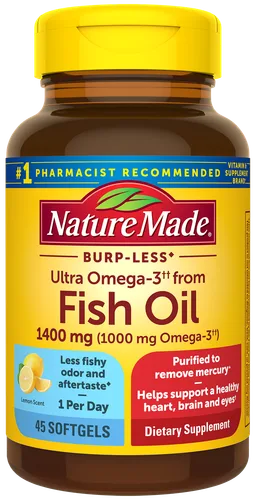
Nature Made Omega-3 From Fish Oil 1400 mg Review
We don’t sell supplements. We help you make decisions and get the best price.
Lowest prices
We may earn a commission from some store links. How we choose.
Finding the lowest prices at the stores now. This takes a few seconds.
Study, Trial or Testing Result Summary
Members Only48 human studies · 20 improved
2 of these 48 human studies gave omega-3 fatty acids by drip, not by mouth.
The evidence for omega-3 fish oil supporting the immune system in everyday healthy adults is mixed. In the largest trial, 2157 adults aged 70 or older took 1 gram a day for 3 years, and infection rates did not drop meaningfully compared with no omega-3 [1]. A placebo-controlled trial of 261 healthy adults aged 30 to 54 found that 1400 milligrams a day, the same amount as this product, did not lower inflammation markers over 18 weeks [2]. Pregnant women taking 400 milligrams of a fish oil fat daily had infants with fewer cold symptoms at one month in one trial [3], but another trial found a benefit only in infants of mothers with allergies [4]. The clearer benefits come from hospital settings. Fish oil given through a vein to hospitalized adults cut infection risk and shortened hospital stays by about 2 days across 47 trials [5]. After stomach cancer surgery, omega-3 added to nutrition raised immune cell counts, lowered inflammation and reduced complications [6]. These hospital results may not apply to taking a capsule at home. Animal and cell studies are never counted.
See all 48 studies →Hide the studies
- Across 34 trials of 2841 colorectal cancer patients, omega-3 combined with arginine lowered interleukin-6 the most, but glutamine and probiotics did better on other infection and hospital outcomes and no supplement kept nutritional markers up.Comparative Effects of Different Nutritional Supplements on Inflammation, Nutritional Status, and Clinical Outcomes in C…
- In 47 trials of hospitalized adults on intravenous nutrition, fish oil lipid emulsions cut infection and sepsis risk and shortened hospital stay by about 2 days compared with other lipid emulsions.Omega-3 fatty acids in parenteral nutrition - A systematic review with network meta-analysis on clinical outcomes.
- This review of high DHA fish oil covered heart, brain, inflammation and immune function, finding some benefits but inconclusive or inconsistent results in several areas.How does high DHA fish oil affect health? A systematic review of evidence.
- In a review of 14 trials in people with lupus, omega-3 trials showed reduced inflammatory markers, disease activity and oxidative stress, along with better blood fats and blood vessel function.Diet and Systemic Lupus Erythematosus (SLE): From Supplementation to Intervention.
- A review of 28 systematic reviews on diet in people with lupus covered omega-3 fatty acids among other nutrients, but the abstract gives no clear result for omega-3 and says no specific dietary recommendations are established.The Interconnection Between Systemic Lupus Erythematosus and Diet: Unmet Needs, Available Evidence, and Guidance-A Patie…
- In a review of 20 studies on mothers and infants, omega-3 intake was linked to better infant brain development and lower allergy risk.Maternal Lifestyle Factors Affecting Breast Milk Composition and Infant Health: A Systematic Review.
- A review of 190 studies on wound healing reported that omega-3 fatty acids, among other nutraceuticals, have anti-inflammatory and antioxidant properties that promote healing and reduce infection risk, though studies varied widely in design and dose.The Roles of Micronutrition and Nutraceuticals in Enhancing Wound Healing and Tissue Regeneration: A Systematic Review.
- This review of nutraceuticals including omega-3 in rheumatoid arthritis discusses potential effects on inflammation and immune function but gives no specific results in the abstract.Modulating inflammation and oxidative stress in rheumatoid arthritis: a systematic review of nutraceutical interventions…
- In a review of 49 trials in arthritis patients, polyunsaturated fatty acids showed anti-inflammatory and immune-modulating effects, and omega-3 with a low-calorie diet was linked to lower disease activity in psoriatic arthritis.Nutrition and diet in rheumatoid arthritis, axial spondyloarthritis, and psoriatic arthritis: a systematic review.
- In 2157 adults aged 70 or older, 1 g a day of omega-3s for 3 years did not significantly reduce infection rates compared with no omega-3s (rate ratio 0.89, not statistically significant).Effect of Vitamin D Supplementation, Omega-3 Fatty Acid Supplementation, or a Strength-Training Exercise Program on Clin…
- In 1094 pregnant women (869 mother-child pairs followed), 400 mg a day of algal DHA from mid-pregnancy to delivery reduced some respiratory symptoms, such as fever with nasal congestion, in infants of mothers with allergies but not overall.Omega-3 fatty acid supplementation during pregnancy and respiratory symptoms in children.
- In a placebo-controlled trial in Mexico, pregnant women taking 400 mg of DHA daily from 18 to 22 weeks until birth had infants with fewer cold symptoms at 1 month and shorter cough, phlegm, wheezing and fever durations, but longer rash and vomiting durations in some months.Prenatal docosahexaenoic acid supplementation and infant morbidity: randomized controlled trial.
- In 420 high-risk infants given fish oil daily from birth to 6 months, blood tests at 6 months showed lower allergy-linked immune responses to dust mite and milk protein but higher general immune responses to a stimulant, compared with control oil.Fish oil supplementation in early infancy modulates developing infant immune responses.
- In a placebo-controlled trial of 261 healthy adults aged 30 to 54, taking 1400 mg of fish oil EPA+DHA daily for 18 weeks did not lower CRP or IL-6 inflammation markers.Fish oil supplementation does not lower C-reactive protein or interleukin-6 levels in healthy adults.
- In 148 colorectal cancer surgery patients, a week of omega-3 supplement (2 g EPA and 1 g DHA daily) before surgery shifted neutrophil inflammatory signals toward less inflammatory mediators compared with a standard supplement.Effects of perioperative supplementation with omega-3 fatty acids on leukotriene B₄ and leukotriene B₅ production by sti…
- In 120 patients recovering from stomach cancer surgery, n-3 fatty acids added to nutrition for 5 days after surgery raised immune cell counts and lowered CRP, IL-6 and TNF-alpha, and reduced complications from 20% to 7%.Effects of EN combined with PN enriched with n-3 polyunsaturated fatty acids on immune related indicators and early reha…
- In 118 pregnant women, EPA-rich fish oil taken from mid-pregnancy lowered several inflammatory signals in the mother's blood compared with placebo, while DHA-rich fish oil had no significant effect on these signals or on cord blood.Effect of prenatal EPA and DHA on maternal and umbilical cord blood cytokines.
- In people having esophagus surgery, a feeding formula containing omega-3 along with arginine and RNA changed some immune measures in its favor and others not, compared with standard feeding.Enteral immunonutrition versus enteral nutrition for patients undergoing esophagectomy: a randomized controlled trial.
- In kidney transplant recipients, starting EPA fish oil after the first 16 weeks led to minor clinical benefits over 26 weeks, with no rejection episodes in patients whose EPA levels were higher than placebo, compared with corn oil placebo.Delayed omega-3 fatty acid supplements in renal transplantation. A double-blind, placebo-controlled study.
- In pregnant women taking omega-3 fatty acid capsules, immune cell levels did not differ from those taking placebo capsules.Changes in peripheral immune populations during pregnancy and modulation by probiotics and ω-3 fatty acids.
- In 83 HIV-infected adults on antiretroviral therapy, 900 mg per day of omega-3 fish oil for 24 weeks did not lower inflammatory markers such as C-reactive protein, interleukin-6 or tumor necrosis factor compared with placebo.Effects of a Low Dose of Fish Oil on Inflammatory Markers of Brazilian HIV-Infected Adults on Antiretroviral Therapy: A …
- In 71 esophageal cancer patients receiving chemoradiotherapy, a nutrition formula containing omega-3 fatty acids, glutamine and arginine limited the rise in inflammatory markers compared with standard formula.Randomized study of antiinflammatory and immune-modulatory effects of enteral immunonutrition during concurrent chemorad…
- In 66 liver transplant patients, adding omega-3 fish oil lipid emulsion to feeding for 7 days after surgery improved liver function and shortened hospital stay, with fewer infections than standard feeding.Liver-protecting effects of omega-3 fish oil lipid emulsion in liver transplantation.
- Taking 400 mg of DHA daily from mid-pregnancy through 4 months after birth changed infants' immune cells, lowering inflammatory signaling by T cells, but did not change antibody levels.DHA supplementation during pregnancy and lactation affects infants' cellular but not humoral immune response.
- In 60 healthy adults given a low-dose bacterial toxin challenge, 3600 mg per day of omega-3 fish oil for 8 weeks reduced fever compared with placebo, while 900 mg per day did not, and individual inflammatory markers were not significantly changed.Omega-3 PUFA supplementation and the response to evoked endotoxemia in healthy volunteers.
- In 60 ICU patients on breathing machines with lung disease, an immune nutrition formula with omega-3 fatty acids lowered inflammatory markers and improved weaning success compared with a standard formula over four weeks.[Clinical application of enteral immune nutrition for chronic obstructive pulmonary disease patients].
- In 60 pancreatic surgery patients, giving an omega-3 enriched formula both before and after surgery did not improve lymphocyte immune response or infection rates compared with giving it only before surgery.Additional effect of perioperative, compared with preoperative, immunonutrition after pancreaticoduodenectomy: A randomi…
- In older women doing 4 months of exercise training, adding omega-3 (Calanus oil) gave no extra reduction in inflammation in fat tissue beyond exercise alone.Exercise Training Reduces Inflammation of Adipose Tissue in the Elderly: Cross-Sectional and Randomized Interventional T…
- In 50 burn patients, a tube feed enriched with omega-3 fats, arginine and other nutrients reduced wound infections and shortened stays more than two other standard feeds, although omega-3 alone cannot be credited.Differential effects of three enteral dietary regimens on selected outcome variables in burn patients.
- In people with HIV and high triglycerides, 3.6 g per day of omega-3 ethyl esters for 8 weeks lowered triglycerides and the inflammation marker IL-6 more than placebo did.Omega-3 fatty acid therapy reduces triglycerides and interleukin-6 in hypertriglyeridemic HIV patients.
- In 40 people with epilepsy, taking omega-3 fatty acids for 16 weeks raised a blood signal of immune activity (interferon-gamma) while another signal (TGF-beta) did not change; the abstract does not say whether this is beneficial.Altered IFN-γ Levels after Treatment of Epileptic Patients with Omega-3 Fatty Acids.
- In 37 children aged 5 to 7 with low fish intake, 7 months of arachidonic acid and docosahexaenoic acid supplements changed several immune cell types and cytokine responses compared with placebo, with no clear overall benefit.Long-chain polyunsaturated fat supplementation in children with low docosahexaenoic acid intakes alters immune phenotype…
- In 30 patients after major abdominal surgery, a fish oil enriched feeding fat for 5 days raised production of less inflammatory leukotrienes made by white blood cells, while the standard fat did not.Impact of omega-3 fatty acid enriched TPN on leukotriene synthesis by leukocytes after major surgery.
- In 23 trained cyclists, 2.4 grams of fish oil daily for six weeks did not change immune or inflammation measures or exercise performance compared with placebo.n-3 polyunsaturated fatty acids do not alter immune and inflammation measures in endurance athletes.
- In 18 people with ulcerative colitis, six months of fish oil lowered natural killer immune cell activity compared with placebo while disease activity improved.Distal procto-colitis and n-3 polyunsaturated fatty acids: the mechanism(s) of natural cytotoxicity inhibition.
- In 18 people with ulcerative colitis, six months of fish oil reduced immune cell counts in the colon lining compared with sunflower oil placebo while disease activity improved.Distal proctocolitis and n-3 polyunsaturated fatty acids (n-3 PUFAs): the mucosal effect in situ.
- In 15 peritoneal dialysis patients, 8 weeks of omega-3 lowered triglycerides but did not significantly reduce inflammatory markers.Effects of omega-3 on lipid profile and inflammation markers in peritoneal dialysis patients.
- In 15 male football players, 8 weeks of a DHA-enriched drink improved the antioxidant capacity of immune cells and reduced reactive oxygen production after hard exercise, compared with placebo.Diet supplementation with DHA-enriched food in football players during training season enhances the mitochondrial antiox…
- In healthy young men, 8 weeks of about 2.9 grams of fish-oil omega-3 daily increased the oxidative burst of immune cells compared with olive oil, suggesting immune stimulation.The effect of dietary fish oil-supplementation to healthy young men on oxidative burst measured by whole blood chemilumi…
- In 3- to 4-year-old children, drinking a follow-up formula with DHA, prebiotics and yeast beta-glucan for 28 weeks led to fewer and shorter respiratory infections and less a med use than an unfortified milk drink.Follow-up formula consumption in 3- to 4-year-olds and respiratory infections: an RCT.
- In a placebo-controlled trial of people with fatty liver disease taking 4 grams of marine omega-3 daily for 15 to 18 months, plasma proteomics showed changes in immune and inflammatory pathways, with prothrombin and apolipoprotein B-100 decreasing.Marine omega-3 fatty acid supplementation in non-alcoholic fatty liver disease: Plasma proteomics in the randomized WELC…
- In pregnant women, 1000 mg per day of DHA compared with 200 mg per day changed some inflammation markers in pregnancy, with higher IL-6 increases and smaller drops in sRAGE, which may relate to the lower preterm birth rate seen in the main trial.Higher-Dose DHA Supplementation Modulates Immune Responses in Pregnancy and Is Associated with Decreased Preterm Birth.
- In 11 healthy young men, 6 grams per day of docosahexaenoic acid for about 90 days did not change most immune function tests, though it lowered circulating white blood cell counts, mainly granulocytes.Dietary docosahexaenoic acid and immunocompetence in young healthy men.
- In 6 healthy volunteers, 6 weeks of fish oil providing about 2.4 grams of EPA daily weakened some immune responses, such as lymphocyte activity and interleukin-2 release, suggesting mild immune suppression.Immunosuppressive effects of fish oil in normal human volunteers: correlation with the in vitro effects of eicosapentano…
- In 12 healthy men taking 1076 mg of DHA daily for up to 12 weeks, blood levels of DHA-derived oxylipins rose and immune cells made less inflammatory arachidonic acid-derived eicosanoids, but no health outcome was measured.Effect of DHA supplementation on oxylipin levels in plasma and immune cell stimulated blood.
- In young children at higher risk of type 1 diabetes, higher long-chain omega-3 levels in infancy were linked to a lower risk of coxsackievirus B2 infection by 18 months.Serum 25-hydroxyvitamin D and fatty acids in relation to the risk of microbial infections in children: The TRIGR Divia s…
- In people at high risk for psychosis, higher omega-3 levels were linked to lower blood inflammatory markers, but this did not produce clinical benefit at 6 or 12 months.The association of plasma inflammatory markers with omega-3 fatty acids and their mediating role in psychotic symptoms a…
- This narrative review of ulcerative colitis suggests omega-3 fatty acids may suppress inflammatory responses, but it reports no specific trial results for omega-3.Nutritional modulators of ulcerative colitis: clinical efficacies and mechanistic view.
Review Totals and Summary
Members OnlyWhat buyers say
No written reviews read yet.
Biohacker Summary
Members Only0 of 10 recommend it
Most of the panel recommends omega-3s, with five of ten leaning clearly toward recommending and the rest mostly neutral but still positive in tone. People take them for heart health and lower triglycerides, less inflammation, brain function, healthy aging, fertility, skin, and muscle building. Many prefer getting them from oily fish like salmon and sardines, while others use fish oil supplements, and one advised taking them with a meal that contains fat to help absorption. Doses mentioned run from 1 gram a day up to 2 to 4 grams a day of combined EPA and DHA, and one panelist warned that standard capsules often have too little EPA and DHA so people underdose. One panelist said the research on hard heart disease outcomes is not very strong, and nobody on the panel said they stopped taking them.
See all 10 biohackers →Hide the biohackers
Dr. Eric Berg · Omega-3 Fatty Acids · recommends
- Recommends wild-caught salmon as a healthy food to eat every day, noting it contains about 2000 mg of omega-3s in just 3 ounces.
- Recommends wild salmon as it is rich in omega-3 fatty acids, which help reduce inflammation and support brain health and cognitive function, especially important as one ages.
- Recommends DHA, an omega-3 fatty acid, as a natural remedy that, along with sweet wormwood, can trigger iron into an explosion to hit cancer.
- Dr. Eric Berg mentions that sardines are packed with omega-3 fatty acids, which support brain health and metabolism.
- Mentions that wild salmon, specifically half a fillet, has 970 mg of potassium, zero carbohydrates, a good amount of magnesium, and is loaded with omega-3 fatty acids.
- Discusses what would happen if one consumed omega-3 fatty acids every day for 30 days, highlighting their benefits for brain health, heart health, and various conditions like dry eyes, dermatitis, and high blood pressure, as well as supporting calcium absorption and promoting better sleep.
- Recommends getting plenty of omega-3 fatty acids to support joint and metabolic health.
- Recommends consuming foods rich in vitamin D, including fatty fish, to boost vitamin D levels.
- Recommends fatty fish as the best type of protein for inflammation.
- Recommends fatty fish, including salmon, mackerel, and sardines, as dietary sources of vitamin D.
Siim Land · Omega-3 Fatty Acids · recommends
- Recommends taking omega-3s, including EPA and DHA, with a fat-containing meal to increase absorption.
- Increased his omega-3 intake to achieve a higher omega-3 index, which is associated with greater insulin sensitivity and better metabolic health markers.
- Increased his omega-3 index to 9.5% and notes that omega-3s have strong evidence for reducing elevated triglycerides.
- Mentions that EPA and DHA Omega-3s support heart and brain function and can lower triglycerides, with a higher omega-3 index associated with lower heart disease, Alzheimer's and mortality risk.
- Recommends Omega-3s for triglycerides and cardiovascular health, based primarily on human research, especially randomized controlled trials showing measurable benefits.
- Recommends choosing an omega-3 supplement from a brand that uses independent third-party testing and publishes a recent certificate of analysis, verifying EPA and DHA amounts, and testing for heavy metals, contaminants, and oxidation markers.
- Lists Omega-3s as one of 15 supplements backed by human studies.
- Explains that omega-3s can alter mitochondrial membranes and have broader cardiometabolic effects, making mitochondria more responsive to cellular signaling and oxidative stress from exercise, but they don't increase maximal mitochondrial respiration.
- Notes that 75% of people aren't meeting the daily recommendation for omega-3s and that Japanese people eat 2-3x more omega-3s per day than Americans or Europeans, which reflects in their higher omega-3 index.
- Thinks omega-3s have some of the strongest evidence and are worth considering.
Andrew Huberman · Omega-3 Fatty Acids · recommends
- AG1 is giving away a free bottle of omega-3 coenzyme Q10 with your first subscription.
- Mentions that AG1 is giving away a free bottle of Omega-3 co-enzyme Q10 with the first subscription to AG1 Pro.
- Discusses Omega-3 Fatty Acids and EPA.
- Mentions that AG1 is offering a free bottle of Omega-3 co-enzyme Q10 with a first subscription to AG1 Pro.
- Recommends a free bottle of Omega-3 co-enzyme Q10 with the first AG1 Pro subscription.
- Mentions Omega-3s in the context of the microbiome and processed foods.
- Recommends Omega-3 co-enzyme Q10, which is offered as a free bottle with the first AG1 Pro subscription.
- States that getting 1 to 3 grams of EPA essential fatty acid per day can improve mood and cognitive function, supporting focus and concentration.
- Discusses Omega-3 Fatty Acids.
- Discusses omega-3s, artificial sweeteners, fructose, and fats.
Thomas DeLauer · Omega-3 Fatty Acids · recommends
- Recommends fish oil supplements as an omega-3 source for gut health, as they help reduce inflammatory signaling while tissue repairs.
- Recommends high-dose omega-3s, specifically 2 to four grams of combined EPA and DHA daily, to lower hepatic fat output and improve chylomicron clearance, which helps with non-fasting triglycerides.
- Recommends omega-3s, specifically 4 grams a day, to boost the muscle building response by making muscle cell membranes work better for the mTor switch to fire, and specifically mentions Pury for their clean, third-party tested omega-3s.
- Recommends consuming more omega-3s to help balance the mitochondrial membrane, as it will absorb more omega-3s instead of omega-6s.
- Recommends consuming more omega-3s to drive down inflammation.
- Recommends omega-3s, stating that a meta-analysis found 1,000 mg significantly reduced liver fat by shutting down inflammatory signals that promote fat storage, and advises looking for a triglycerol form for better absorption and to avoid oxidation.
- Recommends fatty fish like salmon and sardines, aiming for two to three servings per week, especially around a workout, because their omega-3s, particularly DHA, increase BDNF expression.
- Considers omega-3s a fundamental for brain protection, recommending both dietary sources and supplementation for EPA and DHA, as they produce pro-resolving mediators to limit inflammation.
- Recommends timing omega-3 intake around workouts because they directly help build and keep muscle by making muscle more responsive to growth signals and fighting anabolic resistance as one ages.
- Notes that Scandinavians consume fatty fish multiple times a week as part of their diet, contributing to their long lifespan and healthspan.
Dave Asprey · Omega-3 Fatty Acids · recommends
- Suggests that omega-3s may help slow aging and support cellular repair.
- Recommends omega-3s, noting that 1 gram a day slowed epigenetic aging by up to 4 months in a randomized trial of people over 70.
- Dave Asprey recommends Omega-3, citing a randomized trial showing 1g a day slowed epigenetic aging in older adults, but warns that most people underdose due to low EPA and DHA content in standard capsules.
- A review of 41 human studies testing interventions against newer-generation epigenetic clocks found favorable changes for exercise, caloric restriction, omega-3s, plant-rich diets, multivitamins, a med, pitavastatin, and ketamine.
- Recommends getting nutrients like omega-3s from real food or Vision 101 for eyesight.
- Recommends adding omega-3 fats to improve how neurons absorb and use nutrients like vitamin C.
- States that Fatty15 supports cells better than omega-3s or fish oil, but he uses both.
- Notes that Inuit people consumed very high levels of omega-3s, specifically EPA and DHA, which contributed to their health on a whale blubber diet.
- Lists Omega-3s as a nutrient that forms the structure and different parts of the brain.
- Uses both C15 and omega-3s, noting that C15 supports cells better than omega-3s or fish oil with three times more benefits.
Dr. Rhonda Patrick · Omega-3 Fatty Acids · neutral
- Mentions that EPA is an omega-3 examined in mortality analysis and found primarily in seafood.
- States that Omega-3 fatty acids are very important for sperm health.
- Omega-3s may help slow biological aging, with added benefits when combined with vitamin D and strength training. In a 3-year randomized trial of healthy, mostly active older adults, omega-3 alone slowed several DNA-based aging clocks.
- Recommends regular intake of omega-3 rich seafood and supplementation with omega-3 fatty acids if it's appropriate for one's lifestyle, as they are beneficial for the heart by resolving inflammation and preserving membrane fluidity.
- Notes that a 100 mg per day increase in omega-3 fatty acids was associated with lowering the risk of Alzheimer's disease and cognitive decline by 10%, and that it takes about two grams a day to get to a high omega-3 index if one has a low index.
- Practical habits to help keep chronic inflammation in check include getting enough omega-3s.
- States that Omega-3s, specifically EPA and DHA, may be the most potent naturally occurring dietary compounds for reducing inflammation, and that about 2 g/day of combined EPA and DHA can raise a low omega-3 index.
- Recommends fatty fish as a source of healthy fats for muscle gain.
- Mentions that an omega-3 supplement might not be working, and one would not know without taking the Omega-3 index test.
- Recommends considering omega-3s to improve mood.
Dr. Mark Hyman · Omega-3 Fatty Acids · neutral
- Mentions omega-3 fats as existing biomarkers that play a role in mental health, which Function Health includes in their measurements.
- Mentions that omega-3s are anti-inflammatory and helpful.
- Tries to supplement with omega-3s for psoriasis and considers them the one clearly clinically effective skin nutrient for skin, hair, and nails.
- Emphasizes the importance of focusing on omega-3s, noting that a national crisis of omega-3 deficiency exists and that low omega-3 levels are a significant problem, more so than omega-6s.
- Consumes omega-3 fats through salmon at dinner.
- Notes that omega-3s are important nutrients for brain performance and aging, and that many people have gaps in these nutrients.
- Recommends omega-3 fats from wild fish, seafood, and certain nuts and seeds to fight inflammation.
- Mentions omega-3 fats as something that might be helpful for gut repair.
- Used omega-3 fats as part of a protocol to rebuild the gut microbiome and heal the gut of a nine-year-old girl with severe behavioral issues.
- States that omega-3 fats from fatty fish, flax, and walnuts help balance inflammatory pathways, but no supplement can replace daily signals from sleep, nutrition, exercise, stress management, and metabolic health.
Ben Greenfield · Omega-3 Fatty Acids · neutral
- Notes that omega-3s have solid research behind them for fertility.
- Recommends omega-3 fatty acids, specifically EPA and DHA, at 1 to 3 grams per day for better sperm morphology and motility, noting that sperm membranes are rich in polyunsaturated fatty acids.
- Recommends getting Omega-3 from oily fish such as sardines, anchovies, mackerel, herring, and salmon with skin.
- Discusses why fatty fish or fish oil may matter more than plant-based omega-3s if seed oils are in one's diet.
- Says that omega-3 fatty acids are a great way to feed the system and help with stress.
- Recommends testing for and replenishing omega-3 fatty acids if levels are low, as they can affect the ability to maintain or preserve muscle, especially for those on GLP-1s.
- Recommends including EPA from fatty fish or fish oil in one's diet, especially if seed oils are present in the diet.
- Notes that B vitamins and Omega-3s work as a pair to support the brain, but not independently.
- Notes that the DO-Health study showed omega-3 had good effects, and it's a supplement people commonly take.
- Mentions that omega-3, vitamin D, and exercise all had good effects in the DO-Health study.
Peter Attia · Omega-3 Fatty Acids · neutral
- Peter and Michael explore the benefits of omega-3 fatty acids for cardiovascular trials and the challenge of delivering DHA to the brain.
- Mentions that some trials showing a benefit to PUFA were confounded by the inclusion of omega-3s, and argues that the literature on omega-3s is not super strong for decreasing hard cardiovascular disease endpoints.
- Took big doses of omega-3 postpartum to help maintain when she wasn't sitting down to eat full meals.
- Mentions consuming fatty fish, specifically sardines, as part of their diet, noting their high fat and protein content.
- Peter discusses how omega-3s from fish oil impact inflammation, heart health, and brain function, as well as the strengths and limitations of current research.
- Mentions the importance of DHA omega-3 fatty acids for neuronal membranes, which are concentrated in synapses and crucial for communication between neurons.
- Highlights the importance of DHA omega-3 fatty acids for neuronal membranes and communication between neurons, as they are concentrated in synapses.
- Discusses the mfsd2a transporter, which is specific to DHA in phospholipid form, and its role in blood-brain barrier integrity, noting that animal studies show disruption of this transporter causes significant breakdown of the blood-brain barrier and loss of omega-3 in the brain.
- States that there is a very strong clinical impression that high doses of omega-3s help with dry eye, primarily from an anti-inflammatory standpoint.
- Recommends omega-3 fatty acids, specifically DHA and EPA, for brain protection, especially for individuals with the APOE4 gene, stating that they require higher doses.
Bryan Johnson · Omega-3 Fatty Acids · recommends
- Recommends Omega 3 fatty acids as a supplement for skin health, noting they are in the Blueprint stack.
- During menopause, Bryan Johnson recommends ensuring adequate omega-3s for brain health.
RAL Summary
Members OnlyTier 4 for Immune Health
Studies are mixed: hospital and surgery trials show immune benefits, but large trials in healthy and older adults taking capsules found no clear effect on infections or inflammation [1][2]. There are also no reviews to confirm it, so it stays emerging.
- Emerging: not enough evidence to rank higher yet.
Where the evidence disagrees: 11 of the 48 human studies found no effect.
More Details
Members OnlyBody systems · Combine with · Possible side effects
Body systems: Immune system, Cardiovascular system
Possible side effects: No major side effects reported.
Supplement Facts
Total Carbohydrates 1 g · Omega-3 Concentrate 1400 mg
| Calories | 15 | |
| Total Fat | 1.5 g | |
| Cholesterol | 15 mg | |
| Total Carbohydrates | 1 g | |
| Omega-3 Concentrate | 1,400 mg | † |
Other ingredients: Gelatin, Glycerin, Methacrylic Acid Copolymer, Water, Triethyl Citrate, Polysorbate 80, Tocopherols, Glyceryl Monostearate, Propylene Glycol.
Directions: 1 one softgel per day Suggested use: Adults, take 1 softgel daily with water and a meal for optimal absorption.
Barcode (UPC) 031604029159 · Label source: NIH label database · Report a label change
Show entire label

More immune health products
Members OnlyThe highest ranked for the same goal
Read more
Our articles on this subject
Graded November 6, 2026 by the Reverse Age Lab evidence engine, from human studies, real reviews and our biohacker panel. How we grade. Is this medical advice? No. Rala organizes the published evidence; go over any change with your doctor, especially if you take meds.
Privacy policyConsumer health dataAffiliate disclosureTermsDo Not Sell or Share My Personal InformationCookie settings