
Nature's Truth C 500 mg plus Wild Rose Hips Review
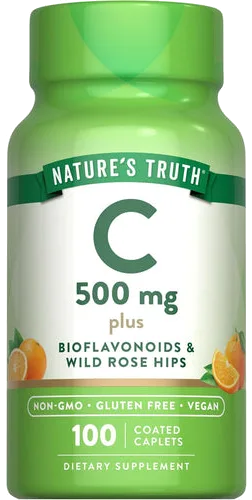
Nature's Truth Vitamin C 500 mg with Rose Hips is sold as a 110 tablet bottle. The product page describes vitamin C as an essential antioxidant vitamin that the body cannot produce on its own, so it must be obtained through food such as oranges and grapefruits or from vitamin supplements. According to the page, each serving of these tablets delivers 500 mg of vitamin C as ascorbic acid together with 5 mg of rose hips for additional support. The page states that just one vegan tablet per day allows a person to meet the daily recommended value of this essential vitamin. The directions say that for adults, one vegan tablet should be taken daily, preferably with a meal. The page presents the product as part of Nature's Truth, a brand that says its mission is to meet wellness needs with products that go above and beyond. The brand states that it offers supplements in various delivery forms, including capsules, softgels, chewables, tablets, powders, liquids and gummies. The product page includes an infographic listing purity and excellence standards. The listed points are 100 percent quality, a GMP certified company, an FDA registered facility and packaging in the U.S.A. The product images and icons indicate that the tablets are non-GMO, gluten free, vegan and dairy free. The back label image is described as showing directions, a Free Of list and warnings. The page also shows a 10 percent bonus on some package images, with one image describing 100 plus 10 tablets. The product's Free Of list, as described in customer reviews, includes gluten, wheat, milk, lactose, soy, artificial colors, artificial flavors, artificial sweeteners and added preservatives. The page offers a one-time purchase at $8.49 and a subscription option with 15 percent savings, with delivery every 30, 45, 60 or 90 days. The page does not show a supplement facts table or a full ingredients list in the text provided, so no ingredient list is reported here. Customers who want to compare this item can also see other Nature's Truth vitamin C products on the same page, but those are separate listings with different names and forms.
We don’t sell supplements. We help you make decisions and get the best price.
Lowest prices
We may earn a commission from some store links. How we choose.
Finding the lowest prices at the stores now. This takes a few seconds.
Products with nearly the same formula (Matched on the main ingredients)
Study, Trial or Testing Result Summary
Members Only36 human studies · 12 improved
2 of these 36 human studies gave the ingredient by injection, not by mouth.
Vitamin C is the main ingredient here, at 500 mg a day. That is above the 200 mg that worked in studies. The evidence points to modest immune support, mostly for colds. A large pooled review of 29 trials found that vitamin C did not make colds less common in the general public. Colds were about half as common in marathon runners, skiers and soldiers, and they were 8% shorter in adults and 14% shorter in children [1]. Another review found colds were 15% less severe at 1 gram or more a day, a higher dose than this product gives [2]. A pooled analysis found a 4% lower risk of respiratory infections and 9% shorter symptoms [3]. In army recruits taking a much higher daily dose, cold risk was 20% lower than with placebo [4]. However, a review of eight reviews concluded vitamin C does not prevent catching colds [5], and an older trial in marine recruits found colds were no less common or shorter [6]. Rose hip is present only in a trace amount, 5 mg compared with the 1000 mg a day that lowered urinary infections after cesarean section [7]. Its effect at this dose is not expected to matter. Animal and cell studies are never counted.
See all 36 studies →Hide the studies
- Across 29 placebo-controlled trials with 11,306 people taking at least 0.2 g of vitamin C daily, colds were not less common in the general public but were about half as common in marathon runners, skiers and soldiers, and colds lasted 8% shorter in adults and 14% shorter in children.Vitamin C for preventing and treating the common cold.
- A review of eight systematic reviews covering 31 randomized trials concluded that taking vitamin C does not prevent people from catching a common cold.Does vitamin C prevent the common cold?
- In a pooled analysis of randomized trials in adults, vitamin C slightly lowered the risk of respiratory infections by 4% and shortened symptoms by 9%, with a stronger prevention effect in men and in middle-income countries.Effect of micronutrient supplements on influenza and other respiratory tract infections among adults: a systematic revie…
- In 10 placebo-controlled trials of healthy people taking at least 1 g of vitamin C daily, cold severity was 15% lower than with placebo, with a clear benefit on severe symptoms but not on mild ones.Vitamin C reduces the severity of common colds: a meta-analysis.
- Five small, low-quality trials with 2,655 children and adults gave vitamin C at 125 mg to 2 g daily, and the evidence was too weak to tell whether it prevents or treats pneumonia.Vitamin C supplementation for prevention and treatment of pneumonia.
- A review of 39 randomized trials of eight supplements, including vitamin C, in healthy people under stress found some signs of benefit but too many gaps to draw firm conclusions about immune protection.Select Dietary Supplement Ingredients for Preserving and Protecting the Immune System in Healthy Individuals: A Systemat…
- A review of 13 studies in healthy adults found alternative vitamin C forms often raised white blood cell vitamin C and were better tolerated, with one study showing fewer colds, but more research is needed to confirm immune benefits.Enhanced Vitamin C Delivery: A Systematic Literature Review Assessing the Efficacy and Safety of Alternative Supplement …
- In 1,444 army recruits taking 6,000 mg of vitamin C daily for 30 days, the risk of getting a common cold was 0.80 times that of those taking placebo.Vitamin C supplementation reduces the odds of developing a common cold in Republic of Korea Army recruits: randomised co…
- In 868 Navajo schoolchildren given vitamin C or placebo, there was no difference in how many got ill (133 vs 129), number of illness episodes, or illness length, though blood vitamin C levels were higher.Vitamin C and acute illness in Navajo schoolchildren.
- In a randomized trial of 688 adult women, 1 gram of vitamin C daily produced a small reduction in chest colds but no effect on simple colds.A randomized controlled trial of vitamin C in the prevention and amelioration of the common cold.
- In 674 marine recruits given 2 grams of vitamin C or placebo daily for eight weeks, colds were no less common or shorter, though the vitamin C group rated their colds as less severe.Vitamin C prophylaxis in marine recruits.
- In 595 critically ill surgical patients, early antioxidant supplementation with vitamin C and vitamin E did not significantly reduce lung complications compared with standard care, but it reduced multiple organ failure and shortened time on the ventilator and in intensive care.Randomized, prospective trial of antioxidant supplementation in critically ill surgical patients.
- In 400 women after cesarean section, taking 1000 mg a day of rose hip fruit capsules for 20 days significantly lowered urinary tract infection rates compared with placebo, though cystitis rates did not differ.The effect of Rosa (L. Rosa canina) on the incidence of urinary tract infection in the puerperium: A randomized placebo-…
- In a 5-year double-blind trial of older Japanese adults, 500 mg of vitamin C daily cut the number of people with three or more colds, compared with 50 mg daily, but did not shorten or lessen the colds.Effect of vitamin C on common cold: randomized controlled trial.
- In 275 people with early COVID-19, a 10-day combination therapy including vitamin C was safe and well tolerated, but the study did not test whether it improved immune health.Read the study on PubMed (41693032) →
- In 311 National Institutes of Health employees taking 3 g of ascorbic acid daily for nine months (with extra doses at cold onset), the vitamin had at best a minor effect on the duration and severity of colds, and the results could be explained by a break in blinding.Ascorbic acid for the common cold. A prophylactic and therapeutic trial.
- In a double-blind study of 95 identical twin pairs over 100 days, vitamin C shortened cold episodes by about 19% but had no other significant effect compared with placebo.Vitamin C and the common cold: using identical twins as controls.
- In 120 stroke patients with swallowing difficulty, vitamin C stimulation added to routine swallowing training improved swallowing tests, nutrition markers and antibody levels compared with routine training alone.Effects of vitamin C stimulation on rehabilitation of dysphagia after stroke: a randomized trial.
- In 98 adults with mild to moderate coronavirus illness, 1000 mg of vitamin C daily for 14 days had no effect on symptom progression or quality of life compared with placebo.A Pilot of a Randomized Control Trial of Melatonin and Vitamin C for Mild-to-Moderate COVID-19.
- In 60 children prone to recurrent respiratory infections, a daily orange juice providing 70 mg of vitamin C was associated with a drop in infection episodes from about 6.75 to 2.62 per child.Beneficial therapeutic effects of vitamin C on recurrent respiratory tract infections in children: preliminary data.
- In 28 people recovering from COVID-19, a single 1000 mg dose of vitamin C reduced one type of immune-related reactive oxygen species by 45% but did not raise nitric oxide levels.A Plant-Based Dietary Supplement Exhibits Significant Effects on Markers of Oxidative Stress, Inflammation, and Immune R…
- In 24 patients receiving stem cell transplants for myeloma or lymphoma, high-dose vitamin C (20 g daily for 10 days, then 500 mg twice daily until day 100) was linked to rising natural killer and CD3 immune cell counts from day 30 to day 100 and fewer infections, compared with standard care alone.Effect of vitamin C on immune reconstitution after bone marrow transplantation.
- In 20 children having surgery, ascorbate before premedication did not change neutrophil mobility during anaesthesia or surgery, and no infections occurred.Neutrophil mobility during anaesthesia in children. A trial of ascorbate premedication.
- In 12 adults who exercised for about two hours in heat, 1500 mg of vitamin C daily for 12 days lowered the stress hormone cortisol after exercise, but did not change salivary antibody levels or cold-like symptoms compared with placebo.Vitamin C supplementation and salivary immune function following exercise-heat stress.
- In healthy adults aged 55 and older, a 12-week multivitamin and mineral supplement raised blood vitamin C and zinc levels but did not change measured immune function compared with placebo.The Effect of a Multivitamin and Mineral Supplement on Immune Function in Healthy Older Adults: A Double-Blind, Randomiz…
- In older adults, a 30-day course of a multi-ingredient supplement that also contained vitamin C lowered inflammatory blood markers and improved lymphocyte levels, though they did not reach the levels seen in younger people; the vitamin C dose was not stated.Use of Nutraceuticals in Elderly to Fight Inflammation and Immuno-Senescence: A Randomized Case-Control Study.
- In a randomized trial of ultramarathon runners and sedentary controls, taking 600 mg of vitamin C daily was linked to fewer upper airway infection symptoms in the two weeks after a race than placebo, with 33% of supplement takers developing symptoms versus 68% of placebo takers among runners.Vitamin C supplementation reduces the incidence of postrace symptoms of upper-respiratory-tract infection in ultramarath…
- In two trials of 8-9 year old children (172 and 642) given 1000 mg vitamin C daily, cold duration and severity seemed lower but cold incidence stayed the same or rose, and the total sick days were fewer only in the smaller pilot study.Vitamin C as a preventive medicine against common colds in children.
- In 254 intensive care patients, a probiotic with rose hip did not show it was as good as a med gut decontamination at preventing infection (31% vs 24% infected), and rose hip's own effect could not be separated.Read the study on PubMed (20721536) →
- In about 210 students (three groups of about 70) taking 1 gram daily for 15 weeks, the D-isoascorbic acid group had 34% fewer colds than the other two groups, which included the L-ascorbic acid group, so regular vitamin C showed no clear benefit.L-Ascorbic acid and D-isoascorbic acid in a common cold survey.
- In 140 pre- and post-menopausal women, four tablets daily of a combination supplement containing rose hip extract for 8 weeks improved vaginal dryness, minimal infections, candida presence and oxidative stress compared with standard care, but rose hip's own effect could not be separated.Prevention of vaginal dryness in perimenopausal women. Supplementation with Lady Prelox®.
- In a large double-blind trial, 1 g of vitamin C daily gave a small, non-significant reduction in colds, but more people stayed illness-free and vitamin takers had about 30% fewer days of disability from illness than placebo takers.Vitamin C and the common cold: a double-blind trial.
- In older adults, 500 mg of vitamin C injected daily for one month improved T-lymphocyte response and skin test reaction compared with placebo, but did not change antibody levels.Effect of vitamin C supplements on cell-mediated immunity in old people.
- In a small feasibility study of people with a new common cold, 250 mg of vitamin C daily for 5 days was used only as the comparison arm against a warm humidified air treatment, and the abstract reports no benefit from vitamin C itself.Randomised controlled trial of rhinothermy for treatment of the common cold: a feasibility study.
- In a study of 433 women followed for a year, those with the highest dietary vitamin C intake were less likely to have a persistent human papillomavirus infection than those with the lowest intake.Dietary intake and risk of persistent human papillomavirus (HPV) infection: the Ludwig-McGill HPV Natural History Study.
- In hospital records of patients with upper respiratory tract infection, adding vitamin C injection to Xiyanping injection did not improve cure rates compared with Xiyanping alone.[Analysis of actual effects of combining xiyanping injection with vitamin C injection in treatment of upper respiratory …
Review Totals and Summary
Members Only171 reviews · 90% positive
Overall, buyers rate this vitamin C tablet well. It is mostly seen as a dependable, affordable daily vitamin C, with reservations about taste, texture and tablet size. It carries about 93 ratings across the stores. **What buyers say it did for them:** Most take it for immune support. One says, "It works for me very well." Another recommends it "for immune system," and another believes vitamin C is important in winter. Some on Meijer's page mention warding off colds or flu, or getting vitamin C without the sugar found in other sources. A few mention skin improvements, less joint discomfort or a better sense of wellness. One reviewer says skin "looks smooth after eating for 15 days continuously." Others saw no difference compared with the generic vitamin C they usually buy. These are personal impressions, not verified results. **What they complain about:** The criticisms are mostly about taste and feel. One Meijer reviewer finds the tablets chalky and powdery, and another calls the flavor particularly bitter. On the Nature's Truth page, one reviewer found the taste weird and said the tablets made their stomach hurt. Another there said the round, flat shape is not ideal, though "no big deal." One person could not swallow them even cut in half. By contrast, an Amazon reviewer found them "Gentle on the stomach no acidity at all." **Taste, smell, pill size and form:** Opinions are split. One reviewer says it has a "decent taste," and another says the tablets taste good and not nasty like other vitamins. Others describe a sour, citrus-like taste with a plant-like aftertaste from the rose hips, or a typical vitamin taste. On size, one reviewer says the tablets are "quite large they are easy to swallow" thanks to the smooth coating. Several at Meijer say the pill is small or goes down easily, while another calls the caplets a bit big. Some chew them, with mixed results: one finds them lemon-sour, and one advises swallowing instead. The bottle is praised as sturdy and easy to open. Only the tablets are covered here, and reviews of other forms were left out. **Value for money:** Value is a strength. One reviewer says "great value," and another says "good size and price." A bottle is described as nearly a three-month supply, and a Meijer reviewer mentions the large tablet count of 110. Reviewers also like the quality ingredients and the 500 mg potency, along with the bioflavonoids. **Who it suits and who it did not:** It seems to suit people who want a simple once-a-day vitamin C and can handle a larger tablet. It also suits people who like the free-from claims (vegan, gluten free, non-GMO, no artificial additives). One reviewer says this suits a household member with a shellfish allergy. It also suits those who want an alternative to gummies. It seems less suited to people who are sensitive to bitter, sour or powdery textures, who struggle with swallowing pills, or who would rather have a chewable. One Amazon reviewer said they would reorder when it was back in stock, which hints at occasional availability gaps. At Meijer, 18 of 19 reviewers say they recommend it.
Biohacker Summary
Members Only7 of 10 recommend it
Vitamin C is the main ingredient here, and the panel leans toward it: five of the ten latest positions recommend it, one says they use it, three are neutral, and one stopped using a topical serum because of its smell. The most common reasons are collagen support for skin, joints and connective tissue, and immune support, with several pairing it with collagen and one taking it about an hour before a workout. Doses people mention include 250 milligrams, 500 milligrams at the first sign of a cold, about a gram a day in divided doses, and 2 to 4 grams for inflammation. Forms mentioned include natural food sources, a liquid liposomal version, and topical use on skin, though one panelist noted topical application reaches skin levels that eating it cannot. Cautions: one panelist says the best dose is an open question and that high doses might blunt the benefits of exercise, another says plasma levels peak around 250 milligrams twice a day, and another says extra vitamin C has not been shown to protect against cataracts. Rose hips are not discussed by the panel.
See all 10 biohackers →Hide the biohackers
Ben Greenfield · Vitamin C · recommends
- States that vitamin C is extremely important for collagen turnover and cites orthopedic data showing that 500 mg to 1 g of vitamin C can reduce the rate of complex regional pain in total knee replacements and wrist fractures.
- Mentions vitamin C as part of a bare-minimum protocol.
- Notes that while vitamin C has significant value, the optimal dose is a vexed question, and high doses might not always be beneficial, potentially blunting the hormetic effects of exercise.
- Notes that IV vitamin C has been used for decades for cancer patients with almost no standardization and that he receives many questions about its effectiveness and combination with chemo.
- Recommends Vitamin C for skin repair post-tattoo.
- Does not agree that ascorbic acid is vitamin C, comparing it to calling chaff wheat, and notes that it is made from genetically modified cornstarch or corn syrup byproducts using solvents.
- Warns against ascorbic acid, stating that it does not cure scurvy and that the world has been led astray by the deception around it versus the whole food vitamin C complex.
- Warns against taking 1,000 mg of vitamin C immediately after a workout for individuals under 50, as it can dull the body's natural adaptation signal.
- Warns that using high-dose antioxidants like vitamin C directly before or after a hyperbaric session is not a great idea, as it could impair some of the effects by reducing reactive oxygen species.
- Warns that taking a whole bunch of antioxidants like vitamin C after a workout can suppress the body's inflammatory response, which is necessary for benefits like mitochondrial proliferation and satellite cell generation for new muscle.
Siim Land · Vitamin C · recommends
- Recommends taking vitamin C with collagen to support joint collagen synthesis.
- States that vitamin C is needed for initiating collagen synthesis and that higher vitamin C intake appears to increase vitamin C content in the skin.
- Lists sauerkraut and fruit as sources of Vitamin C.
- Notes that Vitamin C is one of several supplements with human evidence.
- Notes that researchers found vitamin C alleviates ferro-aging, a process of iron overload and lipid peroxidation that drives aging, and that it directly inhibited ACSL4, a protein driving ferro-aging.
- States that Vitamin C has a central role in aging and longevity, and that in monkeys, oral vitamin C slowed ovarian aging during a 3.3-year study.
- States that vitamin C is one of the most important vitamins for staying healthy and aging well, and that intakes of 200 to 400 mg a day from food or supplements largely saturates plasma and neutrophils in most healthy adults. He also recommends spreading out the vitamin C across the day to avoid oversaturation.
- Mentions vitamin C in comparison to topical melatonin for oxidative defense, stating that melatonin would compete but is not as broadly validated clinically.
- Was found to be vitamin C deficient by True Health and Mayo Clinic tests, and now addresses this by eating one extra kiwi fruit daily.
- States that the biggest evidence for multivitamin is that it improves cognition and enhances episodic memory in elderly people, who tend to have worse diets and are more likely to be deficient.
Dr. Eric Berg · Vitamin C · neutral
- Mentions that lemon is loaded with vitamin C, and when combined with coffee, vitamin C significantly increases the bioavailability of antioxidants in the coffee.
- Dr. Berg states that Vitamin C helps fight biofilms and is essential for making collagen in gums, teeth, and capillaries.
- Recommends Vitamin C as a cofactor, especially for collagen.
- States that high doses of vitamin C, like 2 to 4 grams, can greatly reduce inflammation and support the immune system.
- Highly recommends taking natural food vitamin C, about 500 mg, at the first sign of a cold.
- Recommends consuming foods high in vitamin C to block the effects of grains.
- Recommends ensuring that collagen supplements come with vitamin C.
- Vitamin C works as an antioxidant that supports skin and artery health.
- Recommends pairing collagen with vitamin C to support absorption.
- Sauerkraut also contains vitamin C and beneficial bacteria that may support digestive health.
Thomas DeLauer · Vitamin C · recommends
- Recommends taking vitamin C along with collagen about an hour before a workout for connective tissue benefits.
- Uses vitamin C as part of their immunity duo, stating it is important for boosting the immune system, especially during cold and flu season.
- Recommends consuming vitamin C to aid in NADPH recycling, which is necessary for glutathione to be reused after neutralizing oxidative stress.
- Takes Purity's liquid liposomal vitamin C for immune support and overall wellness, finding it easy to add to water, juice, or take straight up due to its good taste.
- Compares the Vitamin C content of oranges (53mg) to guava (228mg), noting guava has 4x more.
- States that collagen synthesis is vitamin C dependent, in the context of glowing skin.
- Recommends Vitamin C for sleep, noting that intake in the range of 125 to 200 mg per day is associated with a lower risk of sleep disorders and sleep apnea, with the benefit plateauing beyond this range.
- Recommends consuming a little bit of vitamin C, such as a couple of berries or kiwi, along with flavanol-rich cocoa to help the delicate flavanols hold up and prevent oxidation in the gut.
- Explains that vitamin C improves the ability of neutrophils to engulf bacterial infections, and that they have a greater ability to engulf larger infections.
- Recommends using a multivitamin to ensure adequate micronutrient intake, especially when wholesome food is less available.
Dave Asprey · Vitamin C · recommends
- Recommends taking vitamin C for better skin health.
- States that currently, he is only taking vitamin C and vitamin D.
- Dave Asprey reflects on how new research clarifies the mechanism behind IV vitamin C's anti-cancer effect, vindicating a decades-old idea that was dismissed for the wrong reasons.
- Notes that plain Vitamin C isn't enough and that most people never think to check for a specific ingredient that makes it work.
- Dave Asprey recommends taking maybe a gram of vitamin C a day in divided doses, noting that plasma levels peak around 250 milligrams twice a day.
- Recommends Qualia Vitamin C Plus, highlighting its combination of seven forms of vitamin C with 250 mg of citrus bioflavonoids, which helps with absorption and use for building collagen and a strong immune system.
- Warns that taking too much vitamin C can raise oxalate levels, emphasizing that everything has risk and reward.
- Recommends Vitamin C as the real biological fix for deep focus issues, explaining how the brain hoards it at levels 100 times higher than blood and how to bypass the blood-brain barrier.
- States that Ensure is like SlimFast but worse, and that its ingredients, including synthetic vitamins, guar gum, maltodextrin, high fructose corn syrup, and seed oils, are disgusting and should not be given to sick or well people.
- Recommends IV Vitamin C, or even oral versions, for helping the body heal and for cells to remain supple and fluid.
Dr. Mark Hyman · Vitamin C · recommends
- Recommends vitamin C as a basic supplement during detoxification to help with inflammation and detoxification.
- Dr. Hyman mentions vitamin C as an advanced therapy for skin repair.
- Mentions topical vitamin C as an antioxidant that can help skin with aging.
- Mentions that what they do when a cold comes on is not just vitamin C.
- Recommends ensuring adequate vitamin C intake on a regular basis for immune support, stating it's important for healthy immune function despite mixed data on its effectiveness for colds.
- Mentions that vitamin C was the very first vitamin discovered, isolated, and synthesized in 1932, and its deficiency caused scurvy.
- Recommends nutrient-dense foods rich in vitamin C, such as guavas and parsley, to reduce inflammation.
- Used intravenous vitamin C cocktails to help him detoxify and recover from chronic fatigue.
- Recommends vitamin C for immune system support and modulation.
- Relies on Big Bold Health's HTB Immune Energy Chews, which deliver 1000mg of sprouted Himalayan tardy buckwheat, along with vitamin C, D, magnesium, and zinc, to support immune balance, resilience, energy, and focus.
Dr. Rhonda Patrick · Vitamin C · neutral
- Lutein and zeaxanthin can also be obtained from certain multivitamins.
- Recommends nutrients like vitamin C for men to prioritize sperm mitochondrial health.
- Dr. Rhonda Patrick's daughter chugs an Emergency fizzy drink in the morning to ensure she gets some vitamin C and micronutrients before school.
- Choosing a multivitamin that includes lutein and zeaxanthin ensures you get meaningful amounts every day.
- Notes that ~35% of Americans are low in vitamin C.
- Recommends increasing vitamin C intake if concerned about skin aging, noting it is an essential cofactor for collagen synthesis.
- Suggests avoiding a multivitamin if it contains biotin before a testosterone blood test to prevent confounding results.
- Multiple randomized controlled trials show older adults taking a standard multivitamin (like Centrum Silver) had measurable improvements in processing speed, cognition, and episodic memory.
- Currently takes the Pure Encapsulations O.N.E Multivitamin.
- Rhonda's current supplement routine includes Vitamin C.
Andrew Huberman · Vitamin C · uses
- Takes a multivitamin every day for longevity.
- Recommends AG1, a vitamin, mineral, and probiotic drink, and notes that for a limited time, a subscription comes with additional supplements.
- Takes an extra gram of vitamin C a day for its effects on immunity and potential synergy with collagen.
- Found the Met RX Big 100 Bar to be 'magic' on the trail because it's a hunk of calories with protein and fortified with vitamins and minerals, despite being something they would never eat in normal life.
- Started taking AG1 in 2012 and still takes it every single day to ensure he meets his quota for daily vitamins and minerals and to support gut health, which is critical for proper brain function, immune system, and neurotransmitter production.
- Has been taking AG1 daily since 2012 because it is the highest quality and most complete foundational nutritional supplement, ensuring he gets all necessary vitamins, minerals, and micronutrients for daily health.
- Has been drinking AG1 since 2012, finding it difficult to get enough vitamins, minerals, micronutrients, and adaptogens from diet alone. He finds that taking AG1 daily improves all aspects of his health, including physical and mental health, performance, recovery from exercise, and immune system strength, and also notices more mental clarity and energy.
- Recommends AG1 as the highest quality and most complete foundational nutritional supplement, containing vitamins, minerals, probiotics, prebiotics, and adaptogens to cover dietary gaps and support a demanding life.
- States that AG1 is the highest quality and most complete foundational nutritional supplement available, containing vitamins, minerals, probiotics, prebiotics, and adaptogens, and that he has been taking it daily since 2012, often twice a day, to bolster his energy, immune system, and gut microbiome.
- Huberman mentions that vitamin C seems to help with the absorption or utilization of collagen protein.
Peter Attia · Vitamin C · stopped
- Recommends vitamin C as an important molecule for skin, noting its role as a precursor for collagen synthesis, a powerful antioxidant, and a regulator of complexion for even skin tone.
- Tried a vitamin C serum mixed with ferulic acid but stopped using it because she hated the smell. She notes that topical application of vitamin C far exceeds the levels achievable by ingestion for skin benefits.
- States that vitamin C deficiency is associated with an elevated risk of cataract, but supplementation to supranormal levels has not been shown to protect against cataract formation.
- Mentions the elimination of scurvy through the work of James Lind and the eventual understanding that it was due to vitamin C, initially thought to be just citrus.
- Notes that while vitamin C deficiency is associated with an elevated risk of cataract, supplementation to supranormal levels has been conclusively shown not to protect against cataract formation.
- Mentions that a survey of doctors showed they recommend Vitamin C for COVID-19, but notes there is no real evidence behind it.
- Expresses skepticism about 'panacea treatments' for cancer, specifically mentioning a 'twenty thousand dollars of vitamin C' treatment, implying it's an example of something he's 'squirrely' about due to cost and unproven claims.
- Asks if vitamin C matters for immune function, suggesting a need for a definitive study.
- Warns against the "total nonsense" of taking excessive amounts of vitamin C, especially in specific forms like liposomal vitamin C, for immunity, stating that it is idiotic and potentially dangerous to think it will offer immunity.
- Would love to see more research done on mega dose intravenous vitamin C for viral infections, noting some interesting but not followed-through research from the 1960s.
Bryan Johnson · Vitamin C · neutral
- Uses Vitamin C as an example of how it would be great if people knew that when they took it, it had a measurable amount and wasn't polluted, which is what Brian ensures with his products.
- Applies vitamin C after showering.
- Takes 250 milligrams of Vitamin C.
- Recommends Vitamin C for skin health, noting it's good to pair with collagen peptides and is included in the Blueprint stack.
- Bryan Johnson takes Vitamin C daily as part of his Longevity Mix, which is an antioxidant-rich essential vitamin that supports immune function and metabolic energy.
- He uses Vitamin C, typically in a serum, in the morning for skin health.
RAL Summary
Members OnlyTier 2 for Immune Health
More Details
Members OnlyBody systems · Combine with · Possible side effects
Body systems: Immune system, Respiratory system
Combine with: For immune support, pair it with zinc (15-30 mg), vitamin D3 with K2, and elderberry or quercetin to broaden immune and antioxidant coverage. If the user still wants circulation benefits, add L-citrulline or beetroot extract for nitric oxide production, plus omega-3 fish oil, magnesium, and CoQ10 for vascular and heart support. Vitamin C also helps regenerate vitamin E and may enhance nitric oxide availability, so it works well as a supporting antioxidant in a circulation stack. Anyone on meds or with a history of kidney stones should consult a clinician before combining or using high-dose vitamin C.
Possible side effects: The studies report no major side effects. A few buyers mention a bitter or chalky taste, trouble swallowing the large tablets, and one stomach ache, while another found it gentle on the stomach.
Supplement Facts
Vitamin C 500 mg · Rose Hip 5 mg
| Vitamin C | 500 mg | |
| Rose Hip | 5 mg | † |
Other ingredients: Cellulose, Croscarmellose, Stearic Acid, Dicalcium Phosphate, Magnesium Stearate, Silica.
Directions: Directions: For adults, take one (1) tablet daily, preferably with a meal.
Barcode (UPC) 840093106049 · Label source: NIH label database · Report a label change
Show entire label
More immune health products
Members OnlyThe highest ranked for the same goal
Read more
Our articles on this subject
- What Supplements and Vitamins Should Not Be Taken TogetherArticle · Sep 7, 2026
- When Is the Best Time to Take Vitamins and Supplements?Article · Jun 15, 2026
Graded November 7, 2026 by the Reverse Age Lab evidence engine, from human studies, real reviews and our biohacker panel. How we grade. Is this medical advice? No. Rala organizes the published evidence; go over any change with your doctor, especially if you take meds.
Privacy policyConsumer health dataAffiliate disclosureTermsDo Not Sell or Share My Personal InformationCookie settings