
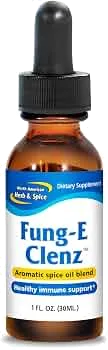
North American Herb & Spice Fung-E Clenz Review
North American Herb & Spice, Fung-E-Clenz 1 fl oz. Fung-E Clenz is a unique blend of high mountain wild oregano, sage, cumin, and myrtle. This blend can be used both internally and topically for rapid absorption. About this item: Aromatic Spice Oil Blend. Power of Nature. This blend can be used both internally and topically for rapid absorption. Products may arrive warm during the summer months, as Amazon stores and ships products in accordance with manufacturers' recommendations, when provided. Directions: Take five or more drops under the tongue two or three times daily or in juice or water with meals. Product details: Brand NORTH AMERICAN HERB & SPICE. Manufacturer North American Herb and Spice. Item form Liquid. Scent aromatic spice. Special feature non-gmo. Product benefits Immunity. Recommended use Immune Support. Active ingredients oregano. Special ingredients Oregano. Item weight 2.4 ounces. Item volume 1 fluid ounce. Dimensions 1.25 x 1.25 x 4.13 inches. Model number 068. Date first available February 19, 2008. Warning: California's Proposition 65 notice is shown on the page. Statements regarding dietary supplements have not been evaluated by the FDA and are not intended to diagnose, treat, cure, or prevent any disease or health condition.
We don’t sell supplements. We help you make decisions and get the best price.
Lowest prices
We may earn a commission from some store links. How we choose.
We hold no current store prices for it yet: check the store.
- AmazonPrice at AmazonCheck price at Amazon (opens in a new tab)
Some links earn us a commission; price comes first, and a commission only decides the order of prices within 2%. As an Amazon Associate we earn from qualifying purchases.
Study, Trial or Testing Result Summary
Members OnlyHuman studies
We were given no study findings for this product or its ingredients for small-intestine bacterial balance, bloating or irregularity. The store listing names a blend of wild oregano oil, wild sage oil, wild cumin oil and wild myrtle oil in extra virgin olive oil. The amount of each oil is hidden in a proprietary blend, and the label gives no per-ingredient doses. So even if studies on any one of these oils existed, there would be no way to tell whether this product gives a studied amount. No human studies on this goal were found for its ingredients, so there is nothing to show whether it helps or not. Public feedback on this exact product is very thin. The few written reviews were positive but described a slow, general sense of wellbeing rather than measured changes in bloating or bowel habits. The large review count attached to this product does not appear to belong to it. Members should treat this as an untested blend for this goal. Animal and cell studies are never counted.
Review Totals and Summary
Members Only1,564 reviews · 91% positive
Public feedback on Fung-E-Clenz is very thin. I found only a handful of reviews, so the themes below are tentative and not statistically meaningful. I found no independent professional analyses of this specific blend. The few reviewers who wrote about it were positive about its intended purpose. One Vitacost reviewer, whose review also appears on Kroger, understood the product to cleanse and fortify the body against mold, yeast and fungus-family organisms. She was finishing her first bottle and planned to use it for about three months. She works outdoors in dirt, moss and mold. She said she would only know how well it worked after the autumn harvest, but felt her body appreciated it. She also said it takes time, like all natural products. The common theme is a slow, gradual, cumulative expectation. Reviewers did not describe a fast or dramatic effect. Their satisfaction rested on trust in natural products and a general sense of wellbeing, not on measured results. Customers do not praise the product for taste or ease of use, and I found no complaints about either. The only comments on sensory qualities were about the sister product Germ-a-Clenz. One Amazon reviewer called the odor strong, and said they hoped the benefits would outweigh the scent. Other reviewers of Germ-a-Clenz on iHerb said they loved the smell and used the spray around the house. Strong aromatics clearly divide opinion across this brand's line. By extension, a spice-oil blend in olive oil is likely to taste and smell intense. I did not see this confirmed in reviews of Fung-E-Clenz itself. Gaps: I found no reviews about side effects, price, bottle size, dropper quality, shipping or customer service. Retailers show a 5-out-of-5 rating from one review, which says little. Shoppers should treat this as a niche product with almost no independent evidence. Buyers who are interested seem to be people already committed to the brand's oregano oil who use this as an add-on, and they expect to use it consistently for weeks or months.
Biohacker Summary
Members Only10 of 10 recommend it
The only ingredient the panel spoke about is olive oil, and it is a smaller ingredient in this product. All ten panelists recommend it or use it, and most prefer extra virgin olive oil with its polyphenols intact. They take it for nutrient absorption, heart and brain health, less liver fat, and as a healthy fat for cooking, salads and dressings, with a few pairing it with carrots, tomatoes, greens or coffee. One panelist takes two tablespoons outside his eating window and another has about 2 ounces on an average day, though that same panelist calls more than 2 ounces a day not good for health. Others caution that it adds calories, with one saying a salad's olive oil can add 200 to 300 calories or more and another advising against five or ten tablespoons a day, and one noted it is not suited to frying because of its lower smoke point.
See all 10 biohackers →Hide the biohackers
Dr. Eric Berg · Olive Oil · recommends
- Recommends adding olive oil to salad to help the body absorb fat-soluble nutrients.
- Suggests adding extra-virgin olive oil to vegetables as a simple way to help the body absorb more important nutrients.
- Dr. Berg states that olive oil helps with nutrient absorption.
- Recommends extra virgin olive oil for salads, highlighting its polyphenols as anti-inflammatory fats that can reduce liver fat.
- Dr. Eric Berg recommends pairing olive oil with carrots to help the body make vitamin A.
- Recommends extra-virgin olive oil as an anti-inflammatory and anti-clotting food, noting that the real thing tickles the back of your throat.
- Discusses the benefits of extra-virgin olive oil.
- Notes that olive oil is necessary for the absorption of fat-soluble vitamins in a salad.
- Extra-virgin olive oil provides monounsaturated fats and polyphenols that help the body combat oxidative stress and support cardiovascular and cognitive health.
- Dr. Eric Berg states that extra-virgin olive oil can contribute to supporting liver health.
- Recommends adding sage to meat when cooking on the grill.
- Dr. Berg recommends his new Metabolic Taco Seasoning, made with real spices including garlic, onion, and cumin, for a simple, healthy, and delicious taco meat recipe.
- Cumin has a long history of use for digestive support.
- Dr. Berg recommends his new Metabolic Taco Seasoning, which is made with real spices including garlic, onion, and cumin.
Bryan Johnson · Olive Oil · uses
- Bryan Johnson states that he eats extra virgin olive oil.
- Includes extra virgin olive oil in their breakfast.
- Consumes extra virgin olive oil at 4:55 am.
- Uses extra virgin olive oil as part of their breakfast.
- Eats olive oil for breakfast.
- Uses high polyphenol olive oil, specifically Blueprint olive oil, as it is a powerful ingredient that increases HDL cholesterol and reduces key markers of cardiovascular disease.
- For breakfast, Bryan Johnson blends protein, collagen, and extra virgin olive oil, noting its high polyphenols for reduced oxidative stress.
- Loves his extra virgin olive oil and encourages others to consume it, stating it came out at the very top as a superfood for health and longevity.
- Includes extra virgin olive oil with his breakfast and a tablespoon with his final meal of the day.
- Consumes 1.5 tablespoons of extra virgin olive oil as part of his Blueprint stack.
- Includes three capsules of Cumin in his Blueprint stack.
- Adds 1 tablespoon of cumin to his Super Veggie for inflammation, liver, and pancreas health.
- Includes cumin in his Super Veggie meal, which he eats at 7 AM.
- Uses cumin in his Super Veggies.
Dr. Mark Hyman · Olive Oil · uses
- Included olive oil in their grain-free zucchini bread for heart health.
- Recommends olive oil as a fibrous food to heal the gut.
- Recommends including healthy fats from olive oil.
- States that he uses extra virgin olive oil because he likes the taste.
- Recommends extra virgin olive oil because it contains oleocanthal, which activates the same anti-inflammatory receptors as a med without side effects.
- Recommends putting extra-virgin olive oil on vegetables to help the body absorb more nutrients.
- Extra virgin olive oil became a staple for Dr. Mark Hyman because the right fats support the brain, hormones, metabolism, and cell membranes.
- Ate olive oil while traveling in France to maintain health.
- Recommends drinking an ounce or two of good quality olive oil a day, or pouring it on everything, as it is anti-tau protein and good for brain health, noting that it must be bitter and burn the back of the tongue to have polyphenols.
- Uses Oakhurst olive oil when cooking, specifically for the cod dish and for sweet potato fries.
- Uses a little cumin, along with salt and pepper, to season chicken, noting spices are anti-inflammatory and medicine.
- Suggests that the plant sage, which has high levels of phytochemicals that inhibit enzymes in the tryptophan pathway, might be a natural cure for long COVID, though it has not yet been proven.
- Recounts discovering a wild sage bush in Icaria that has higher levels of catechins than green tea, which are considered longevity molecules.
- Mentions cumin contains salicylic acid, which offers anti-inflammatory potential and helps resolve inflammation.
Thomas DeLauer · Olive Oil · recommends
- Recommends olive oil as a polyphenol-rich food to lower oxidative stress and reduce ongoing damage to the gut lining.
- Recommends adding olive oil to cooked tomatoes, stating that it led to an 82% jump in plasma lycopene absorption in human trials, whereas cooked tomatoes without oil yielded no increase.
- Emphasizes olive oil as the primary fat source in the recommended diet, highlighting its monounsaturated fats and polyphenols for their anti-inflammatory properties and ability to combat liver fat.
- Consumes two tablespoons of olive oil outside of his feeding window as part of his 'mimic fasting' approach.
- Recommends extra virgin olive oil, stating that it directly reduces liver fat accumulation and promotes fat burning, especially when combined with coffee.
- Notes that the UC Davis study also tested olive oil brands and found no issues with them failing the test, unlike avocado oil.
- Recommends one to two tablespoons of extra virgin olive oil per day, alongside protein, for its polyphenols that support BDNF.
- Consumes a liter of olive oil every week because it is a good fat with a lot of polyphenols, which helps with antioxidants and reducing inflammation, and he feels his brain is working pretty well.
- Recommends making real extra virgin olive oil the main fat, looking for one with a strong, bitter, peppery bite, as this indicates high polyphenol content which is beneficial for protecting DNA from oxidative damage.
- Recommends olive oil for gallbladder health, noting that fat in the duodenum is the strongest CCK trigger.
- Recommends marjoram, rosemary, thyme, and sage, noting evidence that they increase PPAR alpha, programming cells to be better at using fats and reducing inflammatory cytokines.
- Recommends sage as a good Mediterranean spice that can influence cells to utilize more fat by affecting PP alpha.
- Recommends adding Rosemary or Sage to a Mediterranean-style burger.
- Finds it interesting that Ikarians consume a high amount of sage tea, noting that sage has been shown to impact cells in terms of fat adaptation and utilization, and suggests it would be easy to integrate.
Dave Asprey · Olive Oil · uses
- Keeps coming back to real olive oil with the polyphenols still intact.
- Consumes 2 ounces of olive oil on an average day, noting that while there's evidence it's good, too much can be problematic.
- Recommends a moderate amount of extra virgin olive oil, stating that olive oil is great for you.
- Recommends olive oil to relieve migraines, specifically as the suspension for ESS60.
- Believes that excessive olive oil, more than 2 ounces a day, is not good for health.
- Warns that excessive olive oil, more than about 2 ounces a day regularly, dramatically increases oxidation of omega six.
- Discusses olive oil, noting that videos about it and his experiments with it perform well on his YouTube channel. He states that high polyphenol, extra virgin olive oil can be cooked with at high heat because the polyphenols protect it, though ideally, one would not cook it to protect those polyphenols.
- Adds about 2 oz of olive oil a day to his diet and has been doing so for 15 years, noting that he has clear arteries.
- Warns that while 2 ounces or so of high-quality olive oil is good for aging and longevity due to polyphenols, too much oleic acid can radically increase oxidation of omega-6 oils in cells, driving free radicals.
- Says he eats a maximum of 2 oz of olive oil every day as part of his diet, which includes unlimited fat.
- Recommends sage, noting it decreases IL-6 and can be soothing as a tea for coughs or sore throats.
Andrew Huberman · Olive Oil · uses
- States that olive oil is the safest thing to use and that no one debates its health benefits.
- Notes that olive oil has a lower smoke point than other seed oils, so it's not suitable for frying, and can impart a stronger taste in baked goods.
- Consumes olive oil, noting it has few proteins or carbs, and believes it likely doesn't negatively affect longevity pathways during fasting.
- Was surprised to learn that canola oil outperforms olive oil in improving blood lipids, as he had assumed olive oil could do no wrong.
- Recommends olive oil as a healthy and delicious alternative to seed oils.
- Andrew Huberman states he likes olive oil and makes sure it's real olive oil, and Mark Hyman recommends extra virgin olive oil as the most minimally processed oil.
- Generally tries to use olive oil when cooking and finds it tasty, and is not aware of any data suggesting it is bad when consumed within caloric thresholds.
- Told friends that olive oil is okay as part of their fat loss approach.
- Uses a couple of teaspoons of olive oil in the morning, mixed with resveratrol, because oleic acid in olive oil activates sirtuin defenses.
- Andrew Huberman states that he likes olive oil and errs towards it.
Dr. Rhonda Patrick · Olive Oil · uses
- Uses a little bit of olive oil with their homemade turkey burger for their first meal, in their collard greens, and in their homemade avocado dressing.
- Recommends replacing saturated fatty acids with olive oil for cooking, as it is a good source of monounsaturated and polyunsaturated fat that will not raise apoB.
- Rhonda's current diet includes a homemade salad dressing made with avocado, garlic, apple cider vinegar, and olive oil.
- Recommends olive oil as a source of healthy fats for muscle gain.
- Considers olive oil to be a good fat source when it is in a whole food form.
- Recommends using olive oil and notes there is some evidence it may have unique benefits for cardiovascular disease and metabolic health.
- Recommends olive oil as the primary source of fat in the Mediterranean diet, noting research suggesting its antioxidant, anti-inflammatory, and anti-carcinogenic properties due to high polyphenolic content.
- Recommends using olive oil on salads as a reasonable alternative to excessive saturated fat, which can help fix APOB issues.
- Now cooks scrambled eggs in olive oil and uses it for grilling vegetables and in salad dressing, believing it helps lower ApoB levels and provides beneficial polyphenols. She uses Amphora Nueva brand.
- Consuming olive oil reduces the risk of early death from all causes by 20%.
Siim Land · Olive Oil · recommends
- Recommends including Extra Virgin Olive Oil (EVOO) in a simple daily polyphenol checklist.
- Recommends olive oil for brain and heart health.
- States that olive oil has been shown to reduce visceral fat specifically.
- States that high polyphenol extra-virgin olive oil is more effective at losing liver fat, reducing liver stiffness, and improving overall metabolic health than regular olive oil due to its higher polyphenol content.
- Considers olive oil a healthy oil but advises against adding excessive amounts (e.g., five or ten tablespoons a day) due to calorie intake.
- Siim Land's dinner at 4 PM includes olive oil.
- Recommends olive oil as a dietary polyphenol for visceral fat loss, which also helps with liver enzymes and liver fat.
- Got his fats from olive oil, nuts, and fatty fish, as the MUFAs and PUFAs result in greater visceral fat loss and were a big factor.
- Recommends olive oil as a food to hit the daily dose of polyphenols for longevity and anti-aging.
- Asserts that olive oil is superior to butter for cooking if the concern is liver fat content and liver health, based on human evidence.
- Mentions that cumin has been found in case studies to increase liver enzymes and cause acute liver injury in certain individuals.
- Lists cumin as an ingredient that increases autophagy.
Ben Greenfield · Olive Oil · uses
- Seasons steaks generously with extra-virgin olive oil before sous vide cooking.
- Finishes their Denver steak with extra-virgin olive oil.
- Suggests olive oil with fresh greens for lunch.
- Recommends using extra virgin olive oil as a healthy oil for cooking, noting that it's often available and can be requested in restaurants or stocked at home.
- Likes that olive oil is mentioned as an example of an oil with essential fatty acids, stating he likes it better than Crisco and canola oil.
- Recommends using at least four to five tablespoons a day of extra virgin olive oil, noting its importance for balancing fatty acids, its anti-inflammatory properties, and its help with fatty acid oxidation.
- Rubbed the beef with olive oil before searing.
- Eats a tremendous amount of olive oil as part of his low carb, high healthy fat diet.
- Believes olive oil should be in his diet every day, based on Job's description of the prime of his life.
- Drenches the trout in olive oil.
- Uses a lot of Indian spices like cumin in his family meals.
- Ben discusses the idea of putting ground sage in coffee, suggesting it would be a good idea.
- Notes that residents of a longevity zone in Italy consume high amounts of wild herbs including sage.
- Used cumin as a spice in his khechari.
Peter Attia · Olive Oil · recommends
- Suggests that if people are concerned about polyunsaturated fats, they can use monounsaturated fats like olive oil, which appear to be cardioprotective to a certain extent.
- Discusses the Rose corn oil trial, noting that five people died in the olive oil group compared to three in the control group, and points out that this doesn't fit with the general evidence that olive oil is heart-healthy.
- Mentions consuming extra virgin olive oil, contributing to the fat content of their meal.
- Mentions consuming extra virgin olive oil, noting that it adds up to his fat intake.
- Identifies olive oil in a salad as one of the first things to cut when trying to reduce fat intake, noting it can add 200-300 calories or more.
- Adds a little bit of olive oil to their pre-race liquid meal with maltodextrin and protein powder to help slow things down.
- Peter discusses observational data that led to the hypothesis that olive oil is a healthier alternative to many other fats, and he explains what to look for in a high-quality "extra virgin" olive oil.
- Emphasizes that extra virgin olive oil should be high in polyphenols, which can be detected by a black pepper stinging sensation at the back of the palate, and recommends using it generously for good long-term health.
- Learned from mountaineering that taking a shot of olive oil at altitude was better than eating a bowl of spaghetti for energy density.
- Gets a lot of his fat primarily from olives and olive oil.
RAL Summary
Members OnlyTier 4 for Gut Bacteria Balance
The count of 1564 reviews at 91% positive does not fit the review research, which found only a handful of reviews for Fung-E Clenz and a retailer rating based on one review, so the count likely covers other products from this brand. Its reviews are set aside, so it is graded on its studies alone. Promising, but human evidence is thin and there are 0 reviews.
- Emerging: not enough evidence to rank higher yet.
- No human studies on this goal for its ingredients.
More Details
Members OnlyBody systems · Combine with · Possible side effects
Body systems: Digestive system
Combine with: For digestive and microbial balance, which is this product's real purpose, pair it with a quality multi-strain probiotic (Lactobacillus and Bifidobacterium) to repopulate beneficial flora, along with digestive enzymes, wormwood and oregano oil if a broader cleanse is desired, and soluble fiber such as psyllium to help with elimination. Short-term use is advised, so take breaks and consult a healthcare provider, especially if pregnant, on meds or with liver concerns. If the aim is truly cellular and DNA repair, use a different product, such as NMN or NR, resveratrol, CoQ10, alpha-lipoic acid, or omega-3s, rather than relying on this one.
Possible side effects: No major side effects reported. Reviews of a sister product noted a strong odor, but this was not confirmed for this product.
Supplement Facts
Proprietary Blend 0
| Proprietary Blend | 0 | † |
Directions: Directions: Take five drops under the tongue 2 or 3 times daily or in juice or water with meals. Also may be applied topically.
Barcode (UPC) 635824000587 · Label source: NIH label database · Report a label change
Show entire label
More gut bacteria balance products
Members OnlyThe highest ranked for the same goal
Read more
Our articles on this subject
- Probiotics for Gut Health: The Complete GuideArticle · Mar 17, 2026
- Best Probiotic for Bloating: The Strains With Human Trials, and How to Choose OneArticle · Oct 27, 2026
Graded November 14, 2026 by the Reverse Age Lab evidence engine, from human studies, real reviews and our biohacker panel. How we grade. Is this medical advice? No. Rala organizes the published evidence; go over any change with your doctor, especially if you take meds.
Privacy policyConsumer health dataAffiliate disclosureTermsDo Not Sell or Share My Personal InformationCookie settings