
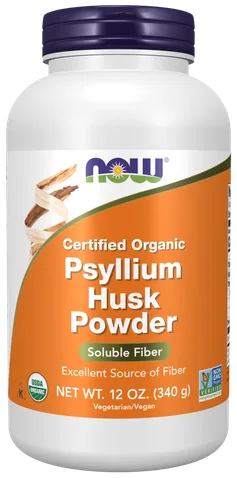
NOW Certified Organic Psyllium Husk Powder Review
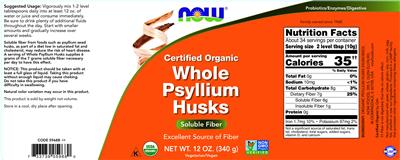
Psyllium Husk Powder, Organic from NOW is listed as an Excellent Source of Fiber. The product description notes that soluble fiber from foods such as psyllium seed husks, as part of a diet low in saturated fat and cholesterol, may reduce the risk of heart disease. A serving of psyllium husk powder supplies 6 grams of the 7 grams soluble fiber necessary per day to have this effect. The product color is listed as yellow, and the page notes that natural color variation may occur. The product is sold by weight, not volume. Each 12 oz. bottle contains 38 servings, with a serving size of 1 level tablespoon (9g). Per serving the page lists 30 calories, 0 g total fat, 10 mg sodium, 8 g total carbohydrate, 7 g dietary fiber including 6 g soluble fiber and 1 g insoluble fiber, 0 g protein, 1.5 mg iron, and 90 mg potassium. The label states it is not a significant source of saturated fat, trans fat, cholesterol, total sugars, added sugars, vitamin D, or calcium. The suggested usage is to vigorously mix 1 level tablespoon daily into at least 12 oz. of water or juice and consume immediately, drinking plenty of additional fluids throughout the day. Users are advised to start with smaller amounts and gradually increase over several weeks. Store in a cool, dry place after opening. The caution states the product should be taken with at least a full glass of liquid, as taking it without enough liquid may cause choking, and it should not be taken by anyone with difficulty swallowing. The page lists certifications including Kosher (Triangle K), Non-GMO Project Verified, Safe Quality Food (SQF), USDA Organic, and Vegan, and states it is Certified Organic by QAI. It is labeled Made w/o Corn, Made w/o Dairy, Made w/o Eggs, Gluten Free, Low Sodium, Made w/o Nuts, Made w/o Soy, and Sugar Free. The ingredients are Organic Psyllium (Seed Husk). The product may contain traces of sesame and is not manufactured with yeast, wheat, gluten, soy, corn, milk, egg, fish, shellfish or tree nut ingredients, though it is produced in a GMP facility that processes other allergens. The page says it is packaged and quality tested in the USA, and the family and employee owned company notes the bottle is made from 100 percent PCR resin. Free shipping applies to orders over $50 in the 48 States and D.C. The product is listed in the Fiber and Prebiotics category and carries SKU 5966.
We don’t sell supplements. We help you make decisions and get the best price.
Lowest prices
Lowest cost per month first, in stock, at 1 serving a day. Checked Nov 4.
- The Vitamin ShoppeLowest$17.59 a bottle$15.52/moBuy at The Vitamin Shoppe (opens in a new tab)
- Walmart$17.90 a bottle$15.79/moBuy at Walmart (opens in a new tab)
- Target$19.99 a bottle$17.64/moBuy at Target (opens in a new tab)
- AmazonPrice at AmazonCheck price at Amazon (opens in a new tab)
Also at: iHerb · NOW · PureFormulas. Some links earn us a commission; price comes first, and a commission only decides the order of prices within 2%. As an Amazon Associate we earn from qualifying purchases.
Study, Trial or Testing Result Summary
Members OnlyHuman studies
No ingredient findings were provided for this product, so we have no studies to report on psyllium husk for regularity or occasional constipation. The research notes say there are no human studies on this goal for its ingredients in the material we were given. The label lists psyllium as the only ingredient, but the amount per serving is not shown, so we cannot compare the dose with any studied dose. What we do have is a very large number of buyer ratings, about 29,000, with 88 percent positive and 6 percent negative. Buyers mainly report more regular, softer and easier bowel movements, and some mention less bloating. Several stress drinking plenty of water and starting with a small amount. A few with irritable bowel or sensitive digestion said it did not agree with them. Buyer experience is not the same as a controlled study, so until human study findings are added, the evidence for this goal should be treated as thin. Animal and cell studies are never counted.
Review Totals and Summary
Members Only29,303 reviews · 88% positive
Buyers mostly find NOW Certified Organic Psyllium Husk Powder an effective, affordable fiber supplement, with regularity the main benefit. It carries about 27,841 ratings across the stores. A few people found it clumpy or hard on a sensitive gut. Reviews of other forms of the product were left out, and this covers the powder only. **What buyers say it did for them:** Most praise is for bowel regularity and easier, softer movements. One reviewer wrote, "helping to relieve constipation and support regularity," and another said it was "Especially regulating for my system." Another bought it for a family member with constipation and saw improvement within days. Store summaries also mention less bloating and some results within a day. Bakers say it helps low-carb and gluten-free bread hold together: "My low carb bread stays together better and tastes more like normal bread." One reviewer reports lower fasting blood glucose, but that is a single person's experience. **What they complain about:** The main complaints are clumping and tolerance. One family found it "so clumpy making it difficult to swallow," preferred whole husk, and would not buy again. A reviewer with IBS warned, "avoid if your colon is sensitive to fibers," even after trying a very small dose. Another reviewer jokingly said it left them "pooping like a soft serve ice cream machine," which suggests a strong effect for some. Several reviewers stress that it needs plenty of water and that people should start with small doses to avoid choking or blockage. **Taste, smell and form:** It is generally described as unflavored and neutral, and as finely ground. One said it "mixes well with water or juice and has a neutral taste." Others are less enthusiastic: "Taste isn't too bad as I just usually chug it." The powder gels quickly, so one buyer noted it "has to consume fast." One likened the texture to applesauce but enjoyed it in diet lemonade or iced tea. Another suggested "maybe 1/3 juice to water ratio." Store summaries mostly say it mixes easily without clumping, which contrasts with the clumpy report above. The PureFormulas page also says it dissolves easily and compares it favorably with a poorly mixing earlier powder. **Value for money:** Buyers call it affordable and good value, saying a little goes a long way. One wrote, "This was the cheapest psyllium husk I came across, and a bonus-it's ORGANIC!" Another said NOW offers "consistent top quality at a fair price." Store summaries add that people like the organic certification, trust NOW's quality assurance and third-party testing, and received well-sealed packages on time. One PureFormulas reviewer said it tested very low in lead, and another noted it carries no California warning label. **Who it suits and who it did not:** It seems to suit people wanting a simple daily fiber boost for regularity, and low-carb or gluten-free bakers. One reviewer said it is "Perfect... for who don't have a much fiber in their diet." Those who liked it generally mix it into water, juice or smoothies and drink plenty of fluid through the day. It suited people with sensitive digestion or IBS less well. It also did not suit anyone who dislikes a fine powder's texture, such as the family that preferred whole husk. One PureFormulas reviewer, in contrast, said it works better for them than whole husk flakes.
Biohacker Summary
Members Only5 of 10 recommend it
The panel leans positive on psyllium husk, though it is only a smaller ingredient in this product by the label's weighting, and the prompt calls it minor, so the panel's view is of psyllium itself. Of the ten, four recommend it and three more use it, mainly for lowering cholesterol, steadying blood sugar, easing digestion and adding fiber. Doses vary: 5 grams before meals, 10 grams mixed with yogurt, a quarter cup of the powder in homemade bread, a muffin baked with it before training, and one person taking 30 grams twice a day for cholesterol. Two of them warn that it can cause bloating, rapid fermentation or irritation of the gut at higher doses, and one adds that taking it without water risks a blockage and constipation, while another says it is good only if used strategically and well tolerated. Only three panelists spoke about it as anything other than psyllium, so no other ingredient gets weight here.
See all 9 biohackers →Hide the biohackers
Thomas DeLauer · Psyllium · recommends
- Recommends psyllium husk as a powerful source of soluble fiber to aid in detoxification by binding to bile acids and speeding up gut transit time.
- Recommends psyllium fiber as one of the things that support the gut.
- Suggests using psyllium as an alternative to oatmeal for lowering cholesterol, implying it works through the same mechanism of binding to bile salts.
- Uses 5g of psyllium husk pre meals because the viscous gel it forms slows gastric emptying.
- Recommends Psyllium, stating that it can help move ingested microplastics through the gut, as studies show microplastics in feces.
- Recommends adding psyllium husk to carbs to slow down how fast they hit the bloodstream, thereby preventing visceral fat accumulation.
- Recommends psyllium as a good fiber supplement choice, noting it has a strong research track record, forms a gel to slow glucose, curbs appetite, and shifts gut bacteria to increase butyrate producers.
- Recommends taking 5 to 10 grams of psyllium husk mixed with water, allowing it to form a gel, 5 to 10 minutes before a carb-heavy meal to create a physical barrier in the gut that slows glucose absorption.
- Suggests using psyllium husk as a prebiotic fiber to pair with collagen.
- If someone needs to bring on fiber, Thomas DeLauer recommends starting with a small amount of psyllium and gradually increasing it.
Siim Land · Psyllium · recommends
- Recommends Psyllium husk for LDL, blood sugar and gut health, based primarily on human research, especially randomized controlled trials showing measurable benefits.
- Lists Psyllium husk as one of 15 supplements backed by human studies.
- Notes that kiwis were as effective as psyllium matched for fiber in improving constipation symptoms.
- Takes 10 grams of psyllium husk mixed with yogurt.
- Considers psyllium husk 'god tier' as a high source of fiber that helps with cholesterol and digestion, calling it one of the easiest ways to lower cholesterol.
- Includes 1 tbsp of psyllium husk in their first meal of the day.
- Recommends Psyllium Husk as a food powder that is a high source of fiber, helps with cholesterol, and aids digestion.
- Gives Apollo psyllium husk mixed with his food to support daily bowel movements.
- Adds psyllium husk to his protein shake to make it thicker.
- Took psyllium husk as a food additive, which he believes contributed to lowering his LDL.
Andrew Huberman · Psyllium · uses
- Mentions that he recently started supplementing with powdered psyllium husk and found that it made post-meal sensations feel good, which he did not expect.
- Mentions that some family members take a small amount of psyllium husk to increase fiber, which is inexpensive and can benefit colon health and reduce inflammation for most people.
- Mentions that doctors are now telling many people to take a little bit of psyllium husk for supplemental fiber, noting it's ground into a powder.
Dr. Eric Berg · Psyllium · recommends
- Recommends using psyllium husk powder as an ingredient for making healthy bread.
- Suggests psyllium husk as a fiber that can bind to bile salt to help with excess bile and prevent diarrhea.
- Uses ¼ cup of psyllium husk powder in their healthy bread recipe.
- Dr. Berg uses ¼ cup of psyllium husk powder as an ingredient in his healthy bread recipe.
- Includes psyllium husk powder as an ingredient in their recommended healthy bread recipe.
- Notes that the fiber in psyllium seed produces a very small, almost insignificant effect on cholesterol.
- Used to take psyllium seed as part of a colema cleanse, but he found the cleanse problematic due to unstable blood sugar and lack of electrolytes.
- Dr. Berg talks about psyllium husk, noting it is a refined fiber from the Plantago Ovata plant that provides a laxative effect and is normally taken for constipation.
- Lists Black psyllium as one of the 7 best natural laxatives for constipation, noting it swells with water.
- Explains that psyllium husks come from the plantago ovata plant and are mainly used as a natural laxative.
Dr. Rhonda Patrick · Psyllium · uses
- If Dr. Rhonda Patrick needs fuel before training, they will have a homemade muffin made with psyllium husk.
- Rhonda's current diet includes a homemade blueberry, whey protein, and psyllium husk muffin as a pre-workout.
- Recommends soluble fibers like psyllium husk, stating they form a viscous gel that can limit microplastic absorption.
- States that arabinoxylan, which is found in psyllium husk, will actually drop cholesterol.
- Dr. Rhonda Patrick discusses beta-glucan versus psyllium for lowering LDL.
Dave Asprey · Psyllium · warns
- States that psyllium husk does not have a prebiotic effect and can cause rapid fermentation and bloating, which is counterintuitive to gut health. He also mentions that in high doses, it can be abrasive and not nourishing to the microbiome.
- Dave Asprey highlights activated psyllium as the star ingredient in Uprising Food, detailing its benefits as a prebiotic fiber and bio-active polysaccharide.
Dr. Mark Hyman · Psyllium · neutral
- States that psyllium is good if used strategically and if it's tolerated.
- Mentions psyllium as helpful for gut health.
- Clarifies that when discussing soluble fiber, they do not mean the chunky sawdust kind like psyllium husk.
Ben Greenfield · Psyllium · warns
- Notes that psyllium husk has been shown to slow glucose absorption and improve hemoglobin A1c at 10g a day, but he doesn't like it because it can irritate the digestive tract and cause gastric inflammation at those doses.
- Mentions that his teachers never taught him what to do if constipated beyond just taking a bunch of psyllium husk.
- Ben Greenfield mentions psyllium husk extract as a potential solution for constipation.
- Warns that taking psyllium powder or fiber without water could result in an intestinal obstruction and constipation.
- Notes that psyllium fiber showed decent certainty of evidence for weight loss in a meta-analysis, attributing its effect to being fiber-based and promoting fullness.
- Suggests that supporting vagal nerve function and doing deep tissue work can be more effective than taking another round of psyllium husk for constipation.
- Warns that psyllium husk should be used carefully because it can feed SIBO, which many people have without knowing it.
- Ben mentions psyllium husk as a fiber source that can help get the bowels moving.
- Includes psyllium husk as part of their prebiotic blend to increase gut microbiome diversity.
- Includes psyllium in his smoothie.
Peter Attia · Psyllium · neutral
- Identifies psyllium husk as a common soluble fiber supplement.
- States that psyllium husk is soluble fiber, and while the food industry adds it to products like Fiber One bars, it doesn't make a difference because both soluble and insoluble fiber are needed for functional fiber.
- Takes 30 grams of psyllium fiber twice a day for cholesterol.
RAL Summary
Members OnlyTier 4 for Regularity: Long-Term Relief
Tier 3 needs some study support, but no human studies on regularity were given for psyllium, so the evidence here is thin despite strong reviews. So it is graded Tier 4, lower than the rules alone gave.
- Emerging: not enough evidence to rank higher yet.
- No human studies on this goal for its ingredients.
More Details
Members OnlyBody systems · Combine with · Possible side effects
Body systems: Digestive system
Combine with: To support regularity, take psyllium with plenty of water (at least 8 oz per serving) and start with a half serving, increasing gradually. Magnesium citrate or glycinate can add gentle stool-softening and motility support. A well-studied probiotic such as Bifidobacterium lactis or Lactobacillus plantarum may help balance gut flora and reduce gas. Peppermint oil (enteric-coated) and ginger can ease cramping and bloating in sensitive guts, and digestive enzymes may help with gas from food. Separate psyllium from medications and other supplements by 1-2 hours, since fiber can reduce their absorption.
Possible side effects: Some buyers with sensitive guts or irritable bowel reported discomfort, and some found it clumpy and hard to swallow. Reviewers warn it must be taken with plenty of water and started at small doses to avoid choking or blockage.
Supplement Facts
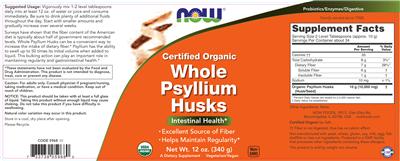
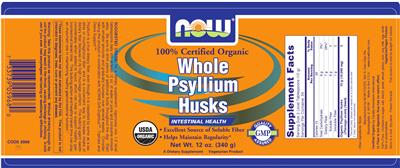
Total Carbohydrates 8 g · organic Psyllium husks 10 g
| Calories | 35 | |
| Total Carbohydrates | 8 g | |
| organic Psyllium husks | 10 g | † |
Directions: NOTICE: This product should be taken with at least a full glass of liquid. Suggested Usage: Vigorously mix 1-2 level tablespoons daily into at least 12 oz. of water or juice and consume immediately. Be sure to drink plenty of additional fluids throughout the day. Start with smaller amounts and gradually increase over several weeks.
Barcode (UPC) 733739059680 · Label source: NIH label database · Report a label change
Show entire label
More regularity: long-term relief products
Members OnlyThe highest ranked for the same goal
Read more
Our articles on this subject
- Magnesium Glycinate vs Citrate: What the Studies ShowArticle · Oct 30, 2026
- Psyllium vs Metamucil: Same Fiber, Different ExtrasArticle · Nov 1, 2026
Graded November 4, 2026 by the Reverse Age Lab evidence engine, from human studies, real reviews and our biohacker panel. How we grade. Is this medical advice? No. Rala organizes the published evidence; go over any change with your doctor, especially if you take meds.
Privacy policyConsumer health dataTermsDo Not Sell or Share My Personal InformationCookie settings