
NOW NAC 1,000mg - Tablets Review
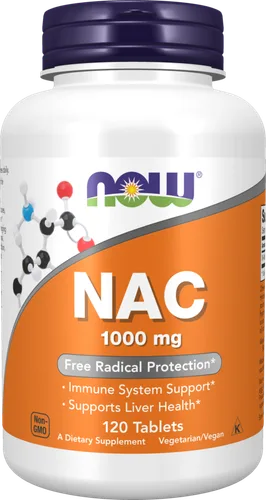
NOW NAC 1,000mg is a tablet supplement. Each container holds 120 servings, and a serving is one tablet. The Supplement Facts panel lists one main ingredient: N-Acetyl-Cysteine (NAC) at 1 g per serving. The other ingredients printed on the label are microcrystalline cellulose, hydroxypropyl cellulose, stearic acid from a vegetable source, a vegetarian coating and silicon dioxide. The directions printed on the label read: Suggested Use: Take 1 tablet 1 to 3 times daily. If you are standing in the store, that means a single-ingredient product in a large-count bottle, sold as a coated tablet rather than a capsule. Buyers most often say the tablets are easy to swallow and the quality is good, and many call the value strong for the size of the bottle. A smaller group says the pills are large or that the taste or smell is noticeable.
We don’t sell supplements. We help you make decisions and get the best price.
Lowest prices
We may earn a commission from some store links. How we choose.
Lowest cost per month first, in stock, at 3 tablets a day. Checked Nov 19.
- iHerbLowest$20.38 a bottle$15.29/moBuy at iHerb (opens in a new tab)
- AmazonPrice at AmazonCheck price at Amazon (opens in a new tab)
Also at: Walmart · Vitacost. Some links earn us a commission; price comes first, and a commission only decides the order of prices within 2%. As an Amazon Associate we earn from qualifying purchases.
Study, Trial or Testing Result Summary
Members Only58 human studies · 23 improved
15 of these 58 human studies gave n-acetylcysteine (nac) by drip or inhaler, not by mouth.
This product gives N-acetylcysteine at a full dose, above the 400 mg a day that worked in studies. For breathing problems, the strongest support comes from people with chronic bronchitis or chronic obstructive lung disease. A 2019 review of 38 trials with 10,377 people found that mucus-thinning medicines, including N-acetylcysteine, taken for two months to three years helped people stay free of flare-ups and cut days of disability, with little effect on lung function [1]. A 2024 review of 20 studies also found fewer flare-ups, and more symptom improvement in chronic bronchitis [2]. Another 2024 review of 23 trials found fewer flare-ups and hospital stays but no gain in lung function, quality of life or survival [3]. A 2017 review of 12 trials found fewer people had flare-ups, especially with six months or more of use, but no change in lung function [4]. In an early six-month trial, 200 mg twice daily kept 40% of people flare-free compared with 19% on placebo [5]. However, a large two-year trial of 968 people with mild-to-moderate disease found 1200 mg daily did not reduce flare-ups or improve lung function [6]. Overall, any benefit seems to be fewer flare-ups rather than better breathing tests. Animal and cell studies are never counted.
See all 58 studies →Hide the studies
- In 38 trials with 10,377 people with chronic bronchitis or COPD, mucolytics (including N-acetylcysteine) taken for two months to three years made people more likely to stay free of flare-ups and reduced days of disability, with little effect on lung function.Mucolytic agents versus placebo for chronic bronchitis or chronic obstructive pulmonary disease.
- In 7 trials with 2,753 COPD patients, mucolytic agents reduced flare-ups overall, and N-acetylcysteine 1200 mg a day shortened flare-up duration but ranked behind erdosteine and carbocysteine and did not reduce hospitalization.Efficacy and safety profile of mucolytic/antioxidant agents in chronic obstructive pulmonary disease: a comparative anal…
- In 12 trials with 2,691 COPD patients, high and low doses of N-acetylcysteine reduced how many people had flare-ups, especially with use of 6 months or more, but did not change flare-up rate or lung function measures.The effect of N-acetylcysteine on exacerbations of chronic obstructive pulmonary disease: A meta-analysis and systematic…
- In 5 trials with 564 people with idiopathic pulmonary fibrosis, N-acetylcysteine slowed the decline in percent predicted vital capacity and walking distance but did not improve forced vital capacity, gas diffusion, or death rates.Efficacy of N-Acetylcysteine in Idiopathic Pulmonary Fibrosis: A Systematic Review and Meta-Analysis.
- In 6 trials with 181 cystic fibrosis patients followed up to 3 months, oral N-acetylcysteine gave only a small, statistically uncertain gain in lung function (2.3% of predicted), and inhaled forms showed no benefit.Systematic review of N-acetylcysteine in cystic fibrosis.
- In a pooled analysis of 9 trials in idiopathic pulmonary fibrosis, N-acetylcysteine showed no effect on lung capacity or death over one year compared with placebo, unlike pirfenidone and nintedanib.Systematic Review and Network Meta-analysis of Idiopathic Pulmonary Fibrosis Treatments.
- In 20 studies of people with COPD or chronic bronchitis, N-acetylcysteine reduced flare-ups compared with placebo and made symptom or quality-of-life improvement more likely in chronic bronchitis patients.N-acetylcysteine Treatment in Chronic Obstructive Pulmonary Disease (COPD) and Chronic Bronchitis/Pre-COPD: Distinct Met…
- Across 23 placebo-controlled trials in people with stable chronic obstructive pulmonary disease, mucolytics (including N-acetylcysteine) reduced flare-ups and hospital stays but did not improve lung function, quality-of-life scores or survival.Efficacy and safety of mucolytics in patients with stable chronic obstructive pulmonary disease: A systematic review and…
- A Canadian guideline based on a systematic review recommends N-acetylcysteine for specific stable COPD patients at high risk of flare-ups, alongside other add-on treatments.2023 Canadian Thoracic Society Guideline on Pharmacotherapy in Patients With Stable COPD.
- A review of eight controlled trials in tuberculosis found glutathione and N-acetylcysteine added to standard care improved lung function, sped up sputum clearing of the bacteria and protected the liver, with mostly mild side effects.Glutathione and N-acetylcysteine in TB management.
- In 968 people with mild-to-moderate chronic obstructive pulmonary disease, 1200 mg of N-acetylcysteine daily for two years did not significantly reduce flare-ups or improve lung function compared with placebo.Effect of high-dose N-acetylcysteine on exacerbations and lung function in patients with mild-to-moderate COPD: a double…
- In 333 hospitalized people with respiratory disease and abnormal mucus, 1200 mg daily of intravenous N-acetylcysteine for 7 days thinned sputum and eased coughing it up better than placebo, and was as good as ambroxol.Intravenous N-acetylcysteine in respiratory disease with abnormal mucus secretion.
- In 286 primary care patients with chronic bronchitis or chronic obstructive pulmonary disease, taking 600 mg of oral N-acetylcysteine once daily for three years did not reduce flare-ups, improve quality of life or slow lung function decline compared with placebo.Fluticasone and N-acetylcysteine in primary care patients with COPD or chronic bronchitis.
- In 264 people with idiopathic pulmonary fibrosis, acetylcysteine over 60 weeks did not slow the decline in lung capacity compared with placebo, and it did not reduce deaths or flare-ups.Randomized trial of acetylcysteine in idiopathic pulmonary fibrosis.
- In a six-month double-blind placebo-controlled trial of 259 people with chronic bronchitis, taking 200 mg of acetylcysteine twice daily reduced flare-ups, and 40% of those taking it stayed free of flare-ups compared with 19% on placebo.Oral acetylcysteine reduces exacerbation rate in chronic bronchitis: report of a trial organized by the Swedish Society …
- In 182 people with idiopathic pulmonary fibrosis, 600 mg acetylcysteine three times daily added to standard therapy for one year preserved vital capacity and lung diffusing capacity better than placebo, with no difference in mortality.High-dose acetylcysteine in idiopathic pulmonary fibrosis.
- In 155 people with idiopathic pulmonary fibrosis, one year of high-dose N-acetylcysteine with standard drugs led to less decline in vital capacity and diffusing capacity than placebo, with the greatest benefit in people with less advanced disease.Lung function in idiopathic pulmonary fibrosis--extended analyses of the IFIGENIA trial.
- In people with idiopathic pulmonary fibrosis, a combination of a med, azathioprine, and N-acetylcysteine led to more deaths and hospitalizations than placebo, with no clear benefit, and the combination arm was stopped early at about 32 weeks.Read the study on PubMed (22607134) →
- In 140 adults with moderate or advanced lung tuberculosis, 1200 mg of oral acetylcysteine twice daily added to standard treatment for 16 weeks improved recovery of lung function over the following months, though it did not speed clearance of the infection.Adjunctive N-Acetylcysteine and Lung Function in Pulmonary Tuberculosis.
- In 140 adults with lung tuberculosis, 1200 mg of oral acetylcysteine twice daily for four months raised antioxidant glutathione levels and lowered an inflammatory signal (TNF-alpha), but it slowed clearance of the germ from sputum.N-acetylcysteine modulates markers of oxidation, inflammation and infection in tuberculosis.
- In 135 people with severe COVID-19, a high-dose N-acetylcysteine infusion over 20 hours did not reduce the need for mechanical ventilation, intensive care admission or deaths compared with placebo.Double-blind, Randomized, Placebo-controlled Trial With N-acetylcysteine for Treatment of Severe Acute Respiratory Syndr…
- In 121 people with stable COPD, taking N-acetylcysteine granules (1.2 g per day) for half a year improved the balance of immune cells linked to inflammation compared with placebo.N-Acetylcysteine Improves Inflammatory Response in COPD Patients by Regulating Th17/Treg Balance through Hypoxia Inducib…
- In 120 people with stable chronic obstructive pulmonary disease taking 600 mg twice daily for one year, small airway function improved and flare-ups fell compared with placebo, though breathlessness and walking distance did not change.High-dose N-acetylcysteine in stable COPD: the 1-year, double-blind, randomized, placebo-controlled HIACE study.
- Over one year, 600 mg of N-acetylcysteine twice daily cut flare-ups of chronic lung disease in high-risk Chinese patients (51.3% stayed flare-free versus 24.4% on placebo), but it had no significant effect in low-risk patients.Benefits of high-dose N-acetylcysteine to exacerbation-prone patients with COPD.
- In 110 people with amyotrophic lateral sclerosis followed for 12 months, acetylcysteine given under the skin did not significantly improve survival or slow disease progression, including lung function, compared with placebo.Randomized, double-blind, controlled trial of acetylcysteine in amyotrophic lateral sclerosis.
- In 100 people with COPD and chronic bronchitis, 900 mg of N-acetylcysteine twice daily for 3 months did not improve respiratory health status compared with placebo.Efficacy and Safety of N-Acetylcysteine for Chronic Obstructive Pulmonary Disease and Chronic Bronchitis.
- In 90 people with reflux-related laryngitis, adding N-acetyl cysteine to a med gave the best results after 3 months, while N-acetyl cysteine with placebo did not significantly change the reflux symptom index, though the reflux finding score improved in all groups.The effect of N-acetyl cysteine on laryngopharyngeal reflux.
- In 76 Chinese patients with a lung scarring disease, adding pirfenidone to N-acetylcysteine (1800 mg daily in both groups) slowed lung function decline at 24 weeks but not at 48 weeks, and it lengthened time to disease progression while causing more rash and side effects.Double-Blind Randomized Trial of Pirfenidone in Chinese Idiopathic Pulmonary Fibrosis Patients.
- In 55 people with stable chronic obstructive pulmonary disease, taking 600 mg of oral N-acetylcysteine twice daily for two months lowered hydrogen peroxide in exhaled breath, a sign of less airway oxidative stress, compared with placebo.Long-term oral n-acetylcysteine reduces exhaled hydrogen peroxide in stable COPD.
- In 50 adults hospitalized for an asthma flare, 600 mg of N-acetylcysteine twice daily for 5 days added to standard treatment did not improve wheezing, cough, breathlessness, or morning peak flow compared with placebo.Effects of N-acetylcysteine on asthma exacerbation.
- In 48 patients with weakened heart pumping having heart bypass surgery without a heart-lung machine, intravenous acetylcysteine (a 100 mg/kg bolus then 40 mg/kg per day for 24 hours) limited a rise in lung blood resistance and fewer developed acute lung injury, but it did not improve other lung measures or shorten ventilator use.Effect of N-acetylcysteine on pulmonary function in patients undergoing off-pump coronary artery bypass surgery.
- In 46 adults with acute respiratory distress syndrome, 70 mg per kg N-acetylcysteine every 8 hours for 10 days restored red blood cell glutathione and shortened the days of acute lung injury, though mortality was not different from placebo.A trial of antioxidants N-acetylcysteine and procysteine in ARDS. The Antioxidant in ARDS Study Group.
- In 42 hospitalized people with severe COPD flares and thick sputum, 200 mg of N-acetylcysteine three times daily did not improve breathlessness, sputum ease, or lung function more than placebo, and did not reduce later flare-ups over 6 months.N-acetylcysteine in patients with COPD exacerbations associated with increased sputum.
- In 42 people having liver transplant surgery, inhaled acetylcysteine before and during surgery was linked to fewer lung complications after the operation and lower lung and blood markers of inflammation than in controls who inhaled sterile water.N-Acetylcysteine inhalation improves pulmonary function in patients received liver transplantation.
- In 38 patients having lung surgery, oral N-acetylcysteine at 200 mg three times daily did not prevent breathing and lung complications compared with placebo.Peroral N-acetylcysteine as prophylaxis against bronchopulmonary complications of pulmonary surgery.
- In a pilot of 24 adults with bronchiectasis, 2,400 mg per day of N-acetylcysteine for 6 weeks lowered sputum neutrophil elastase by 47% relative to placebo and improved lung capacity and some quality-of-life measures, though the study was stopped early and analyzed per protocol in 17 people.Evaluation of high dose N- Acetylcysteine on airway inflammation and quality of life outcomes in adults with bronchiecta…
- In 22 people with stable chronic obstructive pulmonary disease, adding inhaled N-acetylcysteine to inhaled terbutaline for one week improved symptoms such as sputum difficulty and coughing compared with placebo, and 17 of 22 felt greater improvement.Effects of inhaled N-acetylcysteine in combination with terbutaline.
- In 22 patients with early septic shock, intravenous N-acetylcysteine improved oxygenation and lung compliance at 24 hours compared with placebo, lowered an inflammatory signal (IL-8), and shortened ventilator use and ICU stay in survivors.Does N-acetyl-L-cysteine influence cytokine response during early human septic shock?
- In 8 people, a single 1,800 mg oral dose of N-acetylcysteine taken 45 minutes before heavy exercise reduced respiratory muscle fatigue compared with placebo.Effects of N-acetylcysteine on respiratory muscle fatigue during heavy exercise.
- In 4 healthy adults, a single intravenous infusion of 150 mg per kg of N-acetylcysteine delayed diaphragm fatigue (21 vs 13 minutes) and reduced the drop in diaphragm twitch strength compared with placebo.Effect of N-acetylcysteine on human diaphragm strength and fatigability.
- In people undergoing lung resection, a preoperative 240 mg per kg N-acetylcysteine infusion raised plasma thiols but did not reduce postoperative inflammation or oxidative damage compared with placebo.Systemic inflammation and oxidative stress post-lung resection: Effect of pretreatment with N-acetylcysteine.
- In people with mild-to-moderate COVID-19, a combination containing N-acetyl-L-cysteine shortened time to full recovery by about 3 to 4 days compared with placebo, alongside better inflammation and antioxidant markers.Combined Metabolic Activators Accelerates Recovery in Mild-to-Moderate COVID-19.
- In 120 people with pneumoconiosis, 200 mg of acetylcysteine three times daily for 12 weeks was followed by better lung function and fewer cough and breathlessness symptoms, but this control arm was compared with acupuncture plus acetylcysteine rather than placebo, so the acetylcysteine effect alone is unclear.[Randomized Controlled Clinical Trials for Acupuncture Treatment of Pneumoconiosis].
- In 84 people with severe pneumonia treated for 10 days, adding N-acetylcysteine to linezolid improved lung function and blood oxygen levels, shortened cough and sputum duration, and lowered inflammatory markers more than linezolid alone.Effect of linezolid combined with N-acetylcysteine on lung function, blood gas and inflammation in patients with severe …
- In 7 of 30 ambulatory asthmatics, a 10% acetylcysteine inhaled aerosol lowered FEV1 by more than 10%, and adding isoproterenol reversed this drop in most of them.Controlled trial of bronchodilator-mucolytic aerosols, combined and separate.
- In 13 people with mild COPD, 1,800 mg per day of N-acetylcysteine for 4 days raised blood glutathione but did not improve exercise tolerance compared with placebo.Oral N-acetylcysteine and exercise tolerance in mild chronic obstructive pulmonary disease.
- In 10 people with inoperable lung cancer receiving radiotherapy, adding N-acetylcysteine was feasible but time-consuming, and side effects and tumour responses were similar to a control group.N-acetylcysteine in combination with radiotherapy in the treatment of non-small cell lung cancer: a feasibility study.
- In a small double-blind crossover study of nine people with chronic bronchitis, 200 mg of acetylcysteine three times daily for four weeks did not change lung function, mucus clearance, or sputum thickness compared with placebo.Effect of oral N-acetylcysteine on mucus clearance.
- In 8 healthy never-smokers, inhaled N-acetylcysteine nearly abolished exhaled hydrogen peroxide 30 minutes after use, but levels rose again 3 hours later, so the effect was short-lived and partly reversed.Effect of inhaled N-acetylcysteine on hydrogen peroxide exhalation in healthy subjects.
- In 8 healthy men, an intravenous N-acetylcysteine infusion did not significantly change oxygen uptake kinetics or average exercise tolerance compared with saline, though individual responses varied widely.Influence of N-acetylcysteine administration on pulmonary O₂ uptake kinetics and exercise tolerance in humans.
- In an open-label 48-week trial of 81 people with idiopathic pulmonary fibrosis, adding inhaled acetylcysteine twice daily to pirfenidone led to faster lung function decline than pirfenidone alone, with similar side effects in both groups.Pirfenidone plus inhaled N-acetylcysteine for idiopathic pulmonary fibrosis: a randomised trial.
- In 17 nonsmokers with a lung scarring disease, 600 mg of oral N-acetylcysteine three times daily for 5 days significantly raised antioxidant glutathione levels in the airway wash fluid, but not in the lung lining fluid.The effect of oral N-acetylcysteine on lung glutathione levels in idiopathic pulmonary fibrosis.
- In a Korean nationwide cohort of people newly diagnosed with idiopathic pulmonary fibrosis, N-acetylcysteine use was linked to lower mortality in the 2002-2008 group, but it was not clearly linked to better survival in the later 2012-2018 group, where antifibrotic drugs were the main factor linked to lower mortality.Longitudinal Changes in Clinical Features, Management, and Outcomes of Idiopathic Pulmonary Fibrosis. A Nationwide Cohor…
- In 2,272 adults on a breathing machine for at least 48 hours across five intensive care units, those who received nebulized N-acetylcysteine with or without hypertonic saline had fewer ventilator-free days by day 28 (median 18 versus 21) than those who did not, and the authors judged the treatment unlikely to help.Empowering Respiratory Therapists to Restrict Nebulized 3% Saline and N-Acetylcysteine During Mechanical Ventilation.
- In a nested case-control study of 212 people, lower blood levels of an N-acetylcysteine-related albumin marker were found in those who later developed lung cancer, but this observational finding does not show that taking N-acetylcysteine changes risk.Agnostic Cys34-albumin adductomics and DNA methylation: Implication of N-acetylcysteine in lung carcinogenesis years bef…
- In people with idiopathic pulmonary fibrosis who had short telomeres, taking immunosuppressive drugs, including a med, azathioprine and N-acetylcysteine, was linked to more deaths, lung transplants, hospitalizations or lung function decline.Telomere Length and Use of Immunosuppressive Medications in Idiopathic Pulmonary Fibrosis.
- This paper reports the quality control of lung function tests (spirometry) in a 3-year trial of 523 people with chronic bronchitis-type lung disease who took either acetylcysteine or placebo; it does not report whether acetylcysteine improved breathing, so no treatment effect is shown.Quality control of spirometry: a lesson from the BRONCUS trial.
- In lab tests, N-acetylcysteine protected immune cells (lymphocytes) from damage caused by harmful oxidant molecules, and cells from patients given the drug were less sensitive to that damage. The abstract does not report people counts, doses, or duration, and it does not report respiratory outcomes.Thiol containing antioxidant drugs and the human immune system.
Review Totals and Summary
Members Only39,240 reviews · 94% positive
Ratings across the stores that sell it total about 39240, and 67% of the starred reviews below give 4 or 5 stars. Most buyers are happy, with praise for quality and ease of use, while a few report no effect or a problem with the pill itself. **What buyers say it did for them:** Many describe more energy, better breathing and a sense of immune or liver support. One writes, "I've noticed a boost in my energy levels." Another says, "clearing my lungs and reducing congestion." Others mention better recovery and steadier daily energy. One buyer is more cautious: "Jury still out on full effectiveness." **What they complain about:** The complaints are few. One buyer says, "I didn't feel that I experienced any benefit." Another says a tablet "came out later that day whole," and returned it. One never received the order. One reviewer finds the dose a bit high and prefers lower or sustained amounts. **Taste, smell, pill size and form:** Opinions differ. Several call the tablets easy to swallow with no unpleasant aftertaste, and one says there is "no weird taste or smell." Others notice a smell or taste: "taste is pretty strong," and "Has a bit of smell but is ok." Another finds the smell weaker than other NAC products. Some say the pills are large: "The pills are quite large." One reviewer notes that others may find them hard to swallow. A few would rather have capsules, though one is glad to see a tablet option. **Value for money:** Buyers often call it good value. One says, "the value is excellent for the size." Another praises the price and a buy one, get one half off deal. A few note the big bottle and long expiry. One buyer, who had trouble with a tablet passing whole, called it "a waste of money." **Who it seems to suit and who it did not:** It seems to suit people who want a daily antioxidant supplement in a single high-strength tablet, and those who like the brand. Several long-term users keep it in a daily routine. It suited less well those who struggle with large pills, those who prefer capsules or lower doses, and the buyer who felt no benefit. Some buyers take two tablets a night, while others say one a day is enough.
Biohacker Summary
Members Only0 of 10 recommend it
Our biohacker panel has not discussed this product’s ingredients yet.
RAL Summary
Members OnlyTier 3 for Lungs and Breathing
More Details
Members OnlyBody systems · Combine with · Possible side effects
Body systems: Respiratory system
Combine with: For respiratory support, NAC is often paired with vitamin C, because the two act together as antioxidants and vitamin C helps recycle other antioxidants. It is often paired with selenium, since selenium is part of the enzymes that use glutathione, which NAC supplies cysteine for. It is also often paired with glycine, because glycine and cysteine are the two amino acids glutathione is built from.
Possible side effects: The studies given report no major side effects. Some buyers note a strong taste or smell and large tablets, and one said a tablet passed through whole.
Supplement Facts
N-Acetyl-Cysteine 1 g
| N-Acetyl-Cysteine (NAC) | 1 g | † |
Other ingredients: Microcrystalline cellulose, hydroxypropyl cellulose, stearic acid (vegetable source), vegetarian coating and silicon dioxide.
Directions: Suggested Use: Take 1 tablet 1 to 3 times daily.
Label source: Reverseagelab · Report a label change
Sizes and barcodes: 60 Tablet(s), UPC 7 33739 00184 9 (found for sale); 120 Tablet(s), UPC 7 33739 00185 6 (replaced by a newer label)
Show entire label

More lungs and breathing products
Members OnlyThe highest ranked for the same goal
Read more
Our articles on this subject
Graded November 20, 2026 by the Reverse Age Lab evidence engine, from human studies, real reviews and our biohacker panel. How we grade. Is this medical advice? No. Rala organizes the published evidence; go over any change with your doctor, especially if you take meds.
Privacy policyConsumer health dataAffiliate disclosureTermsBrand and legal noticesDo Not Sell or Share My Personal InformationCookie settings