
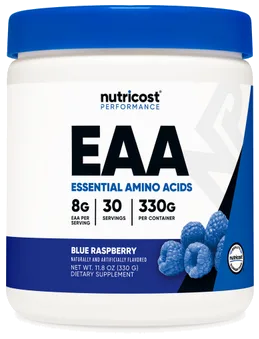
Nutricost EAA Powder Review
Nutricost EAA Powder is presented as an essential amino acid powder that the brand describes as an optimum blend of essential amino acids. According to the product details, each serving contains 8 grams of EAAs, and each container holds 30 servings. The blend includes 2:1:1 instantized BCAAs, namely L-Leucine, L-Isoleucine and L-Valine, along with L-Lysine HCl, L-Threonine, L-Phenylalanine, L-Histidine, L-Tryptophan and L-Methionine. The page offers the powder in flavour options labelled Blue Raspberry, Fruit Punch, Peach Mango, POG and Unflavored. The page states that each batch of every product is tested by independent, ISO-accredited laboratories to ensure safety and quality. It also says the essential amino acids are manufactured in a GMP compliant and FDA registered facility. A separate site-wide quality section describes Nutricost products as tested by an independent, accredited lab to help verify that what is on the label is what is in the bottle, and made in a facility that follows Good Manufacturing Practices. The FAQ on the page says Nutricost products are made in the USA using globally sourced ingredients in a GMP-compliant facility. A California Proposition 65 warning appears on the page for the EAA Blue Raspberry variant. The warning states that consuming this product can expose you to chemicals including lead, which the State of California knows to cause birth defects or other reproductive harm, and directs readers to www.P65Warnings.ca.gov/food for more information. Purchase details on the page show a one-time price of $21.97 and a subscription option with savings of up to 20 percent, with delivery every 30 days, 2 months or 4 months. The page notes HSA and FSA eligibility for qualified customers, free continental U.S. shipping on orders above $59, and a 60-day money back guarantee on all orders. The guarantee says Nutricost will refund 100 percent of the purchase price minus shipping and handling if a customer is not completely satisfied, and that the brand recognises no supplement works for everyone. The shipping and returns section explains that orders are usually processed within one to two business days and typically arrive three to five business days after shipping, though international orders may take longer due to customs. Customers outside the United States are responsible for duties, taxes and customs fees. Returns are accepted within 60 days of the order date, and items after the first bottle or tub must be in new condition. Clearance items are not eligible for return or exchange.
We don’t sell supplements. We help you make decisions and get the best price.
Lowest prices
We may earn a commission from some store links. How we choose.
Lowest cost per month first, in stock, at 1 serving a day. Checked Nov 13.
- VitacostLowest$19.95 a bottle$19.95/moBuy at Vitacost (opens in a new tab)
Study, Trial or Testing Result Summary
Members Only129 human studies · 56 improved
6 of these 129 human studies gave the ingredient by drip, not by mouth.
The main ingredient is 6 grams of the three branched-chain amino acids, leucine, isoleucine and valine, which is a full dose. Results are mixed. A review of 35 trials in older adults found modest gains in muscle strength and mass, though results varied [1]. Small trials in older adults with kidney disease and in frail adults with liver scarring found more lean or skeletal muscle [2][3]. However, a review of older adults with muscle loss found no gain in strength or lean mass [4], and a review of people with liver scarring found these amino acids alone did not build muscle, helping most when paired with exercise and protein [5]. In women doing strength training, 9 grams a day added nothing [6], and dieting adults kept no more lean mass [7]. Leucine on its own mostly did not help, while leucine-rich protein supplements did [8][9][10]. Lysine at 800 milligrams reaches the studied amount only at two servings a day, and its trials used it with other ingredients [11]. Threonine, phenylalanine, histidine, tryptophan and methionine are present in small amounts with too little evidence to judge [12]. Animal and cell studies are never counted.
See all 129 studies →Hide the studies
- Across 49 trials of 1863 healthy adults doing resistance training for at least 6 weeks, protein supplements modestly increased strength, lean mass and muscle size compared with control; this was about protein generally, not leucine alone.A systematic review, meta-analysis and meta-regression of the effect of protein supplementation on resistance training-i…
- In 23 trials of 1525 people with cirrhosis and muscle loss, branched-chain amino acids alone did not increase muscle mass, but combined with exercise and protein they gave the largest muscle mass gain.Exercise and nutrition interventions for sarcopenia in cirrhosis: a systematic review and network meta-analysis of rando…
- In 12 studies of 1225 people with cirrhosis, branched-chain amino acids improved skeletal muscle index and mid-arm muscle circumference from baseline but not handgrip strength.Effects of Branched-Chain Amino Acids on Parameters Evaluating Sarcopenia in Liver Cirrhosis: Systematic Review and Meta…
- Across ten randomized trials and one prospective study of 1133 older adults with sarcopenia, leucine improved handgrip, limb muscle mass and walking speed compared with placebo, though the authors rated the evidence as low quality.Effects of Leucine Supplementation in Older Adults with Sarcopenia: A Meta-Analysis.
- In 19 studies of 903 joint replacement patients followed about 55 days, protein or amino acid supplements reduced thigh muscle loss but did not clearly improve muscle strength.Peri-operative protein or amino acid supplementation for total joint arthroplasty: a systematic review and meta-analysis…
- Across six randomized trials of 699 older adults with sarcopenia, leucine-rich protein supplements improved muscle strength, mass and performance compared with control groups.Effects of leucine-rich protein supplements in older adults with sarcopenia: A systematic review and meta-analysis of ra…
- In three trials of 637 patients with sarcopenia, a whey protein, leucine and vitamin D combination increased limb muscle mass, but strength and function improved only when combined with an exercise program.Effects of Whey Protein, Leucine, and Vitamin D Supplementation in Patients with Sarcopenia: A Systematic Review and Met…
- In 9 trials of 496 older adults with sarcopenia, adding amino acid supplements to resistance training improved grip strength and physical performance but not muscle mass, with low-certainty evidence.Combined resistance training and amino acid-based supplementation for sarcopenia in older adults: a systematic review an…
- In 12 trials of 459 older adults with sarcopenia, branched-chain amino acids after resistance training raised skeletal muscle index only, with no gains in strength, lean mass or fat mass.Effects of branched-chain amino acid-rich nutritional supplements combined with resistance training on body composition …
- In 35 trials of older adults, branched-chain amino acid-rich supplements modestly improved muscle strength and muscle mass compared with controls, though results varied between studies.Effects of branched-chain amino acid-rich supplementation on EWGSOP2 criteria for sarcopenia in older adults: a systemat…
- In 20 trials of people with liver cirrhosis, branched-chain amino acids gave a small gain in muscle mass compared with other treatments, with no change in fat mass.Efficacy of branched chain amino acids supplementation in liver cirrhosis: A systematic review and meta-analysis.
- In 8 trials, branched-chain amino acids lowered a blood marker of muscle damage after hard exercise compared with placebo, but did not significantly change muscle soreness.Branched-chain amino acid supplementation and exercise-induced muscle damage in exercise recovery: A meta-analysis of ra…
- In 12 trials of 1337 older adults, branched-chain amino acids with vitamin D improved muscle mass and function in most trials, while branched-chain amino acids alone did not improve muscle health.The Role of Nutrition in the Treatment of Sarcopenia in Old Patients: From Restoration of Mitochondrial Activity to Impr…
- In people with motor neuron disease, branched-chain amino acids did not improve survival, muscle strength or disability.WITHDRAWN: Amino acids for amyotrophic lateral sclerosis / motor neuron disease.
- A review of 11 human studies found that branched-chain amino acids can help with exercise-induced muscle damage when the damage is low to moderate, the daily intake is high (over 200 mg per kg of body weight) for more than 10 days, and especially when taken before the exercise; results varied widely between studies.Is Branched-Chain Amino Acids Supplementation an Efficient Nutritional Strategy to Alleviate Skeletal Muscle Damage? A S…
- A review of 19 articles found that 2 to 10 grams a day of branched-chain amino acids around hard resistance exercise improved muscle recovery, strength and soreness, mainly in young men.Intake of branched chain amino acids favors post-exercise muscle recovery and may improve muscle function: optimal dosag…
- A review of nine randomized trials in adults aged 50 and over found an overall positive effect of beef, protein and amino acids on wellbeing, but no effect of leucine, arginine, vitamin B12 or zinc.The potential role of beef and nutrients found in beef on outcomes of wellbeing in healthy adults 50 years of age and ol…
- In a review of 27 studies in adults with liver cirrhosis, combined diet and exercise gave the largest body composition gains, and benefits were also seen with branched-chain amino acid supplements, though studies were small and had bias risk.The Effect of Diet and Exercise Interventions on Body Composition in Liver Cirrhosis: A Systematic Review.
- A systematic review of studies in adults aged 50 and over with sarcopenia found that essential amino acid supplements containing about 2.5 g of leucine showed some improvement in muscle mass and function, though nutrition study results overall were inconsistent and few in number.Prevalence of and interventions for sarcopenia in ageing adults: a systematic review. Report of the International Sarcop…
- A review of 23 studies found leucine or leucine-enriched protein (1.2 to 6 grams of leucine daily) was well tolerated and improved lean muscle mass in older people with sarcopenia, while strength results were mixed.Beneficial Effects of Leucine Supplementation on Criteria for Sarcopenia: A Systematic Review.
- A review of 15 systematic reviews in people aged 65 and older found leucine had a significant effect on muscle mass in elderly people with sarcopenia, though evidence quality was low to moderate.Nutritional interventions to improve muscle mass, muscle strength, and physical performance in older people: an umbrella…
- A review of intervention studies in older adults with sarcopenia found leucine alone without exercise did not improve sarcopenia markers, but leucine paired with protein supplements was effective.Effect of supplementation with leucine alone, with other nutrients or with physical exercise in older people with sarcop…
- A review of trials in people with motor neuron disease found no benefit of branched-chain amino acids on survival, muscle strength or physical function.Amino acids for amyotrophic lateral sclerosis / motor neuron disease.
- In 380 older adults with sarcopenia, a vitamin D and leucine-enriched whey protein supplement taken twice daily for 13 weeks did not improve handgrip strength more than control, but increased muscle mass by 0.17 kg more and improved the chair-stand test.Effects of a vitamin D and leucine-enriched whey protein nutritional supplement on measures of sarcopenia in older adult…
- In 200 pre-frail and frail older adults doing resistance training for 16 weeks, leucine supplementation did not improve muscle mass or function compared with placebo.Supplement-based nutritional strategies to tackle frailty: A multifactorial, double-blind, randomized placebo-controlled…
- In 155 malnourished older adults followed for 2 months, both the amino acid mixture and diet advice improved muscle mass, strength and performance, but the mixture gave greater gains in cognition scores, cell energy production and kept oxidative stress low.From mitochondria to healthy aging: The role of branched-chain amino acids treatment: MATeR a randomized study.
- In 150 people with cirrhosis over 12 months, 30 g daily of branched-chain amino acids did not improve grip strength, muscle mass, or physical performance compared with whey protein.Branched-chain amino acid supplementation does not improve measures of sarcopenia in cirrhosis: results of a randomised …
- In 140 older hospitalized adults with sarcopenia, a leucine and vitamin D enriched whey protein formula twice daily for 4 to 8 weeks during rehabilitation improved gait speed, muscle mass, and physical performance more than a control formula.Improving rehabilitation in sarcopenia: a randomized-controlled trial utilizing a muscle-targeted food for special medic…
- In 132 overweight or obese adults on a calorie-reduced diet for 16 weeks plus 8 weeks of weight maintenance, branched-chain amino acids at 0.1 g per kg body weight daily did not preserve lean mass or change insulin sensitivity compared with the control diet.Branched-Chain Amino Acid Supplementation Does Not Preserve Lean Mass or Affect Metabolic Profile in Adults with Overwei…
- In 130 sarcopenic elderly people, 12 weeks of whey protein, essential amino acids including 4 grams of leucine, and vitamin D alongside exercise increased fat-free mass and grip strength and lowered an inflammation marker compared with placebo plus exercise.Whey protein, amino acids, and vitamin D supplementation with physical activity increases fat-free mass and strength, fu…
- In 96 people with Duchenne muscular dystrophy followed for one year, oral leucine at 0.2 grams per kilogram daily produced no lasting therapeutic benefit compared with placebo, and early differences were attributed to a drop in the placebo group.Clinical investigation in Duchenne muscular dystrophy: IV. Double-blind controlled trial of leucine.
- In 95 people with ALS, six months of branched-chain amino acids (including 8 g isoleucine daily) did not improve muscle strength or function compared with placebo, and lung function declined faster.A controlled trial of amino acid therapy in amyotrophic lateral sclerosis: I. Clinical, functional, and maximum isometri…
- In older adults with sarcopenia, whey and leucine supplementation after resistance training did not differ from training alone at the end of 24 weeks, but after a further 24 weeks without training, muscle mass and grip strength stayed higher in the supplement group.De-Training Effects Following Leucine-Enriched Whey Protein Supplementation and Resistance Training in Older Adults with…
- In 77 older men and women, a year of HMB, arginine and lysine increased lean tissue by about 1 to 2% and raised protein turnover compared with control.Year-long changes in protein metabolism in elderly men and women supplemented with a nutrition cocktail of beta-hydroxy-…
- In 77 older adults taking a combination of HMB, arginine and lysine for one year, muscle mass rose regardless of vitamin D level, but strength rose only in those with adequate vitamin D.Vitamin D status affects strength gains in older adults supplemented with a combination of β-hydroxy-β-methylbutyrate, a…
- In 68 sarcopenic older adults in hospital rehabilitation, 8 weeks of branched chain amino acids plus vitamin D (dose not stated) with low-intensity resistance training produced greater gains in handgrip strength, calf circumference, and body mass index than training alone, but no difference in daily function scores.Effects of branched-chain amino acids and vitamin D supplementation on physical function, muscle mass and strength, and …
- In 60 people with COPD in a 4-week pulmonary rehabilitation program, adding branched-chain amino acids gave no extra benefit over rehabilitation with placebo.Does branched-chain amino acid supplementation improve pulmonary rehabilitation effect in COPD?
- In 60 adults with cirrhosis and muscle loss, 12 g of branched-chain amino acids daily for 6 months, added to exercise and standard care, did not increase muscle mass on CT scan compared with placebo.Randomised clinical trial: effect of adding branched chain amino acids to exercise and standard-of-care on muscle mass i…
- In 60 older adults, a 12-week fucoidan supplement improved grip strength and walking distance versus placebo, while the abstract does not report a separate result for the arm that also contained branched-chain amino acids and vitamin D, and muscle mass did not change.The effects of Oligo-Fucoidan on muscle function in community-dwelling older adults: A double-blind, randomized, placebo…
- In 60 adults aged about 80 with sarcopenia, a 2-month medical food containing 2.5 grams of leucine, omega-3 fats and a probiotic increased lean limb mass, balance, walking and grip strength compared with placebo.Effectiveness of a Novel Food Composed of Leucine, Omega-3 Fatty Acids and Probiotic Lactobacillus paracasei PS23 for th…
- In 55 older adults with kidney disease over 12 weeks, 4.5 g daily of leucine-enriched branched-chain amino acids increased lean muscle mass more than placebo, though strength did not change.Anti-sarcopenic effect of leucine-enriched branched-chain amino acid supplementation among elderly chronic kidney diseas…
- In frail adults with compensated cirrhosis, 2.03 grams of branched-chain amino acids daily for 16 weeks improved frailty, increased skeletal muscle index and improved physical quality of life compared with the control group.Branched-chain amino acids supplementation improves liver frailty index in frail compensated cirrhotic patients: a rando…
- In 50 older women, 12 weeks of daily HMB, arginine and lysine improved get-up-and-go time by 17% and increased leg and handgrip strength compared with placebo.Effect of beta-hydroxy-beta-methylbutyrate, arginine, and lysine supplementation on strength, functionality, body compos…
- In 49 patients having gastrointestinal cancer surgery, branched-chain amino acid jelly after exercise did not change thigh muscle area, muscle strength, or walking distance compared with an amino acid-free jelly.Effect of Branched-Chain Amino Acid-enriched nutritional supplement after exercise on skeletal muscle mass in patients u…
- In 48 patients after tonsillectomy, branched-chain amino acid supplementation over 21 days helped maintain muscle mass and body composition, while the control group lost muscle mass.Effects of branched-chain amino acids on changes in body composition during the recovery period following tonsillectomy.
- In 47 adults with polymyositis or dermatomyositis, branched chain amino acids added to standard treatment for 12 weeks did not improve overall muscle strength compared with placebo, but they did improve shoulder movement endurance.Branched chain amino acids in the treatment of polymyositis and dermatomyositis: a phase II/III, multi-centre, randomize…
- In 46 stroke patients doing two months of exercise, a leucine-enriched amino acid supplement taken with breakfast improved leg strength and balance and reduced body fat, with timing mattering little beyond the supplement itself.The Effects of Timing of a Leucine-Enriched Amino Acid Supplement on Body Composition and Physical Function in Stroke Pa…
- In 45 healthy older men, a single 6 g dose of branched chain amino acids raised muscle protein synthesis in the first 2 hours, similar to milk protein, but the increase did not last and returned to baseline by 2 to 5 hours, unlike milk protein.Branched-chain amino acid and branched-chain ketoacid ingestion increases muscle protein synthesis rates in vivo in olde…
- In 42 long-term bedridden intensive care patients given 1.2 or 1.8 g of protein per kg body weight daily for 4 weeks, the amount of histidine and other individual amino acids eaten was not linked to how much thigh muscle was lost.Is the amino acid pattern in medical nutrition therapy crucial for successfully attenuating muscle mass loss in adult IC…
- Taking 6 grams of leucine daily for 4 weeks modestly increased muscle mass in healthy older adults compared with a control amino acid, but did not improve muscle mass or function in people with head and neck cancer.Short-term isolated leucine supplementation was not associated with improvements in muscle mass or function in patients …
- In critically ill patients, 40 grams per day of high leucine branched-chain amino acids for 10 days limited the loss of quadriceps muscle thickness compared with control (0% versus -13%) and lowered interleukin-6 inflammation markers.High leucine branched-chain amino acids supplementation ameliorates quadriceps femoris muscle thickness reduction and at…
- In 40 young men fed controlled diets for 8 weeks, high lysine (80 mg per kg daily) raised muscle strength by about 7.5% but had no effect on other measures.The effect of a controlled 8-week metabolic ward based lysine supplementation on muscle function, insulin sensitivity an…
- In resistance-trained men over 10 weeks, a whey blend with 3 grams of branched-chain amino acids and 5 grams of glutamine did not increase lean mass compared with carbohydrate placebo, while whey plus casein did.The effects of protein and amino acid supplementation on performance and training adaptations during ten weeks of resist…
- In malnourished dialysis patients, 14 grams of branched-chain amino acids daily for 4 months did not raise lean body mass and lowered fat-free mass index compared with glycine.Glycine increases fat-free mass in malnourished haemodialysis patients: a randomized double-blind crossover trial.
- In 36 older adults with type 2 diabetes taking 8 g of branched-chain amino acids daily for 24 weeks, muscle mass and blood sugar control did not change, and soy protein produced a greater gain in muscle strength.Effects of Branched-Chain Amino Acids on Skeletal Muscle, Glycemic Control, and Neuropsychological Performance in Elderl…
- In 36 untrained midlife women over 10 weeks of resistance training, 5 grams of daily leucine added no benefit to fat-free mass, strength or hormone levels compared with placebo.Efficacy of L-leucine Supplementation Coupled With Resistance Training in Untrained Midlife Women.
- In 35 frail adults aged 75 and older in residential care, 40 weeks of exercise with or without branched chain amino acids (dose not stated) was studied; the exercise plus amino acid group alone showed improved muscle strength-related albumin levels and lower TNF-alpha, while other groups showed no significant changes.Effect of Training-Detraining Phases of Multicomponent Exercises and BCAA Supplementation on Inflammatory Markers and Al…
- In 35 patients after surgery, five days of intravenous branched chain amino acids prevented the nitrogen loss and muscle breakdown seen with glucose alone.Infusion of the branched chain amino acids in postoperative patients. Anticatabolic properties.
- In 34 trained young adults doing resistance training for 8 weeks, hemp increased arm muscle thickness in women while soy increased it in men, so effects differed by sex.Effects of hemp supplementation during resistance training in trained young adults.
- In 32 people with cirrhosis and muscle loss, 12 weeks of branched-chain amino acids plus standard care increased muscle mass, with 83.3 percent of the amino acid group improving versus 46.7 percent on placebo.Adding Branched-Chain Amino Acids to an Enhanced Standard-of-Care Treatment Improves Muscle Mass of Cirrhotic Patients W…
- In 31 older women after hip replacement, 3.4 g of branched-chain amino acids taken after one month of strengthening exercise improved knee extension strength and upper arm muscle size more than starch, but hip abductor strength did not improve.Effect of exercise therapy combined with branched-chain amino acid supplementation on muscle strength in elderly women a…
- In 30 resistance-trained men taking amino acids with carbohydrate after three days of intense leg training, strength loss and muscle soreness were no better than with carbohydrate alone.Post-exercise branched chain amino acid supplementation does not affect recovery markers following three consecutive hig…
- In 30 postmenopausal women doing resistance training for 8 weeks, 9 g daily of branched-chain amino acids did not add to gains in muscle mass or strength compared with placebo.Effects of branched-chain amino acid supplementation and resistance training in postmenopausal women.
- In 30 healthy adults, 4 weeks of saponin extract taken with whey protein and resistance training raised isoleucine absorption by 6.33% and grip strength by 5.2% versus 2.44% with placebo, but isoleucine itself was not the tested ingredient.Effects of Astragalus membranaceus and Panax notoginseng Saponins Extract on the Pharmacokinetics of Whey Protein Absorp…
- In 28 malnourished elderly dialysis patients, 12 g of oral branched chain amino acids daily for 6 months improved appetite, food intake and body measures compared with placebo.Oral supplementation of branched-chain amino acid improves nutritional status in elderly patients on chronic haemodialys…
- In resistance-trained young men, a 4-week multi-ingredient supplement containing branched-chain amino acids increased bench press, total weight lifted and lean mass more than placebo during resistance training.Impact of Four Weeks of a Multi-Ingredient Performance Supplement on Muscular Strength, Body Composition, and Anabolic H…
- In 26 resistance-trained young men over 12 weeks, adding 1.5 grams of leucine twice daily to whey protein produced muscle and strength gains no different from adding HMB, and HMB was no more effective than leucine.Equivalent Hypertrophy and Strength Gains in β-Hydroxy-β-Methylbutyrate- or Leucine-supplemented Men.
- In 24 dialysis patients, 10 g daily of an amino acid formula for 12 weeks increased thigh muscle thickness and lowered inflammation and oxidative stress markers compared with placebo, but did not change physical performance.The Combined Use of Hydroxymethylbutyrate and Branched-Chain Amino Acids to Counteract Uremic Sarcopenia.
- In 24 young women on 60 days of bed rest, a protein plus branched-chain amino acid supplement (7.2 g per day) prevented loss of heart muscle mass seen in the sedentary group, but heart chamber volume still shrank, and exercise worked better.Cardiac atrophy in women following bed rest.
- In 24 untrained young men, taking branched-chain amino acids after resistance training reduced muscle soreness at 48 hours and lowered blood markers of inflammation at 24 hours compared with placebo, while taking them before training did not match this effect.Effect of Timing of Branched-Chain Amino Acid Supplementation on Muscle Recovery after Resistance Training in Healthy Ma…
- In 22 people with motor neuron disease, a daily mix of branched-chain amino acids including 8 g isoleucine for one year helped maintain limb muscle strength and walking ability compared with placebo.Pilot trial of branched-chain aminoacids in amyotrophic lateral sclerosis.
- In 20 patients with chronic heart failure, 12 weeks of a whey and branched-chain amino acid supplement did not change muscle mass or lean mass compared with control, and exercise gains did not differ between groups.The Effects of an Oral Nutritional Supplement with Whey Peptides and Branched-Chain Amino Acids for Cardiac Rehabilitati…
- In 20 resistance-trained adults, adding leucine to carbohydrate drinks before and after leg squats did not reduce muscle damage markers or soreness over 72 hours and did not change squat performance compared with placebo.The effects of adding leucine to pre and postexercise carbohydrate beverages on acute muscle recovery from resistance tr…
- In patients with rheumatic diseases taking prednisolone, 12 weeks of added branched-chain amino acids reduced urinary markers of muscle breakdown and limited the loss of thigh muscle, with individual responses varying.Amino Acid Profile in 18 Patients with Rheumatic Diseases Treated with Glucocorticoids and BCAAs.
- In 18 preterm infants, mixed amino acids given from birth on the first day of life improved nitrogen retention and prevented protein loss compared with glucose alone, but isoleucine was not tested on its own.Immediate commencement of amino acid supplementation in preterm infants: effect on serum amino acid concentrations and p…
- In 17 resistance-trained men on a calorie-restricted diet, branched-chain amino acids over 8 weeks of weight training kept lean mass while the carbohydrate group lost it, and gained more squat strength.In a single-blind, matched group design: branched-chain amino acid supplementation and resistance training maintains lea…
- In 17 men over 65, taking an amino acid and carbohydrate drink after 12 weeks of knee strength training produced no more gain in muscle strength or thigh muscle size than the control group.Oral amino-acid provision does not affect muscle strength or size gains in older men.
- In resistance-trained athletes, a single dose of branched-chain amino acids at 0.087 g/kg body mass before a hypertrophy session sped recovery of strength, jump height and muscle soreness over 48 hours compared with placebo.The effects of acute branched-chain amino acid supplementation on recovery from a single bout of hypertrophy exercise in…
- In 16 healthy older men, a single dose of protein given during sleep raised overnight muscle protein building rates (0.045 vs 0.029 percent per hour) compared with placebo; phenylalanine was mainly used as a tracer.Intragastric protein administration stimulates overnight muscle protein synthesis in elderly men.
- During a 21 km run, trained young men who drank a branched-chain amino acid electrolyte beverage had less muscle damage and less soreness afterward, and their leg strength held up better than with no drink or plain water.Consumption of a Branched-Chain Amino Acids-Containing Sports Beverage During 21 km of Running Reduces Dehydration, Lowe…
- In 14 older adults with impaired physical function, 32 days of a supplement giving 207.5 mg niacin equivalents a day (tryptophan, nicotinic acid and nicotinamide) did not improve muscle mitochondrial function or exercise efficiency compared with a control product.NAD+-Precursor Supplementation With L-Tryptophan, Nicotinic Acid, and Nicotinamide Does Not Affect Mitochondrial Functio…
- In 12 young adults, branched-chain amino acids taken after one resistance workout increased whole-body leucine retention more than a collagen protein control, matching a dileucine essential amino acid blend.Dileucine-supplemented essential amino acids support whole-body anabolism after resistance exercise and serum-stimulated…
- In 8 trained men during 4 weeks of intense weight training, a high branched-chain amino acid supplement raised testosterone and lowered cortisol and muscle damage markers compared with placebo.Amino acid supplements and recovery from high-intensity resistance training.
- In 7 men, taking branched-chain amino acids during and after a single session of leg resistance exercise boosted muscle growth signaling compared with placebo.Branched-chain amino acids increase p70S6k phosphorylation in human skeletal muscle after resistance exercise.
- In 7 children on peritoneal dialysis, 3 months of amino acid dialysis did not significantly increase lean body mass compared with glucose dialysis, though appetite improved in most children.Effects of 3-month amino acid dialysis compared to dextrose dialysis in children on continuous ambulatory peritoneal dia…
- In heart failure patients over 3 months, adding 10 grams per day of branched-chain amino acids to a resistance exercise program did not change muscle strength or body composition beyond exercise alone.Changes in body composition in heart failure patients after a resistance exercise program and branched chain amino acid …
- Taking 6 grams of branched-chain amino acids before twice-weekly exercise in frail elderly people produced about 10% greater gains in leg strength and balance than maltodextrin with exercise.Effects and feasibility of exercise therapy combined with branched-chain amino acid supplementation on muscle strengthen…
- In older adults with heart failure and sarcopenia, a branched-chain amino acid preparation was added to cardiac rehabilitation; the abstract describes the study design only and reports no results.An exploratory study on the efficacy and safety of a BCAA preparation used in combination with cardiac rehabilitation fo…
- In 13 resistance-trained men, branched-chain amino acid beverages during upper body workouts gave no performance benefit over placebo, though carbohydrate with branched-chain amino acids lowered cortisol versus placebo.Effects of carbohydrate and branched-chain amino acid beverage ingestion during acute upper body resistance exercise on …
- In adults 60 and older with impaired physical function, a BCAA and vitamin D high-protein food plus exercise for 12 weeks kept soft lean mass from declining, while exercise alone or no intervention did not, and it improved stand-up and two-step test scores compared with controls.Effects of branched-chain amino acid- and vitamin D-containing high-protein food supplementation plus exercise on elderl…
- In 57 people one month after sleeve gastrectomy, whey protein with branched-chain amino acids and vitamin D lost less lean mass and muscle strength than protein alone (3.8% vs 18.5% strength loss).Adding Branched-Chain Amino Acids and Vitamin D to Whey Protein Is More Effective than Protein Alone in Preserving Fat F…
- In 54 patients with subacute stroke, one month of branched-chain amino acid powder during rehabilitation produced greater gains in muscle mass index than matched controls who did not take it.The Effect of Branched Chain Amino Acid Supplementation on Stroke-Related Sarcopenia.
- In 48 untrained adults doing supervised resistance training three times a week for 12 weeks, 2 grams of leucine from either whey or soy protein increased body weight, lean mass and leg strength, with no difference between the two protein sources.No Significant Differences in Muscle Growth and Strength Development When Consuming Soy and Whey Protein Supplements Mat…
- Young combat athletes taking 5 grams of branched-chain amino acids daily for 4 weeks showed higher phase angle and a trend toward more muscle mass than controls who did not take them.[The efficiency of branched chain aminoacids (BCAA) in the nutrition of combat sport athletes].
- In 18 trained cyclists, 10 weeks of a BCAA mix with 4 g valine daily did not change lean mass but improved sprint peak and mean power compared with placebo.Ten weeks of branched-chain amino acid supplementation improves select performance and immunological variables in traine…
- In 16 healthy young women, a high-protein diet with 0.15 g per kg of body weight daily of branched chain amino acids prevented the drop in insulin sensitivity seen during 60 days of bed rest, while a conventional diet did not.High-protein diet with excess leucine prevents inactivity-induced insulin resistance in women.
- In 16 trekkers at high altitude over 21 days, taking 2.88 grams of isoleucine daily as part of branched-chain amino acids kept lean mass rising and reduced loss of leg power compared with placebo, though body mass still fell in both groups.Branched-chain amino acid supplementation during trekking at high altitude. The effects on loss of body mass, body compo…
- A single oral leucine-enriched branched-chain amino acid dose reversed impaired growth-signaling and increased breakdown in muscle of people with alcoholic cirrhosis, but did not change muscle protein synthesis.Metabolic and molecular responses to leucine-enriched branched chain amino acid supplementation in the skeletal muscle o…
- In 12 adults, a single bout of intense leg resistance exercise raised muscle protein synthesis in both trained and untrained people, but the rise was smaller in the trained group, and breakdown rose only in the untrained group.Resistance training reduces the acute exercise-induced increase in muscle protein turnover.
- In seven young men fed a very low histidine diet for 8 weeks, lean body mass did not change significantly, while nitrogen balance turned negative; two control men given 1.05 g of histidine daily for 8 weeks had stable parameters.Long-term effects of low histidine intake on men.
- In a small study of patients on peritoneal dialysis, adding amino acids, mainly valine, to the dialysis fluid increased muscle protein synthesis during a single session compared with dextrose alone.Acute effects of peritoneal dialysis with dialysates containing dextrose or dextrose and amino acids on muscle protein t…
- In 56 sarcopenic older adults, a whey and leucine supplement for 12 weeks did not change muscle mass or grip strength more than counselled protein intake, but it improved walking speed, especially in those under 75.Effects of adequate dietary protein with whey protein, leucine, and vitamin D supplementation on sarcopenia in older adu…
- In 55 inpatients with gait problems, jelly containing 2500 mg of branched chain amino acids twice a day until discharge increased skeletal muscle mass index, while the control group decreased; daily function scores did not differ between groups.The Effect of Branched Chain Amino Acids-Enriched Nutritional Supplements on Activities of Daily Living and Muscle Mass …
- In 39 adults with advanced cancer and wasting, a 4-month combined regimen that included 2.7 g daily of carbocysteine lysine salt, along with antioxidants, omega-3 fats, medroxyprogesterone and a med, increased body weight and lean body mass, and lowered inflammatory cytokines; there was no separate lysine-only group.A phase II study with antioxidants, both in the diet and supplemented, pharmaconutritional support, progestagen, and ant…
- In 33 adults with pre-sarcopenia or sarcopenia, 7.2 grams of branched-chain amino acids per day for five weeks improved muscle mass index, gait speed, and grip strength, but these gains faded after 12 weeks without the supplement.Effects of enriched branched-chain amino acid supplementation on sarcopenia.
- In 25 evaluable adults with advanced cancer and wasting, a 16-week combined regimen that included 2.7 g daily of carbocysteine lysine salt, along with antioxidants, omega-3 fats, medroxyprogesterone and a med, increased lean body mass and lowered inflammatory markers and oxidative stress; there was no separate lysine-only group.Cancer-related anorexia/cachexia syndrome and oxidative stress: an innovative approach beyond current treatment.
- Among 4,336 older Chinese adults, higher dietary intake of branched-chain amino acids was linked to better grip strength and walking speed and lower risk of low muscle strength.Association between Branched-Chain Amino Acid Intake and Physical Function among Chinese Community-Dwelling Elderly Resi…
- In 3292 Korean adults aged 50 to 64, higher skeletal muscle mass index was linked to higher total energy and branched-chain amino acid intake, with no independent link reported for histidine from food.Estimation of Dietary Amino Acid Intake and Independent Correlates of Skeletal Muscle Mass Index among Korean Adults.
- In 2,610 older Chinese adults followed for 4 years, a serum amino acid pattern including tryptophan was linked to lower sarcopenia risk in men, but this link disappeared after adjusting for confounders.Serum Amino Acids Patterns and 4-Year Sarcopenia Risk in Community-Dwelling Chinese Older Adults.
- In older adults in Qingdao, China, higher dietary branched chain amino acid intake was linked to lower sarcopenia risk, and higher valine intake was linked to faster gait speed.Branched chain and other amino acid intakes are inversely associated with sarcopenia among community elders in Qingdao, …
- In 1,140 Asian adults with type 2 diabetes followed for up to 7.9 years, higher baseline tryptophan was linked to lower odds of losing skeletal muscle mass.Amino acid profile of skeletal muscle loss in type 2 diabetes: Results from a 7-year longitudinal study in asians.
- In 352 Mexican adolescents followed for 1.6 to 3.5 years, a group of blood metabolites that included tryptophan breakdown products was linked to changes in muscle mass, with associations differing between boys and girls.Metabolomics reveals sex-specific pathways associated with changes in adiposity and muscle mass in a cohort of Mexican a…
- In 300 older Iranian adults, dietary branched chain amino acid intake, including valine, was not significantly linked to sarcopenia or its components of muscle mass, grip strength, or gait speed.Association between dietary intake of branched-chain amino acids and sarcopenia and its components: a cross-sectional st…
- In 246 older Chinese men, higher blood tryptophan was linked to better handgrip strength, while glycine showed the opposite pattern.Specific lysophosphatidylcholine and acylcarnitine related to sarcopenia and its components in older men.
- In Malawian adults who had severe childhood malnutrition, higher tryptophan was linked to greater lean mass 7 years later, but this link was absent in controls.Childhood Malnutrition and Association of Lean Mass with Metabolome and Hormone Profile in Later Life.
- In 142 malnourished patients followed for 3 months, those taking a leucine-enriched supplement improved phase angle and rectus femoris muscle thickness more than those taking a standard supplement, though the study was observational and groups differed.Nutritional impact of leucine-enriched supplements: Evaluating protein type through artificial intelligence (AI)-augment…
- In a study of 128 older women from Brazil and Italy, dietary intake of valine, leucine and isoleucine was linked to chair-stand performance only in the Italian women, so this observational link is not proof that valine builds muscle.Association between Dietary Habits and Physical Function in Brazilian and Italian Older Women.
- In a nested case-control study of 128 older adults, higher blood tryptophan levels were linked to a lower 2-year risk of impaired leg function (odds ratio 0.64), but this was observational and not a supplement trial.Plasma Amino Acids and Risk of Impaired Lower-Extremity Function and Role of Dietary Intake: A Nested Case-Control Study…
- In a retrospective review of 29 adults with short bowel syndrome on home IV feeding, muscle mass increased only when the feeding mixture supplied at least 0.06 g per kg body weight of methionine along with enough branched-chain amino acids.Essential Amino Acid Profile in Parenteral Nutrition Mixtures: Does It Meet Needs?
- In 28 young Japanese women tracked through the seasons, histidine intake from food did not change with summer energy intake drops, and leg muscle weight was higher in spring and summer than in winter, though this was an observational food-record study and not a histidine supplement trial.Relationship between Seasonal Changes in Food Intake and Energy Metabolism, Physical Activity, and Body Composition in Y…
- In a small pilot of 20 men aged about 82, plasma tryptophan was lower in those with severe muscle loss than in matched controls, suggesting it may be a biomarker of severe sarcopenia rather than a proven cause.Metabolomic profiles to explore biomarkers of severe sarcopenia in older men: A pilot study.
- In mice, branched-chain amino acids given during the early active phase increased muscle growth, and in people, eating more protein at breakfast than at dinner was linked to higher muscle index and grip strength.Distribution of dietary protein intake in daily meals influences skeletal muscle hypertrophy via the muscle clock.
- Lower blood tryptophan was seen in men with sarcopenia in a discovery cohort, but tryptophan was not among the markers the authors identified as useful biomarkers for sarcopenia.Amino acid metabolites as potential circulating biomarkers for sarcopenia.
- In 57 people with sarcopenia given exercise plus branched-chain amino acids, calcium and vitamin D for 12 weeks, noradrenaline rose, but the analysis was about neurotransmitter levels and did not test muscle gain against a control.Plasma levels of adrenaline, noradrenaline, dopamine, serotonin, and cortisol in sarcopenia: comparison with non-sarcope…
- In 12 lean and 9 obese people, phenylalanine was used only as a tracer to measure protein turnover, and blocking the inflammation signal interleukin-6 did not change protein turnover during rest, exercise or recovery.Amino Acid Metabolism and Protein Turnover in Lean and Obese Humans During Exercise-Effect of IL-6 Receptor Blockade.
- In 8 obese men with type 2 diabetes and 12 controls, a single 20-gram essential amino acid dose raised muscle protein synthesis similarly in both groups, but the diabetes group showed a blunted cell-signaling response, so the study does not show muscle loss is explained by impaired feeding response.Anabolic resistance does not explain sarcopenia in patients with type 2 diabetes mellitus, compared with healthy control…
- In 12 young adults over 7.5-hour sessions, short walking or squat breaks during sitting increased muscle protein building from meal amino acids compared with sitting; phenylalanine was a tracer, not a tested supplement.Walking or body weight squat "activity snacks" increase dietary amino acid utilization for myofibrillar protein synthesi…
- In nine men given testosterone for 12 weeks, muscle mass rose and muscle protein synthesis increased; this study tested testosterone, not leucine supplementation.Effect of testosterone on muscle mass and muscle protein synthesis.
- In male mice, cutting dietary histidine by 67% reduced weight gain and both fat and lean mass in young lean animals, and human data showed body mass index rose with dietary histidine, so lowering histidine works against muscle gain.Regulation of metabolic health by dietary histidine in mice.
Review Totals and Summary
Members Only1,992 reviews · 90% positive
Nutricost EAA Powder has garnered approximately 1992 ratings across various stores, with an impressive 80% being 4 or 5 stars, indicating a very positive overall reception. This summary focuses exclusively on the powder form, excluding reviews for other formats like capsules or gummies. **Benefits** Customers frequently praise this EAA powder as a valuable addition to their fitness routines, primarily for muscle support and recovery. Users report reduced post-workout soreness and aid in muscle maintenance. Some also experience improved endurance and a temporary energy boost during workouts, particularly when on low-calorie or low-carb diets. Reviewers noted it "support recovery and muscle maintenance" and "helps me with my muscle recovery." One user found it "gave me temporary energy during my workouts." **Complaints** Despite general satisfaction, some specific concerns emerged. A notable complaint is the use of plastic jars for packaging, with one reviewer stating, "Plastic Jars - not a good packaging choice!" There's also a desire for larger sizes. For very intense training, some felt "the formula feels a bit basic" and might not offer a significant difference compared to more advanced international brands. **Taste and Mixability** The taste of Nutricost EAA Powder is highly divisive, especially for the unflavored version. Some users found it unnoticeable, reporting it "mixes well, and you can't taste it" in drinks. Others, however, described the unflavored powder as "horrible," "bitter," or "terrible," with one warning the "taste will make you barf." For flavored options, specifically Peach Mango, feedback is generally positive, described as "enjoyable and easy to drink" and "super good flavor." Yet, one reviewer explicitly stated, "I would not recommend the flavored one." Mixability is consistently praised. **Value for Money** The product is widely regarded as offering good value. Customers frequently highlight its affordability relative to its quality and effectiveness. Comments include it's "definitely worth it," a "great value, quality product," and that "the price is fair and competitive" compared to similar brands. **Suitability** This EAA powder appears well-suited for regular exercisers and individuals focused on muscle recovery and maintenance. It's also favored by those on restrictive diets needing intra-workout support. One user found it a "solid addition to my workout routine," and another used it "Intraworkout during cutting as I was at a low calorie diet." However, it might not be ideal for athletes undergoing extremely rigorous training, as some felt "if you’re training very hard, you might not notice a big difference." Individual experiences with energy boosts also vary.
Biohacker Summary
Members Only4 of 10 recommend it
This product is an essential amino acid powder, and every ingredient the panel discussed is a smaller ingredient in this product, so no single main ingredient stands out. Leucine drew the most comment: most of the panel recommends it for muscle building, with doses from one gram with a meal, to two to four grams per meal, to eight or nine grams a day, though a few raised cautions that it may be pro-aging or that very high levels could carry risk. Tryptophan was recommended by four of them, for sleep, mood, and as a raw material for NAD+, mostly from food sources. Methionine got mixed views, with two panelists lowering their intake and others warning about too much unless balanced with glycine, while one said we need more of it as we age. Branched-chain amino acids drew a neutral view from one panelist and a warning from another against taking them alone instead of all the essential amino acids.
See all 9 biohackers →Hide the biohackers
Thomas DeLauer · Tryptophan · uses
- Would take 1000 mg of tryptophan before bed to aid sleep when his adrenaline is pumping due to a caloric deficit.
- Identifies leucine as the primary trigger for the mtorc1 pathway, which is the master switch for muscle protein synthesis, and recommends 2 to 3 grams per meal for those under 40, and 3 to 4 grams for those over 40.
- Explains that leucine is important for muscle, with beef, whey, milk, and sardines clearing the 2-3g leucine threshold per meal, and that the threshold increases with age.
- States that leucine is what flips the switch for muscle protein synthesis, and that adding leucine and essential amino acids to a small dose of whey can match the effect of a full 25-gram dose of protein.
- Believes that having enough tryptophan get into the brain over the course of the day enables the capacity to produce melatonin at night.
- Recommends tryptophan before bed for sleep.
- Would 'leave' BCAAs, stating they were overhyped in the bodybuilding community and that essential amino acids (EAAs) are a broader and better option, especially for those not meeting protein goals, as EAAs cover all bases and provide leucine for muscle building.
- Notes that leucine, an important amino acid for muscle growth, activates mTOR signaling after exercise, triggering the first step in building new muscle, and that leucine plus carbs together have the strongest signaling effect.
- Was one of the first people to use powdered branched-chain amino acids in the early '90s.
- Discusses tryptophan being taken off the market in the early 90s due to a bad batch from one company that had neurotoxins, leading to a quality control issue and a temporary ban.
- Takes 500 to 1,000 mg of tryptophan at night to help produce serotonin and melatonin, which are important for tilting towards a parasympathetic tone and relaxation.
- Mentions taking a tryptophan supplement before sleep.
- Recommends taking 3 to 5 grams of leucine with meals, especially for older individuals who may struggle to meet minimum protein requirements, as it can help preserve muscle and increase muscle protein synthesis.
- Recommends branched-chain amino acids, especially for older individuals trying to maintain muscle, suggesting that 3 to 5 grams with meals could make the difference for adequate muscle protein synthesis.
Ben Greenfield · Leucine · recommends
- Describes leucine as the 'ignition' that turns on the signal for muscle protein synthesis, and that a sufficient dose is needed to hit the dose response and then have other essential amino acids to maintain the signal.
- States that leucine is the primary trigger for muscle protein synthesis and recommends an essential amino acid blend with about 40% leucine for maximum stimulation.
- Warns against taking only BCAAs for muscle protein synthesis, explaining that it's like trying to build a car with only three components instead of the necessary nine essential amino acids.
- Recommends pulsing with compounds like leucine for maintaining and building muscle and maximizing muscle protein synthesis.
- A new study found that lowering methionine in the diet of mice significantly increased calorie burning and weight loss, matching the metabolic effects of cold exposure.
- States that methionine is needed for glutathione production, and glutathione needs triple as we age.
- Mentions threonine as an amino acid essential for gut health.
- Mentions tryptophan as a co-factor and raw material needed to make melatonin.
- Mentions that simple amino acids like tryptophan and phenylalanine are methylated into neurotransmitters.
- Mentions that simple amino acids like tryptophan and phenylalanine are methylated into neurotransmitters.
- Recommends ensuring enough tryptophan in the diet to naturally support the body's melatonin production, as it is a precursor to serotonin and then melatonin.
- Refers to branch chain amino acids as 'fancy overpriced flavored water' and emphasizes the importance of essential amino acids instead.
- Mentions tryptophan as a supplement that aids in serotonin production, as suggested by a guest.
- Warns that branch chain amino acids are not very good, calling them an expensive flavored water that spikes blood glucose a little.
Dr. Eric Berg · L-Lysine · recommends
- Recommends L-lysine because it competes with L-arginine, which the virus needs to reproduce, thus blocking the virus from getting arginine and starving it off.
- The amino acid leucine is important for muscle growth, but getting sufficient protein is just as essential for maintaining muscle mass.
- Mentions that animal protein provides leucine, an amino acid beneficial for muscle building.
- Recommends getting enough leucine, a key amino acid for muscle growth, to help prevent and correct muscle loss.
- Mentions that certain foods contain tryptophan, which is in many different proteins, walnuts, milk, wine, and coffee, but warns that wine and coffee may still keep one awake.
- Explains that leucine is an essential amino acid that signals muscles to grow, and its requirements increase with age, making it important for maintaining muscle after menopause.
- Mentions that eggs contain all essential amino acids, including leucine, which is a key amino acid for building muscle.
- Notes that the amino acid leucine, found in animal protein, stimulates insulin.
- Mentions that the FDA banned tryptophan for a period after serious side effects were linked to a bad batch, and the ban was lifted after a med's patents expired.
- Identifies methionine as one of the two amino acids from which the majority of dietary sulfur is obtained.
- Notes that red meat contains leucine, an amino acid that triggers the synthesis of muscle.
- Notes that Tryptophan can turn into vitamin B3, but the mechanism is not very efficient.
- Notes that tryptophan can convert to B3, but the conversion efficiency is very low, requiring 60 times the units of tryptophan for one unit of B3.
- Recommends the right amount of histidine in one's diet to promote healthy hair growth by helping to produce keratin and regulating copper and zinc levels.
Siim Land · Methionine · recommends
- Recommends keeping methionine intake slightly lower to support autophagy.
- Lowered his methionine intake as part of an amino acid strategy.
- States that methionine in excess may accelerate aging.
- Lowered his methionine intake to reduce visceral fat.
- Reduced visceral fat by reducing methionine.
- Discusses the methionine and glycine ratio from animal protein.
- States that essential amino acids and branched-chain amino acids reduce muscle soreness for regular people.
- Explains that too much methionine accelerates aging and shortens lifespan, and also appears to promote visceral fat gain.
- To get to the 10th percentile of visceral fat and lower, Siim Land recommends reducing methionine intake.
- Places BCAAs in the 'junk tier', explaining that taking them alone can lead to greater muscle catabolism because they only provide three essential amino acids, and the body will break down its own tissue to get the others.
- Warns that methionine, an amino acid high in animal protein, has been seen to shorten lifespan in animals, and most people eat too much methionine without enough glycine.
- Warns that BCAAs may increase muscle breakdown if taken alone, as all other essential amino acids are needed.
- Notes that in animal studies, methionine excess is associated with shorter lifespan and high methionine intake drives aging or shortens maximum lifespan.
- Notes that L-phenylalanine can boost dopamine, with many articles available on PubMed.
Dr. Rhonda Patrick · Leucine · recommends
- Notes that foods high in leucine are going to really support muscle protein synthesis.
- States that branched-chain amino acids in general could be good for recovery, especially after training, if taken at night.
- Explains that Leucine is the critical signal driving robust activation of mTOR, which plays key roles in skeletal muscle growth by driving muscle protein synthesis and recovery, but also notes a study suggesting Leucine might activate mTOR in the vascular system, promoting plaque buildup.
- Highlights that leucine is an amino acid with strong signaling properties, stimulating the mTOR pathway and setting off the anabolic cascade for muscle protein synthesis.
- Mentions that leucine, a branched-chain amino acid, and other essential amino acids may be partially protective against declines in muscle mass, but not entirely effective against strength declines.
- Discusses leucine as an amino acid that kick-starts the muscle-growth process, noting that 2 to 3 grams may be important for older individuals to kick-start that process, but does not recommend it as a supplement if consuming high-quality animal-based protein sources.
- Warns that leucine is extraordinarily bitter and requires food science to mask its taste. He also states that leucine supplementation should be a last resort, advocating for a food-first approach.
- States that branched-chain amino acid supplements are largely closer to the useless end of the spectrum, as only leucine among the three is the important one for muscle protein synthesis.
- Mentions that NAD can be synthesized in the body from dietary sources including the amino acid tryptophan, found in foods like salmon, spinach, and nuts.
- Dr. Patrick explains that tryptophan is a precursor for serotonin, a neurotransmitter important for mood and cognition, and exercise increases its availability to be transported into the brain to form serotonin.
- Identifies leucine as a major activator of mTORC1, which is critical for muscle protein synthesis.
- Notes that leucine is the highest affinity amino acid sensor for mTORC1, explaining why branched-chain amino acids, particularly leucine, are used to enhance muscle growth or prevent degradation during exercise. He believes 5 grams during a workout is probably not harmful.
- Emphasis on specific amino acids within protein, particularly the branched-chain amino acids, is important for muscle growth and maintenance.
- Rhonda Patrick notes that consumption of branched-chain amino acids can deplete tryptophan in the brain as much as methamphetamine can.
Dr. Mark Hyman · Leucine · recommends
- Dr. Mark Hyman, agreeing with the guest, highlights leucine as a primary amino acid important for muscle protein synthesis.
- States that leucine is important for muscle health and is the rate-limiting amino acid for turning on the switch that starts muscle building.
- Notes that as people age, glutathione production goes down, and they might need three times more protein in methionine.
- Notes concerns in the longevity camp about excessive methionine intake, especially if not balanced with glycine, which could theoretically impair longevity.
- Recommends leucine, an amino acid, for making muscle.
- Recommends tryptophan as an essential neuro-nutrient and a precursor for serotonin, which repairs the hippocampus, noting that it can be ordered from Amazon.
- States that restricting tryptophan is not the solution for long COVID, as low tryptophan is an effect of the condition, and simply adding more does not help, especially if it's being metabolized into poisonous quinolinic acid.
- Notes that tryptophan, a precursor to serotonin, can improve constipation in IBS-C by increasing intestinal transit time and motility, but high levels could worsen IBS-D.
- Highlights leucine as an essential amino acid that is nearly highest in protein sources and acts as a unique amino acid for metabolic signaling, like a switch that turns on muscle building.
- States that tryptophan is necessary for serotonin production in the brain.
- Mentions threonine as an essential amino acid for mucin production in the gut.
- Recommends pairing high-dose IV vitamin C with L-lysine, an amino acid with an antiviral component, for viral reactivation.
- Mentions looking at tryptophan as an amino acid supplement.
- Sometimes increases the dose of phenylalanine in conjunction with essential amino acids for depression.
Andrew Huberman · Tryptophan · recommends
- Recommends tryptophan-rich foods to improve serotonin and mood.
- Notes that tryptophan is an amino acid precursor to serotonin synthesis and that many foods enriched in tryptophan can lead to net increases in serotonin, impacting feelings of well-being.
- Notes that while high doses of branch chain amino acids may impair sleep outside of TBI, two studies suggest improvements in sleep with high doses, up to 60 grams spread across the day, in TBI patients.
- Suggests that adding free leucine, perhaps one gram in a capsule with a normal meal, can significantly boost protein synthetic response, especially for plant-based individuals.
- Suggests that leucine, because it triggers cellular growth by activating the mTOR pathway, is actually pro-aging, similar to growth hormone and testosterone, offering immediate benefits at the expense of long-term health.
- Recommends tryptophan to improve mood and gut health, and for irritable bowel syndrome.
- Recommends ensuring sufficient levels of tryptophan in dietary intake, noting that turkey and dairy products are good sources, as it is a precursor to serotonin.
- Andrew Huberman explains that leucine is an essential amino acid important for inducing muscle protein synthesis, and it is found in high levels in sources like whey protein, beef, chicken, and eggs.
- Discusses leucine.
- Tryptophan or anything that contains 5-HTP (serotonin or a precursor to serotonin) could disrupt the timing of REM sleep and slow wave sleep.
- Recommends methionine as a good methyl donor to help lower homocysteine levels and reduce cardiovascular risk.
- Recommends supplementing with branch chain amino acids or essential amino acids if an individual is having a lower protein meal that is not enough to reach the threshold for muscle health.
- States that leucine is uniquely stimulating to skeletal muscle and recommends consuming closer to 9 grams of leucine per day, which is two to three times the RDA, for optimal muscle health.
- Advises getting rid of branch chain amino acids to achieve low insulin, noting that excess consumption can lead to hypertriglyceridemia, fatty liver disease, and insulin resistance.
Peter Attia · Branched-Chain Amino Acids · neutral
- Explains that higher branched-chain amino acids are related to insulin resistance and can improve the LPIR score.
- Mentions that threonine is important for mucin production in the gut.
- States that leucine is critical for muscle protein synthesis and recommends around 8 or 9 grams a day for optimal muscle health.
- Recommends two to three grams of leucine a day for muscle health, with optimal health probably around eight or nine grams.
- Recounts a story where a vegan doctor chastised him for suggesting ingesting five grams of leucine during a workout due to its negative effect on mTOR and potential link to cancer, which Peter Attia found amusing.
- Warns that there is no benefit to supplementing leucine specifically if one is already consuming enough high-quality protein, and notes that leucine tastes horrible.
- Notes that many plant-derived proteins are low in methionine, and some meat alternatives are fortified with it.
- Mentions that estimations suggest two to three grams of Leucine in a meal will induce a rapid increase in circulating Leucine, stimulating muscle protein synthesis.
- Explains that branched-chain amino acids, particularly leucine, drive an anabolic signaling response and stimulate muscle protein synthesis for up to two hours.
- Highlights that leucine content is an important factor in the anabolic response, and adding free leucine to casein can increase its anabolic effect.
- Recommends focusing on getting enough methionine, especially for plant-based patients, to ensure adequate amino acid intake for muscle protein synthesis.
- Recommends tracking amino acids and ensuring 2 to 4 grams per serving of leucine for muscle mass.
- Recommends tracking amino acids and ensuring at least 1 gram of methionine per day for muscle mass.
- Discusses experiments on Leucine and its effect on muscle protein turnover and fat metabolism.
Dave Asprey · Tryptophan · recommends
- Recommends tryptophan, an amino acid from high-quality complete animal protein sources like turkey, as a raw material for NAD+ production.
- Recalls when tryptophan was taken out of health food stores due to a contaminated baby formula study, not because of tryptophan itself.
- Dave Asprey recommends tryptophan, an amino acid, as one of the two most important raw materials for NAD+ production, found in high-quality complete protein sources.
- States that very low levels of leucine are probably promoting high levels of protection against aging and diseases, but also promoting frailty, and high levels of this amino acid could be a risk for developing a number of diseases.
- Explains that modern farming practices have reduced tryptophan content in plants, and we need tryptophan to turn into serotonin to repair the hippocampus, melatonin, and DMT.
- Mentions phenylalanine as a precursor and building block for dopamine, and that the brain synthesizes dopamine from precursors like phenylalanine.
- Mentions tryptophan as a compound that might be needed if there's a blockage in neurotransmitter pathways.
- States that if you are deficient in methionine, your gut motility is messed up, leading to consequences like irritable bowel syndrome.
- States that excessive tryptophan is not good for you.
- Recommends ensuring enough Leucine, specifically two and a half grams, to activate muscle protein synthesis, otherwise consumed protein may not be effective.
- States that 2.5 grams of leucine are needed in a meal to activate mTOR and stimulate muscle synthesis.
- Recommends looking at methionine for chronic allergies, noting it is an amino acid often restricted on plant-based diets.
- Discusses tryptophan, an amino acid, and its theoretical role in raising mTOR and increasing cancer risk.
- Discusses methionine, an amino acid more common in animal protein, and its theoretical role in raising mTOR and increasing cancer risk.
RAL Summary
Members OnlyTier 3 for Muscle and Strength
The tier rests on a misread figure: 26 of 54 isoleucine studies improving is not 83 percent of people (no study reported that percentage), isoleucine was never tested alone, and the branched-chain amino acid trials disagree, so the studies do not show a clear improvement. So it is graded Tier 3, lower than the rules alone gave.
Take 2 servings a day (2 scoops) to match the dose that worked in the studies.
Where the evidence disagrees: 33 of the 129 human studies found no effect.
More Details
Members OnlyBody systems · Combine with · Possible side effects
Body systems: Muscular system
Combine with: To further support muscle building alongside EAA powder, consider combining it with creatine monohydrate to enhance strength and power, and whey protein for a complete and fast-digesting protein source to maximize muscle protein synthesis. Beta-alanine can help improve endurance and reduce fatigue during intense workouts, while a good source of carbohydrates post-workout will aid in glycogen replenishment and optimize amino acid uptake. Additionally, ensure adequate intake of Vitamin D3 and Omega-3 fatty acids for overall muscle health, recovery, and inflammation management.
Possible side effects: No side effects were reported in the studies; reviewers often complained of a bitter, strong taste in the unflavored version and an aftertaste in the fruit punch flavor.
Supplement Facts
2:1:1 BCAA 6000 mg · L-Leucine 3000 mg · L-Isoleucine 1500 mg
| 2:1:1 BCAA (Instantized) | 6,000 mg | † |
| L-Leucine | 3,000 mg | † |
| L-Isoleucine | 1,500 mg | † |
| L-Valine | 1,500 mg | † |
| L-Lysine HCl | 800 mg | † |
| L-Threonine | 690 mg | † |
| L-Phenylalanine | 350 mg | † |
| L-Histidine | 100 mg | † |
| L-Tryptophan | 50 mg | † |
| L-Methionine | 10 mg | † |
Other ingredients: Malic acid, citric acid, natural and artificial flavors, sucralose, beet root powder (for color), silica, acesulfame potassium.
Directions: As a dietary supplement, mix 1 scoop daily with 8-16 oz of water or as directed by your healthcare professional.
Label source: Vitacost · Report a label change
Sizes and barcodes: 11.8 oz (330 g), UPC 8 10014 67360 8 (on market); EAA Powder, UPC 8 10014 67359 2 (on market)
Show entire label
More muscle and strength products
Members OnlyThe highest ranked for the same goal
Read more
Our articles on this subject
- Peter Attia's Supplement List: What He Takes and What the Trials SayArticle · Sep 20, 2026
- Whey Isolate vs Concentrate: Which Protein Powder Should You Choose?Article · Nov 15, 2026
Graded October 26, 2026 by the Reverse Age Lab evidence engine, from human studies, real reviews and our biohacker panel. How we grade. Is this medical advice? No. Rala organizes the published evidence; go over any change with your doctor, especially if you take meds.
Privacy policyConsumer health dataAffiliate disclosureTermsDo Not Sell or Share My Personal InformationCookie settings