
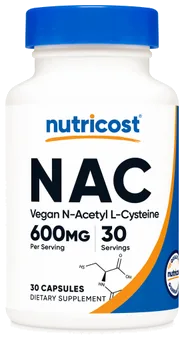
Nutricost N-Acetyl L-Cysteine 600 mg Review
Nutricost N-Acetyl L-Cysteine (NAC) Capsules provide 600mg of N-Acetyl L-Cysteine (NAC) per capsule, according to the product details on this page. The page lists 120, 180, or 240 veggie capsules per bottle, while the size selector on the page also offers 30, 120, 180 and 240 capsule options at 600 milligrams. The product is described as vegan, non-GMO and gluten free. It is made in an NSF certified, GMP compliant, FDA registered facility, according to the page. The page also states that the product is third party tested by independent, ISO-accredited laboratories. Nutricost states that its products are tested by an independent, accredited lab to help verify that what is on the label is what is in the bottle. The company says its products are made in the USA using globally sourced ingredients in a GMP-compliant facility. Nutricost describes its approach as focusing on quality ingredients, clear labeling, and prices that make sense, without unnecessary fillers or inflated costs. The brand says its products are made to support everyday routines, backed by third-party testing and a commitment to consistency. The page shows a regular price of $10.97 and an estimated delivery window. The product is HSA/FSA eligible for qualified customers according to the page. Nutricost offers a 60-day money back guarantee on all orders, where it will refund 100 percent of the purchase price minus shipping and handling. Returns and exchanges are accepted 60 days after order date, and items after the first bottle must be in new condition. The page also notes free continental U.S. shipping on orders above $59 in a banner. The page does not include a full supplement facts panel or ingredients list in the scraped text, so dosing directions and other ingredients are not stated here.
We don’t sell supplements. We help you make decisions and get the best price.
Lowest prices
We may earn a commission from some store links. How we choose.
We hold no current store prices for it yet: check the store.
- AmazonPrice at AmazonCheck price at Amazon (opens in a new tab)
Also at: Nutricost · Walmart · Target · GNC. Some links earn us a commission; price comes first, and a commission only decides the order of prices within 2%. As an Amazon Associate we earn from qualifying purchases.
Study, Trial or Testing Result Summary
Members Only58 human studies · 23 improved
15 of these 58 human studies gave n-acetylcysteine (nac) by drip or inhaler, not by mouth.
This product gives 600 milligrams of N-acetylcysteine a day, which is a full dose compared with the 400 milligrams a day that worked in studies. A large 2019 review of 38 trials with 10,377 people with chronic bronchitis or long-term obstructive lung disease found that mucus-thinning medicines, including this one, taken for two months to three years helped people stay free of flare-ups and cut days lost to illness, with little effect on lung function [1]. A 2024 review of 20 studies found fewer flare-ups and more symptom improvement in chronic bronchitis [2]. Another 2024 review of 23 trials found fewer flare-ups and hospital stays, but no better lung function, quality of life or survival [3]. A review of 12 trials found fewer people had flare-ups, especially with six months or more of use [4]. In a six-month trial of 259 people with chronic bronchitis, 200 milligrams twice daily kept 40% flare-free compared with 19% on placebo [5]. However, a two-year trial of 968 people with mild to moderate disease found 1,200 milligrams daily did not reduce flare-ups or improve lung function [6]. Overall, the benefit seems to be fewer flare-ups rather than better breathing tests. Animal and cell studies are never counted.
See all 58 studies →Hide the studies
- In 38 trials with 10,377 people with chronic bronchitis or COPD, mucolytics (including N-acetylcysteine) taken for two months to three years made people more likely to stay free of flare-ups and reduced days of disability, with little effect on lung function.Mucolytic agents versus placebo for chronic bronchitis or chronic obstructive pulmonary disease.
- In 7 trials with 2,753 COPD patients, mucolytic agents reduced flare-ups overall, and N-acetylcysteine 1200 mg a day shortened flare-up duration but ranked behind erdosteine and carbocysteine and did not reduce hospitalization.Efficacy and safety profile of mucolytic/antioxidant agents in chronic obstructive pulmonary disease: a comparative anal…
- In 12 trials with 2,691 COPD patients, high and low doses of N-acetylcysteine reduced how many people had flare-ups, especially with use of 6 months or more, but did not change flare-up rate or lung function measures.The effect of N-acetylcysteine on exacerbations of chronic obstructive pulmonary disease: A meta-analysis and systematic…
- In 5 trials with 564 people with idiopathic pulmonary fibrosis, N-acetylcysteine slowed the decline in percent predicted vital capacity and walking distance but did not improve forced vital capacity, gas diffusion, or death rates.Efficacy of N-Acetylcysteine in Idiopathic Pulmonary Fibrosis: A Systematic Review and Meta-Analysis.
- In 6 trials with 181 cystic fibrosis patients followed up to 3 months, oral N-acetylcysteine gave only a small, statistically uncertain gain in lung function (2.3% of predicted), and inhaled forms showed no benefit.Systematic review of N-acetylcysteine in cystic fibrosis.
- In a pooled analysis of 9 trials in idiopathic pulmonary fibrosis, N-acetylcysteine showed no effect on lung capacity or death over one year compared with placebo, unlike pirfenidone and nintedanib.Systematic Review and Network Meta-analysis of Idiopathic Pulmonary Fibrosis Treatments.
- In 20 studies of people with COPD or chronic bronchitis, N-acetylcysteine reduced flare-ups compared with placebo and made symptom or quality-of-life improvement more likely in chronic bronchitis patients.N-acetylcysteine Treatment in Chronic Obstructive Pulmonary Disease (COPD) and Chronic Bronchitis/Pre-COPD: Distinct Met…
- Across 23 placebo-controlled trials in people with stable chronic obstructive pulmonary disease, mucolytics (including N-acetylcysteine) reduced flare-ups and hospital stays but did not improve lung function, quality-of-life scores or survival.Efficacy and safety of mucolytics in patients with stable chronic obstructive pulmonary disease: A systematic review and…
- A Canadian guideline based on a systematic review recommends N-acetylcysteine for specific stable COPD patients at high risk of flare-ups, alongside other add-on treatments.2023 Canadian Thoracic Society Guideline on Pharmacotherapy in Patients With Stable COPD.
- A review of eight controlled trials in tuberculosis found glutathione and N-acetylcysteine added to standard care improved lung function, sped up sputum clearing of the bacteria and protected the liver, with mostly mild side effects.Glutathione and N-acetylcysteine in TB management.
- In 968 people with mild-to-moderate chronic obstructive pulmonary disease, 1200 mg of N-acetylcysteine daily for two years did not significantly reduce flare-ups or improve lung function compared with placebo.Effect of high-dose N-acetylcysteine on exacerbations and lung function in patients with mild-to-moderate COPD: a double…
- In 333 hospitalized people with respiratory disease and abnormal mucus, 1200 mg daily of intravenous N-acetylcysteine for 7 days thinned sputum and eased coughing it up better than placebo, and was as good as ambroxol.Intravenous N-acetylcysteine in respiratory disease with abnormal mucus secretion.
- In 286 primary care patients with chronic bronchitis or chronic obstructive pulmonary disease, taking 600 mg of oral N-acetylcysteine once daily for three years did not reduce flare-ups, improve quality of life or slow lung function decline compared with placebo.Fluticasone and N-acetylcysteine in primary care patients with COPD or chronic bronchitis.
- In 264 people with idiopathic pulmonary fibrosis, acetylcysteine over 60 weeks did not slow the decline in lung capacity compared with placebo, and it did not reduce deaths or flare-ups.Randomized trial of acetylcysteine in idiopathic pulmonary fibrosis.
- In a six-month double-blind placebo-controlled trial of 259 people with chronic bronchitis, taking 200 mg of acetylcysteine twice daily reduced flare-ups, and 40% of those taking it stayed free of flare-ups compared with 19% on placebo.Oral acetylcysteine reduces exacerbation rate in chronic bronchitis: report of a trial organized by the Swedish Society …
- In 182 people with idiopathic pulmonary fibrosis, 600 mg acetylcysteine three times daily added to standard therapy for one year preserved vital capacity and lung diffusing capacity better than placebo, with no difference in mortality.High-dose acetylcysteine in idiopathic pulmonary fibrosis.
- In 155 people with idiopathic pulmonary fibrosis, one year of high-dose N-acetylcysteine with standard drugs led to less decline in vital capacity and diffusing capacity than placebo, with the greatest benefit in people with less advanced disease.Lung function in idiopathic pulmonary fibrosis--extended analyses of the IFIGENIA trial.
- In people with idiopathic pulmonary fibrosis, a combination of a med, azathioprine, and N-acetylcysteine led to more deaths and hospitalizations than placebo, with no clear benefit, and the combination arm was stopped early at about 32 weeks.Read the study on PubMed (22607134) →
- In 140 adults with moderate or advanced lung tuberculosis, 1200 mg of oral acetylcysteine twice daily added to standard treatment for 16 weeks improved recovery of lung function over the following months, though it did not speed clearance of the infection.Adjunctive N-Acetylcysteine and Lung Function in Pulmonary Tuberculosis.
- In 140 adults with lung tuberculosis, 1200 mg of oral acetylcysteine twice daily for four months raised antioxidant glutathione levels and lowered an inflammatory signal (TNF-alpha), but it slowed clearance of the germ from sputum.N-acetylcysteine modulates markers of oxidation, inflammation and infection in tuberculosis.
- In 135 people with severe COVID-19, a high-dose N-acetylcysteine infusion over 20 hours did not reduce the need for mechanical ventilation, intensive care admission or deaths compared with placebo.Double-blind, Randomized, Placebo-controlled Trial With N-acetylcysteine for Treatment of Severe Acute Respiratory Syndr…
- In 121 people with stable COPD, taking N-acetylcysteine granules (1.2 g per day) for half a year improved the balance of immune cells linked to inflammation compared with placebo.N-Acetylcysteine Improves Inflammatory Response in COPD Patients by Regulating Th17/Treg Balance through Hypoxia Inducib…
- In 120 people with stable chronic obstructive pulmonary disease taking 600 mg twice daily for one year, small airway function improved and flare-ups fell compared with placebo, though breathlessness and walking distance did not change.High-dose N-acetylcysteine in stable COPD: the 1-year, double-blind, randomized, placebo-controlled HIACE study.
- Over one year, 600 mg of N-acetylcysteine twice daily cut flare-ups of chronic lung disease in high-risk Chinese patients (51.3% stayed flare-free versus 24.4% on placebo), but it had no significant effect in low-risk patients.Benefits of high-dose N-acetylcysteine to exacerbation-prone patients with COPD.
- In 110 people with amyotrophic lateral sclerosis followed for 12 months, acetylcysteine given under the skin did not significantly improve survival or slow disease progression, including lung function, compared with placebo.Randomized, double-blind, controlled trial of acetylcysteine in amyotrophic lateral sclerosis.
- In 100 people with COPD and chronic bronchitis, 900 mg of N-acetylcysteine twice daily for 3 months did not improve respiratory health status compared with placebo.Efficacy and Safety of N-Acetylcysteine for Chronic Obstructive Pulmonary Disease and Chronic Bronchitis.
- In 90 people with reflux-related laryngitis, adding N-acetyl cysteine to a med gave the best results after 3 months, while N-acetyl cysteine with placebo did not significantly change the reflux symptom index, though the reflux finding score improved in all groups.The effect of N-acetyl cysteine on laryngopharyngeal reflux.
- In 76 Chinese patients with a lung scarring disease, adding pirfenidone to N-acetylcysteine (1800 mg daily in both groups) slowed lung function decline at 24 weeks but not at 48 weeks, and it lengthened time to disease progression while causing more rash and side effects.Double-Blind Randomized Trial of Pirfenidone in Chinese Idiopathic Pulmonary Fibrosis Patients.
- In 55 people with stable chronic obstructive pulmonary disease, taking 600 mg of oral N-acetylcysteine twice daily for two months lowered hydrogen peroxide in exhaled breath, a sign of less airway oxidative stress, compared with placebo.Long-term oral n-acetylcysteine reduces exhaled hydrogen peroxide in stable COPD.
- In 50 adults hospitalized for an asthma flare, 600 mg of N-acetylcysteine twice daily for 5 days added to standard treatment did not improve wheezing, cough, breathlessness, or morning peak flow compared with placebo.Effects of N-acetylcysteine on asthma exacerbation.
- In 48 patients with weakened heart pumping having heart bypass surgery without a heart-lung machine, intravenous acetylcysteine (a 100 mg/kg bolus then 40 mg/kg per day for 24 hours) limited a rise in lung blood resistance and fewer developed acute lung injury, but it did not improve other lung measures or shorten ventilator use.Effect of N-acetylcysteine on pulmonary function in patients undergoing off-pump coronary artery bypass surgery.
- In 46 adults with acute respiratory distress syndrome, 70 mg per kg N-acetylcysteine every 8 hours for 10 days restored red blood cell glutathione and shortened the days of acute lung injury, though mortality was not different from placebo.A trial of antioxidants N-acetylcysteine and procysteine in ARDS. The Antioxidant in ARDS Study Group.
- In 42 hospitalized people with severe COPD flares and thick sputum, 200 mg of N-acetylcysteine three times daily did not improve breathlessness, sputum ease, or lung function more than placebo, and did not reduce later flare-ups over 6 months.N-acetylcysteine in patients with COPD exacerbations associated with increased sputum.
- In 42 people having liver transplant surgery, inhaled acetylcysteine before and during surgery was linked to fewer lung complications after the operation and lower lung and blood markers of inflammation than in controls who inhaled sterile water.N-Acetylcysteine inhalation improves pulmonary function in patients received liver transplantation.
- In 38 patients having lung surgery, oral N-acetylcysteine at 200 mg three times daily did not prevent breathing and lung complications compared with placebo.Peroral N-acetylcysteine as prophylaxis against bronchopulmonary complications of pulmonary surgery.
- In a pilot of 24 adults with bronchiectasis, 2,400 mg per day of N-acetylcysteine for 6 weeks lowered sputum neutrophil elastase by 47% relative to placebo and improved lung capacity and some quality-of-life measures, though the study was stopped early and analyzed per protocol in 17 people.Evaluation of high dose N- Acetylcysteine on airway inflammation and quality of life outcomes in adults with bronchiecta…
- In 22 people with stable chronic obstructive pulmonary disease, adding inhaled N-acetylcysteine to inhaled terbutaline for one week improved symptoms such as sputum difficulty and coughing compared with placebo, and 17 of 22 felt greater improvement.Effects of inhaled N-acetylcysteine in combination with terbutaline.
- In 22 patients with early septic shock, intravenous N-acetylcysteine improved oxygenation and lung compliance at 24 hours compared with placebo, lowered an inflammatory signal (IL-8), and shortened ventilator use and ICU stay in survivors.Does N-acetyl-L-cysteine influence cytokine response during early human septic shock?
- In 8 people, a single 1,800 mg oral dose of N-acetylcysteine taken 45 minutes before heavy exercise reduced respiratory muscle fatigue compared with placebo.Effects of N-acetylcysteine on respiratory muscle fatigue during heavy exercise.
- In 4 healthy adults, a single intravenous infusion of 150 mg per kg of N-acetylcysteine delayed diaphragm fatigue (21 vs 13 minutes) and reduced the drop in diaphragm twitch strength compared with placebo.Effect of N-acetylcysteine on human diaphragm strength and fatigability.
- In people undergoing lung resection, a preoperative 240 mg per kg N-acetylcysteine infusion raised plasma thiols but did not reduce postoperative inflammation or oxidative damage compared with placebo.Systemic inflammation and oxidative stress post-lung resection: Effect of pretreatment with N-acetylcysteine.
- In people with mild-to-moderate COVID-19, a combination containing N-acetyl-L-cysteine shortened time to full recovery by about 3 to 4 days compared with placebo, alongside better inflammation and antioxidant markers.Combined Metabolic Activators Accelerates Recovery in Mild-to-Moderate COVID-19.
- In 120 people with pneumoconiosis, 200 mg of acetylcysteine three times daily for 12 weeks was followed by better lung function and fewer cough and breathlessness symptoms, but this control arm was compared with acupuncture plus acetylcysteine rather than placebo, so the acetylcysteine effect alone is unclear.[Randomized Controlled Clinical Trials for Acupuncture Treatment of Pneumoconiosis].
- In 84 people with severe pneumonia treated for 10 days, adding N-acetylcysteine to linezolid improved lung function and blood oxygen levels, shortened cough and sputum duration, and lowered inflammatory markers more than linezolid alone.Effect of linezolid combined with N-acetylcysteine on lung function, blood gas and inflammation in patients with severe …
- In 7 of 30 ambulatory asthmatics, a 10% acetylcysteine inhaled aerosol lowered FEV1 by more than 10%, and adding isoproterenol reversed this drop in most of them.Controlled trial of bronchodilator-mucolytic aerosols, combined and separate.
- In 13 people with mild COPD, 1,800 mg per day of N-acetylcysteine for 4 days raised blood glutathione but did not improve exercise tolerance compared with placebo.Oral N-acetylcysteine and exercise tolerance in mild chronic obstructive pulmonary disease.
- In 10 people with inoperable lung cancer receiving radiotherapy, adding N-acetylcysteine was feasible but time-consuming, and side effects and tumour responses were similar to a control group.N-acetylcysteine in combination with radiotherapy in the treatment of non-small cell lung cancer: a feasibility study.
- In a small double-blind crossover study of nine people with chronic bronchitis, 200 mg of acetylcysteine three times daily for four weeks did not change lung function, mucus clearance, or sputum thickness compared with placebo.Effect of oral N-acetylcysteine on mucus clearance.
- In 8 healthy never-smokers, inhaled N-acetylcysteine nearly abolished exhaled hydrogen peroxide 30 minutes after use, but levels rose again 3 hours later, so the effect was short-lived and partly reversed.Effect of inhaled N-acetylcysteine on hydrogen peroxide exhalation in healthy subjects.
- In 8 healthy men, an intravenous N-acetylcysteine infusion did not significantly change oxygen uptake kinetics or average exercise tolerance compared with saline, though individual responses varied widely.Influence of N-acetylcysteine administration on pulmonary O₂ uptake kinetics and exercise tolerance in humans.
- In an open-label 48-week trial of 81 people with idiopathic pulmonary fibrosis, adding inhaled acetylcysteine twice daily to pirfenidone led to faster lung function decline than pirfenidone alone, with similar side effects in both groups.Pirfenidone plus inhaled N-acetylcysteine for idiopathic pulmonary fibrosis: a randomised trial.
- In 17 nonsmokers with a lung scarring disease, 600 mg of oral N-acetylcysteine three times daily for 5 days significantly raised antioxidant glutathione levels in the airway wash fluid, but not in the lung lining fluid.The effect of oral N-acetylcysteine on lung glutathione levels in idiopathic pulmonary fibrosis.
- In a Korean nationwide cohort of people newly diagnosed with idiopathic pulmonary fibrosis, N-acetylcysteine use was linked to lower mortality in the 2002-2008 group, but it was not clearly linked to better survival in the later 2012-2018 group, where antifibrotic drugs were the main factor linked to lower mortality.Longitudinal Changes in Clinical Features, Management, and Outcomes of Idiopathic Pulmonary Fibrosis. A Nationwide Cohor…
- In 2,272 adults on a breathing machine for at least 48 hours across five intensive care units, those who received nebulized N-acetylcysteine with or without hypertonic saline had fewer ventilator-free days by day 28 (median 18 versus 21) than those who did not, and the authors judged the treatment unlikely to help.Empowering Respiratory Therapists to Restrict Nebulized 3% Saline and N-Acetylcysteine During Mechanical Ventilation.
- In a nested case-control study of 212 people, lower blood levels of an N-acetylcysteine-related albumin marker were found in those who later developed lung cancer, but this observational finding does not show that taking N-acetylcysteine changes risk.Agnostic Cys34-albumin adductomics and DNA methylation: Implication of N-acetylcysteine in lung carcinogenesis years bef…
- In people with idiopathic pulmonary fibrosis who had short telomeres, taking immunosuppressive drugs, including a med, azathioprine and N-acetylcysteine, was linked to more deaths, lung transplants, hospitalizations or lung function decline.Telomere Length and Use of Immunosuppressive Medications in Idiopathic Pulmonary Fibrosis.
- This paper reports the quality control of lung function tests (spirometry) in a 3-year trial of 523 people with chronic bronchitis-type lung disease who took either acetylcysteine or placebo; it does not report whether acetylcysteine improved breathing, so no treatment effect is shown.Quality control of spirometry: a lesson from the BRONCUS trial.
- In lab tests, N-acetylcysteine protected immune cells (lymphocytes) from damage caused by harmful oxidant molecules, and cells from patients given the drug were less sensitive to that damage. The abstract does not report people counts, doses, or duration, and it does not report respiratory outcomes.Thiol containing antioxidant drugs and the human immune system.
Review Totals and Summary
Members Only15,476 reviews · 81% positive
This Nutricost N-Acetyl L-Cysteine 600 mg supplement has garnered significant positive feedback, with approximately 15476 ratings across various stores. A remarkable 96% of these ratings are 4 or 5 stars, indicating high customer satisfaction. **What it did for them** Many users report significant health improvements from taking these capsules. For some, it helped with liver issues, with one reviewer stating, "my liver enzymes... are 100% perfect." Others experienced benefits for respiratory health, noting reduced inflammation and mucus, leading to "clear breathing and better sleep." It was also praised for boosting the immune system and acting as a powerful antioxidant, aiding in general detox of the lungs and liver. Some customers felt an "Instant energy and feeling of well being," while others observed improvements in skin (acne), hair, and eyelashes. A few even reported weight loss. It is also believed to boost the potency of other supplements. **Complaints** The most frequent complaint revolves around the product's smell. Many users describe a "strong, sulfur-like smell" when opening the bottle. While some consider this normal for NAC, others found it unpleasant or even described it as smelling "like toxic plastic." This strong odor sometimes led to doubts about the product's authenticity. However, reviewers generally did not report any adverse side effects or digestion problems. **Taste, Smell, Pill Size, and Form** The capsules are generally described as "smooth and easy to swallow." While the smell is a recurring theme, some found it to be only a "mild odor" or "not that bad," suggesting variability or individual sensitivity. Users appreciate that it "Does not upset my gut," unlike some other NAC products. There were no specific comments about taste for the capsules. **Value for Money** Customers consistently highlight the excellent value of this product. Many consider it a "great value for money" and an "excellent, budget-friendly choice." Reviewers frequently praise the "Best price" and "great product great price," with some stating they now purchase most products from Nutricost due to its quality and affordability. **Who it suits and who it did not** This supplement appears particularly beneficial for individuals seeking support for liver health, respiratory issues like COPD or chronic mucus, and those looking for antioxidant and immune system boosts. It also seems to suit people interested in general detoxification, energy improvement, and even specific cosmetic benefits like skin clarity or eyelash growth. While the strong smell was a deterrent for some, there were no indications that the product itself did not suit specific health conditions, beyond the sensory experience.
Biohacker Summary
Members Only5 of 10 recommend it
Most of the panel recommends or uses N-acetylcysteine, with about six of the ten leaning positive and the rest neutral or cautious. The main reason is to raise glutathione, the body's own antioxidant, for detox, with others citing sinus mucus, liver support, male fertility, air pollution, and breaking up bacterial biofilms. One panelist suggests 600 to 2400 mg a day depending on the problem, and others pair it with glycine, creatine, or vitamin C. Cautions come from several sides: one warns that too much can inflame people with sulfur metabolism issues, one now takes it in pulses, one advises avoiding it in pregnancy, and one stopped after animal studies showed lung tumors at high doses.
See all 10 biohackers →Hide the biohackers
Thomas DeLauer · Cysteine · recommends
- Recommends taking N-acetylcysteine to cover both glycine and cysteine for glutathione production, hitting detoxification from two directions.
- Recommends N-acetylcysteine (NAC) as a precursor to glutathione, noting that a study showed it increased glutathione and reduced fasting glucose, insulin resistance, and inflammation.
- Recommends taking N-acetylcysteine (NAC) alongside creatine and glycine, as it stacks well and supports glutathione production.
- Takes N-acetylcysteine (NAC) because it significantly helped his chronic sinusitis by loosening mucus. He also notes its involvement in glutathione production and mentions studies on its effect on hair pulling due to stress.
- Recommends N-acetylcysteine (NAC) for whole-body detoxification, explaining it's the rate-limiting precursor for glutathione, a master antioxidant, and directly scavenges oxidative stress, reduces fatigue, and is used in emergency rooms for a med overdose.
- Recommends N-acetylcysteine for hair graying, stating it is a precursor to glutathione and can help with oxidative stress directly linked with the follicle and stem cells.
- Uses 300 to 600 mg of N-acetylcysteine when his cortisol or inflammatory state is high to help with glutathione production and build antioxidant defenses.
- Recommends N-acetylcysteine (NAC) at 400 to 600 mg per day for 3 weeks on, 1 week off, as a precursor to glutathione, a crucial antioxidant for hair follicles.
- Recommends N-acetylcysteine (NAC) as a good precursor to glutathione, suggesting 600 milligrams to support natural levels.
- Recommends N-acetylcysteine (NAC) as a direct precursor to replenish glutathione levels, suggesting a dose of 300-600 mg in a cycle, particularly when stressed.
Dr. Mark Hyman · Cysteine · uses
- States he was giving all his patients N-acetylcysteine for COVID-19, which he later learned blocked von Willebrand factor, preventing micro clots.
- Uses N-acetylcysteine to break open bacterial biofilms, allowing antimicrobials to be more effective.
- Uses N-acetylcysteine to help glutathione, detoxification, and as an antioxidant.
- Recommends N-acetylcysteine for male fertility, noting it acts as an antioxidant and boosts glutathione, a powerful antioxidant.
- Lists N-acetylcysteine as a powerful mitochondrial nutrient.
- Lists N-acetylcysteine as an antioxidant that helps mitochondrial function and boosts glutathione.
- Expresses confusion as to why N-acetylcysteine, also known as NAC, was considered for regulation by the FDA, given its role in boosting glutathione and its use in emergency rooms for overdose treatment.
- Includes N-acetylcysteine in a mitochondrial cocktail for heart failure patients, noting that it helps improve cardiac function.
- Mentions N-acetylcysteine as a compound that boosts glutathione, which is important for upregulating the body's detox system.
- Mentions using N-acetylcysteine, among other things, to lower lipoprotein little a, though it's not an easy treatment.
Siim Land · Cysteine · neutral
- Mentions that cysteine is one of the main precursors needed for glutathione.
- Notes that cysteine can decrease homocysteine.
- States that N-acetylcysteine is very important as a glutathione precursor to help support biotransformation, detox, and elimination.
- Used to experiment with N-Acetyl Cysteine (NAC) but now pulses it, being careful with sulfur-based supplements.
- Found that N-acetylcysteine and Boron brought his LDH levels down from over 200 to around 150, which is related to oxidative stress and recovery.
- Mentions that N-acetyl cysteine is a nutrient that can help with quicker recovery.
- Discusses evidence suggesting that for general longevity, a balance is desired between sulfur amino acids like cysteine, which are abundant in animal proteins, and glycine.
- Recommends NAC (N-Acetyl Cysteine) as a precursor of glutathione that raises antioxidant levels, guarding against oxidative stress and inflammation to combat accelerated aging and disease.
- Recommends N-acetylcysteine, particularly in conjunction with glycine, to boost glutathione levels, reduce oxidative stress, lower inflammation, and positively affect the immune system, contributing to overall protection against aging.
- Discusses a study where N-acetyl-cysteine supplementation, combined with glycine, extended the lifespan of mice and improved various health markers in both mice and humans.
Dave Asprey · Cysteine · warns
- Dave Asprey warns that taking too much N-acetylcysteine (NAC) can cause problems for individuals with sulfur metabolism issues, leading to inflammation and negative tissue remodeling.
- Recommends pairing vitamin C with N-acetylcysteine (NAC) to increase glutathione, a master antioxidant in the brain that recycles vitamin C.
- States that if he had to pick three raw materials that matter most for aging, cysteine would be one of them, as it helps make glutathione.
- Warns that people sometimes overdo cysteine and other sulfur amino acids, which can lead to a pro-inflammatory sulfur profile.
- Believes N-acetylcysteine is very powerful and worth taking.
- He takes N-Acetylcysteine when he flies to protect his detox systems and help his body be more resilient.
- Dave Asprey discusses N-acetylcysteine (NAC) as a nutrient that helps the brain of addicts and people with OCD by lowering NMDA activity, which is a new understanding beyond its role in raising glutathione levels.
- Recommends supplementing with essential nutrients like N-acetylcysteine for MTHFR mutation carriers.
Andrew Huberman · Cysteine · recommends
- Mentions N-acetylcysteine for endometriosis or chronic inflammatory disease.
- Supplements with N-Acetyl Cysteine to support glutathione production and detoxification.
- Supplemented with N-acetylcysteine to support glutathione production and detoxification, which helped reduce his mercury levels.
- Reduced his mercury levels by supplementing with N-Acetyl Cysteine (NAC), which can support glutathione production and detoxification.
- Supplements with NAC (N-acetylcysteine) to support glutathione production and detoxification, which helped reduce his mercury levels.
- Supplements with N-acetylcysteine (NAC) to support glutathione production and detoxification, which helped reduce his mercury levels.
- Was advised to supplement with NAC (N-acetylcysteine) to support glutathione production and detoxification, which helped reduce his mercury levels.
- Supplements with N-Acetyl Cysteine to support glutathione production and detoxification.
- Mentions N-Acetylcysteine (NAC) as a tool for detoxification.
- Supplements with NAC (N-acetyl cysteine) to support glutathione production and detoxification, which helped reduce his mercury levels.
Ben Greenfield · Cysteine · neutral
- A new study found that lowering cysteine in the diet of mice significantly increased calorie burning and weight loss, matching the metabolic effects of cold exposure.
- N-acetylcysteine was mentioned in a study as a biofilm disruptor that can improve microbial access and affect outcomes in SIBO and methane-dominant cases.
- Notes that 10X Health System's methylene blue tablets plus light stack supports energy and recovery at the cellular level by powering antioxidant pathways with N-acetylcysteine (NAC).
- Recommends N-acetylcysteine (NAC) as a supplement that supports the body's own glutathione production and has been studied for air pollution.
- Ben Greenfield recommends the combination of N-acetylcysteine and glycine for its antioxidant and anti-inflammatory effects, which are beneficial for healing the lungs and for age reversal.
- Ben says that cysteine is very scarce in our diet, and if you have cysteine-rich foods like whey proteins, avocados, and sulfur-containing products, your body can absorb the cysteine and make glutathione out of it.
- Mentions N-acetylcysteine as something that can help accelerate the liver's detox pathways to get rid of acetaldehyde more quickly.
- Takes n-acetylcysteine to mitigate any acetaldehyde left over from alcohol.
- Ben Greenfield recommends looking into N-acetylcysteine, which acts very similar to glutathione, to support the body's liver detoxification pathways.
- Ben recommends N-acetyl cysteine (NAC) at 600 to 1,200 milligrams daily, stating it's a potent antioxidant that optimizes glutathione production and can help reduce oxidative stress and damage from meds or kratom.
Dr. Eric Berg · Cysteine · recommends
- Recommends N-acetylcysteine (NAC) to significantly reduce glutamate spikes, suggesting a dose of 600-2400 mg per day depending on the severity of the problem.
- States that cysteine is needed to make glutathione, which is essential for detoxification.
- Identifies cysteine as one of the two amino acids from which the majority of dietary sulfur is obtained.
- Recommends NAC (N-acetyl cysteine) as one of the best toxic liver remedies, stating it helps counter the effects of various toxins and enhances liver detoxification.
- Recommends Cysteine as a precursor for glutathione to potentially prevent the transition of HIV to AIDS.
- Lists cysteine as something that triggers Nrf2.
- States that if he had AIDS, he would take cysteine.
- Notes that some studies on hair loss didn't just use gelatin but also added L-cysteine, which can also be found in NAC.
- Recommends taking cysteine as a precursor to increase glutathione, which is crucial for repairing liver damage and speeding up the detoxification of alcohol byproducts.
Bryan Johnson · Cysteine · recommends
- Suggests that N-acetylcysteine could be helpful for managing reactive oxygen species if exposed to high air pollution.
- Advises avoiding N-Acetyl-Cysteine during pregnancy.
Peter Attia · Cysteine · neutral
- States that cysteine goes to part of creatinine or glutathione.
Dr. Rhonda Patrick · Cysteine · uses
- Is taking N-Acetylcysteine (NAC) because it is a great antioxidant, packed with antioxidants, and recycles the glutathione peroxidase system, which is helpful in dealing with oxidative stress.
- Agrees with Rhonda that studies have shown N-acetylcysteine (NAC) can allow tumors to grow faster, citing research on metastatic melanoma and lung cancer.
- Plans to dive into N-acetylcysteine supplements next month, having done a literature search a few years ago and wanting to update on new literature.
- Notes that boosting glutathione levels through precursors like N-acetylcysteine (NAC) could help mitigate the effects of alcohol consumption, potentially easing hangover symptoms, though a placebo-controlled study found mixed results, with some potential benefits for women.
- Stopped taking N-acetylcysteine because two animal studies showed it caused lung tumors in healthy animals at high doses, which concerned her despite taking lower doses.
- Cysteine, along with other amino acids, regulates IGF-1 levels.
RAL Summary
Members OnlyTier 3 for Lungs and Breathing
More Details
Members OnlyBody systems · Combine with · Possible side effects
Body systems: Respiratory system
Combine with: To enhance respiratory support, consider combining N-Acetyl L-Cysteine (NAC) with Vitamin C, a powerful antioxidant that works synergistically with NAC to boost glutathione levels and support immune function. Quercetin, another antioxidant with anti-inflammatory properties, can further aid respiratory health. For additional immune and lung support, Zinc and Vitamin D are excellent choices. Bromelain, an enzyme known for its anti-inflammatory effects, can also help reduce mucus and inflammation in the airways.
Possible side effects: No major side effects reported.
Supplement Facts
N-Acetyl L-Cysteine 600 mg
| N-Acetyl L-Cysteine (NAC) | 600 mg | † |
Other ingredients: Hypromellose (cellulose) capsule, rice flour, magnesium stearate (vegetable source), stearic acid (vegetable source).
Directions: As a dietary supplement, take 1 capsule daily with 8-12 oz of water or as directed by your healthcare professional.
Label source: Vitacost · Report a label change
Sizes and barcodes: 180 Capsules, UPC 8 10014 67535 0 (on market)
Show entire label

More lungs and breathing products
Members OnlyThe highest ranked for the same goal
Read more
Our articles on this subject
Graded October 24, 2026 by the Reverse Age Lab evidence engine, from human studies, real reviews and our biohacker panel. How we grade. Is this medical advice? No. Rala organizes the published evidence; go over any change with your doctor, especially if you take meds.
Privacy policyConsumer health dataAffiliate disclosureTermsDo Not Sell or Share My Personal InformationCookie settings