
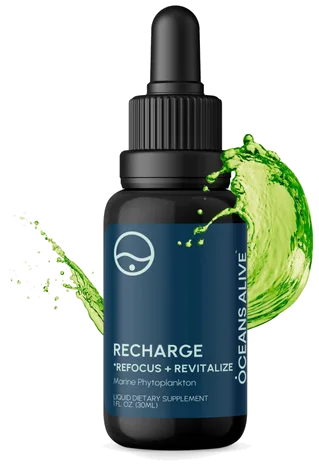
Oceans Alive RECHARGE Refocus + Revitalize Marine Phytoplankton Review
Activation Products RECHARGE Refocus + Revitalize Marine Phytoplankton is a premium liquid dietary supplement designed to deliver comprehensive cellular nutrition and enhance overall well-being. Formerly known as Oceans Alive Marine Phytoplankton and Raw Phytoplankton, this product is a concentrated blend of two specially cultivated marine phytoplankton strains: *Nannochloropsis Gaditana* (270 mg per serving) and *Tetraselmis* (30 mg per serving), suspended in a 700 mg Ocean Mineral Concentrate base. Marine phytoplankton, often hailed as Earth's original superfood, forms the foundation of the ocean's food chain and is naturally rich in a vast array of bioavailable nutrients. RECHARGE harnesses this potent nutritional profile, providing essential fatty acids (including vegan EPA omega-3s), chlorophyll, a complete spectrum of amino acids, carotenoids, antioxidants, and a wide range of vitamins (such as C, E, and various B vitamins, including provitamin-A beta-carotene) and trace minerals (like iron, magnesium, calcium, potassium, and phosphorus). The mechanism of action for RECHARGE centers on its ability to provide highly bioavailable micronutrients directly to the cells. Unlike capsule or powder formats, this liquid tincture delivers the phytoplankton cells in suspension, which Activation Products positions as a bioavailability advantage, suggesting that the nutrients are instantly recognized and absorbed by the body. The phytoplankton is grown in controlled photobioreactors using purified seawater, CO2, and sunlight, ensuring purity and freedom from ocean contaminants. This cultivation method, combined with stabilization in a trace mineral solution without heat or freeze-drying, preserves the integrity and potency of the delicate nutrients. At a cellular level, RECHARGE is believed to support mitochondrial function, the "engine of cellular energy production," through its chlorophyll and essential fatty acid content, leading to sustained energy without the crash associated with stimulants. Its rich antioxidant profile helps neutralize free radicals, combating oxidative stress and supporting healthy cellular growth and development. Furthermore, the supplement is marketed to support liver and detoxification pathways by nourishing the systems already at work, rather than acting as a dramatic "flush". It also contributes to brain health, mental clarity, and mood balance through its omega-3 content and overall nutrient density, which aids in neurotransmitter production and may help calm overactive immune responses in the brain. The product is also suggested to strengthen cell membranes, support the body's natural methylation process, and enhance immune function.
We don’t sell supplements. We help you make decisions and get the best price.
Lowest prices
We may earn a commission from some store links. How we choose.
We hold no current store prices for it yet: check the store.
Sold at: Activation Products
Study, Trial or Testing Result Summary
Members Only21 human studies · 9 improved
1 of these 21 human studies gave the ingredient by injection, not by mouth.
Two ingredients in this product have human research on energy. Tetraselmis is present at 30 milligrams, slightly above the 25 milligrams studied. In healthy adults, 25 milligrams a day for 14 days raised peak oxygen uptake, which did not happen with placebo, and it boosted the muscle's own antioxidant genes [1]. In 32 amateur soccer players, a higher dose of 200 milligrams a day for 30 days lowered heart rate and raised oxygen uptake and blood hemoglobin during a treadmill test [2]. Both trials were small and short. Magnesium is present at 70 milligrams, close to the 80 milligrams studied. Its results are mixed. It reduced fatigue in adults with metabolic conditions [3], improved energy in women with polycystic ovary syndrome [4], and, together with B vitamins, reduced fatigue in people with inflammatory bowel disease [5]. Weekly magnesium injections helped people with chronic fatigue syndrome [6]. However, it did not reduce fatigue in two fibromyalgia trials [7][8]. Most of these magnesium studies were in people with health conditions, not healthy adults. The ocean mineral concentrate and the Nannochloropsis algae have no human studies on energy. Animal and cell studies are never counted.
See all 21 studies →Hide the studies
- A review of 26 trials in 3,273 people with chronic fatigue syndrome found most supplements did not help, but magnesium and NADH showed benefit, though the trials were small and at high risk of bias.Complementary and alternative medicine for patients with chronic fatigue syndrome: a systematic review.
- A review of four diet trials in people with multiple sclerosis found that two diets providing enough folate and magnesium reduced fatigue, but firm conclusions were not possible.Is there an effect of dietary intake on MS-related fatigue? - A systematic literature review.
- In 171 adults with mild insomnia, a blend containing magnesium taken for 2 weeks did not improve sleep or physical fatigue more than placebo, as both groups improved similarly.Exploring the Effect of Lactium™ and Zizyphus Complex on Sleep Quality: A Double-Blind, Randomized Placebo-Controlled Tr…
- In 110 people with fibromyalgia, 3 months of a supplement with coenzyme Q10, tryptophan and magnesium did not significantly reduce fatigue (placebo improved significantly), though pain, sleep and overall impact improved.Effects of Coenzyme Q10, Tryptophan, and Magnesium Supplementation on Fatigue in Patients with Fibromyalgia - A Randomiz…
- In 98 adults with inflammatory bowel disease in remission, 4 weeks of magnesium plus B vitamins reduced fatigue more than placebo, and also lowered ulcerative colitis symptom scores but not Crohn's disease scores.Effects of B vitamins and magnesium on fatigue, disease activity and quality of life in inflammatory bowel disease.
- In 64 women with polycystic ovary syndrome, 10 weeks of magnesium improved the energy and fatigue score and total quality of life compared with placebo.The effects of magnesium supplementation on abnormal uterine bleeding, alopecia, quality of life, and acne in women with…
- In 49 patients after colon surgery, magnesium oxide (1 g every 12 hours) did not change fatigue or bowel recovery compared with placebo.Effect of the laxative magnesium oxide on gastrointestinal functional recovery in fast-track colonic resection: a double…
- In 32 people with chronic fatigue syndrome, weekly magnesium sulphate injections for 6 weeks led 12 of 15 treated patients to report benefit and better energy, versus 3 of 17 on placebo.Red blood cell magnesium and chronic fatigue syndrome.
- In 32 amateur soccer players, 200 mg a day of Tetraselmis chuii for 30 days (versus lactose powder) lowered heart rate and raised oxygen uptake, oxygen pulse and haemoglobin on a treadmill test.Effects of Tetraselmis chuii Microalgae Supplementation on Ergospirometric, Haematological and Biochemical Parameters in…
- In 30 adults with hypertension, diabetes or high blood fats, drinking water with 80 mg of magnesium daily for 4 weeks improved body mass index, insulin, triglycerides and fatigue compared with placebo water.Effects of deep ocean-derived magnesium-enhanced water on metabolic diseases with microbiome changes.
- In 22 college-aged adults taking 350 mg of magnesium daily for 10 days, muscle soreness and perceived recovery improved compared with placebo, but performance gains did not reach statistical significance.Effects of Magnesium Supplementation on Muscle Soreness and Performance.
- In 20 junior cyclists, a daily multi-nutrient tablet containing magnesium for 4 weeks led to faster fatigue recovery than a plain vitamin product, but magnesium was not tested alone.Studies concerning the ergogenic value of Cantamega-2000 supply in top junior cyclists.
- In 16 trained men with two nights of short sleep, zinc magnesium aspartate had no effect on sleep, ratings of fatigue or morning weightlifting performance compared with placebo.Effects of Supplementing Zinc Magnesium Aspartate on Sleep Quality and Submaximal Weightlifting Performance, following T…
- In people with fibromyalgia, 100 mg of magnesium daily for one month did not change fatigue more than placebo.Short-Term Magnesium Therapy Alleviates Moderate Stress in Patients with Fibromyalgia: A Randomized Double-Blind Clinica…
- In healthy adults in a crossover trial, 25 mg a day of Tetraselmis chuii for 14 days raised peak oxygen uptake (not seen with placebo) and increased muscle antioxidant gene activity compared with placebo.Tetraselmis chuii Supplementation Increases Skeletal Muscle Nuclear Factor Erythroid 2-Related Factor 2 and Antioxidant …
- In 92 patients with high blood pressure, magnesium at 320 mg a day reduced some complaints such as nervousness and sleep problems but had no effect on mental or physical fatigue.[Level of total and ionized magnesium fraction based on biochemical analysis of blood and hair and effect of supplemente…
- Eight healthy young men taking 6 grams of potassium-magnesium aspartate over 24 hours before a hard cycling test lasted about as long to exhaustion as those given placebo, so no endurance benefit was seen.The effects of oral administration of salts of aspartic acid on the metabolic response to prolonged exhausting exercise …
- In breast cancer patients taking 400 mg of magnesium oxide daily for 4 weeks, fatigue was significantly reduced, though this single-group pilot study had no placebo comparison.A pilot phase II trial of magnesium supplements to reduce menopausal hot flashes in breast cancer patients.
- In a large cohort of about 81,500 women aged 60 and older followed for a median of 16 years, higher magnesium intake was linked to a lower risk of frailty, with the top fifth of intake showing 12% lower risk than the bottom fifth.Total magnesium intake and risk of frailty in older women.
- Red blood cell magnesium was normal in 89 people with chronic fatigue syndrome, and a magnesium loading test in 6 of them found no deficiency, so the authors saw no reason to use magnesium treatment for this condition.Normal red cell magnesium concentrations and magnesium loading tests in patients with chronic fatigue syndrome.
- In 20 adults with a rare bone-metabolism disorder and 20 matched controls, magnesium intake from food did not differ between groups and was not significantly linked to symptoms such as tiredness.Mineral Intake and Clinical Symptoms in Adult Patients with Hypophosphatasia.
Review Totals and Summary
Members Only262 reviews · 92% positive
Customer feedback for Activation Products RECHARGE Refocus + Revitalize Marine Phytoplankton reveals several consistent qualitative themes, highlighting both significant benefits and some common considerations. A predominant theme among users is the experience of a noticeable and sustained increase in energy and mental clarity, often reported within the first few uses. This energy boost is frequently described as a nutritional uplift rather than a stimulant-induced rush, preventing the typical crashes associated with caffeine. Many customers also praise the product for improving mood and reducing brain fog, contributing to enhanced cognitive function and overall mental well-being. Beyond energy and focus, users frequently report broader improvements in overall health. Some individuals with long-term health issues, such as arthritis, have noted significant relief and better general health since incorporating RECHARGE into their routine. The product's role in supporting the immune system is another commonly appreciated benefit, providing a sense of "peace of mind" for many. The liquid format is consistently lauded for its perceived bioavailability and quick action, with customers feeling the effects rapidly after consumption. The purity of the product, stemming from its controlled photobioreactor cultivation, and its minimal, natural ingredient list are also positive points for many discerning consumers. Despite the seemingly small bottle, customers often find that a little goes a long way, indicating good value in terms of longevity of use. However, the taste of RECHARGE is a frequently mentioned point of contention. Many customers describe it as "earthy" or "not the best," with some even finding it "awful". Consequently, a common piece of advice from users is to mix the drops with juice to mask the flavor. While not a direct complaint, the price point of the supplement is an underlying consideration for some buyers, who weigh the product's unique cultivation and benefits against its cost compared to alternatives. Historically, there was a concern regarding the transparency of complete nutritional analyses, though more recent information emphasizes full ingredient disclosure. Finally, as with any supplement, users acknowledge that individual results can vary, and the benefits related to detoxification are understood as supportive rather than a dramatic cleansing effect.
Biohacker Summary
Members Only9 of 10 recommend it
Magnesium is the main ingredient, and all ten panelists spoke about it: most recommend it or take it themselves, mainly for sleep, with others citing blood pressure, stress, muscle recovery, mood and brain function. Preferred forms are glycinate for calming and sleep, and threonate for the brain, with three of them taking 400 mg of threonate before bed; others use electrolyte drinks that contain magnesium or a multi-form evening capsule blend, and one suggests 300 mg before bed. Daily totals mentioned run from 300 to 600 mg, and one panelist aims for about a gram, with timing advice of 90 minutes to 2 hours before bed. One panelist warns that labels can overstate the real magnesium dose, and says the evidence that it reliably improves sleep is inconsistent, while two others stay neutral and simply review the evidence.
See all 10 biohackers →Hide the biohackers
Dr. Eric Berg · Magnesium · recommends
- Recommends supplementing magnesium during prolonged fasting to prevent feeling unwell, especially since many individuals are already deficient.
- Recommends taking magnesium glycinate to fix intense leg cramps, stating that this form absorbs better and helps relax muscles.
- Recommends magnesium, specifically magnesium glycinate, for blood pressure control, sleep, stress reduction, prevention of muscle cramps, and energy support.
- States that magnesium could also be a factor in preventing muscle cramps.
- Recommends Magnesium glycinate, noting its high absorption rate compared to magnesium oxide, and its support for energy, sleep, muscle relaxation, and vitamin D function.
- Dr. Berg states that when nutrients like magnesium are too low, fatigue and weakness can follow.
- Recommends focusing on magnesium to support stronger bones if a neck hump is associated with osteoporosis.
- Explains that leg and calf cramps are most often caused by low magnesium, with leafy greens being a top source.
- States that magnesium is a cofactor that allows B1 to work more efficiently.
- Recommends ensuring that vitamin D supplements also contain magnesium to help it work better for shingles.
Thomas DeLauer · Magnesium · recommends
- Recommends pre-bed magnesium glycinate to lower evening cortisol through GABA-A support and to drop core temperature for sleep onset.
- Recommends taking magnesium glycinate and threonate at night to act as a brake on the nervous system, block excitatory signaling, help wind down, and support serotonin and melatonin production for better sleep.
- Mentions that magnesium glycinate also helps a lot with sleep.
- Mentions that restless leg syndrome is often treated with magnesium, but states that the sensation is actually coming from three other issues.
- Uses Element's cans which contain 30 milligram magnesium, finding that electrolytes help his workout performance.
- Uses Element's 30 mg magnesium cans first thing in the morning to prime his day and help with workout performance.
- Recommends magnesium around the time one would normally break a fast to calm the brain and dull feelings of conditioned hunger.
- Recommends magnesium, noting it is a cofactor for enzymes that build neurotransmitters, and deficiency can affect mood, happiness, and motivation.
- Notes that modern agricultural practices have led to soils depleted of trace minerals like magnesium, resulting in widespread magnesium deficiency.
- Recommends taking some magnesium glycinate tonight to help calm down and sleep.
Dr. Mark Hyman · Magnesium · recommends
- Recommends Magnesium Breakthrough Advanced 10 from Biooptimizers, stating it has 10 bioavailable forms and 550 milligrams of elemental magnesium, designed to support restful sleep, restorative sleep, muscle recovery, stress resilience, and metabolic health.
- Recommends magnesium breakthrough advanced ten from Biooptimizers, which is their most complete magnesium formula with 10 bioavailable forms and 550 milligrams of elemental magnesium, designed to support restful restorative sleep, muscle recovery, stress resilience, and metabolic health.
- Recommends considering magnesium glycinate before bed for nervous system support, deeper sleep quality, and to help the body transition into rest, and states that they take it every night.
- Explains that a lack of magnesium can cause muscles and nerves to malfunction, resulting in muscle weakness, twitching, and cramps.
- Recommends Magnesium Breakthrough Advanced 10 from Bioptimizers for restful sleep, muscle recovery, stress resilience, and metabolic health, especially during stressful times of the year.
- Recommends magnesium because it is involved in over 600 reactions in the body and up to 80% of people may have low levels that never get flagged on a standard blood test.
- Recommends magnesium as a basic supplement during detoxification to support pathways, help with constipation, and provide electrolytes.
- Recommends Magnesium Breakthrough Advanced 10 from Biooptimizers, which contains 10 bioavailable forms and 550 mg of elemental magnesium, to support restful sleep, restorative sleep, muscle recovery, stress resilience, and metabolic health.
- Has recommended magnesium breakthrough from bioptimizers for years and now uses Magnesium Breakthrough Advanced 10 as part of his evening routine, especially during periods of travel, training, and higher stress, to support sleep, muscle recovery, and metabolic health.
- Recommends correcting nutrient deficiencies with magnesium.
Bryan Johnson · Magnesium · uses
- Takes 400 mg of Magnesium Threonate before bed for sleep.
- Takes 400 mg of Magnesium Threonate before bed for sleep.
- Takes 400 mg of Magnesium L-Threonate before bed for sleep.
- Takes 400 mg of Magnesium Threonate before bed for sleep.
- He takes 400 mg of Double Wood Magnesium L-Threonate before bed for sleep.
- Takes 400 mg of Magnesium L-Threonate before bed for sleep.
- Takes 400 mg of Magnesium Threonate before bed for sleep.
- Takes 400 mg of Magnesium L-Threonate before bed for sleep.
- Takes 400 mg of magnesium L-threonate before bed for sleep.
- He takes 400 mg of Magnesium L-Threonate before bed for sleep.
Dr. Rhonda Patrick · Magnesium · recommends
- Explains that magnesium helps the body activate and metabolize vitamin D, and that magnesium intake has been associated with lower odds of vitamin D deficiency and insufficiency.
- Mentions that getting too little magnesium may play a role in declining testosterone levels.
- Recommends getting enough magnesium, around 300–400 mg daily from diet and supplements, as it is an essential cofactor for vitamin D metabolism. Magnesium glycinate is a good form.
- Notes that magnesium is very important for preventing damage to DNA and cancer, and that half the US population doesn't get enough of it.
- Mentions magnesium as one of the micronutrients found in multivitamins that people often don't get enough of from their diets.
- Explains that magnesium helps control blood pressure by boosting the production of substances that relax blood vessels and improve cardiovascular health, citing a meta-analysis that found magnesium supplementation at an average dose of 368 mg per day notably lowers both systolic and diastolic blood pressure.
- Magnesium supplementation has lowered blood pressure in randomized controlled trials. An analysis of 34 trials involving over 2,000 participants found modest reductions in both systolic and diastolic pressure, with a median dose of 368 mg/day.
- Warns that some magnesium supplements make the dose look much larger than it really is and that labels can fool people.
- Mentions magnesium as an important nutrient component for testosterone.
- Warns that some supplement companies mislead consumers by listing the total compound weight of magnesium citrate as the elemental magnesium dose, when the actual elemental magnesium content is much lower, potentially around 44-66 milligrams.
Andrew Huberman · Magnesium · recommends
- Notes that Les Spellman's team includes 'Magnesium timed right' as part of their game plan to optimize recovery in unfavorable conditions.
- Discusses Magnesium Threonate as a tool for falling asleep.
- Takes 400 mg of Magnesium Threonate before bed for sleep.
- Uses Element, an electrolyte drink with sodium, magnesium, and potassium in correct ratios and no sugar, to ensure adequate hydration and electrolytes, especially when starting days fast or during physical exercise.
- Takes 400 mg of Magnesium L-Threonate before bed for sleep.
- Confirms that magnesium is absolutely important for cognitive function, noting studies show those with lower magnesium intakes tend to perform less well on cognitive function tests, and it's related to brain changes over time and dementia risk.
- Takes 400 mg of Double Wood Magnesium L-Threonate before bed for sleep.
- He takes 400 mg of Magnesium L-Threonate from Double Wood before bed for sleep.
- Takes 400 mg of Double Wood Magnesium L-Threonate before bed for sleep.
- Takes 400 mg of magnesium L-threonate before bed for sleep.
Dave Asprey · Magnesium · uses
- Looks at magnesium alongside protein to keep muscle for the long run.
- Suggests adding magnesium to help keep potassium in the system longer, as they work hand in hand.
- Mentions magnesium in the context of sleep but states that it doesn't address the core issue of waking up during the night.
- Suggests that magnesium may help slow aging, support cellular repair, and improve sleep.
- States that magnesium can affect how the body responds to a supplement.
- Recommends fixing sleep with 300mg of Magnesium 101 before bed if diet and exercise aren't melting stubborn belly fat.
- Dave Asprey says his daily routine includes magnesium as part of a carefully developed combination for longevity.
- Recommends magnesium glycinate for sleep, stating that trials show it helps people fall asleep about 17 minutes faster and that he finds it incredibly effective.
- Mentions magnesium glycinate as one of the five gut-friendly, extensively researched ingredients in Kill Switch that helps with natural sleep.
- Dave Asprey recommends Magnesium Glycinate for sleep, noting human studies show it helps people fall asleep faster, is safe, and works on a fundamental aspect of health, unlike magnesium oxide which acts as a laxative.
Ben Greenfield · Magnesium · uses
- Uses magnesium during surgery because it is neuroprotective.
- Says he is drinking LMNT, which contains sodium, potassium, and magnesium, and states that he actually drinks this stuff.
- Mentions magnesium as part of a bare-minimum protocol.
- Advises getting red blood cell magnesium levels to the high end of the range as a minimum step for overall health and to slow down heart disease.
- Recommends supplementing with magnesium threonate if one is low in magnesium, as it crosses the blood-brain barrier and is demonstrated to increase hippocampus plasticity, theoretically making one smarter and improving memories.
- Uses Magnesium Breakthrough from BIOptimizers as part of their daily stack, taking four capsules in the evening to support relaxation, recovery, and a good night of sleep.
- Recommends Celtic Sea Salt's new electrolyte drink "Hydrate" for replacing electrolytes and trace minerals lost through sweat, noting it contains 70 naturally occurring trace minerals, plus magnesium, taurine, and potassium.
- Had heart palpitations when he was really overdoing magnesium, not knowing what he was taking.
- Recommends taking magnesium as a co-factor to increase vitamin D absorption.
- Notes a new study indicating that magnesium is a core dietary antioxidant closely associated with a reduced risk of accelerated biological aging.
Siim Land · Magnesium · recommends
- States that Magnesium can be a useful addition for some people for sleep.
- Recommends magnesium for sleep, especially deep sleep, and suggests trying better types like Threonate, Biscinate, or Torate, referencing a study where magnesium supplementation improved deep sleep.
- Recommends Magnesium for blood pressure, migraines and deficiency, based primarily on human research, especially randomized controlled trials showing measurable benefits.
- Lists Magnesium as one of 15 supplements backed by human studies.
- States that magnesium is a fundamental mineral governing over 600 enzymes and metabolic reactions, and recommends that most people need at least 400-500 mg/d for health, with some needing up to 600 mg/d.
- Lists seafood and pumpkin seeds as sources of Magnesium.
- Thinks magnesium has some of the strongest evidence and is worth considering.
- Recommends taking magnesium, specifically glycinate and threonate forms, 1 to 2 hours before bed for sleep benefits, noting that glycinate promotes relaxation and threonate crosses the blood-brain barrier for sleep quality and cognitive function.
- Notes that Boron reduces calcium/magnesium loss.
- Notes that magnesium is important for activating thiamine into its more biologically active form, and a magnesium deficiency can impair blood sugar regulation even with adequate thiamine intake.
Peter Attia · Magnesium · neutral
- Peter reviews the evidence for select off-label medications and supplements commonly used for sleep, including glycine, magnesium, ashwagandha, and phosphatidylserine.
- Suggests that zinc and magnesium could potentially help with vasodilation and sleep, particularly for women experiencing severe symptoms in the luteal phase.
- Peter discusses electrolytes and fiber and the ketogenic diet, specifically preventing magnesium loss.
- Recommends magnesium as one of the 'big three' micronutrients for bone health, suggesting a daily intake of 300 to 500 milligrams as a minimum, and personally aims for about a gram of supplemental magnesium.
- Recommends magnesium for optimizing bone mineral density, suggesting a daily intake of 300 to 500 milligrams as a minimum, but personally aims for about a gram.
- Takes a hardline view that most people do not have adequate or optimal levels of magnesium, and suboptimal levels will impede the metabolism of vitamin D because magnesium is a cofactor in its enzymatic conversion.
- Takes a hardline view that most people do not have adequate or optimal levels of magnesium, and suboptimal levels will impede vitamin D metabolism because magnesium is a co-factor in the enzymatic conversion of vitamin D.
- Takes magnesium as a straightforward supplement.
- Mentions that magnesium intake is often super low and impactful on testosterone levels.
- Discusses the important roles of magnesium in the body, how to determine if one might be deficient, the prevalence of magnesium deficiency, and its potential cognitive benefits.
RAL Summary
Members OnlyTier 3 for Energy
The rules took an 80 percent improvement rate from a single 1991 study of magnesium injections, yet the magnesium studies as a whole are mixed (7 of 19 improved, 9 showed no effect), and the only other support is two small, short Tetraselmis trials, which is some study support rather than clear improvement. So it is graded Tier 3, lower than the rules alone gave.
Where the evidence disagrees: 9 of the 21 human studies found no effect.
More Details
Members OnlyBody systems · Combine with · Possible side effects
Body systems: Muscular system, Cardiovascular system, Nervous system
Combine with: To synergistically enhance the benefits of Marine Phytoplankton, especially for energy and cognitive support, consider combining it with a B-complex vitamin for optimal energy metabolism and nerve function. Magnesium can also be beneficial, as it plays a crucial role in over 300 enzymatic reactions, including energy production and neurotransmitter synthesis. For enhanced cognitive function and cellular health, supplementing with additional Omega-3 fatty acids (EPA/DHA), perhaps from an algal oil source, would be highly complementary. Finally, an adaptogen like Rhodiola Rosea or Ashwagandha could further support stress resilience and sustained mental focus, aligning with the 'Refocus + Revitalize' goals.
Possible side effects: No major side effects reported.
Supplement Facts
Magnesium 70 mg · Ocean Mineral Concentrate 700 mg · Nannochloropsis Gaditana Algae 270 mg
| Magnesium | 70 mg | 17% |
| Ocean Mineral Concentrate | 700 mg | † |
| Nannochloropsis Gaditana Algae | 270 mg | † |
| Tetraselmis Phytoplankton (whole) | 30 mg | † |
Directions: Step 1 Fill the dropper. 12 to 17 drops, first thing in the morning, before food. Step 2 Hold it thirty seconds under the tongue. The particles are small enough to cross there, straight into the bloodstream, instead of being filtered through digestion. Step 3 Never heat it, no hot drinks, no cooking. Keep the cap on and store it out of direct sunlight. DON'T LIKE IT STRAIGHT? Chase it with water. Or stir the drops into a tart juice or a cold smoothie, which is slower to the bloodstream and still beats a bottle you stopped opening.
Label source: Activationproducts · Report a label change
Show entire label
More energy products
Members OnlyThe highest ranked for the same goal
Read more
Our articles on this subject
- Magnesium Glycinate vs Citrate: What the Studies ShowArticle · Oct 30, 2026
- Magnesium Glycinate vs Threonate: Which Form Is Right for You?Article · Nov 6, 2026
Graded October 30, 2026 by the Reverse Age Lab evidence engine, from human studies, real reviews and our biohacker panel. How we grade. Is this medical advice? No. Rala organizes the published evidence; go over any change with your doctor, especially if you take meds.
Privacy policyConsumer health dataAffiliate disclosureTermsBrand and legal noticesDo Not Sell or Share My Personal InformationCookie settings