
Pro-Nutra Methoxyburn Review
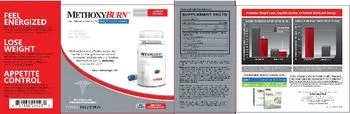
Promotes Weight Loss, Appetite Control, Enhanced Mood and Energy. Please read entire label before use. Physician recommended. For maximum results the page suggests combining MethoxyBurn with GRP6 (TM), one capsule one hour prior to bedtime, and GUAVA (TM) Super Fruit, one capsule in the morning and one capsule in the afternoon for appetite control. The page explains that the metabolic rate enhancers and complementary constituent compounds are designed to act along the pathways principally responsible for controlling appetite and caloric intake. Claims shown on the page include appetite control shown to increase energy by up to 250 percent, measured by epinephrine (adrenaline) levels at 120 minutes compared to a methylxanthine control group, and a reduction in fat by up to 41.3 percent in a high-fat diet model compared to a high-fat fed diet control, with a chart comparing an Ilex paraguariensis extract. The page states these are component constituent statements shown in an independent 3rd party research model. The metabolic rate enhancers in MethoxyBurn (TM) are paired with high-grade phytochemical extracts designed to act along principal pathways influencing weight management, including cyclic-AMP modulation, CNS modulation and thyroid modulation. Dr. Gary I. Weinberger is listed as a member of Pro Nutra's scientific advisory board and is quoted saying MethoxyBurn is an effective weight loss formula for energy enhancement and increased metabolic rate and function, and is most definitely in a class by itself. The page lists the goals of losing weight, feeling energized and appetite control, and notes these apply when combined with a proper exercise and nutrition regimen. Statements are based on early-stage independent 3rd party in vivo and or in vitro model scientific research data findings. Precautions on the page: do not use if the safety seal is broken. The product contains niacin, which may cause temporary flushing, tingling, skin reddening and sensations of heat, especially on an empty stomach; the page calls this natural and harmless. The recommended serving contains approximately as much caffeine as two cups of coffee, so do not consume caffeine or combine with synephrine from other sources including coffee, tea, soda, or medications containing phenylephrine or caffeine. Discontinue use for dizziness, severe headache, rapid heartbeat or shortness of breath. Do not exceed the recommended dose or take for more than eight consecutive weeks. Not for pregnant or lactating women, persons under 18, or those with a medical condition without physician consent. Discontinue two weeks prior to surgery. Keep this product and all supplements out of the reach of children.
We don’t sell supplements. We help you make decisions and get the best price.
Lowest prices
We may earn a commission from some store links. How we choose.
Finding the lowest prices at the stores now. This takes a few seconds.
Study, Trial or Testing Result Summary
Members Only39 human studies · 4 improved
1 of these 39 human studies gave the ingredient by injection, not by mouth.
The main part of this product is a 392 mg proprietary blend whose contents are hidden, and no human studies of it were found. The vitamins in it have weak or negative evidence for weight. Vitamin B12 is given at 500 micrograms, the same amount tested in a two-year trial of 2919 older adults, which found no change in body mass index, fat mass or lean mass [1]. Women with obesity tend to have lower B12 levels, but that only shows a link, not that taking B12 helps [2][3]. For niacin, a pooled analysis of 5,144 people found a slight drop in body mass index but no change in body weight [4]. A 12-week trial of 941 adults, most of them women, found no change in body mass or body composition with a niacin-containing combination [5]. Related niacin forms did not reduce body fat in trials [6][7]. No human study has tested thiamin supplements for weight in women. Eating oranges that raised thiamin intake did not change body weight [8], and weight loss after surgery was not linked to thiamin levels [9]. Overall, there is no good evidence that this formula helps women manage weight. Animal and cell studies are never counted.
See all 39 studies →Hide the studies
- Across 22 treatment arms with 5,144 people, niacin-family supplements slightly lowered body mass index and raised adiponectin compared with controls, but did not change body weight or leptin; nicotinic acid lowered body mass index more than nicotinamide.The effects of NAD+ precursor (nicotinic acid and nicotinamide) supplementation on weight loss and related hormones: a s…
- A review of 20 articles on thiamine for people with heart failure reported better heart function, urine output, weight loss and symptoms, but it was not about weight management in healthy women and called for larger trials.Thiamine supplementation for the treatment of heart failure: a review of the literature.
- In 2919 adults aged 65 and over with raised homocysteine, two years of vitamin B12 (500 mcg) plus folic acid (400 mcg) did not change body mass index, fat mass or lean mass compared with placebo.B-vitamins and body composition: integrating observational and experimental evidence from the B-PROOF study.
- In 941 adults (60% women) taking quercetin with vitamin C and niacin for 12 weeks, body mass and body composition did not differ from placebo in women or men.Quercetin with vitamin C and niacin does not affect body mass or composition.
- In 506 obese patients after gastric bypass surgery, a longer bypassed intestine limb (120 cm vs 70 cm) gave no extra weight loss over 5 years but required more vitamin B12 supplementation.Impact of Biliopancreatic Limb Length (70 cm vs 120 cm), with Constant 150 cm Alimentary Limb, on Long-Term Weight Loss,…
- In 102 healthy men over 6 weeks, replacing some red meat with legumes lowered weight and BMI but also lowered vitamin B12 intake and status; B12 was not given as a supplement and the study did not include women.Nutritional and health benefits of a partial substitution of red and processed meat with non-soy legumes: a 6-week rando…
- In 68 older adults with new dentures, a dietary advice program improved BMI over 3 months, but vitamin B12 intake did not differ significantly from the control group.Effectiveness of dietary intervention in geriatric patients receiving new complete dentures: A randomized controlled tri…
- In 62 men and women with fatty liver disease, eating 400 g of whole oranges daily for 4 weeks did not change body weight, waist size or body composition compared with other fruits, though thiamine intake rose from the oranges.Daily Orange Consumption Reduces Hepatic Steatosis Prevalence in Patients with Metabolic Dysfunction-Associated Steatoti…
- In 58 adults with mild high blood pressure, a 6-week vegetarian diet lowered vitamin B12 intake and caused no consistent change in body weight.Vegetarian diet in mild hypertension: a randomised controlled trial.
- In 53 healthy adults, 4 weeks of an unsupplemented vegan diet lowered vitamin B12 status compared with a meat-rich diet, and body weight stayed stable in both groups.Vitamin B12 Status Upon Short-Term Intervention with a Vegan Diet-A Randomized Controlled Trial in Healthy Participants.
- In 42 overweight older adults (about half women) taking a multi-ingredient blend containing nicotinamide for 8 weeks, hunger and appetite improved more than with placebo (91% vs 47% improved mealtime appetite) along with cholesterol and fasting glucose; weight was not reported.A novel fasting mimetic (Mimio) creates fasting-like benefits to hunger control, oxidative stress, and cardiometabolic h…
- In 40 obese men taking 2000 mg of nicotinamide riboside daily for 12 weeks, body composition, energy expenditure and insulin sensitivity did not differ from placebo.A randomized placebo-controlled clinical trial of nicotinamide riboside in obese men: safety, insulin-sensitivity, and l…
- In 37 people with heart risk factors, an 8-week plant-based diet lowered weight and BMI but left vitamin B12 intake below recommendations; B12 was not given as a supplement.Does a Plant-Based Diet Stand Out for Its Favorable Composition for Heart Health? Dietary Intake Data from a Randomized …
- In 20 overweight African-American women dieting and exercising, 600 mcg daily niacin-bound chromium for 2 months caused more fat loss than placebo in one group but less in the other group, with weight loss similar overall.Effects of niacin-bound chromium supplementation on body composition in overweight African-American women.
- In 13 overweight or obese men and women, 1000 mg daily nicotinamide riboside for 6 weeks slightly raised fat-free mass percentage and sleeping metabolic rate versus placebo, but had no effect on insulin sensitivity or other metabolic measures.Nicotinamide riboside supplementation alters body composition and skeletal muscle acetylcarnitine concentrations in heal…
- In 20 pairs of identical twins with different body weights, taking nicotinamide riboside at escalating doses of 250 to 1000 mg a day for about 5 months raised NAD levels and muscle mitochondria but did not reduce body fat or improve metabolic health.Nicotinamide riboside improves muscle mitochondrial biogenesis, satellite cell differentiation, and gut microbiota in a …
- In 11 adults on a four-week gluten-free diet, body weight and BMI fell, while thiamine intake dropped after two weeks; this study did not test thiamine supplementation for weight management in women.Gluten-free diet intervention reduces thiamine intake in two weeks, increases glycaemic response and decreases body weig…
- In 496 pregnant women, those with obesity had lower median plasma vitamin B12 than women with normal BMI, and B12 fell as BMI rose.Folate and vitamin B12 levels in early pregnancy and maternal obesity.
- In a case-control study of 304 non-diabetic obese patients and 150 normal-weight controls, vitamin B12 levels were lower in obese patients, were negatively correlated with BMI and insulin resistance, and 13.5% of obese patients were B12 deficient.VITAMIN DEFICIENCY AND INSULIN RESISTANCE IN NONDIABETIC OBESE PATIENTS.
- In 334 Mongolian adults (167 men and 167 women), vitamin B12 inadequacy was low, while overweight and obesity were common (61 percent of men and 51 percent of women); the urban diet pattern, not vitamin B12, was linked to higher body mass index.Diet and Nutrition Status of Mongolian Adults.
- In a cross-sectional study of 225 kidney transplant recipients, 14 percent had low vitamin B12 levels, and in women low vitamin B12 was linked to higher body fat and waist size; this was an association, not a supplement test.Vitamin B12 status in kidney transplant recipients: association with dietary intake, body adiposity and immunosuppressio…
- In 155 adults with irritable bowel syndrome, most had low vitamin B12 intake from food, and weight was linked to energy intake, but the abstract does not report a B12 effect on weight.Intake of fiber and micronutrients in patients with IBS.
- In 142 postmenopausal women, higher vitamin B12 intake from food was linked to higher bone mineral density, and body weight was tied to bone density, but B12 was not studied as a weight-management measure.Diet, weight, cytokines and bone health in postmenopausal women.
- In 141 haemodialysis patients, vitamin B12 intake was higher than recommended, while energy, protein, and fibre intakes were too low, and the study found that body weight status alone is not a good guide to nutrient needs.Analysis of nutrition and nutritional status of haemodialysis patients.
- In a cross-sectional survey of 102 lactating Syrian refugee women, 71.5% had inadequate thiamine intake from their diets, and no supplement or weight outcome was studied.Assessment of the nutritional status of Syrian refugee women in the lactation period.
- In 100 privately institutionalized elderly adults in Tehran (63 women), cobalamin (vitamin B12) intake was below recommended levels, and almost half had body mass index under the 5th percentile, indicating chronic energy malnutrition.Food intake and Body Mass Index in the privately institutionalized elderly in Tehran.
- In a retrospective real-world study of 94 adults (mostly women) on weekly a med combined with vitamin B12 injections, average weight fell by about 4.1 kg over 3 months with loss of fat mass, but the study cannot separate the effect of vitamin B12 from a med.Read the study on PubMed (39776038) →
- In 92 young Saudi women, with 44 obese and 48 of normal weight, vitamin B12 levels were linked to differences in gut bacteria, and dietary vitamin B12 intake was correlated with certain bacterial species differently in obese and total participants.Vitamin B12 Status and Gut Microbiota among Saudi Females with Obesity.
- In a 1979 dietary survey of 77 Nauruan adults, thiamin intake was inadequate despite very high calorie intake and high obesity rates, and no supplement was tested.Nutrient intakes in an urbanized Micronesian population with a high diabetes prevalence.
- In 61 bariatric surgery patients followed for one year, those with nerve symptoms had vitamin B1 levels that did not differ significantly from those without, and weight loss was not linked to vitamin B1 levels.Peripheral neuropathies after bariatric surgery. Preliminary results from a single-centre prospective study in Northern …
- In a one-week food diary study of 48 obese women on a 1500 calorie diet, 60% had niacin intake below the recommended norm; the study did not test niacin or measure weight change.[Assessment of realization of a reducing diet by obese women during treatment of excessive body mass].
- In a survey of 45 women, vegetarians had lower niacin intake than nonvegetarians, and vegetarians were leaner; the study did not give niacin supplements or test its effect on weight.Nutrient intakes and eating behavior scores of vegetarian and nonvegetarian women.
- In 41 people who had stomach bypass surgery for weight loss, most lost weight adequately, but many became deficient in iron and vitamin B12; severely deficient people did not respond to 50 micrograms of oral vitamin B12 tablets, while those with milder deficiency usually did.Late effects of gastric bypass for obesity.
- In 10 women with obesity compared with 10 normal-weight women, plasma and red blood cell thiamin levels were lower in the women with obesity, which the authors interpret as thiamin being stored in cells, and no weight change was measured.Obese individuals as thiamin storers.
- In 13 low-weight patients with anorexia or bulimia, thiamin status was normal at discharge from a treatment program that included nutritional rehabilitation, but no thiamin dose or weight outcome was reported for thiamin itself.Vitamin status of eating disorder patients: relationship to clinical indices and effect of treatment.
- In a cross-sectional study of obese women, serum vitamin B12 was lower than in non-obese women, and obese women were more likely to be deficient, with B12 levels also negatively correlated with body mass index.Evaluation of serum Vitamin B12 level and related nutritional status among apparently healthy obese female individuals.
- In a gut microbiome study of Chinese obese adults, vitamin B12 was among the blood measures linked to gut bacteria patterns across obesity severity levels, but the abstract does not report a B12 effect on weight.Gut Microbiota Signature of Obese Adults Across Different Classifications.
- A gut-targeted, delayed-release form of niacin increased gut bacteria linked to metabolic health and improved insulin sensitivity and inflammation markers in people, but weight change was not reported.Targeted Microbiome Intervention by Microencapsulated Delayed-Release Niacin Beneficially Affects Insulin Sensitivity in…
- In a study of diabetic mice (not people), a mixture containing thiamin, arginine, caffeine, and citric acid reduced fat tissue weight more than any single component alone, but thiamin was not tested by itself.Anti-obesity effects of a mixture of thiamin, arginine, caffeine, and citric acid in non-insulin dependent diabetic KK m…
Review Totals and Summary
Members OnlyWhat buyers say
Real customer feedback on MethoxyBurn is very sparse. I found no large retailer review pool, and the product is listed as unavailable at stores. The only consumer review I found was a single rating on Influenster. It was a middling three out of five with no written themes I could extract. Other sources are not genuine customer feedback. One WordPress blog calls it the best product its team ever tested, but the text is generic and looks like auto-generated affiliate copy, so I would not treat it as reliable. A diet-review site, ConsumersCompare, gave the most substantive outside assessment. It said the supplement only helps alongside diet and exercise, and that taken alone it would produce no real weight loss. Its reviewer also complained about the high price, the unclear instructions on when to take the pills relative to meals, and the warnings, which seemed worrying given the empty-stomach directions. Separately, Men's Journal lists the product in a fat-burner guide, which shows it was known in the supplement market. Taken together, the limited evidence points to these themes. Buyers and reviewers expect an energy lift and appetite suppression from the caffeine-and-B-vitamin formula. They have doubts about whether it delivers real weight loss without lifestyle changes. They are bothered by the premium cost and by vague dosing guidance, and the niacin flush and stimulant warnings give some of them pause. I could not verify any claims about pill size, taste, or long-term results, because no source discussed them. I would not draw firm conclusions about satisfaction from this small, partly unreliable sample.
Biohacker Summary
Members Only7 of 10 recommend it
The panel treats this product's three main ingredients, vitamin B1, niacin and vitamin B12, as worth having, with the most talk about niacin and B12 and very little about B1. For niacin, several panelists recommend it as a building block for NAD, a cell energy molecule, and prefer niacinamide for skin protection and skin moisture; one gave 500 milligrams twice a day, one takes 15 milligrams in a daily stack, and another favors cheap flush niacin, while one panelist who once prescribed it stopped after trials showed disappointing heart results. For B12, most of the panel recommends getting levels checked and fixing a shortfall, citing mood, nerve health, energy and brain function, with methylcobalamin the form they favor, and one suggests a liposomal form and another pairs it with B6 and folate. One panelist cautions against taking B12 too close to bedtime, and for vitamin B1 only two or three panelists spoke, linking it to nerve function, swelling and bloating, and low levels from heavy alcohol use.
See all 10 biohackers →Hide the biohackers
Dr. Eric Berg · Vitamin B1 · recommends
- States that taking Vitamin B1 might help with swollen legs and ankles.
- States that expensive NAD+ supplements only turn into $5 niacin in the body and that research has shown niacin can actually raise NAD levels in the blood 5 to 8 times their baseline levels.
- Dr. Eric Berg states that vitamin B1 supports the nerve function and energy production involved in the brain's response to changes in hearing, which plays a major role in tinnitus.
- Dr. Berg suggests that supporting vitamin B1 intake may help address the stress behind bloating.
- Recommends cheap flush niacin, stating that it outperforms expensive NAD supplements and even IV drips in raising NAD levels in the blood.
- Recommends taking the fat-soluble version of vitamin B1, benfotiamine, to support blood flow to the nerves and counter complications of diabetes.
- Notes that Vitamin B1 is intimately involved in the nervous system and may be behind sciatica and carpal tunnel syndrome.
- Recommends taking the natural form of vitamin B12, methylcobalamin, to support nerve regeneration, myelin production, and nerve growth factors.
- Notes that Vitamin B12 is intimately involved in the nervous system and may be behind sciatica and carpal tunnel syndrome.
- Recommends vitamin B1 as a way to lower blood sugar for better sleep.
- States that cheap niacin, which creates a flush, ends up more in the blood than expensive NAD versions, suggesting it is more effective for unhealthy individuals.
- States that Vitamin B1 supports nerve function.
- Recommends taking vitamin B1 to counteract the effects of tannins in tea.
- Niacin is linked to several areas of physical and mental health. Studies have looked at its effects on cholesterol, the heart, liver health, schizophrenia, depression, and bipolar disorder.
Thomas DeLauer · Vitamin B12 · recommends
- Recommends Vitamin B12 for mental health and mood, explaining its role in myelination and neurotransmitter production. They specifically recommend a liposomal and micellar form of methylcobalamin B12 for better absorption and to avoid toxicity.
- Uses niacin as part of their detoxification protocol, taking enough to flush about half an hour before a sauna session.
- Warns against conventional cereal, describing it as extruded, sugared, and then sprayed with vitamins that were destroyed during its making.
- Mentions that a single serving of sardines provides vitamin B12 at something like three to four times the daily needs.
- Recommends taking methylcobalamin as a methylated form of B vitamin for mitochondrial function.
- Discusses niacin as an essential vitamin involved in NAD production and known for its flushing effect as a vasodilator. He also mentions its role as an agonist for GPR109A receptors, which could potentially block fat mobilization.
- Notes that Niacin or Vitamin B3 can be good, but taking a lot can increase methylation, so it needs to be balanced.
- Warns that taking high doses of Niacin can put a lot of burden on the methylation system.
- Recommends Hiya multivitamins for kids, describing them as monk fruit sweetened chewable vitamins that provide essential vitamins and minerals children might miss in their diet.
- Recommends Haya Kids multivitamins because they are sugar-free, and his own children love them as a treat while getting their nutrients.
- Advises against taking vitamin B12 if one's diet already provides enough, suggesting a B complex or liver capsule instead for B vitamins.
- Was taking Vitamin B12 with fat burner injections, which he later stopped cold turkey, leading to a period of intense emotional and hormonal imbalance.
- Warns that high levels of supplemental vitamin B12 are a risk factor for insomnia, as it is an energy-building supplement, and advises taking it in the morning or lowering the dose.
- Mentions that his two kids, aged seven and five, enjoy taking Haya's chewable multivitamin, which is sweetened with monk fruit, and he feels good about them taking it because it's not synthetic stuff with sugar.
Dr. Mark Hyman · Niacin · neutral
- Explains that pellagra, which killed 100,000 Americans, was a niacin deficiency, a B vitamin.
- States that vitamin B12 is a nutritional deficiency that impacts mental health.
- Recommends vitamin B12 with vitamin B6 and folate as supplements with strong evidence for PMS.
- Mentions that repletion of vitamin B12 can help safely withdraw someone from meds and that simple vitamin B12 deficiencies are important to address in a depression workup.
- Lists Vitamin B12 as important for nerve health and energy.
- Lists niacin as a B vitamin cofactor that helps mitochondrial function.
- Mentions vitamin B12 as a core nutrient required for methylation, noting that deficiencies can lead to various health issues.
- Recommends supplementing with Vitamin B12 for hair follicle health and growth, especially for vegans, as many people are deficient.
- Recommends checking vitamin B12 levels as a first step before taking any supplements.
- Warns that meds (meds) block the absorption of vitamin B12, which requires stomach acid to be absorbed. Long-term B12 deficiency can lead to depression, neurological problems, and dementia.
- Recommends Vitamin B12 in the form of methylcobalamin, about 1000 micrograms a day, as a methylating vitamin necessary for detoxifying and excreting hormones.
- Uses niacinamide as part of a compounded acne cream.
- Dr. Hyman states that vitamin B12 deficiency is common, affecting 80-90% of vegans and vegetarians, and over 20% of adults in the general population, often due to acid blockers, digestive issues, or insufficient intake.
- Recommends vitamin B1, thiamine, found in lean pork and beef, as extremely important for overall brain function.
Ben Greenfield · Niacin · neutral
- States that Nrf2 activators, when combined with something like niacin, may have a good effect on plaque progression.
- Recommends getting vitamin B12 tested and supplementing if deficient, as B12 deficiency can cause damage to the myelin coating around nerves, including cochlear nerves, and improve tinnitus severity scores.
- Mentions nicotinamide as an ingredient found in many NAD products and notes that niacinamide and nicotinamide are structurally the same.
- Believes the niacinamide approach, along with the NAMPT/salvage pathway angle, is underrated and deserves more attention.
- Mentions niacin as a natural approach that might be good for plaque regression.
- Notes that 10X Health System's methylene blue tablets plus light stack supports energy and recovery at the cellular level by promoting healthy metabolism through niacinamide.
- Uses Niacinamide as a clean building block for NAD+ as part of NAD Regen.
- Recommends priming the skin with niacinamide to reduce hyperpigmentation, noting its effectiveness in reducing hyperpigmentation by 50% in an ex-girlfriend's laser burn.
- Mentions that a deficiency in niacin could lead to handling far less alcohol due to its role in detoxifying acetaldehyde.
- Recommends Hiya's best-selling children's vitamin for kids to get the full-body nourishment they need.
- Mentions niacin as a supplement that can really heat the body up, leading to more sweating and detox.
- Has been impressed with and uses Scandinavian Biolabs Bio-Pilen shampoo, conditioner, and serum, which contain ingredients like niacinamide, aloe vera, an amino acid complex, vanillyl butyl ether, zinc PCA, and Capilia Longa to help with hair growth, strength, and recovery.
- He recommends Vitamin B12, especially for kids on a vegan or vegetarian diet, as it is essential for nervous system development.
- Mentions that blood testing for an energy crisis would include nutritional things like a vitamin B12 level.
Dave Asprey · Niacin · recommends
- Recommends niacin, a form of vitamin B3, as one of the two most important raw materials for NAD+ production, found in foods like beef liver, chicken, turkey, and fish, or from supplements.
- States that Vitamin B12 is extremely important for every kind of brain function and recommends ensuring B12 levels are optimal, around 500, not just barely above normal.
- Dave Asprey recommends niacin, a form of vitamin B3, as one of the two most important raw materials for NAD+ production, found in foods like beef liver, chicken, turkey, and fish.
- Notes that niacin has been a standard longevity ingredient since the 1990s.
- Dave discusses how niacinamide compares as an NAD precursor.
- Dave explains that niacinamide is an old-school way to mildly elevate NAD levels, and it was the only way to raise NAD in the very early days.
- Used niacin for a while to address plaque in his arteries and high LP(a), but stopped because it caused high liver values and made him feel unwell, despite dropping his LP(a).
- Recommends taking vitamin B12 if one has a deficiency.
- States that he has been using niacinamide for up to 20 years for longevity.
- Mentions that niacinamide is the very oldest way of raising NAD.
- Likes niacinamide, which is a precursor to NR and NMN.
- Takes niacinamide, along with NR and NMN, for longevity, believing it provides similar performance for NAD levels.
- Mentions that the US government required the addition of vitamin B1 to processed grain to prevent malnutrition deaths.
- Dave Asprey notes that it's almost impossible to get vitamin B12 in a vegan diet, and it's primarily found in animal meat.
Siim Land · Vitamin B12 · uses
- Created Microvitamin, a supplement that bundled all the supplements he was taking, to help fund his a med trial.
- States that vitamin B12 deficiency is the most common reason for premature graying of hair and recommends fixing B12 status if it is deficient, as it gives a greater likelihood of reversing gray hair.
- Suggests that in the mornings, NAD supplements like niacinamide can help kickstart the circadian rhythm.
- Recommends Niacinamide for skin protection, explaining it works partly through NAD metabolism that the body uses against DNA damage and is found in protein sources.
- Mentions that only specific therapies like niacin can meaningfully reduce Lp(a).
- Notes that Niacin notoriously raises HDL cholesterol, but this increase does not lower the risk of heart disease events, and while it can be good in many cases, very high doses can affect liver function.
- Places Thiamine, Vitamin B1, in the 'good' tier for its benefits in blood sugar regulation and energy metabolism, noting that he personally takes bentothiamine occasionally, especially when consuming many carbohydrates.
- Recommends niacin as a much cheaper and equally effective NAD booster compared to NMN and NR.
- Warns that niacin, an NAD precursor, can shorten sleep.
- Recommends taking 100-300 milligrams of niacin before a sauna session, as part of the Hubert protocol, to enhance sweating, vasodilation, and potentially detoxification and cardiovascular benefits.
- Warns that Niacin, especially at high doses like 2000 mg per day, can disrupt sleep by increasing energy levels too high, causing flushing, and reducing deep sleep while increasing shallow non-REM sleep.
- Discusses Niacinamide as a form of vitamin B3 that can increase NAD+ levels, but notes it's not as effective as NMN or NR for longevity and can cause flushing.
- Mentions that Niacin is known to raise HDL cholesterol, but this does not lower the risk of heart disease events. He considers it a good supplement for many cases, noting that very high doses can affect liver function, and its benefits mostly stop at increased HDL cholesterol.
- Places Thiamine (Vitamin B1) in the 'good tier' for its benefits in blood sugar regulation and energy metabolism, noting it has more limited evidence than glycine or taurine. He personally takes benthamine occasionally when consuming many carbohydrates.
Andrew Huberman · Vitamin B12 · neutral
- States that a deficiency in vitamin B12 can be terrible and lead to chronic fatigue-like syndromes, as many parts of mitochondria require B vitamins.
- Recommends taking methyl B12 as part of methylated B vitamins to lower homocysteine levels and reduce cardiovascular risk.
- Has been taking AG1 for over 10 years, once and often twice every day, to ensure he gets all necessary vitamins, minerals, probiotics, and adaptogens, considering it a nutritional insurance policy.
- Reviews data on ingesting or topically applying niacinamide to improve skin's youthfulness and appearance, including reducing wrinkles, sagging, and pore size.
- Recommends niacinamide supplementation, a form of Vitamin B3, at 500 milligrams twice per day for a total of 1 gram daily, to increase ceramide production, improve skin moisture, reduce inflammation, balance oil production, and reduce the appearance of clogged pores and hyperpigmented spots.
- Has been taking AG1 since 2012 to ensure he gets enough vitamins, minerals, Prebiotic fiber, and other nutrients typically found in fruits and vegetables, providing nutritional insurance.
- Andrew Huberman started drinking AG1 in 2012 and still drinks it once or twice a day because it provides all his foundational nutritional needs, ensuring proper amounts of vitamins, minerals, probiotics, and fiber for optimal mental health, physical health, and performance.
- Recommends the consumption of B12 and other B vitamins, especially folate, as it has been shown to partially decrease cancer risk in people who ingest alcohol, though it does not completely offset it.
- Started taking AG1 in 2012 and still takes it once or twice a day because it covers foundational vitamin, mineral, and probiotic needs, and supports immune system function and a healthy gut microbiome.
- He has been using Athletic Greens for over a decade to cover his vitamin and mineral bases and support his gut microbiome, immune system, gut-brain axis, and mental functions.
- Recommends Methyl B12 as part of methylated B vitamins to lower homocysteine and reduce cardiovascular risk.
Dr. Rhonda Patrick · Vitamin B12 · warns
- Warns that Vitamin B12 enhances light's melatonin-suppressing effects and should be avoided too close to bedtime.
- Explains that alcohol consumption can lead to a deficiency in thiamine (Vitamin B1), which is essential for nerve function and brain health, by impairing its absorption and inhibiting its utilization.
- Notes that thiamine, a type of B vitamin, was used in combination with intravenous vitamin C and hydrocortisone in a study for sepsis patients, which decreased the risk of organ failure and death.
- Notes that studies suggest intravenous vitamin C alone or in combination with other treatments like thiamine can decrease the risk of organ failure and mortality in patients diagnosed with sepsis.
- States that NAD can be synthesized from the three forms of niacin, also known as vitamin B3, found in foods like lean meats, legumes, and veggies.
- Notes that a med can cause vitamin B12 deficiency, especially as absorption decreases with age, and suggests a sublingual form or B12 injections for older individuals.
- Discusses the origin of Vitamin B12, suggesting it's a microorganism that propagates in the soil and that animals get it from eating dirt, which is why it's less available in modern, sanitized plant foods.
- Describes a study where female mice fed a diet high in B vitamins, folic acid, and vitamin B12 three weeks before pregnancy had offspring that no longer had yellow fur and were not predisposed to obesity and cancer.
- Dr. Rhonda Patrick explores vitamin B12 and autism risk.
- She takes methyl B12 as part of her Thorne multivitamin, which helps keep her homocysteine levels below 9 micromoles per liter.
- Describes a study where female mice fed a diet high in B vitamins, folic acid, and vitamin B12 had offspring that silenced a gene predisposing them to obesity and cancer.
- Supplements with vitamin B12, but also notes many of the foods he eats are fortified with it, and his levels are fine.
- Dr. Rhonda Patrick discusses vitamin B1's effect on blood sugar.
- A separate study treated 47 sepsis patients with 6 grams of intravenous vitamin C four times per day for four days along with hydrocortisone and thiamin, and approximately 8 percent of the patients in the treated group died compared to 40 percent in the control group.
Peter Attia · Niacin · uses
- Peter Attia's AVIA Skincare vitamin C serum also contains niacinamide, which is useful to apply to the skin right after washing.
- Notes that deficiencies in certain vitamins and minerals, such as B12, can be a cause of hair loss in women.
- Used to prescribe niacin to many patients, primarily to raise HDL, lower APO B, triglycerides, LDL, and LP(a), but stopped after clinical trials showed minimal or disappointing effects on reducing cardiovascular events.
- Notes that niacin lowers LP little a but was not shown to have clinical benefit in outcome studies, and they are not currently using it.
- Recalls that a flush from niacin typically occurred with doses of a few grams.
- Explains that niacin does reduce Lp(a) levels, increase HDL, and lower triglycerides, but two large cardiovascular outcome trials have shown no cardiovascular benefits and many side effects, such as flushing. He concludes that the cost-to-benefit ratio does not support its use.
- He dives into data on the possible treatments for lowering Lp(a) such niacin, meds, and PCSK9 inhibitors.
- States that niacin is a dead drug and is not recommended by any guidelines, though some still selectively use it for Lp(a).
- Warns against taking high doses of nicotinamide (a form of niacin/vitamin B3) because it is an effective inhibitor of sirtuins, which are enzymes one wants to keep active for the purpose of raising NAD.
- Peter Atia notes that some people still argue niacin makes sense because it lowers LP little-a, but he advises against it, stating that it has a weak lowering effect of about 20% and that he knows many lipidologists who would not use it.
- Warns against niacin, stating that it causes acanthosis nigricans, worsens insulin resistance, and has numerous other side effects, despite lowering apoB. He recounts a patient who experienced a severe pruritic reaction, thinking he was going to die.
- Explains that when a person is not responding to traditional B vitamins, they will step it up and give them methylcobalamin B12.
- Notes that Ryan Lochte was suspended for a doping rule violation after a social media post showed him taking vitamin B12 in an illegal way, by IV infusion.
Bryan Johnson · Vitamin B12 · uses
- States that Blueprint essential capsules and soft gels are packed with key vitamins and minerals needed for strong bone health.
- Recommends Niacinamide as a supplement for skin health, noting it is in the Blueprint stack.
- He uses Niacinamide, found in serums or moisturizers, morning and night, and takes 15 mg in Blueprint Essential Capsules.
RAL Summary
Members OnlyTier 4 for Weight and Metabolism for Women
Tier 4 because the evidence is thin and mixed: niacin slightly lowered body mass index in a pooled analysis but not body weight [4], vitamin B12 showed no effect [1], the main blend has no studies, and there are no counted reviews.
- Emerging: not enough evidence to rank higher yet.
Where the evidence disagrees: 28 of the 39 human studies found no effect.
More Details
Members OnlyBody systems · Combine with · Possible side effects
Body systems: Metabolic system, Nervous system
Combine with: For regularity and long-term constipation relief, use products actually designed for bowel function instead of or alongside a metabolic formula. Soluble and bulking fibers such as psyllium husk, partially hydrolyzed guar gum or acacia fiber, taken with plenty of water, support stool bulk and consistency. Magnesium citrate or magnesium oxide draws water into the bowel and gently promotes movement. Probiotics such as Bifidobacterium lactis BB-12 or Lactobacillus rhamnosus GG can improve transit time. Prunes or prune extract and ground flaxseed provide additional fiber and sorbitol. If you keep taking Methoxyburn for weight management, pair it with adequate hydration and fiber, and check with a healthcare provider if constipation persists, since the product's proprietary blend is not verified for digestive support.
Possible side effects: No major side effects reported in the studies; outside reviewers mentioned concerns about niacin flushing, stimulant warnings and taking the pills on an empty stomach.
Supplement Facts
Thiamin 30 mg · Niacin 20 mg · Vitamin B12 500 mcg
| Thiamin | 30 mg | |
| Niacin | 20 mg | |
| Vitamin B12 | 500 mcg | |
| CONCENTRATED WEIGHT LOSS AND ENERGY MATRIX(TM) | 392 mg | † |
Other ingredients: Gelatin, Microcrystalline Cellulose, Magnesium Stearate, FD&C Blue No. 1, Titanium Dioxide.
Directions: Suggested Use: Take one (1) capsule in the morning and one (1) capsule in the afternoon, on an empty stomach, or as directed by a qualified healthcare practitioner. METHOXYBURN(TM) 1 CAPSULE IN THE MORNING 1 CAPSULE IN THE AFTERNOON
Barcode (UPC) 851330004059 · Label source: NIH label database · Report a label change
Show entire label
More weight and metabolism for women products
Members OnlyThe highest ranked for the same goal
Read more
Our articles on this subject
Graded November 7, 2026 by the Reverse Age Lab evidence engine, from human studies, real reviews and our biohacker panel. How we grade. Is this medical advice? No. Rala organizes the published evidence; go over any change with your doctor, especially if you take meds.
Privacy policyConsumer health dataAffiliate disclosureTermsDo Not Sell or Share My Personal InformationCookie settings