
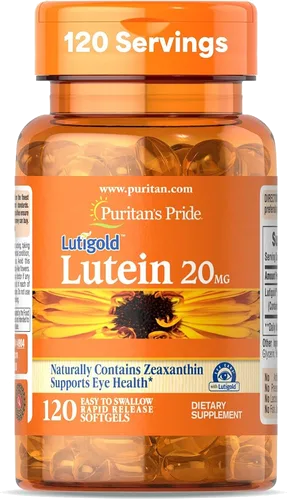
Puritan's Pride Premium Lutigold Lutein 20 mg Review
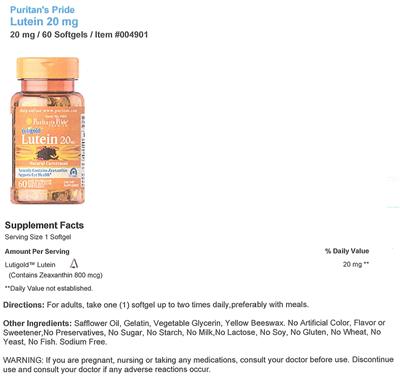
Taking care of your eyes has always been important, but as technology and screens become more and more a part of daily life, eyes are challenged like never before. Puritan's Pride Lutigold Lutein 20 mg is listed on this page as 120 easy to swallow rapid release softgels. The light from computers and the nighttime glow of smartphones can tire eyes, especially when they are looked at constantly. The page says it is easy to support vision with carotenoids like lutein. Lutein is described as the principal carotenoid found in the macula, a central area of the retina, and it plays a big role in supporting sight. Specifically, the page states that lutein helps filter out the damaging blue light people are exposed to when using computers. The page also describes a study conducted in China with healthy subjects who regularly used computers, in which those who supplemented with lutein had better contrast sensitivity in a visual performance test. Contrast sensitivity is described as a key factor in vision during low-light situations, such as night driving. The Supplement Facts panel lists a serving size of one softgel, with Lutigold Lutein at 20 mg (contains zeaxanthin, 800 mcg), and the daily value is not established. Directions say that adults should take one softgel daily, preferably with a meal. The product is listed as Rapid Release and Gluten Free. Product highlights on the page say it supports eye health, helps contrast sensitivity, one of the key factors that contribute to night vision, and contains antioxidant factors. It is noted as containing a four-month supply of softgels and as the same great product now in a blue bottle. The label claims no artificial color, flavor or sweetener, no preservatives, no sugar, no starch, no milk, no lactose, no gluten, no wheat, no yeast, no fish, and is sodium free. The page includes a warning that pregnant or nursing people, those taking medications, or anyone with a medical condition should consult a doctor before use, and that people allergic to daisy-like flowers should avoid it. Store at room temperature and do not use if the seal under the cap is broken or missing. About Puritan's Pride says the company has helped families for more than 50 years, and that its products are tested or inspected as many as 15 times during manufacturing.
We don’t sell supplements. We help you make decisions and get the best price.
Lowest prices
We may earn a commission from some store links. How we choose.
Finding the lowest prices at the stores now. This takes a few seconds.
Study, Trial or Testing Result Summary
Members Only61 human studies · 40 improved
This product gives lutein at 40 mg a day, well above the 6 mg that worked in studies. A pooled analysis of 20 randomized trials with 1,764 people found that lutein supplements raised protective pigment in the macula, the central part of the retina, more than placebo [1]. A pooled analysis of 9 trials covering 920 eyes, mostly with age-related macular degeneration, found that 10 or 20 mg a day improved sharpness of vision and contrast sensitivity, with larger effects at higher doses and longer use [2]. In 120 healthy drivers, 20 mg daily for a year improved contrast and glare sensitivity, especially at night [3]. In a large 5 year trial of 4,203 older adults at risk of macular degeneration, adding 10 mg lutein and 2 mg zeaxanthin did not clearly slow progression in the main analysis [4]. Follow-up analyses suggested about a 10 percent lower risk of advanced disease [5], and a 10 year follow-up of 3,882 people pointed the same way, with no rise in lung cancer risk [6]. No study reported the share of people who improved. Animal and cell studies are never counted.
See all 61 studies →Hide the studies
- Across 20 randomized trials of 938 people with age-related macular degeneration and 826 healthy people, lutein, zeaxanthin and meso-zeaxanthin supplements raised the density of protective pigment in the macula more than placebo.Lutein, Zeaxanthin and Meso-zeaxanthin Supplementation Associated with Macular Pigment Optical Density.
- Pooling 3 randomized trials of 406 preterm babies, oral lutein and zeaxanthin did not reduce the rate of retinopathy of prematurity compared with placebo.Lutein supplementation and retinopathy of prematurity: a meta-analysis.
- Across 9 randomized trials covering 920 eyes (855 with age-related macular degeneration), lutein at 10 or 20 mg a day increased macular pigment density, visual acuity and contrast sensitivity, with larger effects at higher doses and longer treatment.Effects of lutein supplementation in age-related macular degeneration.
- A review of 24 meta-analyses found that higher dietary lutein intake was linked to lower risk of age-related macular degeneration and age-related cataracts, among other outcomes.Green leafy vegetable and lutein intake and multiple health outcomes.
- A review of 20 records on glaucoma found that higher carotenoid intake showed a protective trend and higher macular pigment was largely linked to better visual performance in glaucoma eyes.Carotenoids in the Management of Glaucoma: A Systematic Review of the Evidence.
- A review of 18 studies on diabetic retinopathy found early trials where carotenoid supplements raised blood and macular pigment levels alongside better visual performance.A Systematic Review of Carotenoids in the Management of Diabetic Retinopathy.
- In 13 studies of children up to age 12, macular pigment density was more strongly linked to thinking skills than to vision, and the link with visual function remained unclear."Analysis of Macular Pigment Optical Density in Childhood: A Systematic Review".
- In 9 randomized trials on myopia, carotenoids including lutein modestly improved macular pigment and reduced visual fatigue, but there was no consistent reduction in myopia progression.Nutritional Supplementation for Myopia Prevention and Control: A Systematic Review of Randomized Controlled Trials.
- In 4203 older adults at risk of advanced macular degeneration, adding 10 mg lutein and 2 mg zeaxanthin daily for a median of 5 years did not significantly reduce progression to advanced disease compared with placebo, though it may be a safer substitute for beta carotene.Lutein + zeaxanthin and omega-3 fatty acids for age-related macular degeneration: the Age-Related Eye Disease Study 2 (A…
- In 4203 older adults at risk of advanced macular degeneration, adding 10 mg lutein and 2 mg zeaxanthin daily to the standard eye vitamin formula modestly lowered the risk of advanced disease (about 10% lower), and the risk was about 18% lower than with beta carotene, in follow-up analyses.Secondary analyses of the effects of lutein/zeaxanthin on age-related macular degeneration progression: AREDS2 report No…
- In a follow-up analysis of two large trials in people with geographic atrophy, lutein and zeaxanthin (10 mg and 2 mg daily) slowed the spread of damage toward the center of the retina in those taking the vitamin formula without beta carotene, but did not change the overall area of damage.Oral Antioxidant and Lutein/Zeaxanthin Supplements Slow Geographic Atrophy Progression to the Fovea in Age-Related Macul…
- In a trial of 303 people with eye fatigue given a lutein and plant extract blend for 45 days, a machine learning model predicted the best dose for each person, with 39 of 58 test subjects predicted to benefit most from the highest dose and 2 not expected to benefit.A Machine Learning Based Dose Prediction of Lutein Supplements for Individuals With Eye Fatigue.
- In 225 non-smoking adults with retinitis pigmentosa taking vitamin A, 12 mg of lutein daily for 4 years did not change the main visual field measure but slowed loss of side vision on one secondary test.Clinical trial of lutein in patients with retinitis pigmentosa receiving vitamin A.
- In 172 people with non-wet age-related macular degeneration, taking 10 mg lutein with 1 mg zeaxanthin and omega-3 fatty acids daily for 12 months increased macular pigment and improved best-corrected visual acuity compared with placebo.Long term effects of lutein, zeaxanthin and omega-3-LCPUFAs supplementation on optical density of macular pigment in AMD…
- In 120 healthy drivers, 20 mg lutein daily for 1 year raised macular pigment and serum lutein and improved contrast and glare sensitivity, especially at night, compared with placebo.Lutein supplementation improves visual performance in Chinese drivers: 1-year randomized, double-blind, placebo-controll…
- In 114 preterm infants born at 32 weeks or earlier, daily lutein and zeaxanthin until discharge did not reduce the occurrence of retinopathy of prematurity compared with placebo.Lutein and zeaxanthin supplementation in preterm infants to prevent retinopathy of prematurity: a randomized controlled …
- In 110 adults, 20 days of daily 6 mg lutein, 1 mg zeaxanthin and 100 mg elderberry extract significantly reduced dry eye symptom scores compared with the start of the study.Effect of Dietary Supplementation with Lutein, Zeaxanthin, and Elderberries on Dry Eye Disease (DED) and Immunity: A Ran…
- In 109 adults with one wet macular degeneration eye, adding lutein, zeaxanthin, DHA, resveratrol and hydroxytyrosol to the standard AREDS formula for 12 months did not change visual acuity compared with the standard formula alone, though it raised blood lutein and zeaxanthin and lowered some inflammatory markers.A Randomized Study of Nutritional Supplementation in Patients with Unilateral Wet Age-Related Macular Degeneration.
- In 100 patients with chronic central serous chorioretinopathy, an antioxidant tablet containing lutein for 6 months improved best-corrected vision and reduced fluid under the retina by 28.6%, while the placebo group showed no meaningful change.A Multicenter Randomized Controlled Study of Antioxidant Supplementation with Lutein for Chronic Central Serous Choriore…
- In 72 adults with early macular degeneration, 10 mg of lutein daily for a year raised macular pigment, and visual acuity held steady or improved in some patients compared with placebo, which declined.Lutein supplementation over a one-year period in early AMD might have a mild beneficial effect on visual acuity: the CLE…
- In 70 people with early macular degeneration, 10 mg daily lutein for 1 year reduced a blood marker of complement system activation (sC5b-9), while placebo caused it to rise; no vision outcome was reported.Lutein supplementation leads to decreased soluble complement membrane attack complex sC5b-9 plasma levels.
- In 70 adults who used screens more than 6 hours a day, 6 months of lutein with zeaxanthin improved tear tests and eye recovery from light exposure compared with placebo, but self-reported eye strain and sleep did not differ.The effects of lutein/ zeaxanthin (Lute-gen®) on eye health, eye strain, sleep quality, and attention in high electronic…
- In 69 young healthy adults, a lutein and zeaxanthin supplement for four months raised macular pigment and speed of visual processing, while placebo produced no change.A randomized placebo-controlled study on the effects of lutein and zeaxanthin on visual processing speed in young health…
- In 67 adults with early age-related macular degeneration, three carotenoid supplements raised macular pigment over 3 years, and contrast sensitivity improved, with the meso-zeaxanthin blends giving the broadest gains.Sustained supplementation and monitored response with differing carotenoid formulations in early age-related macular deg…
- In 31 adults with Alzheimer's disease and 31 age-matched controls, a macular carotenoid supplement with 10 mg lutein taken for 6 months raised macular pigment and improved contrast sensitivity, but did not change cognitive test scores.The impact of supplemental macular carotenoids in Alzheimer's disease: a randomized clinical trial.
- In 60 children aged 5 to 12, gummies with 10 mg lutein and 2 mg zeaxanthin daily for 180 days improved focus, episodic memory and visuospatial working memory compared with placebo, and reduced eye strain and fatigue.Lutein and Zeaxanthin Supplementation Improves Dynamic Visual and Cognitive Performance in Children: A Randomized, Doubl…
- In 59 healthy young adults, taking macular carotenoids for one year raised macular pigment and improved contrast sensitivity compared with placebo.Contrast Sensitivity and Lateral Inhibition Are Enhanced With Macular Carotenoid Supplementation.
- In 59 young adults, 6 months of daily macular xanthophylls at 13 mg or 27 mg raised macular pigment and improved several memory and attention scores compared with placebo.Effects of macular xanthophyll supplementation on brain-derived neurotrophic factor, pro-inflammatory cytokines, and cog…
- In 54 people with high myopia over 3 months, high-dose zeaxanthin from Lycium barbarum raised macular pigment more than high-dose lutein alone, while low-dose zeaxanthin did not differ significantly from low-dose lutein.Macular pigment optical density responses to different levels of zeaxanthin in patients with high myopia.
- In 50 smokers with dry skin, oral antioxidants including lutein lowered oxidative stress in the blood by 40%, and the lutein intake was linked to better overall vision.Protective effects of oral antioxidants on skin and eye function.
- In 49 women aged 60 to 80 taking 12 mg of lutein daily for 4 months, macular pigment density rose at one point on the retina compared with placebo, and blood lutein levels increased.The influence of supplemental lutein and docosahexaenoic acid on serum, lipoproteins, and macular pigmentation.
- In 40 healthy older adults, eating one avocado a day for six months raised macular pigment density and blood lutein, while a potato or chickpea control did not raise macular pigment, and avocado eaters also improved memory and working memory.Avocado Consumption Increases Macular Pigment Density in Older Adults: A Randomized, Controlled Trial.
- In 40 adults with early-stage age-related macular degeneration, taking 8 mg epilutein with 2 mg lutein daily for 2 months raised macular pigment density more than 10 mg lutein alone did, though the lutein-only group's macular pigment fell at the first month and was lower at the end than at the start.Epilutein for Early-Stage Age-Related Macular Degeneration: A Randomized and Prospective Study.
- In 39 Japanese patients with one-eye macular degeneration, 20 mg of lutein daily for six months raised blood lutein, and macular pigment rose significantly only in the beeswax capsule group, so the eye benefit was not fully confirmed.Effects of Lutein Supplementation in Japanese Patients with Unilateral Age-Related Macular Degeneration: The Sakai Lutei…
- In 36 adults, a supplement with 10 mg lutein, 2 mg zeaxanthin and 10 mg meso-zeaxanthin taken for 6 months raised macular pigment and improved visual acuity and contrast sensitivity compared with placebo, while the lutein and zeaxanthin-only version did not improve these measures.The impact of macular pigment augmentation on visual performance using different carotenoid formulations.
- In 31 healthy people with an atypical macular pigment pattern, 8 weeks of 20 mg lutein plus 2 mg zeaxanthin daily did not significantly raise macular pigment at any measured spot.Macular carotenoid supplementation in subjects with atypical spatial profiles of macular pigment.
- In 31 adults with non-proliferative diabetic retinopathy, 10 mg daily of lutein for 36 weeks improved contrast sensitivity at low spatial frequency, with a slight gain in visual acuity, though the advantage over placebo was not statistically significant.Effect of lutein supplementation on visual function in nonproliferative diabetic retinopathy.
- In 30 people with wet macular degeneration over 6 months, adding micronutrients including lutein and zeaxanthin to anti-VEGF injections was associated with better visual acuity than anti-VEGF injections alone.Beneficial Effects of Micronutrient Supplementation in Restoring the Altered Microbiota and Gut-Retina Axis in Patients …
- In 28 healthy young adults, daily macular carotenoid supplements of about 7 to 27 mg for 12 weeks raised macular pigment compared with placebo, with the 13 mg dose giving the most benefit for the amount taken.Serum and retinal responses to three different doses of macular carotenoids over 12 weeks of supplementation.
- In 27 healthy adults aged 45 to 65, eating 28 g of goji berries five times a week for 90 days raised macular pigment density and skin carotenoids, while a supplement providing 6 mg lutein and 4 mg zeaxanthin did not change macular pigment.Goji Berry Intake Increases Macular Pigment Optical Density in Healthy Adults: A Randomized Pilot Trial.
- In 25 people with age-related maculopathy, 6 mg of lutein with vitamins and minerals taken daily for 9 months did not change contrast sensitivity compared with placebo.Effect of lutein and antioxidant dietary supplementation on contrast sensitivity in age-related macular disease: a rando…
- In 20 adults with non-exudative age-related macular degeneration, a kale extract providing 10 mg lutein and 3 mg zeaxanthin daily for 4 weeks raised blood xanthophylls and macular pigment compared with placebo oil.Age-related macular degeneration: Effects of a short-term intervention with an oleaginous kale extract--a pilot study.
- In 16 healthy women, a lutein complex taken daily for 3 weeks increased blood flow in the retina and lowered diastolic blood pressure compared with placebo.Lutein Complex Supplementation Increases Ocular Blood Flow Biomarkers in Healthy Subjects.
- In 13 participants doing two hours of close reading, a lutein, zeaxanthin and blackcurrant supplement for two weeks produced measurable differences in brain and eye signals of visual fatigue compared with placebo.The effect of lutein supplementation on visual fatigue: a psychophysiological analysis.
- Taking lutein or zeaxanthin at 10 or 20 mg daily for 6 to 12 months raised macular pigment density by about 14 to 15 percent, with lutein deposited mainly in the center of the retina.Xanthophyll accumulation in the human retina during supplementation with lutein or zeaxanthin - the LUXEA (LUtein Xantho…
- In older adults, 12 months of 12 mg daily lutein and zeaxanthin compared with placebo improved the strength of the brain's visual processing signal at 5 and 10 Hz.Dietary Carotenoids Lutein and Zeaxanthin Change Brain Activation in Older Adult Participants: A Randomized, Double-Mask…
- In healthy adults who work at screens, 8 weeks of a daily capsule with 10 mg lutein, 2 mg zeaxanthin and 6 mg astaxanthin improved eye-hand coordination after screen work and raised macular pigment, but did not clearly improve smooth eye tracking.Effects of Astaxanthin, Lutein, and Zeaxanthin on Eye-Hand Coordination and Smooth-Pursuit Eye Movement after Visual Dis…
- In a control group of 75 people with dry age-related macular degeneration taking a polyvitamin containing lutein for 6 months, central visual field improved slightly in 43 patients, with no improvement in peripheral vision.Long term results of age-related macular degeneration therapy with prednisolone acetate--special refer to peripheral vis…
- In 30 patients having eye surgery for a macular hole, a lutein and zeaxanthin dye used to stain the eye membrane during surgery was compared with a Brilliant Blue dye, and both groups had good results with visual acuity improving by about 30 percent overall.Vital dyes in macular hole surgery.
- In an open-label pilot of 40 adults with early dry macular degeneration, 90 days of a twice-daily capsule containing ZeaLutein improved self-reported vision scores, and the share with abnormal grid test results fell from 77.5% to 40%, with no side effects reported.An Open-Label Pilot Study on Macumax Supplementation for Dry-Type Age-Related Macular Degeneration.
- In 10 people taking 6 mg of lutein daily for 40 days, macular pigment density increased in some participants and reached a plateau after about 30 days.[Objective determination of optical density of xanthophyll after supplementation of lutein].
- Among about 8,200 older adults followed for roughly 10 years, those eating the most lutein and zeaxanthin had a lower risk of progressing to late macular degeneration.Dietary Nutrient Intake and Progression to Late Age-Related Macular Degeneration in the Age-Related Eye Disease Studies …
- In a 10-year follow-up of 3882 people from a supplement trial, those who had taken lutein and zeaxanthin had a lower rate of progression to late age-related macular degeneration than those who had not (hazard ratio 0.91), and lutein and zeaxanthin carried no significant increase in lung cancer risk unlike beta carotene.Long-term Outcomes of Adding Lutein/Zeaxanthin and ω-3 Fatty Acids to the AREDS Supplements on Age-Related Macular Degen…
- In 3115 adults followed for about 9.6 years, dietary lutein plus zeaxanthin intake was not significantly associated with cataract presence or development, although higher riboflavin and B12 intake were linked to fewer lens opacities.The Association of Dietary Lutein plus Zeaxanthin and B Vitamins with Cataracts in the Age-Related Eye Disease Study: AR…
- In 431 mother and child pairs, lutein and zeaxanthin intake during pregnancy, estimated from food questionnaires, was not linked to contrast vision or visual acuity in the children at age 11 to 12 years.Lutein and Zeaxanthin Intake during Pregnancy and Visual Function in Offspring at 11-12 Years of Age.
- In 400 adults aged 50 to 84, higher blood carotenoid and vitamin E levels were not consistently linked to less cloudiness of the eye lens overall, with some links appearing only in certain subgroups.Serum carotenoids and tocopherols and severity of nuclear and cortical opacities.
- In 254 adults with early macular degeneration followed for 7 years, higher dietary lutein and zeaxanthin intake was linked to more disease progression, the opposite of the expected direction, though the authors suggest people may have changed their diets after learning of their condition.Dietary lutein, zeaxanthin, and fats and the progression of age-related macular degeneration.
- In 241 mother and infant pairs, higher maternal intake of choline, lutein and zeaxanthin, and higher DHA status, were linked to several measures of infant brain activity, though not all links were in the same direction.Neuroprotective nutrients in pregnancy and infant brain function.
- In 215 adults in Mexico, higher blood levels of lutein and zeaxanthin were linked to more macular pigment, and more daily sunlight exposure was also linked to higher levels.Environmental and Nutritional Determinants of Macular Pigment in a Mexican Population.
- In 98 adults aged 45 and older, higher blood carotenoid levels and diets richer in lutein and zeaxanthin were linked to more macular pigment, and the lowest fruit and vegetable eaters had less.Diet and serum carotenoid concentrations affect macular pigment optical density in adults 45 years and older.
- In a small group of people with choroideremia, a 6 month daily 20 mg lutein supplement raised lutein levels and macular pigment but did not change central vision sensitivity.Macular pigment and lutein supplementation in choroideremia.
Review Totals and Summary
Members Only8,871 reviews · 94% positive
Across the stores that sell it, Puritan's Pride Lutigold Lutein 20 mg has about 8,564 ratings, and the feedback is mostly positive. Buyers mainly like it for eye comfort and long-term eye support, and a few are unsure it does anything noticeable. Several reviews are for the 40 mg version, but they describe the same softgel line. **What buyers say it did for them:** The most common report is less eye tiredness, especially from screen time. One buyer says their eyes feel "less tired and more refreshed," and another describes their "vision is more relaxed" after hours on a computer or phone. Long-term users mention good eye exams: "every time I go to my eye doctor he says my eyes are doing excellent." Others say it "helped improve my vision" or is "good support for my old eyes." **What they complain about:** Complaints are few. Some buyers can't tell whether it works: "Not sure if I see any benefits from taking this." Another gives it a 7/10 and says they are "not sure if it made a difference." One reviewer found it "just another supplement that adds costs" to a daily routine. One buyer had a bad delivery experience through a Walmart seller, with no tracking numbers and no delivery to a PO Box, yet still said they would rate the lutein itself 5 stars. One reviewer notes a "slightly unpleasant smell." **Taste, smell, and form:** Buyers find the softgels easy to swallow, and most say there is no taste: "tasteless," "zero taste," and "didn't have a taste." One person was surprised they "dint taste bad." As noted above, one reviewer detected a slight smell but still found them very easy to take. A reviewer also appreciated the bottle's "good number" of capsules and easy-to-open packaging. One reviewer called them "caplets," but the others describe softgels. **Value for money:** Most who mention price find it fair. One says "the price is fair," another is "glad the recommended 20 mg dose is reasonably priced," and a third calls it a "great value." The skeptical reviewer still found it "not badly priced" and of good quality, but felt the cost wasn't justified for them. **Who it seems to suit and who it did not:** It seems to suit people who spend long hours at screens, wear glasses, are older, or have a family history of eye problems. One buyer says "a lot of adults need this." It also suits those who want a plain lutein product: "Didn't need all the additional ingredients, this was suggested by eye doctor." Repeat buyers say they have used it "for years." Reviewers also like the absence of artificial flavors, sweeteners, gluten, soy, and dairy. It suited people less when they felt no change in their eyes, or when they wanted a supplement with an obvious, noticeable effect. Several reviews were collected as part of a promotion, so keep that in mind. No gummy, powder, or other non-softgel reviews appeared, so nothing was left out on that basis.
Biohacker Summary
Members Only2 of 10 recommend it
Lutein is the only ingredient here, and all nine panelists who spoke about it did so mainly in terms of eye health. Four of them recommend it outright, one more says he has used it, and the rest are neutral but positive about its role in the retina, where it is said to filter blue light and protect against macular degeneration. Several also link it to brain health and thinking, and one panelist noted it was tied to lower sleep disorder risk, especially for people with high screen time. The dose most often named is 20 mg a day, with others citing a range of 5 to 20 mg, and one panelist who tried 20 mg for 30 days reported less digital eye strain and dry eyes. Many of them get lutein from foods such as eggs, kale and leafy greens, one notes avocado helps absorption, and one pairs it with zeaxanthin; one panelist stopped after about a year at 20 mg a day because his skin turned slightly yellow, and another says the evidence for cataract protection is mixed and weak.
See all 10 biohackers →Hide the biohackers
Dr. Eric Berg · Lutein · neutral
- Notes that eggs contain lutein, which can help the retina and improve night vision.
- Mentions that egg yolks provide lutein, a carotenoid that accumulates in the retina and helps support eye health.
- Mentions that eggs contain lutein, an antioxidant that blocks blue radiation from the eyes, protecting against macular degeneration.
- Highly recommends consuming lutein from egg yolks to protect the eye.
- Dr. Berg mentions that eggs contain Lutein, which supports the eyes.
- Mentions that eggs also contain lutein, which is another important nutrient that supports brain health and cognitive health.
- States that lutein is very important for the brain, as the brain preferentially accumulates it to protect against damage to the myelin sheath.
- Dr. Berg notes that egg yolks have carotenoids like lutein, which are good for the internal part of the arteries.
- Notes that eggs contain lutein, a powerful antioxidant that supports the health and function of the retina and brain.
- Recommends lutein to help see better, protect the eye against oxidation, and too much UV radiation, noting it's found in kale, pistachios, Swiss chard, and is more bioavailable in egg yolks.
Siim Land · Lutein · neutral
- Notes that Lutein is one of several supplements with human evidence.
- Supplementing lutein and zeaxanthin 5-20 mg/day improves macular pigment optical density (MPOD), a marker of eye health, in people with healthy eyes.
- Tried 20 milligrams of lutein during this period to see if it affects eye strain.
- States that the main reason people take lutein and zeaxanthin is for eye health, and there is human clinical evidence that they improve eye health, reduce eye fatigue, and digital eye strain.
- Decided to try out lutein and zeaxanthin for 30 days to see if he noticed any changes on his eyesight, and he noticed less digital eye strain, slightly less blurry vision, and less dry eyes.
- Will be trying lutein and zeaxanthin at 20mg and 5mg a day, respectively, for eye health, reducing digital eye strain, and protecting his eyes from excessive blue artificial light.
- Places Lutein and Zeaxanthin in the 'god tier' because several clinical trials demonstrate their effectiveness in improving eyesight.
- Includes lutein in his 'all out' supplement stack and confirms he is currently taking it.
- Notes that lutein and zeaxanthin also have slight skin anti-aging benefits due to being powerful antioxidants, and improve inflammation, oxidized LDL, and blood sugar.
- Recommends considering lutein and zeaxanthin for digital eye strain and declining eyesight, noting that doses of 5-20 mg/day have been shown to improve macular pigment optical density.
Dr. Rhonda Patrick · Lutein · neutral
- Lutein may be among the most evidence-backed carotenoids for longevity. It accumulates in the brain, where higher levels are associated with greater crystallized intelligence, and supplementation can improve some measures of cognitive function. Evidence also suggests it may slow progression to advanced macular degeneration in high-risk individuals.
- Consumes lutein through kale, noting its accumulation in the retina and brain for visual and cognitive function, and that avocado increases its absorption.
- Notes that lutein, a carotenoid found in kale, builds up in the retina and brain, helping to protect against macular degeneration and is linked to faster cognitive processing and better fluid intelligence.
- Lutein may improve cognition, even in younger adults. It accumulates in the retina, where it helps neutralize light-driven oxidative damage linked to macular degeneration risk, and also accumulates in the brain, where higher blood levels are associated with better fluid and crystallized intelligence.
- Lutein directly supports both vision and cognition in ways we can measure. Clinical trials show that supplementing it reduces risk of age-related macular degeneration and protects retinal function.
- Lutein is a carotenoid essential for eye health and protection against age-related macular degeneration. It also accumulates in the brain, where it’s been shown to improve cognition in older adults.
- Is no longer taking lutein.
- Rhonda's current supplement routine includes Lutein & zeaxanthin.
- Mentions that the multivitamin used in the study contained lutein, which is known to accumulate in the brain and retina and influence cognitive and visual function.
- Notes that egg yolks are an excellent source of lutein, which supports brain and eye health.
Thomas DeLauer · Lutein · recommends
- Highlights lutein as showing the strongest association with lower sleep disorder risk and recommends a dose of 20 mg, especially for those with high screen exposure, as it filters blue light at the retina level.
- Recommends lutein, found in eggs, as a carotenoid that accumulates in the brain and functions as an antioxidant, protecting neurons from inflammatory and oxidative damage.
- Notes that lutein is beneficial for eye health and that studies have shown a correlation between higher lutein intake and less cognitive decline.
- Recommends lutein, found in eggs, for both long-term and short-term memory improvement.
- Explains that lutein, often touted for eye health, also accumulates in the brain and is a powerful antioxidant for driving down reactive oxygen species.
- Recommends lutein, specifically the FloraGLO form, for its benefits in reducing visceral fat, improving body composition, and positively impacting cardiometabolic health.
- States that lutein might be one of the most potent cardiometabolic things one could take, citing research showing a significant difference in the risk of cardiovascular disease, heart attacks, stroke, and metabolic syndrome with higher lutein levels.
- Notes that lutein, a carotenoid, is good for eye health and accumulates in the brain, being associated with improved cognition.
- Recommends lutein as an inexpensive antioxidant, particularly good for the eyes, and notes it can be found in yellow bell pepper and eggs.
- Notes that avocados increased the body's lutein levels, a powerful free radical scavenger, which likely contributed to the reduction in oxidized LDL.
Dave Asprey · Lutein · recommends
- Recommends getting nutrients like lutein from real food or Vision 101 for eyesight.
- Recommends lutein, an antioxidant stored in the retina, which acts like natural sunglasses and helps the body handle blue light.
- Recommends supplements like lutein and astaxanthin, which are scientifically shown to improve eye resilience and ability to see.
- Mentions great studies on lutein for vision and recommends looking at vision formulas that contain it.
- Mentions lutein as an important plant pigment that covers the fovea and macula in the eyes, absorbing 60% of blue light in a healthy eye. He notes that age-related macular degeneration is often linked to a lack of these nutrients and too much blue light.
- Dave Asprey takes lutein, which is also made by bacillus indicus HU36, for eye health.
- Takes massive doses of astaxanthin, lutein, and other protective things when flying to combat increased cosmic radiation and biological stress.
Dr. Mark Hyman · Lutein · neutral
- States that lutein, a carotenoid, is concentrated in the macula and protects the eye from blue light and also protects the retina and brain.
- Green leafy vegetables contain lutein, which is great for eyes.
- Recommends lutein-rich foods as important antioxidants and anti-inflammatory compounds.
- Notes that lutein was among the compounds identified to regulate inflammation in a clinical trial.
- Believes that a lack of lutein from green vegetables is a factor driving Alzheimer's and dementia.
Ben Greenfield · Lutein · uses
- Ben Greenfield's guest was taking lutein as part of their protocol.
- Includes lutein in their Lumat blue product along with methylene blue, phycocyanin, riboflavin, green tea extract, and quercetin.
- Ben says that the little bar he took has lutein in it.
- States that pigments like lutein and astaxanthin are photo modulators that pick up light in various wavelengths and translate them into photonic quantum energy sources.
- Mentions that pigments like lutein are photo modulators that pick up light in various wavelengths and translate them into photonic quantum energy sources.
- Ben Greenfield's dog, Homer, who has a genetic predisposition to progressive retinal atrophy, is given lutein to support his eye structure health and scavenge free radicals.
- Is loving Vaso Lutein, an oral supplement, for his vision and is hopeful it will help him get rid of glasses, especially when combined with eye exercises.
- Recommends lutein, found in dark leafy green vegetables, as a natural vision enhancer that ancestors consumed.
- Ben Greenfield recommends lutein as a nutrient that is really important for the retina and vision, noting that dark leafy greens and egg yolks are good sources.
- He recommends a 5:1 ratio of Lutein to Zeaxanthin for eye surgery recovery.
Andrew Huberman · Lutein · recommends
- Discusses lutein as a supplement for maintaining long-term eye health.
- Notes that supplementing with lutein can help offset some detrimental effects of age-related macular degeneration, but only for individuals with moderate to severe conditions, as studies did not show significant improvement for those with normal vision or low-degree degeneration.
- Recommends lutein as part of the AREDS2 supplementation for slowing the progression of dry macular degeneration.
- Discusses lutein as a supplement that can potentially help with age-related macular degeneration, noting that the data are still emerging. He mentions that some people report enhanced vision from taking lutein at 20 milligrams per day, and studies have explored dosages of 10 to 20 milligrams per day.
- Corrects a previous misstatement, clarifying that Lutein (L-U-T-E-I-N) is the molecule that may help offset moderate to severe age-related macular degeneration and potential vision loss as one gets older.
- Mentions Lutein as a compound that may assist in supporting visual health and possibly improve vision.
- Discusses a study showing that lutein supplementation can help offset detrimental effects of age-related macular degeneration, but only for individuals with moderate to severe conditions, not for those with normal vision or low-degree macular degeneration.
- Discusses lutein as a molecule in many vision supplements, noting that studies show it can help offset detrimental effects of age-related macular degeneration, but only for individuals with moderate to severe conditions.
Peter Attia · Lutein · neutral
- Mentions that there is mixed, weak evidence suggesting lutein and zeaxanthin might be protective for cataract, as they are also antioxidants.
Bryan Johnson · Lutein · stopped
- Stopped taking lutein because it caused his skin to turn a little yellow after taking 20 milligrams a day for about a year.
RAL Summary
Members OnlyTier 2 for Eye Health
More Details
Members OnlyBody systems · Combine with · Possible side effects
Body systems: Eyes and vision
Combine with: Lutein pairs well with zeaxanthin (or meso-zeaxanthin), which together make up the macular pigment and are used in AREDS2-style formulas. Add omega-3 fatty acids (DHA/EPA) for retinal structure and dry-eye comfort, and astaxanthin for antioxidant support against eye fatigue and blue-light stress. Vitamin C, vitamin E, zinc and copper (as in AREDS2) support the antioxidant defenses of the retina. Bilberry or anthocyanins and vitamin A or beta-carotene (if dietary intake is low) can round out a vision stack. Take lutein with a meal that contains fat to improve absorption, and check with a healthcare provider if you have a diagnosed eye condition or take other medications.
Possible side effects: No major side effects reported in the studies; one buyer noticed a slightly unpleasant smell from the softgels.
Supplement Facts
Lutigold Lutein 20 mg
| Lutigold(TM) Lutein | 20 mg | † |
Other ingredients: Safflower Oil, Gelatin, Vegetable Glycerin, yellow Beeswax.
Directions: Directions: For adults, take one (1) softgel up to two times daily, preferably with meals.
Label source: NIH label database · Report a label change
Show entire label
More eye health products
Members OnlyThe highest ranked for the same goal
Read more
Our articles on this subject
Graded November 6, 2026 by the Reverse Age Lab evidence engine, from human studies, real reviews and our biohacker panel. How we grade. Is this medical advice? No. Rala organizes the published evidence; go over any change with your doctor, especially if you take meds.
Privacy policyConsumer health dataAffiliate disclosureTermsDo Not Sell or Share My Personal InformationCookie settings