
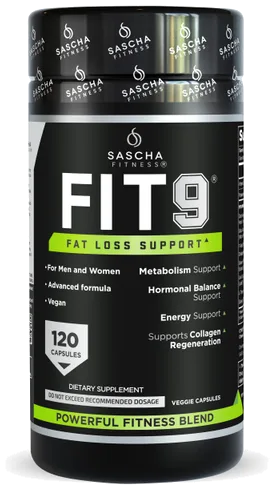
Sascha Fitness Fit 9 Review
FIT 9 is a supplement made up of nine super ingredients, presented by Sascha Fitness as a way to support a better body composition. The page says it is designed for both women and men and is not a miracle pill but a tool to complement good food and training. Its stated benefits include helping fat loss through hormonal balance and a faster metabolism, supporting collagen synthesis, helping with fluid retention, and helping reduce the look of cellulite by addressing excess fat, collagen, fluid retention and circulation. The formula is also said to have a possible positive effect on mood and stress. The ingredient section describes 7-Keto, a non-hormonal byproduct of DHEA that the page says may support fat loss and resting metabolic rate without acting as a stimulant. Dandelion root is described as a natural a med that may help reduce fluid retention, with vitamins and minerals. Gotu kola is included for its link to collagen growth, antioxidant and anti-inflammatory properties, and circulation. DIM, or diindolylmethane, is presented as supporting estrogen balance and fat burning. Green tea is included for its EGCG catechins and L-theanine content. Uva ursi is described as a herb with a med and urinary-related properties. L-theanine is described as promoting relaxation and alertness. Ginkgo biloba is described for circulation, memory and mood, and the page mentions added vitamin C. Directions state a first-time schedule of two capsules per day for at least seven days, then regular use of four capsules daily, split into two doses about five to six hours apart, ideally with a meal and water. The capsules are vegetarian, made with hydroxypropylmethylcellulose and chlorophyll as a natural color, with dicalcium phosphate as another listed ingredient. The safety section advises adults only, and not for use during pregnancy or nursing, or by those sensitive to caffeine. It asks users to consult a physician if taking medication or with heart, liver, kidney or thyroid conditions, and to stop use several days before surgery because ginkgo biloba may increase bleeding. It notes the product is made in a facility handling soy, dairy, egg, wheat, peanuts and tree nuts. It also warns that the green tea extract contains caffeine and DIM may cause nausea, headache or harmless urine color change. The page says the product is not intended to diagnose, treat, cure or prevent disease and that the statements have not been evaluated by the FDA. Store in a cool, dry place away from children.
Study, Trial or Testing Result Summary
Members Only22 human studies · 7 improved
2 of these 22 human studies gave the ingredient by drip, not by mouth.
The evidence here covers only vitamin C and potassium, not the main ingredients of this product. The 1155 mg proprietary blend (listed as 7-Keto, dandelion root, gotu kola, DIM, green tea extract, uva ursi, L-theanine and ginkgo) hides each dose, and no study findings were given for any blend ingredient. Vitamin C at 150 mg is above the 100 mg used in one trial. In postmenopausal women with mild memory problems, 100 mg a day for 6 months improved memory scores but did not change menopause quality of life [1]. Most positive results used 1000 mg with vitamin E: in women with endometriosis this lowered oxidative stress and pelvic and period pain [2], and a review of seven trials agreed but found no rise in pregnancy rates [3]. Vitamin C did not change sex hormones in premenopausal women [4] and did not raise birth control pill estrogen levels [5]. In postmenopausal women with heart disease, high-dose vitamin C with vitamin E gave no heart benefit and suggested possible harm [6]. Potassium, at an unclear dose, has only one old study where it was used as a test, not a treatment, with no benefit reported [7]. Animal and cell studies are never counted.
See all 22 studies →Hide the studies
- A pooled analysis of 19 observational studies found higher dietary antioxidant capacity linked to lower risk of polycystic ovary syndrome, infertility and pregnancy complications, but results were mixed for endometrial cancer and this was not a vitamin C supplement trial.Diet's total antioxidant capacity and women's health: systematic review and meta-analysis.
- A review of seven randomized trials in women with endometriosis found that vitamin C (typically 1000 mg a day) with vitamin E lowered oxidative stress markers and pelvic pain and period pain, but did not raise pregnancy rates.Therapeutic Effects of Vitamins in Endometriosis Patients: A Systematic Review of Randomized Controlled Trials.
- In 423 postmenopausal women with coronary disease, vitamin C (1000 mg a day) with vitamin E for about 2.8 years gave no heart benefit and suggested possible harm, with more deaths than placebo.Effects of hormone replacement therapy and antioxidant vitamin supplements on coronary atherosclerosis in postmenopausal…
- In 300 women with chloasma (skin darkening), oral vitamins C and E for 3 months worked in 67% of those assessed, less than the 92.6% with acupuncture-based treatment.[Clinical research of chloasma treated with the meridian cosmetology and the impacts on estrogen and progestin].
- In 180 postmenopausal women with mild memory impairment, 100 mg of vitamin C a day for 6 months improved cognitive scores and lowered beta-amyloid, but did not significantly change overall menopause quality of life.A randomized, controlled trial to evaluate the efficacy of pyridoxine and ascorbic acid on cognitive function and qualit…
- In 92 premenopausal women with chloasma, vitamin C (600 mg a day) with vitamin E for 12 weeks worked in 55.8% and did not change sex hormones, less effective than the acupoint catgut embedding group at 88.6%.[Effect on clinical symptoms and mechanism of chloasma in premenopausal women with liver qi stagnation treated with acup…
- In 78 menopausal women at risk of bone loss, a daily dairy product enriched with vitamin C and other nutrients for 24 weeks kept bone density and improved bone markers compared with the unenriched product.A Dairy Product to Reconstitute Enriched with Bioactive Nutrients Stops Bone Loss in High-Risk Menopausal Women without …
- In 66 women with benign breast disease, a combination tablet containing vitamin C (60 mg a day in total) with beta-carotene, vitamin E and garlic taken for 6 months eased breast pain and period-related symptoms, helping 75.8% versus about 30% on placebo.[Study of an antioxidant dietary supplement "Karinat" in patients with benign breast disease].
- In 61 postmenopausal women with coronary artery disease, vitamin C and E (1000 mg vitamin C a day) for up to 34 months did not improve blood vessel dilation, and hormone therapy did not either.Hormone therapy and antioxidant vitamins do not improve endothelial vasodilator function in postmenopausal women with es…
- In 60 women with endometriosis, 1000 mg of vitamin C plus 800 IU of vitamin E daily for 8 weeks lowered oxidative stress markers and reduced pelvic pain, painful periods and painful intercourse compared with placebo.The Effect of Combined Vitamin C and Vitamin E Supplementation on Oxidative Stress Markers in Women with Endometriosis: …
- In 55 adolescent girls starting Depo-Provera, 500 mg of vitamin C daily for 6 months did not reduce bleeding days or change weight compared with placebo.Supplementation with vitamin C and/or vitamin B(6) in the prevention of Depo-Provera side effects in adolescents.
- In 43 postmenopausal women with elevated blood pressure, 22 grams a day of blueberry powder for 12 weeks improved blood vessel function more than placebo; vitamin C was given only as an intravenous test, not as a supplement.Daily blueberry consumption for 12 weeks improves endothelial function in postmenopausal women with above-normal blood p…
- In 37 women using a combined birth control pill, taking 1 gram of vitamin C a day did not raise blood levels of the pill's estrogen (ethinyl estradiol).Absence of an effect of high vitamin C dosage on the systemic availability of ethinyl estradiol in women using a combina…
- In 36 estrogen-deficient postmenopausal women, estradiol plus endurance exercise improved blood vessel function, while an intravenous vitamin C test infusion was used only to measure oxidative stress and was not given as a supplement.Essential role of estrogen for improvements in vascular endothelial function with endurance exercise in postmenopausal w…
- In 90 postmenopausal women, 3 months of drumstick or amaranth leaf powder raised blood vitamin C and antioxidant enzymes and lowered an oxidative stress marker, but vitamin C was not given on its own.Effect of supplementation of drumstick (Moringa oleifera) and amaranth (Amaranthus tricolor) leaves powder on antioxidan…
- In women aged 50 to 69, three retinol peel treatments with vitamin C increased skin surface oil on the face and neck, with no comparison group.Influence of the complex of retinol-vitamin C on skin surface lipids.
- In a large study of over 181,000 US nurses followed for up to 34 years, neither dietary nor supplemental vitamin C was linked to breast cancer risk, including among postmenopausal women and those using hormone therapy.Dietary and Supplemental Vitamin C Intake and Risk of Breast Cancer: Results from the Nurses' Health Studies.
- In a cross-sectional study of 775 white women aged 45 to 64, higher dietary vitamin C was linked to higher bone density at the hip, with a statistically significant link only in women eating at least 500 mg of calcium a day and no clear link at the spine overall.The relation of dietary vitamin C intake to bone mineral density: results from the PEPI study.
- In 60 patients with premenstrual or menopausal heart symptoms, potassium chloride was used as a test during electrocardiogram exams, not as a treatment; adding sex hormones to therapy increased the number with stable improvement, and the abstract reports no potassium treatment benefit.[Diagnosis and treatment of autonomic-dysovarian myocardial dystrophy in patients with premenstrual and climacteric synd…
- In a small study of 23 postmenopausal women, dietary vitamin C intake did not differ between women with osteoporosis and healthy controls, though age and years since menopause did differ.[Nutrition and osteoporosis: a nutritional analysis of women in postmenopause].
- Women starting oral contraceptives containing 30 or 50 micrograms of estrogen had serum ascorbic acid levels drop by about 30% to 42% within the first few months.Metabolic effects of oral contraceptives containing 30 micrograms and 50 micrograms of oestrogen.
- Postmenopausal women had significantly lower blood vitamin C levels, and lower antioxidant enzyme levels, than premenopausal women aged 30 to 60.Status of trace elements and antioxidants in premenopausal and postmenopausal phase of life: a comparative study.
Review Totals and Summary
Members Only15,835 reviews · 93% positive
Customer feedback for Sascha Fitness Fit 9 reveals a range of qualitative experiences, highlighting both perceived benefits and areas of concern. Many users consistently praise the supplement for its reported positive impact on hormonal balance, with several individuals noting a significant reduction in painful menstrual periods and associated acne. This hormonal support is a recurring theme, with some even attributing successful pregnancies to the product's ability to regulate their hormonal systems. Another frequently lauded aspect is the reduction in fluid retention and bloating. Customers often describe feeling "deflated," particularly around the waist, and appreciate a med effect that helps shed excess water weight. While some acknowledge that this initial weight loss might be primarily water, they still value the immediate aesthetic improvement and sense of lightness. Users also report an increase in energy levels and improved focus throughout the day, which translates into more effective workouts and higher calorie expenditure during exercise sessions. This sustained energy, without the typical jitters, is often attributed to the blend of ingredients like green tea and L-theanine. However, the feedback is not uniformly positive. A notable number of customers express that while the ingredients are natural and appealing, the overall effectiveness in terms of significant fat loss can be limited, especially if not coupled with a strict diet and exercise regimen. Some users, despite adhering to a healthy lifestyle, reported only minor changes in weight or body composition, leading them to question the product's value for money. The price point of Fit 9 is another frequent point of discussion, with many considering it an expensive supplement. Furthermore, some individuals have reported mild side effects such as nausea, headaches, or a harmless change in urine color, which they attribute to individual ingredient sensitivities. There are also observations that a med effect, while appreciated for reducing bloating, can sometimes be mistaken for actual fat loss, leading to potentially unrealistic expectations. Despite these mixed reviews, a strong undercurrent of appreciation for the natural ingredient profile and the brand's commitment to quality is evident among users.
Biohacker Summary
Members Only10 of 10 recommend it
Most of the panel recommends or uses vitamin C, the main ingredient, with five of ten giving a latest position of recommends, one using it, three neutral, and one who stopped. People take it mainly to support collagen for skin, joints, and connective tissue, and several suggest pairing it with collagen, one about an hour before a workout. Others take it for immune support, antioxidant needs, or as part of a daily multivitamin, and doses mentioned include 250 milligrams, 500 milligrams to 1 gram, and about a gram a day split into divided doses. Cautions include that the best dose is unclear, that high doses might blunt some of the benefits of exercise, and that one person stopped a vitamin C skin serum only because of its smell. Potassium is a smaller ingredient in this product, and the panel generally favors getting enough of it, mostly through food or electrolyte drinks.
See all 10 biohackers →Hide the biohackers
Ben Greenfield · Vitamin C · recommends
- States that vitamin C is extremely important for collagen turnover and cites orthopedic data showing that 500 mg to 1 g of vitamin C can reduce the rate of complex regional pain in total knee replacements and wrist fractures.
- Says he is drinking LMNT, which contains sodium, potassium, and magnesium, and states that he actually drinks this stuff.
- Mentions vitamin C as part of a bare-minimum protocol.
- Notes that while vitamin C has significant value, the optimal dose is a vexed question, and high doses might not always be beneficial, potentially blunting the hormetic effects of exercise.
- Notes that IV vitamin C has been used for decades for cancer patients with almost no standardization and that he receives many questions about its effectiveness and combination with chemo.
- Recommends Celtic Sea Salt's new electrolyte drink 'Hydrate' for replenishing electrolytes and trace minerals lost through sweat, noting it contains 70 naturally occurring trace minerals, magnesium, taurine, and potassium, with no added sugar, artificial colors, or synthetic ingredients.
- Recommends Vitamin C for skin repair post-tattoo.
- Does not agree that ascorbic acid is vitamin C, comparing it to calling chaff wheat, and notes that it is made from genetically modified cornstarch or corn syrup byproducts using solvents.
- Warns against ascorbic acid, stating that it does not cure scurvy and that the world has been led astray by the deception around it versus the whole food vitamin C complex.
- Warns against taking 1,000 mg of vitamin C immediately after a workout for individuals under 50, as it can dull the body's natural adaptation signal.
- Warns that using high-dose antioxidants like vitamin C directly before or after a hyperbaric session is not a great idea, as it could impair some of the effects by reducing reactive oxygen species.
- Warns that taking a whole bunch of antioxidants like vitamin C after a workout can suppress the body's inflammatory response, which is necessary for benefits like mitochondrial proliferation and satellite cell generation for new muscle.
- Recommends adding potassium sulfate to a Morasco cold plunge.
- Mentions that potassium can be helpful for blood pressure but also risky for people with kidney disease or other conditions prone to elevated potassium levels, advising consultation with a physician.
Siim Land · Vitamin C · recommends
- Recommends taking vitamin C with collagen to support joint collagen synthesis.
- States that vitamin C is needed for initiating collagen synthesis and that higher vitamin C intake appears to increase vitamin C content in the skin.
- Lists sauerkraut and fruit as sources of Vitamin C.
- Lists potatoes and fruit as sources of Potassium.
- Notes that Vitamin C is one of several supplements with human evidence.
- Notes that bananas have potassium but there are at least 8 other foods with more potassium than bananas.
- States that potassium is the most abundant intracellular cation that helps to maintain intracellular fluid volume and that without it, one greatly increases the risk of hypertension, cardiovascular disease, diabetes, and stroke.
- Notes that researchers found vitamin C alleviates ferro-aging, a process of iron overload and lipid peroxidation that drives aging, and that it directly inhibited ACSL4, a protein driving ferro-aging.
- States that Vitamin C has a central role in aging and longevity, and that in monkeys, oral vitamin C slowed ovarian aging during a 3.3-year study.
- States that vitamin C is one of the most important vitamins for staying healthy and aging well, and that intakes of 200 to 400 mg a day from food or supplements largely saturates plasma and neutrophils in most healthy adults. He also recommends spreading out the vitamin C across the day to avoid oversaturation.
- Mentions vitamin C in comparison to topical melatonin for oxidative defense, stating that melatonin would compete but is not as broadly validated clinically.
- Was found to be vitamin C deficient by True Health and Mayo Clinic tests, and now addresses this by eating one extra kiwi fruit daily.
- States that the biggest evidence for multivitamin is that it improves cognition and enhances episodic memory in elderly people, who tend to have worse diets and are more likely to be deficient.
- States that potassium lowers blood pressure.
Dr. Eric Berg · Vitamin C · neutral
- Mentions that lemon is loaded with vitamin C, and when combined with coffee, vitamin C significantly increases the bioavailability of antioxidants in the coffee.
- States that people need more potassium than any other mineral, yet most people aren’t getting enough.
- Explains that potassium is essential for peristalsis, the pumping action through the colon, and without it, things can sit there, leading to constipation.
- Dr. Berg states that Vitamin C helps fight biofilms and is essential for making collagen in gums, teeth, and capillaries.
- Explains that the normal requirements for potassium are 4,700 mg every single day, and that very few people get half of that amount. They describe potassium's role in the sodium potassium pump, which is essential for cellular electricity, muscle contraction, and heart function. Deficiency can lead to tiredness, muscle cramps, heart palpitations, or rising blood pressure.
- Recommends increasing potassium to restore balance and support healthy blood pressure.
- Recommends Vitamin C as a cofactor, especially for collagen.
- States that high doses of vitamin C, like 2 to 4 grams, can greatly reduce inflammation and support the immune system.
- States that potassium is the most important electrolyte and that most people are not getting enough of it, needing around 4,700 mg daily, or even more, to avoid issues like fatigue, muscle cramps, heart palpitations, high blood pressure, and fluid retention.
- Dr. Eric Berg states that potassium is essential for health, supporting healthy muscles, nerves, and heart function, but warns that getting too much, especially from supplements, can be dangerous.
- Dr. Eric Berg states that most people are getting nowhere near enough potassium to balance the amount of sodium they’re already eating, implying a recommendation for increased potassium intake.
- Explains that potassium relaxes blood vessels, keeps elasticity in arteries, lowers adrenaline, supports the sympathetic nervous system, protects the endothelial layer of arteries, increases nitric oxide, and keeps insulin receptors sensitive.
- Was very successful in practice using potassium for hypertension, noting that bodies need 4700 mg of potassium every single day.
- States that low potassium can lead to constipation because potassium controls the smooth muscles of the body, affecting the contraction and relaxation of muscles in the colon.
Thomas DeLauer · Vitamin C · recommends
- Recommends taking vitamin C along with collagen about an hour before a workout for connective tissue benefits.
- Uses Element's cans which contain 100 milligram potassium, finding that electrolytes help his workout performance.
- Uses Element's 100 mg potassium cans first thing in the morning to prime his day and help with workout performance.
- Uses vitamin C as part of their immunity duo, stating it is important for boosting the immune system, especially during cold and flu season.
- Recommends consuming vitamin C to aid in NADPH recycling, which is necessary for glutathione to be reused after neutralizing oxidative stress.
- Takes Purity's liquid liposomal vitamin C for immune support and overall wellness, finding it easy to add to water, juice, or take straight up due to its good taste.
- Compares the Vitamin C content of oranges (53mg) to guava (228mg), noting guava has 4x more.
- States that collagen synthesis is vitamin C dependent, in the context of glowing skin.
- Recommends Element's ready-to-drink sparkling electrolyte drinks as a low or zero-calorie soda replacement that provides 1,000 milligrams of sodium, 200 milligrams of potassium, and 60 milligrams of magnesium.
- Uses Element Electrolytes for about eight years, noting they contain 1000 mg sodium, 200 mg potassium, and 60 mg magnesium, and help curb appetite without adding many calories.
- Recommends Vitamin C for sleep, noting that intake in the range of 125 to 200 mg per day is associated with a lower risk of sleep disorders and sleep apnea, with the benefit plateauing beyond this range.
- Recommends consuming a little bit of vitamin C, such as a couple of berries or kiwi, along with flavanol-rich cocoa to help the delicate flavanols hold up and prevent oxidation in the gut.
- Explains that vitamin C improves the ability of neutrophils to engulf bacterial infections, and that they have a greater ability to engulf larger infections.
- Personally drinks Element's pink lemonade or sparkling drinks, which contain 1,000 mg sodium, 200 potassium, and 60 magnesium, to hydrate and feel satiated, curbing hunger without stopping the ghrelin response.
Dave Asprey · Vitamin C · recommends
- Recommends taking vitamin C for better skin health.
- States that currently, he is only taking vitamin C and vitamin D.
- Dave Asprey reflects on how new research clarifies the mechanism behind IV vitamin C's anti-cancer effect, vindicating a decades-old idea that was dismissed for the wrong reasons.
- Notes that plain Vitamin C isn't enough and that most people never think to check for a specific ingredient that makes it work.
- Dave Asprey recommends taking maybe a gram of vitamin C a day in divided doses, noting that plasma levels peak around 250 milligrams twice a day.
- Recommends Qualia Vitamin C Plus, highlighting its combination of seven forms of vitamin C with 250 mg of citrus bioflavonoids, which helps with absorption and use for building collagen and a strong immune system.
- Warns that taking too much vitamin C can raise oxalate levels, emphasizing that everything has risk and reward.
- Recommends Vitamin C as the real biological fix for deep focus issues, explaining how the brain hoards it at levels 100 times higher than blood and how to bypass the blood-brain barrier.
- States that Ensure is like SlimFast but worse, and that its ingredients, including synthetic vitamins, guar gum, maltodextrin, high fructose corn syrup, and seed oils, are disgusting and should not be given to sick or well people.
- Recommends IV Vitamin C, or even oral versions, for helping the body heal and for cells to remain supple and fluid.
- Recommends having more potassium during a fast to increase mineral intake.
- States that people who are salt-sensitive hypertensives usually need more potassium.
- Explains why electrolytes, especially sodium, potassium, and magnesium, are foundational for recovery.
- States that potassium is a really important electrolyte for everyone, but the demand is significantly higher for people with nervous system, immune system, and endocrine system dysregulation.
Dr. Mark Hyman · Vitamin C · recommends
- Recommends vitamin C as a basic supplement during detoxification to help with inflammation and detoxification.
- Warns that potassium bromate, a dough conditioner banned in the EU, UK, and Canada, is still allowed in U.S. bread.
- Dr. Hyman mentions vitamin C as an advanced therapy for skin repair.
- Mentions topical vitamin C as an antioxidant that can help skin with aging.
- Mentions that what they do when a cold comes on is not just vitamin C.
- Recommends ensuring adequate vitamin C intake on a regular basis for immune support, stating it's important for healthy immune function despite mixed data on its effectiveness for colds.
- Mentions that vitamin C was the very first vitamin discovered, isolated, and synthesized in 1932, and its deficiency caused scurvy.
- Recommends nutrient-dense foods rich in vitamin C, such as guavas and parsley, to reduce inflammation.
- Used intravenous vitamin C cocktails to help him detoxify and recover from chronic fatigue.
- States that potassium plays a critical role in nerve signaling and muscle contraction, especially in the heart, and low levels can lead to dangerous irregular heart rhythms.
- Notes that meds flush out potassium.
- Recommends vitamin C for immune system support and modulation.
- Relies on Big Bold Health's HTB Immune Energy Chews, which deliver 1000mg of sprouted Himalayan tardy buckwheat, along with vitamin C, D, magnesium, and zinc, to support immune balance, resilience, energy, and focus.
- States that with potassium, water can fully cross the cell membrane and get inside where it's needed for intracellular hydration.
Dr. Rhonda Patrick · Vitamin C · neutral
- Lutein and zeaxanthin can also be obtained from certain multivitamins.
- Recommends getting enough potassium, noting that most people get too much sodium and not enough potassium.
- Recommends nutrients like vitamin C for men to prioritize sperm mitochondrial health.
- Dr. Rhonda Patrick's daughter chugs an Emergency fizzy drink in the morning to ensure she gets some vitamin C and micronutrients before school.
- Choosing a multivitamin that includes lutein and zeaxanthin ensures you get meaningful amounts every day.
- Notes that ~35% of Americans are low in vitamin C.
- Recommends increasing vitamin C intake if concerned about skin aging, noting it is an essential cofactor for collagen synthesis.
- Suggests avoiding a multivitamin if it contains biotin before a testosterone blood test to prevent confounding results.
- Multiple randomized controlled trials show older adults taking a standard multivitamin (like Centrum Silver) had measurable improvements in processing speed, cognition, and episodic memory.
- Currently takes the Pure Encapsulations O.N.E Multivitamin.
- Rhonda's current supplement routine includes Vitamin C.
- States that maintaining a high potassium intake is important for hypertension.
- Recommends getting enough potassium from veggies, bananas, and fruit because the body cares about the sodium-potassium ratio.
- Dr. Patrick states that her smoothie, containing avocado and banana, has around 5,800 milligrams of potassium, which meets the adequate intake requirement for maintaining normal blood pressure and decreasing the risk of kidney stones.
Andrew Huberman · Vitamin C · uses
- Takes a multivitamin every day for longevity.
- Uses Element, an electrolyte drink with sodium, magnesium, and potassium in correct ratios and no sugar, to ensure adequate hydration and electrolytes, especially when starting days fast or during physical exercise.
- Uses Element, which contains potassium in the correct ratios, to ensure proper hydration and electrolyte intake for brain and body function.
- Mentions potassium as an electrolyte.
- Recommends AG1, a vitamin, mineral, and probiotic drink, and notes that for a limited time, a subscription comes with additional supplements.
- Uses Element, an electrolyte drink with sodium, magnesium, and potassium in correct ratios and no sugar, to ensure adequate hydration and electrolytes, drinking it first thing in the morning and during physical exercise.
- Uses Element, an electrolyte drink with sodium, magnesium, and potassium in correct ratios and no sugar, to ensure he is hydrated and has sufficient electrolytes. He drinks it first thing in the morning and during physical exercise, especially on hot days.
- Uses Element, an electrolyte drink with sodium, magnesium, and potassium but no sugar, to ensure adequate hydration and electrolytes, especially when waking up and during exercise.
- Uses LMNT, an electrolyte drink with sodium, magnesium, and potassium in correct ratios and no sugar, to ensure adequate hydration and electrolytes for brain and body function, especially when starting his day fast or during physical exercise.
- Uses Element, which contains potassium, for proper hydration and electrolyte balance.
- Takes an extra gram of vitamin C a day for its effects on immunity and potential synergy with collagen.
- Found the Met RX Big 100 Bar to be 'magic' on the trail because it's a hunk of calories with protein and fortified with vitamins and minerals, despite being something they would never eat in normal life.
- Ensures adequate intake of sodium, magnesium, and potassium, which are vital electrolytes for the functioning of all body cells, especially neurons, by drinking Element.
- Uses Element, an electrolyte drink with sodium, magnesium, and potassium, to ensure adequate hydration and electrolytes for optimal brain and body function, especially when waking up and during physical exercise.
Peter Attia · Vitamin C · stopped
- Recommends vitamin C as an important molecule for skin, noting its role as a precursor for collagen synthesis, a powerful antioxidant, and a regulator of complexion for even skin tone.
- States there is some evidence that increasing dietary potassium through potassium-rich foods like bananas and potatoes, rather than supplements, can lower blood pressure.
- Tried a vitamin C serum mixed with ferulic acid but stopped using it because she hated the smell. She notes that topical application of vitamin C far exceeds the levels achievable by ingestion for skin benefits.
- States that vitamin C deficiency is associated with an elevated risk of cataract, but supplementation to supranormal levels has not been shown to protect against cataract formation.
- Mentions the elimination of scurvy through the work of James Lind and the eventual understanding that it was due to vitamin C, initially thought to be just citrus.
- Notes that while vitamin C deficiency is associated with an elevated risk of cataract, supplementation to supranormal levels has been conclusively shown not to protect against cataract formation.
- Mentions that a survey of doctors showed they recommend Vitamin C for COVID-19, but notes there is no real evidence behind it.
- Notes that evolutionary ancestors consumed much more potassium than modern humans and suggests adding it back to the diet, ideally through whole foods.
- Expresses skepticism about 'panacea treatments' for cancer, specifically mentioning a 'twenty thousand dollars of vitamin C' treatment, implying it's an example of something he's 'squirrely' about due to cost and unproven claims.
- Asks if vitamin C matters for immune function, suggesting a need for a definitive study.
- Warns against the "total nonsense" of taking excessive amounts of vitamin C, especially in specific forms like liposomal vitamin C, for immunity, stating that it is idiotic and potentially dangerous to think it will offer immunity.
- Would love to see more research done on mega dose intravenous vitamin C for viral infections, noting some interesting but not followed-through research from the 1960s.
- Mentions taking magnesium and potassium in addition to salt for minerals and electrolytes.
Bryan Johnson · Vitamin C · neutral
- Uses Vitamin C as an example of how it would be great if people knew that when they took it, it had a measurable amount and wasn't polluted, which is what Brian ensures with his products.
- Applies vitamin C after showering.
- Takes 250 milligrams of Vitamin C.
- Recommends Vitamin C for skin health, noting it's good to pair with collagen peptides and is included in the Blueprint stack.
- Bryan Johnson takes Vitamin C daily as part of his Longevity Mix, which is an antioxidant-rich essential vitamin that supports immune function and metabolic energy.
- He uses Vitamin C, typically in a serum, in the morning for skin health.
- Recommends potassium during the luteal phase to help reduce water retention and bloating.
RAL Summary
Members OnlyTier 4 for Hormone Balance for Women
The second tier rests on vitamin C, but 11 of its 21 human studies found no effect, the positive trials mostly used 1000 mg combined with vitamin E for endometriosis pain rather than hormones, and the product's main blend ingredients have no study findings given. So it is graded Tier 4, lower than the rules alone gave.
- Emerging: not enough evidence to rank higher yet.
Where the evidence disagrees: 12 of the 22 human studies found no effect.
More Details
Members OnlyBody systems · Combine with · Possible side effects
Body systems: Endocrine system, Reproductive system, Nervous system
Combine with: To synergistically enhance the benefits of Fit 9, consider combining it with Omega-3 fatty acids for their anti-inflammatory properties and overall cellular health, which supports hormonal balance. Vitamin D3 is also an excellent addition, crucial for immune function, bone health, and its widespread role in various hormonal systems. Magnesium can further complement the adaptogenic ingredients by supporting stress reduction, muscle function, and numerous enzymatic processes. Lastly, a high-quality probiotic supplement would be beneficial to optimize gut health, which is intrinsically linked to hormone metabolism and nutrient absorption, thereby supporting the overall efficacy of Fit 9.
Possible side effects: In one long trial of postmenopausal women with heart disease, high-dose vitamin C with vitamin E was linked to possible harm with more deaths than placebo. No other major side effects were reported in the studies given.
Supplement Facts
Vitamin C 150 mg · Potassium 50 mg · Fit9 Powerful Fitness Blend 1155 mg
| Vitamin C | 150 mg | |
| Potassium | 50 mg | |
| Fit9 Powerful Fitness Blend | 1,155 mg | † |
Other ingredients: Hydroxypropylmethylcellulose, Chlorophyll, Dicalcium Phosphate.
Directions: Initial use directions: as a dietary supplement, consume two capsules per day for a minimum of seven days to assess tolerance. Take one in the morning, and one five-six hours later. Regular use directions: as a dietary supplement, take four capsules daily: two in the morning, and two capsules five-six hours later; preferably, with a meal and/or as directed by your healthcare professional. Drink plenty of water during the day to support hydration.
Barcode (UPC) 602938513722 · Label source: NIH label database · Report a label change
Show entire label


Where to Buy
Sascha Fitness · Amazon
More hormone balance for women products
Members OnlyThe highest ranked for the same goal
Read more
Our articles on this subject
- What Supplements and Vitamins Should Not Be Taken TogetherArticle · Sep 7, 2026
- When Is the Best Time to Take Vitamins and Supplements?Article · Jun 15, 2026
Graded November 3, 2026 by the Reverse Age Lab evidence engine, from human studies, real reviews and our biohacker panel. How we grade. Is this medical advice? No. Rala organizes the published evidence; go over any change with your doctor, especially if you take meds.
Privacy policyConsumer health dataTermsDo Not Sell or Share My Personal InformationCookie settings