
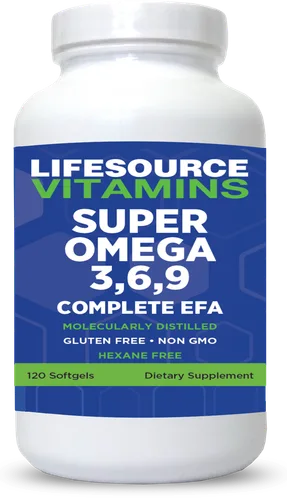
Spray For Life Super Omega 3-6-9 - Complete EFA - Softgels Review
We don’t sell supplements. We help you make decisions and get the best price.
Lowest prices
We may earn a commission from some store links. How we choose.
Finding the lowest prices at the stores now. This takes a few seconds.
Study, Trial or Testing Result Summary
Members Only35 human studies · 21 improved
1 of these 35 human studies gave omega 3-6-9 blend by drip, not by mouth.
This softgel gives 1200 mg a day of an omega 3-6-9 blend. The label does not say how much of that is omega-3, and the studies below tested omega-3 alone, not a 3-6-9 blend, mostly at 1 to 2.5 grams of omega-3 a day. A pooled analysis of 39 placebo-controlled trials found omega-3 raised the body's antioxidant capacity and lowered a marker of oxidative damage [1]. A 4-month trial in overweight middle-aged and older adults found 2.5 grams a day cut oxidative stress by about 15 percent, though telomeres, the protective caps on chromosomes, did not change [2]. A 12-week trial in healthy older adults found a supplement with 1,000 mg of omega-3 plus other nutrients lowered an inflammation score [3]. Signs of true age reversal did not hold up. A small pooled analysis linked omega-3 to slightly longer telomeres [4], but a larger 4-year trial of about 1,050 older adults taking 1 gram a day found no slowing of telomere shortening [5]. A trial of 4,218 adults aged 60 and older found no change in memory or thinking after 2 to 3 years [6]. Animal and cell studies are never counted.
See all 35 studies →Hide the studies
- Across 39 placebo-controlled trials with 2,875 people, omega-3 raised total antioxidant capacity and glutathione peroxidase activity and lowered malondialdehyde, a marker of oxidative damage, though nitric oxide, glutathione, superoxide dismutase and catalase did not change.Omega-3 fatty acids supplementation and oxidative stress parameters: A systematic review and meta-analysis of clinical t…
- Pooling 5 clinical trials with 337 people, omega-3 fatty acids were linked to slightly longer telomeres, though the authors say larger trials are needed.Effect of omega-3 fatty acids on the telomere length: A mini meta-analysis of clinical trials.
- In 5 trials of women with gestational diabetes or prediabetes, omega-3 plus vitamin D or E improved blood sugar control and antioxidant capacity compared with placebo, but this retracted analysis reported implausible repeated numbers.Omega-3 fatty acids plus vitamin for women with gestational diabetes or prediabetes: a meta-analysis of randomized contr…
- A review of 28 recent trials found omega-3 can be recommended for improving heart disease risk factors such as inflammation and oxidative stress, but it showed no benefit for managing heart disease itself.Omega 3 fatty acids in cardiovascular disease risk factors: An updated systematic review of randomised clinical trials.
- A review of trials in adults found it is still debated whether omega-3 reduces oxidative stress, and it may help early fatty liver disease but not more severe disease.Oxidative Stress and Non-Alcoholic Fatty Liver Disease: Effects of Omega-3 Fatty Acid Supplementation.
- In a review of diet trials in people with lupus, omega-3 supplementation reduced inflammation markers, disease activity and oxidative stress and improved blood fats and blood vessel function.Diet and Systemic Lupus Erythematosus (SLE): From Supplementation to Intervention.
- A broad review of nutrients for healthy aging in older adults listed omega-3 fatty acids among those that help slow aging, but gave no specific results and called for more clinical studies.Nutraceuticals and their role in promoting musculo-skeletal healthy aging.
- In 13 controlled trials of healthy adults lasting 1 day to 26 weeks, omega-3 lowered some muscle damage and inflammation markers and improved the glutathione balance after exercise, but muscle soreness results were mixed and TNF-alpha did not change.Omega-3 Fatty Acid Supplementation on Post-Exercise Inflammation, Muscle Damage, Oxidative Response, and Sports Performa…
- A review of 80 studies (77 in animals, 3 in humans) found that high-fat diets and, in early human evidence, DHA-enriched fish oil, red meat and high protein were linked to more aged (senescent) cells rather than fewer.Dietary ingredients inducing cellular senescence in animals and humans: A systematic review.
- In 4,218 healthy adults aged 60 and older, 1 gram a day of marine omega-3 for 2 to 3 years did not change memory and thinking scores compared with placebo.Marine n-3 fatty acids and cognitive change among older adults in the VITAL randomized trial.
- In about 1,050 older adults, 1 gram a day of marine omega-3 for 4 years did not slow telomere shortening compared with placebo, while vitamin D3 did.Vitamin D3 and marine ω-3 fatty acids supplementation and leukocyte telomere length: 4-year findings from the VITamin D …
- In 120 hemodialysis patients, 1250 mg a day of omega-3 for 12 weeks improved malnutrition-inflammation score, nitric oxide and total antioxidant capacity compared with placebo.Effects of omega-3 fatty acid plus alpha-tocopherol supplementation on malnutrition-inflammation score, biomarkers of in…
- In a 12-week placebo-controlled trial of 112 healthy older adults, a daily multimicronutrient and omega-3 supplement with 1,000 mg EPA plus DHA reduced an inflammation score compared with placebo, with a stronger effect in older participants.Multimicronutrient and omega-3 fatty acid supplementation reduces low-grade inflammation in older participants: An explo…
- In 110 pregnant women and their newborns, a fish-oil dairy drink with about 400 mg EPA and DHA a day lowered oxidative damage markers and raised antioxidant enzymes compared with a control dairy drink.Omega-3 LCPUFA supplement: a nutritional strategy to prevent maternal and neonatal oxidative stress.
- In 106 sedentary, overweight middle-aged and older adults, 4 months of 2.5 grams a day of omega-3 lowered oxidative stress by about 15% compared with placebo, though telomere length did not differ significantly between groups.Omega-3 fatty acids, oxidative stress, and leukocyte telomere length: A randomized controlled trial.
- In a 12-week placebo-controlled trial of 101 middle-aged women, taking 500 mg of a fish oil product rich in omega-7 twice daily improved skin wrinkles, elasticity and moisture compared with placebo, with no side effects reported.Anti-Wrinkle and Skin Moisture Efficacy of 7-MEGATM: A Randomized, Double-Blind, Placebo Comparative Clinical Trial.
- In 100 adults with type 2 diabetes, 12 weeks of omega-3 capsules combined with nano-curcumin lowered inflammation and insulin and raised antioxidant capacity compared with placebo, but blood sugar and HbA1c did not change.The effect of curcumin and high-content eicosapentaenoic acid supplementations in type 2 diabetes mellitus patients: a d…
- In 89 premature infants fed intravenously for about two weeks, a fish-oil-based lipid emulsion raised total antioxidant capacity more than an olive-oil emulsion and was linked to less severe lung disease.New-generation fish oil and olive oil lipid for prevention of oxidative damage in preterm infants: Single center clinica…
- In 70 children with leukemia taking a med, 1000 mg a day of omega-3 for 6 months kept liver enzymes and antioxidant levels closer to normal than placebo.Read the study on PubMed (26421385) →
- In 63 Alzheimer patients, 6 months of a DHA-rich omega-3 supplement lowered DNA methylation at 2 of 4 measured sites in white blood cells compared with placebo, but this was not shown to be a clear anti-aging benefit.DHA-rich n-3 fatty acid supplementation decreases DNA methylation in blood leukocytes: the OmegAD study.
- In 61 adults aged about 71 who also did exercise, an 8-week high-protein diet with 2.2 grams a day of omega-3 lowered some anti-inflammatory signals, while inflammatory signals fell in men only.Effects of Exercise and Omega-3-Supplemented, High-Protein Diet on Inflammatory Markers in Serum, on Gene Expression Lev…
- In 60 men with coronary artery disease, 2 months of 4 grams omega-3 plus 400 IU vitamin E raised activity of two cell-health genes and total antioxidant capacity more than placebo.Beneficial effects of omega-3 and vitamin E coadministration on gene expression of SIRT1 and PGC1α and serum antioxidant…
- In 60 women with gestational diabetes, 6 weeks of 1000 mg flaxseed omega-3 plus 400 IU vitamin E raised antioxidant capacity and nitric oxide and lowered a marker of fat damage compared with placebo.A Randomized Controlled Clinical Trial Investigating the Effects of Omega-3 Fatty Acids and Vitamin E Co-Supplementation…
- In 60 adults with type 2 diabetes, 2700 mg per day of omega-3 fats raised a gene that drives the body's antioxidant defenses and increased total antioxidant capacity in blood compared with placebo.Improvement of NRF2 gene expression and antioxidant status in patients with type 2 diabetes mellitus after supplementati…
- In 49 children on dialysis, 16 weeks of 1 g per day of omega-3 capsules lowered total cholesterol and raised antioxidant enzyme levels compared with placebo.Effect of Omega-3 Fatty Acids on Serum Lipid Profile and Oxidative Stress in Pediatric Patients on Regular Hemodialysis:…
- In a 12-week pilot trial of 40 adults over 60 with chronic musculoskeletal pain, 4 g daily of krill oil raised omega-3 levels and was well tolerated, and showed non-significant trends toward less pain, but the trial was not powered to confirm pain benefit.Pilot Randomized Controlled Trial of Krill Oil Supplementation for Chronic Musculoskeletal Pain in Older Adults.
- In 37 older adults with HIV, 12 weeks of 1.6 g per day of fish oil did not change inflammation or immune aging markers compared with placebo, and more people on fish oil reported stomach side effects.Effects of Fish Oil on HIV-Related Inflammation and Markers of Immunosenescence: A Randomized Clinical Trial.
- In 34 adults with keratoconus, taking 1000 mg per day of a concentrated omega-3 fat called docosahexaenoic acid for 3 months lowered markers of oxidative stress and inflammation compared with untreated controls, though corneal shape changes were not clearly improved.Antioxidant and Anti-Inflammatory Effects of Oral Supplementation with a Highly-Concentrated Docosahexaenoic Acid (DHA) …
- In 21 insulin-resistant adults, 6 months of 3.9 g per day of omega-3 fats raised omega-3 levels in blood and fat tissue but did not improve fat tissue inflammation or insulin regulation compared with placebo.Very-long-chain ω-3 fatty acid supplements and adipose tissue functions: a randomized controlled trial.
- In 20 postmenopausal women, 8 weeks of fish oil alongside resistance training lowered inflammatory cytokines and oxidative stress markers, while the training-plus-placebo group showed no such change.Fish Oil Supplementation with Resistance Exercise Training Enhances Physical Function and Cardiometabolic Health in Post…
- In two human trials of daily fish meals or purified omega-3 fats, urinary markers of fat damage fell by 20 to 27 percent, showing omega-3 fats reduced oxidative stress in the body.Effect of omega 3 fatty acids on oxidative stress in humans: GC-MS measurement of urinary F2-isoprostane excretion.
- In heart surgery patients, omega-3 fats plus antioxidant vitamins reduced oxidative and nitrosative stress in the heart's upper chambers, but did not fully prevent irregular heartbeats after surgery.The effects of polyunsaturated fatty acids and antioxidant vitamins on atrial oxidative stress, nitrotyrosine residues, …
- In a one-year double-blind randomized trial in people with probable Alzheimer's disease, taking fish oil lowered markers of oxidative damage in the blood and raised catalase, an antioxidant enzyme, while the placebo group showed no change.Dietary fish oil increases catalase activity in patients with probable Alzheimer's disease.
- In a national survey of 2,136 adults aged 50 and older, higher dietary omega-3 intake was linked to a lower epigenetic age, while telomere length results were mixed.Precision nutrition in epigenetic aging: SHAP-optimized machine learning identifies omega-3 constituent-specific associa…
- In 40 healthy older adults, higher blood omega-3 levels were linked to better memory, processing speed and brain structure in this small exploratory study.Omega-3 Fatty Acids, Cognition, and Brain Volume in Older Adults.
Review Totals and Summary
Members Only15,000 reviews · 93% positive
Extensive customer reviews and qualitative feedback are currently being aggregated for this product. Check back soon for a detailed sentiment analysis.
Biohacker Summary
Members Only0 of 10 recommend it
Omega-3 fatty acids are the main ingredient here, and all ten panelists spoke about them, with about half recommending or using them and the rest staying neutral. Panelists take them for brain health, lowering inflammation, heart health and triglycerides, skin, fertility and sperm health, and slowing aging. Many prefer fish oil, cod liver oil, or fatty fish like salmon, sardines and mackerel, and one advised taking them with a fat-containing meal for better absorption. Doses mentioned run from 1 gram a day for aging, to 1 to 3 grams for sperm health, to 2 to 4 grams of EPA and DHA daily for triglycerides and muscle, with one warning that standard capsules often underdose. One panelist cautioned that the evidence for preventing heart disease is not very strong, and nobody said they stopped taking them.
See all 10 biohackers →Hide the biohackers
Dr. Mark Hyman · Omega-3 Fatty Acids · neutral
- Explains why omega-3s are important for brain, mood, and healthy aging.
- Eats Zetopia's Atlantic salmon for Omega-3s and Vitamin D, especially in winter, noting that one serving provides as much EPA and DHA as two standard fish oil capsules.
- Mentions omega-3 fats as existing biomarkers that play a role in mental health, which Function Health includes in their measurements.
- Mentions that omega-3s are anti-inflammatory and helpful.
- Tries to supplement with omega-3s for psoriasis and considers them the one clearly clinically effective skin nutrient for skin, hair, and nails.
- Emphasizes the importance of focusing on omega-3s, noting that a national crisis of omega-3 deficiency exists and that low omega-3 levels are a significant problem, more so than omega-6s.
- Consumes omega-3 fats through salmon at dinner.
- Notes that omega-3s are important nutrients for brain performance and aging, and that many people have gaps in these nutrients.
- Recommends omega-3 fats from wild fish, seafood, and certain nuts and seeds to fight inflammation.
- Mentions omega-3 fats as something that might be helpful for gut repair.
Dr. Eric Berg · Omega-3 Fatty Acids · neutral
- Notes that one can of sardines contains 900 mg of omega-3s (EPA and DHA).
- Recommends Omega-3s from fish oil or cod liver oil to improve the omega-6 to omega-3 ratio, which should be around 2:1 or 1:1 but is often 10:1 or 20:1 for most people.
- Suggests that taking cod liver oil can help with flaky skin around the nose or forehead, which usually means too much omega-6 fat relative to omega-3 fat.
- Recommends fatty fish like salmon, sardines, and mackerel, which are high in omega-3 fatty acids (EPA and DHA) that reduce liver inflammation and prevent scarring.
- Recommends wild-caught salmon as a healthy food to eat every day, noting it contains about 2000 mg of omega-3s in just 3 ounces.
- Recommends wild salmon as it is rich in omega-3 fatty acids, which help reduce inflammation and support brain health and cognitive function, especially important as one ages.
- Recommends DHA, an omega-3 fatty acid, as a natural remedy that, along with sweet wormwood, can trigger iron into an explosion to hit cancer.
- Dr. Eric Berg mentions that sardines are packed with omega-3 fatty acids, which support brain health and metabolism.
- Mentions that wild salmon, specifically half a fillet, has 970 mg of potassium, zero carbohydrates, a good amount of magnesium, and is loaded with omega-3 fatty acids.
- Discusses what would happen if one consumed omega-3 fatty acids every day for 30 days, highlighting their benefits for brain health, heart health, and various conditions like dry eyes, dermatitis, and high blood pressure, as well as supporting calcium absorption and promoting better sleep.
Thomas DeLauer · Omega-3 Fatty Acids · recommends
- Recommends eating more omega-3s to turn over cell membranes more quickly.
- Recommends fish oil supplements as an omega-3 source for gut health, as they help reduce inflammatory signaling while tissue repairs.
- Recommends high-dose omega-3s, specifically 2 to four grams of combined EPA and DHA daily, to lower hepatic fat output and improve chylomicron clearance, which helps with non-fasting triglycerides.
- Recommends omega-3s, specifically 4 grams a day, to boost the muscle building response by making muscle cell membranes work better for the mTor switch to fire, and specifically mentions Pury for their clean, third-party tested omega-3s.
- Recommends consuming more omega-3s to help balance the mitochondrial membrane, as it will absorb more omega-3s instead of omega-6s.
- Recommends consuming more omega-3s to drive down inflammation.
- Recommends omega-3s, stating that a meta-analysis found 1,000 mg significantly reduced liver fat by shutting down inflammatory signals that promote fat storage, and advises looking for a triglycerol form for better absorption and to avoid oxidation.
- Recommends fatty fish like salmon and sardines, aiming for two to three servings per week, especially around a workout, because their omega-3s, particularly DHA, increase BDNF expression.
- Considers omega-3s a fundamental for brain protection, recommending both dietary sources and supplementation for EPA and DHA, as they produce pro-resolving mediators to limit inflammation.
- Recommends timing omega-3 intake around workouts because they directly help build and keep muscle by making muscle more responsive to growth signals and fighting anabolic resistance as one ages.
Dr. Rhonda Patrick · Omega-3 Fatty Acids · neutral
- Notes that Omega-3s (EPA and DHA) are important for neuronal membranes, brain function, and resolving inflammation, and higher levels are associated with lower dementia risk.
- Highlights omega-3 fatty acids as important for cell membranes, neurons, supporting brain cells, the blood-brain barrier, and regulating inflammation, which can contribute to memory problems.
- Mentions that EPA is an omega-3 examined in mortality analysis and found primarily in seafood.
- States that Omega-3 fatty acids are very important for sperm health.
- Omega-3s may help slow biological aging, with added benefits when combined with vitamin D and strength training. In a 3-year randomized trial of healthy, mostly active older adults, omega-3 alone slowed several DNA-based aging clocks.
- Recommends regular intake of omega-3 rich seafood and supplementation with omega-3 fatty acids if it's appropriate for one's lifestyle, as they are beneficial for the heart by resolving inflammation and preserving membrane fluidity.
- Notes that a 100 mg per day increase in omega-3 fatty acids was associated with lowering the risk of Alzheimer's disease and cognitive decline by 10%, and that it takes about two grams a day to get to a high omega-3 index if one has a low index.
- Practical habits to help keep chronic inflammation in check include getting enough omega-3s.
- States that Omega-3s, specifically EPA and DHA, may be the most potent naturally occurring dietary compounds for reducing inflammation, and that about 2 g/day of combined EPA and DHA can raise a low omega-3 index.
- Recommends fatty fish as a source of healthy fats for muscle gain.
Andrew Huberman · Omega-3 Fatty Acids · recommends
- Mentions that AG1 is giving away a free bottle of omega-3 co-enzyme Q10 with the first subscription to AG1 Pro.
- AG1 is giving away a free bottle of omega-3 coenzyme Q10 with your first subscription.
- Mentions that AG1 is giving away a free bottle of Omega-3 co-enzyme Q10 with the first subscription to AG1 Pro.
- Discusses Omega-3 Fatty Acids and EPA.
- Mentions that AG1 is offering a free bottle of Omega-3 co-enzyme Q10 with a first subscription to AG1 Pro.
- Recommends a free bottle of Omega-3 co-enzyme Q10 with the first AG1 Pro subscription.
- Mentions Omega-3s in the context of the microbiome and processed foods.
- Recommends Omega-3 co-enzyme Q10, which is offered as a free bottle with the first AG1 Pro subscription.
- States that getting 1 to 3 grams of EPA essential fatty acid per day can improve mood and cognitive function, supporting focus and concentration.
- Discusses Omega-3 Fatty Acids.
Siim Land · Omega-3 Fatty Acids · recommends
- Recommends taking omega-3s, including EPA and DHA, with a fat-containing meal to increase absorption.
- Increased his omega-3 intake to achieve a higher omega-3 index, which is associated with greater insulin sensitivity and better metabolic health markers.
- Increased his omega-3 index to 9.5% and notes that omega-3s have strong evidence for reducing elevated triglycerides.
- Mentions that EPA and DHA Omega-3s support heart and brain function and can lower triglycerides, with a higher omega-3 index associated with lower heart disease, Alzheimer's and mortality risk.
- Recommends Omega-3s for triglycerides and cardiovascular health, based primarily on human research, especially randomized controlled trials showing measurable benefits.
- Recommends choosing an omega-3 supplement from a brand that uses independent third-party testing and publishes a recent certificate of analysis, verifying EPA and DHA amounts, and testing for heavy metals, contaminants, and oxidation markers.
- Lists Omega-3s as one of 15 supplements backed by human studies.
- Explains that omega-3s can alter mitochondrial membranes and have broader cardiometabolic effects, making mitochondria more responsive to cellular signaling and oxidative stress from exercise, but they don't increase maximal mitochondrial respiration.
- Notes that 75% of people aren't meeting the daily recommendation for omega-3s and that Japanese people eat 2-3x more omega-3s per day than Americans or Europeans, which reflects in their higher omega-3 index.
- Thinks omega-3s have some of the strongest evidence and are worth considering.
Dave Asprey · Omega-3 Fatty Acids · recommends
- Suggests that omega-3s may help slow aging and support cellular repair.
- Recommends omega-3s, noting that 1 gram a day slowed epigenetic aging by up to 4 months in a randomized trial of people over 70.
- Dave Asprey recommends Omega-3, citing a randomized trial showing 1g a day slowed epigenetic aging in older adults, but warns that most people underdose due to low EPA and DHA content in standard capsules.
- A review of 41 human studies testing interventions against newer-generation epigenetic clocks found favorable changes for exercise, caloric restriction, omega-3s, plant-rich diets, multivitamins, a med, pitavastatin, and ketamine.
- Recommends getting nutrients like omega-3s from real food or Vision 101 for eyesight.
- Recommends adding omega-3 fats to improve how neurons absorb and use nutrients like vitamin C.
- States that Fatty15 supports cells better than omega-3s or fish oil, but he uses both.
- Notes that Inuit people consumed very high levels of omega-3s, specifically EPA and DHA, which contributed to their health on a whale blubber diet.
- Lists Omega-3s as a nutrient that forms the structure and different parts of the brain.
- Uses both C15 and omega-3s, noting that C15 supports cells better than omega-3s or fish oil with three times more benefits.
Ben Greenfield · Omega-3 Fatty Acids · neutral
- Notes that omega-3s have solid research behind them for fertility.
- Recommends omega-3 fatty acids, specifically EPA and DHA, at 1 to 3 grams per day for better sperm morphology and motility, noting that sperm membranes are rich in polyunsaturated fatty acids.
- Recommends getting Omega-3 from oily fish such as sardines, anchovies, mackerel, herring, and salmon with skin.
- Discusses why fatty fish or fish oil may matter more than plant-based omega-3s if seed oils are in one's diet.
- Says that omega-3 fatty acids are a great way to feed the system and help with stress.
- Recommends testing for and replenishing omega-3 fatty acids if levels are low, as they can affect the ability to maintain or preserve muscle, especially for those on GLP-1s.
- Recommends including EPA from fatty fish or fish oil in one's diet, especially if seed oils are present in the diet.
- Notes that B vitamins and Omega-3s work as a pair to support the brain, but not independently.
- Notes that the DO-Health study showed omega-3 had good effects, and it's a supplement people commonly take.
- Mentions that omega-3, vitamin D, and exercise all had good effects in the DO-Health study.
Peter Attia · Omega-3 Fatty Acids · neutral
- Peter and Michael explore the benefits of omega-3 fatty acids for cardiovascular trials and the challenge of delivering DHA to the brain.
- Mentions that some trials showing a benefit to PUFA were confounded by the inclusion of omega-3s, and argues that the literature on omega-3s is not super strong for decreasing hard cardiovascular disease endpoints.
- Took big doses of omega-3 postpartum to help maintain when she wasn't sitting down to eat full meals.
- Mentions consuming fatty fish, specifically sardines, as part of their diet, noting their high fat and protein content.
- Peter discusses how omega-3s from fish oil impact inflammation, heart health, and brain function, as well as the strengths and limitations of current research.
- Mentions the importance of DHA omega-3 fatty acids for neuronal membranes, which are concentrated in synapses and crucial for communication between neurons.
- Highlights the importance of DHA omega-3 fatty acids for neuronal membranes and communication between neurons, as they are concentrated in synapses.
- Discusses the mfsd2a transporter, which is specific to DHA in phospholipid form, and its role in blood-brain barrier integrity, noting that animal studies show disruption of this transporter causes significant breakdown of the blood-brain barrier and loss of omega-3 in the brain.
- States that there is a very strong clinical impression that high doses of omega-3s help with dry eye, primarily from an anti-inflammatory standpoint.
- Recommends omega-3 fatty acids, specifically DHA and EPA, for brain protection, especially for individuals with the APOE4 gene, stating that they require higher doses.
Bryan Johnson · Omega-3 Fatty Acids · uses
- Lists Omega-3 as a customer favorite.
- Recommends Omega 3 fatty acids as a supplement for skin health, noting they are in the Blueprint stack.
- During menopause, Bryan Johnson recommends ensuring adequate omega-3s for brain health.
RAL Summary
Members OnlyTier 2 for Healthy Aging
More Details
Members OnlyBody systems · Combine with · Possible side effects
Body systems: Cardiovascular system, Immune system, Nervous system
Combine with: Combine with a healthy diet and lifestyle.
Possible side effects: No major side effects reported.
Supplement Facts
Omega 3-6-9 Blend 1200 mg
| Calories | 10 | |
| Total Fat | 1 g | |
| Omega 3-6-9 Blend | 1,200 mg | † |
Other ingredients: Softgel (gelatin, vegetable, glycerine, purified water) mixed tocopherols.
Barcode (UPC) 697842011617 · Label source: Reverseagelab · Report a label change
Show entire label

More healthy aging products
Members OnlyThe highest ranked for the same goal
Read more
Our articles on this subject
- Healthy Aging Tips: A Science-Backed Guide to Living Better for LongerArticle · Mar 17, 2026
- NAD Anti-Aging Supplements: Benefits, Evidence, and How to ChooseArticle · Jun 15, 2026
Graded November 10, 2026 by the Reverse Age Lab evidence engine, from human studies, real reviews and our biohacker panel. How we grade. Is this medical advice? No. Rala organizes the published evidence; go over any change with your doctor, especially if you take meds.
Privacy policyConsumer health dataAffiliate disclosureTermsDo Not Sell or Share My Personal InformationCookie settings