
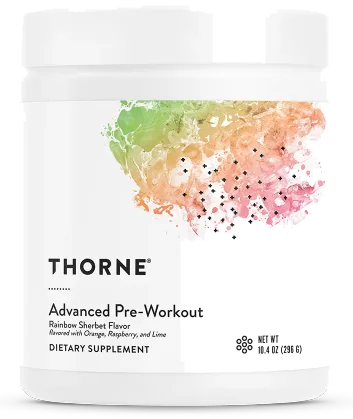
Thorne Advanced Pre-Workout Review
Thorne Advanced Pre-Workout is a rainbow sherbet flavored powder designed to optimize performance with enhanced pump, focus, blood flow, and delayed time to fatigue. The product is positioned for athletes and active individuals who want to upgrade their workouts with noticeable performance benefits. It is described as delivering a science-backed blend of amino acids, alpha-GPC, beta-alanine, L-citrulline, L-theanine, and naturally derived caffeine to support energy, endurance, power output, and focus during training. According to the page, the formula supports nitric oxide production for enhanced blood flow and muscle pump, while helping to delay fatigue and improve perceived time to exhaustion. The suggested use is to mix 2 scoops with at least 12 ounces of water or your preferred beverage daily, consumed 15 to 30 minutes before a workout. Each serving provides 200 mg of caffeine from coffee bean, 600 mg of alpha-GPC, 3.2 g of beta-alanine, 5 g of L-citrulline, and 200 mg of L-theanine, along with vitamin B6, vitamin B12, and 15 mg of sodium. The container holds 20 servings of 2 scoops each. The product contains no added sugars and no artificial sweeteners, uses natural flavors and colors, and is gluten-free, dairy-free, and soy-free. It is NSF Certified for Sport, which the page says means every batch is tested for compliance with label claims and for the absence of nearly 300 substances banned by many major athletic organizations. The product page explains each key ingredient. Alpha-GPC is described as a choline compound that supports acetylcholine production and is linked to focus, memory, power output, endurance, and natural growth hormone maintenance. Beta-alanine is described as supporting carnosine levels and muscle pH, with claims about resisting fatigue, delayed soreness, time to exhaustion, and VO2 max. L-citrulline is described as supporting nitric oxide synthesis, blood flow to working muscles, endurance, and recovery. L-theanine is described as working with caffeine to enhance performance and accuracy, limiting jitters and crashes, and creating a relaxed yet alert state. Thorne states that the formula is built with the scientific rigor it is known for, that each ingredient is selected and clinically studied, and that each batch goes through multiple rounds of quality control to ensure purity, potency, and consistency. The page also includes warnings that the product is contraindicated for people with a history of hypersensitivity to its ingredients, should not be used during pregnancy or nursing, is not recommended for people sensitive to caffeine or children under 18, and is sold in New York only to adults eighteen and older. The page notes there are no known adverse interactions at publication date. It is marketed to people who want a pre-workout formula that supports energy, focus, and the mind-muscle connection without a harsh crash.
We don’t sell supplements. We help you make decisions and get the best price.
Lowest prices
We may earn a commission from some store links. How we choose.
Finding the lowest prices at the stores now. This takes a few seconds.
Study, Trial or Testing Result Summary
Members Only109 human studies · 33 improved
The main ingredients of this pre-workout have not been shown to build more muscle. Pooled trials found beta-alanine did not change fat-free mass or body fat [1], and resistance training trials at 6.4 grams a day, double this product's 3.2 grams, found no extra strength or muscle growth [2][3]. In older adults, 3.2 grams a day added nothing to training [4]. Citrulline at 5 grams had no overall effect on lean mass in a review of 21 trials [5], and did not raise strength in weight-trained adults [6], though one review found a small single-dose boost in strength and power [7]. Caffeine at 200 milligrams reliably gives a small boost to strength and endurance during a workout [8][9], but six weeks of daily caffeine did not add muscle size or strength over placebo [10]. Vitamin B6 is linked to more muscle only in observational surveys of older men, and the largest survey found no link [11][12]. Vitamin B12 showed no benefit [13]. Alpha GPC has no human studies for this goal, and L-theanine has only one mouse study with no muscle gain [14]. Animal and cell studies are never counted.
See all 109 studies →Hide the studies
- Across 20 randomized trials with 492 people, beta-alanine did not change body weight, fat mass, body fat percentage or fat-free mass compared with control.Effects of beta-alanine supplementation on body composition: a GRADE-assessed systematic review and meta-analysis.
- Across seven placebo-controlled trials of 303 overweight older adults who exercised, adding citrulline improved six-minute walk distance and lower limb strength compared with placebo.The Effects of Combined Exercise with Citrulline Supplementation on Body Composition and Lower Limb Function of Overweig…
- Across twelve placebo-controlled studies of 198 healthy adults, a single dose of citrulline gave a small but significant boost to high-intensity strength and power performance versus placebo.Acute Effects of Citrulline Supplementation on High-Intensity Strength and Power Performance: A Systematic Review and Me…
- Across four placebo-controlled trials of resistance-trained adults, citrulline malate did not improve muscle strength in the upper or lower limbs.Effects of Citrulline Malate Supplementation on Muscle Strength in Resistance-Trained Adults: A Systematic Review and Me…
- Across 21 randomized trials, citrulline had no overall effect on fat-free mass or other body composition measures, though trials of 3 to 8 weeks showed a significant fat-free mass increase in subgroup analysis.Effects of Citrulline or Watermelon Supplementation on Body Composition: A Systematic Review and Dose-Response Meta-Anal…
- Across nine randomized trials in adults, citrulline plus exercise reduced body fat more than exercise alone but did not change total lean mass.Synergistic effect of long-term L-citruline supplementation combined with exercise on body composition in adults: A syst…
- In 34 studies, a single serving of energy drink improved muscle strength and endurance, jumping and sport-specific actions but not sprinting, and the gains were linked to taurine dose rather than caffeine dose.Acute effects of caffeine-containing energy drinks on physical performance: a systematic review and meta-analysis.
- In ten strength and ten power studies, caffeine slightly improved maximal strength and jump power, with a significant gain for upper body strength but not for lower body strength.Effects of caffeine intake on muscle strength and power: a systematic review and meta-analysis.
- A review of 21 meta-analyses found caffeine improved muscle strength, muscle endurance, power and jumping, with moderate quality evidence, mostly in young men.Wake up and smell the coffee: caffeine supplementation and exercise performance-an umbrella review of 21 published meta-…
- In nineteen placebo-controlled trials, caffeine improved bench press endurance and maximum strength in healthy adults, but showed no significant effect on leg press performance or perceived exertion.Effects of caffeine supplementation on muscle endurance, maximum strength, and perceived exertion in adults submitted to…
- Across twelve trials of very low caffeine doses (0.9 to 2 mg per kg body weight), caffeine slightly improved muscular strength, muscular endurance and lifting speed during resistance exercise compared with placebo.Exploring the minimum ergogenic dose of caffeine on resistance exercise performance: A meta-analytic approach.
- Across fourteen studies, a single dose of caffeine capsules improved muscle strength and muscle endurance, especially in men, with the biggest strength gains at 6 mg per kg body weight or more taken 45 minutes before exercise.Effects of Acute Ingestion of Caffeine Capsules on Muscle Strength and Muscle Endurance: A Systematic Review and Meta-An…
- Across 21 studies, caffeinated chewing gum taken about 5 to 25 minutes before exercise slightly improved muscular strength and jump height but had no significant effect on muscular endurance.Fast-Acting Caffeine: Does Caffeinated Chewing Gum Enhance Muscular Strength, Endurance, and Jumping Performance? A Syst…
- In twelve trials of 360 postmenopausal women lasting 4 to 8 weeks, the two studies of muscle function suggested improvement only when citrulline was combined with resistance training.Citrulline supplementation in postmenopausal women: a systematic review of vascular, muscular, and metabolic effects.
- In 7 trials with 263 adults lasting at least 4 weeks, taking creatine and beta-alanine together did not build more muscle or strength than creatine alone, and body composition results were mixed.Effects of Creatine and β-Alanine Co-Supplementation on Exercise Performance and Body Composition: A Systematic Review.
- In six trials of 250 adults aged 50 and over, five reported muscle mass benefits and four reported strength benefits from citrulline, with larger gains when combined with exercise.Effects of Citrulline alone or combined with exercise on muscle mass, muscle strength, and physical performance among ol…
- In 9 studies of 197 trained people, doses of 4 to 6.4 g a day split into small servings were more likely to improve strength and power, while sustained-release or single large doses often did not.Dosing strategies for β-alanine supplementation in strength and power performance: a systematic review.
- In 5 studies of 163 older adults taking about 2.7 g a day for about 12 weeks, muscle strength and functional performance did not seem to improve, though exercise capacity may have.Beta-Alanine for Improving Exercise Capacity, Muscle Strength, and Functional Performance of Older Adults: A Systematic …
- A review of nine trials in healthy adults aged 50 and older found beef, protein and amino acids improved wellbeing overall, but vitamin B12 showed no effect, and the abstract gives no B12 dose, duration or muscle-specific result.The potential role of beef and nutrients found in beef on outcomes of wellbeing in healthy adults 50 years of age and ol…
- In 7 trials of combat athletes, beta-alanine improved strength, power and work capacity, but lean mass and fat mass changes were not significant.β-Alanine Supplementation in Combat Sports: Evaluation of Sports Performance, Perception, and Anthropometric Parameters …
- In a review of 29 studies of short-term high-intensity exercise, six of eleven resistance training studies showed significant benefits from caffeine, and some studies showed worse performance in repeated bouts.Efficacy of acute caffeine ingestion for short-term high-intensity exercise performance: a systematic review.
- In 86 obese older adults doing interval training for 12 weeks, 10 g daily citrulline versus placebo changed 10 blood metabolites more, but the abstract reports no muscle-building result.Serum metabolomic adaptations following a 12-week high-intensity interval training combined to citrulline supplementatio…
- In 81 obese older adults doing interval training for 12 weeks, adding citrulline gave greater handgrip and thigh strength gains and lower fat mass than placebo, but lean mass and muscle power gains were similar in both groups.Impact of high-intensity interval training with or without l-citrulline on physical performance, skeletal muscle, and ad…
- In 80 resistance-trained men taking a pre-workout mix with 3 g beta-alanine daily for 8 weeks, body composition did not differ from placebo, and strength gains were similar to placebo by week 8.Effects of ingesting a pre-workout dietary supplement with and without synephrine for 8 weeks on training adaptations in…
- In 75 resistance-trained men over 8 weeks of lifting, glutathione plus citrulline raised lean mass more than placebo at 4 weeks, but no differences remained at 8 weeks.Eight weeks of resistance training in conjunction with glutathione and L-Citrulline supplementation increases lean mass …
- In 73 obese older adults doing interval training for 12 weeks, citrulline led to greater improvements in body composition and muscle strength than placebo, especially in people eating under 1 gram of protein per kilogram daily.Initial Dietary Protein Intake Influence Muscle Function Adaptations in Older Men and Women Following High-Intensity Int…
- In 68 obese older adults doing interval training for 12 weeks, citrulline changed some muscle microRNA levels linked to lower body fat and better muscle power, but muscle-specific microRNAs did not change.Skeletal Muscle and Circulating microRNAs Adaptations to 12-Week HIIT With or Without L-Citrulline in Obese Older Adults…
- In 61 older adults at risk of sarcopenia doing an exercise program for 6 weeks, citrulline did not clearly change vitamin D, hormone levels, or physical fitness compared with placebo; the vitamin D rise was seen with arginine and beetroot instead.Nitric-Oxide-Inducing Factors on Vitamin D Changes in Older People Susceptible to Suffer from Sarcopenia.
- In 54 resistance-trained men, a single 300 mg dose of caffeine or coffee taken 30 minutes before testing did not improve strength more than placebo, though both reduced the drop in sprint power.Effects of coffee and caffeine anhydrous on strength and sprint performance.
- In trained men, a single dose of arginine plus citrulline malate before exercise did not improve aerobic, anaerobic or CrossFit performance compared with placebo, apart from reaching peak power sooner in one sprint test.Acute effects of combined supplementation of L-arginine and citrulline malate on aerobic, anaerobic, and CrossFit exerci…
- In 46 young men doing interval training for 6 weeks, beta-alanine (6 g a day for 3 weeks, then 3 g) improved lean body mass and endurance only in the beta-alanine group in the later weeks.Effects of beta-alanine supplementation and high-intensity interval training on endurance performance and body compositi…
- In 44 adults aged 60 to 73 doing an exercise program for 6 weeks, citrulline improved walking speed compared with placebo, while strength and endurance changes were not significantly different.L-Citrulline Supplementation and Exercise in the Management of Sarcopenia.
- In 43 young trained adults, a single 5.3 g dose of citrulline taken 45 minutes before testing did not improve muscle strength, power, or repetition performance compared with placebo.Malate or Not? Acute Effects of L-Citrulline Versus Citrulline Malate on Neuromuscular Performance in Young, Trained Adu…
- In 43 middle-aged adults doing resistance training for 6 weeks, a caffeinated pre-workout supplement gave the same gains in muscle size and strength as carbohydrate alone, apart from a larger drop in waist size.Pre-workout multi-ingredients or carbohydrate alone promote similar resistance training outcomes in middle-aged adults: …
- In 41 obese postmenopausal women with high blood pressure, adding L-citrulline to whole-body vibration training over 8 weeks increased leg lean mass more than L-citrulline alone, and vibration training raised leg strength by about 37 percent compared with L-citrulline alone.Impact of L-citrulline supplementation and whole-body vibration training on arterial stiffness and leg muscle function i…
- In 40 healthy young women, four weeks of three small cups of Turkish coffee daily did not change fat-free mass or skeletal muscle mass compared with no caffeine, and raised blood pressure and heart rate and worsened sleep.Short-Term Turkish Coffee Consumption Elevates Cardiovascular Risk Markers, Decreases Leptin Levels, and Impairs Sleep Q…
- In 37 college wrestlers and football players taking 4 g a day for 8 weeks, lean mass rose more than with placebo but the differences were not statistically significant.Effects of β-alanine supplementation on performance and body composition in collegiate wrestlers and football players.
- In 35 resistance-trained adults, a single 12 g dose of citrulline malate taken alone did not improve strength, muscular endurance, or jump performance compared with placebo, while caffeine alone did improve some strength and endurance measures.Effect of isolated and combined ingestion of caffeine and citrulline malate on resistance exercise and jumping performan…
- In 33 resistance-trained men, 8 grams of citrulline daily for 6 weeks of resistance training increased upper body repetitions to failure more than placebo, with no clear difference from citrulline malate.Changes in resistance training performance, rating of perceived exertion, and blood biomarkers after six weeks of supple…
- In 33 college football players over 10 weeks of resistance training, creatine plus beta-alanine gave greater gains in lean body mass and fat loss than creatine alone or placebo, and strength improved more than with placebo.Effect of creatine and beta-alanine supplementation on performance and endocrine responses in strength/power athletes.
- In 30 young male athletes, a supplement blend containing 8 g citrulline malate and 3 g arginine, taken once before resistance exercise, did not change biceps blood flow, muscle size, or muscle pump compared with placebo.New perspectives for investigating muscular perfusion response after dietary supplement intake: an exploratory, randomiz…
- In 30 strength-trained people taking 6.4 g of beta-alanine daily for 5 weeks of leg training, power output and the load lifted in a one-repetition maximum squat rose more than with placebo.Effects of β-alanine supplementation during a 5-week strength training program: a randomized, controlled study.
- In 30 recreationally trained men and women over 6 weeks of resistance training, a multi-ingredient supplement containing beta-alanine did not improve strength or body composition more than placebo.The Effects of a Multi-Ingredient Performance Supplement Combined with Resistance Training on Exercise Volume, Muscular …
- In 29 people with post-polio syndrome, 15 g of L-citrulline daily for 24 weeks did not significantly improve walking distance, motor function, muscle strength, or leg muscle MRI changes compared with placebo.Treatment with L-Citrulline in patients with post-polio syndrome: A single center, randomized, double blind, placebo-con…
- In 29 active women, caffeine at 6.5 mg per kg body mass before strength sessions increased total repetitions compared with placebo, with no added benefit from combining it with a carbohydrate mouth rinse.Caffeine Supplementation or Carbohydrate Mouth Rinse Improves Performance.
- In 28 trained young adults over 6 weeks of resistance training, 3 mg per kg per day of caffeine alone did not produce any between-group differences in muscle size, strength or endurance compared with placebo.Effects of Creatine and Caffeine Supplementation During Resistance Training on Body Composition, Strength, Endurance, Ra…
- In 28 young adults doing 4 weeks of low-load wrist training with blood flow restriction, caffeine taken 1 hour before each session at 6 mg per kg did not add to strength gains, though it improved fine control of force release.Neuromuscular adaptations to caffeine supplementation in low-load resistance training with blood flow restriction.
- In 27 adults aged 60 to 82 taking 3.2 g of beta-alanine daily for 12 weeks, beta-alanine added no benefit to resistance training for strength, body measurements or power compared with placebo.Beta-Alanine Does Not Enhance the Effects of Resistance Training in Older Adults.
- In 25 resistance-trained adults taking a drink with 2.1 g of beta-alanine for 7 days, leg press endurance, bench press lifting volume and total lifting volume improved more than placebo, but cycling time-trial performance did not differ.Short-Term Effects of a Ready-to-Drink Pre-Workout Beverage on Exercise Performance and Recovery.
- In 24 malnourished adults aged 80 to 92, 10 g of citrulline daily for 3 weeks did not change whole-body protein synthesis, but women on citrulline gained lean mass and lost fat mass.Impact of 3-week citrulline supplementation on postprandial protein metabolism in malnourished older patients: The Cipro…
- In hypertensive postmenopausal women, 10 grams of citrulline daily combined with 8 weeks of slow, light resistance training added more leg muscle mass and leg curl strength than training with placebo.Combined L-Citrulline Supplementation and Slow Velocity Low-Intensity Resistance Training Improves Leg Endothelial Funct…
- In 24 resistance-trained men over 6 weeks of periodized resistance training, a supplement containing beta-alanine increased lean mass more than placebo, while both groups gained similar strength.The effects of six weeks of supplementation with multi-ingredient performance supplements and resistance training on ana…
- In 22 recreationally trained men, 28 days of 6.4 grams of beta-alanine daily did not prevent strength loss after intense intermittent exercise and did not increase strength or muscle growth from resistance training beyond placebo.Short-Time β-Alanine Supplementation on the Acute Strength Performance after High-Intensity Intermittent Exercise in Rec…
- In a small pilot trial, active older women taking 3 grams of citrulline malate daily with 6 weeks of exercise improved sit-to-stand time, while other gains such as walking distance were not significantly better than placebo.Short-term citrulline malate supplementation enhances lower-limb function in physically active older women: A pilot rand…
- In 20 trained men, an 8-week multi-ingredient pre-workout that included beta-alanine increased bench press strength, lean body mass, and thigh muscle thickness more than placebo, but beta-alanine's own contribution could not be separated out.Effects of 8 weeks of Xpand® 2X pre workout supplementation on skeletal muscle hypertrophy, lean body mass, and strength…
- In 20 men doing bench press sets to failure, caffeine before exercise made the lowering phase faster, so each set took less time under tension, without reducing power in the lifting phase.The acute effects of caffeine intake on time under tension and power generated during the bench press movement.
- In 20 male lifters and recreational athletes in a crossover trial, caffeine at 6 mg per kg improved muscular strength, muscular endurance and jump height compared with placebo, with similar effects in trained and untrained men.Are Caffeine's Effects on Resistance Exercise and Jumping Performance Moderated by Training Status?
- In 19 regular weight trainers, a single 8 g dose of citrulline malate did not improve performance in a high-volume arm curl workout compared with placebo, though muscle soreness was lower.Citrulline Malate Fails to Improve German Volume Training Performance in Healthy Young Men and Women.
- In 19 resistance-trained men taking 6.4 grams of beta-alanine daily for 8 weeks of resistance training, strength and muscle thickness gains were no greater than with a placebo.Does beta-alanine supplementation enhance adaptations to resistance training? A randomized, placebo-controlled, double-b…
- In 19 people doing 6 weeks of arm curl training, beta-alanine did not increase maximal strength or total weight lifted compared with placebo, whether training used blood flow restriction or traditional methods.Does Beta-Alanine Supplementation Potentiate Muscle Performance Following 6 Weeks of Blood Flow Restriction or Tradition…
- In 19 participants, chewing caffeinated gum with 200 mg of caffeine before Romanian deadlifts increased peak and average power compared with placebo gum.Acute enhancement of Romanian deadlift performance after consumption of caffeinated chewing gum.
- In 17 resistance-trained men, one dose of caffeine (6 mg per kg body weight) taken an hour before training raised squat strength by 2.8 percent and medicine ball throw power by 4.3 percent versus placebo, but did not improve bench press strength or muscular endurance.Caffeine ingestion acutely enhances muscular strength and power but not muscular endurance in resistance-trained men.
- In 17 recreationally active men, a single 300 mg caffeine dose taken in the morning did not significantly improve repeated sprint times or lower-body power compared with placebo or no pill, though it lowered perceived exertion.Effects of Acute Caffeine Ingestion on Morning Strength, Power and Repeated Sprint Measures in Males: A Standardized App…
- In 16 adults with type 2 diabetes aged 53 to 72, 6 g of citrulline daily for 4 weeks improved blood vessel function and calf muscle strength compared with placebo.Citrulline Supplementation Improves Microvascular Function and Muscle Strength in Middle-Aged and Older Adults with Type…
- In 16 untrained college women doing 8 weeks of resistance training, 3.4 g of beta-alanine a day gave no extra gain in body composition or maximal strength compared with placebo, though leg-press endurance improved more in the beta-alanine group.Effects of β-Alanine on Body Composition and Performance Measures in Collegiate Women.
- In 16 recreationally active men doing 4 weeks of resistance training, a pre-workout drink containing beta-alanine among other ingredients gave greater gains in lean body mass and squat strength than placebo, though beta-alanine alone was not tested.Effect of Bang® Pre-Workout Master Blaster® combined with four weeks of resistance training on lean body mass, maximal s…
- In 16 strength-trained men who already used caffeine daily, single high doses of 9 or 11 mg per kg body weight did not improve bench press strength or muscular endurance, and the 11 mg per kg dose slightly reduced peak bar velocity.The Effects of High Doses of Caffeine on Maximal Strength and Muscular Endurance in Athletes Habituated to Caffeine.
- In 15 resistance-trained men taking 2.2 g of citrulline daily from watermelon juice for 7 days, lifting performance, perception, and blood vessel diameter did not differ from placebo, though muscle oxygenation was slightly higher.Effect of watermelon supplementation on exercise performance, muscle oxygenation, and vessel diameter in resistance-trai…
- In 15 healthy adults, a single dose of caffeine (5 mg per kg body weight) increased breathing muscle strength compared with placebo.Effects of caffeine on inspiratory muscle function.
- In 14 resistance-trained men, rinsing for 5 seconds with a 750 mg caffeine solution (not swallowed) increased bench press repetitions to failure and lowered perceived exertion, but did not change one-rep max strength.High Dose of Caffeine Mouth Rinse Increases Resistance Training Performance in Men.
- In 13 trained women, a single 3 mg per kg caffeine dose increased mean bar velocity at 60 percent of one-rep max by small amounts in the early and late follicular phases of the menstrual cycle, with no other significant differences from placebo.The Effect of Caffeine on the Velocity of Half-Squat Exercise during the Menstrual Cycle: A Randomized Controlled Trial.
- In 12 highly resistance-trained men, a single morning dose of caffeine (3 mg per kg body weight) raised squat and bench press strength and power about 4.6 to 5.7 percent above placebo, bringing morning performance up to afternoon levels.Caffeine ingestion reverses the circadian rhythm effects on neuromuscular performance in highly resistance-trained men.
- In 12 resistance-trained men taking 400 mg of caffeine daily for 7 days, exercise performance did not improve compared with placebo, though thinking tests improved when caffeine was combined with creatine nitrate.The Effect of Creatine Nitrate and Caffeine Individually or Combined on Exercise Performance and Cognitive Function: A R…
- In 11 female collegiate athletes, a single dose of caffeine (6 mg per kg body weight) improved jump height compared with placebo, but did not improve maximal strength measures.The Effects of Caffeine on Jumping Performance and Maximal Strength in Female Collegiate Athletes.
- In 8 experienced resistance-trained men, 4.8 grams of beta-alanine a day for 30 days let them complete about 22% more repetitions of squats than placebo, though hormone responses to exercise did not change.Beta-alanine and the hormonal response to exercise.
- In a six-month trial in people with amyotrophic lateral sclerosis, L-threonine given with the active form of vitamin B6 did not improve muscle strength compared with placebo, and the number of people and the dose were not stated.Electrophysiologic endpoint measures in a multicenter ALS drug trial.
- In college football players taking 4.5 g of beta-alanine a day for 30 days, bench press training volume and subjective fatigue improved more than with placebo, but fatigue rates during a 60-second sprint test did not significantly differ.Short-duration beta-alanine supplementation increases training volume and reduces subjective feelings of fatigue in coll…
- In 26 sports science students doing 10 weeks of resistance training, 6.4 grams of beta-alanine daily raised muscle carnosine but did not improve strength, muscular endurance, or body composition compared with placebo.The effects of 10 weeks of resistance training combined with beta-alanine supplementation on whole body strength, force …
- In 25 resistance-trained men, a single dose of caffeine (6 mg per kg body weight) increased knee extension peak torque and power compared with placebo, but did not improve knee flexion strength.Examining the Effects of Caffeine on Isokinetic Strength, Power, and Endurance.
- In 16 resistance-trained men, 4 weeks of 6.4 grams of beta-alanine daily increased total training volume by about 6.5 percent and lowered perceived effort compared with placebo.Beta-alanine Supplementation for Four Weeks Increases Volume Index and Reduces Perceived Effort of Resistance-trained Me…
- Over 4 weeks of bench press training, 16 participants taking caffeine before each session gained the same one-rep max strength as the placebo group, but their bar speed improved across a wider range of loads.Pre-exercise Caffeine Intake Enhances Bench Press Strength Training Adaptations.
- In 12 participants, a single dose of caffeine (3 mg per kg body weight) before a bench press workout increased bar speed, power output and total work across the session compared with placebo.Caffeine Increases Muscle Performance During a Bench Press Training Session.
- In an open-label study of 242 adults with diabetic nerve damage, vitamin B12 as methylcobalamin at 500 mcg three times daily for 12 weeks was less effective than epalrestat on symptoms and muscle strength, and it was judged less well tolerated.Efficacy, safety, and tolerability of Epalrestat compared to Methylcobalamine in patients with diabetic neuropathy.
- A genetic analysis of about 378,000 UK Biobank participants found little evidence that genetically higher vitamin B12 levels were linked to risk of sarcopenia (low muscle mass and strength).Causal Relationship of Genetically Predicted Serum Micronutrients Levels With Sarcopenia: A Mendelian Randomization Stud…
- In a cross-sectional study of 68,002 UK adults aged about 64, vitamin B6 intake was measured against handgrip strength, but the abstract reports no association for vitamin B6 specifically.Associations between diet and handgrip strength: a cross-sectional study from UK Biobank.
- In a cross-sectional study of 2085 adults aged 40 to 87, drinking more coffee was linked to lower odds of low muscle mass, with the lowest odds at 2 or more cups a day; this association does not prove coffee causes the difference.Coffee consumption and skeletal muscle mass: WASEDA'S Health Study.
- In 1,930 adults aged 45 to 76 followed for six years, higher vitamin B12 levels showed only a non-significant trend toward lower risk of low handgrip strength.Prospective Associations of Serum Vitamin B12, Homocysteine, and Ferritin Levels with Probable Sarcopenia.
- In a national survey of 1,766 Japanese adults aged 60 and older, higher vitamin B6 intake was positively associated with higher skeletal muscle index in men.Nutrient and food group intakes and skeletal muscle index in the Japanese elderly: a cross-sectional analysis of the NHN…
- In a population study of 765 adults over 65, lower alanine aminotransferase levels were linked to frailty, disability, muscle loss and vitamin B6 (pyridoxine) deficiency, and to higher mortality; no vitamin B6 supplement was tested and the abstract gives no direct effect of vitamin B6 on muscle building.Low Alanine Aminotransferase Levels in the Elderly Population: Frailty, Disability, Sarcopenia, and Reduced Survival.
- In 469 older Japanese adults, higher vitamin B6 intake (from food) was linked to better movement, balance and walking ability, but not to muscle strength.Relationships among Physical Activity, Physical Function, and Food Intake in Older Japanese Adults Living in Urban Areas…
- In a survey of 459 gym members in Portugal, beta-alanine was one of the supplements some users reported taking, mainly by men, but the survey did not measure whether it helped muscle building.Prevalence of dietary supplement use by gym members in Portugal and associated factors.
- In 300 Iranian older adults, a dietary pattern rich in vitamin B6 and other nutrients was linked to lower odds of sarcopenia, but vitamin B6 was not studied on its own.Patterns of Nutrient Intake in Relation to Sarcopenia and Its Components.
- In 295 Brazilian older adults, inadequate vitamin B6 intake directly affected the diagnosis of sarcopenia.High Prevalence of Energy and Nutrients Inadequacy among Brazilian Older Adults.
- Among 227 community-dwelling older adults in Maastricht, those with sarcopenia (low muscle mass and strength) ate 10% to 18% less vitamin B6, folate, vitamin E, magnesium and omega-3 fats than those without it.Differences in Nutrient Intake and Biochemical Nutrient Status Between Sarcopenic and Nonsarcopenic Older Adults-Results…
- In 197 older adults with type 2 diabetes followed for about 14 months, vitamin B6 intake was not related to loss of muscle mass.Vitamin Intake and Loss of Muscle Mass in Older People with Type 2 Diabetes: A Prospective Study of the KAMOGAWA-DM Coho…
- In a cross-sectional study of 189 older adults, vitamin B6 status was linked to one or more measures of sarcopenia, but the abstract does not state the direction of the link.Systemic and Metabolic Signature of Sarcopenia in Community-Dwelling Older Adults.
- In a case-control study of 130 older adults, those with depression ate less vitamin B6 than controls, and inadequate intake of several nutrients was linked to weaker handgrip strength and poorer physical function.Inappropriate nutrients intake is associated with lower functional status and inferior quality of life in older adults w…
- In a retrospective study of 112 women with anorexia nervosa, higher vitamin B6 levels in the blood predicted more symptoms of negative body image; no supplement was given and muscle building was not measured as an outcome.Muscle Mass and Vitamin B6 Are Linked to Negative Body Image in Women with Anorexia Nervosa: A Retrospective Study.
- In a retrospective real-world study of 94 adults receiving weekly a med with vitamin B12 for 3 months, participants lost fat and about 1.4 kg of lean mass, including 0.9 kg of skeletal muscle, though muscle made up a larger share of body weight.Read the study on PubMed (39776038) →
- In 90 Thai older adults, inadequate vitamin B12 intake was found alongside lower muscle mass indices, though this cross-sectional study cannot show that B12 caused the difference.Loss of Posterior Occluding Teeth and Its Association with Protein-Micronutrients Intake and Muscle Mass among Thai Elde…
- In a cross-sectional study of 86 care facility residents, vitamin B12 was not a significant contributor to physical performance, while low folate was linked to weaker strength in older women.Relationship between Homocysteine, Folate, Vitamin B12 and Physical Performance in the Institutionalized Elderly.
- In 82 adults with acromegaly and matched controls, vitamin B6 intake was correlated with sit-to-stand test performance, but the abstract does not clearly state which direction is beneficial.The relationships among nutrition, body composition, muscle strength and physical performance in patients with acromegal…
- In 72 patients eligible for stem cell transplant, sarcopenia was associated with inadequate vitamin B6 intake.Evaluation of nutritional risk factors in hematopoietic stem cell transplantation-eligible patients.
- In a case-control study of 66 COVID-19 survivors, an 8-week amino acid supplement that also contained vitamin B6 and B1 improved muscle mass, handgrip strength and walking performance compared with controls.Effects of a New Multicomponent Nutritional Supplement on Muscle Mass and Physical Performance in Adult and Old Patients…
- In 60 institutionalized older adults followed for one year, vitamin B12 levels fell somewhat over the year, and B12 was linked to thinking ability, but no improvement in muscle strength from B12 was reported.Health Risk, Functional Markers and Cognitive Status in Institutionalized Older Adults: A Longitudinal Study.
- In 26 obese adults on an unsupplemented 1000-calorie diet for an average of 15 weeks, blood pyridoxine (vitamin B6) stayed in the normal range and arm muscle mass was maintained.Time-calorie displacement diet for weight control: a prospective evaluation of its adequacy for maintaining normal nutri…
- Among 20 Spanish elite rowers, 85% reported taking beta-alanine, but the study only recorded what they took and their body composition, so it does not show any effect on muscle building.Analysis of Sport Supplement Consumption and Body Composition in Spanish Elite Rowers.
- In 58 children and young adults with combined methylmalonic acidemia and homocystinuria, a treatment combining vitamin B6 with vitamin B12, betaine, folic acid and carnitine improved muscle strength and tone, though most survivors still had neurological problems.[Outcomes of patients with combined methylmalonic acidemia and homocystinuria after treatment].
- In aging mice, oral nicotinamide combined with pyridoxine (vitamin B6) restored muscle stem cells, speeded muscle repair and increased strength, and lower levels of these nutrients were linked to weaker muscle in 186 older people, but the combination has not yet been tested alone in people.Nicotinamide and pyridoxine stimulate muscle stem cell expansion and enhance regenerative capacity during aging.
Review Totals and Summary
Members Only134 reviews · 78% positive
Buyers mostly rate this pre-workout highly, and the written comments praise energy and a strong boost, though a few voices doubt it. It carries about 134 ratings across the stores. **What buyers say it did for them:** The most common praise is a burst of energy and a fast start to training. One lifter says it gave a "Great burst of energy to launch into my weight training," shortened recovery between sets, and produced outstanding pumps. Another who has gone to the gym for five years says it works "better than other's." A cyclist-type reviewer on The Feed says it is the only change they made and they have been able to keep up with a faster group despite limited training time. Another says it helps them stay mentally engaged and push through hard intervals. Store tags there include fast-acting and noticeable results. **What they complain about:** The main concerns are small in number. One buyer loves the product but worries about the "natural flavors" in it, and notes the drink changes color if it sits in water for more than ten minutes, and wonders whether that is normal. Another reviewer says it is "Just the same as the cheap stuff." One store's automated summary also mentions that some customers pointed to a discrepancy in caffeine content, but the written reviews do not say what it is, and opinions on the formula are described as varying. **Tingling and sensation:** The beta-alanine tingle gets mixed reactions. One reviewer reports a "massive burning, spiky sensation under the skin" but has learned to embrace it. Another notices tingling after drinking and calls it not uncomfortable. If you are unfamiliar with that sensation, these reviews suggest it can be noticeable. **Taste, smell, and form:** Taste comments are limited. One reviewer praises a nostalgic, delicious flavor, and The Feed's tags include easy to take and easy on the stomach. No one comments on smell. The color change in water is the only other form-related remark. **Value for money:** Only one reviewer addresses this directly, saying it offers nothing over cheaper products. Others do not discuss price, so there is no broad view either way. **Who it seems to suit and who it did not:** It seems to suit people doing weight training, intervals, or endurance work who want energy, focus, and pumps. It also suited someone who had used caffeine for years but never tried a pre-workout. It did not impress the buyer who felt it matched cheaper options, and it may be less comfortable for anyone sensitive to the beta-alanine tingle or concerned about natural flavors. **Note on scope:** This summary covers the powder only. Reviews of other forms of the product were left out. The written feedback is a small sample, so the themes above are not a broad consensus.
Biohacker Summary
Members Only10 of 10 recommend it
Caffeine, the main ingredient, gets mixed but mostly positive attention from the panel: about half use or recommend it, while a few warn and one stopped for a year. People take it for focus, mood, alertness, training and fat burning, and several pair it with L-theanine, with one giving 100 to 150 mg as a practical dose and others citing 300 to 400 mg. Timing is the most common caution, with several saying to stop by noon or lunch, or leave 10 to 12 hours before bed, because late caffeine hurts sleep, and others warn it can raise stress, restlessness or anxiety and that some people respond differently. Vitamin B12 and vitamin B6 are smaller ingredients in this product, and the few who mentioned them favor the active forms, methylcobalamin and pyridoxal-5-phosphate.
See all 10 biohackers →Hide the biohackers
Dave Asprey · Caffeine · uses
- Loves coffee, has the caffeine molecule tattooed on his arm, drinks it every morning, and says it does amazing things for your brain and for how long you can live, but it can't clear most brain fog on its own.
- Created Danger Coffee, a mineral-enriched, lab-tested, mold-free coffee that delivers rich flavor and clean caffeine without all the junk, and recommends it to others.
- Dave Asprey's lab proved that caffeine is a flow hack and the only known substance to actually make you flow prone. Coffee will make you more flow prone.
- Dave explains why the 1:2 ratio of caffeine to L-theanine beats coffee alone for working memory, accuracy, and calm, sustained concentration.
- States that his entire career started on caffeine and he uses it every morning, but notes it's like a loan from your future self, leading to an afternoon crash.
- Dave Asprey's company used caffeine, which is a safe ingredient, but they stopped using it because it doesn't provide the type of results and change in the skin that newer ingredients do.
- Notes that a 2011 trial found 1.5 g of L-citrulline daily restored normal erectile function in 50% of men with mild ED, and states that it's worth knowing about for mild ED.
- States that caffeine is one of his superpowers and increases the rate of ketone formation, which fuels neurons.
- Once I’ve hydrated and taken my creatine, I reach for Danger Coffee for caffeine and essential minerals in one cup.
- Uses caffeine, noting it blocks adenosine to increase norepinephrine and dopamine signaling, fueling the prefrontal cortex for focus. He mentions it got him through business school and is part of his longevity journey.
- Does not believe caffeine is a nootropic, considering it just a stimulant.
- States that Vitamin B12 is extremely important for every kind of brain function and recommends ensuring B12 levels are optimal, around 500, not just barely above normal.
- Some people like Alpha-GPC for faster thinking, which is similar to CDP-choline, but Dave Asprey prefers CDP-choline.
- Dave Asprey recommends Joy Mode, an electrolyte packet for sexual performance, to be taken one packet about 45 minutes before sex, as it contains clinical doses of L-citrulline, arginine nitrate, ginseng, and vitamin C to increase nitric oxide levels.
Thomas DeLauer · Caffeine · neutral
- Explains that caffeine from green tea mobilizes fatty acids, which can be converted into ketones, providing a ketone boost, especially in a fasted or low-carb state.
- Warns that treating brain fog with caffeine without addressing underlying inflammation is ineffective and likely to make the situation worse.
- Notes that caffeine significantly increased fat metabolism and fat oxidation during exercise, especially at lower intensities, and that adding coffee around an exercise bout led to more calories and fat burned.
- Says that caffeine significantly increased fat metabolism and that at low intensity cardio or exercise caffeine works better at mobilizing and utilizing fat.
- Recommends Vitamin B12 for mental health and mood, explaining its role in myelination and neurotransmitter production. They specifically recommend a liposomal and micellar form of methylcobalamin B12 for better absorption and to avoid toxicity.
- Might have some caffeine before fasted training.
- Recommends caffeine as a must on the fasting day to create a low-grade energy demand that forces the body to favor lipolysis.
- Recommends drinking 150 to 200 mg of caffeine immediately before a 20-minute nap to enhance alertness and performance, as the caffeine peaks when the nap has cleared adenosine.
- States that caffeine is probably the most studied ergogenic aid with a profound effect on fat mobilization, suggesting that simple is better.
- Mentions that people try cutting out caffeine when dealing with sleep issues, but it's not always the root cause.
- Explains that citrulline, found in watermelon, is converted to arginine, which feeds nitric oxide synthase, amplifying one of the contraction signals that drives glucose into muscle cells, and also helps clear ammonia during exercise, preserving muscle function and accelerating recovery.
- Warns that consuming more than 50-60 mg of caffeine in the first hour after waking stacks a stimulant on top of the body's natural cortisol-driven alertness, leading to a sharp spike and mid-morning crash, and building tolerance faster.
- Highlights L-citrulline, found richly in watermelon, as an amino acid that feeds into nitric oxide, improving performance, recovery, and reducing muscle soreness by clearing metabolic waste and supporting the urea cycle.
- Recommends beta-alanine, stating it is a rate-limiting precursor to carnosine, which acts as an intracellular pH buffer and improves performance in efforts lasting 1 to 4 minutes.
Andrew Huberman · Caffeine · uses
- Used caffeine, taking 400 milligrams, to improve his mood and physical vigor during mundane tasks like swimming, noting that it made life not so bad and allowed him to rip through the water.
- Mentions caffeine in a discussion about supplement use.
- Discusses caffeine timing as a tool related to sleep.
- He recommends caffeine, in coffee or tea form, or in tablet or capsule form at lower dosages than found in coffee and tea, as a reasonable way to explore stimulant-based approaches for enhancing cognitive function and focus.
- Discusses Alpha-GPC as a neuromodulator for cognitive enhancement and focus.
- He recommends alpha-GPC, a choline donor, at dosages of 300 to 600 mg, to enhance focus for mental or physical work by augmenting acetylcholine pathways, noting its half-life is about 4 to 6 hours.
- Huberman states that caffeine can improve focus and concentration, with a general useful range of 100 to 400 milligrams, and most people do well with 100 to 200 milligrams prior to focused work.
- Discusses caffeine as a tool for improving attention, noting its impact on focus and sleep.
- Uses Alpha-GPC at dosages of 300 to 600 milligrams prior to workouts or cognitive work, about four days a week, to increase focus and concentration, and takes garlic with it to offset potential TMAO increases.
- Discusses Alpha-GPC, its relation to acetylcholine, and safety considerations.
- Mentions that coffee and tea produce caffeine, which were likely defense chemicals, and that plants learned it was better to alter consciousness than kill predators outright.
- Discusses caffeine and its health benefits.
- Recommends caffeine as a tool to increase motivation and dopamine.
- Huberman explains that regular ingestion of caffeine at safe levels of about 100 to 250 mg increases the number of D2 and D3 dopamine receptors, making circulating dopamine more potent.
Dr. Rhonda Patrick · Caffeine · neutral
- Explains that caffeine can activate AMPK, a cellular energy sensor involved in fat burning and glucose regulation, which helps muscle cells take up glucose and promotes using fatty acids for energy.
- Recommends pairing caffeine with L-theanine to enhance alertness and focus while mitigating anxiety and jitteriness, suggesting a dose of 100 to 150 mg of caffeine.
- Recommends pairing coffee with L-theanine to enhance cognitive performance, noting that L-theanine can help balance caffeine’s stimulatory effects.
- Recommends cutting out caffeine in the three months before conception for both men and women, as it affects sperm.
- Recommends caffeine for alertness and focus, especially when combined with L-theanine to smooth out the response and maintain cognitive benefits, suggesting a practical dose of 100-150 mg.
- Recommends cutting down or eliminating caffeine when actively trying to conceive.
- Warns that a very high dose of caffeine, around 350 mg pre-workout, may blunt some of creatine's performance benefit due to opposite effects on muscle relaxation.
- Self-administers 350 mg of caffeine in a bolus right after returning from mass and his workout, and before eating, noting that he likes dark roast Starbucks.
- The newest literature on Caffeine dose and its link to multiple cardiometabolic disease risk reduction shows that even the ≥400 mg group was healthier than 0 mg.
- Explains that caffeine works by blocking adenosine, a molecule that builds up and makes one feel tired, and that timing coffee intake is about leveraging adenosine biology for peak cognitive alertness.
- Warns that Vitamin B12 enhances light's melatonin-suppressing effects and should be avoided too close to bedtime.
- Recommends beta-alanine for boosting exercise performance, stating it allows one to push harder and longer by buffering muscle burn.
- Supplements like beetroot juice or citrulline can help close that gap, providing both systemic and cerebral benefits through enhanced vascular function.
- Lists beta-alanine as a supplement for enhancing exercise performance and recovery.
Siim Land · Caffeine · recommends
- Recommends stopping caffeine earlier to improve sleep.
- Notes that polyphenolic compounds in coffee, both decaf and regular caffeinated, can influence cellular stress pathways and have been seen to increase autophagy activity in mice, with regular coffee appearing more potent due to caffeine's additional energetic stress.
- Recommends moving caffeine intake earlier in the day because having it too late can disrupt sleep, especially for slow metabolizers.
- Recommends not having caffeine after lunch, noting that 400 mg 4 hours before bed reduced deep sleep by approximately 30 minutes in a trial, although he personally has a fast caffeine metabolism.
- Warns that combining a large dose of glycine with caffeine can amplify negative experiences, as caffeine independently increases arousal and can cause restlessness, anxiety, and increased heart rate.
- States that regular coffee promotes visceral fat loss, and going from low or zero intake to moderate intake increases fat loss due to caffeine and polyphenols.
- States that L-citrulline can raise arginine availability and support the conventional enzymatic pathway for nitric oxide production, which does not depend on mouth bacteria.
- Suggests that higher caffeine intake might be useful for older people because caffeine raises cortisol, and consuming it in the morning contributes to circadian regulation.
- States that caffeine has proven benefits for increasing exercise performance when used correctly and at the right time.
- States that caffeine raises blood pressure, but mostly if one is not used to consuming it, and habitual caffeine consumers develop tolerance to these effects.
- Quotes a tweet suggesting that without caffeine, civilization would be 100 years behind.
- Created Microvitamin, a supplement that bundled all the supplements he was taking, to help fund his a med trial.
- States that vitamin B12 deficiency is the most common reason for premature graying of hair and recommends fixing B12 status if it is deficient, as it gives a greater likelihood of reversing gray hair.
- Places beta-alanine in the 'good tier', stating it's potentially useful for sports performance by buffering lactic acid and produces carnosine for skin anti-aging benefits, but notes it can cause skin itching.
Ben Greenfield · Caffeine · stopped
- Came off caffeine for a year after his separation.
- Quit caffeine in the same year he quit testosterone replacement therapy and alcohol.
- Uses caffeine, such as coffee or green tea, in his morning fasted fat-burning session to slightly increase the oxidation of fats.
- Advises against relying on caffeine for morning energy, suggesting that natural sugar-based stimulants combined with hydration and meditation can provide sufficient wakefulness.
- Recommends Caffeine, noting that it can improve focus, mood, and training, help control appetite, raise calories burned, and reduce fatigue.
- Recommends Beta-alanine, explaining it builds up carnosine in muscles, helping buffer acidity during hard efforts.
- Notes that 3 mg/kg of caffeine increases fat oxidation by 31%, and 5 mg/kg increases it by 51% compared to a placebo.
- Caffeine on its own isn’t particularly impressive as an ergogenic aid, but when combined with taurine, there are significant increases in power production.
- Mentions that caffeine can help mitigate the negative effects of a caloric deficit on lean muscle mass and metabolism.
- Has talked before about caffeine as a supplement that seems to assist with sleep deprivation.
- Warns that energy drinks can deliver large doses of caffeine quickly, which may overstimulate the heart and cause abnormal heart rhythms and electrocardiogram changes, especially in children.
- Recommends taking citrulline, a pre-workout that vasodilates, about 30 minutes before a sauna session to induce more sweating and aid in detoxification.
- Recommends getting vitamin B12 tested and supplementing if deficient, as B12 deficiency can cause damage to the myelin coating around nerves, including cochlear nerves, and improve tinnitus severity scores.
- Recommends beta-alanine to enhance muscular endurance and improve buffering capacity during high-intensity efforts.
Dr. Mark Hyman · Caffeine · warns
- Discusses with patients their caffeine consumption, suggesting that too much caffeine can artificially increase their stress response.
- Recommends stopping caffeine by noon.
- States that caffeine's effect on ADHD depends on the person, as it can help focus but also activate irritation or stress, and its impact is related to individual caffeine metabolism.
- Optimized a child's nutrient status with vitamin B6, as the child had low B6 levels.
- States that vitamin B12 is a nutritional deficiency that impacts mental health.
- Warns that drinking coffee first thing in the morning before eating layers caffeine on top of already elevated stress hormones, providing unsustainable energy and setting up for an afternoon crash.
- Notes that caffeine is one of the things that drives the hormone imbalance causing PMS.
- Recommends vitamin B6 with folate and B12 as supplements with strong evidence for PMS.
- Recommends vitamin B12 with vitamin B6 and folate as supplements with strong evidence for PMS.
- Believes that if functional testing is done to replete deficiencies like vitamin D and B12 before someone stops their medication, withdrawal symptoms can be completely eliminated.
- Mentions that repletion of vitamin B12 can help safely withdraw someone from meds and that simple vitamin B12 deficiencies are important to address in a depression workup.
- States that drinking coffee on an empty stomach, which is how most people do it, is probably not the best thing as it gives a jolt of caffeine and adrenaline before eating.
- Warns that caffeine, alcohol, and spicy foods can be potent triggers for hot flashes, and excess caffeine should be avoided.
- Warns that adding fiber does not cancel out the negative effects of caffeine and other processed additives.
Dr. Eric Berg · Caffeine · warns
- Warns that caffeine can keep you awake and advises to watch out for hidden sources of caffeine.
- Dr. Berg lists pyridoxine hydrochloride as a synthetic vitamin to avoid.
- Recommends taking the active form of vitamin B6, pyridoxal-5-phosphate (P5P), for its benefits to the nervous system, including building the myelin sheath and protecting sensory nerve integrity.
- Notes that Vitamin B6 is intimately involved in the nervous system and may be behind sciatica and carpal tunnel syndrome.
- Recommends taking the natural form of vitamin B12, methylcobalamin, to support nerve regeneration, myelin production, and nerve growth factors.
- Notes that Vitamin B12 is intimately involved in the nervous system and may be behind sciatica and carpal tunnel syndrome.
- Recommends taking vitamin B12 if on a med.
- States that high vitamin B6 levels can be linked to peripheral neuropathy.
- Briefly mentions Vitamin B12 in relation to neuropathy.
- Stimulating the body with caffeine can actually make fatigue worse.
- States that vertical ridges on nails could mean a vitamin B12 deficiency, and slightly brown or grey nails, especially for vegans, could indicate low B12. Completely white nails with a pink strip across the top could also be low B12.
- Dr. Berg warns that stimulating the body with caffeine can actually make fatigue worse.
- Recommends incorporating vitamin B12 foods into the diet, especially for those who don't regularly consume animal products, to prevent irreversible damage to the nervous system.
- Dr. Berg mentions that fermented dairy contains vital nutrients, including vitamin B12.
Bryan Johnson · Caffeine · uses
- Drinks coffee when starting to fade, ensuring the last cup is between 10 and 12 hours before bed so caffeine doesn't affect sleep.
- Used 300 mg of caffeine in the morning as part of their jet lag recovery.
- Uses 300 mg of slow release caffeine in the morning as part of a jet lag recovery protocol.
- Notes that coffee affects the gut, which then affects the brain, and that it is the coffee bean, not the caffeine, doing most of the work.
- Notes that the culture in DC involves running on caffeine, along with alcohol and sleep deprivation, leading to poor nutrition and an unhealthy environment.
- Warns that caffeine has a 6-hour half-life, so consuming it later in the day will leave a significant amount in the body at bedtime, recommending consumption earlier in the day.
- States that Blueprint essential capsules and soft gels are packed with key vitamins and minerals needed for strong bone health.
- Recommends consuming no caffeine past noon due to its 6-hour half-life, suggesting that if sleep is nailed, caffeine might not be needed.
- Warns against stimulants like caffeine for sleep, advising to have the last cup of coffee before noon if going to bed at 10:00 p.m.
- Advises that if one is going to drink caffeine, they should try to have it earlier in the day and experiment to find the right time that doesn't disrupt their sleep.
- Has stopped all caffeine, as it has helped him improve his sleep.
Peter Attia · Caffeine · uses
- States that he needs two to three times the normal dose of any medication or drug to feel an effect, including caffeine, and can drink four cups of coffee without feeling anything.
- Mentions data suggesting caffeine might be more helpful in the luteal phase to help with fatigue components.
- Peter Attia, who did not believe in dietary supplements as a collegiate athlete, later dove into understanding the impacts of beta-alanine during grad school.
- Uses caffeine in combination with Alpha GPC, MCT, and Theanine, often adding it to coffee for long periods of cognitive work.
- Finds Alpha GPC works well with caffeine, and he puts a product containing Alpha GPC, MCT, and caffeine into his coffee for long periods of cognitive work.
- Mentions that experimenting with the timing of caffeine is a great idea for sleep.
- Warns that decaffeinated coffee can contain significant amounts of caffeine and advises cutting off all coffee, including decaf, by 11 a.m. for better sleep quality.
- Explains that caffeine is problematic because it blocks adenosine receptors, leading to a 'caffeine crash' when it wears off and adenosine floods the receptors, causing sleepiness.
- States that caffeine does not wake him up, which contributed to his belief that he did not have an addiction gene.
- States that caffeine does not wake him up.
- Warns that constantly consuming caffeine and Red Bull to turn up the sympathetic dial is a sign that the sympathetic system isn't working as it should, possibly due to overstimulation from stress.
- Notes that deficiencies in certain vitamins and minerals, such as B12, can be a cause of hair loss in women.
- Recommends citrulline malate, stating it increases blood nitrate levels more than arginine due to better bioavailability, and can enhance performance and potentially stimulate mtor for hypertrophy.
- Recommends citrulline malate or citrulline specifically, noting it increases blood nitrate levels more than arginine and is included in his pre-workout product, with a recommended dose of 6 to 8 grams.
RAL Summary
Members OnlyTier 4 for Muscle and Strength
The tier rests on observational studies of vitamin B6, a trace nutrient here, while the main ingredients (citrulline, beta-alanine, caffeine) show no lean mass gain or only short-term strength boosts, so the evidence is thin or mixed. So it is graded Tier 4, lower than the rules alone gave.
- Emerging: not enough evidence to rank higher yet.
Where the evidence disagrees: 48 of the 109 human studies found no effect.
More Details
Members OnlyBody systems · Combine with · Possible side effects
Body systems: Muscular system, Nervous system, Cardiovascular system
Combine with: For its intended purpose of workout performance, this pre-workout pairs well with creatine monohydrate for strength and power, citrulline malate for nitric oxide support and blood flow, and electrolytes (sodium, potassium, magnesium) for hydration. A whey or plant protein and an EAA or BCAA supplement can support recovery and muscle protein synthesis afterward. If you are prone to heartburn, take it with food or a light snack and avoid taking it on an empty stomach. For fast heartburn relief, look instead at calcium carbonate antacids, alginate formulas (sodium alginate), or magnesium hydroxide, taken separately from the pre-workout. For longer-term support, consider DGL licorice, zinc-carnosine, or slippery elm after consulting a healthcare provider.
Possible side effects: Reviewers describe the tingling or burning sensation under the skin typical of beta-alanine. In one trial in people with diabetic nerve damage, high-dose vitamin B12 was judged less well tolerated than the comparison drug.
Supplement Facts
Vitamin B6 5 mg · Vitamin B12 100 mcg · L-Citrulline 5 g
| Calories | 15 | |
| Total Carbohydrate | 3 g | |
| Vitamin B6 | 5 mg | |
| Vitamin B12 | 100 mcg | |
| Sodium | 15 mg | |
| L-Citrulline | 5 g | † |
| CarnoSyn® Beta-Alanine† | 3.2 g | † |
| Alpha GPC | 600 mg | † |
| Caffeine | 200 mg | † |
| L-Theanine | 200 mg | † |
Other ingredients: Natural Flavors, Maltodextrin, Citric Acid, Malic Acid, Silicon Dioxide, Calcium Silicate, Rebaudioside M, Monk Fruit extract, Vegetable Juice and Turmeric Powder (color).
Directions: Mix 2 scoops with at least 12 ounces of water or preferred beverage daily. Consume 15-30 minutes before your workout or as recommended by your health-care practitioner.
Label source: Reverseagelab · Report a label change
Show entire label
More muscle and strength products
Members OnlyThe highest ranked for the same goal
Read more
Our articles on this subject
- Supplement Redundancy: How to Find the Ingredients You Are Taking Twice, and Why It MattersArticle · Oct 13, 2026
- Peter Attia's Supplement List: What He Takes and What the Trials SayArticle · Sep 20, 2026
Graded November 6, 2026 by the Reverse Age Lab evidence engine, from human studies, real reviews and our biohacker panel. How we grade. Is this medical advice? No. Rala organizes the published evidence; go over any change with your doctor, especially if you take meds.
Privacy policyConsumer health dataAffiliate disclosureTermsDo Not Sell or Share My Personal InformationCookie settings