
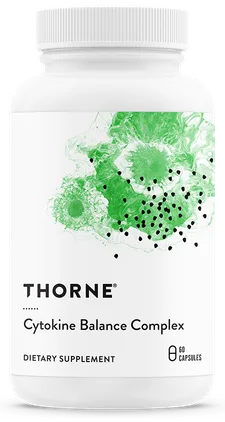
Thorne Cytokine Balance Complex Review
Cytokine Balance Complex is a botanical supplement from Thorne, presented as a product that supports a healthy cytokine balance and helps minimise bruising and swelling from minor injury. The product description states that it supports a balanced inflammatory response and recovery after minor injury using ginger, bromelain, Boswellia and curcumin phytosome. The key ingredients listed are Bromelain, Ginger extract (root), Indian Frankincense extract (oleo-gum-resin) and Curcumin Phytosome. Each serving is 2 capsules, and each container provides 30 servings, or 60 capsules. Each serving contains 250mg of bromelain, 250mg of ginger root extract, 250mg of Indian frankincense extract and 250mg of curcumin phytosome. The other ingredients are leucine and a hypromellose capsule derived from cellulose. The product details describe a blend of Ayurvedic herbs, including ginger, Boswellia and curcumin, which together are said to support a healthy cytokine balance in the body. The page also explains that bromelain is a protein-digesting enzyme complex derived from pineapple, and that studies have shown it supports the body's natural response to occasional swelling and bruising from minor injury. The product is described as usable to promote recovery after minor injury. The page states that the product has been third-party tested and certified to verify that what is in the package matches the label and to confirm it contains no unsafe levels of contaminants such as heavy metals, pesticides and microorganisms. The price is listed at $41 for 60 capsules on a one-time purchase, or $36.90 with a subscription that gives 10% off. Subscription options include delivery every 2 weeks, monthly, every 45 days, every 2 months, every 3 months or every 4 months, with free shipping, the ability to pause, skip or cancel at any time, and a further 20% saving when three or more different products are subscribed to. The product is listed as HSA/FSA eligible, with an average saving of 30 percent, and a Truemed payment widget appears on the page though it failed to load. The warnings section states that the product is contraindicated for anyone with a history of hypersensitivity to any of its ingredients. Pregnant women are advised to consult a health-care practitioner before use. Because bromelain has fibrinolytic effects that may inhibit blood clotting, the product should be used with caution or avoided by people on a med therapy. Curcumin has been shown to reduce the efficacy of cyclophosphamide in animal studies and may interfere with the absorption and efficacy of irinotecan, so concurrent use with these agents should be avoided. The page also advises that the powder should not be removed from the capsule to be taken orally, as it can irritate the oral mucosa. The page recommends other Thorne products, including Super EPA Pro, Curcumin Phytosome, CoQ10 and Berberine.
We don’t sell supplements. We help you make decisions and get the best price.
Lowest prices
We may earn a commission from some store links. How we choose.
Finding the lowest prices at the stores now. This takes a few seconds.
Study, Trial or Testing Result Summary
Members Only58 human studies · 41 improved
All four ingredients are at or above the doses used in studies. Ginger alone eased hay fever symptoms about as well as a standard allergy drug [1], lowered inflammation markers in people with coronavirus infection [2], and calmed immune cell activity in rheumatoid arthritis [3]. Curcumin reduced days with cold symptoms in healthy adults [4], eased year-round allergy symptoms and shifted immune signals in a healthier direction [5], and lowered inflammation in arthritis [6]. Boswellic acids, given with licorice extract, shortened recovery from coronavirus infection [7], and a boswellia syrup shortened hospital stays [8]. The label gives the frankincense extract amount, not its boswellic acid content, so how it compares to the studied dose is unclear. Bromelain results are mixed and mostly come from enzyme combinations: one combination helped children with sepsis recover from fever sooner [9], but the largest trial found no fewer colds in marathon runners [10]. No study tested this exact product. Animal and cell studies are never counted.
See all 58 studies →Hide the studies
- A pooled analysis of seven human trials and 19 animal studies found curcumin, alone or with usual treatments, improved psoriasis severity scores compared with controls.Efficacy and safety of curcumin in psoriasis: preclinical and clinical evidence and possible mechanisms.
- In eight trials of 569 people with COVID-19, nano-curcumin shortened hospital stays, lowered deaths, raised lymphocyte counts and eased symptoms, though blood levels of CRP, TNF-alpha and IL-6 did not change significantly.The effectiveness of nano-curcumin on patients with COVID-19: A systematic review of clinical trials.
- A review of 16 studies in children found curcumin (45 to 4,000 mg daily for 2 to 48 weeks) was well tolerated and improved the severity of inflammatory and immune disorders, but results were not pooled.Curcumin supplementation in pediatric patients: A systematic review of current clinical evidence.
- In a review of 14 diet trials in people with lupus, adding curcumin to vitamin D gave no extra benefit for disease activity or inflammation markers.Diet and Systemic Lupus Erythematosus (SLE): From Supplementation to Intervention.
- A review of traditional Indian medicinal plants for respiratory viral infections listed ginger (Zingiber officinale) among plants with possible antiviral and immune-modulating properties, mostly from lab studies and registered trials rather than human results.Promising traditional Indian medicinal plants for the management of novel Coronavirus disease: A systematic review.
- A review of 49 trials in people with inflammatory arthritis found that supplements including ginger showed anti-inflammatory and immune-modulating effects, but ginger-specific details were not given and the studies were too varied to pool.Nutrition and diet in rheumatoid arthritis, axial spondyloarthritis, and psoriatic arthritis: a systematic review.
- A review of studies on frankincense found it affects immune cells and reduces inflammation, with benefits in several conditions such as osteoarthritis, asthma and multiple sclerosis, and only mild side effects, but more trials are needed.Anti-inflammatory and anti-cancer activities of frankincense: Targets, treatments and toxicities.
- In 241 people with year-round allergic rhinitis, two months of curcumin reduced sneezing, runny nose and congestion versus placebo and shifted immune signals, lowering IL-4, IL-8 and TNF-alpha and raising IL-10.Effect of curcumin on nasal symptoms and airflow in patients with perennial allergic rhinitis.
- In 208 hospitalized people with moderate COVID-19, a four-herb blend containing ginger taken for 14 days shortened illness, eased symptoms, and lowered interleukin-6 in those not given remdesivir, compared with placebo.Phase III randomized clinical trial of BV-4051, an Ayurvedic polyherbal formulation in moderate SARS-CoV-2 infections an…
- In 150 people with diarrhea-predominant irritable bowel syndrome, a ginger-juice herbal plaster over 4 weeks improved symptoms and immune cell levels, and worked better when combined with fire needling; ginger's own effect could not be separated.[Diarrhea-predominant irritable bowel syndrome of spleen deficiency and damp excess treated with fire needling therapy w…
- In 144 COVID-19 outpatients, 1,500 mg of ginger daily for five days lowered C-reactive protein and erythrocyte sedimentation rate more than placebo, but did not change lactate dehydrogenase or white blood cell count.A Triple-blind randomized controlled trial on the effects of turmeric versus ginger on inflammatory biomarkers in patien…
- In two trials of 32 and 110 older adults with low natural killer cell activity, a tea containing ginger and four other herbs raised natural killer cell activity compared with regular tea.In vivo enhancement of natural killer cell activity through tea fortified with Ayurvedic herbs.
- In 138 healthy male marathon runners, a combination of bromelain, trypsin and rutoside taken for 1 week before and 2 weeks after a marathon did not reduce inflammation markers or upper respiratory illness (50.0% vs 51.5% with placebo).Rutoside and Hydrolytic Enzymes Do Not Attenuate Marathon-Induced Inflammation.
- In 120 adults with COVID-19, a one-day Ayurcov regimen containing turmeric added to standard care was linked to earlier symptom resolution than standard care alone, though the turmeric dose was not stated and the control group was not placebo.A randomized, controlled, blinded, parallel group, clinical trial to study the role of Ayurcov (AyurCoro3), one day regi…
- In 120 people with rheumatoid arthritis, ginger-based moxibustion with blistering agent lowered inflammation and antibody levels, with the blistering groups doing better; ginger's own effect was not isolated.[Medicinal-powder-separated Long-snake Moxibustion over the Governor Vessel with Different Skin Vesiculation Conditions …
- In 120 people with rheumatoid arthritis, ginger-isolated moxibustion over 2 months improved symptoms and lowered inflammation and antibody markers more than warm needling or a med; ginger's own effect was not isolated.[Long-snake moxibustion for rheumatoid arthritis:a randomized controlled trial].
- In 118 people with type 2 diabetes (100 finished), 12 weeks of curcuminoids with piperine lowered leptin and TNF-alpha and raised adiponectin compared with placebo, while ghrelin did not differ.Curcuminoids Plus Piperine Modulate Adipokines in Type 2 Diabetes Mellitus.
- In 99 healthy Japanese adults, 12 weeks of 150 mg daily highly bioavailable curcumin reduced the number of days with common cold symptoms compared with placebo, with no adverse effects.Effects of Highly Bioavailable Curcumin Supplementation on Common Cold Symptoms and Immune and Inflammatory Functions in…
- In 80 people with episodic migraine over 8 weeks, nano-curcumin combined with omega-3 fatty acids cut attack frequency and lowered the blood inflammatory marker IL-1β more than placebo, while the other groups showed no significant change in IL-1β and the gene expression difference was lost after correction for multiple testing.Anti-Neuroinflammatory Properties of n-3 Fatty Acids and Nano- Curcumin on Migraine Patients from Cellular to Clinical I…
- In 80 young women with period-related symptoms, curcumin with piperine for three cycles lowered blood IgE, but IL-10 and IL-12 did not change significantly.Effects of curcumin-piperine supplementation on systemic immunity in young women with premenstrual syndrome and dysmenor…
- In 80 people with allergic rhinitis, 500 mg of ginger extract daily for 6 weeks reduced nasal symptoms about as well as loratadine, with fewer side effects.Ginger extract versus Loratadine in the treatment of allergic rhinitis: a randomized controlled trial.
- In 80 people with ischaemic stroke, boswellic acids over one month improved nerve function recovery more than placebo and lowered several blood inflammation markers (TNF-α, IL-1β, IL-6, IL-8, PGE2) after 7 days.Functional improvement and immune-inflammatory cytokines profile of ischaemic stroke patients after treatment with boswe…
- In 70 people with active rheumatoid arthritis, 1500 mg of ginger powder daily for 12 weeks raised FoxP3 gene expression, lowered T-bet and RORγt expression, and reduced disease activity compared with placebo.The effect of ginger supplementation on some immunity and inflammation intermediate genes expression in patients with ac…
- In 66 intensive care patients with sepsis given curcumin with piperine for 7 days, C-reactive protein and erythrocyte sedimentation rate fell more than with placebo and some blood measures were better preserved, but deaths were similar (10 versus 12 patients).Therapeutic effects of curcumin and piperine combination in critically ill patients with sepsis: a randomized double-bli…
- In 66 colorectal cancer patients on chemotherapy, three ginger-oil aromatherapy massages over one week raised lymphocyte counts by about 11% and eased fatigue, pain and stress compared with standard care.Effectiveness of aromatherapy with light thai massage for cellular immunity improvement in colorectal cancer patients re…
- In 60 children with sepsis given an enzyme combination containing bromelain or placebo for 14-21 days alongside meds, fever resolved sooner (3 vs 4 days) and circulatory support was needed for fewer days (2 vs 3), though recovery of consciousness and feeding times did not differ significantly.Efficacy and safety of phlogenzym--a protease formulation, in sepsis in children.
- In 50 hospitalized people with moderate COVID-19, boswellic acids plus glycyrrhizin for 14 days shortened recovery time (median 7 vs 12.5 days), had no deaths versus five with placebo, and lowered CRP.Advancing combination treatment with glycyrrhizin and boswellic acids for hospitalized patients with moderate COVID-19 i…
- In 47 hospitalized people with moderate COVID-19, Inflawell syrup shortened hospital stay, improved oxygen levels and neutrophil-to-lymphocyte ratio, and lowered CRP, IL-6 and TNF-α versus placebo.Inflawell® improves neutrophil-to-lymphocyte ratio and shortens hospitalization in patients with moderate COVID-19, in a…
- In 45 people with knee osteoarthritis, 8 weeks of a bromelain, trypsin and rutoside combination raised the anti-inflammatory signal interleukin-10 and alpha-2-macroglobulin and lowered a cartilage breakdown marker compared with placebo, with better pain and symptom scores.Oral enzyme combination therapy reduces systemic inflammation, urinary CTXII and pain in knee osteoarthritis: a proof-of…
- In 42 hospitalized COVID-19 patients also receiving standard drugs, 140 mg of nano-curcumin for 14 days lowered inflammation markers (CRP, IL-6, IL-8, IL-10, ferritin, D-dimer) more than placebo and improved chest scan scores, oxygen levels and hospital stay.Promising clinical outcomes of nano-curcumin treatment as an adjunct therapy in hospitalized COVID-19 patients: A random…
- In 40 people with mild to moderate scalp psoriasis, a turmeric tonic applied twice a day for 9 weeks reduced redness, scaling and thickness of scalp patches more than a placebo and improved quality of life.Turmeric tonic as a treatment in scalp psoriasis: A randomized placebo-control clinical trial.
- In 40 people with COVID-19, 40 mg of curcumin nanomicelles four times a day for 2 weeks changed some immune cell gene activity and reduced one inflammatory signal compared with placebo, but most cytokine changes were not statistically significant.A triple-blind, placebo-controlled, randomized clinical trial to evaluate the effect of curcumin-containing nanomicelles…
- In 40 intensive care patients with sepsis, 160 mg of nano-curcumin given twice a day for 10 days through a feeding tube lowered inflammation and oxidative stress markers and reduced the sepsis severity score and time on a breathing machine compared with placebo.Nano-curcumin supplementation in critically ill patients with sepsis: a randomized clinical trial investigating the infl…
- In 40 COVID-19 intensive care patients given curcumin with piperine for 7 days, C-reactive protein and a liver enzyme dropped and hemoglobin rose versus placebo, but most other measures and 28-day deaths (3 in each group) did not differ.Evaluation of Curcumin-Piperine Supplementation in COVID-19 Patients Admitted to the Intensive Care: A Double-Blind, Ran…
- In adults who recovered from COVID-19 and were vaccinated, 500 mg HydroCurc twice daily for 4 weeks lowered IL-6 and MCP-1 compared with placebo.Curcumin Confers Anti-Inflammatory Effects in Adults Who Recovered from COVID-19 and Were Subsequently Vaccinated: A Ran…
- In 30 obese adults, 1 g per day of curcuminoids for 30 days lowered the body's pro-oxidant to antioxidant balance compared with placebo, but did not change antibody levels against heat shock protein 27 or oxidized LDL.Curcuminoids modulate pro-oxidant-antioxidant balance but not the immune response to heat shock protein 27 and oxidized …
- In 30 people with osteoarthritis, 80 mg of curcumin daily for 3 months reduced joint pain and inflammation markers and shifted immune cell balance toward regulatory cells compared with placebo.Significant immunomodulatory properties of curcumin in patients with osteoarthritis; a successful clinical trial in Iran…
- In 30 gastrointestinal cancer patients at nutritional risk, a curcumin-containing nutrition formula taken for 10 to 14 days before surgery lowered an inflammation marker and produced more weight gain than a standard formula, with no difference in complications or hospital stay.Novel immune-modulating formula versus standard formula for gastrointestinal cancer patients at risk of malnutrition und…
- In 13 healthy people and 12 patients with mouth cancer, a rinse of the botanical APG-157, which contains curcumin, was absorbed into the blood and reduced inflammatory signals in saliva, with no toxicity found.A randomized, phase 1, placebo-controlled trial of APG-157 in oral cancer demonstrates systemic absorption and an inhibi…
- In 18 healthy smokers, a single 5 g dose of curcumin did not improve blood vessel function or change immune cell gene activity overall compared with placebo, though responses varied widely between individuals.Substantial Variability Across Individuals in the Vascular and Nutrigenomic Response to an Acute Intake of Curcumin: A R…
- In 14 intensive care patients with sepsis, 160 mg of nano-curcumin daily for 10 days, compared with placebo, lowered white blood cell count and interleukin-8 and increased total lymphocyte count, though the trial was small.Does nano-curcumin supplementation improve hematological indices in critically ill patients with sepsis? A randomized co…
- In 8 people who ran in a heat chamber, 500 mg per day of curcumin for 3 days did not change immune cell protein responses compared with placebo.Dietary curcumin supplementation does not alter peripheral blood mononuclear cell responses to exertional heat stress.
- In a placebo-controlled crossover trial, single oral doses of bromelain shifted the daily pattern of the T-cell signal interferon gamma in stimulated blood cells, suggesting an effect on the immune system's T-cell activity.Placebo-controlled randomized clinical trial on the immunomodulating activities of low- and high-dose bromelain after or…
- In a randomized trial of people with urogenital chlamydia infection, adding systemic enzyme therapy to meds improved treatment effectiveness and reduced side effects.[Impact of exogenous proteolytic enzymes on immunogenesis in patients with urogenital infections].
- In people with Helicobacter pylori gastritis, curcumin alone did not clear the infection and did not lower inflammatory signals in the stomach lining, while the standard a med regimen did lower one of them.Investigation of the anti-inflammatory effect of Curcuma longa in Helicobacter pylori-infected patients.
- In people with chronic stomach inflammation from Helicobacter pylori, adding curcumin to standard triple therapy for 8 weeks lowered oxidative stress markers and inflammation scores and raised the eradication rate compared with triple therapy alone.CURCUMIN IN COMBINATION WITH TRIPLE THERAPY REGIMES AMELIORATES OXIDATIVE STRESS AND HISTOPATHOLOGIC CHANGES IN CHRONIC …
- In elderly volunteers, 4 weeks of curcuRouge curcumin lowered the neutrophil-to-lymphocyte ratio, a marker of inflammation and prognosis, compared with placebo.Newly Developed Highly Bioavailable Curcumin Formulation, curcuRougeTM, Reduces Neutrophil/Lymphocyte Ratio in the Elder…
- In people with mild to moderate COVID-19, 14 days of Inflawell syrup lowered blood levels of IL-1α, IL-8, TNF-α and MCP-1 and reduced activity of the TNF-α/NF-κB inflammatory pathway compared with placebo.Boswellic Acids Reduce Systemic Inflammation in Patients with Moderate COVID-19 Through Modulation of NF-κB Pathway.
- In 120 children with middle ear disease after upper airway infection, adding this combined supplement for 20 or 30 days to standard care improved ear exam and hearing results more than standard care alone, with the 30-day group improving most.Single-Center-Single-Blinded Clinical Trial to Evaluate the Efficacy of a Nutraceutical Containing Boswellia Serrata, Br…
- In 40 patients after nose septum surgery, oral enzymes gave less pain, swelling, nasal blockage and discharge and fewer complications than a diclofenac and paracetamol combination over 4 weeks.Role of Oral Enzymes in Post Operative Septoplasty Cases.
- In people with a chronic nerve inflammation linked to a virus, curcumin raised levels of a protein that regulates cell self-destruction, while levels of the related caspase enzymes did not change; the study had no placebo group and did not state how many people took part.Curcumin increased the expression of c-FLIP in HTLV-1-associated myelopathy/tropical spastic paraparesis (HAM/TSP) patie…
- In an online survey of 909 Saudi adults with coronavirus infection, 62.9% reported using ginger, and the authors linked herb and healthy food use to fewer infection symptoms, based on perception rather than measured outcomes.Perceptions of medicinal herbal products during the COVID-19 pandemic period among Saudi patients: a cross-sectional stu…
- In an online survey of 386 Jordanians during the second wave of the pandemic, 53.1% reported using ginger, but the survey did not measure whether it improved immune health.Medications and natural products used in Jordan for prevention or treatment of COVID-19 infection during the second wave…
- In a survey of 354 patients on antiretroviral treatment in Nigeria, those taking herbal remedies including ginger essential oil had no significant change in CD4 counts or viral load compared with non-users, and the authors flagged possible drug interactions.Use of complementary medicine amongst patients on antiretroviral drugs in an HIV treatment centre in Lagos, Nigeria.
- In a survey of 277 otolaryngology patients in Turkey during the pandemic, 46% used ginger supplements, but the survey measured use and self-reported benefit only, not ginger's effect on immunity.Dietary supplements used by otolaryngology patients in Turkey during the COVID-19 pandemic: A cross-sectional survey.
- In 43 pretreated women with recurrent cervical or endometrial cancer, a regimen that included curcumin with pembrolizumab and radiotherapy did not meet its main response target, with modest and durable antitumor activity and notable side effects.Pembrolizumab, radiotherapy, and an immunomodulatory five-drug cocktail in pretreated patients with persistent, recurren…
- In 10 healthy volunteers, a single oral softgel containing 25 mg of ginger extract with Echinacea was absorbed quickly, and blood immune-cell gene activity shifted in a way similar to hydrocortisone, but no placebo group was used and effects on illness were not measured.Combined extracts of Echinacea angustifolia DC. and Zingiber officinale Roscoe in softgel capsules: Pharmacokinetics and…
- In patients with atopic dermatitis that did not respond to standard treatment, eosinophil counts fell significantly after 3 months of a herbal formula that contains fresh ginger, and serum IgE showed a non-significant downward trend.The effects of Hochu-ekki-to in patients with atopic dermatitis resistant to conventional treatment.
Review Totals and Summary
Members Only419 reviews · 84% positive
Across the two store pages the product shows 297 ratings in total, and the themes below come from the written reviews that could be read on those pages, which amounted to five reviews on each page, and they appear to be the same five. The strongest theme is praise for the capsules as an alternative to over-the-counter anti-inflammatories. A reviewer who describes herself as a practitioner says she has taken the product, which she calls Phytoprofen, for over a decade instead of a med. She says it reduces whole body inflammation without the negative effects she associates with a med, and it is now part of her everyday supplement routine. Another reviewer, Sarah C., started it after an allergic reaction to prescribed meloxicam for inflammation. She reports no side effects since starting, says she is highly allergic to many meds, soy, sulfa and other medications, calls it a more natural option and recommends it. One summary notes that her review is cut off with a "read more" link, so the rest could not be read. Tolerability is the second theme. The practitioner reports no gastrointestinal distress even when taking it before bed. Roxana P. calls it an excellent product that is effective and causes no gastric issues. A short review from Lorri V. says only "Works great," with no detail on how it was used or what effects she noticed. On complaints, there is very little in the written text. Laurie H. titled a review "I never ordered this," which points to a possible order or account problem rather than a judgement on the formula, and the review has no usable detail about the product itself. No written review criticises the capsules' effect, taste, form or value, and none mentions price, taste or capsule size. As for who it seems to suit, the feedback points to people who want a non-drug approach to inflammation, those who cannot tolerate conventional anti-inflammatories such as a med or meloxicam, and people with a sensitive stomach or multiple drug allergies. It also appears to suit long-term daily use, given the decade-long experience described. One summary gives the star breakdown for the page with 28 ratings: 20 five-star, one four-star, one three-star, three two-star and three one-star ratings. That suggests strong overall satisfaction alongside a small group of dissatisfied buyers, though the written comments do not explain the lower ratings, so the reasons for those scores remain unknown. Because only five written reviews were readable, the themes above reflect individual experiences rather than a broad consensus. Finally, the page's product name is Cytokine Balance Complex, while the URL and several reviews refer to Phytoprofen, so the reviews may cover the same formula under an older or alternative name. No reviews of other forms such as gummies or powder were identified in the summaries, so nothing had to be left out on that basis.
Biohacker Summary
Members Only10 of 10 recommend it
The panel is broadly favorable on the two main ingredients, curcumin and ginger, though both come with caveats. For curcumin, most of the panel recommend or use it, mainly to lower inflammation and for joint, brain and mood support, and some pair it with black pepper, omega-3 or sulforaphane because plain curcumin absorbs poorly. Two panelists prefer well-absorbed forms, one a phytosomal form taken daily and another a nanoparticle form, while one advises high-dose curcumin only for specific purposes under a doctor's guidance and another stopped taking it for longevity after finding too little evidence. For ginger, several panelists use or recommend it daily in food or capsules (one gives 3 grams in a vegetable meal) for digestion, nausea, inflammation and blood sugar, but one warns to stop it before surgery because it can thin the blood like a med. Bromelain, a smaller ingredient in this product, was recommended by one panelist for healthy circulation.
See all 10 biohackers →Hide the biohackers
Dr. Eric Berg · Ginger · recommends
- Suggests that ginger is an easy addition to a daily routine that may support digestion, inflammation, and healthy blood sugar levels.
- Mentions that turmeric contains curcumin, which has been studied for its effects on inflammation, joint discomfort, mood, and blood sugar.
- Notes that Curcumin barely absorbs without black pepper.
- Recommends consuming ginger every single day for its benefits on digestion, inflammation, skin, blood sugar stability, and potential fat loss.
- Mentions ginger as a food that black cumin seed oil outperforms in reducing inflammation.
- Recommends curcumin, stating it delivers powerful antioxidant and anti-inflammatory effects linked to cardiovascular health and mental well-being.
- Dr. Eric Berg states that curcumin may support blood sugar, but it should not be treated as an equivalent substitute for other treatments.
- Lists ginger as an epigenetic factor that may help with cancer prevention.
- Lists curcumin as an epigenetic factor that may help with cancer prevention.
- Curcumin is a compound that delivers powerful antioxidant and anti-inflammatory effects.
- States that curcumin, found in turmeric, delivers powerful antioxidant and anti-inflammatory effects linked to cardiovascular health, mental well-being, and more.
- Suggests that curcumin can be beneficial to counter some of the effects of a hypoxic state in cancer and inflammation.
- Recommends ginger as it works to reduce inflammation.
- States that curcumin, a potent compound in turmeric, can naturally alleviate pain and inflammation, and a study found that 1500 mg of turmeric with black pepper produced results comparable to a med without side effects.
Ben Greenfield · Ginger · warns
- Advises patients to stop ginger before surgery because it can act as a med or antiplatelet agent.
- Mentions curcumin as another Nrf2 activator, but notes that sulforaphane outperforms it.
- States that their curcumin product affects the Nrf2 pathway by activating PKC delta, which phosphorylates Nrf2, allowing it to go into the nucleus, and works synergistically with sulforaphane.
- Recommends root spices like ginger for use on the AIP diet.
- Ben Greenfield's clinic photoactivates curcumin before use, finding it to be very anti-cancer when photoactivated.
- Says curcumin at low doses, such as sprinkled turmeric onto food, acts as a hormetic stressor, increasing internal defense systems, antioxidants, and repair pathways, leading to overall reductions in inflammation.
- Recommends MitoQ +Curcumin, a Mitoquinol-enhanced blend with Longvida Curcumin for antioxidant and joint health synergy.
- Gets nerdy about curcumin and explains which longevity supplements actually work, according to the science in mammals.
- Uses curcumin, taking Keon Flex at night on an empty stomach and a heaping tablespoon of Row Nutrition's liposomal curcumin at some point during the day, but not right after a workout due to its mTor signaling inhibition.
- Mentions curcumin as a polyphenol that can confer benefits when consumed.
- Recommends curcumin to reduce inflammation, especially when combined with the Weber laser treatment.
- Tells people to take curcumin to block the secondary function of cancer pulling other things like glutamate and converting it through gluconeogenesis.
- Recommends anti-inflammatory spices like turmeric, ginger, and garlic, often seen in a Mediterranean approach, to help with inflammation and fat loss.
- He recommends sprinkling ginger into food and rotating it into the diet on a regular basis to induce a hormetic response.
Dave Asprey · Curcumin · uses
- Says CallaCurcumin is like "mommy's little helper" and he takes it when he knows he's going to eat late at night, around 5:00 or 6:00, to avoid overeating.
- Recommends Tetrahydro Curcuminoids, stating they lower inflammation.
- Recommends Bromelain, stating it supports healthy circulation.
- Recommends ginger as a midwife remedy to help with nausea during pregnancy.
- Recommends CurcuLite, a curcumin product, for turning up AMPK, which is foundational to energy, longevity, and detox.
- Takes curcumin, an extract of turmeric, to bypass the oxalate content while still getting the benefits.
- Dave Asprey mentions that supplements like curcumin support pain relief and mood.
- Notes that adding curcumins to a med can make it work significantly better, and it is included in their "happy saffron" product. They also recommend a combination of curcumins and omega-3 fatty acids for pain.
- Notes that turmeric curcumin is also an NRF2 activator, though less bioavailable than sulforaphane.
- Dave Asprey and his guests reveal how curcumin can rival meds, delivering natural ways to improve metabolism and regulate dopamine.
- Suggests bromelain as something to experiment with for nightshade sensitivity, though he doesn't have confidence it would fully work.
- Suggests frankincense as an essential oil choice, noting it doesn't seem to have the downsides that lavender can have.
- Notes that frankincense essential oil, diffused during religious ceremonies, can alter one's state.
- Mentions frankincense as an example of a healing plant whose molecular frequency can be copied.
Thomas DeLauer · Ginger · neutral
- Mentions that Dose Daily contains organic ginger root powder.
- Notes that PET scans showed a significant reduction in amyloid plaque build-up in the group taking curcumin, suggesting fewer instances of Alzheimer's and dementia.
- Discusses a UCLA study where curcumin led to a 28% increase in cognitive function and a significant reduction in amyloid plaque buildup, suggesting less instance of Alzheimer's and dementia. He also mentions a study where curcumin helped mood as much as a med.
- Uses ginger oil, an ingredient in Curcumin Gold, stating it helps modulate inflammation within the gut.
- Uses Curcumin Gold in their recipe, stating it is amazing because it contains ginger oil, DHA, and curcumin, which work in harmony for the body to operate at its best, helping with inflammation and brain energy.
- Discusses a UCLA study where participants taking 90 milligrams of curcumin daily for 18 months showed a 28% increase in cognitive function and a significant reduction in amyloid plaque buildup.
- Recommends Curcumin, stating that 500-1000mg lowers CRP and IL-6 in trials and has over 2000 studies.
- States that curcumin plus vitamin D is probably the most powerful brain booster and brain protector, explaining that curcumin helps macrophages enlarge to gobble up more amyloid beta.
- Recommends ginger, explaining that it contains components that allow GLUT4 receptors to disperse more heavily throughout a cell, which helps absorb glucose and reduces blood sugar.
- Recommends dried ginger powder for insulin resistance, stating that it hits all three pathways simultaneously and significantly lowers fasting blood sugar and reduces insulin resistance.
- Recommends dried ginger for fat burning, stating that it activates a fat-burning receptor and drives up adrenaline and fat loss without needing caffeine or stimulants. He suggests taking 1 to 5 grams pre-exercise or in a fasted state, or adding it to coffee, electrolytes, or tea.
- Recommends ginger powder, stating that it hits inflammation from two different angles simultaneously, suppressing enzymes that produce pain and swelling, and suppressing nuclear factor kappa B to block inflammatory gene expression. He suggests using 3g per day consistently for 6 to 8 weeks for muscle soreness reductions.
- Recommends curcumin, especially when stacked with ginger, noting its anti-inflammatory efficacy and its ability to increase antioxidant defense systems and reduce oxidative stress. He emphasizes taking it with black pepper or piperine, or in a liposomal form, for bioavailability.
- Mentions that Dose Daily, which he recommends for liver support, contains organic ginger root powder.
Siim Land · Curcumin · recommends
- Recommends Curcumin for joint pain and inflammation, based primarily on human research, especially randomized controlled trials showing measurable benefits.
- Lists Curcumin as one of 15 supplements backed by human studies.
- Thinks curcumin has some of the strongest evidence and is worth considering.
- Mentions curcumin as a compound that can increase autophagy, but notes it doesn't come close to exercise in effectiveness.
- Mentions ginger as a compound that can increase autophagy, but notes it doesn't come close to exercise in effectiveness.
- States that curcumin, unless contaminated, is not going to raise liver enzymes.
- States that ginger lowers body weight in people who are overweight or have high inflammation.
- Recommends having ginger tea in the evening as it has autophagy-regulating effects.
- Did not see a big extension from curcumin in their tests.
- Mentions that it is infeasible to obtain sufficient curcumin from food.
- Drinks ginger tea in the evening.
- Mentions curcumin as a supplement that has been shown to lower CRP and improve metabolic health.
- Places Ginger in the 'good' tier, noting evidence that it helps with weight loss and digestion, though its effects are not very significant.
- Recommends curcumin for metabolic health, especially for insulin resistance and dyslipidemia.
Dr. Mark Hyman · Curcumin · recommends
- States that curcumin is great for immune support and is anti-inflammatory, suggesting making curries.
- Uses ginger in his chicken soup and a special drink because it is anti-inflammatory and helps with symptoms when feeling sick.
- Recommends ginger as an anti-inflammatory powerhouse.
- Mentions that curcumin has been studied for its anti-inflammatory effects, but emphasizes that no supplement can replace the daily signals created by sleep, nutrition, exercise, stress management, and metabolic health.
- Recommends curcumin as an anti-inflammatory supplement that can be helpful.
- Dr. Mark Hyman designed 'The World's Smartest Smoothie' using organic ingredients, including Organic Ginger juice.
- States that curcumin helps to lower broader inflammatory levels in the body.
- Notes that bromelain pairs well with quercetin for absorption.
- Explains that curcumin is the key compound in turmeric, a polyphenol that research shows supports the body against conditions like cancer, cardiovascular stress, and neurogenic diseases like dementia, and can also help with inflammation, metabolic balance, joint comfort, and mood.
- Mentions that Paleovalley's turmeric complex includes organic ginger.
- Includes ginger in their smoothie for anti-inflammatory support.
- Recommends bromelain to reduce inflammation in the nasal passages, which helps with allergy symptoms.
- Included ginger in their chicken dish as part of an anti-inflammatory power couple with turmeric.
- Recommends bromelain, a compound from pineapple, for swelling before and after surgery.
Andrew Huberman · Ginger · neutral
- Discusses a study where people who had taken powdered ginger were less judgmental because their stomachs were calmed, noting that ginger calms the stomach.
- Asks if ginger can increase metabolism and states that apparently, it can.
- Conducted a study on ginger powder dissolved in warm water, which significantly elevated the thermic effect of food over a 6-hour period, suggesting it could boost energy expenditure.
- Discusses curcumin as a supplement for prenatal care and sperm health.
- Does not recommend high-dose curcumin supplements for general use, suggesting it's only for specific purposes under a doctor's guidance to target excess inflammation.
- States that there are good, unbiased peer-reviewed studies showing that 1 to 3 grams of ginger can cause a notable reduction in nausea.
- Notes that people are excited about the possible health benefits of curcumin, which is found in turmeric.
- Includes curcumin in his diet because it has been shown to stimulate GLP-1.
- Warns against taking high doses of curcumin, noting potential negative effects like limiting dihydrotestosterone production, and advises checking sourcing carefully due to lead contamination concerns.
- Mentions curcumin in the context of 5-alpha reductase.
- States he once took curcumin in high dosages (1-2 gram capsules) and felt terrible, vowing never to take it again due to his sensitivity to its effects on the DHT pathway.
- Mentions ginger as having some potential benefit for inflammation, but notes it's not typically used unless in very specific circumstances like an injury.
- Warns that some people, including himself, are very sensitive to curcumin because it can potently reduce DHT, leading to decreased libido and drive, though these effects reverse quickly after stopping.
- Warns against taking high dosages of curcumin, such as 8000 milligrams per day, because it can alter hormonal pathways, specifically inhibiting dihydrotestosterone (DHT) synthesis, which can lead to undesirable effects like reduced libido.
Dr. Rhonda Patrick · Curcumin · neutral
- Curcumin may be one of the most powerful naturally occurring dietary compounds for lowering age-related inflammation. The phytosomal form is preferred because standard curcumin is rapidly broken down by the liver, while phytosomal delivery makes it far more bioavailable.
- Asks if curcumin can slow aging.
- Likes adding ginger to bone broth for flavor, warmth, and its anti-inflammatory compounds.
- Curcumin may be one of the most effective natural compounds for lowering age-related inflammation. The phytosomal form matters because standard curcumin is poorly absorbed and rapidly metabolized, while phytosomal delivery makes it much more bioavailable.
- Takes phytosomal curcumin daily because it is much more bioavailable than standard curcumin and human evidence suggests it is potent for lowering TNF-α, a major inflammatory cytokine linked to biological aging.
- Rhonda takes 500 mg of liposomal Curcumin daily for inflammation.
- Uses Phytosomal curcumin, stating it is one of the only naturally occurring compounds shown to meaningfully lower TNF-alpha, a master inflammatory cytokine that accelerates aging.
- Took Meriva, a phytosomal curcumin, which has been shown to help with DOMS in some small studies.
- Takes a ginger capsule, which seems to improve his digestion.
- States that curcumin, found in turmeric root, also activates antioxidant defenses.
- Suggests that if someone is an 'immuno-ager,' they might want to take curcumin to help with their immune system.
- Rhonda mentions curcumin as a xenohormetic compound that, in a small dose, is slightly toxic and activates cellular stress response pathways, helping the body deal with stress better.
- Tim Ferriss consumes ginger with turmeric and black pepper in tea to counteract unnecessary inflammation.
- A combined anthocyanins and bromelain supplement improves endothelial function and skeletal muscle oxygenation status in adults.
Bryan Johnson · Ginger · uses
- Includes three capsules of Ginger in his Blueprint stack.
- Includes 3g of ginger in his Super Veggie for a variety of benefits including liver, pancreas, artery health, and digestion.
- Includes ginger in his Super Veggie meal, which he eats at 7 AM.
- Includes ginger in his daily 'Super Veggie' breakfast for its nutrient density.
- Uses ginger in his Super Veggies.
- Advises avoiding Curcumin during pregnancy.
Peter Attia · Curcumin · uses
- Uses a specific nanoparticle version of curcumin at a reasonable dose, which may have anti-TNF alpha effects and help with inflammation.
- States that a well-absorbed curcumin with high-dose omega-3 is as good as or better than any a med and helps improve brain function, mood, cognition, and may reduce dementia.
- Says that for a 27-year-old woman with an early-onset Alzheimer's gene, they would be "loading her up with curcumin" to prevent symptoms for 25 years.
- Used to take Curcumin for longevity but stopped because he didn't see enough evidence.
- Mentions curcumin as another example of a niche compound with numerous RCTs, reinforcing the point that research can be done without pharma sponsorship.
RAL Summary
Members OnlyTier 2 for Immune Health
Controlled human trials of ginger alone show clear immune and inflammation benefits [1][2][3], backed by curcumin and boswellia trials, and 83% of 429 reviews are positive, which meets tier 2. The largest ginger trial cited by the rules used a four-herb blend [11], but the trials of ginger alone still support the tier.
Where the evidence disagrees: 6 of the 58 human studies found no effect.
More Details
Members OnlyBody systems · Combine with · Possible side effects
Body systems: Immune system, Musculoskeletal system, Respiratory system, Digestive system
Combine with: For long-term post-meal upper-abdominal comfort, pair with products aimed at digestion directly: a broad-spectrum digestive enzyme with protease, lipase and amylase taken with meals; ginger root or an artichoke leaf extract to support gastric motility and bile flow; and a gentle bitter or peppermint/caraway oil combination for functional dyspepsia. Zinc carnosine or DGL licorice can help support the stomach lining over time. If you do use Cytokine Balance Complex for general inflammatory balance, take it with food and consider adding omega-3 fish oil and vitamin D for broader immune and inflammatory support. Consult a healthcare provider if symptoms are persistent, as they can signal an underlying condition.
Possible side effects: Studies reported few or mild side effects, and readable reviews mention no stomach upset; one study flagged possible interactions of herbal remedies including ginger with HIV medicines.
Supplement Facts
Bromelain 250 mg · Curcumin Phytosome† 250 mg · Ginger extract 250 mg
| Bromelain | 250 mg | † |
| Curcumin Phytosome† | 250 mg | † |
| Ginger extract (root) (Zingiber officinale) | 250 mg | † |
| Indian Frankincense extract | 250 mg | † |
Other ingredients: Hypromellose (derived from cellulose) capsule, Leucine.
Directions: Take 2 capsules two to three times daily or as recommended by your health-care practitioner.
Label source: Reverseagelab · Report a label change
Show entire label

More immune health products
Members OnlyThe highest ranked for the same goal
Read more
Our articles on this subject
- Home Remedies for Acid Reflux: What the Evidence SupportsArticle · Oct 28, 2026
- How to Improve Gut Health Naturally: Fiber, Foods and the Probiotic Strains With Human TrialsArticle · Sep 15, 2026
Graded November 6, 2026 by the Reverse Age Lab evidence engine, from human studies, real reviews and our biohacker panel. How we grade. Is this medical advice? No. Rala organizes the published evidence; go over any change with your doctor, especially if you take meds.
Privacy policyConsumer health dataAffiliate disclosureTermsDo Not Sell or Share My Personal InformationCookie settings