
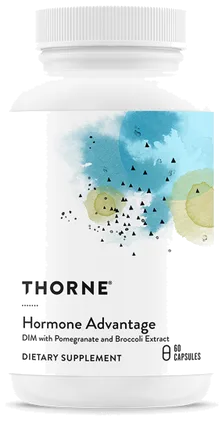
Thorne Hormone Advantage Review
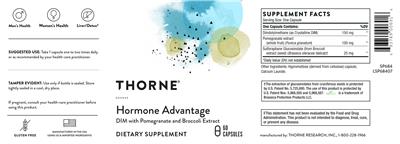
Thorne's Hormone Advantage, formerly sold as DIM Advantage, is a capsule supplement that combines diindolylmethane (DIM), pomegranate extract, and sulforaphane glucosinolate (SGS) derived from broccoli seed extract. The product is presented as a way to support balanced hormone health by helping the body metabolize and detoxify excess estrogen. The page explains that estrogen which is not properly metabolized can lead to weight gain, low energy, moodiness, imbalances of testosterone or progesterone, and an overall feeling of not being yourself. It also notes that hormone imbalances, particularly of estrogen and progesterone, can significantly influence a woman's monthly cycle, with excess estrogens linked to irregular, heavy, or uncomfortable menstrual cycles, and that these imbalances can contribute to breast tenderness, bloating, and mood changes related to PMS. The product is listed under categories including dietary supplement, men's health, women's health, and liver and detox, and it is labeled gluten free. Each capsule contains 150 mg of crystalline DIM, 100 mg of whole fruit pomegranate extract from Punica granatum, and 25 mg of sulforaphane glucosinolate from broccoli seed extract from Brassica oleracea italica. The serving size is one capsule, with a total of 60 servings per container. The suggested use is one capsule one to two times daily or as recommended by a health-care practitioner. The warnings state that the bottle is tamper evident, should be used only if sealed, and should be stored tightly sealed in a cool, dry place, and that people who are pregnant should consult a health-care practitioner before using it. The capsule shell is hypromellose derived from cellulose, with calcium laurate. The page states the product is manufactured in the USA using US and imported ingredients. The listed UPC is 693749006916, the expiration date is 01/01/2028, and the page shows a best-by date of 07/01/2028. The price shown is $51.00 at the Vitacost store, and the page displays a product rating of 4.6 from 156 reviews. Thorne is the brand, and the product is sold as a single bottle of 60 capsules with a suggested daily use of one to two capsules. Buyers who are considering this product should review the label, consult a health-care practitioner where relevant, and note that the page does not provide clinical trial details beyond the ingredient amounts listed in the supplement facts panel. The store notes that products are sourced directly from brands or authorized distributors and stored under conditions intended to preserve quality, and it describes the item as guaranteed authentic. The shipping weight is listed as 0.14 lb, and the product is available for standard online ordering through the site.
We don’t sell supplements. We help you make decisions and get the best price.
Lowest prices
We may earn a commission from some store links. How we choose.
Finding the lowest prices at the stores now. This takes a few seconds.
Products with nearly the same formula (Matched on the main ingredients)
Study, Trial or Testing Result Summary
Members Only20 human studies · 13 improved
Diindolylmethane is the main ingredient here, at a full daily dose of 300 milligrams. In the strongest study, a 12 month placebo-controlled trial in 130 women taking tamoxifen for breast cancer, this same daily amount shifted estrogen breakdown in urine toward the more favorable products and raised sex hormone binding protein. It did not change breast density, and it lowered tamoxifen breakdown product levels [1]. A one-year study without a placebo in 23 carriers of an inherited breast cancer gene linked 100 milligrams a day to less dense breast tissue and lower estradiol and testosterone [2]. A small 30 day trial raised one favorable estrogen product, though the change in the overall ratio was not significant [3]. A 30 day trial at 75 milligrams a day did not improve the estrogen ratio [4]. Pomegranate extract is below the studied dose here, at 200 milligrams a day against the 1000 milligrams that worked. Studies at higher amounts eased menopause symptoms [5][6] and premenstrual symptoms [7], though pooled results were often inconclusive [8]. Sulforaphane has little human evidence for hormone health. One small trial in women with breast cancer showed only trends that were not significant [9]. Animal and cell studies are never counted.
See all 20 studies →Hide the studies
- A pooled analysis of trials in women during and after menopause found pomegranate reduced hot flash severity, menopause symptoms and follicle-stimulating hormone, and raised good cholesterol, though many results were inconclusive because of small, poorly blinded studies.Pomegranate effects on the health aspects of women during peri- and postmenopause: A systematic review and meta-analysis…
- In 130 women taking tamoxifen for breast cancer, 300 mg a day of diindolylmethane for 12 months raised the urinary ratio of beneficial to less favorable estrogen metabolites and raised sex hormone-binding protein compared with placebo, but it did not change breast density and lowered tamoxifen metabolite levels.A randomized, placebo-controlled trial of diindolylmethane for breast cancer biomarker modulation in patients taking tam…
- In 81 postmenopausal women given 60 mg of pomegranate seed oil daily for 12 weeks, hot flashes did not fall significantly more than with placebo, hormone levels did not change, but hot flashes were lower at 24 weeks and sleep-related symptoms improved.Pomegranate seed oil in women with menopausal symptoms: a prospective randomized, placebo-controlled, double-blinded tri…
- In 78 menopausal women, 4 weeks of pomegranate supplement eased menopause symptoms and improved quality of life more than placebo, with benefits lasting after treatment stopped.Effects of pomegranate supplement on menopausal symptoms and quality of life in menopausal women: A double-blind randomi…
- In 78 postmenopausal women taking a mixed plant extract including pomegranate for 8 weeks, quality of life improved meaningfully only in some gut-bacteria subgroups, mainly through fewer hot flashes.Polyphenol-Related Gut Metabotype Signatures Linked to Quality of Life in Postmenopausal Women: A Randomized, Placebo-Co…
- In 60 premenopausal women with a low estrogen metabolite ratio, 75 mg a day of diindolylmethane for 30 days did not significantly raise the ratio compared with placebo, though body fat percentage fell more in the diindolylmethane group.Effectiveness of 3,3'-Diindolylmethane Supplements on Favoring the Benign Estrogen Metabolism Pathway and Decreasing Bod…
- In 60 women with premenstrual syndrome, pomegranate extract for two menstrual cycles reduced symptoms versus no intervention and improved social quality of life.The effect of pomegranate supplementation on symptom severity and quality of life in women with premenstrual syndrome: A…
- In 57 menopausal women, an 8-week daily botanical combination containing 100 mg pomegranate skin extract improved overall quality of life more than placebo, though it was a small pilot study.Influence of a new botanical combination on quality of life in menopausal Spanish women: Results of a randomized, placeb…
- In 30 postmenopausal women with breast cancer, 2 weeks of broccoli sprout extract (200 micromoles of isothiocyanates daily) was well tolerated and showed non-significant trends toward less cell growth and a lower estrogen receptor-alpha nuclear-to-cytoplasm ratio compared with placebo.A Presurgical-Window Intervention Trial of Isothiocyanate-Rich Broccoli Sprout Extract in Patients with Breast Cancer.
- In 19 postmenopausal women with a history of early-stage breast cancer, 108 mg a day of diindolylmethane for 30 days significantly raised urinary 2-hydroxyestrone and cortisol versus placebo, while the rise in the 2-hydroxyestrone to 16-alpha-hydroxyestrone ratio (47%) was not statistically significant.Pilot study: effect of 3,3'-diindolylmethane supplements on urinary hormone metabolites in postmenopausal women with a h…
- In 8 women with endometriosis, adding diindolylmethane to dienogest for 3 months reduced pelvic pain and improved bleeding patterns more than dienogest alone.Comparison of dienogest effects upon 3,3'-diindolylmethane supplementation in models of endometriosis and clinical cases…
- Menopausal women taking 1000 mg of pomegranate seed oil daily for 8 weeks had significant reductions in most menopausal symptoms, with no change in estradiol levels.Pomegranate (Punica granatum) Seed Oil for Treating Menopausal Symptoms: An Individually Controlled Cohort Study.
- In 23 healthy BRCA gene carriers, 100 mg per day of diindolylmethane for 1 year was associated with reduced fibroglandular breast tissue on MRI, along with lower estradiol and testosterone levels, in a single-group study without a placebo.3,3-Diindolylmethane (DIM): a nutritional intervention and its impact on breast density in healthy BRCA carriers. A pros…
- In patients with thyroid proliferative disease, 300 mg per day of diindolylmethane for 14 days was detected in thyroid tissue and shifted urinary estrogen metabolism toward the 2-hydroxyestrone form.3,3'-diindolylmethane modulates estrogen metabolism in patients with thyroid proliferative disease: a pilot study.
- Postmenopausal women who ate polyphenol-rich foods, including pomegranate juice, every day for two months showed changes in many genes linked to heart and metabolic health.Chronic consumption of (poly)phenol-rich foods exerts multigenomic modification of genes linked to cardiometabolic healt…
- In a retrospective laboratory database of 909 women taking diindolylmethane, urinary estrogen levels differed from non-users, and the protective-to-harmful estrogen metabolite ratio rose in a smaller before-and-after subset.Exploring the impact of 3,3'-diindolylmethane on the urinary estrogen profile of premenopausal women.
- In 108 postmenopausal women using an estradiol patch, concurrent diindolylmethane use was linked to significant changes in urinary estrogen profiles, with the clinical significance unknown.The impact of 3,3'-diindolylmethane on estradiol and estrogen metabolism in postmenopausal women using a transdermal est…
- In laboratory and mouse studies of estrogen-positive breast cancer, a stabilized sulforaphane formula reduced cancer stem-like cells that resisted hormone therapy, but this was not tested as a supplement in people.Targeting STAT3 signaling using stabilised sulforaphane (SFX-01) inhibits endocrine resistant stem-like cells in ER-posi…
- In female rats given estrogen implants, sulforaphane given by gavage three times a week for 56 weeks at 100 micromoles per kilogram significantly reduced mammary tumor formation compared with vehicle, along with lower DNA damage and lower blood fats, but this was an animal study and no human outcomes were reported.Sulforaphane Diminishes the Formation of Mammary Tumors in Rats Exposed to 17β-Estradiol.
- In transgenic mice prone to estrogen-receptor-negative breast cancer, feeding broccoli sprouts with inulin from early life slowed tumor growth, delayed tumor onset, and reduced tumor weight compared with controls, but this was an animal study and no human outcomes were reported.Combined Phytochemical Sulforaphane and Dietary Fiber Inulin Contribute to the Prevention of ER-Negative Breast Cancer v…
Review Totals and Summary
Members Only2,097 reviews · 88% positive
Buyers of Thorne Hormone Advantage capsules rate it strongly positively overall, across about 1,432 ratings in the stores that sell it. The written feedback is thin and mixed, though: some people report clear benefits, one noticed nothing, and one had side effects. **What buyers say it did for them:** Reported benefits are varied. One buyer used it for perimenopause alongside other supplements a gynecologist suggested for heavy bleeding linked to PCOS, and said "I am feeling so much better without hormonal therapy." Another credits it with helping their cystic hormonal acne after "many bottles." A third says it "Keeps me where I need to be." One buyer taking it as preventive care saw no real change: "I haven't seen a significant difference." **What they complain about:** The main complaint is side effects. One buyer felt "dizzy and had an upset tummy," and cutting back to every other day did not help. They said "I will not buy it again," although they found Thorne's other supplements fine. The same buyer who saw no difference said they had no complaint about their hormonal system to begin with, so that result may reflect how they used it rather than a failure of the product. Another buyer reported "No noticed side effects," so reactions clearly differ. **Taste, smell, pill size or form:** The reviews and store summaries say nothing about taste, smell, or capsule size. Reviews of other forms of this product were left out; this summary covers the capsules only. **Value for money:** Price is not discussed. The only related point is convenience: one buyer likes ordering on a subscription so they never have to "stress over missing to order." **Who it seems to suit and who it did not:** It seems to suit people looking for support with hormone-related concerns, such as perimenopause symptoms, heavy bleeding with PCOS, or hormonal acne. It also suits people who want a regular routine and like subscribing. Those who took it as general prevention, without a specific complaint, may not notice much. The buyer who got dizziness and stomach upset did not get on with it, so people prone to such reactions may want to be cautious about how they respond. **A caution on the evidence:** Only a handful of written comments sit behind the large number of ratings, and several are very short. They give a small sample of experiences and should not be taken as typical of all buyers. The star ratings, which lean strongly positive, are the better guide to overall satisfaction.
Biohacker Summary
Members Only9 of 10 recommend it
Only four of the ten panelists spoke about diindolylmethane, the main ingredient, and they split evenly: one uses it during muscle building phases, two recommend it, and the other two stay neutral. One recommends it as a nutrient that helps women metabolize hormones properly, another as a plant compound that supports epigenetics and cuts inflammation, and one mentions it for estrogen dominance. One neutral voice sees promise for lowering estrogen but says a fat loss study relied on injections that people cannot copy. No one gave a dose, a preferred form, or a pairing, and no one voiced a caution or said they stopped. Sulforaphane is a smaller ingredient in this product, and most of the panel recommends or uses it for detox, with one panelist naming 20 mg daily.
See all 9 biohackers →Hide the biohackers
Thomas DeLauer · Diindolylmethane · uses
- Takes Diindolylmethane (DIM) during muscle building phases.
- Recommends rotating thymoquinone with other NRF2 activators like sulforaphane instead of stacking it daily to maintain sensitivity and preserve intensity.
- Recommends consuming pomegranates consistently, even daily, to develop the gut bacteria, specifically Akkermansia, that can extract Urolithin A from them.
- Recommends pomegranate for lung health, noting that ellagitannins provide airway antioxidant defense.
- Recommends pomegranates to support specific bacteria that produce butyrate.
- Rates pomegranate arils as a 9.5, mentioning that punicalagins are converted into urolithin A by the gut, providing a super cool overall benefit.
- Notes that Urolithin A is normally produced in the gut when bacteria metabolize polyphenols from specific foods like pomegranate, but over 60% of people cannot efficiently convert pomegranate into Urolithin A.
- Recommends pomegranates for the lungs, stating that ellagitannins help protect against particles.
- Takes sulforaphane every day, specifically the product Avmacol, to help excrete plastic-associated chemicals like BPA and phthalates by activating the NRF2 pathway, which makes these toxins water-soluble for urinary excretion.
- Is a fan of sulforaphane, which comes from broccoli sprout extract, because it's a great detoxificant that helps expel toxins like BPA and microplastics from the body. He takes it as a buffer against environmental pollution.
- States that sulforaphane, found in broccoli and broccoli sprouts, activates enzymes that make BPA and benzene water-soluble, increasing their excretion. He personally takes a sulforaphane supplement called Avmacol every day.
- Recommends sulforaphane, obtainable from broccoli, for its powerful benefits in supporting antioxidant defenses and potentially reversing hair graying.
- Recommends pomegranates for gut barrier integrity, noting that their polyphenols interact with signaling pathways to support intestinal integrity, and even small, consistent exposure, like a tablespoon a week, can be beneficial.
- Recommends sulforaphane from cruciferous vegetables like broccoli, sauerkraut, and kimchi to support the liver in clearing excess cortisol.
Siim Land · Diindolylmethane · recommends
- Recommends diindolylmethane, found in cruciferous vegetables, as an epinutrient that favorably influences epigenetics, is anti-inflammatory, anti-cancer, antioxidant, and neuroprotective.
- Explains that sulforaphane activates pathways involved in the body’s antioxidant and cellular stress responses.
- Recommends aiming for a good amount of sulforaphane, around 10-18 mg per day.
- Notes that sulforaphane, a common dietary supplement, showed up really strongly in their tests, with an extension of up to 40% median lifespan change.
- Pomegranate seeds are one of Siim Land's go-to fruits.
- Is interested in Sulforaphane but believes it is overhyped, placing it in the 'okay' tier, similar to NR and NMN, as it may have potential benefits but it's too early to tell.
- Recommends sulforaphane for its many health benefits, including cardiovascular health, brain longevity, and reduced cancer risk, suggesting a good amount is 10-18 mg/day.
- Places Sulforaphane in the 'okay tier' for longevity, noting it has extended lifespan in some animal models like roundworms and works by increasing glutathione levels, but highlights its significantly less research compared to other compounds and limited human evidence.
- Recommends Sulforaphane for longevity, stating it's a powerful NRF2 activator found in broccoli sprouts that has anti-cancer and anti-inflammatory effects.
- Is interested in Sulforaphane but believes it is overhyped, placing it in the 'okay tier' similar to NR and NMN, suggesting it has potential benefits but it's too early to tell.
- Discusses Sulforaphane as a supplement.
- Loves pomegranates because they are loaded with urolithin, which she tries to get in food form for longevity.
- Recommends Sulforaphane for those who are terrible eaters and need to worry about their epigenetics.
- Lists pomegranate as a food that contains nitrates and helps with nitric oxide production.
Dr. Mark Hyman · Diindolylmethane · recommends
- Recommends Diindolylmethane as a nutrient to help women metabolize their hormones properly.
- Notes that sulforaphane, found in cruciferous vegetables, is excellent for general detoxification, helps the body produce glutathione, and assists with estrogen metabolism.
- Recommends sulforaphane glucosinolate broccoli seed extract for autism, citing a John Hopkins study where a third of autistic kids' brains improved.
- Mentions that pomegranate juice has been known for a long time to be healthy and confer health benefits, but the mechanism was not clear until ellagitannins and their metabolism into urolithin A by the microbiome were discovered.
- Mentions that pomegranate has super beneficial effects on Akkermansia muciniphila, a keystone species that protects the gut lining, prevents leaky gut, reduces inflammation, and helps metabolic health.
- Uses pomegranates, specifically 1 tbsp of 100% pomegranate juice, for their polyphenols and beneficial phytonutrients without spiking blood sugar, to feed Akkermansia muciniphila.
- Dr. Mark Hyman's favorite supplement is sulforaphane, which supports both phase one and phase two detoxification and helps the body produce more glutathione.
- Explains that sulforaphane, found in cruciferous vegetables, is the most potent dietary activator of NRF2, a master regulator of detoxification enzymes, antioxidant function, and anti-inflammation, and can increase glutathione and help excrete carcinogens.
- Was given pomegranate as part of a program to rehab his gut and rebuild bacteria.
- Mentions sulforaphane from broccoli as an example of a powerful phytochemical that affects the body.
- Dr. Hyman notes that pomegranates are a food containing polyphenols that the gut microbiome can convert into Urolithin A.
- Explains that sulforaphane, derived from cruciferous vegetables like broccoli sprouts, is the most potent dietary activator of Nrf2, a master regulator of detoxification enzymes. They personally take an Avmacol supplement, two to four times a day, which contains sulforaphane.
- States that sulforaphane, from 5-day-old broccoli sprouts, is the most bioavailable NRF2 activator, which activates the body's longevity repair pathways by mounting an antioxidant defense.
- States he took pomegranate in high doses every day in concentrates to regrow his Akkermansia when he had colitis.
Ben Greenfield · Diindolylmethane · neutral
- Discusses DIM (Diindolylmethane), found in broccoli, as having promise for lowering estrogen and limiting tumor growth, but notes that a study showing fat loss involved injections that are not practically replicable.
- Questions the efficacy of pomegranate extract for plaque melting, asking how an enzyme can get through stomach acid and if the gut bacteria can utilize its chemical trash to make K.
- Mentions pomegranates as a food that increases angiogenesis, as outlined in Dr. William Lee's book 'Eat to Beat Disease'.
- Discusses how sulforaphane may help clear microplastics from cells and why most broccoli supplements cannot deliver it reliably.
- Discusses sulforaphane as one of the most-researched compounds for longevity and cellular protection, noting its role in activating Nrf2 and defending cells at the genetic level.
- States that sulforaphane activates Nrf2, the master regulator of antioxidant and detoxification systems, and can defend cells at the genetic level, including against microplastics.
- Addresses the concern that tumors might hijack Nrf2 to protect themselves from chemo or radiation, explaining that this occurs due to selection pressure from cancer treatments, not from taking sulforaphane, and that sulforaphane actually kills cancer stem cells.
- Notes that 1,000 mg of urolithin A is equivalent to juicing 60 pomegranates, which would also result in a lot of sugar.
- Mentions that daily pomegranate juice has been shown in clinical research to slow arterial plaque progression and support healthy blood pressure.
- Revisits the powerful heart-protective hack of adding pomegranate juice to one's routine to help reduce arterial plaque and lower blood pressure.
- Recommends consuming 50 ml of pomegranate juice daily for plaque reduction, lower blood pressure, and reduced LDL oxidation, citing studies showing it can reverse plaque accumulation and improve antioxidant status.
- Mentions that pomegranate was known as the royal fruit of the Bible and that the average pomegranate contains 613 seeds, the same number of commandments in the Old Testament.
- Mentions that juicing 30 pomegranates would provide 500 milligrams of Urolithin A, highlighting the impracticality of getting sufficient amounts from food alone due to the high sugar content and effort involved.
- Mentions sulforaphane as a polyphenol that can confer benefits when consumed.
Dave Asprey · Diindolylmethane · neutral
- Discusses Diindolylmethane (DIM) as a supplement that can help with estrogen dominance.
- Would have to eat a ridiculous pile of pomegranates every day to get enough Urolithin A, and they are not doing that.
- Notes that pomegranates contain compounds that gut bacteria convert into urolithin A, which activates mitophagy through a unique biological pathway.
- New research shows that sulforaphane triggers a process called lysosomal surface translocation, which releases trapped particles like microplastics so the body can excrete them.
- Highlights that sulforaphane has 39 pro-health benefits in the science literature and is the best natural molecule at inducing phase two detox.
- Dave notes that eating pomegranates or taking cheap pomegranate extract does not work for most people to produce urolithin A.
- Dave Asprey used to eat pomegranates from his backyard tree but would get sore joints because pomegranate seeds have a lot of oxalates and sugar.
- Discusses the massive problem with trying to get Urolithin A from pomegranates, as only 30% of people have the right gut bacteria to even make it.
- Mentions that one would need six cups of pomegranate juice a day to hit the minimum effective dose of Urolithin A.
- Notes that pomegranates have been used by Persian and Greek doctors for thousands of years to improve vitality, and modern science is finally catching up to why.
- Notes that pomegranates have been associated with longevity and ancient doctors used them to improve vitality, but only about 30% of people can produce urolithin A from them.
- Mentions that pomegranate juice is another substance that can reverse plaque.
- Warns that drinking pomegranate juice to get enough urolithin A is not effective due to the high sugar content and the fact that 60-70% of people lack the necessary gut bacteria to convert it.
- Mentions sulforaphane from five-day-old broccoli sprouts as an NRF2 activator that switches on health-creating genes and silences disease-creating genes.
Dr. Eric Berg · Sulforaphane · recommends
- Recommends adding sulforaphane, a phytonutrient found in broccoli sprouts or radish sprouts, to the diet for its studied effects against cancer.
- Recommends pomegranate seeds as a top food to help increase nitric oxide.
- Recommends consuming pomegranate seeds to increase nitric oxide.
- Recommends pomegranate seeds as a potent heart healer, especially for decreasing the risk of plaque, supercharging nitric oxide, and helping to reduce blood pressure.
- Lists sulforaphane as an epigenetic factor that may help with cancer prevention.
- Dr. Eric Berg states that sulforaphane, found in cruciferous vegetables, can support the body's normal antioxidant and detoxification systems.
- Mentions sulforaphane as a phytonutrient found in vegetables that can help make insulin more sensitive.
- Recommends pomegranates as they are rich in ellagic acid, known for its anticancer properties, protecting DNA from damage and decreasing inflammation and oxidative stress.
- Mentions that cancer cells need their own blood supply, and compounds like sulforaphane may help target this process.
- Identifies sulforaphane, found in radishes, broccoli, broccoli sprouts, green tea, berries, onions, and garlic, as an important compound that suppresses the growth of new blood vessels to tumors and is protective of DNA and cells.
- Suggests that sulforaphane can be beneficial to counter some of the effects of a hypoxic state in cancer and inflammation.
- Recommends consuming pomegranate for its polyphenols to help detoxify aldehydes.
- Mentions that sulforaphane in broccoli sprouts was found to inhibit H. pylori.
- Recommends sulforaphane from broccoli sprouts as a way to express the FOXO3 longevity gene and activate it.
Dr. Rhonda Patrick · Sulforaphane · uses
- Takes sulforaphane every day to activate enzymes that make plastic-associated chemicals like BPA and phthalates water soluble for excretion, noting it's the biggest dietary activator of the NRF2 detox system.
- Explains that pomegranate contains polyphenols called ellagitannins, which gut bacteria convert into Urolithin A, but there's significant individual variation in how much Urolithin A people actually produce from eating it.
- Rhonda takes 20 mg of Sulforaphane daily for detoxification.
- Uses Sulforaphane, stating it activates NRF2, boosting antioxidant defenses and cellular detox pathways, and specifically uses AVMACOL due to its 12 published studies showing efficacy.
- Uses Sulforaphane as one of their 8 supplement staples.
- Sulforaphane may be one of the most powerful natural compounds for helping your body clear harmful chemicals, activating NRF2, a built-in defense pathway that turns on detoxification genes and may also support the excretion of BPA.
- Sulforaphane, found in cruciferous vegetables and especially concentrated in broccoli sprouts, activates detox pathways that may help the body excrete BPA and related plastic pollutants through urine.
- States that Sulforaphane is one of the most powerful dietary tools for detoxifying harmful chemicals, activating NRF2 to boost phase two detox enzymes and quieting enzymes that convert food chemicals into cancer-causing compounds.
- Takes sulforaphane in the morning.
- Explains that Sulforaphane boosts natural cellular defenses by activating Nrf2, which is the body's primary detoxification, anti-inflammatory, and antioxidant pathway.
- Mentions that eating a phytochemical like sulforaphane can increase heat shock proteins, similar to heat exposure and exercise.
- Some people produce urolithin A after eating pomegranates and walnuts, but others need to supplement directly.
- Recommends eating pomegranate, especially the arils and the bitter pith, as it is the best source of ellagitannins, which are precursors to urolithin A, and the food matrix improves bioavailability and increases beneficial gut bacteria.
- Dr. Rhonda Patrick notes that pomegranates are foods rich in ellagitannins, which gut microbes can convert into urolithin A.
Bryan Johnson · Pomegranate · uses
- Uses pomegranate juice as an ingredient in Nutty Pudding.
- Uses pomegranate seeds because they have unique polyphenols that protect cholesterol from oxidation, which improves blood flow.
- Finishes his Nutty Pudding with 60 mL of pomegranate juice for antioxidants and heart health.
- Includes pomegranate juice in his Nutty Pudding, which he consumes an hour after his Super Veggie.
- Has pomegranate seeds in his fridge.
- Includes pomegranate juice in his 'Nutty Pudding' as part of his fat profile for the third meal of the day.
- Bryan Johnson uses 60 ml of pomegranate juice in his Nutty Pudding.
Andrew Huberman · Sulforaphane · uses
- Says they and their whole family take sulforaphane extract because it helps excrete carcinogenic compounds like benzene found in air pollution and is believed to help excrete BPA by making it water soluble, though human data for BPA is lacking. It also increases glutathione and deactivates phase one biotransformation enzymes.
- Introduces sulforaphane as a tool for detoxification, found in cruciferous vegetables and moringa.
- Mentions Sulforaphane as a tool for detoxification.
- Is a fan of sulforaphane, stating that it upregulates glutathione, the body's main detoxifying compound.
- Recommends sulforaphane supplementation to help bind to microplastics and optimize detox pathways.
- Recommends sulforaphane for liver-controlled detoxification.
- Admits to being terrible about sulforaphane supplementation for the past six months or so, indicating they used to take it but have stopped.
- Mentions Sulforaphane as an antioxidant (Glutathione) for air pollution (Benzene Elimination).
- Huberman suggests sulforaphane supplementation, along with cruciferous vegetables and binders, to help with detoxification and binding to microplastics.
- Andrew Huberman states that sulforaphane is a powerful activator of the Nrf2 pathway, which helps detoxify compounds like carcinogens, and he has shifted to supplementing with it.
RAL Summary
Members OnlyTier 2 for Hormone Balance for Women
A 12 month placebo-controlled trial in 130 women found that 300 milligrams a day of diindolylmethane, the dose in this product, improved estrogen breakdown and raised sex hormone binding protein [1]. Of 2105 reviews, 88% are positive, which meets the review requirement for tier 2.
Where the evidence disagrees: 1 of the 20 human studies found no effect.
More Details
Members OnlyBody systems · Combine with · Possible side effects
Body systems: Endocrine system, Reproductive system
Combine with: For its true purpose of estrogen metabolism support, this pairs well with magnesium glycinate, B-complex vitamins (especially methylated B6, B12 and folate) to support methylation and estrogen clearance, sulforaphane or broccoli sprout extract for phase II detox, and fiber or probiotics to aid estrogen excretion and gut health. Omega-3 fatty acids and vitamin D can support overall hormonal and inflammatory balance. If the user still wants cellular and DNA repair support, they should add separate targeted products such as NMN or NAD+ precursors (nicotinamide riboside), resveratrol or pterostilbene, CoQ10 or ubiquinol, PQQ, and quercetin or fisetin, ideally after consulting a healthcare provider.
Possible side effects: Sulforaphane from broccoli sprout extract was well tolerated in its trial. In women on tamoxifen, diindolylmethane lowered tamoxifen breakdown product levels, so anyone on that drug should talk with their doctor before taking it.
Supplement Facts
Diindolylmethane 150 mg · Pomegranate Whole Fruit Extract 100 mg · Sulforaphane Glucosinolate 25 mg
| Diindolylmethane | 150 mg | † |
| Pomegranate Whole Fruit Extract | 100 mg | † |
| Sulforaphane Glucosinolate | 25 mg | † |
Other ingredients: Hypromellose, Calcium Laurate.
Directions: Suggested use: Take 1 capsule one to two times daily or as recommended by your health-care practioner.
Barcode (UPC) 693749006916 · Label source: NIH label database · Report a label change
Show entire label
More hormone balance for women products
Members OnlyThe highest ranked for the same goal
Graded November 6, 2026 by the Reverse Age Lab evidence engine, from human studies, real reviews and our biohacker panel. How we grade. Is this medical advice? No. Rala organizes the published evidence; go over any change with your doctor, especially if you take meds.
Privacy policyConsumer health dataAffiliate disclosureTermsDo Not Sell or Share My Personal InformationCookie settings