
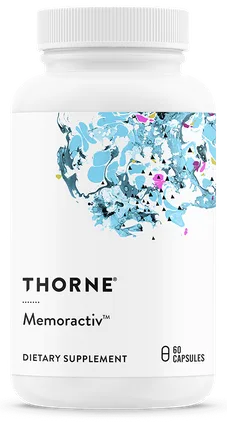
Thorne Memoractiv Review
Memoractiv is a Thorne nootropic for cognitive function and mental focus, positioned for people who want to maintain a mental edge, support productivity, creativity, and motivation, and help the eyes filter light from blue screens. The product is described as a unique combination of nootropic ingredients, substances that promote creativity and motivation, which also has the potential to support brain health. It contains six botanical extracts and nutrients that the page describes as well studied for cognitive benefits, including support for concentration, motivation, mental focus, and reaction time. The page says the formula is designed for a world filled with deadlines, traffic, and hours of screen time, and states that the ingredients help reduce cortisol levels, fight the effects of stress, and protect the eyes from the negative effects of blue light. Thorne lists who may benefit: millennials and Gen-Xers who want to maintain a mental edge, aging baby boomers who want to maintain mental agility, individuals who spend long hours in front of a computer screen or who experience stress from a tech-driven society, athletes, gamers, and performers who want to support mind-body coordination, overwhelmed students who need creative inspiration and motivation, and anyone looking to unlock their brain's potential. The key ingredients include KSM-66 ashwagandha, described as a root-only full-spectrum extract supported by 22 clinical trials for memory, attention, and stress response; Virtiva ginkgo phytosome, a ginkgo bound to phosphatidylserine for absorption; Lutemax 2020, a marigold extract providing lutein, zeaxanthin, and meso-zeaxanthin; PurEnergy, a co-crystal of pterostilbene and caffeine described as a sustained-release form; acetyl-L-carnitine, an amino acid tied to cellular energy and neurological function; and bacopa extract standardized to 20 percent bacosides. The label lists a serving of 2 capsules, 30 servings per container, and 50 mg caffeine per serving. Suggested use is 2 capsules one to two times daily, taken away from bedtime, or as recommended by a health-care practitioner. Warnings state that the product is contraindicated for people with a history of hypersensitivity to its ingredients, should not be used if pregnant, nursing, or trying to conceive, and should be used with caution or avoided by people on meds or a med therapy or before surgery because of ginkgo. The product is gluten free, dairy free, and capsule based.
We don’t sell supplements. We help you make decisions and get the best price.
Lowest prices
We may earn a commission from some store links. How we choose.
Finding the lowest prices at the stores now. This takes a few seconds.
Study, Trial or Testing Result Summary
Members Only149 human studies · 93 improved
Ashwagandha, the main ingredient, is taken at a full dose. A pooled analysis of 20 trials in 1,249 adults found it improved memory, attention, processing speed and planning skills compared with control [1]. Trials using 600 mg a day for 8 weeks improved memory and attention in adults with memory complaints [2] and in adults with mild memory decline [3]. The ginkgo and phosphatidylserine blend, also at a full dose, improved memory and reaction time in two small, early trials [4][5]. Bacopa at 300 mg a day improved learning and delayed recall in older adults [6][7]. This product gives about 200 mg a day, and a large pooled analysis found the clearest memory gains at 600 mg or more [8]. Lutein with zeaxanthin improved attention in some trials [9], but a five-year trial in older adults found no slowing of mental decline [10]. Acetyl-L-carnitine is below the 1.5 grams a day that helped older adults with mild decline [11], and it did not slow established Alzheimer's disease [12]. The energy ingredient, a pterostilbene and caffeine blend, has no human studies here. Animal and cell studies are never counted.
See all 149 studies →Hide the studies
- In 23 observational studies, people with dementia had lower blood lutein and other carotenoids than healthy controls, but no stable link was found for mild cognitive impairment and no supplement was tested.Low blood carotenoid status in dementia and mild cognitive impairment: A systematic review and meta-analysis.
- Across 48 studies of 3,650 children with attention problems testing 12 antioxidants including acetyl-L-carnitine, other antioxidants ranked best for attention, and the abstract reports no specific result for acetyl-L-carnitine.Safety and efficacy of antioxidant therapy in children and adolescents with attention deficit hyperactivity disorder: A …
- In a pooled analysis of 50 trials in people with schizophrenia, Withania somnifera beat placebo for overall symptoms only in a low-bias acute-phase subset, and cognition results for it were not reported.Nutraceuticals and phytoceuticals in the treatment of schizophrenia: a systematic review and network meta-analysis.
- In a pooled analysis of 50 trials (2,384 people with schizophrenia) testing 22 supplements, ashwagandha added to usual treatment beat placebo for total symptoms only in sudden-onset illness in low-bias trials, and cognition results for ashwagandha were not reported.Nutraceuticals and phytoceuticals in the treatment of schizophrenia: a systematic review and network meta-analysis "Nutr…
- In 29 trials of 2107 healthy adults, Bacopa at 600 mg or more per day improved working memory and short-term memory compared with placebo and Ginkgo, while attention and processing speed did not differ.Comparative effects of Bacopa monnieri and Ginkgo biloba on cognitive functions: A systematic review and network meta-an…
- In a pooled analysis of 25 trials of 1861 healthy older adults, Bacopa ranked among the best for executive function and language, while raisins and tart cherry ranked best for learning and memory, and effects on attention were limited.The effect of plant active substances on cognitive function in healthy older adults: a systematic review and network met…
- Across 20 randomized trials with 1,249 adults, ashwagandha improved memory, attention and processing speed, and executive function compared with control, and also raised testosterone and muscle strength but not body weight or body fat.Effects of Withania somnifera (L.) Dunal (Ashwagandha) on cognitive and physical function in adults: a systematic review…
- In nine placebo-controlled trials of 518 people taking Bacopa for at least 12 weeks, Bacopa shortened the Trail B test time and choice reaction time, showing better speed of attention.Meta-analysis of randomized controlled trials on cognitive effects of Bacopa monnieri extract.
- Two small trials in healthy young adults found no effect of L-carnitine on reaction time, vigilance or memory after three days, and the evidence was very low quality.L-carnitine for cognitive enhancement in people without cognitive impairment.
- In two small trials of 83 boys with fragile X syndrome given L-acetylcarnitine or placebo for one year, intellectual functioning and hyperactivity did not clearly improve, with low-quality evidence.L-acetylcarnitine for treating fragile X syndrome.
- Pooled placebo-controlled trials of 3 to 12 months in people with mild cognitive impairment or mild Alzheimer's disease using 1.5 to 3 grams daily showed a significant advantage over placebo on clinical and memory-thinking tests, beginning at 3 months.Meta-analysis of double blind randomized controlled clinical trials of acetyl-L-carnitine versus placebo in the treatmen…
- Pooling placebo-controlled trials in adults, lutein did not significantly improve attention, executive function or memory, though change-from-baseline results hinted it might help maintain memory and executive function.Dietary Lutein and Cognitive Function in Adults: A Meta-Analysis of Randomized Controlled Trials.
- One study of 40 adults with Down syndrome tested acetyl-L-carnitine, but data were too limited to draw conclusions about its effect on cognitive decline.Pharmacological interventions for cognitive decline in people with Down syndrome.
- A review of five placebo-controlled trials in older adults with mild memory impairment and in adults with mood or psychotic disorders found ashwagandha extract mostly improved cognitive tasks, executive function, attention and reaction time, and was well tolerated.A systematic review of the clinical use of Withania somnifera (Ashwagandha) to ameliorate cognitive dysfunction.
- A review of 30 human studies found ashwagandha root appeared safe and reasonably effective, including for memory and cognitive improvement in 2 studies, though larger well-designed trials are still needed.Safety and clinical effectiveness of Withania Somnifera (Linn.) Dunal root in human ailments.
- In a review of ten dietary trials, the one ashwagandha study reported cognitive benefits in attention, memory or global cognition for the treated group, though more research is needed.Dietary interventions and cognition: A systematic review of clinical trials.
- A review of 256 papers on plant-based cognitive aids found ashwagandha mainly affected anxiety and social-related thinking, with inconsistent evidence overall.Plant-derived nootropics and human cognition: A systematic review.
- In a review of 16 studies of adults with bipolar disorder, ashwagandha showed cognitive benefits in a single study.Improving Cognition in Bipolar Disorder: A Systematic Review of Current Pharmacological and Nutraceutical Approaches.
- A review of 24 randomized trials (19 on ashwagandha) using 120-1000 mg daily for 3-16 weeks reported benefits including improved cognitive function, along with less stress and better sleep, though studies were small and varied.Clinical evidence for the adaptogenic effects of Withania somnifera and Rhodiola rosea - A systematic review with molecu…
- Across 11 placebo-controlled trials in people with Alzheimer's disease, acetyl-L-carnitine improved overall clinician-rated impression at 12 and 24 weeks but showed no benefit on cognition tests, and the reviewers said this may be due to chance.Acetyl-L-carnitine for dementia.
- Two studies of L-acetylcarnitine in people with fragile X syndrome and attention-deficit hyperactivity disorder reported positive effects with no side effects, but the review found no robust evidence overall.Systematic review of pharmacological treatments in fragile X syndrome.
- A review of 122 studies of mitochondria-targeting supplements in psychiatric disorders, including acetyl-L-carnitine, found heterogeneous results and high risk of bias, with no specific acetyl-L-carnitine result given.Clinical outcomes of mitochondrial-enhancing nutraceutical supplementation in psychiatric disorders: A systematic review…
- In six 12-week trials of healthy adults, Bacopa at 300-450 mg extract per day improved memory free recall on 9 of 17 tests, with little sign of benefit in other thinking skills.The cognitive-enhancing effects of Bacopa monnieri: a systematic review of randomized, controlled human clinical trials.
- Across five studies in children and adolescents, Bacopa improved some memory and language measures plus attention and hyperactivity, with small to medium effects and mild side effects in 2.3% of participants.A systematic review of the Ayurvedic medicinal herb Bacopa monnieri in child and adolescent populations.
- A review of plant-based supplements for cognitive decline listed Bacopa among those with a promising positive impact, but said better-designed clinical research is still needed.Botanicals and phytochemicals active on cognitive decline: The clinical evidence.
- A review of supplements for cognitive performance in healthy adults, including Bacopa, found inconsistent, imprecise and often flawed studies, so no firm recommendations could be made.Dietary Supplement Ingredients for Optimizing Cognitive Performance Among Healthy Adults: A Systematic Review.
- A review of seven trials in children and adolescents with attention deficit disorder found fair indication that Bacopa, among other herbs, helped with symptoms, but evidence was too limited to recommend herbal treatment.Phytotherapy for Attention Deficit Hyperactivity Disorder (ADHD): A Systematic Review and Meta-analysis.
- In 21 mostly 12-week trials of older adults testing herbs and nutrients (Bacopa in 6), 14 reported improvement in at least one thinking domain, but most had high risk of bias so evidence quality was low.A systematic review of the safety and efficacy on cognitive function of herbal and nutritional medicines in older adults…
- A review of nine studies in schizophrenia found Bacopa could reverse positive, negative and cognitive symptoms and lowered an oxidative stress marker, with more research recommended.Effectiveness of Bacopa Monnieri (Brahmi) in the management of schizophrenia: a systematic review.
- A review of supplements for attention deficit disorder reported Bacopa consistently improved inattention, hyperactivity and memory, though supplements cannot replace stimulant medication.Efficiency of Different Supplements in Alleviating Symptoms of ADHD with or Without the Use of Stimulants: A Systematic …
- Across five lutein trials in healthy adults, lutein improved visual memory in young and middle-aged adults but showed inhibition in middle-aged and older adults; 10 mg daily for twelve months was linked to better cognitive function.Effects of Lutein and Astaxanthin Intake on the Improvement of Cognitive Functions among Healthy Adults: A Systematic Re…
- In three brain imaging trials of healthy older adults, 10 mg of lutein daily for 12 months improved brain activity during learning, resting connectivity and gray matter volume.Lutein Has a Positive Impact on Brain Health in Healthy Older Adults: A Systematic Review of Randomized Controlled Trial…
- Of seven trials, lutein and zeaxanthin raised eye pigment in six and significantly improved most cognitive functions tested, including memory, processing speed and attention.Effect of macular pigment carotenoids on cognitive functions: A systematic review.
- In 13 studies of children, lutein and zeaxanthin levels in the eye were more strongly tied to thinking ability than to vision, but the link with vision was unclear."Analysis of Macular Pigment Optical Density in Childhood: A Systematic Review".
- Of 17 studies on lutein and brain diseases, 4 found improved cognitive function and 8 found slower Alzheimer's progression, but some found no significant link.The neuropharmacological and clinical effects of lutein: a systematic review.
- In 3501 older adults with age-related macular degeneration risk, 10 mg lutein plus 2 mg zeaxanthin daily for about 5 years did not change cognitive decline compared with no lutein/zeaxanthin.Effect of Omega-3 Fatty Acids, Lutein/Zeaxanthin, or Other Nutrient Supplementation on Cognitive Function: The AREDS2 Ra…
- In 431 people with mild to moderate Alzheimer's disease, 3 g a day of acetyl-L-carnitine for one year did not slow decline overall compared with placebo, though a later subgroup look hinted at slower decline in those aged 65 or younger.A 1-year multicenter placebo-controlled study of acetyl-L-carnitine in patients with Alzheimer's disease.
- In a reanalysis of 334 people with Alzheimer's disease, acetyl-L-carnitine for one year gave the same average decline as placebo, but younger patients (about 61 or under) declined more slowly on the drug.Acetyl L-carnitine slows decline in younger patients with Alzheimer's disease: a reanalysis of a double-blind, placebo-c…
- Over 12 months, a 500 mg twice-daily herbal blend containing Bacopa improved memory, attention and mood scores in older adults with dementia and in healthy elders versus control, and lowered inflammation and oxidative stress markers.Management of cognitive determinants in senile dementia of Alzheimer's type: therapeutic potential of a novel polyherbal…
- In 229 people aged 45 to 65 with early-onset Alzheimer's disease, 3 g a day of acetyl-L-carnitine for one year did not slow decline on the main measures versus placebo, with less decline on a memory test only among those who completed the study.A 1-year controlled trial of acetyl-l-carnitine in early-onset AD.
- In 148 active-duty Airmen doing exercise training for 12 weeks, a multi-ingredient drink containing lutein improved working memory by 9.0% and sped up fluid intelligence reaction time compared with exercise plus placebo drink.Enhanced physical and cognitive performance in active duty Airmen: evidence from a randomized multimodal physical fitnes…
- In 141 middle-aged adults taking a multinutrient with bacopa for 12 weeks, memory did not improve overall versus placebo, but attention improved significantly in those who started with an optimal diet.Investigating the Effects of a Multinutrient Supplement on Cognition, Mood and Biochemical Markers in Middle-Aged Adults…
- In 130 stressed adults, taking one 300 mg sustained-release ashwagandha capsule daily for 90 days improved recall memory and reduced pattern recall errors compared with placebo, and also lowered stress and improved sleep, with no adverse events reported.Efficacy and Safety of Ashwagandha Root Extract on Cognitive Functions in Healthy, Stressed Adults: A Randomized, Double…
- In 130 people with Alzheimer's disease, one year of oral acetyl-L-carnitine slowed decline compared with placebo on 13 of 14 measures, with significant benefits for attention, memory and logical thinking.Long-term acetyl-L-carnitine treatment in Alzheimer's disease.
- In 125 cirrhotic people with minimal hepatic encephalopathy, acetyl-L-carnitine over 90 days lowered blood ammonia and improved memory, attention and thinking test scores more than placebo did.Acetyl-L-carnitine treatment in minimal hepatic encephalopathy.
- In 120 adults with self-reported cognitive and energy problems, 600 mg of ashwagandha root extract daily for 8 weeks improved episodic memory, working memory and attention accuracy more than placebo, and improved mood and executive function.Safety and Efficacy of Ashwagandha Root Extract on Cognition, Energy and Mood Problems in Adults: Prospective, Randomize…
- In 119 people with cognitive decline taking donepezil, adding acetyl-L-carnitine together with ginkgo biloba extract was followed by a drop in mini-mental state scores at 12 and 24 weeks, while adding choline alfoscerate instead gave better results, so the acetyl-L-carnitine effect cannot be separated from ginkgo.Comparative study of choline alfoscerate as a combination therapy with donepezil: A mixed double-blind randomized contro…
- In 112 children aged 5 to 12 with ADHD taking 500 to 1500 mg twice daily for 16 weeks, the main test showed no benefit over placebo, though a subgroup with inattentive symptoms showed a possible improvement.Acetyl-L-carnitine (ALC) in attention-deficit/hyperactivity disorder: a multi-site, placebo-controlled pilot trial.
- In a double-blind placebo-controlled trial of 106 people with Alzheimer's disease, a multi-ingredient supplement containing acetyl-L-carnitine improved cognitive test scores within 3 months compared with placebo.A Phase II Randomized Clinical Trial of a Nutritional Formulation for Cognition and Mood in Alzheimer's Disease.
- In 101 adults aged 40 to 70 with memory and attention complaints, 300 mg of Bacopa extract daily for 12 weeks did not improve verbal learning, attention or working memory compared with placebo, but it reduced self-reported stress reactivity and fatigue after a demanding computer task.The Effects of a Bacopa monnieri Extract (Bacumen®) on Cognition, Stress, and Fatigue in Healthy Adults: A Randomized, D…
- In 98 healthy adults over 55, 300 mg daily of bacopa extract for 12 weeks significantly improved verbal learning and delayed recall compared with placebo, and caused stomach side effects such as loose stools, cramps and nausea.Does Bacopa monnieri improve memory performance in older persons? Results of a randomized, placebo-controlled, double-bl…
- In 96 elderly people with fatigue taking acetyl-L-carnitine, physical and mental fatigue decreased, and memory and thinking scores improved more than in the comparison group.Acetyl L-carnitine (ALC) treatment in elderly patients with fatigue.
- In a 14-week placebo-controlled trial of 93 boys aged 6 to 14 with inattention, the Bacopa extract did not improve behavior but reduced errors and improved cognitive flexibility and executive functioning compared with placebo.Effects of Bacopa monnieri (CDRI 08®) in a population of males exhibiting inattention and hyperactivity aged 6 to 14 yea…
- In 92 prefrail older adults, taking 1.5 g of acetyl-L-carnitine twice daily for 3 months improved memory and thinking scores and lowered C-reactive protein compared with placebo.Acetyl-L-carnitine Slows the Progression from Prefrailty to Frailty in Older Subjects: A Randomized Interventional Clini…
- In 91 healthy adults with low macular pigment, 12 months of daily lutein, meso-zeaxanthin and zeaxanthin improved memory scores and reduced memory task errors compared with placebo.Supplemental Retinal Carotenoids Enhance Memory in Healthy Individuals with Low Levels of Macular Pigment in A Randomize…
- In 90 adults aged 40-75 with memory complaints, 6 months of daily lutein and zeaxanthin improved visual memory and visual learning versus placebo, but showed no difference on other cognitive tests or questionnaires.The Effects of Lutein and Zeaxanthin Supplementation on Cognitive Function in Adults With Self-Reported Mild Cognitive C…
- In 85 children aged 6-12 with attention or memory concerns, 150 mg of ashwagandha root extract twice daily for 8 weeks improved information processing speed, word recall, and attention and memory tasks more than placebo, with no significant adverse events.A clinical assessment of the therapeutic effects of Ashwagandha root extract on cognitive performance, sleep, and fatigu…
- In 85 healthy adults, a combined extract with 300 mg of bacopa for 2 to 4 weeks did not improve any tested cognitive function compared with placebo.Effects of a combined extract of Ginkgo biloba and Bacopa monniera on cognitive function in healthy humans.
- In 84 adults with overweight or obesity, a daily avocado meal for 12 weeks raised blood lutein and improved accuracy on an attention task versus a matched meal, though the cognitive gains were not linked to lutein changes.Effects of 12-week avocado consumption on cognitive function among adults with overweight and obesity.
- In 82 teenagers aged 13 to 18 with high screen use, taking 10 mg lutein plus 2 mg zeaxanthin daily for 6 months improved attention and processing speed compared with placebo, but not visual reasoning, nonverbal memory, or a shooter game.Supplementation with lutein and zeaxanthin increases macular pigment optical density and cognitive performance in health…
- In an 80-person double-blind trial of older adults with dysthymic disorder, L-acetylcarnitine improved depression and anxiety scores over 7 weeks and worked about as well as a med.Read the study on PubMed (23428336) →
- In 80 healthy adults aged 60 and older, a daily antioxidant mix containing bacopa for 8 weeks sped up trail-making scores and raised letter fluency compared with placebo.Improvement of Executive Function after Short-Term Administration of an Antioxidants Mix Containing Bacopa, Lycopene, As…
- In a 12-month placebo-controlled trial of 77 people with mild to moderate Alzheimer disease, a daily combination of 22 mg of lutein, meso-zeaxanthin and zeaxanthin with fish oil and vitamin E improved memory and mood scores compared with placebo.Supplementation With Carotenoids, Omega-3 Fatty Acids, and Vitamin E Has a Positive Effect on the Symptoms and Progressi…
- In a placebo-controlled trial of 76 adults aged 40 to 65 taking Brahmi for three months, retention of newly learned information improved, while attention, short-term memory, and anxiety were unchanged.Chronic effects of Brahmi (Bacopa monnieri) on human memory.
- In 72 healthy adults aged 35 to 60, 450 mg of brahmi extract daily for 12 weeks did not improve learning, memory, information processing or attention compared with placebo, though state anxiety showed a non-significant trend lower.Brahmi for the better? New findings challenging cognition and anti-anxiety effects of Brahmi (Bacopa monniera) in health…
- In 70 adults who spent over 6 hours a day on screens, 6 months of 10 mg lutein plus 2 mg zeaxanthin did not produce better self-reported attention or sleep than placebo, though some eye tests improved.The effects of lutein/ zeaxanthin (Lute-gen®) on eye health, eye strain, sleep quality, and attention in high electronic…
- In 67 people with minimal hepatic encephalopathy, taking 2 grams of acetyl-L-carnitine twice daily for 90 days improved energy, daily functioning, well-being, depression scores and trail-making test times compared with placebo.Acetyl-L-carnitine reduces depression and improves quality of life in patients with minimal hepatic encephalopathy.
- In a 90-day placebo-controlled trial, healthy adults taking 300 mg a day of a special Bacopa extract improved spatial working memory accuracy compared with placebo.Examining the nootropic effects of a special extract of Bacopa monniera on human cognitive functioning: 90 day double-bl…
- In 62 adults with mild cognitive impairment, 160 mg of Bacopa extract daily for 2 months improved attention and, by the end, overall cognitive score compared with starch placebo, but it did not improve sleep quality.Evaluating the effects of Bacopa monnieri on cognitive performance and sleep quality of patients with mild cognitive imp…
- In 62 people with and without Alzheimer's disease, six months of a macular carotenoid supplement raised blood and eye carotenoid levels and improved contrast vision, but did not change any cognitive test scores.The impact of supplemental macular carotenoids in Alzheimer's disease: a randomized clinical trial.
- In a placebo-controlled trial of 61 people with severe hepatic encephalopathy, 2 g twice daily of acetyl-L-carnitine for 90 days improved memory, attention and thinking test scores compared with placebo and lowered blood ammonia.Acetyl-L-carnitine improves cognitive functions in severe hepatic encephalopathy: a randomized and controlled clinical t…
- In a placebo-controlled study of 60 adults with bipolar disorder, 500 mg per day of Withania somnifera extract for 8 weeks improved backward digit span, reaction time, and one social cognition measure compared with placebo, but other cognitive tests showed no difference.Randomized placebo-controlled adjunctive study of an extract of withania somnifera for cognitive dysfunction in bipolar …
- In a 3-month double-blind placebo-controlled trial of 60 elderly people with mild mental impairment, 2 g per day of acetyl-L-carnitine produced significant improvements in behavior scales, memory tests, attention and verbal fluency compared with placebo.Acetyl-L-carnitine in the treatment of mildly demented elderly patients.
- In 60 healthy adults aged 65 and older, a daily supplement with 10 mg lutein, 10 mg meso-zeaxanthin, 2 mg zeaxanthin, fish oil, and vitamin E for 24 months led to fewer errors on working memory tasks than placebo.Omega-3 fatty acid, carotenoid and vitamin E supplementation improves working memory in older adults: A randomised clini…
- In 60 children aged 5 to 12, gummies with 10 mg lutein and 2 mg zeaxanthin daily for 180 days improved focus, episodic memory, visual working memory and attention compared with placebo, and reduced eye strain and fatigue.Lutein and Zeaxanthin Supplementation Improves Dynamic Visual and Cognitive Performance in Children: A Randomized, Doubl…
- In a randomized double-blind trial of 59 healthy young adults, 225 mg of liposomal ashwagandha improved several memory, attention, and reaction-time measures both one hour after a single dose and after 30 days of daily use, and reduced feelings of tension and fatigue.Acute and Repeated Ashwagandha Supplementation Improves Markers of Cognitive Function and Mood.
- In 59 healthy young adults, 13 or 27 mg a day of macular xanthophylls for six months lowered an inflammatory marker (IL-1 beta) and improved several memory and attention test scores compared with placebo.Effects of macular xanthophyll supplementation on brain-derived neurotrophic factor, pro-inflammatory cytokines, and cog…
- In 58 children and teens with mild ADHD, 300 mg per day of ashwagandha root extract for 8 weeks lowered ADHD symptom scores and improved executive functioning compared with placebo, with no serious side effects.Efficacy and safety of ashwagandha root extract in children and adolescents with mild attention-deficit/hyperactivity di…
- In 55 alcoholics with mild thinking deficits taking 2 g per day for 90 days, memory and drawing test scores improved more than with placebo.Role of acetyl-L-carnitine in the treatment of cognitive deficit in chronic alcoholism.
- In a randomized placebo-controlled trial of 54 healthy adults with mild to moderate stress, 500 mg of ashwagandha root extract daily for 60 days improved stress, anxiety, and quality of life, and improved multitasking, concentration, and decision-making speed compared with placebo.A standardized Ashwagandha root extract alleviates stress, anxiety, and improves quality of life in healthy adults by mo…
- In 52 healthy middle-aged adults, 300 mg of Bacopa in a combined plant extract taken daily for 28 days improved positive mood and delayed recall compared with placebo.Neurocognitive effects a combined polyphenolic-rich herbal extract in healthy middle-aged adults - a randomised, double-…
- In 51 boys with fragile X syndrome and ADHD analysed, acetyl-L-carnitine at 20-50 mg per kg a day for one year reduced hyperactivity and improved social behaviour more than placebo.A double-blind, parallel, multicenter comparison of L-acetylcarnitine with placebo on the attention deficit hyperactivit…
- In 51 healthy young adults aged 18 to 30, one year of daily lutein and zeaxanthin supplementation improved spatial memory, reasoning, and complex attention compared with placebo.Effects of a Lutein and Zeaxanthin Intervention on Cognitive Function: A Randomized, Double-Masked, Placebo-Controlled T…
- In a randomized placebo-controlled trial of 50 adults with mild cognitive impairment, 300 mg of ashwagandha root extract twice daily for 8 weeks improved immediate and general memory, executive function, attention, and processing speed compared with placebo.Efficacy and Safety of Ashwagandha (Withania somnifera (L.) Dunal) Root Extract in Improving Memory and Cognitive Functi…
- In 49 older women, 12 mg lutein daily for 4 months improved verbal fluency, and lutein combined with DHA also improved memory, while processing speed and mood did not change.Cognitive findings of an exploratory trial of docosahexaenoic acid and lutein supplementation in older women.
- In a 12-week placebo-controlled trial of 48 healthy adults aged 65 and older, 300 mg a day of standardized Bacopa extract improved delayed word recall and Stroop test scores compared with placebo.Effects of a standardized Bacopa monnieri extract on cognitive performance, anxiety, and depression in the elderly: a ra…
- In 48 community-dwelling older adults taking 10 mg lutein and 2 mg zeaxanthin daily for one year, brain connectivity between networks increased, contrary to the expected change, and the expected strengthening within the default mode network was not seen.The effects of lutein and zeaxanthin on resting state functional connectivity in older Caucasian adults: a randomized co…
- In 44 community-dwelling older adults, one year of 12 mg daily lutein and zeaxanthin helped slow decline on a verbal learning task and increased brain activity in memory-related areas compared with placebo.Lutein and Zeaxanthin Influence Brain Function in Older Adults: A Randomized Controlled Trial.
- In a double-blind placebo-controlled pilot study of 40 adults with mild cognitive impairment, 250 mg per day of an ashwagandha extract for 60 days improved memory and mental rotation scores compared with placebo.Effect of ashwagandha (Withania somnifera) extract with Sominone (Somin-On™) to improve memory in adults with mild cogni…
- In 40 adults with Down syndrome taking acetyl-L-carnitine for six months, brain function and thinking tests did not improve compared with controls.The effect of acetyl-L-carnitine administration on persons with Down syndrome.
- In a 6-week placebo-controlled trial of 40 children and adolescents with ADHD, adding acetyl-L-carnitine to methylphenidate produced no difference in parent or teacher ratings compared with placebo added to methylphenidate.Acetyl-L-carnitine as an adjunctive therapy in the treatment of attention-deficit/hyperactivity disorder in children and…
- In 40 healthy adults aged 18 to 60, a single dose of a supplement containing bacopa improved working memory accuracy and speed compared with placebo, measured 45 minutes after intake, with lower prefrontal brain activation.Acute effects of combined Bacopa, American ginseng and whole coffee fruit on working memory and cerebral haemodynamic re…
- In 40 healthy older adults, eating one avocado a day (about 0.5 mg lutein) for six months improved memory and spatial working memory, and improved sustained attention in the avocado group only, compared with a potato or chickpea control group.Avocado Consumption Increases Macular Pigment Density in Older Adults: A Randomized, Controlled Trial.
- In 36 people with Alzheimer's dementia taking 2 g per day for 24 weeks, short-term memory tests showed a trend toward benefit, but differences from placebo were not statistically significant.Double-blind, placebo controlled study of acetyl-l-carnitine in patients with Alzheimer's dementia.
- In a 6-month placebo-controlled trial of 34 people with mild cognitive impairment, a multi-ingredient nutrient formula that includes acetyl-L-carnitine improved dementia rating scores compared with placebo, and the placebo group improved after switching to the formula.A Nutritional Formulation for Cognitive Performance in Mild Cognitive Impairment: A Placebo-Controlled Trial with an Ope…
- In 34 people with Alzheimer's disease or mild cognitive impairment, 300 mg daily of brahmi for 12 months did not differ from donepezil 10 mg on the ADAS-Cog cognitive scale; the trial stopped early due to slow recruitment and dropouts.Efficacy of Bacopa Monnieri (Brahmi) and Donepezil in Alzheimer's Disease and Mild Cognitive Impairment: A Randomized Do…
- In a 6-month placebo-controlled trial of 33 older adults with night vision difficulty, 14 mg zeaxanthin plus 7 mg lutein daily improved glare contrast, glare recovery and divided attention scores compared with placebo.Night Vision and Carotenoids (NVC): A Randomized Placebo Controlled Clinical Trial on Effects of Carotenoid Supplementat…
- In 30 adults over 65 with mild mental impairment, 2 grams a day of acetyl-L-carnitine for three months did not differ significantly from placebo overall, though treated patients improved on some memory, attention and behaviour tests.Mental impairment in aging: selection of patients, methods of evaluation and therapeutic possibilities of acetyl-L-carni…
- In 30 older adults with mild memory complaints, a combined supplement containing Bacopa for 2 months improved memory test scores and perceived stress more than placebo, though the Bacopa dose was not stated.Short-Term Impact of a Combined Nutraceutical on Cognitive Function, Perceived Stress and Depression in Young Elderly wi…
- In 28 healthy young adults, a single 120 mg dose of Ginkgo extract bound to phosphatidylserine improved memory performance and speed of memory tasks over 6 hours compared with placebo, while plain Ginkgo extract did not clearly help.Acute cognitive effects of standardised Ginkgo biloba extract complexed with phosphatidylserine.
- In a small 3-month study of adults aged 50 and older, a Bacopa ghee formulation partly reversed age-related brain chemical changes and improved verbal learning and short-term memory compared with plain ghee, though the dose was not stated.Neurometabolite changes in cingulate cortex regions in healthy Indian population and effect of Bacopa monnieri intervent…
- In 24 healthy adults given a single 320 mg dose of a Bacopa extract, performance on repeated demanding cognitive tests improved versus placebo, while stress, fatigue and heart measures did not change.An acute, double-blind, placebo-controlled crossover study of 320 mg and 640 mg doses of a special extract of Bacopa mon…
- In 21 adults with relapsing multiple sclerosis, 20 mg lutein daily for 4 months raised carotenoid levels but did not change cognitive test results compared with placebo.Randomized, Placebo-Controlled, Single-Blind Study of Lutein Supplementation on Carotenoid Status and Cognition in Perso…
- In a small placebo-controlled pilot of 20 people with Parkinson's disease, 450 mg a day of Bacopa extract improved emotional function over 90 days, while other symptoms did not differ from placebo.Bacopa monnieri in Patients with Parkinson's Disease: A Pilot Study.
- In 17 healthy adults, a single 320 mg or 640 mg dose of a Bacopa extract improved letter search and color-word test scores at 1 and 2 hours compared with placebo, with some mood gains and lower cortisol.An acute, double-blind, placebo-controlled cross-over study of 320 mg and 640 mg doses of Bacopa monnieri (CDRI 08) on m…
- In a placebo-controlled pilot of 12 institutionalized people with moderate to late-stage Alzheimer's disease, a multi-ingredient nutrient formula that includes acetyl-L-carnitine delayed decline in dementia rating and clock-drawing scores compared with placebo.Efficacy of a vitamin/nutriceutical formulation for moderate-stage to later-stage Alzheimer's disease: a placebo-control…
- A multi-ingredient supplement containing acetyl-L-carnitine improved memory and attention test scores in community-dwelling adults without dementia compared with placebo, though adults 74 and older often did not improve.A vitamin/nutriceutical formulation improves memory and cognitive performance in community-dwelling adults without demen…
- In two placebo-controlled trials of elderly outpatients with mild to moderate cognitive decline, acetyl-L-carnitine produced significant EEG changes after 8 weeks and better clinical global impression and daily activity ratings after 12 weeks, with generally minor side effects.Pharmaco-electroencephalographic and clinical effects of the cholinergic substance--acetyl-L-carnitine--in patients with…
- In two exploratory randomized trials, 480 mg per day of Ginkgo biloba extract with phosphatidylserine for 4 weeks improved delayed verbal memory and reaction time compared with placebo in healthy volunteers, and improved mood in stressed adults, though the authors call the evidence preliminary.Health Benefits of a Standardized Ginkgo biloba Extract Associated With Phosphatidylserine in Alleviating Mental Stress …
- In healthy adults, 300 mg of Bacopa extract daily for 12 weeks improved information processing speed, learning and memory consolidation, and state anxiety compared with placebo, with the largest effects at 12 weeks.The chronic effects of an extract of Bacopa monniera (Brahmi) on cognitive function in healthy human subjects.
- In older adults taking 12 mg lutein plus zeaxanthin daily for 12 months, brain electrical signal strength improved compared with placebo, though memory and processing speed were not directly measured in this study.Dietary Carotenoids Lutein and Zeaxanthin Change Brain Activation in Older Adult Participants: A Randomized, Double-Mask…
- In healthy older Japanese adults with memory complaints, a supplement combining omega-3 fatty acids with lutein and zeaxanthin for 12 to 24 weeks did not improve memory overall, but it did improve memory in those with cognitive decline.Effects of Long-Chain Polyunsaturated Fatty Acids in Combination with Lutein and Zeaxanthin on Episodic Memory in Health…
- In a single-blind study of 481 elderly people with mild mental decline, 1.5 g per day of L-acetylcarnitine for 90 days significantly improved overall cognitive scores, memory, and mood, with memory benefits persisting after stopping.L-acetylcarnitine treatment of mental decline in the elderly.
- In 236 mildly impaired elderly people taking 1500 mg per day in alternating 45-day phases with placebo, cognitive and mood scores improved more than with placebo.[Effects of L-acetylcarnitine on mental deterioration in the aged: initial results].
- In 60 stressed adults given 400 or 225 mg per day of an ashwagandha root and leaf extract for 30 days, some cognitive tests improved more than placebo, especially in the 400 mg group, while the overall group comparison for mood and stress was not significant.Efficacy of Withania somnifera supplementation on adult's cognition and mood.
- In children aged 6 to 12 with ADHD, a Brahmi ghee formulation showed a 66% drop in total symptom score in a small pilot (n=10), but in a 27-child comparison with methylphenidate it gave only 16% improvement, similar to methylphenidate, with no side effects reported.Evaluation of Brāhmī ghṛtam in children suffering from Attention Deficit Hyperactivity Disorder.
- In 17 healthy young adults, 1.5 grams a day of acetyl-L-carnitine for one month sped reflexes and reduced errors and time on a maze test compared with an untreated control group.[Psycho-functional changes in attention and learning under the action of L-acetylcarnitine in 17 young subjects. A pilot…
- In a double-blind crossover trial of 12 elderly people recovering from acute cerebral circulatory insufficiency, acetyl-L-carnitine outperformed placebo on memory, word and number tests, and simple reaction tasks, with no side effects reported.Effects of acetyl-L-carnitine on reaction times in patients with cerebrovascular insufficiency.
- In a 12-week double-blind placebo-controlled trial of people with early Alzheimer's disease or vascular dementia taking 2250 to 3000 mg of acetyl-L-carnitine per day, the drug's treatment effect was 2.8 times higher than placebo, and it was well tolerated.[Acetyl-L-carnitine (carnicetine) in the treatment of early stages of Alzheimer's disease and vascular dementia].
- In people with Down syndrome, 90 days of acetyl-L-carnitine improved visual memory and attention compared with untreated groups, while people with other intellectual disabilities did not improve.[Effect of the chronic treatment with L-acetylcarnitine in Down's syndrome].
- In an open-label randomized study of 90 people with chronic fatigue syndrome, 2 g per day of acetyl-L-carnitine for 24 weeks led to considerable improvement in 59% of patients, mainly in mental fatigue, and attention improved, though no placebo group was included.Exploratory open label, randomized study of acetyl- and propionylcarnitine in chronic fatigue syndrome.
- In an open-label study of 31 children aged 6 to 12 with attention deficit disorder, 225 mg daily of a standardized Bacopa extract for 6 months reduced parent-rated symptom scores, with restlessness improving most and no placebo group.An open-label study to elucidate the effects of standardized Bacopa monnieri extract in the management of symptoms of at…
- In an 18-month preliminary study of 25 people with Alzheimer disease, a daily 22 mg xanthophyll carotenoid supplement, alone or with fish oil, was followed by slower disease progression and reported memory and mood benefits, though the study had no proper placebo group.Nutritional Intervention to Prevent Alzheimer's Disease: Potential Benefits of Xanthophyll Carotenoids and Omega-3 Fatty…
- In an open-label one-year study of 24 people with Alzheimer's disease, a multi-ingredient supplement containing acetyl-L-carnitine kept cognitive performance and behavior at baseline levels, unlike the decline usually seen with placebo.Maintenance of Cognitive Performance and Mood for Individuals with Alzheimer's Disease Following Consumption of a Nutrac…
- In an open-label single-group study of 24 people with mild cognitive impairment, 5 ml of Brahmi ghee taken twice daily for 90 days, after a week of another herbal powder, was followed by better overall cognitive scores, but without a control group.Changes in MoCA scores with sequential administration of Trikatu Cūrṇa and Brahmi Ghṛta in mild cognitive impairment: an…
- In 23 people with mild Alzheimer's disease already on cholinesterase inhibitors, adding 2 g per day of acetyl-L-carnitine for 3 months raised the response rate from 38% to 50% in an open study without a control group.Effects of acetyl-L-carnitine in Alzheimer's disease patients unresponsive to acetylcholinesterase inhibitors.
- In 9 schizophrenia patients who completed 12 weeks of 1 g daily acetyl-L-carnitine added to clozapine, cognitive test scores did not significantly change and symptom improvement was limited to one symptom domain.Acetyl-L-Carnitine Augmentation of Clozapine in Partial-Responder Schizophrenia: A 12-Week, Open-Label Uncontrolled Prel…
- In about 6,000 US adults aged 50 and older, higher dietary intake of lutein-zeaxanthin and lycopene was linked to better thinking scores over several years.Dietary provitamin A and non-provitamin A carotenoid in relation to cognitive function among middle-aged and older adult…
- In over 4,000 adults aged 50 and older, higher blood levels of lutein and zeaxanthin were linked to better global cognition, memory and executive function, and higher zeaxanthin was linked to faster processing speed.Plasma Lutein and Zeaxanthin Are Associated With Better Cognitive Function Across Multiple Domains in a Large Population…
- In over 4,000 Chinese adults aged 55 and older, higher dietary lutein and zeaxanthin intake was linked to slower yearly cognitive decline.Dietary Carotenoids and Cognitive Decline: A Longitudinal Study Among Chinese Middle-Aged and Older Adults.
- In nearly 3,000 middle-aged adults, a diet rich in carotenoids from colored fruits and vegetables was linked to higher cognitive scores 13 years later, though this observational study cannot prove cause.Carotenoid-rich dietary patterns during midlife and subsequent cognitive function.
- In nearly 2,800 US adults aged 60 and older, higher dietary lutein and zeaxanthin intake was linked to better scores on memory, word fluency and processing speed tests.Dietary carotenoids and cognitive function among US adults, NHANES 2011-2014.
- In a large study of adults aged 35 to 74, people with cognitive frailty had lower blood levels of zeaxanthin, but this study did not test supplements, so it does not show that taking zeaxanthin helps the brain.Antioxidants linked with physical, cognitive and psychological frailty: Analysis of candidate biomarkers and markers der…
- In a 3-year trial analysis of 590 adults aged 65 to 84, those whose MIND diet score rose substantially had better yearly gains in global cognition and higher blood lutein-zeaxanthin and beta-carotene levels.Adherence to the Mediterranean-DASH Intervention for Neurodegenerative Delay (MIND) diet and longitudinal changes in glo…
- In a 3-year diet trial, older adults who carried the APOE e4 gene and had higher blood carotenoid levels at the start, including lutein plus zeaxanthin, had better thinking scores; the association was weaker or absent in non-carriers.Apolipoprotein E ε4-dependent associations between carotenoids and cognitive decline: Findings from the MIND (Mediterran…
- In 301 healthy young Ghanaian adults, macular pigment was not linked to diet or vision measures, but a small positive link was found between macular pigment and verbal fluency.Macular Pigment, Cognition, and Visual Function in Younger Healthy Adults in Ghana.
- In 226 adults with low macular pigment or age-related macular degeneration, higher macular pigment was linked to several cognitive test scores, while blood lutein and zeaxanthin were linked only weakly and mainly to verbal fluency and memory in the macular degeneration group.Cognitive Function and Its Relationship with Macular Pigment Optical Density and Serum Concentrations of its Constituent…
- People with mild cognitive impairment or Alzheimer disease had lower blood levels of antioxidants, including lutein, zeaxanthin and other carotenoids, than healthy controls; this study did not test supplementation.Plasma antioxidants are similarly depleted in mild cognitive impairment and in Alzheimer's disease.
- In 123 older adults with normal thinking or mild memory problems, higher blood lutein was linked to more correct words in a category fluency test.Micronutrients, Frailty, and Cognitive Impairment: Design and Preliminary Results from the CogLife 2.0 Study.
- In 85 adults aged 18 to 92, higher levels of lutein and zeaxanthin in the brain were linked to different brain activity patterns during a visual attention task, with the strongest links in older adults.Neural Activation During Visual Attention Differs in Individuals with High versus Low Macular Pigment Density.
- In 54 older adults, higher lutein and zeaxanthin levels in the eye and blood were linked to better white matter integrity in brain regions that decline with age, but this snapshot study does not show that supplements cause the change.Relation of Retinal and Serum Lutein and Zeaxanthin to White Matter Integrity in Older Adults: A Diffusion Tensor Imagin…
- In 51 children aged 7 to 13, higher macular pigment levels were linked to better executive processing and overall intellectual ability scores.The Macular Carotenoids are Associated with Cognitive Function in Preadolescent Children.
- In older adults, higher blood and retinal levels of lutein and zeaxanthin were linked to more efficient brain activity during a visual-spatial judgment task.Lutein and Zeaxanthin Are Positively Associated with Visual-Spatial Functioning in Older Adults: An fMRI Study.
- In a nested case-cohort study of older adults, blood levels of vitamin E, vitamin A and carotenoids were not significantly linked to dementia or Alzheimer's disease risk after correction for multiple testing; the study measured blood levels rather than giving a supplement.Plasma antioxidants and risk of dementia in older adults.
- In a study of adults at risk for cognitive decline, higher blood levels of lutein plus zeaxanthin were linked to better semantic memory, though this was an observational association and not a supplement trial.Higher circulating α-carotene was associated with better cognitive function: an evaluation among the MIND trial particip…
- In a national survey of older Americans, higher dietary lutein and zeaxanthin intake was linked to better scores on several cognitive tests, and fatty liver risk explained about 10 to 18 percent of that link.The Mediation Role of the Risk of Non-Alcoholic Fatty Liver Disease in Relationship between Lutein and Zeaxanthin and Co…
- In a pilot study of 17 boys with fragile X syndrome, L-acetylcarnitine taken for one year significantly reduced hyperactivity as rated on a parent-teacher questionnaire.[L-acetylcarnitine treatment on fragile X patients hyperactive behaviour].
- This narrative review of Indian herbal medicines for Alzheimer's disease, including ashwagandha, gave no specific human trial numbers or results for ashwagandha.Herbal Therapeutics for Alzheimer's Disease: Ancient Indian Medicine System from the Modern Viewpoint.
- A review of four published trials with over 100 patients each found that acetyl-L-carnitine over 3 months improved dementia-related rating scales beyond baseline variability, and placebo changes depended on how severe the disease was at the start.Efficacy and clinical relevance of cognition enhancers.
Review Totals and Summary
Members Only1,037 reviews · 89% positive
Buyers mostly like Thorne Memoractiv capsules, and most describe a noticeable lift in focus or memory. Price is the most common complaint. It carries about 783 ratings across the stores, and most reviews with stars give 4 or 5. **What buyers say it did for them:** Focus and clarity come up most. One buyer says it left them "calm, collected, and focused" at the start of the day, and another calls it a "great way to get focused on those busy days." A woman dealing with post-menopausal fogginess says it took about a week to notice a change and that she then cut down to one pill to avoid feeling jittery. Another says that after a few months they enjoyed "remembering names and details that used to slip away." One buyer says it pairs well with their ADHD medication. Store summaries also describe a gradual effect, a "clean" boost without jitters, use during exam season, and some reports of mood improvement and cleared brain fog. One store page mentions a single reviewer who reported more energy. Plenty of reviews are only short praise, such as "Love it and it really helps and works." **What they complain about:** Not everyone noticed an effect. One 2-star reviewer wrote "Didn't notice anything" despite finishing the whole bottle. One store's summary mentions some customers with no benefit and others with stomach issues. One store page also had a "never received" comment, which is a delivery problem and not about the supplement. **Taste, smell, pill size and form:** Capsule size gets mixed comments. One buyer says the capsule is "too big for me" and opens it to mix the contents into water. Another store's summary says the capsules are easy to swallow. Nothing in the reviews describes taste or smell. **Value for money:** Price is the main sore point. One loyal buyer says "Love the product. Hate the price," and warns that cheaper products from good brands exist, though they plan to keep buying. One store's summary also calls it pricey and lists value for money as a negative theme. **Who it seems to suit and who it did not:** It seems to suit people who want help with focus, memory or mental fog, including those with busy or demanding days, such as public speaking, tactical training, study or work periods. Some say they trust the Thorne brand and like the mix of ashwagandha, L-carnitine and ginkgo. It suited some people less well: those who felt no effect, those sensitive to stomach upset or jitteriness (one reviewer needed to lower the dose), those who struggle with large capsules, and those who are very price-conscious. Reviews of other forms of this product were left out, and this summary covers the capsules only.
Biohacker Summary
Members Only10 of 10 recommend it
Ashwagandha, the main ingredient, gets a mostly positive but cautious response: six of the ten panelists recommend it, one uses it daily, and three are neutral, though one of those called the data weak. People take it mainly to lower stress and cortisol, sleep better, and in some cases support testosterone, with doses mentioned of 250 mg, 400 to 600 mg, and a range of 120 to 1,000 mg for at least six weeks, and several prefer standardized extracts or take it at night. Cautions are common: panelists advise cycling it, including a two-week break after two weeks of use, and warn of emotional numbing, feeling weird, irritability in women, and a poor fit for people with low cortisol, and one person stopped because it caused a mouth sore. L-carnitine is a smaller ingredient in this product, and the few panelists who mentioned it recommended it mainly for fertility and energy production in cells.
See all 10 biohackers →Hide the biohackers
Dr. Mark Hyman · Ashwagandha · recommends
- Lists ashwagandha as an herb that can help lower anxiety or depression symptoms.
- Notes that there was a recent study on ashwagandha for sperm health, indicating it's an evolving area of research.
- Mentions that supplementing with L-carnitine can make mitochondria more efficient.
- Suggests trying ashwagandha, noting that some people respond to it, and recommends a dose of 400 to 600 mg.
- Recommends adaptogenic herbs like ashwagandha, particularly at night, rhodiola, lemon balm, and catclaw for stress relief.
- Recommends ashwagandha at night as an adaptogen to help with high cortisol and promote sleep for those who are tired and wired.
- Recommends ashwagandha, stating it can help convert T4 to T3, but advises ensuring a clear source and monitoring liver enzymes.
- Recommends Acetyl L-Carnitine as it is critical in fat metabolism and supports the transport of fatty acids into the mitochondria for energy.
- Suggests adaptogens like rhodiola, ashwagandha, ginseng, and Siberian ginseng can be helpful for actively managing stress.
- States that Mosh protein bars contain ashwagandha to support a healthy brain.
- Recommends adaptogens like Ashwagandha if one has a lot of stress.
- Recommends L-carnitine as critical for producing sperm and increasing antioxidant status in men.
- States that ashwagandha can stimulate osteoblasts, which helps with bone building, especially for those with a genetic predisposition to low bone density.
- States that making energy in mitochondria requires carnitine and recommends acetylol carnitine or L-Carnitine at 500 to 2000 milligrams a day, usually 500 once or twice a day, as it is important in metabolizing fats.
Dr. Eric Berg · Ashwagandha · recommends
- Recommends ashwagandha, suggesting 250 milligrams per day over time to increase stress tolerance and help the cortisol receptor.
- Rates Ashwagandha on a scale from 1 to 10.
- Lists ashwagandha as one of the best ways to lower luteinizing hormone, which goes too high as people age and is related to dementia.
- Notes that some people take ashwagandha or other adaptogens to help calm them down when they assume their problem is cortisol, and sometimes it works.
- States that taking ashwagandha on a regular basis can greatly help the adrenals.
- Recommends Ashwagandha to help make the process of quitting coffee smoother.
- Recommends taking adaptogens like ashwagandha for super powerful and real energy inputs without artificial side effects.
- Recommends Ashwagandha to help sleep through the night.
- Recommends taking Ashwagandha in the evening before bed as a remedy for problems with elevated cortisol around 2 AM, when cortisol should be at its lowest point.
- Recommends trying ashwagandha to lower stress levels.
- Mentions L-carnitine as another nutrient that can be depleted, similar to co-enzyme Q10.
- Explains that L-Carnitine helps burn fat during exercise, preserves muscle protein, and aids in recovery from exercise, noting it is very high in red meat.
- States that the best way to use L-Carnitine is for cardiovascular health, as the heart needs it to transport fatty acids for energy.
- Recommends L-carnitine for people with congestive heart failure, arrhythmia, or any type of heart damage, stating it is dynamite for the heart.
Siim Land · Ashwagandha · recommends
- Recommends Ashwagandha for stress, sleep and performance, based primarily on human research, especially randomized controlled trials showing measurable benefits.
- Lists Ashwagandha as one of 15 supplements backed by human studies.
- Notes that Ashwagandha is one of several supplements with human evidence.
- States that ashwagandha, unless contaminated, is not going to raise liver enzymes.
- Stopped taking ashwagandha because it immediately caused a mouth sore.
- States that ashwagandha consistently reduces stress and anxiety in randomized controlled trials.
- States that Ashwagandha helps with testosterone primarily in stressed out or poor sleeping people.
- States that ashwagandha has strong evidence for increasing testosterone, mostly in stressed or infertile men.
- Mentions ashwagandha as an example of a testosterone-boosting supplement he has no interest in taking.
- Places Ashwagandha, specifically the KSM66 form, in the 'god tier' due to extensive research supporting its benefits for stress, sleep, testosterone production, estrogen, and even V2 max, while personally not experiencing any negative side effects some people report.
- Notes that bacopa helps with cognition.
- Stopped taking L-Carnitine because it converts to TMAO, a cardiovascular disease risk factor, and he hasn't noticed significant benefits for muscle growth or fat oxidation, preferring not to gamble with the risk given his family history of cardiovascular disease.
- States that L-Carnitine is great and can help with androgen receptor density for muscle growth, and he takes it before resistance training for this purpose, but not daily.
- Experimented with acetyl-L-carnitine to improve his performance on the soccer field, specifically his ability to read the play.
Thomas DeLauer · Ashwagandha · recommends
- Recommends ashwagandha extract, noting a study where 57 overweight men over 40 saw a 14.7% increase in testosterone and an 18% increase in DHEA over 16 weeks, suggesting it removes the cortisol block suppressing the entire hormonal cascade.
- Mentions ashwagandha as part of a full testosterone protocol, supporting production through different pathways.
- Recommends ashwagandha, noting it modulates the HPA axis and dropped cortisol by approximately 23% in 60 days, but advises cycling it, especially if feeling emotionally numb.
- Cautions against Ashwagandha due to its potential for emotional numbing effects.
- Suggests ashwagandha at night to help regulate cortisol, but advises playing around with it as some people find it makes them feel weird.
- Recommends Ashwagandha, Rhodiola, and Ginseng as adaptogens to help the body adapt to stress, bring cortisol levels back to homeostasis, and support heat shock proteins and stress chaperoning pathways, especially when in a caloric deficit.
- Recommends L-carnitine, especially if working out, to help shuttle fat into the cell better and improve fat oxidation, particularly in a fasted state before a workout.
- Recommends Ashwagandha in the evening time for its anti-cortisol effect, helping to regulate cortisol for better balance in the morning.
- Recommends ashwagandha as an adaptogen with a profound effect on cortisol, acknowledging that it can make some people feel numb but may still be helpful.
- Discusses Ashwagandha as an adaptogen with quite a bit of evidence for various benefits like cognitive ability, stress, stamina, cardiovascular benefits, and lipid panels. He notes that long-term use might lead to a level of tolerance or an apathetic sense, suggesting it should be used when sincerely needed.
- Takes L-carnitine.
- Recommends Ashwagandha to help regulate oxidative stress.
- Takes supplements like Acetyl-L-Carnitine to enhance mitochondrial function.
- Discusses the mixed opinions on L-Carnitine for fat loss but concludes that it is beneficial, citing a meta-analysis showing an average of 1.33 kg of fat lost. He suggests that many people may be more deficient than they think, especially those who exercise intensely, and that it is an inexpensive supplement worth trying.
Ben Greenfield · Ashwagandha · neutral
- Ashwagandha, taken as 120–1,000 mg for at least 6 weeks, with most studies providing a dose of 400–600 mg/d, can lower cortisol levels, improve sleep quality, and enhance cognitive resilience for athletes during challenging phases consisting of high-volume resistance training.
- Recommends L-carnitine for male fertility, explaining that it helps shuttle fatty acids into mitochondria, assisting with beta-oxidation, and its concentration in sperm correlates with sperm motility.
- He mentions L-carnitine as a supplement with real human data behind it for male fertility.
- Recommends L-carnitine at 1-3 grams per day for at least 30 days pre-conception to improve mitochondrial function tied to sperm quality.
- Notes that ashwagandha is an ingredient in MTE.
- Mentions Ashwagandha as a supplement people cycle through when still sleeping poorly, suggesting it might not be addressing the true sleep problem.
- Notes that ashwagandha is a nightshade herb, but it is taken as a supplement and not used for cooking.
- States that Ashwagandha helps regulate stress response and steady the nervous system, influencing biological systems tied to sleep quality.
- Has found that adaptogens like ashwagandha, taken about half an hour before using the Shift Wave, seem to enhance its effects on tuning up the nervous system. He also found it helped him and his co-founder achieve slower respiratory heart rate coherence.
- Recommends MitoQ +Heart, a Mitoquinol-enhanced blend with L-Carnitine, Magnesium, and Vitamin D3 for cardiovascular and energy support.
- States that acetyl L-carnitine is very important as a transport molecule that facilitates the entry of fatty acids into the mitochondrial chain, which can produce 100 ATP per molecule.
- Uses Bacopa as part of the Neuro Regenerate product to boost BDNF production, improve blood flow, and sharpen mental clarity.
- Uses Ashwagandha, as part of IM8 Health, to quiet the stress response for sleep.
- Mentions ashwagandha as an herb that has more data than fruit tree leaves.
Dave Asprey · Ashwagandha · neutral
- Dave Asprey notes that ashwagandha, when taken as a real standardized extract at a real dose, genuinely lowers cortisol and shows effects on stress and sleep quality in randomized trials, but lacks polysomnography data.
- Dave Asprey discusses ashwagandha as part of an adaptogen trio that works together for stress response and human performance.
- Mentions ashwagandha as an adaptogen in MTE that helps blunt the cortisol spike.
- Advises against ashwagandha for low cortisol, stating that salt and water are needed instead.
- Warns that ashwagandha can raise testosterone in women, causing irritability, and therefore needs to be cycled.
- Dave Asprey mentions ashwagandha as a supplement and cofactor that supports thyroid activation.
- Recommends ashwagandha as a cofactor that can help thyroid function, especially with conversion issues.
- Dave Asprey lists ashwagandha as part of a supplement stack that supports healthy hormone levels.
- States that L-Carnitine shows changes happening in fertility.
- Mentions that Acetyl-L-Carnitine is usually a good mitochondrial enhancer, but not everyone needs it.
- Discusses ashwagandha as a common adaptogenic herb used by biohackers to deal with stress, noting it was banned in Denmark and can cause anhidonia and reduced ability to reach orgasm at higher doses.
- The episode discusses the dangers of chronic ashwagandha use.
- Uses Acetyl-L-Carnitine on a regular basis as a well-known enhancer of mitochondrial fatty acid oxidation.
- Has included L-carnitine or acetyl-L-carnitine in his cognitive enhancement and longevity stack since his mid-20s, and finds its use for joints to be innovative.
Peter Attia · Ashwagandha · neutral
- Peter reviews the evidence for select off-label medications and supplements commonly used for sleep, including glycine, magnesium, ashwagandha, and phosphatidylserine.
- Finds ashwagandha a little bit helpful for sleep, though notes it may not be for everyone.
- Finds ashwagandha "a little bit helpful" for sleep, but notes that it may not be for everyone.
- Finds ashwagandha a little bit helpful for sleep, but notes it may not be for everyone.
- States that the data for ashwagandha are weak.
- Discusses the current evidence for ashwagandha's effects on sleep, stress, and anxiety.
- Mentions ashwagandha as an evergreen shrub historically used in traditional Indian medicine for indications such as sleep, stress, and immune health.
- Discusses L-carnitine, noting that people inject it for fat loss and to get more out of testosterone input, but warns against injecting it due to potential contamination from homebrewing or even compounding pharmacies, which have had issues leading to deaths.
- Mentions ashwagandha as something that can help with sleep in the setting of chronic stress and hypercortisolemia.
- Warns that injecting L-carnitine, especially if home-brewed, is a bad idea due to sterilization concerns and potential for contamination, which can lead to serious health issues.
- Derek explores L-carnitine as a fat loss supplement.
- Takes 600 mg of Solgar ashwagandha at night, having recently switched to this brand and returned to taking it after a previous hiatus.
- Takes 600 milligrams of ashwagandha at night, having recently switched to the Solgar brand and having returned to taking it after a long break.
Andrew Huberman · Ashwagandha · recommends
- He shares science-based tools for modulating aggression, including supplementation with ashwagandha.
- Andrew Huberman, based on discussions with fertility doctors, recommends L-carnitine for patients trying to increase fertility, egg quality, or sperm quality, noting it can be taken orally in higher dosages like 500 or 750 milligrams a day, or via injectable form.
- Warns that while ashwagandha is a potent inhibitor of cortisol, chronic supplementation for longer than two weeks can disrupt other hormone and neurotransmitter pathways, so it should be used with a two-week break after two weeks of use.
- He shares science-based tools for modulating aggression, including supplementation with acetyl-L-carnitine.
- Discusses a study showing that acetyl-L-carnitine supplementation significantly improved symptoms of ADHD, including reductions in aggressive behavior, attentional problems, and delinquency.
- Recommends L-carnitine for sperm health.
- Has started experimenting with L-carnitine in an injectable form, taking a much lower milligram count than oral doses, to avoid absorption issues and concerns about increased TMAO from oral intake. They acknowledge its benefits for mitochondrial health.
- Recommends Ashwagandha as a supplement to reduce cortisol.
- Mentions Acetyl-L-carnitine in the context of whole body pain.
- Explains how to optimize hormone levels through supplements such as ashwagandha.
- Mentions ashwagandha as a potent commercial compound in supplement form that can be used to reduce chronic stress, especially late in the day, by significantly decreasing cortisol.
- Discusses Ashwagandha as a supplement to better manage stress.
- Uses ashwagandha when feeling particularly stressful to lower anxiety and cortisol, but does not take it year-round or on a regular basis.
- Takes ashwagandha for sleep.
Dr. Rhonda Patrick · Ashwagandha · recommends
- Recommends Ashwagandha supplementation, specifically standardized for withanolides (KSM-66 at 5% or Sensoril at 10%), to indirectly boost testosterone by reducing cortisol levels, and also to improve anxiety, stress resilience, and sleep quality.
- Discusses L-carnitine's role as a transporter for fatty acids into mitochondria for energy, its role in detoxifying metabolites, and its involvement in stabilizing cell membranes and ketone production. They mention studies showing it helps increase muscle mass and improve cognitive function in women, and meta-analyses showing reductions in body weight, waist size, and body fat in overweight and obese individuals.
- Recommends ashwagandha, specifically patented extracts like Sensoril or KSM66 standardized to sufficient quantities of withanolides, for its indirect effect on testosterone by suppressing cortisol and stress response, which can be beneficial for anxious individuals and improve sleep.
- Is very bullish on Ashwagandha, citing meta-analyses showing improved lean mass, strength, sleep, and stress management. He notes it also raises testosterone but not enough to explain the lean mass changes.
- Discusses ashwagandha.
- Uses ashwagandha as a supplement to help with sleep.
- Takes acetyl-L-carnitine in the morning, believing it is beneficial with the ketogenic diet and can help boost ketosis, as people on a ketogenic diet can be deficient in carnitine.
- Dr. Rhonda Patrick discusses curcumin & ashwagandha safety.
- His regular sleep supplements are glycine, ashwagandha, magnesium L-threonate, and magnesium oxide.
- She mentions that Peter Attia takes 600 milligrams of ashwagandha from Solgar.
- L-carnitine is important for transporting fatty acids into the mitochondria for energy and plays a role in detoxifying potentially toxic metabolites. Supplementation in the range of 1 to 4 g a day along with carbohydrates has shown benefits in muscle mass, cognitive function, and reductions in body weight and waist size in overweight and/or obese individuals.
- She thinks it would be useful to add acetyl-L-carnitine to her alpha-lipoic acid for mitochondrial benefits, but it's not high on her list because she eats a lot of meat, which is high in carnitine.
- Dr. Rhonda Patrick reviews how L-carnitine affects mitochondrial energy metabolism.
Bryan Johnson · Ashwagandha · uses
- Drinks his Blueprint longevity mix with additional morning supplements, including ashwagandha.
- States that Blueprint Ashwagandha can be used to stabilize mood.
- Mentions that Ashwagandha is included in the LA Longevity Mix, which condenses his 100 daily pills into a drink.
- Mentions ashwagandha as a potential therapy that could positively influence sperm health.
- Mentions ashwagandha as an ingredient in his 'bag of goodies', indicating he uses it.
- Takes ashwagandha for anti-anxiety, improved cortisol management, improved sleep, and increased testosterone.
- Uses Ashwagandha + Rhodiola for energy and stress support.
- Recommends Ashwagandha during the luteal phase to help reduce stress, balance hormones, reduce PMS related fatigue, and combat water retention and bloating, and also for stress and mood management in perimenopausal and menopausal women.
- Lists "Ashwagandha + Rhodiola" with "120mg" as part of his supplements, implying its use.
- During menopause, Bryan Johnson recommends adding ashwagandha based on individual needs.
RAL Summary
Members OnlyTier 2 for Focus and Memory
Ashwagandha at a full dose improved memory and attention in a pooled analysis of 20 trials [1], and 89% of 1,047 reviews are positive, which meets tier 2.
Where the evidence disagrees: 20 of the 149 human studies found no effect.
More Details
Members OnlyBody systems · Combine with · Possible side effects
Body systems: Nervous system, Endocrine system, Digestive system, Eyes
Combine with: For cognitive support, Memoractiv pairs well with omega-3 fatty acids (DHA/EPA) for neuronal membrane health, bacopa monnieri for memory acquisition, and citicoline or alpha-GPC as additional choline sources. B-complex vitamins (methylated B12, folate, B6) support homocysteine metabolism and brain function, and magnesium L-threonate may add synaptic support. Lion's mane mushroom and ginkgo biloba are also commonly stacked for mental clarity. If weight management is the real goal, consider a separate protocol with protein, fiber such as glucomannan, green tea extract, berberine, or chromium, along with resistance training and a calorie-controlled diet, and consult a healthcare provider first.
Possible side effects: Bacopa caused loose stools, cramps and nausea in a trial, and some buyers report stomach upset. One buyer felt jittery and lowered the dose; the product contains caffeine.
Supplement Facts
KSM-66 300 mg · Acetyl-L-Carnitine 250 mg · Virtiva 240 mg
| KSM-66 | 300 mg | † |
| Acetyl-L-Carnitine | 250 mg | † |
| Virtiva | 240 mg | † |
| PURENERGY | 116 mg | † |
| Bacopa leaf extract | 100 mg | † |
| Lutemax 2020 | 10 mg | † |
| Lutemax 2020 | 2 mg | † |
Other ingredients: Hypromellose, Calcium Laurate.
Directions: Suggested Use: Take 2 capsules one to two times daily away from bedtime or as recommended by your health-care practitioner.
Barcode (UPC) 693749737025 · Label source: NIH label database · Report a label change
Show entire label
More focus and memory products
Members OnlyThe highest ranked for the same goal
Read more
Our articles on this subject
- Supplements for Focus and Mental ClarityArticle · Jun 16, 2026
- Supplements for Stress and Anxiety Relief: What the Evidence SupportsArticle · Oct 26, 2026
Graded November 6, 2026 by the Reverse Age Lab evidence engine, from human studies, real reviews and our biohacker panel. How we grade. Is this medical advice? No. Rala organizes the published evidence; go over any change with your doctor, especially if you take meds.
Privacy policyConsumer health dataAffiliate disclosureTermsDo Not Sell or Share My Personal InformationCookie settings