
Thorne Metabolic Health Review
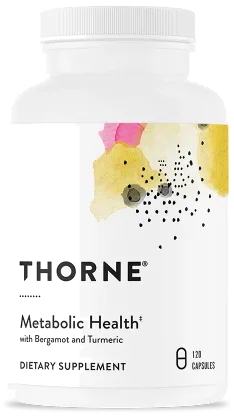
Thorne Metabolic Health is a capsule supplement designed to support a healthy metabolism and weight management goals. The page describes a formula that helps counter the metabolic changes that can come with a modern lifestyle, aging, and environmental factors. According to the page, the formula up-regulates the body's metabolism, promotes normal inflammatory responses throughout the body, and down-regulates stress hormones that can sabotage weight goals. Thorne combines two botanical extracts, bergamot and curcumin, which the page says have been used for centuries in traditional Eastern and Western botanical medicine. The formula pairs curcumin phytosome, listed as Meriva, at 250 mg with bergamot phytosome, listed as Vazguard, at 500 mg per serving of two capsules. The page says the phytosome forms help with absorption, stating that Meriva provides superior absorption over other curcumin extracts and that a human study demonstrated 29-times greater absorption than ordinary curcumin. For bergamot, the page says the phytosome complex provides at least seven times greater absorption than traditional bergamot extracts. The product page lists benefits in three groups. For weight management, it says the formula helps decrease abdominal fat, BMI, and waist circumference, balances the cortisol response to stress, and balances adiponectin and leptin to promote fat metabolism. It also says the formula supports insulin sensitivity and glucose metabolism to help maintain a healthy blood sugar level. For everyday wellness, the page lists support for a balanced inflammatory response, a healthy gut microbiome for cardiometabolic health, and antioxidant support against oxidative stress. For fat metabolism and liver health, it says the formula helps maintain healthy LDL, HDL and triglyceride levels within the normal range, supports fat metabolism and clearance from the liver, and promotes healthy liver function and normal liver enzyme balance. The page suggests the product for individuals who want to optimize fat metabolism and body composition, men and women who want to combat abdominal weight gain, people experiencing a slowing metabolism, people under excessive daily stress, and anyone wanting to maintain normal blood sugar, cholesterol and liver health. The page notes that the product is formulated with the scientific rigor Thorne is known for, that each ingredient is selected and clinically studied, and that it is tested through multiple rounds of quality control. It states the product has been third-party tested and certified to verify that the contents match the label and contain no unsafe levels of contaminants such as heavy metals, pesticides, and microorganisms. The bottle contains 120 capsules at a listed price of $60, with a subscription option at $54. Warnings on the page state that the product is contraindicated for anyone with a history of hypersensitivity to its ingredients, that pregnant people should consult a health-care practitioner before use, and that curcumin may reduce the efficacy of cyclophosphamide and irinotecan, so concurrent use should be avoided.
We don’t sell supplements. We help you make decisions and get the best price.
Lowest prices
We may earn a commission from some store links. How we choose.
Finding the lowest prices at the stores now. This takes a few seconds.
Study, Trial or Testing Result Summary
Members Only10 human studies · 9 improved
This product pairs bergamot extract (Vazguard) with curcumin from turmeric in a form bound to sunflower fats (Meriva). No human studies of the bergamot extract were provided, so its effect on blood sugar is unknown here. The curcumin dose is 500 mg a day. That is above the 80 mg that worked in one trial, but below the 1500 mg used in the largest trials. In 227 obese adults with type 2 diabetes, 1500 mg daily for 12 months lowered the long-term blood sugar marker, liver fat and inflammation more than placebo [1]. In 78 people with diabetes and fatty liver, the same dose for 12 months improved blood sugar control [2]. In 71 people with diabetes, 500 mg of turmeric with black pepper extract for 120 days lowered blood sugar, the long-term sugar marker, insulin resistance and blood fats [3]. In 40 women with diabetes, 80 mg daily for 8 weeks lowered fasting sugar, the long-term marker and insulin [4]. In women with polycystic ovary syndrome, a review found lower fasting sugar, insulin and insulin resistance [5]. Pooling 72 trials, curcumin improved cholesterol and blood fats, most clearly in people with diabetes [6]. Animal and cell studies are never counted.
See all 10 studies →Hide the studies
- Pooling 72 placebo-controlled trials, curcumin lowered total cholesterol, LDL cholesterol and triglycerides and raised HDL cholesterol, with larger effects in people with type 2 diabetes and when taken for at least 8 weeks.An Umbrella Review of Systematic Reviews and Meta-analyses of Randomized Controlled Trials Investigating the Effect of C…
- In a review of meta-analyses in women with polycystic ovary syndrome, curcumin lowered fasting blood sugar, fasting insulin and insulin resistance, with moderate certainty.Effects of nutrition on metabolic and endocrine outcomes in women with polycystic ovary syndrome: an umbrella review of …
- A review of 105 studies found curcumin was linked to lower body weight, triglycerides, total cholesterol and fasting blood sugar.The Role of Anthocyanins, Curcumin, and Resveratrol in the Prevention and Management of Metabolic Disorders: A Systemati…
- In 227 obese adults with type 2 diabetes, 1500 mg of curcumin daily for 12 months lowered liver fat, liver stiffness and HbA1c (long-term blood sugar) and inflammation markers more than placebo.Curcumin Attenuates Liver Steatosis via Antioxidant and Anti-Inflammatory Pathways in Obese Patients with Type 2 Diabete…
- In 118 people with type 2 diabetes, 1000 mg curcuminoids with piperine daily for 12 weeks raised adiponectin and lowered leptin and TNF-α compared with placebo, while ghrelin did not change.Curcuminoids Plus Piperine Modulate Adipokines in Type 2 Diabetes Mellitus.
- In 78 people with type 2 diabetes and fatty liver disease, 1500 mg of curcumin daily for 12 months reduced inflammation, oxidative stress, body fat, liver fat and liver stiffness compared with placebo, and improved glycemic control.Curcumin for Inflammation Control in Individuals with Type 2 Diabetes Mellitus and Metabolic Dysfunction-Associated Stea…
- In 71 people with type 2 diabetes, 500 mg of Curcuma longa with piperine daily for 120 days lowered blood sugar, HbA1c, insulin resistance and triglycerides compared with placebo.Effectiveness of the piperine-supplemented Curcuma longa L. in metabolic control of patients with type 2 diabetes: a ran…
- In 70 people with fatty liver disease, 500 mg curcuminoids with piperine daily for 12 weeks improved disease severity and lowered cholesterol and LDL, but most other measures did not differ from placebo.Curcuminoids plus piperine improve nonalcoholic fatty liver disease: A clinical trial.
- In 44 adults with type 2 diabetes, 1,500 mg of curcumin daily for 10 weeks lowered triglycerides and an inflammation marker (high-sensitivity C-reactive protein) and raised adiponectin compared with placebo.The effects of curcumin supplementation on high-sensitivity C-reactive protein, serum adiponectin, and lipid profile in …
- In 40 middle-aged women with type 2 diabetes, 80 mg of curcumin daily for 8 weeks lowered fasting blood sugar, glycosylated hemoglobin and insulin, with a larger drop when combined with endurance training.Effect of eight-week curcumin supplementation with endurance training on glycemic indexes in middle age women with type …
Review Totals and Summary
Members Only1,069 reviews · 86% positive
Buyers lean positive on Thorne Metabolic Health capsules, though a sizable minority notice nothing. It carries about 420 ratings across the stores. Of the star-rated reviews I have, roughly two-thirds give 4 or 5 stars. **What buyers say it did for them:** The most common praise is a sense that it works. One buyer reported fewer cravings and less grazing, and a steadier afternoon: "you don't get that crash." Another felt a difference within a month: "already can feel the difference." Others say it "does exactly what it supposed to do" and "seems to help maintain my weight." The store pages add that buyers take it for cholesterol, lipid balance and glucose metabolism, and one Vitacost reviewer reports an improved lipid panel after long-term use. Another reports fewer sugar cravings after about a week. **What they complain about:** The main complaint is that nothing happens. "Don't notice a difference taking these vitamins." Another, three months in, says "I have not noticed much difference." One person cancelled their subscription because they could not feel or see anything. One reviewer reported gaining weight: "I gained 7lbs in one month" with no lifestyle changes. The Thorne page's own summary also flags "no noticeable difference" as its main caution. **Taste, smell, pill size, form:** Feedback here is thin. Vitacost reviewers call the capsules easy to swallow with no aftertaste. One review praises a "great flavor" and describes blending it into warm milk for coffee, which doesn't sound like a capsule, so I haven't counted it. The Thorne page's written reviews say nothing about taste or pill size. Reviews of other forms of the product were left out. **Value for money:** Price divides opinion. One reviewer says the product works but is "way to expensive for ingredients," claiming another brand sells the same supplement at half the price. Another calls it expensive after three months without a noticeable effect. On Vitacost, one buyer says Thorne costs a little more than other brands but accepts that for the quality. A 120-count bottle is said to last a good while at that reviewer's dose. **Who it seems to suit and who it did not:** It seems to suit people who already trust Thorne and want support for blood sugar, cholesterol or cravings. Several reviewers mention trusting the quality: "I really trust the quality of this product." Vitacost buyers likewise describe Thorne as a trusted, high-quality brand. It seems less suited to people who need to see or feel a clear effect, or who are price-sensitive and willing to compare alternatives. One unhappy subscriber still said they like other Thorne products. The Thorne page's rating breakdown (28 five-star, 6 four-star, 5 three-star, 2 two-star, 5 one-star, averaging 4.1 out of 5) shows most buyers are satisfied, but a vocal group is not.
Biohacker Summary
Members Only8 of 10 recommend it
Curcumin gets a mostly favorable but mixed response from the panel: about half recommend or use it, and the rest are neutral, cautious, or have stopped. Most take it for inflammation, with joint comfort, mood, and brain health also named, and one uses it to curb late night overeating. Several prefer forms that absorb better, such as phytosomal, liposomal, or nanoparticle versions, and one notes it barely absorbs without black pepper; the only doses given are 500 mg daily by one panelist and 500 to 1000 mg cited by another. Pairings mentioned include black pepper, high-dose omega-3, and sulforaphane. Cautions came from three of them: one advises against high doses and urges careful sourcing because of lead contamination, one says to avoid it in pregnancy, and one stopped taking it for lack of enough evidence.
See all 10 biohackers →Hide the biohackers
Dave Asprey · Curcumin · uses
- Says CallaCurcumin is like "mommy's little helper" and he takes it when he knows he's going to eat late at night, around 5:00 or 6:00, to avoid overeating.
- Recommends Tetrahydro Curcuminoids, stating they lower inflammation.
- Recommends CurcuLite, a curcumin product, for turning up AMPK, which is foundational to energy, longevity, and detox.
- Takes curcumin, an extract of turmeric, to bypass the oxalate content while still getting the benefits.
- Dave Asprey mentions that supplements like curcumin support pain relief and mood.
- Notes that adding curcumins to a med can make it work significantly better, and it is included in their "happy saffron" product. They also recommend a combination of curcumins and omega-3 fatty acids for pain.
- Notes that turmeric curcumin is also an NRF2 activator, though less bioavailable than sulforaphane.
- Dave Asprey and his guests reveal how curcumin can rival meds, delivering natural ways to improve metabolism and regulate dopamine.
- Mentions that curcumin also has anti-parasitic properties and is useful.
- Recommends combining specific nutrients like curcumin with red meat consumption to bind to iron and pull it out, rather than absorb it.
Dr. Eric Berg · Curcumin · neutral
- Mentions that turmeric contains curcumin, which has been studied for its effects on inflammation, joint discomfort, mood, and blood sugar.
- Notes that Curcumin barely absorbs without black pepper.
- Recommends curcumin, stating it delivers powerful antioxidant and anti-inflammatory effects linked to cardiovascular health and mental well-being.
- Dr. Eric Berg states that curcumin may support blood sugar, but it should not be treated as an equivalent substitute for other treatments.
- Lists curcumin as an epigenetic factor that may help with cancer prevention.
- Curcumin is a compound that delivers powerful antioxidant and anti-inflammatory effects.
- States that curcumin, found in turmeric, delivers powerful antioxidant and anti-inflammatory effects linked to cardiovascular health, mental well-being, and more.
- Suggests that curcumin can be beneficial to counter some of the effects of a hypoxic state in cancer and inflammation.
- States that curcumin, a potent compound in turmeric, can naturally alleviate pain and inflammation, and a study found that 1500 mg of turmeric with black pepper produced results comparable to a med without side effects.
- Recommends increasing curcumin for best kidney health.
Thomas DeLauer · Curcumin · recommends
- Notes that PET scans showed a significant reduction in amyloid plaque build-up in the group taking curcumin, suggesting fewer instances of Alzheimer's and dementia.
- Discusses a UCLA study where curcumin led to a 28% increase in cognitive function and a significant reduction in amyloid plaque buildup, suggesting less instance of Alzheimer's and dementia. He also mentions a study where curcumin helped mood as much as a med.
- Uses Curcumin Gold in their recipe, stating it is amazing because it contains ginger oil, DHA, and curcumin, which work in harmony for the body to operate at its best, helping with inflammation and brain energy.
- Discusses a UCLA study where participants taking 90 milligrams of curcumin daily for 18 months showed a 28% increase in cognitive function and a significant reduction in amyloid plaque buildup.
- Recommends Curcumin, stating that 500-1000mg lowers CRP and IL-6 in trials and has over 2000 studies.
- States that curcumin plus vitamin D is probably the most powerful brain booster and brain protector, explaining that curcumin helps macrophages enlarge to gobble up more amyloid beta.
- Recommends curcumin, especially when stacked with ginger, noting its anti-inflammatory efficacy and its ability to increase antioxidant defense systems and reduce oxidative stress. He emphasizes taking it with black pepper or piperine, or in a liposomal form, for bioavailability.
- Recommends curcumin with black pepper for general inflammation, explaining it blocks the primary transcription factor nuclear factor kappa B, shutting down the master regulatory at a genetic level for inflammation genes.
- Curcumin with black pepper shuts down the NF-κB inflammatory pathway at the source, with pepper making it absorbable.
- Cites a study showing that curcumin can shift gene expression in microglial cells, increasing anti-inflammatory genes and reducing pro-inflammatory signaling and migration, thereby slowing the snowball effect of inflammation.
Siim Land · Curcumin · recommends
- Recommends Curcumin for joint pain and inflammation, based primarily on human research, especially randomized controlled trials showing measurable benefits.
- Lists Curcumin as one of 15 supplements backed by human studies.
- Thinks curcumin has some of the strongest evidence and is worth considering.
- Mentions curcumin as a compound that can increase autophagy, but notes it doesn't come close to exercise in effectiveness.
- States that curcumin, unless contaminated, is not going to raise liver enzymes.
- Did not see a big extension from curcumin in their tests.
- Mentions that it is infeasible to obtain sufficient curcumin from food.
- Mentions curcumin as a supplement that has been shown to lower CRP and improve metabolic health.
- Recommends curcumin for metabolic health, especially for insulin resistance and dyslipidemia.
- Places Curcumin in the 'god tier' for longevity, based on its ability to extend lifespan in a few animal models and consistent human study findings of lower inflammation, better lipid profiles, and improved metabolic health.
Dr. Mark Hyman · Curcumin · recommends
- States that curcumin is great for immune support and is anti-inflammatory, suggesting making curries.
- Mentions that curcumin has been studied for its anti-inflammatory effects, but emphasizes that no supplement can replace the daily signals created by sleep, nutrition, exercise, stress management, and metabolic health.
- Recommends curcumin as an anti-inflammatory supplement that can be helpful.
- States that curcumin helps to lower broader inflammatory levels in the body.
- Explains that curcumin is the key compound in turmeric, a polyphenol that research shows supports the body against conditions like cancer, cardiovascular stress, and neurogenic diseases like dementia, and can also help with inflammation, metabolic balance, joint comfort, and mood.
- Lists curcumin as a phytochemical that helps mitochondrial function.
- Mentions curcumin from turmeric as an example of a powerful phytochemical that affects the body.
- Notes that curcumin is an amazing NRF2 activator, but its bioavailability is only 5% compared to sulforaphane from home-grown broccoli sprouts.
- Recommends a curcumin supplement with black pepper (piperine) for indigestion, including reflux, noting that a recent trial found it as effective as a med.
- Mentions that curcumin can modify the expression of genes, which in turn affects stress response and mental health.
Dr. Rhonda Patrick · Curcumin · neutral
- Curcumin may be one of the most powerful naturally occurring dietary compounds for lowering age-related inflammation. The phytosomal form is preferred because standard curcumin is rapidly broken down by the liver, while phytosomal delivery makes it far more bioavailable.
- Asks if curcumin can slow aging.
- Curcumin may be one of the most effective natural compounds for lowering age-related inflammation. The phytosomal form matters because standard curcumin is poorly absorbed and rapidly metabolized, while phytosomal delivery makes it much more bioavailable.
- Takes phytosomal curcumin daily because it is much more bioavailable than standard curcumin and human evidence suggests it is potent for lowering TNF-α, a major inflammatory cytokine linked to biological aging.
- Rhonda takes 500 mg of liposomal Curcumin daily for inflammation.
- Uses Phytosomal curcumin, stating it is one of the only naturally occurring compounds shown to meaningfully lower TNF-alpha, a master inflammatory cytokine that accelerates aging.
- Took Meriva, a phytosomal curcumin, which has been shown to help with DOMS in some small studies.
- States that curcumin, found in turmeric root, also activates antioxidant defenses.
- Suggests that if someone is an 'immuno-ager,' they might want to take curcumin to help with their immune system.
- Rhonda mentions curcumin as a xenohormetic compound that, in a small dose, is slightly toxic and activates cellular stress response pathways, helping the body deal with stress better.
Ben Greenfield · Curcumin · neutral
- Mentions curcumin as another Nrf2 activator, but notes that sulforaphane outperforms it.
- States that their curcumin product affects the Nrf2 pathway by activating PKC delta, which phosphorylates Nrf2, allowing it to go into the nucleus, and works synergistically with sulforaphane.
- Ben Greenfield's clinic photoactivates curcumin before use, finding it to be very anti-cancer when photoactivated.
- Says curcumin at low doses, such as sprinkled turmeric onto food, acts as a hormetic stressor, increasing internal defense systems, antioxidants, and repair pathways, leading to overall reductions in inflammation.
- Recommends MitoQ +Curcumin, a Mitoquinol-enhanced blend with Longvida Curcumin for antioxidant and joint health synergy.
- Gets nerdy about curcumin and explains which longevity supplements actually work, according to the science in mammals.
- Uses curcumin, taking Keon Flex at night on an empty stomach and a heaping tablespoon of Row Nutrition's liposomal curcumin at some point during the day, but not right after a workout due to its mTor signaling inhibition.
- Mentions curcumin as a polyphenol that can confer benefits when consumed.
- Recommends curcumin to reduce inflammation, especially when combined with the Weber laser treatment.
- Tells people to take curcumin to block the secondary function of cancer pulling other things like glutamate and converting it through gluconeogenesis.
Andrew Huberman · Curcumin · neutral
- Discusses curcumin as a supplement for prenatal care and sperm health.
- Does not recommend high-dose curcumin supplements for general use, suggesting it's only for specific purposes under a doctor's guidance to target excess inflammation.
- Notes that people are excited about the possible health benefits of curcumin, which is found in turmeric.
- Includes curcumin in his diet because it has been shown to stimulate GLP-1.
- Warns against taking high doses of curcumin, noting potential negative effects like limiting dihydrotestosterone production, and advises checking sourcing carefully due to lead contamination concerns.
- Mentions curcumin in the context of 5-alpha reductase.
- States he once took curcumin in high dosages (1-2 gram capsules) and felt terrible, vowing never to take it again due to his sensitivity to its effects on the DHT pathway.
- Warns that some people, including himself, are very sensitive to curcumin because it can potently reduce DHT, leading to decreased libido and drive, though these effects reverse quickly after stopping.
- Warns against taking high dosages of curcumin, such as 8000 milligrams per day, because it can alter hormonal pathways, specifically inhibiting dihydrotestosterone (DHT) synthesis, which can lead to undesirable effects like reduced libido.
- Notes that if there's a strong genetic predisposition to enlarged prostates or early, fast-growing prostate cancers, individuals could consider taking curcumin as an anti-androgen, if they can tolerate it.
Peter Attia · Curcumin · uses
- Uses a specific nanoparticle version of curcumin at a reasonable dose, which may have anti-TNF alpha effects and help with inflammation.
- States that a well-absorbed curcumin with high-dose omega-3 is as good as or better than any a med and helps improve brain function, mood, cognition, and may reduce dementia.
- Says that for a 27-year-old woman with an early-onset Alzheimer's gene, they would be "loading her up with curcumin" to prevent symptoms for 25 years.
- Used to take Curcumin for longevity but stopped because he didn't see enough evidence.
- Mentions curcumin as another example of a niche compound with numerous RCTs, reinforcing the point that research can be done without pharma sponsorship.
Bryan Johnson · Curcumin · warns
- Advises avoiding Curcumin during pregnancy.
RAL Summary
Members OnlyTier 2 for Blood Sugar
More Details
Members OnlyBody systems · Combine with · Possible side effects
Body systems: Endocrine system, Cardiovascular system, Digestive system
Combine with: For blood sugar support, berberine and chromium pair well with alpha-lipoic acid, magnesium, and cinnamon extract for insulin sensitivity, plus omega-3 fish oil for triglycerides and cardiometabolic health. Vitamin D and a high-fiber supplement such as psyllium or PGX can further blunt post-meal glucose spikes. If the user's real interest is cellular and DNA repair, they would need different agents such as NMN or NR with TMG, resveratrol or pterostilbene, CoQ10 or PQQ for mitochondrial support, and antioxidants like glutathione or NAC. Berberine can interact with medications metabolized by CYP enzymes and can lower blood sugar, so users on meds, or who are pregnant, should consult a clinician before use.
Possible side effects: No major side effects were reported in the studies given. One reviewer reported gaining weight, and others noticed no effect.
Supplement Facts
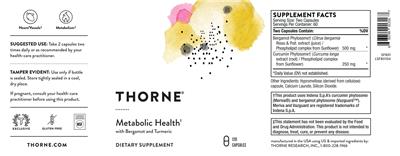
Vazguard 500 mg · Meriva 250 mg
| Vazguard | 500 mg | † |
| Meriva | 250 mg | † |
Other ingredients: Hypromellose, Calcium Laurate, Silicon Dioxide.
Directions: Suggested Use: Take 2 capsules two times daily or as recommended by your health-care practitioner.
Barcode (UPC) 693749013167 · Label source: NIH label database · Report a label change
Show entire label
More blood sugar products
Members OnlyThe highest ranked for the same goal
Read more
Our articles on this subject
- How to Lower Blood Sugar Naturally: A Comprehensive GuideArticle · Sep 9, 2026
- Intermittent Fasting: What the Human Trials Show for Weight, Blood Sugar and AgingArticle · Oct 29, 2026
Graded November 6, 2026 by the Reverse Age Lab evidence engine, from human studies, real reviews and our biohacker panel. How we grade. Is this medical advice? No. Rala organizes the published evidence; go over any change with your doctor, especially if you take meds.
Privacy policyConsumer health dataAffiliate disclosureTermsDo Not Sell or Share My Personal InformationCookie settings